
Window Cleaning Solution - Water and Dish Soap
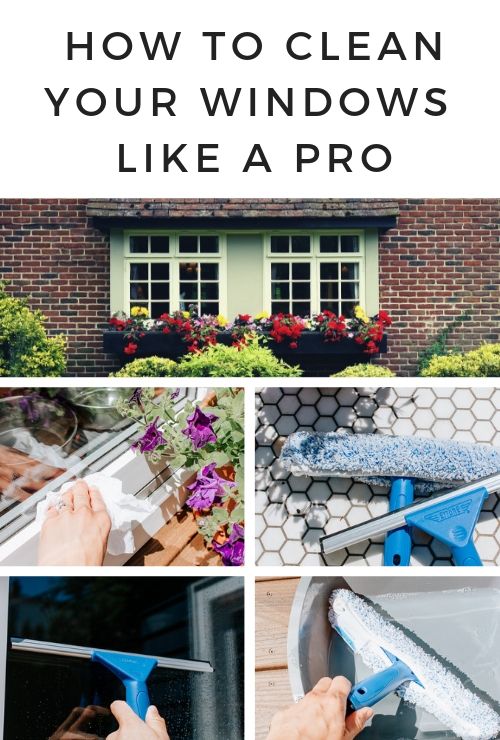
How to Clean your Windows Like a Pro

How to Clean Your Windows like a Pro

Hi, Pretty Handy Girl Readers!!  What’s one way to improve both the interior look and exterior curb appeal of your home? Clean your windows! Not only do sparkling clean windows look amazing from the outside, but they also let more light in and create a brighter home on the inside.  This post will teach you how to clean your windows like a pro. Unfortunately, cleaning your windows is not a fun task. While you can always shell out hundreds of dollars for a professional window cleaning, this one simple and cheap tool will get the job done as good as the pros and leave that money in your pocket.

(I’ve included affiliate links for your convenience. I earn a small percentage from a purchase using these links. There is no additional cost to you. You can read more about affiliate links here.)

When to Clean Windows:

Spring Cleaning is the perfect time to get this done. Although, if you have a lot of pollen you may want to wait for pollen season to end, then clean the pollen and debris off them. Cleaning Tools for your Windows The only tools you need is this Ettore 65000 Professional Window Cleaning Kit for less than $20. The kit comes with a handy squeegee and a microfiber mop head. (Bonus: the microfiber mop head is washable too!)
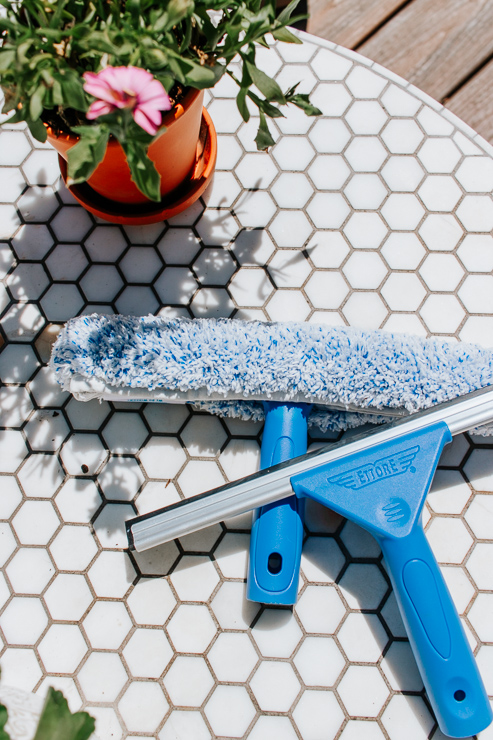
How to Clean your Windows:

Follow these steps for sparkling clean windows that your neighbors will envy! 🙂

Step 1 – Prepare your Cleaning Solution
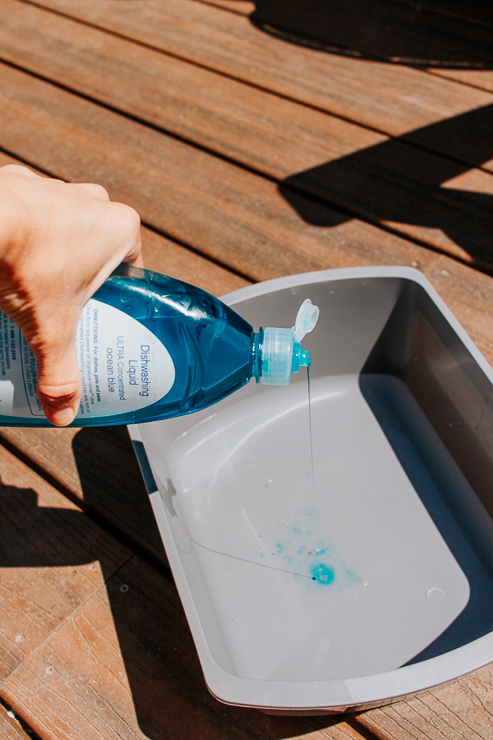
Window Cleaning Solution - Water and Dish Soap First, fill a bucket with water and add a few squirts of dish soap.

Step 2 – Wet your Mop Head
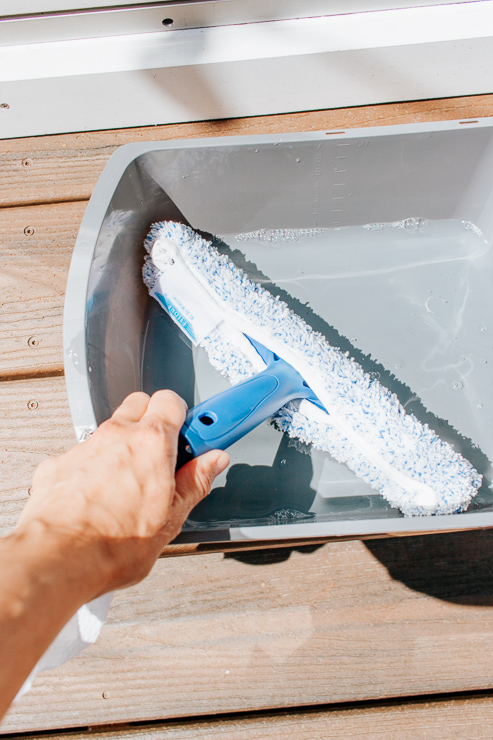
Dip your mophead in the cleaning solution Take your microfiber mop head and dip it in your soapy bucket a few times. Wring it out a bit with your hand. You don’t need it to be dripping wet.

Step 3 – Scrub your Windows
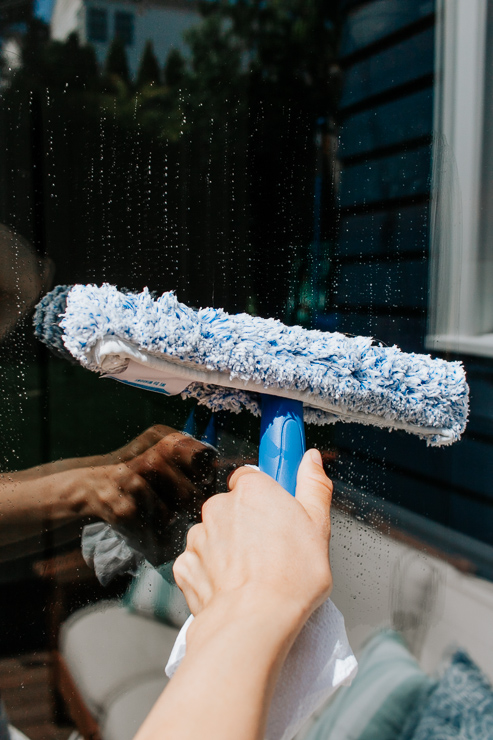
Scrub your Windows Clean Run the wet microfiber mop head over your dirty windows a few times to clean them. Some spots may take a bit of elbow grease.

Step 4 – Squeegee!
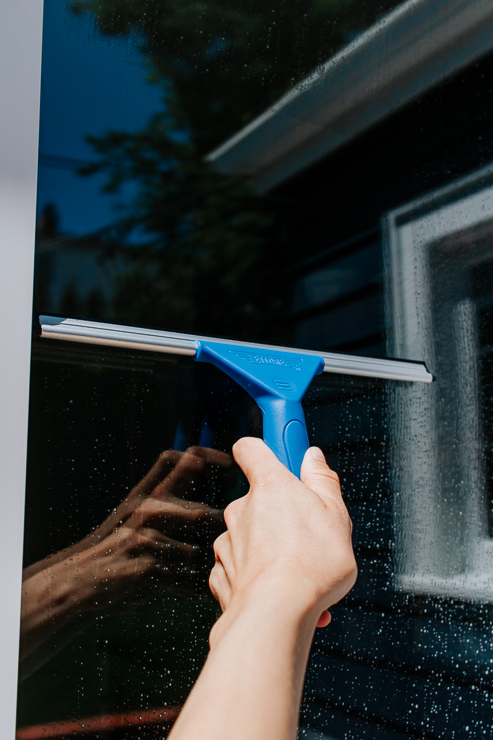
Squeegee water and soap from your windows Starting from the top middle of the window, take your squeegee and run it over the window in a fluid, top to bottom motion. Continue all the way to the bottom of the window. By using your squeegee in this pattern, you avoid leaving streaks from where you stopped and started. Don’t worry – you can always start over again if you find you left too many streaks.

Step 5 – Wipe up Excess Water

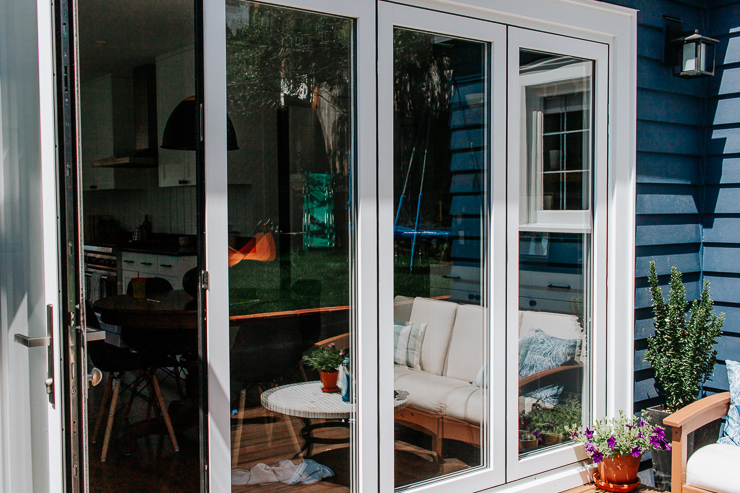
Wipe off excess water from your window sill Finally, use a clean, microfiber cloth or paper towel to wipe up the excess water from the squeegee at the base of the window frame. You can clean your windows both inside and outside using this same method. This tool gives you such clean windows – you will never go back to your old method of cleaning windows again. I dare say you may even find window cleaning is somewhat enjoyable. Put on your headphones and your favorite tunes and get lost in the zen of cleaning windows! Trust me, it’s an oddly addicting activity. Sparkling Clean Windows - Clean Windows Like a Pro
Windows Too High?

What if you have a window that’s really high and hard to reach? Fortunately,  this upgraded tool has an extension pole that easily snaps on both the squeegee and microfiber mop head. It takes a bit more finesse to use this with the extension pole attached, but after a few times you will get the hang of it. When you are finished cleaning, the extension pole collapses for easy storage. I keep the squeegee and microfiber mop head conveniently stored under my sink and pull it out whenever I see dirty windows and kids fingerprints. It’s amazing what clean windows will do for your home! (PS: This tool works for your glass shower doors as well! Give it a try.)  If you want more cleaning tips – check out how to clean your oven racks on Decor Hint.  And find out why you should never throw away your old toothbrushes (hint: it’s not for your teeth!) I hope this helps you on your way to cleaner windows! I’ll be back here next month with another tutorial for you!

More Window Resources:

How to Install a New Construction Window How to Add Privacy Film to Any Window How to Install Traditional Window Trim or How to Install Decorative Window Casing Things to Consider When Choosing New Windows Stop! Don’t Replace Your Windows Before Reading This karen signature

~ See More of Karen’s Tutorials ~

karen from decor hintHello!  I’m Karen, the creator of the Home Decor and DIY Blog: Decor Hint. I’m a Native of the East Coast, but I currently live in beautiful Seattle with my hubby, our two wonderful children, and our spunky wheaten terrier. You can usually find me with some sort of craft in one hand and a coffee in the other. And I’m always rearranging furniture or moving lamps from room to room. I have a passion (read: obsession) for decorating, DIY, and gardening. In short, I love making my house into a home. Like many, I’m inspired by what I see in home decor magazines, but I’m not so inspired by the price tags.  Consequently, I love finding and creating beautiful budget-friendly home decor items. In a head to head competition, I bet you’d never know the difference between the designer items and my DIY creations!  Many of my DIY projects focus on sewing, crafting, upcycling and organizing. Some of my favorite projects have been making pretty wreaths, sewing my own tassel hand towels, and crafting these trendy wood bead garlands. I can’t wait to inspire you and spark your creativity through my DIY projects. You can always connect with me on Pinterest, Twitter or Instagram.

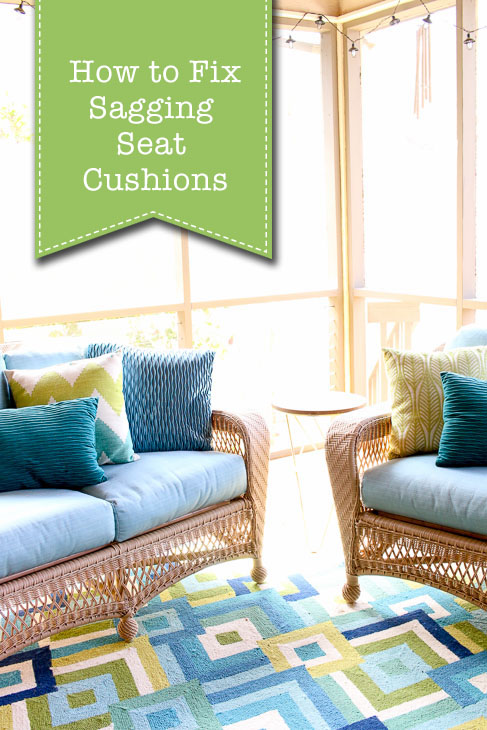
screen porch cushions after repair

A few years ago I gave my stepmom’s screen porch a much needed makeover. At the time we noticed the seat cushions were starting to sag, but decided they still functioned. This year, my stepmom told me they had to be fixed. Boy was she right! Today I’m going to show you the easiest (and most permanent) way to fix sagging furniture seat cushions for good!

Pretty Handy Girl being pulled up from sagging seat cushion

If you’ve ever dealt with sagging porch furniture I have a simple solution for you! Let’s get fixing!

Materials:

(I’ve included affiliate links for your convenience. I earn a small percentage from a purchase using these links. There is no additional cost to you. You can read more about affiliate links here.)

Track Saw
Tape Measure
Chalk Line
Centipede Portable Work Stand
Palm Sander
Screws
Scissors

Fix Sagging Furniture Seat Cushions Instructions:

Feel free to watch the video or read the full tutorial below. It’s your choice.

If your furniture has removable seat frames, take them off the seats. Measure the seat frames and figure out how much plywood you’ll need to cover the seat frames.

Lay the seat frames onto the sheet and mark around the seats. (Alternatively, you can make a paper template of your seats and transfer them to the plywood.)

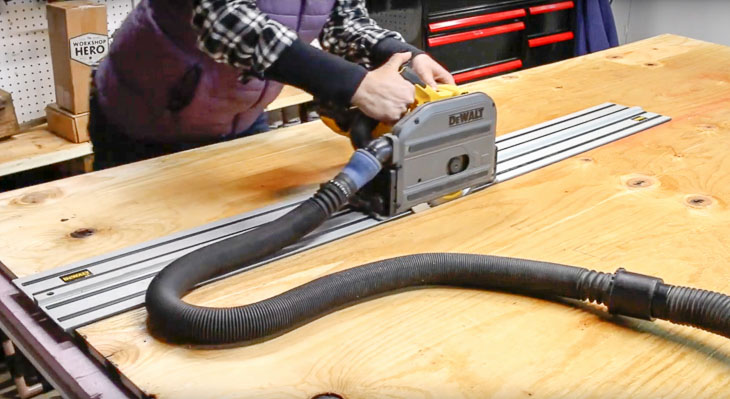
Cut the plywood to the size of your seats using a circular saw (or my preferred tool: the track saw.)

using track saw cut plywood

Here’s a tip for cutting sheet lumber:

Put a piece of rigid foam insulation under your plywood sheet. Set the depth of your blade just slightly deeper than your lumber. Cut the plywood on top of the insulation. The insulation supports the plywood while the saw blade cuts into the insulation and not your work surface.

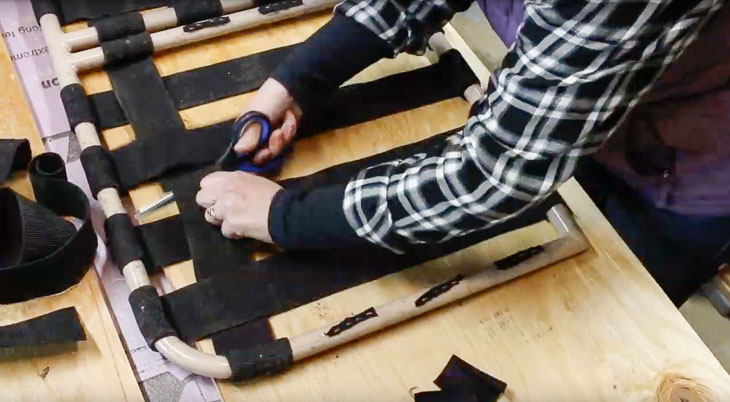
If your seat frame has webbing, go ahead and cut it off the frame. Throw away the webbing.

cutting seat webbing off

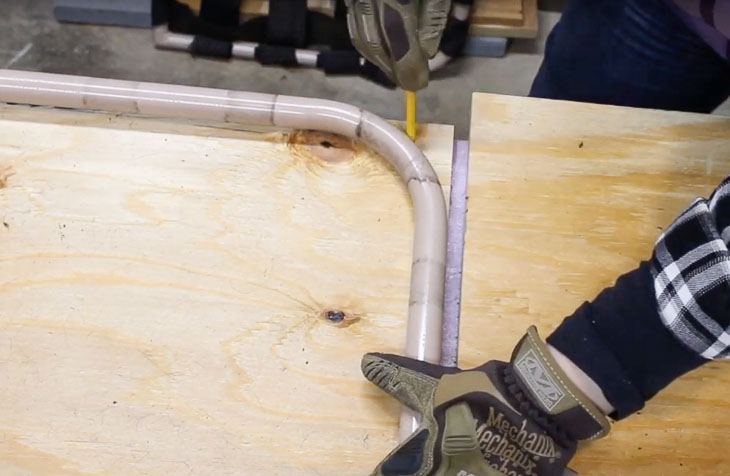
Trace around any corners or specific shapes of your seat frame.

trace around seat frame onto plywood

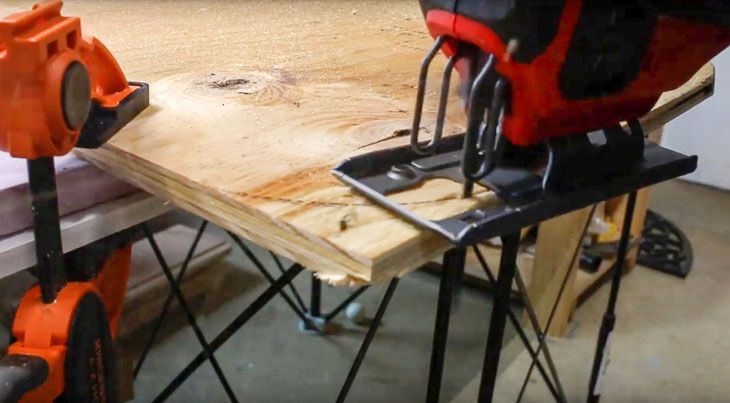
Use a jigsaw to cut off these shapes.

cut off corners with jigsaw

Sand all rough edges and give the entire plywood seat a good sanding to remove splinters.

sand plywood smooth

If your plywood seat will be exposed to the elements, it’s a good idea to seal it with primer and/or paint.

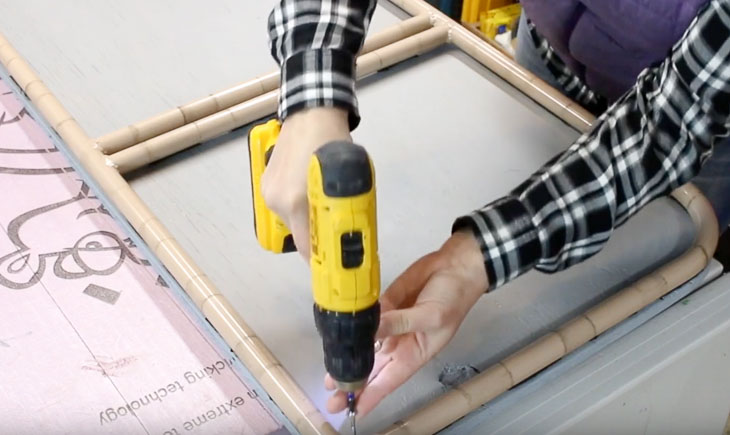
To secure the plywood to the seat frame, drive a screw through the plywood at each corner of the frame. Stop when the screw head is resting on top of the frame. Add more screws at any cross supports. The screws are mainly to keep the plywood centered on the frame, so they don’t have to be super strong structurally.

drive screws into corners

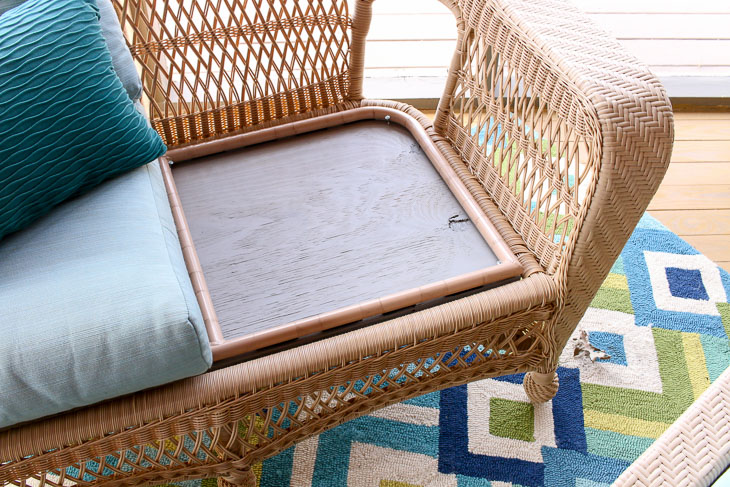
Set your plywood seat frame back into the furniture. We chose to have the old frame on top otherwise you would see the edge of the plywood.

Fix for sagging cushion. Plywood under cushions

If your furniture didn’t have a removable frame, you can put the plywood directly onto the seat (under your cushions.)

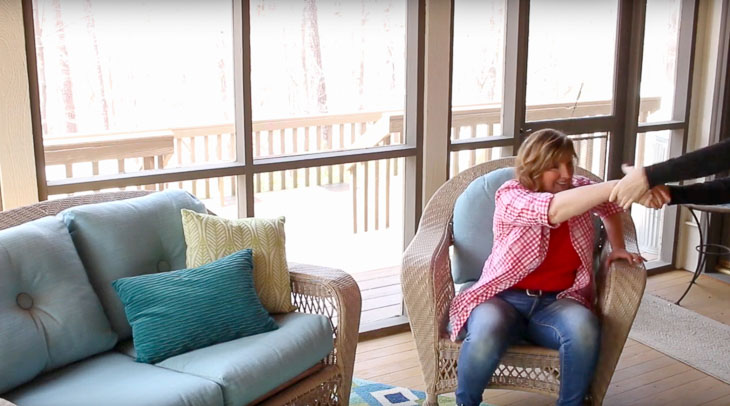
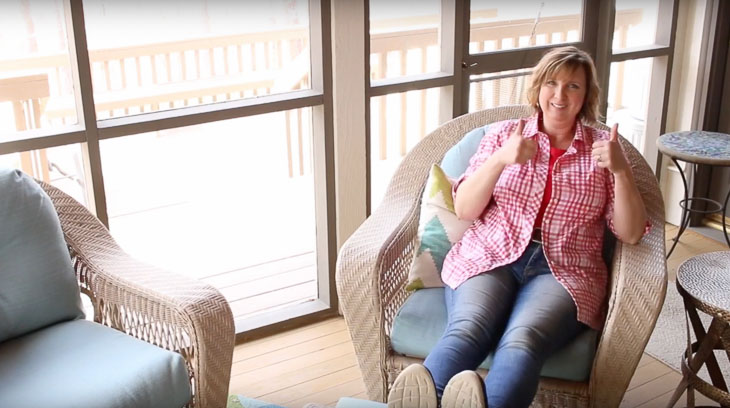
happy Pretty Handy Girl in seat

“Ahhh, much better. ” 

I hope this tutorial helped you fix your sagging furniture cushions! Let me know if you tried this fix and how it worked for you.

signature

Subscribe to my YouTube Channel

Did you like this video? If so, be sure to subscribe to my YouTube Channel to get notified every time I have a new video published.

*Many have asked me about the photography and video equipment I use. I finally put together a list of the equipment I used here.


How to Fix Cracks in Door Panels - An Easy RepairHow to Fix Cracks in Door Panels without Taking the Door Apart
Wooden doors will develop cracks over time, especially if the panels aren’t free to expand and contract. Most of the time, years of paint or caulking the seams around the panels will cause the wood to stick and not allow the panel to expand and contract with the weather. The result is a big vertical crack along the wood grain. Today I’m going to show you how to repair the crack without taking the door apart!

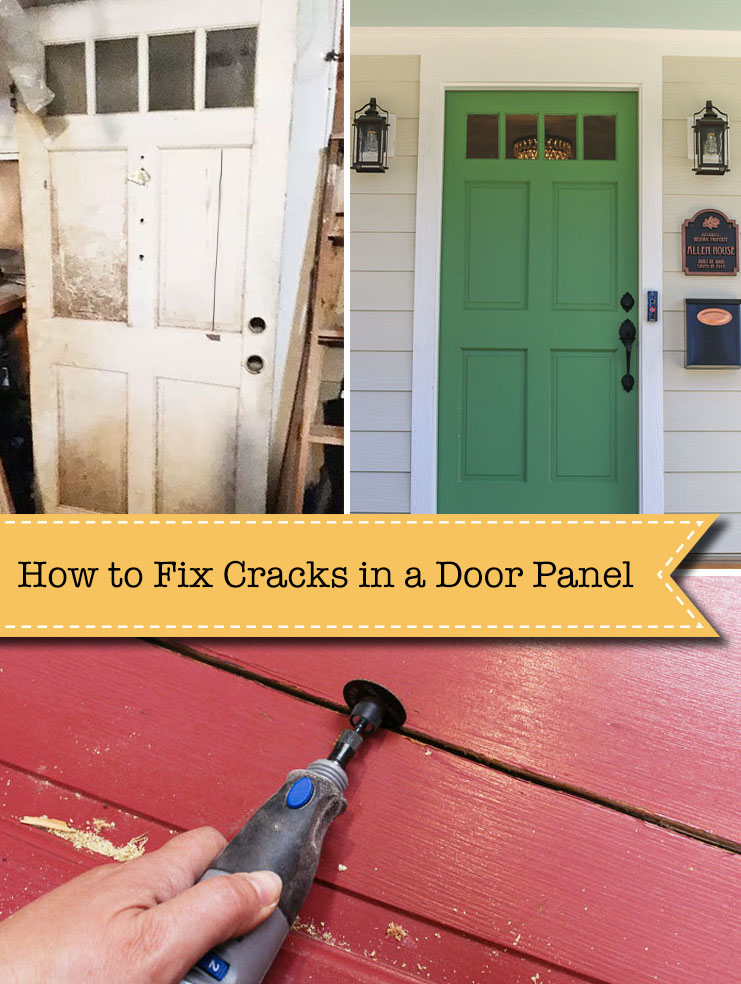
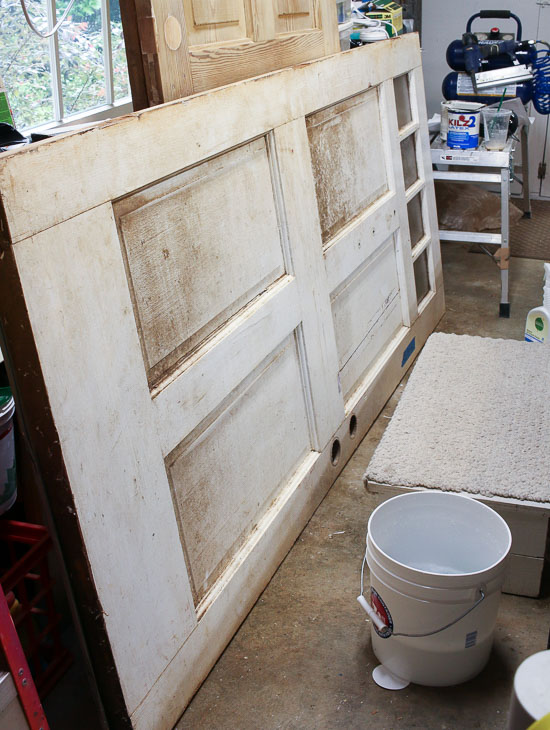
You may remember right before I purchased the Saving Etta house, I discovered a discarded door by the dumpster behind our local grocery store. It had a big crack in the panel and was very dirty. But, otherwise, it appeared to be structurally sound. Pretty Handsome Guy and I salvaged the door on a late night rescue mission, and had a good laugh about it afterwards.

The door sat in the garage until the addition was framed and rough openings were created at the Saving Etta house. With the windows set to arrive, I knew I had to take a day out of my busy schedule to repair the cracked door and prepare it for installation.

Dirty Front Door found in the Trash

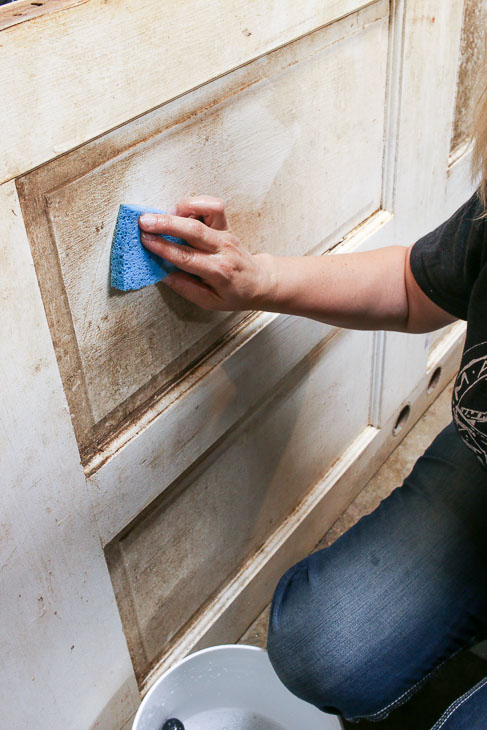
First the door got a good cleaning with soapy water.

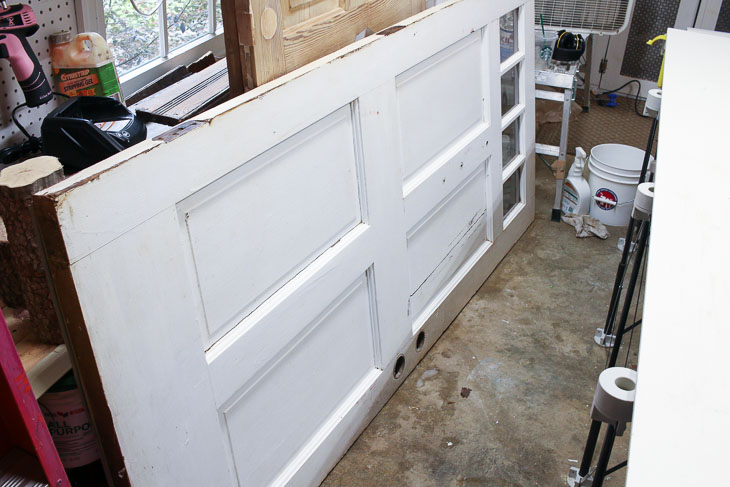
Cleaning Front Door with sponge and soapy water Looking better already!

Cleaned front doo

Now it was time to fix the door. Let’s learn how to repair a cracked door panel without taking the door apart.

Materials:

(I’ve included affiliate links for your convenience. I earn a small percentage from a purchase using these links. There is no additional cost to you. You can read more about affiliate links here.)

Instructions:

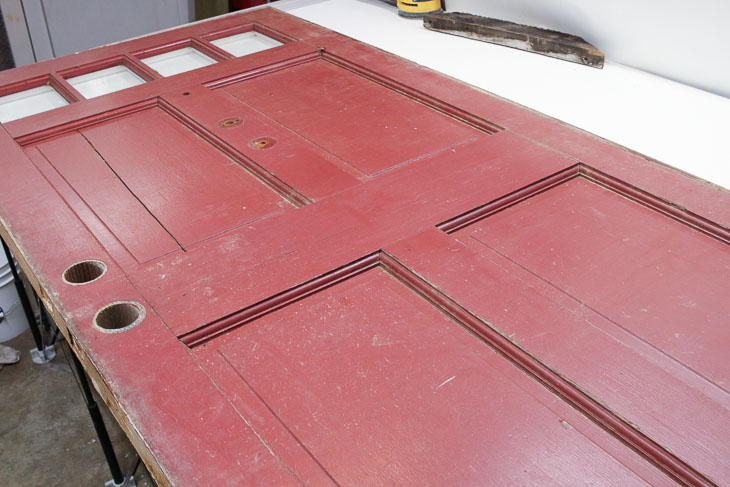
Lay the door on a flat surface like a workbench or saw horses.

burgundy side of dumpster found door

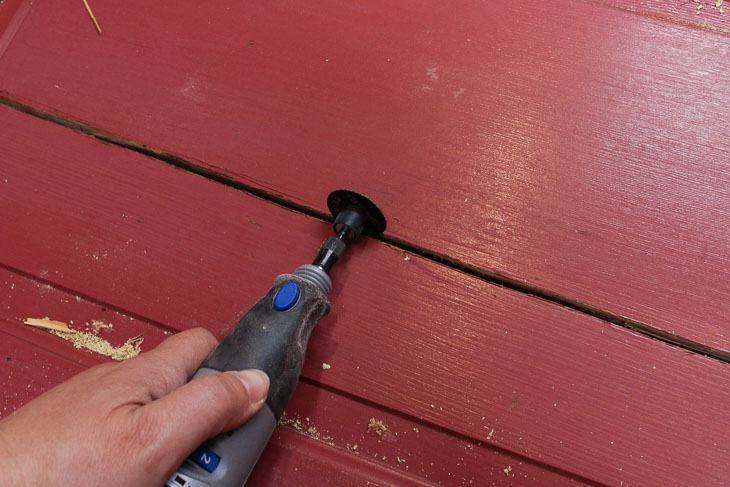
Using the Dremel with a cut off wheel, clean up the crack and open it to the width of your wood spline.

Open door panel crack with dremel cutting wheel

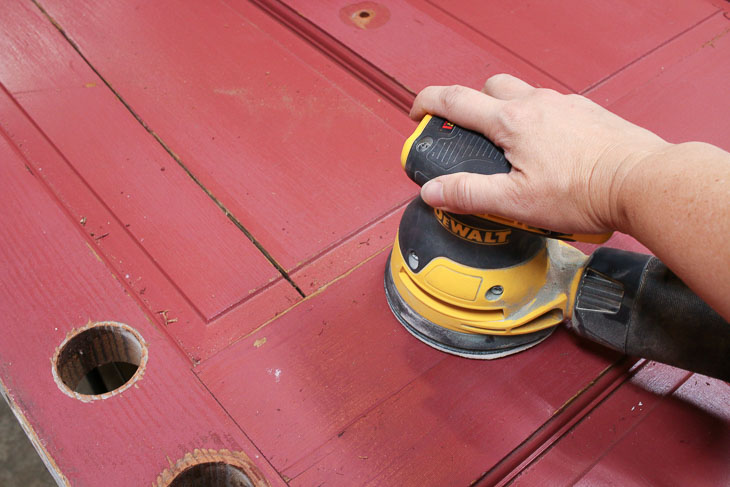
Sand smooth any jagged edges along the crack and any dings on the rest of the door.

Sanding door smooth

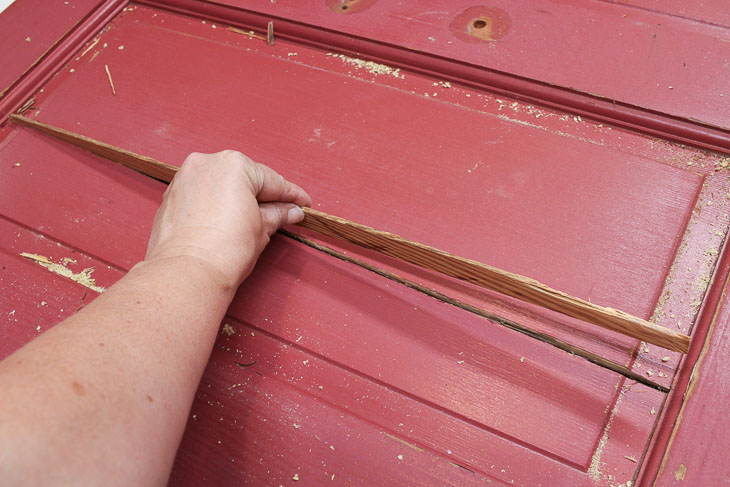
Test fit the spline into the crack. Make any adjustments to the crack as needed or cut a narrower spline on a table saw.

Insert wood spline into door crack

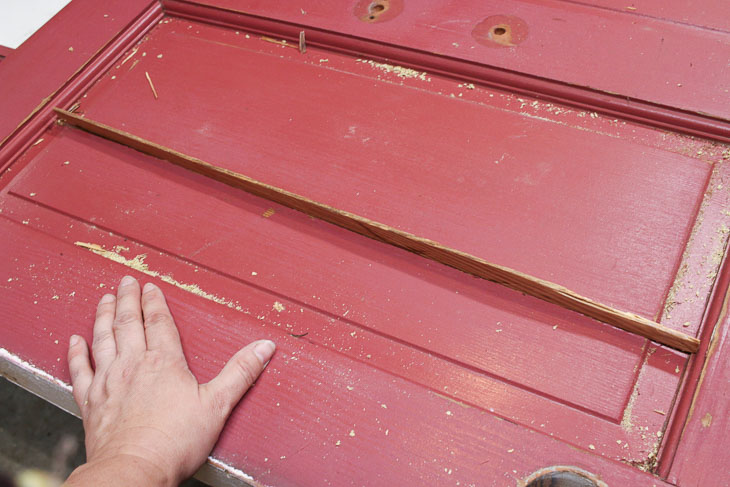
The spline should fit snuggly in the crack.

Test fit wood spline in door crack

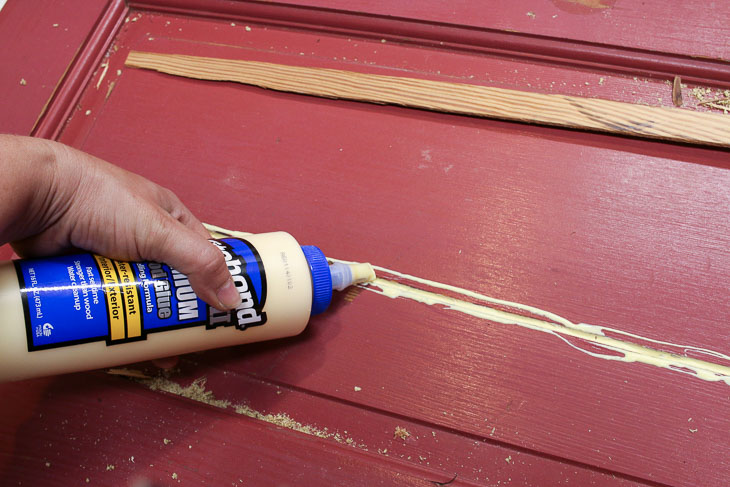
Remove the spline and apply a liberal amount of wood glue into the crack.

Add lots of wood glue to door crack

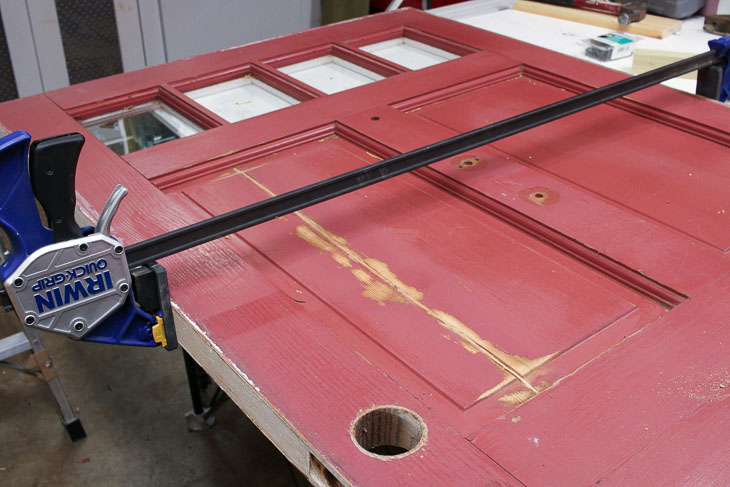
Insert the spline and clamp the door until the glue hardens.

Clamp door repair overnight.

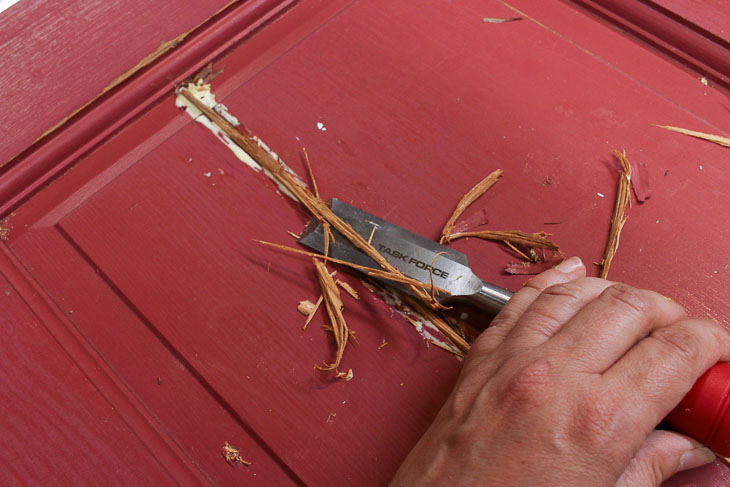
Chisel off the excess spline (you don’t need to get it perfect, but you’ll want to remove as much of the spline that protrudes beyond the door panel.)

Chisel off excess wood spline

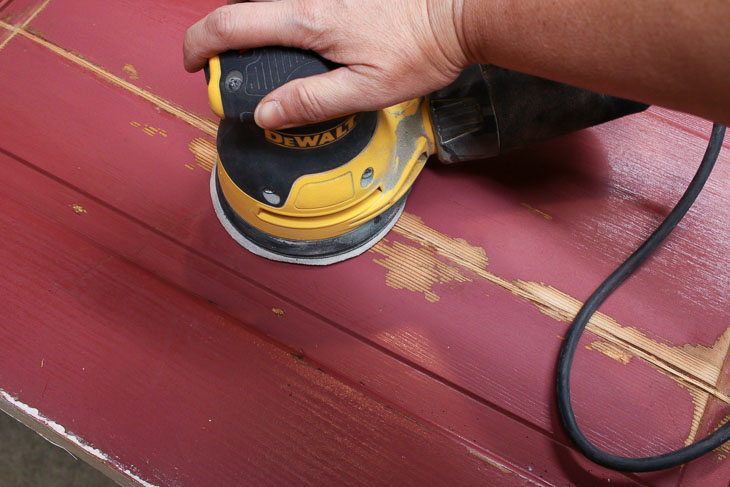
Sand the repaired crack until the spline is even with the rest of the door panel.

Sand fixed door crack smooth

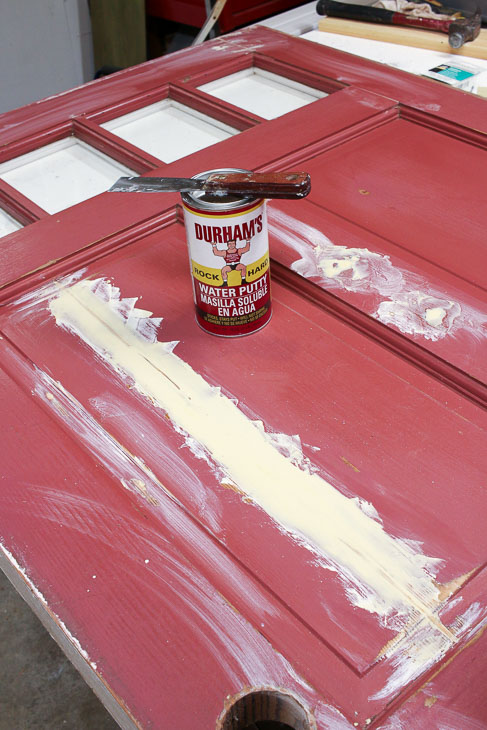
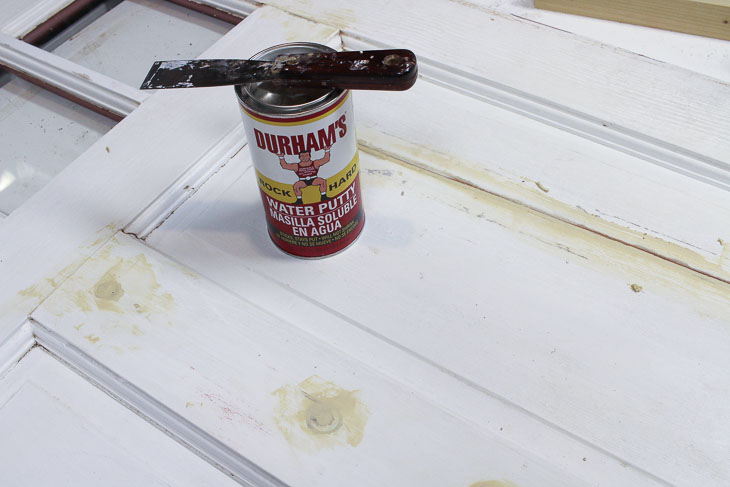
There will probably still be some minor cracks or voids, but these can be repaired with putty. Mix up a small amount of Durham’s Rock Hard Water Putty (just add water!) Apply along the repaired crack and fill in any small holes or dings on the door. Let the putty cure.

Use Durham wood hardener to smooth imperfections

Flip the door over and repeat the process of removing the excess spline material and adding the wood putty.

Add Durham Wood Hardener on back side of door repair

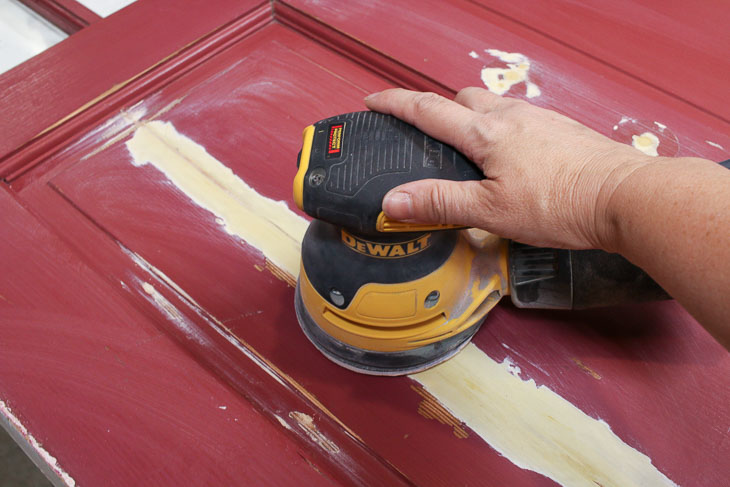
After the putty has dried, sand until smooth. Start with a 120 grit sandpaper and work your way up to 220 grit.

Sand cracked door panel repair smooth

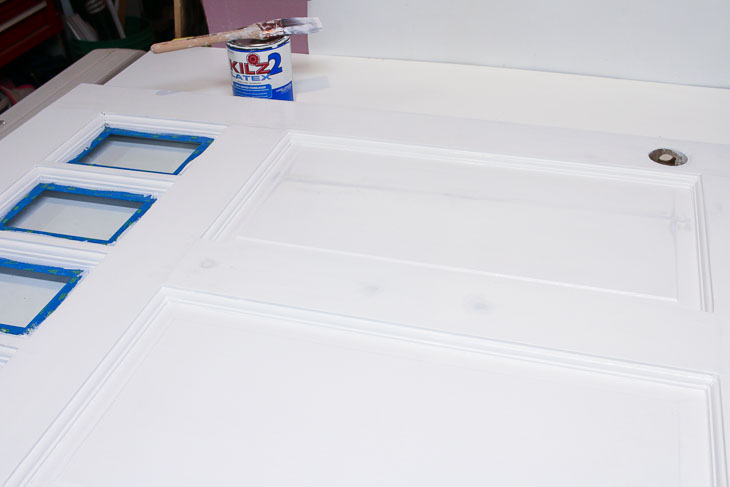
Clean the door of any sanding dust. Tape off the window edges (if applicable). Prime the door on both sides (allowing one side to dry before priming the other side.)

Prime repaired door with KILZ 2 primer

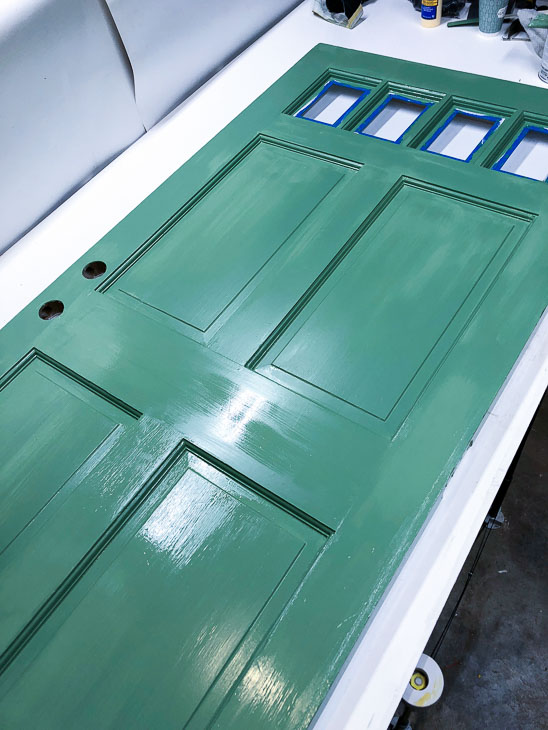
Paint your door any color you like!

Paint repaired door with Magnolia Home Magnolia Green paint

Want to Stain Your Door Instead?

If you prefer the natural wood look on your door, be sure to choose a spline that matches your door’s wood species and skip the wood putty step.

Installing the Door:

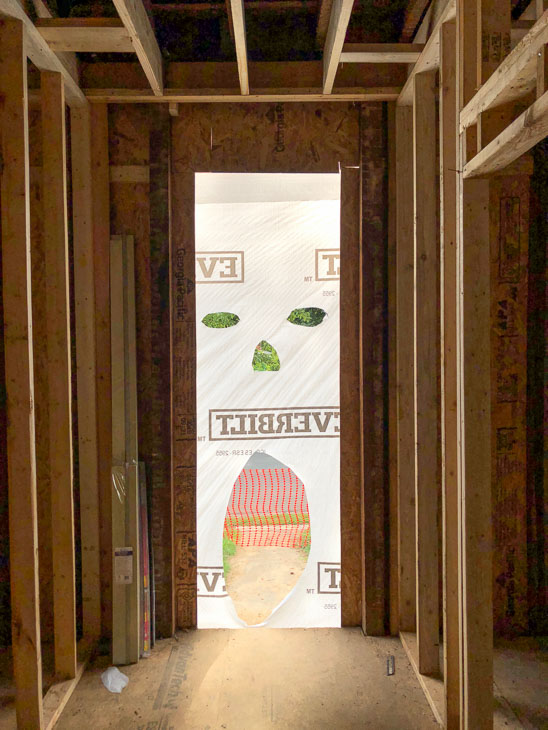
Back at the house, my framers had some fun with the house wrap at the front door.

After I added an exterior door frame kit to my repaired door, the framers hung it in the rough opening.

Because I didn’t paint the exterior of the door yet, you can barely see the repair above. But, after a fresh coat of paint, I challenge you to spot the repaired crack!

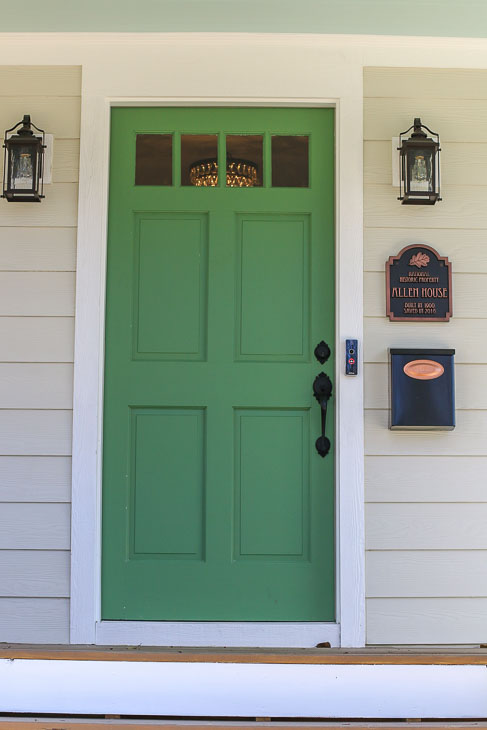
Magnolia Green by Magnolia Paint - with Locally Sown by Magnolia Paint Siding

Do you like the color I painted the door? You might remember my decision making process when selecting the exterior color scheme. Ultimately I chose Magnolia Green and Locally Sown in the Magnolia Paint line.

Magnolia Green Door with Locally Sown Magnolia Home Paint on Siding

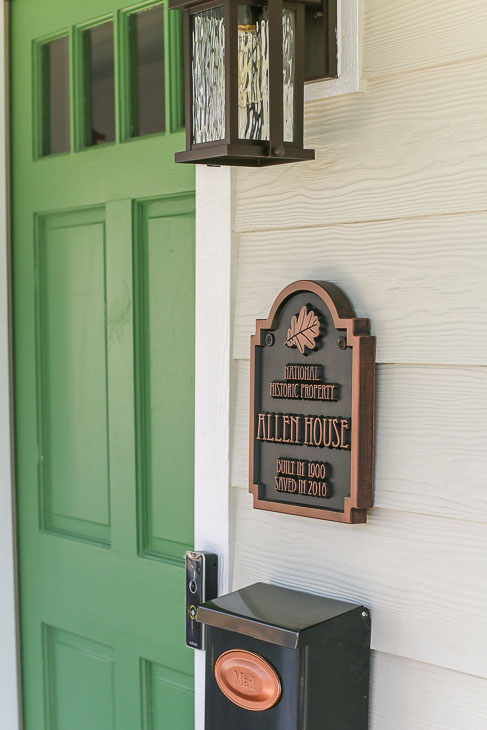
And just in case you thought I was only good at saving doors, apparently now I’m also a house saver! The Saving Etta house received her plaque denoting her name as it’s registered in the list of National Historic Properties.

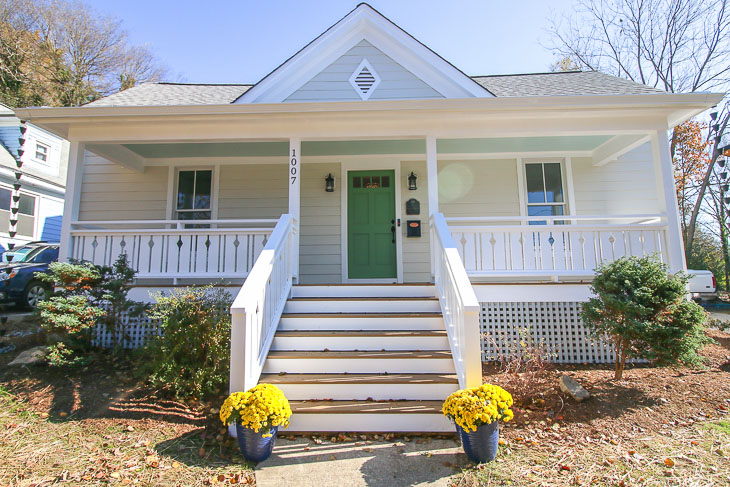
Saving Etta: 1900 Home Saved from Demolition and restored into a beautiful Triple A construction modern farmhouse.

Hopefully she’ll last another one hundred plus years!

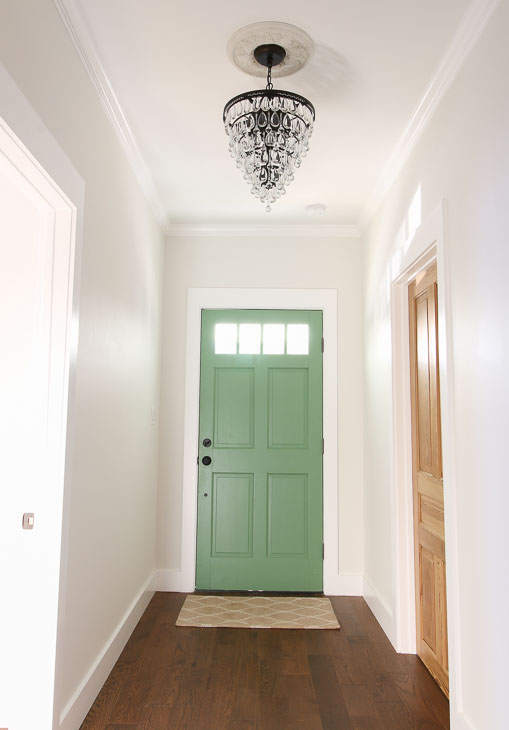
A funny story about the green door: Originally I was going to hang the door with the handle on the opposite side, but made a last minute change. The interior of the door was supposed to get painted gray to match the rest of the doors in the house (minus the salvaged 1900 doors shown above. They were left raw to show off the original wood grain and square peg construction.)

Many of you loved the green color and voted on Instagram to keep the front door green on both sides. Which is why Etta has a green front door inside and out!

Saving Etta: 1900 Home Saved from Demolition and restored into a beautiful Triple A construction modern farmhouse.

What do you think? Do you like the double-sided green door? Do you have a cracked door panel in need of repair? I know you can fix it.

signature

change-ugly-recessed-lights

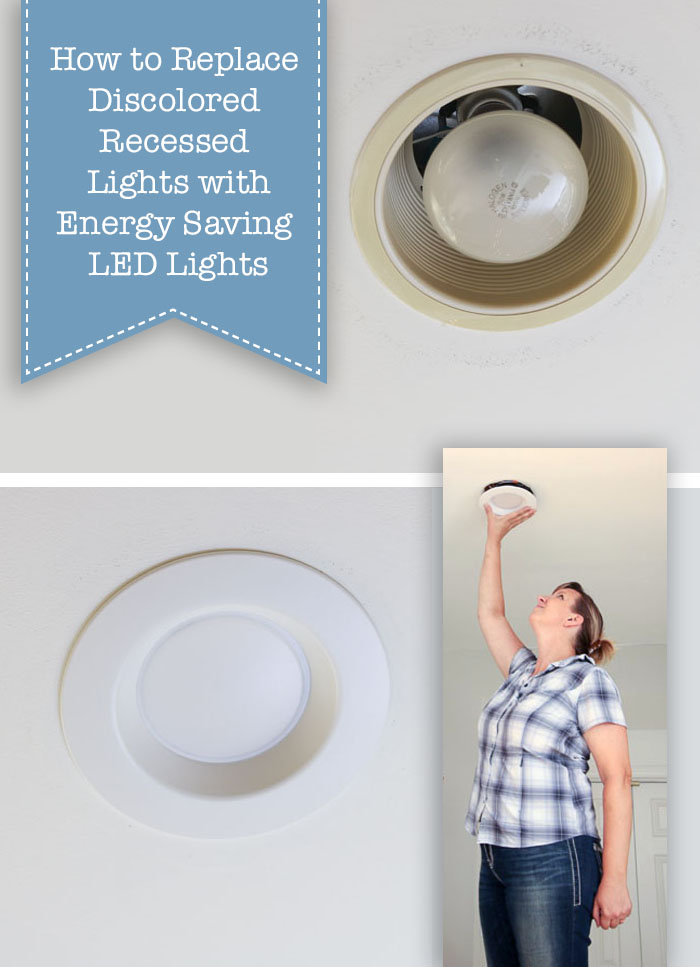
Do you have those old discolored recessed can lights in your home that use big hot flood bulbs? If so, it’s time for an upgrade!

Update Ugly Recessed Can Lights with Energy Efficient LED
How to Update Ugly Recessed Can Lights with Energy Efficient LED Lights

Today I want to show you how to update ugly recessed can lights with energy saving LED recessed lights. This process is quick and easy, not to mention the new lights will look better, last longer, and save you money on your energy bill! What more could you want? Change out all your ugly recessed lights in no time by following this simple tutorial.

Materials:

(I’ve included affiliate links for your convenience. I earn a small percentage from a purchase using these links. There is no additional cost to you. You can read more about affiliate links here.)

Instructions:

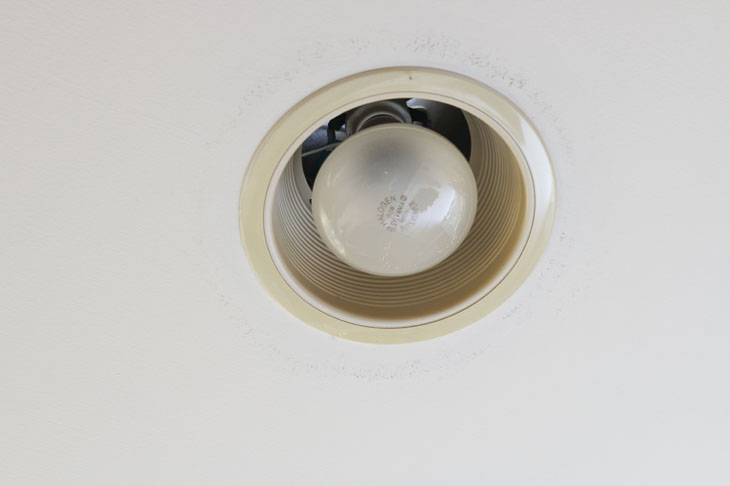
Here is what my old lights look like. Not only are they ugly, but they use the large flood light bulbs that use too much energy, radiate heat, and burn out quickly. I don’t know about you, but I am tired of changing these burned out bulbs.

Update Ugly Recessed Can Lights with Energy Efficient LED

Want to see how quickly you can change out your lights? Here’s a one minute video (that’s how fast you can do it):

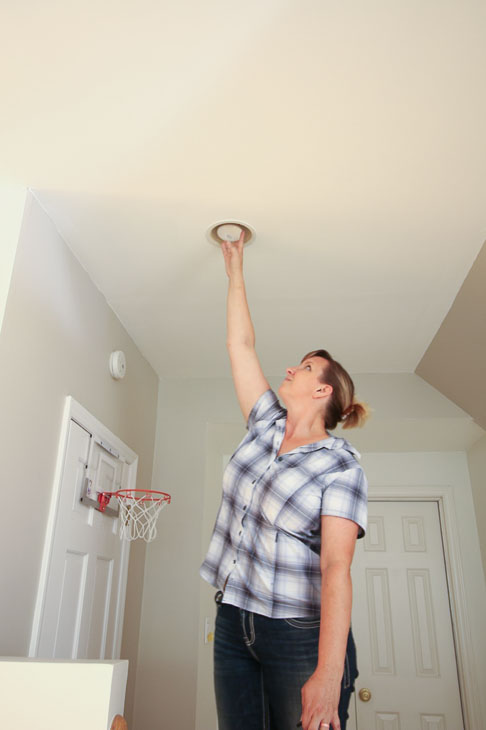
The first step to replacing these recessed lights is to remove the light bulb by simply unscrewing it from the socket. Unless you’re extraordinarily tall, you’ll probably need a step ladder for this project.

Update Ugly Recessed Can Lights with Energy Efficient LED

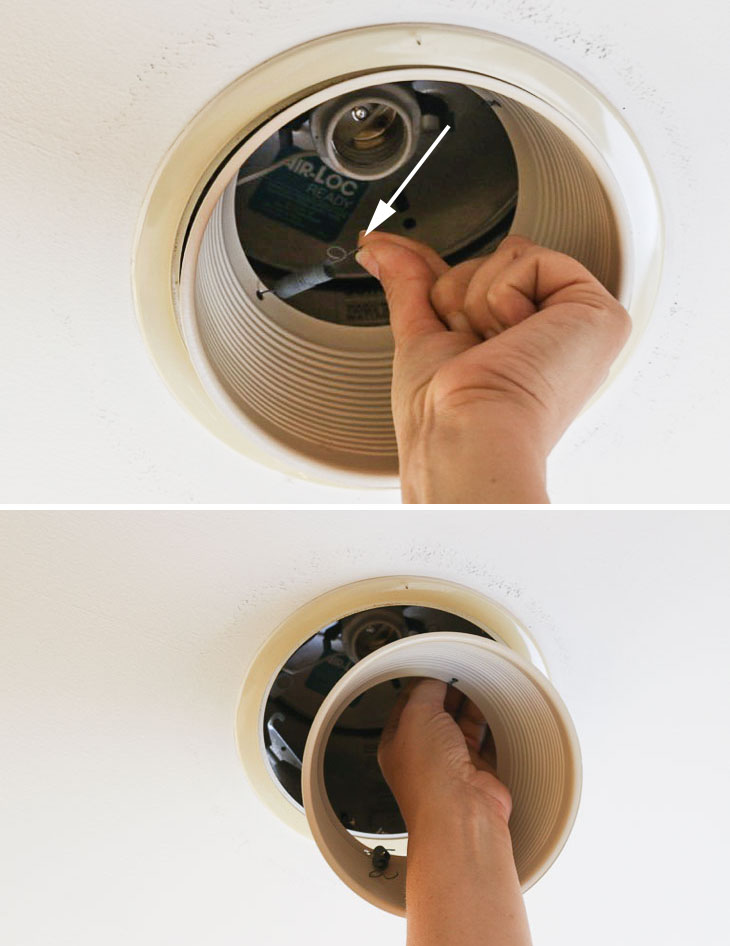
Next, find two small springs inside the baffle, as shown in photo below. They look like a wire with a loop in the center. Pull up and out on the springs to release the baffle inside your can light.

Update Ugly Recessed Can Lights with Energy Efficient LED

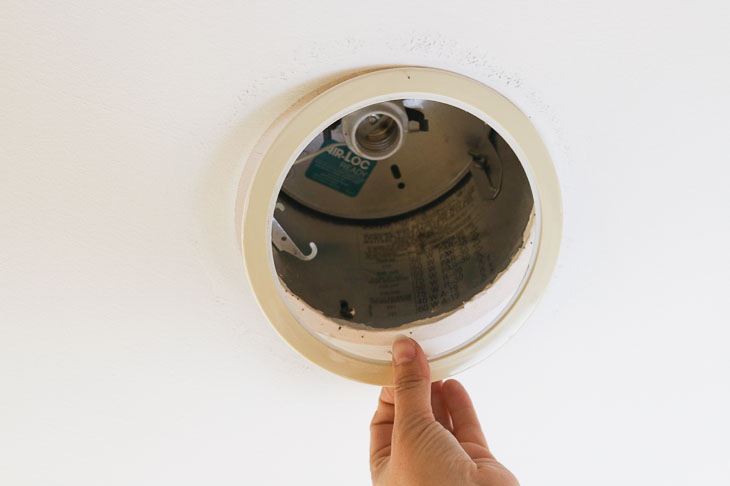
Remove the trim by simply pulling it off the ceiling.

Update Ugly Recessed Can Lights with Energy Efficient LED

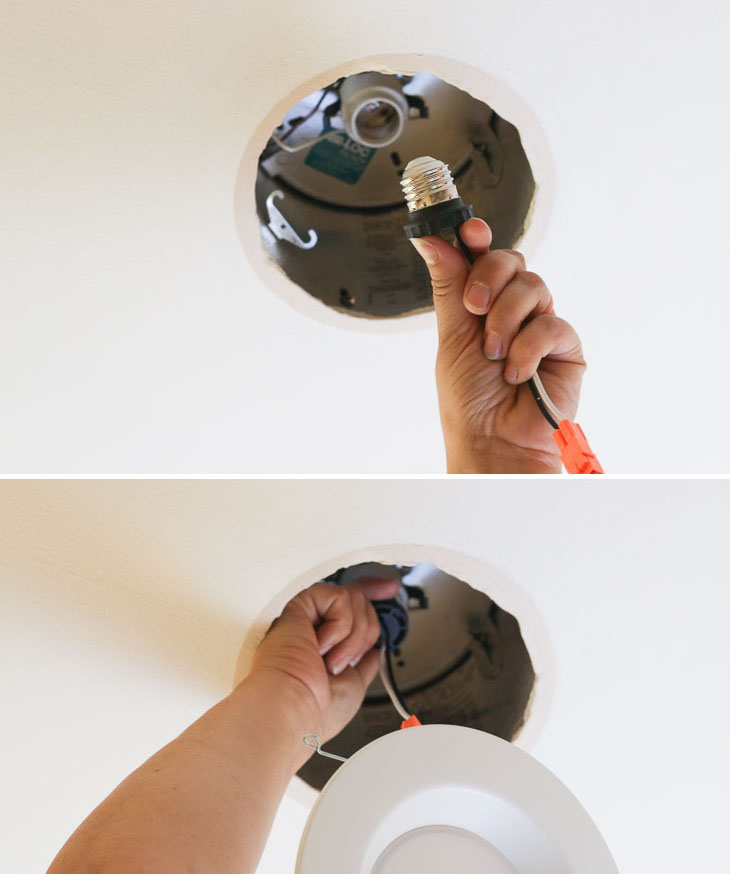
Grab your new retrofit LED recessed light and screw the adapter into the light bulb socket, exactly as you would screw in a light bulb. It’s that easy!

Update Ugly Recessed Can Lights with Energy Efficient LED

Inside the opening, find two metal clips. Squeeze the spring hinges on your LED light and insert them into the clips inside the old recessed can. These will hold the light in place.

Update Ugly Recessed Can Lights with Energy Efficient LED

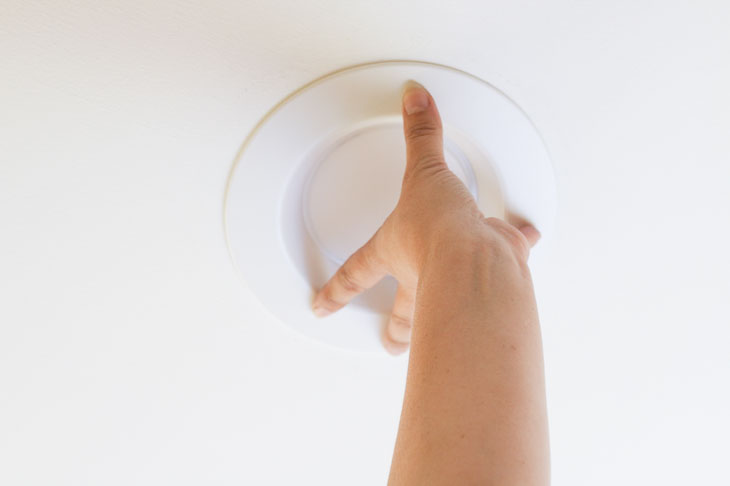
Finally, gently push your light up into the ceiling. Believe it or not, you’re done!

Update Ugly Recessed Can Lights with Energy Efficient LED

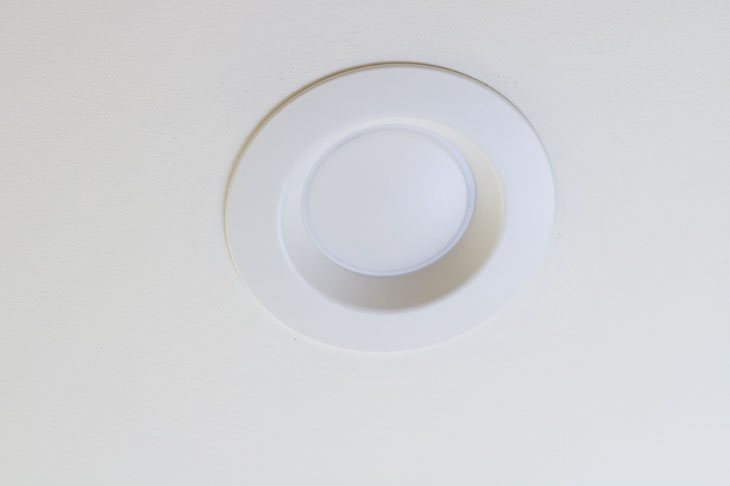
Now you have a beautiful, white, and energy-efficient LED recessed light. Take some time to admire it.

Update Ugly Recessed Can Lights with Energy Efficient LED

Now you can easily change out all the can lights in the room and voila, your lighting is upgraded! This is such a quick, easy, and inexpensive project. There is no point in putting it off any longer.

Update Ugly Recessed Can Lights with Energy Efficient LED

I hope you enjoyed this tutorial. Feel free to share any questions or thoughts in the comment section below. Thank you for reading!

Update Ugly Recessed Can Lights with Energy Efficient LED

Liked this project? I know you’ll love these other lighting upgrades:

Update Ugly Recessed Can Lights with Energy Efficient LED

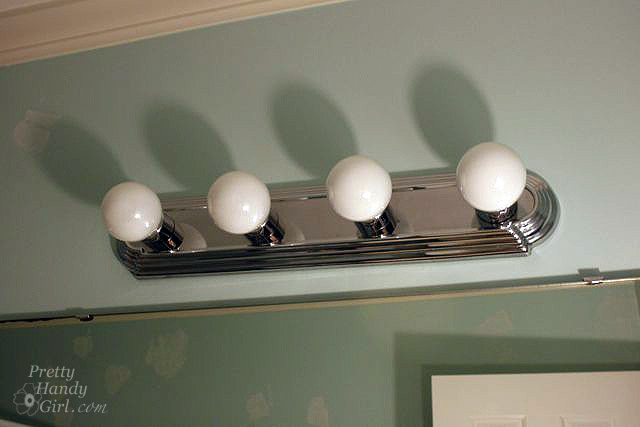
Change Out a Dated Hollywood Strip Light


Update Ugly Recessed Can Lights with Energy Efficient LED

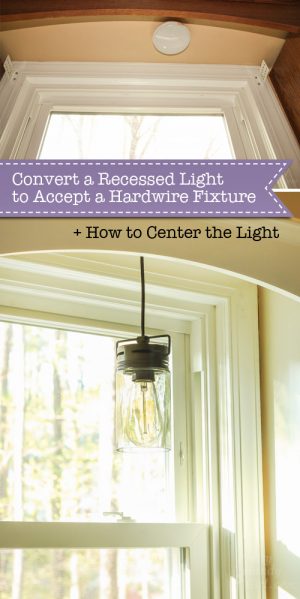
How to Convert a Recessed Can Light to Accept a Hard-Wired Light

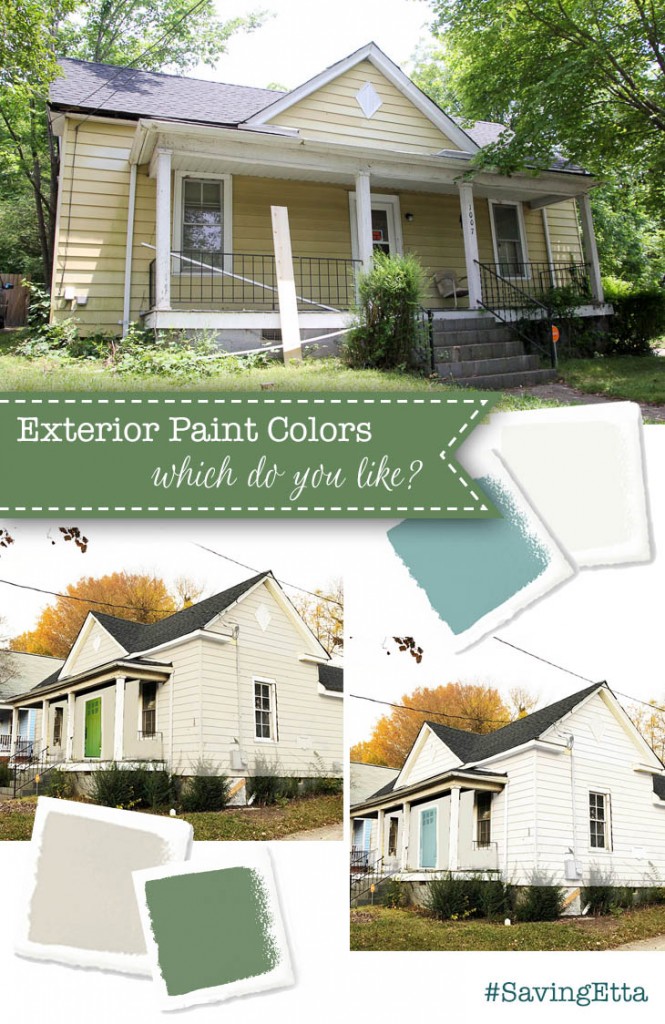
Saving Etta exterior color decisionsExterior Paint Color Scheme at Saving Etta
Things are moving along on the house. I know I owe you another Saving Etta chapter. Please know it’s on my to do list. The past two weeks have been absolutely insane. My electrician, plumber, and HVAC contractors have been putting in lots of hours in the 95 F degree heat to get everything installed and ready for the rough in inspection. I’ve spent numerous hours up and down the ladders helping my electrician with marking light locations and nailing nail plates. As things progress, I am forced to make decisions quickly. Right now it’s time to get the siding up on the house — which means it will be time to choose the exterior color paint scheme for Etta. I can’t believe she will be beautiful again soon.

I’m extremely excited to be working with Magnolia Paint by KILZ as a Saving Etta sponsor. I had the opportunity to meet Chip & Joanna Gaines and try their new paint line last February in Waco, Texas. While there, I fell in love with the Magnolia chalk style paint. It’s thick, smooth, and has great coverage. I can’t wait to use it again on a small project (when I have more free time.)

At the Magnolia Home paint event, I enjoyed talking to one of the KILZ chemical scientists about my favorite interior wall paints and what I look for in a quality paint. I was pleased to find out that the Magnolia Paint Interior Paint offers the same Low-VOC, thick stain coverage, and durability I demand in paint. I’ve been itching to really put these paints to the test, and now I can because I have a whole house interior to paint!

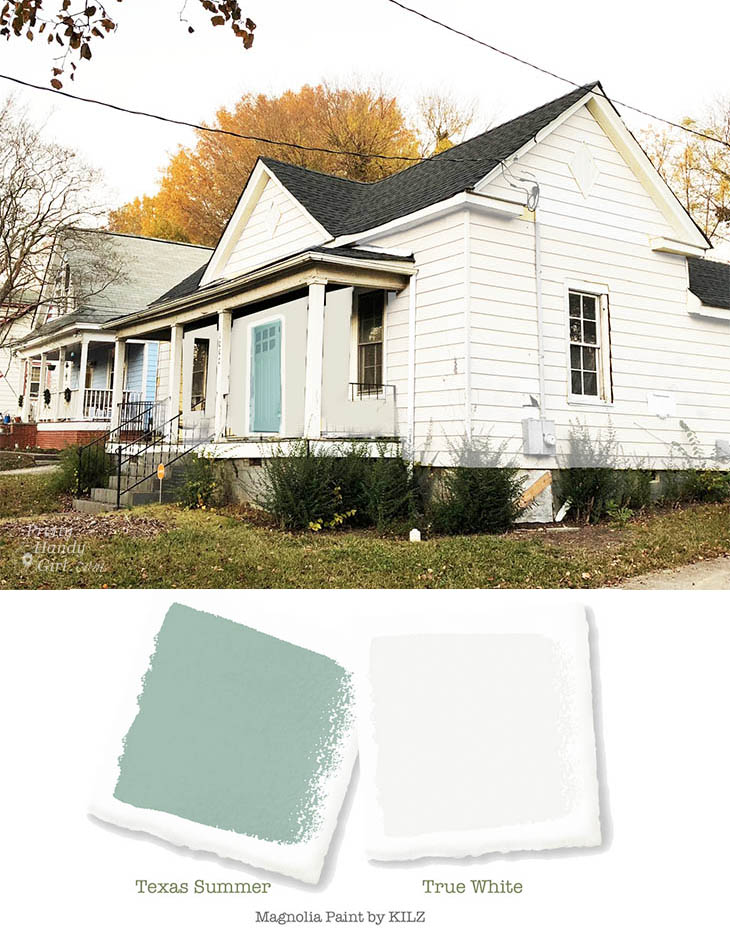
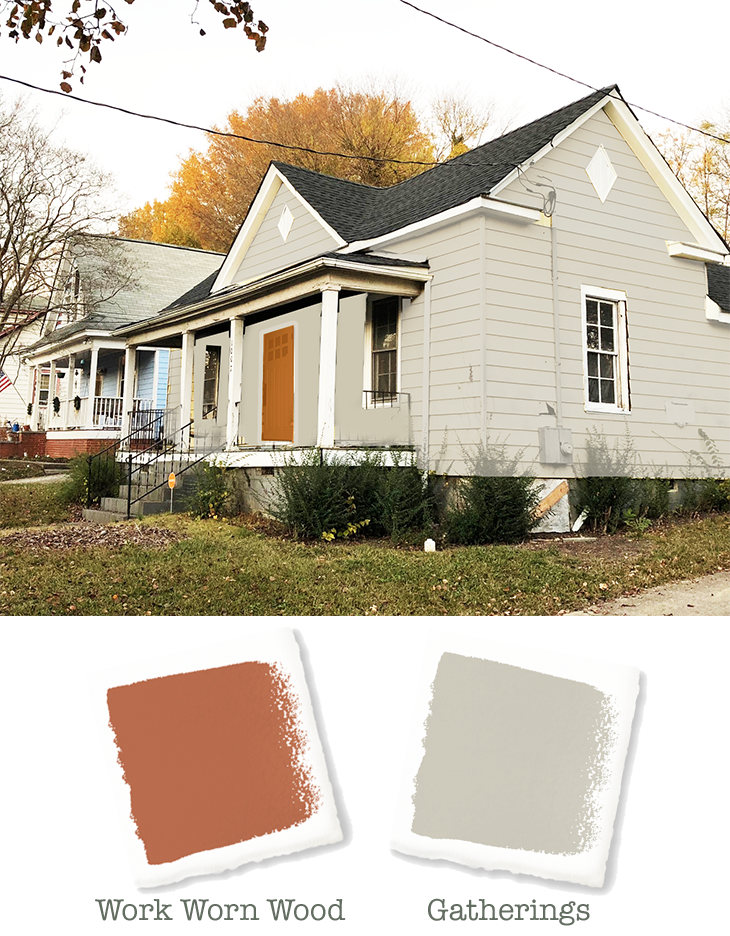
Truth be told, the exterior house colors were ones I’ve been thinking about for a long time. But, I wanted to share with you some of the Photoshop sketches I created for the house so you can let me know your favorites.

I am very partial to the simple white house with a light blue door. Although this is my favorite combo, there is a real rivalry between NC State (Red & White colors) and University of North Carolina (Carolina Blue & White) in our area. In other words, this color scheme would appeal to a UNC fan, but an NC State fan would never be caught dead owning a house with a light blue door. So, I’m leaning toward some other color schemes:

I have always wanted to use orange as a front door color. I love fall colors and this Work Worn Wood paint color has me dreaming of fall again (especially since it’s been in the mid-90’s all week.) Of course, I also like the color because of the orange leaves in the photo. So, I’m wondering if an orange door would still look fabulous in the winter and summer. What do you think?

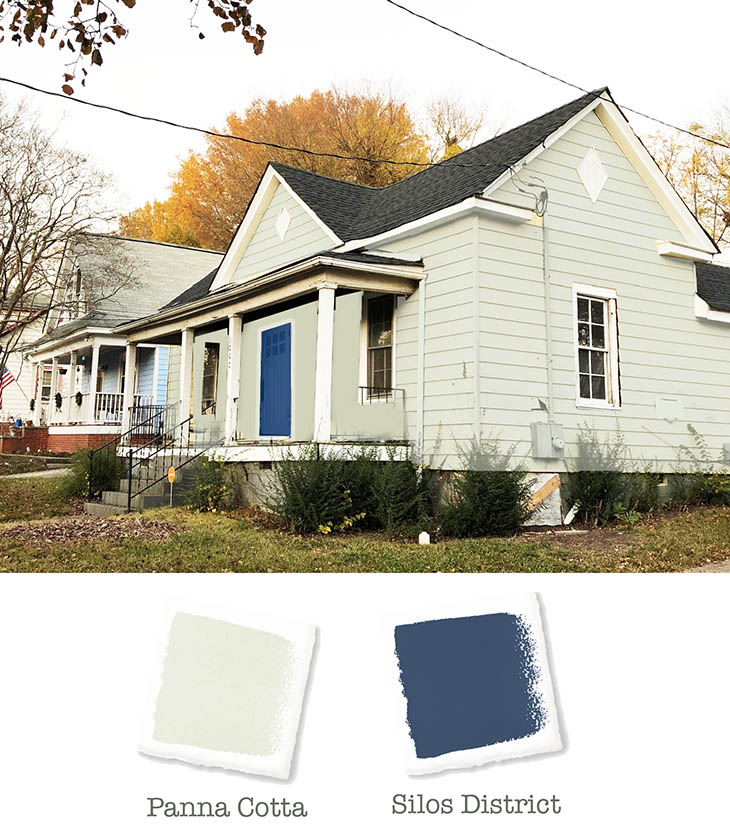
Navy has had a huge resurgence in home design. I’ve seen some amazing houses painted a dark navy with white trim. This is a color combination I wanted to try for Etta, but ultimately my realtor talked me out of it. She likes the color combo, but said the dark colors fade faster. Ultimately I’m trying to provide a low maintenance house for whoever buys Etta, so I chose to stick with light colored siding and reverse the palette by painting the front door navy. What are your thoughts on this combo?

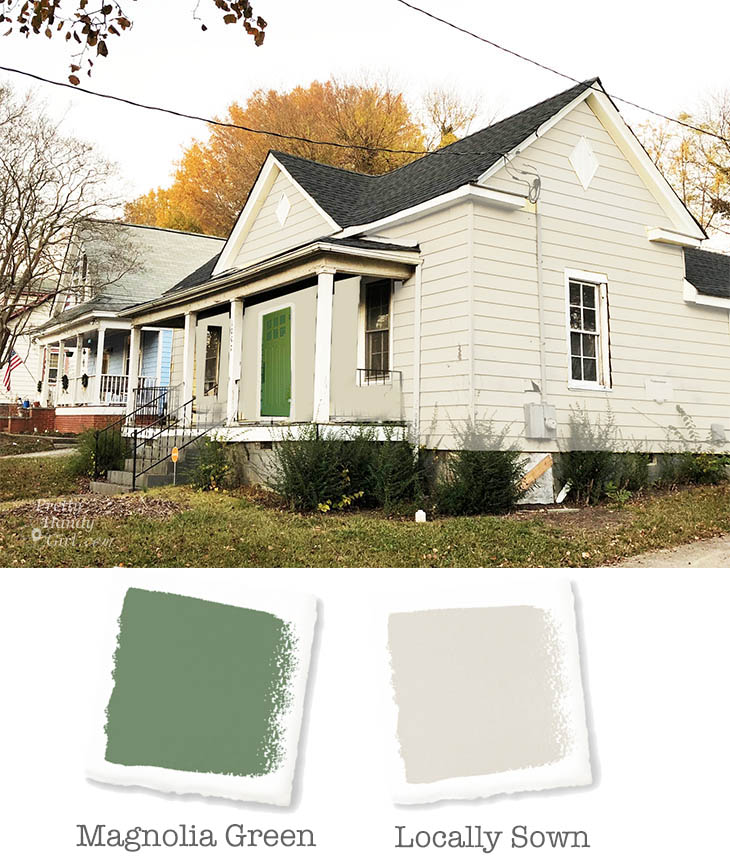
My final options are inspired by nature. Painting a front door green is suppose to be good luck (at least that’s what I’ve heard.) Regarding the siding choice, I bought some samples and painted swatches of Locally Sown, Blanched and One Horn White on foam board to see how they look on a larger scale. Blanched was a little creamy for what I wanted.  One Horn White had a hint of a green undertone (it would be pretty, but I wanted something more neutral for the siding with a green door.) Ultimately, I really like Locally Sown. It’s a very light neutral warm gray (almost white) color.

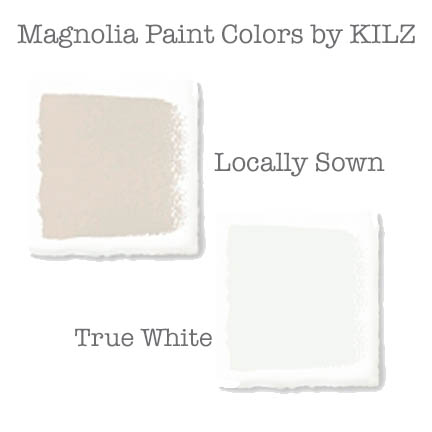
Right I’m leaning toward Locally Sown siding and True White trim colors. Any front door color would look great with these:

Magnolia Home paint Locally Sown and True White

These are the options I mocked up. What do you think? Are there any combinations that appealed to you? Any others I should consider?

signature

Disclosure: Magnolia Home Paint by KILZ is a Saving Etta material sponsor. I’m honored to work with them on this project. All words and opinions are my own. I have not been told what to say. As always I am very particular about the sponsors I work with and you will be told if you are reading a post that has been sponsored or in which materials were provided. 

If you liked this post, you’ll love learning about color compliments and choosing paint colors:

How to Choose Color Harmonies | Pretty Handy Girl

How to Choose Color Harmonies


how-to-pick-paint-colors

How to Pick Paint Colors


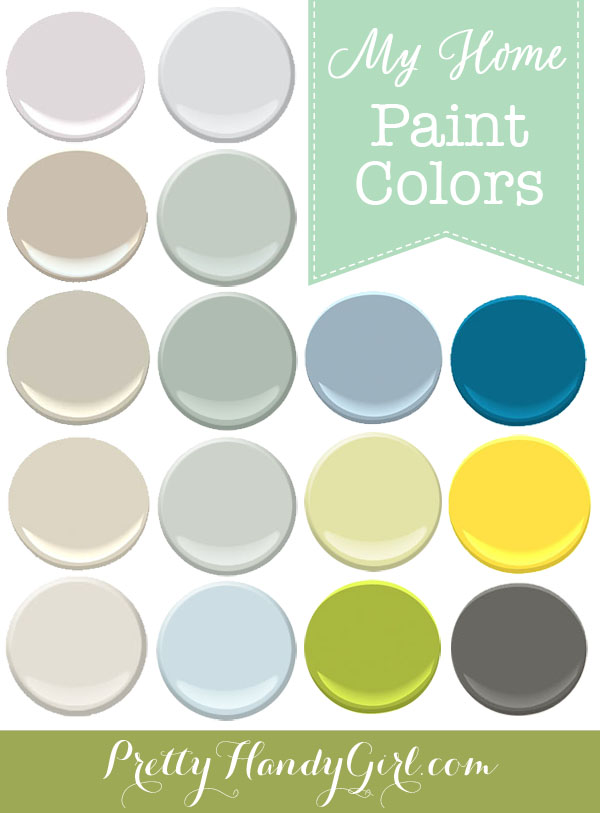
My Home Paint Colors | Pretty Handy Girl

Paint Colors in My Home