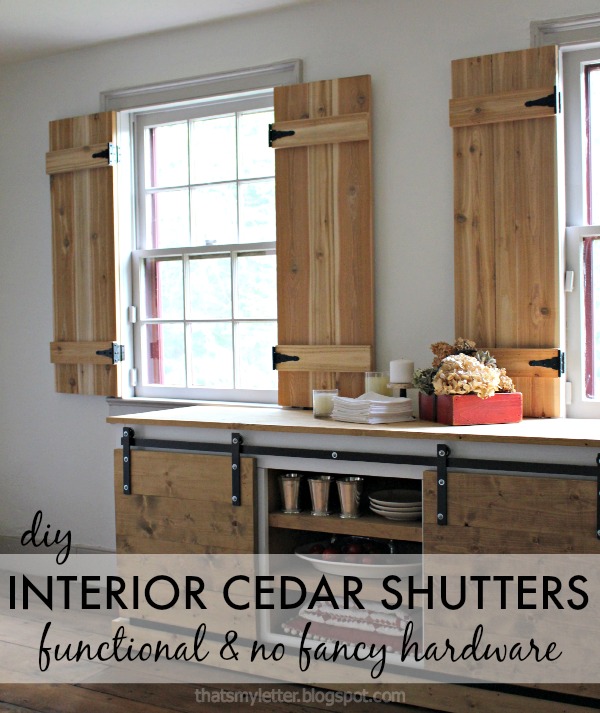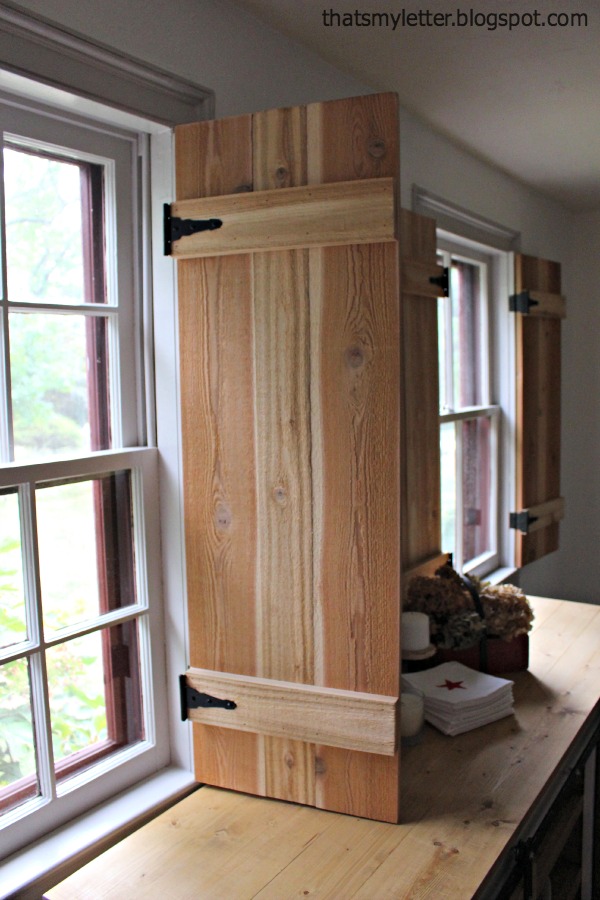
interior cedar shutters

Hello Pretty Handy friends, Jaime from That’s My Letter here today to share how to build functional interior cedar shutters using inexpensive AND readily available hardware.

I have been itching to build some cedar shutters for our living room for quite some time now.  I had two requirements: 1) they had to be completely functional to block out the hot summer sun (which also makes them great for privacy) and 2) use no fancy hardware.  I didn’t want to special order any shutter hardware and I like to build using readily available supplies.

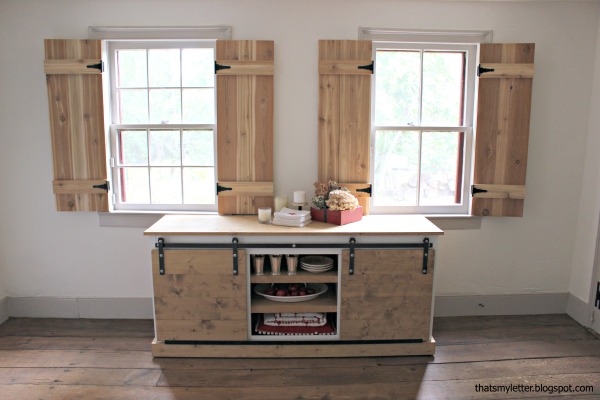
interior cedar shutters partial open

You can find the cedar planks and hardware at your local home improvement store.  Ready to learn how to build the shutters and install these beauties?

interior cedar shutters closed 1

You can see just how much light the shutters will block out once closed.  I plan to keep the shutters open except during the extremely hot summer days.

interior cedar shutters front view

Interior cedar shutters make a great alternative window treatment if you’re not into fabric panels.  They truly are a statement piece (and hopefully distract from the fact that my windows don’t match!).  I also built the sliding door console last Spring, a link to all the details on that piece is in this post.

Materials:

  • cedar boards (1×6 and 1×4)
  • saw
  • nail gun
  • 1 1/4″ finish nails
  • 1×2 pine board
  • 2″ wood screws
  • drill & bits
  • pencil
  • measuring tape
  • wood putty
  • sandpaper
  • paint
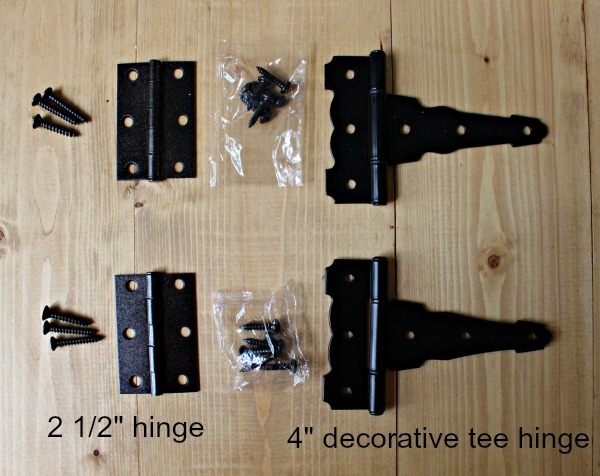
  • hinges (pictured below) & screws

interior cedar shutters hardware

Hardware: (for one pair of shutters)

  • 2 – 2 1/2″ hinge (spray painted oil rubbed bronze) & 12 screws
  • 2 – 4″ decorative tee hinge & 12 screws

Instructions:

MEASURE YOUR INTERIOR WINDOW SPACE.  MEASURE IT AGAIN.  MEASURE IT AGAIN. The top of the window may vary from the bottom. Read more

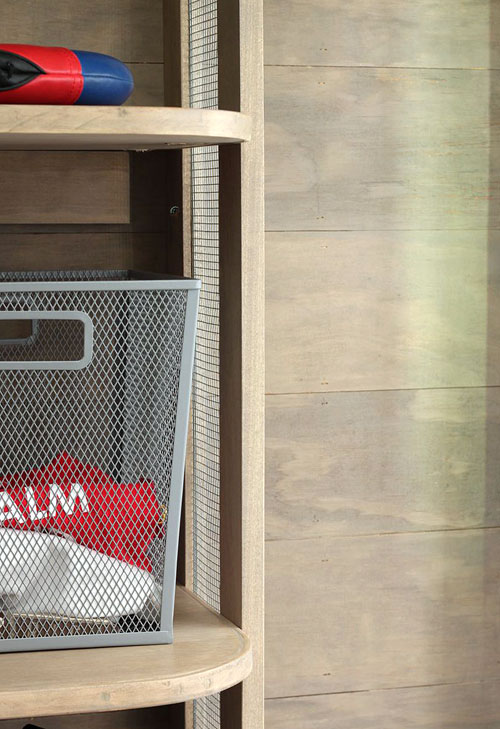
How to Build Custom Rustic Crates | Pretty Handy Girl

How to Build Custom Rustic Box Crates | Pretty Handy Girl

Making custom rustic wooden box crates is super easy. You can build your crates to fit in a book case or use them as drawers in a cabinet. When I was giving my IKEA cabinet a makeover, I chose to remove a door and build custom box drawers instead.

How to Build Custom Rustic Crates | Pretty Handy Girl

Here’s the super easy tutorial so you can build your own:

Materials:
(some links are affiliate links)

Tools:

Instructions:

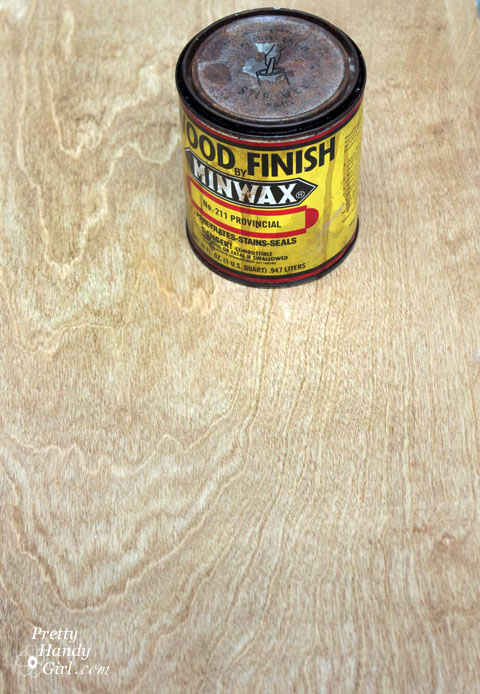
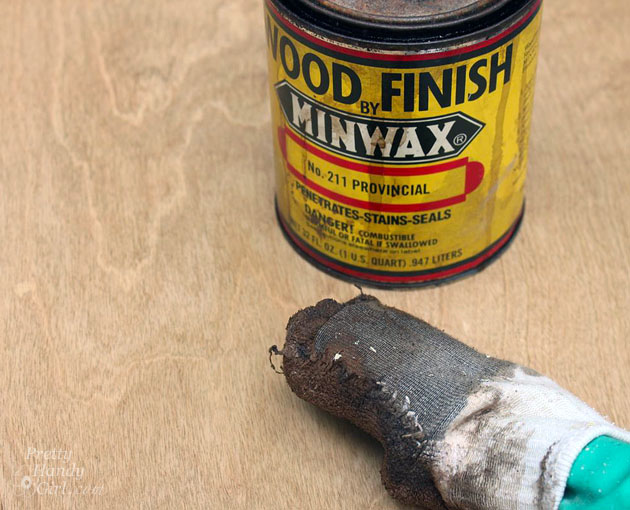
Begin by cutting the 1/2″ plywood into four pieces the size you want for your crate sides.

How to Build Custom Rustic Crates | Pretty Handy Girl

Test fit the sides together. Add a line of glue to the ends of the plywood. Read more

Rustic IKEA Hack Cabinet Transformation | Pretty Handy Girl

Rustic IKEA Hack Cabinet Transformation | Pretty Handy Girl

Rustic is not usually a word used to describe IKEA. IKEA is better know for their modern furniture, simple lines, meatballs and funny Swedish words. Today I’m going to change how you perceive IKEA furniture forever! Are you ready for this? Well, hang onto your hästes (Swedish for horses) because you’re going to see a transformation nothing short of amazing! You too can customize your plain jane furniture by adding legs and cladding the exterior with reclaimed picket fence wood.

This tale starts with a hunter green stained IKEA storage chest that I bought for our first apartment and stained myself (can you tell what decade it was? Hint: hunter green, honey pine, throw some burgundy in there and I’m sure you’ll be guessing no more.) It moved from room to room each time we settled into a new home. But, it never really fit in.

ikea chest in guest room

The cabinet was short and not very deep. Plus, it bore the mark of the popular 90’s hunter green. It was ugly. Why didn’t I get rid of it years ago? Maybe I was attached to it because it was the first piece of furniture I ever stained myself. And it brought back fond memories of calling the fire department because I smelled gas. Turns out you aren’t supposed to use an oil-based stain indoors, especially if you have a gas stove. Lesson learned.

Rustic IKEA Hack Cabinet Transformation | Pretty Handy Girl

Fast forward two decades and it’s still hanging around. The other day as I was lamented the fact that our foyer is too small to fit a cute dresser, I found myself looking at this sad little IKEA chest. I picked it up and put it in our foyer. The fit was perfect in the small space behind the front door! But, it was short and let’s not mention the hunter green again. Plus, it just wasn’t cute. And it doesn’t reflect my warm and weathered style. But, you know me, I wasn’t deterred.

I did some mental gymnastics and began to hatch a plan to create a marriage that would last longer than two decades.

Old picket fence pieces

It began with some pieces of old picket fence that I found by a dumpster. They were perfectly chippy and rustic! Luckily the 3M Lead Check results were perfectly negative. I carefully took the fence apart and removed all the nails.

Lead check picket fence paint

Ready to see how I convinced the two polar opposites that they belonged together — rustic and modern — to create a match made in heaven? Let’s explore this couples’ counseling further:

Read more

Built In Shoe Shelves

Built In Shoe Shelves

Hello, it’s Jessica from Decor Adventures and I’m back this month to show you an easy project to bring some organization to your home. Now that fall is approaching, you might be thinking about getting your closets, foyers and mudrooms in shape for the changing weather. One project that can make your space nice and tidy is adding built in shoe shelves. Today I’m going to show you how to easily build shelves to keep those sneakers, sandals and boots neat and tidy. Plus, it will save you some space too.

Materials:

  • Miter saw
  • Pencil
  • Ruler
  • Level
  • 1″ x 2″ wood, for supports
  • 12″ deep MDF or pine boards
  • Cordless drill with drill bits
  • 2.5″ Wood screws
  • Primer
  • Paint

Optional:

  • Wall anchors
  • Paintable caulk

Instructions:

In our side entry to our house we have a small landing at the stairs leading up to the kitchen. It’s a perfect place for shoes, coats and accessories. Unfortunately, our method of lining up our shoes wasn’t working. I thought built in shelves would be a great solution. The shelves ended up saving us space and giving us more room.

Before Building Shelves

Sometimes those awkward spaces can be a blessing in disguise.

Instructions:

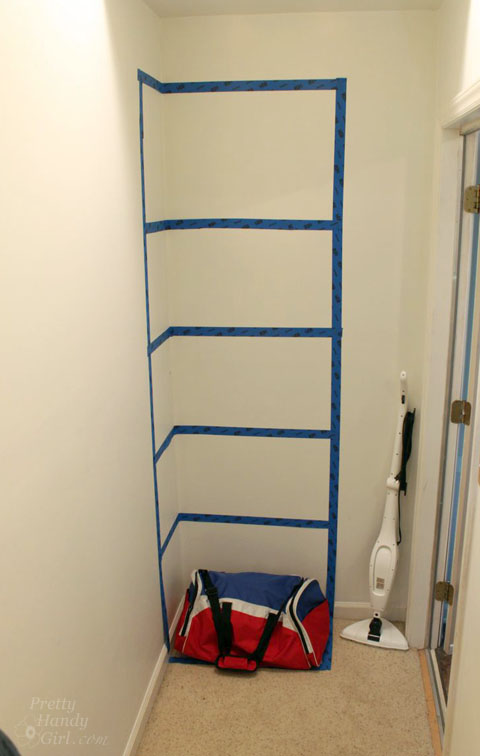
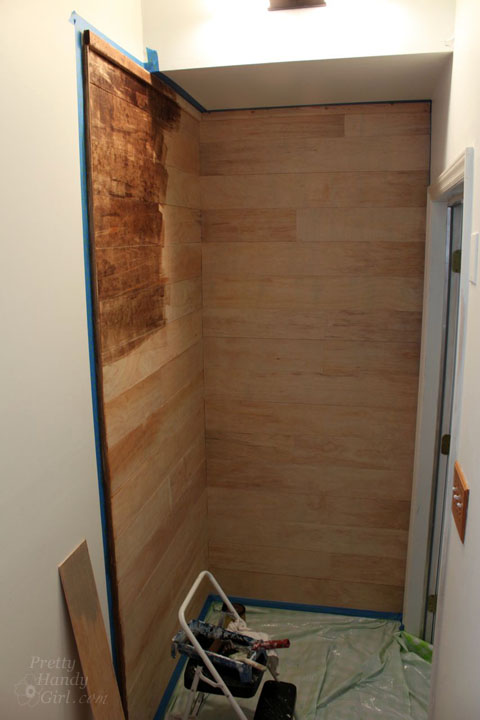
1. First, prep the area by removing anything you were storing and sweeping it out. If you want to add a fresh coat of paint to the walls, now is a great time to do that.

Preparing to Build Shelves

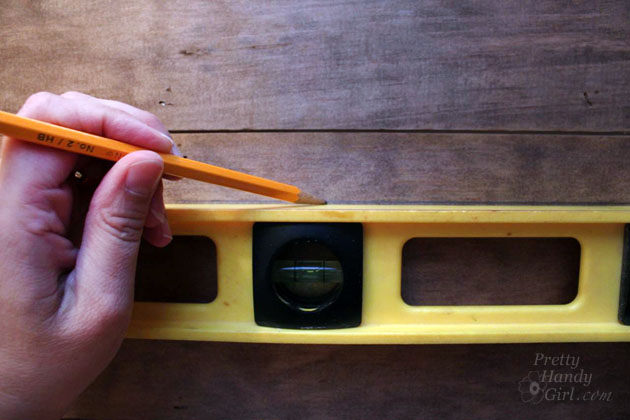
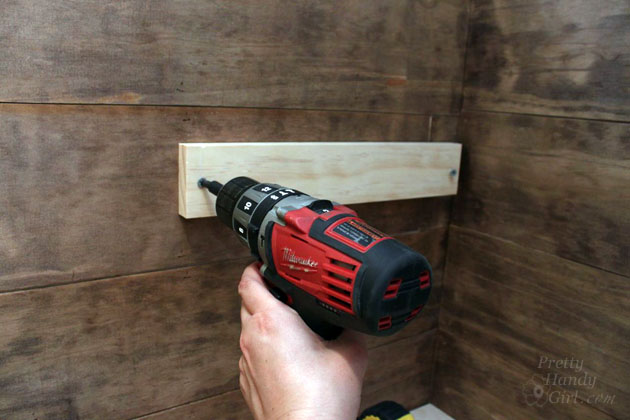
2. Measure how wide and deep you want the shelves to be. (Most shoes fit on 12″ deep shelves, unless you are Big Foot.) Mark the walls at the height of each shelf. (We made the lowest shelf tall enough to fit boots underneath on the floor and the highest shelf about half that height for items like sneakers and shorter shoes.) Read more

how to stamp with potatoes

Hey there! It’s Melissa from The Happier Homemaker back again with a fun and easy DIY tutorial you can even get the kiddos involved with! I’ve been noticing block printing coming up a lot in my home decor magazines and catalogs lately. Last week when I was prepping a little rainy day potato stamping activity for my 3 boys, I decided it may be time to try a little block printing DIY of my own.

Supplies:

  • Flour Sack Tea Towels
  • Large Raw Baking Potato
  • Knife
  • Craft Paint
  • Fabric Medium
  • Iron and Ironing Board

Instructions:

Cut your potato in half and use your knife to {carefully} cut your design.  Simple shapes work best for this type of stamping.

diy potato stamped towel

On a paper plate, or paint palette, mix your craft paint with fabric medium in a 2:1 ratio (or according to fabric medium instructions.) Read more