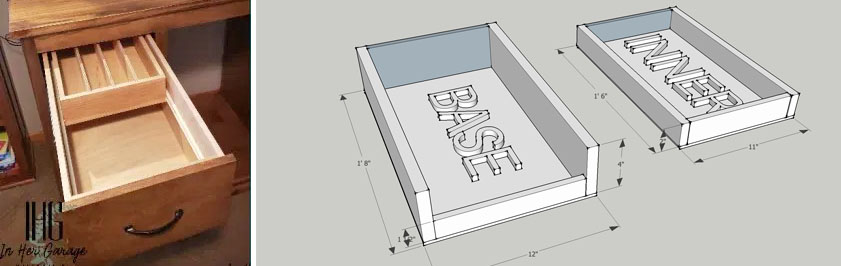
Have you ever wanted to maximize the space in one of your drawers? Do you have a drawer that acts like a black hole? Learn how to build a DIY Drawer in a Drawer and watch your organizational dreams come true.
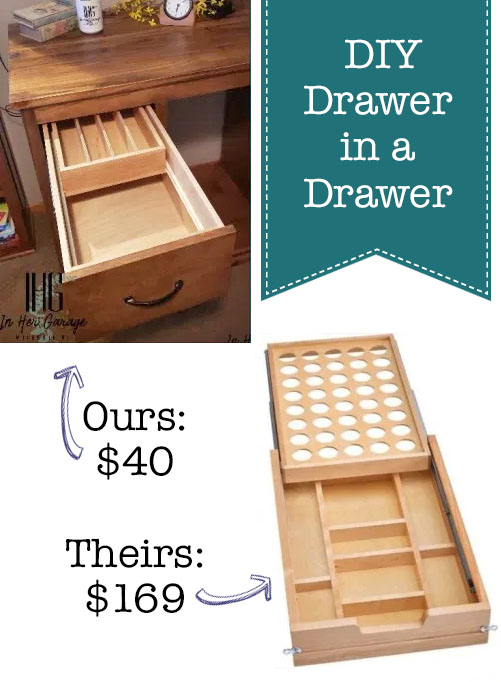
DIY Drawer in a Drawer

Hi! This is Kristen from In Her Garage, and I’m here with a tutorial just for you. We all love organization, but in almost every room of the house we have a drawer that houses those tiny little necessities. And inevitably they end up scattered and lost within the drawer depths. Today I’ll teach you how to build a DIY drawer in a drawer to keep those little things easily at hand while still allowing use of the drawer beneath. You could just build a small separate top drawer, which would be fine if that is the outward aesthetic you want, but if you desire your uniform size drawer front, then this is a perfect solution. And, great news…this can also work as a modification to an existing drawer.

There are similar drawers available online but chances are they won’t fit the size drawer you’re building or already have. Not to mention the cost! Why not just do it yourself?!

I have built this drawer several times and each time I made it for a coffee bar/beverage center I was building. This drawer makes the perfect K-cup organization drawer. My clients had complained, “I’m sick of these K-cups laying all over the drawer!” or “I do not like the look of the K-cups on the tabletop. It looks like clutter!” I was thrilled to be able to help with this issue by building a DIY drawer within a drawer. Once you know how to make this insert drawer, you can use it to hold more little things such as:

  • Office, craft room, kid’s craft room- holding paper clips, push tacks, post-its, those sticky page marker tab things, pens/pencils, markers, scissors, legal pads
  • Bathroom- makeup, hair ties, bobby pins, Qtips, all the little creams, first aid supplies
  • Junk drawer!!- batteries, keys, phone chargers, pens/pencils, tape, rubber bands

I’m sure the list could go on but let’s get down to it and start making this drawer happen!

(I’ve included affiliate links for your convenience. I earn a small percentage from a purchase using these links. There is no additional cost to you. You can read more about affiliate links here.)

Tools:

Materials:

Please read through the instructions first to gain a basic understanding of what you will be building.

Instructions:

Figure out the size of your drawer you want to build. Then select a height for the inner drawer based on what will be stored in it.

  • If you plan to use it as a K-cup organization drawer allow at least 2” inches in height. (Standard K-cup dimensions are 1 ¾” tall x 2″ top diameter and 1 ¼” bottom diameter.)

Next, you will need to figure out the dimensions of the inner drawer.  Follow the instructions for the drawer slides you chose for the base drawer for sizing. (My slides dictated 1/2″ for each.) The front and sides of the base drawer should be cut to the same height BUT the back of the drawer should be shorter to allow the inner drawer to roll away. See the photos below.
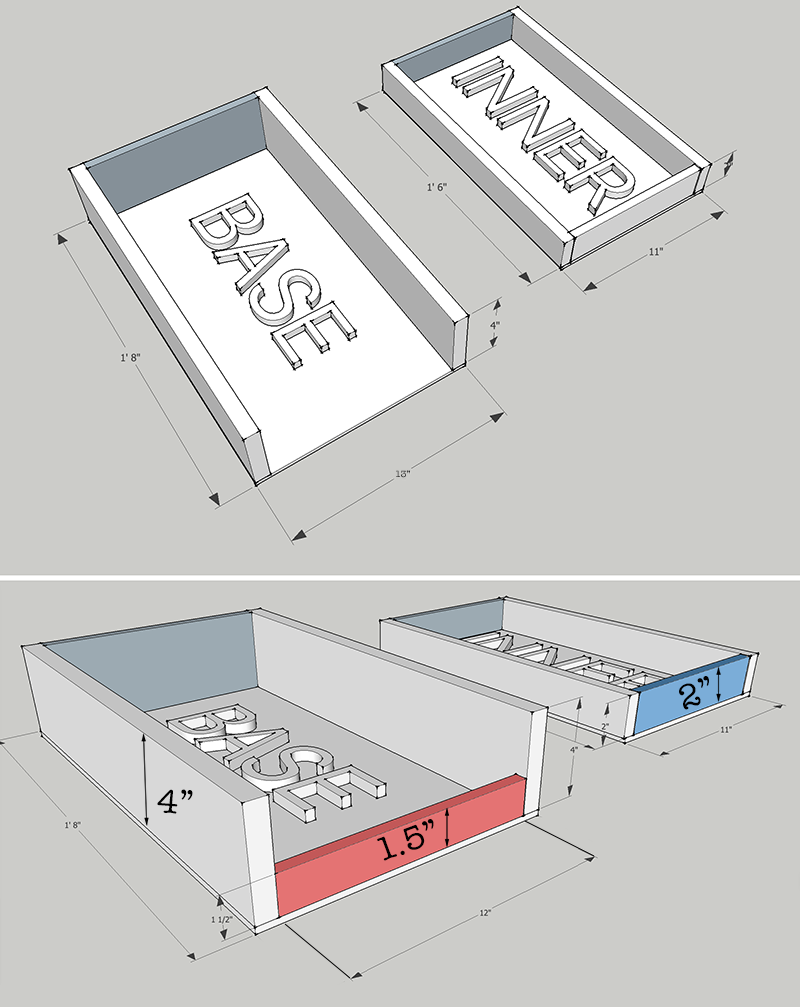
The equation to figure out the back of the base drawer: 

The inner height of the base drawer  – (the height of the inner drawer + 1/2”) = Back of the base drawer

Using the example as shown above:

4” inner base drawer height – (2 ” inner drawer + 1/2”) = 1.5” back of the base drawer

If you are modifying an existing drawer, cut the back panel to this same height using a jigsaw.

Feeling good about that? Great!

Building Your Inner Drawer:

Now it’s time to assemble the inner drawer components. (Double-check your measurements below):

  • Height- you’ve already chosen this dimension
  • The width will be 1 inch narrower than the inner width of the base drawer to allow room for the drawer slides
  • The length will be slightly longer than the length of the drawer slide so the drawer meets the back of the base drawer.
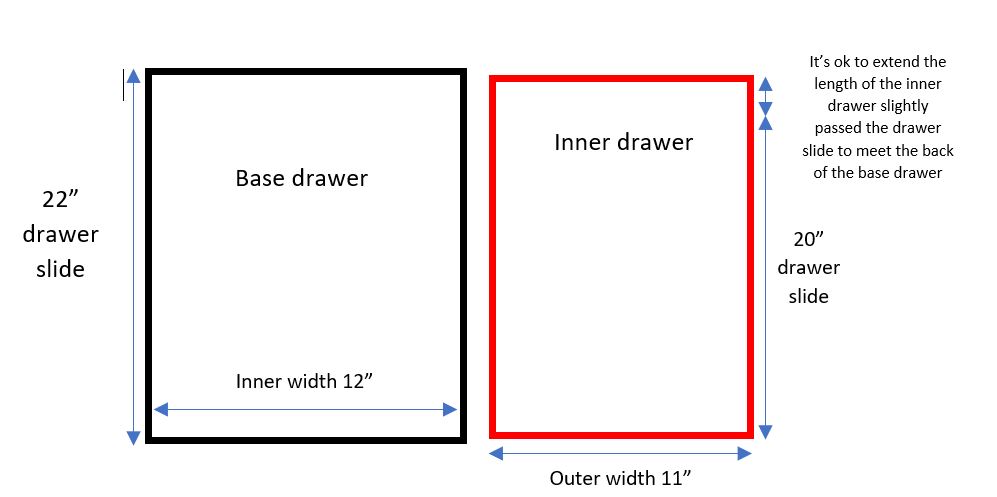
Assemble the inner drawer using wood glue and brad nails.

Installing the Drawer Slides for the Inner Drawer:

Set out the base drawer components you pre-cut.

Note: Installing the drawer slide is the opposite of what you would normally think. You always pull a drawer open toward you but this drawer will operate by being pushed away from you to reveal the base drawer beneath it. Meaning the front of the inner drawer slide is now the back. You’ll see what I mean in a minute.

First, take the two sides from the base drawer and mark the front and top of both sides. Now, using your combination square, mark the height of the inner drawer on the sides of the base drawer measuring from the top down. Add about a 1/8” to let the drawer sit slightly lower than the top of the base drawer.

Now figure out where the “front” (actually the back) of the inner drawer slide will be attached.  (Allow 1/8” from the front of the base drawer.) Remember to take into account whether or not the base drawer front attaches inside the sides (as shown in the picture below) or in front of the sides.  If the front does attach between the sides, be sure to allow for the thickness of the drawer front when attaching the slides to the sides.
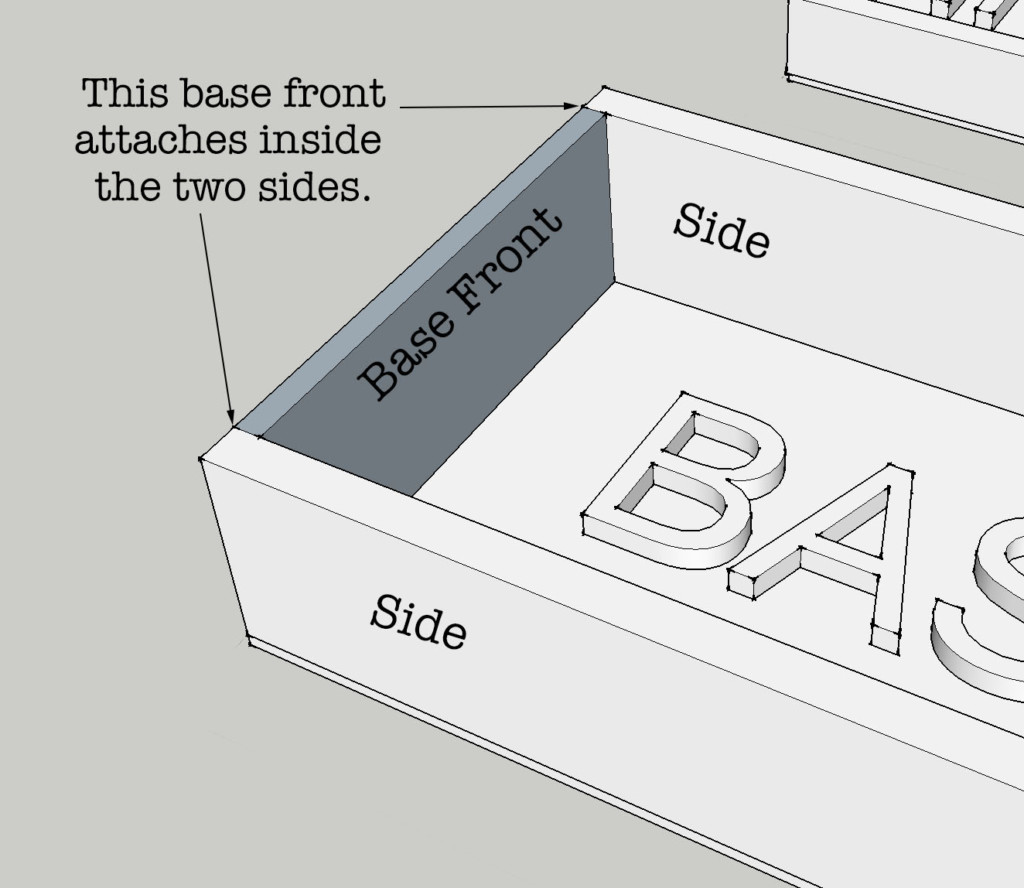
Mark a pencil line where you will be attaching the drawer slides. Attach the inner drawer slides to the inside sides of the base drawer. Lining up the “front” and bottom of the slides with the two lines you’ve drawn. This video might help.

Attach the other piece of the drawer slide to the inner drawer bottom (double-check you are lining the back of the slide up to the “front” of the drawer. Normally you would align the front of the drawer slide to the front of the drawer but what was the front of the drawer is now considered the back.)

Now that the drawer slides are installed, Assemble the base drawer (pretend there are drawer slides in the photo below.)
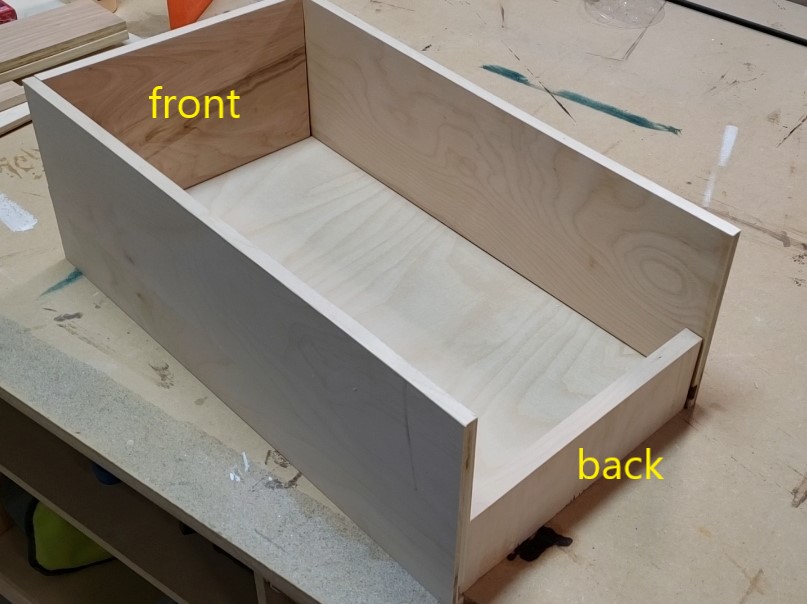
Finishing Your Drawers with Edge Banding:

For a finished look, cover the exposed edges of the plywood with edge banding. I prefer iron-on edge banding because it is easy, inexpensive, and finishes nicely. Brittany has a great tutorial for how to finish plywood edges which includes iron-on edge banding, click here to check it out.

Nesting the Inner Drawer:

Slide the inner drawer into place inside the base drawer. Now you are ready to set your base drawer back into the cabinet it goes in.  That’s it. Good work!
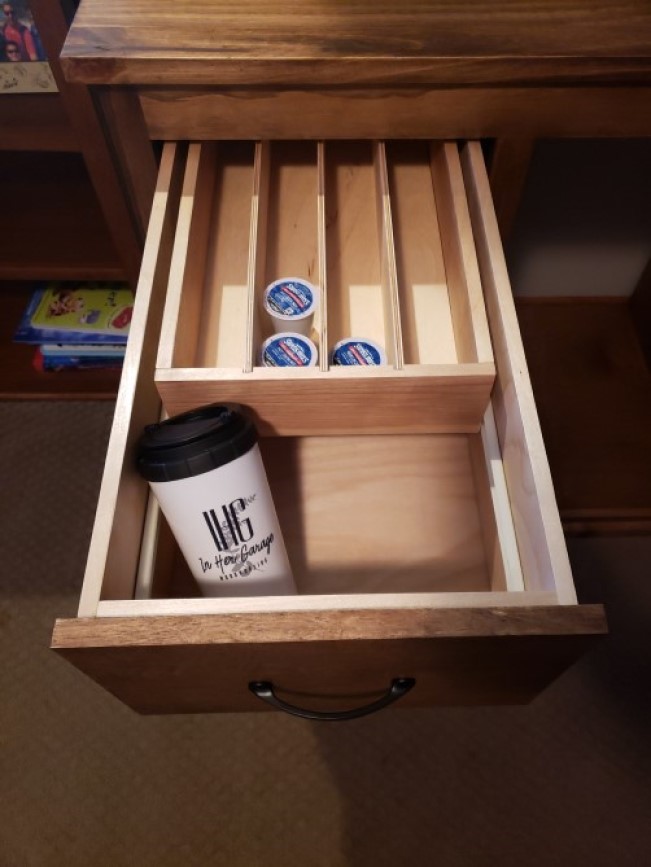
Optional last step: you can add little felt pads to the front and back of the inner drawer. This will make closing the drawer whisper quiet.  Most people will pull the inner drawer closed before closing the base drawer after use but it isn’t necessary if there is a back to the entire cabinet piece. The inner drawer will simply hit the back of the cabinet and be pushed back into place when closing the base drawer so having little felt pads on the back of the drawer will make this quieter and having pads on the front of the drawer will help with this too.

Good luck keeping all the little things organized and I hope this DIY drawer in a drawer will come in handy for any room in your home! Happy Building!

Find more projects and inspiration In Her Garage and follow my DIY journey on Instagram and Facebook.

Hi! I’m Kristen, from In Her Garage, and I am a self-taught woodworker and DIY fanatic from Minnesota where I live with my husband and our two daughters. Between being a wife, mom and, registered nurse, I try to make as much time for DIY as possible. My love for building came after our family built our current home in 2015. After we moved in, we needed furniture and instead of spending massive amounts of money to order the pieces we wanted I decided that I would build them myself. I started with a buffet table plan from the fabulous Ana-white and quickly set out to remodel my entire home office.

Since then I have started a side business building furniture for the people in my community. I love hearing my clients talk about the pieces they wish they had whether it be a rustic buffet table, a one drawer side table, or a toy box and then making it a reality for them. While starting my small business it made perfect sense that I would document my building journey so I simultaneously launched the In Her Garage blog and I love sharing my plans, tips and tricks.

Making something beautiful with your own two hands through a little preparation and determination is an amazing feeling and I hope to bring inspiration and know-how to those looking to tackle a big or small project.
I am so glad that you found me here and please feel free to connect with me on Pinterest, Instagram, and Facebook to see what I am working on right now.
Clean out and organize your junk drawer

I hope everyone had a lovely Holiday and a thought-provoking New Years. Thought-provoking? Well, I always find myself thinking more than usual around New Years. How about you? I think about the past year and the year to come. And, like most people around this time, I think about any goals I want to achieve in the New Year. I’m sure you can relate to wanting to declutter. Welcome to the Declutter Challenge for 2020.

Take the challenge and finally declutter your home!

Declutter Challenge for 2020

I know a lot of us strive to be tidier. To clean our house, clear the clutter, and get more organized overall. I think the New Year is a great time to do this. In fact, it’s one of the first things I do every new year. I start purging with the Christmas decorations, as I’m taking them down to be put away. Any decorations that didn’t get used, and are not precious to me, get donated. I do this every year and my Christmas decor stash has stayed very manageable this way.

But that’s just one example. Today, I want to share with you a little declutter challenge that we can do together.

In this free printable pdf, you will find a list of areas to clean out each day. Feeling more motivated? Feel free to tackle two or three areas a day! Don’t forget to check the box when you have completed cleaning and organizing an area. And make sure to pat yourself on the back!

I also wanted to share a few tips to help you along the way in this decluttering challenge.

How to Declutter Your Home

Before you start on any area, collect three things:

  • a trash bag,
  • a box for donations
  • an empty laundry basket

Any items to throw away will go into the trash bag. Any items that should be donated, can go into the box. Lastly, any items not where they belong get put in that empty laundry basket to be put away later.

If you need an extra push, check out my list of 59 things you can get rid of right now.

Paperwork

The best way I found to tackle all that paperwork is to digitize it. You don’t have to create any elaborate systems. Simply switching to online bill pay and paperless billing will help a lot. Reduce mail by getting yourself off those junk mail and catalog lists! You can easily remove yourself using this free service on the Catalog Choice website.

Keep one small area designated for paper mail, and make it a point to go through this pile weekly. Keep a paper shredder handy so you can securely dispose of papers as they come in. It’s usually not necessary to keep product manuals and menus, most of these can be found online these days. Just recycle them and use the space for something else.

Organizing Kids Artwork

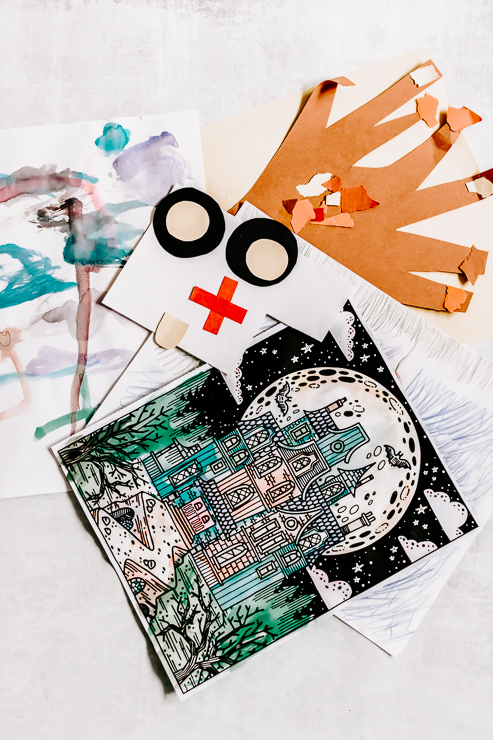
What about kids artwork? My philosophy has always been to keep the favorites and display them proudly (but recycle the rest.) You can display them as a lovely gallery wall of framed prints that your children created. There are also services like ArtKive that create a memory book or collage print of all their artwork for you.

Junk Drawer

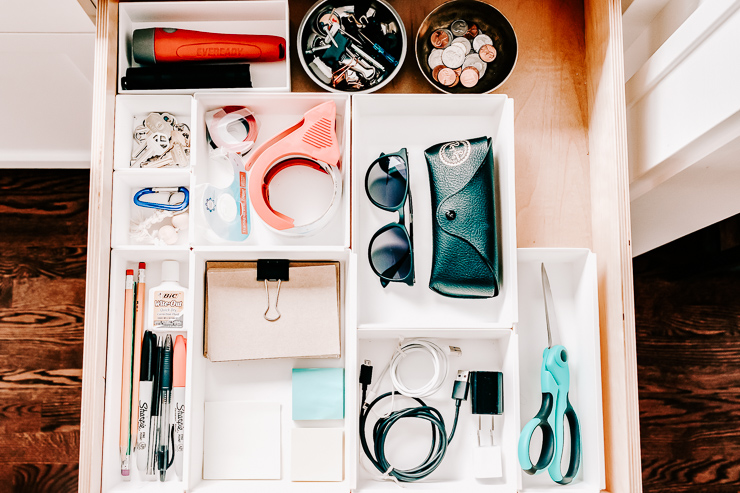
Clean out and organize your junk drawer

Things are much easier to keep organized when we don’t have a lot of things. When you go through your junk drawer, keep only the bare minimum of items needed. Few of us really need twenty five pens and three staplers in one drawer. Use drawer organizers to keep items corralled in their own spaces.

Magnetic Trays for Holding small parts

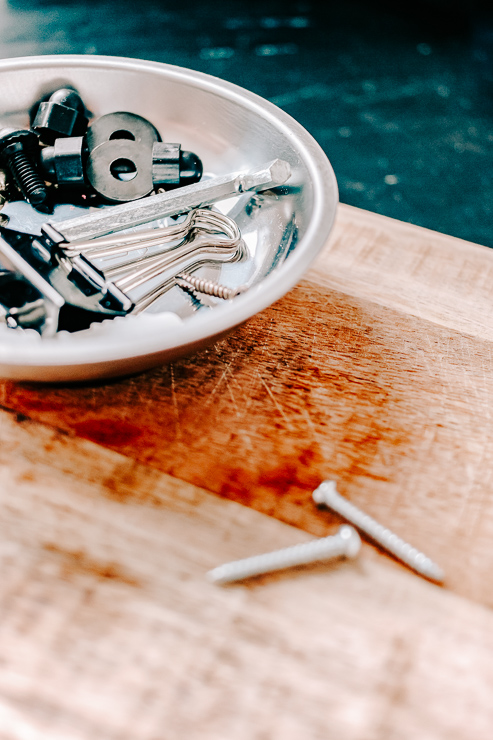
I also love using those magnetic parts tray. They’re perfect for keeping those loose screws, paperclips, binder clips, and the like together and not rolling around in your drawer.

Closets

Organize your Closets

Closets tend to take up the bulk of our decluttering time. For most closets, I find it best to take everything out of the closet to see what you have. This is where you really need to be honest with yourself. Only keep those items that you really love. I don’t recommend saving clothing for the “ifs or maybes in the future.” Only keep what you wear now, the exception being formal wear and business attire. Shoes are another biggie here! It’s amazing how many pairs of shoes we can accumulate over time.

Where to Donate

We are probably all familiar with Salvation Army and Goodwill. Here are some additional ideas for donating your things to those in need:

  • Your local library will sometimes accept book donations.
  • Veterinarian offices are usually in need of old towels and sheets for pet beds.
  • Habitat for Humanity ReStore accepts used appliances, household goods, building materials, and furniture.
  • Local Shelters, Food Banks, and Churches
  • Hospitals, Police, Fire Departments, and Daycare Centers will accept used toys.
  • Local Schools will sometimes have seasonal clothing drives aka Coat Collections.

Don’t forget your donation receipt when you drop off your goods. These receipts help you save money on your taxes the next year.

So it’s official!  Consider this challenge your excuse to declutter!  Even if you end up crossing off just a few of the areas on your declutter challenge printable, that’s still a great start.

Don’t forget to download and print your Declutter Challenge Printable Right Here! 

For more organization tips and tricks, check out Love your Home, Not the Stuff – Taming the Clutter.

Here’s to a more organized 2020!

karen signature

~ See More of Karen’s Tutorials ~


karen from decor hintHello!  I’m Karen, the creator of the Home Decor and DIY Blog: Decor Hint. I’m a Native of the East Coast, but I currently live in beautiful Seattle with my hubby, our two wonderful children, and our spunky wheaten terrier.

You can usually find me with some sort of craft in one hand and a coffee in the other. And I’m always rearranging furniture or moving lamps from room to room. I have a passion (read: obsession) for decorating, DIY, and gardening. In short, I love making my house into a home.

Like many, I’m inspired by what I see in home decor magazines, but I’m not so inspired by the price tags.  Consequently, I love finding and creating beautiful budget-friendly home decor items. In a head to head competition, I bet you’d never know the difference between the designer items and my DIY creations!  Many of my DIY projects focus on sewing, crafting, upcycling and organizing. Some of my favorite projects have been making pretty wreaths, sewing my own tassel hand towels, and crafting these trendy wood bead garlands. I can’t wait to inspire you and spark your creativity through my DIY projects.

You can always connect with me on Pinterest, Twitter or Instagram.

DIY Mid Century Modern Shelving for Less
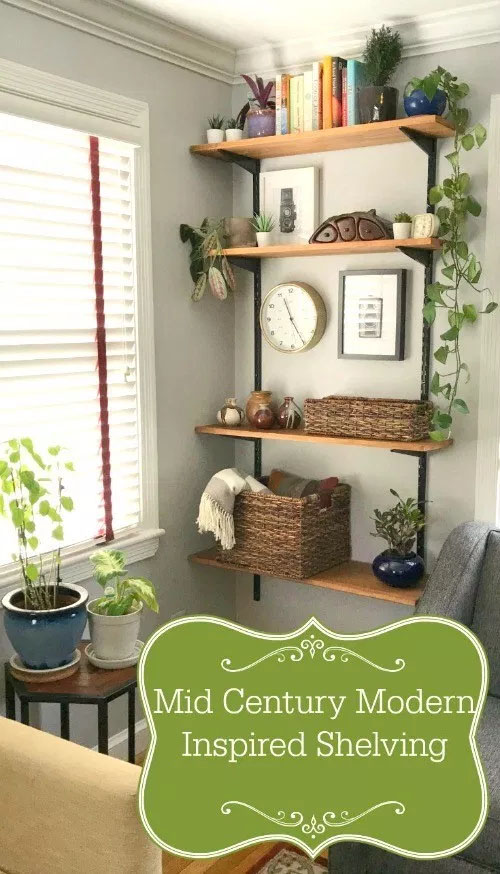
DIY Mid Century Modern Inspired Shelving

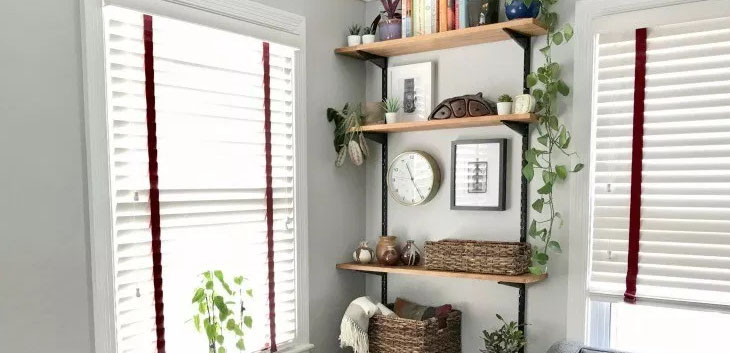
Mid century modern inspired shelving is all the rage, and for good reason!  It looks great in most homes, has clean lines, and definitely sparks joy in my house.  The only downside to the mid-mod look is the cost.  Even replica pieces are pricey, like this shelving unit from CB2 I’ve been eyeing for months. Worry not, because you can DIY mid-mod inspired furniture with a bit of vision and some elbow grease.

Follow along and learn how to make this mid-century modern inspired shelving for under $150! These plans are for a two-track unit with one shelf per level.  You can alter the design to create a corner unit. For longer shelves, use a more intricate 3, 4, 5, or even 10-track system.

Watch the step-by-step, DIY Mid-Mod Inspired Shelving video:

Tools and Materials:

(I’ve included affiliate links for your convenience. I earn a small percentage from a purchase using these links. There is no additional cost to you. You can read more about affiliate links here.)

Instructions:

Step 1-  Make a plan

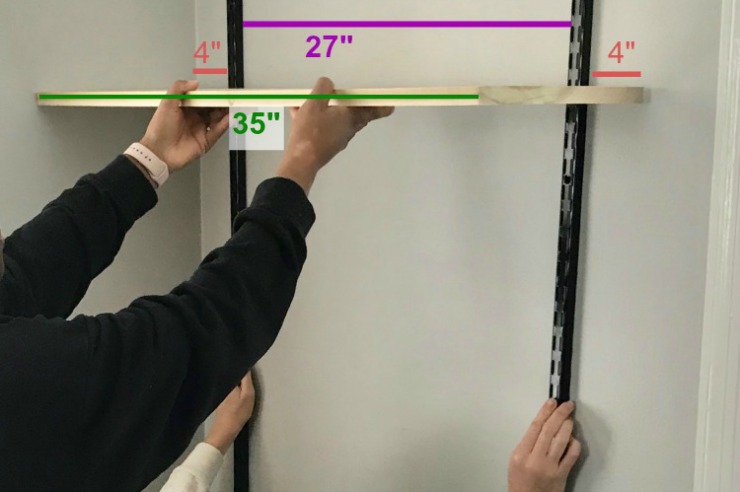
Determine the desired length and placement of your shelves.  This is important because you are going to center the tracks to the shelves rather than to your wall.  I used the dimensions below:

Spacing for Shelving

The distance between the two tracks should not exceed 36”, both for structural integrity and aesthetic purposes.  Somewhere in the ballpark of 26” apart looks best.  Typically, your shelves will be 6”-10” (3”-5” on each side) longer than the distance between the two tracks. The maximum shelf length that can be held by two brackets is 46 inches.  If you want longer shelves,  add more tracks and brackets to support the added length.

Cut your boards to the length you like, or have them cut at the hardware store.

Step 2- Attach the tracks

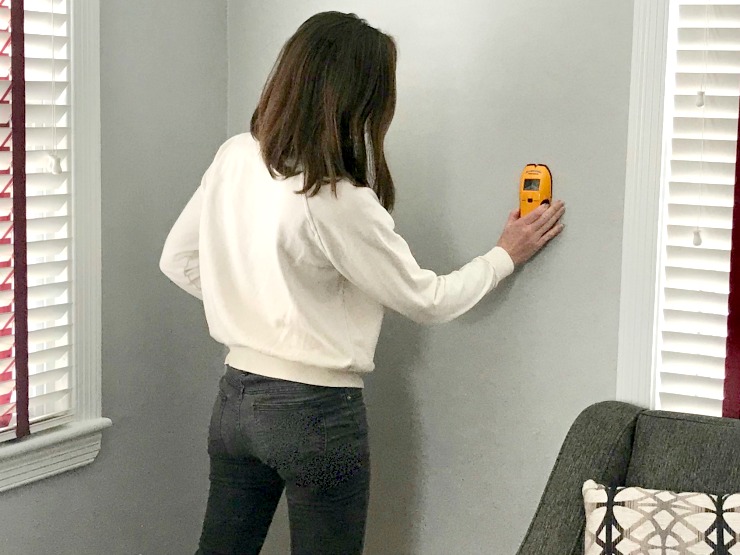
Locate the studs, and if you are lucky enough to have two evenly placed between the exact location of your future shelving unit, great!  If not, don’t worry.  Ideally, at least one stud will be placed 3”-6” inside either end of your shelves.  If that’s the case, one track will be installed along the stud, while the other track will be installed with sturdy wall anchors.

Using Stud Finder

Measure the distance from the end of your shelf to the location of one of your tracks. Use that measurement (with your shelf as the guide) on the other side to determine where the second track will be installed.  If you absolutely cannot align the tracks to any studs, you can install both tracks with wall anchors, but be careful of the weight limits when you style your shelves.

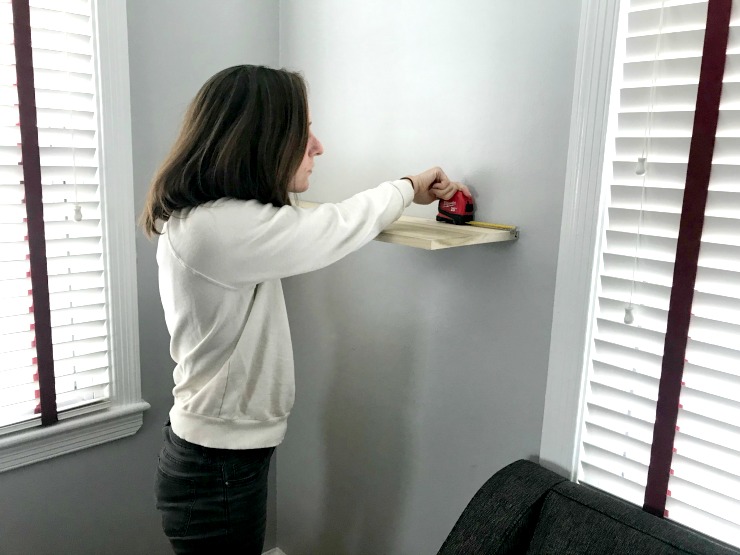
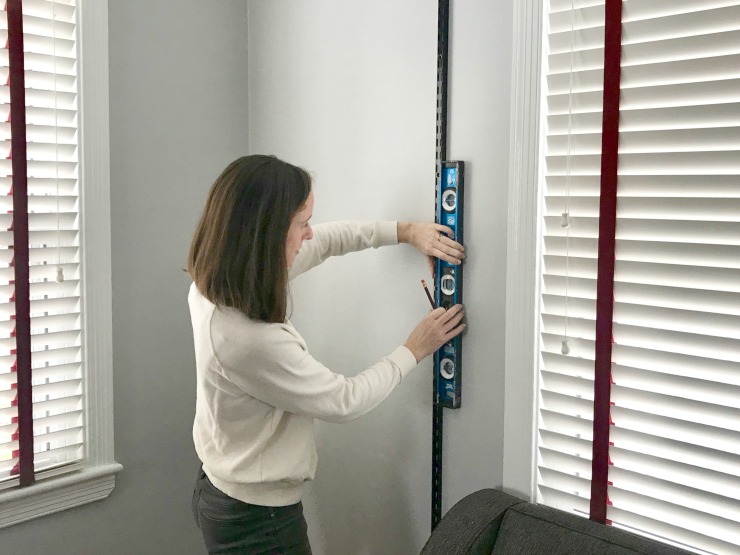
Use a level to make sure your track is plumb and mark each hole along the track.  This step is much easier with a helper.  Using the level again, line the other track up so that the tops of both tracks are level with one another.  Doing this right will guarantee that your shelves are perfectly level. Mark the second set of holes. Pre-drill each hole using the correct bit size for screws that will go directly into a stud and screws that will require anchors.

Level shelf brackets

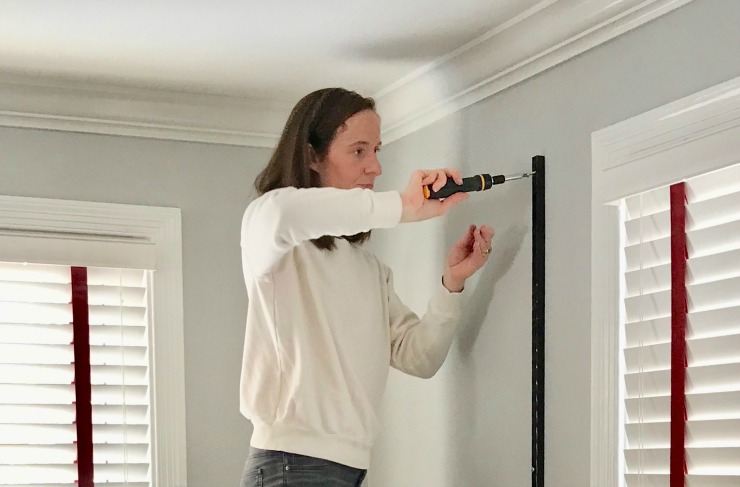
Starting with the top hole, drive in a screw to secure the track to the wall.  I prefer to do this by hand so that I don’t over tighten, but be warned that it’s a lot of twisting.  The tracks have some play, so if a hole is slightly off you can adjust it ever so slightly.

Attach the shelf brackets to the wall

Step 3- Sand and stain your shelves

Before installing the shelves, you will want to prepare them.  Give each a quick sanding, wipe off the dust, and apply a coat or two of stain.  If you’ll be styling with plants, it’s a good idea to apply a coat of clear polyurethane for extra protection from water and moisture.

Step 4- Attach your brackets and place your shelves

This is the fun part and doesn’t require a whole lot of explanation.  The deeper shelf is best placed at the bottom and is perfect for baskets and larger items.  Depending on where you place your other shelves, you can create a framed space between the tracks and the shelves for a mini gallery wall.  The sky’s the limit!

DIY Mid-Century Modern Shelving for Less

Thanks for reading, and good luck creating your own mid century modern inspired shelving!

~ Discover more Tutorials from Lara ~

Hi!  I’m Lara, the creator of The Unprofessional blog and YouTube channel. I am an aspiring handy-woman with little to no experience building, tiling, landscaping, demolishing, and what have you.  I’ve drilled holes in the wrong places, cut on the wrong lines and stripped more screws than I care to count.  And yet, I’m on my way to customizing my home, project by project.  I believe you can do pretty much anything with a few good tools, a stack of wood and a half-baked
idea.

I like to find challenges and solve them with my miter saw. When my 3-year-old son complained that he couldn’t reach the picnic table, I designed an easy-to-build folding booster seat perfect for camping trips and beer gardens. When the low ceilings in my cape cod wouldn’t accommodate a bulky barn door, I found an alternative approach to turn any interior door into a space-saving barn door. I love to share these solutions with others in hopes that the empowerment and love of power
tools spreads.

You can connect with me on Instagram, YouTube and Pinterest.

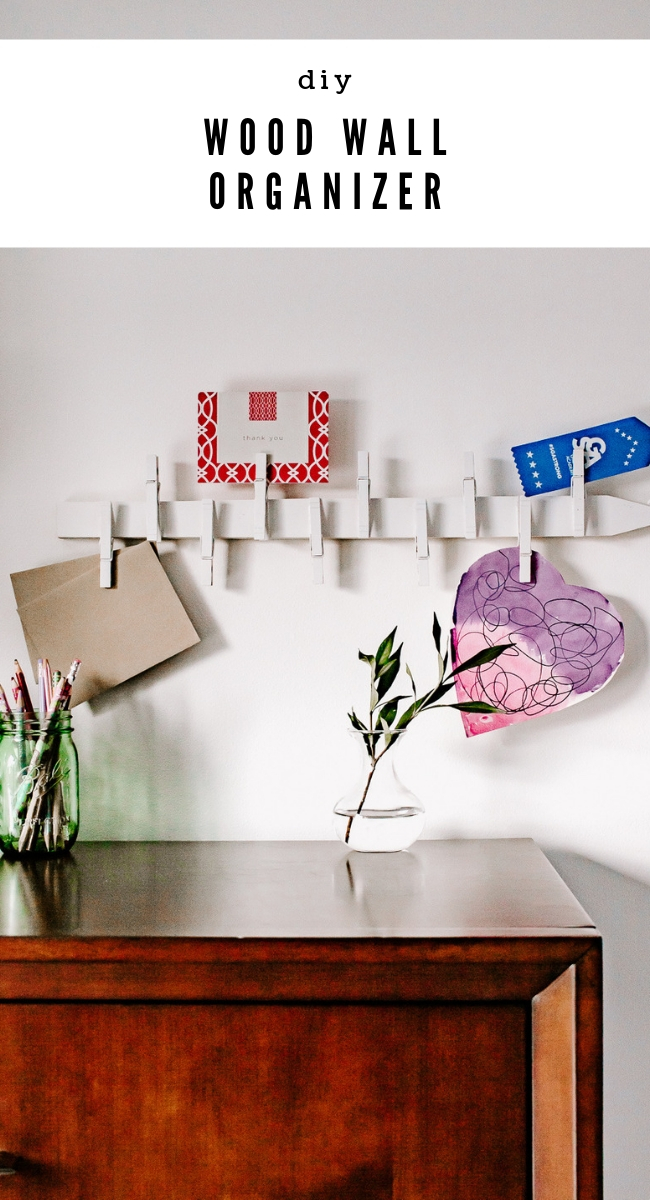
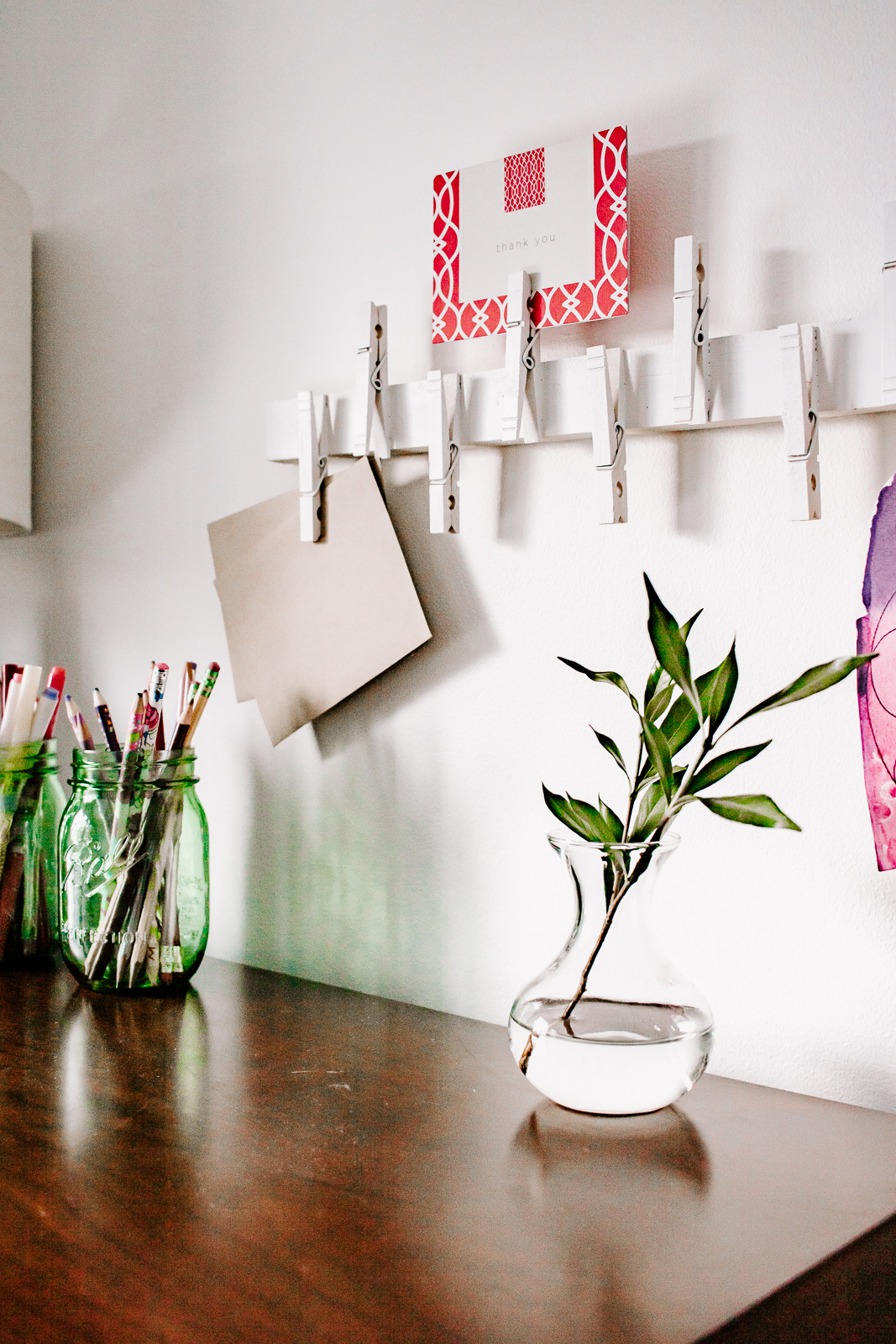
diy wood wall organizer

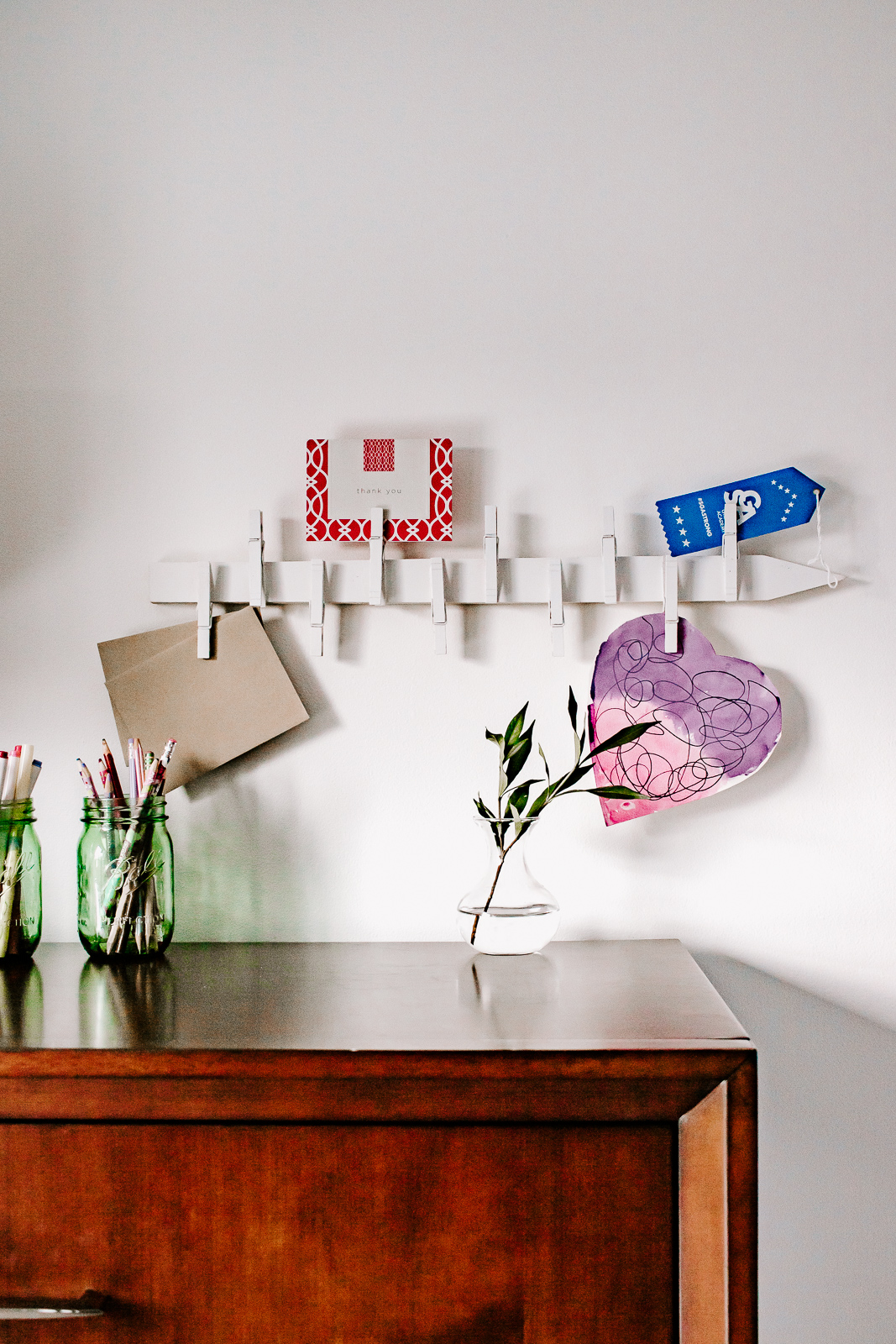
DIY Wood Wall organizer on wall over dresser

How to Make a DIY Wood Wall Organizer

Hello, Pretty Handy Girl Readers!  I’m Karen and I’m the blogger behind Decor Hint and a new member of the Pretty Handy Girl contributor team.  I’m so excited to be here today.  Today, I’m going to show you how to make a simple DIY Wood Wall Organizer. There is something about the New Year that always motivates me to clean up and organize my home.  I’m always looking for new ways to organize my things but I still want to have it look polished and well decorated. Only I’m not interested in spending a lot of money. (Which is why I tend to DIY everything!) I’ve been seeing these cute wall organizers everywhere and I thought: “I could totally make that.”  So here I am with a new project! Let’s get started, shall we?

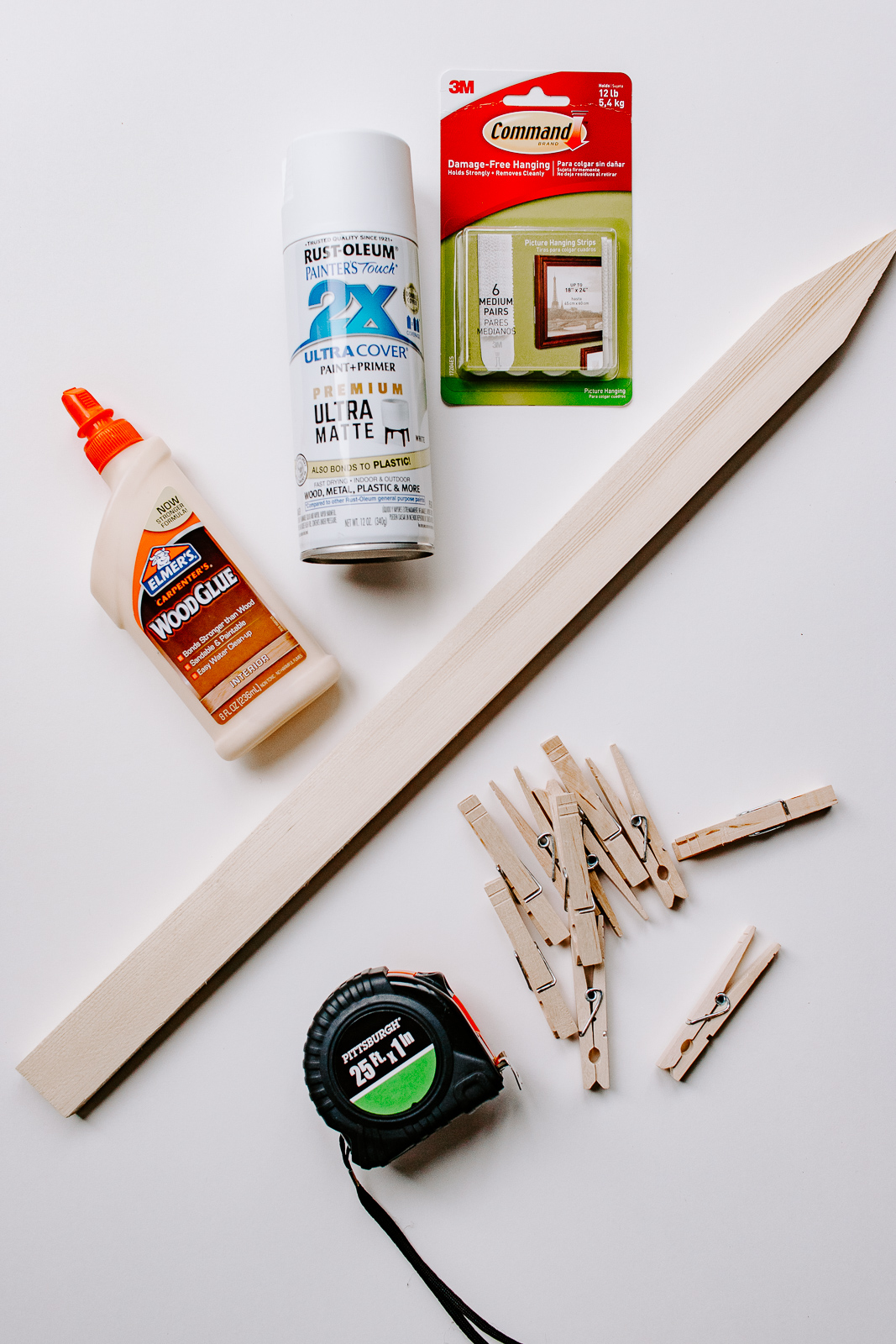
Materials:

materials to build diy wood wall organizer

  • Wood Garden Stake –
    • This cost me a buck from my local hardware store! You could also use a regular piece of scrap wood and cut it down to the size you need.  For dimensions, my garden stake is 2 inches wide by 24 inches long
  • Wood Glue
  • Wooden Clothespins
  • Q-Tip
  • Tape Measure
  • Spray Paint (Optional)  

Wood Wall Organizer Tutorial

Step 1 :Take your tape measure and mark where you want your clothespins to be on your piece of wood.  Two inches apart and alternated top and bottom is a good pattern.

mark clothespin locations on scrap wood

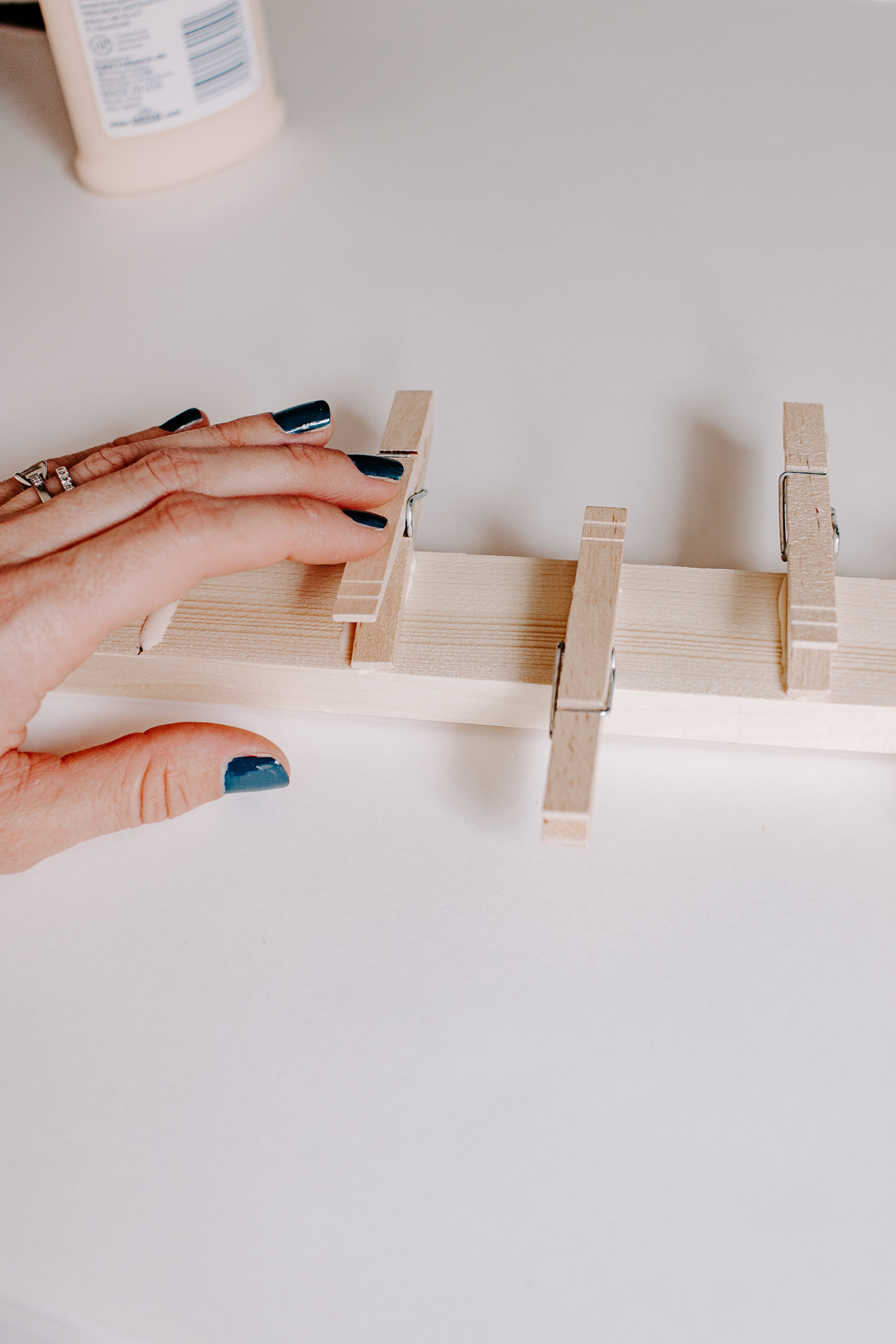
Step 2 : Attach the clothespins to your piece of wood or garden stake using wood glue.  Use your pen marks as your guide. Squeeze a little wood glue on your wood piece and a little glue on your clothespins.

add glue to back of clothespins

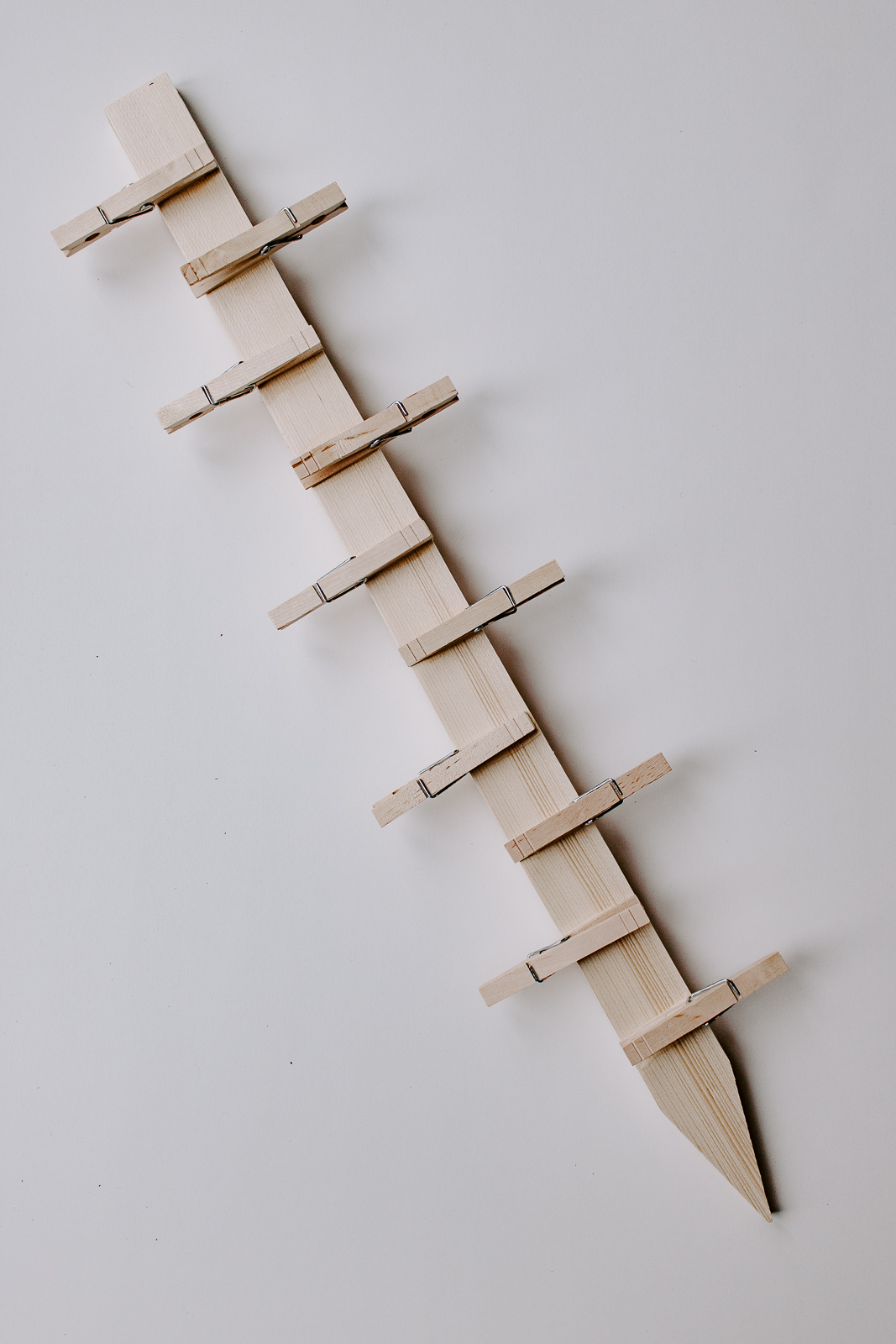
Place the clothespins onto the wood piece and press firmly for a few seconds. Make sure the “mouth” part of the clothespin faces out. If excess glue squeezes out, use a Q-tip to remove the excess.  Repeat this step with each clothespin. Allow to dry overnight.

glue clothespins to scrap wood

Here’s what it looks like so far!  Pretty cool, right?

completed diy wood wall organizer before painting

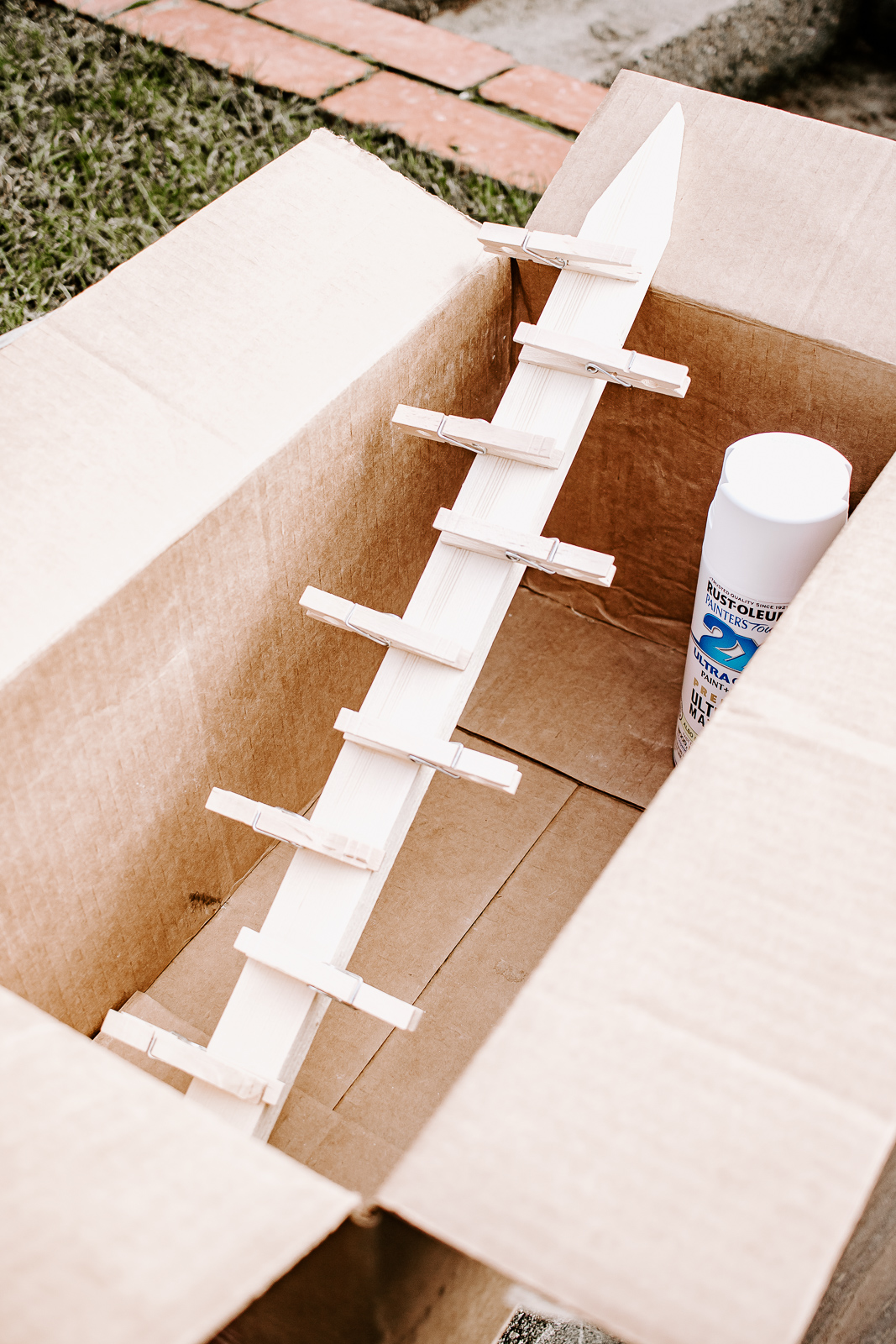
<Step 3:  Once the wood glue is dry, it’s time to paint it.  Of course, if you prefer the natural look of your wall organizer, you can keep it natural.  If you decide to paint it, move outdoors or to an area with good ventilation while you are spray painting.  Place your wall organizer in a large cardboard box and spray paint it. This will save you from having white spray painted grass! A lesson I’ve learned many times – although mine was pink grass!  My husband really loved that project! 🙂

set wall organizer in cardboard box

You don’t want to spray too much paint on your wall organizer at one time or it will get drippy. It’s best to spray several light coats in a sweeping motion to get smooth coverage.  Allow the paint to dry overnight.

spray paint wall organizer in cardboard box

Step 4 :  You’re done!  Now it’s time to hang your new wall organizer! I use mine to hold and organize stationary, photos, postcards, and my kids artwork. I don’t plan on hanging anything too heavy on it so 3M velcro sticky tabs work perfectly.  You could always hang your wall organizer with a good ol’ hammer and nails too if you feel you need the extra support.

add 3m command strips to back of diy wood wall organizer

And that’s it!  A stylish wall organizer that was made for just a few bucks. You can’t beat that!

diy wood wall organizer

I love having a wall organizer like this that can help organize my papers. However, this isn’t just for stationary!  The DIY Wood Wall Organizer could be hung in your closet to hold necklaces or ties. Or try hanging it in your laundry room to hold all those socks with the missing pairs. Make one for Christmas and use it to display all those Christmas cards from loved ones.  I was even thinking this could hold spools or ribbons or washi tapes.

I hope you guys enjoyed this easy tutorial and I hope it gets you a little more organized this year!  To see more of what I’m decorating and DIYing, I’d love for you to visit me at my blog,  Decor Hint.  I’ll be back next month with a new project for you!

~ See More of Karen’s Tutorials ~

karen from decor hint


Hello!  I’m Karen, the creator of the Home Decor and DIY Blog: Decor Hint. I’m a Native of the East Coast, but I currently live in beautiful Seattle with my hubby, our two wonderful children and our spunky wheaten terrier. 

You can usually find me with some sort of craft in one hand and a coffee in the other. And I’m always rearranging furniture or moving lamps from room to room. I have a passion (read: obsession) for decorating, DIY, and gardening. In short, I love making my house into a home.  

Like many, I’m inspired by what I see in home decor magazines, but I’m not so inspired by the price tags.  Consequently, I love finding and creating beautiful budget-friendly home decor items. In a head to head competition, I bet you’d never know the difference between the designer items and my DIY creations!  Many of my DIY projects focus on sewing, crafting, upcycling and organizing. Some of my favorite projects have been making pretty wreaths, sewing my own tassel hand towels, and crafting these trendy wood bead garlands. I can’t wait to inspire you and spark your creativity through my DIY projects.

You can always connect with me on Pinterest, Twitter or Instagram.

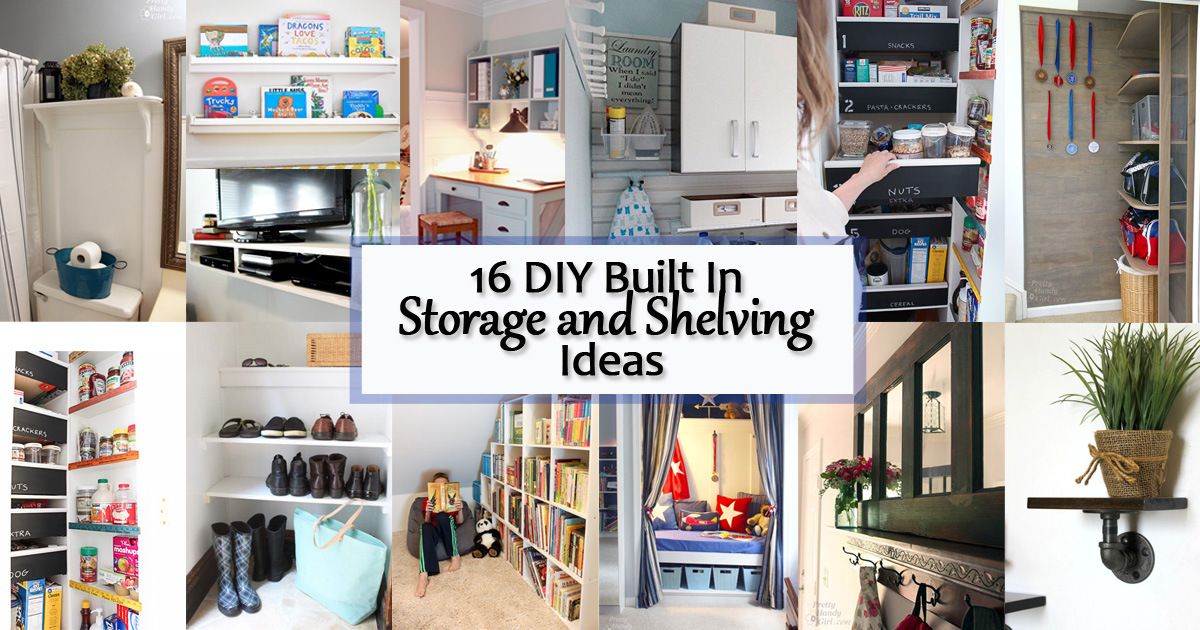
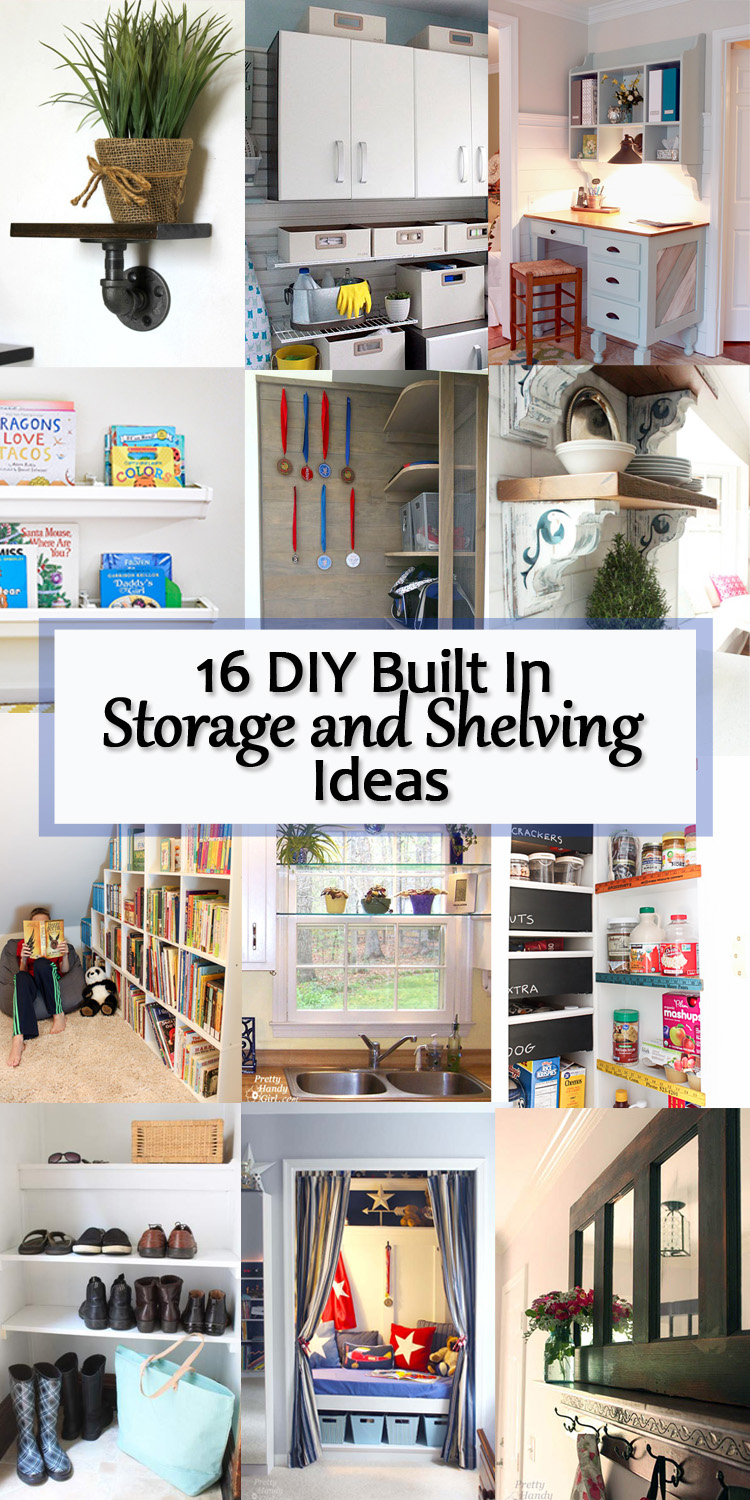
16 diy built in storage and shelving ideas social media image

16 diy built in storage and shelving ideas pinterest imageBuilt in storage and shelves are a great way to create an attractive home that is as functional as it is beautiful. Built-ins maximize the space you can use in your home and make it easier to keep organized and clutter free. Here is a collection of 16+ DIY Built In Storage and Shelving Ideas to help you come up with ways you can upgrade your home this year with built in storage!

16 DIY Built In Storage and Shelving Ideas:

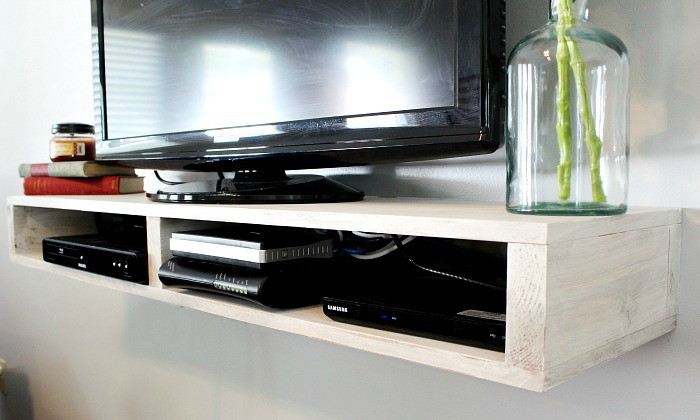
build a floating tv shelf

Learn to build this modern and sleek a floating TV shelf that doesn’t take up much space but offers great storage.

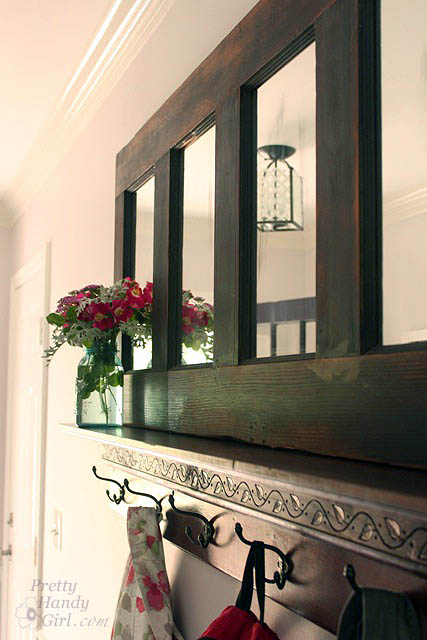
coat rack made from an old door

Add some beautiful hanging storage to your wall by building this Coat Rack made from an Old Door.

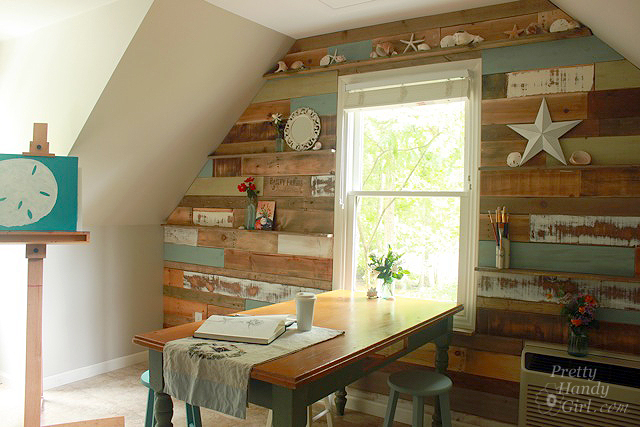
install scrap wood wall with built in ledgesAdd warmth, character and display space by building this Scrap Wood Wall with built-in ledges.

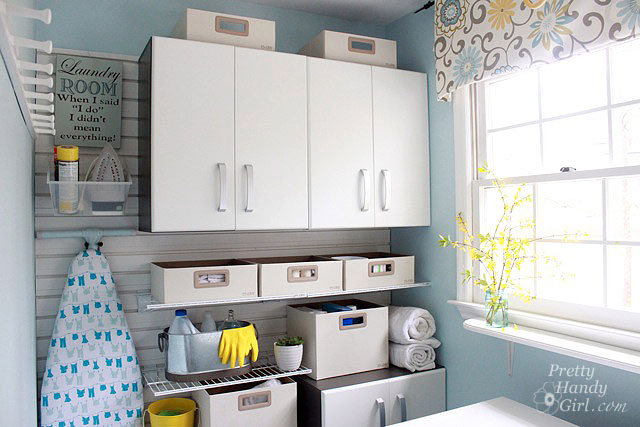
upgrade laundry room with flow wall cabinets and slat wall

Upgrade and organize your laundry or storage room with a Flow Wall cabinets and slat wall.

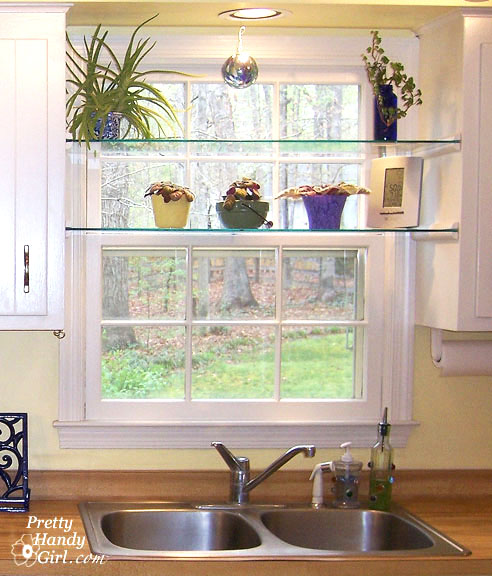
Glass Window Shelves

Add storage without sacrificing sunlight by building some Glass Window Shelves.

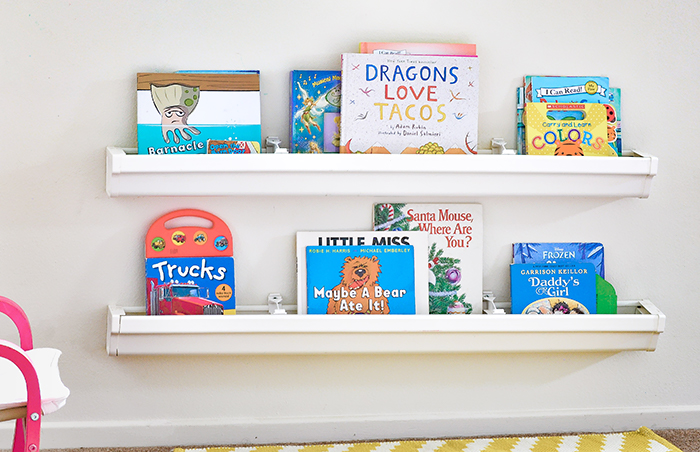
Install Rain Gutter BookshelvesOrganize kids books and keep them in view by installing these simple and functional Rain Gutter Bookshelves.

Industrial display shelves

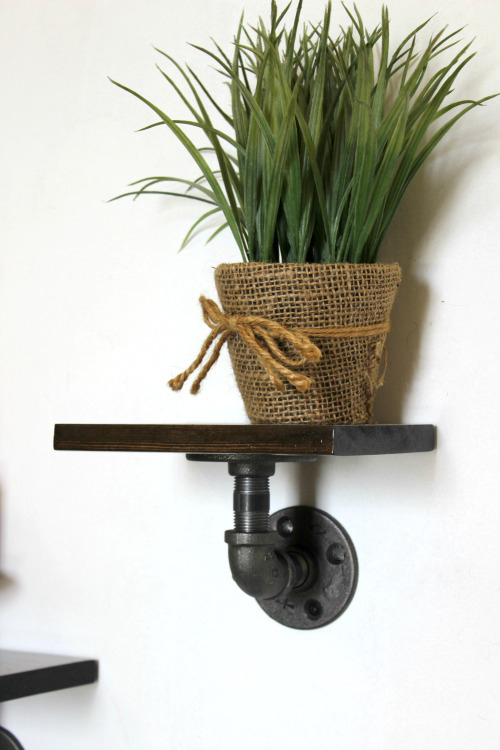
Add some small decor features to your room by installing these Industrial Display Shelves.

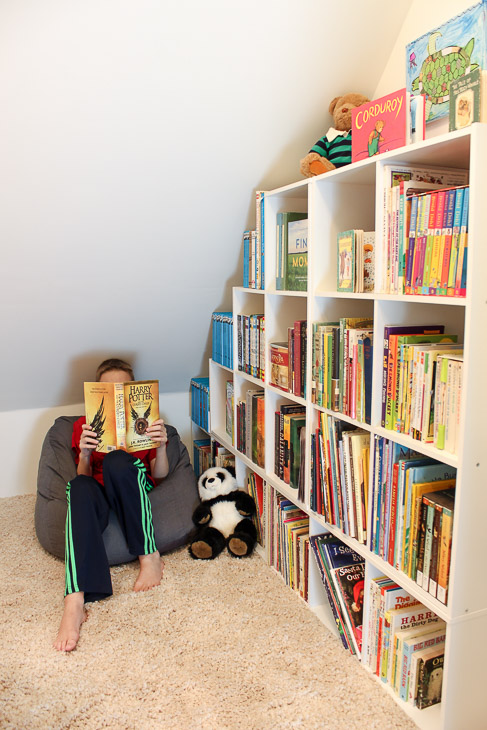
Boy's Red, White & Blue Themed Room | Pretty Handy GirlRepurpose your space and turn a Spare Closet into a Reading Nook.

Build a Children's Closet Library

For a quiet kid zone, build this Children’s Closet Library to make great use of unused wall space.

Sports Gear Storage Shelf

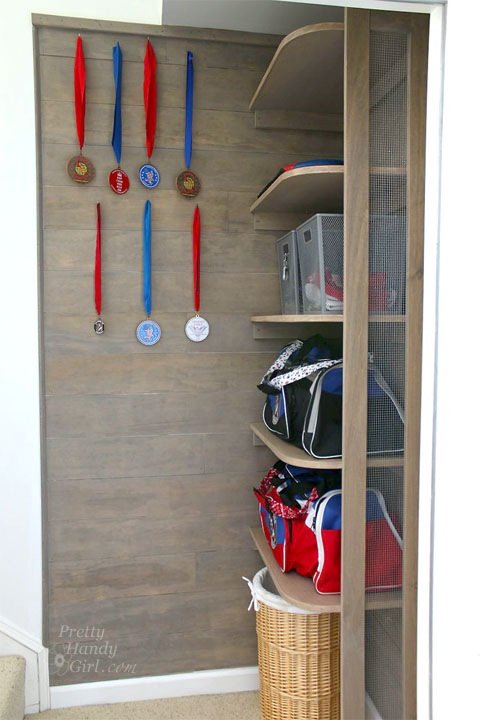
Tackle your sports equipment by building this Sports Gear Storage Shelf within a small unused space.

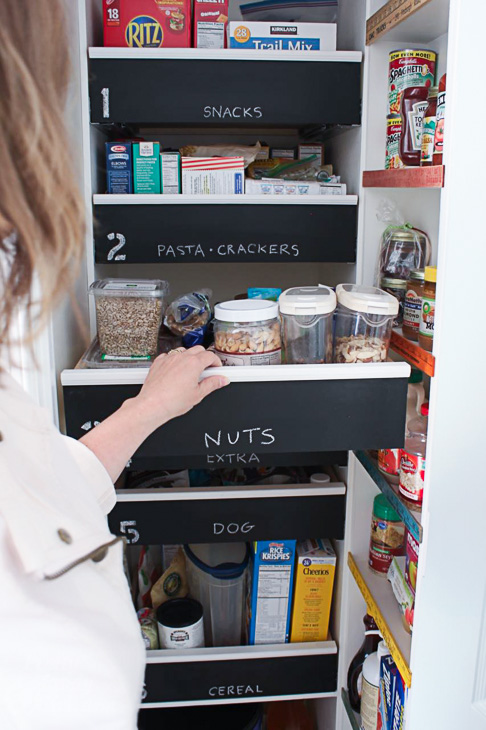
Built In Storage and Shelving IdeasBuild full Chalkboard Front Storage drawers for your pantry to organize and easily find any item you need.

built in decorative shelf

Add some simple elegance to a room by building this Built-In Decorative Shelf.

shelves using corbel brackets

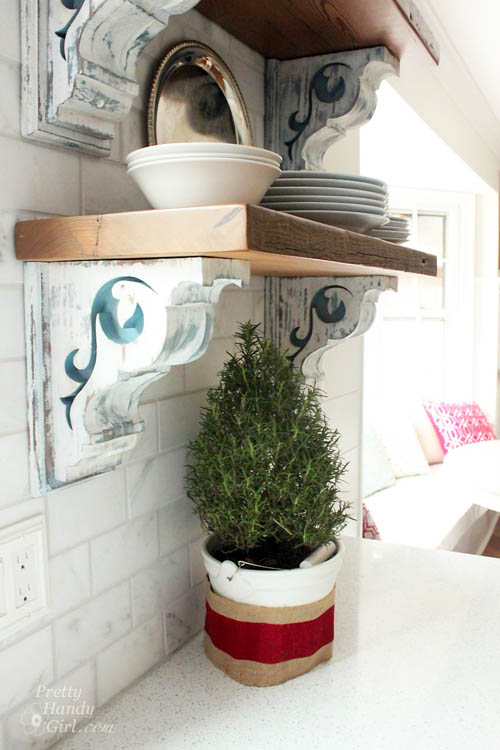
Take your decor up a notch by adding gorgeous Shelves Using Corbel Brackets for storage. Don’t let a tile wall stop you!

built in shoe shelves

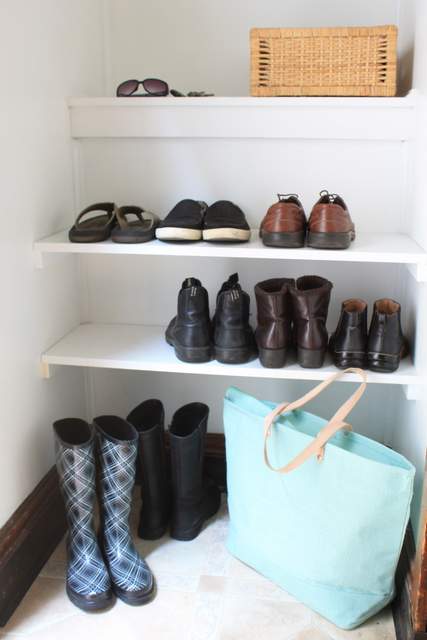
Don’t search for missing shoes any longer, organize your closets by building these DIY Built-In Shoe Shelves.

build a wall mounted hutch

Upgrade your office or kitchen storage by building a beautiful Wall-Mounted Hutch.

Thvintage ruler stops for narrow pantry shelves

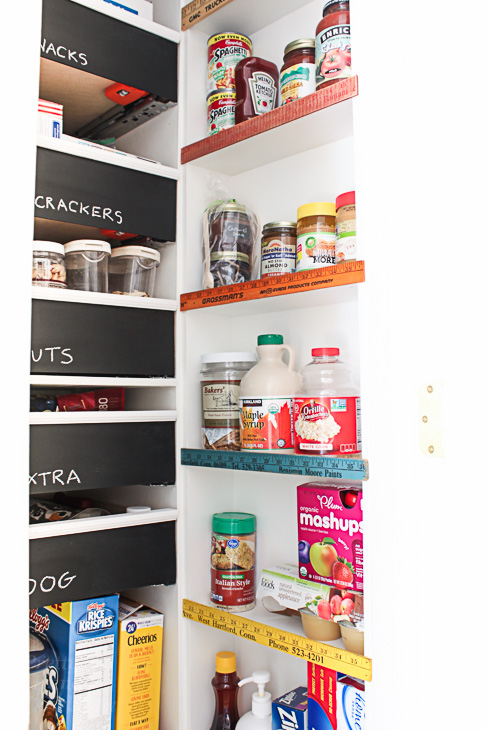
Make great use of small space by building these Narrow Pantry Shelves with vintage ruler stops.

And here’s your bonus +1! Make custom storage for under your sink cabinet using scrap wood and dollar store bins!

I hope these DIY built-in storage and shelving ideas inspire you to maximize the space you have available in your home and create a more organized and clutter free space for your family to enjoy!

16 diy built in storage and shelving ideas pinterest image

Built In Storage and Shelving Ideas

Built In Storage and Shelving Ideas
Hi, I’m Sheri from Hazel + Gold Designs. Here are a few fun stats about me: I like love chocolate and peanut butter (together of course.) If you like stats, I have been crocheting for about 16 years, crafting for 20, and woodworking for about 4 years. I found a passion in making and being creative and began documenting my projects online at Hazel + Gold Designs.

When not working on projects, I enjoy spending time with my husband, four children, perfect dog, and ornery cat. You can find me on Facebook, Pinterest, Instagram and Twitter.

Read all of Sheri’s tutorials.

Built In Storage and Shelving Ideas

~Find more of Sheri’s projects here ~