Scrapbook Paper Lined Painted Trays | Pretty Handy Girl

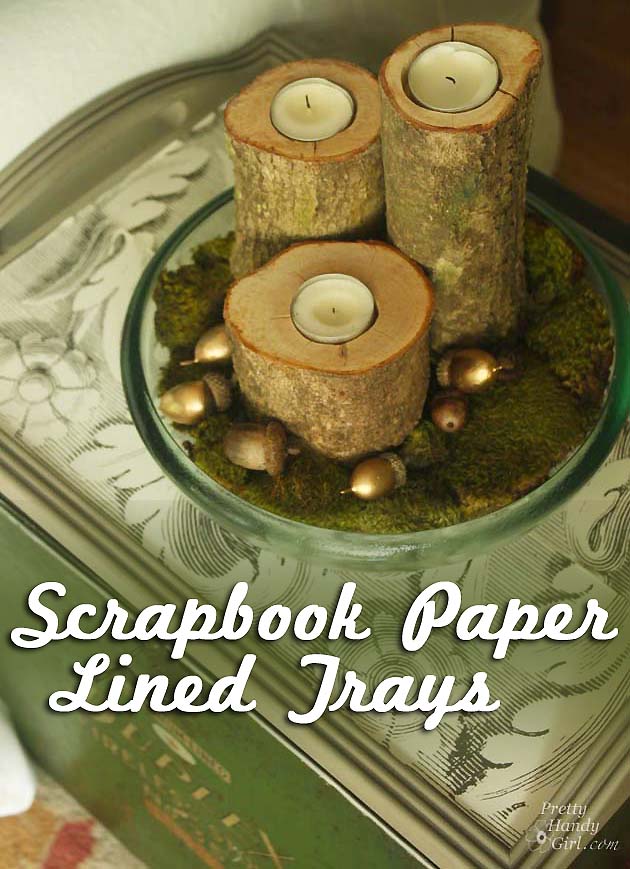
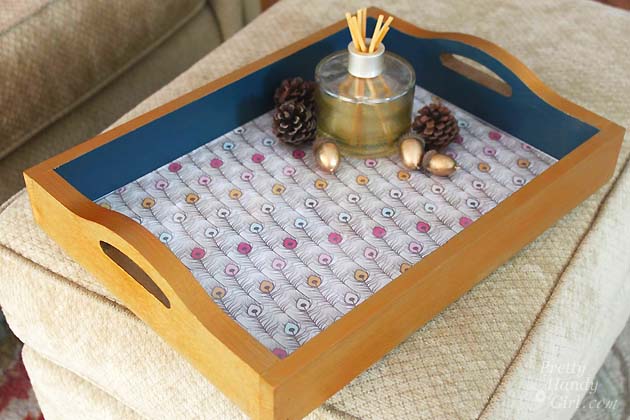
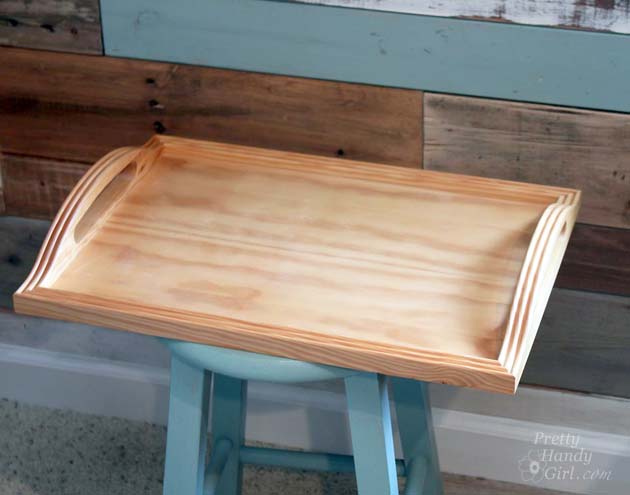
Look around your house or the next time you’re at a thrift shop. Find either an unpainted tray or a tray that needs a makeover. This is a quick project to create a Painted Trays with Scrapbook Lining for a beautiful and elegant tray to display or organize things in your home.

Scrapbook Paper Lined Painted Trays | Pretty Handy Girl

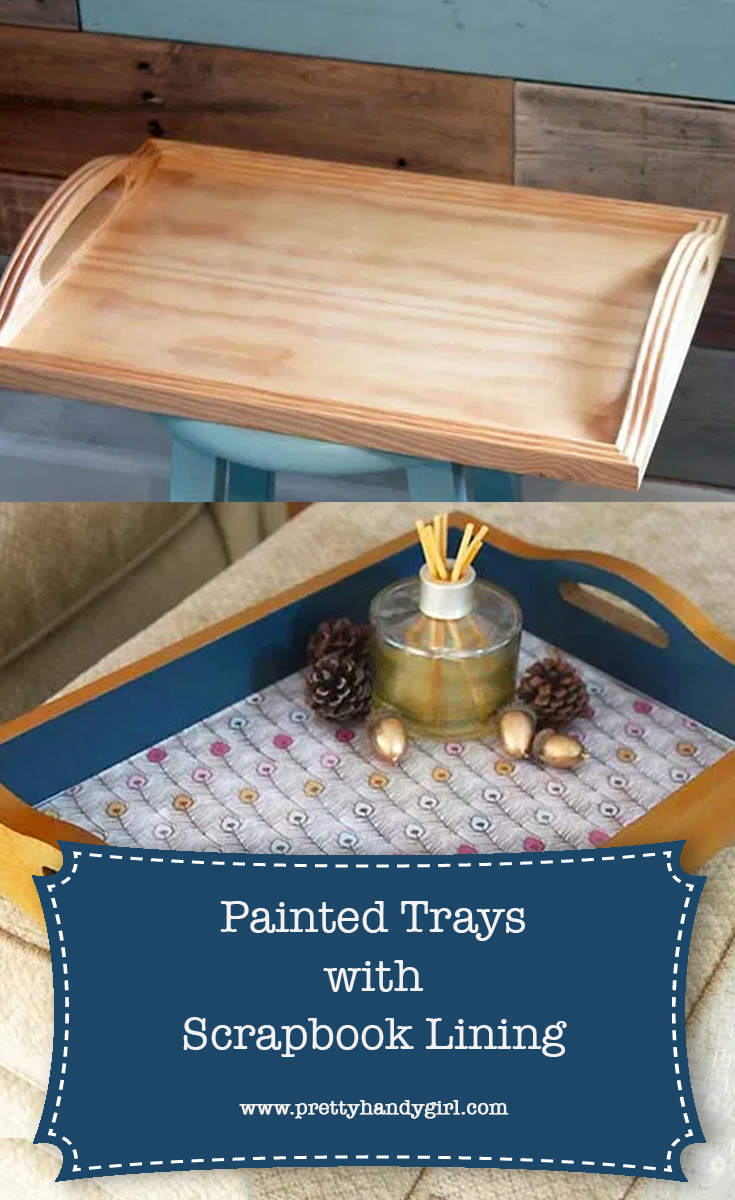
Painted Trays with Scrapbook Lining

Today I have a really adorable and easy DIY idea for you! Scrapbook paper-lined and painted trays. These trays are so versatile, they can be used in the kitchen, bedroom, bathroom, or anywhere you want to corral items or have a flat surface available. They also make a great gift if you want to load them up with some smaller gift items. But best of all, you can change their look in a snap.

Scrapbook Paper Lined Painted Trays | Pretty Handy Girl

(I’ve included affiliate links for your convenience. I earn a small percentage from a purchase using these links. There is no additional cost to you. You can read more about affiliate links here.)

As I mentioned above unfinished trays can be purchased at many places. If you want a new one, look at your local craft supply store or order one online on Amazon for cheap.

You’ll also want some decorative scrapbook paper, gift wrap, or fabric to line the bottom of your tray.

Scrapbook Paper Lined Painted Trays | Pretty Handy Girl

Materials:

Instructions:

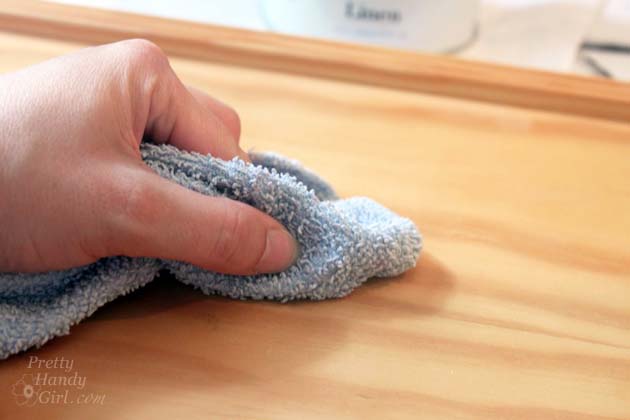
Lightly sand and wipe off tray with a damp rag.

Scrapbook Paper Lined Painted Trays | Pretty Handy Girl

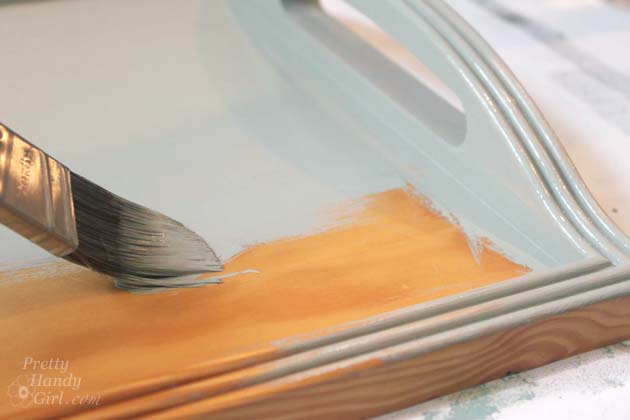
Prime tray (if using non-chalk paint.) Paint tray desired color. For this tray, I used Annie Sloan Chalk Paint in French Linen.

Scrapbook Paper Lined Painted Trays | Pretty Handy Girl

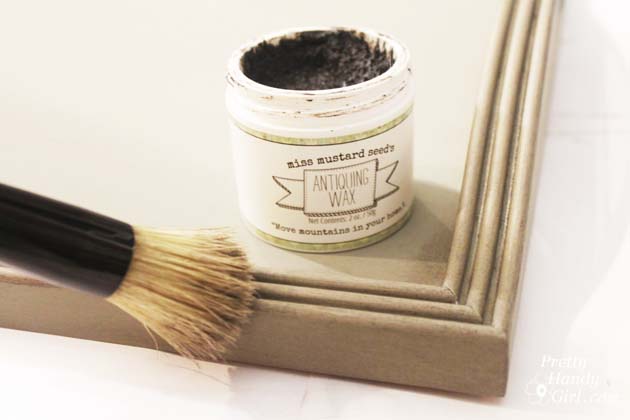
After the paint has dried, brush antiquing wax onto your tray if desired. Buff off excess with a dry rag.

Scrapbook Paper Lined Painted Trays | Pretty Handy Girl

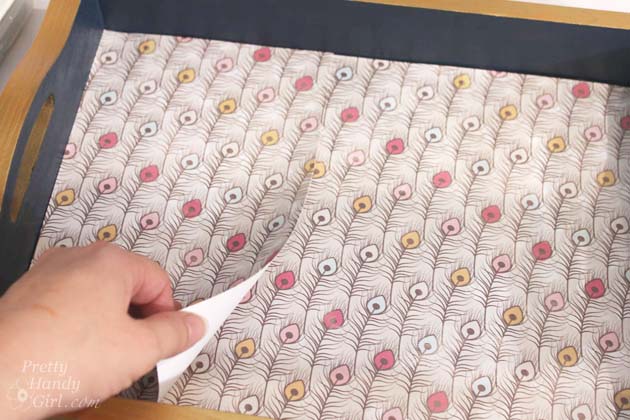
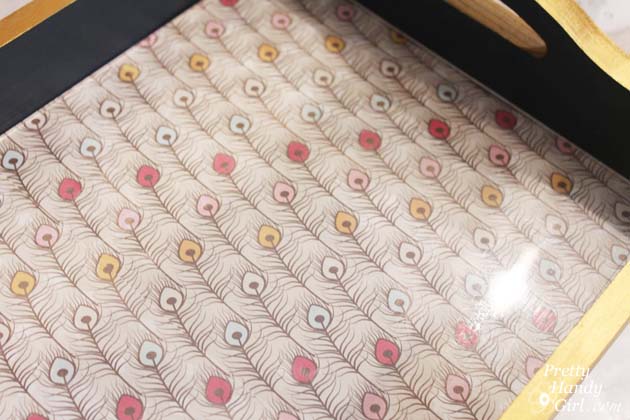
Cut scrapbook paper to fit inside the tray. When overlapping paper, make sure to line up the repeating pattern.

Scrapbook Paper Lined Painted Trays | Pretty Handy Girl

For the best durability, line the tray with a piece of glass or plexiglass cut to fit inside the tray. (Ask your local home improvement store to cut or order online.) If you want it to be permanent, seal the edges of the glass with clear silicone.

Scrapbook Paper Lined Painted Trays | Pretty Handy Girl

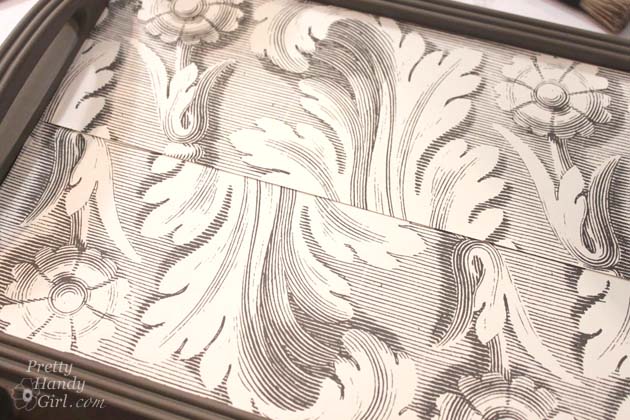
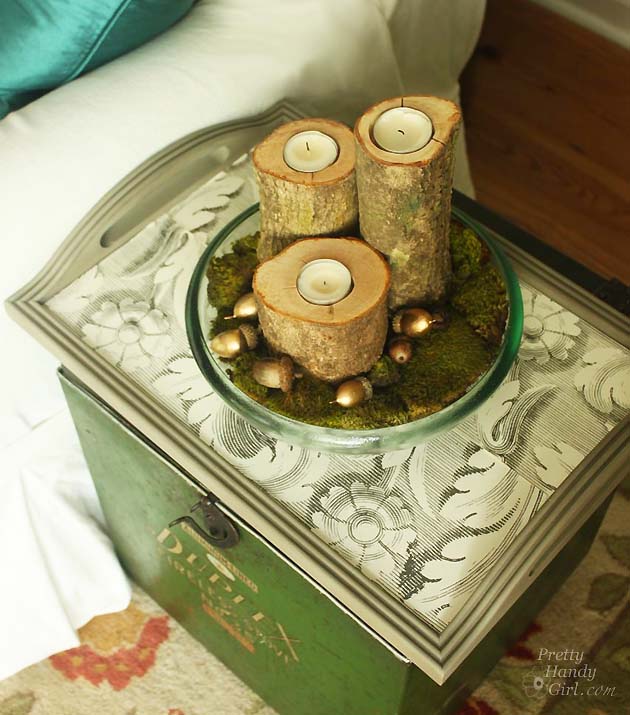
The paper you use to line the tray doesn’t have to necessarily be scrapbook paper. I got this paper from Ballard Designs. It’s actually cheese paper, but I loved the design. It doesn’t quite match up, so I just rotated the paper.

Scrapbook Paper Lined Painted Trays | Pretty Handy Girl

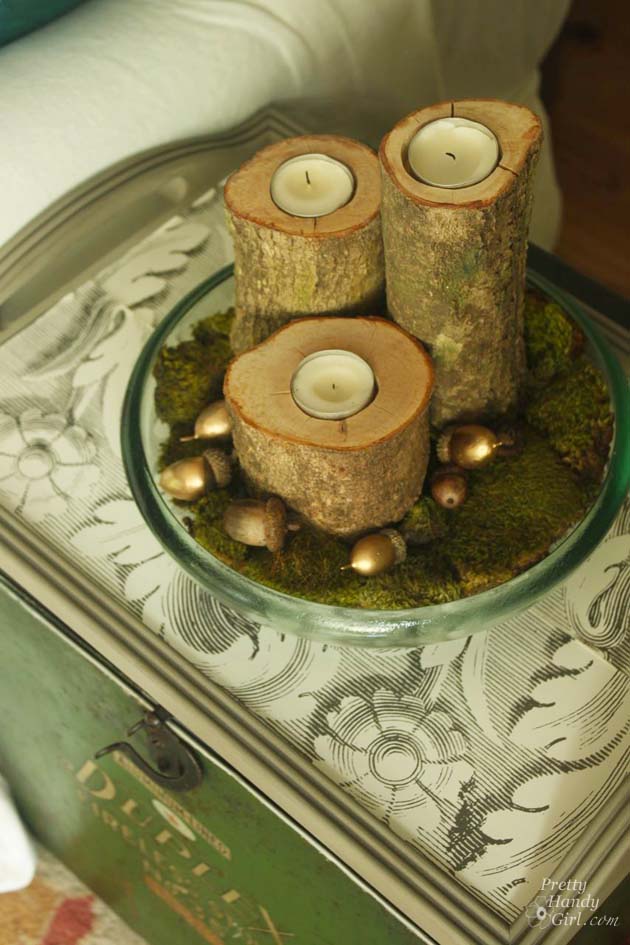
When you put something on top of the tray, you hardly notice the seam.

Scrapbook Paper Lined Painted Trays | Pretty Handy Girl

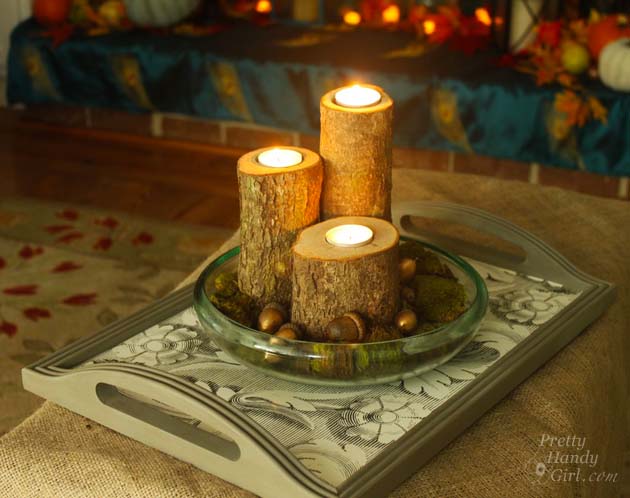
The nifty thing about these trays is the decorative paper can be swapped out when you bore of the design. (Unless, you seal the edges.)

Scrapbook Paper Lined Painted Trays | Pretty Handy Girl

Scrapbook Paper Lined Painted Trays | Pretty Handy Girl

Once again, I’m loving this idea too much…I might be keeping this one for myself ;-).

Scrapbook Paper Lined Painted Trays | Pretty Handy Girl

Do tell me if you love this idea or have any unique ideas for lining the bottom.

PHGFancySign

Pin for later!

DIY Painted Trays with Scrapbook Lining | Pretty Handy Girl

So, you love making DIY projects but want to expand your talents further than squares and rectangles. I’m going to show you how to make DIY Circle Cutting Jig for the Table Saw. Yes!! Your table saw.

DIY Circle Cutting Jig for the Table Saw

Hello!! It’s Kristen, from In Her Garage, back again to bring you a super exciting and simple tutorial!

Making circles with the table saw sounds counterintuitive, right? Table saws are supposed to just rip straight lines, but table saws are one of the most versatile tools in your shop and with just a few pieces of scrap wood, you’ll be cutting circles and making gorgeous side tables and decor pieces in no time at all!! Let’s get started making this DIY Circle Cutting Jig for the Table Saw!

Materials:
(I’ve included affiliate links for your convenience. I earn a small percentage from a purchase using these links. There is no additional cost to you. You can read more about affiliate links here.)

Tools:

Please read through the instructions in their entirety before making this project.

Safety! Before starting, UNPLUG your table saw and completely retract the blade below the level of the table.

Instructions:

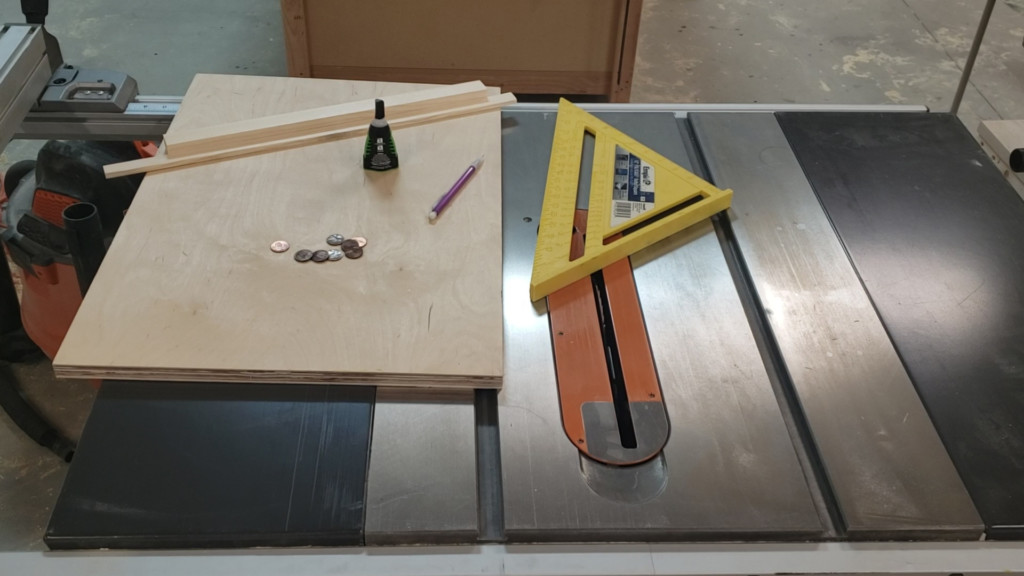
The 3/4”x 1/4” strip of wood will be used as a guide for the jig and will travel within the miter slot to the right of the table saw blade.

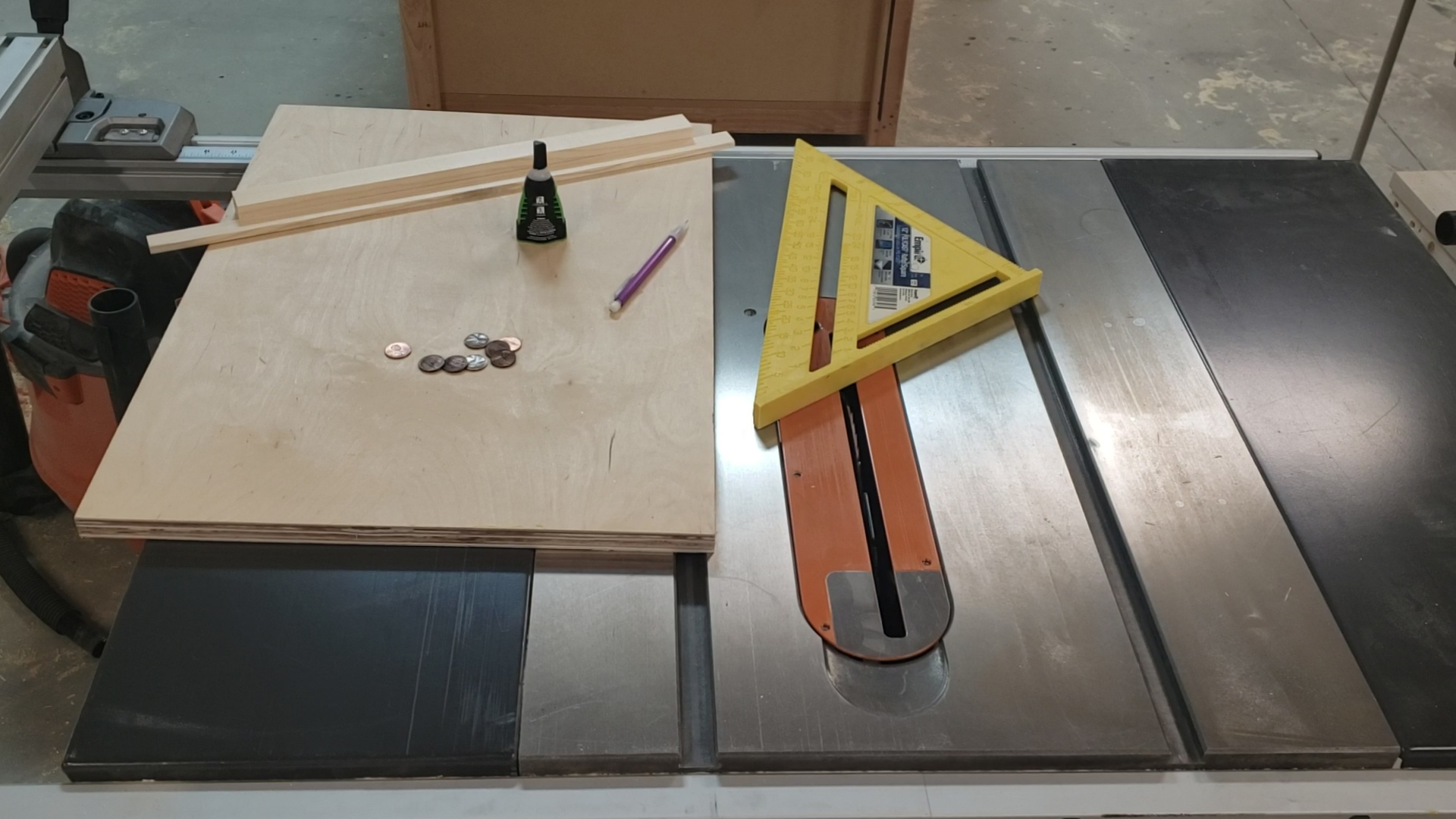
Standing at the table saw, place a few stacked pennies within the miter slot and lay the strip of wood over the pennies so it is just slightly above the level of the table.
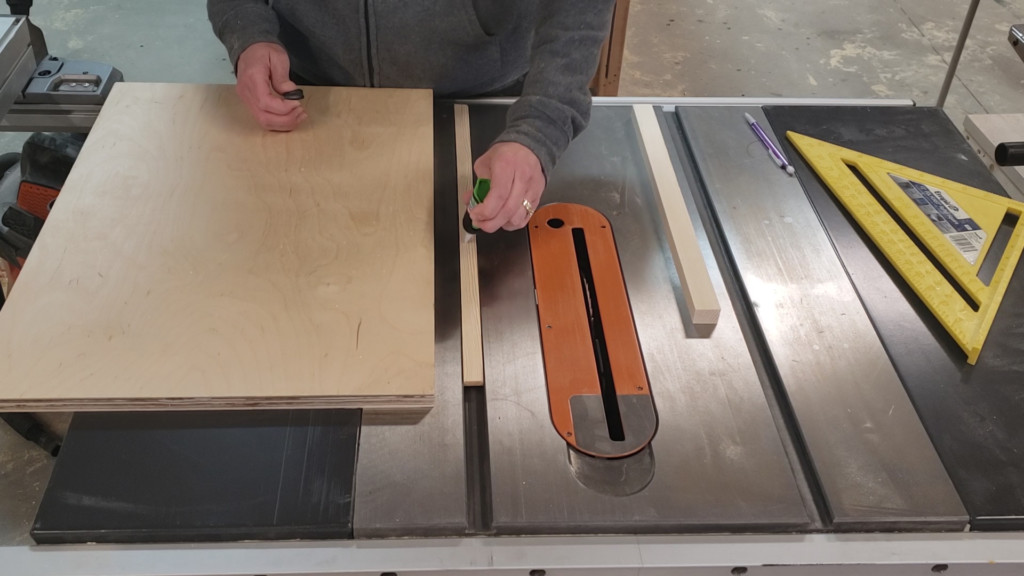
Place a line CA glue on top of the strip of wood and place the plywood on top of it so that the plywood piece is covering the saw blade about ¼”.
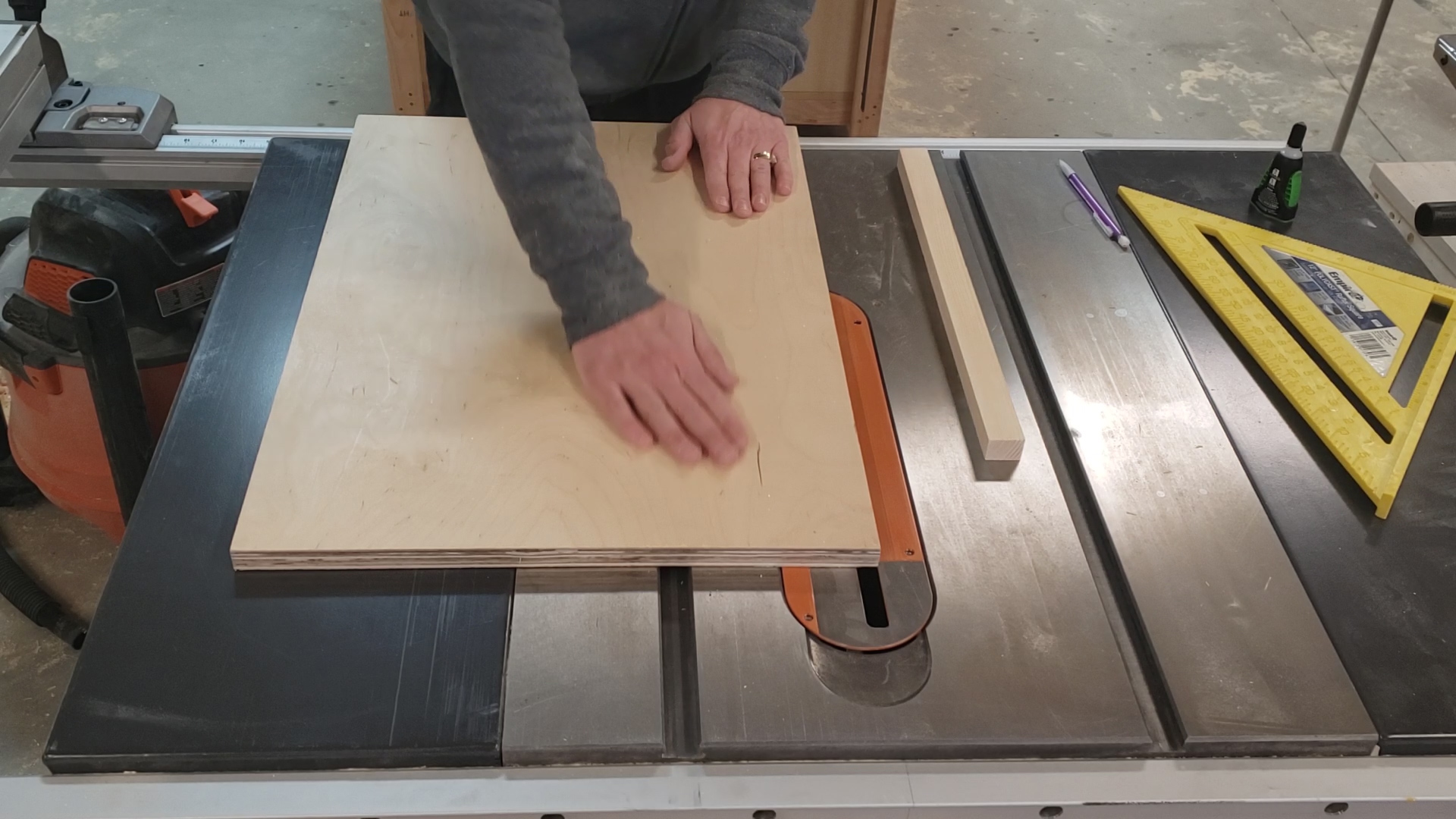
Apply weight on top of the plywood and wait for the glue to adhere to both the miter guide strip and the back of the plywood.

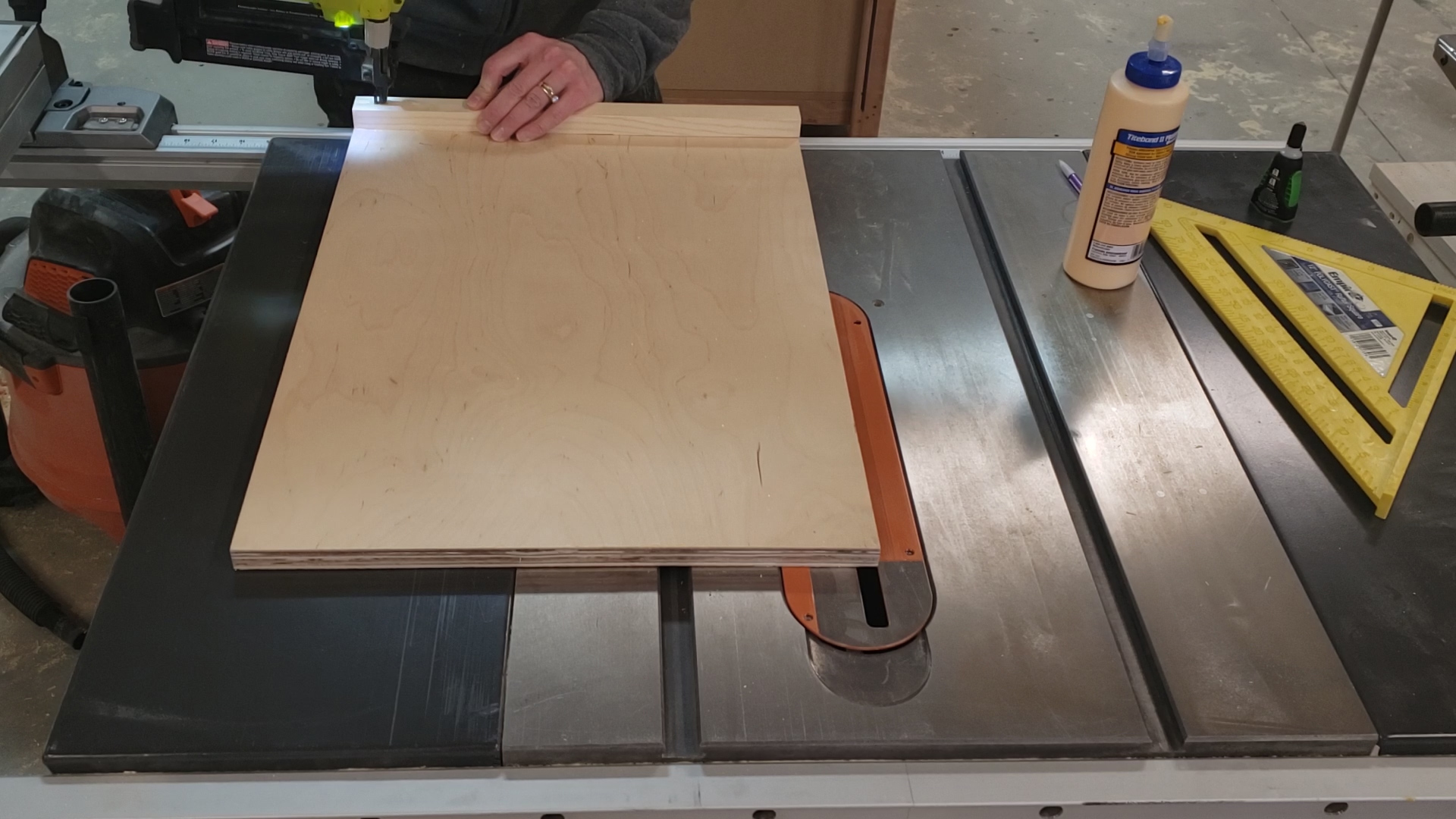
While you are waiting for the glue to dry apply the 12” piece of scrap wood to the front edge of the plywood. Simply apply some wood glue between the two pieces and nail it down with 1 ¼” brad nails or screws. This will act as the handgrip for the jig.
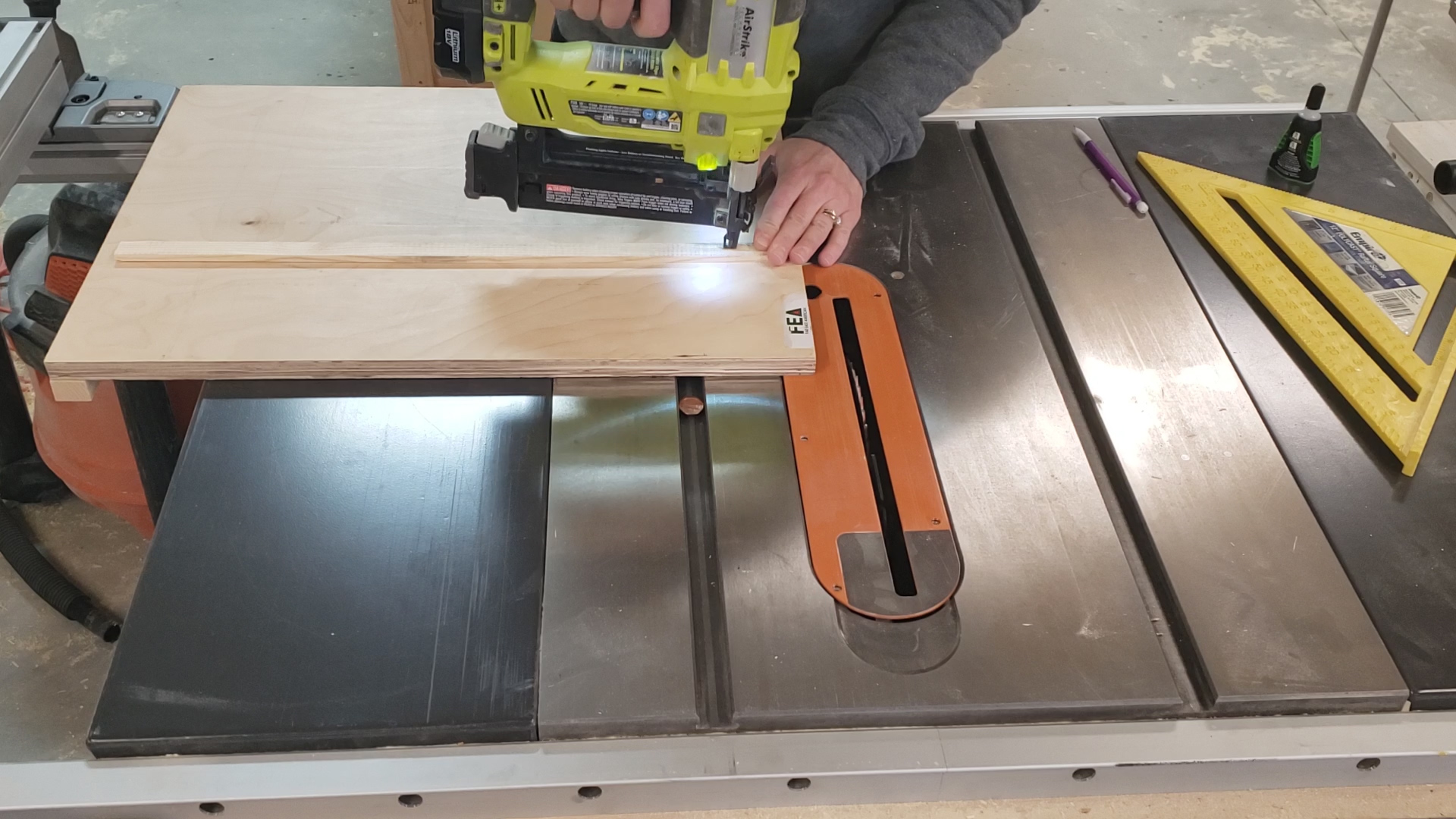
By now the plywood and the miter gauge strip of wood have adhered together. Gently lift the plywood and turn it over.

Using 5/8” inch brad nails or screws secure the strip in place being careful not to split it.
Remove the pennies from the miter slot.

Use some fine-grit sandpaper to smooth out the edges of the miter guide strip to help the jig travel smoothly. Applying some paste wax to the bottom the plywood and miter guide strip will also help with smooth travel. (Not necessary, but will help with smooth movement.)
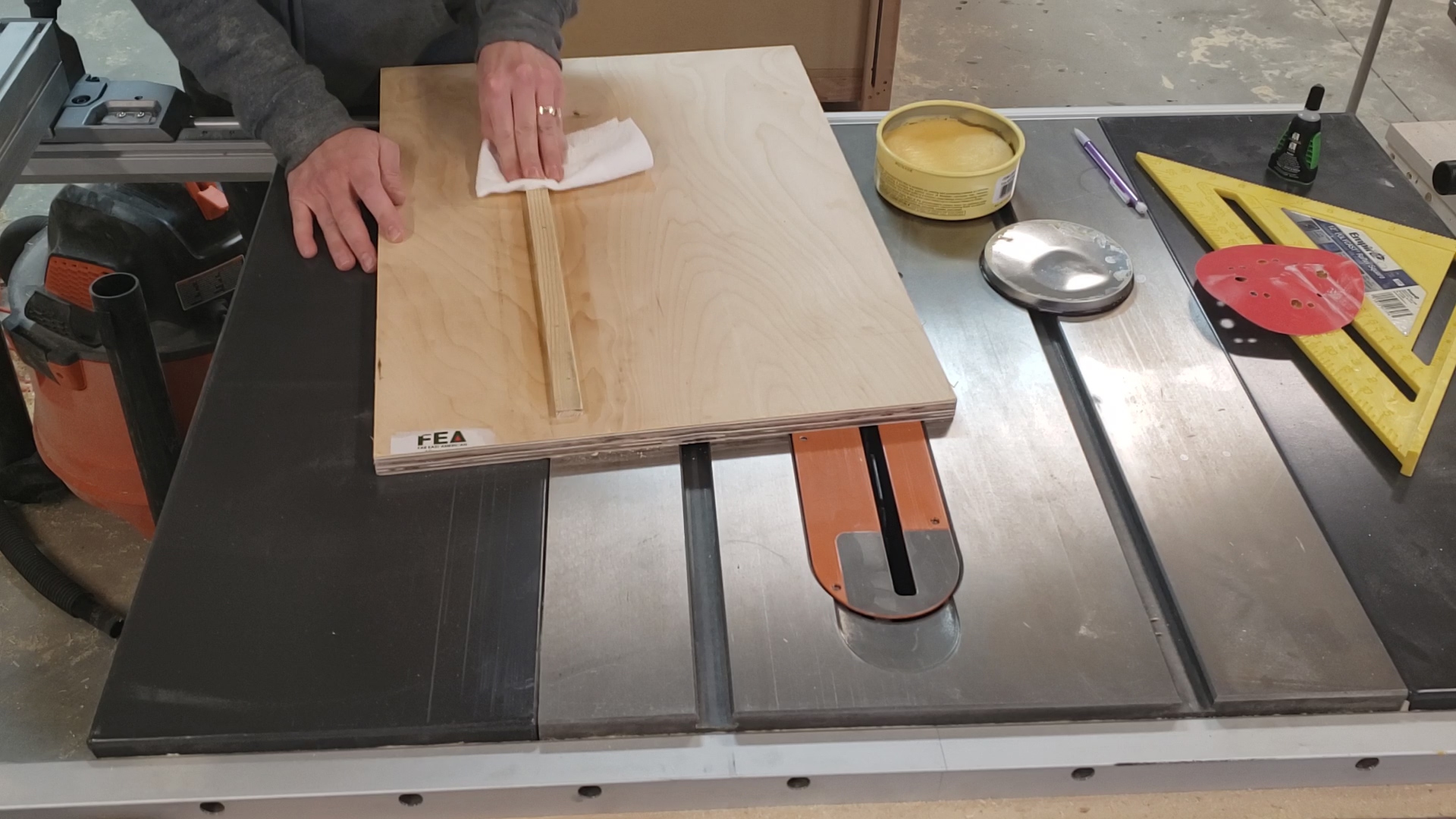
Flip the jig back over placing the guide strip in the miter slot.

Pull the jig back enough to raise the saw blade just above the level of the hand guide. Plug the saw in.

With the saw on push the jig forward to completely cut off the left side of the jig. This will make the jig perfectly in line with the blade and act as a zero-clearance for clean cuts.
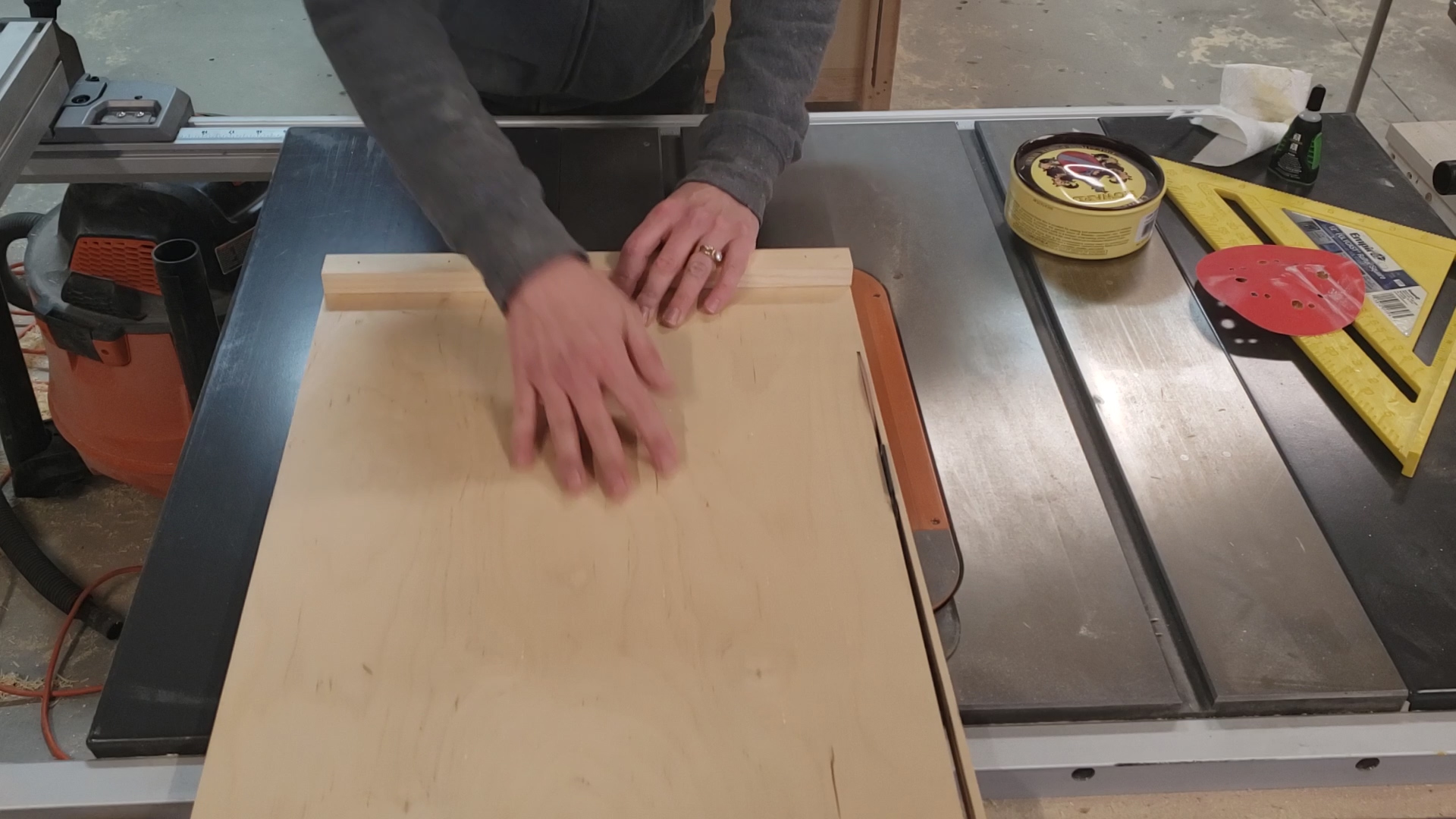
Turn off the saw, lower the blade and unplug.

Circle Cutting Instructions:

Using your speed square draw a line in the middle of the jig perpendicular to the saw blade.
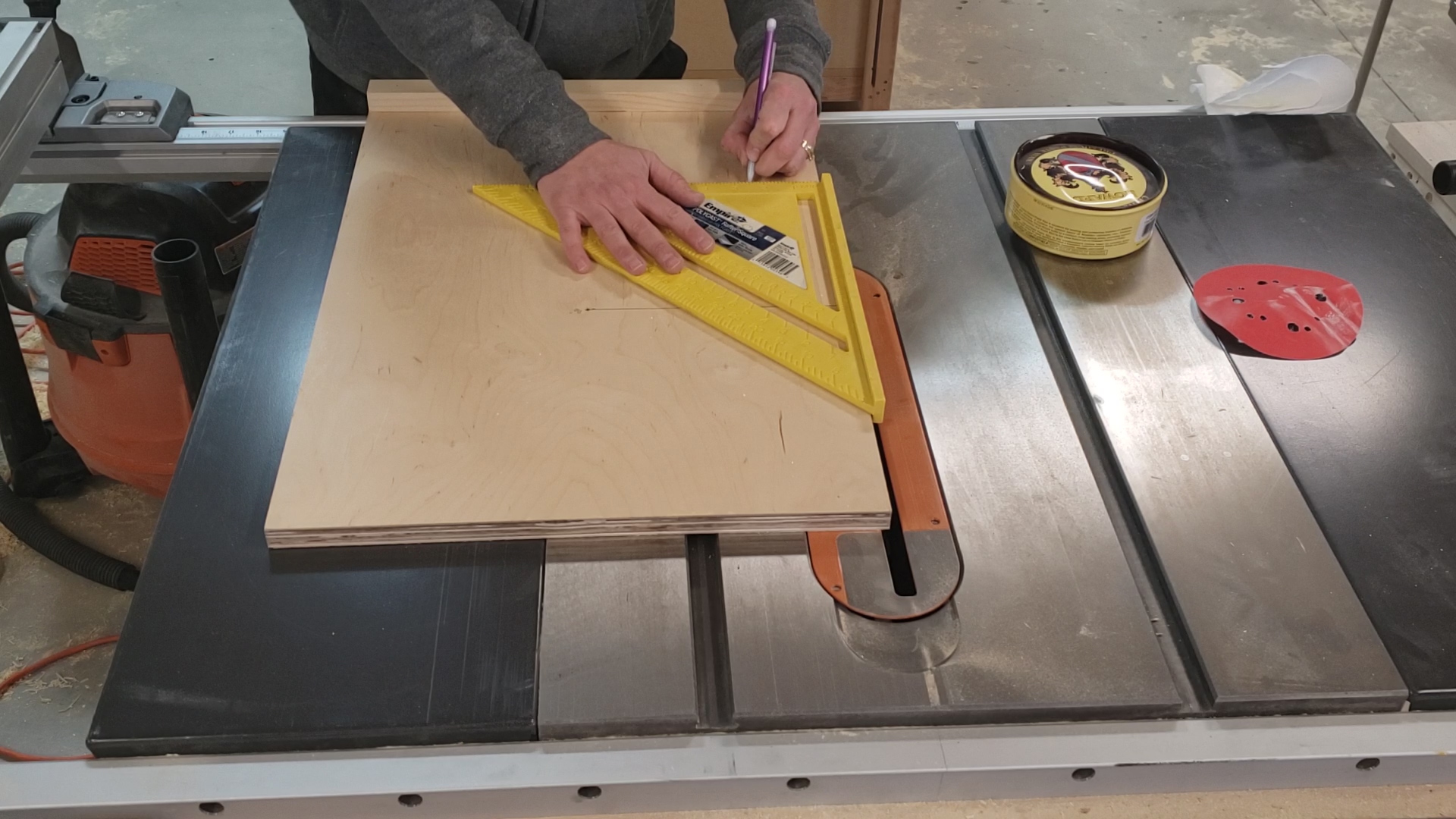
Now mark the radius measurement for the circle that you want to make on this line. For example, if you want to make a circle that is 10” in diameter measure to 5” with your speed square.

Tap a 1 ¼” nail into the mark.

Make a mark in the center of the square piece of wood that you’re wanting to cut into a circle. This is easily done by drawing two lines from each opposite corner. The intersection of these two lines in the center of the square.
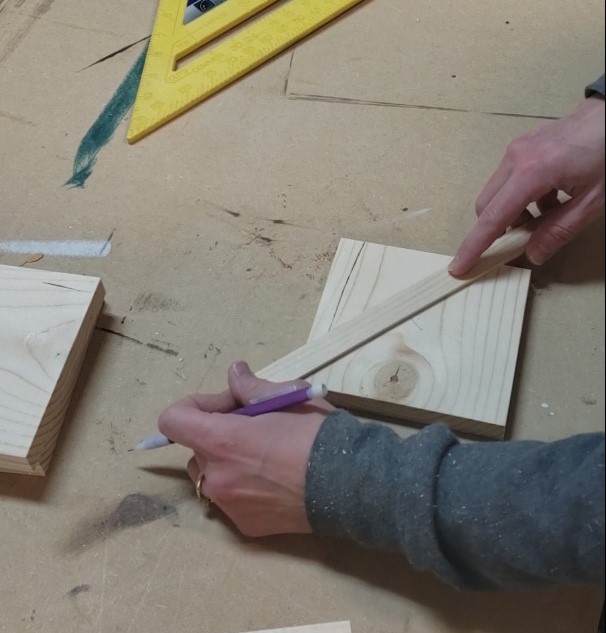
DIY Circle Cutting Jig Tutorial 2

Drill a small hole through this center point.
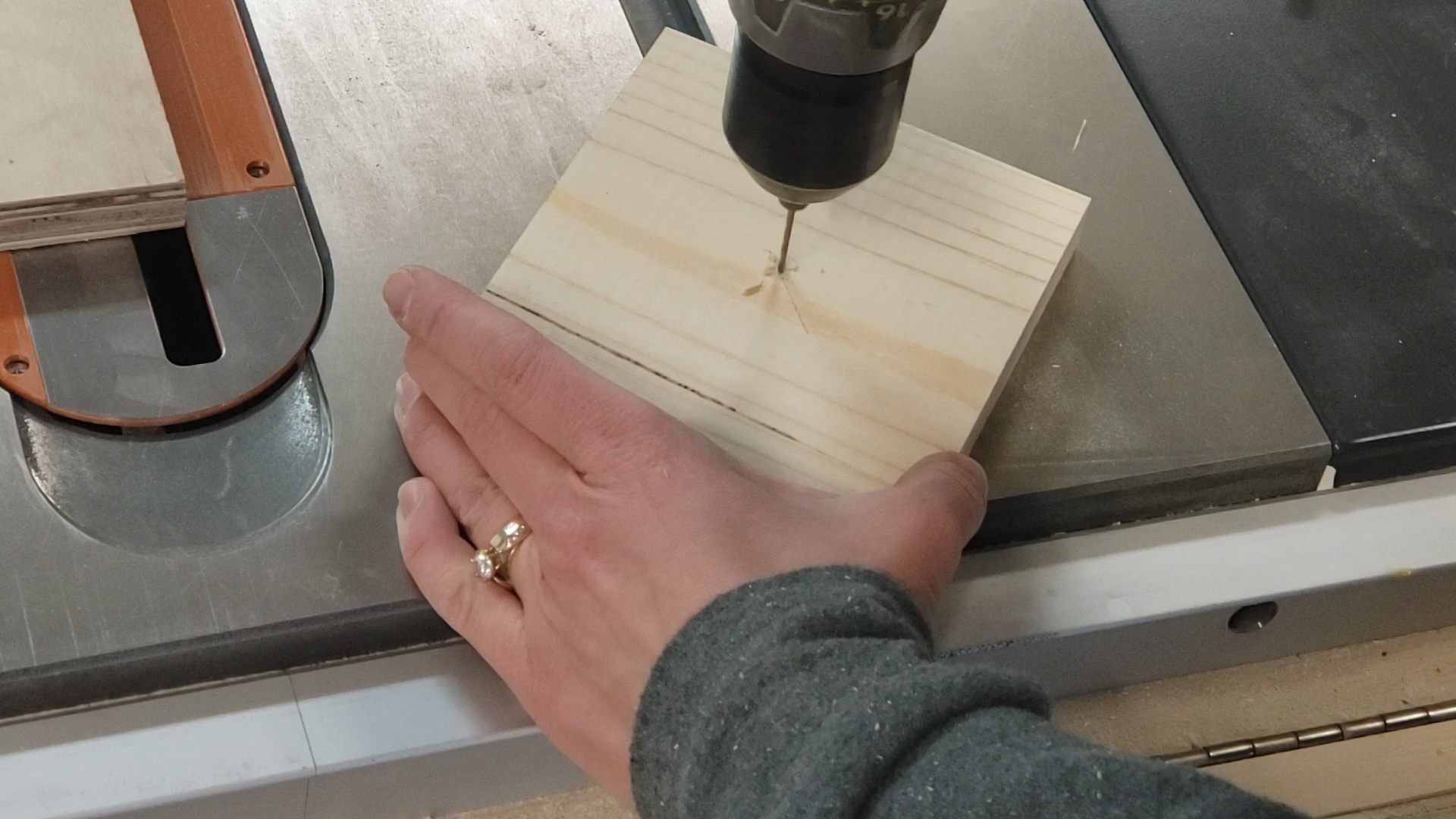
Place the 1 ¼” nail through the hole and into the hole on the jig and tap securely into place making sure that the square lies completely flat on the jig. Rotate the piece be sure it spins easily and securely.

Pull the jig back and raise the blade to just above the level of the square to be cut.

Plug the saw in. When operating a table saw always try to stand off to the right side and never directly in front of the blade.

Rotate the piece 45 degrees so a corner of the square overhangs the jig. Turn the saw on and push the jig forward to cut off the overhanging corner. Pull the jig back.
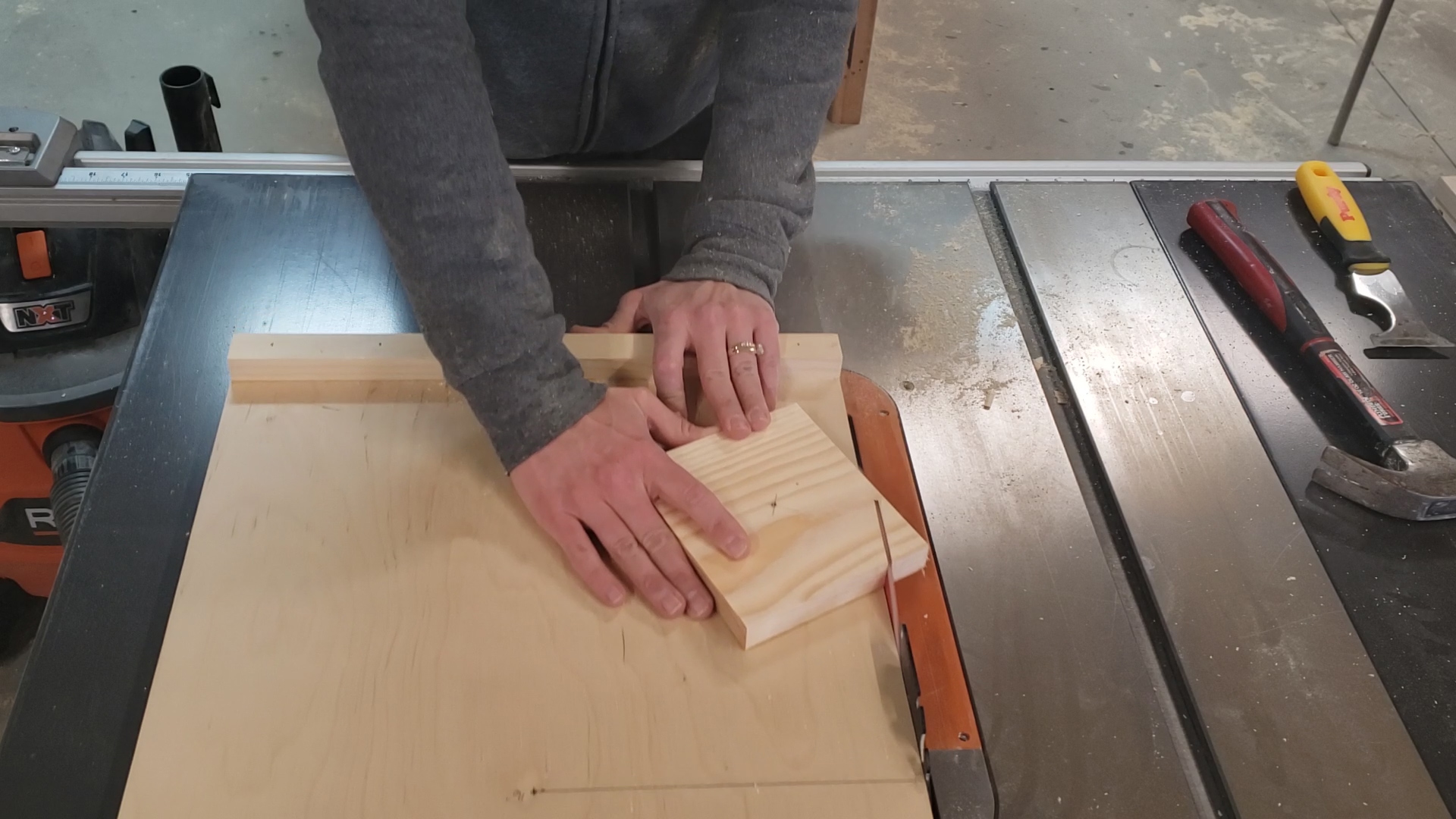
Rotate the piece 90 degrees and repeat until all corners have been cut off.

At this point, you can turn the saw off and wait until the blade comes to a full stop so you can remove the scrap pieces from near the blade. I typically do this for larger circles.

Now continue to rotate the piece, pushing and pulling the jig back and forth until all overhanging corners have been cut off.

Once the piece of wood looks like a very rough circle push the jig forward until the bottom of the piece is in contact with the blade and rotate until the bottom has been cut into a circle.
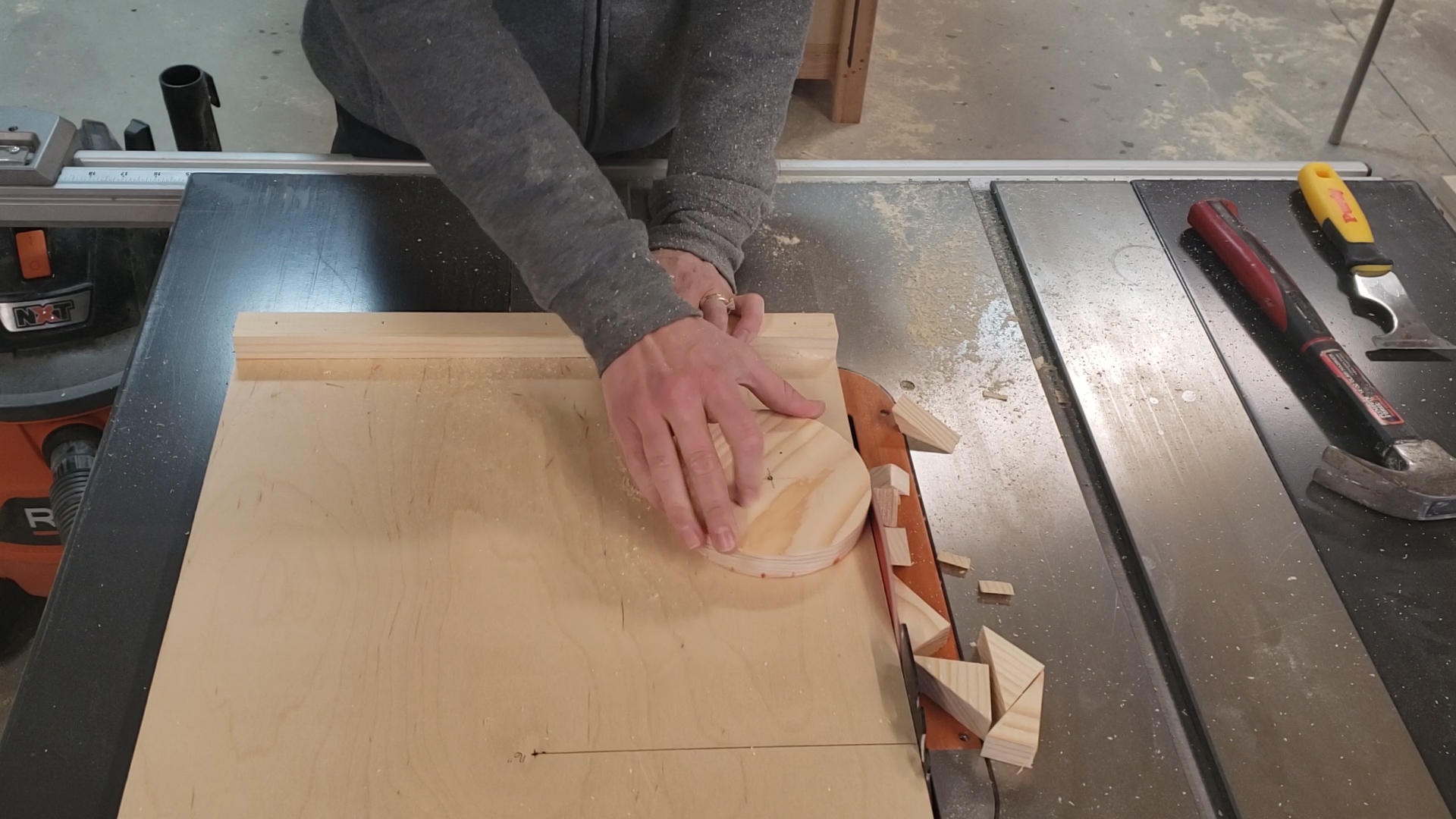
Push the jig forward slightly and rotate the piece again making a full circle. Repeat until the top of the piece has been cut into a circle.

Pull the jig back and turn the saw off.

Wait until the saw blade has come to a full stop before removing the jig, the circle, or any scrap pieces.

Pretty simple right?! After I made this jig I went on to cut 14 circles for a few tables I was building!!! It was so easy.
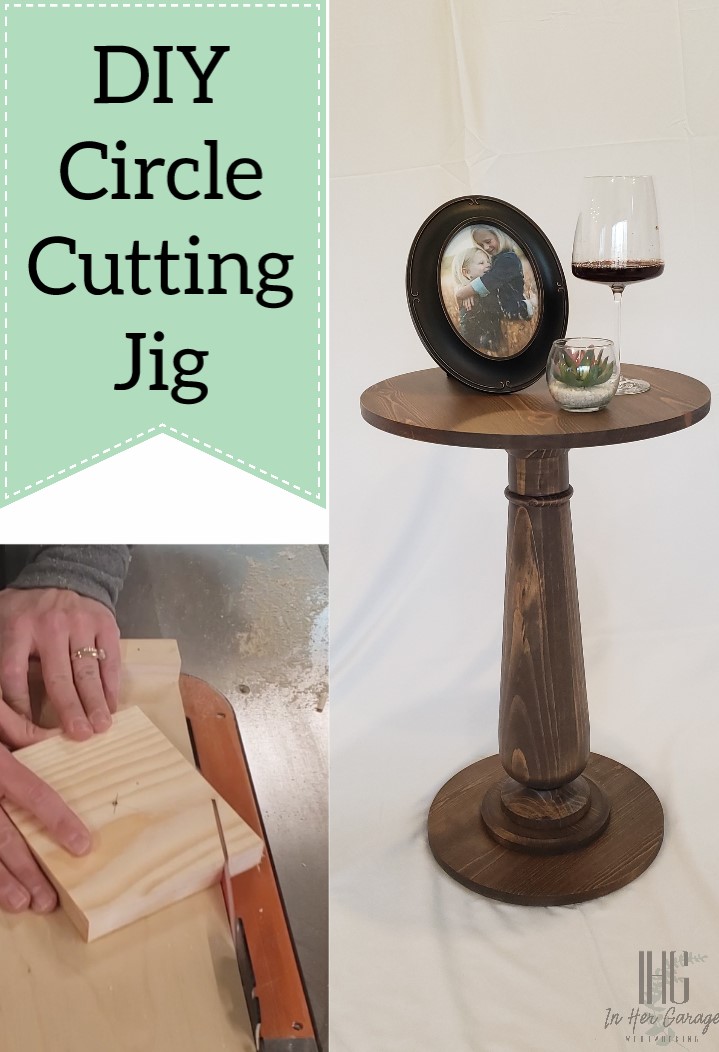
Now that you have a perfectly cut circle and a jig that you can use over and over what are you going to make?


Hi! I’m Kristen, from In Her Garage, and I am a self-taught woodworker and DIY fanatic from Minnesota where I live with my husband and our two daughters. Between being a wife, mom and, registered nurse, I try to make as much time for DIY as possible. My love for building came after our family built our current home in 2015. After we moved in, we needed furniture and instead of spending massive amounts of money to order the pieces we wanted I decided that I would build them myself. I started with a buffet table plan from the fabulous Ana-white and quickly set out to remodel my entire home office.

Since then I have started a side business building furniture for the people in my community. I love hearing my clients talk about the pieces they wish they had whether it be a rustic buffet table, a one drawer side table, or a toy box and then making it a reality for them. While starting my small business it made perfect sense that I would document my building journey so I simultaneously launched the In Her Garage blog and I love sharing my plans, tips and tricks.

Making something beautiful with your own two hands through a little preparation and determination is an amazing feeling.  I hope to bring inspiration and know-how to those looking to tackle a big or small project.
I am so glad that you found me here and please feel free to connect with me on PinterestInstagram, and Facebook to see what I am working on right now.


If you liked this post and want more tips about working with table saws then you’ll love this post on Table Saw Safety Guidelines.
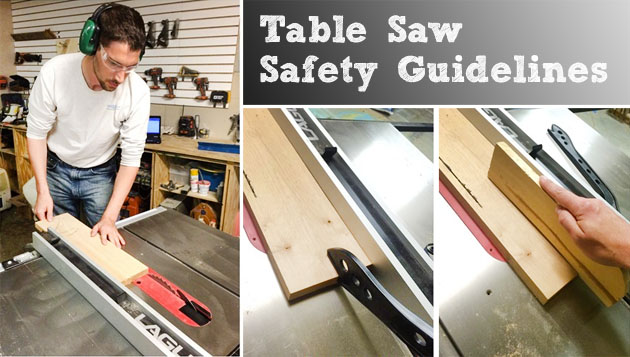

Table Saw Safety Guidelines | Pretty Handy Girl

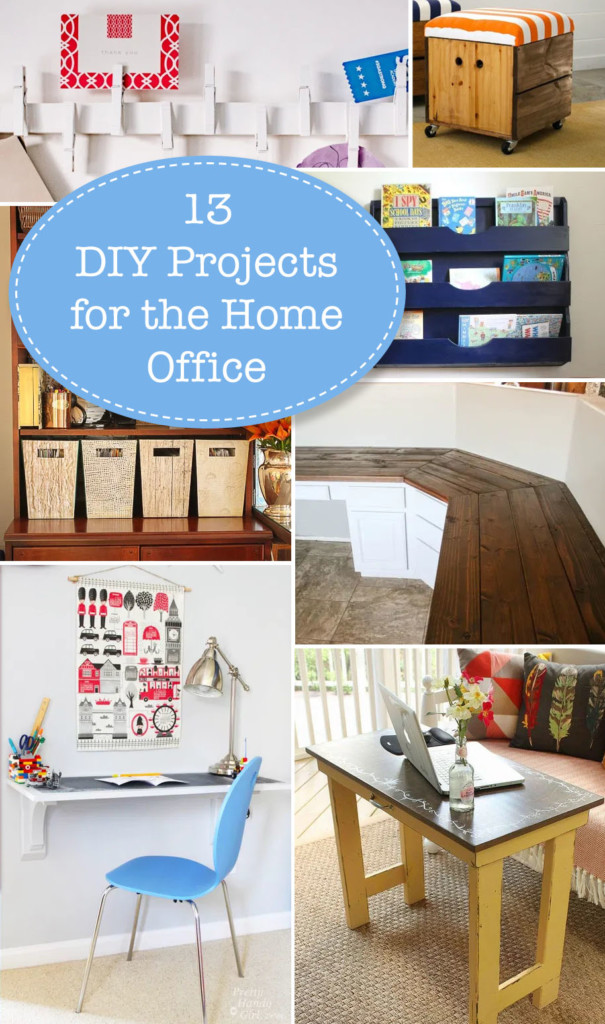
Many of you have suddenly found yourselves transitioning to a home office during this period of social distancing and feeling overwhelmed. No matter how much or how little space you have to work with, I’m here to help you create a cheerful and practical work space with these DIY Ideas for Setting Up a Home Office.

13 DIY Projects for Setting Up A Home Office
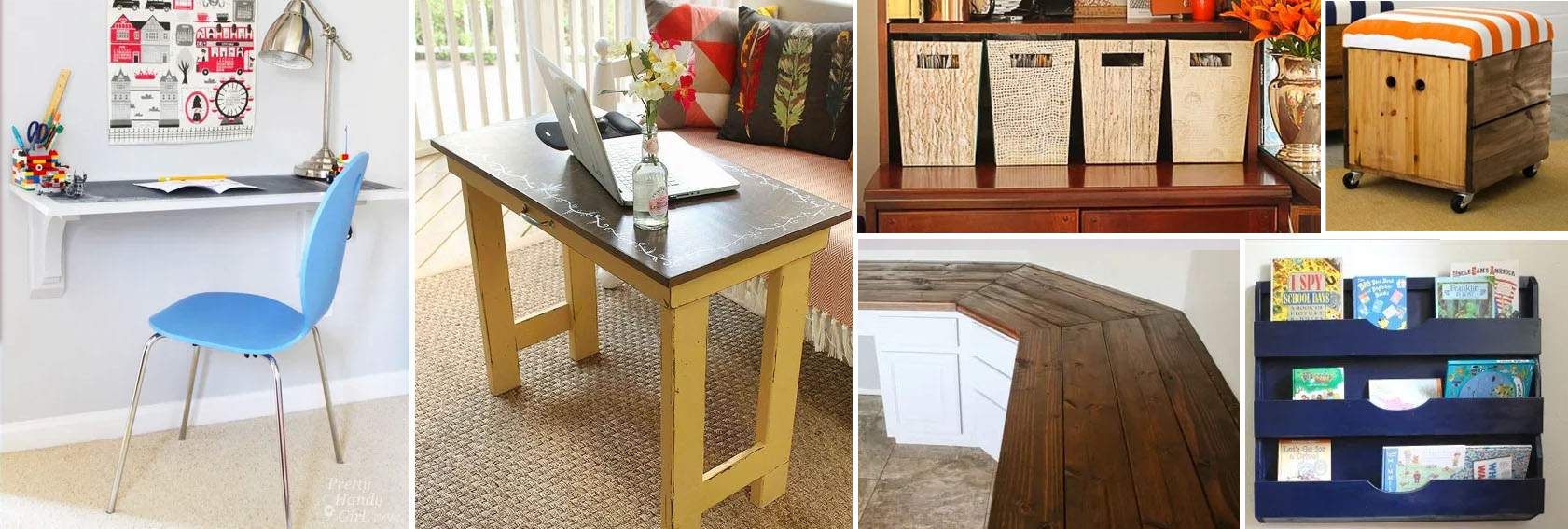
DIY Ideas for Setting Up A Home Office

I have been working out of a home office for quite a while now, so I thought I would share some of my most valuable ideas for getting organized to work at home. For inspiration, here are 13 easy, inexpensive, and practical projects to get you started.  Who knows, after you get set up, you may not want to return to your corporate office.

Wall-Mounted Desk Tutorial | Pretty Handy Girl

The great thing about this Wall-Mounted Desk is it can be small or large and it won’t take up any floor space!


Folding Laptop Writing Desk | Pretty Handy Girl

This Folding Laptop Writing Desk is the perfect height, and can fold up and store away when you’re not using it.


Build a Wood Plank Desktop for about $40

Here’s how you can create a simple (and most importantly, inexpensive) Wood Plank Desktop for about $40!


Magazine File Box Facelift | Pretty Handy Girl

Tired of your boring home office decor? Within minutes you could give a Magazine File Box a Facelift (or a storage box)!
I saved a lot of money reusing the old. Put ‘er there fellow savers!


DIY Wood Wall Organizer

If you’ve seen these cute Wall Organizers and thought: “I could totally make that,” I’m here to tell you, you can!


29 hacks to help you get more organized social media image

Here are 29 hacks to help you get more organized and help you transition to a better organized home office!


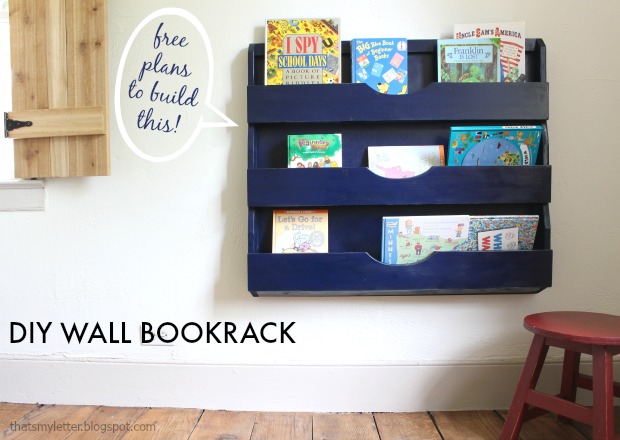
DIY Wall Bookrack

This Bookrack Building Project will have you organized and will free up space in no time.  The shelves are tapered and have plenty of depth for multiple books, files, or magazines.


File Cabinet Makeover Using Chalk Paint

Give a boring beige File Cabinet a SUPER cheap and quick makeover using chalk paint! I bet you can score a free file cabinet on your local buy, sell, or trade group. Or look on FreeCycle.org or Craig’s List.


12 DIY Home Storage Tutorials | Pretty Handy Girl

I’m taking advantage of these days at home to do a big “clean out”!  You’re sure to find one of these 12 DIY Storage Projects to help you organize your home useful.


Wall-Mounted Hutch Tutorial

This charming Cottage Style Desk and hutch is where I keep our lives organized! It takes up otherwise wasted space in the corner of our kitchen.


Scrap Wood iPad Tray

If you are accustomed to DIY projects, you probably amassed quite the stockpile of leftover wood. You’ll love this quick, easy, and cheap DIY iPad Holder!


rolling storage stool final

What’s better than getting organized with more storage? How about combining it with additional seating! Check out this easy tutorial for how to build a Rolling Storage Seat.


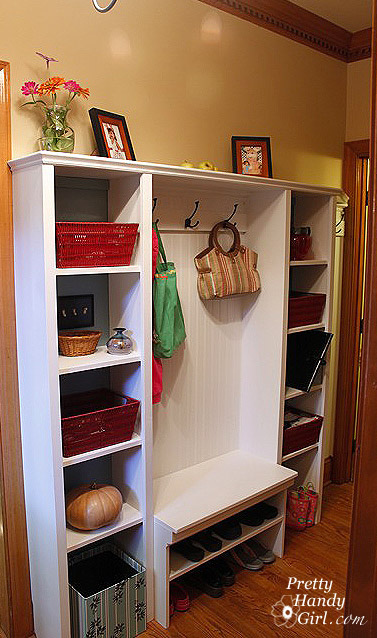
hallway storage unit

Although this wall Storage System was built custom for a mudroom, you can easily adapt it for a home office!

I hope you found some of these DIY Ideas for Setting Up a Home Office helpful. Gotta run and get set up for working tomorrow from home. Good luck to all of you, especially if you have family members who like to interrupt your workflow.

Spring Wreath hanging on front door

DIY Spring Wreath

Hello, Pretty Handy Girl Readers!

I’m back today with a fun project for your front doors! This beautiful baby breath’s wreath – perfect for Spring. I love making my own wreaths because I can customize them exactly the way I want. And I can save a bunch of money by making them myself, too.

The first thing I do before making any wreath is to collect some inspiration. I look at a bunch of shops, like Pottery Barn and Etsy to get an idea of what kind of wreath I want to make. I’ve learned the hard way that it can be extremely overwhelming (and easier to overspend) when you don’t have a plan in place first.

Close up of a grapevine wreath

To make a wreath like this one all you need is a simple, inexpensive grapevine wreath and some faux flowers of your choice. In this case, I used all baby breath stems to keep a uniform look. Michael’s and Afloral.com seem to be the best places to get these materials at the best price. In fact, Michael’s is almost always running a sale on their floral department and you can usually find an additional 40% off coupon online. However, Michael’s can be overwhelming as I said before. They have so many options! It’s important to know what kind of wreath you want to make first so you can easily gather the flowers you need. Otherwise, you might be there all day! 🙂

Close up of Faux Baby's Breath Floral

Here’s another tip for you. While I really enjoy making wreaths, I don’t have the room to store a lot of them. So, I tend to make each wreath somewhat temporary. Meaning, I don’t permanently attach the florals. I like to have the option to change up the look using the same Grapevine Wreath. Another way to save a little bit more money!

So let’s get started.

Materials:

(I’ve included affiliate links for your convenience. I earn a small percentage from a purchase using these links. There is no additional cost to you. You can read more about affiliate links here.)

Materials needed to make a Spring Wreath

Grapevine Wreath (I used brass gift toppers from Target, Amazon and craft stores sell bells too.)
Scissors or Wire Cutters
Faux Florals of your Choice
Floral Wire – (optional, you may not need this)
Ribbon for Hanging

Instructions

Follow these steps to make this lovely Spring Wreath.

Step 1: Prepare your Floral Pieces

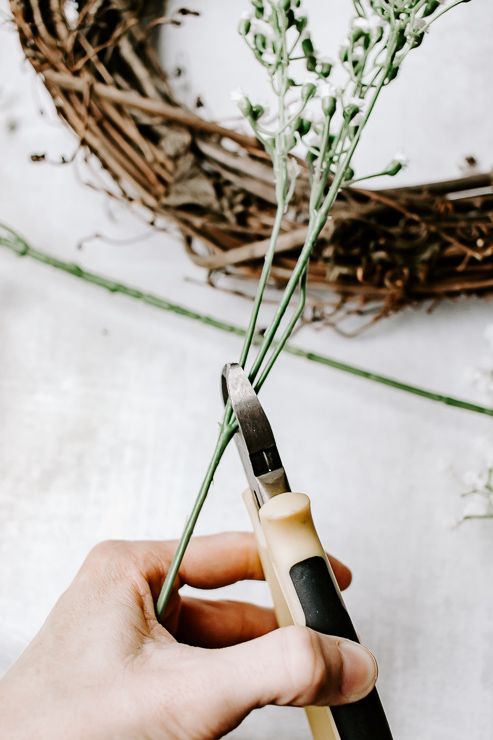
Cut floral stems

When you buy faux flowers, most of the time they come in bunches or with a very long stem attached. We need shorter stems and mainly individual flowers when making a wreath. Using your wire cutters, cut your floral bunches into individual flowers and cut any long stems a bit shorter.

Don’t cut stems too short! You do want some stem to be able to insert them snugly into your grapevine wreath.

Step 2: Start Attaching your Florals to your Wreath

Insert Faux Florals into Grapevine Wreath

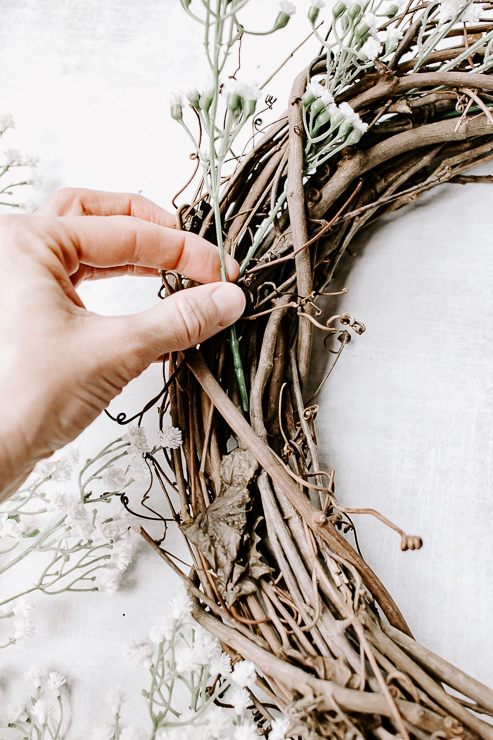
Now, you can attach your florals fairly securely just by pushing the stems snugly into the intertwined branches of the grapevine wreath. That is why you may not need any floral wire at all! I only ended up needing a little bit of wire to secure a few pieces. Use your wire cutters to snip off a piece of wire. With the wire holding your stem to the wreath, twist the back to secure it. You can carefully use your wire cutters to help twist the wire in the back. Be careful, the floral wire can be sharp!

insert florals into grapevine wreath

Periodically pick up your wreath to make sure that your floral pieces are secure and not falling off.

Use floral wire to secure florals to wreath

That’s pretty much all you need to do to make this pretty wreath!

Step 3: Hang up your new Spring wreath

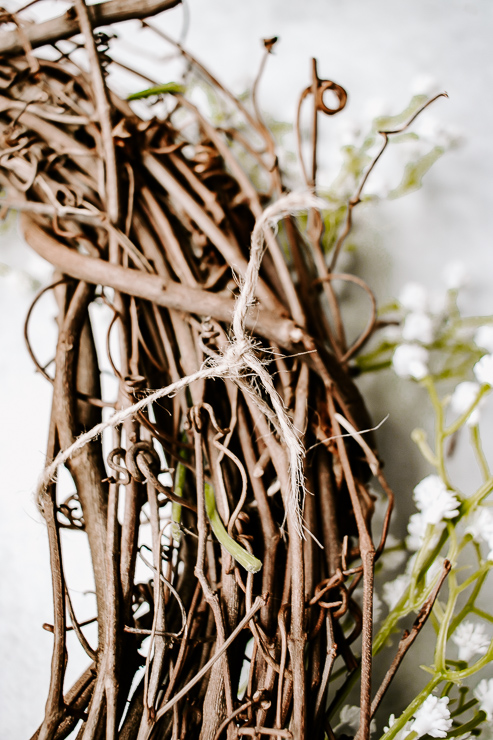
Close up of jute ribbon used for hanging wreath

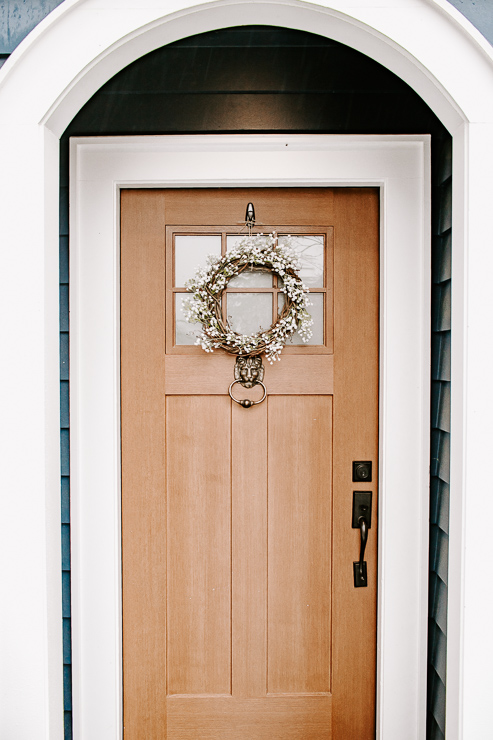
It’s time to hang it up! I use a command hook made especially for hanging wreaths.

Spring Wreath hanging on front door

I just attach a little loop of ribbon or string to the back of the wreath. Then, I just hang the loop directly on the hook.

Spring Wreath hanging on Front Door

It works really well and has never fallen off (even with young kids slamming the door one too many times!)

Spring wreath hanging on front door

I really hope you enjoyed this project and it brings some Spring joy to your homes. If you love making wreaths, check out my other DIY Spring hoop wreath project here on Pretty Handy Girl.

Thanks so much for reading and being here today.  I’ll meet you back here next month!

karen signature

~ See More of Karen’s Tutorials ~


karen from decor hintHello!  I’m Karen, the creator of the Home Decor and DIY Blog: Decor Hint. I’m a Native of the East Coast, but I currently live in beautiful Seattle with my hubby, our two wonderful children, and our spunky wheaten terrier.

You can usually find me with some sort of craft in one hand and a coffee in the other. And I’m always rearranging furniture or moving lamps from room to room. I have a passion (read: obsession) for decorating, DIY, and gardening. In short, I love making my house into a home.

Like many, I’m inspired by what I see in home decor magazines, but I’m not so inspired by the price tags.  Consequently, I love finding and creating beautiful budget-friendly home decor items. In a head to head competition, I bet you’d never know the difference between the designer items and my DIY creations!  Many of my DIY projects focus on sewing, crafting, upcycling and organizing. Some of my favorite projects have been making pretty wreaths, sewing my own tassel hand towels, and crafting these trendy wood bead garlands. I can’t wait to inspire you and spark your creativity through my DIY projects.

You can always connect with me on Pinterest, Twitter or Instagram.

Can you think of anything more spring-like than a nest full of blue eggs? Today I want to show you how to make Faux Blue Speckled Bird Eggs and a Nest!

Faux Blue Bird Eggs and Nest

Spring has arrived in North Carolina and I want to dance and sing and tiptoe through the tulips. Now that Valentine’s Day has come and gone, it is the perfect time to start decorating for Easter! A nest of Blue Speckled Bird Eggs makes a beautiful centerpiece! Mother Robin sure does create beautiful blue eggs, but we’d never think of disturbing those precious eggs.

Instead, I’ll show you how to turn regular chicken eggs…

…into a beautiful nest of blue speckled eggs to decorate for Easter or Spring.

Materials:

(I’ve included affiliate links for your convenience. I earn a small percentage from a purchase using these links. There is no additional cost to you. You can read more about affiliate links here.)

Instructions:

It’s time to get messy. Put down a drop cloth or tarp to cover your work area (and beyond.) First, I’ll show you a magic trick! Learn how to remove the white and yolk out of eggs without breaking the shell. Rest an egg inside the empty carton. Gently tap a nail into the top of your egg.

Turn the egg upside down and put another hole into the other side. Typically you’ll need one hole slightly larger.

Faux Robin's Egg Spring Nest | Pretty Handy Girl

Pucker up and blow through the smaller hole until the egg white and yolk drain out the larger bottom hole. (Of course, you’ll probably want to save the eggs for omelets or scrambled eggs.)

Once you have emptied your eggs, clean them off. Then close your egg carton and flip it upside down to create a raised support for your eggs.

Faux Robin's Egg Spring Nest | Pretty Handy Girl

Gather your blue, black, and white acrylic paints. Paint the egg a robin’s egg blue color and allow them to dry.

Put on rubber gloves. Pour a small amount of black acrylic paint onto a paper plate. Add a little water to create a runny consistency. Dip the toothbrush into the paint mixture. Aim the toothbrush at the eggs and stroke your finger along the bristles to spatter black dots all over the eggs.

Allow the black speckles to dry and repeat the process using the white paint.

While the eggs are drying, pull out your pasta maker. (Am I the only one who never uses my pasta maker for making pasta?) Cut the paper bag into sections wide enough to fit into the pasta maker.

Feed the paper bag through the pasta maker to shred it. (You can shred the bag with a paper shredder or scissors if you don’t have a pasta maker.) Arrange the shreds into a nest form in a bowl, urn, or basket.

Set your faux blue bird eggs into the nest and admire your beautiful Spring décor!

This centerpiece can be left out until you are tired of looking at it. Then store the eggs in the carton and bring them out again next year.


Have a great week! I hope the weather is warming up where you are!


Pin for later!

This DIY nest of Blue Bird Eggs makes a beautiful centerpiece for your Easter decor! | DIY Easter table centerpiece | Pretty Handy Girl #prettyhandygirl #easterdecor #tablecenterpiece