Being a Lowe’s Creative Ideas blogger is one of my favorite jobs as a DIY blogger. I love walking the aisles of Lowe’s, with my provided gift card in hand, dreaming of finding mundane objects to transform into amazingly beautiful objects. For example, what do you get when you cross an ice bucket with a stove pipe connector?
https://prettyhandygirl.com/wp-content/uploads/2013/02/slide_mounting_bracket_car_battery.jpg427640Brittany Baileyhttps://prettyhandygirl.com/wp-content/uploads/2021/07/PHG-logo-tagline-2020-1030x211-R.jpgBrittany Bailey2013-02-20 07:00:592021-07-22 03:36:14How to Replace a Car Battery {Pretty Handsome Guy Style}
Valentine’s Day is in one day, right? So, what am I up to? I’m getting ready to celebrate the return of spring and St. Patrick’s Day of course.
In North Carolina, the trees are starting to bud and a few have flowers. I’m super excited for the arrival of spring. In addition to the flowers, the weeds have also started to pop up. But, there is one weed that I don’t mind sticking around for a little while.
Although clover is technically a weed, it is also is a beneficial plant for your yard. It encourages bees to visit and help pollinate your flowers. Clover also produces nitrogen which is good for your lawn. And finally, it is a low growing evergreen plant, which means more green in your lawn. Read more
https://prettyhandygirl.com/wp-content/uploads/2013/02/planted_potted_clover.jpg427640Brittany Baileyhttps://prettyhandygirl.com/wp-content/uploads/2021/07/PHG-logo-tagline-2020-1030x211-R.jpgBrittany Bailey2013-02-13 07:00:392021-07-08 16:39:23Easy Potted Clover for St. Patrick’s Day
It’s time to take on a little fix in your laundry room. This single upgrade can prevent your home from a house fire. Let me show you how installing semi-rigid dryer duct can prevent a fire hazard!
Installing Semi-Rigid Dryer Hose to Prevent Fire Hazard
Last year when I showed you how to clean out your dryer hose to prevent dryer fires, I didn’t realize that I still had a fire hazard living in our laundry room. Since then, I stumbled across a video that scared the bejeezus out of me. Matt from Great Lakes Home Performance created this video showing what happens to foil dryer hoses.
I knew that white plastic dryer hoses were bad and had previously replaced ours with the flexible foil hose. But, I felt duped when Matt showed what happens to those “foil” hoses. First, what I didn’t realize is that those shiny metal hoses aren’t foil! They are made of flammable plastic. Go ahead, run to your dryer right now and see what type of duct work you have — I’ll wait. If it is white or shiny foil, I’ll show you how to replace it with semi-rigid duct to keep you and your home safe from a dryer fire. This is an easy tutorial, you can definitely do this (if your exterior dryer vent is on the 2nd floor, you can keep the same vent and just replace the hose.)
Materials:
(I’ve included affiliate links for your convenience. I earn a small percentage from a purchase using these links. There is no additional cost to you. You can read more about affiliate links here.)
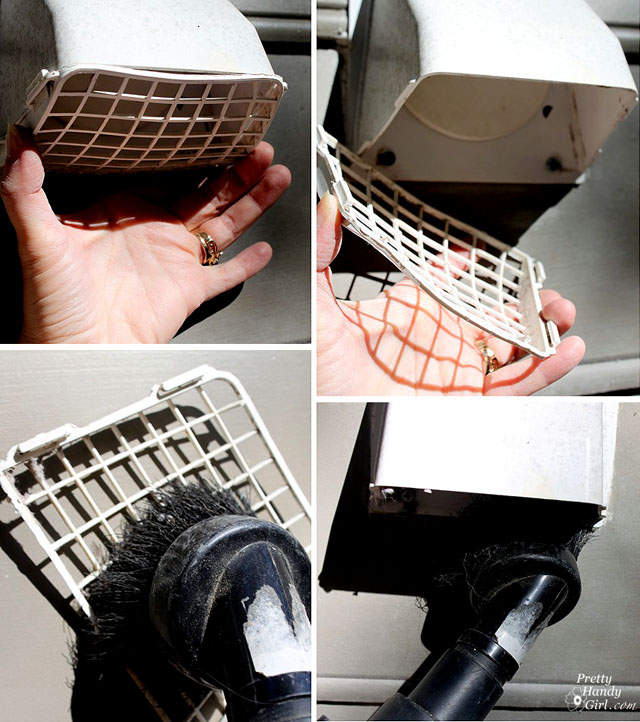
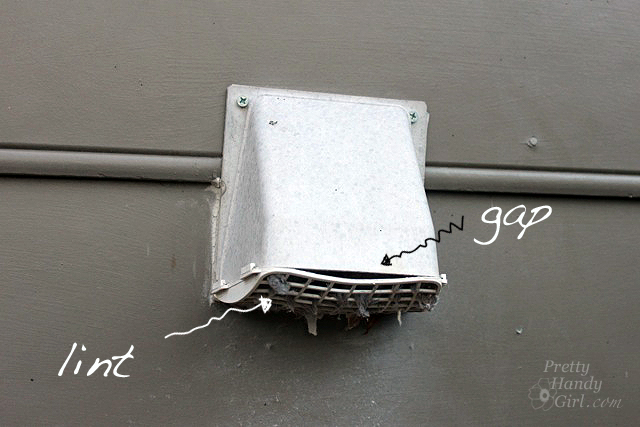
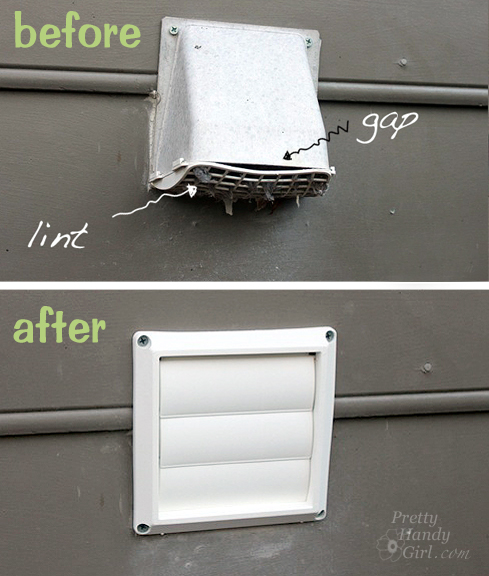
Were you nodding your head, yes? Well, if you like to keep your home rodent and bug-free, I highly recommend replacing the exterior vent at this time.
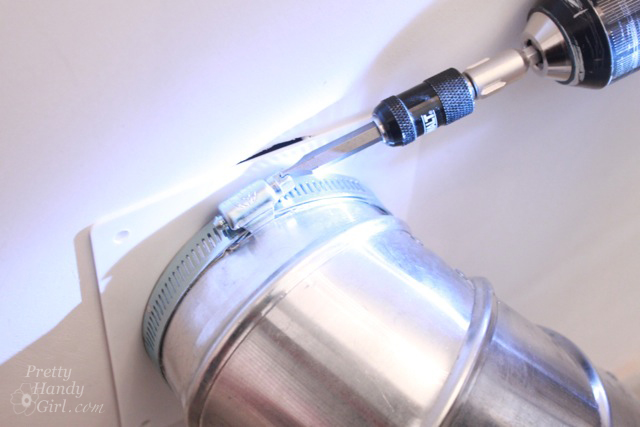
Detach the dryer duct (hose) from the wall inside your home first. Use the screwdriver to loosen the hose clamp.
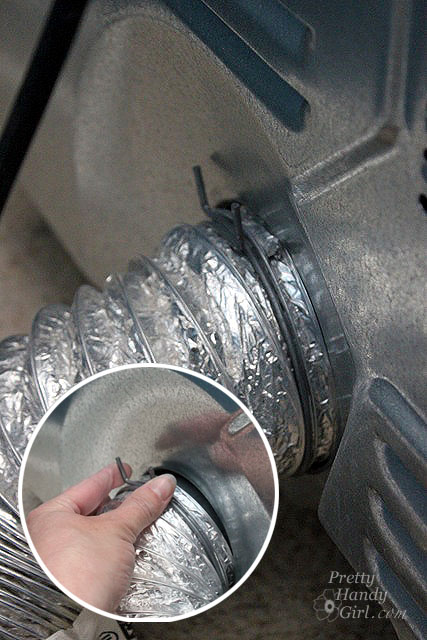
Or if you have the tension style clamp, pinch the clamp wings together to release the hose.
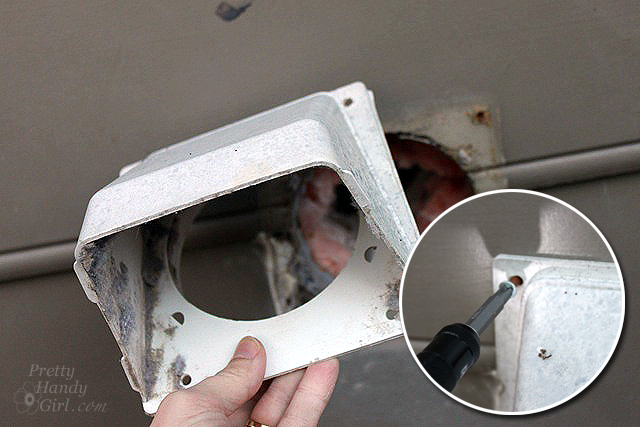
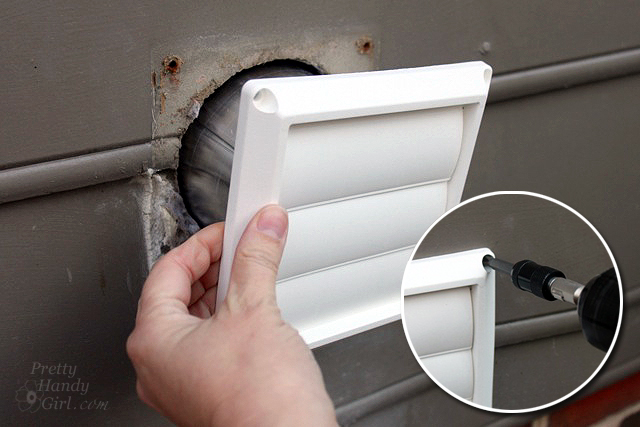
Head back outside. Unscrew the mounting screws from around the dryer vent and lift the dryer vent off.
Slide the new vent into the hole and attach it to the house with the screws provided.
For additional draft and bug protection, caulk around the edge of the vent cover where it meets the house.
When the dryer is on and air is forced through the duct, the louvers will open.
When the dryer is off the louvers will close and prevent unwanted house guests (spider, mice, etc.) from taking up residence into your dryer.
Ahhhh, much better, right?!
Periodically check the vent to make sure the louvers close and there is no lint build-up.
How to Replace the Dryer Duct Hose:
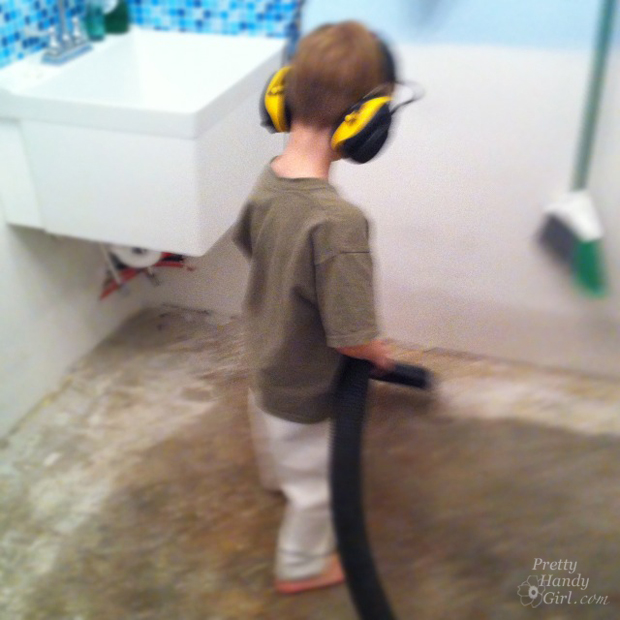
Pull your dryer out from the wall. Now is a good time to vacuum behind it to clean up any lint that has accumulated back there.
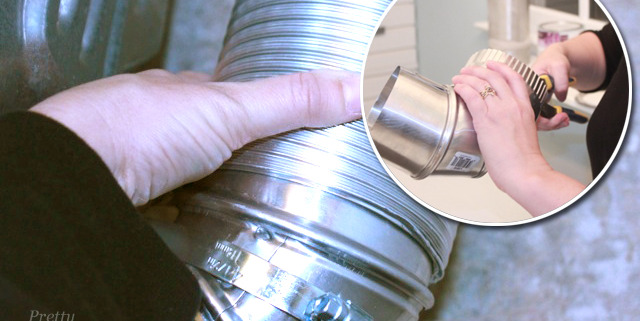
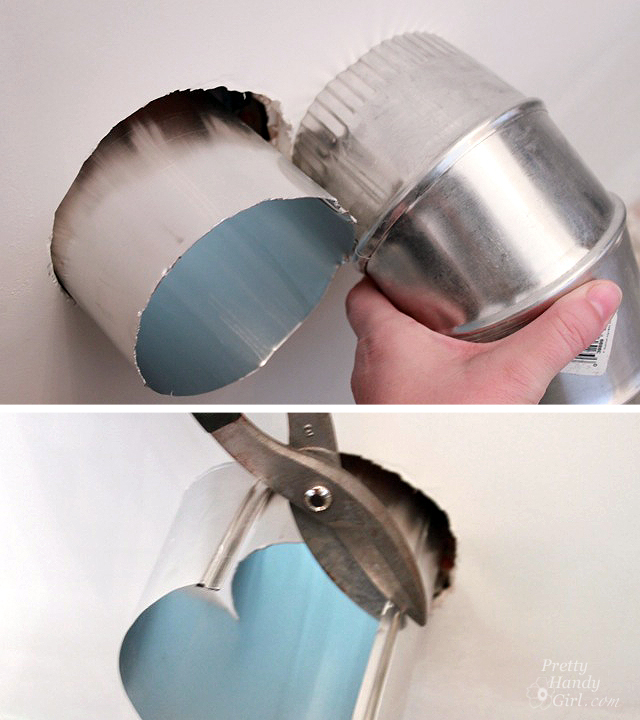
Hold the adjustable elbow next to the vent duct where it enters your laundry room. If it is too long, trim it with the tin snips to the depth of the elbow.
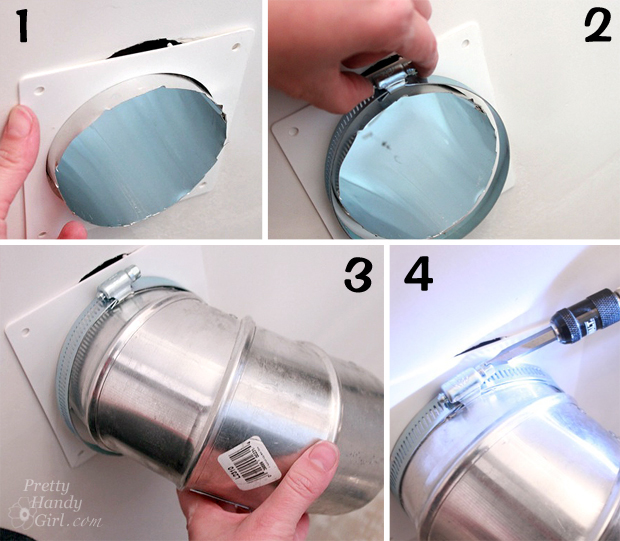
1) Feed the collar over the vent duct to cover the hole in the wall (and seal out any drafts.) Attach the collar with screws. 2) Feed one hose clamp over the vent duct.
3) Slide one elbow over the vent duct. 4) Tighten the hose clamp with the screwdriver until the elbow is secured to the duct. Tug lightly to make sure it won’t inadvertently slip off.
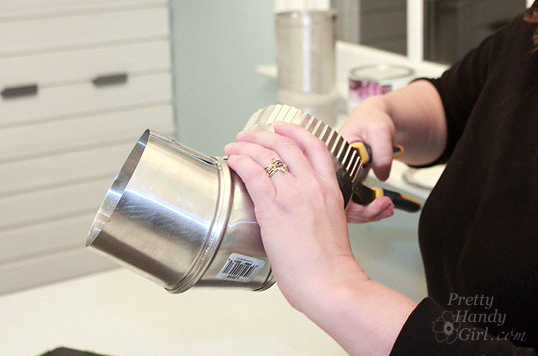
If you are having trouble slipping the elbow into the duct, you can use pliers to cut the tabs on the crimped end to allow you to collapse the collar a little more.
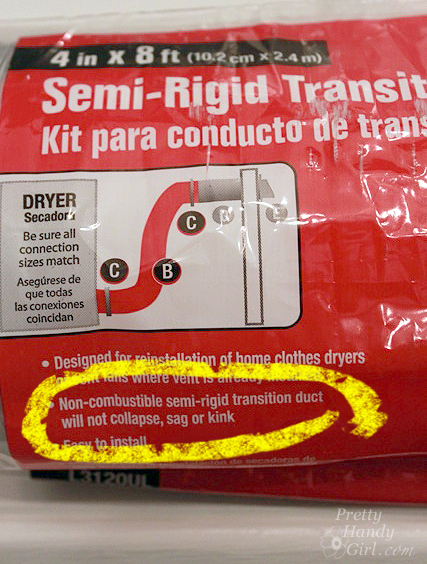
Remove the semi-rigid duct from the packaging. Extend the hose only long enough to reach your dryer. If your distance is short (and the duct too long), you might need to trim excess duct with the tin snips.
How to Connect the New Dryer Duct:
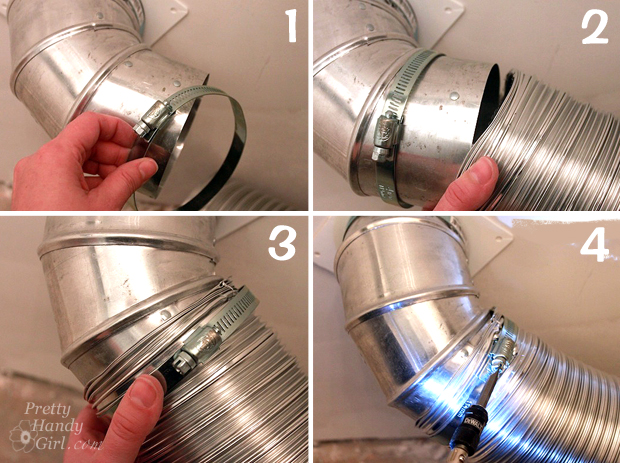
1) Slide the hose clamp over the end of the elbow. 2) Slip the semi-rigid duct over the elbow.
3) Slide the hose clamp over the semi-rigid duct and elbow. 4) Tighten the hose clamp until the duct is secured to the elbow. Gently tug the semi-rigid duct to make sure your connection is tight.
Shimmy behind your dryer (this reminds me of the time I was pregnant and had hired a handyman to re-route our dryer hose to a closer location. Handsome Guy and the Handyman were both struggling with the short duct and couldn’t attach it. I really wanted to push them both aside and do it myself. Unfortunately, at that point in my pregnancy, my belly’s depth was equal to my width and there was no shimmying behind any dryer for me.)
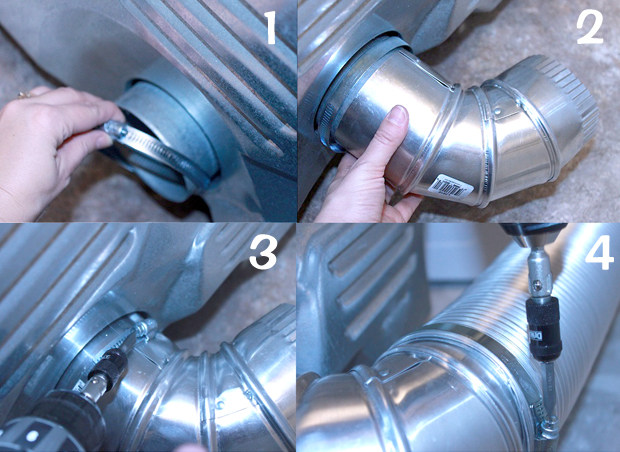
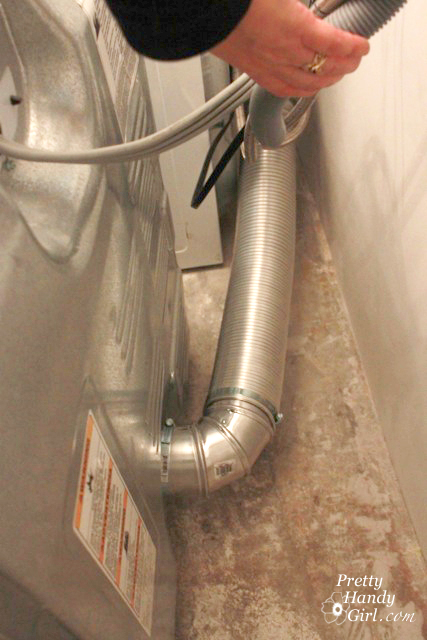
1.) Slide the hose clamp over the dryer exhaust. 2) Attach the elbow to the dryer.
3) Tighten the hose clamp onto the dryer. 4) You’ve got this right? Tighten the hose clamp onto the semi-rigid duct and elbow.
BAM! You’re done! When you push your dryer back, make sure you aren’t crushing the ductwork. Are you happy you learned how to install a semi-rigid dryer duct to prevent a fire hazard? Don’t forget to clean out your dryer and the ductwork at least twice a year.
Take care and stay safe! I care about you all a lot.
(I’ve included affiliate links for your convenience. I earn a small percentage from a purchase using these links. There is no additional cost to you. You can read more about affiliate links here.)
I also created a tutorial for making those cute tags. If you have a Silhouette or other craft cutter, I have a few tricks for making the cut out tags. In particular, I want to show you how to attach the centers (technically called the counters in typography) of letters so they don’t drop out after being cut. You could simply glue them back in, but when you are making 50 tags that can become time intensive. I guess an alternative would be to simply change your child’s name to something like Nick where there are no letters with centers. 😉 Yeah, maybe not. Here’s how I dealt with those pesky letters with centers: Read more
https://prettyhandygirl.com/wp-content/uploads/2013/01/you_rule_valentines.jpg427640Brittany Baileyhttps://prettyhandygirl.com/wp-content/uploads/2021/07/PHG-logo-tagline-2020-1030x211-R.jpgBrittany Bailey2013-01-21 20:52:142021-08-17 17:32:56Glitter Cut Out Valentine Name Tags