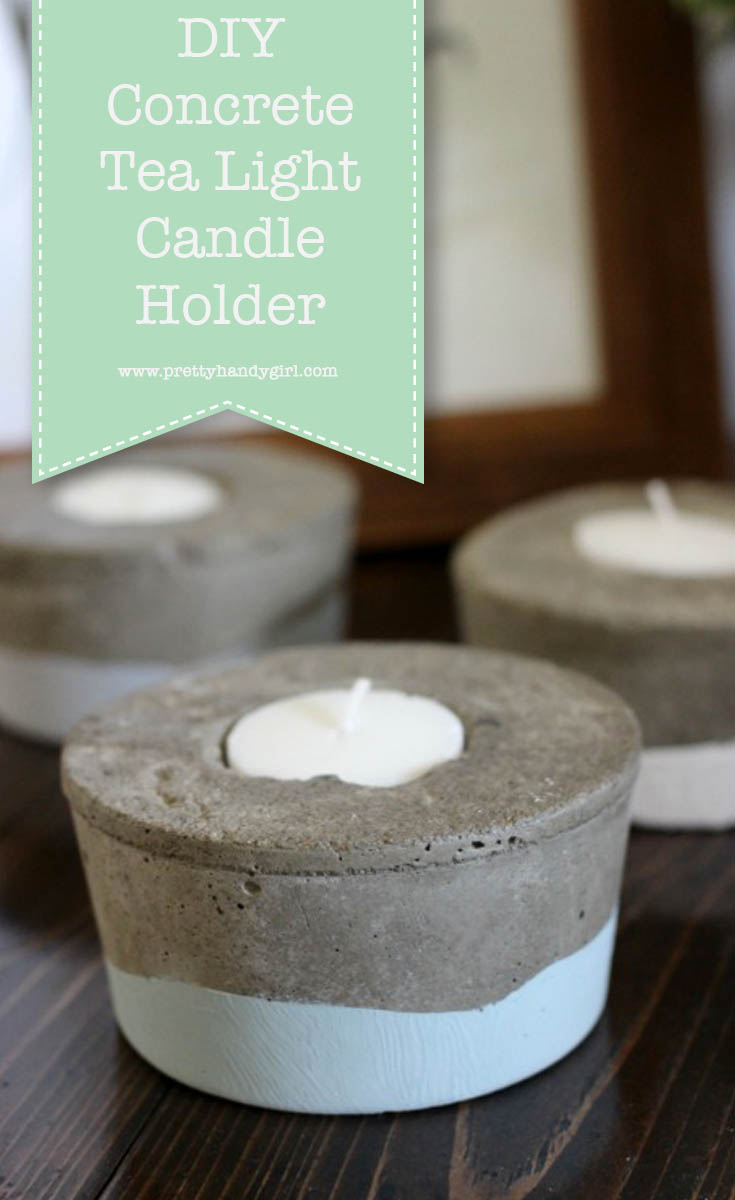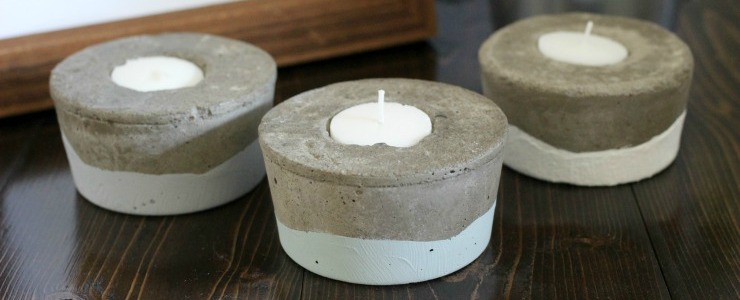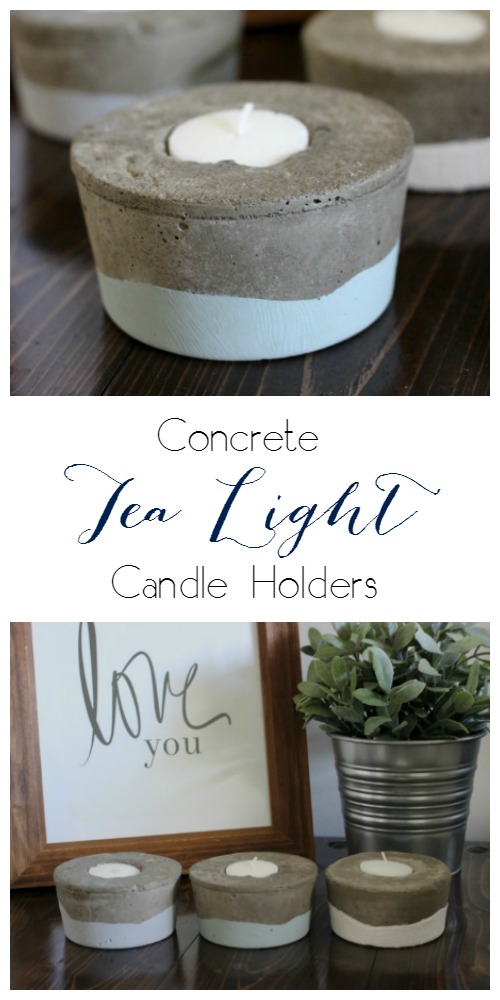
Hi everyone! This is Lindi, visiting again from Love Create Celebrate! Have you ever made anything with concrete? I’m not just talking about the patio outside! I’ve noticed concrete projects slowly making their way indoors and I’m loving it! The sleek industrial feel of concrete projects makes for some beautiful and unique home decor projects. If you haven’t tried it yet, these DIY Concrete Tea Light Candle Holders are the perfect project to start with!

Materials:
- Concrete mix (buy a whole bag for less than $10!)
- Plastic container
- Tea light
- WD-40
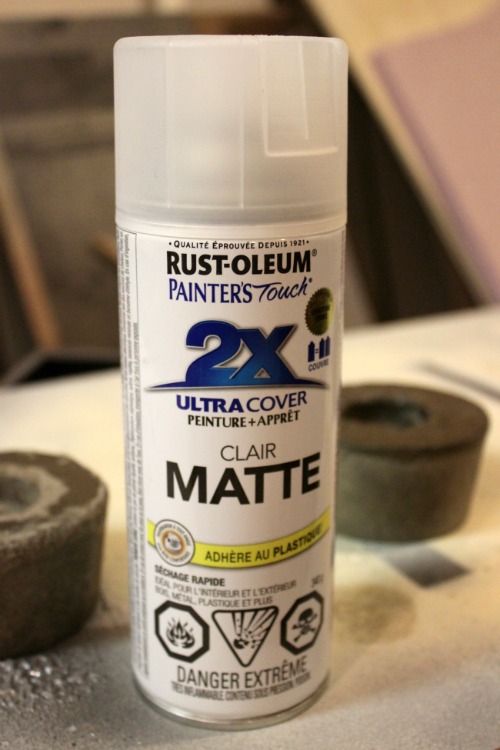
- Clear Matte Spray Paint
- Paint (optional)
Instructions:
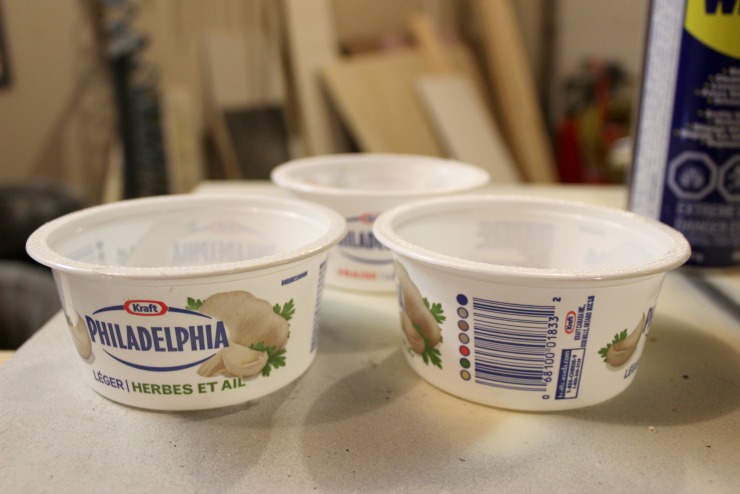
Chose some plastic containers from around your home to pour the concrete into. I used old cream cheese containers and they were the perfect size, but you can definitely chose larger containers too!
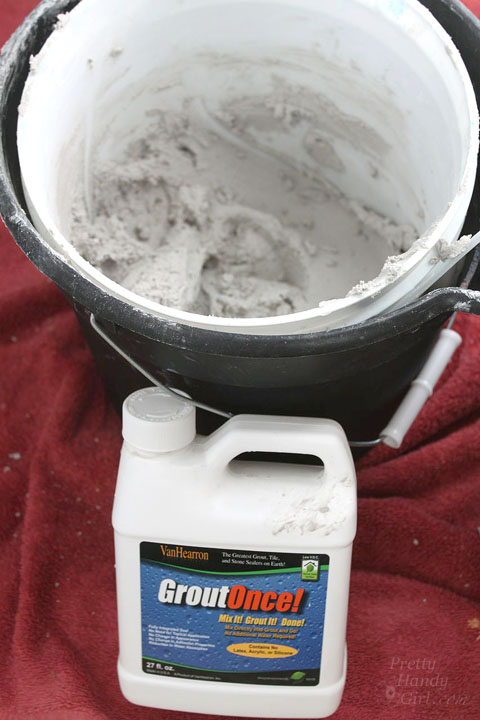
Mix your concrete according to the instructions on the bag. I made three little candle holders, so I used just over 3 scoops of concrete (same size as my containers). Wear gloves when working with concrete. Mix in a bucket or a plastic containers. Mix well until all chunks are gone. When you are done, simply water down any concrete that remains and dump it – this will keep your container clean.
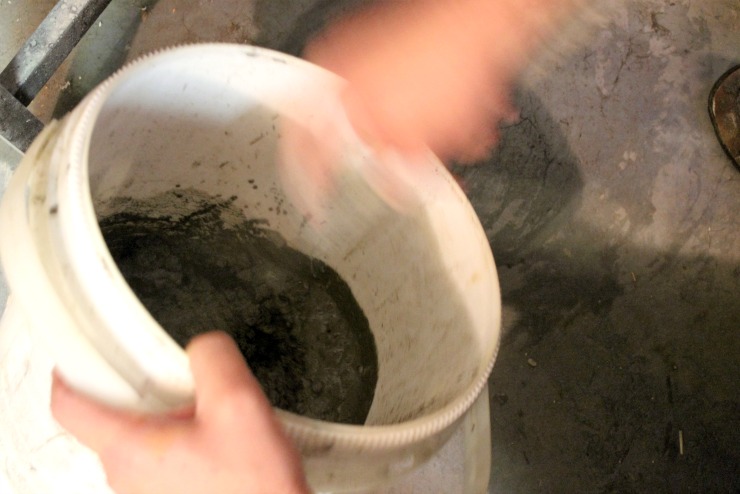
Give your plastic containers a good spray with WD-40 to ensure that the concrete doesn’t stick to the plastic.

Fill your containers with the concrete mix and tap your container against your table or surface a few times. This will level out the concrete and remove any air bubbles. Grab your tea light and place it in the center. Push the tea light down until level with the concrete. Go back in five to ten minutes and push the tea light down if it has popped out of the concrete a bit.
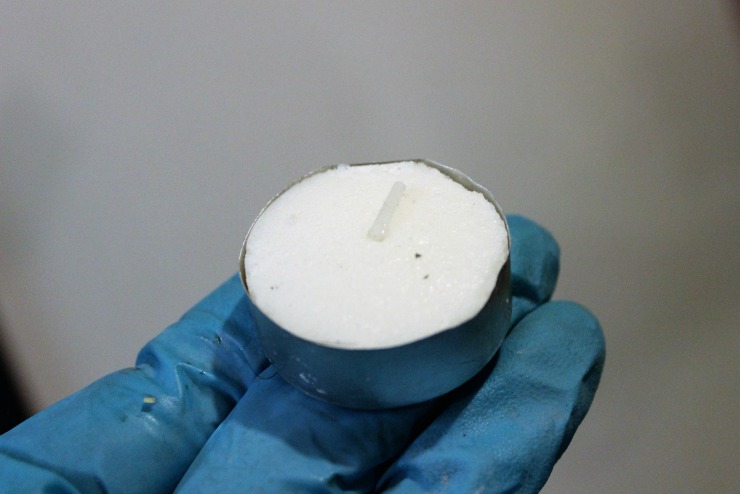
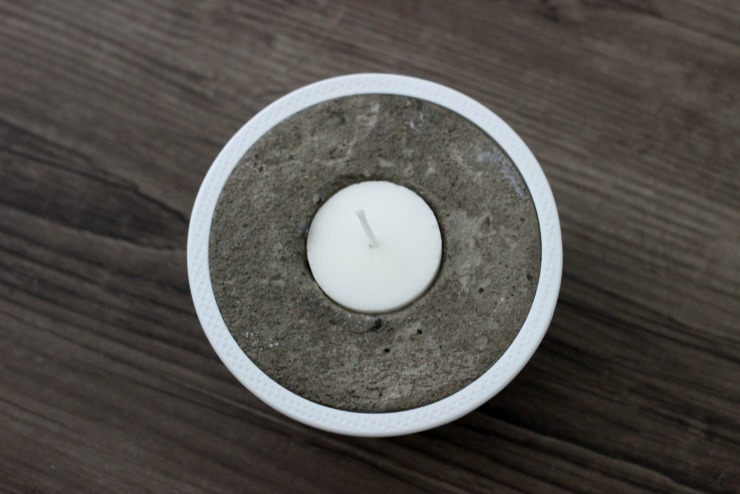
Leave your candle holder to set for up to a week. When it is hardened, pull out your tea light, and gently lift out the tea light backing. You may have to fold and pry a little to get it out. Then, slide the entire candle out of the plastic container.
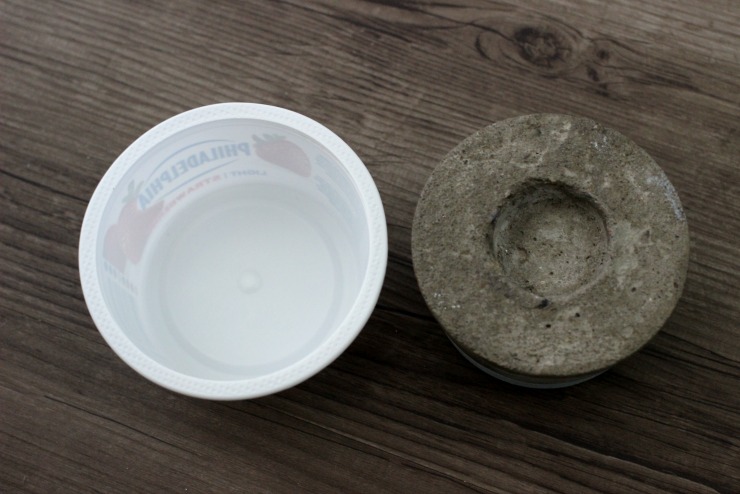
Grab your clear spray paint and spray your candle holders to protect and seal them. The concrete will soak up a lot, so don’t worry about overspray!
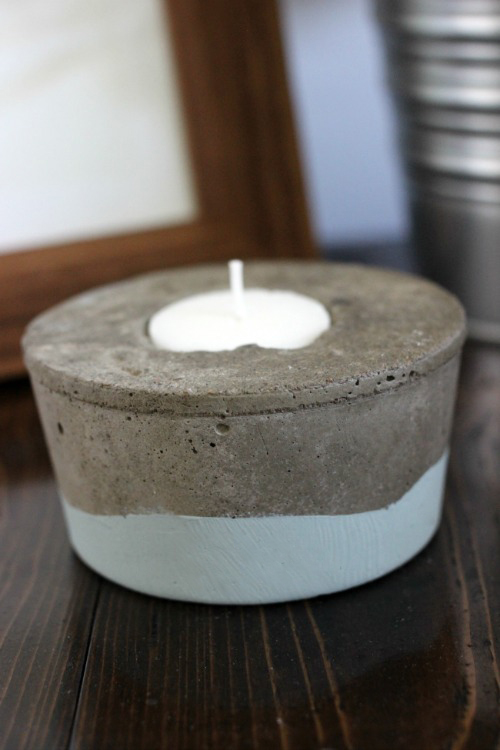
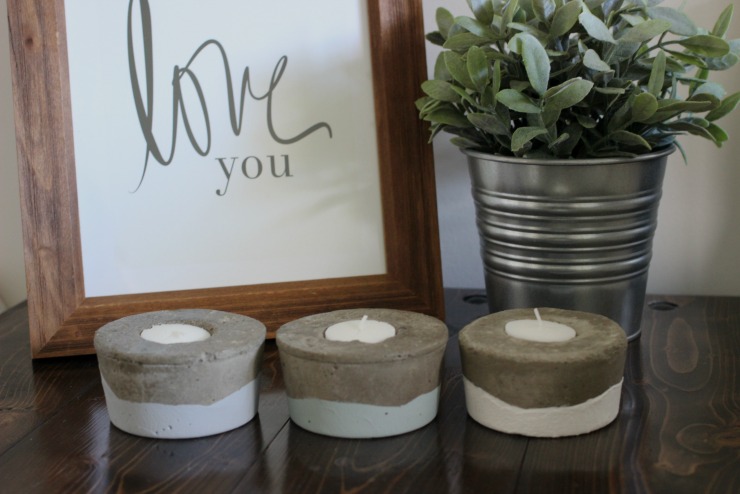
If you like, you can paint your candle holders. I dipped mine in three different colours of paint. I love the dipped paint effect!
Set them up outside on a patio table or on your coffee table in the living room.
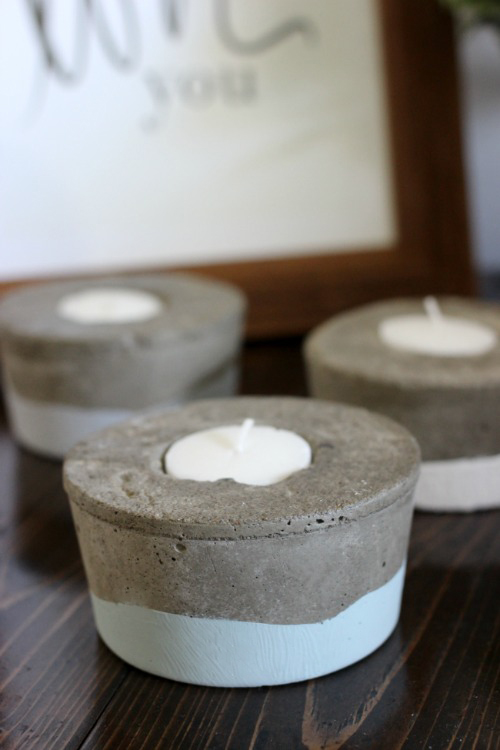
I love how versatile and unique these candle holders are! You are guaranteed to have a guest comment on them. 😉
For more DIY decor inspiration visit Love Create Celebrate.
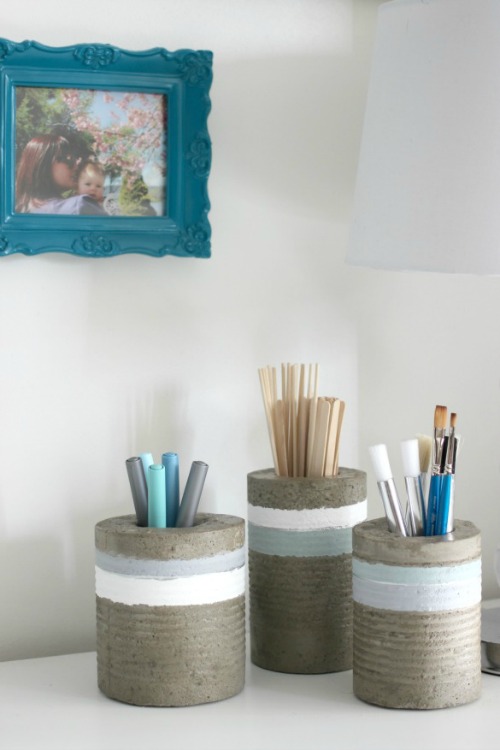
If you love the modern industrial look of concrete, you will love these simple DIY Concrete Vases!

~ view more projects by Lindi ~
Pin for later!