I’ve been fighting a losing battle this week. I seem to have come home from California with some airplane cooties. Last night I got knocked down by a raging ear infection. This evening I came down with pink eye. My sympathies go out to all our little ones that have suffered from an ear infection. OUCH! Hopefully I’ll be punching back soon once the antibiotics take effect.

Lucky for you I wrote a tutorial earlier in the week for a friend who is also suffering from lack of sleep. My friend Jess who writes Frugal Flourish and her husband just welcomed a beautiful baby boy into their lives.


Needless to say I should be getting more sleep sooner than they will. But, I wish them easy parenting over the next year (and then some.)

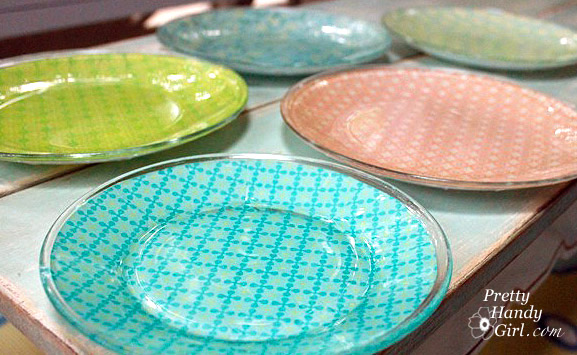
So to get your DIY dose, head over to Frugal Flourish to see how I made these glass citrus plates. And help yourself to a lemon cookie.

Hopefully I’ll see you back here on Monday. I’m going to TRY to take it easy this weekend.

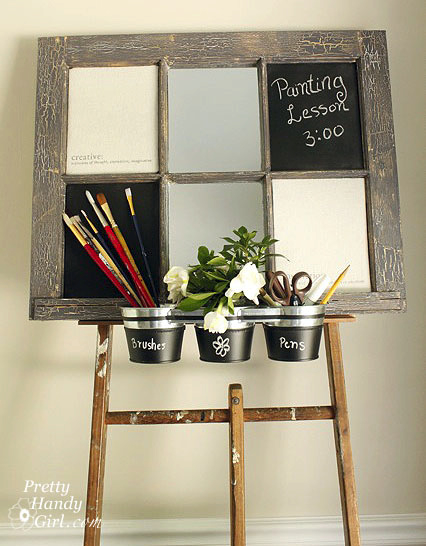
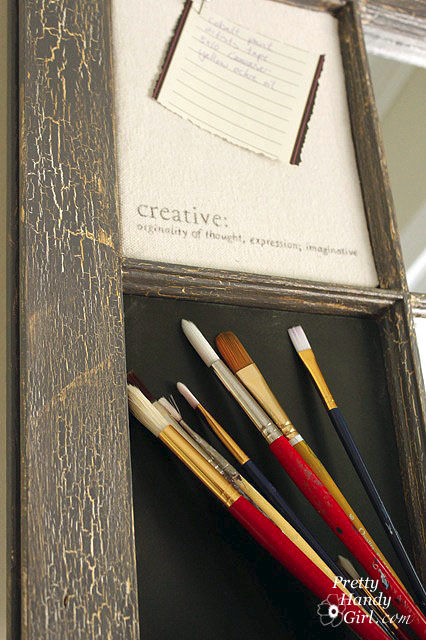
Artist Inspiration Board

Hey guys, today I’m dishing up a triple dose of posts for you. I’ve been busy, really busy, super busy! And you don’t know the half of it. As you are reading this, I’m on my way home from California. I flew out to surprise my little sister for her birthday. She and her husband are expecting their second child and I wanted to go all “Pretty Handy Girl” on their home ;-D.

First, you can read my tutorial for making this whimsical message center, from a curbside window, over at my friend Sandra’s blog,

Then you can come back here and read about this Artist’s Inspiration board also made from an old window.

Finally, if you like what you see you can head over to Parentables to see an entire post on curbside transformations! You won’t believe some of the before and afters!

Okay, ready? Well, let’s get this show on the road.

Materials:

  • Old divided light windows
  • Foam core
  • Tin snips
  • 3M duct tape
  • Scissors
  • Primer
  • Chalkboard paint
  • Irwin mat knife (or x-acto knife)
  • Clear Caulk (window and door sealant)
  • primer
  • fine grit sand paper
  • Two colors of paint (gold and medium gray)
  • Crackle medium
  • Polyurethane
  • Foam double stick tape
  • mirror
  • ruler
  • mirrored glass
  • tin pots, buckets or recycled cans
  • drop cloth bulletin boards from THIS post

Prepping your window:

You will need to clean, prime and paint your window before beginning this tutorial.

Here is what I did during the prep phase: Cleaned the windows (I used a bleach solution because there was mold and mildew present.) I repaired the glazing that was cracked and missing. I used paintable caulk. No need to buy glazing.

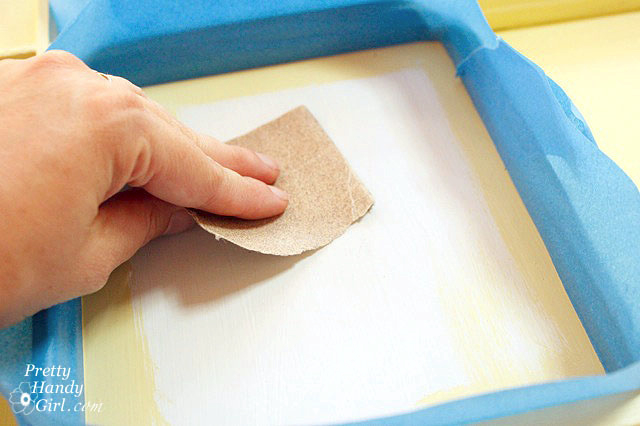
Prime the entire window, glass and all! Once the primer has dried, use the sandpaper to gently rough up the primer (especially on the glass. But, be careful not to scratch through to the glass.)

For the beautiful crackle finish on my window, I started by painting the window a metallic gold color.

When the gold had thoroughly dried, I coated the entire window with the crackle medium. Once that had dried, I painted a medium gray on top. That’s when the magic happens. The paint separates and reveals a hint of gold. It is important not to go back over the gray paint after you paint it on or you will get a gloopy mess!

I finished off the painting prep steps by applying two coats of water-based polyurethane.

Tutorial:

Measure all the individual window panes. Be sure to measure only the exposed glass.

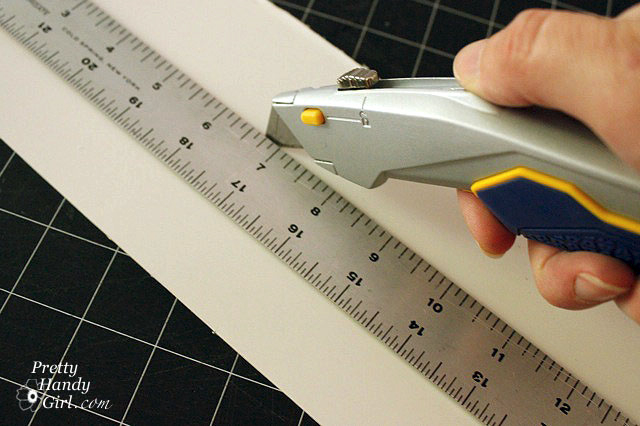
Transfer your measurements to cut 2 squares of foam core. Make sure your blade is sharp! Dull blades will drag and tear the inner foam.

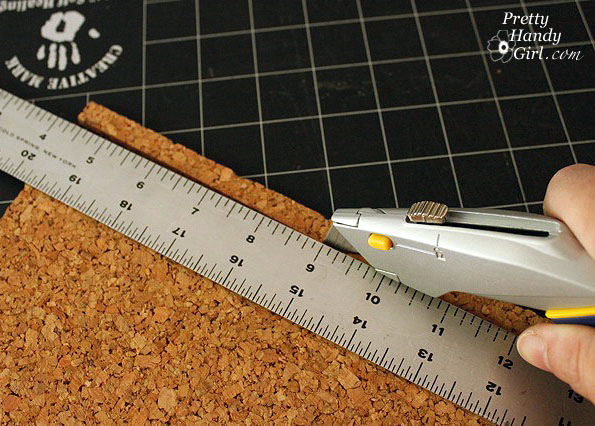
Next, transfer your measurements to cut two pieces of cork board. Cut the cork board with a ruler and mat knife.

Finally cut two pieces of mirrored glass to fit the remaining two panes (need help cutting glass? Have a professional do it, or watch Sandra’s tutorial HERE.)

You should now have 2 pieces of foam core, 2 pieces of cork board (wrapped in drop cloth as I showed you the other day), and two pieces of mirrored glass.

Dry fit all the cut squares to make sure they will fit in the window openings.

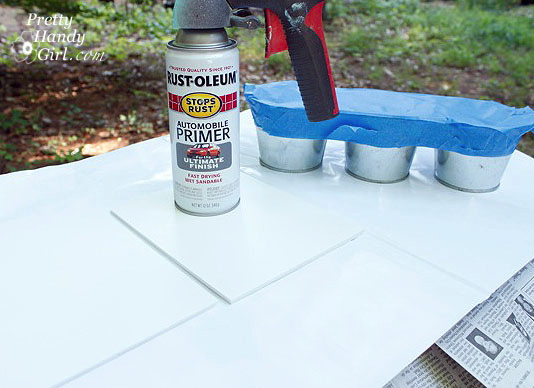
Take the foam core and tin pots outside. Spray them with primer.

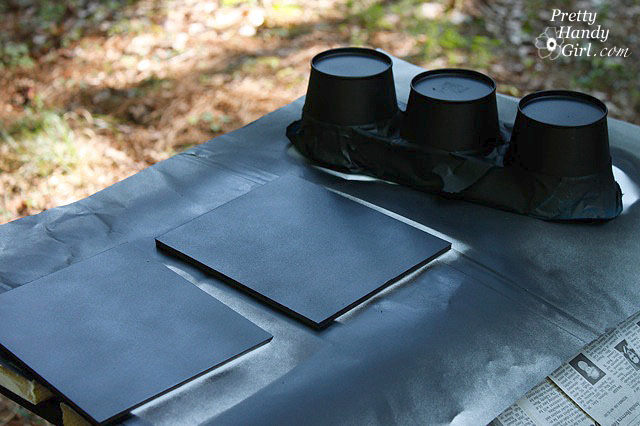
When the primer has dried, spray the foam core and buckets with a few coats of chalkboard paint.

To view how to print onto painter’s drop cloth, refer to my tutorial here.

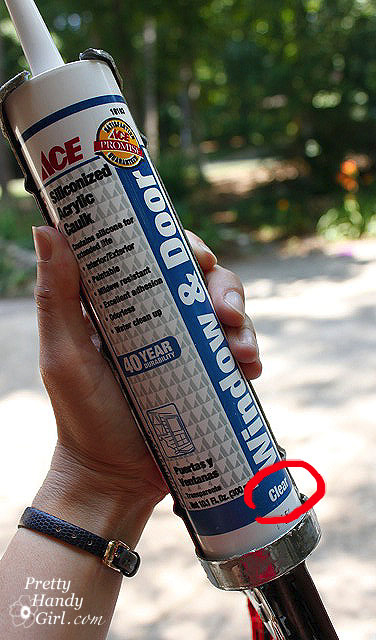
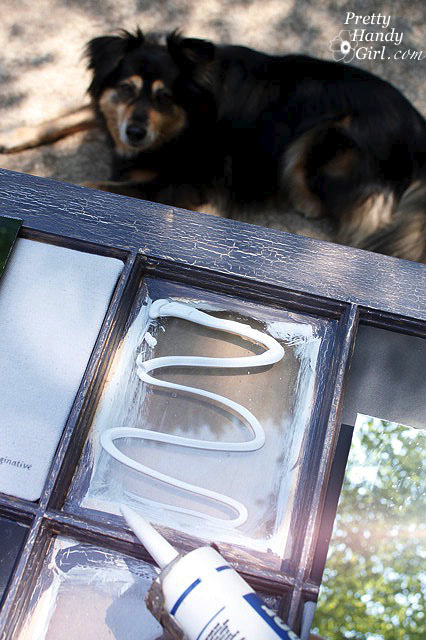
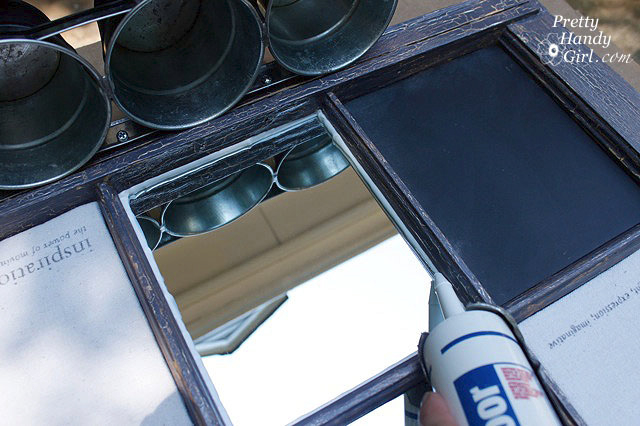
To attach the chalkboard foam core, mirrored glass, and drop cloth squares, you will need clear window and door caulk. Snip the top off at an angle. Insert a straightened coat hanger into the tip to puncture the inner lining of the caulk.

Put a fair amount of caulk onto each glass of the window. (Lazy supervisor in the background!)

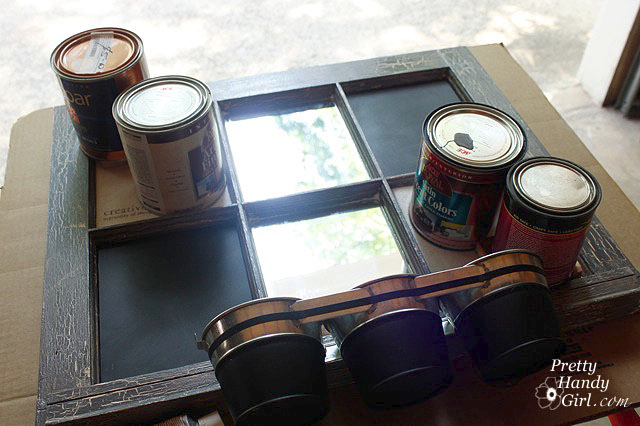
Press the individual squares into it. Weight the drop cloth squares (with paint cans) while they dry.

To secure the chalkboard and mirror sections, run a bead of caulk along the edges of the boards.

Use a damp paper towel to smooth and clean up the caulk edging.

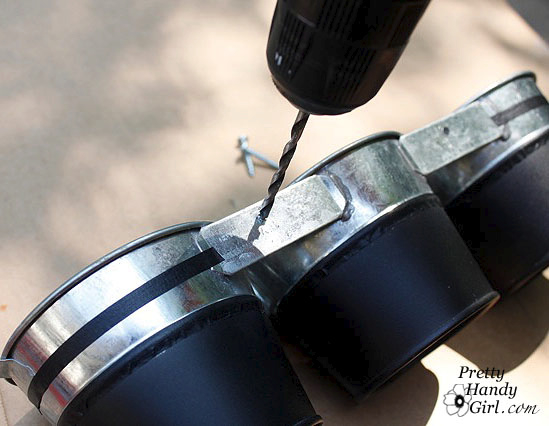
Once the caulk has dried, you can affix the tin buckets to the window. Drill holes through the bucket bracket or tin cans.

Attach a screw through the hole and screw it into the window pane.

To add a hanger to your memo center, flip the window over and measure down 3″ on both sides.

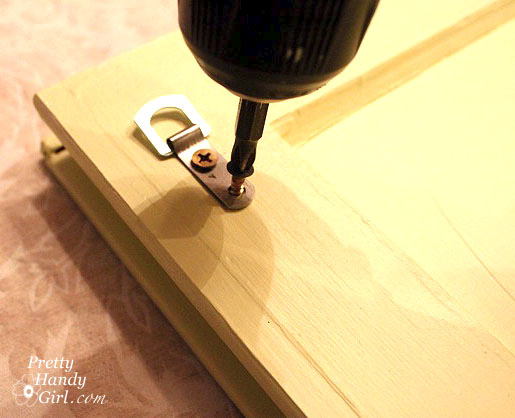
Use a drill to drive the screws into the D-ring style hangers.

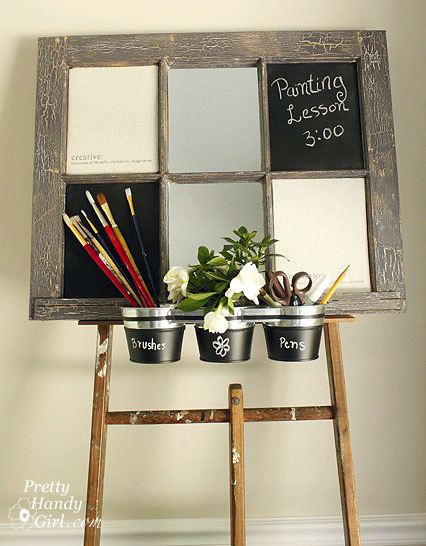
I made this artist’s board to sell, but honestly I’m having a hard time parting with it. So, it may just find a home in my painting studio (aka Bonus Room). But, maybe you could convince me otherwise. How much would you pay for this one of a kind artist’s board? I keep thinking it is a real life version of Pinterest.

Don’t forget to view more of my curbside transformations.

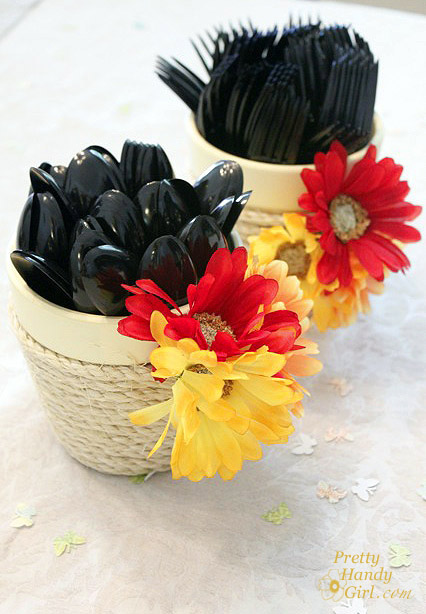
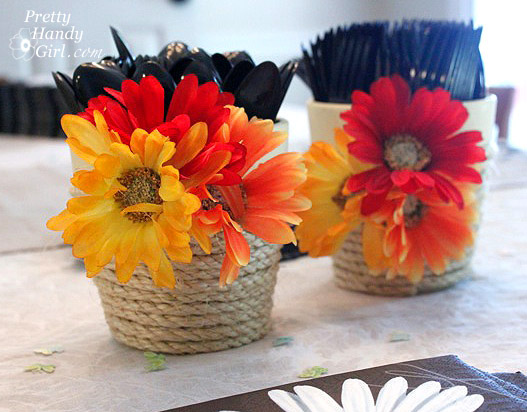
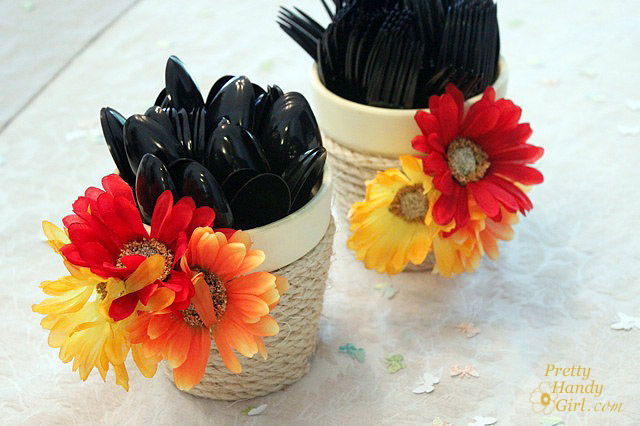
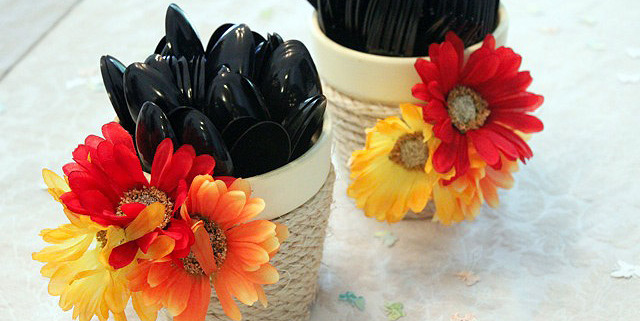
Another project I completed before the birthday party was a quick makeover for a pair of ho-hum dollar store flower pots. My friend Heather helped me add some jute rope and fake flowers then set them out with utensils in them. Perfect for a summertime birthday party!

Materials:

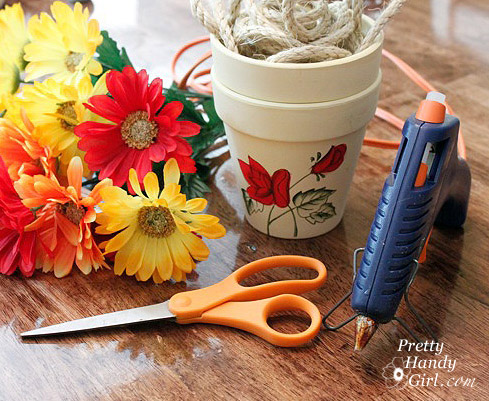
  • Hot Glue Gun w/ glue sticks
  • Jute Rope
  • Flower Pot
  • Fabric Flowers
  • Scissors
  • Foil or wax paper (to protect work surface)

Instructions:

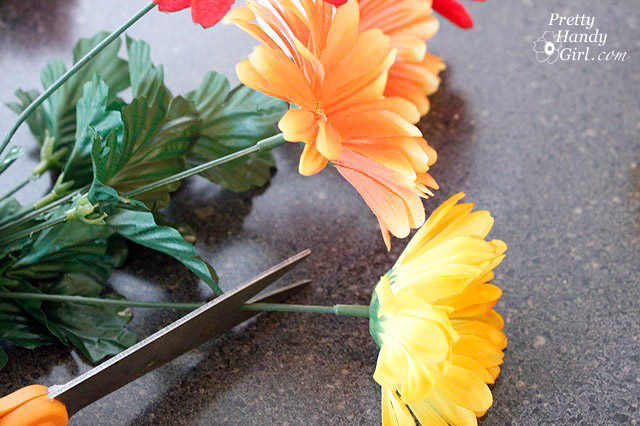
1. Plug in your hot glue gun to warm up. Cut the stems of your flowers about 2″ from the flower.

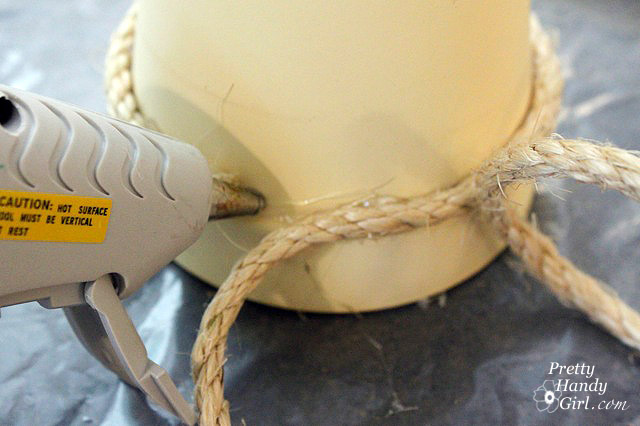
2. Turn the flower pot upside down. Put a dollop of glue against the rim of your pot and secure the end of your rope on it. Squeeze a line of glue around the pot rim and press the rope into the warm glue.

3. After one row is complete, add the flowers by bending the stems until they lay flat against the pot. Secure with a lot of glue. Then wrap the subsequent rows over the stems.

4. Continue gluing the rope onto the pot. Make sure to press each row of rope tightly against the row before it.

5. When you reach the bottom of the pot, secure the end of the rope with another dollop of glue. Be sure your rope doesn’t extend past the bottom of the pot or it could make the base wobbly.


Now set them on your table and fill with utensils. Later you can put a plant, flower or pens inside.

Are you ready for Independence Day? Would you like a quick and easy sewing project to add some patriotic flair to your home? Hop on over to Parentables to read my tutorial for making adorable star pillows.


And don’t forget, today (June 30th) is the last chance to enter the giveaways! I will be picking the winners after midnight tonight.

I hope you will take a moment to view how I test drove my Dremel Trio. This is seriously a really fun power tool! Just be sure you are safe so as not to ruin the fun. Eye protection, face mask, and ear plugs. Check.

For those of you who like to skip to the end of the book and see the ending, here you go:
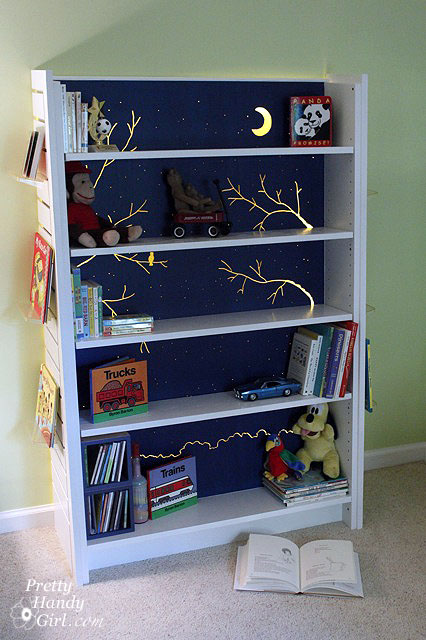

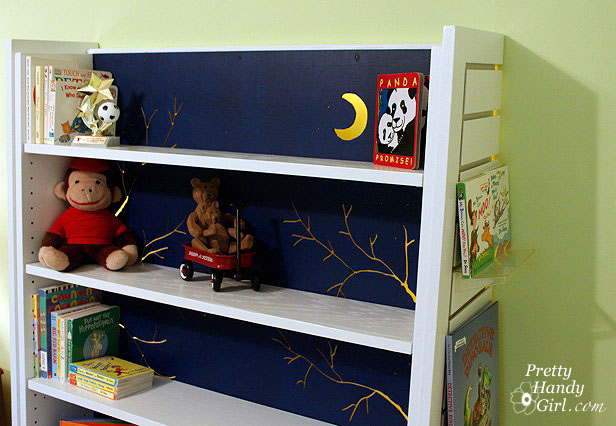
For the rest of you, here is how I created this cut out/back lit bookshelf that started life as a bookshelf from a closing Borders bookstore.
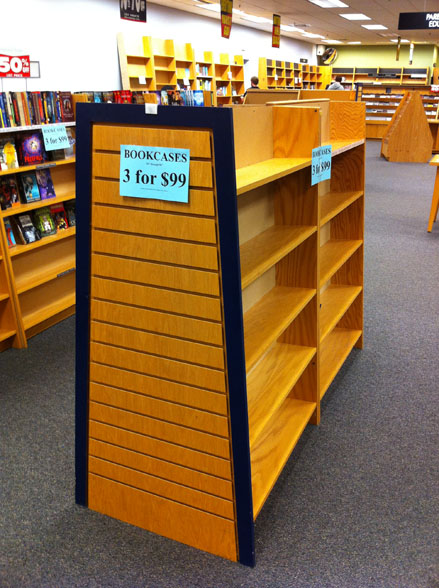

Tutorial for creating a cut out bookcase:
Almost any bookcase will work for this project, but the ones that have a thin wood (can be masonite) backing will work best. Set up a work area that you don’t mind getting dusty and dirty. Remove the shelves from your bookcase.

Cutting the endcap:

Materials:

  • circular saw
  • level
  • clamp
  • scrap wood
  • screws
  • drill

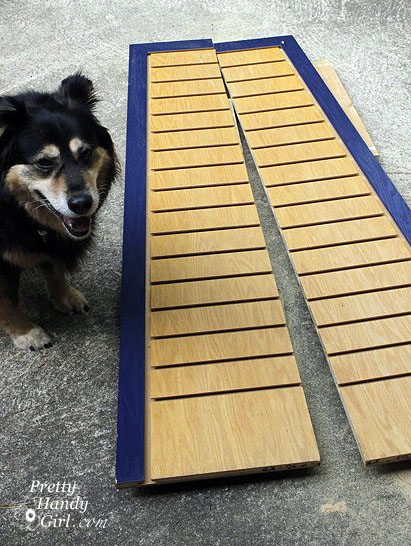
I cut the endcap in half lengthwise so I could use half for each end of my bookshelf, and to position it flush against the wall. To cut a straight line using a circular saw, I clamped one end of a level to the endcap. My level wasn’t long enough, so I drilled a scrap piece of wood on top of the level and into the end cap to support the other end.


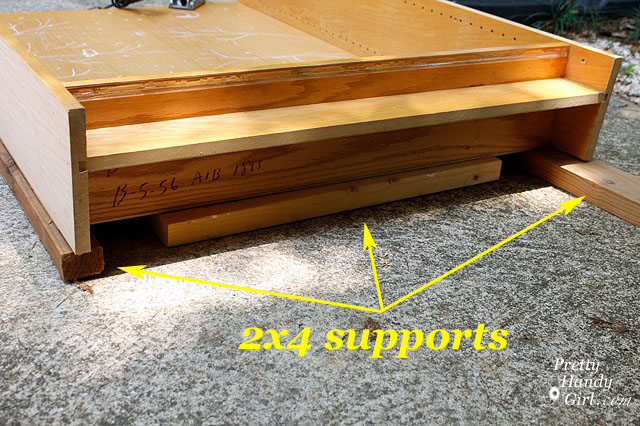
I set the circular saw blade just below the depth of the endcap. By resting the endcap on two 2×4″ boards, I was able to creative a gap below the endcap for the sawblade to pass through.Then I ran the circular saw along the level for a straight cut. Straight as an arrow, and it met Pretty Handy Dog’s approval.
Cutting out the backing design and painting:

Materials:

  • Dremel Trio
  • Palm sander
  • Sandpaper (100 grit & 220 grit)
  • Scrap 2×4 lumber
  • Chalk or pencil
  • Wood putty
  • Putty knife
  • Primer
  • Paint (white and navy blue)
  • 3M Clean Edge technology painter’s tape
  • Newspapers
  • 2″ paint brush
  • Small paint roller and tray

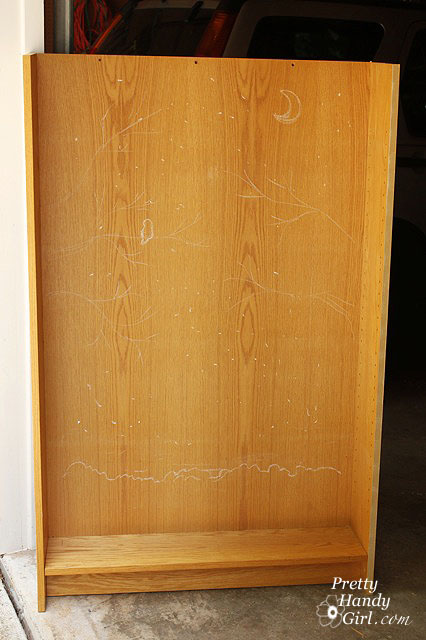
Sketch out the design on your bookshelf (using chalk or pencil) before beginning.
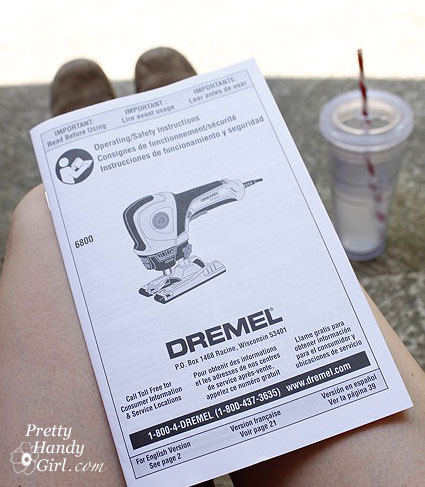
Before using any new power tool, take some time to read through the manual.
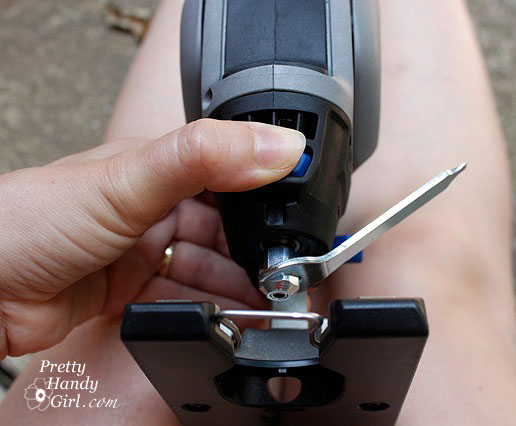
To insert a bit into the Dremel Trio, you push in the blue (shaft lock) button on the front and use the enclosed wrench to loosen the collet nut on the tool.
Insert the cutting bit into the Trio. (The trio also comes with a sanding drum bit and a routing bit!)

Tighten the collet nut with the wrench.

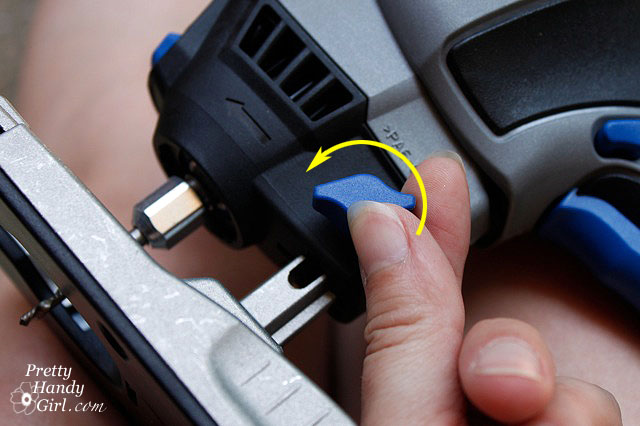
Turn the blue handle on the side of the TRIO to raise or lower the base plate.
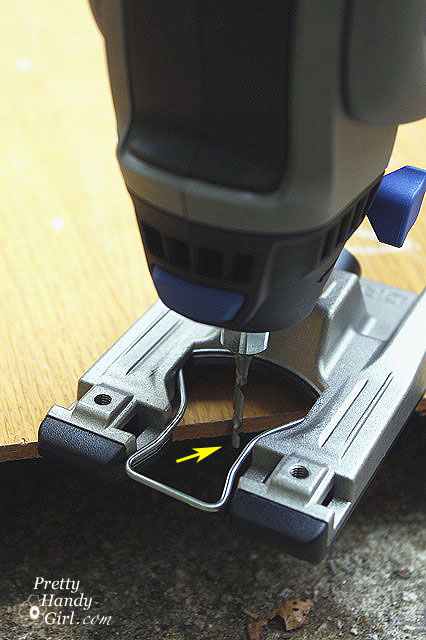
Adjust the base plate until the cutting bit extends slightly below the wood backing of your bookcase.
Lay the bookcase down on its back. Position 2×4 boards under the edges of the bookcase (or you will be cutting into concrete. I’m pretty sure the TRIO is not capable of that, but I could be wrong.)
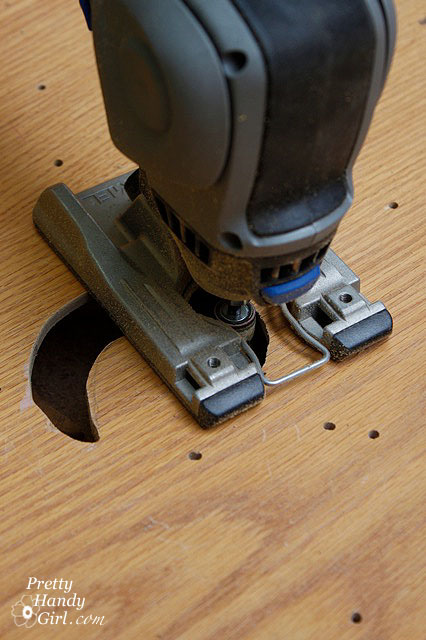
Plug in your Trio and get ready to have some FUN! You may want to practice on a scrap piece of wood before working on your bookcase. The TRIO allows you to change directions quickly and easily. Creating fanciful cuts is a breeze!
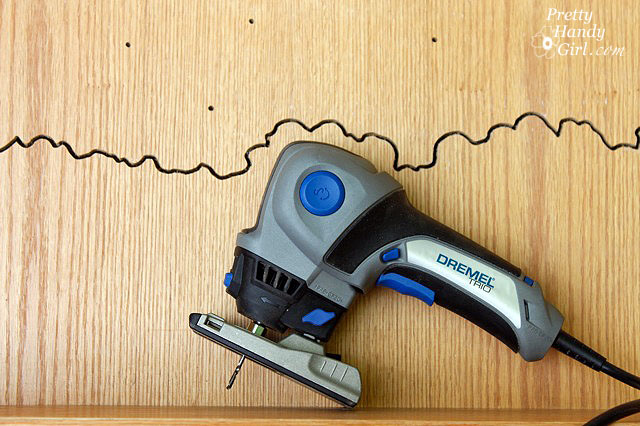
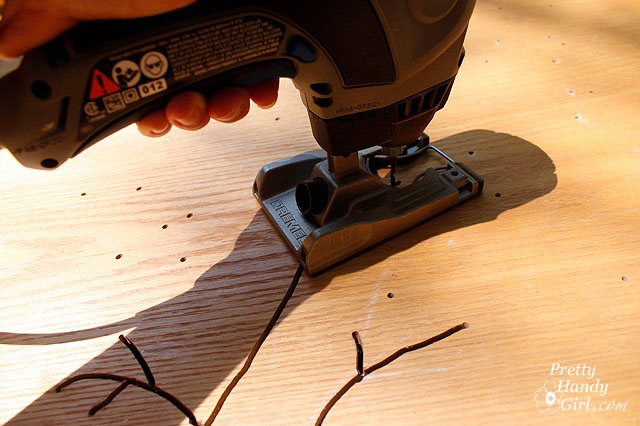
Squeeze the trigger and when the bit reaches full speed you can plunge it into the workpiece. For the pin holes hold the Trio steady, insert the bit and then lift it back out of the same hole.

To cut trees and other designs, plunge the TRIO into the wood and then slowly move the tool through the wood to carve your design. Be wary of long “V” shape cuts as they will make the backing weaker.
When your design has been completed, use the power sander to sand the back of the bookcase (where the majority of the splintering will have occurred.)
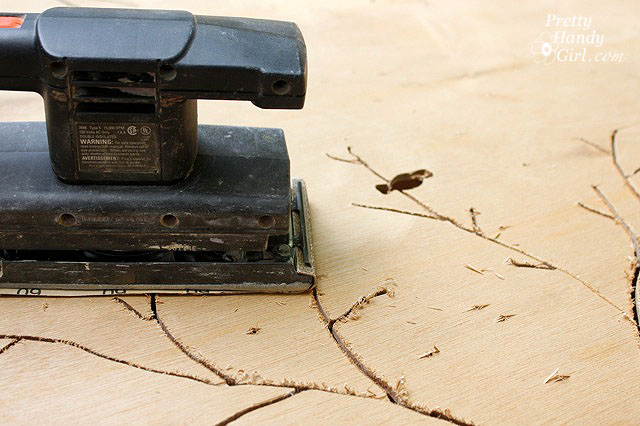
Insert the sanding drum bit into the TRIO and sand any large cut out areas.
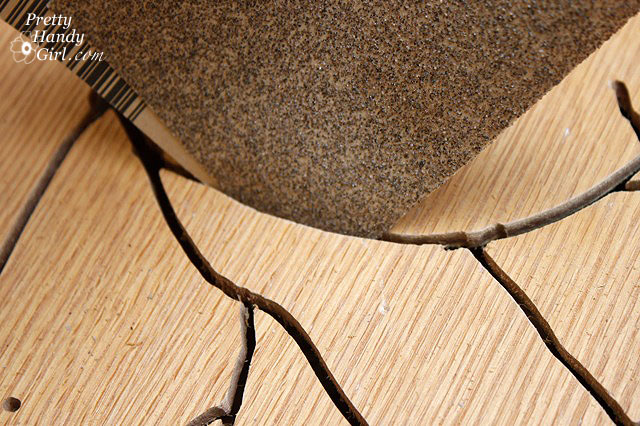
Fold a piece of sandpaper in half and feed it through the thin lines of the branches to sand any rough edges that can’t be reached with the sanding bit.
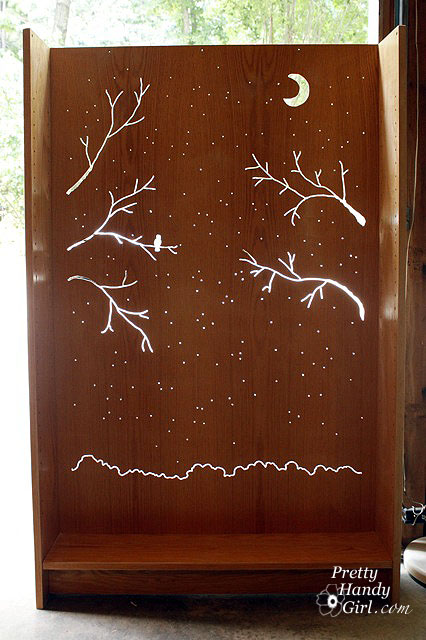
Set the bookcase upright and inspect the cuts for more splinters. You can preview what your design will look like when lit up. Lookin’ good, huh?!
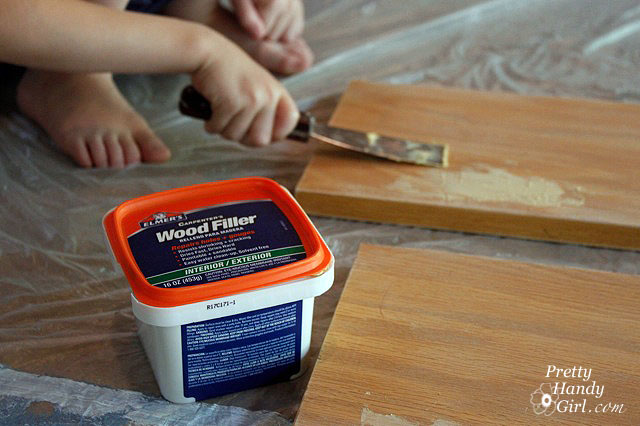
Before sanding the rest of the bookshelf, repair any dents or holes with wood putty. (This is a post I wrote about repairing all types of holes if you need help.)
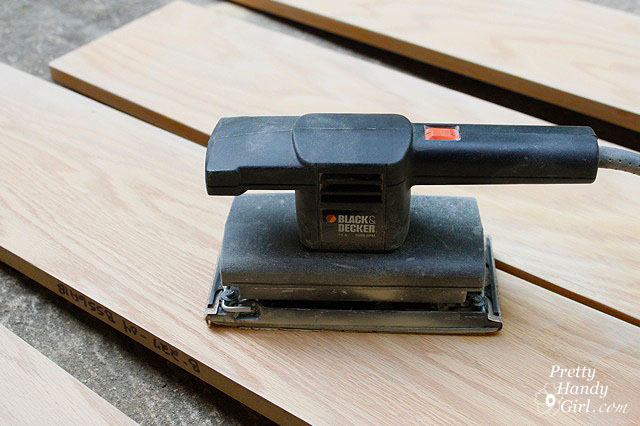
Use the palm sander and a fine grit (220 grit) sandpaper to rough up the rest of the bookshelf.
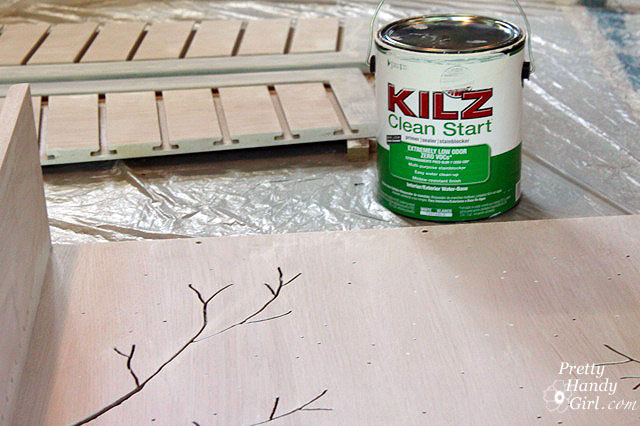
Apply a coat of primer to the bookcase, shelves and sides. (Still working on emptying that can of KILZ Clean Start primer! Love that stuff.
When the primer has dried, mask off the sides of the bookcase where they meet the back.
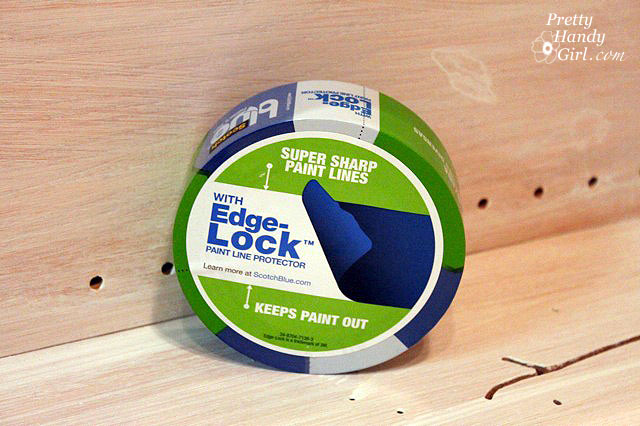
3M sent me this Scotch Blue Painter’s tape with Edge-Lock protector to try. I was skeptical, but when I pulled the tape off it did give me a clean edge. The only place I had a little bit of seepage was in the corners where I didn’t press the tape tightly into the corner. The key to using this tape is to firmly press the edges with your finger to engage the “Edge-Lock” seal. I haven’t tried it for painting walls, but you better believe I have a wall project coming up that I can try it on.
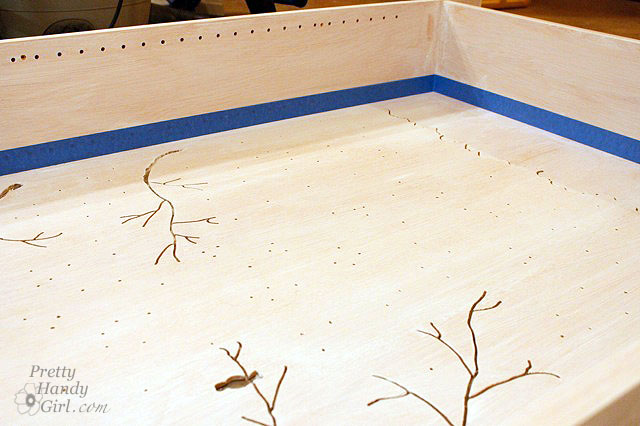
Paint the back of your bookcase. I chose a very dark navy blue. To save paint, I used a medium blue paint for my first coat to darken the back and hopefully save paint.

Then paint one coat of the navy blue.
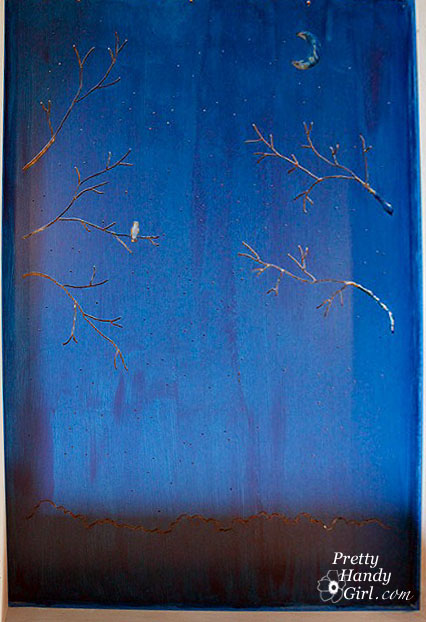
Follow up with a second coat to eliminate any streaking.

When the navy paint has dried, tape along the edges of the navy blue backing, where it meets the sides. Slip pieces of newspaper underneath to catch any paint splashes. (Will you get a load of my lazy supervisor! You think he’s been working hard in the heat? Uh no, that would be me doing all the work and him snoozing away the day.)

Paint the rest of the bookcase, the sides and the shelves white. I used two coats of Benjamin Moore Impervo Semi-gloss white.
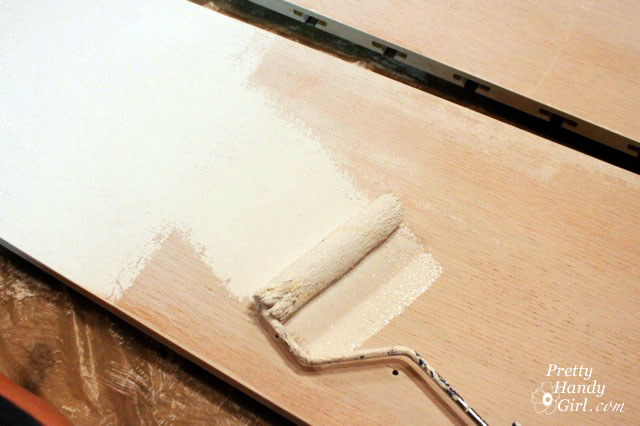

Once the paint has dried completely, re-assemble the bookcase. And screw the end cap halves onto either side of the bookcase.

I installed a light rope behind the bookcase (tutorial to come at a later date) and set the lights on a timer. The rope light comes on at dusk and illuminates all the cut outs.
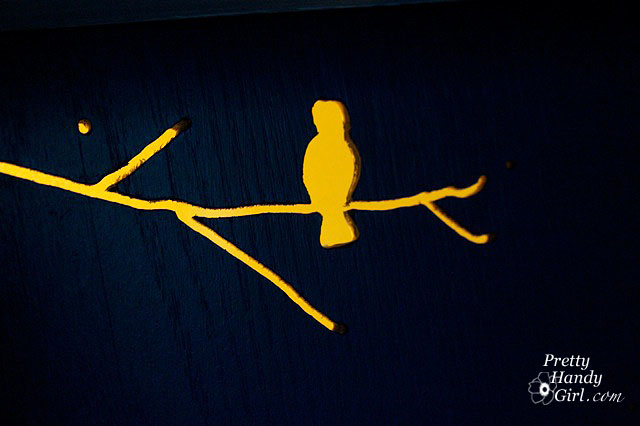
There is a very soft glow emitted from the back of the bookcase.
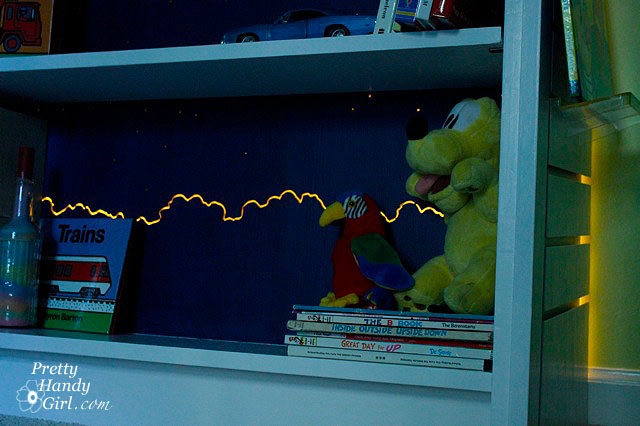
It provides the perfect amount of light for my son who HAS to have a light on at night.
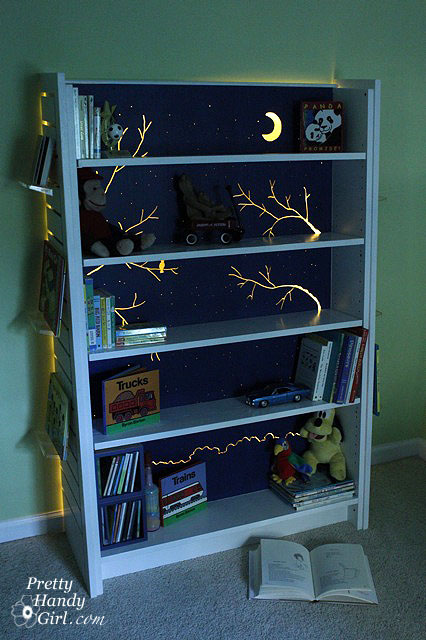
My only complaint about the rope lights is that they give off a strong plastic odor. But, after a week the smell has dissipated.

I had the foresight to purchase a few of the clear display stands that slide into the end caps of the bookcase. It makes it easy to display books to pique my son’s reading interests.
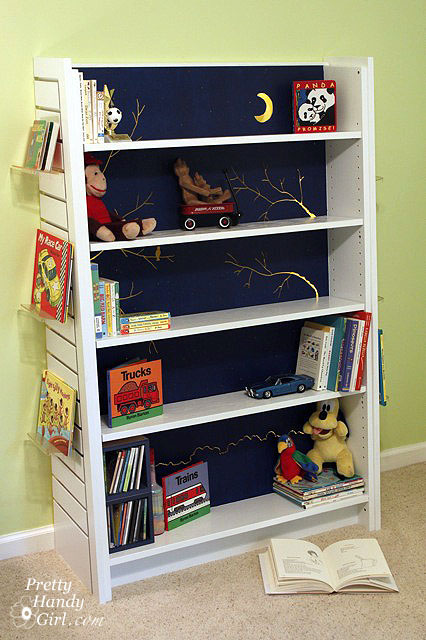
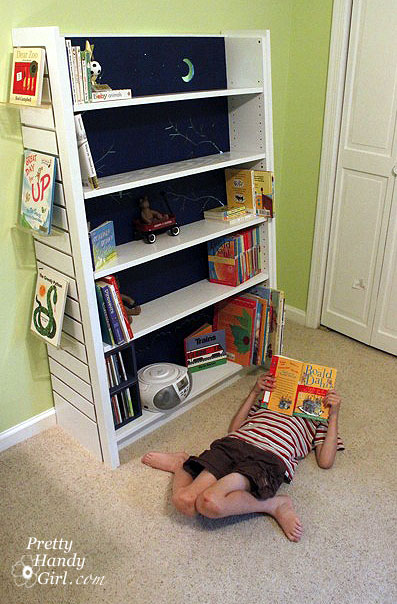
Oh look! There he is now! Mission accomplished, reading interest piqued. Yes, I think he is double-jointed and a teacher pointed out that both my son’s sit like that. Must be in the genes.
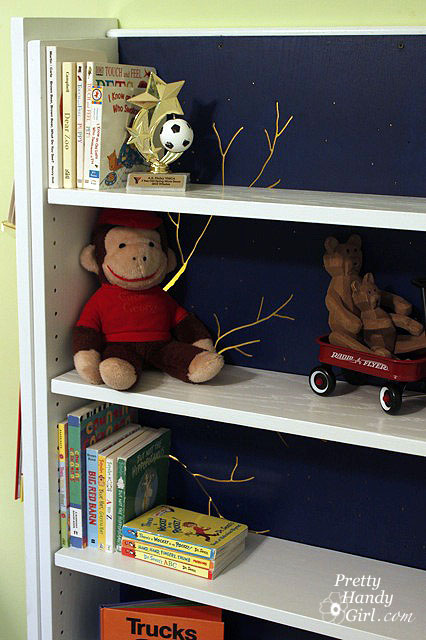
A few more detailed pictures of the bookshelf. This has to be one of my favorite projects I’ve created recently. And it wasn’t very difficult to complete.





I don’t know about you, but I’ve been fighting a losing battle lately. I have begged, yelled, and threatened my boys to stop putting stickers and tape on the walls.

I think my youngest one upped me, he put tape and stickers on his door! I had given up the battle until I came across this magnetic chalkboard from Less-Than-Perfect Life of Bliss:


And this burlap bulletin board from Between Blue & Yellow:


Those two boards got me thinking. If I married the two ideas, I could have a magnetic fabric display board! Luckily I have a stash of old picture frames in the attic. I grabbed the biggest one I had and painted it black and within a few hours I had a magnetic display board for my son’s door!

DIY Magnetic bulletin board

Here is how to create your own:

Materials:


  • Painter’s Drop Cloth
  • Contrasting Decorative Fabric
  • Double sided fusible interfacing
  • Scissors
  • Sheet metal flat sheet* ($10 in duct work aisle of Lowe’s or Home Depot)
  • Duct Tape
  • Sharpie Marker
  • Tin snips
  • Gloves
  • Picture frame
  • Double sided foam tape (optional)
  • Strong magnets

*Be sure to bring a magnet to test the sheet metal. Some of them aren’t magnetic.


Instructions for making the magnetic frame:

Start by measuring the opening in the back of your frame. Mark those measurements on the sheet metal using a sharpie marker.
Using tin snips, cut the sheet metal. Believe it or not, this was very easy, but gloves are a must because the edges are sharp.

Cut out the drop cloth about two inches larger than the sheet metal. Trim the corners off the fabric.

Fold the edges over and secure with Duct Tape.

Did you know that Scotch has a whole line of Duct Tape? There are five different kinds, and they each have a different use! REALLY! See for yourself.

I didn’t know about them either until they sent me these to try out. I haven’t used them yet, but I will be soon. And I promise to tell you what I honestly think. Until then, I wonder how I could make them into a cool vase.


Instructions for Applique Monogram:

To add an applique to the fabric, print out a large letter from your computer. Then fuse a square of fabric (large enough to fit the letter onto) to the double sided fusible interfacing. Follow the instructions on the interfacing package.

Pin the printout on top of the fabric and cut it out.

Peel the back off the interfacing …

…and iron it onto your fabric covered sheet metal.

Make sure the letter is securely fused to the drop cloth.

Insert the board into the frame.

Secure the board into the frame by using a staple gun and stapling at an angle into the frame.

Add a wire or hanger to the back of your frame.

Hang the frame on the wall, door, or wherever you like. Because I was hanging the display frame onto the door (and because 4 year olds are notorious for slamming their doors), I added some double stick foam tape to the back side of the frame.

YES, I know what I said, but Mommies are allowed to use tape ;-).

I used some of the glass bead magnets we made last summer and now my son can put up his artwork and stickers without incurring the wrath of Mommy!

Now that is what I call one handsome art display!


Looking for some more creative ideas for displaying your child’s artwork? Check out my article on Parentables today: 8 Great Ways to Display Your Child’s Artwork.