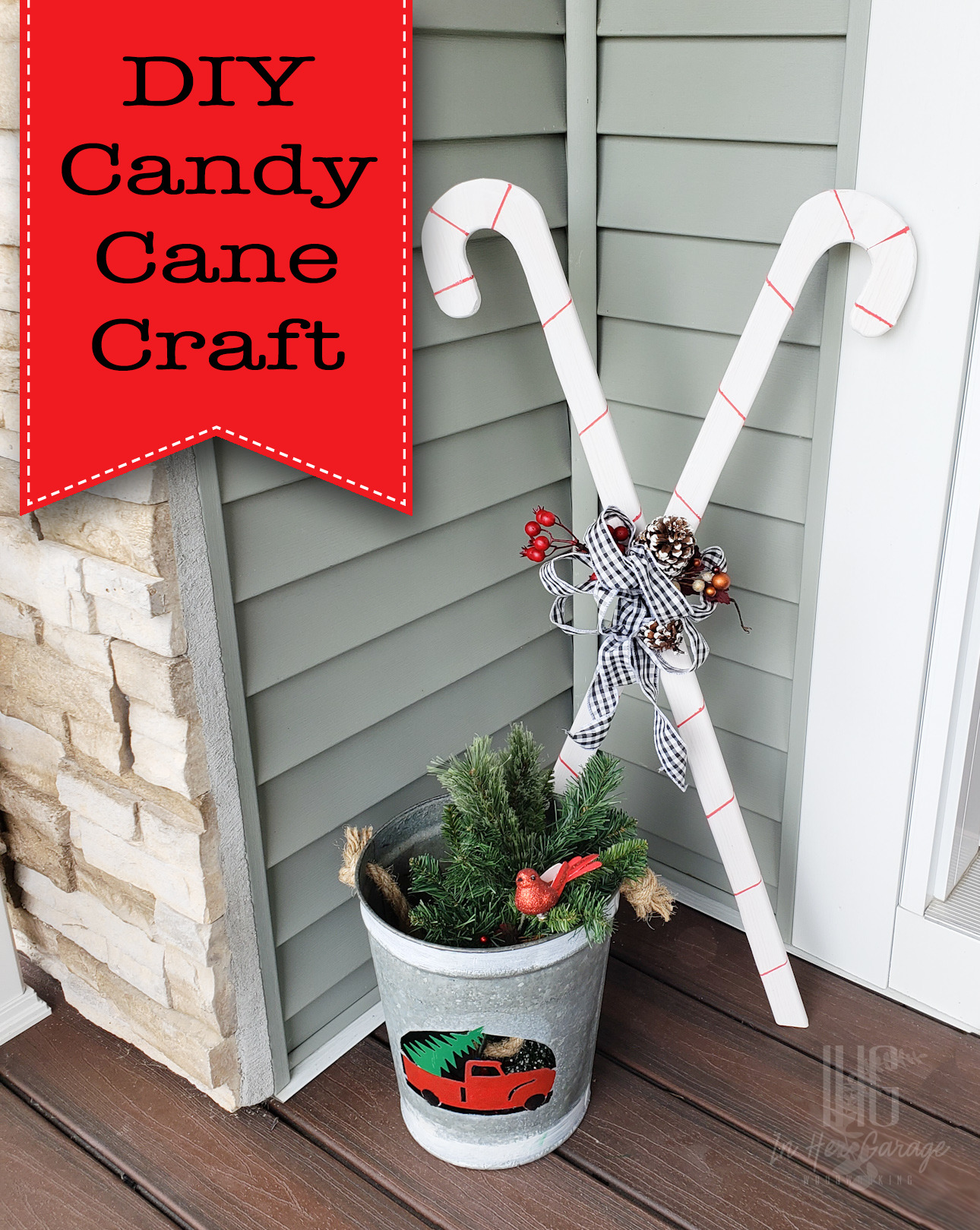
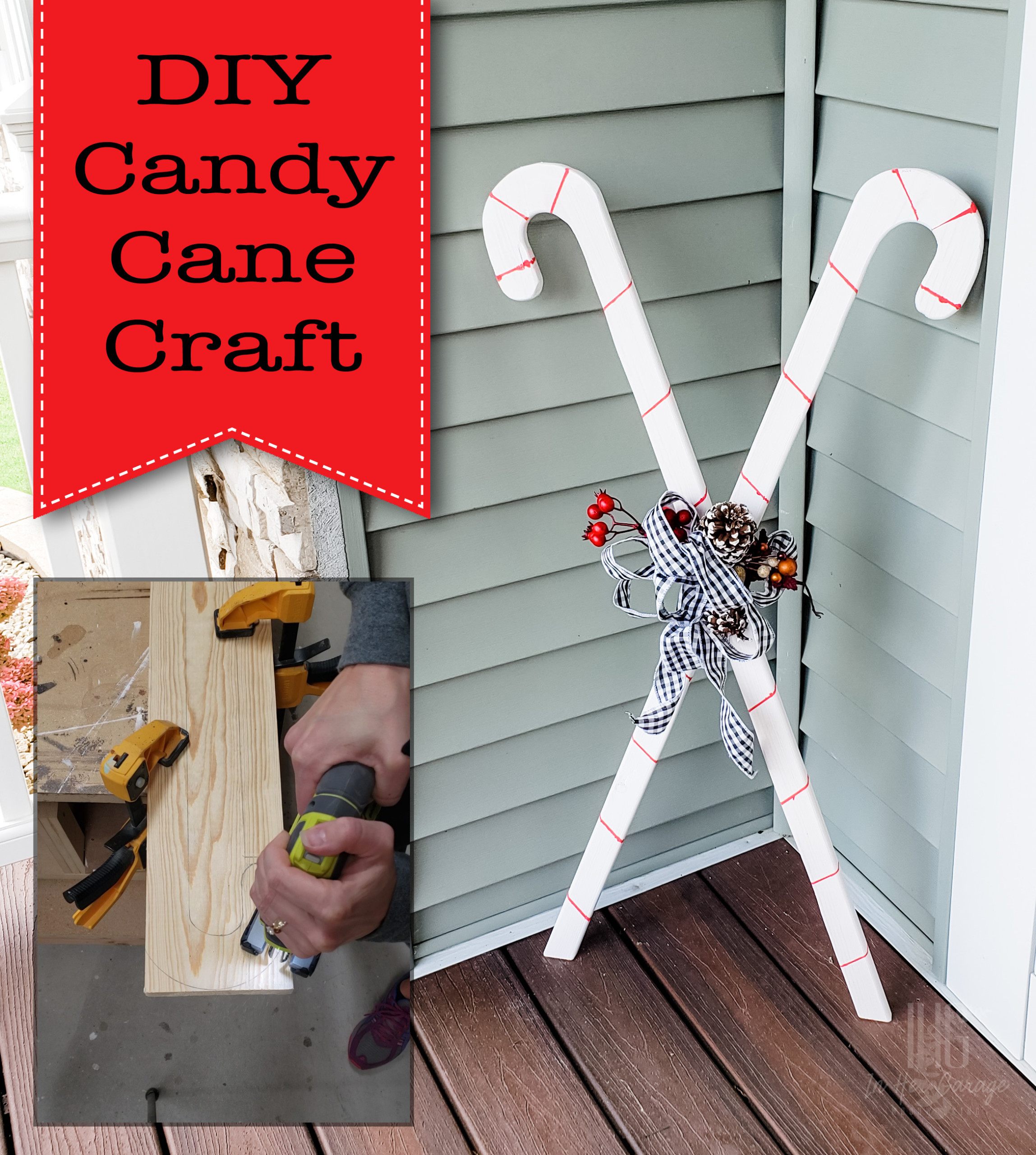
Make this adorable DIY Candy Cane craft using 1 board and 2 tools!  These DIY Candy Canes are the perfect complement to your holiday decorations.

DIY Candy Cane Decor

I love this craft because it’s not only cheery but it also helps me add decor at a mid-height. I often find myself decorating something really tall like my Christmas tree or something short, like cute decor items near the ground. These candy canes are super simple to make and add medium height decorations to your home.

Material:

(I’ve included affiliate links for your convenience. I earn a small percentage from a purchase using these links. There is no additional cost to you. You can read more about affiliate links here.)

  • 1- 1″ x 8″ x 6′ pine board cut to 4′
  • Wood glue
  • Paint

Tools:

Instructions:

Step 1: Draw the candy canes

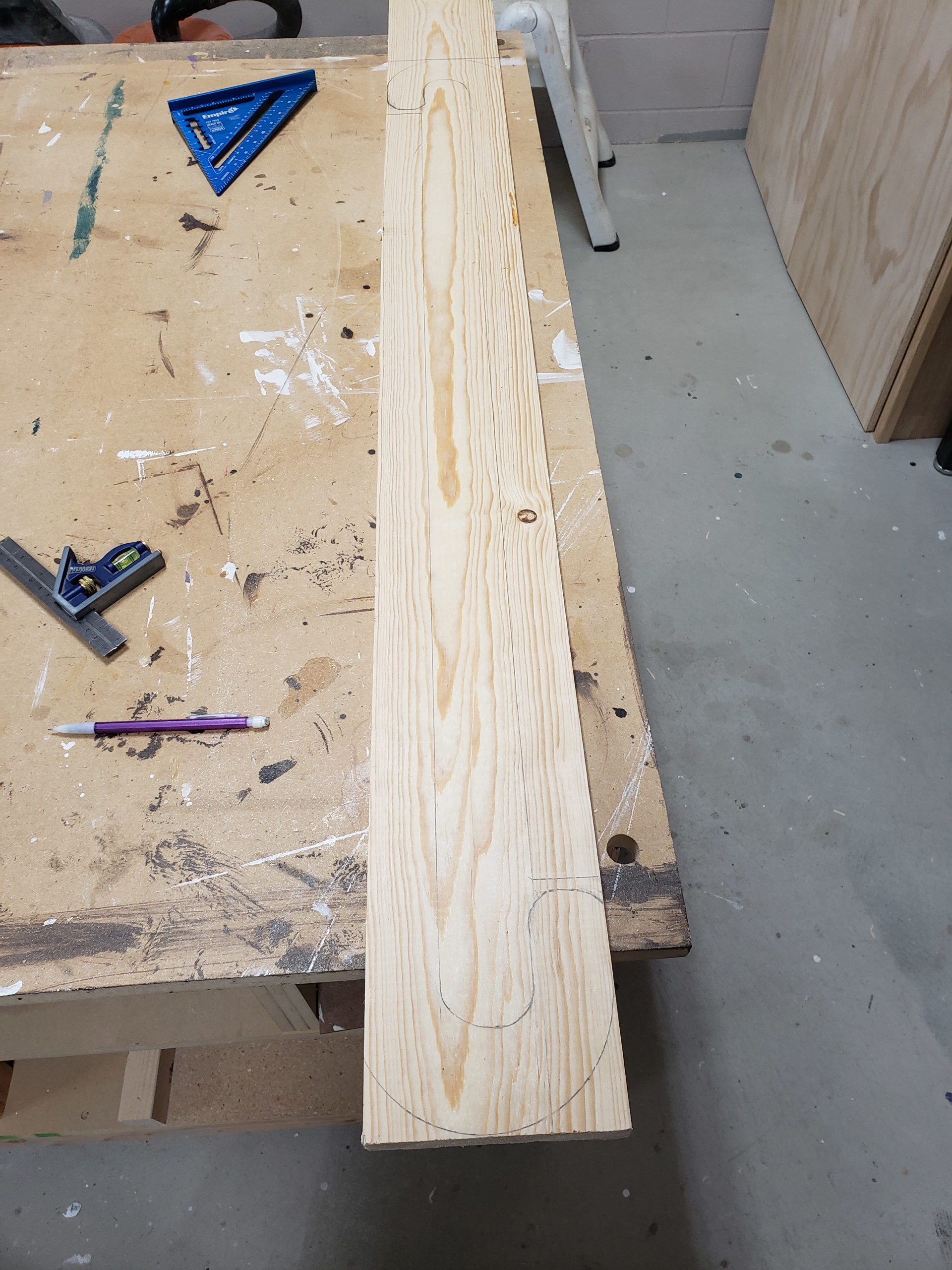
  • Find something round that is about as wide as your board. I used a cereal bowl from my kitchen.
  • Draw the top curve of the candy cane, one on each end of the board
  • Then draw the candy cane stem coming down from the curve on either side of the board.
  • By rotating the board, you should be able to fit two candy canes on one board.

Step 2: Cut out the candy canes

  • Clamp your board then use your jigsaw to cut out the candy cane. Mine looked pretty rough at first but no worries.

  • Sand the candy canes smooth.
  • Optional: If you have a trim router with a round-over bit, run along the edge of the candy canes to get nicely rounded edges.

Step 3: Paint

  • Paint the body of the candy canes white. (Or you can paint it red.)
  • Using painter’s tape, create candy cane stripes and painted them red (or paint them white if the body is painted red).

Step 4: Cross your candy canes

  • Place your candy canes, one over the other, in the way that looks best to you and use glue and brad nails to secure them together at their intersection. (No brad nailer? You can secure with a screw through the back.)
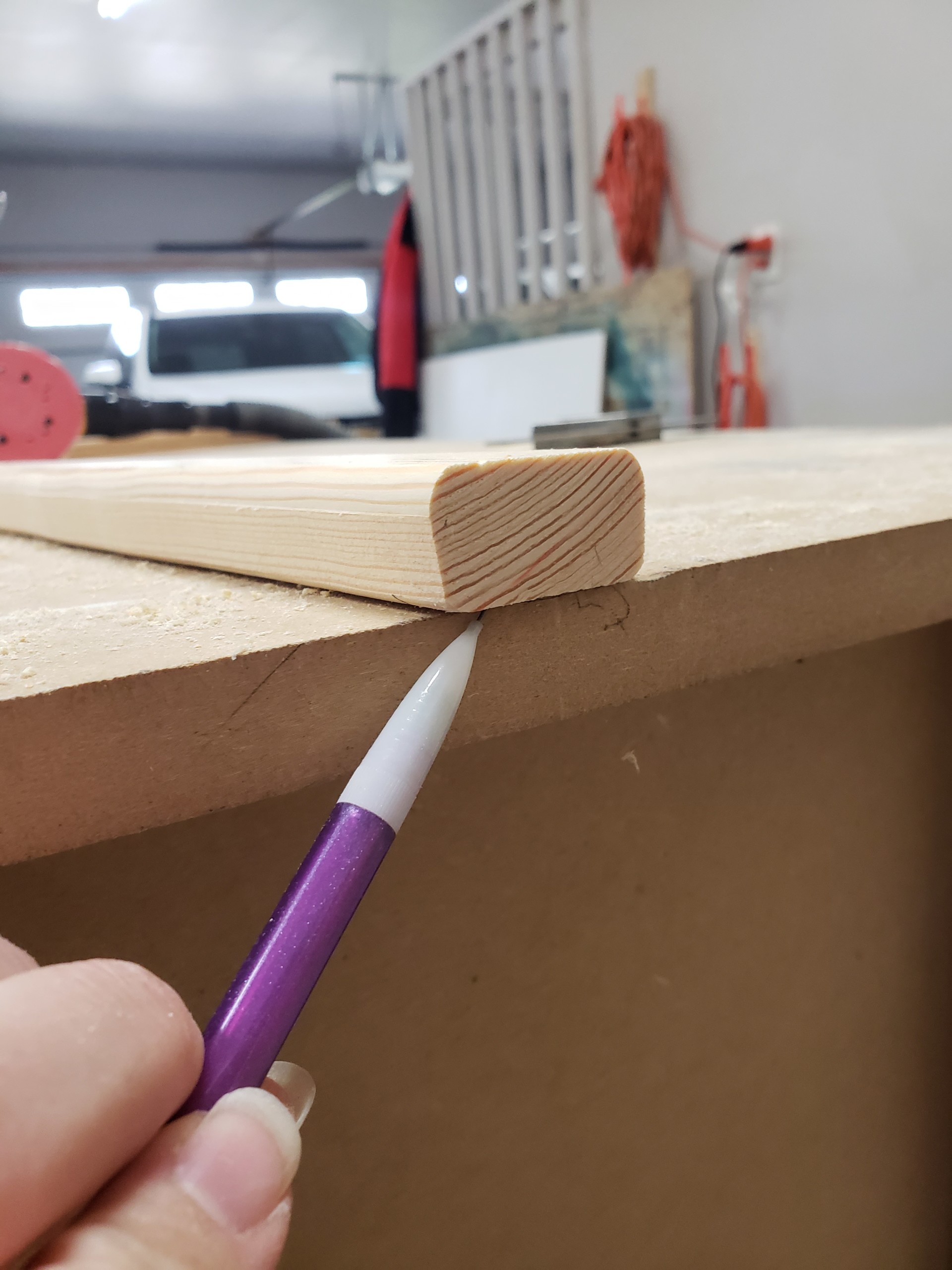
  • Cut the bottoms off at an angle so they stand up flat on the ground. (This step isn’t necessary since they won’t stand on their own anyway.)
Step 5: Decorate your candy canes

  • Using ribbon, ornaments, decor sprays, or picks you have in your Christmas decor box to decorate as it suits your decor style.
  • TIP: I like to wrap a rubber band around the candy near the intersection to hold the sprays and picks. This way you can change it up yearly.

Now incorporate these candy canes into your seasonal decor. They would look cute inside or outside.

That is about as simple as it gets for a fun DIY project you can do at home. I’m sure the kids would even love to help!

 

Hi! I’m Kristen, from In Her Garage, and I am a self-taught woodworker and DIY fanatic from Minnesota where I live with my husband and our two daughters.  Between being a wife, mom, and registered nurse, I try to make as much time for DIY as possible.   My love for building came after our family built our current home in 2015. After we moved in, we needed furniture, and instead of spending massive amounts of money to order the pieces we wanted I decided that I would build them myself. I started with a buffet table plan from the fabulous Ana-white and quickly set out to remodel my entire home office.

Check out all of my tutorials here on the Pretty Handy Girl and head over to my site to see more tutorials for making a Toy Box, Folding Craft Table, or a Rustic Buffet Table.  Making something beautiful with your own two hands through a little preparation and determination is an amazing feeling and I hope to bring inspiration and know-how to those looking to tackle a big or small project.

Not interested in making these items yourself?  Let me make them for you!! Feel free to contact me and I would be happy to talk with you about any idea you may have for your home.

I am so glad that you found me here and please feel free to connect with me on Pinterest, Instagram,  Facebook, and Etsy to see what I am working on right now.
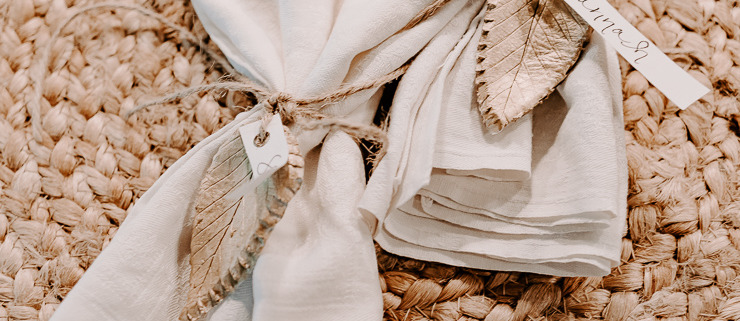


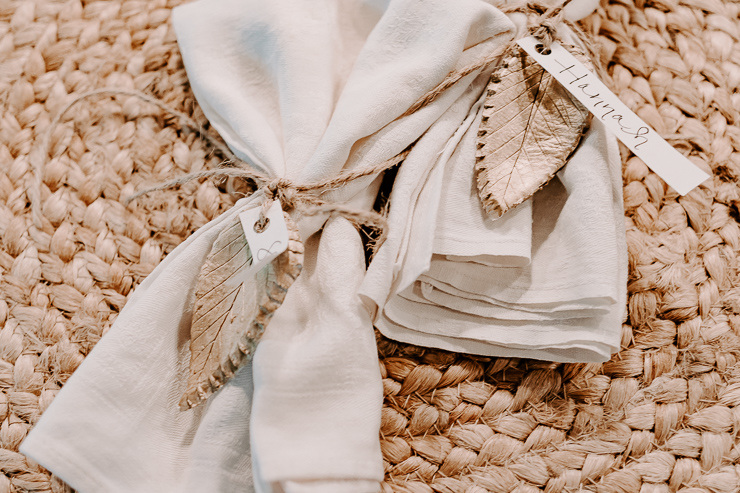
view of napkins tied with jute twine and a clay leaf place card

diy clay leaf place cards

DIY Leaf Place Cards for the Holidays

I hope your fall has been lovely so far.  The weather is just starting to turn here in NC.  I have to say, I love the weather here compared to Seattle.  We never experienced so much sun day after day!  Today, with Fall weather on my mind, I’m making you these DIY leaf place cards for the upcoming holidays.  These place cards are little clay leaves inspired by nature (hello, fall!) and painted in a beautiful gold color to elevate them for elegant dinners and parties.  

view of napkins tied with jute twine and a clay leaf place card

You’ll love my secret for getting those fancy leaf edges from your clay too – read on to find out how I do it.

These place cards can be used time and time again, just change out the name tag for each new guest.  

I hope you enjoy this craft!  

Materials:

  • Gold Paint
  • PaintBrush
  • Air Dry Clay
  • Flat Screwdriver
  • Rolling Pin
  • Toothpick
  • Leaves from Outside
  • Jute Twine
  • Wax Paper
  • Cardstock
  • Pen for Writing 

Instructions:

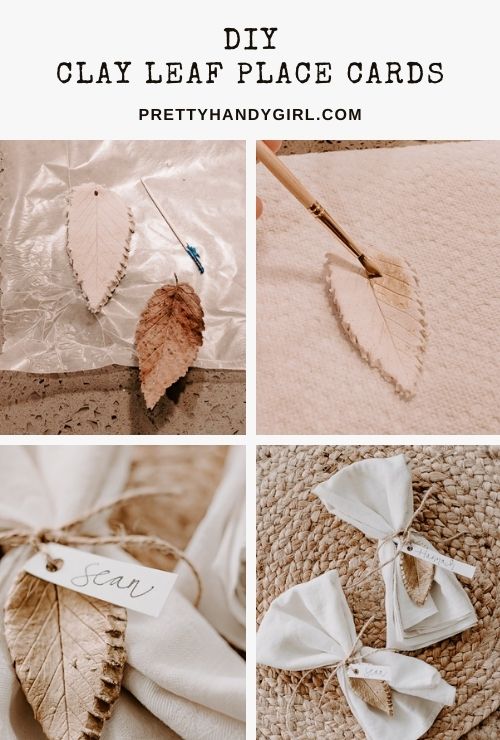
Step 1:  Roll our your Air Dry Clay

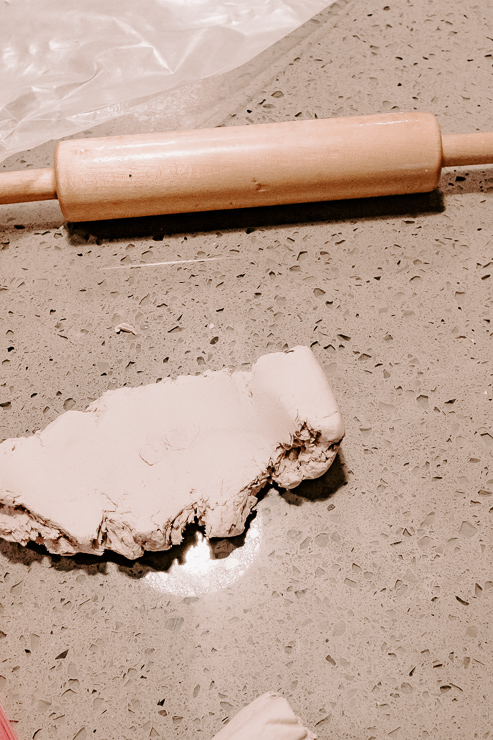
rolling out air dry clay

Grab a ball of air-dry clay and with slightly wet hands, roll it out using your rolling pin.  You want it to be about ¼ inch thick.  If you make it too thin, it will be too fragile and crack.  

Step 2:  Make a Leaf Imprint

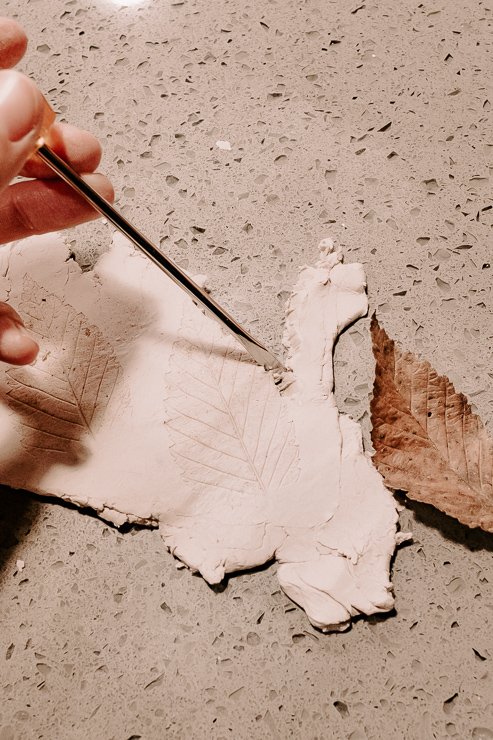
leaves imprinted in clay

Take your leaf, and lay it on top of your clay.  Using your rolling pin, roll carefully over the leaf several times, creating an imprint of the leaf onto the leaf.  

Step 3:  Cut your Leaf Out

cutting out leaves from clay

Here’s where the magic happens!  You should see a beautiful leaf imprint in your clay.  Take a flat screwdriver and make little divots on the side of your clay leaf, where the leaf would naturally have edges.  

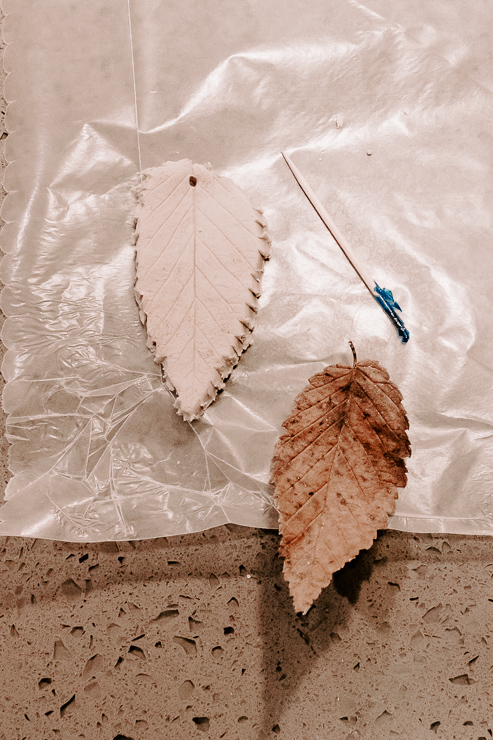
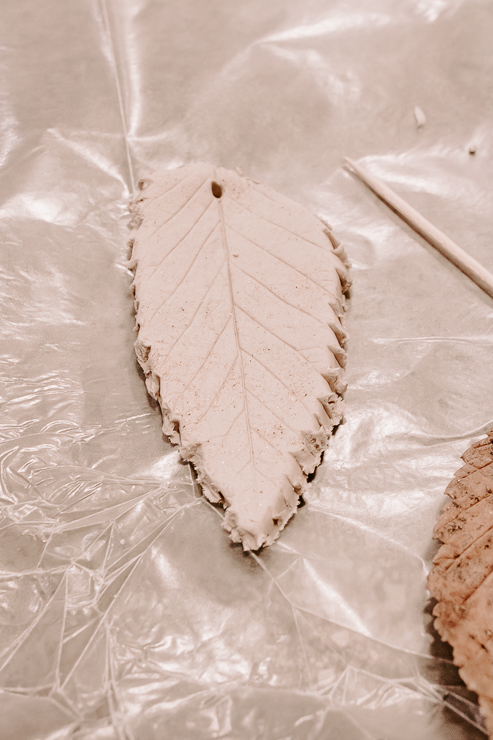
a leaf cut out of clay with a hole for hanging

Do this all the way around, and then carefully remove your leaf.  Using a toothpick, make a hole in the top of your leaf.  This will be for tying your jute twine later.  

close up view of clay leaf

I take the leaf in my hands and slightly bend it to give it a more natural leaf shape, but you are welcome to keep it flat too.  Place your leaf on wax paper and allow it to air dry naturally for a couple of days.  

Step 4:  Paint your Clay Leaves

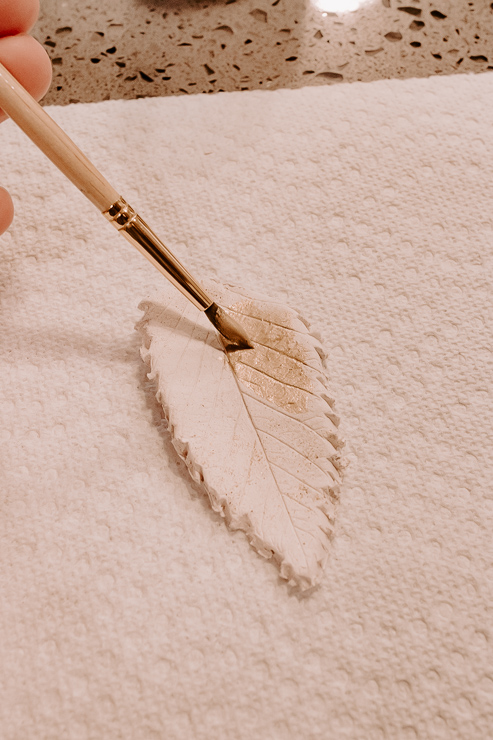
painting clay leaves gold

After your leaves dry, take a paintbrush and gold paint and lightly brush a few coats on the top and sides of your clay leaf.  Set them aside to dry.  

Step 5:  Tie on a Nametag

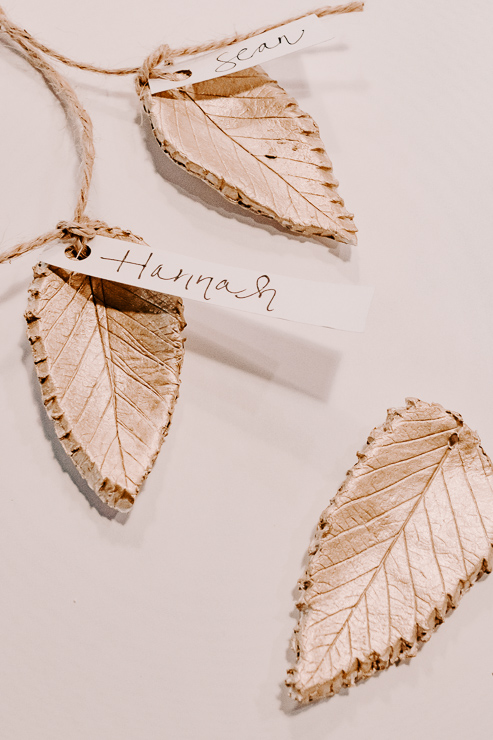
view of gold painted clay leaves

Our leaves are looking beautiful!  Now, all we need to do is cut a small tag of cardstock and write the guest’s name on it.  Use a hole punch to cut a hole in the cardstock.  Tie this to your leaf by threading your jute twine through the hole we created in the leaf in Step 3.  

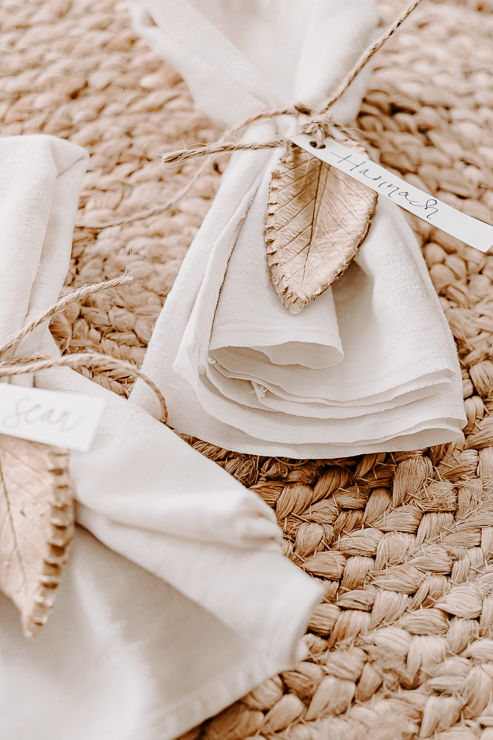
napkins tied with jute twine and clay leaves with names

Simply beautiful!  

I like to tie my cloth napkins with jute twine, and then tie the clay leaf name tag to it.  

napkins tied with gold clay leaves and name tags

How pretty and unique are these!?  I’m sure you will get some comments from your guests.  And they will feel so special sitting at this elegant dinner with you.  

As I said earlier, you can reuse these DIY leaf place cards.  Once you get the hang of making one leaf, the rest don’t take long.  You can also try this project with different shaped leaves, such as maple leaves.  

napkins tied with jute twine and clay leaves with names

My daughter and I foraged for some leaves together.  She happened to find the pretty ones I ended up using.  Thanks, Hannah! 

Grab the kids and make this a family project.  It’s a great craft to do around the holidays.  

karen signature

~ See More of Karen’s Tutorials ~


karen from decor hintHello!  I’m Karen, the creator of the Home Decor and DIY Blog: Decor Hint. I’m a Native of the East Coast, but I currently live in beautiful Seattle with my hubby, our two wonderful children, and our spunky wheaten terrier.

You can usually find me with some sort of craft in one hand and a coffee in the other. And I’m always rearranging furniture or moving lamps from room to room. I have a passion (read: obsession) for decorating, DIY, and gardening. In short, I love making my house into a home.

Like many, I’m inspired by what I see in home decor magazines, but I’m not so inspired by the price tags.  Consequently, I love finding and creating beautiful budget-friendly home decor items. In a head to head competition, I bet you’d never know the difference between the designer items and my DIY creations!  Many of my DIY projects focus on sewing, crafting, upcycling and organizing. Some of my favorite projects have been making pretty wreaths, sewing my own tassel hand towels, and crafting these trendy wood bead garlands. I can’t wait to inspire you and spark your creativity through my DIY projects.

You can always connect with me on Pinterest, Twitter or Instagram.

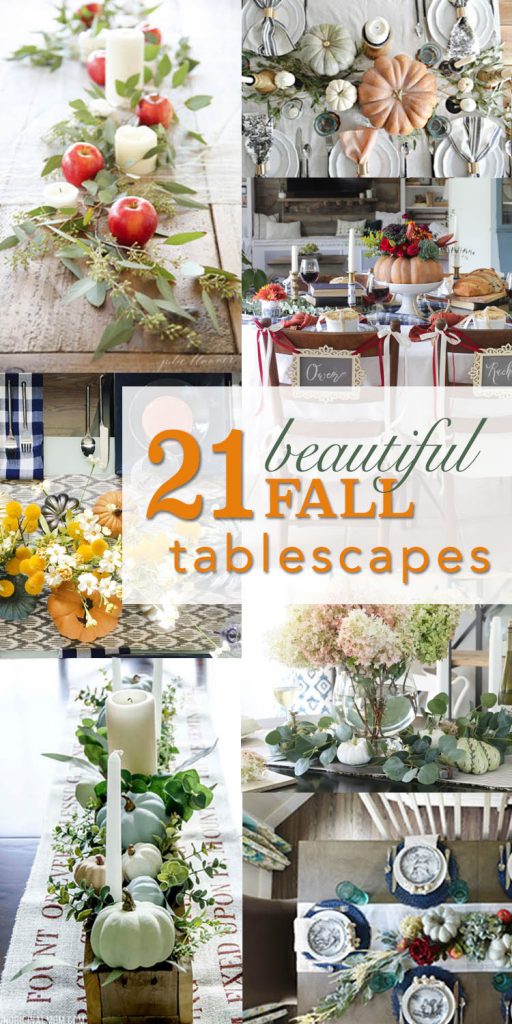
If you liked this tutorial, you’ll love these fall tablescape ideas:

21 Beautiful Fall Tablescapes - Decorating Your Table for Fall

Folding Laptop or Writing Desk

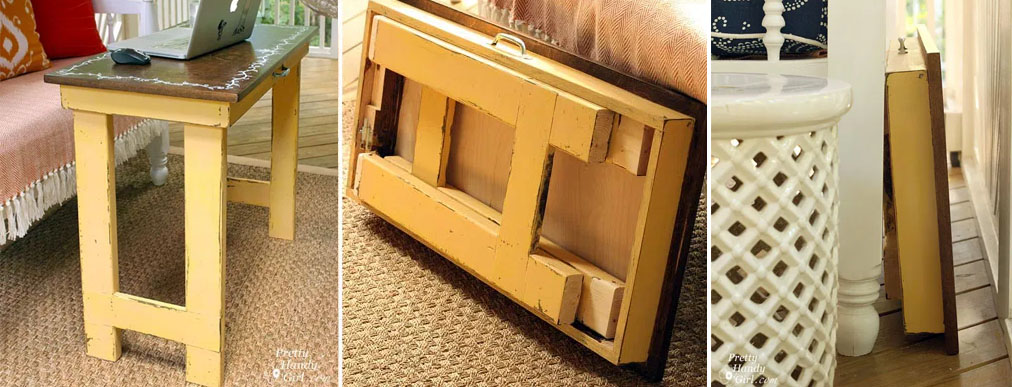
With more of us working from home and needing to create a space to work, this folding laptop and writing table is just the thing you need to make any room into an office!

Folding Laptop Writing Desk | Pretty Handy Girl

Folding Laptop and Writing Table Tutorial

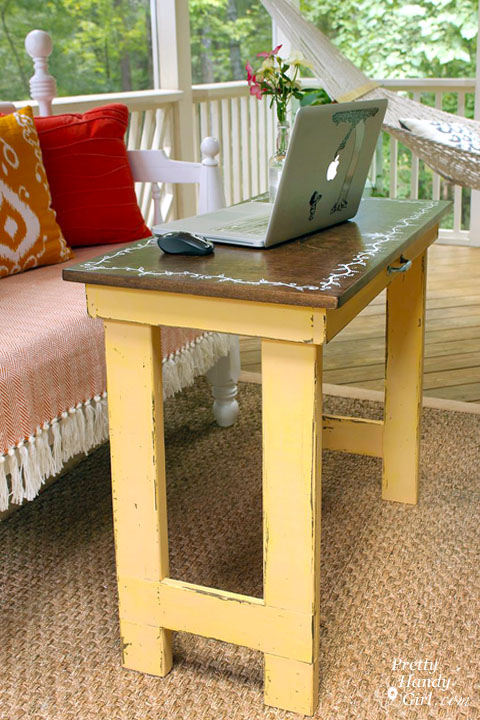
My favorite place to write my tutorials is outside on our screen porch when the weather is pleasant. I love listening to the birds and feeling the breeze blow through the screens. Up until this weekend, I was using an old card table as a desk. But, it was large, awkward, and not the correct height for my needs. I wanted a table that was the perfect height and that could fold and store away when not in use. Enter the idea for thus folding laptop and writing table!

Folding Laptop Writing Desk | Pretty Handy Girl

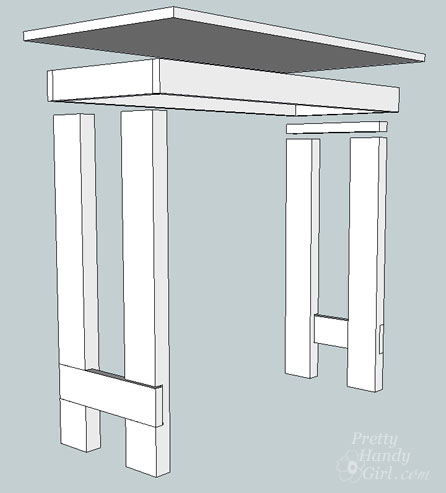
I enjoyed the challenge of designing plans for this simple farmhouse style folding laptop/writing table. The materials are simple 2 x 4’s and 3/4 inch plywood. The majority of the steps can be done using simple handheld tools like a drill, multi-tool, and a circular saw. (Feel free to use other tools or alter the plans to fit your size preferences.)

Materials:

(I’ve included affiliate links for your convenience. I earn a small percentage from a purchase using these links. There is no additional cost to you. You can read more about affiliate links here.)

Cut list:

Folding Laptop Writing Desk | Pretty Handy Girl

Top:

  • 3/4″ finish grade plywood cut to 18″ x 36″

Apron (use 1″ x 3″ boards or you can rip excess plywood):

  • 2 – 1″ x 3″ cut to 14 1/2″
  • 2 – 1″ x 3″ cut to 34″

Legs:

  • 2 – 2″ x 4″ cut to 28 1/4″
  • 2 – 2″ x 4″ cut to 26 3/4″
  • 1 – 2″ x 2″ cut to 14 1/2″ (if ripping a 2″ x 2″ yourself, remember actual size is 1.5″ x 1.5″)
  • 2 – 1″ x 4″ cut to 14 3/8″

Hardware:

Tools:

Additional materials:

Instructions:

Cut your lumber per the above cut list.

Building the Apron:

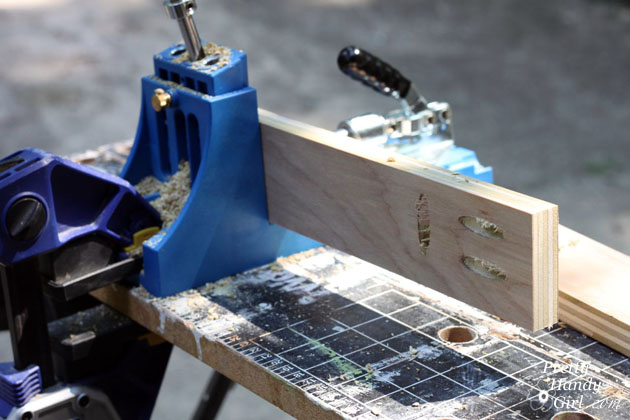
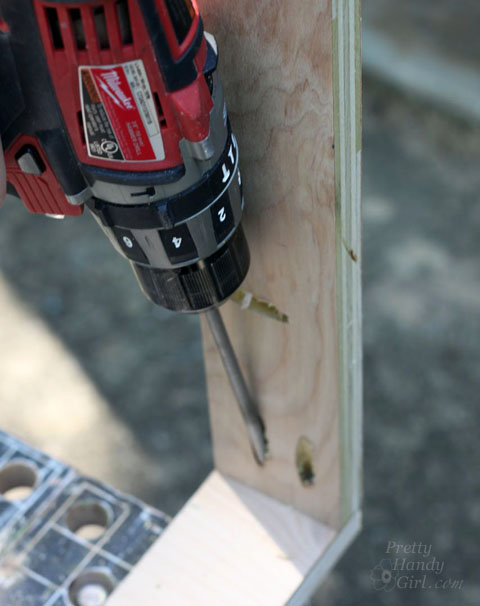
Drill two holes in the ends of the front and back pieces of the apron. Drill pocket holes into the top of all the apron pieces (spaced approximately 8″ apart.)

Folding Laptop Writing Desk | Pretty Handy Girl

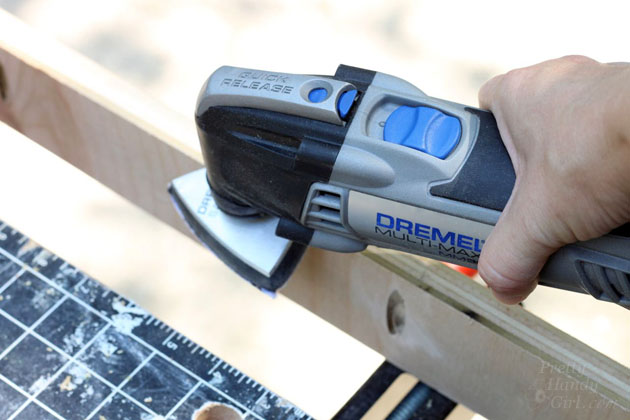
Sand all edges and pocket holes on the apron pieces with a 60 grit sandpaper on the Dremel MultiMax.

Folding Laptop Writing Desk | Pretty Handy Girl

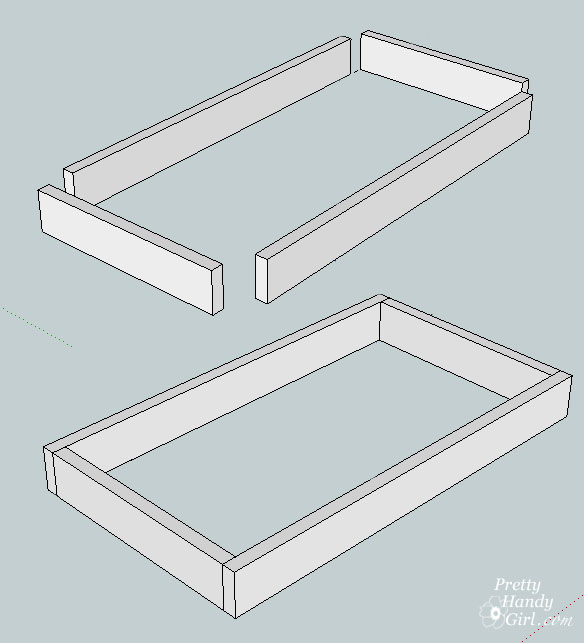
Assemble the apron pieces. Pay attention to make sure all the pocket holes are facing the same direction to attach to the underside of the tabletop. The sides of the apron should be set inside the front and back pieces as shown below:

Folding Laptop Writing Desk | Pretty Handy Girl

Secure the apron pieces with pocket hole screws.

Folding Laptop Writing Desk | Pretty Handy Girl

Center the apron on the bottom side of the tabletop. Measure all sides to make sure they are even. Attach the apron to the tabletop with pocket hole screws.

Folding Laptop Writing Desk | Pretty Handy Girl

Notching the legs:

Line up all four legs next to each other. Use a carpenter square to square up the bottoms. Mark 4″ up from the bottom of the legs. Line up the 1″ x 4″ with the mark and trace the other side onto the legs.

Set the combination square to the depth of the 1×4″ board (it should be 3/4″). Mark this depth on the sides of each leg to denote the area that needs to be removed.

Folding Laptop Writing Desk | Pretty Handy Girl

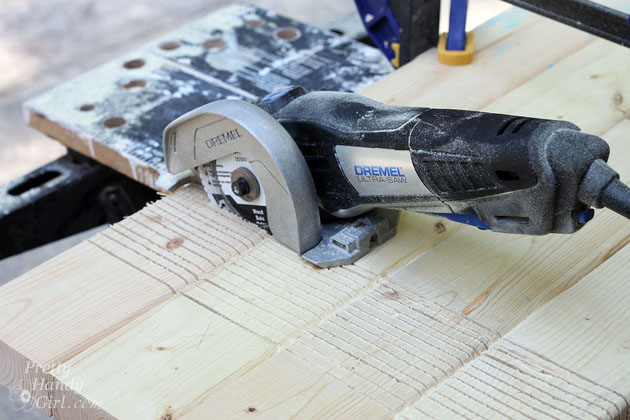
Set the depth of your circular saw (or Ultra-Saw) to 3/4″ deep.

Folding Laptop Writing Desk | Pretty Handy Girl

Cut stripes inside the guidelines you made on the legs with the Ultra-Saw.

Folding Laptop Writing Desk | Pretty Handy Girl

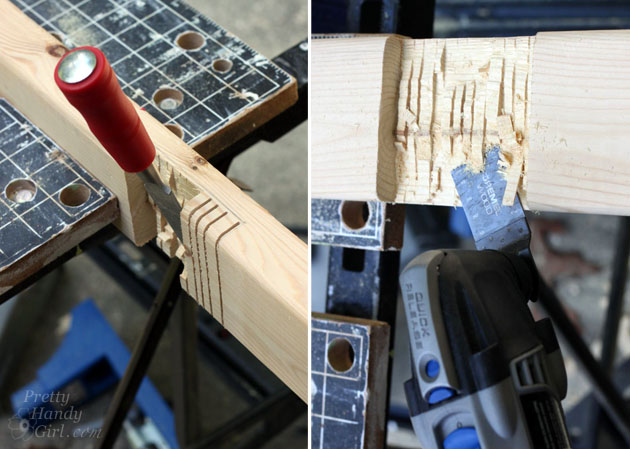
Use a hammer and chisel to knock out the strips. Use your oscillating multi-tool with a wood flush cut blade to clean up the edges of the notch.

Folding Laptop Writing Desk | Pretty Handy Girl

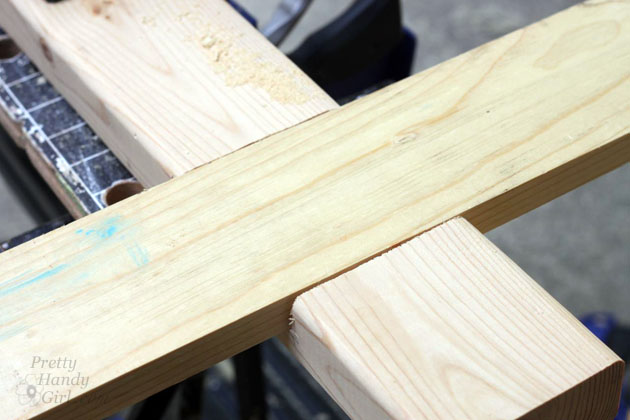
Test fit the 1×4″ boards into the legs. Shave off more if needed with the Multi-Max (or circular saw).

Folding Laptop Writing Desk | Pretty Handy Girl

Set the 1″ x 4″ boards into the leg notches.

Folding Laptop Writing Desk | Pretty Handy Girl

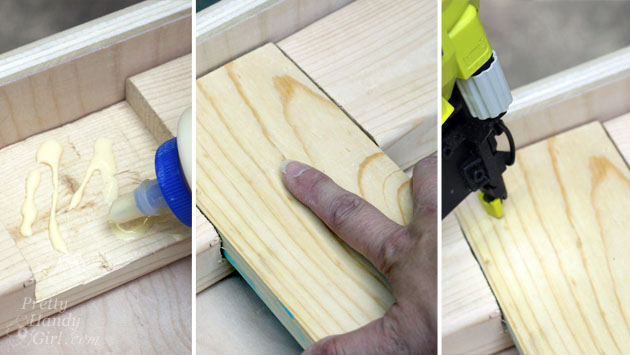
Secure the 1″ x 4″ boards with wood glue and finish nails.

Folding Laptop Writing Desk | Pretty Handy Girl

Secure the cross piece 1″ x 4″ from the back side with one wood screw into each leg.

secure-cross-piece

Connecting the Legs:

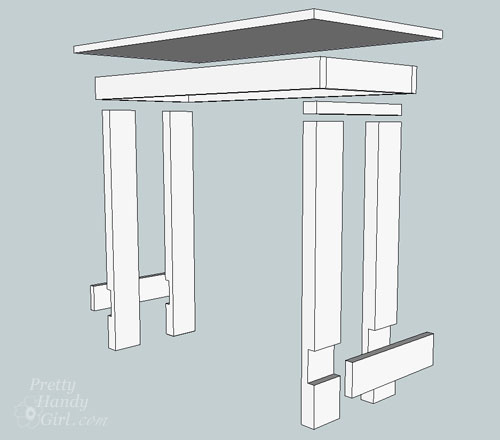
To allow the legs on the desk to fold neatly, one side has to be raised up to fold on top of the other legs. Use the 2″ x 2″ board you cut for this purpose.

Folding Laptop Writing Desk | Pretty Handy Girl

Drill a pocket hole into each end of the 2×2″ board. Add wood glue where the 2×2 will rest. Tap the board into place.

Folding Laptop Writing Desk | Pretty Handy Girl

Secure the board into the table apron with pocket screws.

Folding Laptop Writing Desk | Pretty Handy Girl

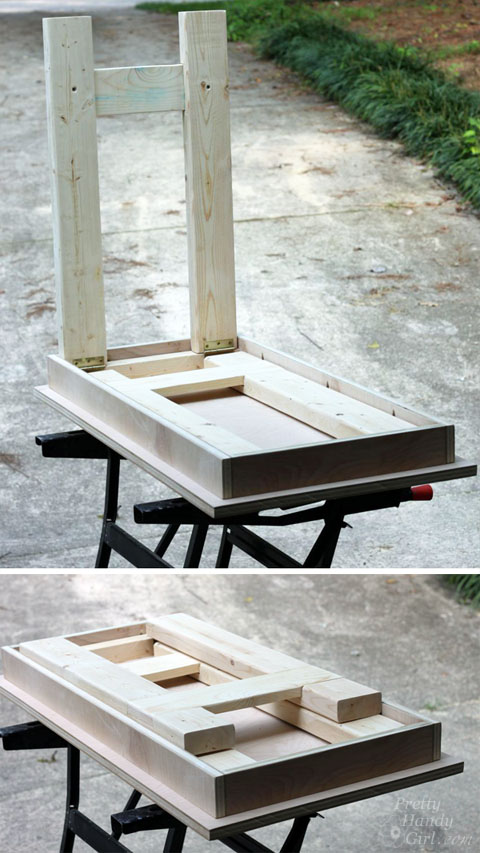
Rest the shorter legs on top of the 2×2 board. Clamp or support the legs in place.

Folding Laptop Writing Desk | Pretty Handy Girl

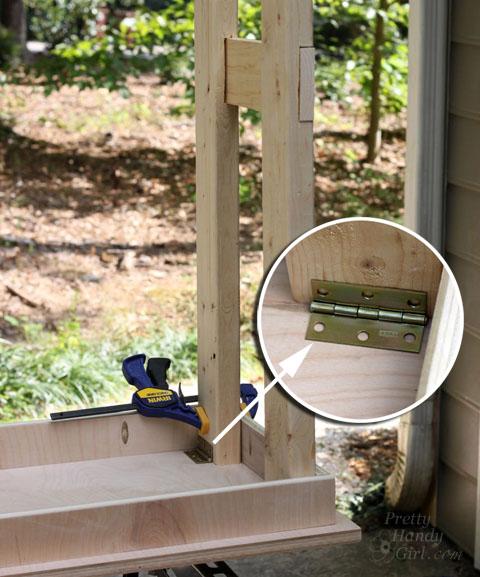
Attach the utility hinges to the top of the legs and the 2×2 support.

Folding Laptop Writing Desk | Pretty Handy Girl

Rest the longer legs in place.

Folding Laptop Writing Desk | Pretty Handy Girl

Attach the remaining two utility hinges to the top of the legs and the underside of the tabletop as shown below.

Folding Laptop Writing Desk | Pretty Handy Girl

Test fold the legs to make sure they fold neatly and don’t rub on the sides of the apron. Make any adjustments to the hinges or sand the legs to eliminate rubbing now.

Folding Laptop Writing Desk | Pretty Handy Girl

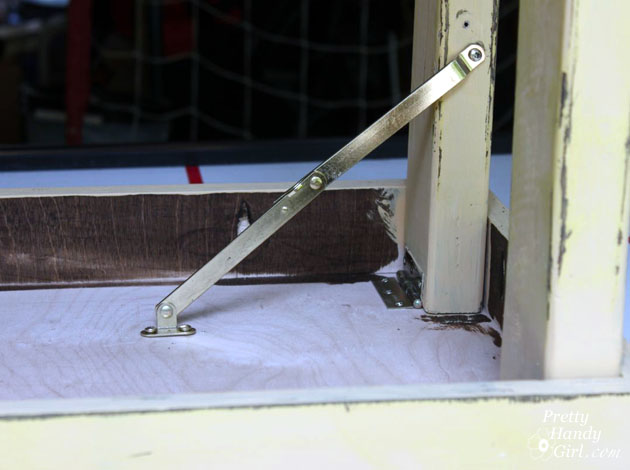
Add the lid support hinge to the bottom folding legs (the longer legs). Follow the directions on the package of the lid support for proper installation.

Folding Laptop Writing Desk | Pretty Handy Girl

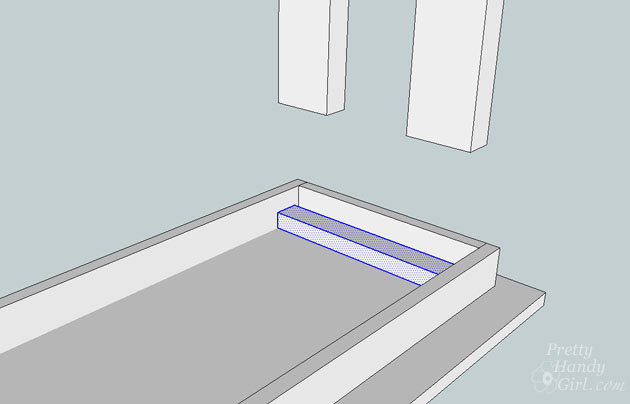
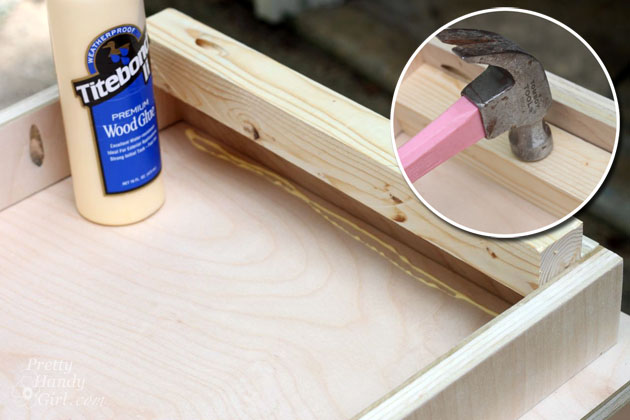
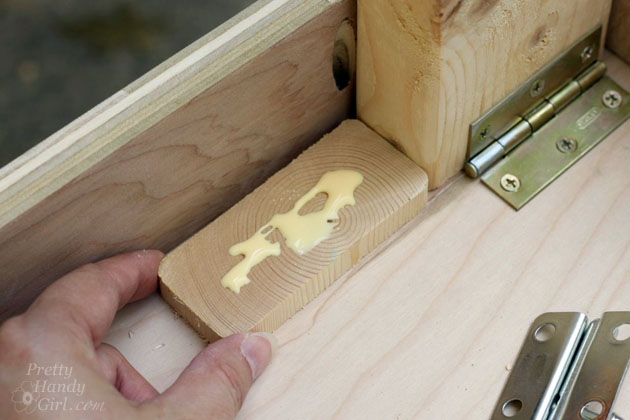
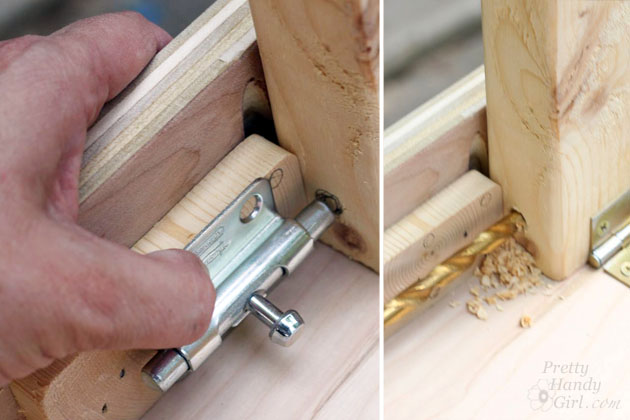
The opposite side will not accommodate a lid support. You need a barrel bolt to keep the legs from folding accidentally. Glue and nail a scrap of 2×4 to the inside of the table apron next to one of the legs (I added a barrel bolt to both sides, but you only need to add it to the one side when using the lid hinge support.)

Folding Laptop Writing Desk | Pretty Handy Girl

Rest the barrel bolt onto the scrap wood. Mark where the bolt hits the leg. Drill a hole into the leg to accept the bolt.

Folding Laptop Writing Desk | Pretty Handy Girl

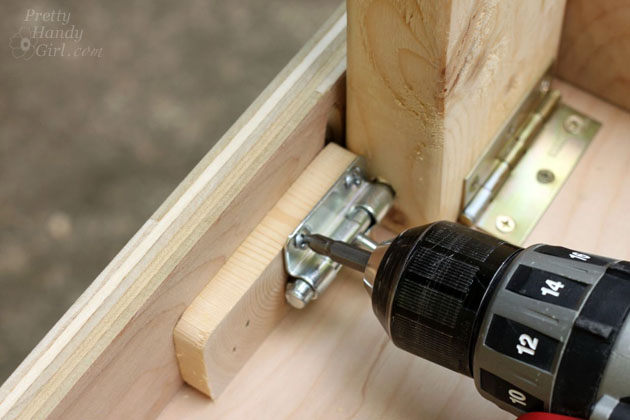
Attach the barrel bolt to the scrap wood with the provided screws.

Folding Laptop Writing Desk | Pretty Handy Girl

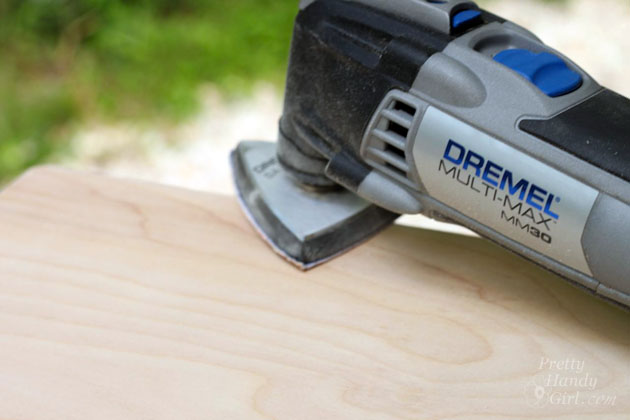
Sand all parts of the desk starting with 80 grit sandpaper, then 120 and finish with a 220 grit sandpaper.

Folding Laptop Writing Desk | Pretty Handy Girl

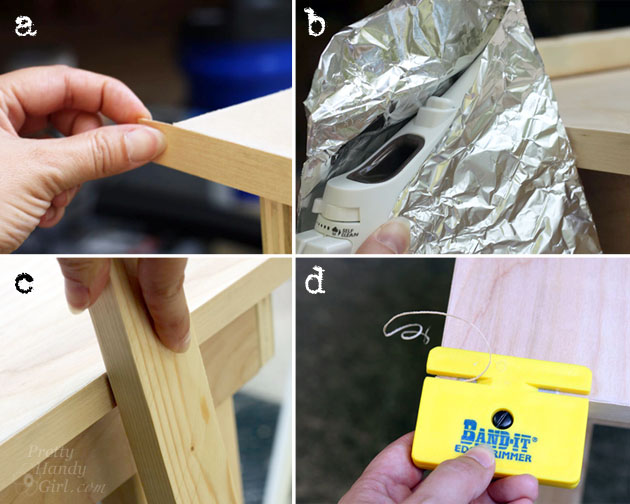
Add edge banding to the plywood top. You can watch my video below to learn how to finish off plywood edges!

It’s not hard and edge banding is a great way to finish off plywood to make it look like a more expensive board.

Folding Laptop Writing Desk | Pretty Handy Girl

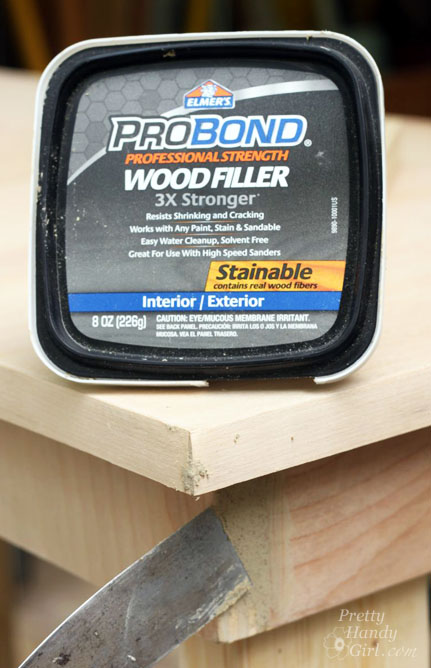
Fill any holes or seams with wood putty. Sand and wipe off the desk before staining or painting.

Folding Laptop Writing Desk | Pretty Handy Girl

Finishing touches:

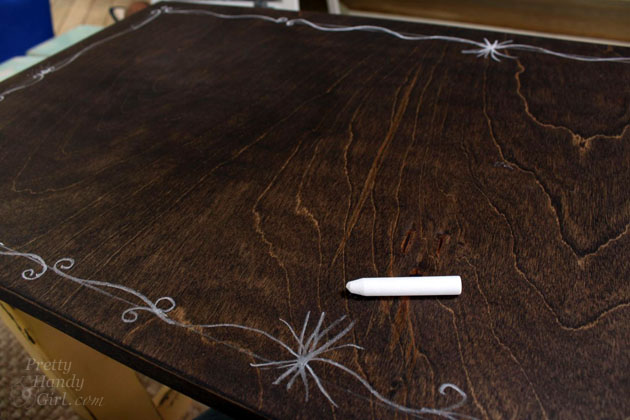
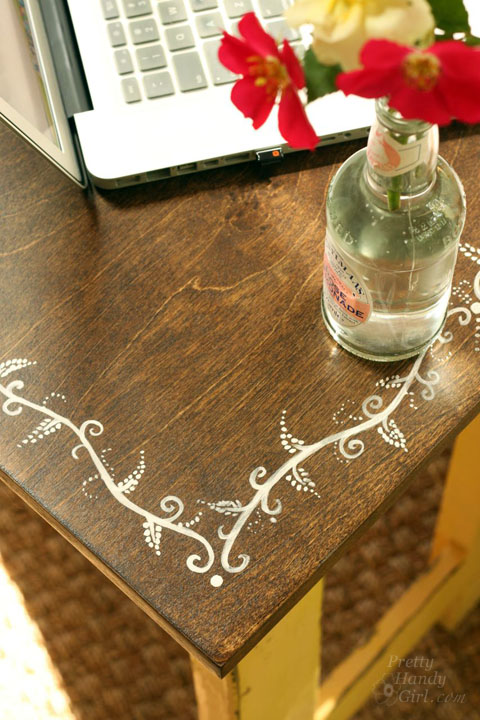
I stained my desk with Minwax Dark Walnut. After the stain dried, I added a hand-painted vine border. First, I sketched the design in chalk.

Folding Laptop Writing Desk | Pretty Handy Girl

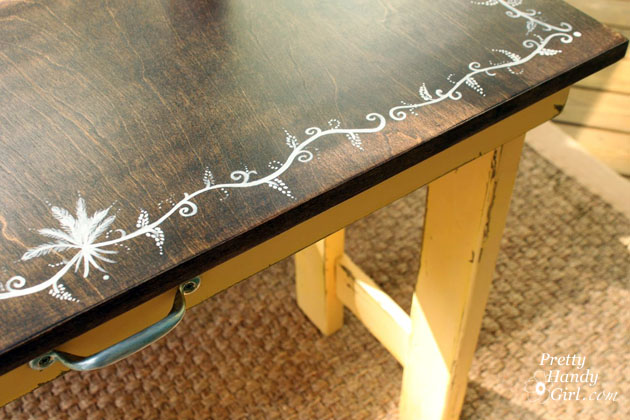
Then I painted the design using a watered-down white chalk paint.

Folding Laptop Writing Desk | Pretty Handy Girl

The apron and legs received a mixture of chalk paints in a yellow color. The edges were sanded off to reveal the dark stain beneath.

Folding Laptop Writing Desk | Pretty Handy Girl

Finally, the desktop received several coats of General Finishes High Performance water-based topcoat in the flat finish. The legs and painted areas were waxed.

Folding Laptop Writing Desk | Pretty Handy Girl

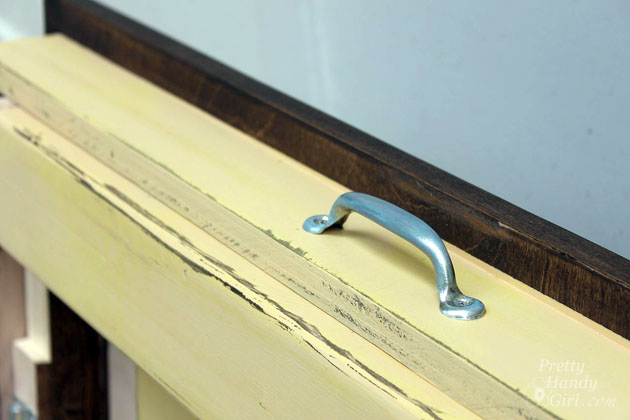
Add a handle to the center of the desk apron if you want to be able to transport it easily.

Folding Laptop Writing Desk | Pretty Handy Girl

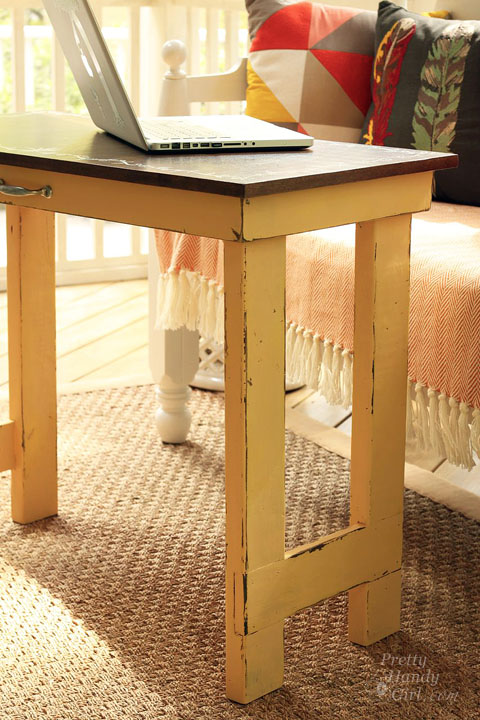
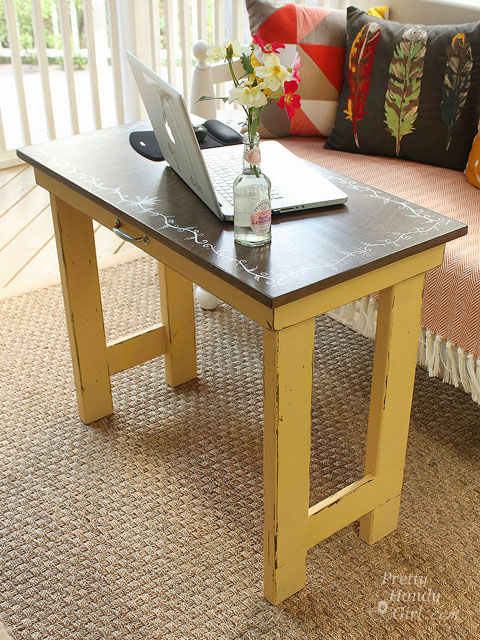
This table can be used anywhere! It’s sturdy, but doesn’t take up much space.

Folding Laptop Writing Desk | Pretty Handy Girl

I can fold it up and bring it inside and work in front of the TV. Or it can be used as a small sewing table, crafting table, or just an extra buffet in the dining room.

Folding Laptop Writing Desk | Pretty Handy Girl

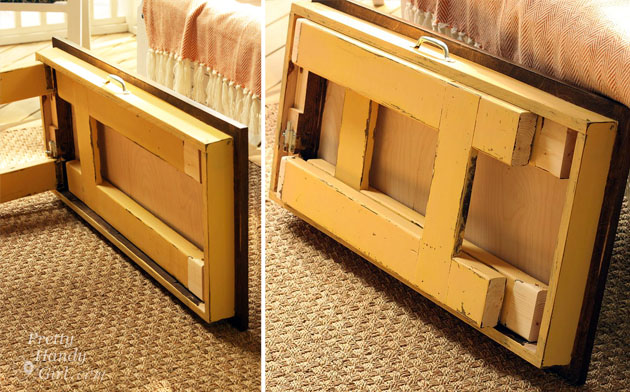
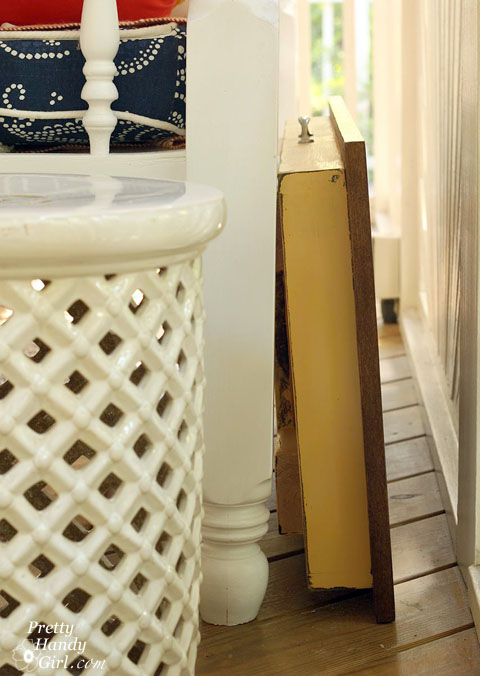
When I’m done, it folds up and stores behind a bench or sofa.

Folding Laptop Writing Desk | Pretty Handy Girl

If you like this tutorial, be sure to pin it for future use or to share! Cheers!

Folding Laptop Writing Desk | Pretty Handy Girl

I’d love to hear if you make your own folding laptop and writing table!

PHGFancySign

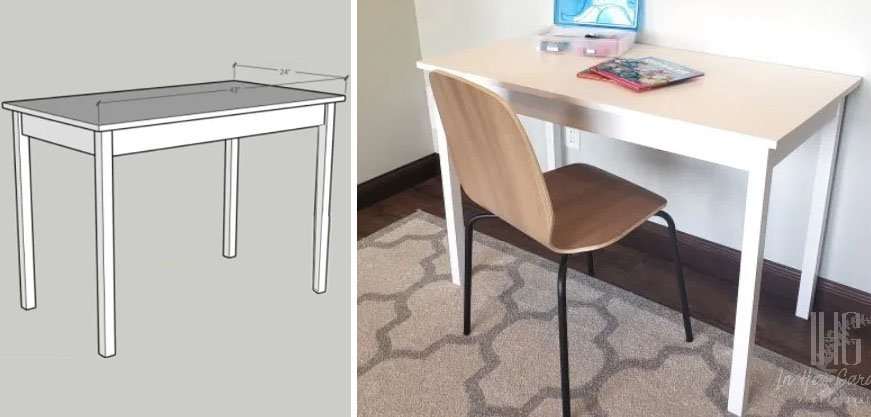
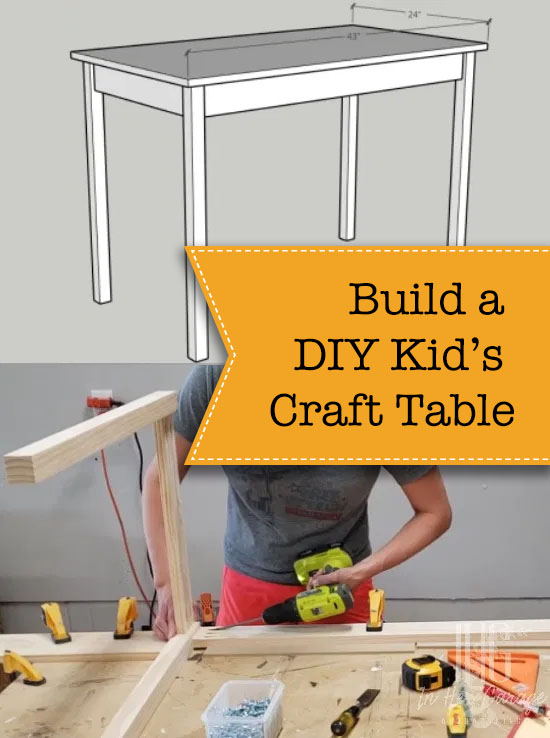
Have the kids taken over your kitchen table or island? Need somewhere to let the kids get creative? Today I am going to show you how to make a simple DIY kid’s craft table (or desk). Let’s get building.

Build a DIY Kid's Craft Table

DIY Kid’s Desk and Craft Table

If your children are going to be home this fall for distance learning or you just want a spot they can call their own, then it is time to get a space ready for them!! This DIY Kid’s Craft Table is the perfect size for whatever your child will need and it is small enough to fit in a spare corner in your home. Let’s make it!

I made this particular table for a client and it measures 30”h x 43”w x 23”d but you can modify these measurements to fit your needs. Of course, the quality of lumber you use is your choice but I used clear pine from my local big box store because it paints better than using common pine boards. It may be more expensive but the boards tend to be straighter, it saves time on sanding, and I feel it yields a better-finished product. It doesn’t matter what wood you use as long as you love it.

Materials:

(I’ve included affiliate links for your convenience. I earn a small percentage from a purchase using these links. There is no additional cost to you. You can read more about affiliate links here.)

Tools:

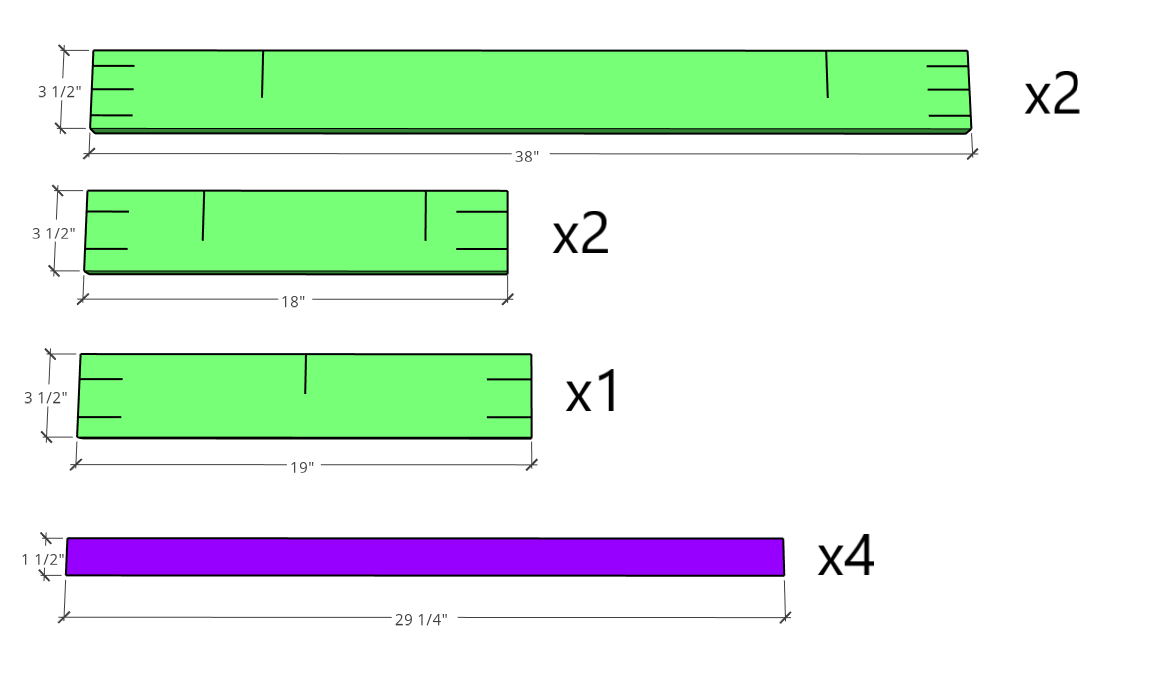
Cut list and pocket-hole placement:

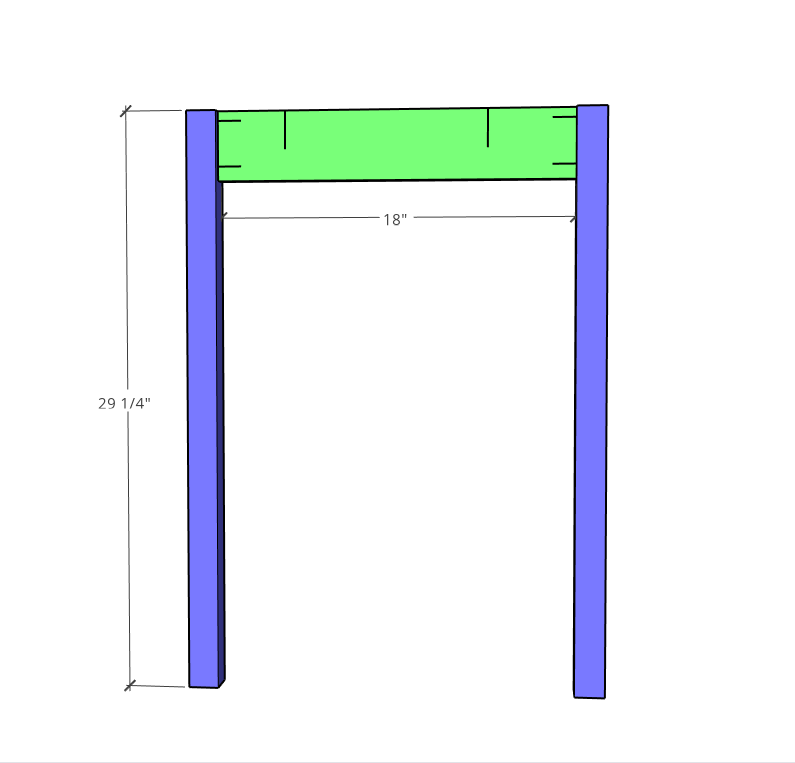
  • 4- 2×2 @ 29 ¼”
  • 2- 1×4 @ 38” (3 pocket-holes in each end)
  • 2- 1×4 @ 18” (2 pocket-holes in each end)
  • 1- 1×4 @ 19” (2 pocket-holes in each end)
  • 3/4”x 43”x 23” birch plywood

Step 1: Sand table components

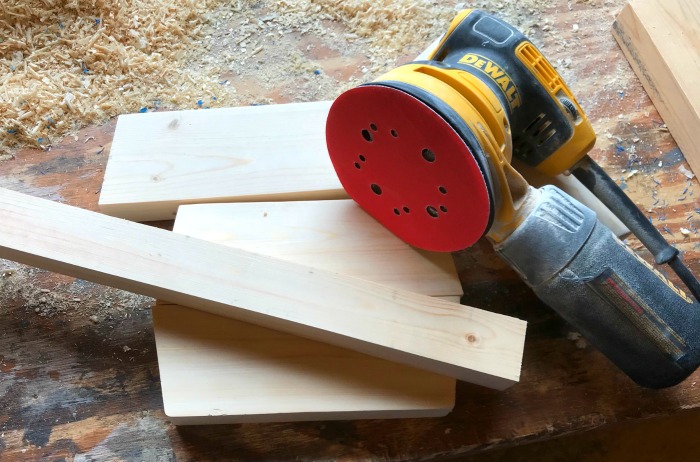
  • I know it seems odd to start with this step but trust me when I tell you it is much easier to sand these boards before they are in place. Depending on how rough your lumber is, begin using 60-80 grit sandpaper and incrementally work your way up to 220 grit sandpaper.  I chose to use clear pine found at my local big box store so I was able to start with 120 grit sandpaper, which cut down my sanding time. This makes the extra money spent, well worth it!

Step 2: Assemble both table sides

  • Sandwich one 1 x 4 x 18” (apron) board between two 2 x 2 x 29 ¼” (leg) boards. Pocket-holes should be facing up.
  • To add a little detail, place a ¼” piece of scrap beneath the 1×4 board to inset it slightly. This will create a shallow reveal looks nice and also gives you a little grace because now the three boards don’t have to be flush to the same surface perfectly.
  • Clamp the legs and apron boards together and join them using wood glue and 1 ¼” pocket screws.
  • Repeat these steps for the other side of the table.

Step 3: Attach the front and back table aprons

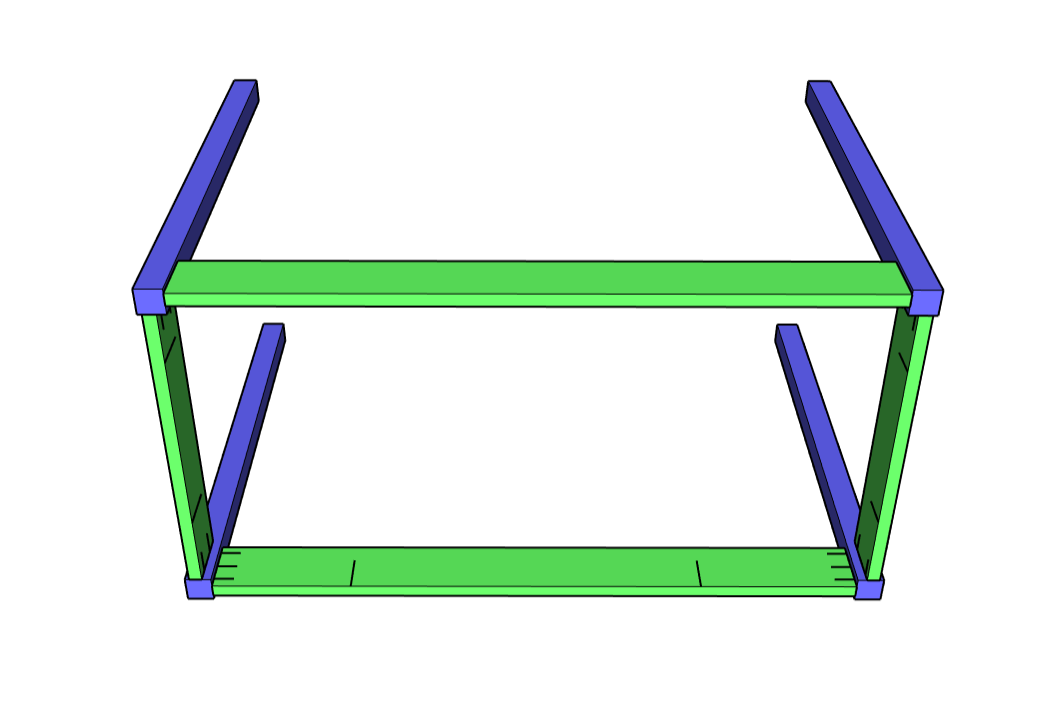
  • With both side components standing on their sides sandwich a 1 x 4 x 38” (apron) board between them, again placing a ¼” board beneath the apron to inset it slightly.
  • Align the top of the 1×4 with the top of the side components.
  • Clamp and attach using wood glue and 1 ¼” pocket screws.
  • Carefully flip the piece over and repeat the above steps to attach the second 1 x 4 x 38” apron board.

Step 4: Attach center support

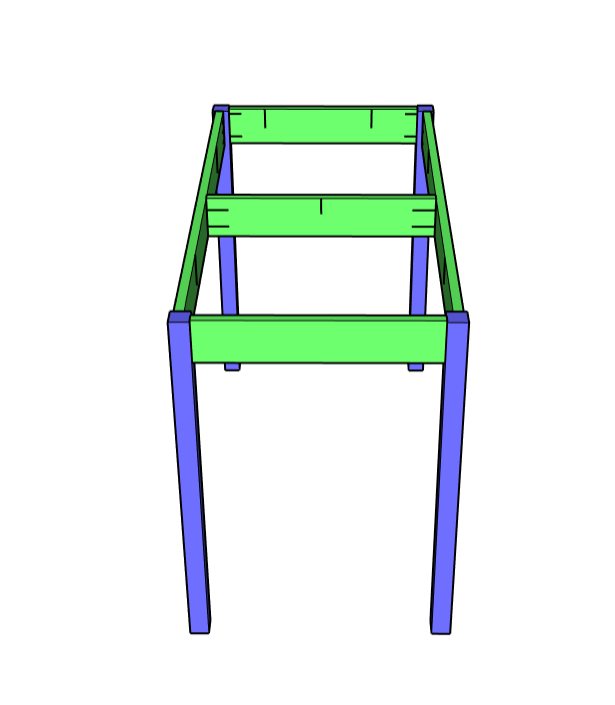
  • Attach the center support using wood glue and pocket screws between the two 1 x 4 x 38” boards centered in the middle.

Step 5: Clean up

  • With a putty knife or chisel gently remove any glue squeeze out and sand smooth.

Step 6: Edge banding

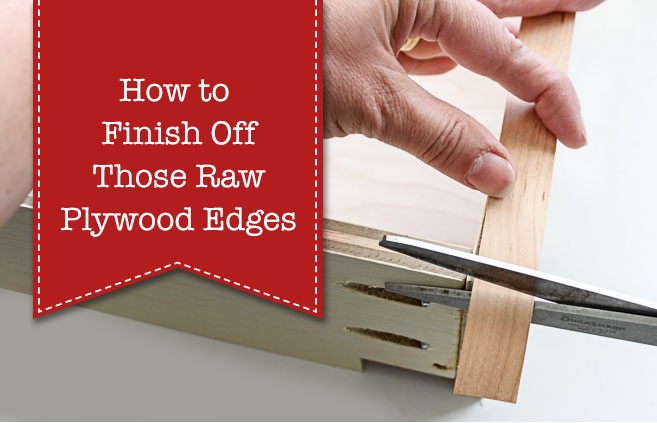
  • Once the plywood top is cut to size you will need to edge band to cover up the unsightly edges. I won’t go over all of the steps here but if you are new to edge banding please check out this tutorial on How to Finish Raw Plywood Edges.


Step 7: Finish

  • Time to paint or stain and topcoat!! My client wanted this piece painted white, so I chose a premium latex paint and used a water-based topcoat to protect the paint and prevent yellowing of the finish in the future.

Step 8: Attach the top

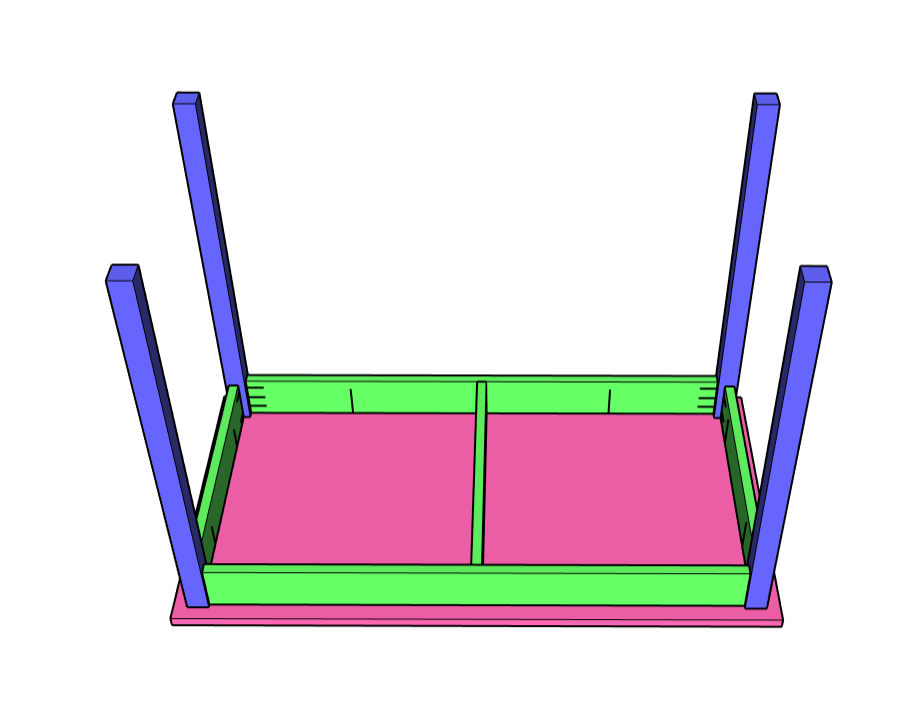
  • Place the tabletop on a flat surface (bottom side up) and center the base over the top upside down.
  • This plan allows for a 1” overhang of the top on all sides of the table base.
  • Using the pocket-holes that are shown in the diagrams below, attach the top with 1 ¼” pocket screws.

    • Note: Normally I would not recommend attaching a tabletop using pocket screws IF that top were made of solid wood because of wood’s tendency to expand and contract. However, this top is made of plywood and the amount of expansion and contraction that will happen over time is negligible and should not affect the structure of the table base.  If you are uncomfortable using pocket-holes to attach the top then feel free to attach it in some other way, such as with figure-8 fasteners or Z-clips.

Flip it over and admire your handy work!! Isn’t this DIY Kid’s Craft Table adorable?!

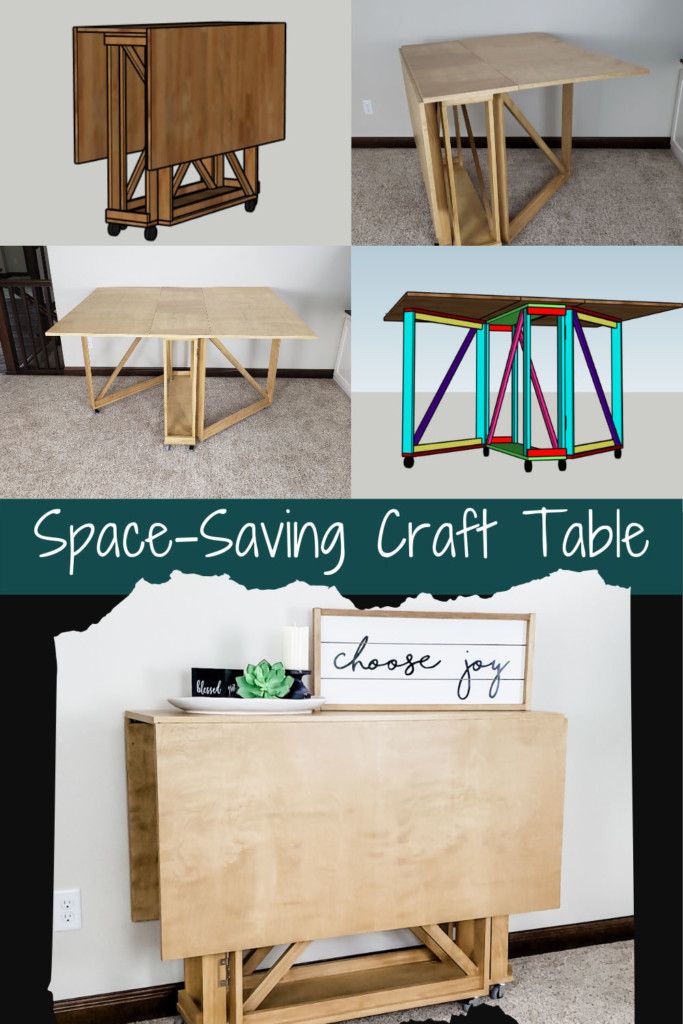
Check out my latest blog post about building a DIY Folding Craft/Sewing Table! This table is large enough for any craft project but folds down when you don’t need it. Perfect for anyone with a small space but large crafting ambitions!

Hi! I’m Kristen, from In Her Garage, and I am a self-taught woodworker and DIY fanatic from Minnesota where I live with my husband and our two daughters. Between being a wife, mom, and registered nurse, I try to make as much time for DIY as possible. My love for building came after our family built our current home in 2015. After we moved in, we needed furniture, and instead of spending massive amounts of money to order the items we wanted I decided that I would build them myself. I started with a buffet table plan from the fabulous Ana-white and quickly set out to remodel my entire home office.

Since then I have started a side business building furniture for the people in my community. I love hearing my clients talk about the pieces they wish they had whether it be a rustic buffet table, a one drawer side table, or a toy box and then making it a reality for them. While starting my small business it made perfect sense that I would document my building journey so I simultaneously launched the In Her Garage blog and I love sharing my plans, tips, and tricks.


I am so glad that you found me here and please feel free to connect with me on PinterestInstagram, and Facebook to see what I am working on right now.
 

If you enjoyed this tutorial and are looking for other cute ideas for kid’s desk or craft table check out these two fun projects. Both of these could be great projects you could do with the kids to keep the fun going.

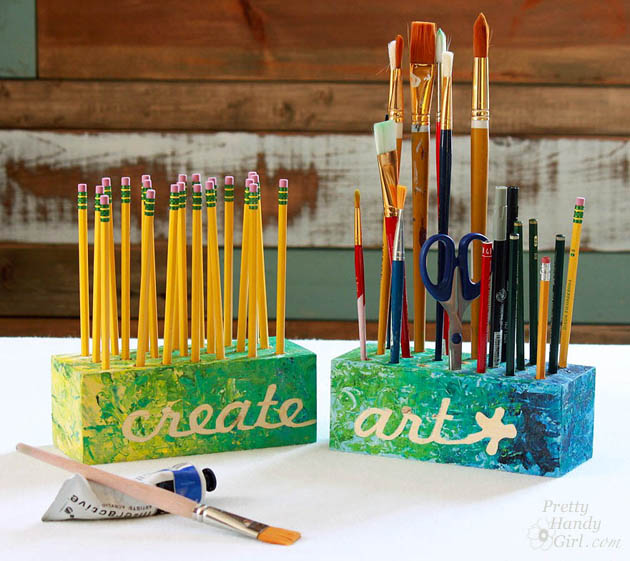
Creative Block Desk & Art Utensil Holder

create_art_block_holders_sm

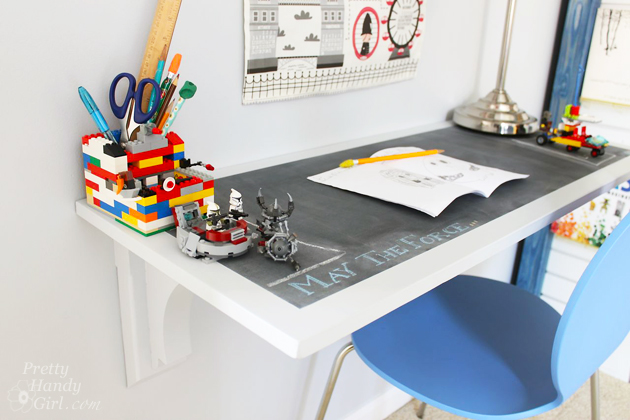
Creating a Chalkboard Desktop.

How to Make a Chalkboard Surface Desk | Pretty Handy Girl

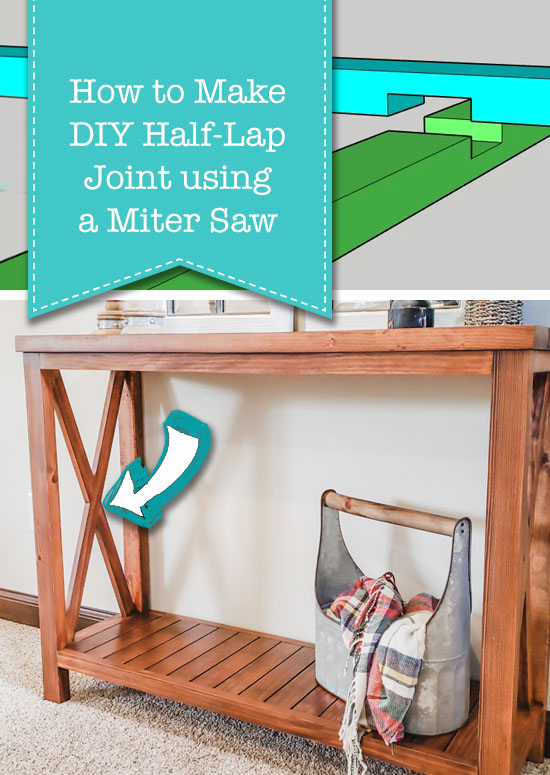
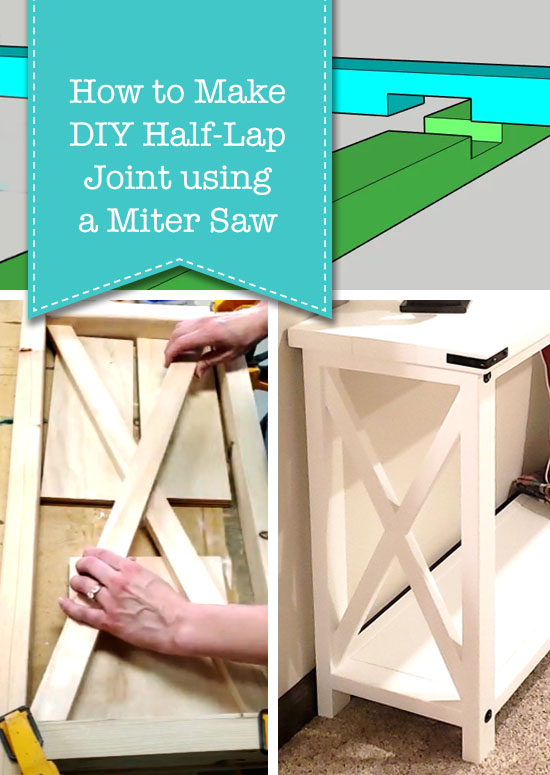
How to Make a DIY Half Lap Joint using Miter Saw

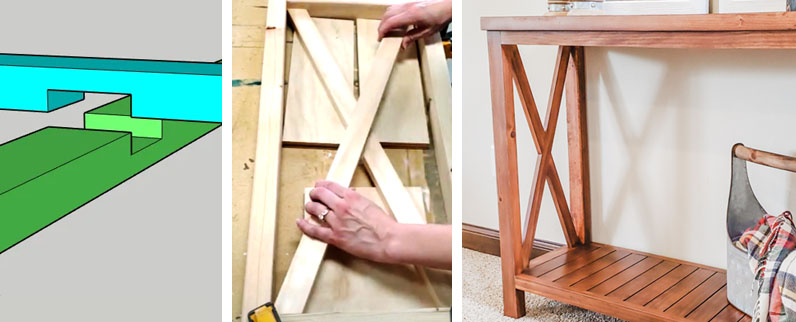
Want to add another joint to your woodworking skillset? Today I’ll show you how to create a simple DIY half-lap joint with your miter saw.

How to Make a DIY Half Lap Joint using Miter Saw

Half-Lap Joint with your Miter Saw

Hi! It’s Kristen from In Her Garage and I am going to teach you an easy way to create a half-lap joint to add to your DIY skill set. The half-lap joint is versatile and super strong.

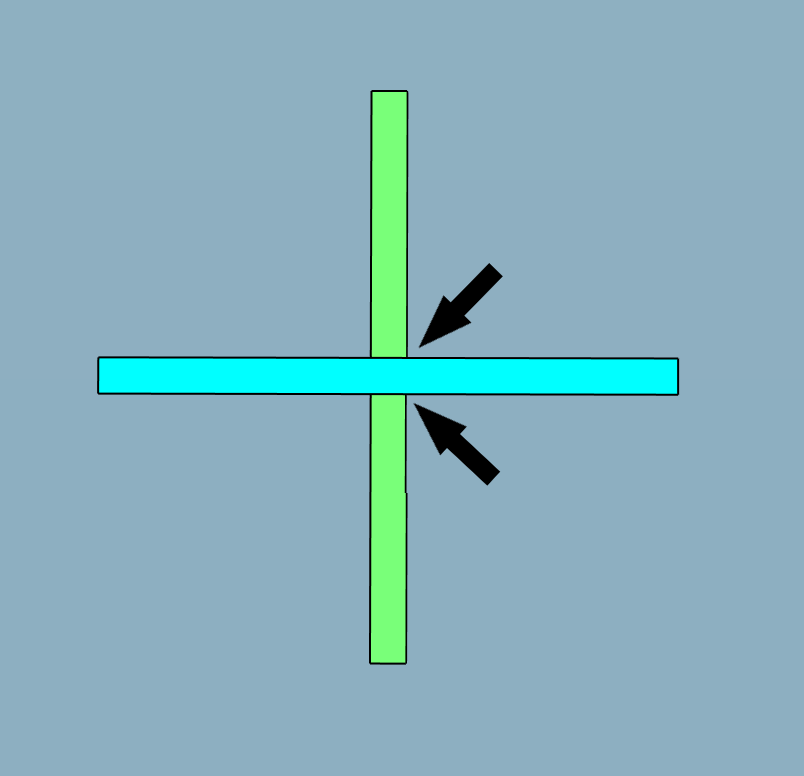
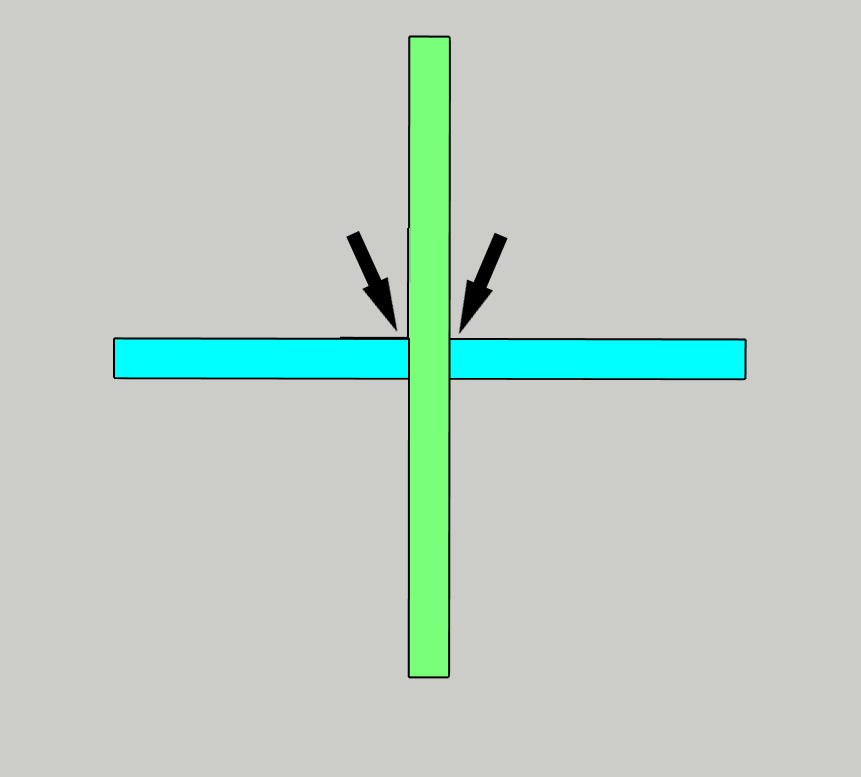
Wondering what a half-lap joint even is? Put simply, a half-lap joint is a joint between two boards that are halved together so that a flush surface results. Check out the pictures below for two popular ways half-lap joints are used. Best of all this joint only requires wood glue to hold it together.


I have used this style of joint when a butt joint or pocket-hole joint isn’t possible. It’s helpful to use when working with thinner material or in tight spaces. Let’s learn how to make a half-lap joint!

Materials:

(I’ve included affiliate links for your convenience. I earn a small percentage from a purchase using these links. There is no additional cost to you. You can read more about affiliate links here.)

Tools:

Instructions:

Step 1: Mark your boards

  • Place your boards over one another in the orientation they will be joined.
  • Mark out the width of the overlap on each board.


Step 2: Set up your miter saw

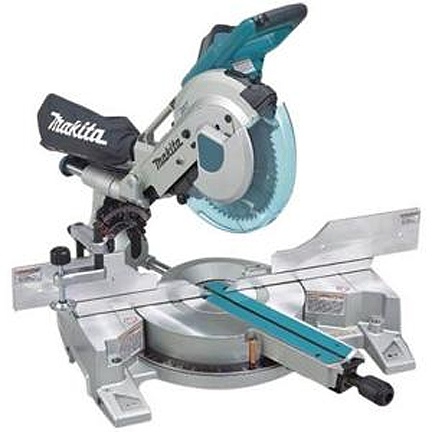
  • Place a sacrificial board against the miter saw fence, with the face flat (as seen in the video below).  This board should be flat and square. You will need this because you are not cutting through the board to be used in your project and thus the miter saw will not cut the back portion of the board you are cutting. The scrap piece will push your board out so that the miter saw will cut halfway down from the front to the back. If you do a test cut without the scrap board you’ll see what I mean.
  • Next, use your saw’s depth stop control and adjust the depth to cut approximately halfway down into the first board to be cut. Use a scrap piece of wood for this step to make sure you have the depth you want before using the board that will be used in your project.
  • Adjust the miter angle at this time as well if you are not planning to cut at 90 degrees.

Step 3: Cut the first board

  • With your depth set and scrap board in place make your first cut into your board. Make sure you are minding which side of the marked lines your blade needs to cut!
  • After the first cut move the board slightly (about 1/8”) and create another cut right next to the first.
  • Continue moving and cutting until you have created all the cuts needed between the two width lines you marked out previously.
  • Dry fit the second board into the first to make sure the width is correct and make any necessary adjustments.
  • Use sandpaper to smooth out any ridges left from the saw.

Step 4: Cut the second board

  • If you cut exactly halfway through the first board then you will not have to do any adjustments for this step and you can cut the second board exactly as you cut the first.
  • But, if you are like me you didn’t cut the first board perfectly and the depth will need to be adjusted slightly for the second board. This is simple.
  • The cut for the second board will need to be the depth of what you DIDN’T cut from the first board. Use a piece of scrap to fine-tune this depth before cutting the board you will use.
  • Now that the depth has been set for the second board you can cut the half-lap into the board just like you did for the first. Again, being mindful of which side of the lines your blade is cutting.
  • Dry fit the two boards together to be sure you have a snug fit and the boards create a flat surface.

Step 5: Glue together

  • Apply glue to both lap joints in each board and fit them together.
  • Apply downward pressure to the joint and allow the glue to dry.

There you have it!! You have expanded your talents and created a very strong half-lap joint for your next project. Nice work!

Pin this graphic for future reference:

How to Make a DIY Half Lap Joint using Miter Saw

New to using the miter saw or need a refresher? Check out the Pretty Handy Girl’s How to Use a Miter Saw tutorial to get you all caught up!

Hi! I’m Kristen, from In Her Garage, and I am a self-taught woodworker and DIY fanatic from Minnesota where I live with my husband and our two daughters. Between being a wife, mom, and registered nurse, I try to make as much time for DIY as possible. My love for building came after our family built our current home in 2015. After we moved in, we needed furniture, and instead of spending massive amounts of money to order the items we wanted I decided that I would build them myself. I started with a buffet table plan from the fabulous Ana-white and quickly set out to remodel my entire home office.

Since then I have started a side business building furniture for the people in my community. I love hearing my clients talk about the pieces they wish they had whether it be a rustic buffet table, a one drawer side table, or a toy box and then making it a reality for them. While starting my small business it made perfect sense that I would document my building journey so I simultaneously launched the In Her Garage blog and I love sharing my plans, tips, and tricks.

I am so glad that you found me here and please feel free to connect with me on PinterestInstagram, and Facebook to see what I am working on right now.
Check out my latest blog post about building a DIY Folding Craft/Sewing Table! This table is large enough for any craft project but folds down when you don’t need it. Perfect for anyone with a small space but large crafting ambitions!