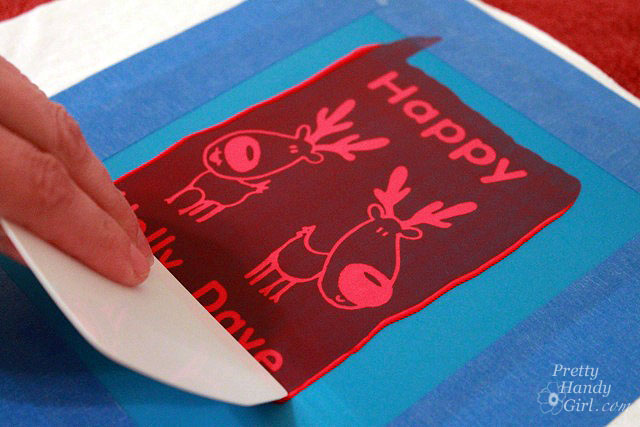
The holidays are at full throttle speed and my boys couldn’t be more excited. Myself? I still haven’t decorated the house — in fact — truth be told I let Pretty Handsome Guy and the boys bring in the tree and decorate it. But, I did want to get into the holiday spirit so I poured a little eggnog into my coffee (Dee-lish-ious!!!) and sat down to make a humorous holiday shirt for my eager little ones.

If you’ve ever used silk screens before you know how wonderful they are for making duplicates. Team t-shirts, family reunion shirts, signs, banners, gift bags, pillows and linens are only a few things that you could silk screen. But, getting fine details and creating a screen that has text on it was usually reserved for the professionals who had the proper equipment. Well, those days are gone! Plaid has developed a DIY silk screen kit that allows you to create a screen using any black and white design printed on your home computer using regular printer paper. No transparencies and no need to reverse your image! Plus, for those of us eco-conscious crafters, the simply screen inks are acrylic and non-toxic! The  Simply Screen kit retails for $39.99 and you can purchase the refill screen pack for $19.99. The kit can be found at Hobby Lobby or online at shop.plaidonline.com.

Plaid was kind enough to send me a kit to try. And thankfully, several bloggers (especially Crafts by Amanda and Mrs.Greene), worked out the kinks and shared their knowledge. Gotta love that creative blogger network ;-).

This video will give you all the tips and tricks you need to know to get a perfect screen exposure when creating a Simply Screen silk screen:

If you have trouble viewing the video, here are the steps to create the screen:
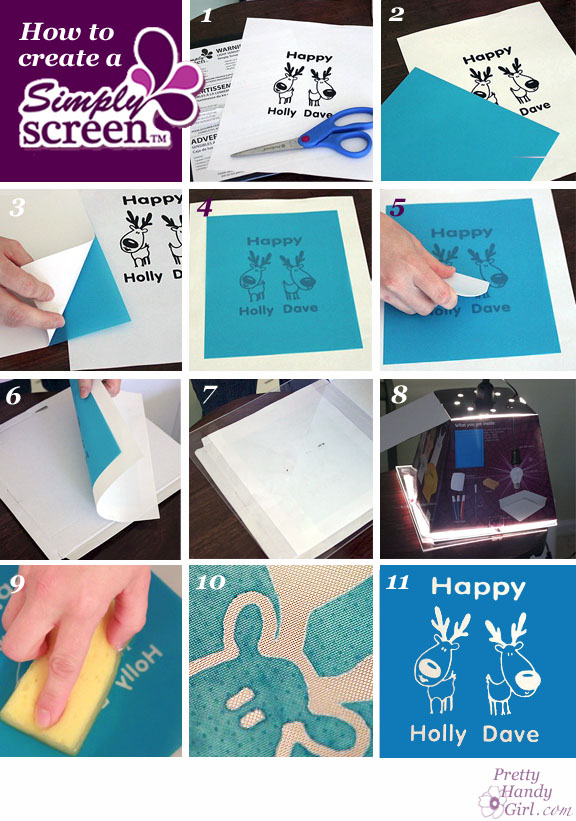
1. Print out your black and white design on regular printer/copier paper. Touch up any white spots with a sharpie marker.
2. Remove one screen from the black plastic envelope. Cut the screen down to size (leave at least 2″ on all sides of the design.) Put the unused screen back into the black plastic bag.
3. Peel the backing off the screen.
4. Flip it over and lay the sticky side onto your image.
5. Use the squeegee to firmly press down on the screen and to affix it to the design.
6. Turn the image and screen over so the screen is on the bottom. Lay it onto the bottom of the Simply Screen box.
7. Lay a piece of plexiglass or glass on top of the screen and printout.
8. Close the lid, turn on the light, and set your timer for approximately 25 minutes.
9. Turn off the light, remove the screen and immerse it in tepid water for 30 seconds. Gently rub the design with a sponge.
10. Continue rubbing both sides of the design until there is no blue emulsion in the graphic areas. The graphic should be a clean see-through image.
11. Dry your screen and follow the directions below to make your screen prints.


Printing Using your Silk Screen:

Now that you have learned how to create the screen, printing with it couldn’t be easier! This is truly the fun part.

Start by taping your fabric to a piece of cardboard or foam board. If you are printing shirts, pillow cases, or anything that is double thickness, put the cardboard directly behind the layer you are printing on to protect from any ink bleeding through.
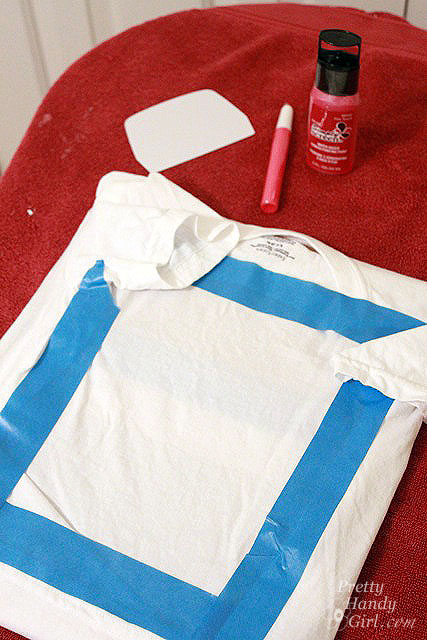
Position the screen where you would like the image to appear.

Tape the screen down with masking or painter’s tape.

Run a thick line of Simply Screen silk screen ink at the top of your image.
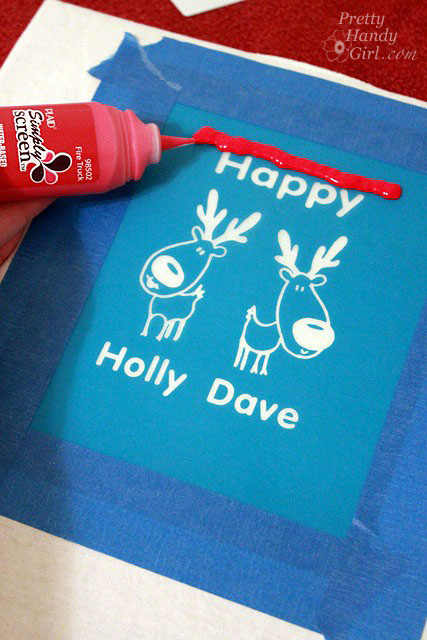
Hold the squeegee at a 45° angle against the screen.

Press down firmly and pull the squeegee towards you. Focus on pressing the ink through the screen and scraping it off the screen at the same time.

Immediately remove your screen being careful not to get any ink on anything when you lift. Lay it down on the next item  you want to silk screen. (It is a good idea to clean the screen after every third impression, as the ink starts to stick around the edges and the image quality will decline.)
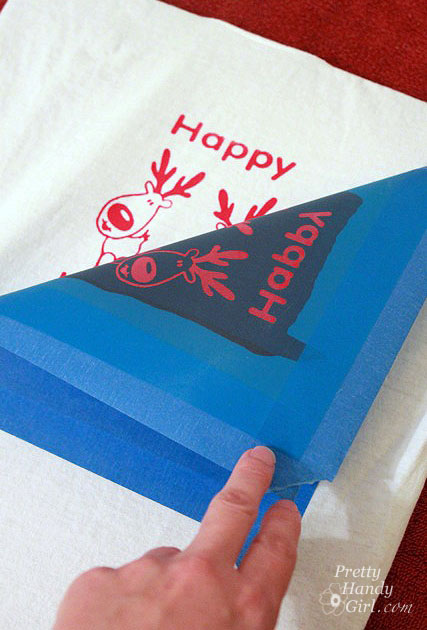
Let the ink dry.

Heat set the image with a hot iron. Wash on cold and air dry to protect your image.

I think this is the perfect kit for making holiday gifts! I’m on a big sew your own gift bag kick and I think I’ll make some more bags and screen print a graphic on it for gifts.

If you like my “Happy Holly Dave” design, feel free to download the printable pdf file and use it for your own personal use.

Or you could also download an earlier incarnation of the design with three reindeer!

Hope you all have a Happy Holly Dave! LOL!



Disclosure: This post has been sponsored by Plaid Simply Screen. I was sent a Simply Screen Kit and paid a small fee in return for writing a post about my experience using their product. The ideas and opinions are strictly my own. I will never let any compensation (monetary or free product) keep me from giving you (the reader) a straight up and honest review.
Welcome back for another Tool Tutorial Friday – How to use a jig saw. Today I have two lessons for you. The first will cover the basics of using a Jig Saw. THEN….I’ll show you  a professional trick for cutting a hole inside a piece of wood without sawing from the edge!

Let’s get this party started…well, this tutorial at least.

(This post contains affiliate links. To learn more about affiliate links, you can read my disclosure page.)

A jigsaw is a good introductory power saw to own. Being small and handheld, makes it a bit less intimidating than the bigger power saws. The jig saw can cut straight lines (when pushed up against a guide like a long level or board.) But, it really excels at cutting curves, profiles and circle cuts.

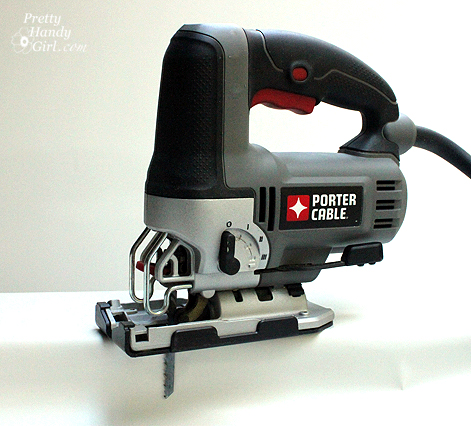
Below is a picture of my jig saw (a Porter Cable orbital jigsaw that I highly recommend) and its parts. Not every jig saw will look the same or have the same features, but this gives you a good idea.

I have used a jig saw to cut curved handles into a crate, cut profiles in panels to fit around an outlet or the baseboards and a few other craft type projects. Jig saws are modestly priced starting at $25 up to over $150. When buying a jig saw, look for strong and solid construction. One of the features that I really like on a jigsaw is an LED light that automatically comes on when the trigger is depressed. My first jig saw was a cheap model. I regretted that purchase because it really did a poor job when cutting through anything thick or hard. Learn from my mistake and invest in at least a middle of the road model and save yourself the need to buy a new one when the cheap one doesn’t cut very well.

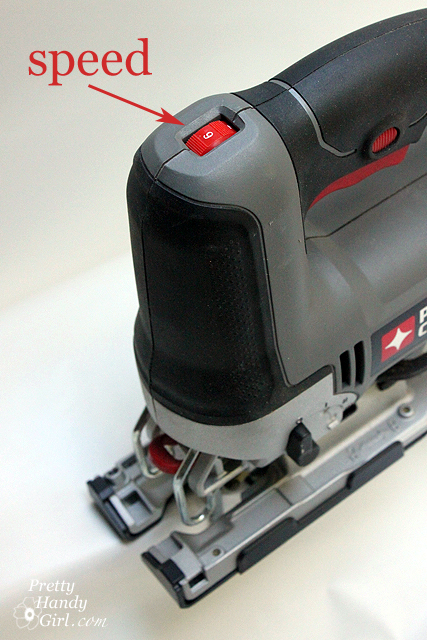
Most jigsaws have a speed control. Sometimes it might only be a high – low switch. The speed control is located on top of my jig saw, but this will vary depending on the jig saw you buy.

The jig saw has a straight blade that moves up and down to cut. The teeth of the blade always face forward to cut into the wood as you press it into the cut.

Most modern jig saws have a quick release blade. This is how to remove the blade on the Porter Cable jig saw:

I have not needed to replace this blade yet, and I’ve been using it for 2 years.

Before we watch the video, a little reminder:

DISCLAIMER

The viewer assumes all responsibility and liability associated with the hazards of woodworking. Pretty Handy Girl is not responsible for any errors or omissions that may be present in this tutorial. She also assumes no liability for any action or inaction of a viewer.

Please use extreme caution when using power tools. Read your tool manual thoroughly and wear protective safety gear. Take your time familiarizing yourself with a tool before using it. (If you are missing the manual, you can easily find it online by going to the manufacturer’s website or google your saw’s make and model + manual.)

Please recognize that I have tried to put together a basic jig saw usage tutorial to get you started. I have tried my best to show the safest way to use a jig saw. That being said, I am not a professional (I only play one on this blog ;-) .)

And now, the basics of using a jig saw!

Here is the video:

Now for my professional tip. Let’s imagine that you want to cut a large hole in the middle of a piece of wood. For example, a curved handle hole in a crate or an outlet opening in a sheet of beadboard. Obviously you don’t want to cut in from the side. That wouldn’t look very professional, now would it? But, how do you do it? I’m going to use the outlet hole as an example today.

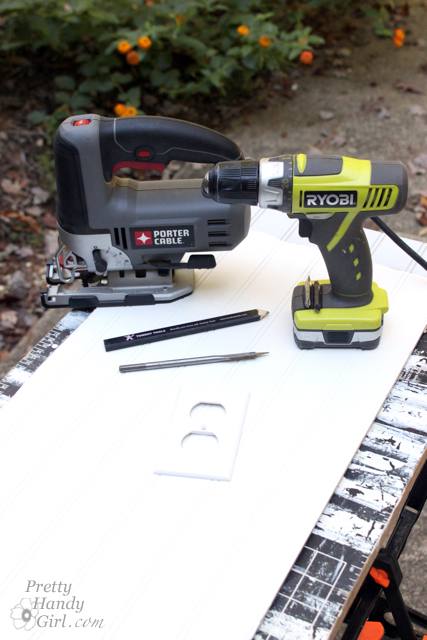
You’ll need a few tools first:

  • Jig saw
  • Drill with a spade bit slightly wider than your jig saw blade
  • Pencil
  • Dark lipstick (bear with me)
  • Outlet cover

Cut your beadboard to size (make any adjustments and profile cuts before proceeding.)

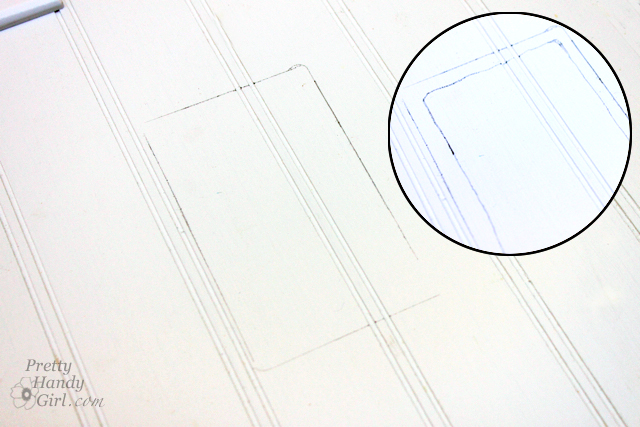
Instead of measuring where the hole is and then transferring those measurements onto the board, you can use this trick instead! (1) Rub the lipstick around the outer edge of the outlet sockets. (2) Press your bead board up against the outlet. Gently pound your fist onto the outlet through the bead board. When you remove the beadboard, you will see the location of the outlet. (3) Lay your outlet cover in line with the socket impressions.  (4) Trace around the outlet cover.

Draw a second line about 1/8″ inside the first. This will be your cut line.

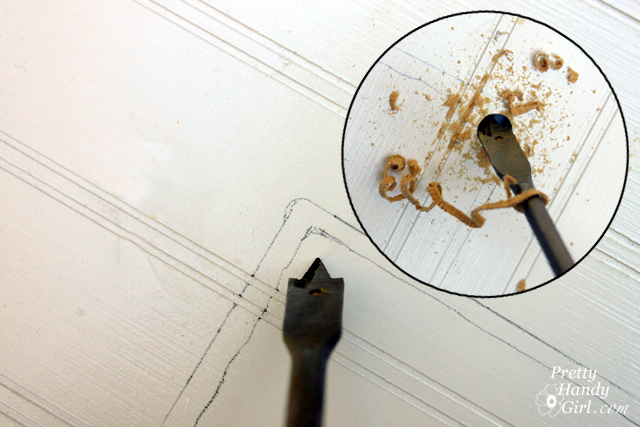
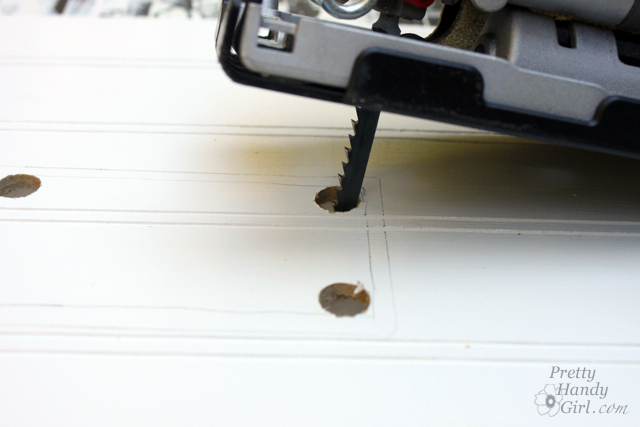
Insert the spade bit into your drill. Position the spade bit inside one corner, and drill a hole.

Repeat for the other three corners.

Position your jig saw blade inside one hole, move the blade to the back of the hole before you start your saw up. Otherwise, the teeth will grab at the front edge and could cause the saw to jerk out of your hands.

Cut from hole to hole along the cut line until the square hole for the outlet is completely cut. Here is a quickie video showing exactly how to cut the hole:

Hope this tutorial helps you get jiggy with it!


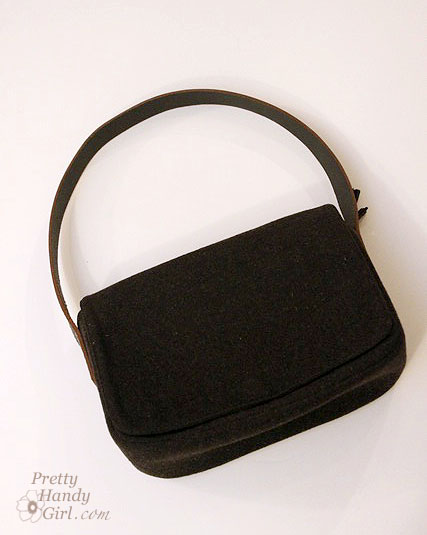
Most people would have probably walked past this plain jane wool purse.

I almost did, but then the price tag caught my eye. THREE DOLLARS! Immediately I pictured dressing it up with a few fabric rosettes.

With fall on the horizon, I decided to work with some orange fabric scraps I had lying around. Within an hour I had a stylish new fall purse!

Materials:

  • Fabric scraps
  • Hot glue gun and glue sticks
  • Felt
  • Safety pins
  • Scissors
  • Foil covered cardboard or other work surface

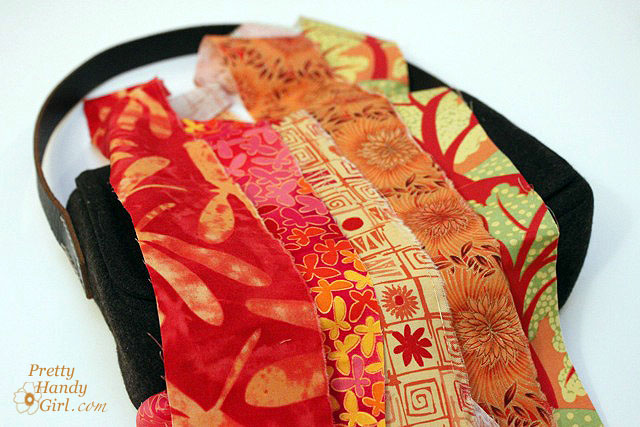
Pick out your fabrics and rip them into 3″ – 4″ strips.


It may help you visualize what colors to use by laying them on your purse.

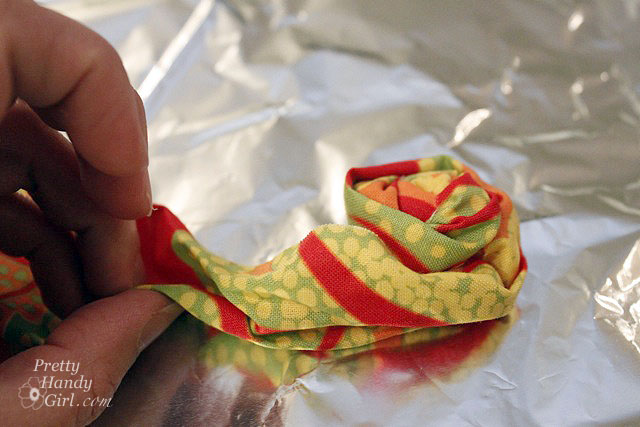
Start by rolling one end of the strip.

Add some hot glue and keep rolling the fabric strip.

Fold and twist the fabric for more interest and to hide the raw edges.

Finish by folding the end over and gluing it to the rosette.

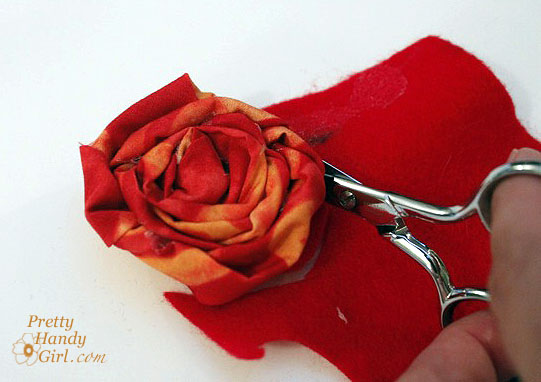
Cut a piece of felt in a circle shape slightly smaller than the rosette.

Check to make sure the felt circle doesn’t extend beyond the edges of the rosettes.

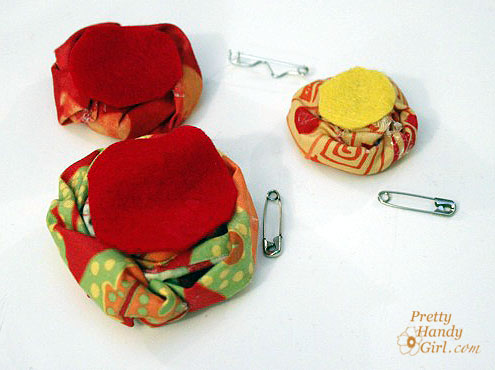
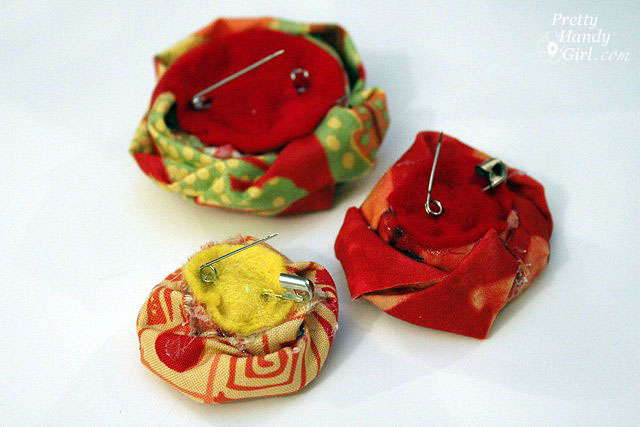
Snip two holes in the felt circle and feed a safety pin through.

Put some hot glue onto the back of the rosette…

…and glue the felt circles and safety pins to the rosettes.

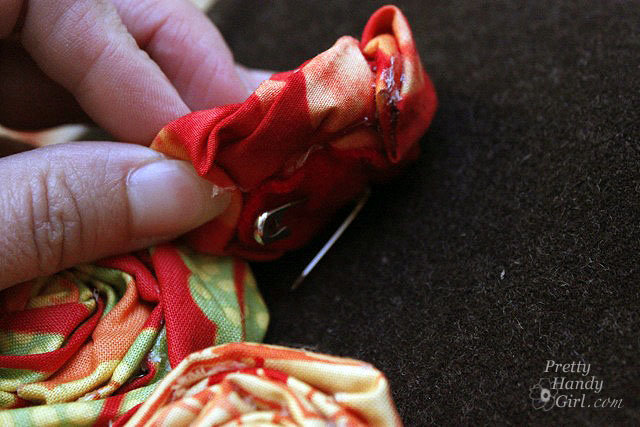
Pin the rosettes onto the purse. Adjust them until you like the arrangement. Feel free to add more or less rosettes.

Personally, I like odd numbered groupings.

The best part about this project is that I can swap them out and add different colored rosettes depending on the season!

Do you like? What other colors do you think would look nice on the brown? I thought about creams and whites for winter. Hmmmm. You could also add felted wool roses instead of fabric.

And now it is time to announce some lucky winners! If you know one of these people you might want to ask them to send you some of their lucky vibes.

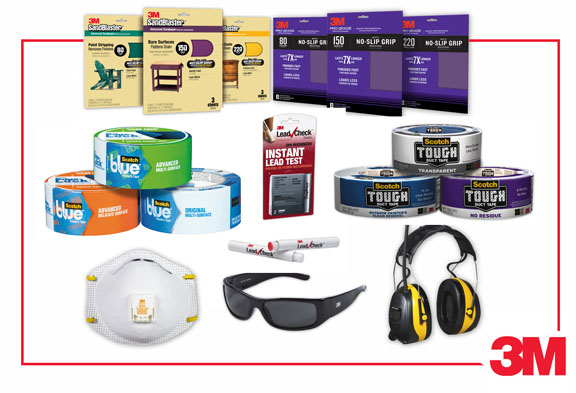
The 3M Product Giveaway goes to:

Lisa! Her translation was:
He says: Don’t watch, you’re making me nervous.
He means: I don’t have a clue as to what I am doing.
I hope you enjoy the 3M product packet as much as I did.

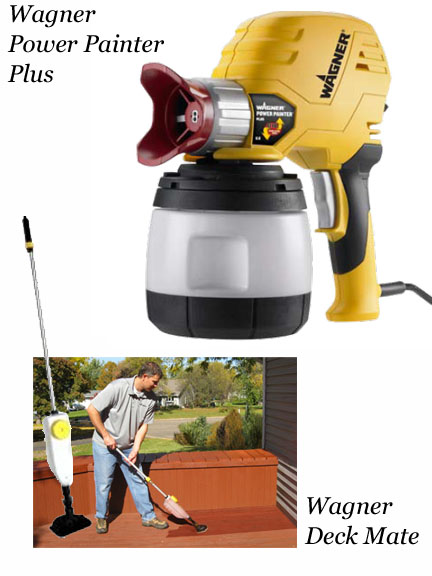
And the two winners of the Wagner PowerPlus Paint Sprayer and the DeckMate stainer are:

Rhonda Jones!
Her comment was: Brittany, this is the BEST tutorial I have ever read! You did an amazing job explaining how you did this project. I must say, I really liked how you used your phone to show the amount of time each step took. You have inspired me to get to work on several pieces of furniture that I have that needs to be painted! I am headed to prowl around your blog now! Your entire blog is amazing! I am your newest follower…I am a fairly new blogger. I hope you will come visit me sometime! ~~~rhonda~~~ \ABlissfulSpirit/

Monique!
Her comment was: I’ve always wondered about using a sprayer. Do you think there would be less overspray if something more substantial (with less openings) such as a chest or buffet was painted? I’m looking forward to reading about your next spray painting project. Thanks for the giveaway!
Congratulations to all the winners. Stay tuned this week I have another giveaway for you on Wednesday ;-).