DIY Modern Hoop Wreath for Spring with Florals

DIY Modern Hoop Wreath for Spring

DIY Modern Hoop Wreath for Spring

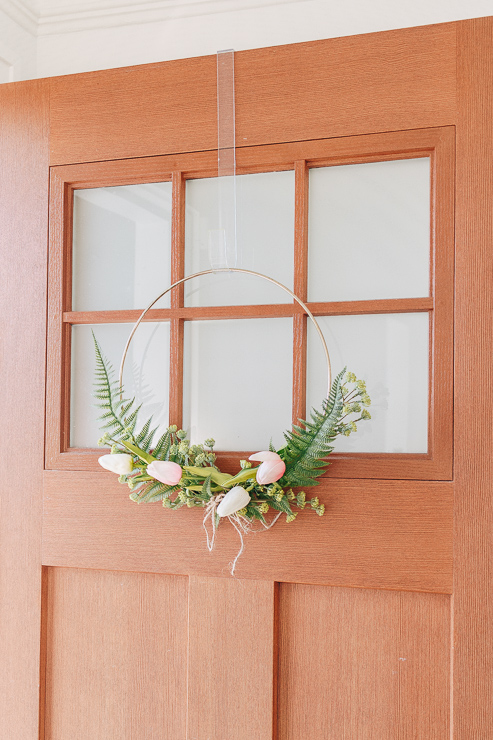
Hello! I’m so excited to be here to show you how to bring a little Spring into your home. I’m betting we all need a little Spring at this point in the year. After two back-to-back snowstorms and weeks of frigid temps here in Seattle — I’m so ready for it!  A great way to bring beautiful spring vibes into your home is with this DIY modern hoop wreath.

I love creating modern hoop wreaths because they are so fun to create and one of my favorite DIY projects ever!  Not only do they look beautiful – they are easy on your wallet since you don’t need much to assemble one.  Hoop wreaths can be made for any season or holiday, so let your imagination run wild with ideas!

DIY Modern Spring Floral Hoop Wreath

Today I’m going to show you how to make a floral version of a modern hoop wreath —perfect for Spring. Let’s get started!

Materials :

(I’ve included affiliate links for your convenience. I earn a small percentage from a purchase using these links. There is no additional cost to you. You can read more about affiliate links here.)

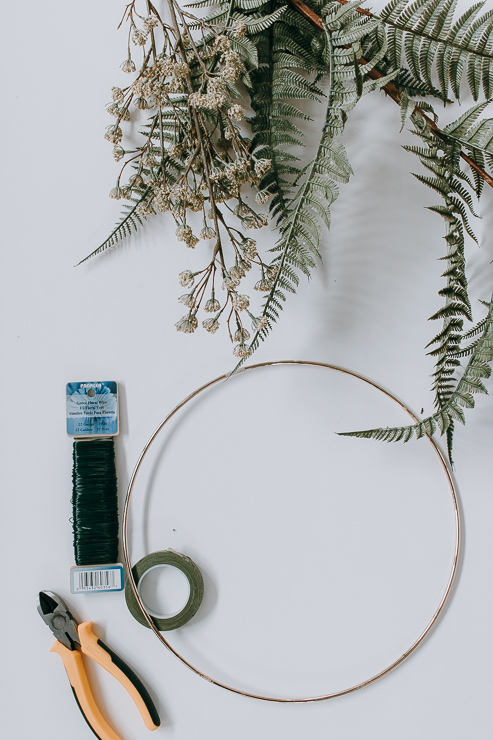
Materials Needed to Make a DIY Modern Hoop Wreath

How to Choose Your Faux Greens and Flowers:

Before we begin, here are a few tips for choosing greens and flowers for the wreath.  Hoop wreaths are particularly beautiful if either one main floral/greenery is used or when a collection of three different flowers are used together.

For this wreath, I used the rule of threes.

Assembling Hoop Wreaths:

First add greenery as a base on the hoop. Then add a secondary green or floral. Finally add your main florals on top for the true showstoppers. For example, this is the order we’ll assemble the Modern Spring Hoop Wreath:

  1. A base of greenery – ferns
  2. Secondary accent of greens or flowers:  Queen Anne’s Lace
  3. Main Florals – Pink and White Tulips

I find Michael’s and Afloral.com have the best selection and most realistic looking faux flowers and greenery.  However, Target is also stepping up their game lately.  These faux ferns and Queen Anne’s Lace were from Target’s Hearth and Hand collection and are very pretty and semi-realistic looking. (I tend to be super picky about my faux flowers!)

Instructions :

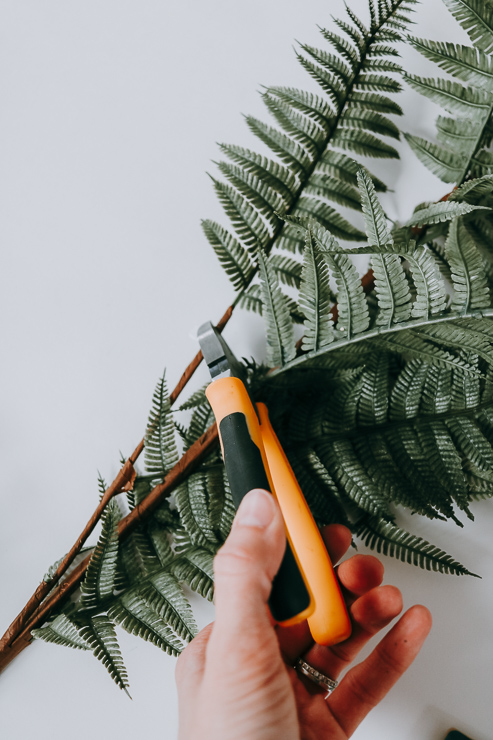
Step 1:  Cut the leaves and flowers from your faux plants (if needed).

Snip off individual greens and leaves before attaching to your wreath

Snip off a few pieces of fern while leaving a little stem to attach to your hoop.  It’s usually easier to snip off the individual leaves which will give you the most flexibility when designing your wreath.

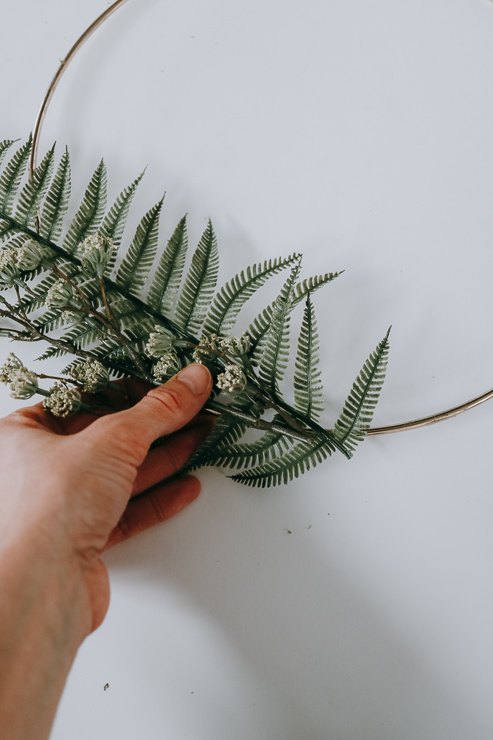
Step 2:  Arrange your greens on the hoop until you like the layout.  

Arrange your Greenery and Florals on your Hoop Prior to Attaching

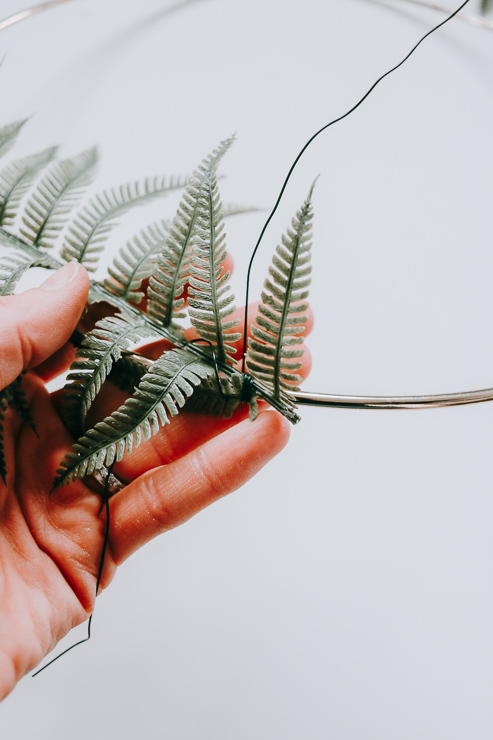
Step 3:  Snip off a piece of wire and use floral wire to attach your fern/greenery to the hoop.

Snip off a piece of Floral Wire and Use this to Wrap your greenery around Hoop

Bend and train the greenery as you wrap it with wire. Luckily the wire is thin and can be easily hidden with the greens and/or flowers.  But, you will need to wrap it fairly tight to keep the greenery from moving when the wreath is hung up.

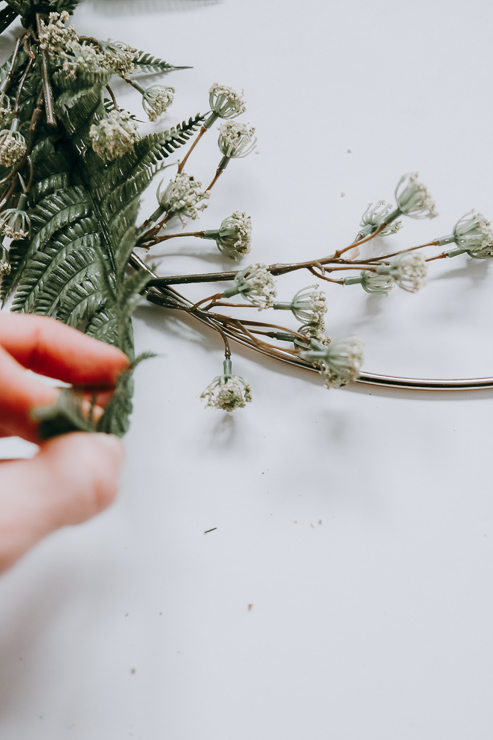
Step 4:  Repeat Steps 2-3 again, using the secondary flowers or greenery. 

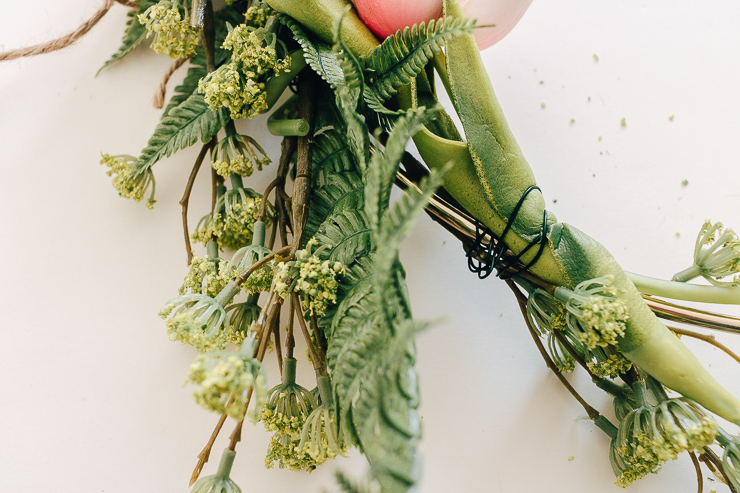
Use greenery to help hide the floral wire on your hoop wreath

Tuck the Queen Anne’s lace around and on top of the ferns. It’s really coming together now!

Step 5:  Add the main florals – these beautiful spring tulips!

Faux Tulips add a nice touch to your hoop wreath

Use your floral wire to attach the stems to the hoop wreath, and then use the greenery you attached earlier to hide the wires.  It works perfectly every time. You may have to play with it a bit until the wires are hidden, but no one will notice once you do.

Attach your greenery and accent florals using green floral wire.

Step 6:  Tie a little bow of jute twine around the center for a sweet rustic finishing touch. 

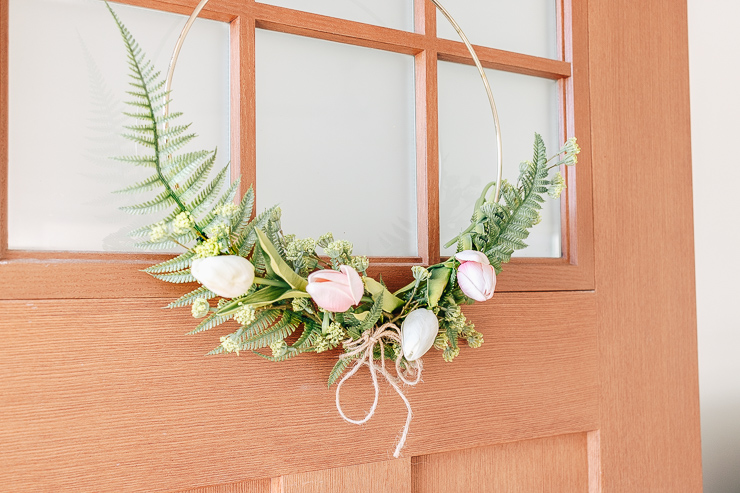
DIY Modern Spring Floral Hoop Wreath

The jute bow helped hide more of the floral wire and gives the wreath some extra holding power.

That’s all there is to it!

Tips for Hanging and Displaying your New Wreath :

DIY Modern Hoop Wreath for Spring with Florals!

Modern hoop wreaths can be hung with the flowers on the side or at the bottom.  You can use a wreath hanger or a Command light clip. The light clips hold these hoops perfectly and are clear, so you can’t see them. You can also use a suction cup hook or a magnetic hook if you have a metal door. Or tie a pretty ribbon to these wreaths and hang them from the ribbon. I purchased a clear wreath hanger from Amazon that hooks over the door.  These wreaths look beautiful not only on your front door but also on your interior walls, closet doors, hutches, over mirrors etc.

Feel free to get creative with placement and add some spring to all parts of your home!

When you are ready for a change, simply snip off the wire and reuse your greenery and florals for another project.  These modern hook wreaths end up being a very cost effective decor project.

DIY Modern Hoop Wreath for Spring with Florals

I hope you all enjoyed this tutorial.  I’m looking forward to connecting with you again next month!

In the meantime, check out these beautiful spring decor projects on Pretty Handy Girl.

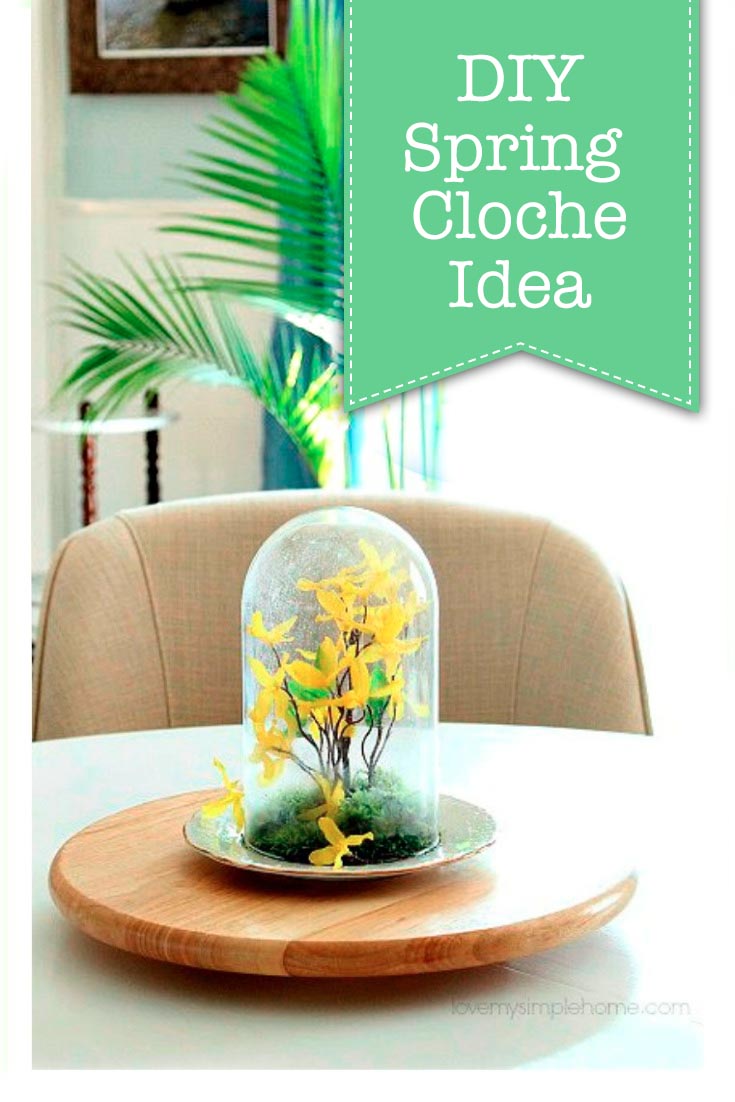
How to Make Spring Cloche Centerpiecekaren signature

~ See More of Karen’s Tutorials ~


karen from decor hintHello!  I’m Karen, the creator of the Home Decor and DIY Blog: Decor Hint . I’m a Native of the East Coast, but I currently live in beautiful Seattle with my hubby, our two wonderful children and our spunky wheaten terrier.

You can usually find me with some sort of craft in one hand and a coffee in the other. And I’m always rearranging furniture or moving lamps from room to room. I have a passion (read: obsession) for decorating, DIY, and gardening. In short, I love making my house into a home.

Like many, I’m inspired by what I see in home decor magazines, but I’m not so inspired by the price tags.  Consequently, I love finding and creating beautiful budget-friendly home decor items. In a head to head competition, I bet you’d never know the difference between the designer items and my DIY creations!  Many of my DIY projects focus on sewing, crafting, upcycling and organizing. Some of my favorite projects have been making pretty wreaths , sewing my own tassel hand towels, and crafting these trendy wood bead garlands . I can’t wait to inspire you and spark your creativity through my DIY projects.

You can always connect with me on Pinterest , Twitter or Instagram.

attach keypad

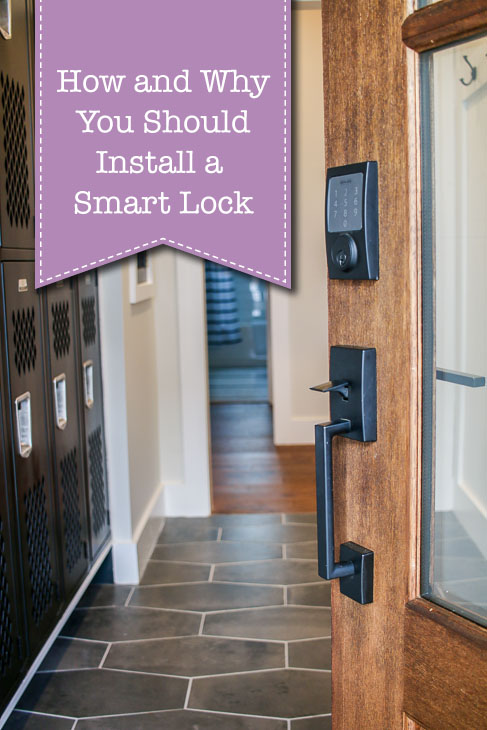
How and Why You Should Install a Smart Lock on Your DoorHow and Why You Should Install a Smart Lock on Your Door
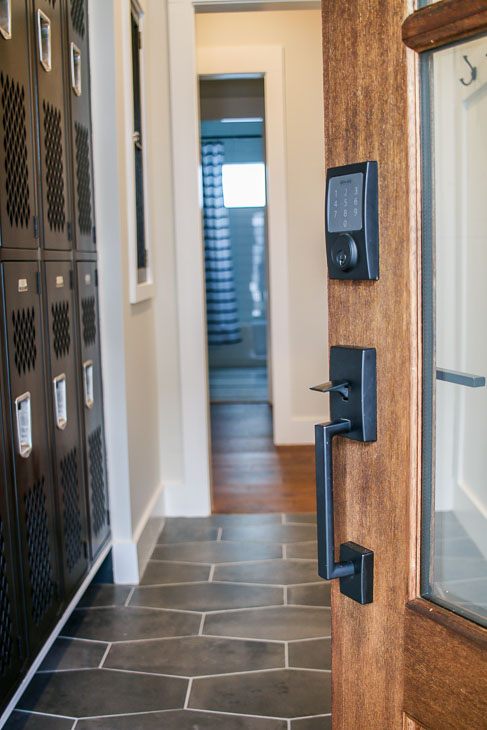
Smart locks have been around for a while, but I’ve been slow to jump on the bandwagon and install a smart lock. I worried they might be tricky to install and had heard stories of the technology being glitchy (although I can’t find a lot of concrete evidence beyond this firmware update glitch that left 500 LockState locks completely useless.) However, after installing a Schlage smart lock on the Saving Etta house, I am a converted technophobe.

If you’ve never installed or used a smart lock before I have some considerations for you when deciding How and Why You Should Install a Smart Lock on Your Door.

Why are Smart Locks are a Good Investment?

If you’ve ever had the unfortunately situation of locking yourself out of your home, with a smart lock this is a thing of the past! You only need to remember your code! Do you hire contractors or cleaning people to work at your house? Now you don’t have to take off work or give them a key if you aren’t home. Set up a temporary code for each person and remove the code when they are done. The same can be done for guests or for an AirBnB property.

Do you have kids old enough to let themselves in after school? Why not give them a code so you don’t have to worry about them losing a key and you can keep track of when they got home.

Finally, if you’ve ever had that nagging feeling that you left the door unlocked, you can rest easy by simply checking or locking the door remotely from your smart phone.

What if I told you a smart lock can also help lower your homeowner’s insurance and could be a selling feature when you sell your home? Is there really any reason  you wouldn’t want a smart lock? There may be, so read on.

Some Things to Consider Before Buying a Smart Lock:

  • Do the centers of your deadbolt and door knob holes have at least 5 ½” between them? (If not the interior circuit and alarm unit may not fit.)
  • Does your deadbolt hole equal 2 1/8″ in diameter?
  • Does the deadbolt and door knob hole backsets equal 2 3/8″ or 2 3/4″ from the edge of the door to the center of the holes?
  • Is your door thickness 1 3/8 – 1 3/4″ wide?
  • Is the latch bore hole in the door frame at least 1/2″ – 7/8″ deep?

If you couldn’t answer yes to all of these questions, a smart lock may not be right for your current door.

If you have a door that requires you to push hard, pull up, or hip check it, you will need to make adjustments to your door before installation. Why? A smart lock is activated by an electronic mechanism. The deadbolt needs to move freely into the frame to work properly.

Do you have a smart phone? If you don’t, you can still use a smart lock, but understand that you can’t take advantage of all the remote features.

Most smart lock run on batteries, but many needs Wifi or Bluetooth to handle features performed on your phone remotely. Obviously these functions may not be available if the power is out in your home. For this reason, it’s always good to carry a back up key on your keychain.

Some experts say smart locks can be hacked, but most standard locks can be picked or opened with brute force. Both have their limitations. I’d recommend doing further research if you are concerned about smart lock security.

Finally, there is the cost to consider. Smart locks aren’t cheap, but as I mentioned above, they can save you money on insurance or give you more money in your pocket when it’s time to sell.

How Hard is it to Install a Smart Lock?

Installing a smart lock to your entry door may seem like a hassle, but it’s actually a fairly simple installation anyone can accomplish.

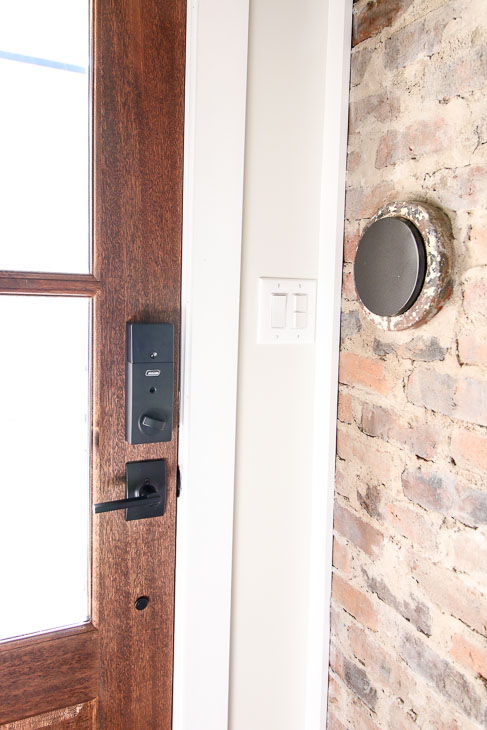
farmhouse door

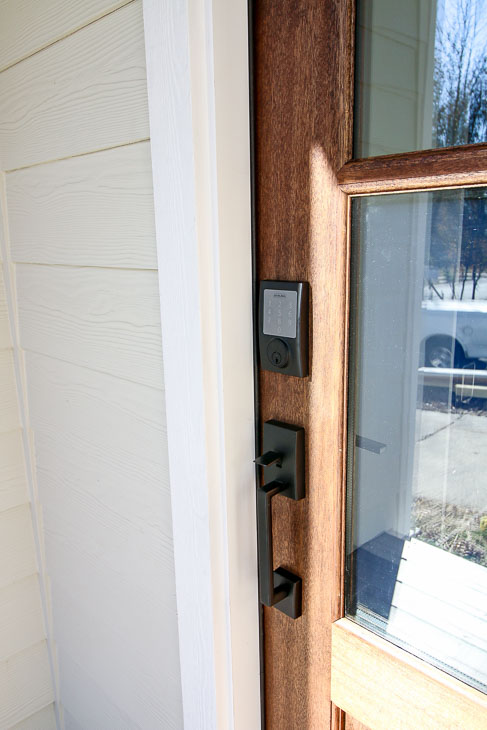
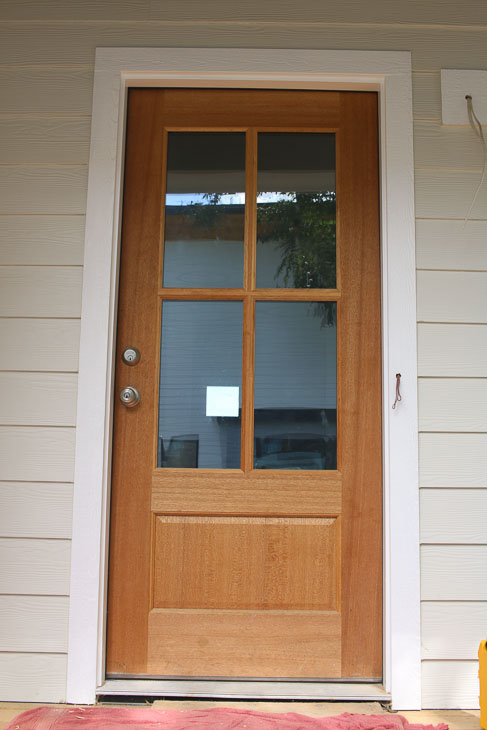
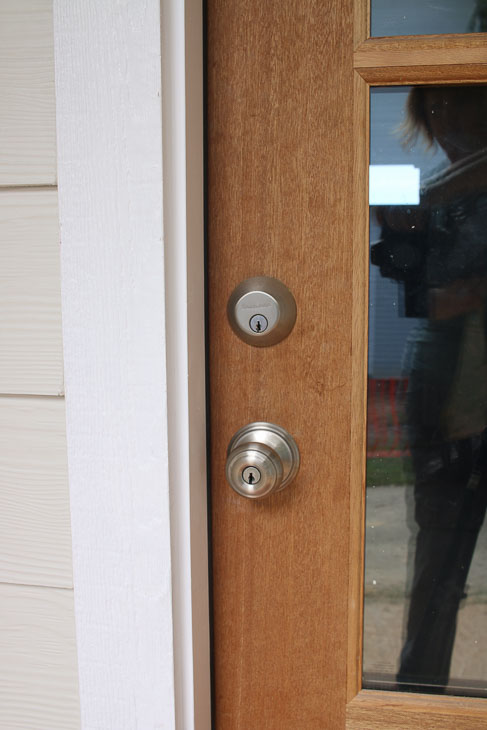
For some reason I thought the install would be more difficult, which is why I installed the ho-hum satin nickel knob and deadbolt on the Saving Etta house door. Sadly, it stayed on the door for months. As the completion date neared, I thought I’d need to clear an hour or so to install the Schlage Smart Sense lock. Boy was I mistaken, it took less than 30 minutes!

old satin nickel door hardware

Let’s give your home a smart upgrade by installing a smart lock today. Here’s how to install the Schlage Smart Sense Deadbolt in thirty minutes or less.

(I’ve included affiliate links for your convenience. I earn a small percentage from a purchase using these links. There is no additional cost to you. You can read more about affiliate links here.)

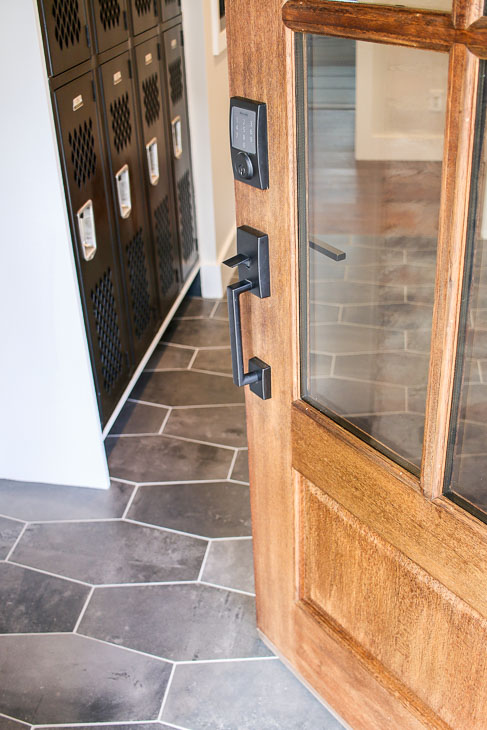
beautiful interior view of Schlage Smart Sense lock

How to Install a Schlage Smart Sense Deadbolt:

Remove the Smart Sense Deadbolt from the box and make sure you have the booklet included. This booklet has the programming codes and must be kept in a safe place. DO NOT THROW IT AWAY!

Materials:

Instructions:

First check to make sure your deadbolt engages freely into the door frame and deadbolt strike plate.

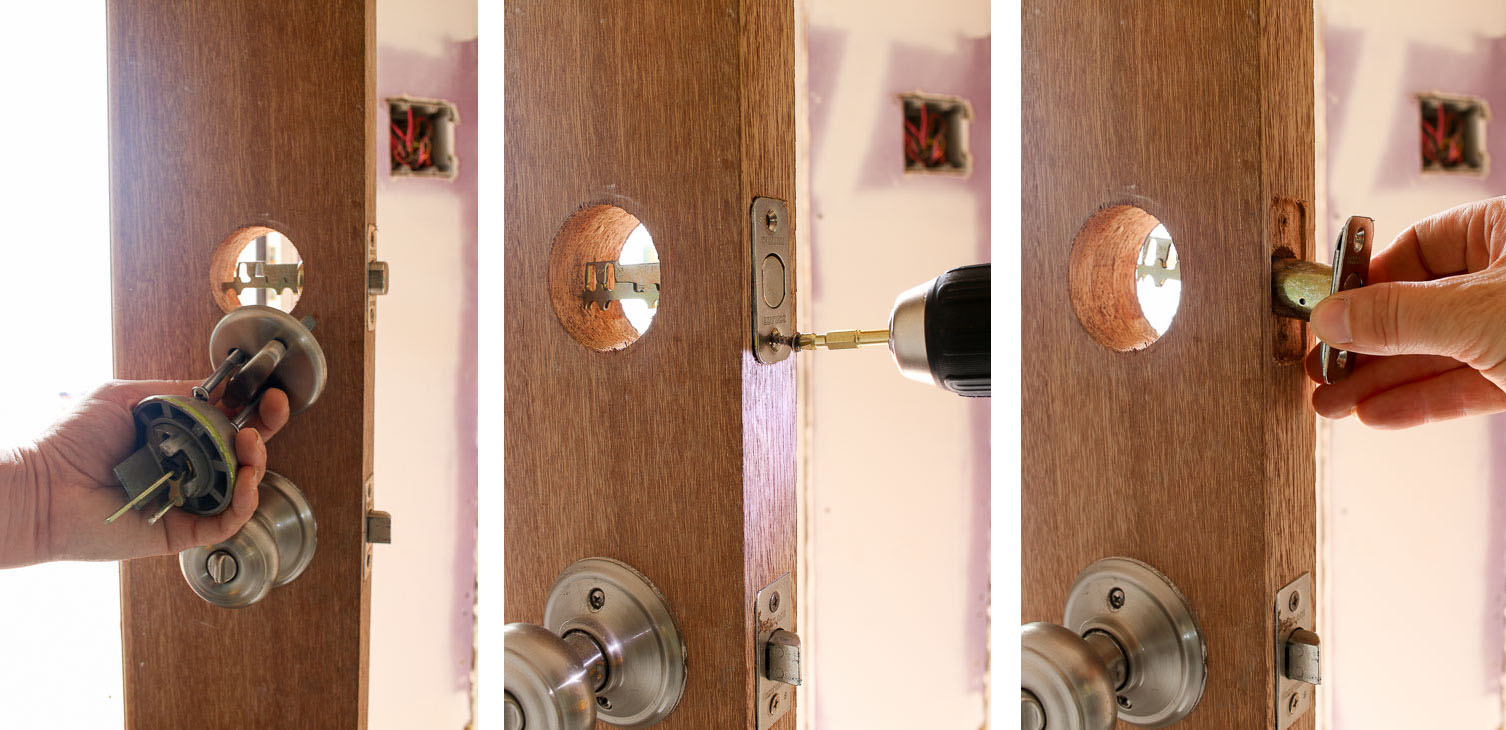
Remove the existing hardware.

remove existing hardware

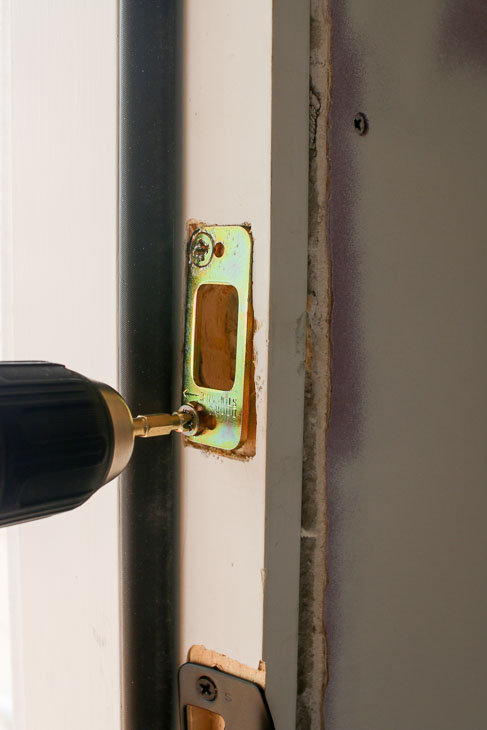
Also remove the existing strike plate from the door frame. Then install the reinforcement plate into the door frame using the longer reinforcement screws. (Pay attention to the wording on the reinforcement plate telling you which way to orient the plate.)

attach reinforcing plate

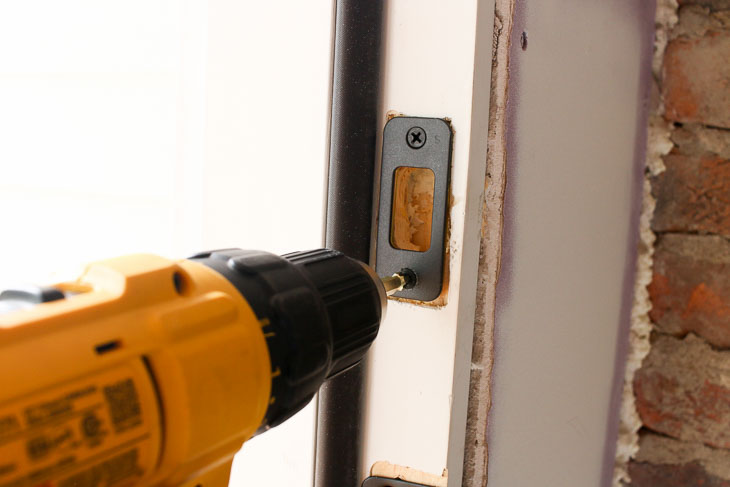
Install the new strike plate on top of the reinforcement plate.

attach strike plate

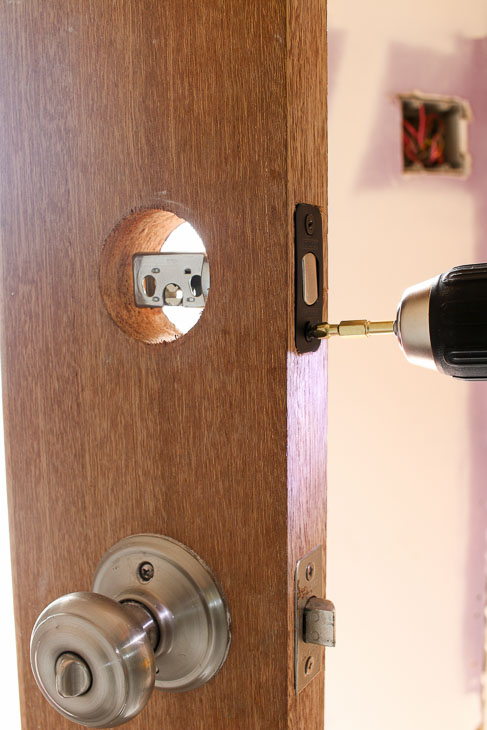
Insert the new bolt into the door (if you have a circular faceplate in the door, you’ll have to swap the rectangular plate with the round one in your kit and use the hammer and block to tap the bolt in.) Secure the bolt to the door.

attach bolt

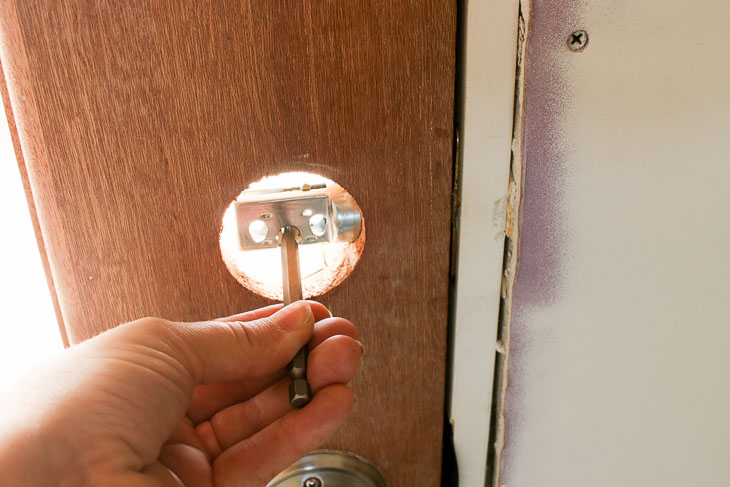
Close the door and use the flat head screwdriver to test the locking mechanism. Does the deadbolt seat properly in the door? If yes, move on. If not, make any adjustments to your door now.

My door needed some adjusting (a shim behind one of the hinges to square up the door) before the deadbolt could open and close freely. 

test dead bolt

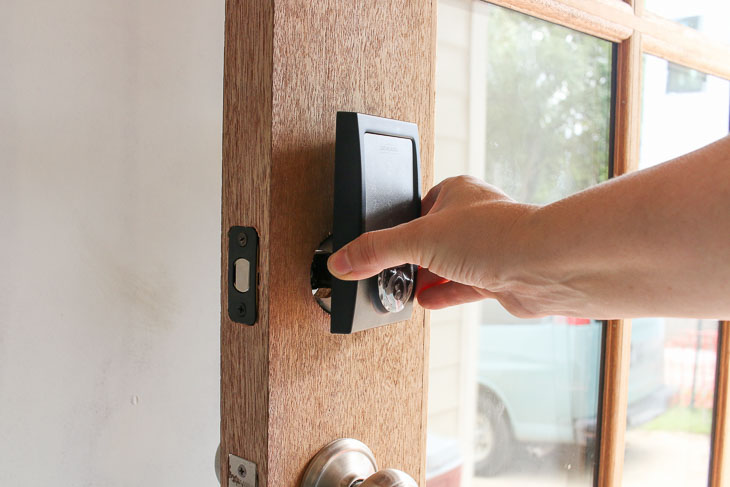
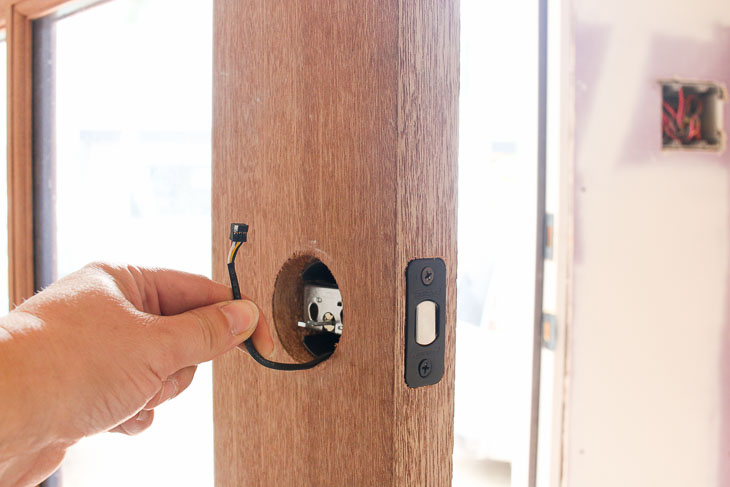
Now that the bolt seats properly, add the keypad to the outside of your door (be sure to feed the cable through the door and under the bolt as you seat the keypad.)

attach keypad

The cable should be positioned under bolt and exit on the interior side the door.

signature

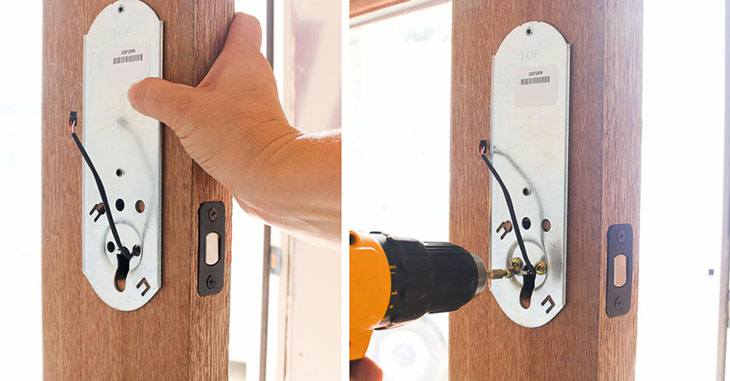
Add the support mount to the interior of the door using the mounting screws provided. The support mount is stamped with the words TOP and AGAINST DOOR. Be sure to orient the support accordingly. Make sure the support mount and keypad are straight and plumb before tightening the screws.

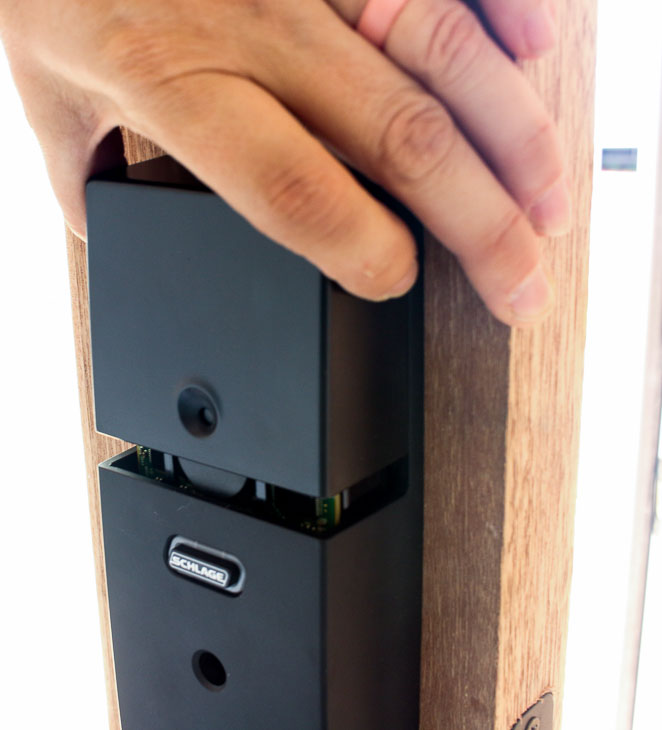
Remove the top cover on the alarm unit.

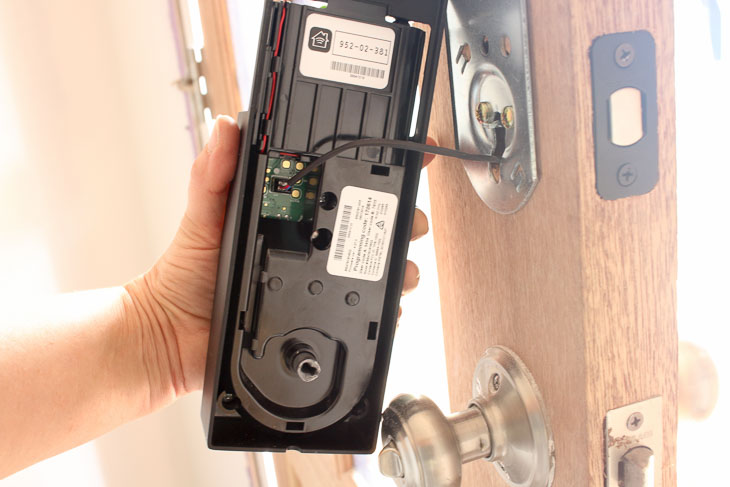
Attach the cable to the back of the interior alarm unit.

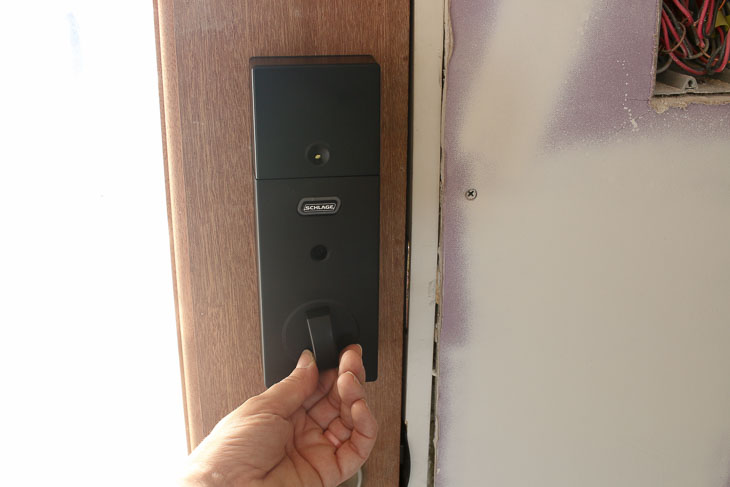
Carefully attach the alarm unit to the support plate. You may have to turn the knob to line up the slot in the back of the alarm unit with the tab in the bolt.

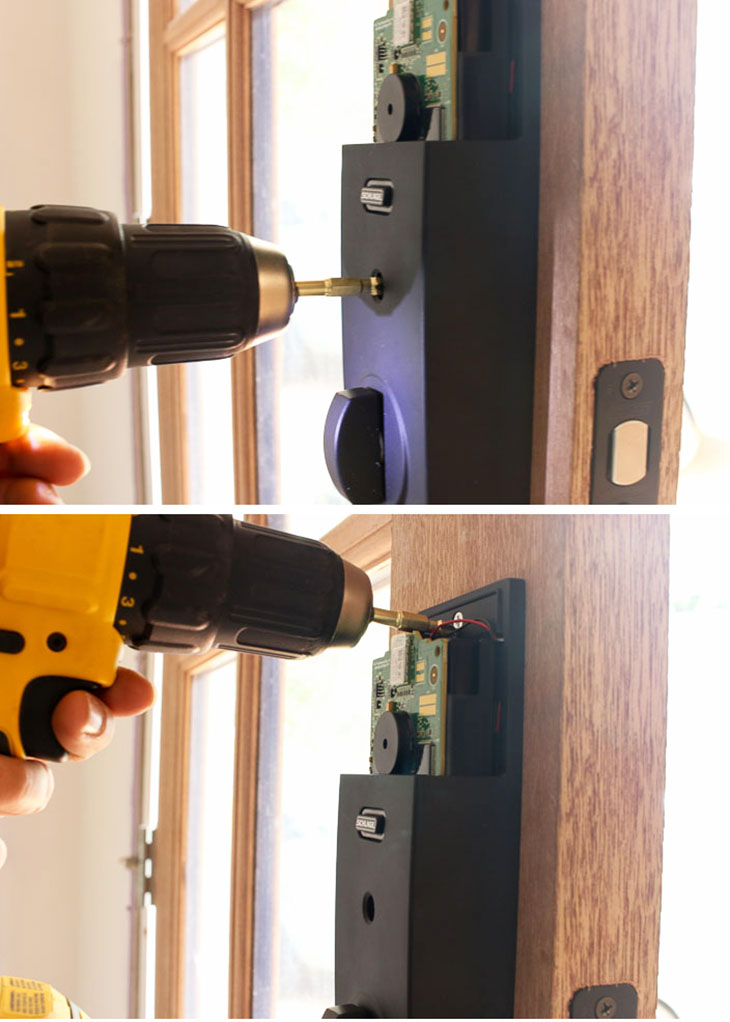
Secure to the mounting plate with a screw in the middle of the until and a second screw above the circuit board. (Please note: Schlage recommends using a hand held screwdriver instead of a drill. I’m a rebel, what can I say?)

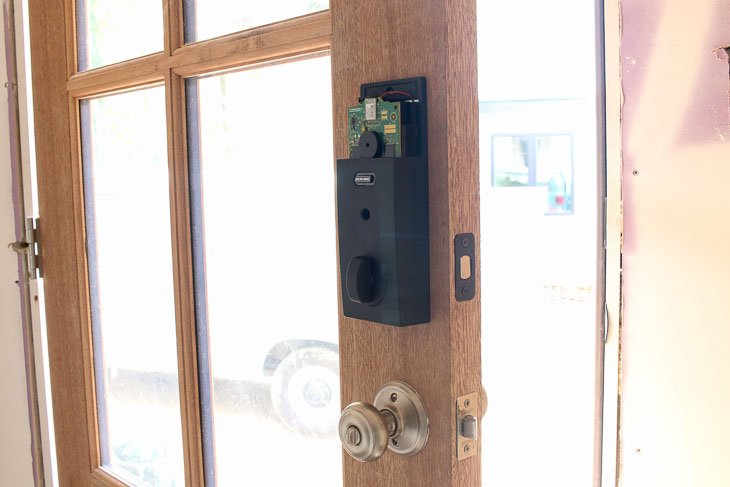
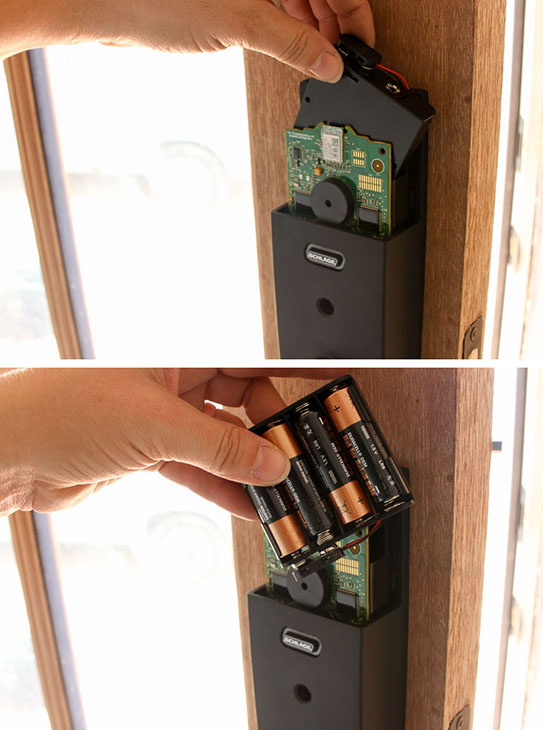
Remove the battery tray inside the alarm and insert four AA batteries.

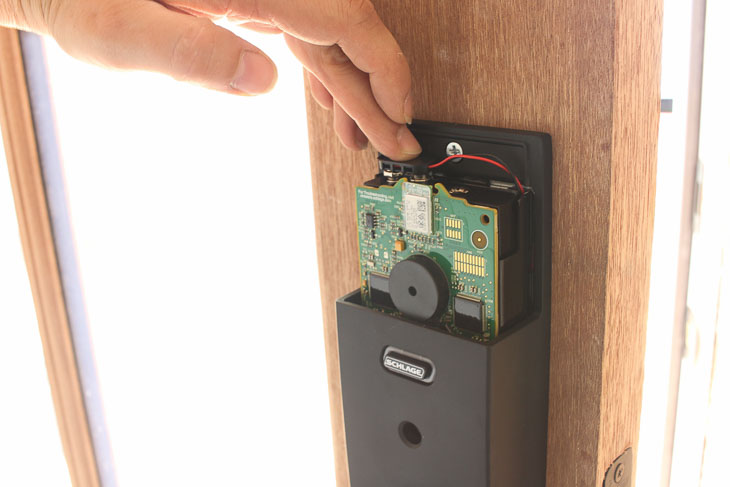
Replace the battery tray with the batteries facing the door. Re-attach the battery connector.

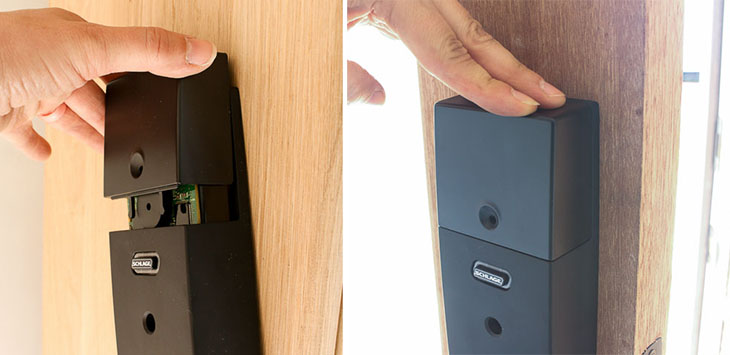
Make sure not to turn the deadbolt knob until you set up the keypad. Replace the cover.

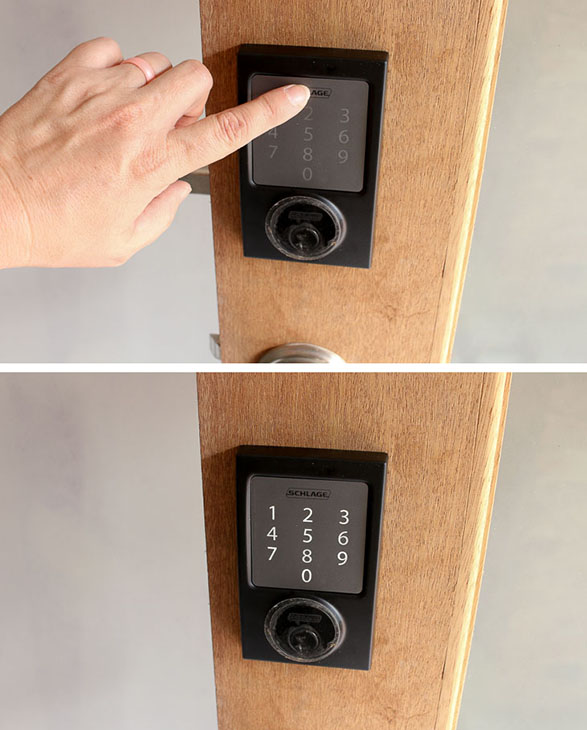
Now it’s time to test your keypad. Grab the brochure and locate the default codes on the sticker. Press the Schlage logo. The keypad should light up.

Enter the default code and the deadbolt should go through a set up routine. Let it finish, then close the door from inside the house and test the lock using the thumb turn. The bolt should still be able to open and close freely. (If not, make any adjustments to your lock or door as necessary.)

Now you can test the keypad entry. Take a key with you as you step outside. Close the door and press the Schlage logo. The door should lock.

Press the Schlage logo again (the door should stay locked.) Now enter one of the default codes and the green check mark should illuminate and unlock the door.

Your new Schlage Smart Sense deadbolt lock is now set up.

To manage your new smart lock, download the Schlage Smart Sense app on your smart phone and follow the instructions. You can also set up new codes, or lock and unlock it remotely.

Schlage has an installation video if you have any questions about this installation. Watch it below:

The Schlage Smart Sense Deadbolt was fantastic to have on the Saving Etta house. I was able to program temporary codes for the subcontractors and deactivate them after they finished their work.

I will definitely be looking into adding one of the Schlage Smart Sense Deadbolts  to my own home. Especially because my boys are always misplacing their keys. 😉

Disclosure: As a sponsor of the Saving Etta project, Schlage sent me the Smart Sense Lock for the house. I was not told what to write, all opinions are my own. 

Pin this image to help others learn more about smart locks!


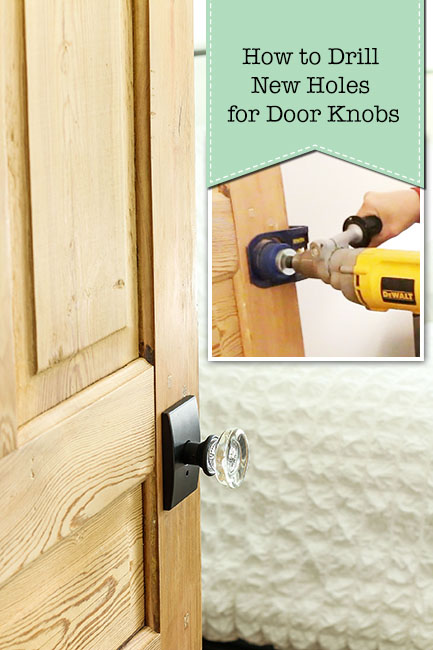
Want to learn how to drill new door knobs holes?

How to Drill New Holes for Door Knobs
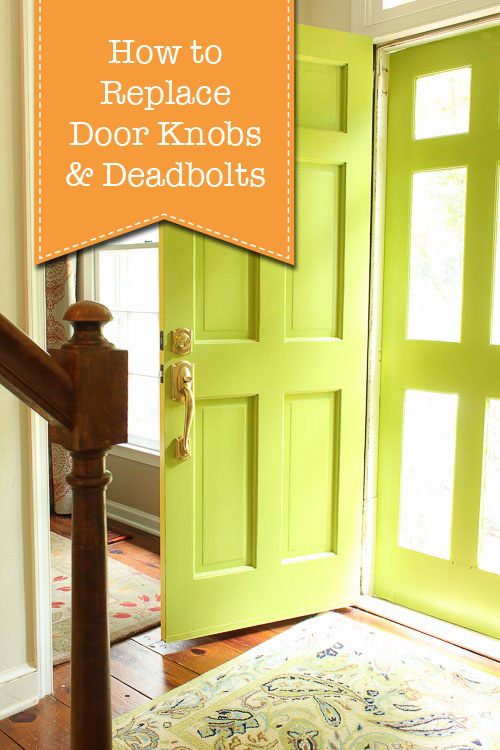
Or maybe you want to learn how to replace the other door knobs in your home:

How to Replace Door Knobs and Deadbolts | Pretty Handy Girl
How to Drill New Holes for Door KnobsHow to Drill New Holes for Door Knobs
Every once in a while, you might find yourself with a new (or old) door that needs a hole drilled into it for a door knob (or a deadbolt). Today I have the perfect tutorial to ease your mind and help you learn how to drill a new hole for door knobs in your door.
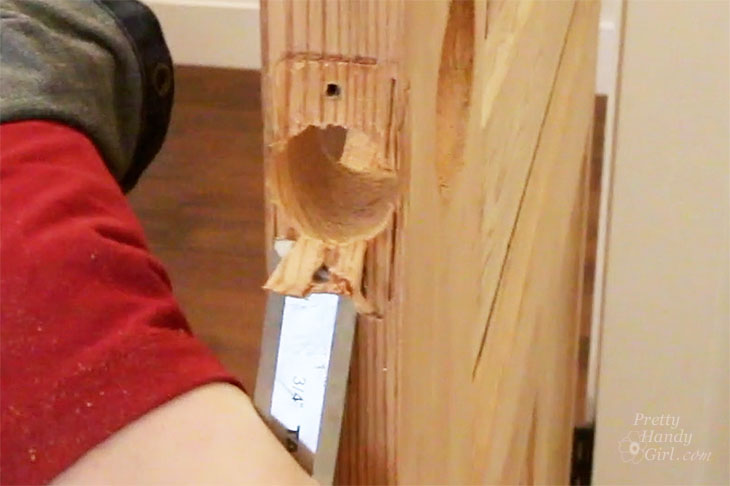
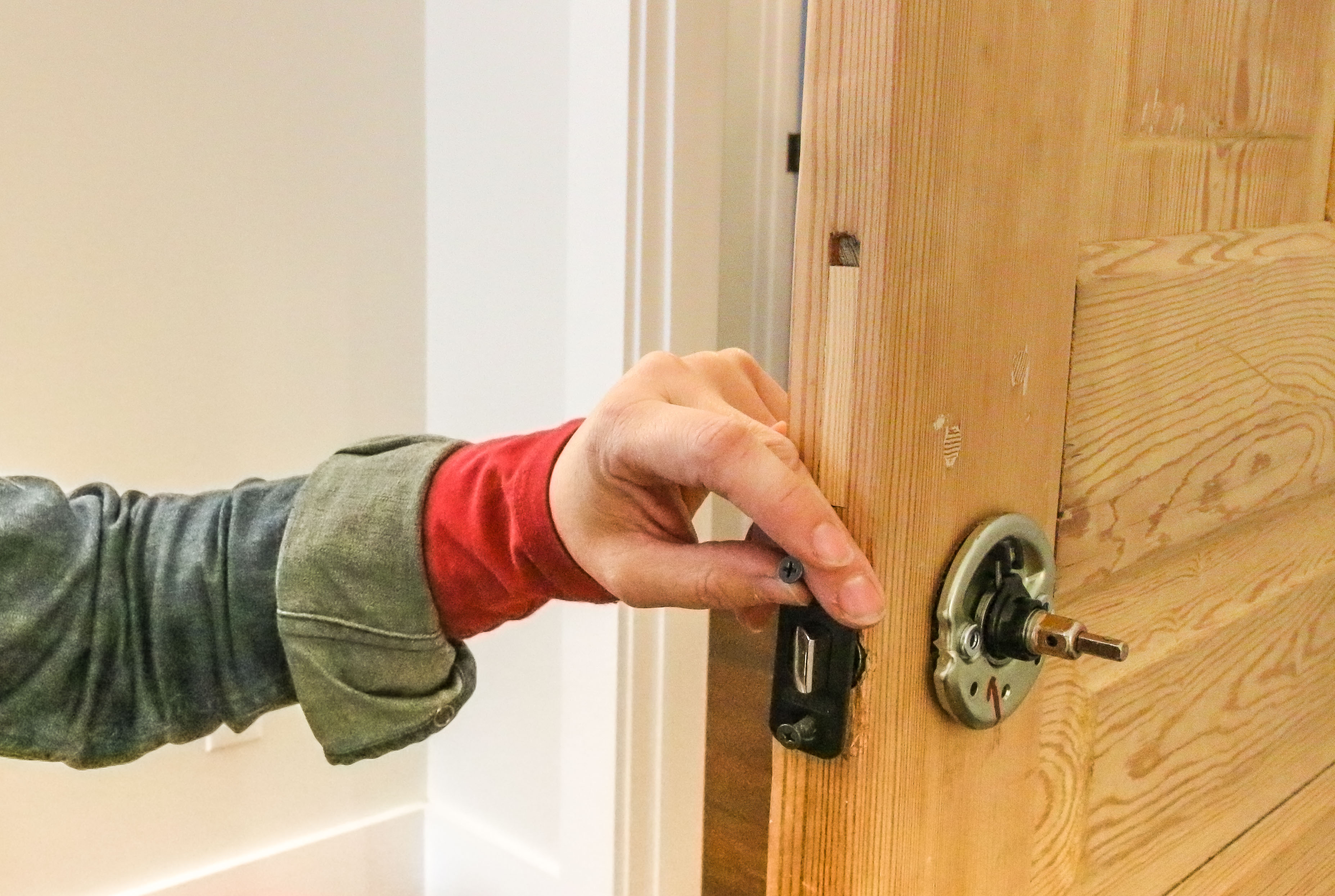
While working on restoring the original 1900 portion of the Saving Etta house, I removed the original bedroom doors and took them to a local workshop to have the lead paint stripped off the doors. It was a pricey decision, especially because I didn’t know what the doors would look like when they were stripped. But, as you can probably tell from the photos, they came back more beautiful than I could have imagined! In fact they were so pretty, I didn’t stain them. They just got a clear sealant to protect them. The restoration company had to do some “surgery” on one of the doors, basically adding a new stile. When I received the door it didn’t have a door knob hole. But, I knew I could drill a new hole (if I could stop drooling over the beauty of the wood grain).

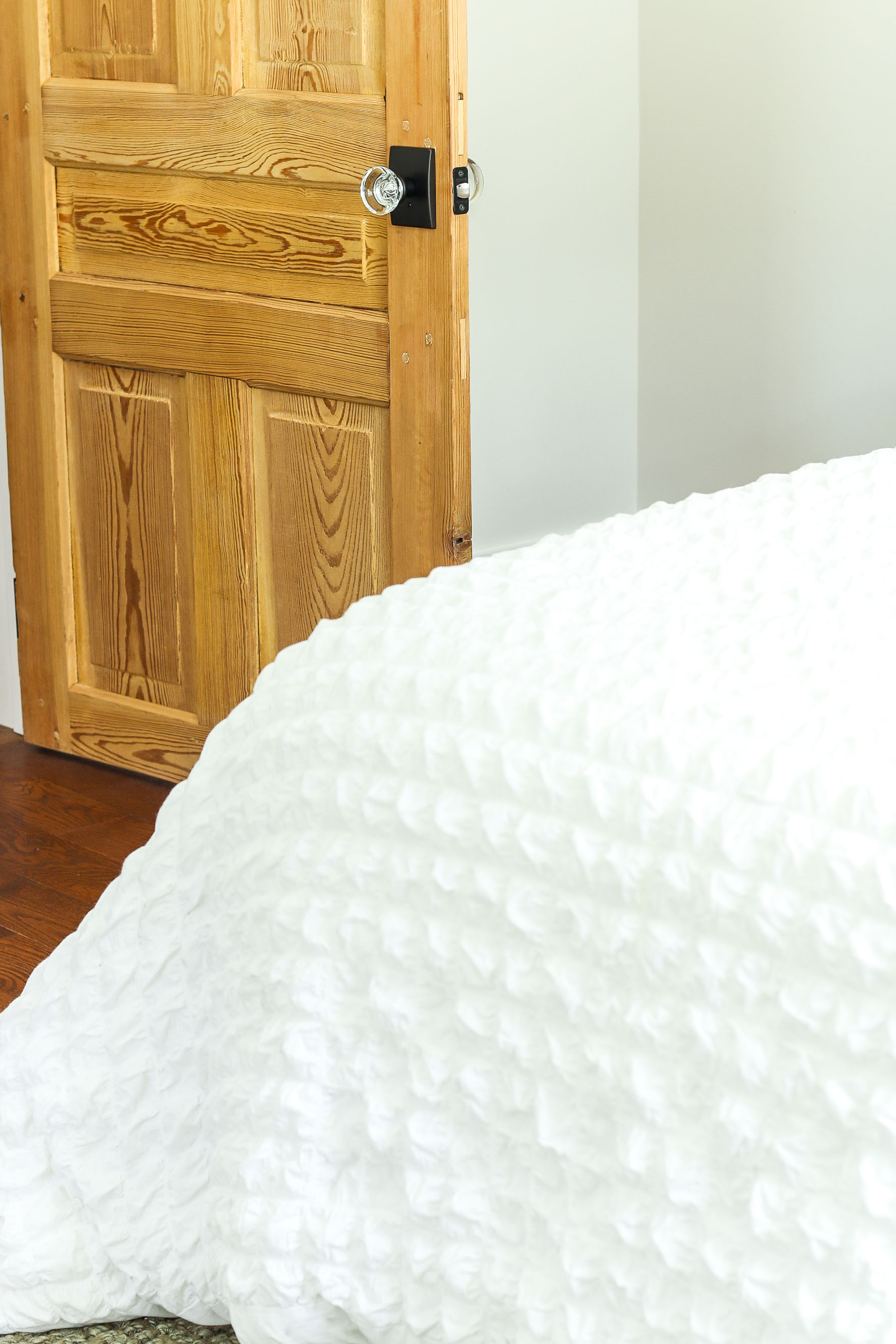
bedroom with 1900 wood door and glass door knob in the background

Doors this gorgeous needed exceptional door hardware. For that reason, I reached out to Schlage and asked them to be a Saving Etta sponsor. Luckily, they responded that they would be thrilled to send me door knobs and hinges for the whole house.

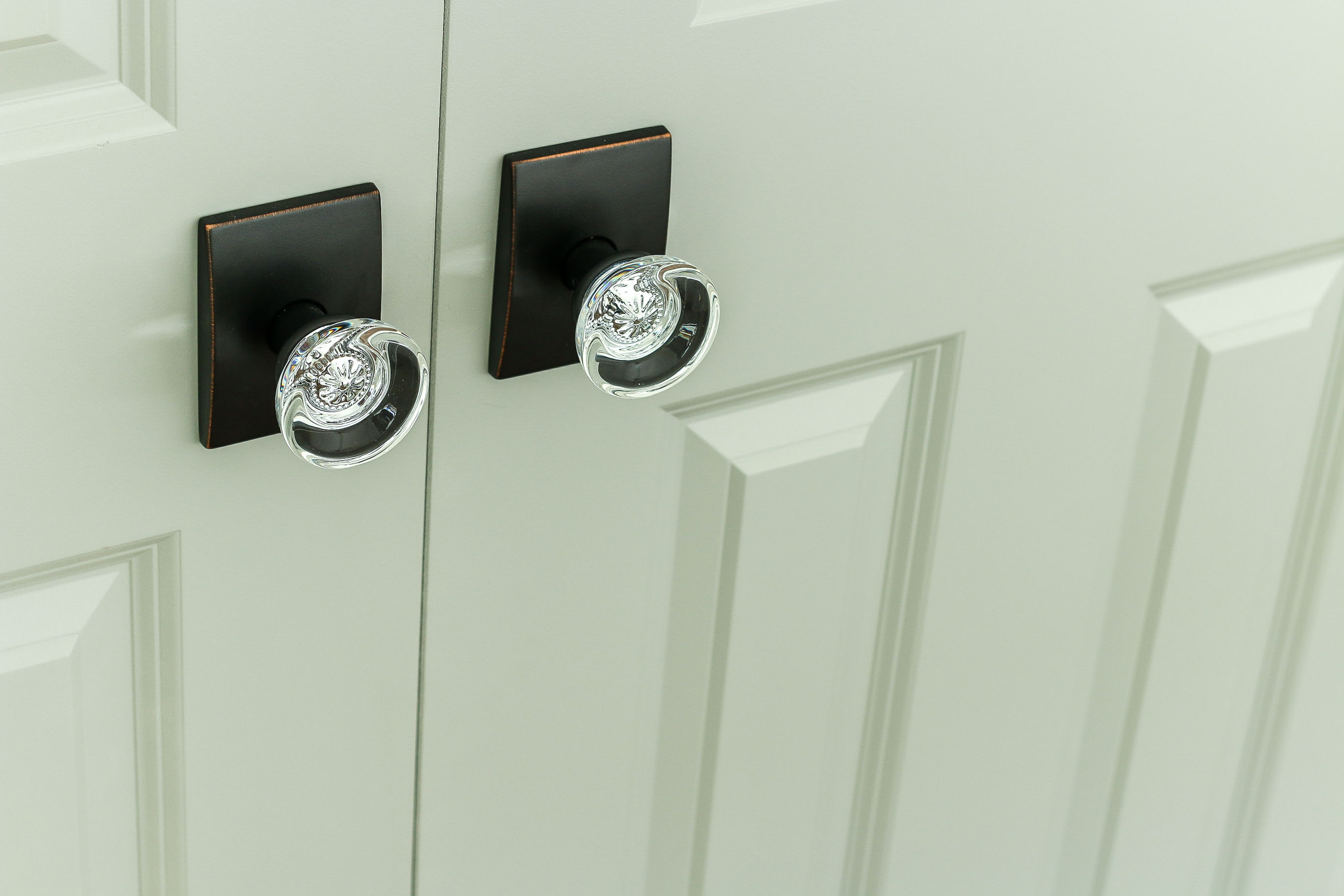
Two Schlage Hobson Door Knobs

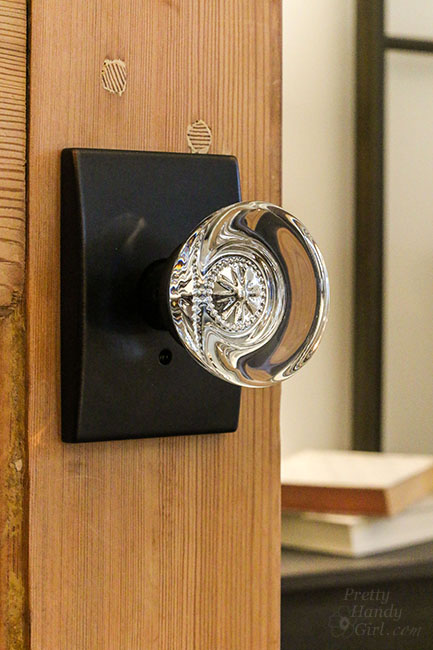
While perusing the Schlage door knob selection, I was halted by these classic Schlage Hobson round glass knobs. The beauty in these knobs was unique and captivating. For an old look, I decided to pair them with the oil-rubbed bronze Century backplate trim.

with intricate details in the glass knob

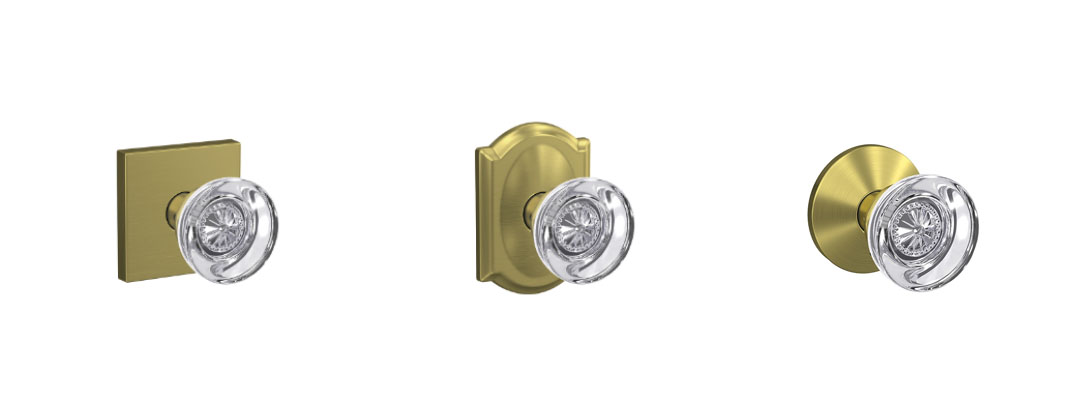
The coolest thing about these knobs (besides the intricate detail inside the glass), is you can purchase a variety of backplates to compliment your style:Schlage Hobson Knobs with other Backplate trims

I loved the look of the round and square backplates, but felt the rectangle was more fitting for a historic house.

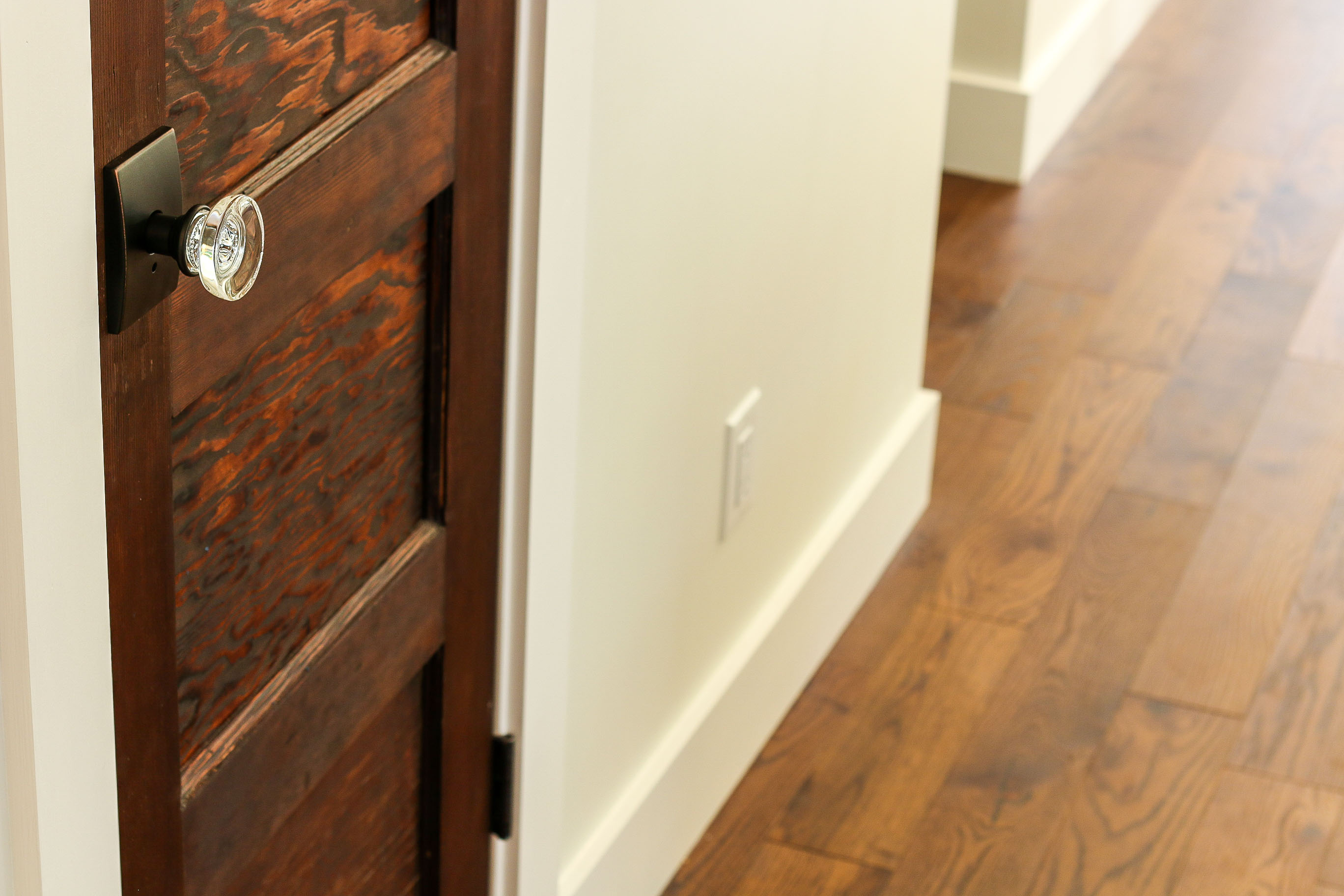
Reclaimed wood door with round glass door knob

Ready to learn how to drill new door knob holes in your door? Luckily, I’ve drilled holes for knobs in many a door and each time I’m amazed at how simple it is to accomplish with a good door knob jig. Ready to learn how to drill a new door knob hole? Watch this video or read the step-by-step tutorial below!


Tools:

(I’ve included affiliate links for your convenience. I earn a small percentage from a purchase using these links. There is no additional cost to you. You can read more about affiliate links here.)

Instructions:

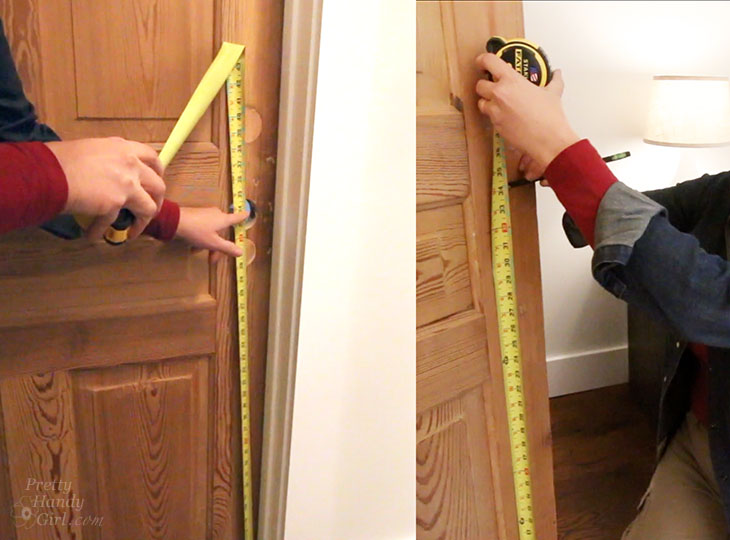
Measure the height of the door knobs on other doors in your house. Transfer this measurement onto your slab door.

Measure and mark door knob heights

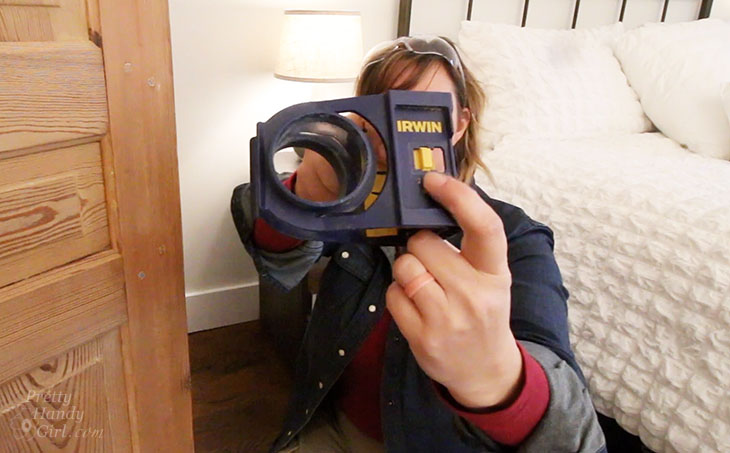
Be sure to select the backset for your door knobs on the jig before you begin.

Selecting setback on Irwin Door Knob Hole Jig

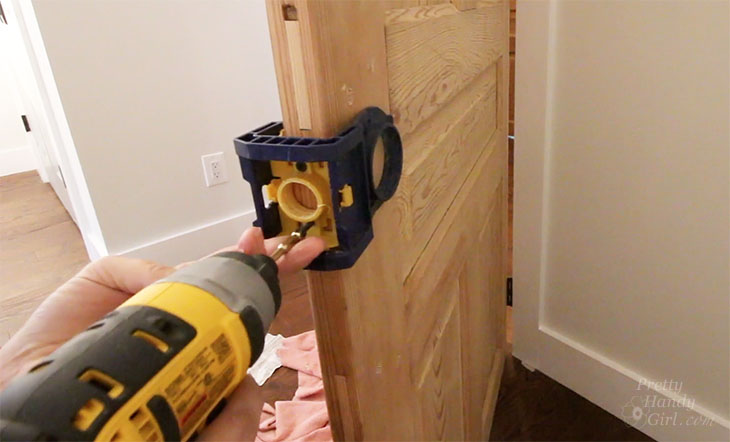
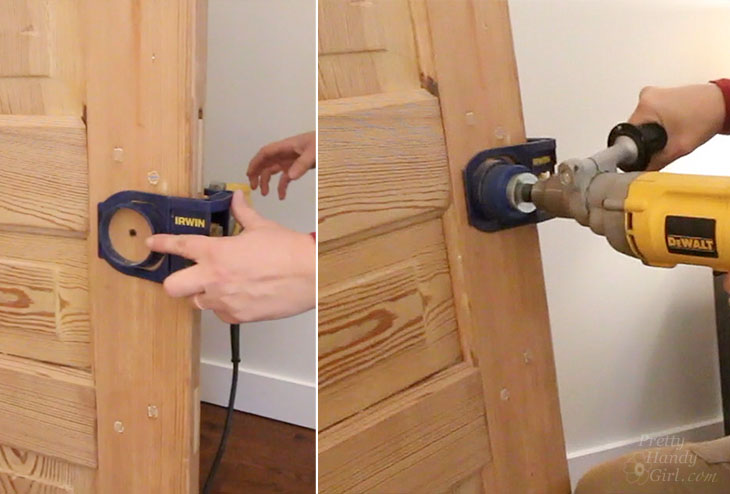
Locate the latch face plate screws with your door knob. Use these screws to secure the door knob hole jig to your door.

Removing Door Knob Hole Jig

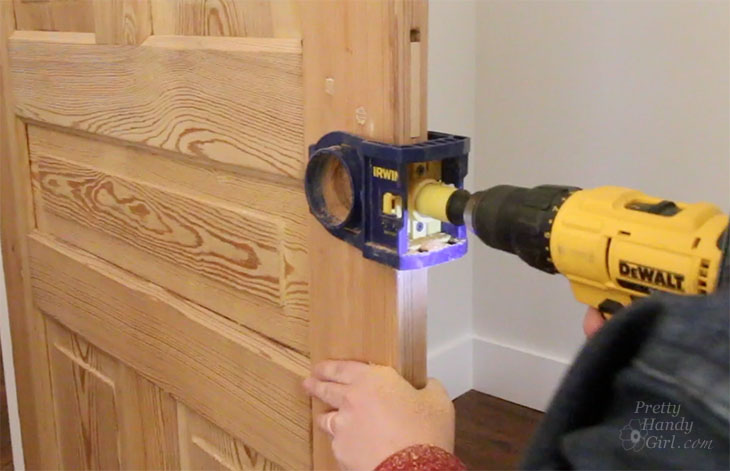
Grab your drill and insert the 2 ⅛” hole saw into the drill. Apply firm pressure as you drill the hole into the door making sure the hole saw is flat and not angled as it goes through the door.

Once the center bit protrudes through the door, stop and switch sides. Continued drilling through the opposite side until you complete the door knob hole in the door.

Small center bit hole drilled through door, switch sides to drill door knob hole

Now find the 1” hole saw and insert it into your drill. Drill through the edge of your door to create the hole for the latch. Use the same firm pressure and make sure the drill is perfectly perpendicular to the door edge.

Drilling 1" hole for latch

Sweep out any sawdust in your door knob holes. Remove your face plate screws from the jig and set them down nearby. Remove the jig.

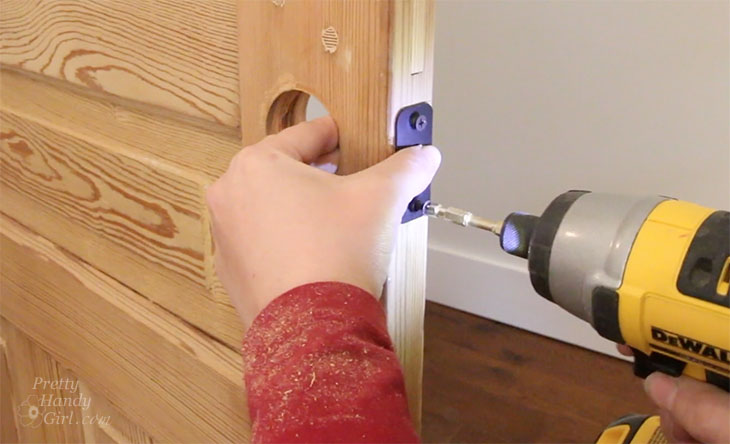
Attach the face plate to the door using the same screws you used on the jig.

Attach face plate onto door edge

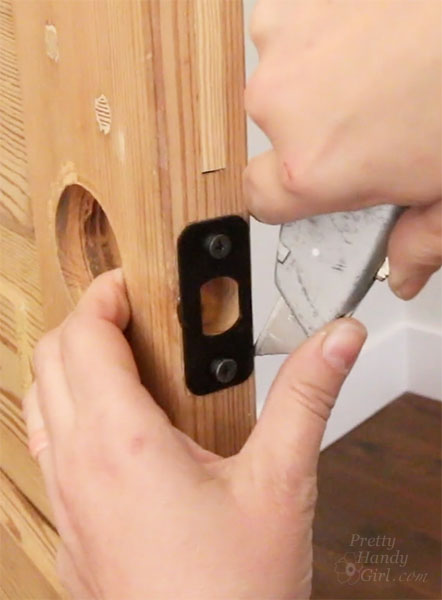
Using your utility knife, carefully score a line around the face plate.

using utility knife to score around latch plate

Remove the face plate. Use your chisel and a hammer to remove some of the wood material inside the marks you made.

Chisel out area for latch face plate

Now you are ready to add your door knobs and latch assembly. I have another video showing you how to install door knobs in five minutes or less!

Add New Door Knob Hardware

Feel free to watch that tutorial below:

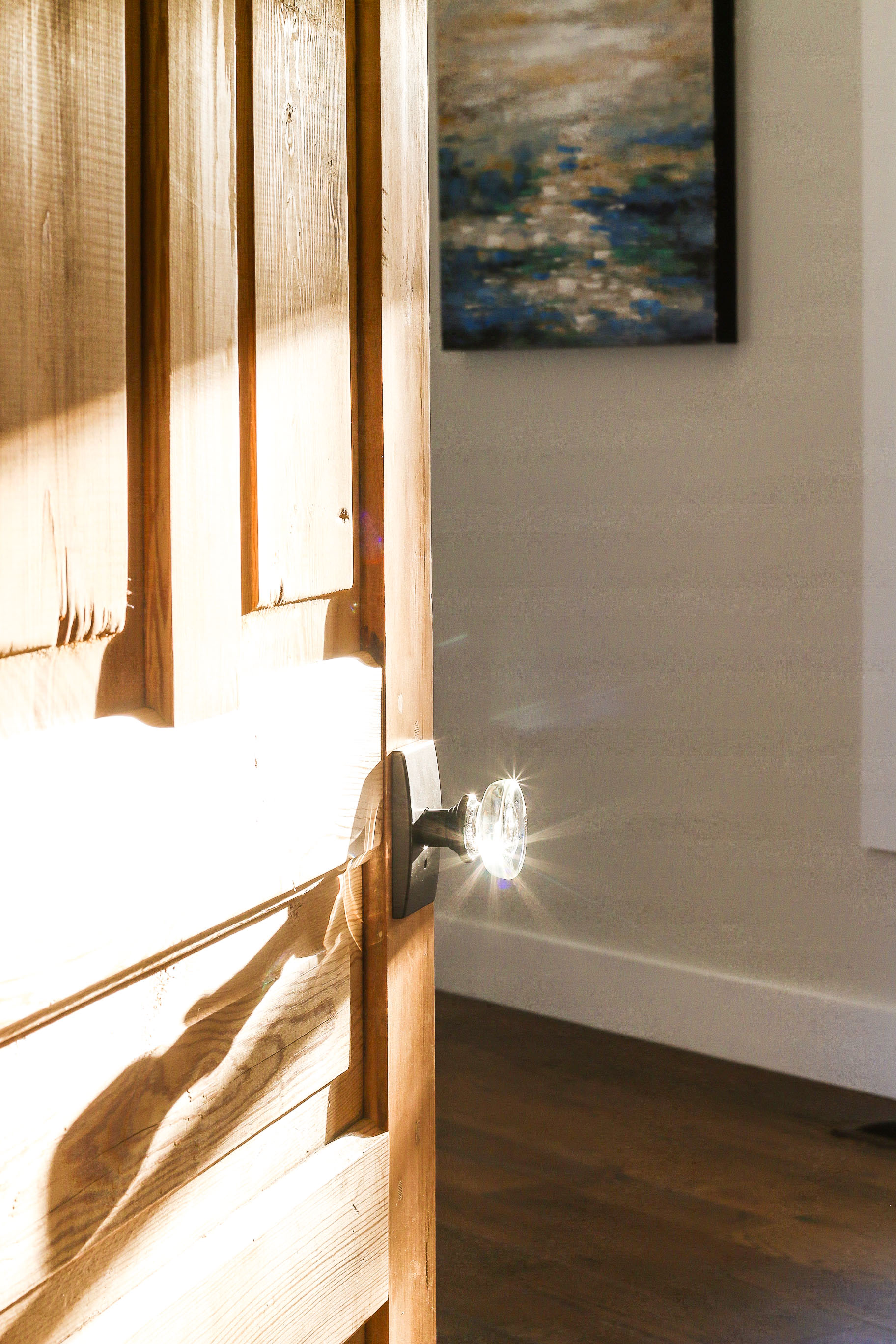
Please excuse me while I drool over these gorgeous glass knobs I installed on the doors in the Saving Etta house. They have to be the most beautiful door knobs I’ve ever seen!


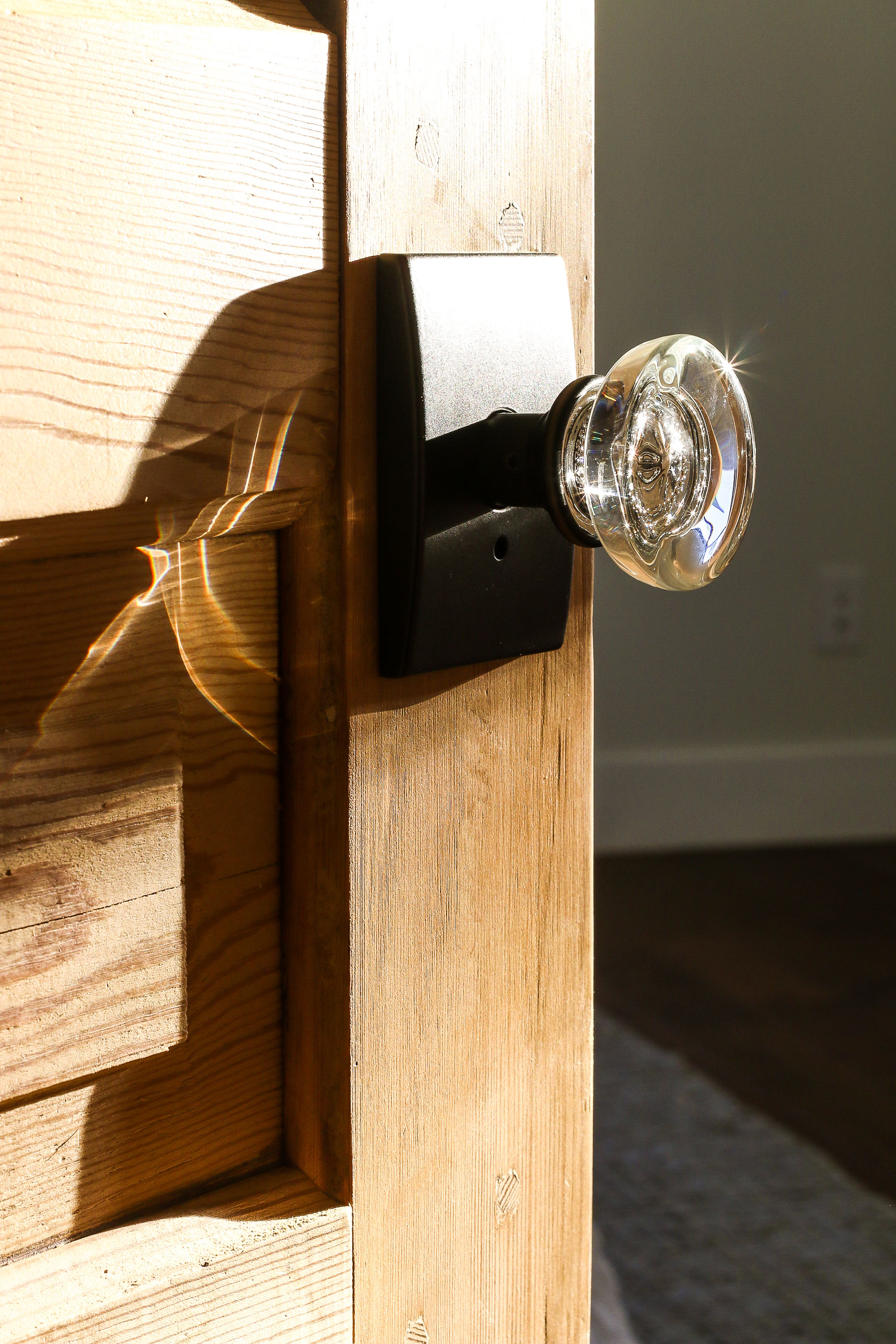
Sun glinting off glass door knob on raw wood door

Gorgeous Schlage Hobson Glass Door Knob

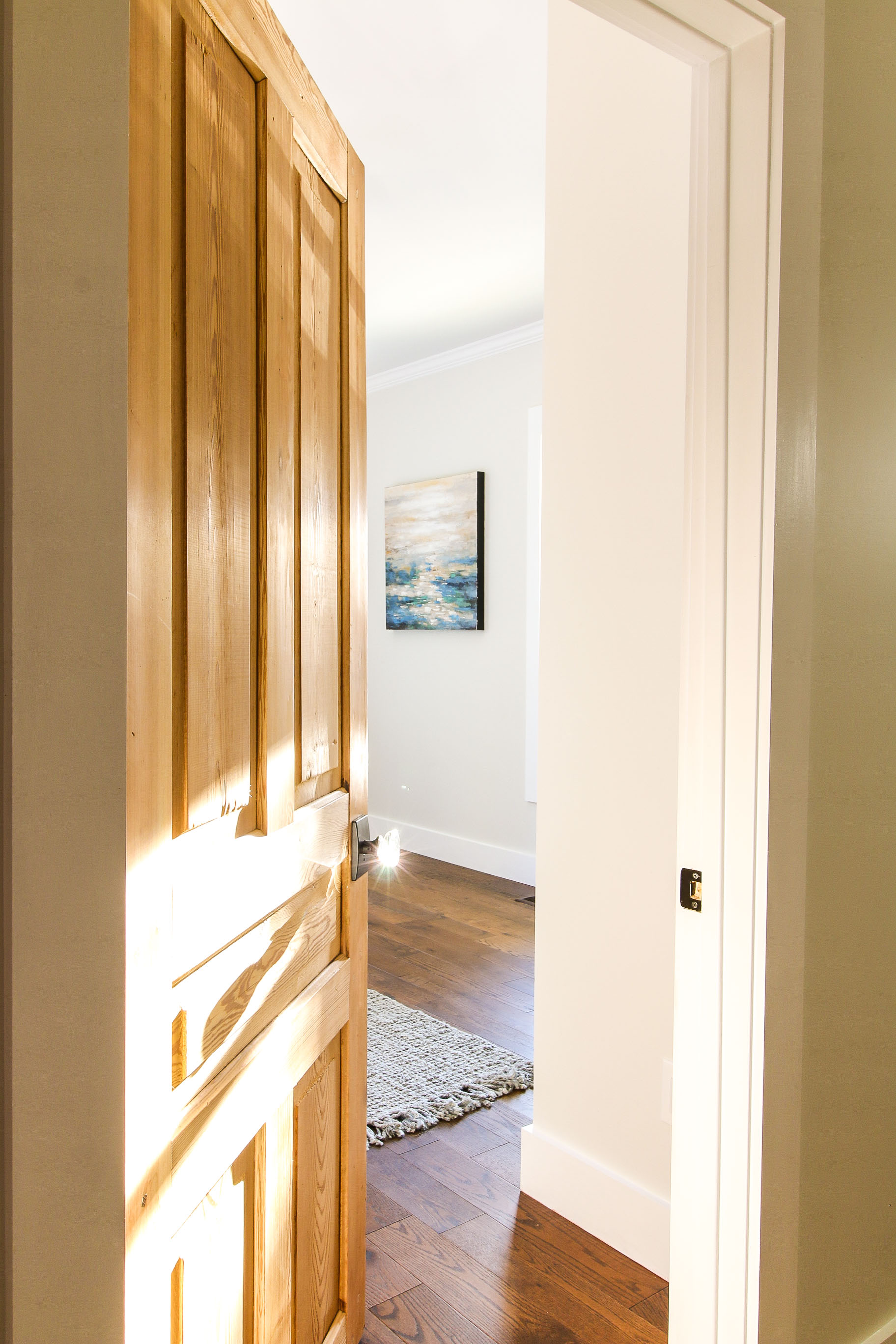
Door opening with ocean painting showing. Glass door knob with sun glinting on it.

Wasn’t drilling a door knob hole easy? I know you can do this (assuming you have a wood door of course.)

Disclosure: As a sponsor of the Saving Etta project, Schlage sent me the door hardware for the doors. I was not told what to write, all opinions are my own. 

 If you haven’t done so already, be sure to *subscribe to my YouTube channel!

Subscribe to my YouTube Channel

*My followers on YouTube get sneak peeks of some of the projects I’m working on, so subscribe today!

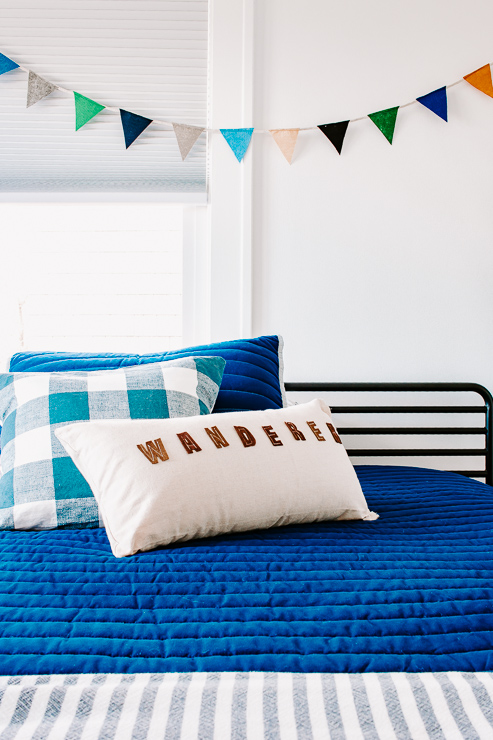
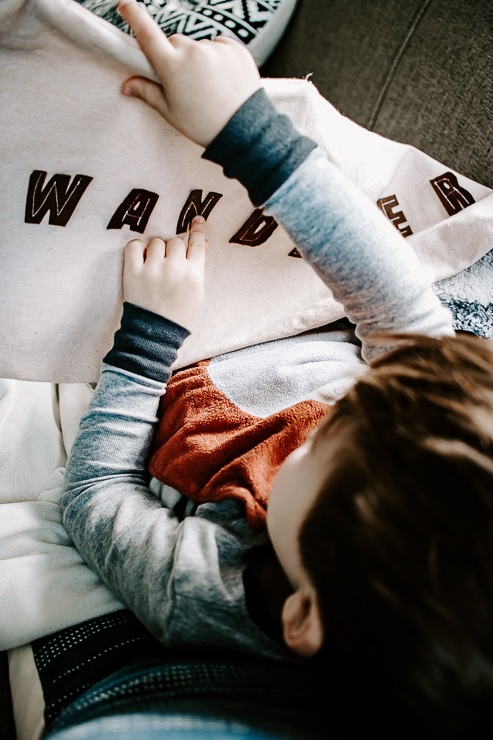
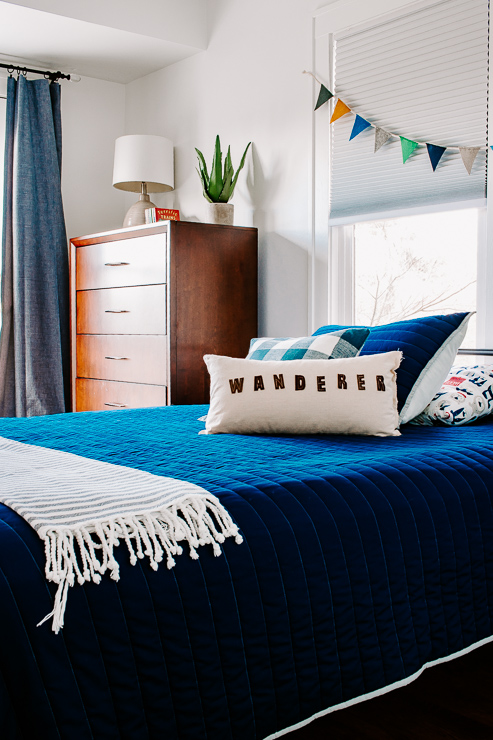
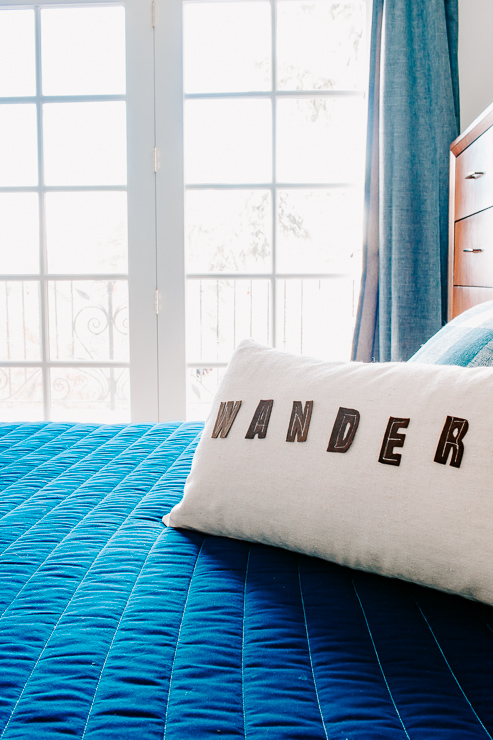
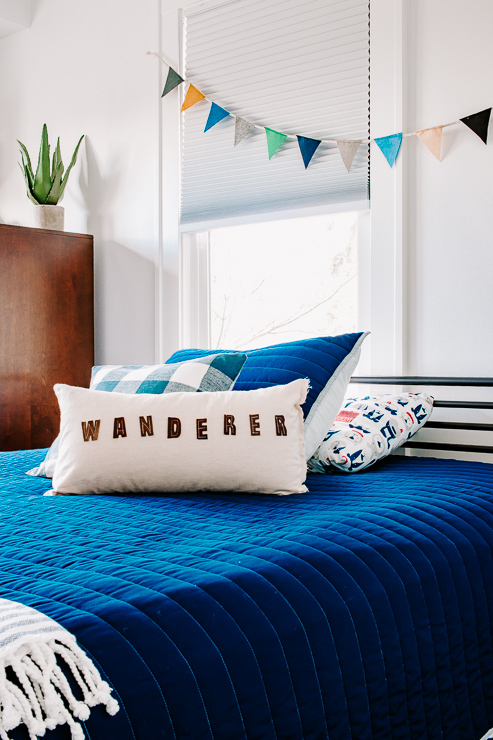
DIY Wanderer Felt Pillow

DIY Felt Letter Pillow Cover
How to Make a Felt Letter Pillow Cover

Friends! I’m so excited to be back today with a new project for you, a DIY felt letter pillow cover. One of my favorite things to do is to scour home decor stores for inspiration for my kids’ rooms.  I love trying to recreate trendy looks for my home, but on a budget. Today’s project accomplishes this goal! I’ve seen some really cute letter pillow covers and I knew I could DIY one myself.  Originally I made one for my son’s room. It turned out so well that my daughter requested one for her room too. Lucky for you, a sewing machine is optional – so this project is for truly for anyone who wants to make their own Felt Letter Pillow Cover.

Let’s get started!

Materials:

(I’ve included affiliate links for your convenience. I earn a small percentage from a purchase using these links. There is no additional cost to you. You can read more about affiliate links here .)

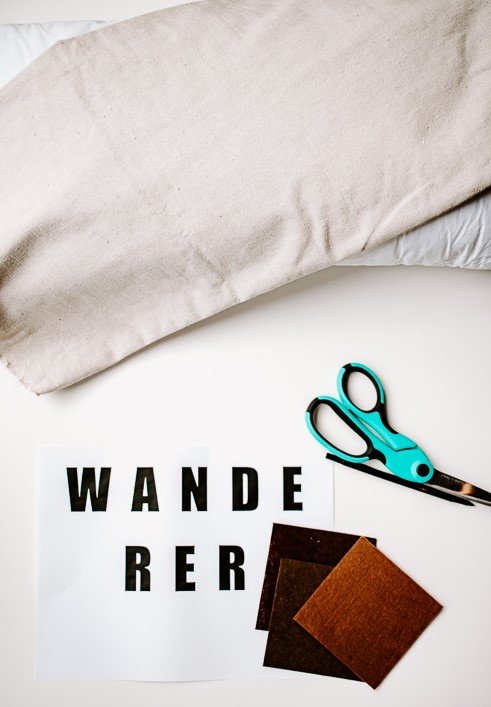
Materials Needed to make a DIY Felt Letter Pillow

Instructions:

Step 1:  It’s helpful to type up and print out a word template for this project or use letter stencils.  It’s not totally necessary, but when tracing your letters onto the felt it helps keep all the letters relatively uniform.

Cut out letters from paper word template

Making Your Word Template:

Open up Word or Google Docs and type out the word you want.  Add a space between the letters. (I used the Impact font at font size 150pt for this project.)

You can make your letters bigger or smaller. Just be aware, it gets a little tricky to cut out smaller letters. Cut your letters out of your template and let’s move on to the next step.

Tip:  If your word contains more than one of the same letter – you only need to cut that letter once. For instance – WANDERER has two E’s and two R’s, but I only needed one template for each letter because I could use the same one to trace two letters.  This should save you a few minutes.

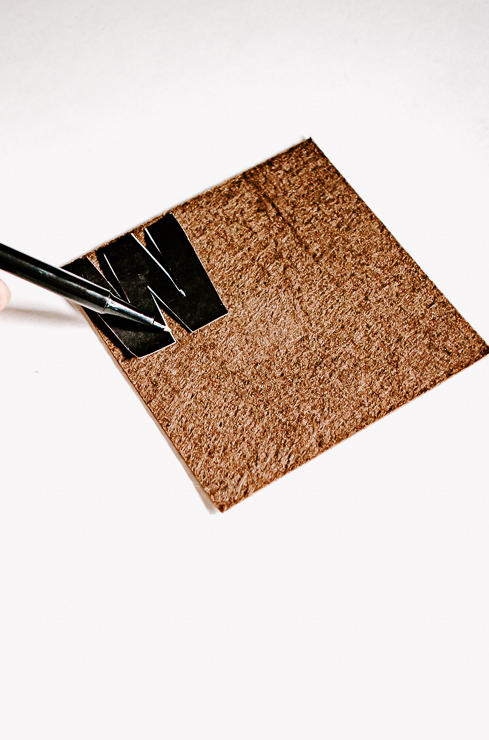
Step 2: Trace your letters onto the felt using your stencil or cut out letters (or draw them freehand if not using a template).

Trace Letter with Pen or Chalk onto felt

You can use pen, chalk, or pencil to trace.  Just make sure you can see the lines so you can cut them out.

Trace Felt Letters with Pen or Chalk onto you Felt Piece

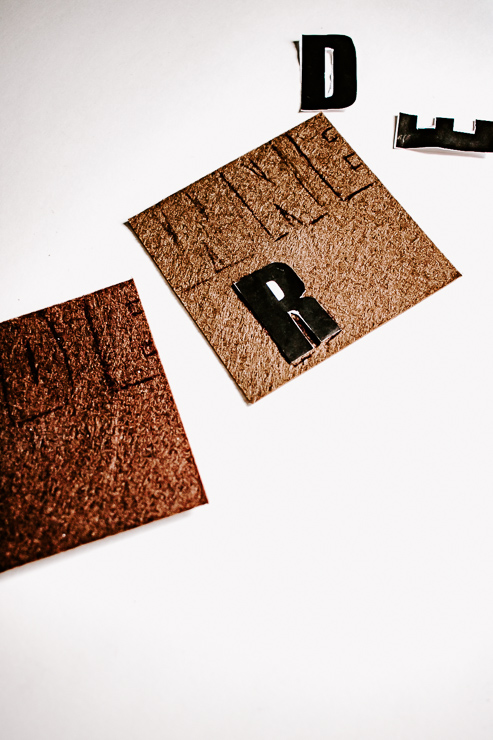
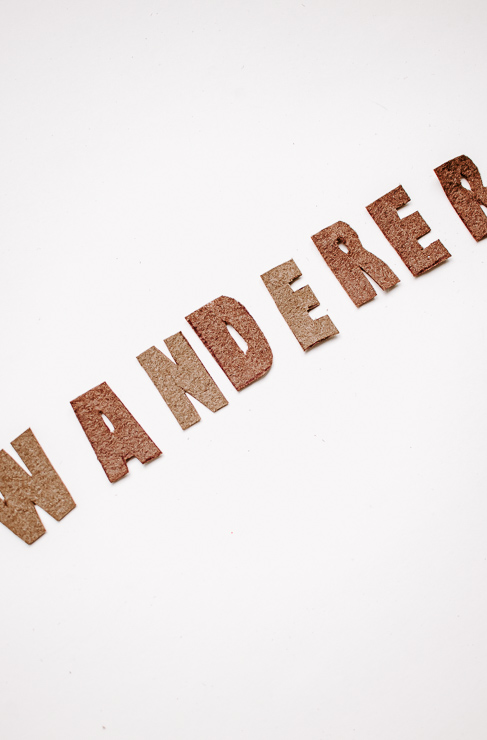
Step 3: Cut out your letters using scissors.

Cut your Letters out of Felt after tracing Continue to Cut out all Felt Letters

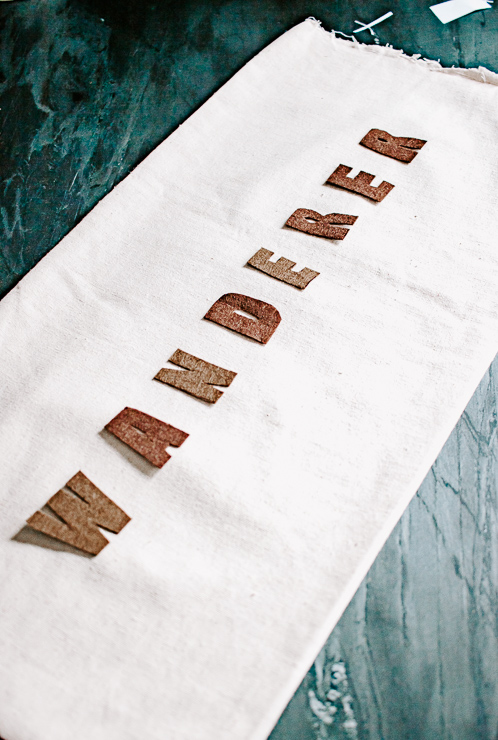
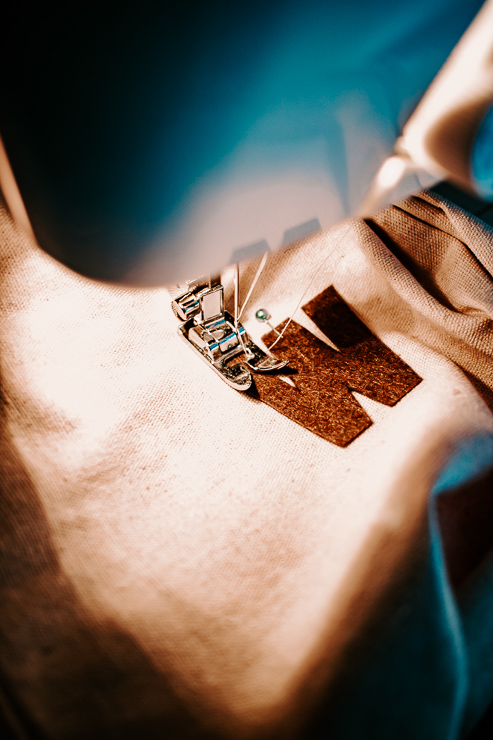
Step 4: Space your felt letters onto your pillow cover.  (I made a lumbar pillow cover from canvas drop cloth for this project, but you can also buy a plain cover.) It’s helpful to play with the placement and see where you want to start the word on your pillow cover.

Layout Felt Letters on your Pillow

Attaching the Letters:

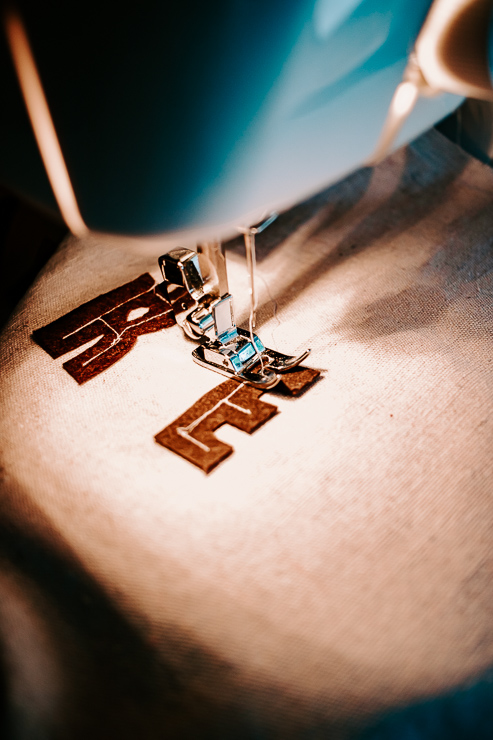
  • Sewing – Pin your first letter to the pillow cover.  Hand sew or use your sewing machine to sew the letter onto the cover. You can use matching thread or a different color to give it more of a rustic vibe.  My thread was white on brown felt.
  • Fabric Glue – Glue your felt letter to your pillow cover.

Sew your felt letters on your pillow cover or use fabric glue

Step 5:  Continue to sew or glue the rest of your letters onto your pillow cover.

Use fabric glue or your sewing machine to attach felt letters to your pillow

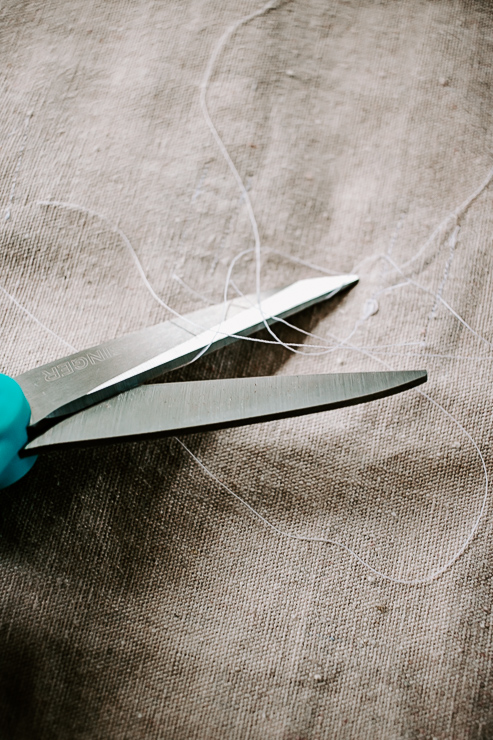
Step 6 :  After you finish sewing on the letters, cut off any loose strings.  If you used fabric glue, you want to let this dry for 24 hours before attempting to wash it.  (Please refer to the instructions on your specific fabric glue. )

Cut loose strings from your protect after sewing felt letters

Step 7 :  Insert your pillow form into your new cover.

Insert your pillow form into your new felt letter pillow cover!

All done! This looks fantastic, don’t you agree?!

I have seen these letter pillow covers in stores for over $25!  Yet, I was able to make this knock off for less than $5 with a simple DIY canvas pillow cover and some inexpensive felt.

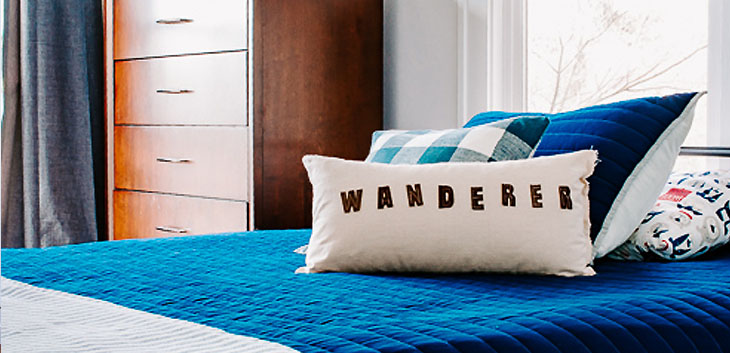
Kids Love these DIY Felt Letter Pillow Covers

I love the way this pillow turned out. As I mentioned, my daughter requested one for her room. (Although she’s having a little trouble choosing which word she wants!)  So far she’s come up with: Cupcake, Ice Cream, Unicorns – she can’t decide.

DIY Felt Letter Pillow Cover Tutorial

This project would also be cute as a personalized pillow cover. Or make it as a gift for someone who has young children.  It’s the perfect touch for a nursery or kids room.

DIY Felt Letter Pillow Cover perfect for Kids Rooms

Another idea would be to create one for each holiday: Halloween, Thanksgiving and Christmas are great occasions to display a felt letter pillow.

DIY Felt Letter Pillow Cover

I hope you guys enjoyed this tutorial for a DIY felt letter pillow cover.  You might also like to learn how to sew a rope basket at Decor Hint (where I blog regularly).

I’ll be back next month with another fun project for you! In the meantime, be sure to check out some other sewing tutorials on Pretty Handy Girl.

Thanks for reading!

karen signature

~ See More of Karen’s Tutorials ~


karen from decor hintHello!  I’m Karen, the creator of the Home Decor and DIY Blog: Decor Hint . I’m a Native of the East Coast, but I currently live in beautiful Seattle with my hubby, our two wonderful children and our spunky wheaten terrier.

You can usually find me with some sort of craft in one hand and a coffee in the other. And I’m always rearranging furniture or moving lamps from room to room. I have a passion (read: obsession) for decorating, DIY, and gardening. In short, I love making my house into a home.

Like many, I’m inspired by what I see in home decor magazines, but I’m not so inspired by the price tags.  Consequently, I love finding and creating beautiful budget-friendly home decor items. In a head to head competition, I bet you’d never know the difference between the designer items and my DIY creations!  Many of my DIY projects focus on sewing, crafting, upcycling and organizing. Some of my favorite projects have been making pretty wreaths , sewing my own tassel hand towels, and crafting these trendy wood bead garlands . I can’t wait to inspire you and spark your creativity through my DIY projects.

You can always connect with me on Pinterest , Twitter or Instagram.

Rustic Wooden Caddy with a Branch Handle

Spring is right around the corner and I’m itching to cut some fresh flowers to bring inside. I love displaying them in jars placed inside rustic wooden caddies. Making a little caddy or tote out of salvage wood and branches can be an easy beginner DIY project. But, it’s also satisfying for experienced woodworkers looking to use up some old scraps or upcycle an old wooden box. Here’s how to elevate a simple wooden box into something more quirky and special by adding a branch handle.

Materials:

(I’ve included affiliate links for your convenience. I earn a small percentage from a purchase using these links. There is no additional cost to you. You can read more about affiliate links here.)

I happened to be browsing through a yard sale and spotted a sad little box begging for me to buy it and give it a new life:

How could I say no! It was only $3. I couldn’t leave it at the yard sale in its sad burgundy dust-covered state. I brought it home so it could sit in my garage collecting more dust. (This happens more often than I’d like to admit. It’s a sickness I have.)

Using the pry bar and pliers, I pulled off the lid of the box and removed any nails.

Then I had a basic box to work with. You can use this tutorial to create a simple box if you don’t have one.

Instructions:

Cut upper handle supports out of 1×3 or other scraps. Clamp them inside the box.

Pre-drill holes and drive wood screws through the sides of the box and into the vertical supports.

Now it the time to finish the wooden caddy using your choice of paint or stain. (I like to create a rustic look using a relatively dry brush and by letting some of the wood grain show through your brush stokes.)

While the paint is drying, use a hack or coping saw to remove any bumps or burrs from your branch.

Measure the ends of your branch and select the spade bits that are closest in diameter to your branch (you want the holes to be equal to or wider than the branch.)

Drill a hole into each side of the vertical handle supports.

Insert the branch into the side of the caddy. You might have to experiment with which direction to install the branch.

Fill some jars with flowers and set them inside the crate.

Set it out in a prominent spot in your home.

Enjoy your shabby chic crate, caddy, tool box, or whatever you like to call it.

Personally I can’t get enough of this branch handle:

I’m curious, would you have bought that little dusty box too?!

If you liked this tutorial, you’ll love these other easy DIY Projects:

Mini-Picket Fence Caddy

Make a Driftwood Gift Crate | Pretty Handy Girl

Make Your Own Driftwood Crate