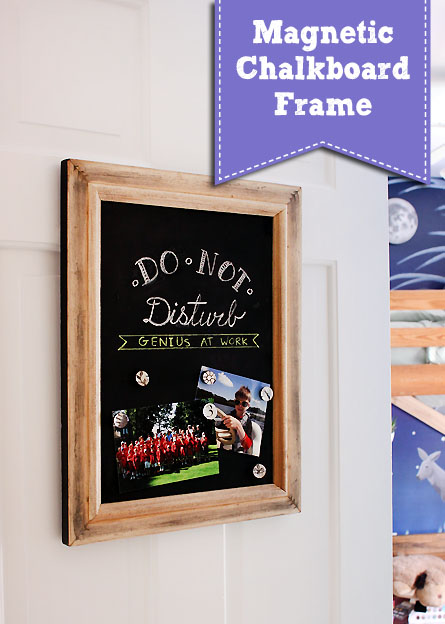
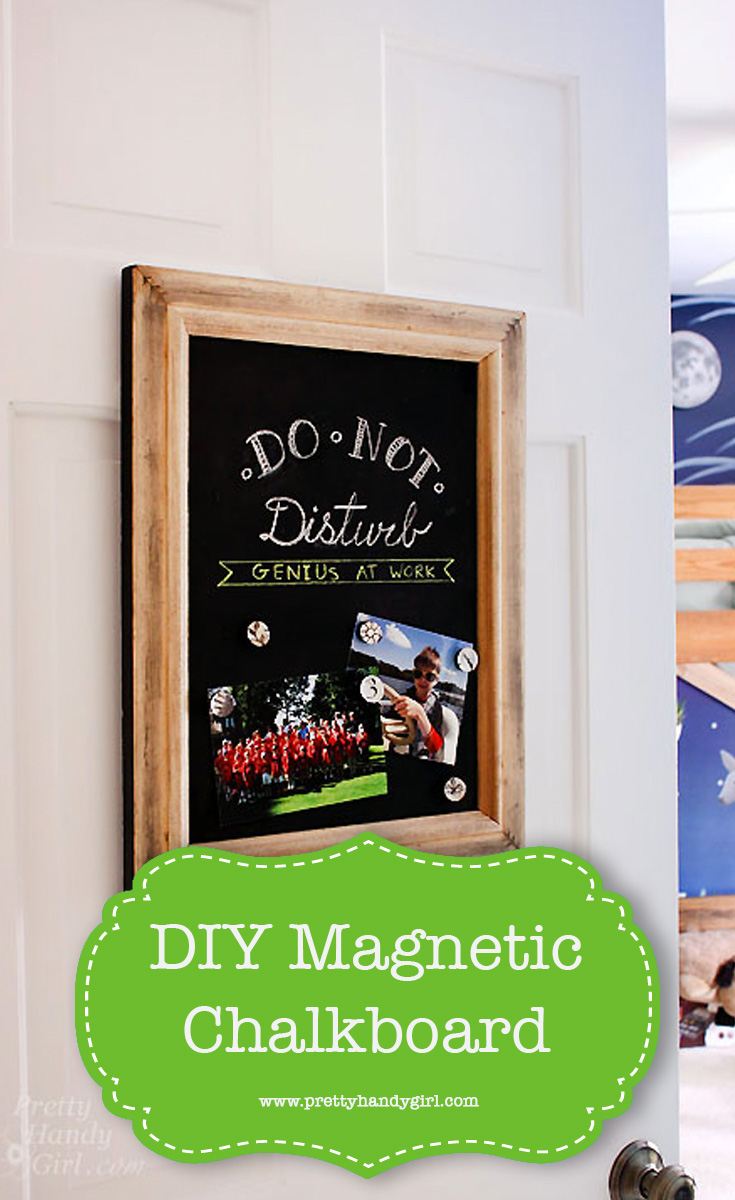
I’m a serial upcycler. When I can find relatively free materials and turn them into something worth displaying, I’m thrilled! This Magnetic Chalkboard frame is one of those upcycled projects I am proud of.
Upcycled Magnetic Chalkboard Frame
Earlier in the week, I showed you the changes I made in my oldest son’s bedroom. One of the switches I made was to replace his bedroom door because the old one had cracked after one too many slammings. Ugh, cheap hollow door.
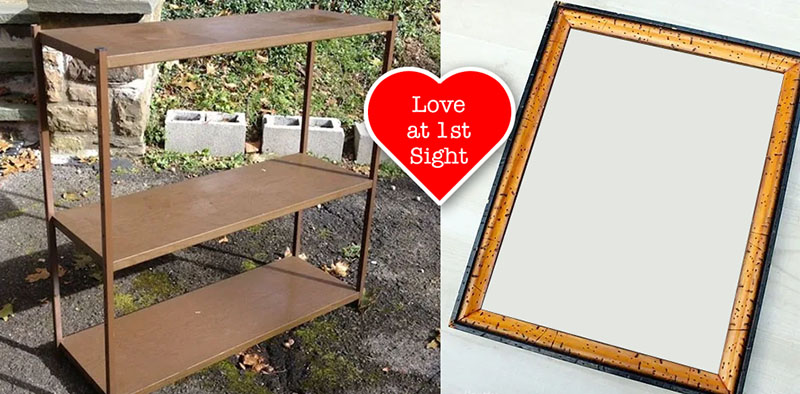
In an effort to keep my son from taping all types of signs to his new door, I found an ugly old frame and married it with some scrap metal from a junky set of shelving a neighbor was throwing away.
That’s not real wood, it’s metal…fake wood metal. Yuck. Wait until you see how they were transformed. You won’t believe your eyes, so watch closely how I made this Upcycled Magnetic Chalkboard Frame.
Before you leave this tutorial thinking you can’t possibly make this project because you’ll never be able to find cheap faux wood shelves, let me share with you some alternate materials you can use!
(I’ve included affiliate links for your convenience. I earn a small percentage from a purchase using these links. There is no additional cost to you. You can read more about affiliate links here.)
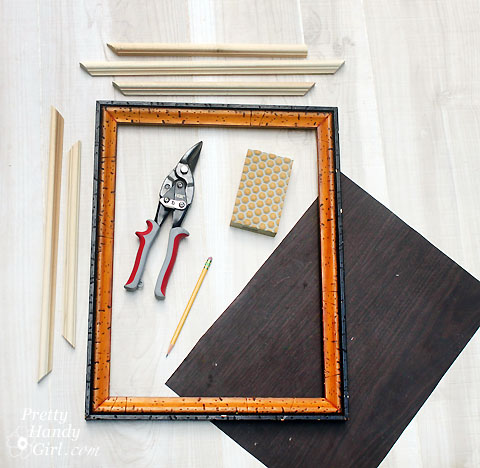
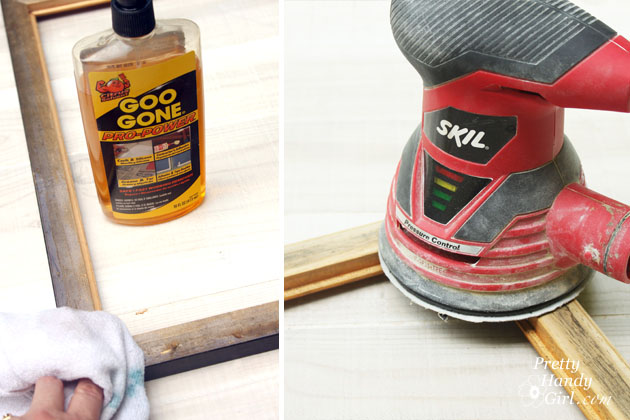
Optional: You may need some Goo Gone, a scraper, and rag to eliminate any glue on the back of the frame.
Instructions:
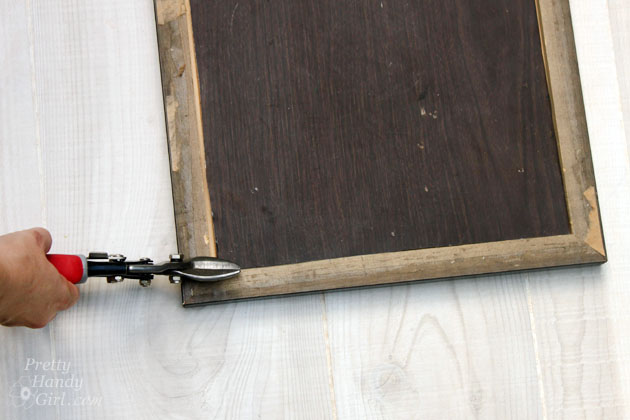
Begin by cutting your metal (or backing) to fit into the back of the frame.
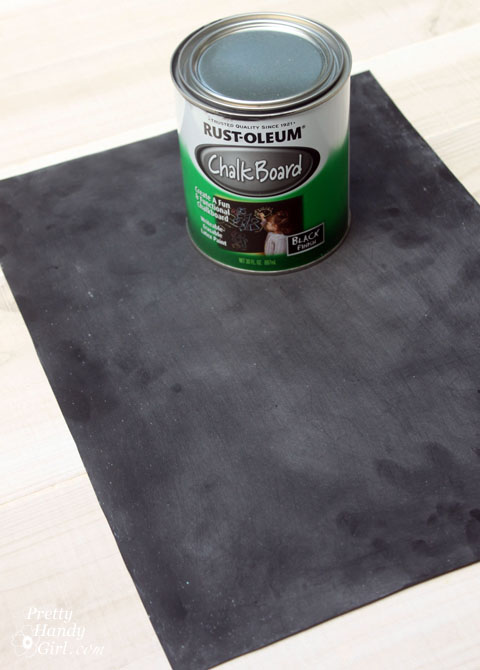
Paint one side of the metal with chalkboard paint. Let it dry. Apply a second coat of chalkboard paint. Let it dry.
While the chalkboard paint is drying, time to work on the frame.
If your frame has paper on the back, peel it off and use Goo Gone, a scraper, and sander to remove any of the glue residue.
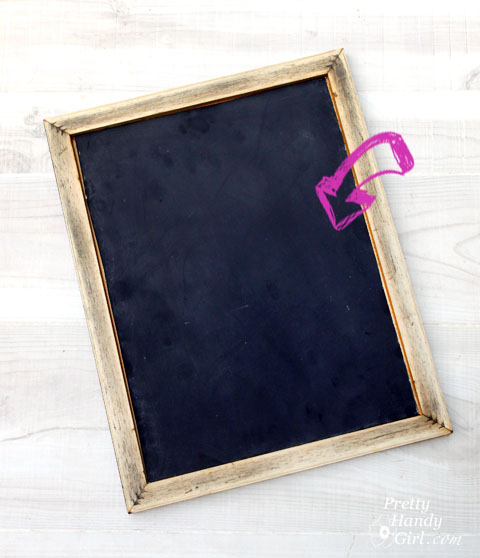
When the chalkboard paint has dried, insert it into the frame, chalkboard side up from the backside of the frame (are you seeing where I’m going with this?)
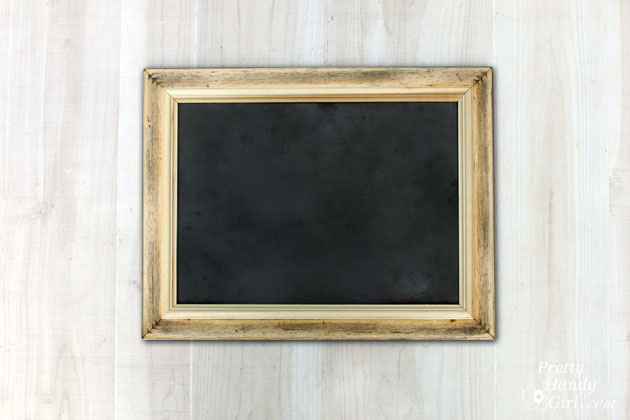
The back of the frame is much prettier than the front, but in order to hold the chalkboard in place, we need to cut some picture molding. Cut the end of your molding at a 45 degree angle. Fit it into the frame and mark where to make your second cut.
Continue fitting and cutting molding around your frame.
Once all four pieces of molding fit, you are ready to secure them.
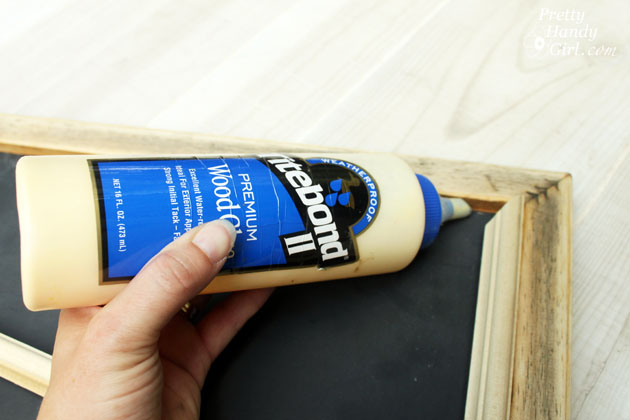
Apply a bead of wood glue along the inside edge of the back of the frame.
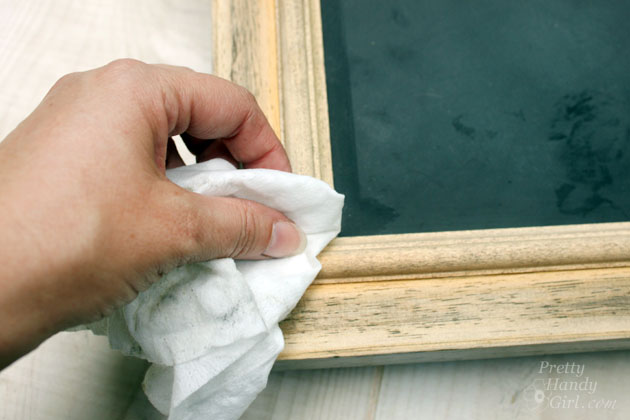
Set the molding pieces in place and wipe up any glue that squeezes out.
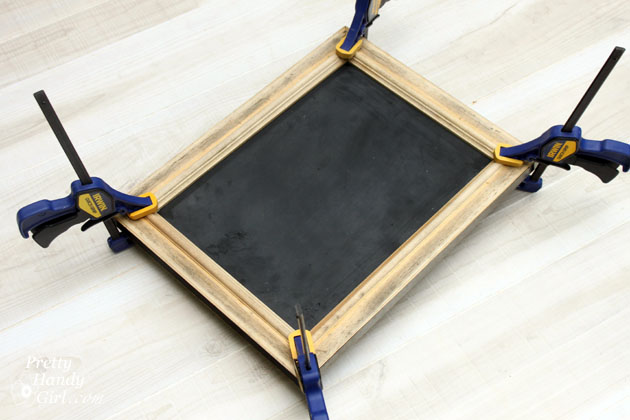
Clamp the molding pieces and the frame. Allow the glue to dry for at least an hour.
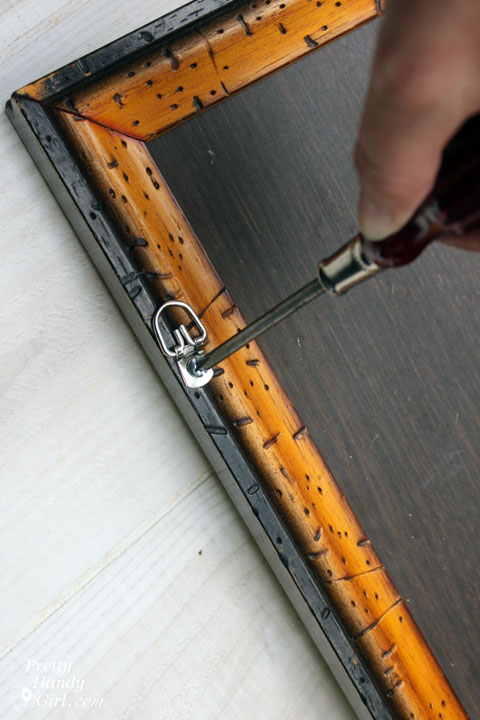
When the glue has dried. Attach two D-rings to the back of the frame.
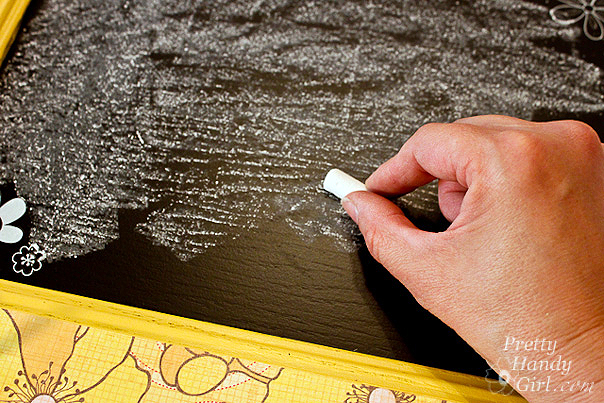
Season the chalkboard with the side of a piece of chalk. Then use a dry rag to buff it off.
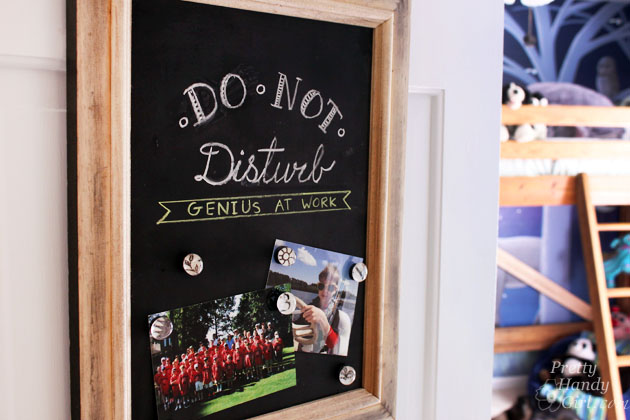
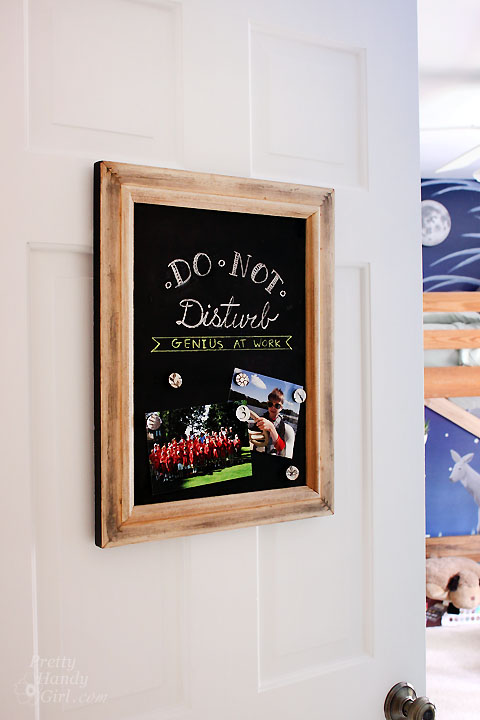
Time to hang it up! (In my case, I hung it on my son’s door.
To keep the frame from bouncing any time the door is opened or closed, I put a 3M Command velcro strip between the bottom of the frame and the door.
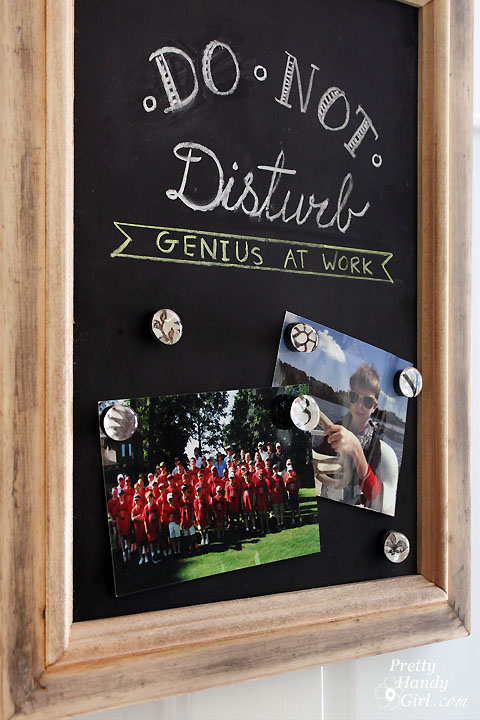
Now my son can put up pictures, messages, and more without damaging the door.
Pretty cool huh?! Would you ever guess the back of an ugly frame and metal shelves could look this beautiful?
I especially like the little metal fasteners showing in the corners of the frame.
Tell me, do you have an ugly frame hanging around your house? Have you ever looked at the back and found it more beautiful than the front?
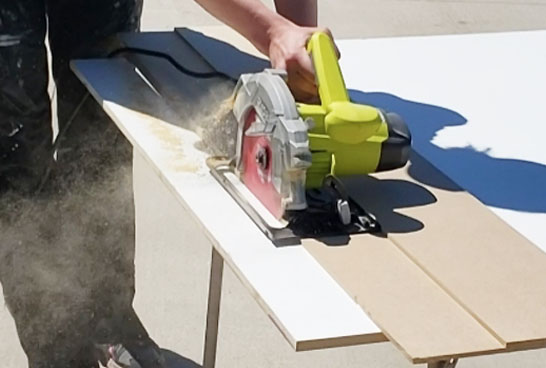
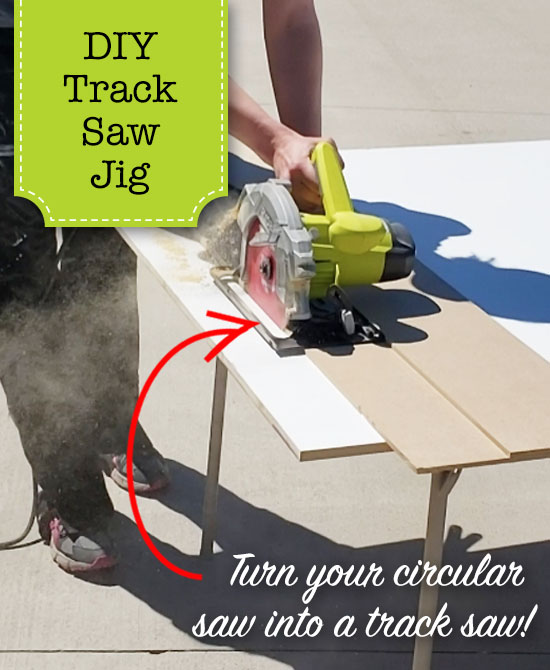
Making large and small rip cuts doesn’t have to be a difficult or calculated process. With this inexpensive and easy to make DIY track saw jig, you will be making rip cuts quickly and easily with your circular saw!
DIY Track Saw Jig for your Circular Saw
Hi! It’s Kristen, from In Her Garage, and today I am going teach you how to make a DIY Track Saw Jig for your circular saw. It’s basically a super simple circular saw cutting guide to make rip cuts much easier for you. No more accounting for the saw’s base plate width or spending a ton of money on fancy, brand name guides. This will be an easy drop and clamp design that is foolproof! Let’s make it!
Materials:
(I’ve included affiliate links for your convenience. I earn a small percentage from a purchase using these links. There is no additional cost to you. You can read more about affiliate links here.)
circular saw (that you will be using this saw guide for!)
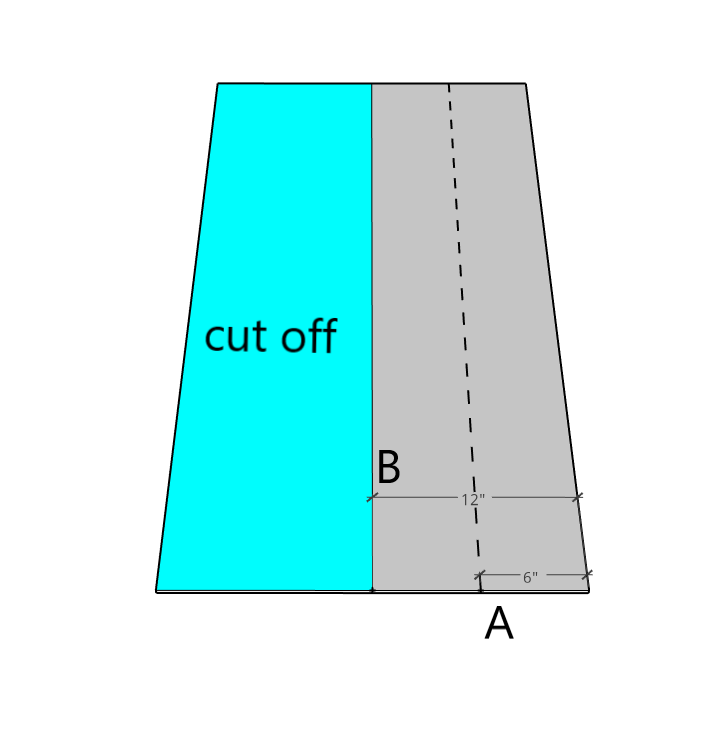
Create 2 lines running the length of the hardboard panel and label them “A” and “B” as indicated in the diagram below.
“A” measures 6″ from the edge – this measurement is approximately the width of most circular saw baseplates
“B” measures 12″ from the edge – this measurement is approximately the width of the entire circular saw and will be the end width of the track saw jig.
2. Cut the excess off of the base panel
Clamp a straight edge (or any straight piece of scrap board) lined up against line “B”. Set your circular saw base plate against the straight board and cut along the length of the hardboard to cut this excess off. You will use the freshly cut edge of the excess in the next step.
3. Creat the track saw cutting guide
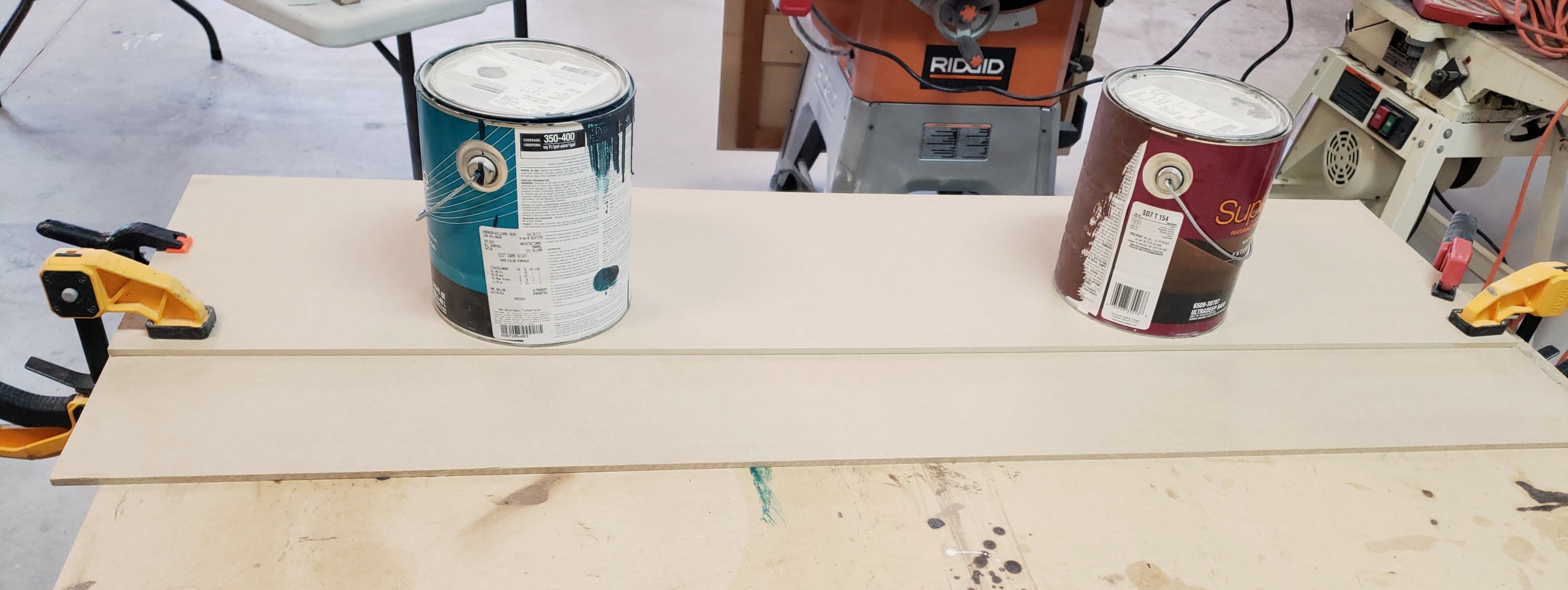
Apply wood glue between lines A & B of the track saw base panel (as shown above.) Do not apply the glue too close to line “A” or the glue will squeeze-out in the next step. Collect the excess piece of hardboard you just cut off and align the freshly cut edge up to line “A” of the base panel.
Clamp and apply weight over the top of the two panels. Wait approximately 15 minutes for the glue to cure and adhere the two pieces together.
4. Cut the straight edge guide
Position your panel so the 6 inch “A” section overhangs off the edge of your work surface (this is the edge you used to measure lines “A” and “B” from.)
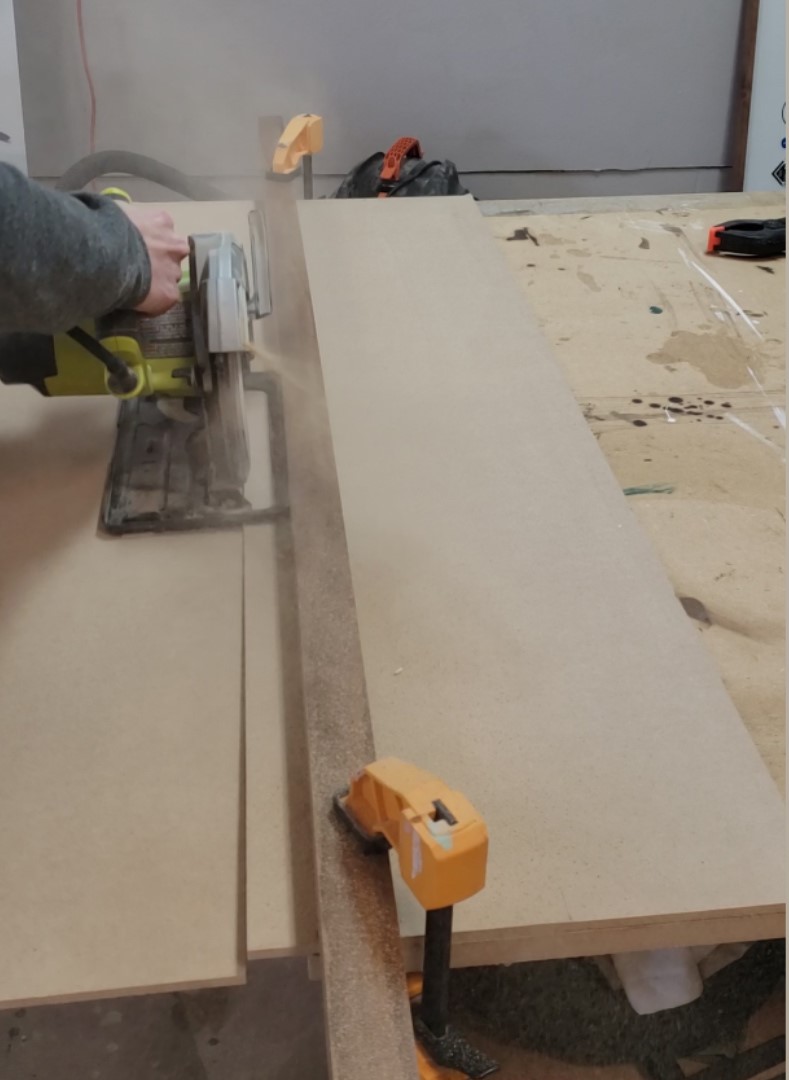
Rest your circular saw’s base plate against the top glued piece using it as a straight guide. Make sure your saw blade will avoid your work surface when cutting. Now cut along the length of your panel.
This will create an edge that is exactly the width of the inside base plate to the inside of the saw blade.
5. Cut off the excess from the back of the jig
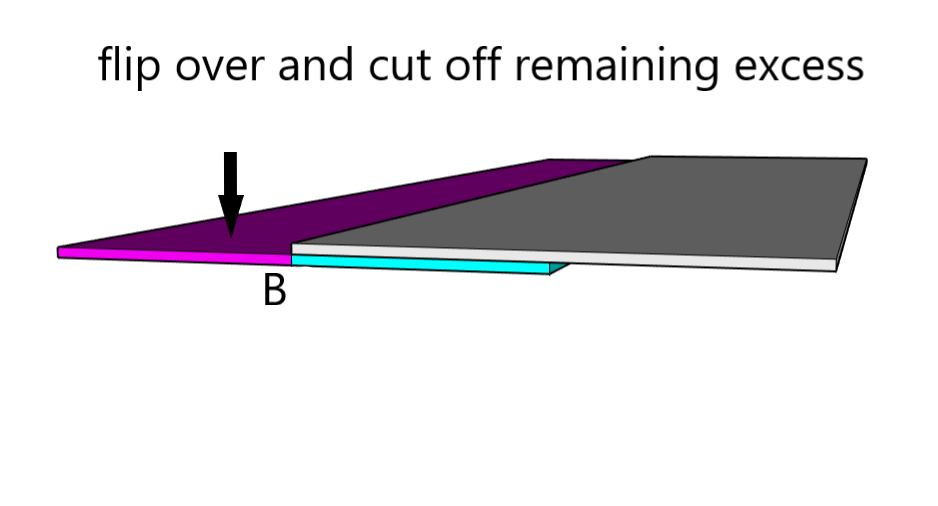
Flip the jig over and cut off the excess material that extends beyond line “B” shown below.
Do not cut any further into the jig than line “B” because your DIY Track Saw Jig well be too narrow. You will need this extra width to clamp the jig to any material you plan to cut. If your jig is too narrow, the saw’s motor will catch on the clamps.
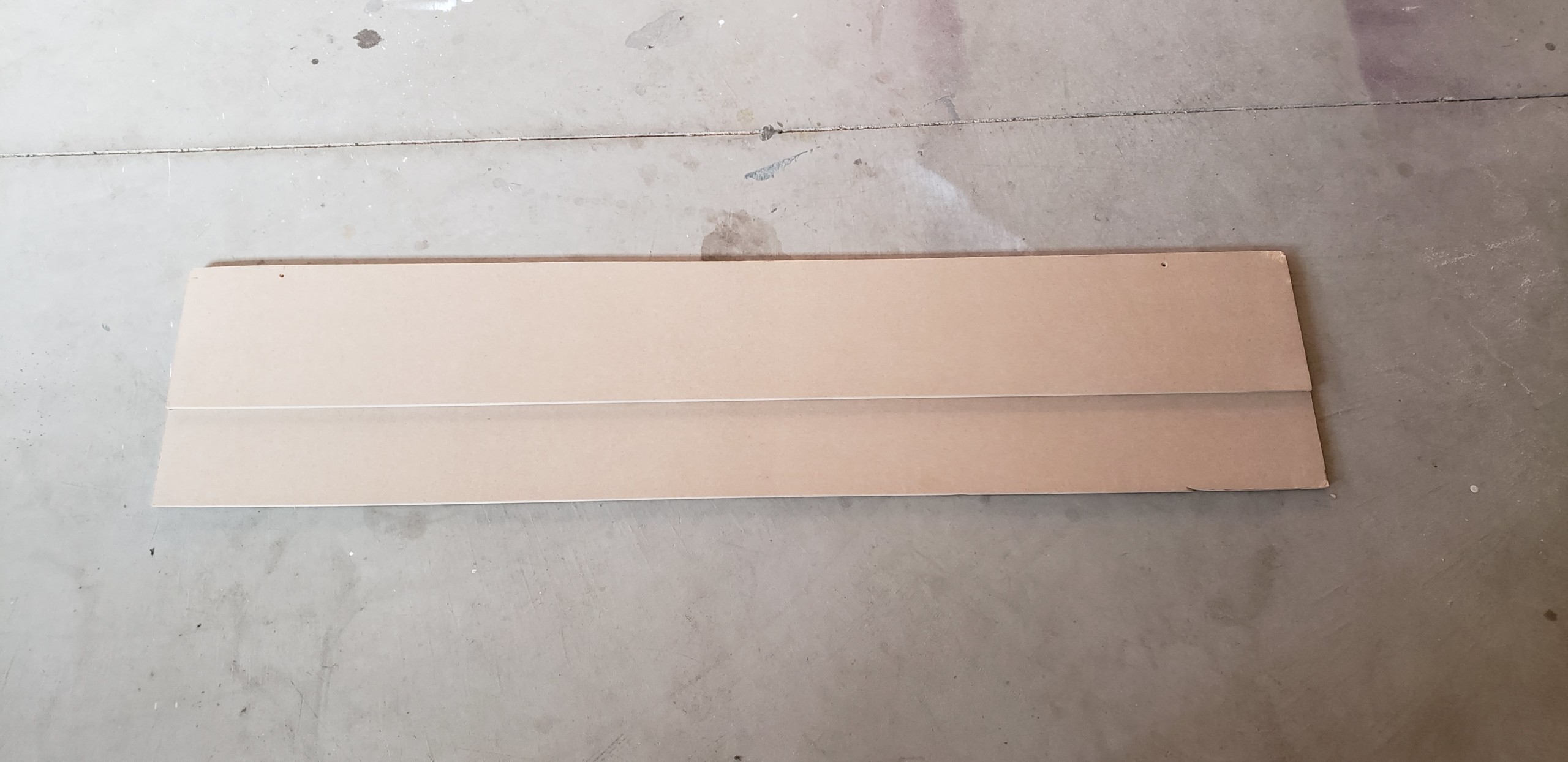
Now you have your own DIY Track Saw Jig for your circular saw! How easy was that?
Using the jig is even easier. All you need to do is measure and mark the surface you plan to cut. Then align the edge of the track saw jig with these marks and clamp down. You’ll have a perfectly straight guide for the circular saw to travel along. Just be sure to take into account which side of your measurement you want the saw blade to cut on and position the jig accordingly.
Great Job!!! Now just store this jig in a place that is easily accessible because you will use it A LOT!!
Helpful tip from the Pretty Handy Girl: Buy a panel of foam insulation from a big box store and cut your plywood on top of it. The foam panel provides a firm surface for the entire piece of plywood and eliminates any falls, pinches, or board balancing you may need to do.
If you enjoyed this tutorial check out my DIY Toy Chest and 1 Drawer side table. The DIY Track Saw Jig will come in really handy for making these gorgeous pieces.
About Kristen:
Hi! I’m Kristen, from In Her Garage, and I am a self-taught woodworker and DIY fanatic from Minnesota where I live with my husband and our two daughters. Between being a wife, mom and, registered nurse, I try to make as much time for DIY as possible. My love for building came after our family built our current home in 2015. After we moved in, we needed furniture and instead of spending massive amounts of money to order the pieces we wanted I decided that I would build them myself. I started with a buffet table plan from the fabulous Ana-white and quickly set out to remodel my entire home office.
Since then I have started a side business building furniture for the people in my community. I love hearing my clients talk about the pieces they wish they had whether it be a rustic buffet table, a one drawer side table, or a toy box and then making it a reality for them. While starting my small business it made perfect sense that I would document my building journey so I simultaneously launched the In Her Garage blog and I love sharing my plans, tips and tricks.
Making something beautiful with your own two hands through a little preparation and determination is an amazing feeling and I hope to bring inspiration and know-how to those looking to tackle a big or small project.
I am so glad that you found me here and please feel free to connect with me on Pinterest, Instagram, Facebook, and Youtube to see what I am working on right now.
https://prettyhandygirl.com/wp-content/uploads/2020/05/diy-track-saw-jig-feature.jpg368546In Her Garagehttps://prettyhandygirl.com/wp-content/uploads/2021/07/PHG-logo-tagline-2020-1030x211-R.jpgIn Her Garage2020-05-20 07:00:252025-05-09 22:13:26DIY Track Saw Jig for your Circular Saw
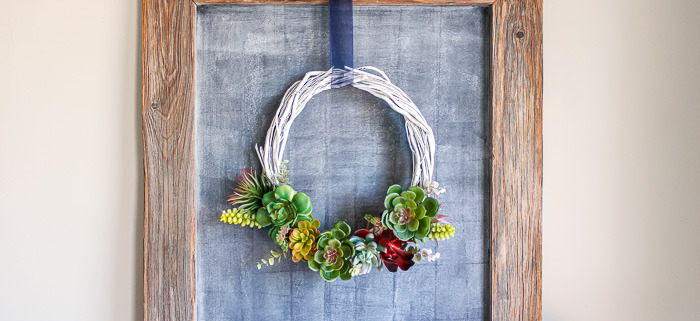
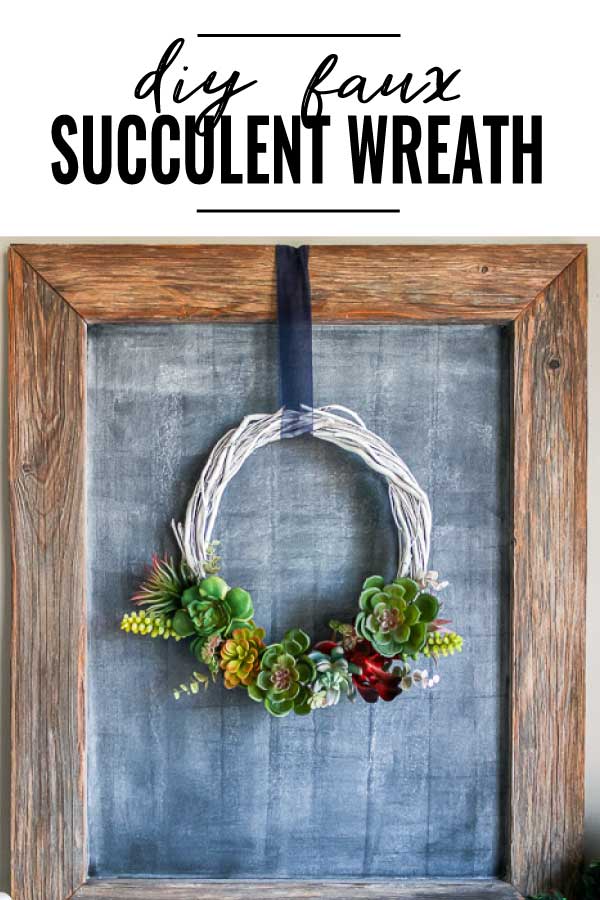
Make your own faux succulent wreath and add a little greenery to your home. Use a few supplies from the dollar store and this simple tutorial to make this beautiful DIY Faux Succulent Wreath!
DIY Faux Succulent Wreath
I’ve been itching to add a little more greenery to our home lately. It’s finally green outside, so I wanted to bring some of that green into the house too! I was digging around in my craft stash and found a whole bag of faux succulent stems. These were leftover from another DIY project from long ago and were taking up space in my craft closet.
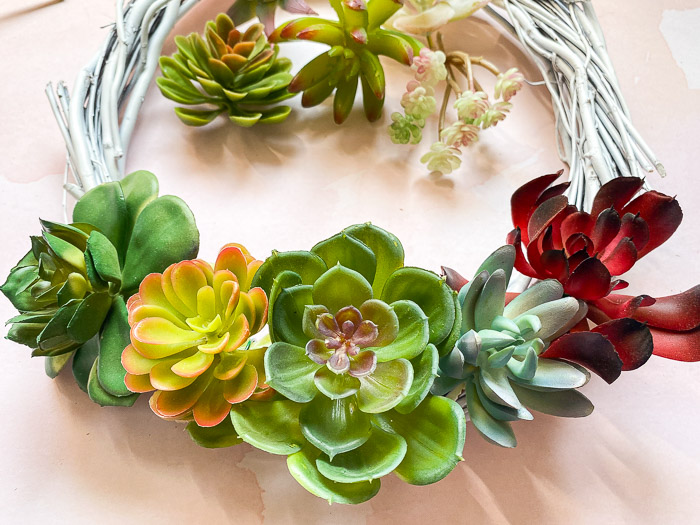
This past weekend was the perfect time to use up those supplies and add some greenery to our home by creating a simple wreath. Let me show you how easy it is to make your own DIY faux succulent wreath with supplies that can be found at the dollar store or online (or in your stash)!
Materials:
(I’ve included affiliate links for your convenience. I earn a small percentage from a purchase using these links. There is no additional cost to you. You can read more about affiliate links here.)
I am using a grapevine wreath that I picked up several months ago from the dollar store, but I decided to paint it white for this project. If you prefer to leave yours natural, feel free to skip step 1.
Instructions:
Step 1- Spray paint grapevine wreath
Spray paint wreath form using a quality spray paint in the color of your choice. The best tip for painting a grapevine wreath is to spray from different angles, using short bursts of paint. This will help get the paint into all of the nooks and crannies. Keep in mind it may take several coats to get good coverage.
Step 2- Attach succulents to wire
If the succulents you are using have long stems you may not need the floral wire in this step. However, the wire does help secure them to the wreath form better.
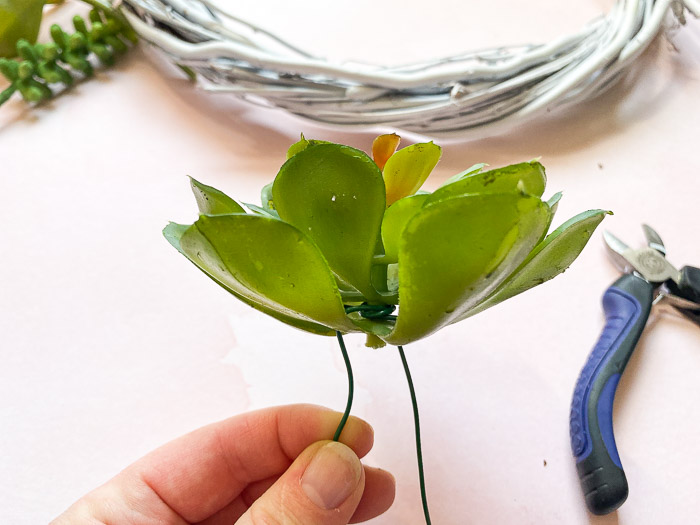
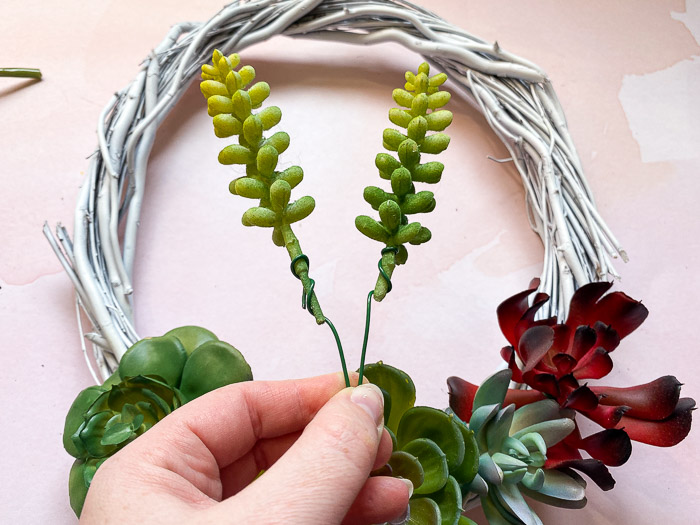
To attach, simply wrap a piece of wire around the base of an artificial succulent. It may be necessary to use pliers to help with this step. Snip off excess wire with wire cutters. You will be left with something that looks like this.
Step 3- Arrange larger succulents onto the wreath
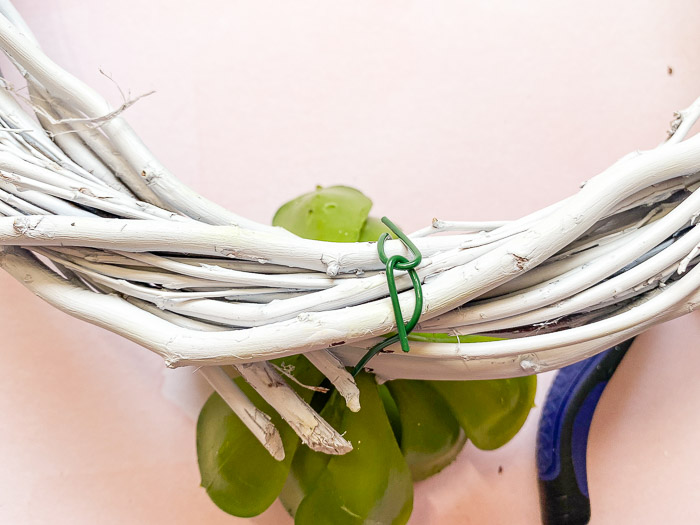
Attach the succulents to the wreath by either tucking the floral wire into the grapevine wreath or wrap around to the back of the wreath.
It’s best to place the larger succulents first to create a good foundation layout to work with.
Step 4- Add smaller faux succulent stems to fill in empty space
Once the larger succulents are placed, fill in any gaps with smaller succulents. You could also add in small sprays of artificial eucalyptus or even some moss. Be creative!
Step 5- Finish with a ribbon to hang
To finish off your faux succulent wreath, choose a ribbon to hang it with or just simply use some jute twine. Since my wreath is hanging on our DIY chalkboard, I chose just a simple organza ribbon with no bow. Finish it off how you’d prefer.
Personally I prefer my wreaths to be simple, so less is more. If you prefer filled out wreaths, then by all means, fill that baby up with all of the faux succulents!
Using multiple colors and styles of faux succulents will give you the best contrast and wow factor, so stock up on several varieties!
What do you think? Will you be making your own faux succulent wreath for your home?
I’m Amanda, and I am the creator and voice behind the food and DIY blog, Domestically Creative. What started as a place to share updates with friends and family after we moved from Illinois to Tennessee and then to Texas, turned into a passion for finding creative and frugal ways to feed us and decorate our homes.
I have always had the “make it myself” attitude and I’m not afraid to bust out the power tools or get creative when it comes to decorating our home on a budget. You can usually find me scouring the local thrift stores, garage sales and estate sales looking for my next makeover (like this litter box cabinet), or dreaming up ways to make our new house feel more like home. My most recent project was giving my home office a much needed facelift. Some of the plans included creating a fun inspirational accent walland adding pegboard to store my craft hoards.
I currently call Missouri home, where I live with my husband, dog, and 2 cats in a pretty dull, late 90’s split level. My husband and I both love to travel the U.S and recently purchased a small travel trailer to tag along in our journeys. In our free time together we can usually be found working together on a home project, exploring a new place, or just lounging with our pup, Delilah.
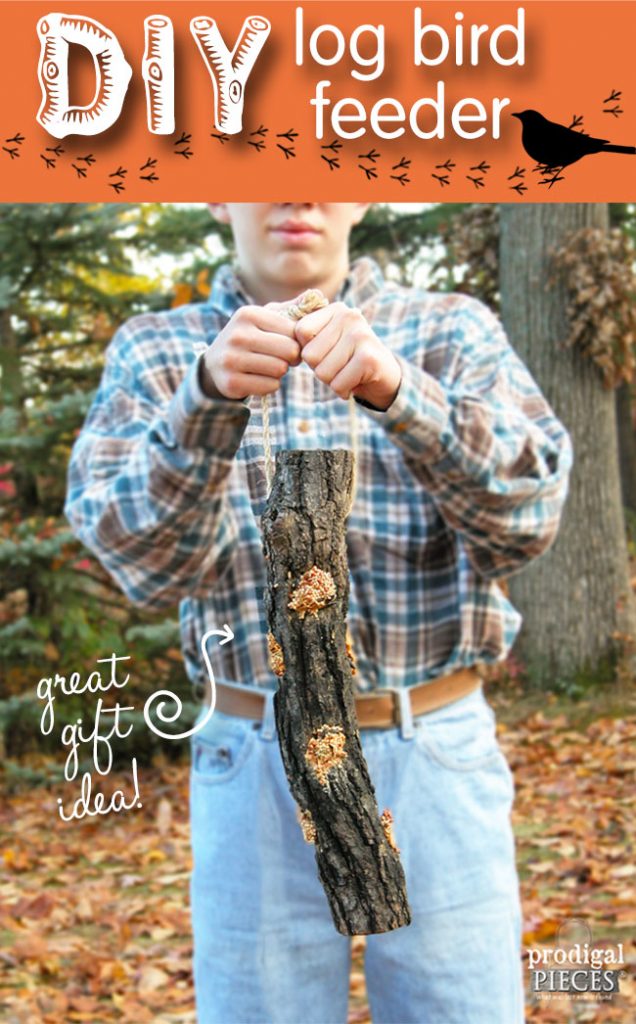
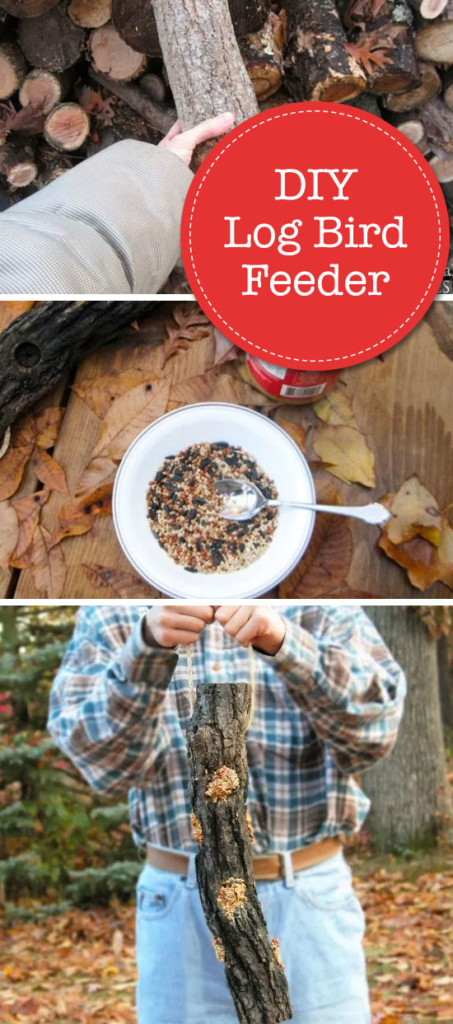
Hello readers, I’m Larissa coming to share with you a nature-inspired DIY project. Today, we’ll learn how to create a special DIY Log Bird Feeder treat for our feathered friends. The best part is that this can be a family fun activity to do AND to give as a gift for anyone who loves bird watching.
DIY Log Bird Feeder
We are avid bird lovers in our home and were delighted when a friend of mine gave us this bird feeder made from a piece of firewood and rope. How easy is that?
What a delight it is to see our tree clinging birds (nuthatches, tufted titmice, and woodpeckers) come for a visit and see their excitement at the treat they’ve found, especially the birds that overwinter. Did you know that migratory birds will remember your home the next time they’re passing through and will come back again year after year if you continue to provide nourishment for them? It’s like a reunion each spring and winter. Fun!
So, let’s grab some materials and get ready to create a DIY log bird feeder!
Materials:
(I’ve included affiliate links for your convenience. I earn a small percentage from a purchase using these links. There is no additional cost to you. You can read more about affiliate links here.)
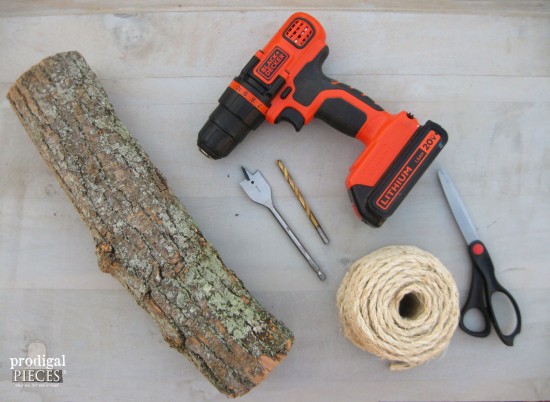
a log (can be firewood) about 3-4″ diameter and 16″ long or as long as you like
We are blessed to have a fireplace, so we always have a stash of firewood on hand. For your log, you can use a downed branch or head to your own stash to grab a piece of wood.
The tree-clingers prefer a chunky bark, but any tree variety will do.
Instructions:
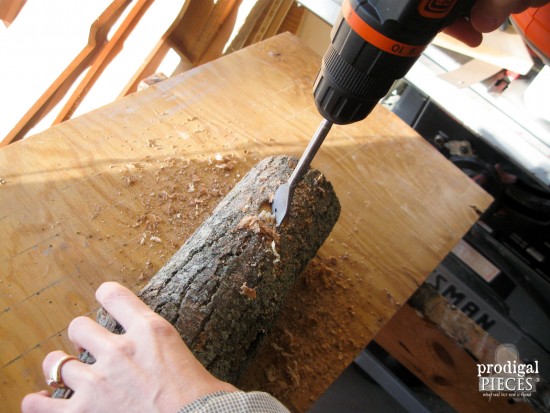
Clamp your log and keep your hand clear from the drill bit. Wear appropriate eye protection.
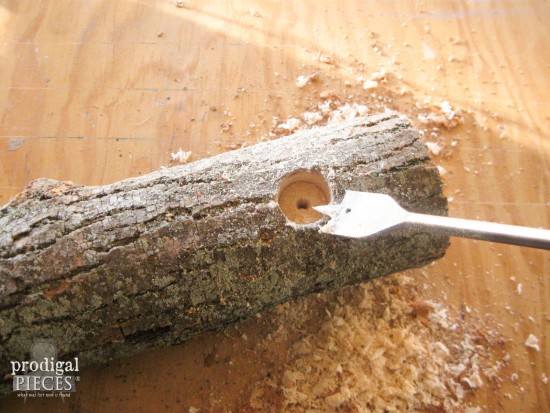
To start, use a 1″ spade bit to drill a hole approximately 1/2″ deep, 2 inches down from the top.
Drill a second hole on the same face about 6″ below the first.
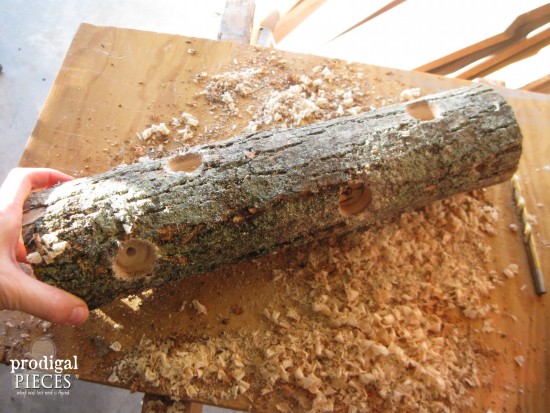
Roll the log a quarter turn and drill in the next face starting with the first hole about 5″ from the top and then a second hole 6″ below that one. (This does not have to be exact and gives a more rustic feel when randomly chosen.)
Repeat those steps until you have two sets of matching faces on opposing sides.
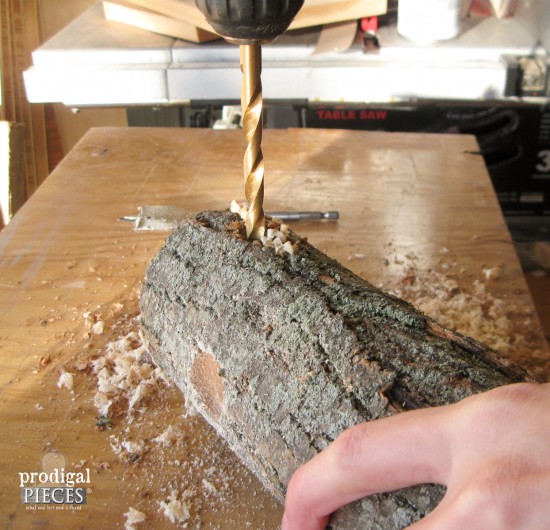
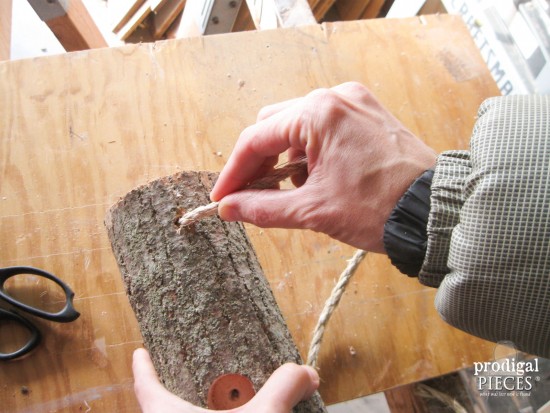
Drill your rope hole using a 5/16″ bit. Starting on the face that has the first hole 5″ down, drill your rope hole 2″ from the top, making sure to go completely through the log.
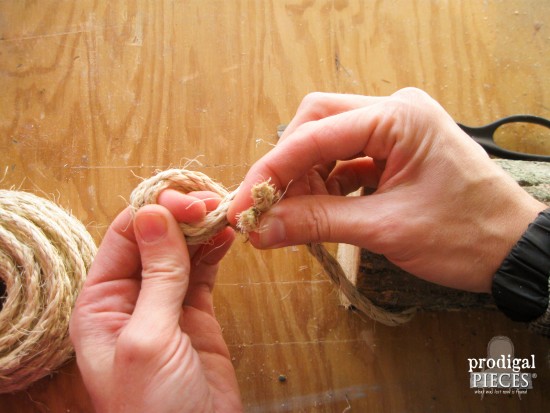
Cut a 2′ or longer piece of rope and thread it into the hole. If you turn the rope in the direction of the braid (counter-clockwise) while inserting it, that will help the rope go through smoothly.
Once through, tie the rope ends together using a basic knot.
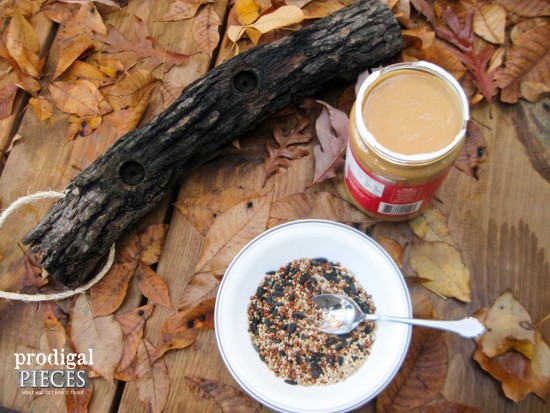
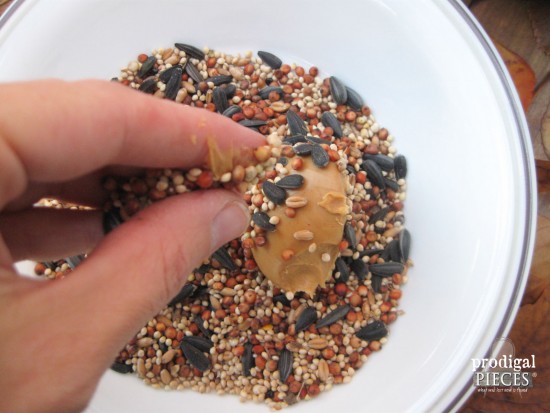
On to the fun part! Birds burn a ton of protein flitting about, so they need to store up as much as they can. We prefer to use chunky peanut butter and then roll it in seeds like this.
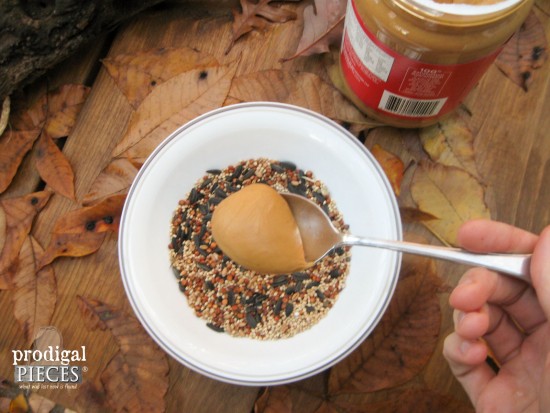
Grab a tablespoon of peanut butter and place it in a bowl of birdseed.
Then sprinkle the peanut butter with seed.
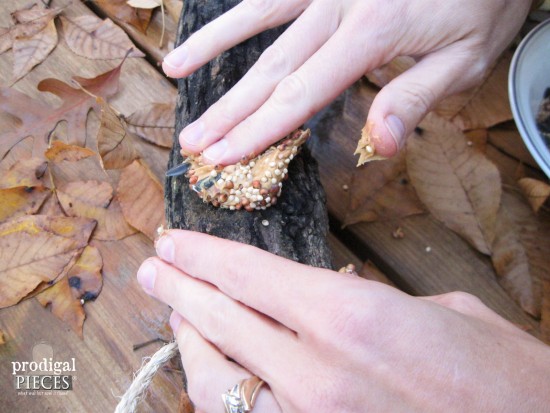
After coating with the seed, press the mixture into the holes using the back of a spoon, or if you’re nutty like me (catch the pun?) it’s more fun to use your fingers.
The kids love this part!
You’re done and it’s ready to hang. Yay!
For a fun twist, and if you’re feeling handy, you could also add dowels for other species to be able to roost at each hole, but for this project I kept it simple.
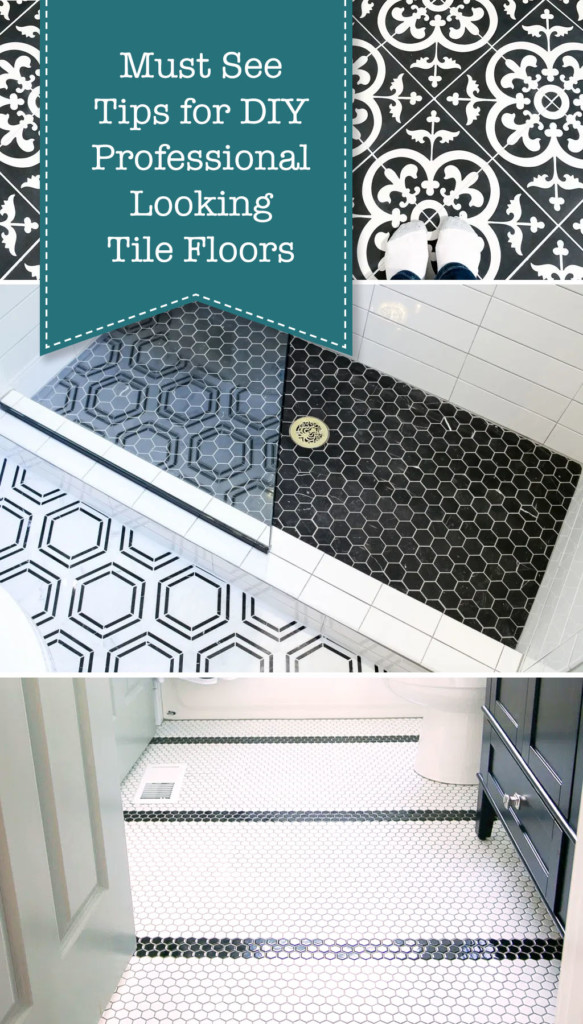
If you want professional-looking tile floors (regardless if you want to do it yourself or hire someone), you must read this article to find out what tiles to buy, how to avoid cracked tiles, and risk a finished tile floor that is less than professional-looking.
11 Must-See Tips for Professional Looking Tile Floors
I’m here to tell you, YES, you can lay your own floor tile and achieve professional-looking results if you learn a few tips and tricks. First, can I share a secret with you? Seven years ago I thought I had to hire a tile installer when we had our mudroom tiled. I wish I knew then what I know now because I would have kicked that installer out of my house immediately. I still have to look at some of the issues he left behind pointing to a less than professional looking tile job. (Insert Angry Face Emoji!)
But, I completely understand if you still want to hire a professional tile installer for any number of reasons:
No time
Don’t have the tools
Physical disabilities (tile-setting is tough on the back and body)
No desire to install tile
Did I miss any reasons? If I did, leave me a comment below letting me know why someone wouldn’t want to embark on a DIY tile flooring project.
Before we get to my tips, I want to give you a little education on tiles. Especially if you had problems previously and thought it was your fault the tile job didn’t look professional. Believe it or not, your issues may have been caused by cheap or poor quality tiles. Say what?!
How to Spot Poor Quality (Cheap) Tiles:
Did you know those tiles you are saving a boatload on may not be quality tiles? Did you even know there were inferior quality tiles? Yes, it’s true. A few years ago I hired a tile installer to help me tile some of the bathrooms in the Saving Etta project. (Yes, I could have done it myself, but I’d still be tiling if I did everything myself.) When I first met the installer, he asked me about the tiles I had purchased. I showed him the boxes and he opened several to inspect them. This is what he was looking for to determine if they were cheap tiles:
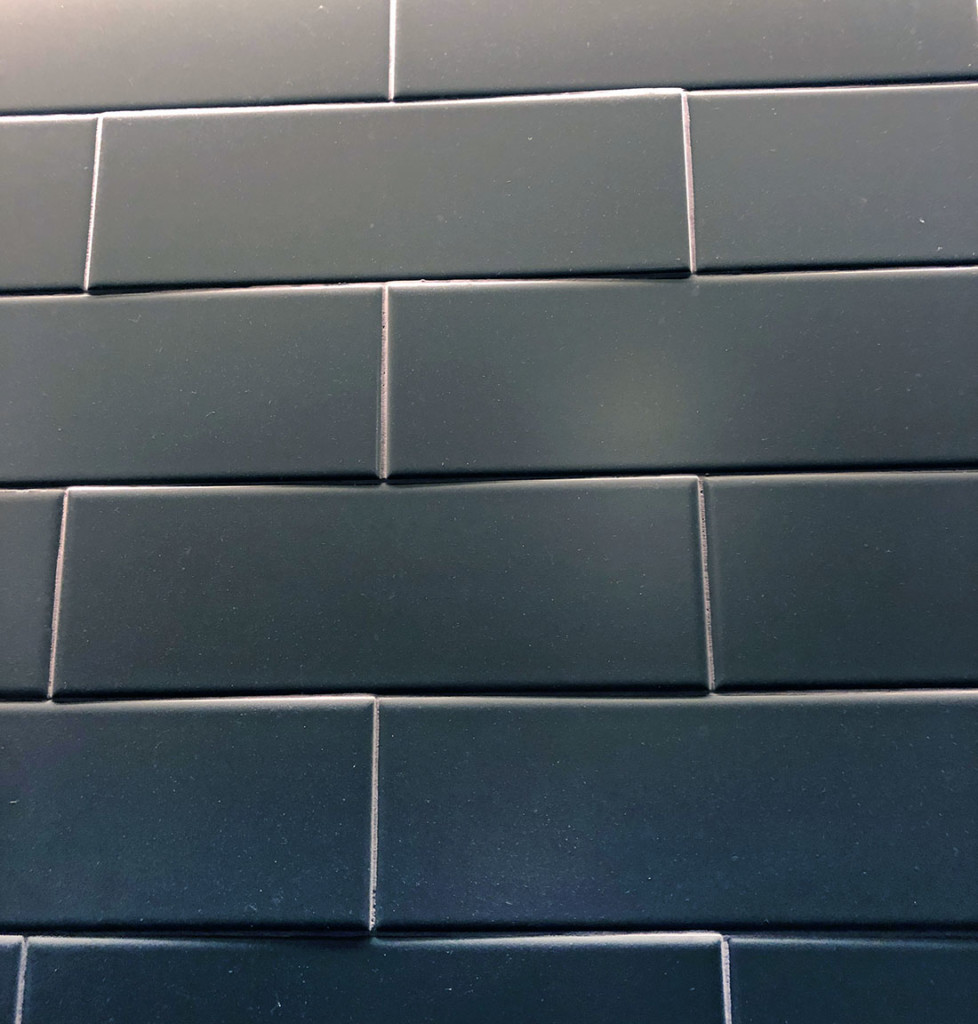
Color – Pull tiles from several boxes (if possible) and check to see that the color is consistent for one color tiles. (Obviously, if they are supposed to vary in color and pattern that’s okay.) Regardless, you should always pull tiles randomly from several boxes when laying tile.
Size – Pull random tiles from several boxes and stack them together. They should be identical. Poor quality tiles can vary up to 1/8″ in size. This will cause issues especially if you are using a small grout joint.
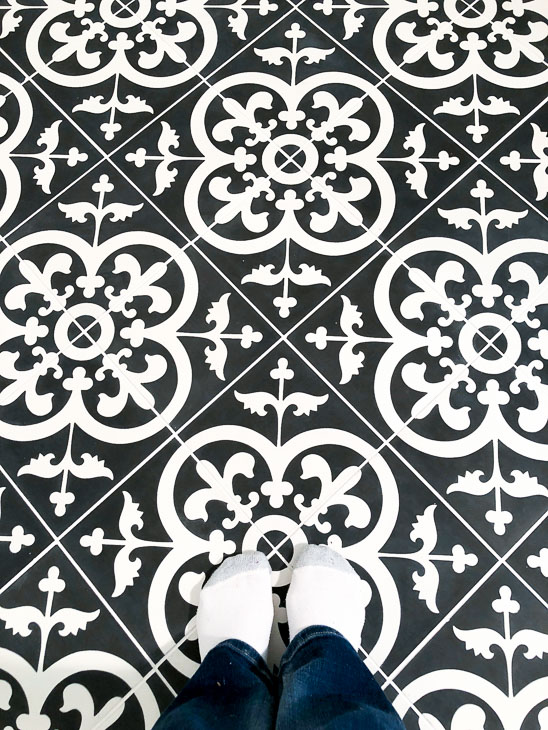
Printing – Many ceramic or porcelain tiles are printed to look like real stone today. Take a close look at the surface. Is the printing evident? Do you see small dots like a printed newspaper photo? If you can’t see them easily, the printing was well done.
Thickness – In addition to the overall dimension of the tiles, you should check the consistency of thickness.
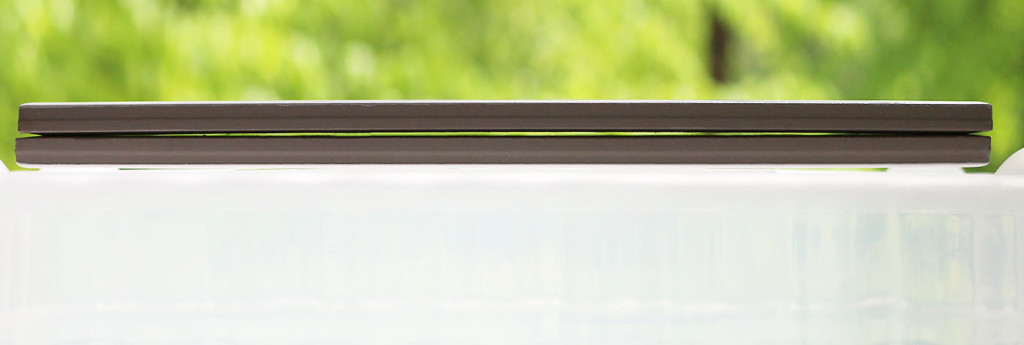
Warping – Are your tiles perfectly flat or do they bend? See below for a picture of two 4″ x 12″ tiles that show some bowing in the center of the tiles.
(To eliminate accentuating this defect, you wouldn’t want to install these tiles with a 50% offset (shown below). Instead, a 25 or 33% would be a better staggered joint pattern.)
Wedging – Square and rectangular tiles should be cut square. Out of square tiles could would impact your tile job and show up especially in the grout joints.
Typically you can expect good quality from tiles that are labeled as Standard or First Grade. Second grade tiles will have more variations in appearance. Independent tile shops are the best place to purchase good quality tiles. They typically sell to designers and tile installers, but also sell to the general public. Granted, you will likely pay more. But, you know the old saying, you get what you pay for.
Picking Tiles:
Tiles are tiles, right? Wrong, there are many tiles that would not be suitable for a floor. And some tiles are not good for high traffic areas. Finally, some tiles are not a good fit for showers. How can you tell which tiles are best for use in specific areas?
Floor Tiles vs. Wall Tiles:
Floor tiles must be strong enough to handle walking on and an occasional dropped item. Did you know there’s a rating for tile strength? It’s called a PEI rating.
A PEI of 1 is ideal for walls. PEI of 2 is best for bathrooms and kitchens. And a PEI of 3 is appropriate for all residential applications. Meanwhile, PEIs of 4 and 5 are applicable for commercial and heavy commercial applications. When shopping for tiles, they may not have the PEI rating displayed, but there should be a notation if they are acceptable for floors and walls. If you don’t see a notation, ask a salesperson or check with the manufacturer.
How Slippery Are Your Tiles?
Floor tiles must meet certain criteria for COF or coefficient of friction (basically how slippery the tile is.) But, different areas need different COF values. Let’s talk strictly for residential purposes (because commercial and business sites are a whole other beast). Floor tiles in a bathroom with a shower or tub must meet a greater than .42 DCOF test. Tiles that score less than .42 would only be appropriate for areas that will be kept dry or walls.
Polished tiles tend to be more slippery. Tiles that have texture usually score better on the DCOF test, but depending on how textured, they can be harder to clean.
Are marble and natural stone tiles good for floors?
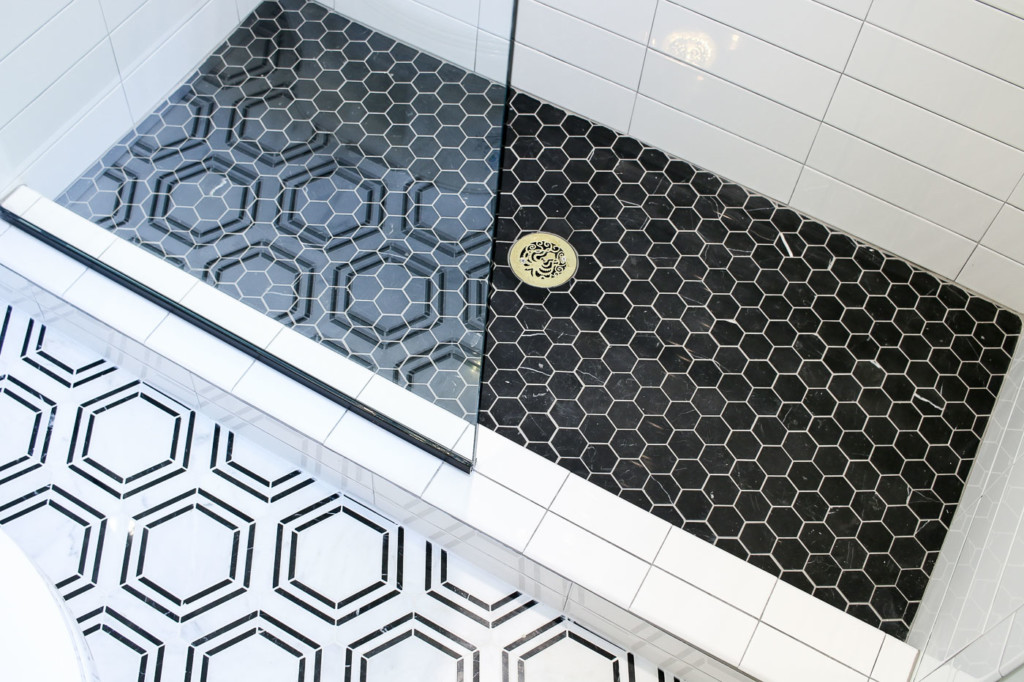
Oh the beauty of real marble! I know, I know, I love marble too, but would it be a good choice for your floor? This depends on several factors. The first being the use of the room. If using in a kitchen or room with a lot of traffic and opportunities for spills, you’ll want to steer clear of marble and stone products that can wear or stain easily. Of course, you can seal your tiles, but the upkeep will be a lot more than porcelain or ceramic tile. But, if you are okay with your floors showing off natural wear and patina, go for it.
Porcelain vs. Ceramic – What’s the Difference?
Porcelain tiles are stronger and more dense than ceramic tiles. They don’t absorb as much moisture as ceramic tiles (Porcelain tiles must be tested and absorb at 0.5% or less to be certified porcelain.) Because they absorb less, porcelain tiles are more ideal for shower floors or areas that stay damp or humid. While porcelain tiles will usually be stronger, thicker, and less porous, they can be tougher to cut and more expensive. Ultimately you can use ceramic tiles on your floor, as long as they meet a 3 or higher PEI rating (as discussed above).
How Many Tiles Should I Order?
Typically most tilers would suggest you order anywhere from 15% -20% extra for your job. If you are using small tiles, you can order as little as 10% overage. Usually, I order 15% because it’s better to have a few left over to keep on hand should you ever have to replace a tile. Besides, it’s a real pain if you run out of tiles mid tile job.
Know Your Finished Height:
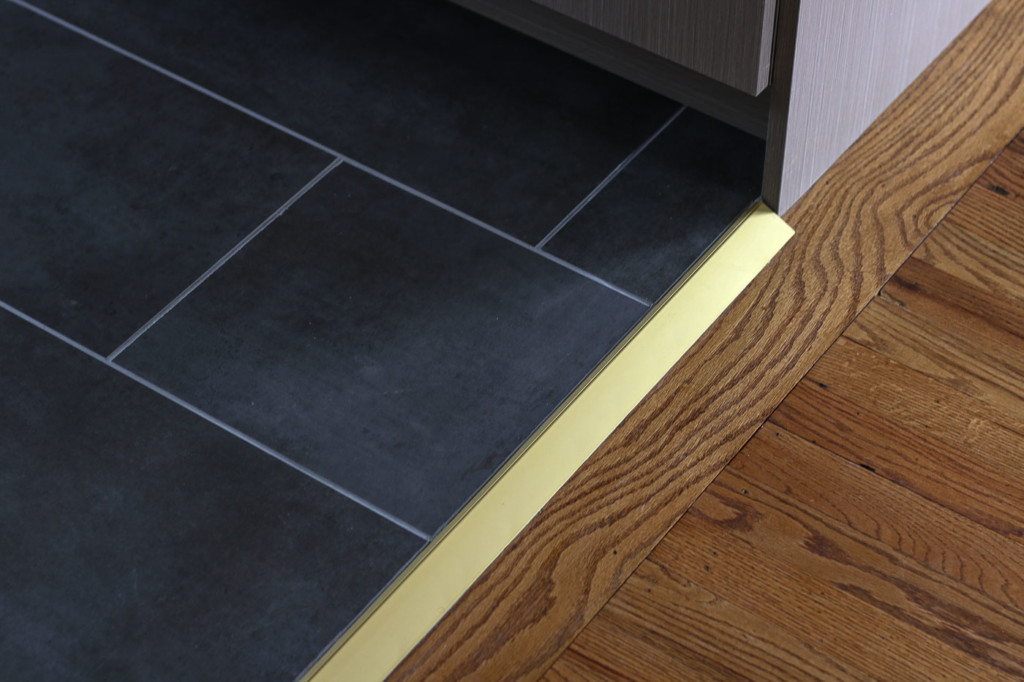
If you are picking out tiles, be sure you know the difference in height of adjoining rooms. Choosing your floor tile can mean the difference between perfectly matched floor levels or the need for a transition strip (or worse, a step up or down!) Luckily there is a transition strip for most floor differences.
Tools:
(I’ve included affiliate links for your convenience. I earn a small percentage from a purchase using these links. There is no additional cost to you. You can read more about affiliate links here.)
I’m a big advocate of having good tools. Having a good tile cutter means the difference between flying through a tile job or having it drag on for an eternity. A good tile cutter also reduces waste because they cut tiles cleanly.
When possible, I prefer cutting the majority of tiles with a scoring tile cutter. It’s quicker, a lot less messy, and clean up is as simple as brushing off the platform.
Occasionally I’ve run into tile that resisted cutting on my scoring cutter (thick porcelain tiles usually fall into this category). For those tiles, I use my wet saw. A wet saw can also cut angled and corner cuts into the tiles. I’ve used the same inexpensive wet saw for years, but when it dies I’ll upgrade to a bigger wet saw.
Recently I started using an angle grinder with a diamond blade for more precise intricate cuts or to knock off a small amount. It works faster and is less clean up than the wet saw for those intricate cuts.
Finally, if you are tiling a shower, you’ll inevitably need to cut a hole in your tiles around a pipe. For that task, I use a drill with a diamond hole saw.
Now it’s time to learn my top tips for a professional-looking tile floor. If you are a newbie and want to learn the basics of tiling, you’ll find these two lessons helpful: Learn How to Set Tile
Okay, let’s learn how to get those professional tile results that will even fool the pros!
11 Must See Tips for Professional Looking Tile Floors:
Over the years I’ve taken several courses on tile setting and worked directly with several professional tile setters. From each experience, I’ve learned a lot and now I want to share the things I’ve learned with you so your next tile job comes out beautifully.
In my video you’ll get to see the progress at the Millie’s Remodel project as I tiled the kitchen floor. I decided to incorporate the tiling tips I’ve learned into the video for you.
Watch the video for the tips and how I install floor tiles:
You can also watch the video on YouTube if you prefer (especially if you want to click on the links to the other videos I mention).
1. Flat and Sturdy Subfloor:
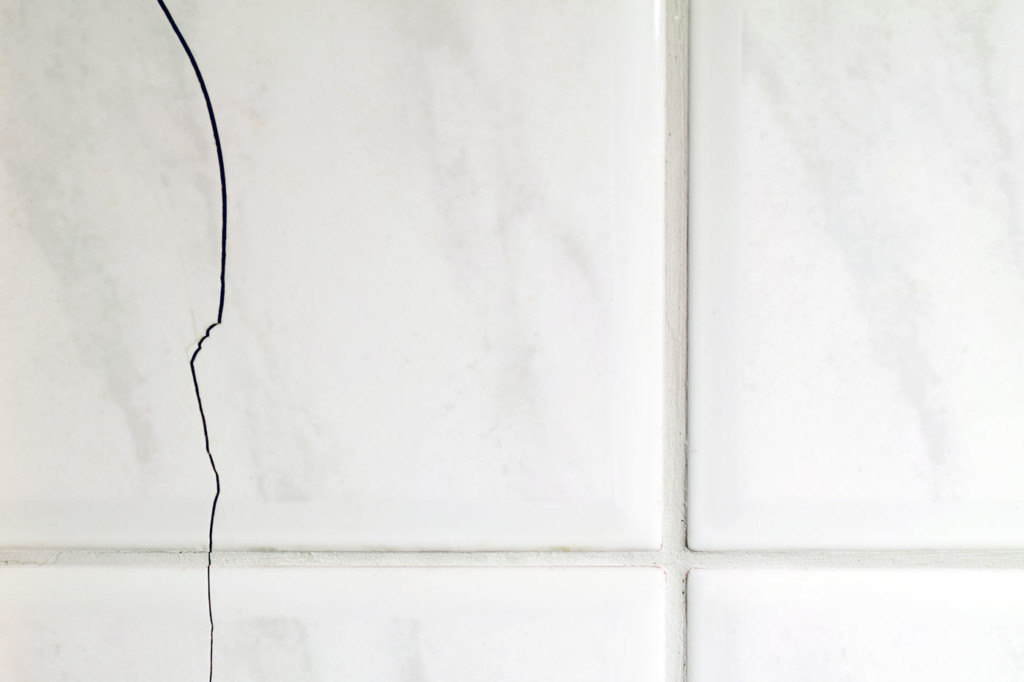
Like building a sturdy house, your foundation is super important. When you walk on your floor does it flex, bounce, or squeak? If so, you need to solve these issues now. Use a level and rest it in several different areas (and directions on your subfloor). Are there low spots, high spots, or a slope? If you have dips or valleys in your subfloor, you can’t get a good tile job that will last. If your floor isn’t sturdy and flexes, you will have cracked grout, or worse cracked tiles.
If you have a wood subfloor, make sure your wood substrates have the manufacturer’s recommended spacing (typically 1/8″ gap between plywood sheets.) Backer board or uncoupling membranes should be laid onto the subfloor before tiling.
Never tile directly onto new concrete. In fact, keep reading to learn why I use uncoupling membranes and how to prevent your tile job from being ruined by expanding or contracting concrete.
After taking the Schluter workshops, I will never tile a room without an uncoupling membrane again. As a bonus, their membranes are waterproof. No more need to worry about water soaking into your subfloor and causing mold to build up.
3. Use a Good Tile Cutter
Using good tools will help your tile job go smoothly and it will keep your tile cuts from looking like a jagged mess. If you can’t afford to buy good tools, look into renting some, or ask a fellow DIYer if you can borrow theirs. (Always clean their tools before returning them. Nothing irks me more than dirty tools.)
4. Layout Tiles Ahead of Time
If you’ve heard that spending time doing the prep work will save you time in the long run, nothing could be more true than when tiling. Before I start any tile job, I always lay out my tiles first. I dry lay them out to see what I’m dealing with. First I layout a run of tiles along the length of the room and position the tiles to avoid having to cut a small sliver of a tile at either end. Then I layout a run along the width of the room making adjustments to avoid the same situation.
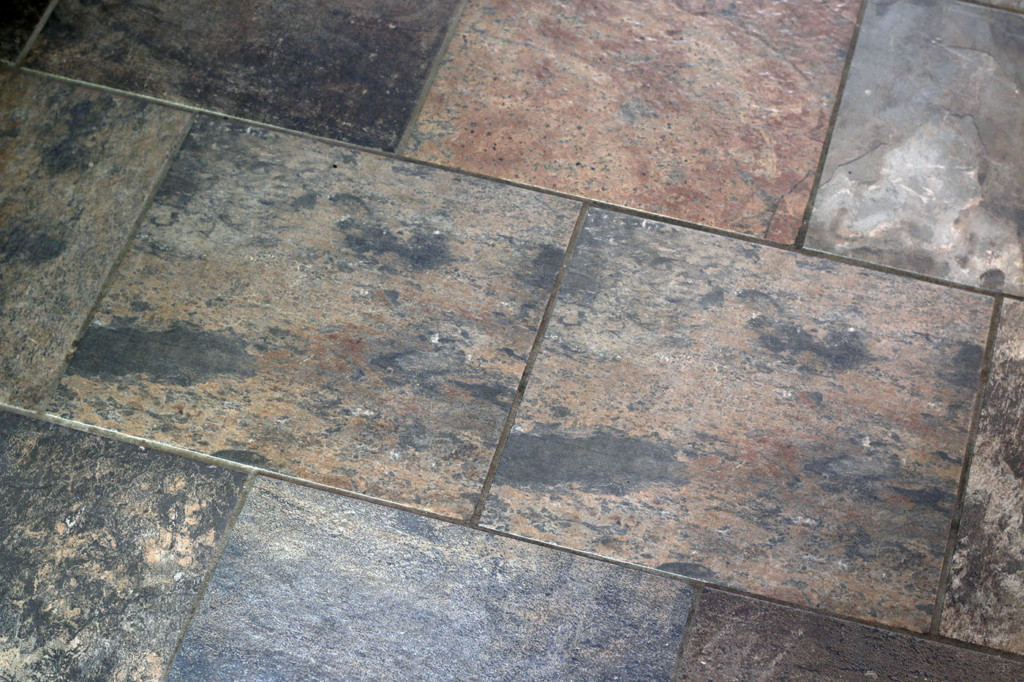
If I have printed tiles, I separate them into piles by their individual print design. Then when I pull tiles later I pull from different stacks. I also step back to make sure two of the same tiles aren’t next to each other (like in the example below thanks to that so-called professional I hired).
Nothing screams rookie tiler louder than two printed tiles being installed next to each other. And in the same orientation!
5. Leave an Expansion (or Movement) Joint
Despite what you might think (especially if you have perfectionist tendencies), you do not want to cut and install your tiles tight against the wall (or other objects in your room like columns, pipes, or walls.) You must leave at least 1/4 inch around the perimeter of your room or around immovable objects. Not adhering to this rule can lead to your tile floor popping up or tenting (See this article for a photo of tenting tile.) Additionally, you need to install a movement joint in any interior room at every 25 feet in each direction. However, if this room is exposed to direct sunlight or heat, you’ll need an expansion joint at every 12 feet in each direction.
6. Use Recommended Trowel Size
Tiles come in all shapes and sizes and therefore they require a variety of trowels. Be sure to check with the specifications on your tile to find out the trowel size. Or ask your tile shop representative for their recommendation. Using a too-small trowel with large tiles would cause the tiles not to adhere to the surface. And too big a trowel with smaller tiles will make it difficult to level the tiles.
7. Back Butter Large Tiles
When tiling a floor with large tiles, back buttering is a must. Typically I’ll spread the thinset mortar onto the floor and trowel through it. I’ll use the excess to scrape a thin layer over the back of the floor tile. This accomplishes two things:
It keys mortar into any voids on the back of the tile.
It ensures full coverage on the back of the tile.
If you don’t back butter large tile, you run the risk of having air pockets behind your tile which can sound hollow when walked on or cause the tile to pop up.
8. Use Leveling Spacers
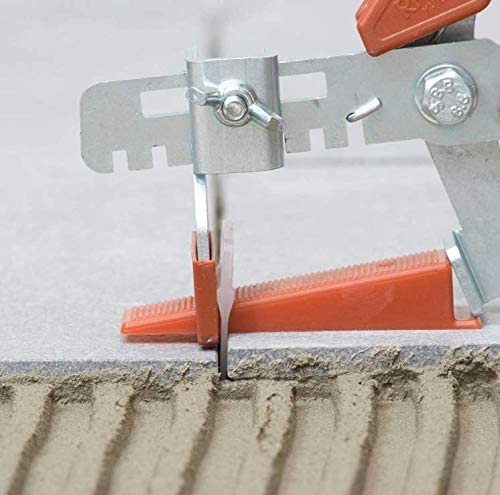
Leveling spacers are a relatively new product, but I will never tile a floor without them again. I’ve tried several brands but prefer the wedge-shaped leveling spacers. The wedges are inserted into the tile spacer and ratcheted tight to bring tiles to the same height as the adjacent tiles. You can see how they work and how to remove the spacers in my video above. (It’s a lot of fun removing them as you’ll see!) Using leveling spacers virtually eliminates lippage on tiles.
9. Clean Thinset Off Tiles
Anyone who has had to clean dried thinset mortar off tiles will never make the mistake of letting it dry on tiles. When tiling, keep your area clean. Be sure to clean off any mortar on surrounding tiles. In addition, make sure to clean thinset that squeezes up between the tiles. You want to make sure you have enough room for grout to set on top of the mortar.
10. Use Grout with Sealant
Grouting is the final step for any tile job, but if you didn’t add a sealant additive to your grout, you will need to seal the grout after the fact. I don’t know about you, but the last thing I want to do after tiling a floor is hand paint sealant on all the grout lines. And if you skip sealing all together you’re going to hate keeping the grout clean.
11. Plan Your Transition Pieces Ahead of Time
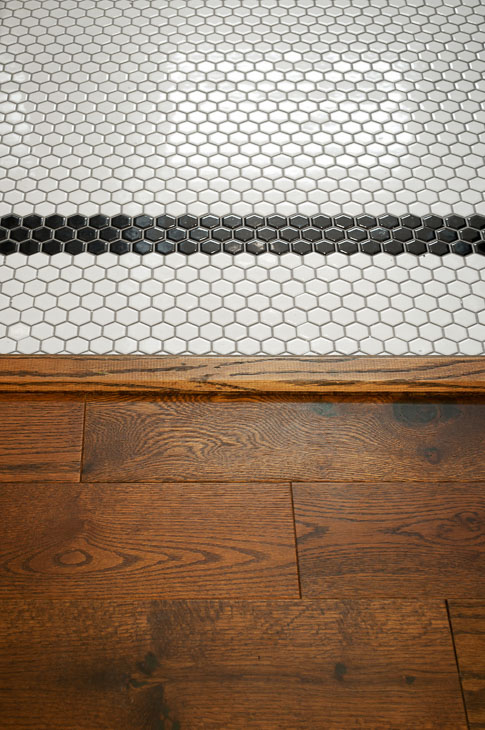
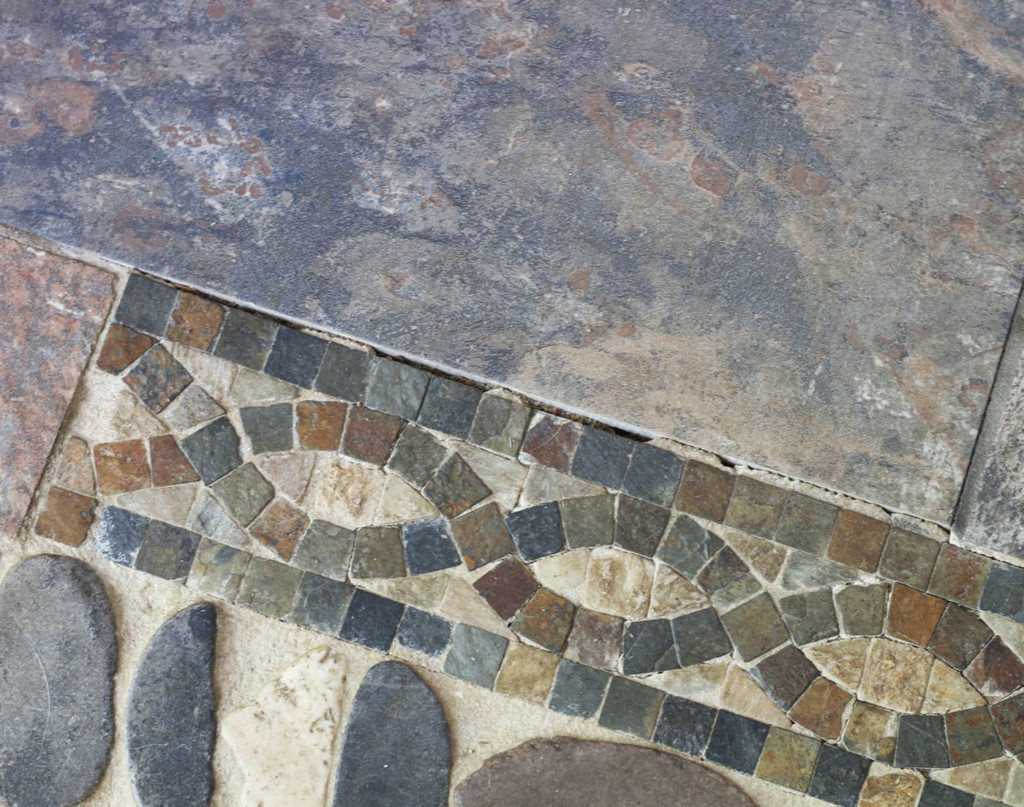
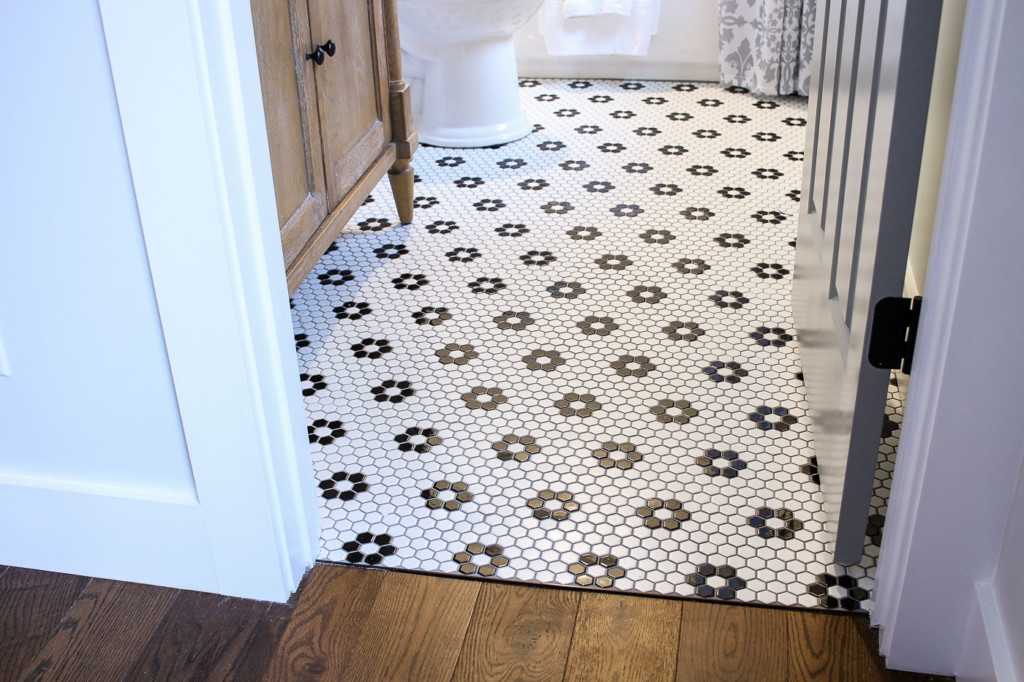
One thing that will truly set your tile floor job a notch above is using sleek transitions. Personally, I prefer using Schluter profiles strips for my floor transitions. There are a variety of finishes, sizes, and styles. Some of the profile strips are laid under the tiles for a stronger bond. Others are installed after the grout has cured. In the Millie’s Remodel kitchen, we had a big change in height between floors. I ended up using the the Schluter Reno-V profile which has an L shaped piece that slides under the tile edge during installation. (You can see the way it works in my video.)
However, in the Saving Etta house, I used simple Schluter Schiene profile strips between tile and wood flooring.
How to Speed Up Your Tile Job:
It helps to have a helper when tiling. Once you mix thinset or grout, you’re on the clock. Both will harden within a set time. If you have a helper, you can give your helper the task of cutting tiles or changing out your dirty water buckets, or mixing more thinset mortar. Speaking of mortar, never mix more than you can spread before hardening. As an experienced tiler I try not to mix more than 1/3 of a 50 pound bag of mortar. Otherwise, you’ll be left with a big boulder of thin set when it hardens.
If you can’t get a helper, make sure to fill multiple buckets with clean water before you begin. It also helps to cut some of your perimeter tiles ahead of time.
Tip for Working with Grout: You can slow the curing time of your grout if you set your mixed grout into a second bucket filled with ice water to slow the curing process. I show this in more detail in my grouting tutorial.
Best of luck tiling your floor. I know you can do this.
https://prettyhandygirl.com/wp-content/uploads/2020/04/must-see-tips-for-professional-looking-tile-floors-feature.jpg4901109Brittany Baileyhttps://prettyhandygirl.com/wp-content/uploads/2021/07/PHG-logo-tagline-2020-1030x211-R.jpgBrittany Bailey2020-04-24 07:05:002020-06-05 12:44:4811 Must See Tips for Professional Looking Tile Floors




 DIY Track Saw Jig for your Circular Saw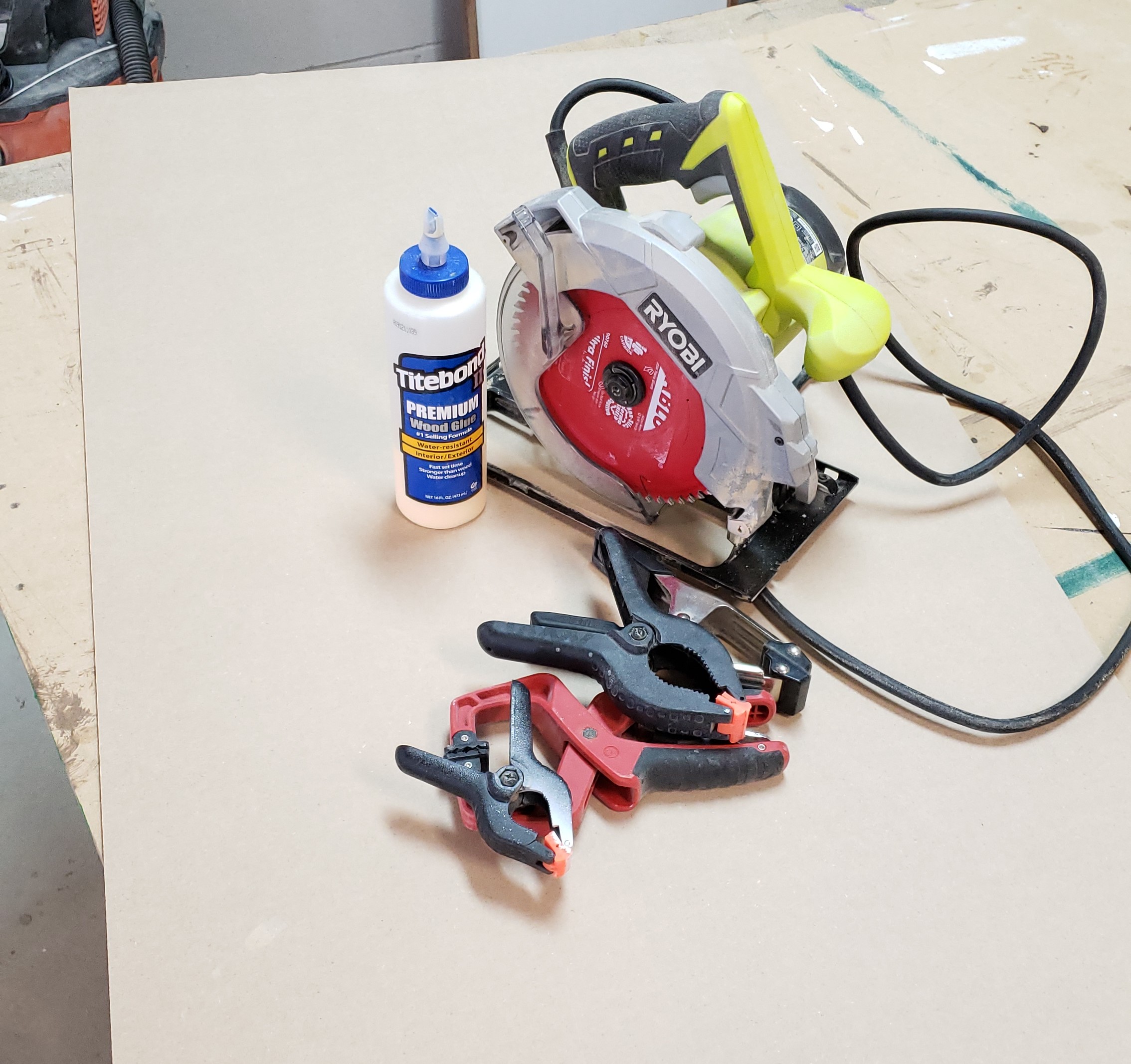























 11 Must-See Tips for Professional Looking Tile Floors