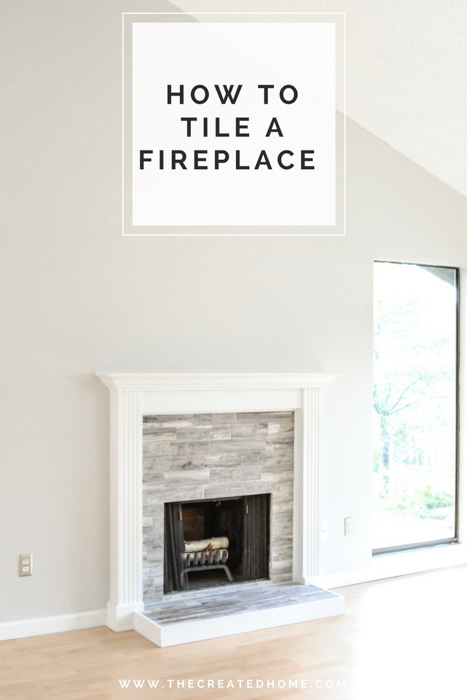
How to tile a fireplaceHow to Tile a Fireplace

Hello Pretty Handy Girl Readers! Sarah here from The Created Home. Today I’m sharing how you can update and customize your fireplace by doing your own tile work. Don’t be intimidated, tiling is actually quite accessible for DIYers, and once you get the hang of it you’ll be unstoppable. You may even find that you really enjoy it!

As with any DIY, especially one you are new to, you will need to read all the way through to make sure you are familiar with the process and always take proper safety precautions. Use ear and eye protection when you are using a tile saw. Read the manual for your tile saw and make some test cuts to get the feel for using it.

Note: This tutorial will not cover the grouting step. The tile I chose for this project was close together and did not require grout. I’ll cover that in more detail in just a bit. To learn how to grout, read Brittany’s tutorial on grouting and sealing tile.

Materials:

(I’ve included affiliate links for your convenience. I earn a small percentage from a purchase using these links. There is no additional cost to you. You can read more about affiliate links here.)
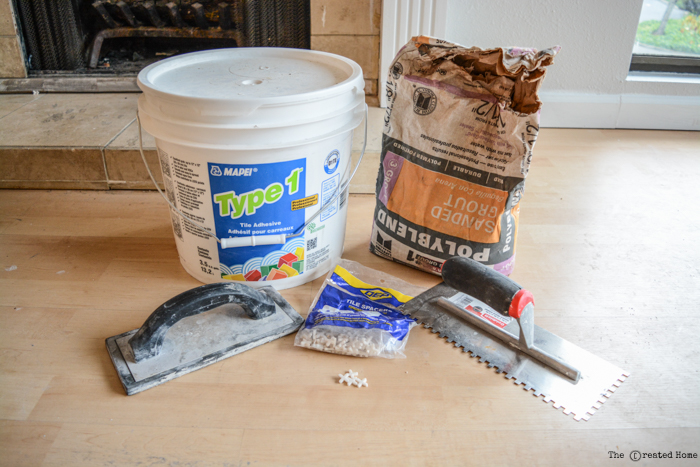
tiling supplies

How to Tile a Fireplace: Make a plan

Entire tutorials can be written about how to choose and plan out your tile. There are a LOT of options out there. Bear in mind that a patterned tile will require more work when laying out, as the pattern needs to be visible and centered in the space. Example: In this fireplace I would have loved to use a cement tile look, but the tiles I found were 8″ and the sides of the firebox only allowed for 6 ½” (which would have looked awkward with the designs I liked.)

Ugly Before Shot:
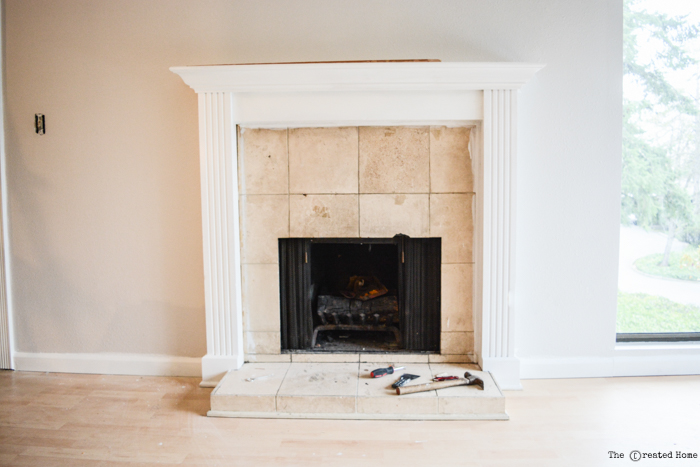
tile fireplace before

A second thing to keep in mind is that knowing the square feet to be covered is only half the battle. Chances are you’ll have a number of small pieces to cut which will render some part of each tile unusable. It’s a good rule of thumb to always get 10 – 15% more tile than you need.

Once you have the tile you will need to plan your layout. Where will a row have to be ripped to fit? Where will the pattern repeat? What order will the tile need to be applied? For this project my husband and I spent just as much time making the plan as actually installing the tile.

Get to work:

For this project we chose to tile over existing tile, which was far simpler than removing what was there (even with the poor shape it was in.) If your tile doesn’t have adhesion issues this may be a great route for you. We tested the waters [tile] here and found that the damage to the existing tile was superficial, albeit highly unattractive.

damaged tile fireplace

Once you have a game plan it’s time to make your first cut. A tile saw (or wet saw) cuts much like a table saw, but it needs a constant source of water to keep the blade cool and the dust down. Keep a pail of water on hand to refill the saw as needed. Some tile saws can be hooked up to a water source via a hose.
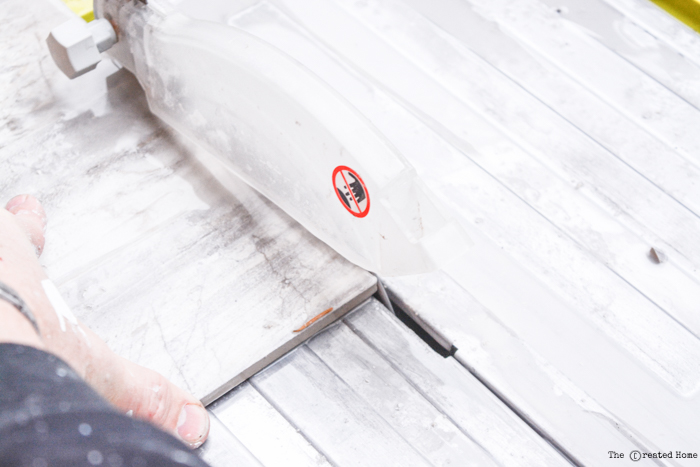
tile saw wet saw

You will be covering the edges where the tile runs into the wood mantle surround with some sort of trim, so it’s not important that you are dead on with every cut fitting perfectly against that edge. This is also useful if you run into issues with things being out of square (which happens frequently). You can see in the photo below the tile does not fit snuggly, or uniformly along the far sides.
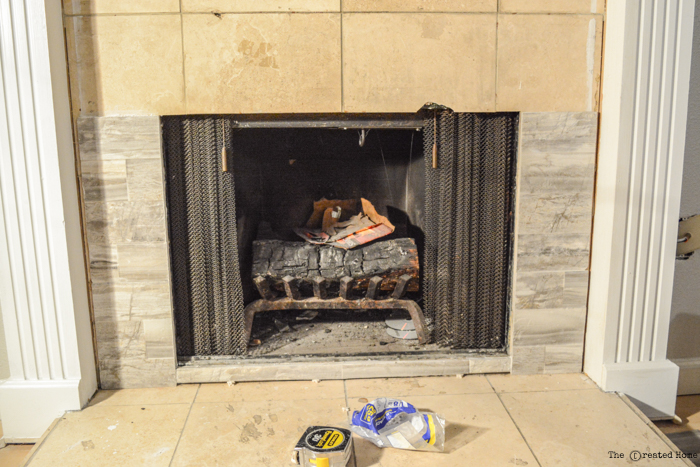
How to Tile a Fireplace

Using a Wet Saw: a few tips

I recommend using a tile saw rather than a snap cutter (which just doesn’t work very well). It can be intimidating at first, but go slow, use caution, and follow some basic rules to ensure a professional looking, safe job.

The first rule, is to keep those fingers away from the blade. Make your cuts slow and steady. Water should be flowing around the blade constantly as you gently push the piece through. You can avoid chipped ends by pushing the piece through very, very slowly as you reach the end, being careful not to force the blade. Too fast and the corner of your tile will likely chip off.
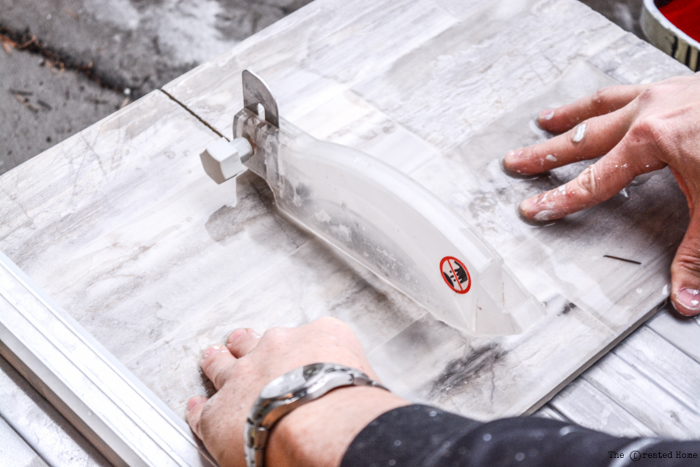
wet saw tile saw fireplace

Use your fence to make sure your cuts are straight. You may have to trim off ends if you tile is staggered, as ours was. Place the trimmed end to the outside, where it will be covered with molding.
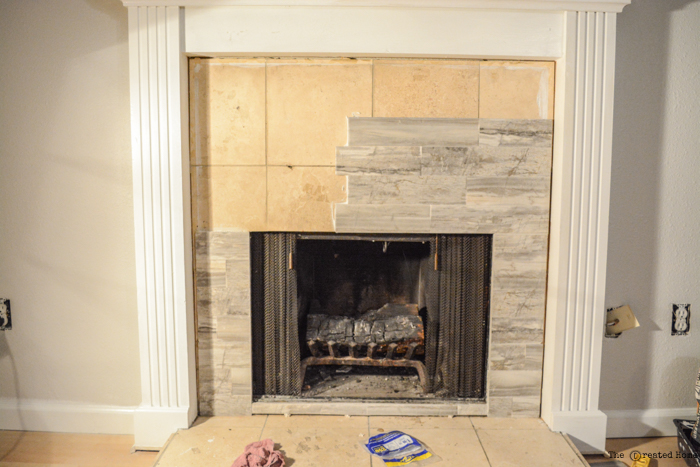
How to Tile a Fireplace

How to Tile a Fireplace: adhering the tile

Tile adhesive comes either pre-mixed or in powder form. Pre-mixed is great for small jobs like a fireplace, but either route is fine. Use the notched trowel to spread the adhesive on the back of the tile piece, covering the entire back.
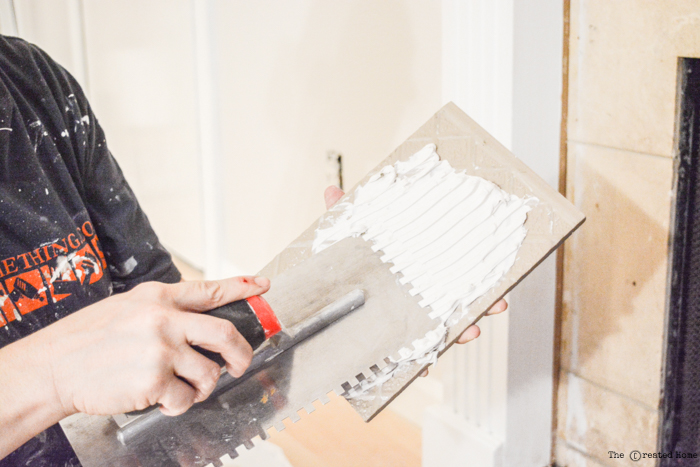
how to tile

The notches will leave tracks, like so:
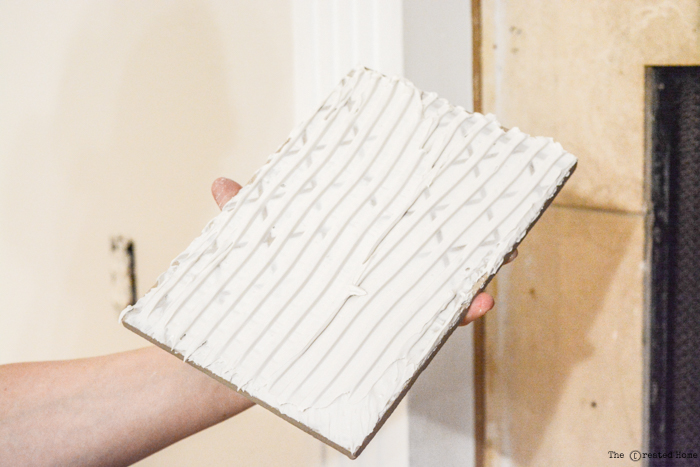
how to tile

Position the tile where you want it and push firmly, wiggling it around a bit so those tile tracks fill and the tile is firmly adhered along every point to the fireplace.
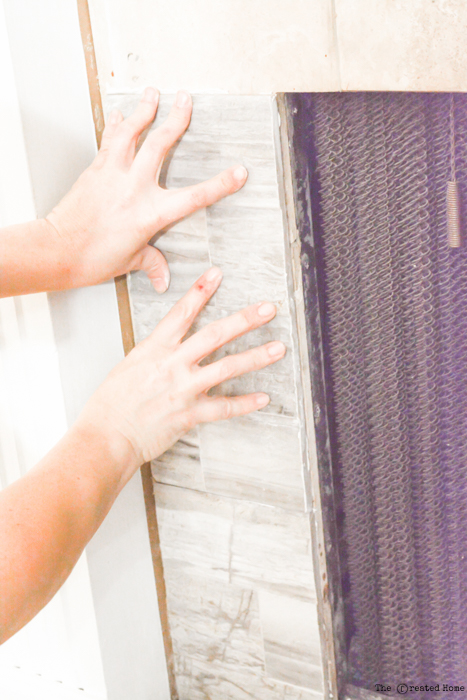
how to tile a fireplace

If you are grouting between your tiles you will use spacers around each piece. The pieces we used required being set close together to mimic the look of the “preset” tiles. We used the adhesive to fill any small gaps that did show. Again, be sure to check out Brittany’s grouting tutorial if you plan to use grout.

how to tile a fireplace

Continue adding the tiles to the desired pattern. Be sure to account for how your final row will fit, as it will in all likelihood require cutting the tile crossway to fit correctly. The good news is you will be able to hide the seam at the top with some molding.
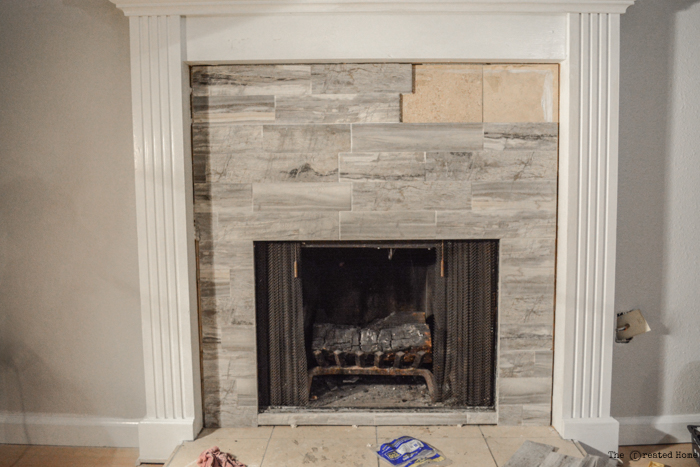
tiling over existing tile - How to Tile a Fireplace

This fireplace required tile down on the hearth as well, which meant notching around the mantle. To make those cuts be sure you are cutting the tile face up and draw lines to help guide your cuts. The blade will undercut a bit farther than your top cut, but it will be hidden underneath. You’ll quickly discover that most lines are not square, and probably have a gap something like this. Use some caulking to seam it all together and it will look just fine.

tiled hearth

Finishing the Fireplace: adding trim

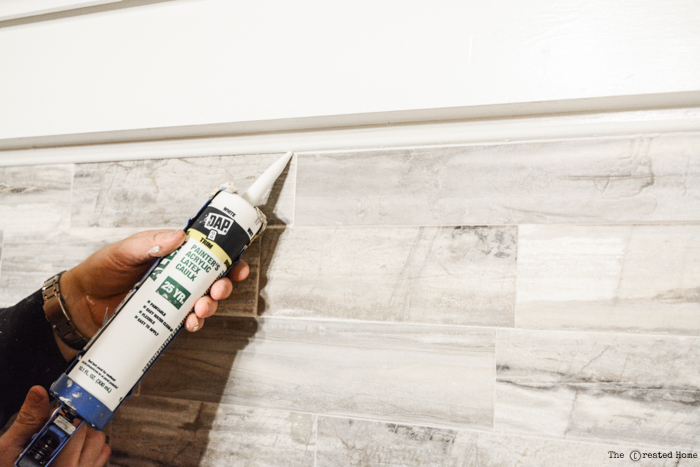
Molding completes the finished product and hides those seams. Quarter round is a great option for the fireplace. Paint the molding to match the mantle. Attach by driving brad nails through the quarter round at an angle so it goes into the hearth. Caulk around the molding for a seamless look.
fireplace molding

Bonus Content: wrapping the hearth

The front of the hearth here had tile, and I decided the better look would be to wrap it in wood instead to tie it into the white of the mantle and break up the tile a bit. It’s the same look I created when we redesigned our own fireplace.
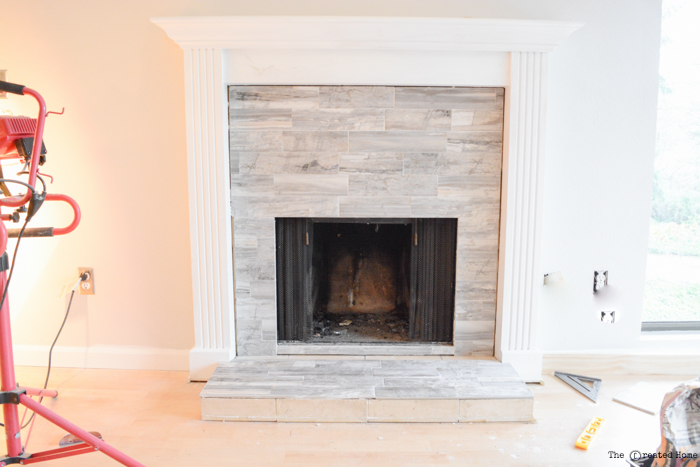
how to tile a fireplace

To create this look you will need a piece that is the same width as the height of the hearth front inclusive of the tile you just added. If you are lucky you won’t have to rip a piece down to fit.

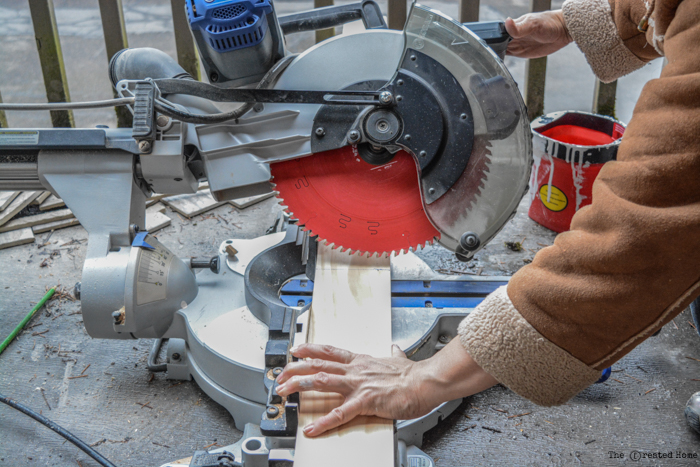
The sides of that front can be square cut or mitered. To miter the front, cut one end at a 45 degree angle. I prefer to use the saw’s bevel function to get this cut nice and straight.
bevel cut

Place the piece against the front of the hearth and line up where it will sit.
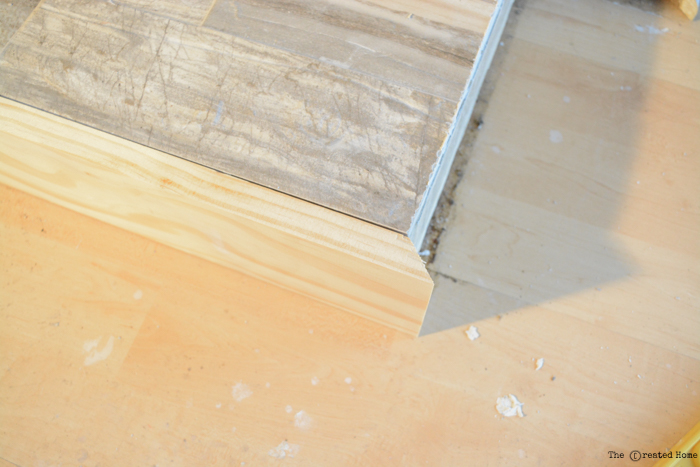
miter cut hearth front

Mark the other end where the short end of the 45 will sit. This is easier and more accurate than simply measuring.
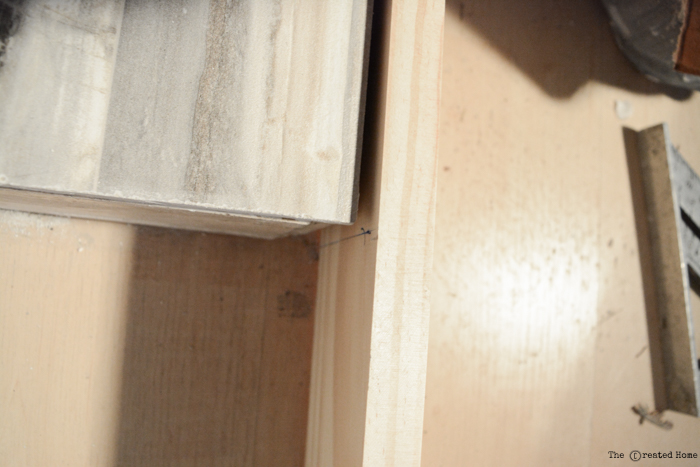
marking cut

It also helps to sketch the angle of your cut while the wood is in place to ensure you don’t cut the wrong way (it’s easy to do).
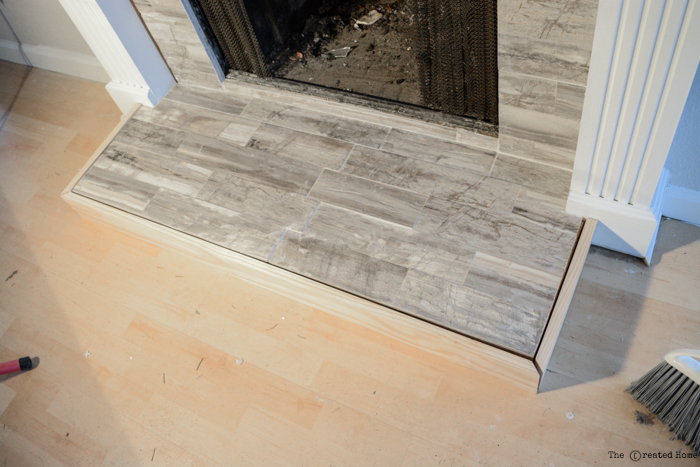
How to Tile a Fireplace

Cut 45˚ for the side pieces, then measure and make the 90 degree cuts. You can easily cut those back to fit, so cut a little at a time. Paint the molding. Attach by finish nailing the angles together, and then either nail or glue it to the face of the hearth. We used construction adhesive and clamps, letting them sit overnight.

Stand back and enjoy your hard work!

how to refinish a fireplace with tile

As you can see, not only are there a lot of options for refinishing a fireplace, there are a ton of options for tile itself. Tiling is a great way to go that doesn’t have to cost a lot of money. Our cost for this fireplace was just over $100.

When we started, this fireplace was far from the focal point of the home, as you can see . . .
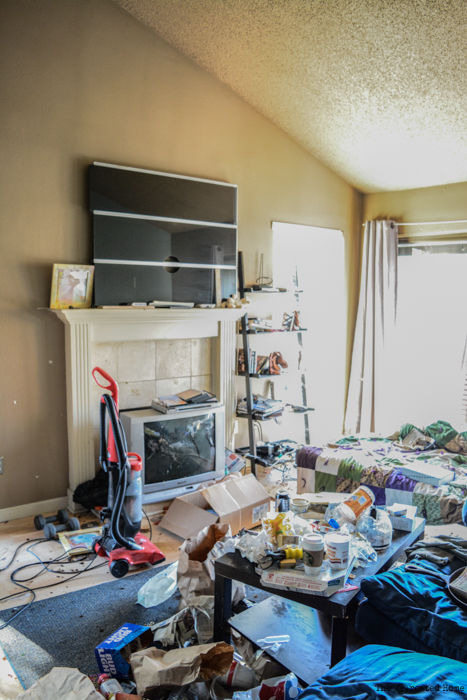
fireplace before

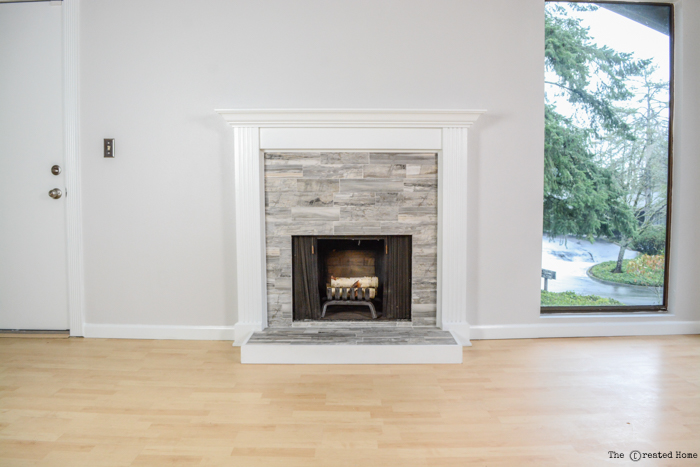
. . .and here’s the dramatic finished look.
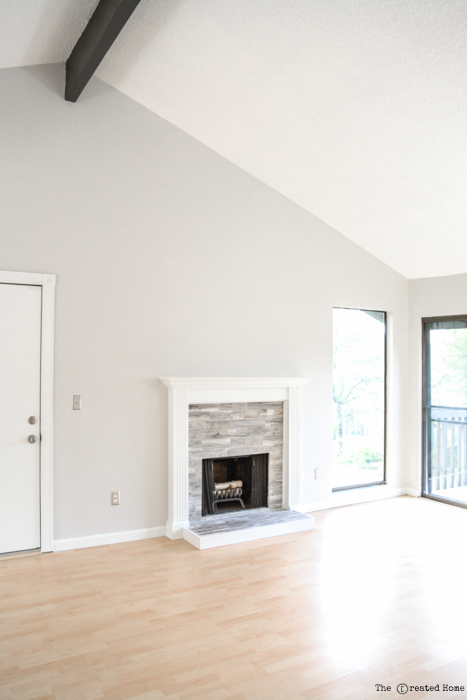
How to Tile a Fireplace

Now it’s your turn! Put those tiling skills to work and tile it up! In no time at all you’ll be chatting with company and casually mention, “Oh yes, the fireplace. did that. No big thing.” And don’t forget to share your before and after photos so we can all admire the transformation with you.

Happy tiling!

~See More of Sarah’s Projects~

Check out these other posts to up your tiling game!
 

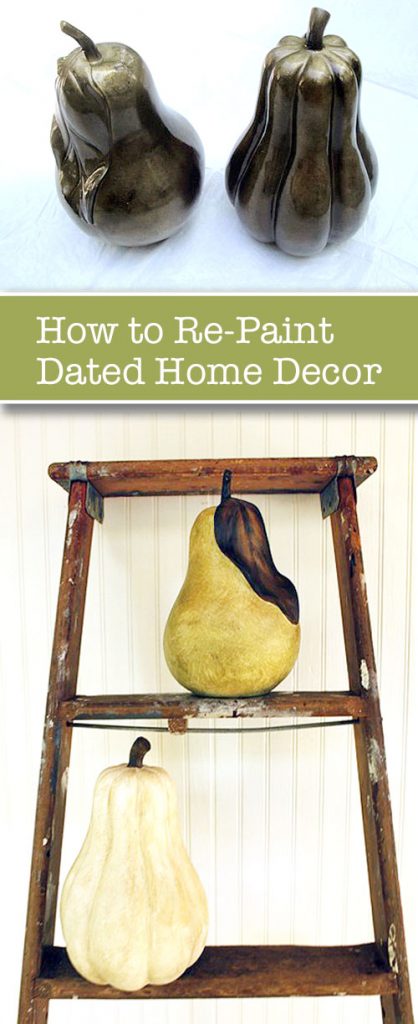
How to Re-Paint Dated DecorWant to know How to Repaint Dated Decor?

Raise your hand if you are a thrift shopper? No, what about yard sales? Have you ever seen any ugly ceramic decor items that shouldn’t have survived the 70’s or 80’s? Nodding your head YES? I thought so. Today I’m going to show you How to Repaint Decor. Those dated monstrosities can look like something you bought from Ballard Design or Pottery Barn! Don’t believe me, well check out this groovy pair (emphasis on pear. LOL.)
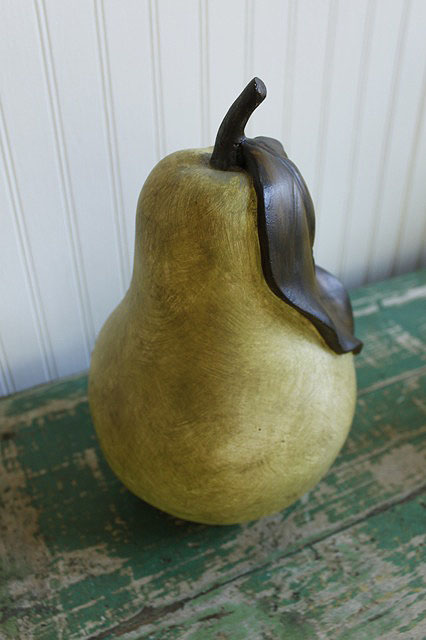
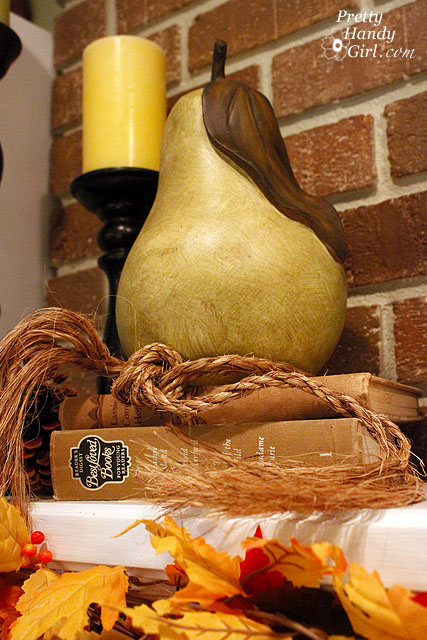
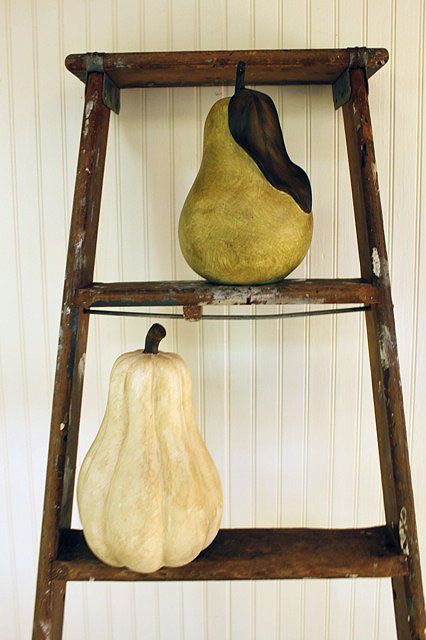
Would you believe this is the same fruit duo?

Yup! I scored them both for $5.

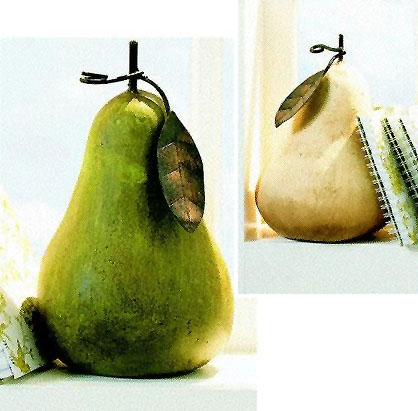
Now, have you seen these deliciously rustic pears from Ballard Designs? Yes? Did you happen to catch the price tags? $49 each!

Umm, no thank you, I’ll stick with my $2.50 fruit—Thank you very much. Let me show you how you can paint any ceramic, pottery, or china decor item to give it a new updated look. You’ll need a few things first.

Materials:

(I’ve included affiliate links for your convenience. I earn a small percentage from a purchase using these links. There is no additional cost to you. You can read more about affiliate links here.)

Optional: Rustoleum Comfort Spray Paint Handle (saves your fingers from cramping!)

Instructions:

Clean your decor item with soap and water. Dry thoroughly.

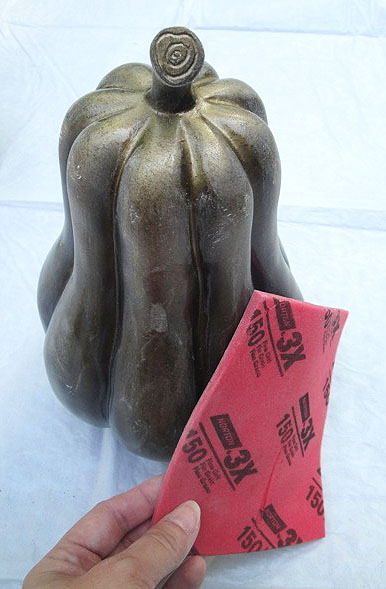
Lightly sand the surface to give a little roughness.


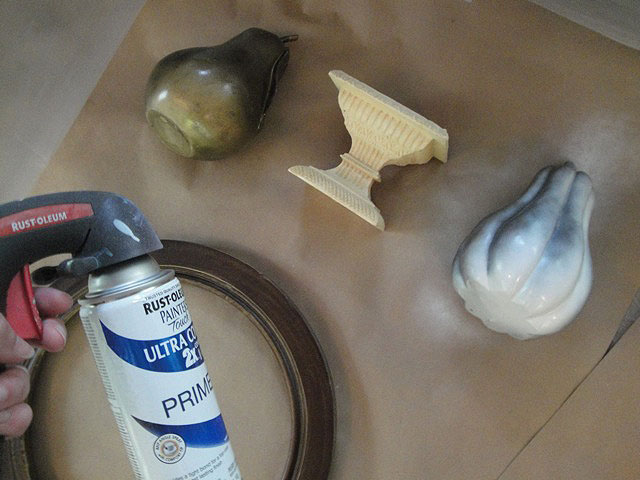
Lay your decor item(s) on paper and spray with several thin coats of spray primer. Allow the primer to dry.


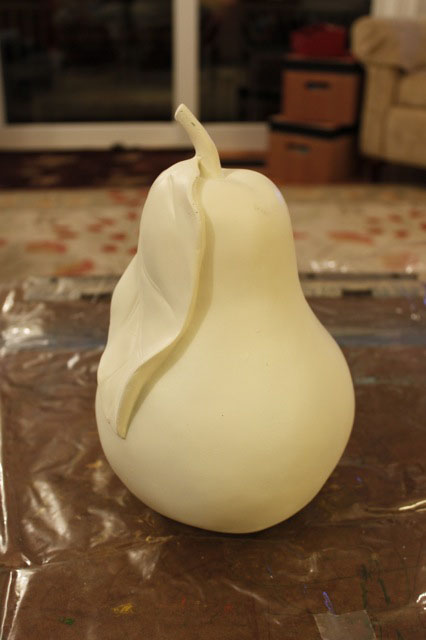
Spray several light coats of Rustoleum’s Heirloom White spray paint. Allow to dry.


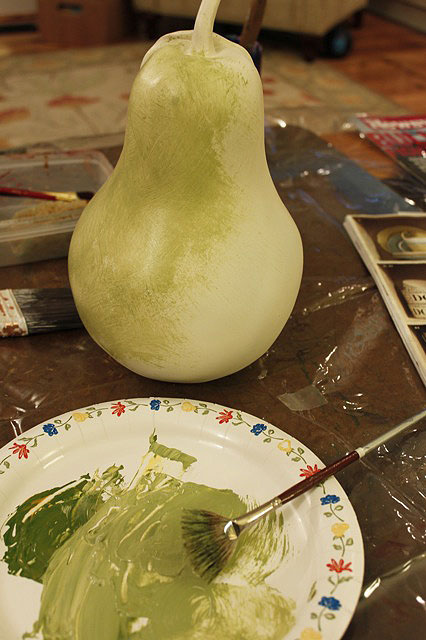
If you want, you can leave the base color white. But, if you want to color your item, mix a base color with the acrylic craft paints. Using the fan brush use a “cross-hatch” pattern to apply the paint onto your item. (This gives more depth and interest than painting on a thick coat of paint.)

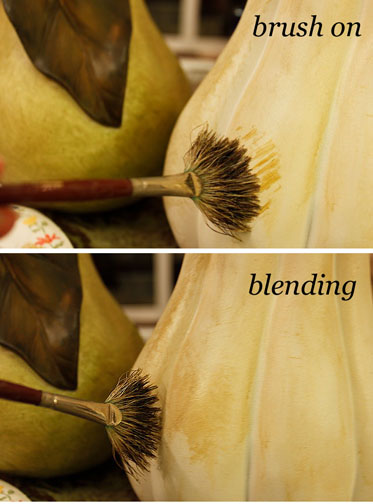
Next mix your glaze by combining acrylic paint (Mix raw sienna (dark brown), burnt sienna (red brown) and yellow ochre until you have a nice golden brown antiquing color.) Pour a small circle of glaze material onto your plate. Dip the fan brush into the glaze medium and then into the mixed acrylic paint. Dab off some paint onto the paper plate (you don’t want your brush to be saturated.) Brush the glaze onto the item and use the fan brush to blend the glaze around. Feel free to use the same cross-hatch pattern you did earlier.

Work in small areas and brush the glaze around until your brush doesn’t have any more glaze on it.
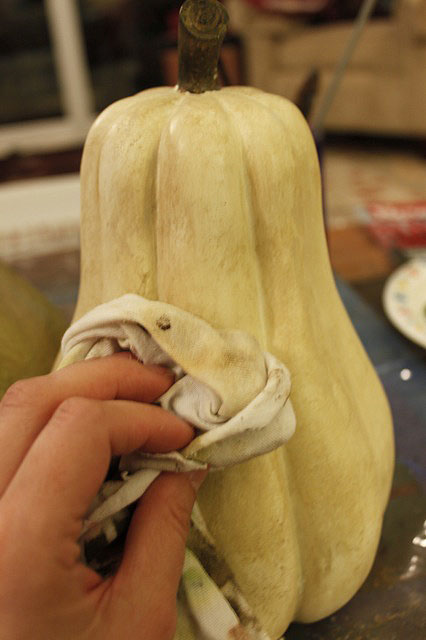
Then use a rag to dab around the decor item until you are happy with the results.

signature

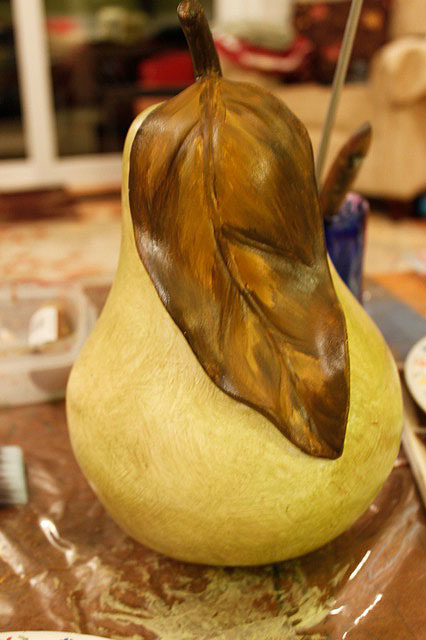
Paint any features onto your decor item (stems, branches, faces, etc.) To paint the pear’s leaf, try a dark brown (raw sienna) and a yellow ochre for the highlights. Acrylic paint is really forgiving. If you don’t like it you can paint over it.


I couldn’t be happier with the results of my repainted home decor! I saved myself about $95 for two decor items!
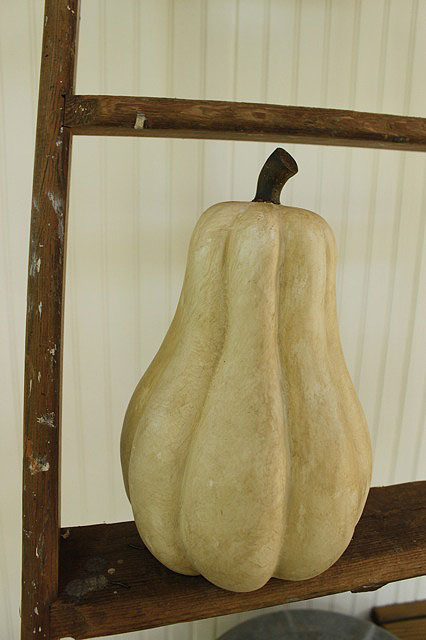
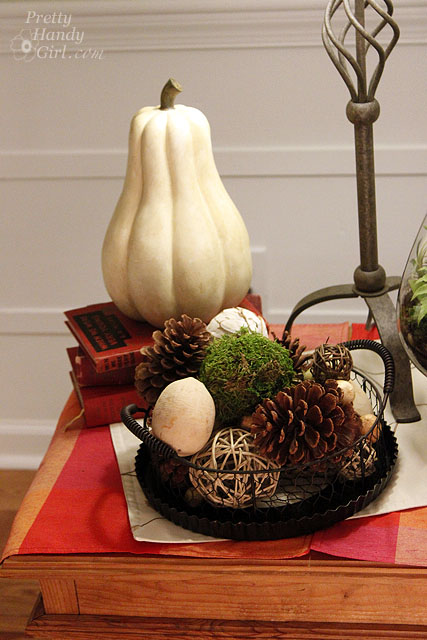
This fruit decor is perfect for any season . . .

But, I like to bring them out in the fall.


Happy thrifting y’all! Never leave cheap dated decor behind again.

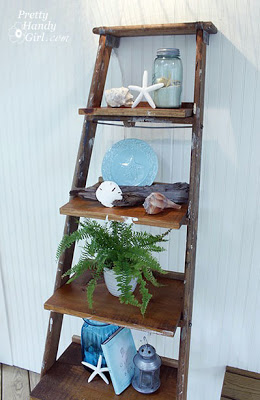
Did you see that ladder above? It is the other half of this ladder and I added shelves to create my own ladder display shelves!

Ladder Shelves

Hidden Wine Storage at Back of Countertop | Pretty Handy Girl

Hidden Wine Storage at Back of Countertop | Pretty Handy Girl

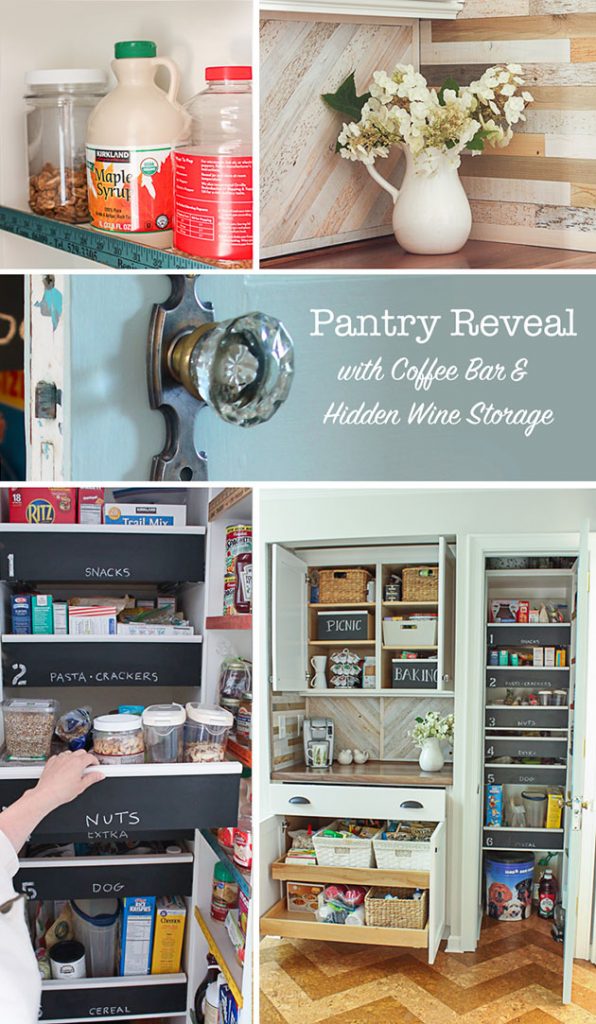
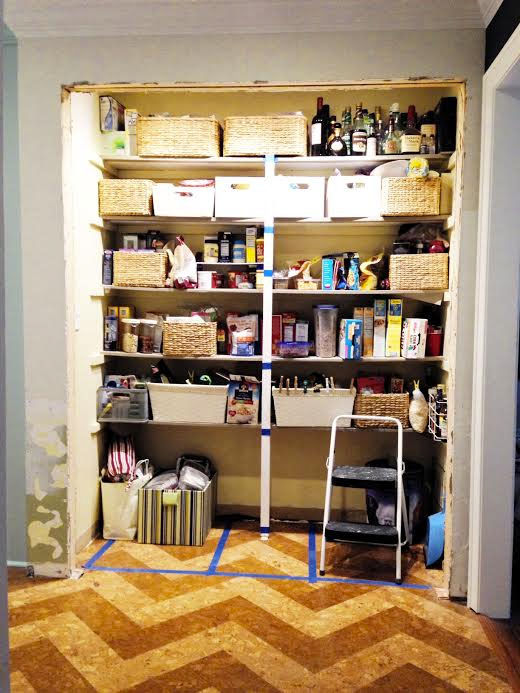
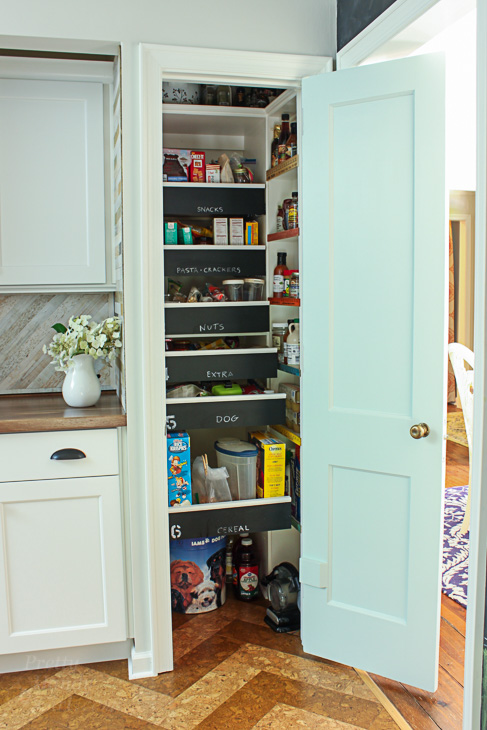
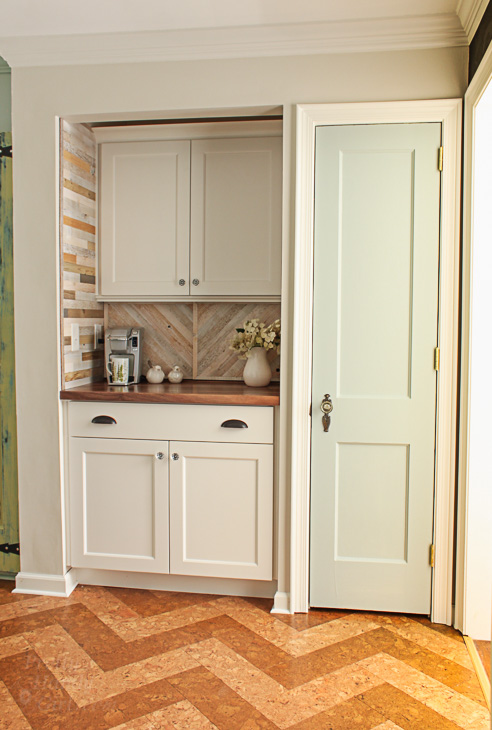
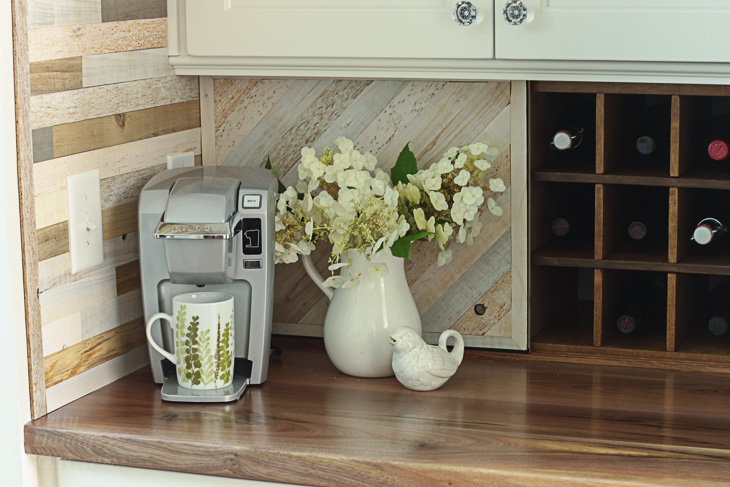
Today’s the day I’m finally sharing the Pantry Reveal, complete with a Coffee Bar and Hidden Wine Storage! Let me warn you, this isn’t your ordinary pantry. This space is multi-functional. The dreams of a better and more organized pantry started four years ago while I was in the thick of our kitchen renovation. For 48 months I’ve mulled over the plans to have food storage that works better for how my family lives.  At first I used painter’s tape to try to figure out better spacing (excuse the poor photo quality. This was taken before I improved my photography skills):

Pantry Before | Pretty Handy Girl

The shelves were only 12″ deep in a 36″ deep closet. That’s 2/3 of the pantry not being utilized. I’m sure you or someone you known has a similar 6 foot wide pantry with bi-fold doors. Be sure to share this post so they know there is hope for a more organized pantry.

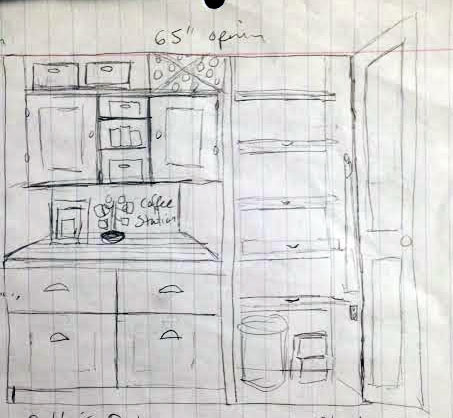
As another year past, my plans began to take shape utilizing more of the depth of the pantry:

Open Pantry Concept Sketch

Then my plans evolved into this chicken scratch sketch:

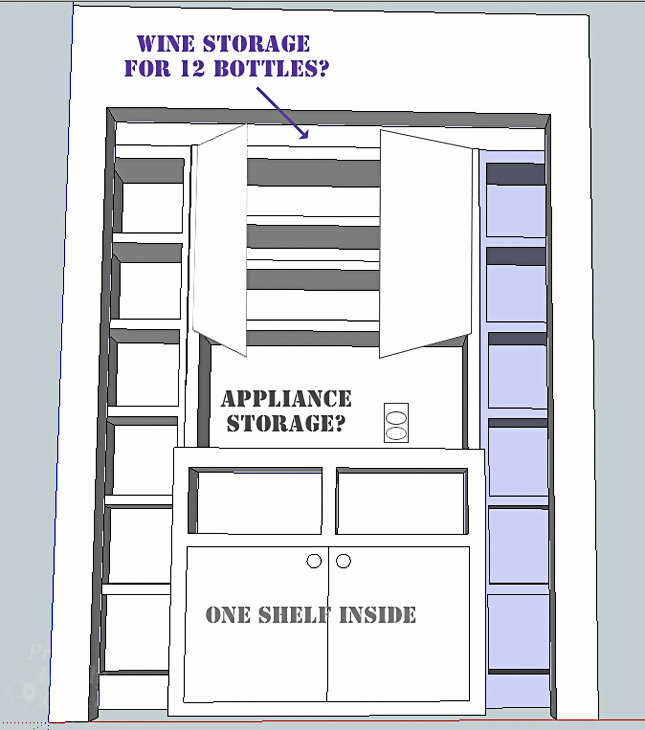
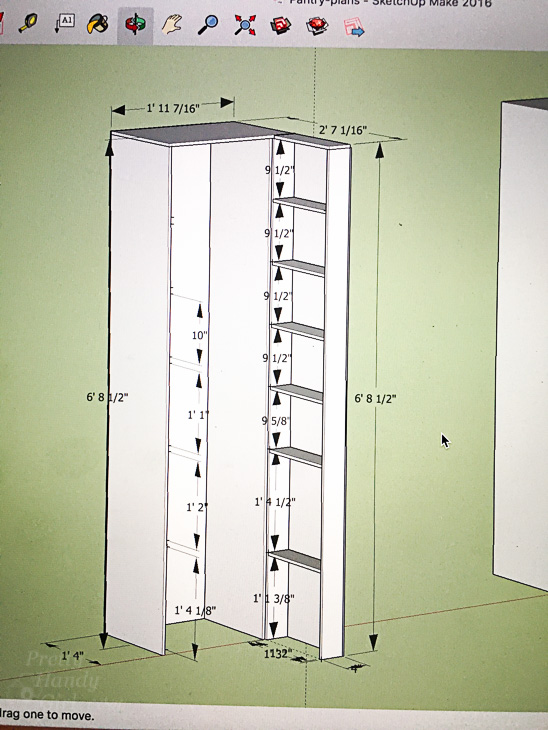
After the plans sat in my head for a while, I used Sketch Up to utilize every square inch of space in the closet side. . .

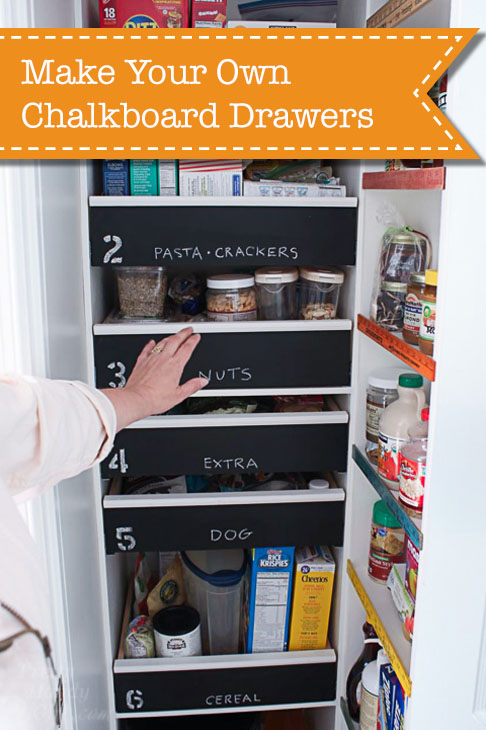
. . .which you probably saw when I showed you how to build chalkboard front drawers

Make Your Own Chalkboard Front Drawers | Organized Pantry | Pretty Handy Girl

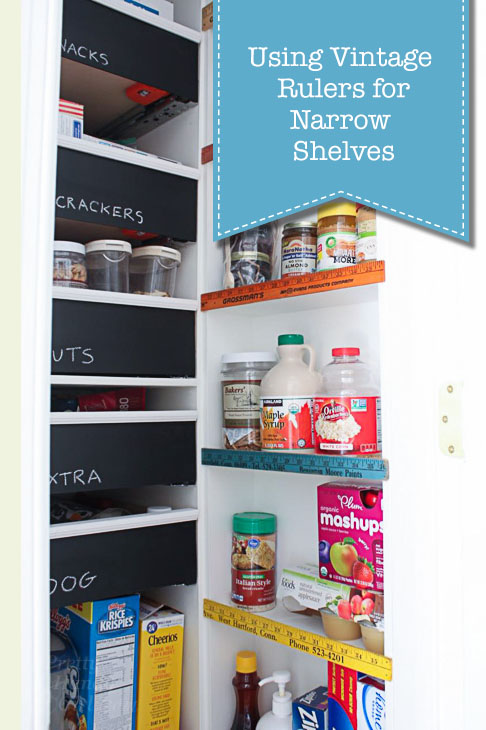
and how to use vintage rulers as shelf stops.

How to Use Vintage Rulers for Narrow Pantry Shelf Stops | Pretty Handy Girl

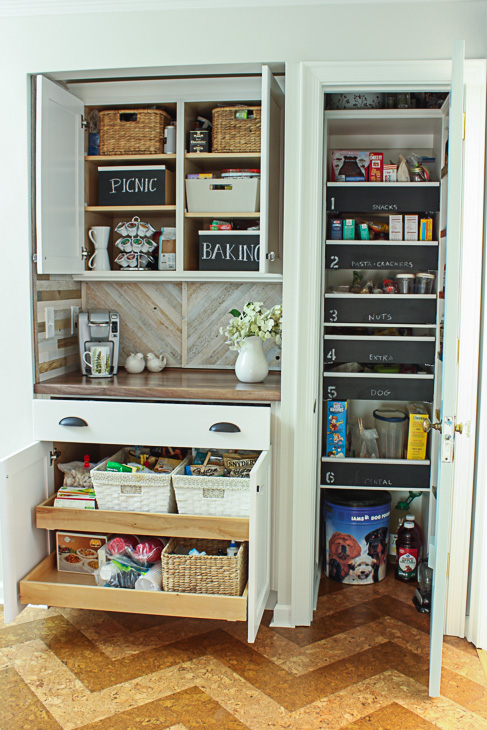
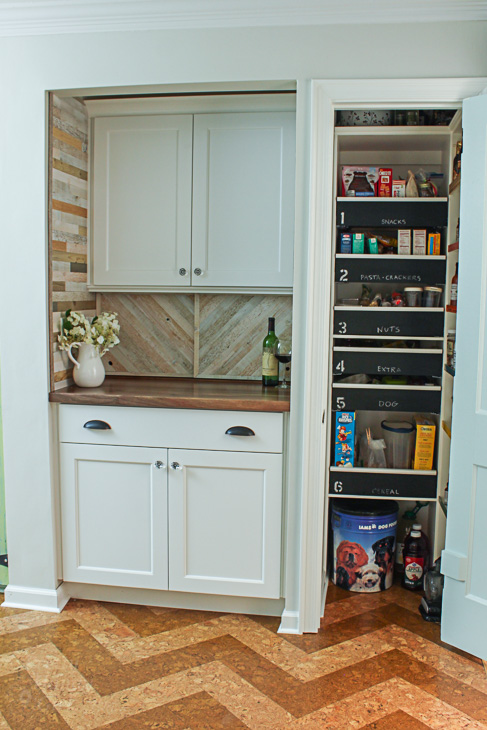
The closet side of the pantry holds roughly 2/3 of what the original 6 foot wide pantry did!

Pantry with Coffee Bar and Hidden Wine Storage | Pretty Handy Girl

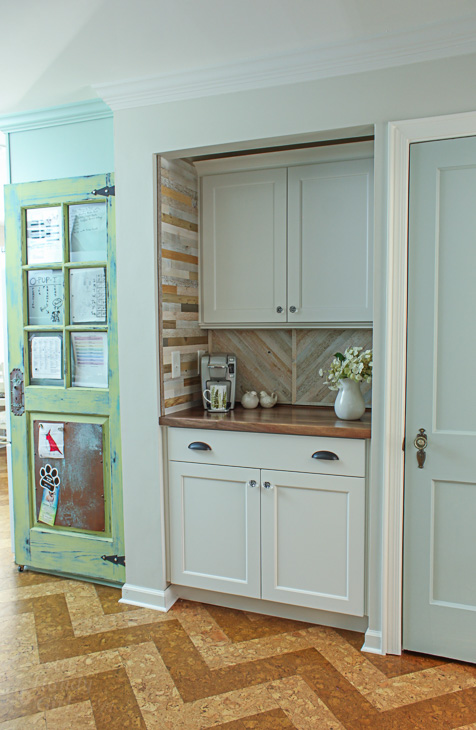
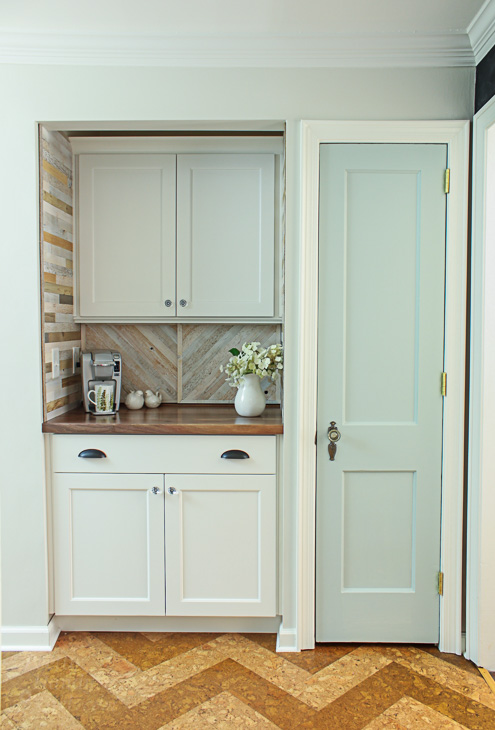
The other two thirds of the pantry area was set up with upper and lower cabinets and a walnut counter top. I ordered the cabinets from Kith Cabinets (the same manufacturer that made the rest of our kitchen cabinets) because I worried that I wouldn’t be able to match the quality if I built them myself.

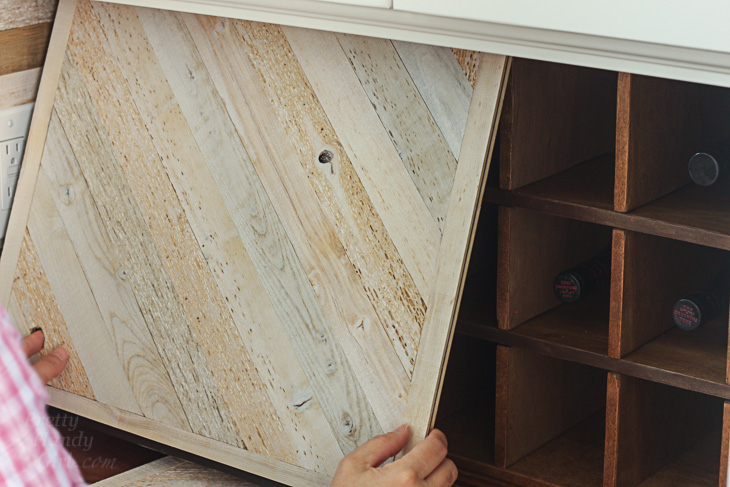
Hidden Wine Storage at back of countertop | Pretty Handy Girl

The upper cabinet is deceiving because it is actually 18″ deep (as opposed to a normal 12″ deep upper). Which means we have a lot more storage within those cabinets.

Pantry with Coffee Bar and Hidden Wine Storage | Pretty Handy Girl

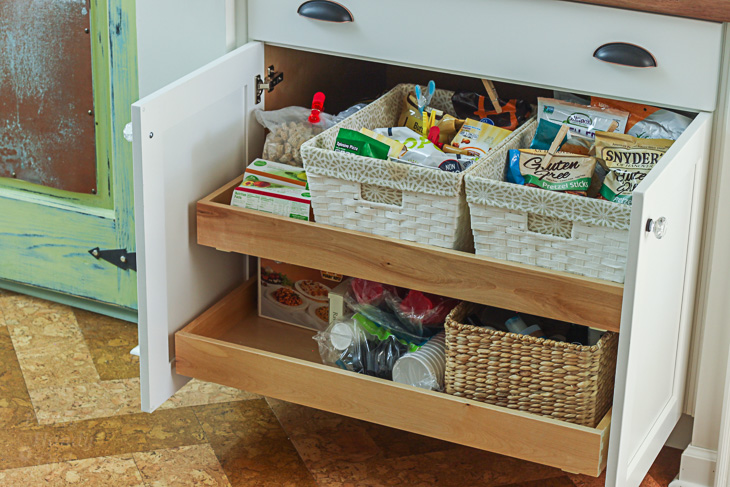
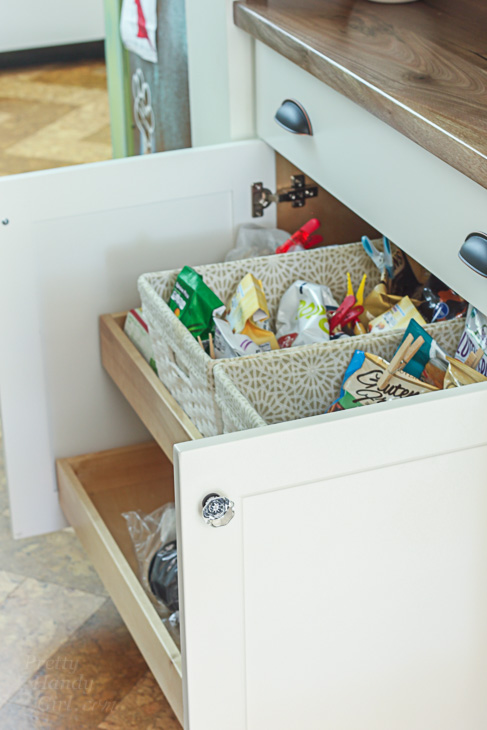
We have some amazing storage now! Large pull out shelves hold all the chips, pretzels and snacks. I debated ordering  a three drawer cabinet, but ultimately knew I’d prefer the deeper storage that the trays offered.

Pantry with Coffee Bar and Hidden Wine Storage | Pretty Handy Girl

At some point, I’ll build custom dividers for the chips and snacks. The baskets work well, but there is a 3-4″ gap behind them that I could use. (I’m all about utilizing that space wasted space!)

Pantry with Coffee Bar and Hidden Wine Storage | Pretty Handy Girl

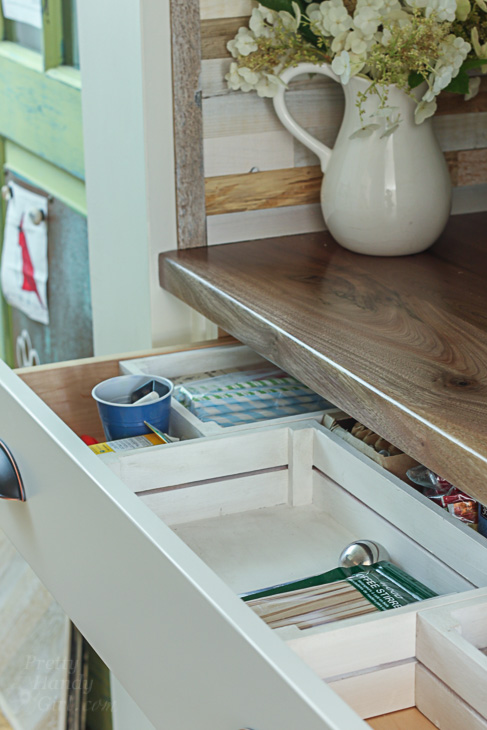
The drawer is perfect for coffee stirrers, extra k-cups, plastic utensils, straws and more.

Pantry with Coffee Bar and Hidden Wine Storage | Pretty Handy Girl

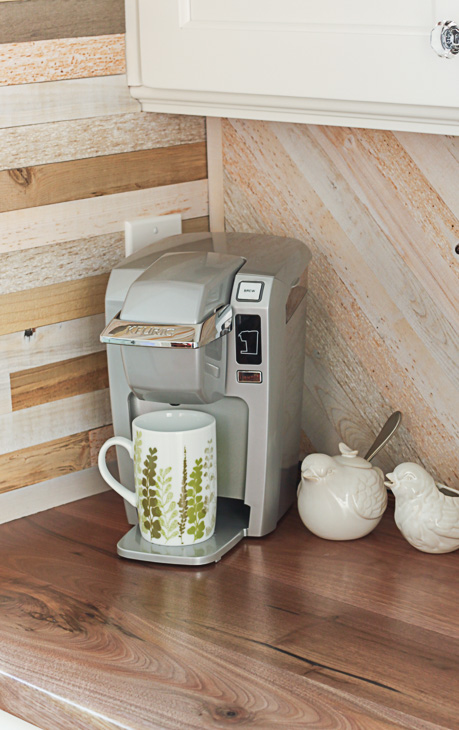
Speaking of coffee, it’s a wonderful feeling having a dedicated coffee station now.

Pantry with Coffee Bar and Hidden Wine Storage | Pretty Handy Girl

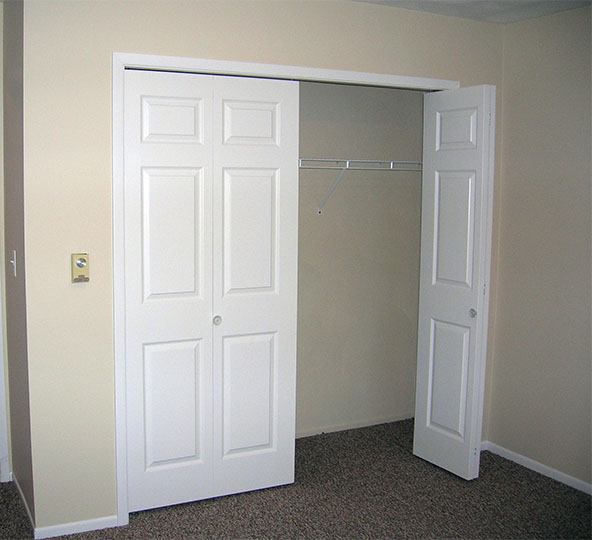
When guests come to our house, the first stop (after the mudroom) is the coffee bar! I wish I had a photo of the bi-fold pantry doors before. They were uninviting and bland. This is essentially what they looked like:

Bi-fold-closet-pantry-doors

Source

BORING!

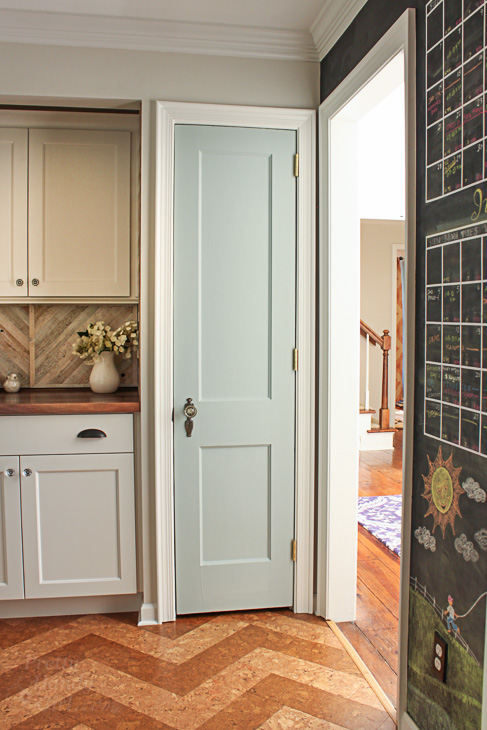
This is what greets us now:

Pantry with Coffee Bar and Hidden Wine Storage | Pretty Handy Girl

You may recall our DIY Chalkboard Calendar wall. We still use it for the kids’ and family’s activities. It helps the boys feel more connected with our schedule and lets them keep up with events and upcoming travel.

Pantry with Coffee Bar and Hidden Wine Storage | Pretty Handy Girl

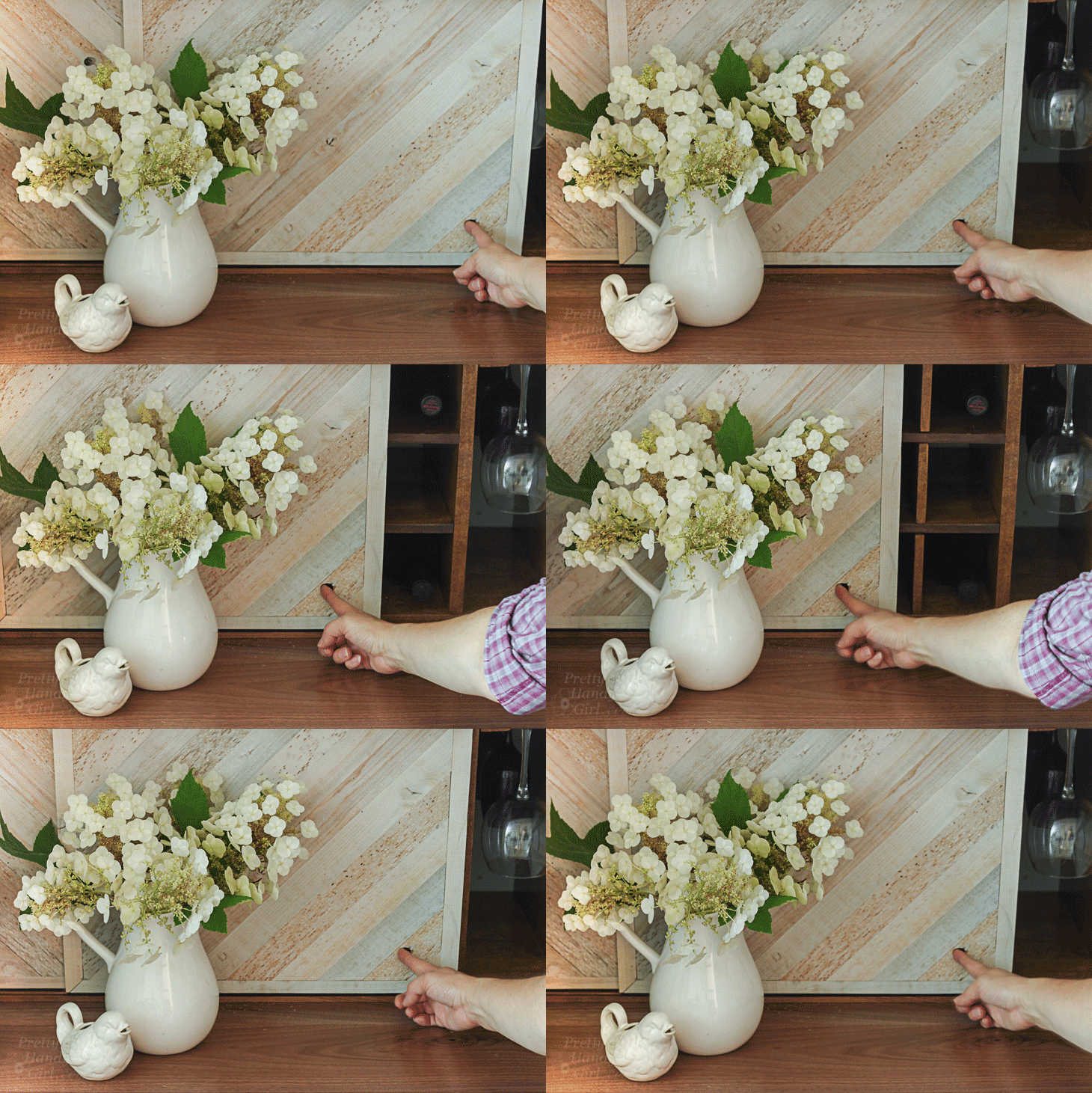
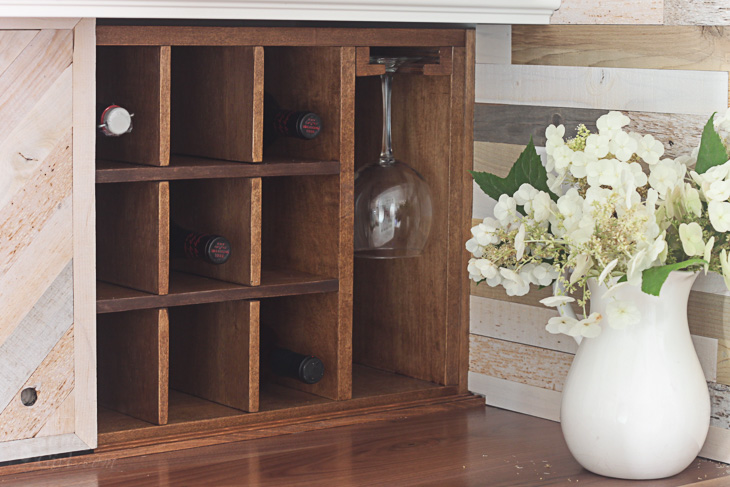
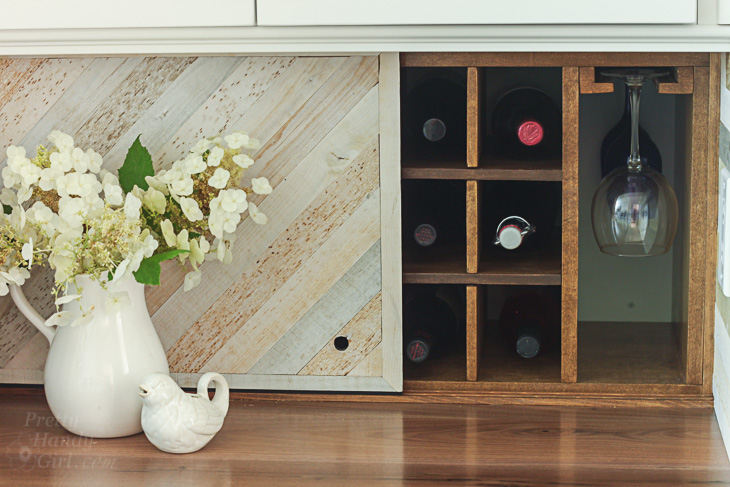
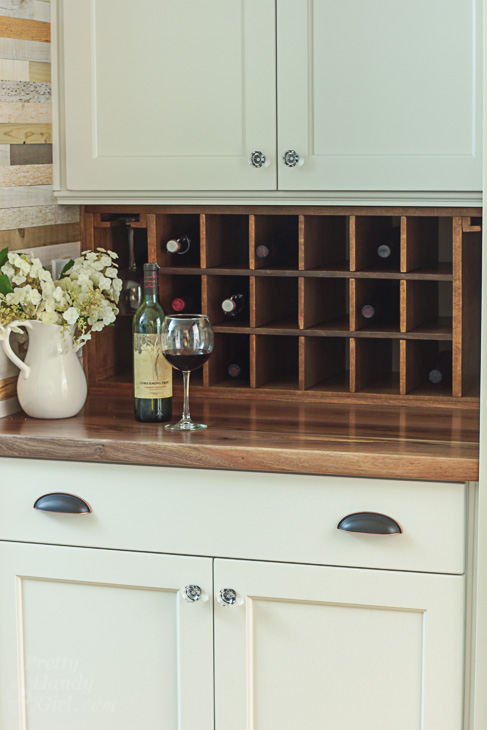
But wait, that’s not all! Are you ready to see the hidden wine storage?

Pantry with Coffee Bar and Hidden Wine Storage | Pretty Handy Girl

Hold onto your wine glass!

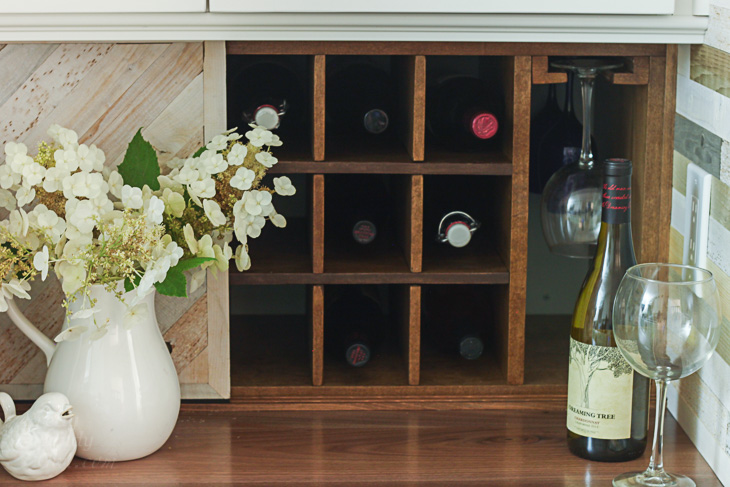
Hidden Wine Storage at Back of Countertop | Pretty Handy Girl

How cool is that?

We can remove the doors if we want.

This makes the perfect spot for self serve wine at an open house party.

Normally we access half the wine storage at a time.

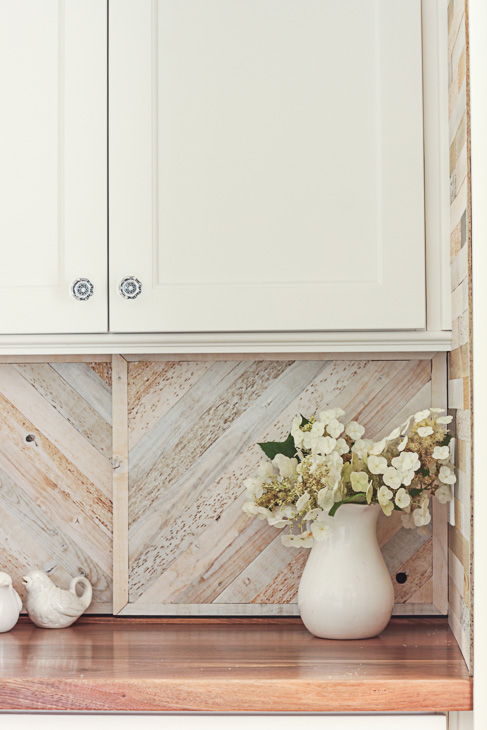
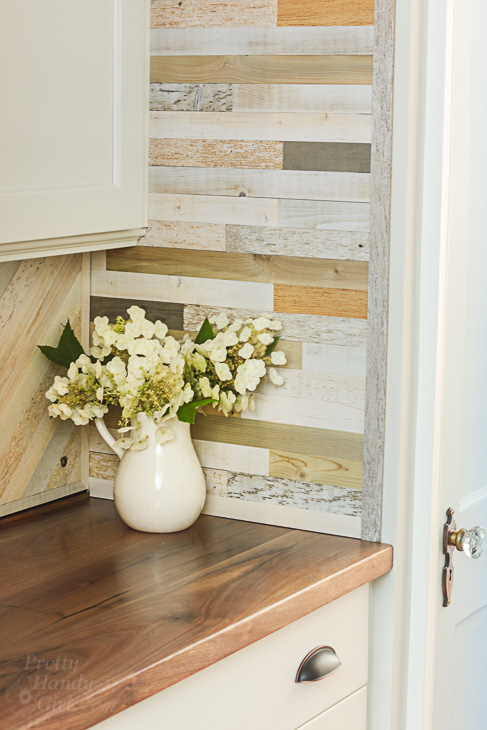
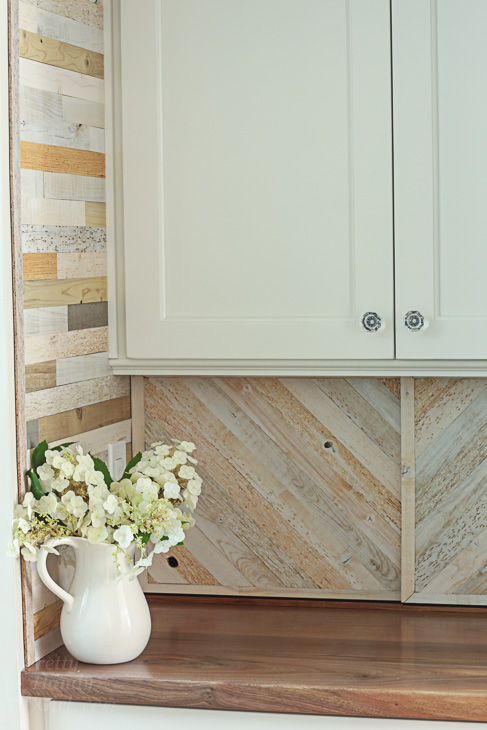
The real star of this pantry makeover is the rustic reclaimed wood plank wall. (I need to mention that I was approached by Timberchic about working with them on a sponsored post. A year passed before I contacted them back with the idea to use their wood panels in my pantry makeover.)

Those planks are a super DIY friendly product called Timberchic. The wood is salvaged from logs lost during lumber transport in the Maine river and lake systems. You can read the amazing story here and learn how Timberchic is helping the local ecosystem.

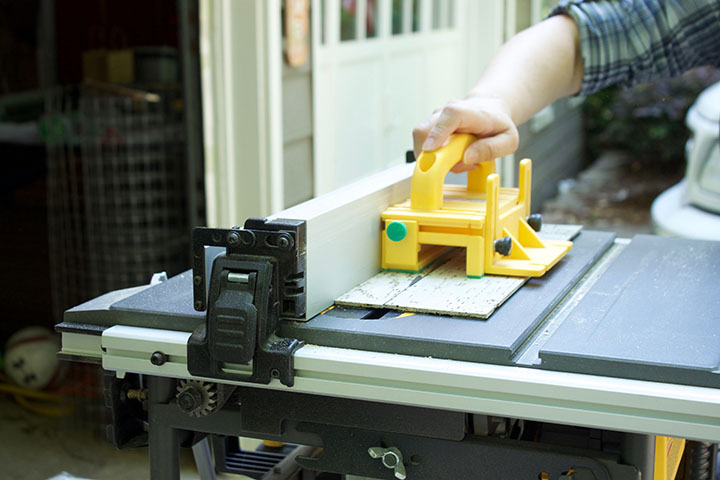
The planks can be purchased in 3″ and 5″ lengths.  I chose 5 inch planks in a variety of natural and whitewash, then cut them into thirds for my project. (I’ve suggested that Timberchic should sell these thinner planks. Be sure to send them a tweet letting them know you like the thinner look too!)

Pantry with Coffee Bar and Hidden Wine Storage | Pretty Handy Girl

In the meantime, I put together this little video to show you how easy it is to install the Timberchic panels:


Now we have a beverage center for day or night!

What do you think? Do you like the new pantry, coffee bar and hidden wine storage area?

I’m not sure I can still call this a pantry. A Pantry with Coffee Bar and Hidden Wine Storage?

or does it qualify as a butler’s pantry?

I don’t know for sure, but I do know that I love all the storage. . .

. . .and the view when we come into the kitchen.

Do you have a 6 foot bi-fold pantry? Why not turn it into something you’ve always dreamed about.

Disclosure: This is a sponsored post for Timberchic. I was compensated for my time and promotion of the Timberchic products. As always, I’m very particular about the brands I represent. I only work with products I love and want to share with my closest friends.

Children's Closet Library with Secret Pass Through | Pretty Handy Girl

Childrens' Closet Library with Secret Pass Through | Pretty Handy Girl

Turning the bonus room closet into a Children’s Closet Library is one of those projects that took longer than expected. Not because the work was harder, but because I took a break from the project for many months while other things took precedence. I’m thrilled to have this project complete and am ready to move on to something new.

Converting a closet in our bonus room into a children’s library started when my oldest son commented that he wanted me to add onto our house and build a library like the one in A Series of Unfortunate Events.

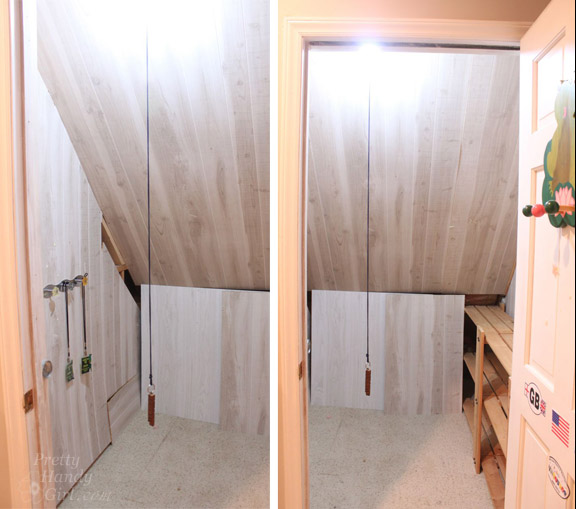
Obviously I had no desire to add onto our home. But, I began to form a plan about where I could add a library in our home. It became clear when I opened the toy closet in the bonus room and found myself getting angry that it was (once again) a mess. As I began clearing a path on the floor of the closet, it occurred to me that 90% of the toys in the closet were for young children and my boys had outgrown them. Time to clear out the closet and repurpose it for my book worms.

Childrens' Closet Library with Secret Pass Through | Pretty Handy Girl

After removing the faux wood panels, I uncovered a mess of wiring and rewired a new light fixture into the closet. Some idiot had never put the wiring inside the wall, instead the guilty party wrapped the wires around the studs (NOT TO CODE!) Instead of re-routing all the wiring, I furred out a new wall to encase the wiring.

Childrens' Closet Library with Secret Pass Through | Pretty Handy Girl

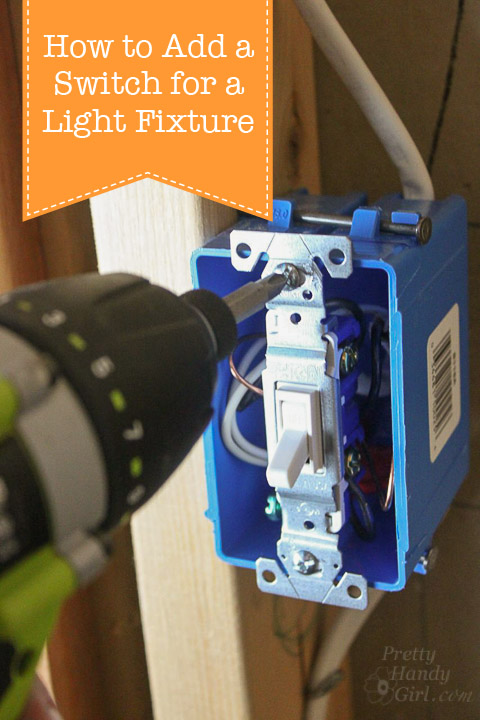
While the walls were open, I decided to install a new light fixture and a switch (instead of the annoying bare bulb fixture with a pull chain.)

How to Add a Switch to a Light Fixture | Pretty Handy Girl

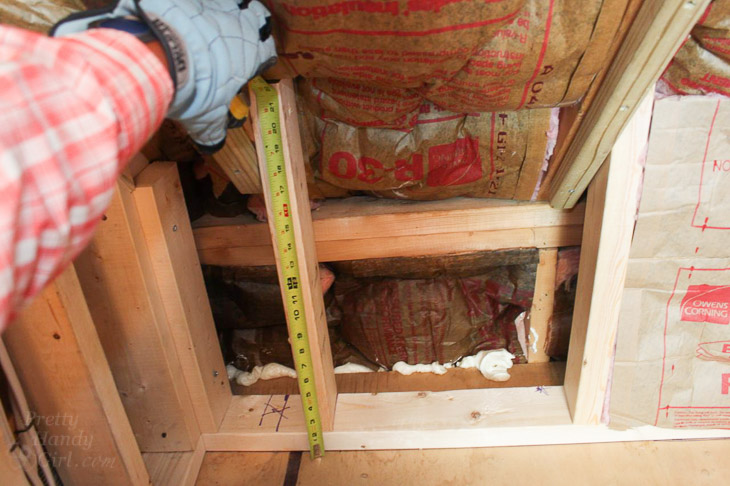
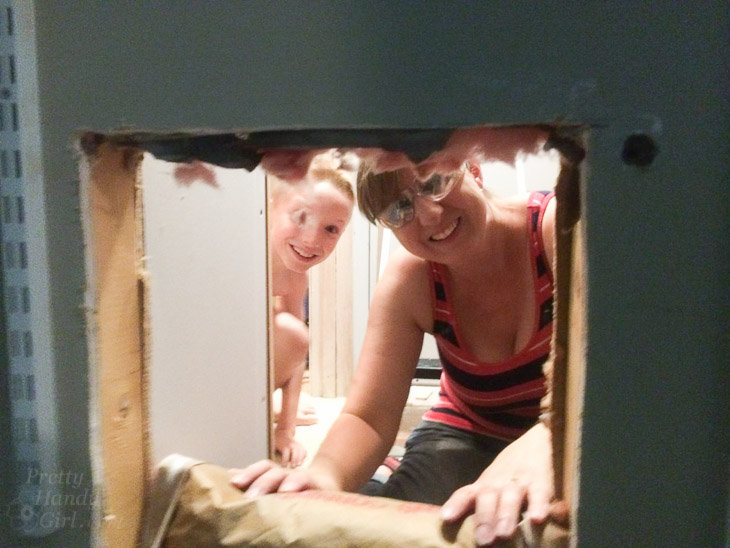
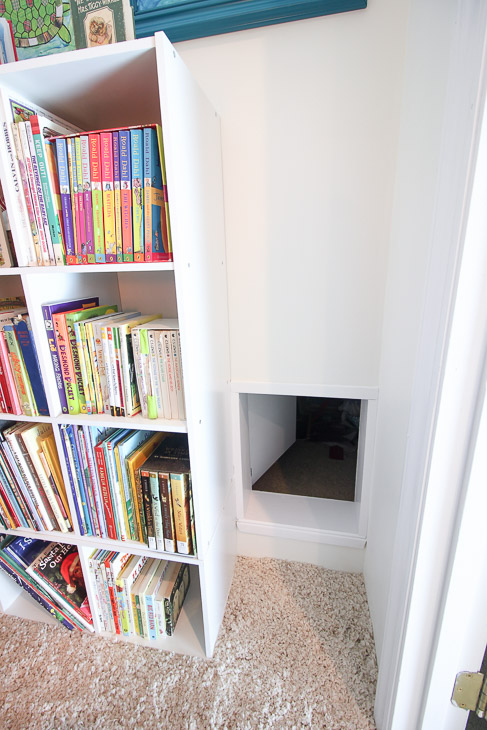
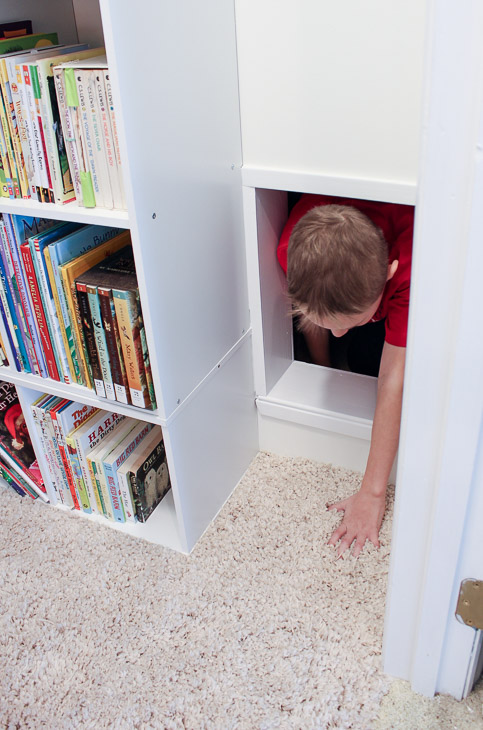
After adding some much needed insulation, the fun began! I cut a hole into the wall between my son’s bedroom closet and the bonus room closet. I think we felt a little bit like the astronauts the first time they docked to the International Space Station and saw the Russian astronauts though the hatch.

Childrens' Closet Library with Secret Pass Through | Pretty Handy Girl

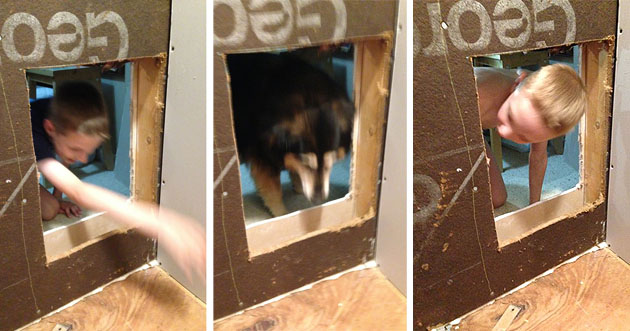
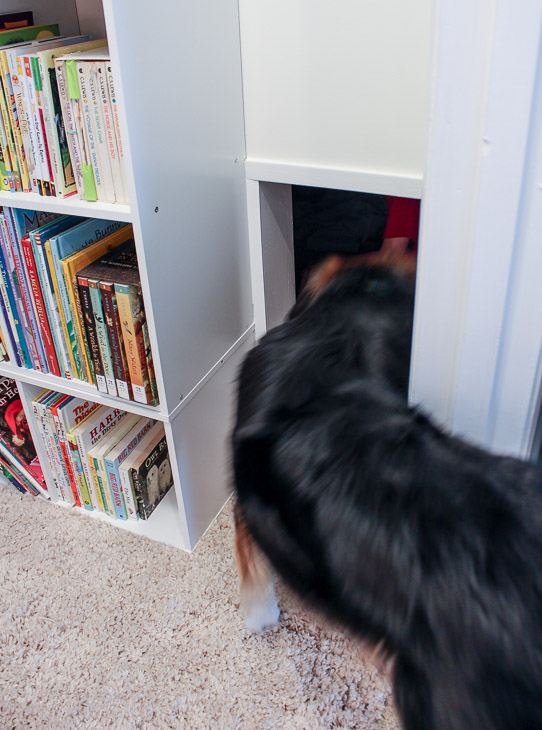
Before adding drywall, everyone had to test the pass through (humans and canines alike.)

Childrens' Closet Library with Secret Pass Through | Pretty Handy Girl

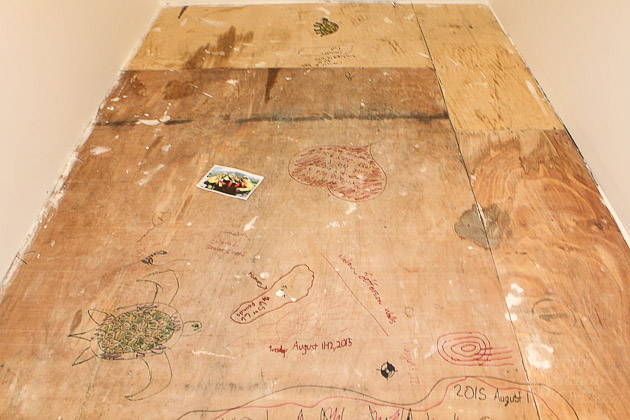
After I installed the drywall and painted, the boys and I drew some messages on the subfloor. We love leaving little notes and time capsules in our construction projects.

Childrens' Closet Library with Secret Pass Through | Pretty Handy Girl

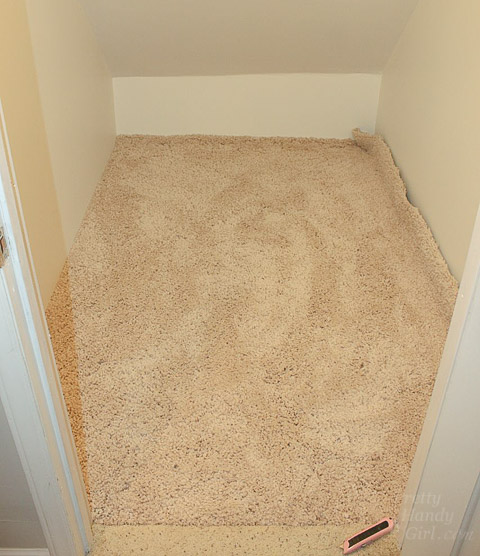
The flooring was definitely a popular addition to this closet. I wish you could feel it.

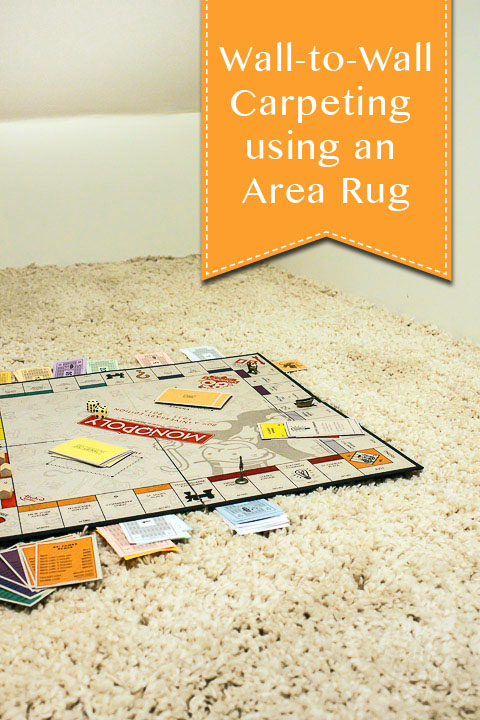
Faking Wall-to-Wall Carpet with an Area Rug | Pretty Handy Girl

I purchased a fluffy shag chenille rug at Lowe’s that was used to create wall-to-wall carpeting in the closet.

Faking Wall-to-Wall Carpet with an Area Rug | Pretty Handy Girl

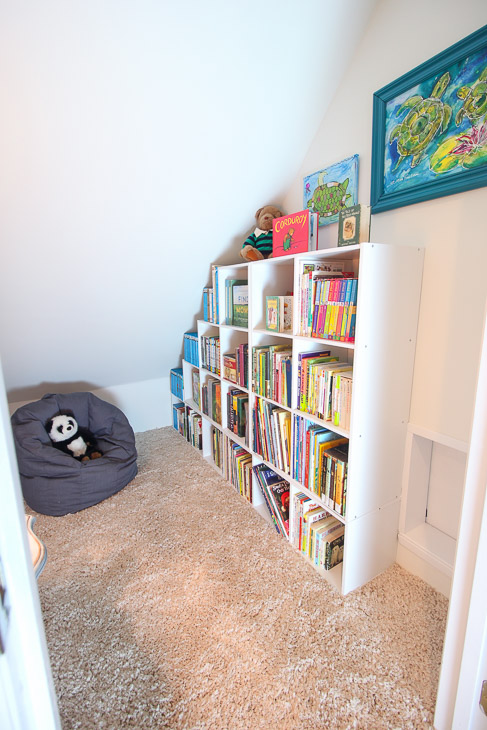
The final steps on the closet library was to add furniture and artwork.

Childrens' Closet Library with Secret Pass Through | Pretty Handy Girl

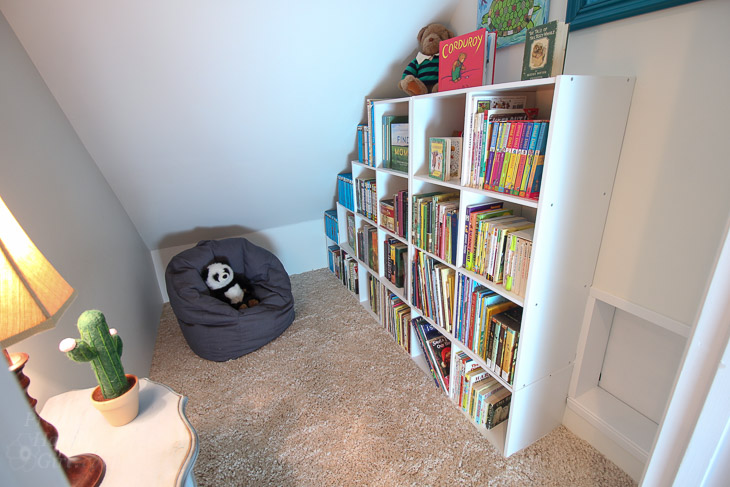
To create bookshelves, I used several IKEA Room Essentials cube storage units. Each unit is anchored to studs on the wall to prevent tipping.

Children's Closet Library with Secret Pass Through | Pretty Handy Girl

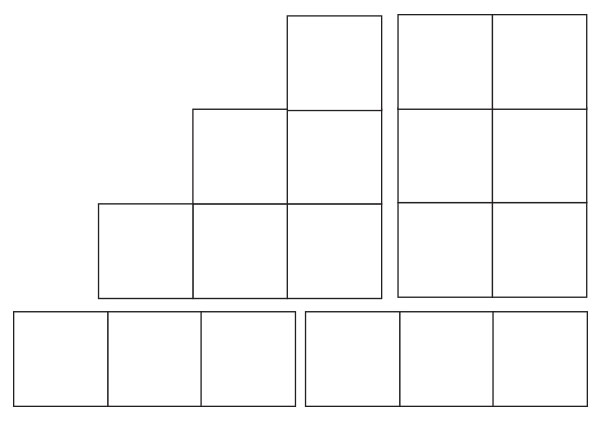
Two – 3 Cube Towers on the bottom, One – 6 Cube Shelves, and One – 3-2-1 Cube Organizer Shelf.

(I’ve included affiliate links for your convenience. I earn a small percentage from a purchase using these links. There is no additional cost to you. You can read more about affiliate links here.)

Childrens' Closet Library with Secret Pass Through | Pretty Handy Girl

After the shelves were filled. I trimmed the secret pass through and added hinges and a door on my son’s bedroom side.

Childrens' Closet Library with Secret Pass Through | Pretty Handy Girl

This allows him to lock the door for privacy. A simple window lock worked perfectly for this purpose. Then the boys quality tested my work on the pass through.

Childrens' Closet Library with Secret Pass Through | Pretty Handy Girl

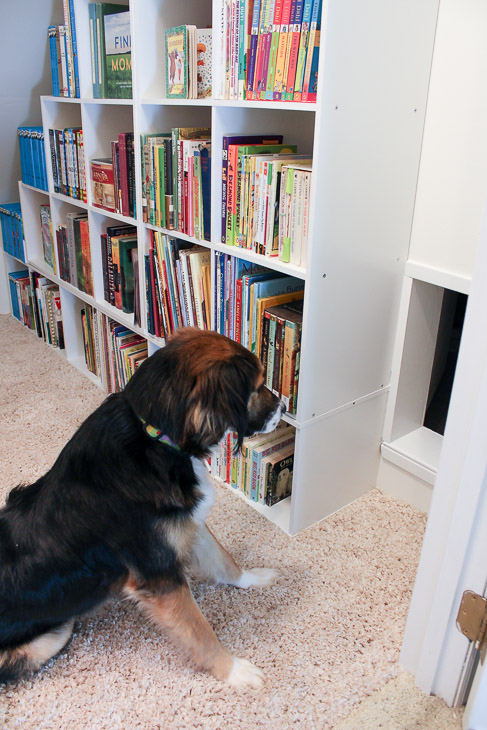
Bandit found the pass through very intriguing.

Childrens' Closet Library with Secret Pass Through | Pretty Handy Girl

Eventually he gave his stamp of approval.

Childrens' Closet Library with Secret Pass Through | Pretty Handy Girl

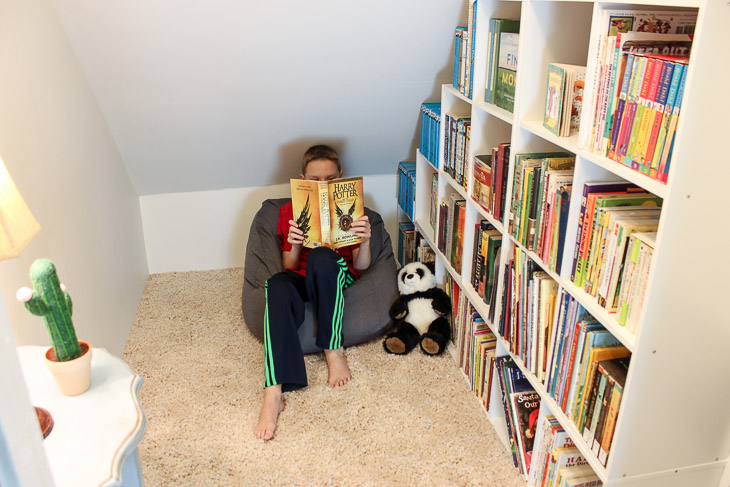
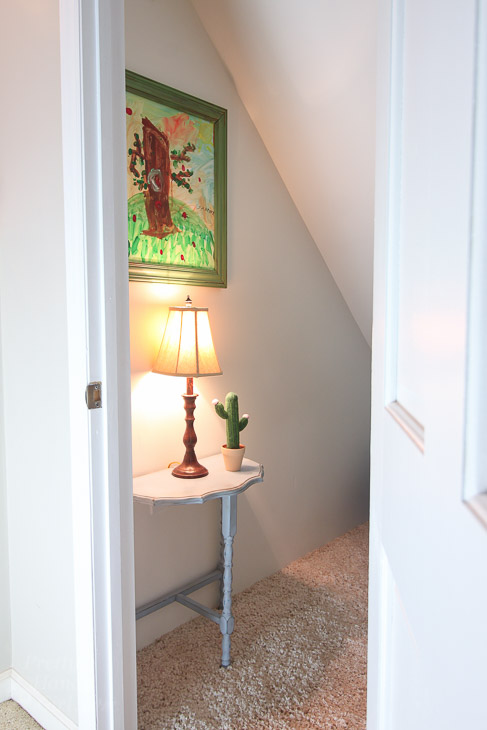
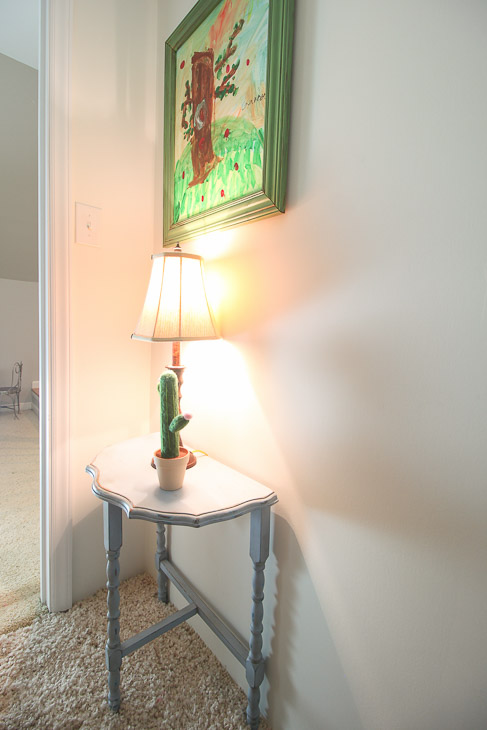
Even though the closet has overhead lighting, I added a small side table and lamp for a cozy feel.

Childrens' Closet Library with Secret Pass Through | Pretty Handy Girl

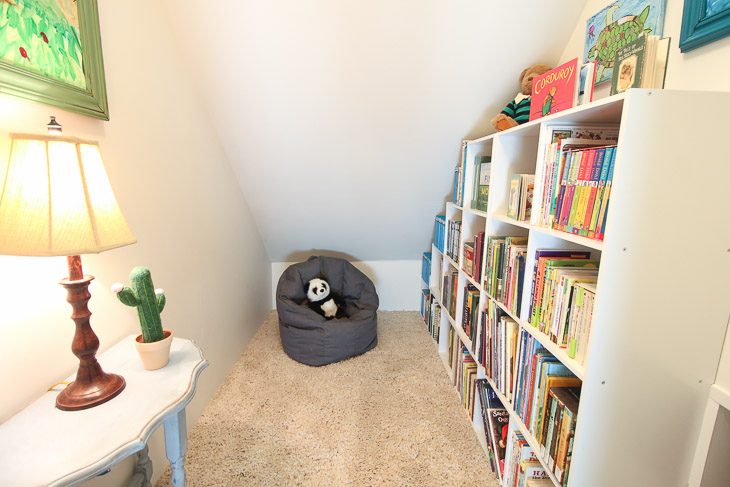
This is the best view of the children’s library closet. (It’s incredibly hard to photograph a closet!)

Childrens' Closet Library with Secret Pass Through | Pretty Handy Girl

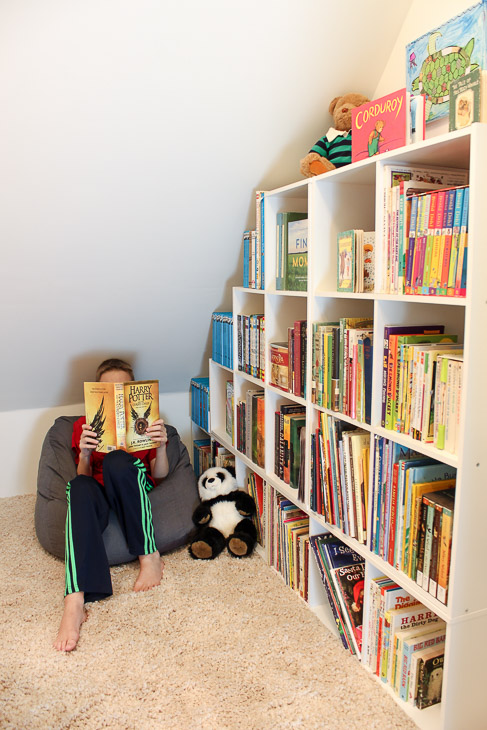
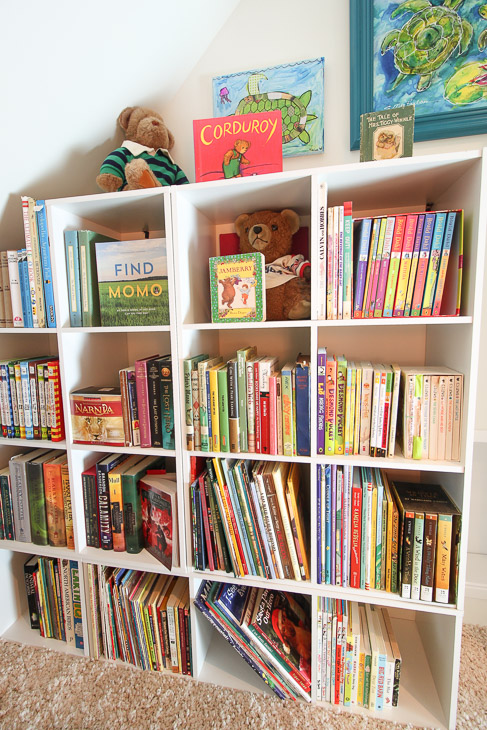
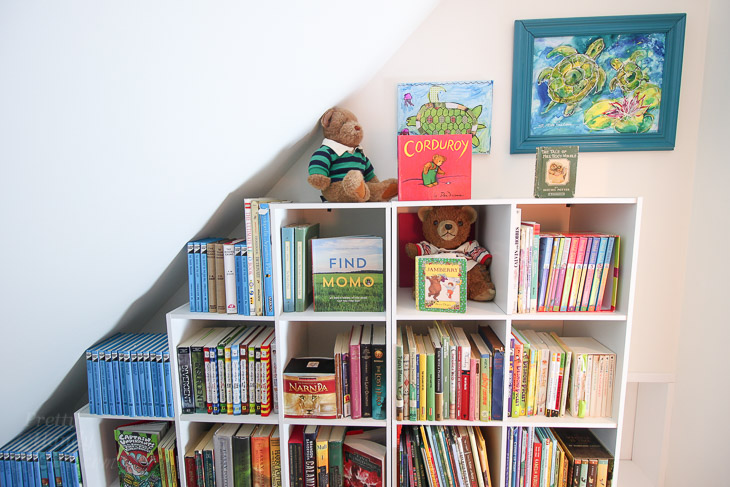
The cube storage shelves are the perfect height to accommodate most of their books.

Childrens' Closet Library with Secret Pass Through | Pretty Handy Girl

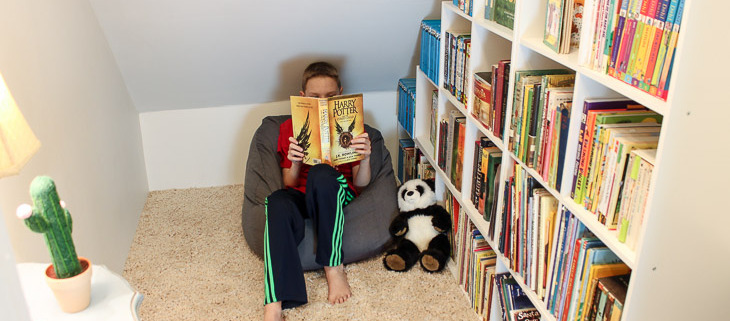
My 12 year old son filled and styled the shelves (honest!) He even added some teddy bears like the elementary school library has. So cute!

Childrens' Closet Library with Secret Pass Through | Pretty Handy Girl

My boys have spent so much time burrowing in this library closet. I frequently find them in there reading, especially when I’m calling them to do chores.

Children's Closet Library with Secret Pass Through | Pretty Handy Girl

Here’s a final peek into the children’s library closet:

Childrens' Closet Library with Secret Pass Through | Pretty Handy Girl

Childrens' Closet Library with Secret Pass Through | Pretty Handy Girl

Do you have a small closet or nook in your home that can be used as a children’s library? It’s amazing how an ordinary closet can turn into something extraordinary.

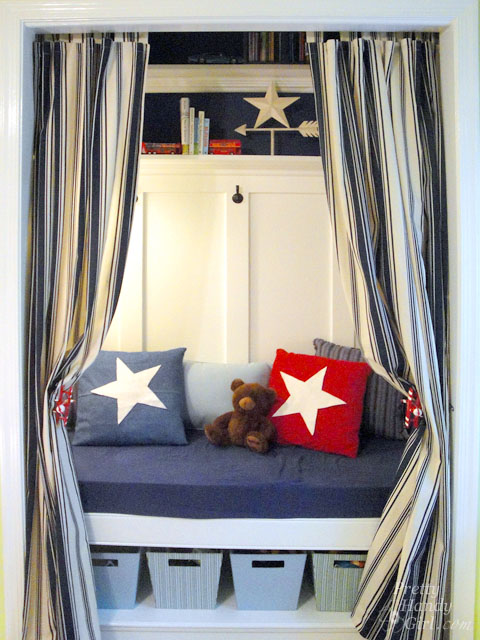
If you liked this renovation, you’ll definitely love my son’s closet turned reading nook.

Closet Reading Nook | Pretty Handy Girl

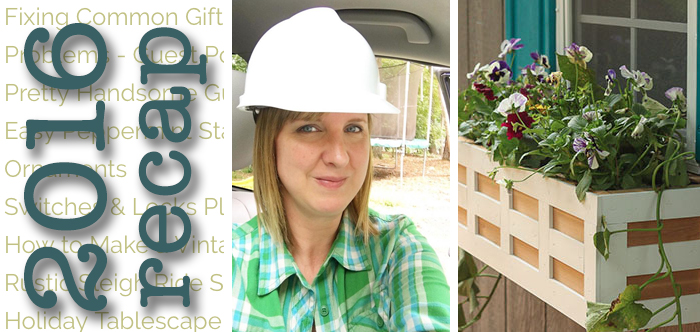
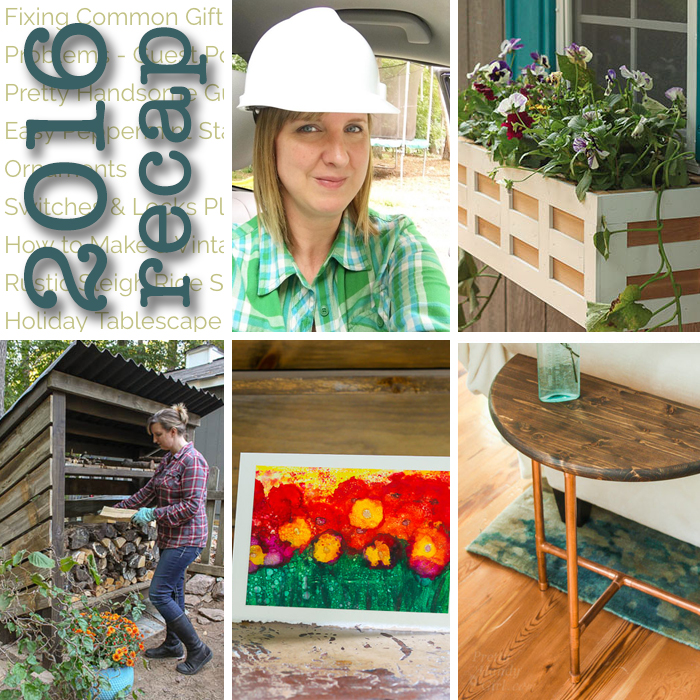
2016 was a full year for me. As a personal recap, I accomplished a lot. In January I passed the North Carolina Residential General Contractor exam to become a licensed general contractor. I’m still in disbelief that this actually happened.

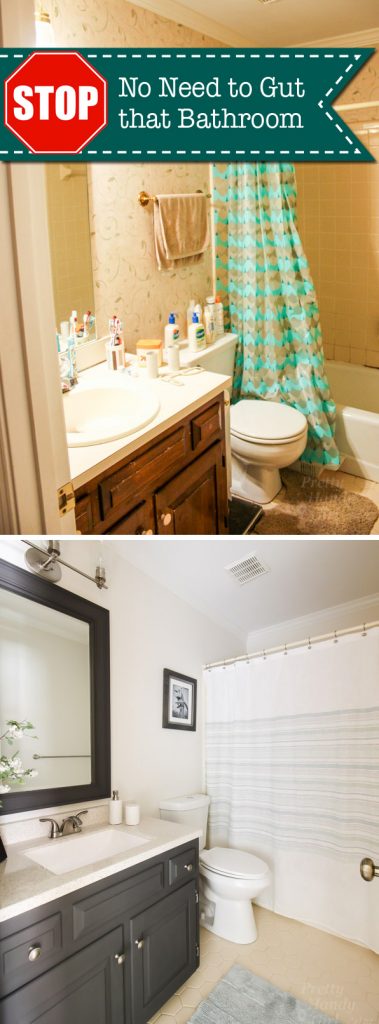
Shortly after passing the exam, a friend hired me to get her home ready to sell. I spent two months acting as a general contractor hiring subs to help fix and spruce up the house. I gave one of her bathrooms the equivalent of a remodel on a shoe string by replacing the light fixture, framing out an old mirror and painting the vanity. Here’s proof that you don’t need to gut a dated bathroom:

STOP! You Don't Have to Gut Your Dated Bathroom | Pretty Handy Girl

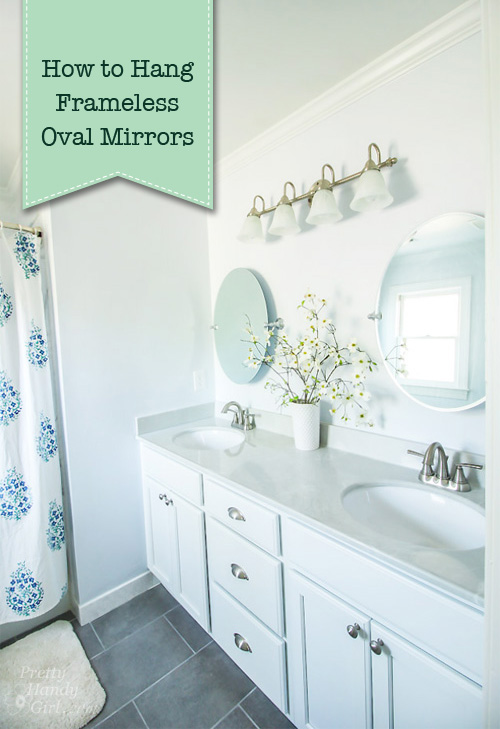
The master bathroom already had a head start with new tile and vanity. But, I finished the transformation by installing new oval frameless mirrors.

How to Hang a Frameless Oval Mirror on the Wall | Pretty Handy Girl

I’m thrilled to report that her home sold in four days for a lot more than their asking price. Woot! This experience helped me realize that although I like fixing up houses and making them beautiful again, I prefer to be the primary decision maker. I’m back to focusing on looking for a house to flip (this was the main reason I pursued my license.)

We finished a boat load of projects around the exterior of our home after a major backyard landscaping project.

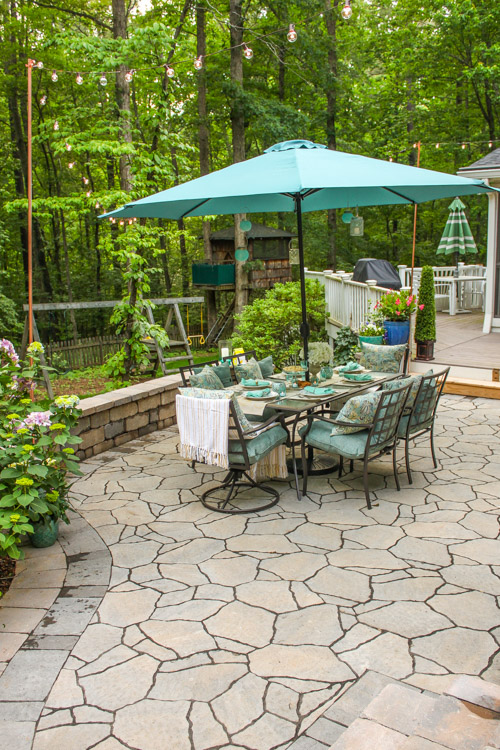
Outdoor Garden Patio Party Decorating Ideas | Pretty Handy Girl

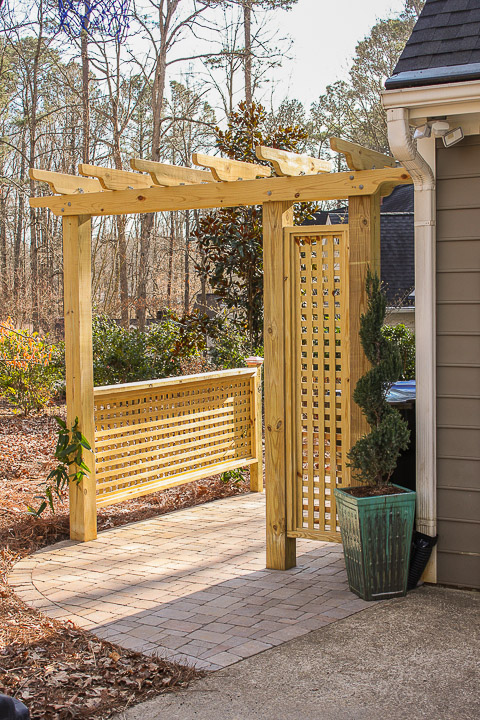
I built a Pergola Trellis Screen to hide our trash cans. Lucky for you, I drew up detailed plans so you could build your own.

Build a Pergola with Trellis to Screen Your Trash Cans | Pretty Handy Girl

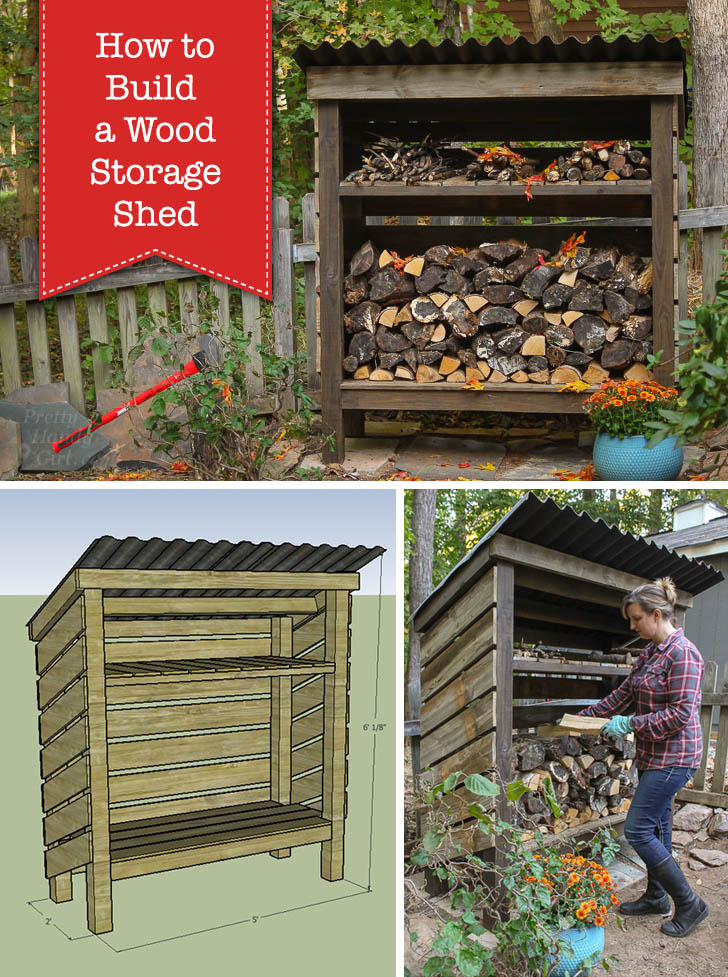
And should you need somewhere to store firewood, I built and created a tutorial for this wood storage shed.

Build a Wood Storage Shed | Pretty Handy Girl

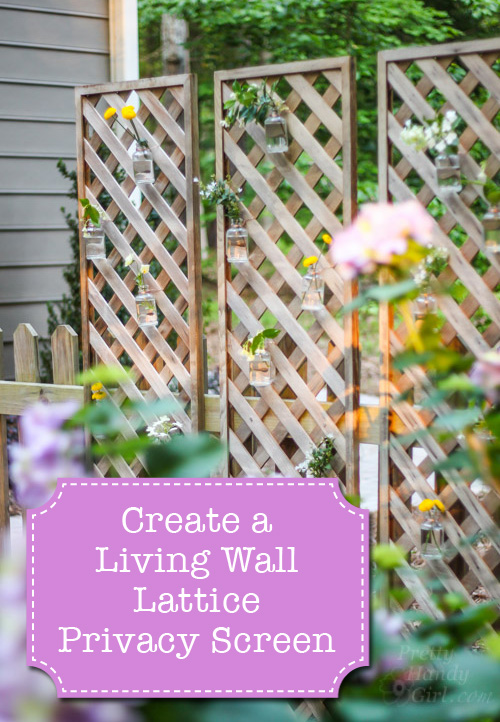
I also found a use for some old lattice panels by creating a living lattice privacy screen. This was such an easy project, I’m kicking myself for not doing it sooner.

Create a Living Wall Lattice Privacy Screen | Pretty Handy Girl

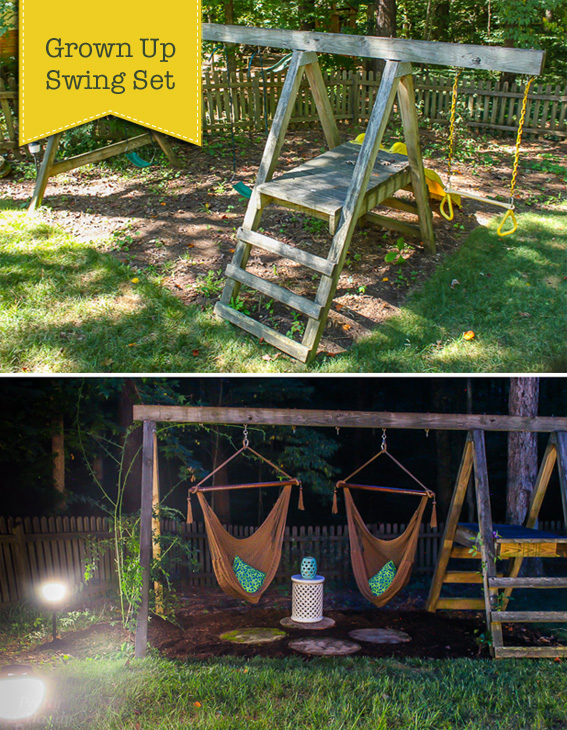
The landscape designer wanted to remove our swing set since the boys had outgrown it, but I couldn’t part with it. You could say the swing set matured with this idea for creating a swing set for grown ups.

Grown Up Swing Set | Pretty Handy Girl

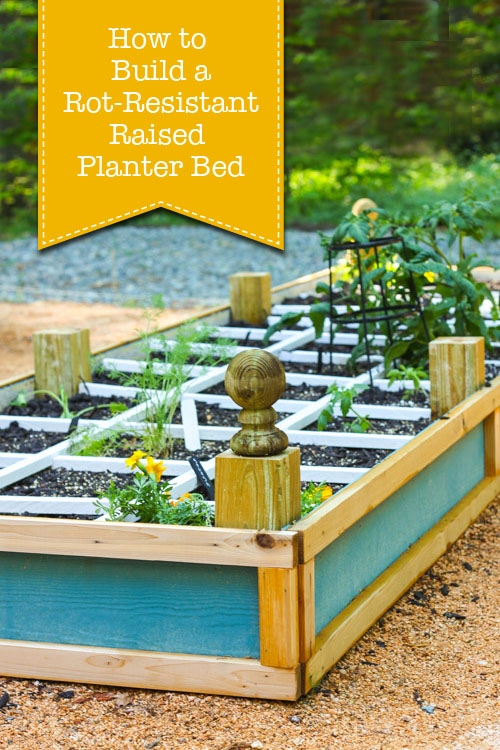
One of the projects I was most excited about was building two rot resistant raised planter beds.

How to Build a Rot-Resistant Raised Planter Bed | Pretty Handy Girl

For years I’ve craved a garden to grow our own vegetables. 2016 was the year it finally happened. We enjoyed baskets full of cucumbers, basil, tomatoes and salad greens. Hopefully we’ll have more vegetables next year.

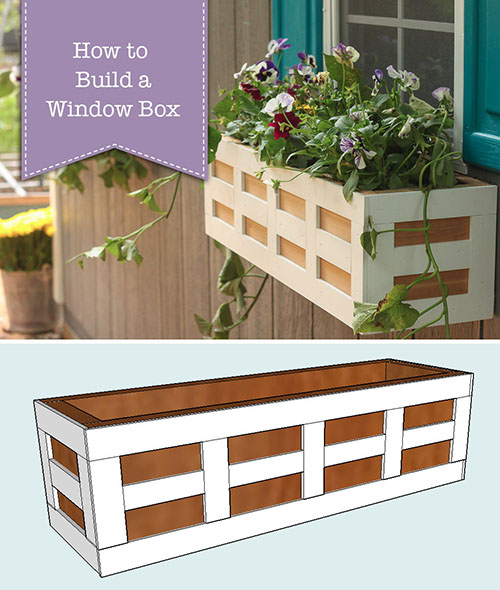
Behind the scenes I built a shed in the heat of the summer. I’ll be sharing the process in 2017. In the meantime, you can see a peek at the shed in this tutorial for how to build lattice window boxes.

How to Build Window Boxes | Pretty Handy Girl

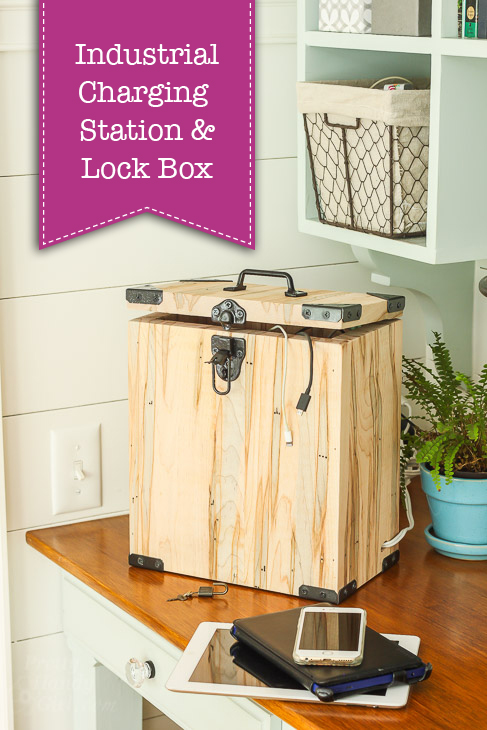
As a mother of two boys, we struggled with the boys doing too much screen time which prompted me to build this industrial style charging station and lock box.

Industrial Charging Station and Lock Box | Pretty Handy Girl

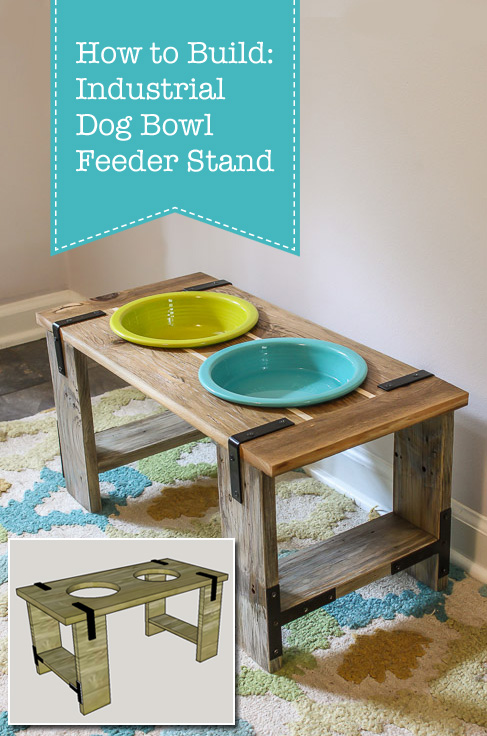
This year our hearts were broken twice. First we had to say goodbye to Buddy aka Handy Dog after he developed a tumor on his heart. Within a few months, we opened our hearts and home to Lena the Lucky Dog but sadly we had to give her back to the rescue when she couldn’t be trained (or medicated) to stop guarding me from everyone in the family. (Good news, she was adopted the next day by a couple without children. They were a much better fit for her personality.) While she was with us, I made an industrial dog bowl feeder that was a better fit for Lena.

How to Build: Industrial Dog Bowl Feeder Stand | Pretty Handy Girl

I never officially shared it on the blog, but in October we adopted Bandit the Rescue Dog. He’s a one year old ball of energy. I never thought we’d have such a young dog, but his antics are filling our home with lots of smiles and laughter. He is truly one happy go lucky pup.

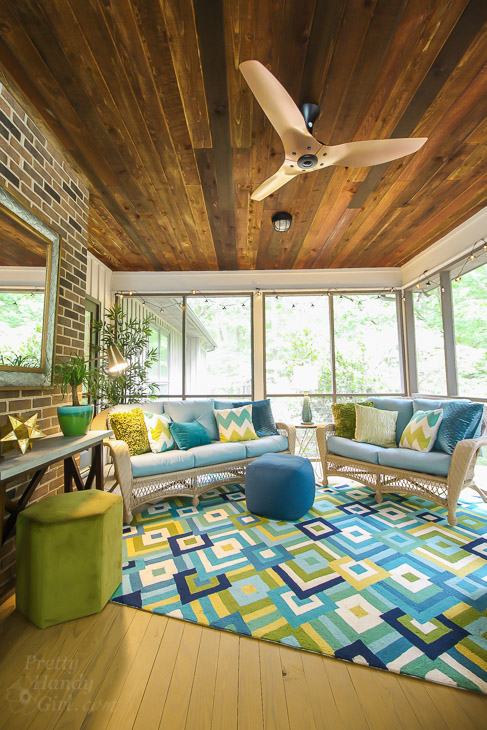
One of the before and after transformations I’m most proud of is the drab to fab screen porch makeover I gave to my stepmom. She loves it and is spending a lot more time writing out there.

Installing the Most Beautiful Ceiling Fan | Haiku Copper Luxe Ceiling Fan | Pretty Handy Girl

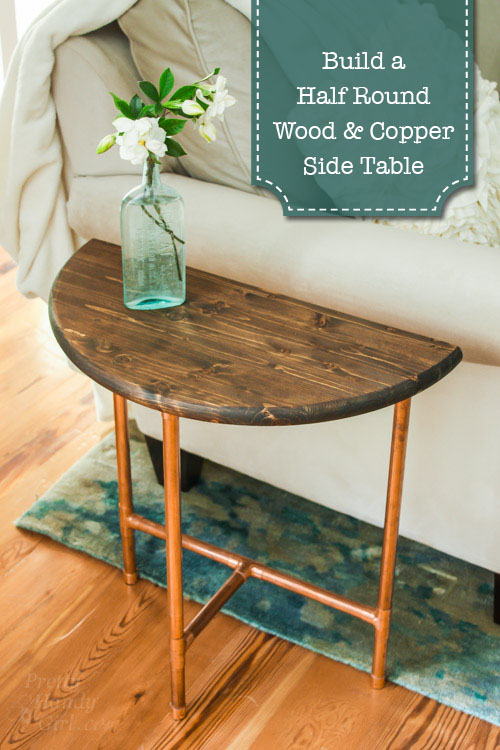
2016 could be called the year of copper on the blog. I had so much fun working with copper pipes. From creating a half round copper pipe side table. . .

Half Round Copper & Wood Side Table | Pretty Handy Girl

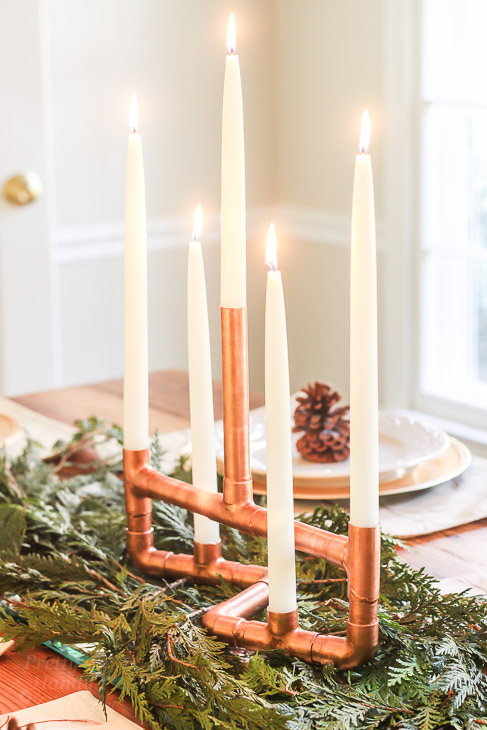
to a copper pipe centerpiece:

DIY Copper Pipe Centerpiece | Pretty Handy Girl

I even discovered a way to turn copper pipe into jewelry!

DIY Copper Ring Jewelry | Pretty Handy Girl

To finish out my 2016 recap, I enjoyed indulging my creative artist side by painting with alcohol inks.

Painting with Alcohol Inks | Pretty Handy Girl

These were so fun to play with and anyone can create stunning art with alcohol inks! Just follow my video tutorial for tips and tricks using alcohol inks.

Finally, if you ever wanted to find the perfect vintage sign, now’s your chance to stop looking and learn how to make a vintage rustic sleigh ride sign (or any other sign you desire.)

How to Make a Vintage Rustic Sleigh Ride Sign | Pretty Handy Girl How cool! You can use this technique to make or transfer any sign graphic.

I hope you enjoyed some of my tutorials this year. Did I miss any of your favorites?

I have a lot in store for you in 2017, so stick around!