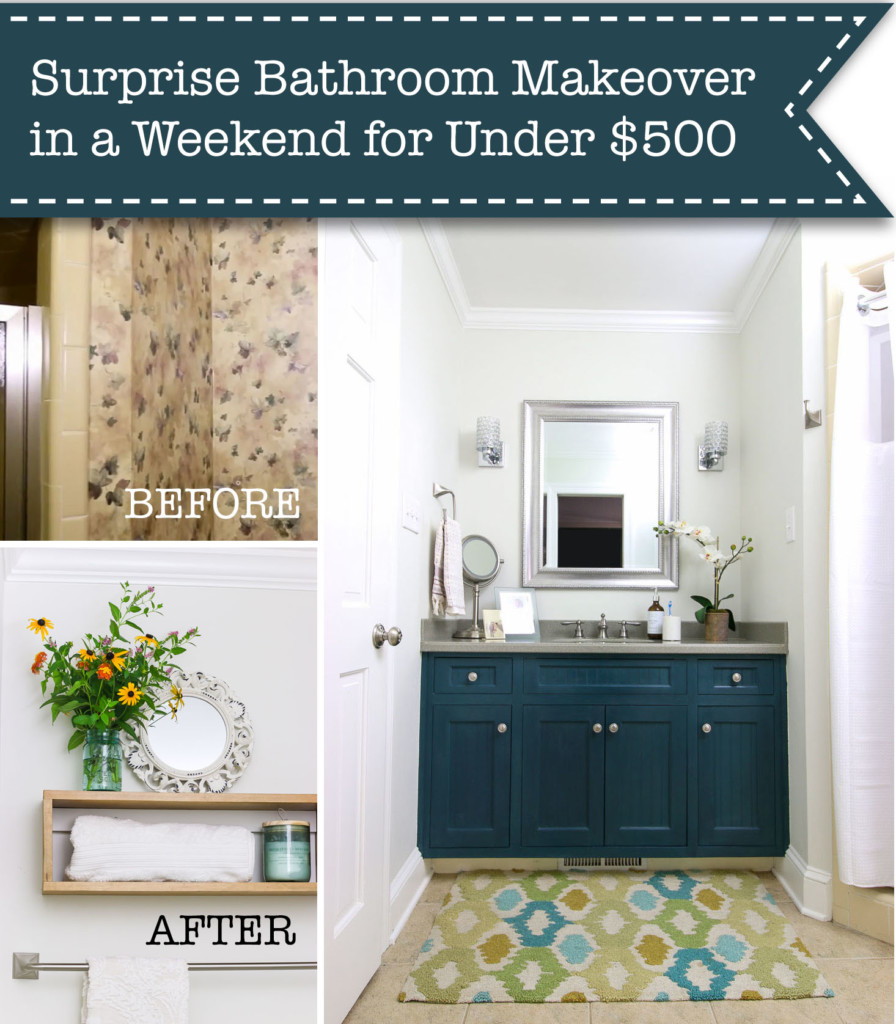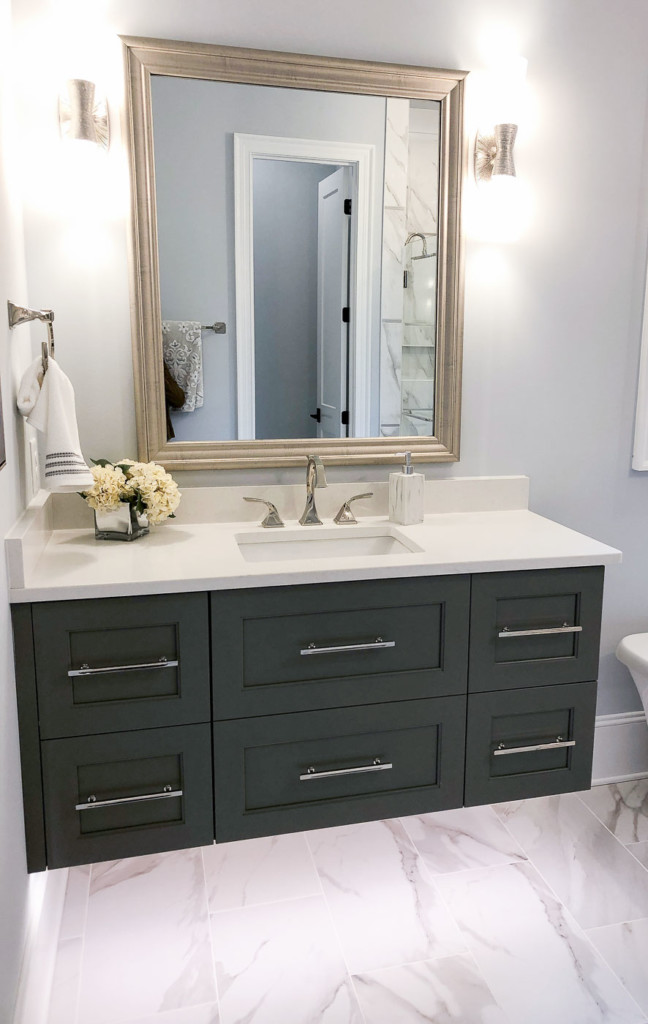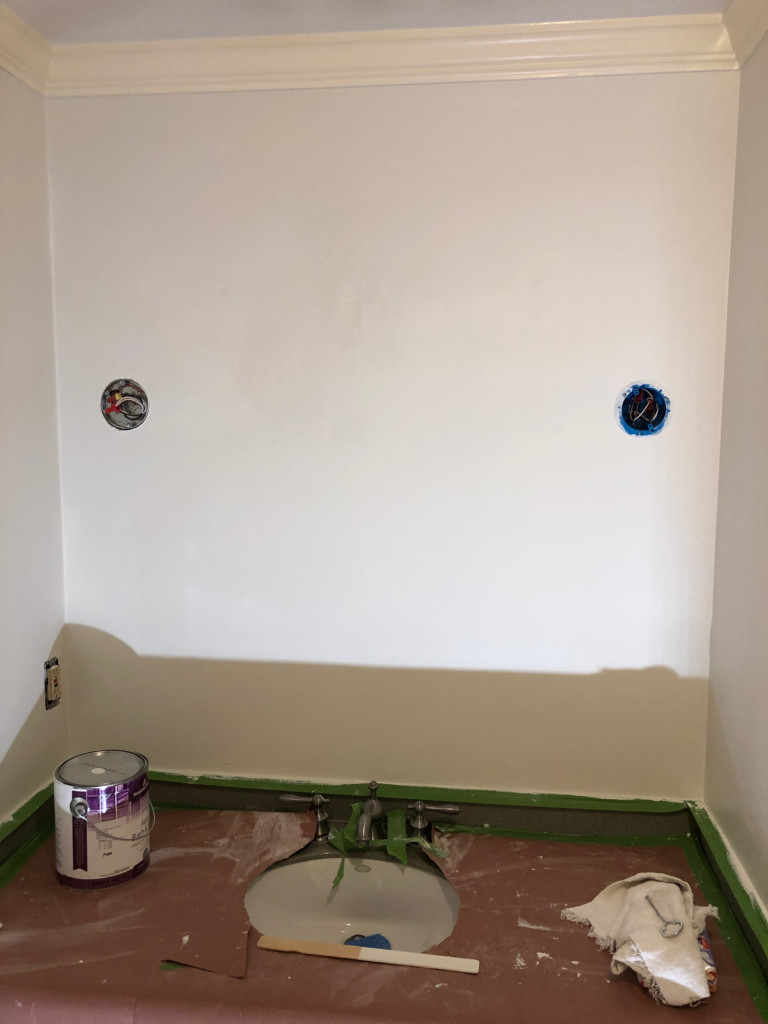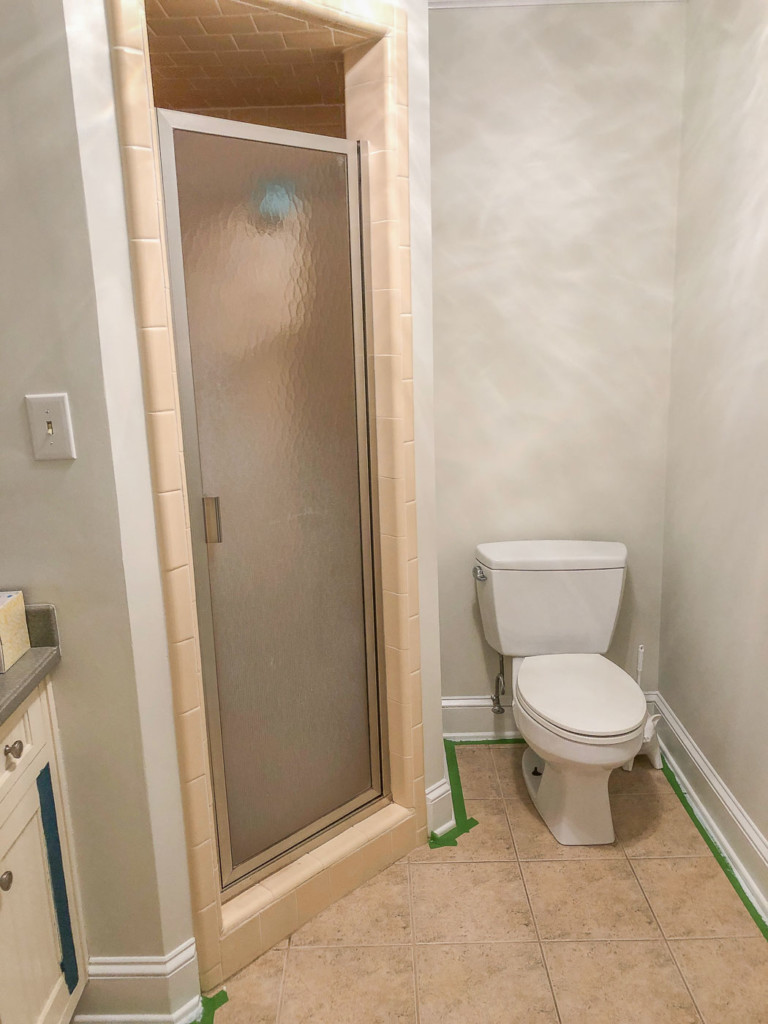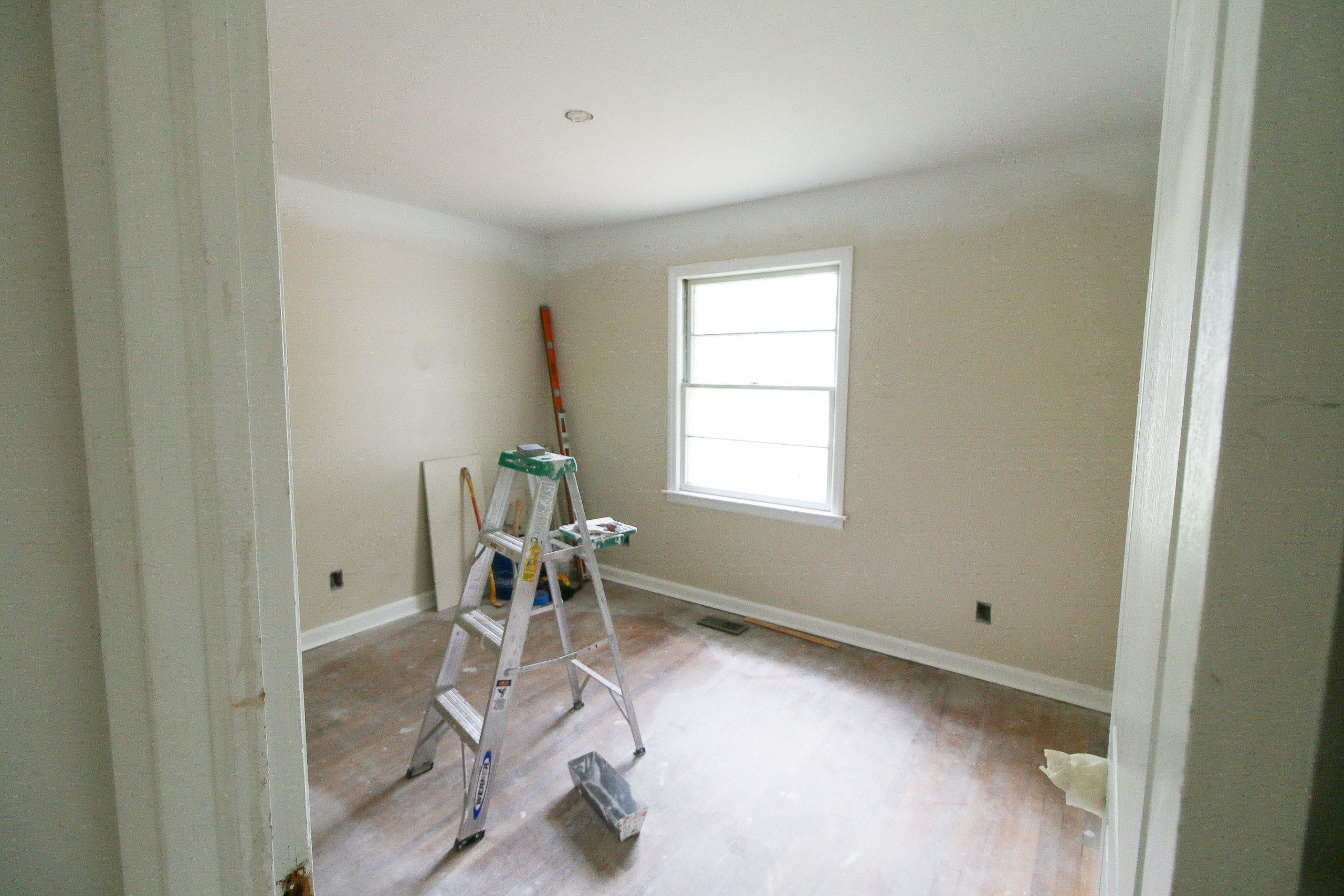
I know you’ve all been patiently awaiting another Millie’s Remodel update and today I have just that for you! Come see the drywall installation (one of my favorite phases in construction) and find out how I’m dealing with critters in the attic.
Millie’s Remodel: Drywall & Critters
I’m excited to share the next Millie’s Remodel update. If you can’t wait to see inside, scroll to the bottom of this article and take the video tour. In the last update, I shared progress in the framing, plumbing, and electrical department. Luckily, the inspection passed after one minor change. I got very lucky on this project and had one multi-trade inspector who was willing to let me send him a picture of the one item he asked for once it was complete. Because we were able to do that, he passed us that same day.
Like most permitted home construction projects, it’s important to pass inspections for your rough-ins (plumbing, electrical, and HVAC) while the walls are open. You also need to have insulation installed as long as it allows the inspector to be able to see the plumbing and electrical.
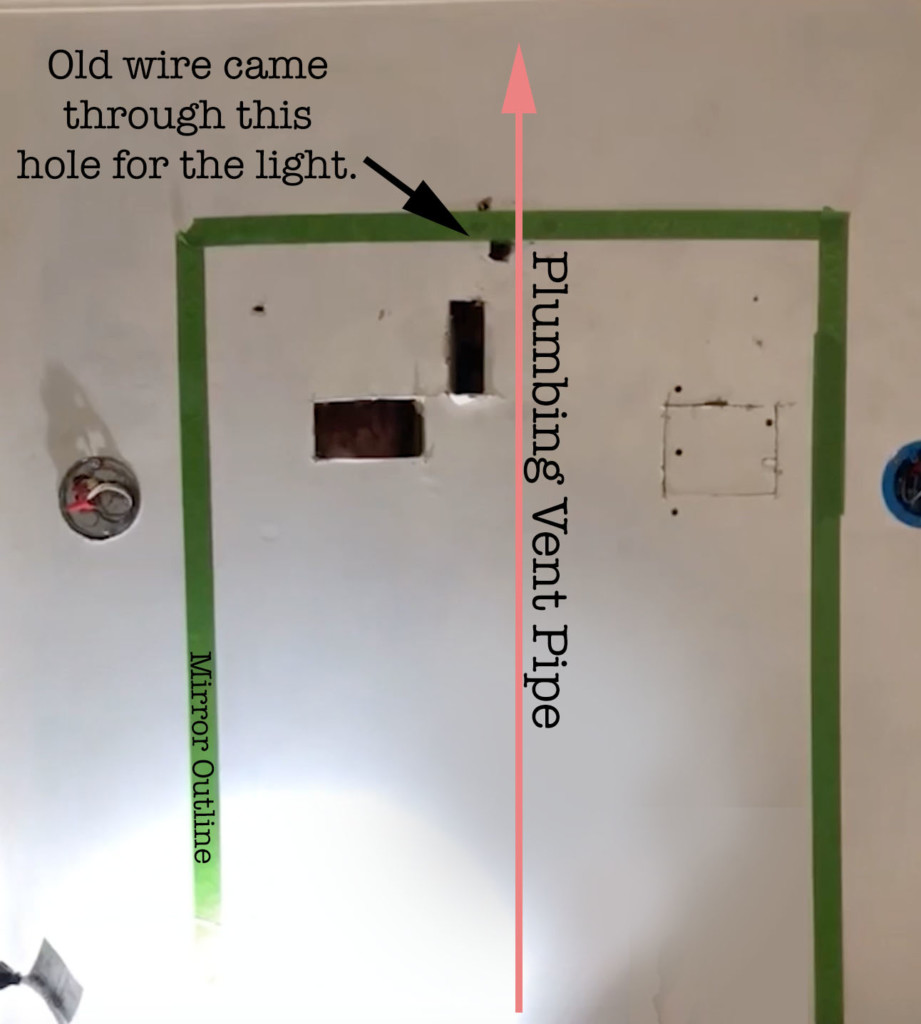
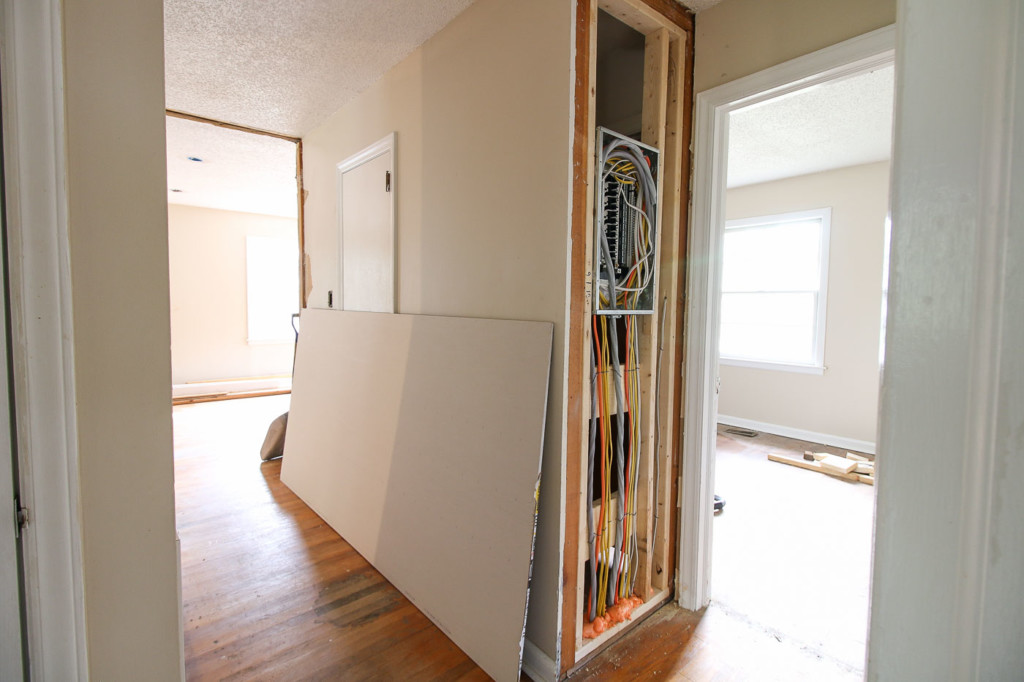
My electrician ran into a snag requiring a little more demolition. But it was no big deal. I grabbed my favorite demo tool, a flat shovel, and removed the section of the wall he needed to get into. Of all the tools I’ve tried, I love how the flat shovel slides into the side of the drywall and can press on the opposite wall for leverage without worrying about ripping a hole in the other wall. Once the wall was opened, my electrician was able to remove the old wiring and add a new box for the switches.
Pocket Door Installation:
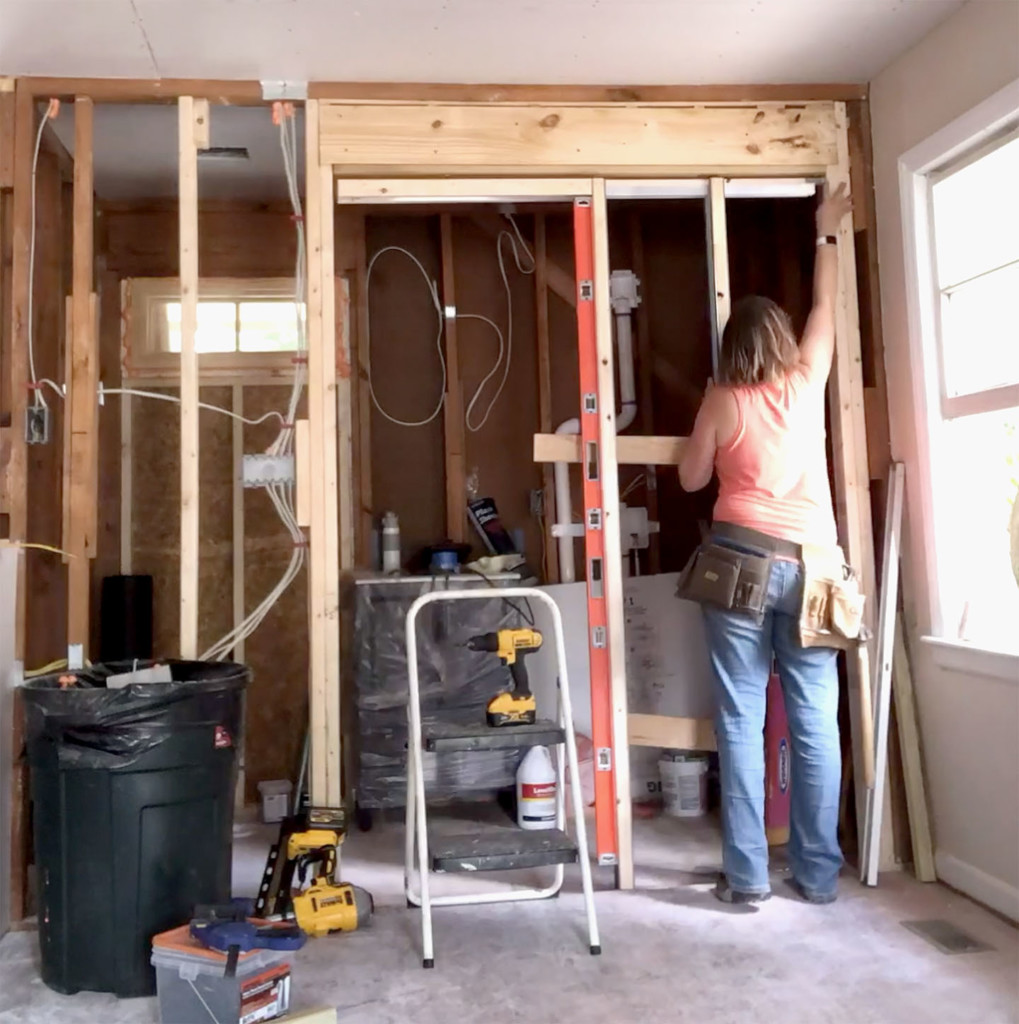
While my electrician worked on wiring the switches, I installed the pocket door hardware in the laundry room/powder room. The instructions for this thing are horrible, so it took me a little longer than expected. Maybe I should offer to re-write the instructions for them, what do you think?
Before the drywall stage, I take pictures and/or videos to refer back to when I’m trying to find the studs. In the kitchen, I made the smart decision to write measurements from the wall on the studs and blocking. Then I could refer back to these notes in the video when it comes time to hang the open shelving.
Once the drywall installers arrived, the house started to feel a bit crowded, so I headed up into the attic to take care of the critter problem we had.
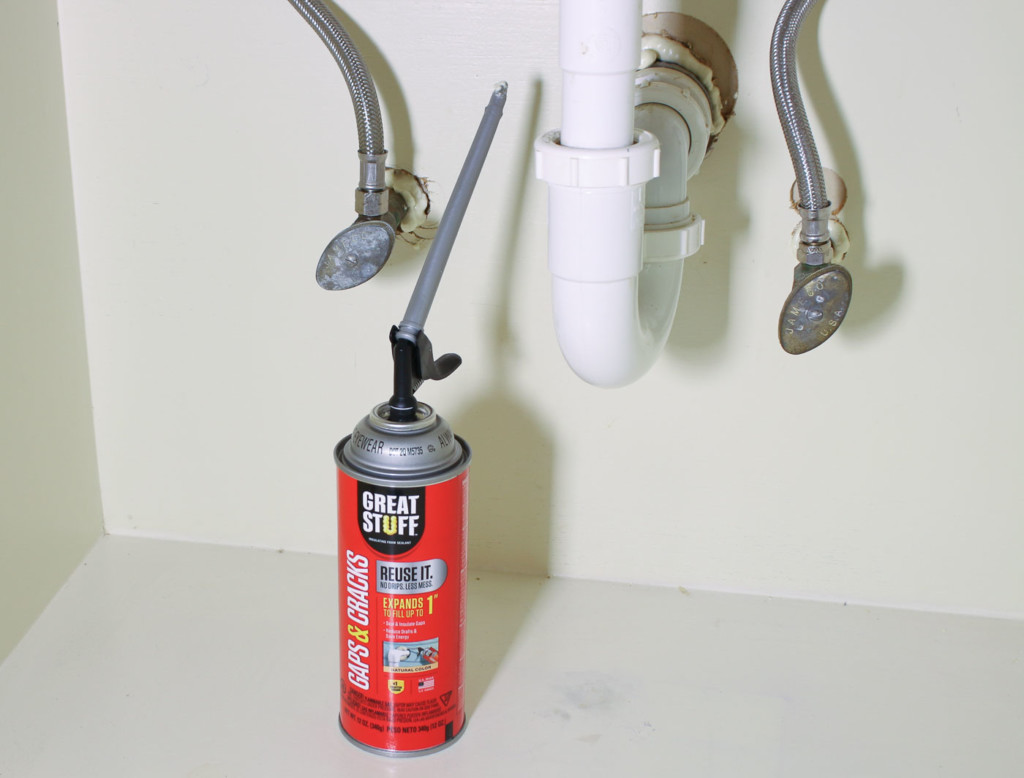
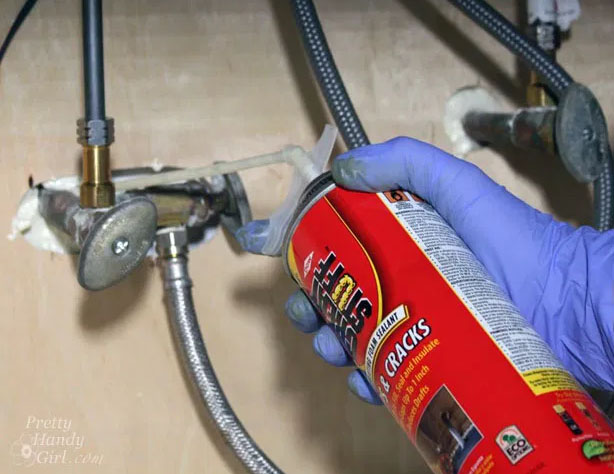
During the inspection, we found a lot of animal feces in the attic. I’m not talking about little mouse droppings (although I’m sure there were plenty of those in the insulation), I’m talking large animal feces like a raccoon or possum would leave behind. I found many holes in the attic and in the crawlspace. I think the interior wall between the bathroom and the kitchen was a rodent highway. The chimney also didn’t have a cap on it, so I added one in case the animals were getting inside there.
The last spot where animals could get into the attic was along the gable ends through the attic louvered vents. To keep birds and bats from flying into the attic, I installed hard cloth mesh inside the vents.
Here are some spots to look for critter entrances:
Speaking of preventing mold and water intrusion, the area around the tub will receive Kerdi waterproof boards in the future. I can’t wait to show you how this product works. I love working with it.
Closet to Pantry conversion:
In the narrow hallway across from the kitchen was a coat closet, but I felt it would work better as a pantry. You can watch in the video to see how I added melamine shelving in the closet to make it function as a pantry.
Goodbye Popcorn Ceilings:
I knew I wanted to get rid of the popcorn texture on the ceilings, so I tested it for asbestos. The popcorn came back negative, but the joint compound did have a small percentage of asbestos. Rather than risk disturbing the joint compound, we decided to cover it with a layer of drywall. This was such a quick and easy solution I will definitely do this again to cover popcorn. Once the drywall was up and primed, it was remarkable how much brighter the rooms were. Did you know popcorn ceilings make rooms a little darker because the light can’t reflect as easily off a textured ceiling? The new drywall and priming all the walls took care of most of the funky odors in the house.
Improved Floorplan:
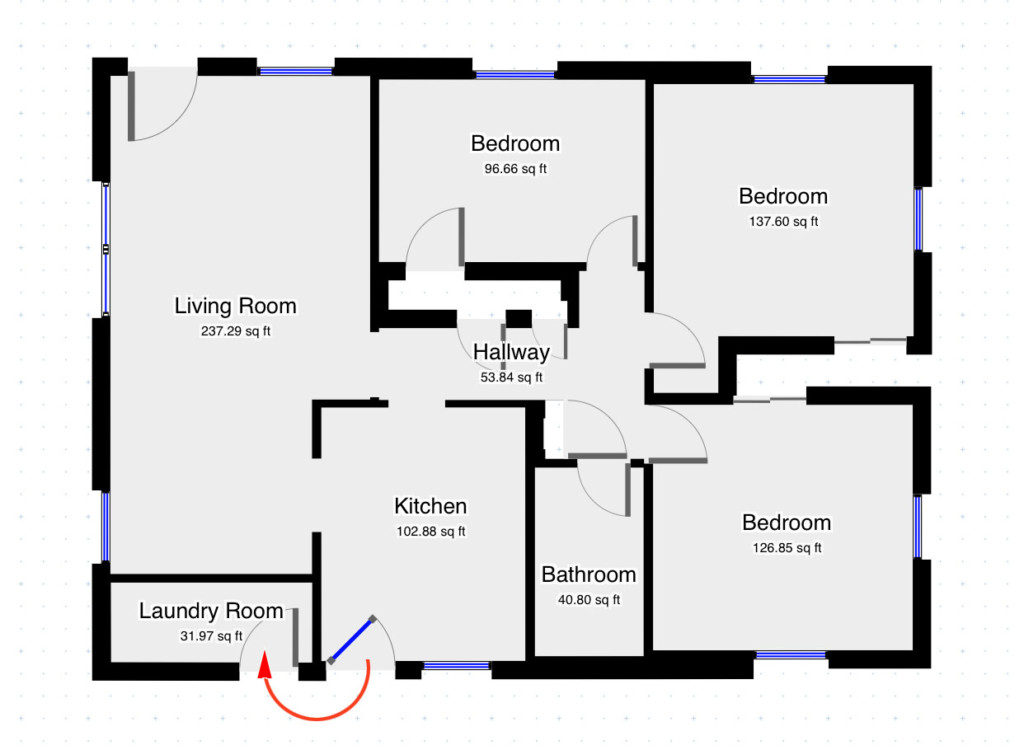
The biggest change in the look of the house is the open concept kitchen. During demolition, I removed the corner walls in the kitchen to open the floor plan. With the drywall installed, I can really get a feel for how the kitchen and living spaces will function.
Speaking about function, the new laundry/powder room will be a much more functional room. You may remember the house only had one bathroom, and the laundry room was only accessible from outside the house. The exterior door was removed and a transom window installed to allow some light into the room. I installed the pocket door to maintain enough space for a toilet and a sink creating a much needed second bathroom. Unfortunately, neither bathroom is useable right now. Instead, I have a port-a-potty in front of the house that is used by my subcontractors and several passersby (including the mailman who uses it everyday.) I will be so happy to get rid of it and have a toilet inside the house to use!
Exterior Updates:
Outside the house has changed considerably now that my siding contractor has removed the vinyl siding to reveal the original wood siding. I have plans to paint the entire house, but for now, let’s keep going.
In the backyard, I have plans to try to move the ugly shed to the back of the lot, but honestly, I’m not sure it will survive the move. It’s really not built well.
Ready to take the video tour?
That’s it for the update. I’ll be back soon with another progress update. Have a great week!
A special thank you to the Millie’s Remodel Sponsors:
The Millie’s Remodel project sponsors have donated materials for the Millie’s Remodel project. As you know I am very particular about the brands I work with and recommend. As a general contractor, I choose the products used on my projects wisely to make sure they last a lifetime. Therefore, I have no reservations putting my name behind each and every one of these sponsors.
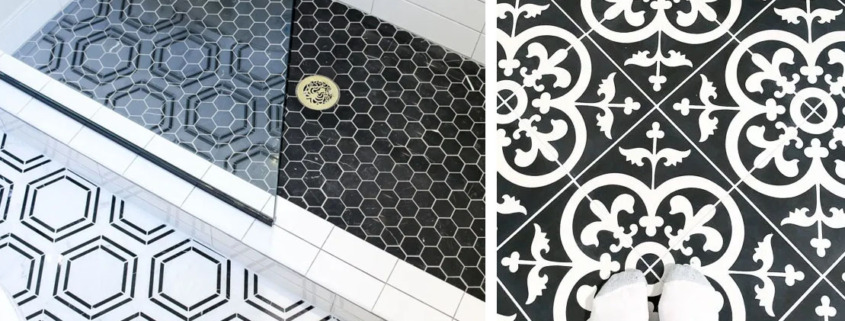
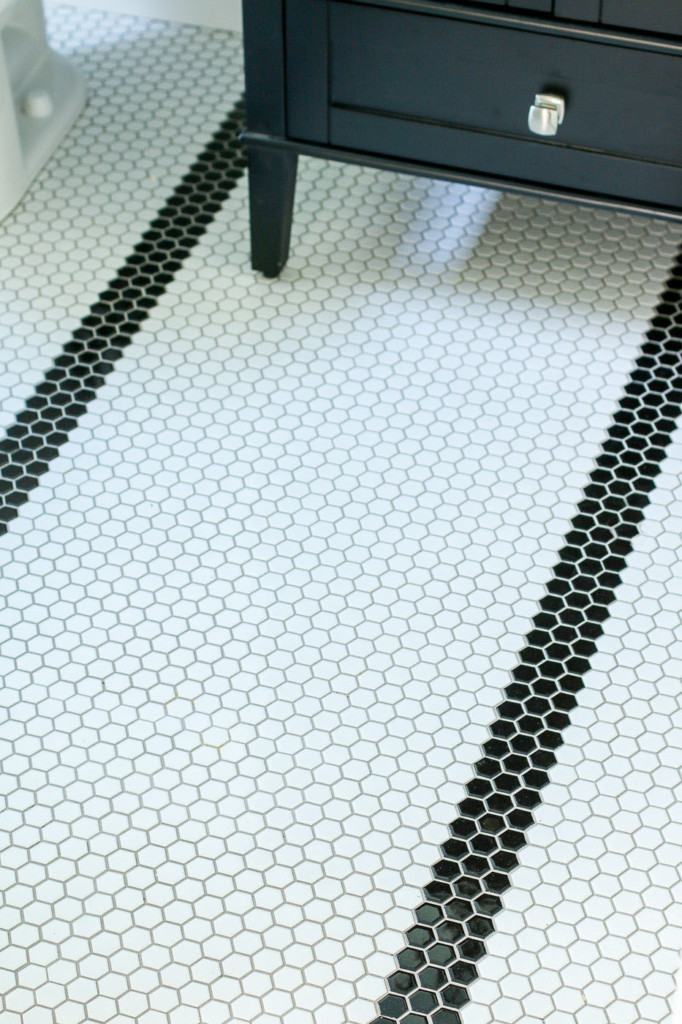
If you want professional-looking tile floors (regardless if you want to do it yourself or hire someone), you must read this article to find out what tiles to buy, how to avoid cracked tiles, and risk a finished tile floor that is less than professional-looking.
11 Must-See Tips for Professional Looking Tile Floors
I’m here to tell you, YES, you can lay your own floor tile and achieve professional-looking results if you learn a few tips and tricks. First, can I share a secret with you? Seven years ago I thought I had to hire a tile installer when we had our mudroom tiled. I wish I knew then what I know now because I would have kicked that installer out of my house immediately. I still have to look at some of the issues he left behind pointing to a less than professional looking tile job. (Insert Angry Face Emoji!)
But, I completely understand if you still want to hire a professional tile installer for any number of reasons:
No time
Don’t have the tools
Physical disabilities (tile-setting is tough on the back and body)
No desire to install tile
Did I miss any reasons? If I did, leave me a comment below letting me know why someone wouldn’t want to embark on a DIY tile flooring project.
Before we get to my tips, I want to give you a little education on tiles. Especially if you had problems previously and thought it was your fault the tile job didn’t look professional. Believe it or not, your issues may have been caused by cheap or poor quality tiles. Say what?!
How to Spot Poor Quality (Cheap) Tiles:
Did you know those tiles you are saving a boatload on may not be quality tiles? Did you even know there were inferior quality tiles? Yes, it’s true. A few years ago I hired a tile installer to help me tile some of the bathrooms in the Saving Etta project. (Yes, I could have done it myself, but I’d still be tiling if I did everything myself.) When I first met the installer, he asked me about the tiles I had purchased. I showed him the boxes and he opened several to inspect them. This is what he was looking for to determine if they were cheap tiles:
Color – Pull tiles from several boxes (if possible) and check to see that the color is consistent for one color tiles. (Obviously, if they are supposed to vary in color and pattern that’s okay.) Regardless, you should always pull tiles randomly from several boxes when laying tile.
Size – Pull random tiles from several boxes and stack them together. They should be identical. Poor quality tiles can vary up to 1/8″ in size. This will cause issues especially if you are using a small grout joint.
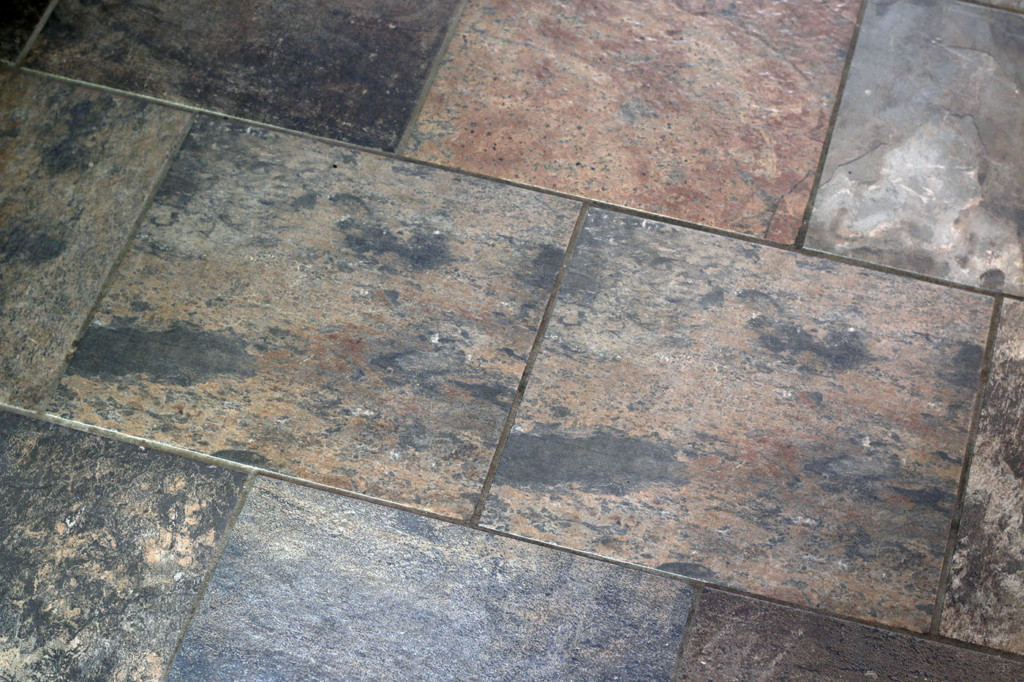
Printing – Many ceramic or porcelain tiles are printed to look like real stone today. Take a close look at the surface. Is the printing evident? Do you see small dots like a printed newspaper photo? If you can’t see them easily, the printing was well done.
Thickness – In addition to the overall dimension of the tiles, you should check the consistency of thickness.
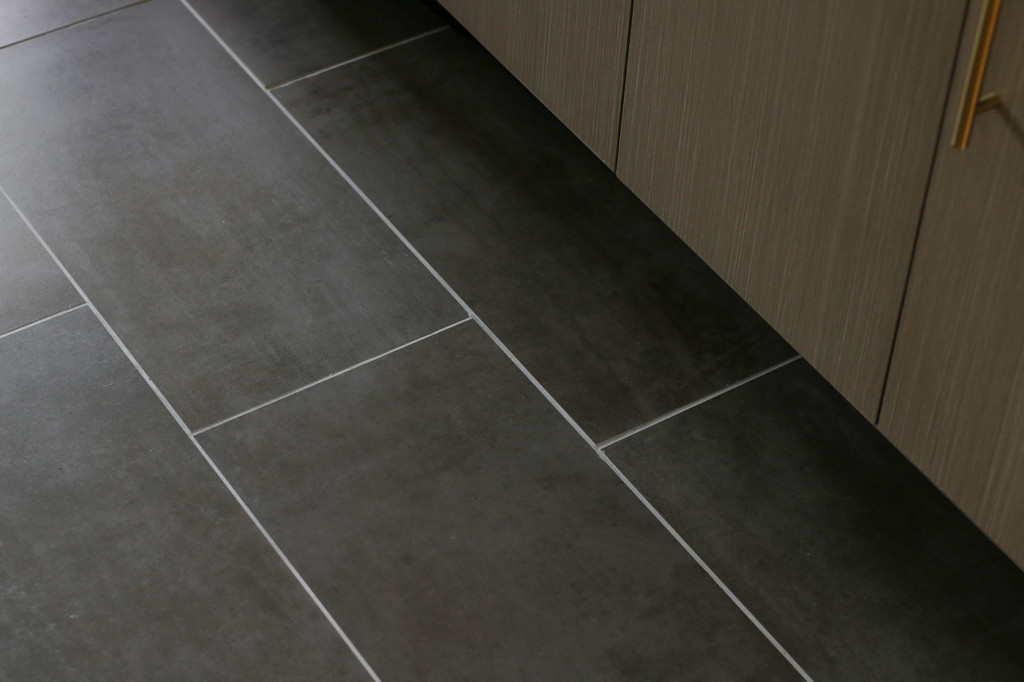
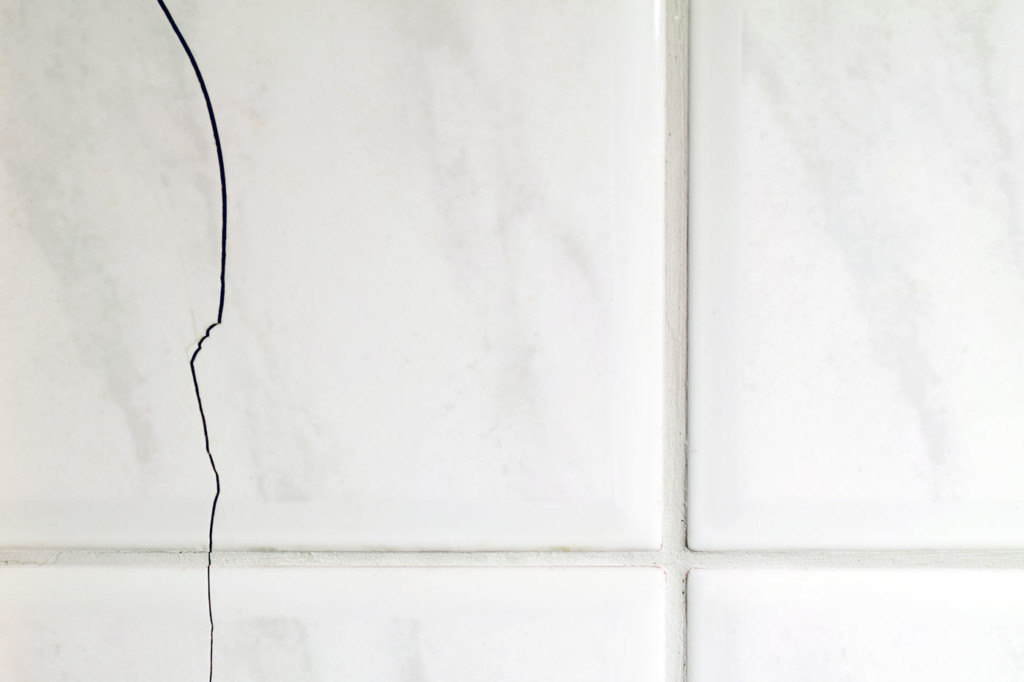
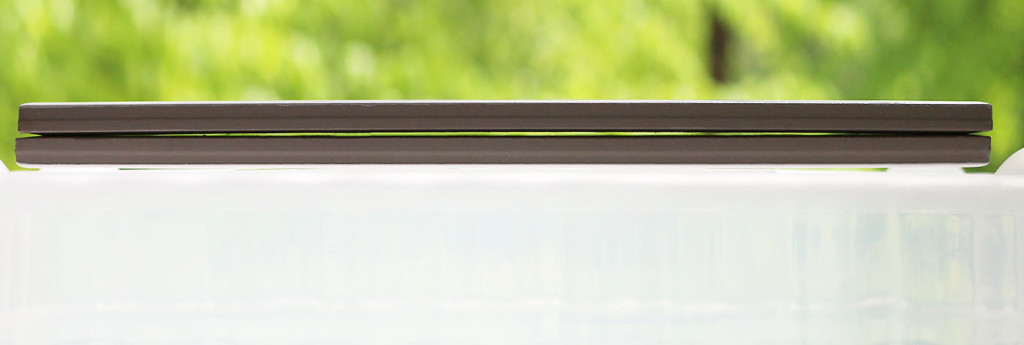
Warping – Are your tiles perfectly flat or do they bend? See below for a picture of two 4″ x 12″ tiles that show some bowing in the center of the tiles.
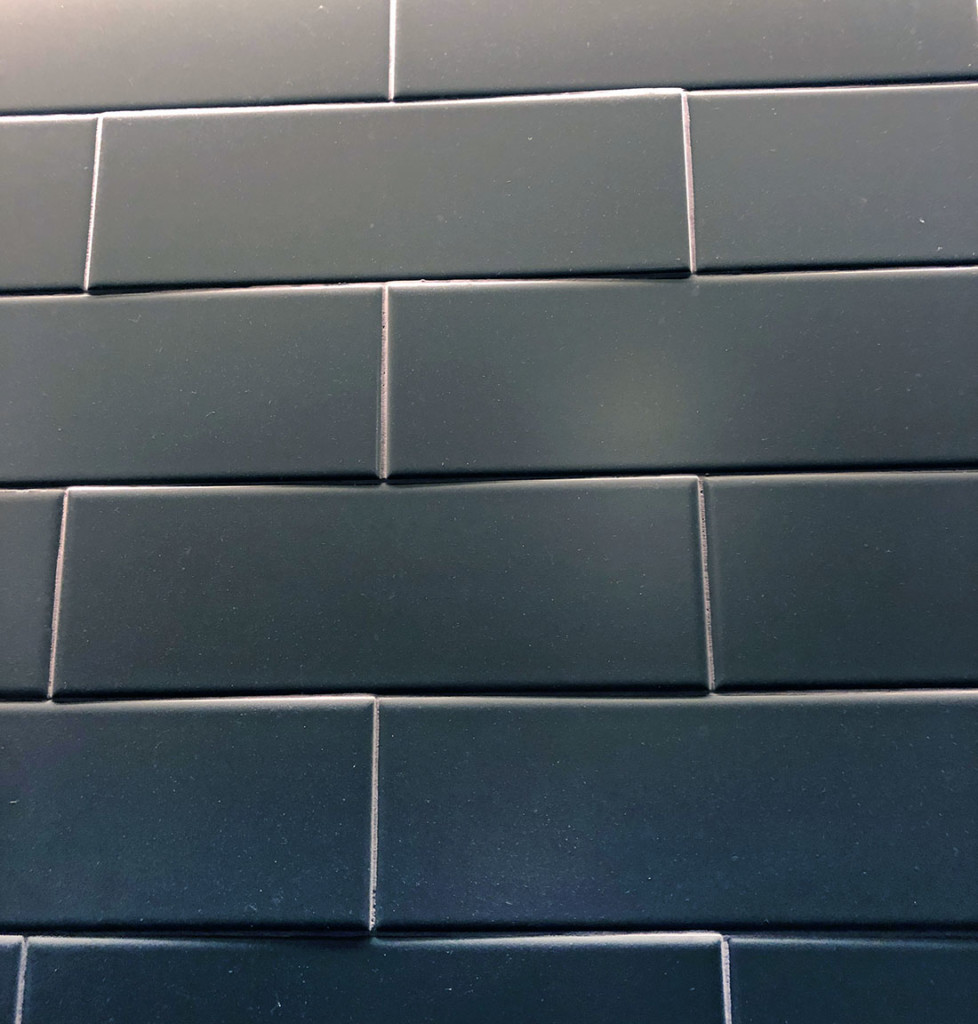
(To eliminate accentuating this defect, you wouldn’t want to install these tiles with a 50% offset (shown below). Instead, a 25 or 33% would be a better staggered joint pattern.)
Wedging – Square and rectangular tiles should be cut square. Out of square tiles could would impact your tile job and show up especially in the grout joints.
Typically you can expect good quality from tiles that are labeled as Standard or First Grade. Second grade tiles will have more variations in appearance. Independent tile shops are the best place to purchase good quality tiles. They typically sell to designers and tile installers, but also sell to the general public. Granted, you will likely pay more. But, you know the old saying, you get what you pay for.
Picking Tiles:
Tiles are tiles, right? Wrong, there are many tiles that would not be suitable for a floor. And some tiles are not good for high traffic areas. Finally, some tiles are not a good fit for showers. How can you tell which tiles are best for use in specific areas?
Floor Tiles vs. Wall Tiles:
Floor tiles must be strong enough to handle walking on and an occasional dropped item. Did you know there’s a rating for tile strength? It’s called a PEI rating.
A PEI of 1 is ideal for walls. PEI of 2 is best for bathrooms and kitchens. And a PEI of 3 is appropriate for all residential applications. Meanwhile, PEIs of 4 and 5 are applicable for commercial and heavy commercial applications. When shopping for tiles, they may not have the PEI rating displayed, but there should be a notation if they are acceptable for floors and walls. If you don’t see a notation, ask a salesperson or check with the manufacturer.
How Slippery Are Your Tiles?
Floor tiles must meet certain criteria for COF or coefficient of friction (basically how slippery the tile is.) But, different areas need different COF values. Let’s talk strictly for residential purposes (because commercial and business sites are a whole other beast). Floor tiles in a bathroom with a shower or tub must meet a greater than .42 DCOF test. Tiles that score less than .42 would only be appropriate for areas that will be kept dry or walls.
Polished tiles tend to be more slippery. Tiles that have texture usually score better on the DCOF test, but depending on how textured, they can be harder to clean.
Are marble and natural stone tiles good for floors?
Oh the beauty of real marble! I know, I know, I love marble too, but would it be a good choice for your floor? This depends on several factors. The first being the use of the room. If using in a kitchen or room with a lot of traffic and opportunities for spills, you’ll want to steer clear of marble and stone products that can wear or stain easily. Of course, you can seal your tiles, but the upkeep will be a lot more than porcelain or ceramic tile. But, if you are okay with your floors showing off natural wear and patina, go for it.
Porcelain vs. Ceramic – What’s the Difference?
Porcelain tiles are stronger and more dense than ceramic tiles. They don’t absorb as much moisture as ceramic tiles (Porcelain tiles must be tested and absorb at 0.5% or less to be certified porcelain.) Because they absorb less, porcelain tiles are more ideal for shower floors or areas that stay damp or humid. While porcelain tiles will usually be stronger, thicker, and less porous, they can be tougher to cut and more expensive. Ultimately you can use ceramic tiles on your floor, as long as they meet a 3 or higher PEI rating (as discussed above).
How Many Tiles Should I Order?
Typically most tilers would suggest you order anywhere from 15% -20% extra for your job. If you are using small tiles, you can order as little as 10% overage. Usually, I order 15% because it’s better to have a few left over to keep on hand should you ever have to replace a tile. Besides, it’s a real pain if you run out of tiles mid tile job.
Know Your Finished Height:
If you are picking out tiles, be sure you know the difference in height of adjoining rooms. Choosing your floor tile can mean the difference between perfectly matched floor levels or the need for a transition strip (or worse, a step up or down!) Luckily there is a transition strip for most floor differences.
Tools:
(I’ve included affiliate links for your convenience. I earn a small percentage from a purchase using these links. There is no additional cost to you. You can read more about affiliate links here.)
I’m a big advocate of having good tools. Having a good tile cutter means the difference between flying through a tile job or having it drag on for an eternity. A good tile cutter also reduces waste because they cut tiles cleanly.
When possible, I prefer cutting the majority of tiles with a scoring tile cutter. It’s quicker, a lot less messy, and clean up is as simple as brushing off the platform.
Occasionally I’ve run into tile that resisted cutting on my scoring cutter (thick porcelain tiles usually fall into this category). For those tiles, I use my wet saw. A wet saw can also cut angled and corner cuts into the tiles. I’ve used the same inexpensive wet saw for years, but when it dies I’ll upgrade to a bigger wet saw.
Recently I started using an angle grinder with a diamond blade for more precise intricate cuts or to knock off a small amount. It works faster and is less clean up than the wet saw for those intricate cuts.
Finally, if you are tiling a shower, you’ll inevitably need to cut a hole in your tiles around a pipe. For that task, I use a drill with a diamond hole saw.
Now it’s time to learn my top tips for a professional-looking tile floor. If you are a newbie and want to learn the basics of tiling, you’ll find these two lessons helpful: Learn How to Set Tile
Okay, let’s learn how to get those professional tile results that will even fool the pros!
11 Must See Tips for Professional Looking Tile Floors:
Over the years I’ve taken several courses on tile setting and worked directly with several professional tile setters. From each experience, I’ve learned a lot and now I want to share the things I’ve learned with you so your next tile job comes out beautifully.
In my video you’ll get to see the progress at the Millie’s Remodel project as I tiled the kitchen floor. I decided to incorporate the tiling tips I’ve learned into the video for you.
Watch the video for the tips and how I install floor tiles:
You can also watch the video on YouTube if you prefer (especially if you want to click on the links to the other videos I mention).
1. Flat and Sturdy Subfloor:
Like building a sturdy house, your foundation is super important. When you walk on your floor does it flex, bounce, or squeak? If so, you need to solve these issues now. Use a level and rest it in several different areas (and directions on your subfloor). Are there low spots, high spots, or a slope? If you have dips or valleys in your subfloor, you can’t get a good tile job that will last. If your floor isn’t sturdy and flexes, you will have cracked grout, or worse cracked tiles.
If you have a wood subfloor, make sure your wood substrates have the manufacturer’s recommended spacing (typically 1/8″ gap between plywood sheets.) Backer board or uncoupling membranes should be laid onto the subfloor before tiling.
Never tile directly onto new concrete. In fact, keep reading to learn why I use uncoupling membranes and how to prevent your tile job from being ruined by expanding or contracting concrete.
After taking the Schluter workshops, I will never tile a room without an uncoupling membrane again. As a bonus, their membranes are waterproof. No more need to worry about water soaking into your subfloor and causing mold to build up.
3. Use a Good Tile Cutter
Using good tools will help your tile job go smoothly and it will keep your tile cuts from looking like a jagged mess. If you can’t afford to buy good tools, look into renting some, or ask a fellow DIYer if you can borrow theirs. (Always clean their tools before returning them. Nothing irks me more than dirty tools.)
4. Layout Tiles Ahead of Time
If you’ve heard that spending time doing the prep work will save you time in the long run, nothing could be more true than when tiling. Before I start any tile job, I always lay out my tiles first. I dry lay them out to see what I’m dealing with. First I layout a run of tiles along the length of the room and position the tiles to avoid having to cut a small sliver of a tile at either end. Then I layout a run along the width of the room making adjustments to avoid the same situation.
If I have printed tiles, I separate them into piles by their individual print design. Then when I pull tiles later I pull from different stacks. I also step back to make sure two of the same tiles aren’t next to each other (like in the example below thanks to that so-called professional I hired).
Nothing screams rookie tiler louder than two printed tiles being installed next to each other. And in the same orientation!
5. Leave an Expansion (or Movement) Joint
Despite what you might think (especially if you have perfectionist tendencies), you do not want to cut and install your tiles tight against the wall (or other objects in your room like columns, pipes, or walls.) You must leave at least 1/4 inch around the perimeter of your room or around immovable objects. Not adhering to this rule can lead to your tile floor popping up or tenting (See this article for a photo of tenting tile.) Additionally, you need to install a movement joint in any interior room at every 25 feet in each direction. However, if this room is exposed to direct sunlight or heat, you’ll need an expansion joint at every 12 feet in each direction.
6. Use Recommended Trowel Size
Tiles come in all shapes and sizes and therefore they require a variety of trowels. Be sure to check with the specifications on your tile to find out the trowel size. Or ask your tile shop representative for their recommendation. Using a too-small trowel with large tiles would cause the tiles not to adhere to the surface. And too big a trowel with smaller tiles will make it difficult to level the tiles.
7. Back Butter Large Tiles
When tiling a floor with large tiles, back buttering is a must. Typically I’ll spread the thinset mortar onto the floor and trowel through it. I’ll use the excess to scrape a thin layer over the back of the floor tile. This accomplishes two things:
It keys mortar into any voids on the back of the tile.
It ensures full coverage on the back of the tile.
If you don’t back butter large tile, you run the risk of having air pockets behind your tile which can sound hollow when walked on or cause the tile to pop up.
8. Use Leveling Spacers
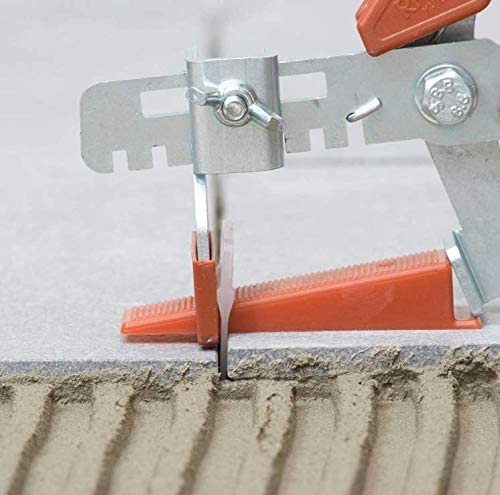
Leveling spacers are a relatively new product, but I will never tile a floor without them again. I’ve tried several brands but prefer the wedge-shaped leveling spacers. The wedges are inserted into the tile spacer and ratcheted tight to bring tiles to the same height as the adjacent tiles. You can see how they work and how to remove the spacers in my video above. (It’s a lot of fun removing them as you’ll see!) Using leveling spacers virtually eliminates lippage on tiles.
9. Clean Thinset Off Tiles
Anyone who has had to clean dried thinset mortar off tiles will never make the mistake of letting it dry on tiles. When tiling, keep your area clean. Be sure to clean off any mortar on surrounding tiles. In addition, make sure to clean thinset that squeezes up between the tiles. You want to make sure you have enough room for grout to set on top of the mortar.
10. Use Grout with Sealant
Grouting is the final step for any tile job, but if you didn’t add a sealant additive to your grout, you will need to seal the grout after the fact. I don’t know about you, but the last thing I want to do after tiling a floor is hand paint sealant on all the grout lines. And if you skip sealing all together you’re going to hate keeping the grout clean.
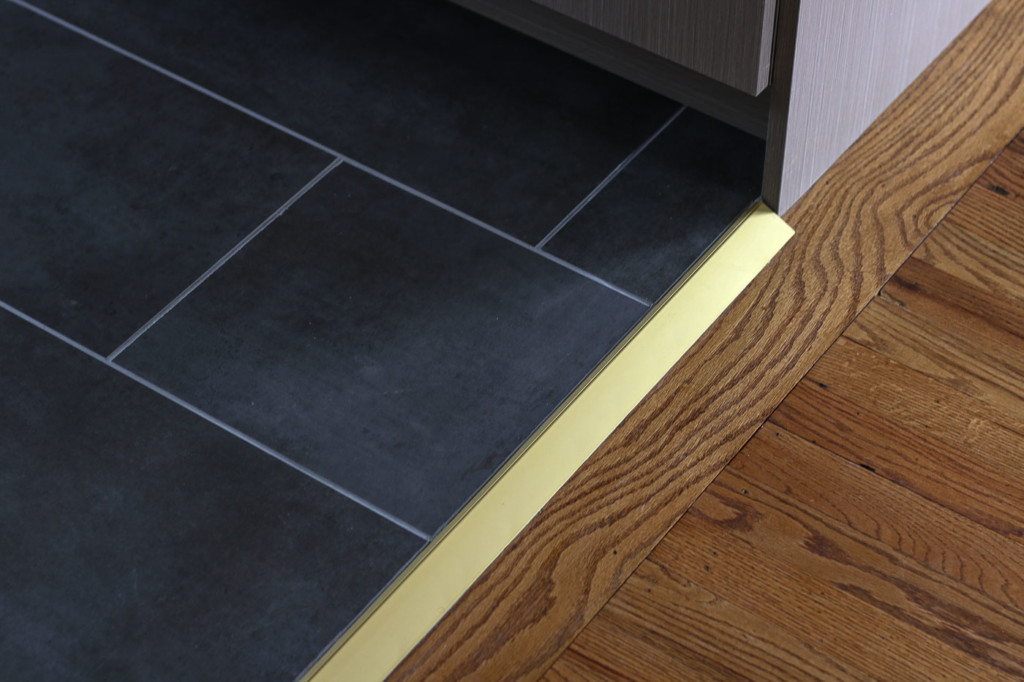
11. Plan Your Transition Pieces Ahead of Time
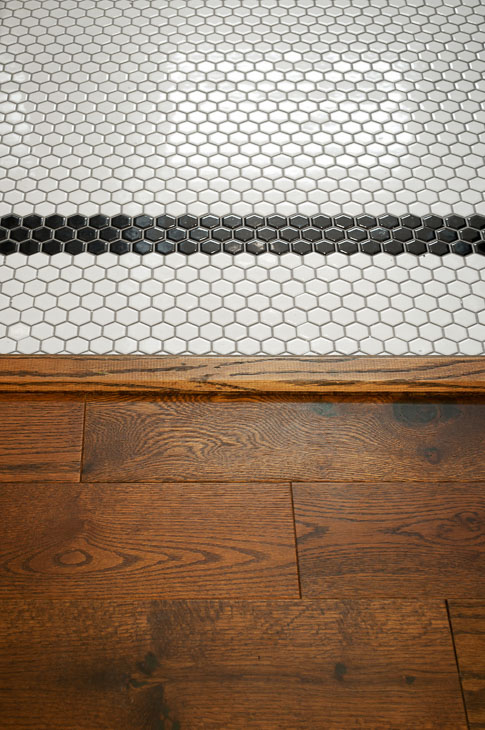
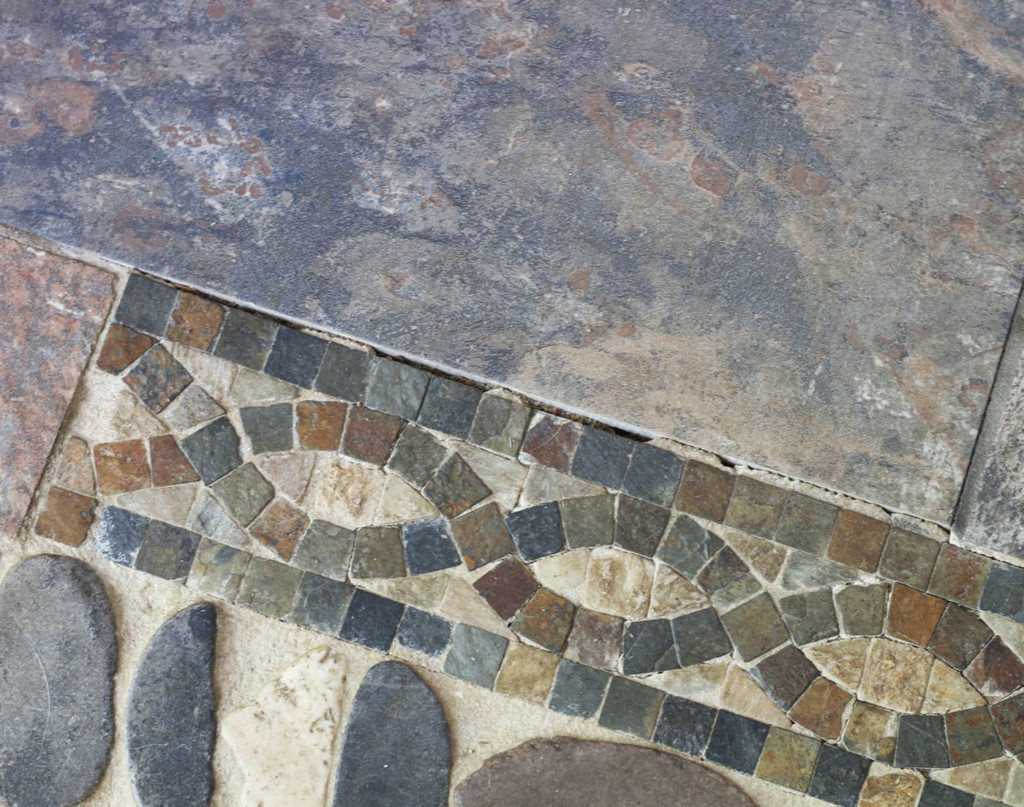
One thing that will truly set your tile floor job a notch above is using sleek transitions. Personally, I prefer using Schluter profiles strips for my floor transitions. There are a variety of finishes, sizes, and styles. Some of the profile strips are laid under the tiles for a stronger bond. Others are installed after the grout has cured. In the Millie’s Remodel kitchen, we had a big change in height between floors. I ended up using the the Schluter Reno-V profile which has an L shaped piece that slides under the tile edge during installation. (You can see the way it works in my video.)
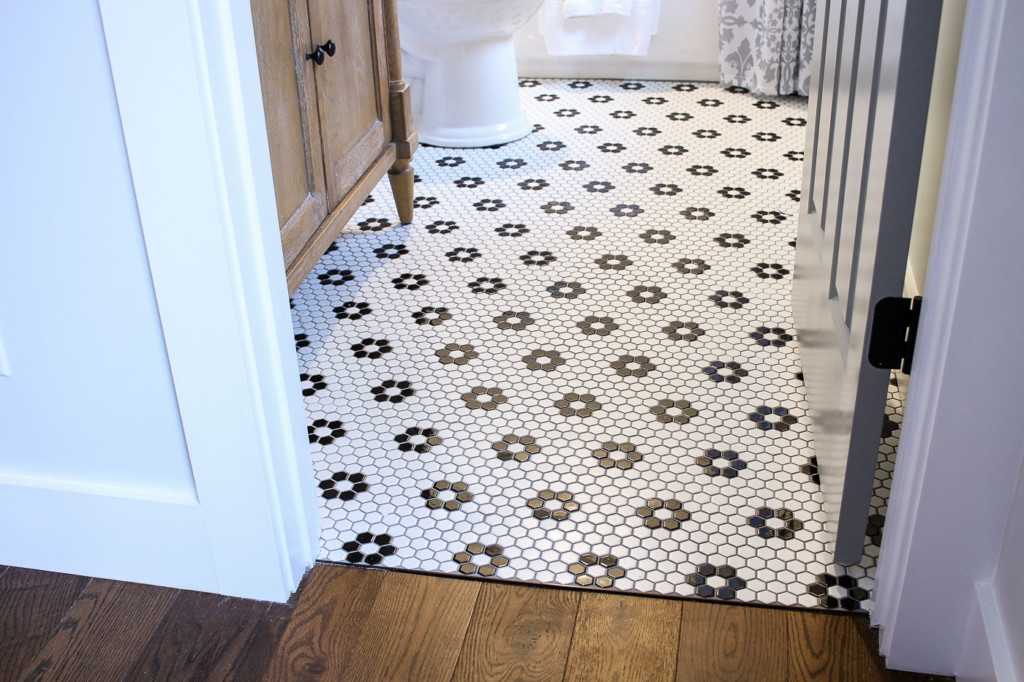
However, in the Saving Etta house, I used simple Schluter Schiene profile strips between tile and wood flooring.
How to Speed Up Your Tile Job:
It helps to have a helper when tiling. Once you mix thinset or grout, you’re on the clock. Both will harden within a set time. If you have a helper, you can give your helper the task of cutting tiles or changing out your dirty water buckets, or mixing more thinset mortar. Speaking of mortar, never mix more than you can spread before hardening. As an experienced tiler I try not to mix more than 1/3 of a 50 pound bag of mortar. Otherwise, you’ll be left with a big boulder of thin set when it hardens.
If you can’t get a helper, make sure to fill multiple buckets with clean water before you begin. It also helps to cut some of your perimeter tiles ahead of time.
Tip for Working with Grout: You can slow the curing time of your grout if you set your mixed grout into a second bucket filled with ice water to slow the curing process. I show this in more detail in my grouting tutorial.
Best of luck tiling your floor. I know you can do this.
https://prettyhandygirl.com/wp-content/uploads/2020/04/must-see-tips-for-professional-looking-tile-floors-feature.jpg4901109Brittany Baileyhttps://prettyhandygirl.com/wp-content/uploads/2021/07/PHG-logo-tagline-2020-1030x211-R.jpgBrittany Bailey2020-04-24 07:05:002020-06-05 12:44:4811 Must See Tips for Professional Looking Tile Floors
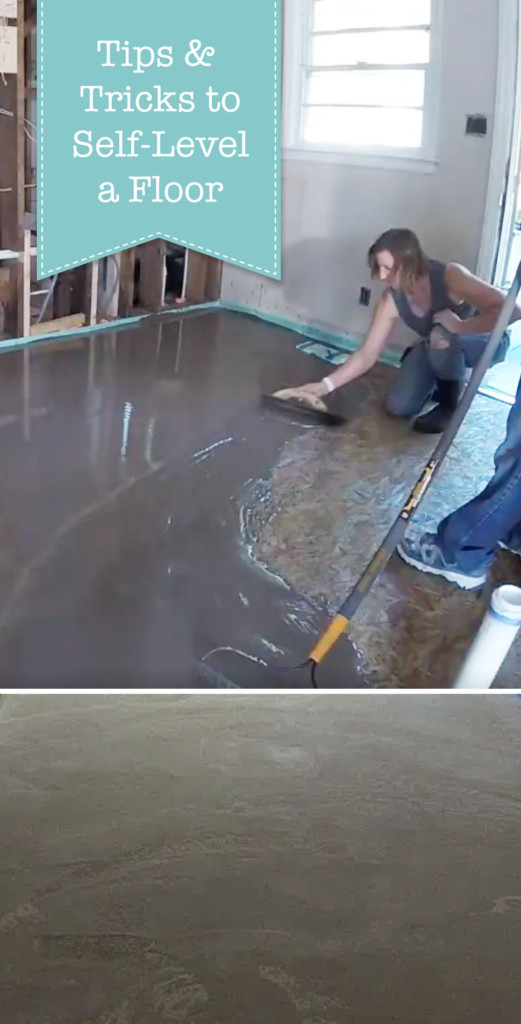
After demolition, I realized several water leaks left some low spots in the kitchen floor at Millie’s Remodel. Today I’m going show you how to use self-leveler to fix a sagging floor. I’ll also show you a few tools you’ll find helpful when pouring self leveler.
Tips & Tricks to Self-Level a Floor at Millie’s Remodel
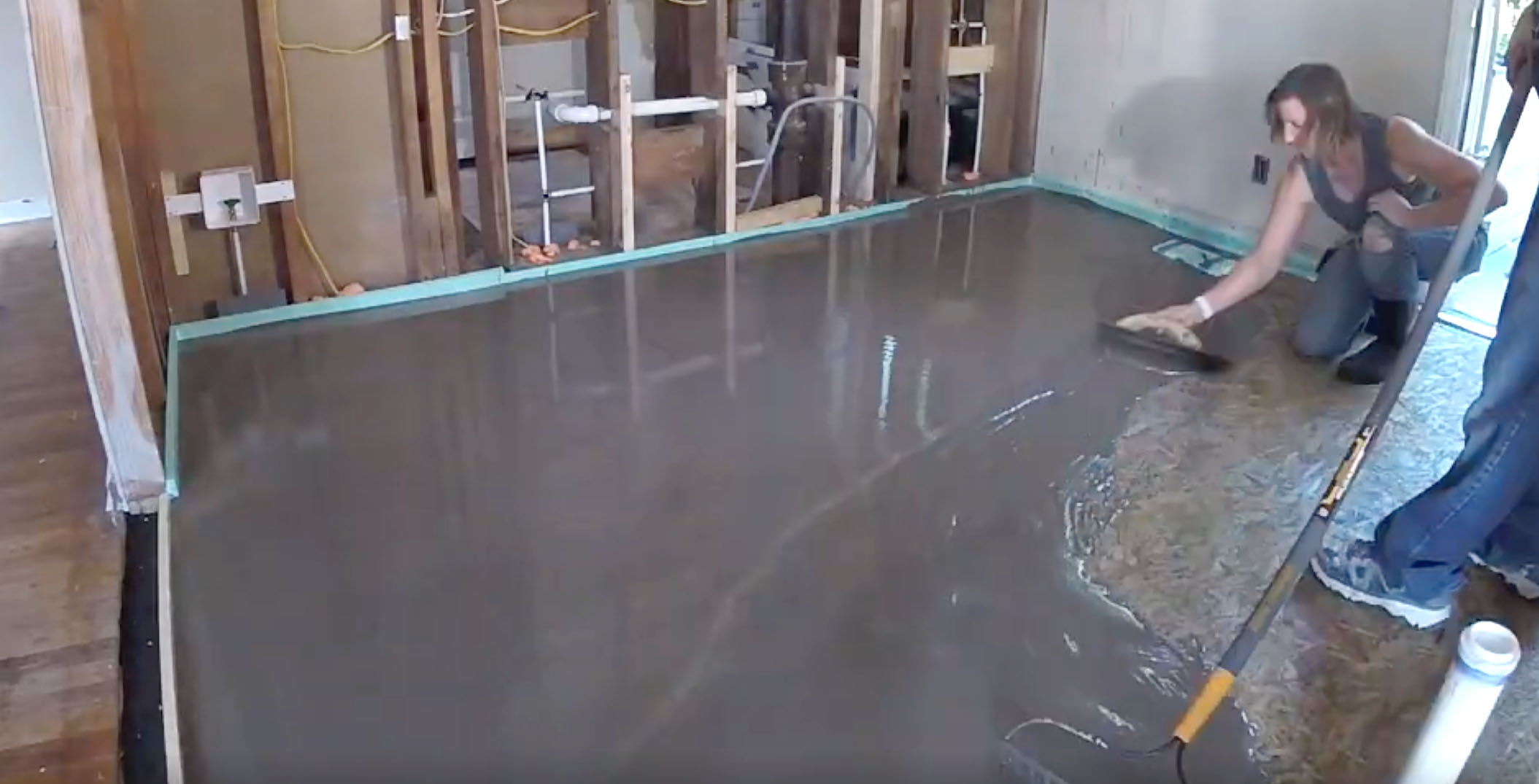
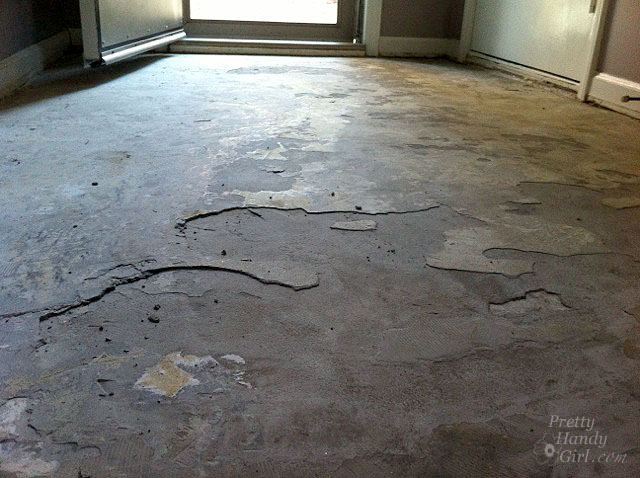
Can I level with you? LOL. Seriously, when I bought the Millie’s remodel house I knew there were some plumbing leaks. But, I had no idea how much damage the water had done to the floor in the kitchen. I discovered a pretty decent hump in the middle of the room with low spots on either side. To combat the hump my assistant, Stephanie, and I secured cedar shakes to the floor in one of the low spots. Then we laid 1/2″ OSB plywood on top. This helped a little bit with the bow, but we still had some issues.
One corner of the room was 3/4 of an inch lower than the other corner. Plus you could still detect the hump. I decided the best way to deal with the dips, hump, and creating a flat surface to tile onto was to pour a self-leveling concrete in the kitchen.
Prepping the Room for Self-Leveling Concrete Pour
Before pouring self-leveler, you should understand the properties of this mix. When you first mix the product, it’s very liquid and will flow to the lowest spot in your floor. It’s important to seal any cracks or gaps in the floor or your mix will seep through the cracks. You also need to cover any vents or you’ll watch all the mix pour into your ducts (no bueno!)
I like to use rigid foam insulation to prep the perimeter of the room. This creates a form and keeps the liquid from flowing outside the room. I use a sharp utility knife to cut strips from a big 4×8 sheet of rigid foam insulation. I found it easiest to use my trim nailer to nail the pieces to the perimeter of the room. Then I sealed the joint where the insulation and subfloor meet with a line of caulk. If you’ve never mastered spreading caulk quickly and cleanly, you’ll want to see my tutorial for using a caulk gun.
Now that the prep work is done, you’ll need to gather a few tools for this project.
(I’ve included affiliate links for your convenience. I earn a small percentage from a purchase using these links. There is no additional cost to you. You can read more about affiliate links here.)
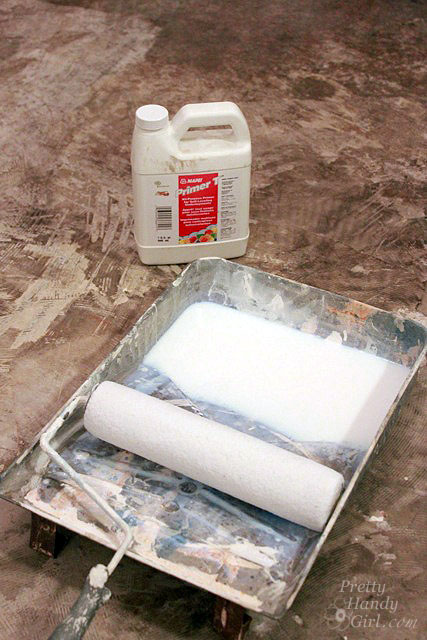
Before pouring the self-leveling concrete, read the directions on the bag. Most leveling mixes specify you apply one coat of primer to a clean floor and let it dry before pouring the self leveler.
Tips for Spreading Self-Leveler:
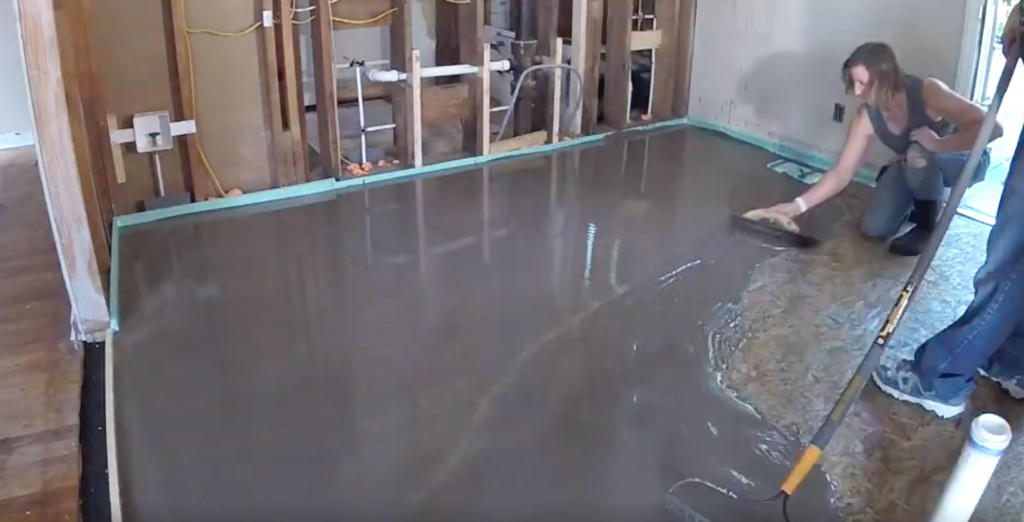
Watch this video to see how we quickly and efficiently spread the self-leveling concrete mix:
Can you believe how helpful a simple garden rake is for spreading self-leveler? Me either!
After pouring your self-leveler, use a long level to check to see if you need to pour in more areas. Finally, use the concrete float to smooth and feather the edges of the self-leveling material into the floor.
Stay off your concrete pour until it has hardened. Make sure you clean any self-leveler off your tools, boots, or areas you don’t want it to harden onto.
After the self-leveling concrete has hardened, you are ready to tile or install your flooring!
A special thank you to the Millie’s Remodel Sponsors:
The Millie’s Remodel project sponsors have donated materials for the Millie’s Remodel project. As you know I am very particular about the brands I work with and recommend. As a general contractor, I choose the products used on my projects wisely to make sure they last a lifetime. Therefore, I have no reservations putting my name behind each and every one of these sponsors.
https://prettyhandygirl.com/wp-content/uploads/2020/02/phg-leveling-kitchen-floor-millies-remodel.jpg10752109Brittany Baileyhttps://prettyhandygirl.com/wp-content/uploads/2021/07/PHG-logo-tagline-2020-1030x211-R.jpgBrittany Bailey2020-02-21 10:00:002020-07-22 19:06:20Tips & Tricks to Self-Level a Floor at Millie’s Remodel
We recently completed Habitat for Humanity Bathroom Renovations in a Weekend.
I don’t usually work for others, but when the executives at my local Habitat for Humanity office asked me to come in and take a look at their dated bathrooms, I said I could. But, I quickly stated I don’t traditionally offer my general contractor services to anyone. Most of you know that Habitat for Humanity is one of my top charities. And for good reason! Our local Habitat for Humanity has built over 600 homes to help address the affordable housing crisis in our area. I would do anything for this organization, but renovating two bathrooms wasn’t a job I’d usually tackle unless it was for one of my own properties.
However, when I saw their sad and dated twin bathrooms, I changed my mind about offering my services. I knew I could improve the bathrooms as a way of thanking the employees for the work they do for our community. I also knew it would be a great way to keep busy before closing on Millie’s Remodel. Between Habitat for Humanity’s calendar and mine, we finally settled on the last weekend before I signed the contract on Millie.
In my head, I thought it would be a quick two day renovation easily accomplished over a weekend. Instead, it turned into a four day marathon working into the evening on two of those days. In an effort to explain my faulty time estimation skills, I submit two facts:
I’m an overly optimistic person. I will always see the glass half full.
I’m not the sharpest math person and forgot to multiply my time by two for two bathrooms.
Oops! Luckily, I got some help from two local friends: Sophie from @TheHipperFam and Stephanie from @UncommonOutpost. Without their help, I might still be working on these bathrooms.
The Before:
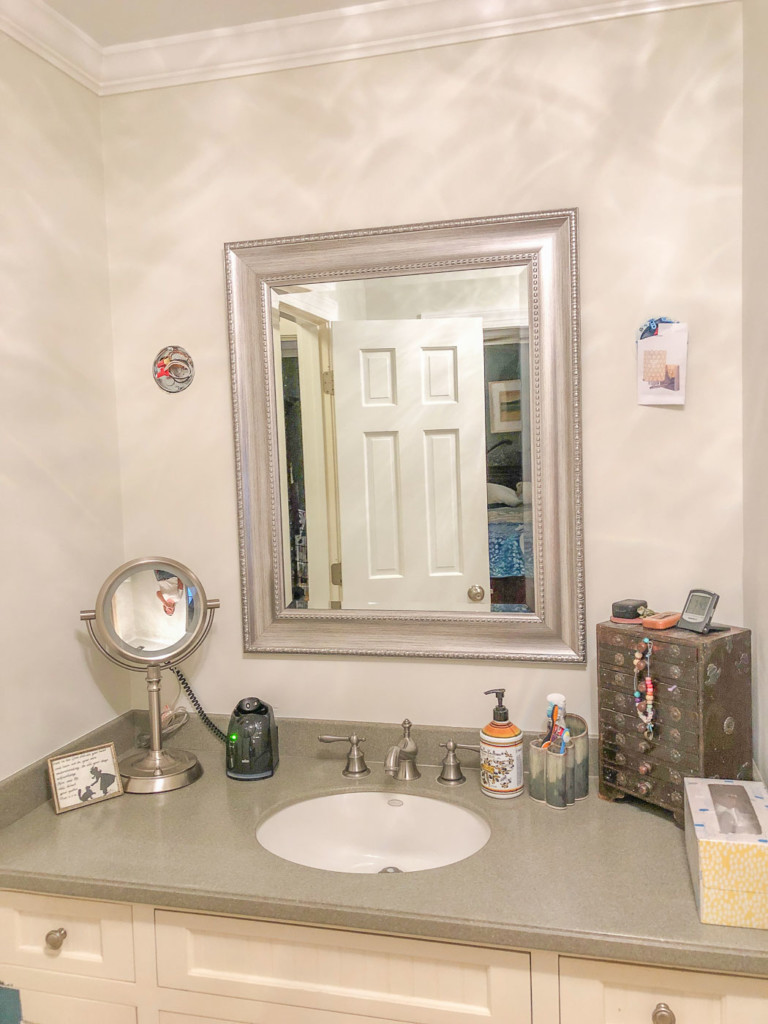
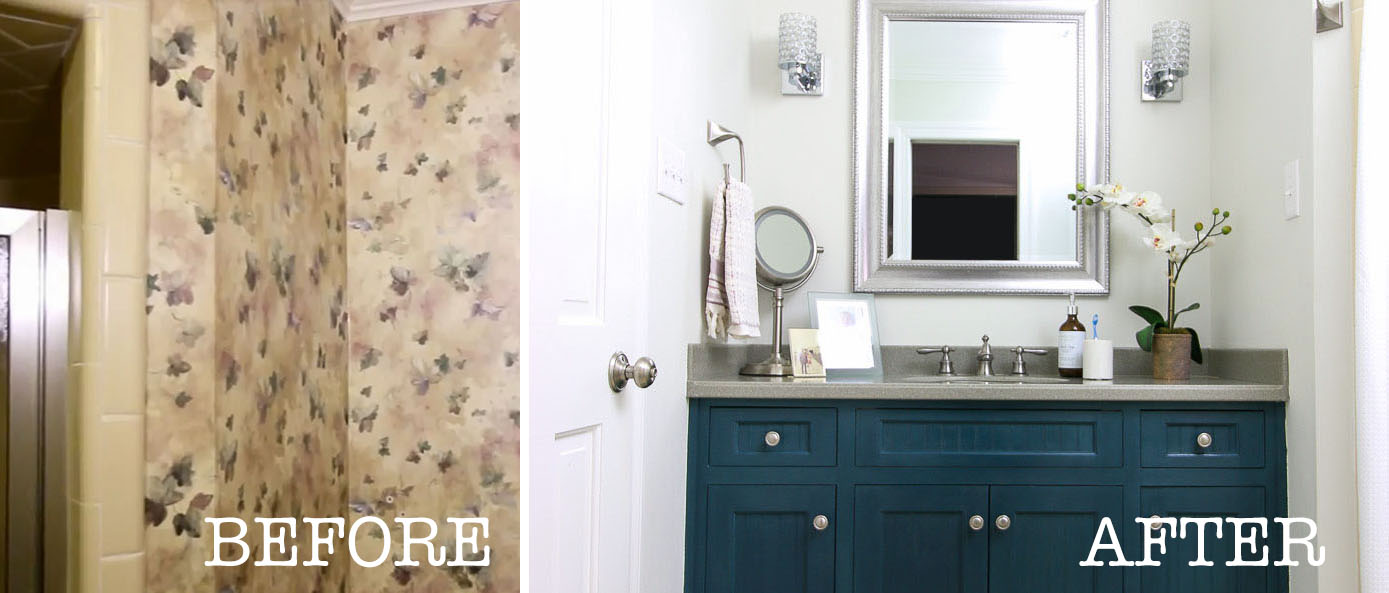
Although the pictures look dark, what you can’t see in these photos is the horrible flickering fluorescent light fixtures. The lighting was so dismal, I knew I had to change out the fixtures. Because no matter what updates were made, the lighting would always act as a wet blanket on the new look.
The old vanities were both built for handicap accessibility which left no room for storage under the sinks. Therefore, each bathroom had a ReStore salvaged kitchen cart to make up for the lack of storage. But, the carts were dirty and looked out of place in the bathrooms. I knew I had to come up with a plan to get rid of them.
Speaking of dirty, the walls definitely needed a new coat of paint. The grime and scuffs were everywhere.
The Design:
For the design plans, I challenged myself to work within a small budget and use as many items as possible from the Habitat ReStore. With this in mind, I created a plan in Photoshop and submitted it to Habitat for Humanity for approval.
Luckily they loved the design idea and gave me the go ahead to renovate the bathrooms. But, I kept a few things secret from them. After all, what fun is a makeover project without a little surprise, right?!
The Renovation Plan:
Electrician to replace CFL tube lights with LED Recessed Can Lights
Pretty Handy Girl build storage cabinet and one handicap sink frame
Plumber to Remove Sinks and Toilets
Remove all Fixtures from Bathroom
Remove Flexible Vinyl Baseboards
Clean and Patch Walls
Clean floor with TSP Cleaner
Paint Walls
Lay Waterproof LVT Flooring
Sand and Prep Reclaimed Lumber
Install Reclaimed Wood Wall
Install Vanities
Add Wood Baseboards and Paint
Plumber Replaces Toilets and Installs Faucets
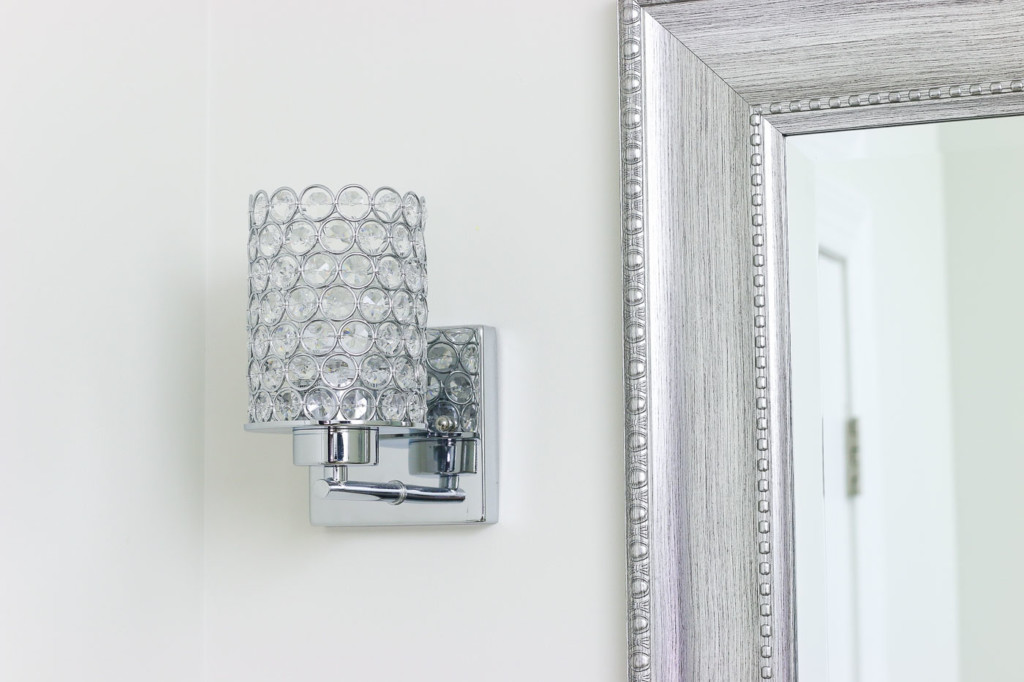
Add Mirrors, Art, and Replace Fixtures
Stand back and admire the renovation results (and snap a few pictures)
Let the Habitat for Humanity Bathroom Renovations Begin:
A few days before I started the renovation, my electrician stopped by the offices to swap out the old fluorescent lights with brighter (and less flickery) recessed LED lights. Immediately the room felt brighter, but it wasn’t as bright as I had hoped. To help lighten the space more, I chose light paint shades for the walls. The colors I selected are from Magnolia Home Paint Line because I loved working with the paint in the Saving Etta house.
The handicap accessible bathroom was painted Carter Creme. I knew this color would look beautiful with the reclaimed wood wall and add a little warmth to the room.
I would have liked to use the same color in the other bathroom, but the vanity color was already a cream color and I didn’t want to draw attention to the slightly dated vanity color (or accidentally match it). Using Cloudy Gray, a paint color with cool tones, helped tone down the warmth of the vanity and provided some contrast.
Both paint colors were light enough to do wonders for improving the light in the windowless bathrooms.
After painting, Sophie and I worked the afternoon to lay LVT waterproof flooring (also from the ReStore) in one bathroom. The flooring went in very easily, but we did have to slow down to cut around the toilet flange and the doorway.
After Sophie left, I tackled the second bathroom floor, working late into the night. It’s amazing what a difference the new waterproof LVT flooring made in these bathrooms.
On Sunday, Stephanie helped sand and prep reclaimed lumber from the ReStore for installation. We ran out of weathered boards, so had to improvise with a vinegar and steel wool concoction I whipped up the night before. My friend, DIY Pete, has a great tutorial for making this solution here. After the boards were dry, she and I clad the back walls of the bathrooms with the reclaimed lumber.
To achieve the striped look, we alternated the weathered side with the protected side of the wood. These boards were originally subflooring in an old house, so they have lots of character, nail holes, and a beautiful warm color. To protect the boards from water and to keep them from flaking, we coated them with a clear varnish.
Finally on the afternoon of Day 4, I gave my plumber the go ahead to come back to install the new toilets (courtesy of Wilkinson Supply Co.) and the sink faucets. Stephanie and I worked feverishly ahead of him trying to hang the mirrors and art.
We replaced the dated oak mirrors with pretty gold framed ones. I found the first mirror super cheap at a thrift store.
The other one was a gold art frame from the ReStore. I replaced the picture with mirrored glass and it looks like it was always a mirror!
This is a little message area was created by screwing two drawers (salvaged from the ReStore) together and adding cork and a clip board.
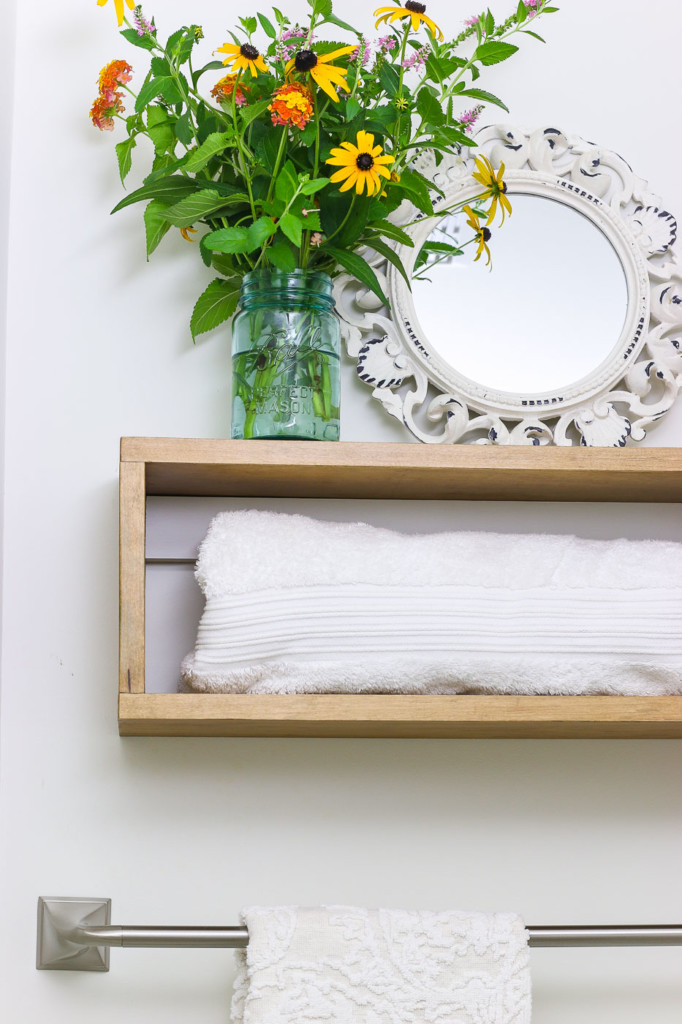
The handicap bathroom needed additional storage since it didn’t have a sink cabinet. To solve the issue, I built this little wall cabinet using an old window from the ReStore.
Then I added a little reclaimed door latch to keep the door closed. Hooks on the side are for hanging up a purse or light jacket.
Two Bathrooms in One Weekend – The Reveal:
Are you ready to see the final results? First here’s a reminder of what the bathroom looked like four days earlier. (The new LED light was already installed by my electrician in this photo.)
And here’s what the same bathroom looks like now!
Originally I thought we could secure the sink base to the studs. But, after discovering the studs were all metal, we decided to add one leg to the front corner of the sink apron for more support.
The art quotes were created by reusing ReStore art frames. I simply created some watercolor art and added the quote in Photoshop.
The twin bathroom looked like this before:
And now!
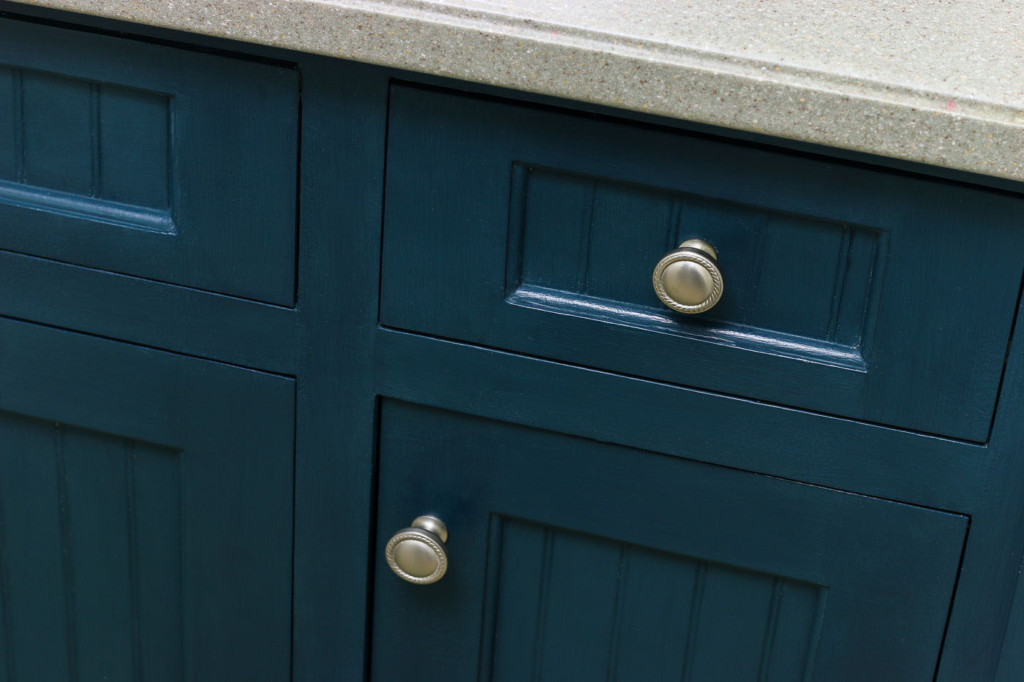
The sink vanity was from the ReStore. We were lucky the Raleigh ReStore has a huge selection of donated cabinets.
I documented the entire renovation on video, hopefully, you’ll enjoy watching the whole Habitat for Humanity Bathroom Renovations process.
Want to Help Habitat for Humanity and Work Along Side Me?
Have you ever wished you could work next to me? Learn some tricks and tips of the trade? Well, now you can! I’ve signed up to volunteer for this year’s Women Build, She Nailed It Campaign with our local Habitat. This is a one day opportunity to help build a house with ALL WOMEN! Don’t be intimidated, you won’t be asked to do anything you aren’t comfortable with. But, you may gain a little empowerment and learn a new skill or two!
The date is Saturday, September 28th in Wake Forest and I’d love to meet you there and share a day of swinging hammers. What do you say? Want to join me? If you can’t, but still want to contribute, please make a donation to the Women Build Campaign. Even the smallest donation will help us accomplish our goal.
Again, I have to give a huge shout out to Sophie from @TheHipperFam and Stephanie from @UncommonOutpost who came to help me on this project and gave up their weekend. Also, a big thank you to ALM Plumbing and Wilkinson Supply Co. for donating the toilets.
I hope you liked the video. If you aren’t subscribed to my YouTube channel, definitely do so now to stay up to date on all my tutorials and renovation projects!
See you all soon.
Be sure to pin this image to share how to accomplish a bathroom renovation in one weekend!
https://prettyhandygirl.com/wp-content/uploads/2019/07/close-up-gold-frame-sink-top.jpg9331400Brittany Baileyhttps://prettyhandygirl.com/wp-content/uploads/2021/07/PHG-logo-tagline-2020-1030x211-R.jpgBrittany Bailey2019-07-12 07:00:002019-11-03 17:51:18Habitat for Humanity Bathroom Renovations in a Weekend
Do you have a window in your house that puts you on full display? Or maybe your neighbor’s house is very close to your’s and you feel like they can see in your window (especially a bathroom or bedroom window.) Sure you can add curtains or blinds, but then you won’t get the natural light you want from your windows. Today I have the solution to your privacy needs without blocking the light. Let me show you how easy it is to install privacy film to your windows with professional looking results.
Materials:
(I’ve included affiliate links for your convenience. I earn a small percentage from a purchase using these links. There is no additional cost to you. You can read more about affiliate links here.)
Privacy Film >>Get 20% OFF anything at StickPretty.com by using “PrettyHandyGirl” in the coupon code area!<<
About the Privacy Film:
Before we begin, I have to tell you when Stick Pretty approached me about using their product I was thrilled to find they have some very attractive options for privacy film! Those of us that shop at the big home improvement stores know the options for privacy film are fairly limited. Feast your eyes on just a few of the beautiful adhesive film patterns Stick Pretty has to offer:
And there is a semi-transparent option for blurred viewing (less opaque.)
That’s not all. You can also order any of the patterns in a sheer adhesive film to dress up your windows. All the adhesive window films are customizable with white, fog, mushroom, or black designs.
I’d be remiss if I didn’t mention Stick Pretty also sells tile decals (to brighten your tiles or cover up ugly tiles.)
And they offer decorative adhesive panels for use on walls, furniture, or anywhere your imagination can think of.
If you find yourself falling in love with any of the products on the Stick Pretty website, don’t forget to get 20% OFF your order if you use the code: “PrettyHandyGirl” at checkout.
Now, on to the tutorial for installing privacy film on your windows.
Instructions:
Watch this quick video to see how easy it is to install privacy film to any window.
Step 1. Clean
Use glass cleaner and a lint free rag to clean the window really well. Make sure there’s nothing on the glass that will stick under the adhesive film (which would stick there forever until you take it off).
Step 2. Measure & Cut
Measure each pane of glass on your window. Add 1/8 of an inch, because it’s better to cut the film too big. We will cut off the excess at the end.
Transfer your measurements onto the privacy film. Use a sharp x-acto blade and a metal ruler to guide your cuts. Apply gentle pressure as you cut the film.
3. Installing the Privacy Film
Carefully peel up your privacy film and take it to the window immediately. If you wait, dust can settle onto your film.
The key to a really good adherence of the film to the window (with no bubbles or wrinkles) is to use a mixture of water and a few drops of dish soap in a spray bottle.
It also helps to use a good squeegee.
Spray a liberal amount of the water and soap mixture onto the glass. If you find the film sticking too much to the glass, spray more of the mixture onto the glass.
Line up the film at the top. Using your hands, push from the center, down and out to set the privacy film. If needed, lift the film and reposition.
Use the squeegee to push out any water and air bubbles. Again, working from the center out and top down.
Use a clean rag and run it along the edges to clean up any water that has squirted out.
Step 4. Trimming Excess
If your film is too large and overlaps off the glass, take a sharp x-acto knife and cut off the excess. Peel off the trimmed excess.
Then squeegee the film again and clean it up any water from the edges.
You can see the difference between the regular window glass and the glass with privacy film on it below.
After installing your privacy film, you may see some ghosting between the film and the window. As long as you have pushed all the air bubbles out of the film, the ghosting should go away after a few days. (Can you spot the ghost spots in the picture below? Within 48 hours they had disappeared.)
Hopefully this tutorial will help someone reclaim some privacy in their home without giving up natural light! Pin this image to share with a friend:
Friends, I have a question for you:
I decided to let the video tutorial guide you through the process on this tutorial instead of the usual step-by-step photos. Let me know what you think and if you miss the photos when there is a video tutorial. Thanks for your feedback.
Disclosure: Stick Pretty sent me the privacy film at no cost to try out on the Saving Etta project. I was not told what to say. All opinions are my own. If you use the coupon code: “PrettyHandyGirl” on the StickPretty.com website, you will receive a discount and I will receive a small percentage of the sale. As always, I am very particular about the brands I represent on this website and will always let you know if you are reading a sponsored post or if I received free materials.
https://prettyhandygirl.com/wp-content/uploads/2019/04/how-to-install-privacy-film-feature.jpg297626Brittany Baileyhttps://prettyhandygirl.com/wp-content/uploads/2021/07/PHG-logo-tagline-2020-1030x211-R.jpgBrittany Bailey2019-04-29 07:00:002026-02-17 18:20:29How to Install Privacy Film on Windows