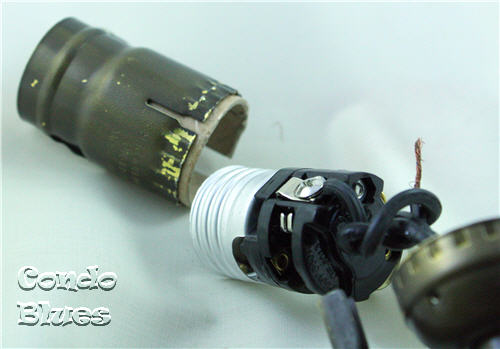

Can you hear the bass drum and the band playing? The DIY Talent Parade is in full swing now. Lisa from Condo Blues is striding this way and ready to show off her mad electrical skills.

Can you hear the bass drum and the band playing? The DIY Talent Parade is in full swing now. Lisa from Condo Blues is striding this way and ready to show off her mad electrical skills.
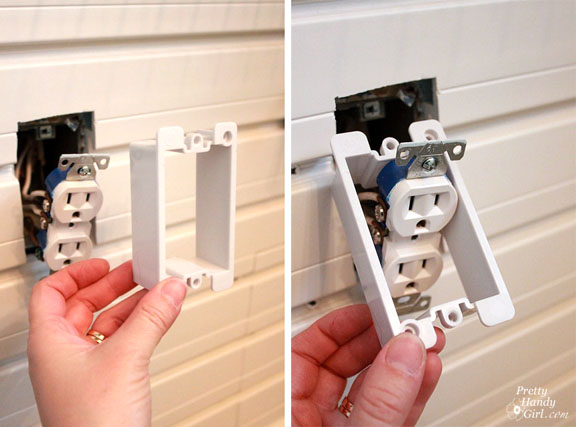
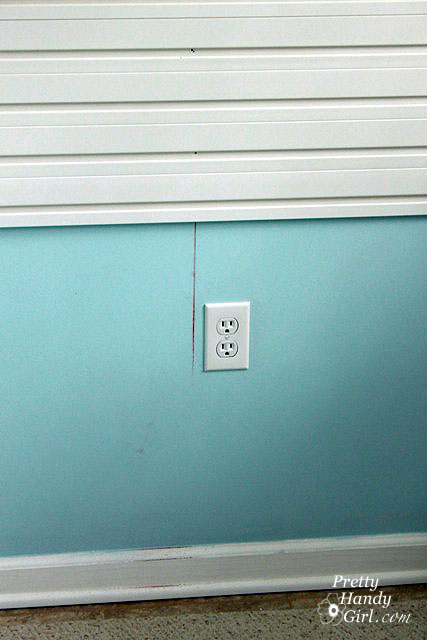
Today I am going to show you How to Add an Outlet Extender. On Monday I showed you how easy it is to install the Flow Wall panels. The only thing that will slow you down is if you run into a light switch or an outlet. But, that’s easily remedied by cutting a hole in the material.
(I’ve included affiliate links for your convenience. I earn a small percentage from a purchase using these links. There is no additional cost to you. You can read more about affiliate links here.)
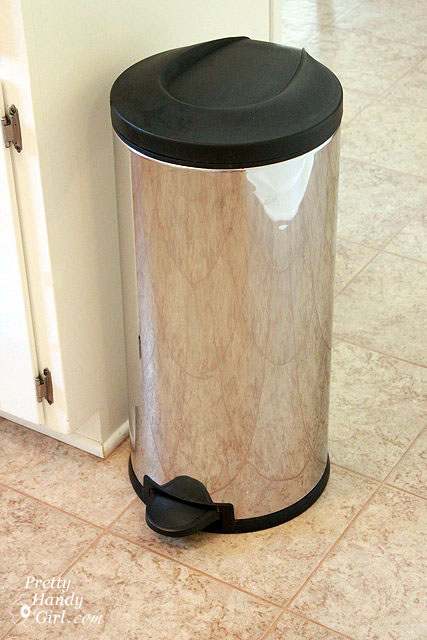
I know that no one likes to take out the garbage in my house. How do I know this? I know it because we seem to be able to push our 9 gallon trash can to hold 12 gallons! Don’t do the math, it is just one of life’s unsolved mysteries.
When this mystery trashcan reaches these epic proportions, the bag of trash resists all efforts to remove it from the can. It holds tight to the can liner bringing it up with itself. I’ve only known one other thing in this world that can hold on this tight. And that would be my son at age two as he death gripped my shirt while the babysitter tried in vain to remove him.
Releasing the trash’s grip takes some practice, I use the this little dance I call the Can Can Jig. (Not to be confused with your parent’s Can-Can.)
Here is what it looks like:
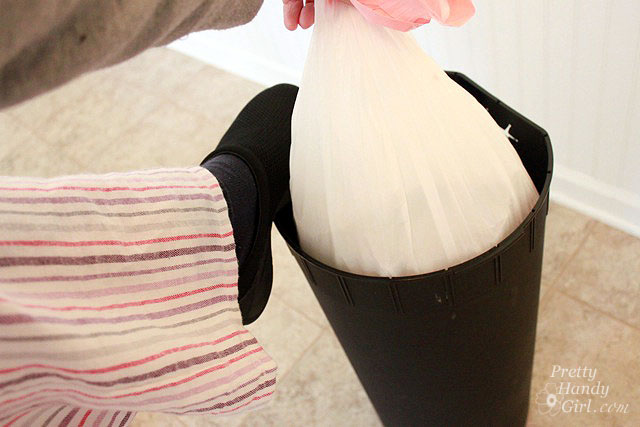
One foot on the floor, the other raised over your waist height trying to keep the trash can liner from coming with the trash bag as it is extracted from the can. Yeah, I’m still working on mastering the move myself. It is not for amateurs.
Okay, all kidding aside, I found the cure for the stubborn trash bag who didn’t want to be emptied. I’d heard about this trick a few times but never tried it until now.
Materials:
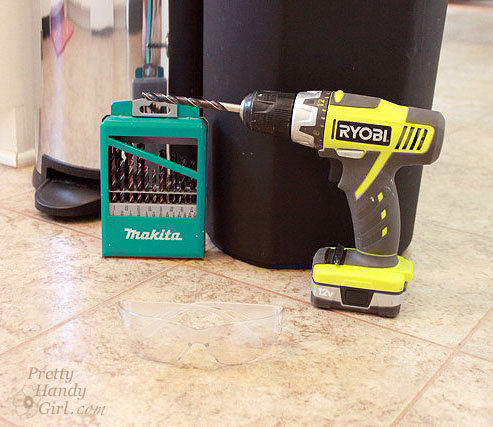
Step 1. Empty the trashcan (less you drill holes in your bag of trash. Gross!)
Step 2. Take out the plastic trashcan liner if you have one. If not, this will work just as well if you have a plastic trashcan without a bucket liner.
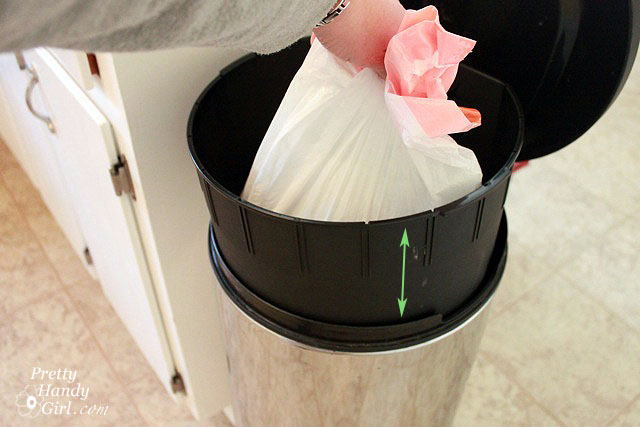
Step 3. Drill 3-4 holes into the bottom of the liner (or can if you don’t have a liner).
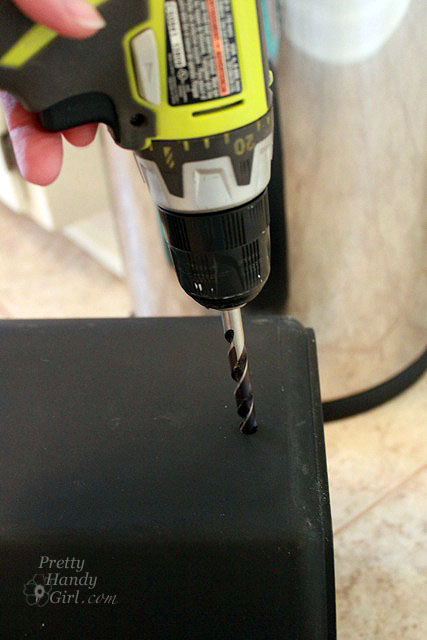
Drill the holes about 1″ above the bottom just in case you ever have any leakage (just thinking about it makes me gag.)

Step 4. Insert the can liner back into the can. Put a trash bag into the liner. Now wait for that garbage can to fill beyond capacity again.
And voila! The bag slides out easily. I almost wish I had some kind of bet with Pretty Handsome Guy to see who could extract the trash faster. You know I’d time him before drilling the holes and then unbeknownst to him I would add this quick fix and let him time me as I whipped that trash out no problem.
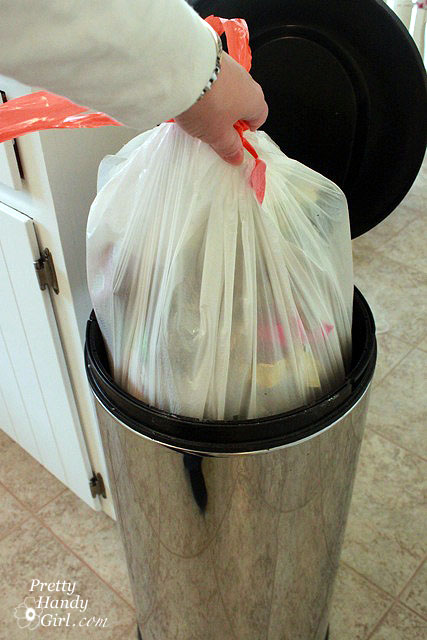
And now for the dramatic before and after pictures! Ooooo and ahhhhh:
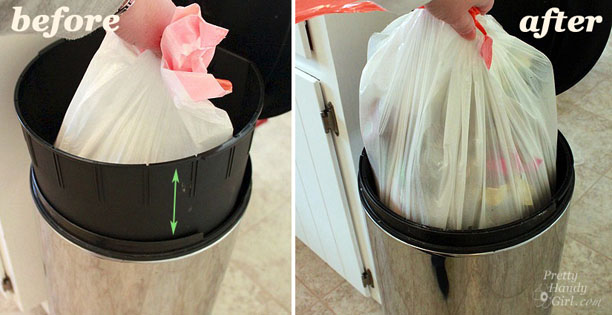
Which leads me to just one question: “How will I practice the Can Can Jig now?”

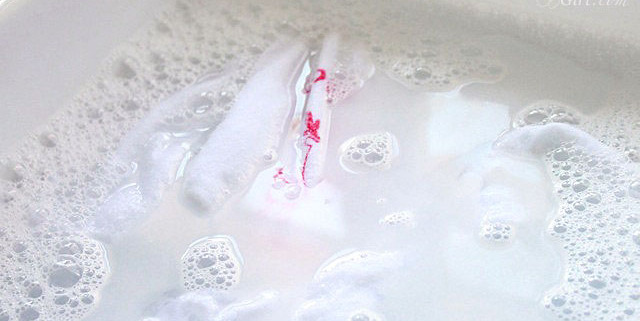
I’ve been keeping a secret from y’all and I just can’t live with it anymore. I have a miracle stain remover recipe that has time and again proven to work on some of the most stubborn stains. Plus, find out why we don’t need dryer sheets anymore!
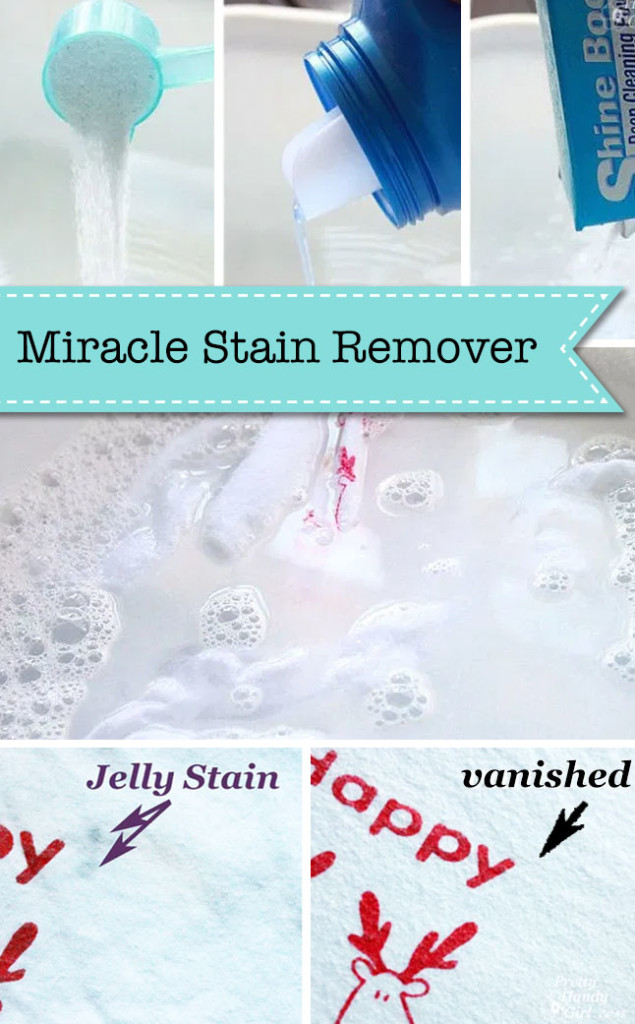
Recently, Pretty Handsome Guy came back from a business trip with a stained button-down shirt. It had wing sauce on it AND it had been allowed to settle for a few days AND he hadn’t pre-soaked it or used any stain remover. (Have I not taught him anything?! Sigh.) I thought for sure the shirt was a goner. But, I decided to put my miracle stain remover recipe to the test. Low and behold after 24 hours of soaking in the concoction, the stain was magically gone! No scrubbing, it was simply gone. Can I apply for a magic wand now?
I can’t lay claim to the recipe. I found it on our local “Mommy” message board back when I was a new mom. But, this recipe has worked on more stains than I can count.
I mixed up a batch today to try on one of my son’s shirts that got blueberry jelly on it. My mom tried to wash it to get the stain out, but it was still there after laundering. Normally once a stain goes through the dryer it is set in. But, that didn’t deter the me from trying my Miracle Stain Remover. Sit back and learn young Jedis (we watched Star Wars last week, so it is on my brain.)

Ingredients:
(I’ve included affiliate links for your convenience. I earn a small percentage from a purchase using these links. There is no additional cost to you. You can read more about affiliate links here.)
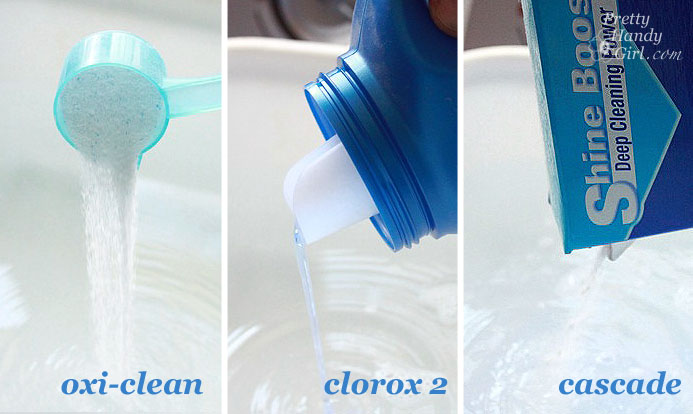
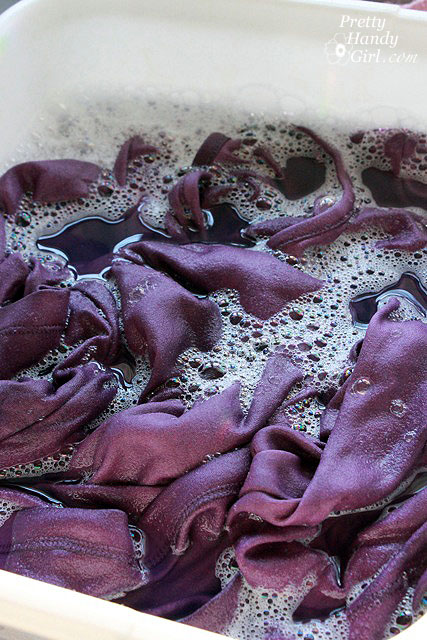
Fill your basin with warm water then add the Oxi-clean, Clorox 2, and powdered Dish Detergent. Give it a swirl and mix until the powders dissolve and bubbles form.

Place the stained garment into the mixture, being sure the stain is submerged. After two hours you can take a peek! My stain was gone.

For tougher stains, let it soak overnight. Remove the clothing to behold the miracle! Normally I will throw the garment into the wash, but you could simply rinse and dry it.

And, this formula is also safe for colors as well!

In the spirit of sharing, I also have this recipe for Making Your Own Laundry Detergent for only $1.25 per year! I mean, have you seen the price of laundry detergent lately?! 200 oz. for “gulp” $35! Whereas the recipe I made yielded 250 oz. for….are you ready for this…$0.61! This is a 97% saving on detergent by making your own.
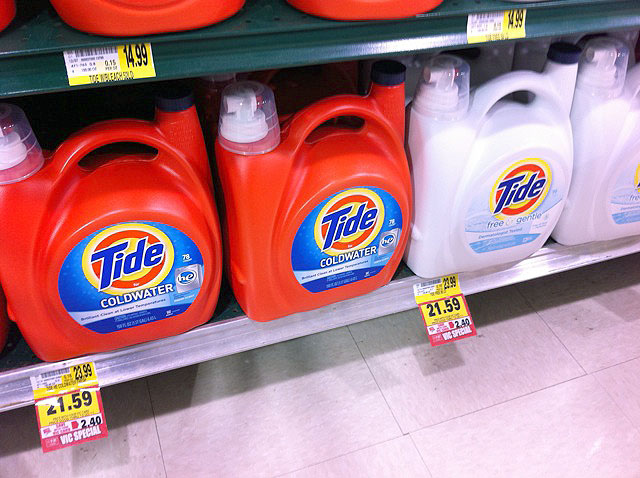
And the best news is that it is safe for HE washers. You only need 1/4 cup per load. Click Here to Get the Recipe for Making Your Own Laundry Detergent for $1.25 per year!
And since I’m talking laundry today, this post wouldn’t be complete without mentioning my secret weapon for drying clothes.
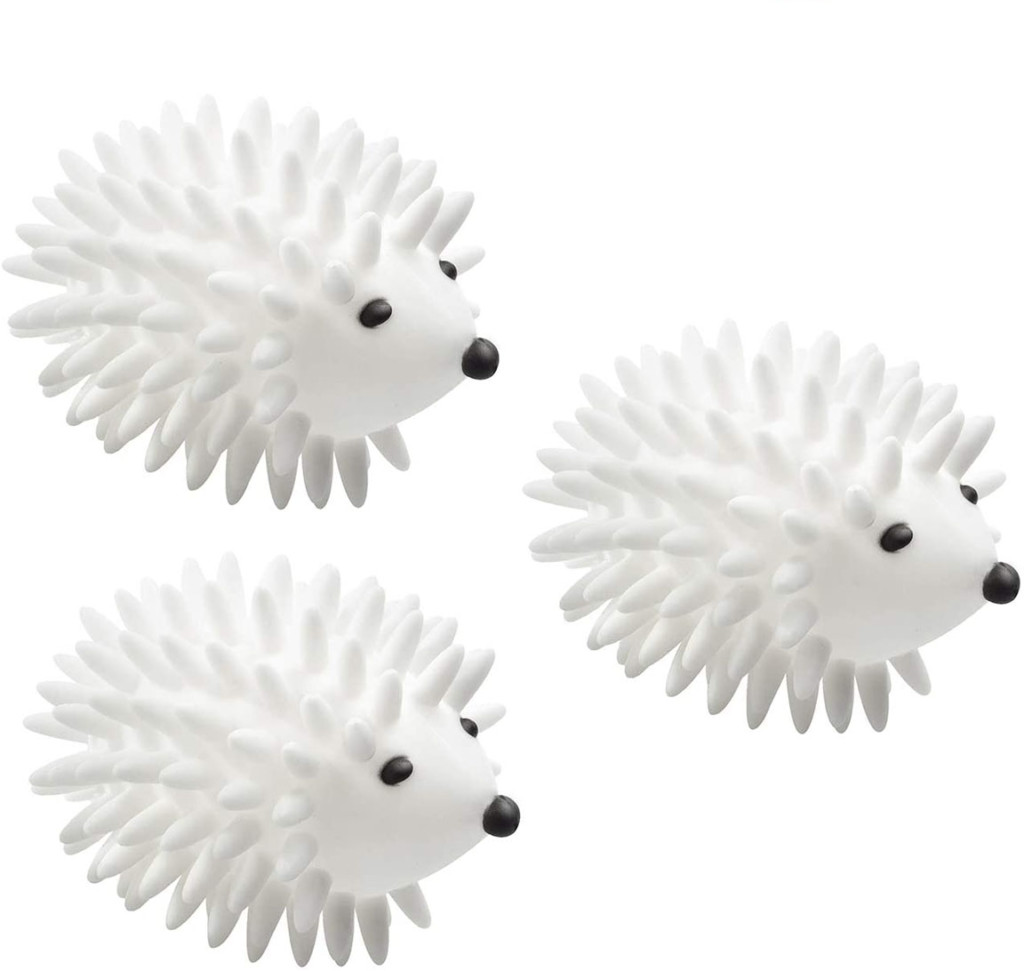
I use two of them! They may look like medieval torture devices or rabid animals, but these little hedgehog dryer balls have completely kicked our fabric softener sheets to the curb! I haven’t used dryer sheets in over 9 years now! At first I was concerned about static (the bane of my hair’s existence), but then a friend told me that you can eliminate static by not letting your clothes over dry. Simply shut off the dryer when your clothes are about 95% dry. Don’t let the dryer run and run and run until the clothes are piping hot and there isn’t a spot of dampness on them. Instead, let the moisture sensor (if you have one) do its job and it should shut off right before the clothes are dry. The waistbands in jeans or sweatpants may feel slightly damp, but everything else feels dry. And most importantly, pull out fleece, polyester, or synthetic clothes about halfway through the cycle.
The dryer balls (you should use two) work together to punch, separate, fluff, and dry your clothes. They also help keep wrinkles to a minimum, but I’m not afraid of a few wrinkles (see my no iron solution to wrinkles post.) The Dryer Balls cost less than $10, but the cost savings of not using dryer sheets is definitely worth it. Plus, you don’t have to stress about the chemicals that are in dryer sheets. These little wonder balls (I can’t believe I just typed that) last for a long time, but it’s good to have three in case one hedgehog loses a nose (it can happen.) I have been using mine for over nine years. They start to get darker on the nubs from dye in your clothing, but it doesn’t transfer and it doesn’t hurt their effectiveness.
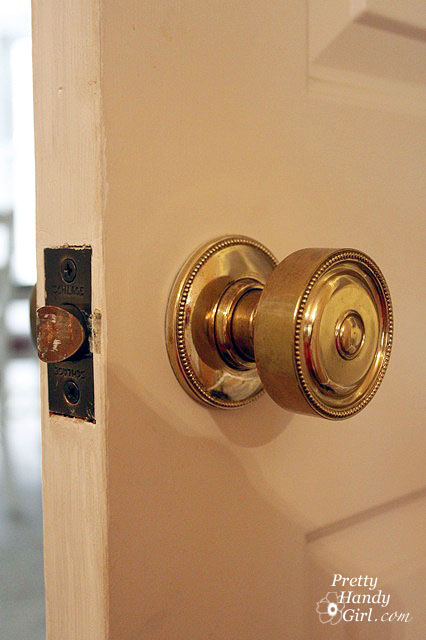
Removing a door’s hardware (knobs, latch assembly, hinges) is really a piece of cake if you know what you are doing.
There are several reasons you might need to remove a door from its hinges:
When I decided to give my downstairs half bathroom a makeover, I knew I needed to paint the door as well. The easiest way to repaint a door is to remove it from the hinges, remove all the hardware, and lay it flat on sawhorses and paint horizontally.
Before I show you how to paint the door, I will share with you how to remove the door, hinges, and the door knobs (or locksets if it has a key hole). How to remove the locksets is a helpful skill to learn should you wish to replace your door knobs, deadbolts or locksets.
Letting you in on a little secret: Speaking of replacing locksets, did you know that if your house has several different locks you can have them rekeyed to just one key as long as they are all the same brand? When we moved into our home we had three different locks (2 Schlage and 1 Kwikset) and keys to only ONE lock! Arrggghhhh! Unfortunately, I didn’t have the keys for either Schlage locks.) But, I really wanted to change the locks for the whole house. When I got a quote from a locksmith, I nearly passed out. $250 to get all our locks to match and to cut a few spare keys!
I thanked them and hung up. So, here is what I did. I bought one new Schlage lockset (handles and deadbolt set) for the Kwikset door. Then I took the locksets off the other two doors and brought them to a local locksmith (Busse’s Lock Service in Raleigh.) They were able to rekey both locks using my new Schlage key. The cost was under $50!
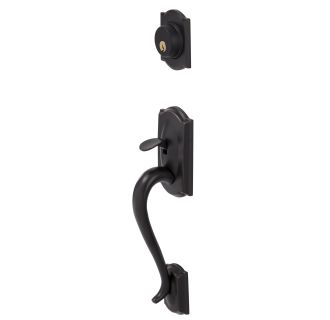
Photo courtesy of Handlesets.com
Later when the old lock on our front door broke, I ordered new ones from Handlesets.com (they sell all types of door hardware) and the customer service rep helped me enter the code from our master key when I placed the order. That way my new locks would match the rest of our house. Best of all they didn’t charge extra to for that service!
Sorry for the diversion, but I really wanted to let you in on that little secret.
Removing the Door Handles and Latch Assembly:
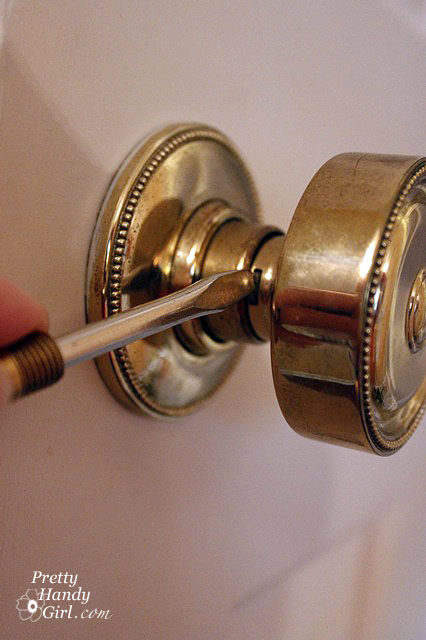
There are several types of door handles, you will need to inspect yours to determine how to remove it. Most door handles have screws on the interior side (for safety reasons, you definitely want them on the interior) that you unscrew to release the handles. Our door handles are a little different, but almost as easy to remove.
Insert a flat head screwdriver into the little slot on the side of the handle.
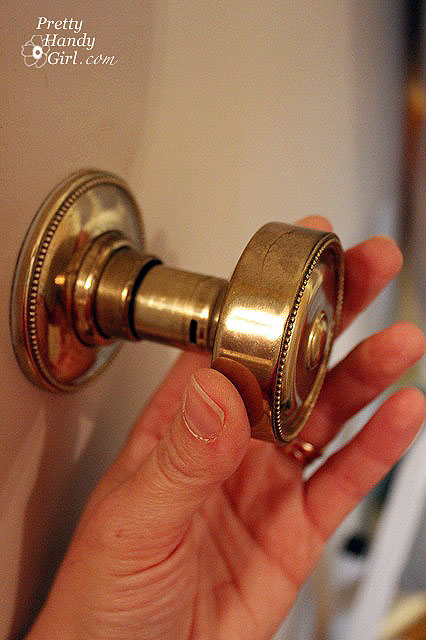
Pull the handle out and away from the door until it releases.
Unscrew the collar (also called a trim piece or escutcheon – yup, there is that word again!) that is up against the door until it comes off. You might need to use pliers to coax it free.
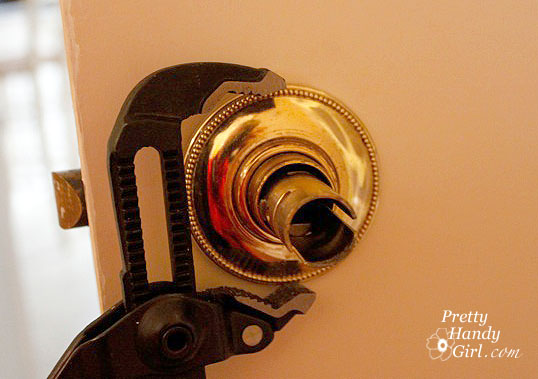
When it releases from the threads, remove the collar (ring, trim piece, escutcheon, WHATEVER.)
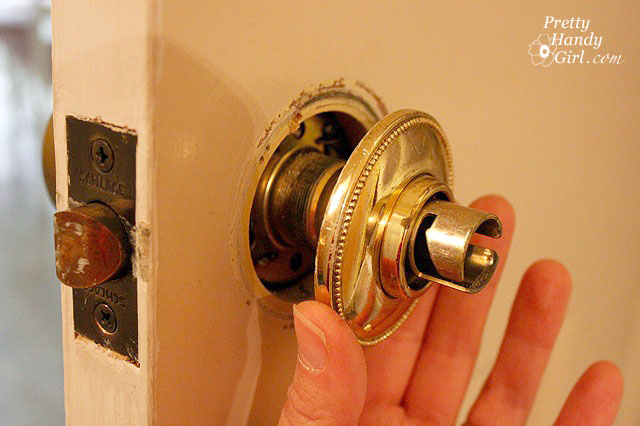
Gently pull the other handle off.
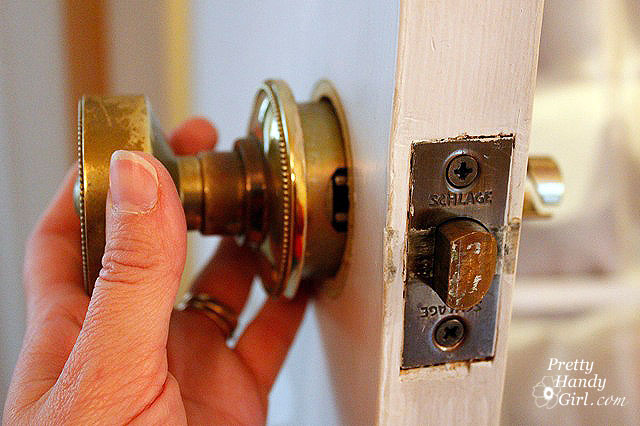
To remove the latch assembly, unscrew the two screws above and below the latch.

Gently pry the latch assembly out.
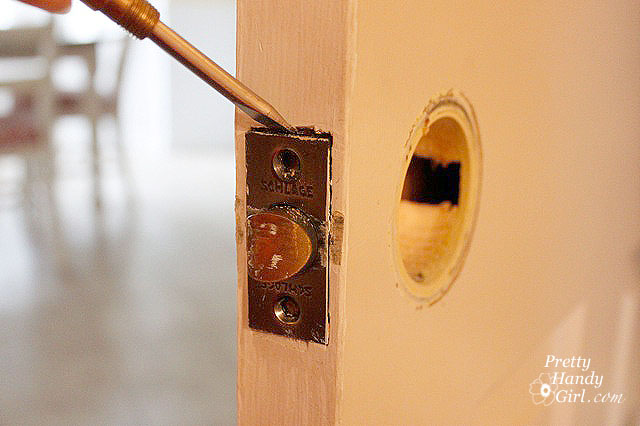
And remove it being sure to keep the screws with the latch.

Removing the hinges:
If you have the type of door hinges that the pin can be removed from, follow these instructions. If not, you will have to unscrew the hinges from your door (but don’t worry, I’ll show you how to do that in a minute.)
Removing the hinge pin is a snap. I use a flat head screwdriver and a hammer. Set the screwdriver just below the head of the pin and tap it lightly with the hammer until the screwdriver can fit below the head. If you can’t get the screwdriver under the head of the pin, insert the screwdriver into the bottom of the hinge and tap the bottom of the pin up slightly. Then angle the screwdriver end up and the handle down. Continue to tap on the screwdriver handle with the hammer until you can release the pin*.
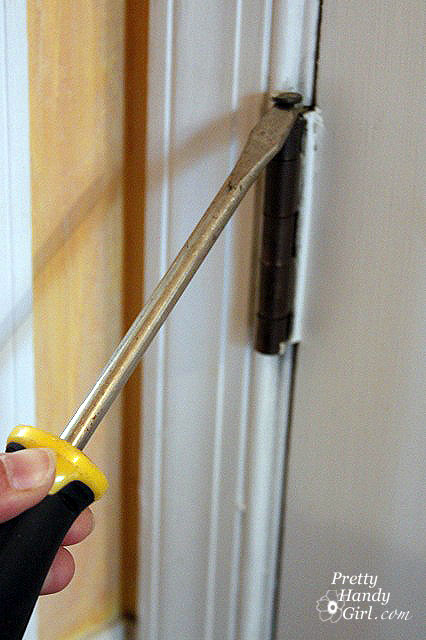
*Oh, and before you remove all the pins, you may want to ask someone help hold the door while you remove the pins from the other hinges. Not that I’ve ever made that mistake (uh, okay, maybe I did.)
Remove the other two hinge pins and gently pull the door off the hinges.
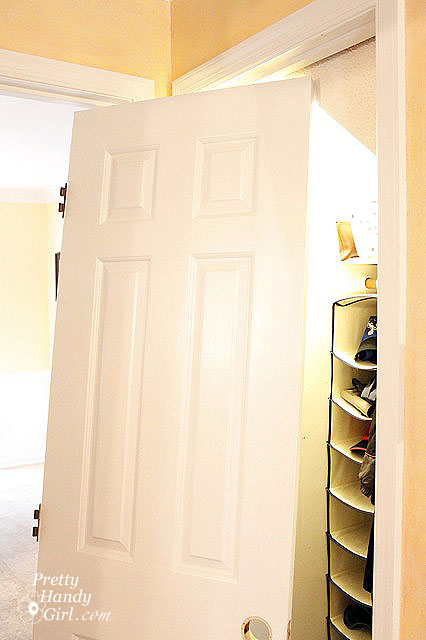
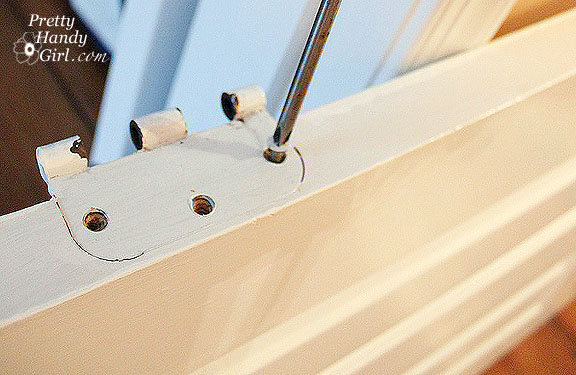
Use a screwdriver or cordless drill with a screwdriver bit to remove the hinges from the door and door frame if you are painting the trim as well.

I ran into a few painted over screws that I couldn’t turn. Here is how to deal with those little buggers.
Lay your door on it’s side with the hinge facing up. Fit a screwdriver into the screw slots as best you can.
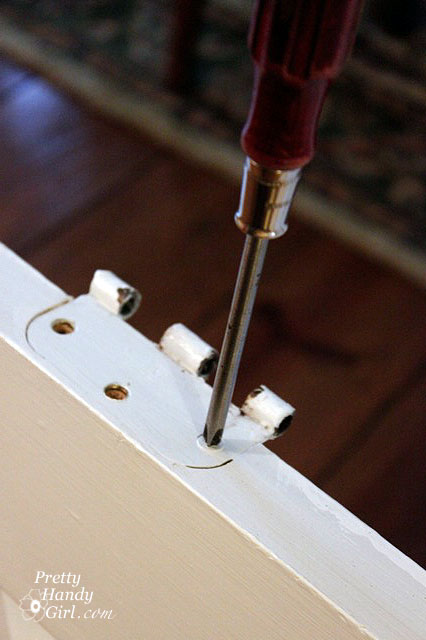
Then use a hammer to bang on the other end of the screwdriver.
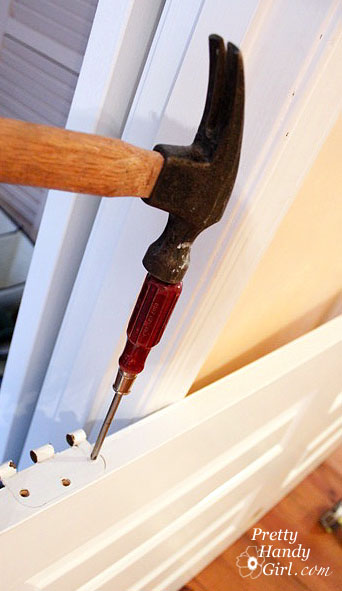
This will either crack the paint or make enough of an indentation that you can turn the screw.
Be sure to keep all your hinges and screws in a separate bowl or bag.
Now you are ready to paint your door or paint your hardware (Like Beckie at Infarrantly Creative did HERE) or both! More tutorials to come.