How to Make Pinch Pots from Air Dry Clay

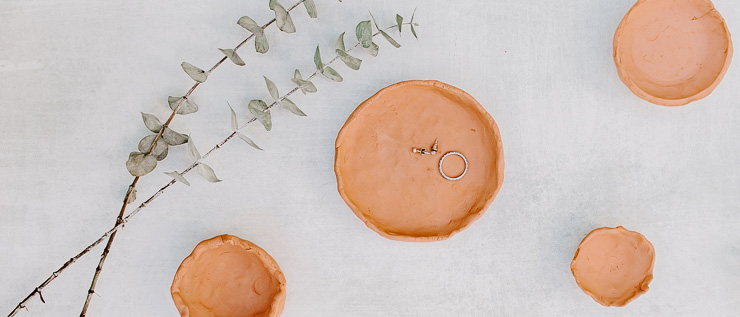
Looking for a simple craft to make and help you decompress? Make these cute clay pinch pots and use them around your house.
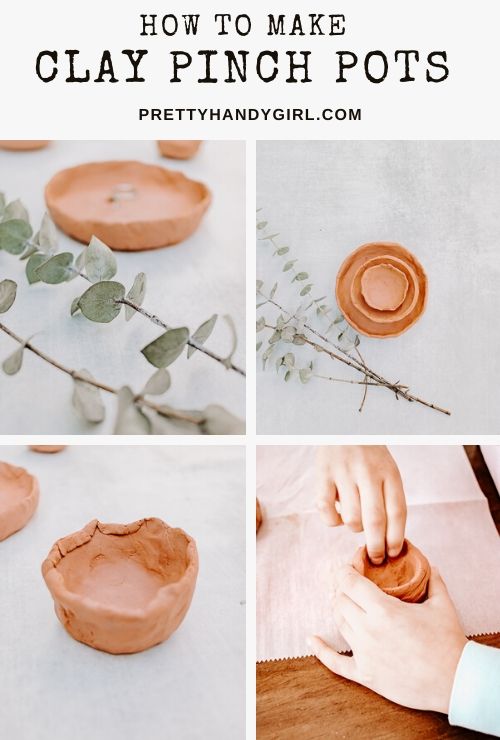
How to Make Clay Pinch Pots

How to Make Pinch Pots from Clay

I hope you are ready to get your hands a little messy!  Today’s tutorial is all about making some easy pinch pots out of inexpensive clay.  Right now, it feels like the days are long, and life is still so uncertain. I find that immersing myself in an enjoyable activity really helps to pass the time.  Working with the hands can be good for the soul!

The good news is, you don’t really need anything special other than air dry clay and your hands.  Plus, you don’t have to leave your house to create this project.  The terracotta clay I purchased is from Amazon and was shipped right to my door.
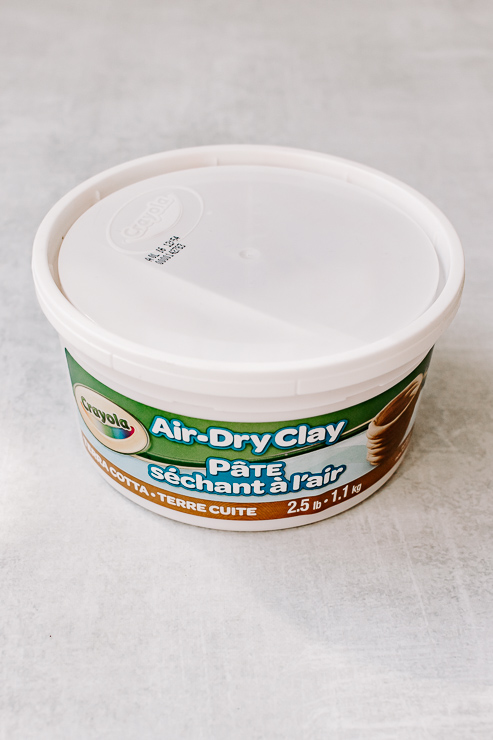
Crayola Air Dry Clay

This is a great craft for the kiddos too, so be sure to involve them with learning how to make pinch pots if they are looking for something to do.

Let’s dive right in!

Materials:

(I’ve included affiliate links for your convenience. I earn a small percentage from a purchase using these links. There is no additional cost to you. You can read more about affiliate links here.)

Instructions:

This project is easy, inexpensive, and very therapeutic! Let your mind focus on shaping the clay and put your worries aside for a little bit.

Step 1: Shape your clay into round balls
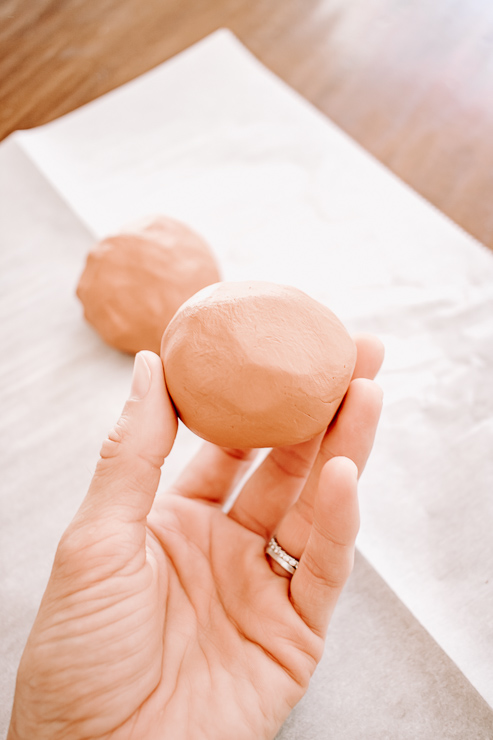
Shape Clay into a Round Ball

Layout a piece of parchment paper.  Grab a hunk of clay and shape/roll it into a nice ball. My clay balls are about the size of the palm of my hand. You can go bigger or smaller, it’s up to you!

Step 2: Form your Pots
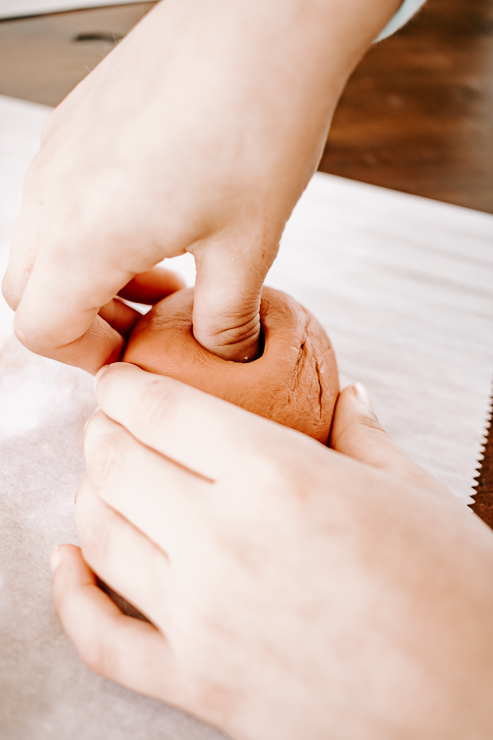
Push thumb into center of clay

Now that you have your clay ball formed, take your thumb or finger and stick it into the center of the ball. Use your fingers to “pinch” the clay outward, slowly creating a bigger hole in the center. Keep going around and around until you are satisfied with the shape and size of your pinch pot.
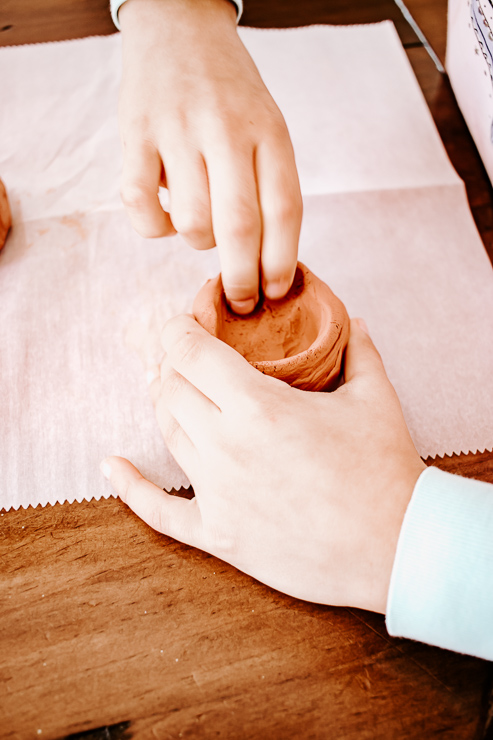
Use fingers to pinch out sides of pot

Clay is forgiving, you add more if you pinched it too thin. Add a little water to your clay to avoid cracking. The thicker the sides (or bottom), the longer it will take to dry. Keep that in mind when shaping your pinch pot.

Step 3: Dry your Pinch Pots for Several Days
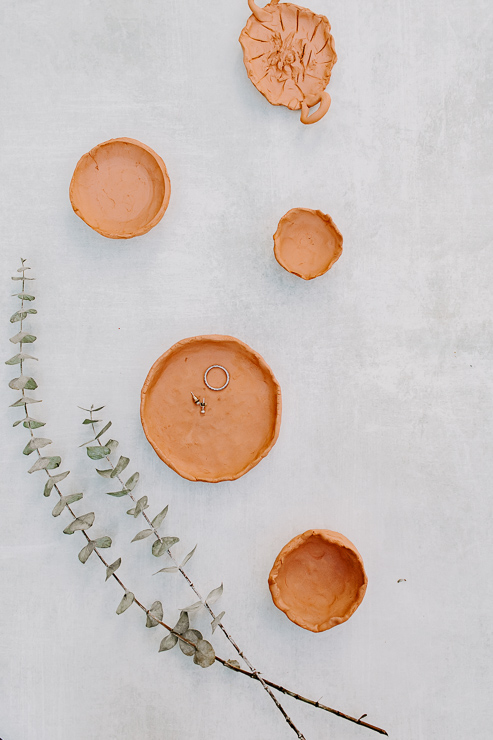
Let pots dry for several days

We left our clay pinch pots to dry on the parchment paper for several days. When they are fully dry, the pots will turn a lighter color and be hard to the touch.  Once dry, you can paint them with acrylic paint or just leave them plain.  Being the simplistic girl that I am, I just left mine plain.  But kids might enjoy a painting project.

That’s it!  As I said, this is a simple, inexpensive project.  Luckily, you should have plenty of clay leftover for next time.

Crayola Pinch Pots How to Tutorial

You might be wondering what in the heck to do with pinch pots?

Aside from the fact that it’s just a fun craft, there are tons of ways to use your new pots! A quick google search will bring up some ideas for you. But I’ll give you a few here to get you started.

  • Plant faux succulents
  • Use as a ring tray on your nightstand
  • A decor dish to decorate with

Since you can’t get the clay wet, planting a real plant in them is not going to work. But that’s ok because those faux succulents have to go somewhere and they look great in these little pinch pots.

You could also use them as a small catch-all dish on your nightstand or console table. In fact, that’s how I’m using my pinch pots! I have one sitting on my nightstand because I somehow always forget to take off my earrings at night – so this has become the perfect little spot to put them before I go to sleep.
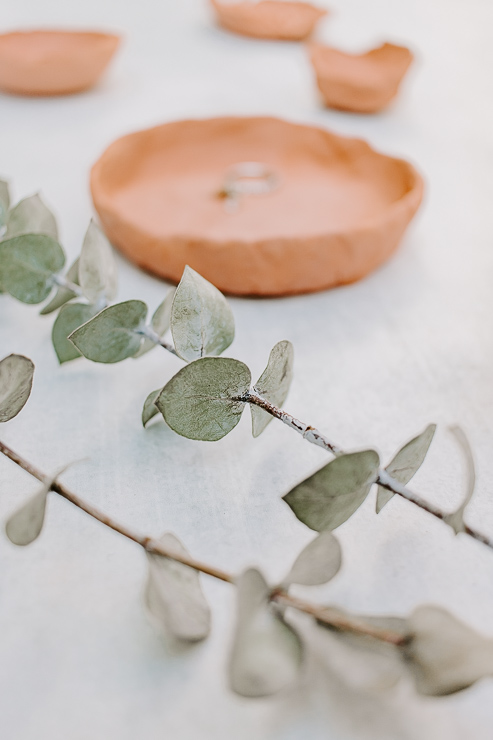
Pinch pots from clay - use as a jewelry dish!

Finally, you can just use them as decor pieces to decorate shelves and bookcases or tables. They look very earthy, so depending on your decor style, they add a nice collected feel to your rooms. Plus – you made them! Take a little pride in your handiwork.

If you like this clay project, be sure to check out my tutorial for a heart-shaped jewelry dish.

Stay safe, stay healthy!

karen signature

~ See More of Karen’s Tutorials ~


karen from decor hintHello!  I’m Karen, the creator of the Home Decor and DIY Blog: Decor Hint. I’m a Native of the East Coast, but I currently live in beautiful Seattle with my hubby, our two wonderful children, and our spunky wheaten terrier.

You can usually find me with some sort of craft in one hand and a coffee in the other. And I’m always rearranging furniture or moving lamps from room to room. I have a passion (read: obsession) for decorating, DIY, and gardening. In short, I love making my house into a home.

Like many, I’m inspired by what I see in home decor magazines, but I’m not so inspired by the price tags.  Consequently, I love finding and creating beautiful budget-friendly home decor items. In a head to head competition, I bet you’d never know the difference between the designer items and my DIY creations!  Many of my DIY projects focus on sewing, crafting, upcycling and organizing. Some of my favorite projects have been making pretty wreaths, sewing my own tassel hand towels, and crafting these trendy wood bead garlands. I can’t wait to inspire you and spark your creativity through my DIY projects.

You can always connect with me on Pinterest, Twitter or Instagram.
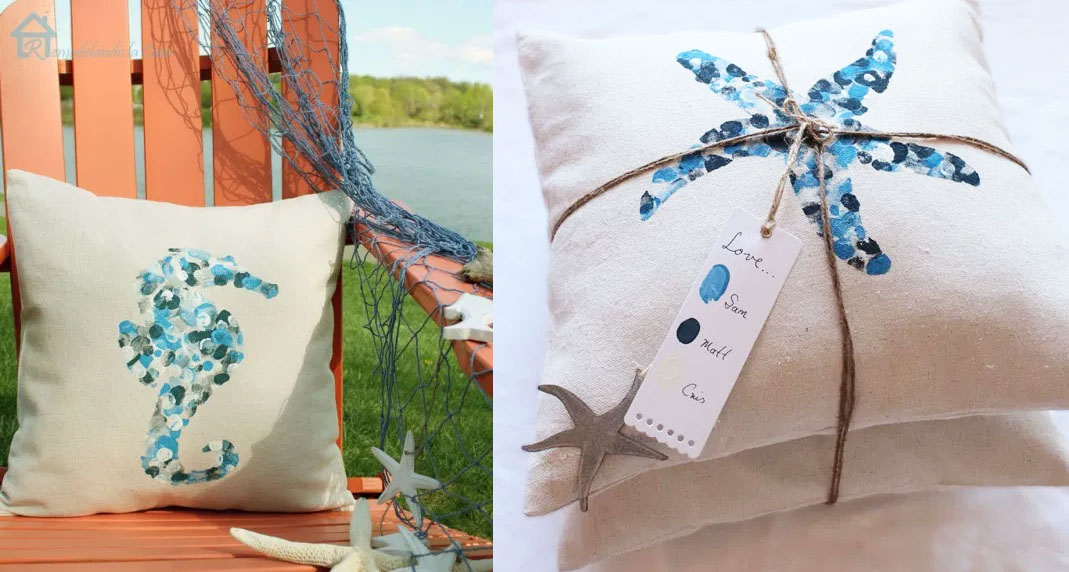
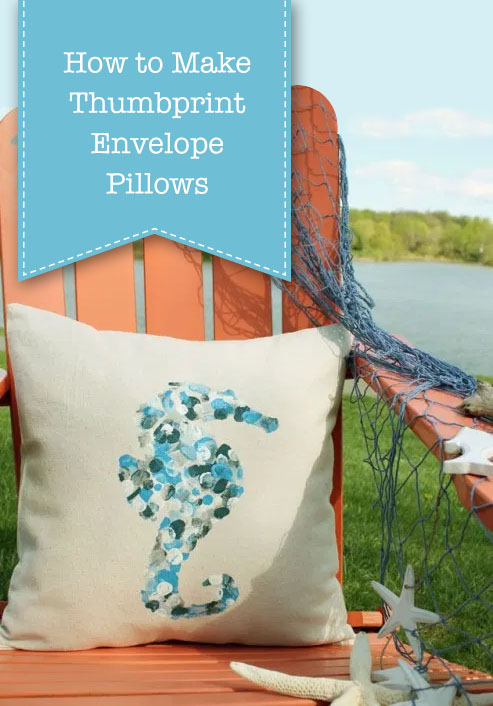
thumbprint pillow tutorial

Envelope pillows are the easiest pillow covers to sew. Combine a beautiful pillow with a personalized thumbprint design and you have a great gift idea for parents or grandparents!

How to Make Thumbprint Design Pillows

How to Make Thumbprint Design Envelope Pillows

Hello, it’s Cristina from Remodelando la Casa once again happy to share an easy and fun project where kids are more than welcome to give a helping “thumb” 🙂

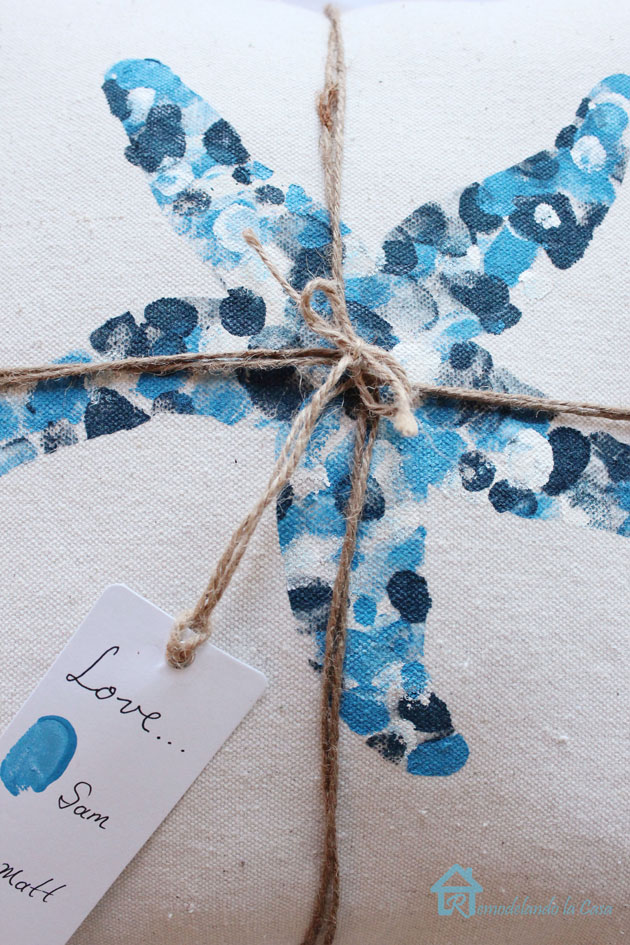
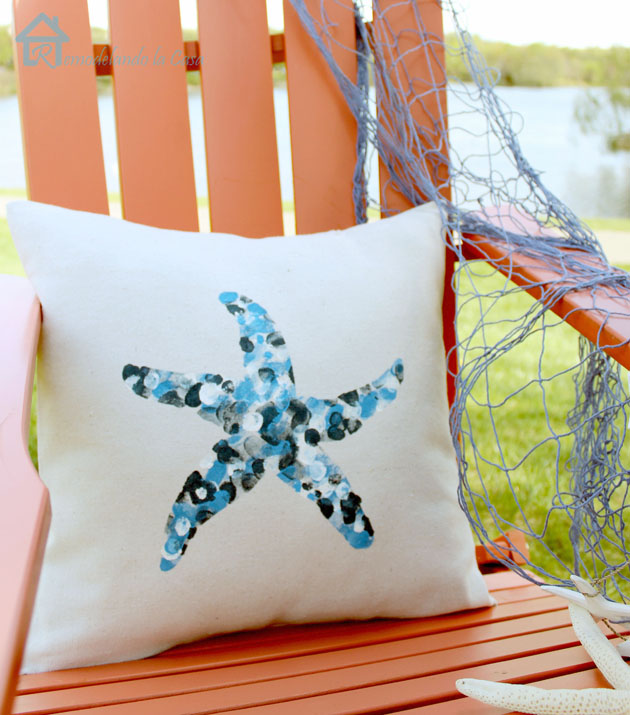
Thumbprint starfish pillow2 with tag

Envelope pillows are the easiest pillow covers I’ve sewn and let me tell you, my sewing skills are not that good.  A fabric rectangle is folded to create an “envelope”, four simple straight lines to sew and your cover is done! No zippers, no Velcro, the envelope holds the pillow really well.

Materials:

(I’ve included affiliate links for your convenience. I earn a small percentage from a purchase using these links. There is no additional cost to you. You can read more about affiliate links here.)

*Pre-wash and iron the fabric

Instructions:

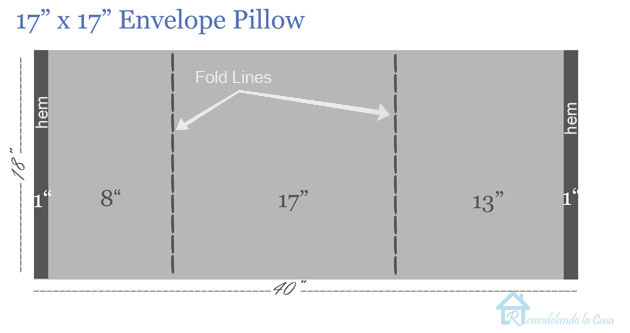
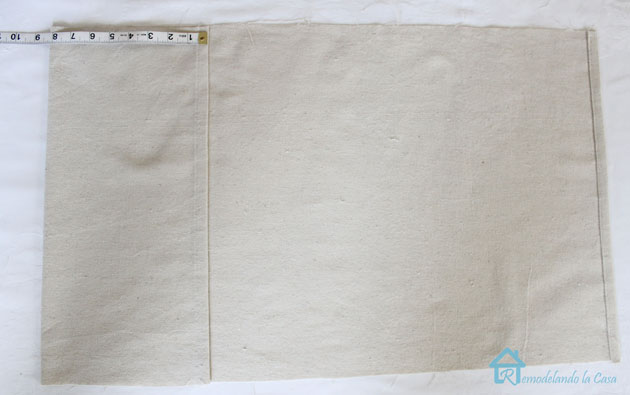
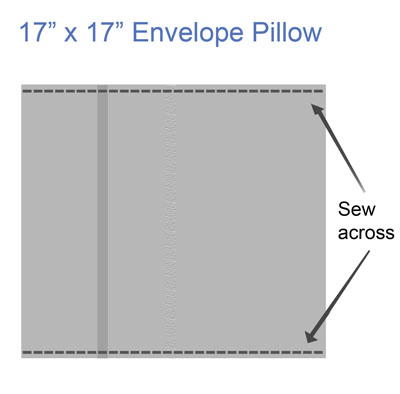
For a 17″ x 17″ pillow insert, use the following dimensions.

Envelope pillow 17x17

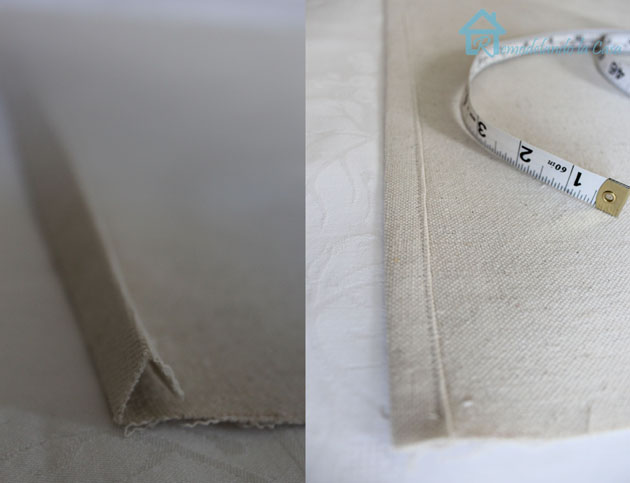
Once the fabric is cut to size (18″x 40″), hem the left and right edges.  (Fold  in ½”  twice, as seen in the picture below.  Iron it flat and hem.)  Do the same on the other side.

envelope pillow side hems

To create the opening on the back, fold the left side over and iron.

Envelo pillow first fold

Do the same on the other side.  These folded lines are a good visual point to help you center the design on the front face of the pillow later on.

envelope pillow second fold

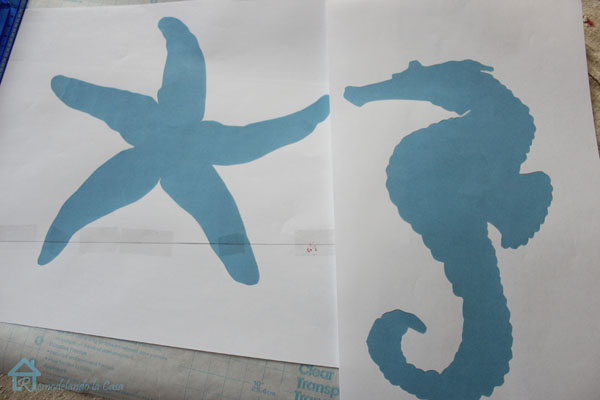
Before sewing across the top and bottom of the cover, let’s work on the design (the fun part!)  Print the starfish and seahorse silhouettes. (for these pillows print at 120%.)

starfish and seahorse silhouttes

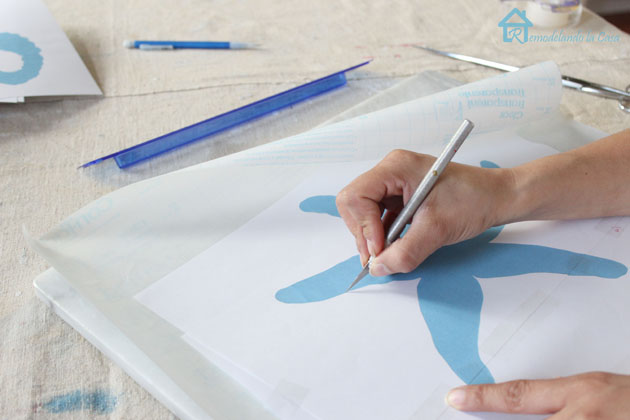
Place each design on top of a big piece of contact paper, tape it in place.

starfish profile

Using the x-acto knife, cut through the printout and the contact paper following the outline of the silhouette.

cutting starfish profile out

After cutting, peel off the outer piece of contact paper and center the design on your pillow cover.  Press the contact paper firmly all around the design to prevent paint from seeping through.

contact paper silhouete on fabric

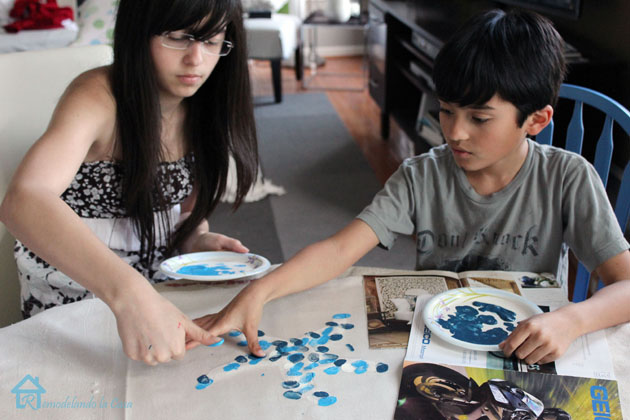
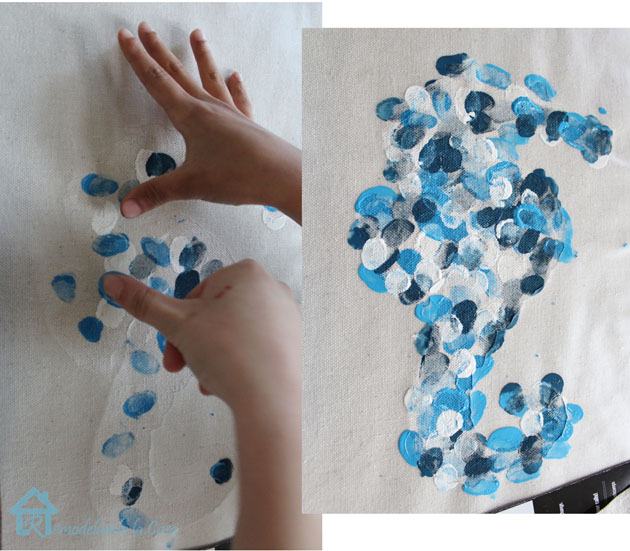
Now it’s time to call all those little artists and give them each a set of fabric paint.

kids thumbpainting

The thumb-printing / painting can begin…

thumb painting

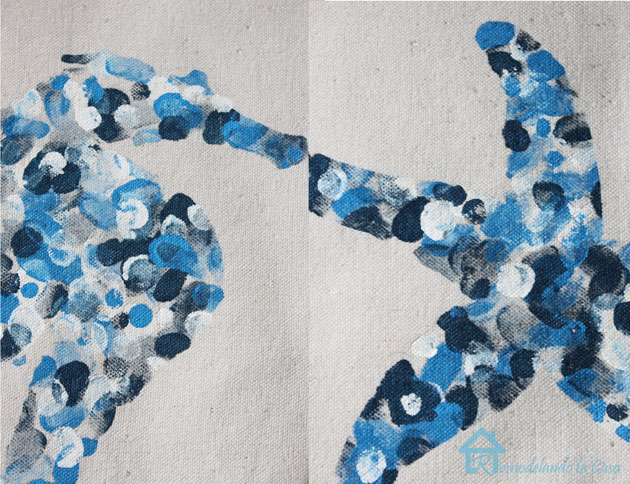
…until the shapes are filled.

thumbprint starfish and seahorse

Let it dry according to the paint manufacturer’s instructions.  After the paint dries you can sew across the top and bottom, making sure the designs are on the inside.

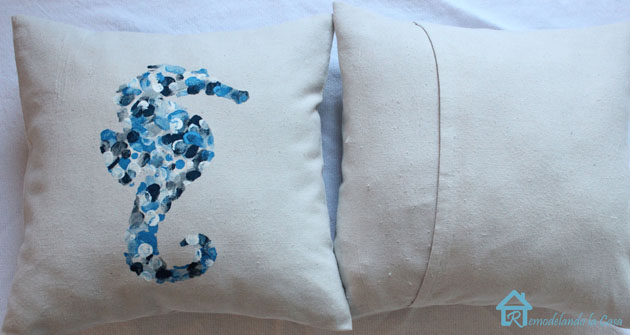
sawing across envelope pillowIf desired, wash and iron the pillow covers. Insert your pillow form.

Thumbprint seahorse pillow front and back

Place it on your favorite chair and enjoy!

Thumbprint starfish pillow1

Our pillows are a present for a special person close to our hearts.

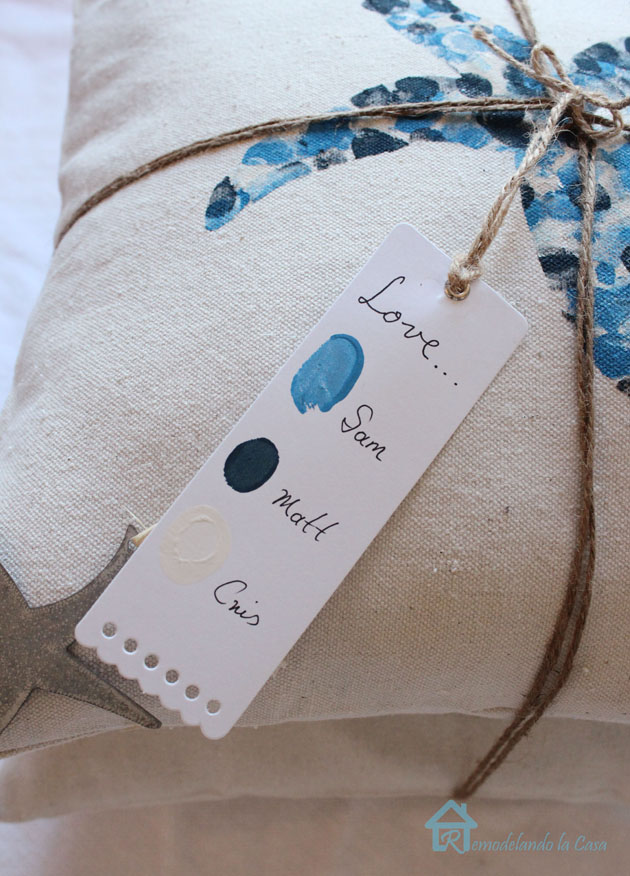
Thumbprint pillows with tag-2

Of course, the artists had to sign it, or thumbprint it! Well, we did both!

Thumbprint pillows with tag

Are you ready to give the thumb printing a try?  Kids love it!  Hint, hint… this could be a nice project for Father’s Day (or Mother’s Day).

Photobucket

  ~ Learn more about Cristina ~

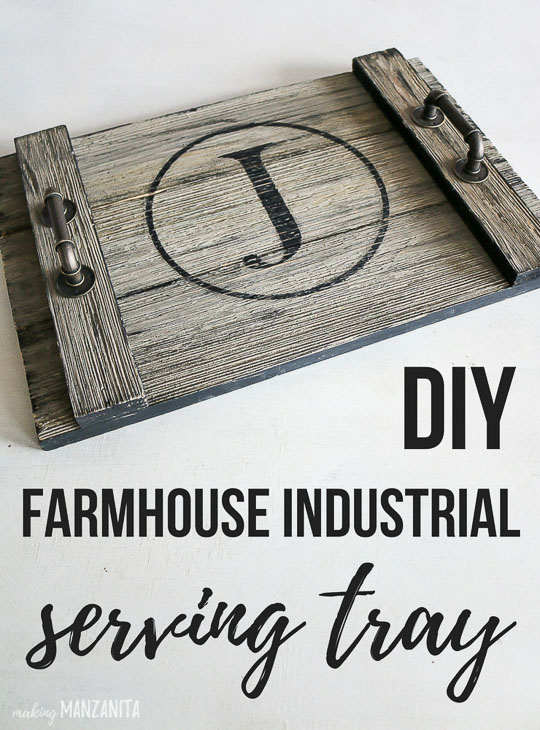
farmhouse serving tray close up view. Letter J Monogram

A common decor item with farmhouse style is a wood serving tray. Trays are an easy way to add style and function. This DIY Farmhouse Style Serving Tray with handles is so easy to create, I can’t wait to show you how it’s done!
DIY Farmhouse Industrial Serving TrayDIY Farmhouse Style Serving Tray
Hi there! Chelsea here from Making Manzanita, where it’s all about making your house a home! I’m so excited to be with you today. I love renovating and incorporating farmhouse style decor into our home. One of the easiest ways to decorate is with a serving tray. You can set it on a coffee table to protect surfaces from drinks, use it to style with a plant and a candle, or use it for serving!

Let’s get busy making this super easy DIY Farmhouse Style Serving Tray!

Materials:

(I’ve included affiliate links for your convenience. I earn a small percentage from a purchase using these links. There is no additional cost to you. You can read more about affiliate links here.)

Instructions:

Step 1: Paint edges of wood

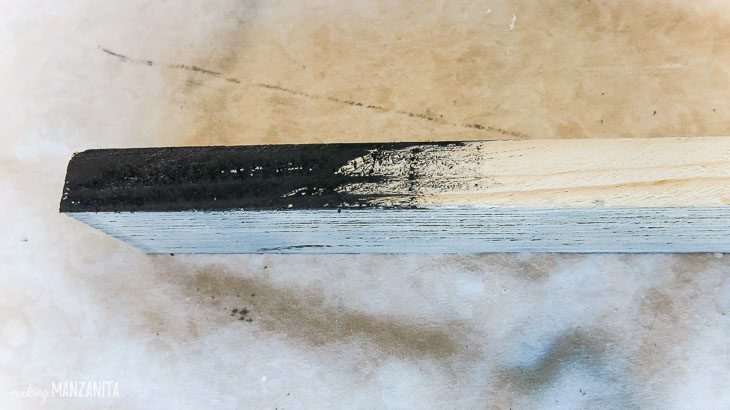
Using a foam brush, paint the edges of your wood with black acrylic craft paint. You may be wondering why this is the first step. I didn’t love the freshly cut raw edges of the wood I used. To give the serving tray a distressed industrial farmhouse feel, I painted the cut ends and corners with black paint.

painting wood slats with black paint

Step 2: Emphasize the texture of the wood to add character

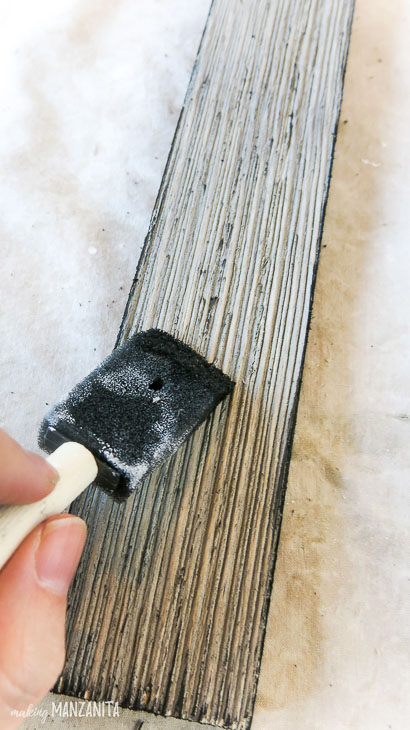
If the wood you use for your farmhouse wood tray has a raised wood grain, dip your paintbrush into the black paint and lightly run over the top for a rustic look. This step enhances the rustic texture of the wood.

foam dry brushing black onto wood siding

If your wood has a smooth surface, you can get a similar look by using a dry brush technique with a bristle brush. This works best if you use an old, ratty-looking bristle paintbrush. You put a little bit of paint on the brush and then wipe most of it off on a rag or paper towels, so the brush is essentially dry. Then lightly run the paintbrush over the top of the wood. The result is an enhanced grain pattern and a distressed farmhouse look!

Step 3: Assemble farmhouse wood tray

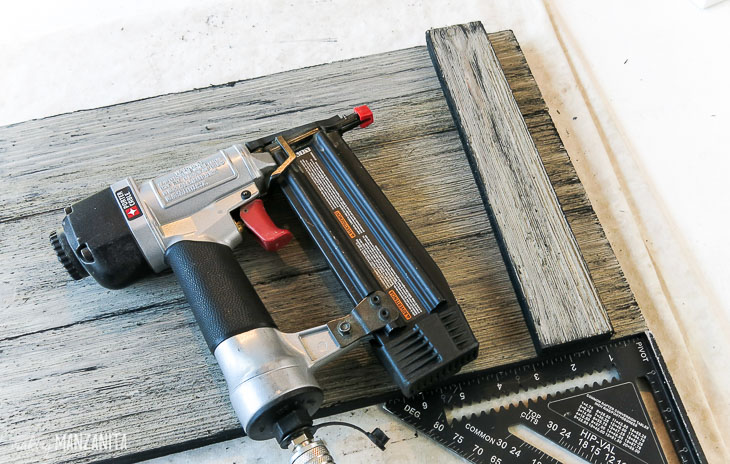
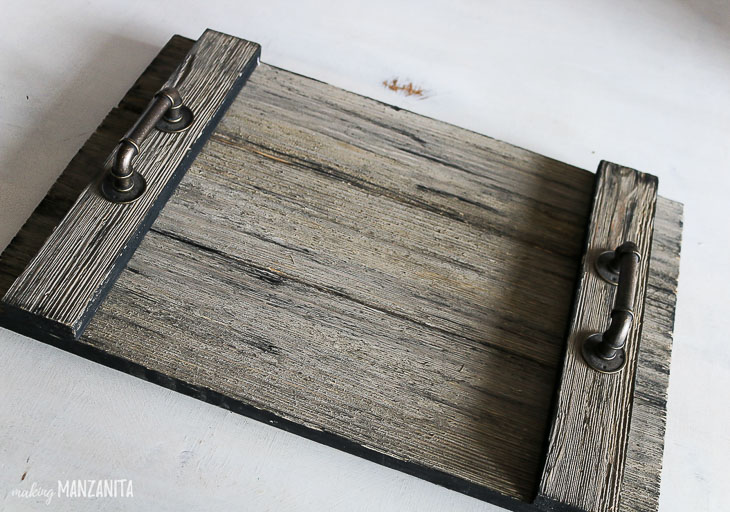
Once the paint has dried, it’s time to assemble your farmhouse wood tray. Start by laying out the three larger pieces of wood horizontally. Next lay the smaller pieces of wood on top vertically at each edge. Allow about 1 inch from the edge of the tray.

brad nail gun laying on top of assembled wood tray

Before you start nailing, make sure everything is square. Use a nail gun to nail the smaller pieces of wood into the larger from the top of the tray with a couple of nails into each board.

Step 4: Add handles

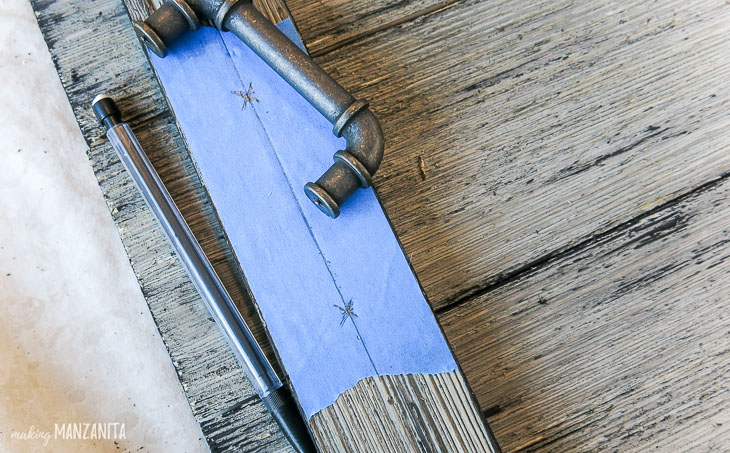
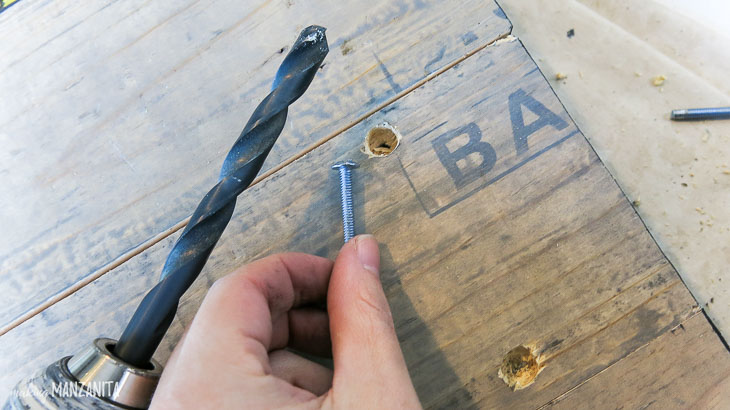
Measure the center of the vertical pieces and lay painter’s tape on top of them. Measure the width of your cabinet pull and mark where the holes should be drilled on top of the tape. The painter’s tape helps you see the marks on darker wood.

mark handle sides centered on tray

Line up your drill bit (match the diameter of the bit to the handle screws) on the marks and drill holes through both pieces of wood on your serving tray.

To get a flat surface on the bottom of the farmhouse wood tray, use a countersink bit on the underside of the tray. (If you don’t have a countersink bit, use a larger drill bit to create a recess for the screw heads to sink into. This helps protect any surfaces you set the wood tray on from getting scratched.

Countersink drilled into wood tray bottom

Flip the tray over and admire your new farmhouse style industrial serving tray.

rustic gray painted wood farmhouse tray

You can stop here, but to add a monogram, keep reading.

Step 5: Cut stencil

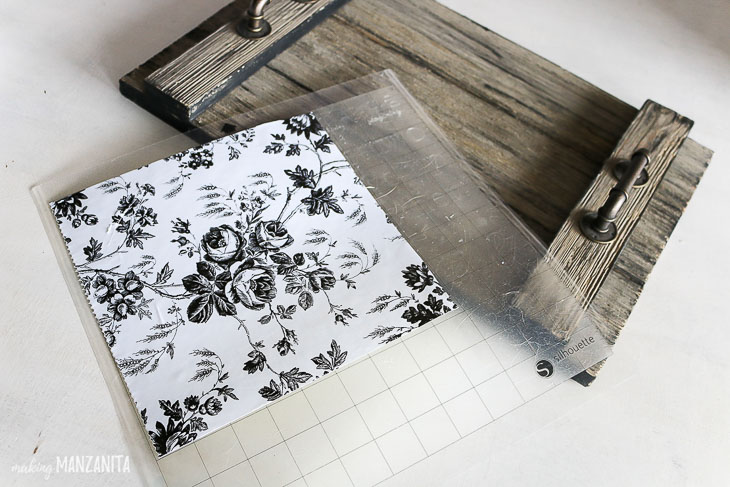
Using a vinyl cutting machine, design your monogram and cut your stencil.

Budget Tip: Use contact paper from the Dollar Tree as a cheap one-time-use stencil material.

adhesive shelf paper for vinyl stencil

To recreate a monogram like mine with an industrial farmhouse style, here are the details:

  • Font: Baskerville Old Face
  • Font Size: 489
  • Circles were created by drawing two circles with the shape tool around the letter

Step 6. Apply stencil

Cut and apply transfer tape to fit over your stencil. (Using transfer tape will help keep everything lined up and centered as you’ve designed it.)

weed excess vinyl from letter J stencil

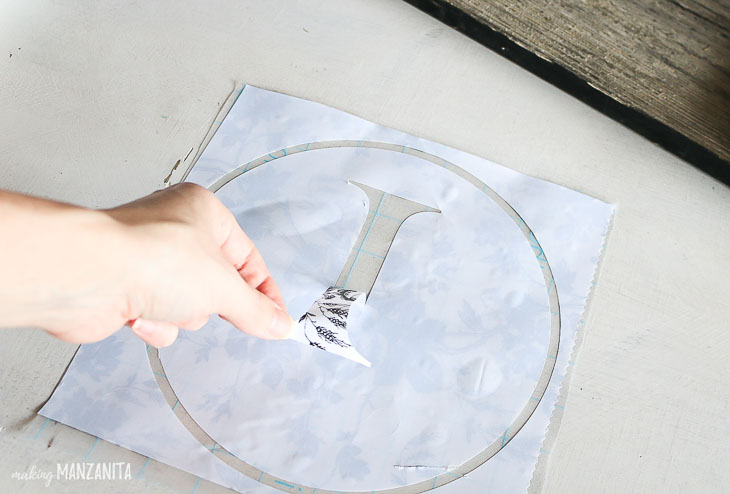
Peel the stencil and transfer tape off the backing and remove the part of the design that you would like painted (in my case, this is the circle border and the letter).

remove transfer paper from adhesive stencil

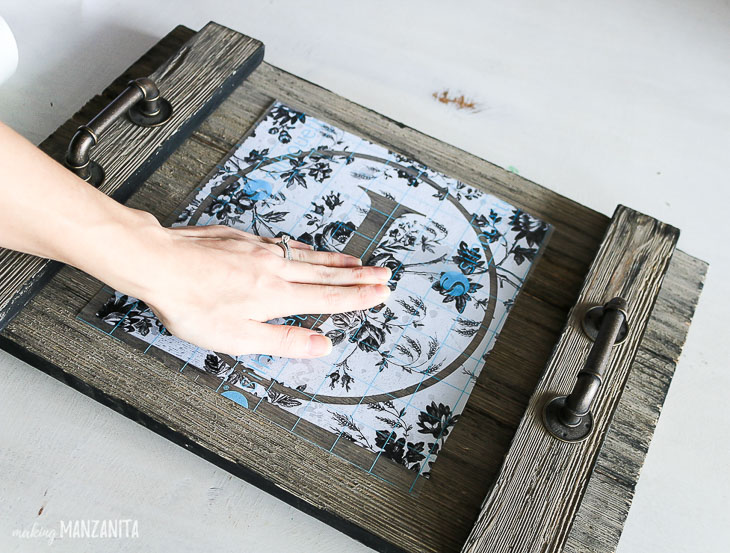
Measure the center of your serving tray and press down your stencil. Carefully peel the transfer tape away from the stencil. (I found that the ghost wood I was using didn’t really “grab” the stencil very well, so this part was kind of tricky for me. If you’re using a smoother wood, it should be a little easier.)

center adhesive stencil on tray

Step 7: Seal stencil

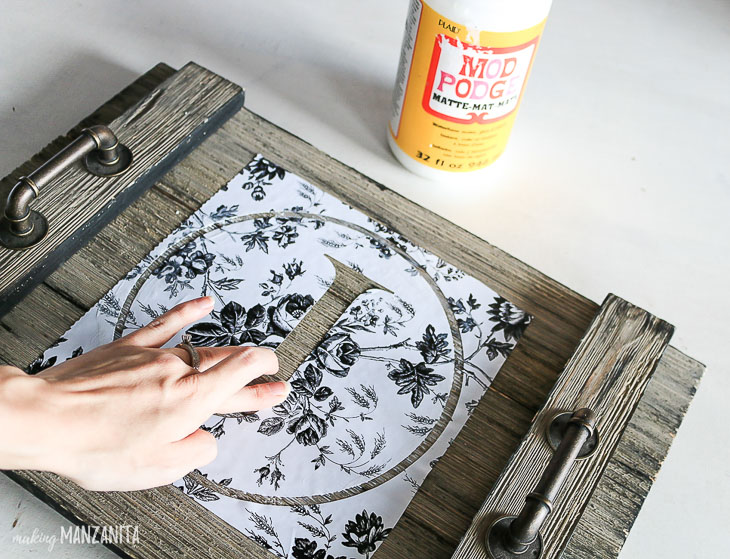
There’s a magic step that I use for all of my wood signs and stencil projects that prevent stencils from bleeding. Before painting the stencil, seal it with Mod Podge. Rub a little Mod Podge over the stencil edges once it’s adhered to your wood. Wait for it to dry to the touch before painting (usually about 15-20 minutes).

seal edges of stencil with mod podge

You can read more here about this awesome hack for how to stencil on wood. (I did find that this rough ghost wood required more Mod Podge than normal because of the grooves in the wood and the stencil not sticking as well as it normally does.)

Step 8: Paint over stencil

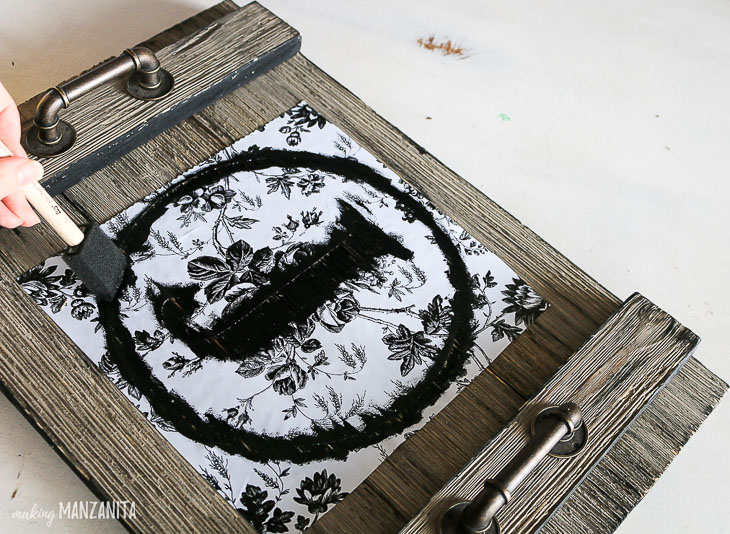
Once the Mod Podge is dry, paint over the stencil with acrylic craft paint using a foam paintbrush. Blotting the paintbrush up and down many times rather than brushing across the stencil will prevent the paint from bleeding under the stencil.

painted letter j on tray

Step 9: Remove stencil

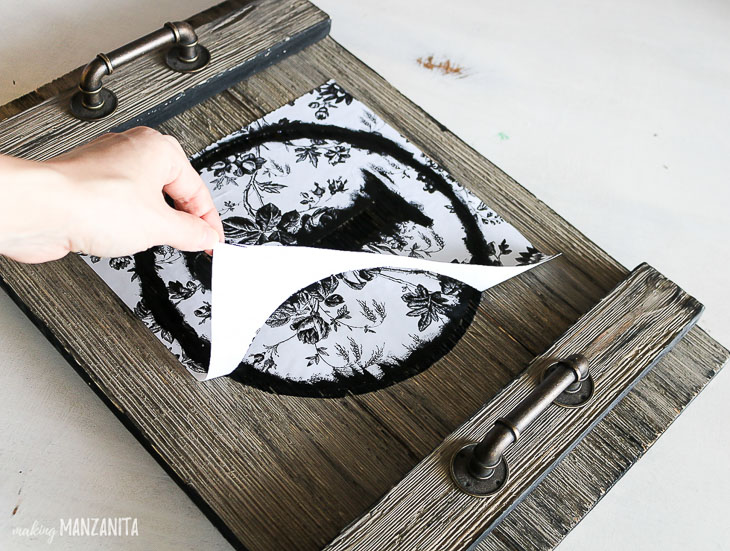
When you’re done painting, you can peel up the stencil immediately except in areas where there are small intricate details that may smudge. In those cases, wait until the paint is dry to the touch before removing the stencil entirely.

remove stencil

Look at those nice crisp paint lines! So pretty!

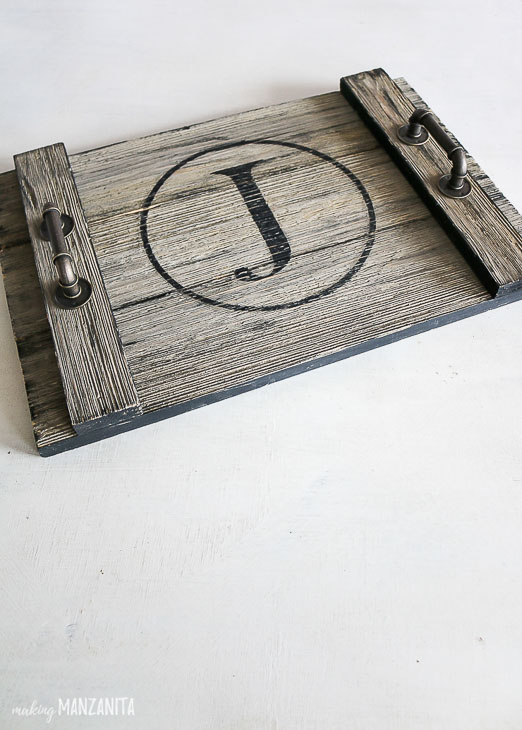
finished rustic wood serving tray with J monogram in circle

Step 10: Seal serving tray

To protect your serving tray, seal it before use with 2-3 coats of a spray sealer.

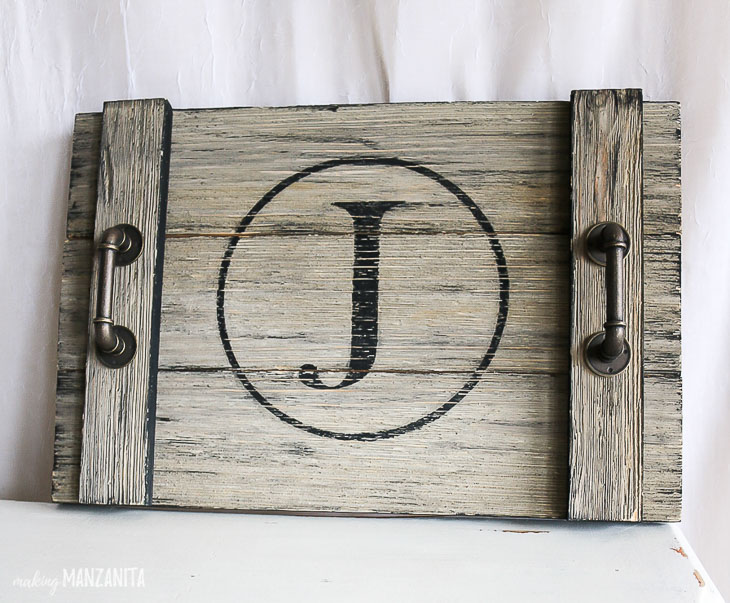
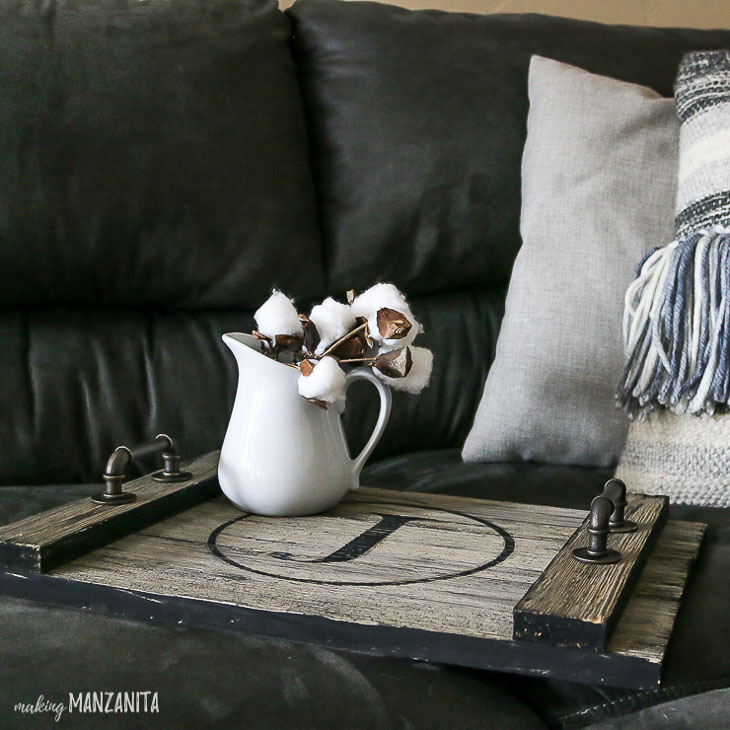
J Monogram Rustic wood serving tray

There you have it! A DIY Farmhouse Style Serving Tray with handles that adds style and function to your decor!
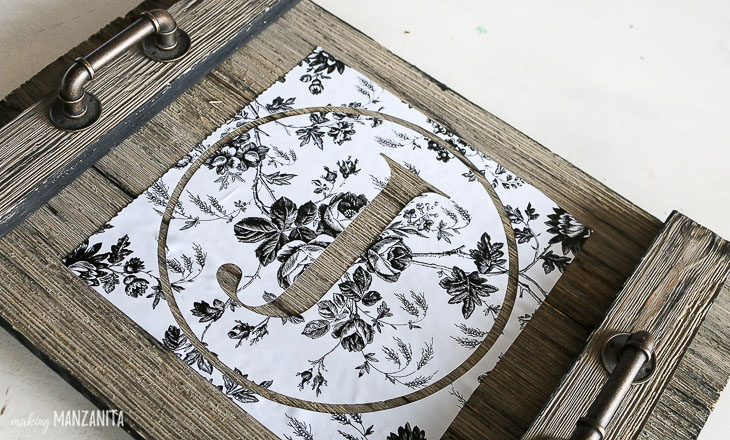
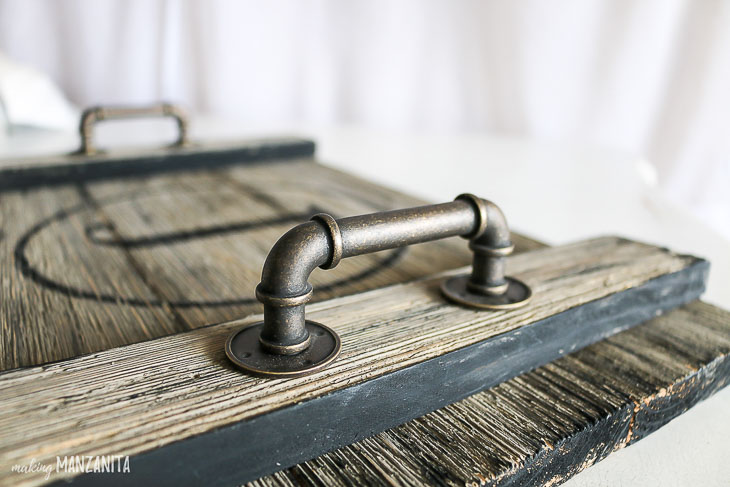
Industrial pipe handles on serving tray

I love the industrial vibes that the handles and the gray textured wood bring to this serving tray.

The best part about this wood farmhouse tray is that no one else will have one exactly like it (just one of the many reasons I love making my own home decor).

farmhouse serving tray close up view. Letter J Monogram

Next time a friend comes over for a cup of coffee, you can grab this serving tray with handles to serve up coffee and snacks.

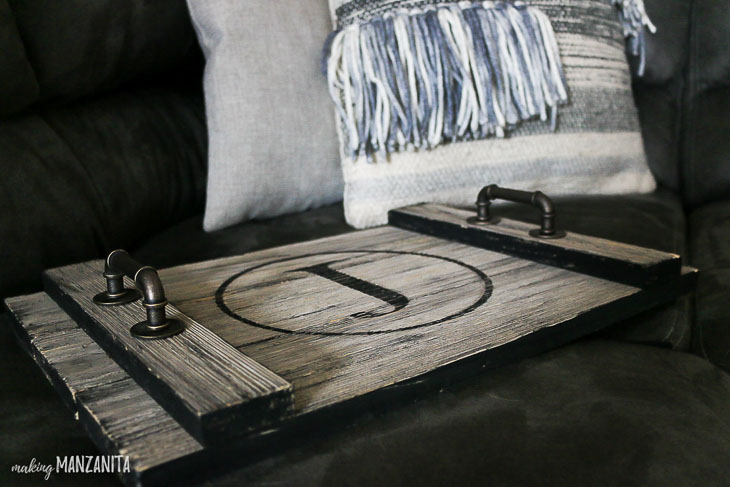
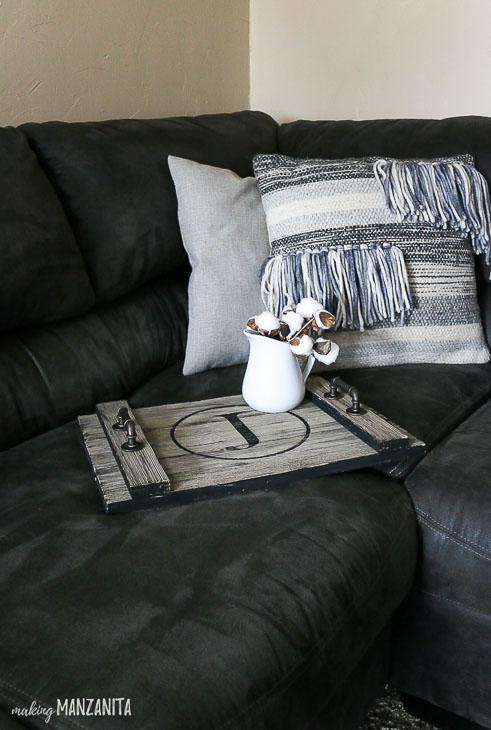
Farmhouse rustic wood serving tray on couch

She’ll surely ask where you got such a cute wood tray. You’ll answer proudly that you made it yourself!

rustic wood serving tray on black couch, pillows in background

Thanks for joining me today while I showed you how to make this DIY Farmhouse Style Serving Tray.

Chelsea - Making Manzanita

My name is Chelsea and I am the founder of Making Manzanita (www.MakingManzanita.com). I’ve found that many women don’t know how to start decorating or updating their homes, which is why my passion is helping others make their house a home they love. At my blog, Making Manzanita, my readers enjoy decor inspiration, craft & DIY tutorials written in plain English and simple homemaking advice to run their homes more efficiently. One of the things my readers love most is my perspective of working with what you have because your house doesn’t have to be perfect to feel like home.

I’m mama to the most adorable little man (with a little baby girl coming soon!) and wife to my DIY partner. We love our life in the beautiful Central Oregon as we continue our journey to renovate our 2nd fixer upper. We love to inspire others with budget-friendly renovation projects, like our faux shiplap wall and wood air conditioner cover made with pallets.

You can connect with me on Instagram, Facebook or Pinterest.

What a great tutorial! If you like this DIY farmhouse tray, I know you’ll also love these other DIY trays:

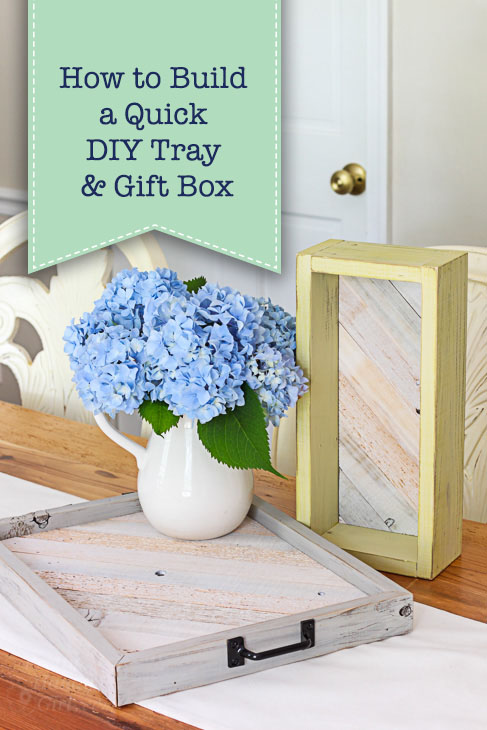
How to Build a Quick DIY Tray & Gift Box | Pretty Handy Girl

DIY Wood Slat Tray and Gift Box


DIY Scrap Moulding Trays | Pretty Handy Girl

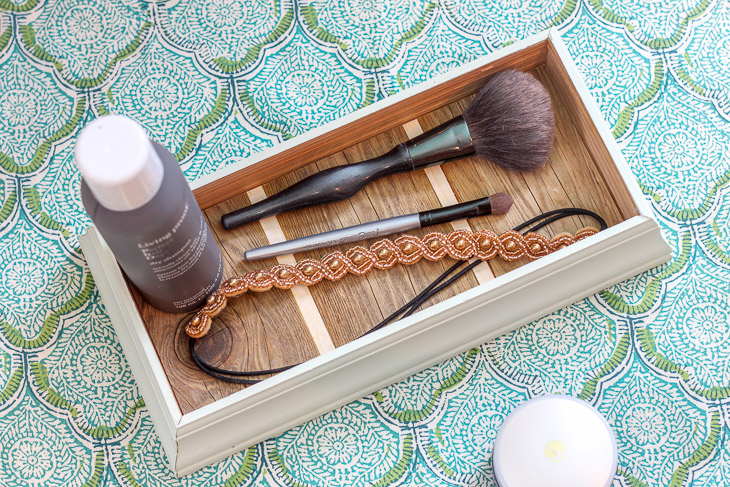
DIY Scrap Moulding Tray


Rustic Pallet Serving Tray
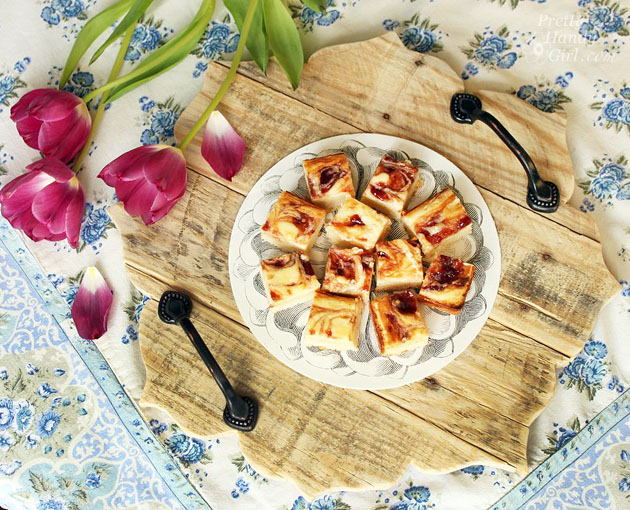
Rustic Pallet Serving Tray
Scrapbook Paper Lined Painted Trays | Pretty Handy Girl

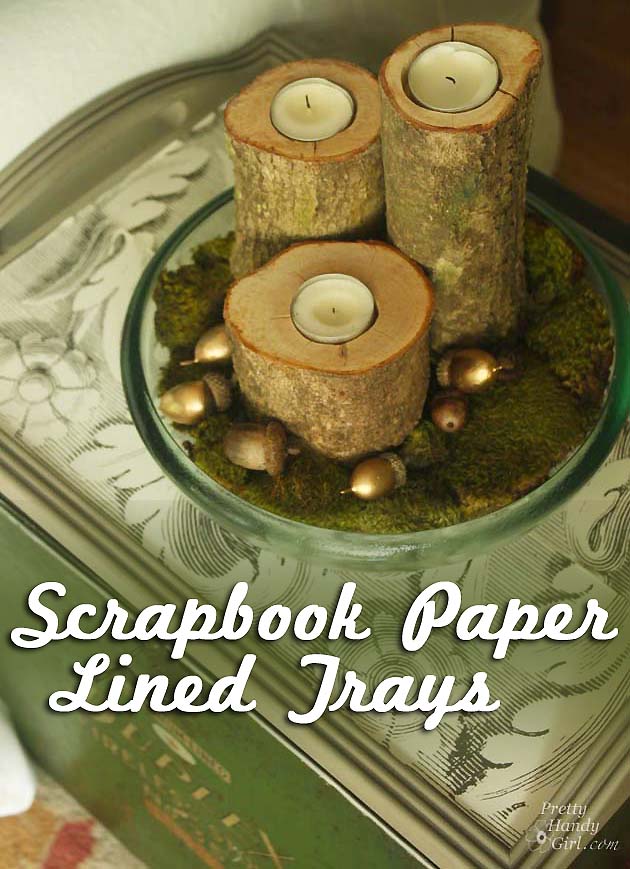
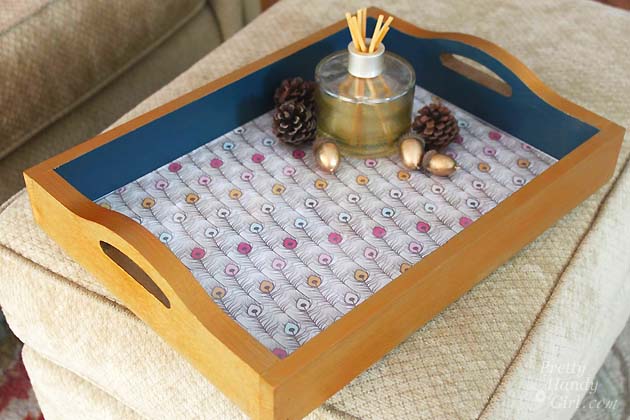
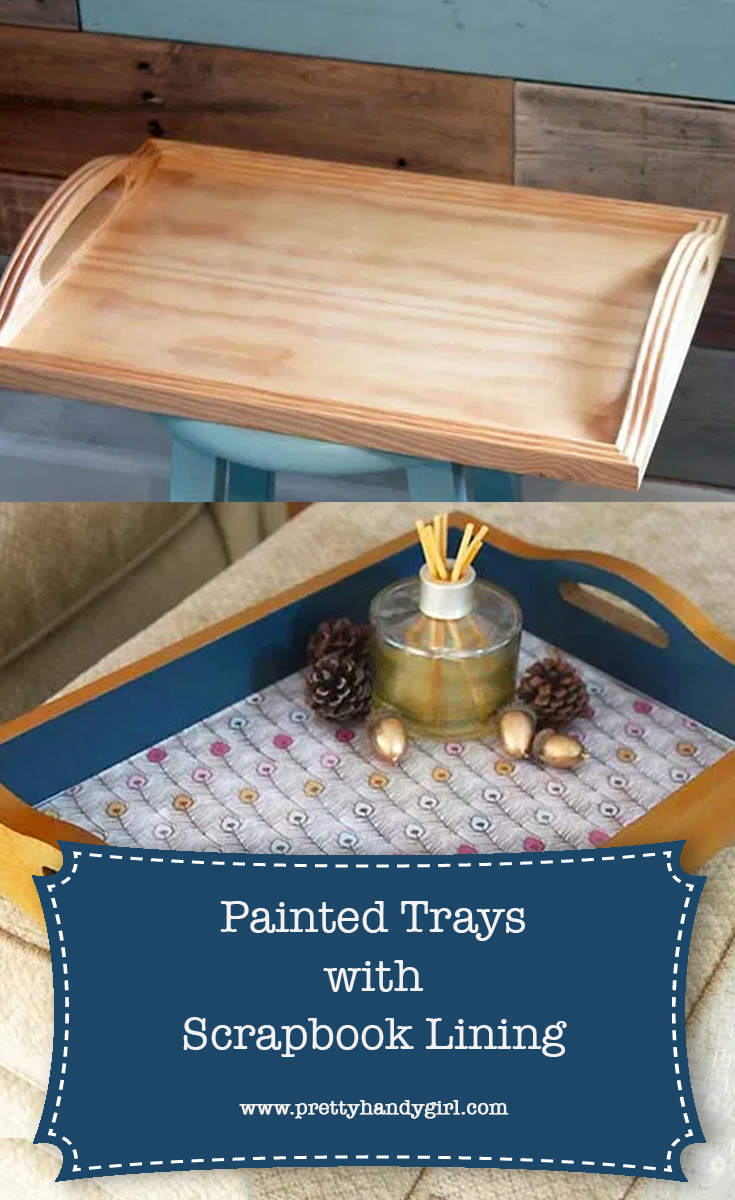
Look around your house or the next time you’re at a thrift shop. Find either an unpainted tray or a tray that needs a makeover. This is a quick project to create a Painted Trays with Scrapbook Lining for a beautiful and elegant tray to display or organize things in your home.

Scrapbook Paper Lined Painted Trays | Pretty Handy Girl

Painted Trays with Scrapbook Lining

Today I have a really adorable and easy DIY idea for you! Scrapbook paper-lined and painted trays. These trays are so versatile, they can be used in the kitchen, bedroom, bathroom, or anywhere you want to corral items or have a flat surface available. They also make a great gift if you want to load them up with some smaller gift items. But best of all, you can change their look in a snap.

Scrapbook Paper Lined Painted Trays | Pretty Handy Girl

(I’ve included affiliate links for your convenience. I earn a small percentage from a purchase using these links. There is no additional cost to you. You can read more about affiliate links here.)

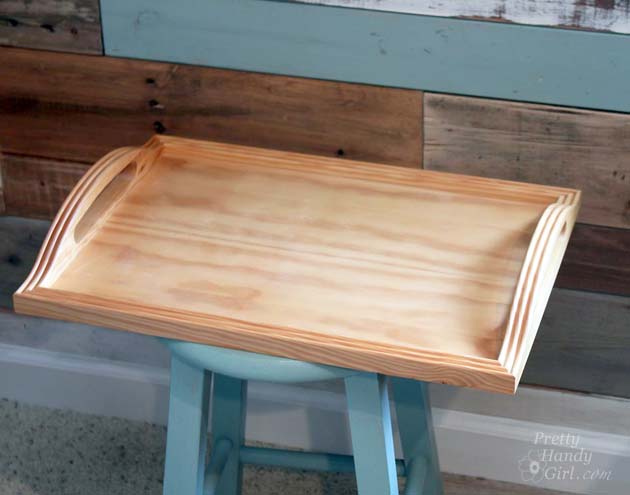
As I mentioned above unfinished trays can be purchased at many places. If you want a new one, look at your local craft supply store or order one online on Amazon for cheap.

You’ll also want some decorative scrapbook paper, gift wrap, or fabric to line the bottom of your tray.

Scrapbook Paper Lined Painted Trays | Pretty Handy Girl

Materials:

Instructions:

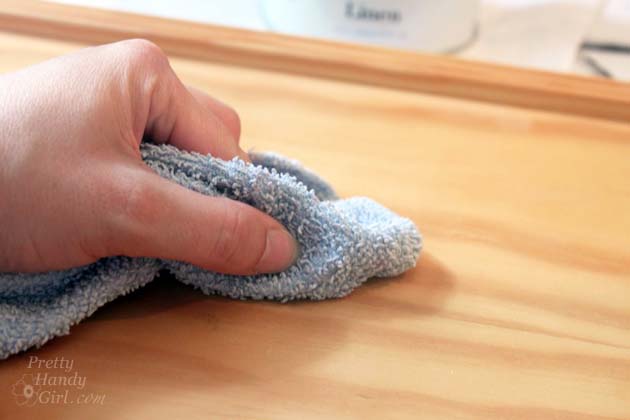
Lightly sand and wipe off tray with a damp rag.

Scrapbook Paper Lined Painted Trays | Pretty Handy Girl

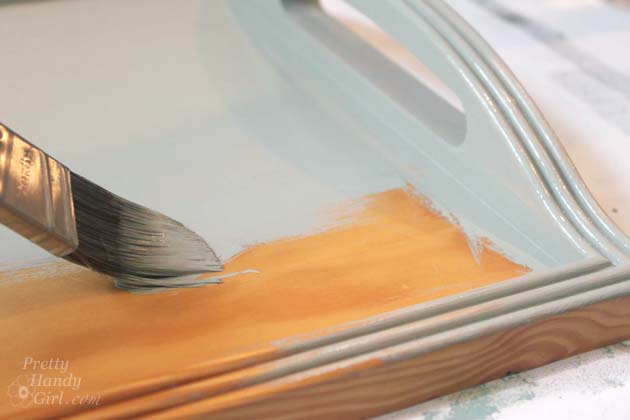
Prime tray (if using non-chalk paint.) Paint tray desired color. For this tray, I used Annie Sloan Chalk Paint in French Linen.

Scrapbook Paper Lined Painted Trays | Pretty Handy Girl

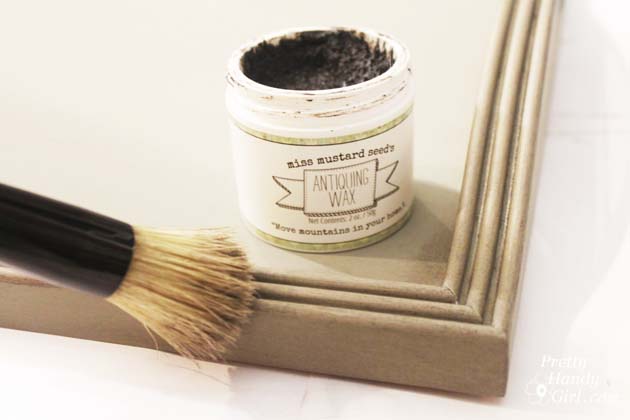
After the paint has dried, brush antiquing wax onto your tray if desired. Buff off excess with a dry rag.

Scrapbook Paper Lined Painted Trays | Pretty Handy Girl

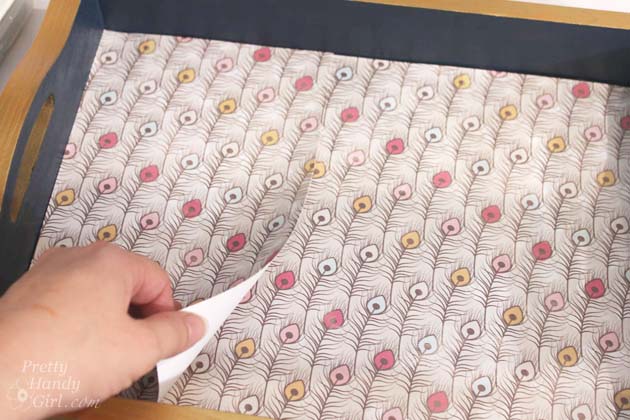
Cut scrapbook paper to fit inside the tray. When overlapping paper, make sure to line up the repeating pattern.

Scrapbook Paper Lined Painted Trays | Pretty Handy Girl

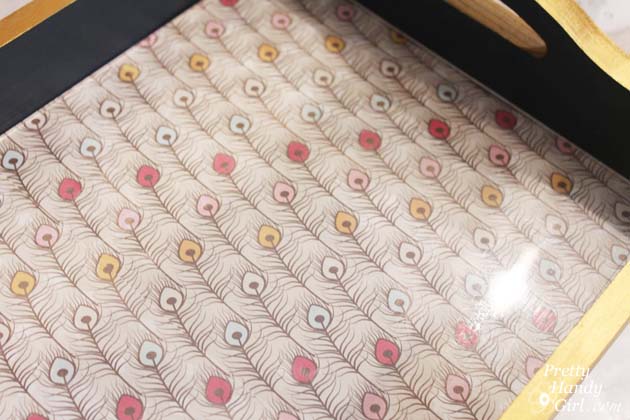
For the best durability, line the tray with a piece of glass or plexiglass cut to fit inside the tray. (Ask your local home improvement store to cut or order online.) If you want it to be permanent, seal the edges of the glass with clear silicone.

Scrapbook Paper Lined Painted Trays | Pretty Handy Girl

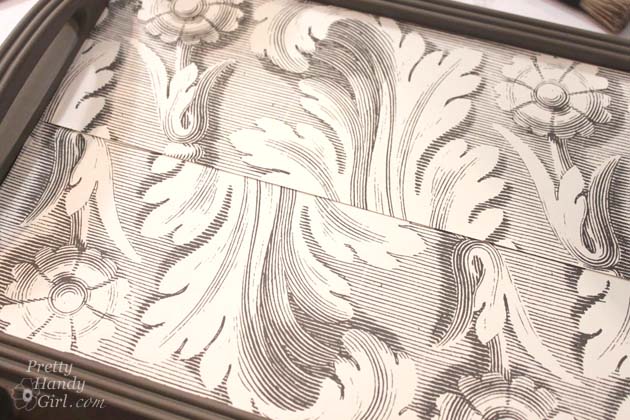
The paper you use to line the tray doesn’t have to necessarily be scrapbook paper. I got this paper from Ballard Designs. It’s actually cheese paper, but I loved the design. It doesn’t quite match up, so I just rotated the paper.

Scrapbook Paper Lined Painted Trays | Pretty Handy Girl

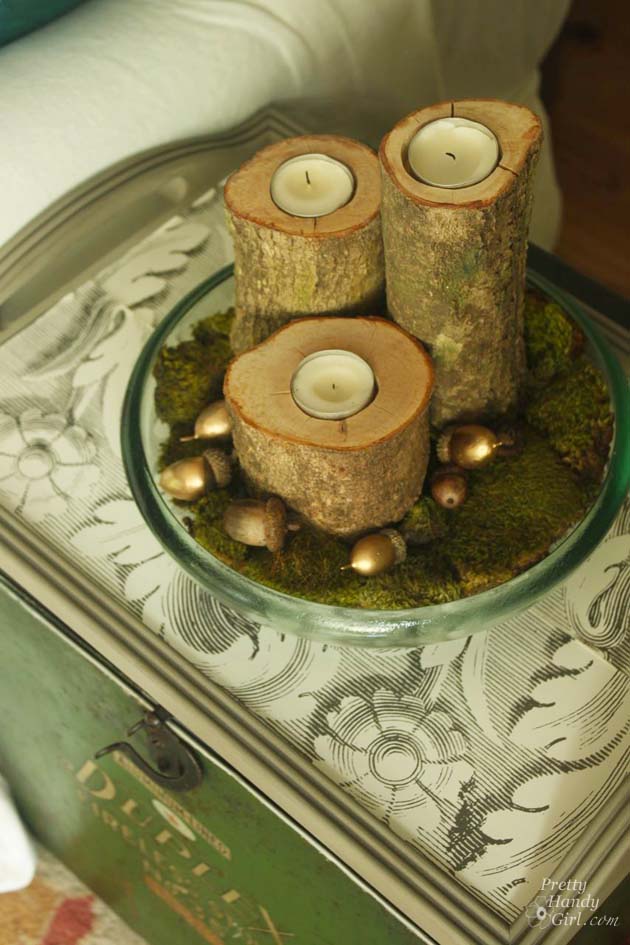
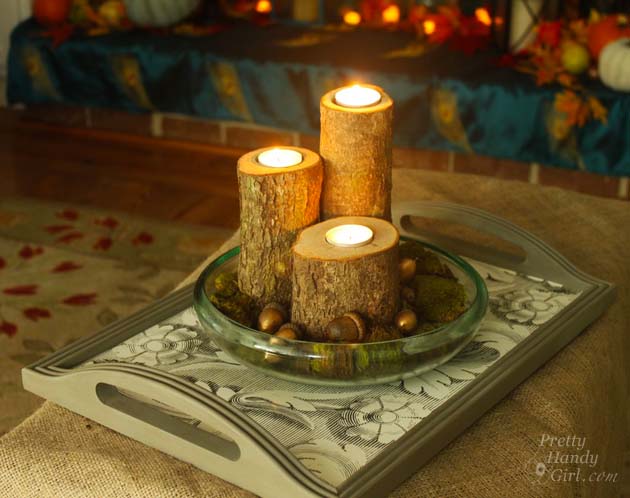
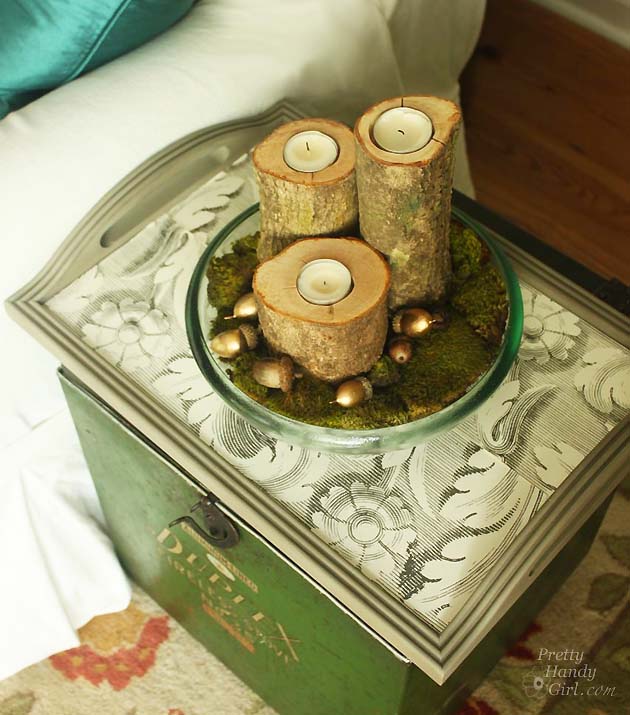
When you put something on top of the tray, you hardly notice the seam.

Scrapbook Paper Lined Painted Trays | Pretty Handy Girl

The nifty thing about these trays is the decorative paper can be swapped out when you bore of the design. (Unless, you seal the edges.)

Scrapbook Paper Lined Painted Trays | Pretty Handy Girl

Scrapbook Paper Lined Painted Trays | Pretty Handy Girl

Once again, I’m loving this idea too much…I might be keeping this one for myself ;-).

Scrapbook Paper Lined Painted Trays | Pretty Handy Girl

Do tell me if you love this idea or have any unique ideas for lining the bottom.

PHGFancySign

Pin for later!

DIY Painted Trays with Scrapbook Lining | Pretty Handy Girl

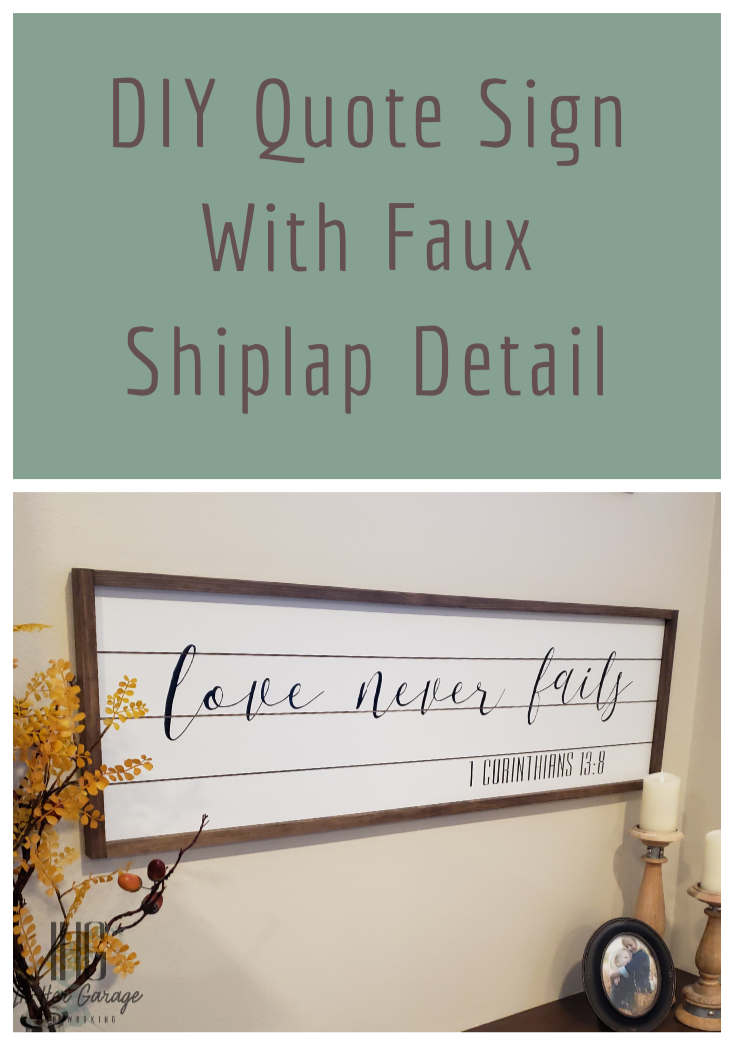
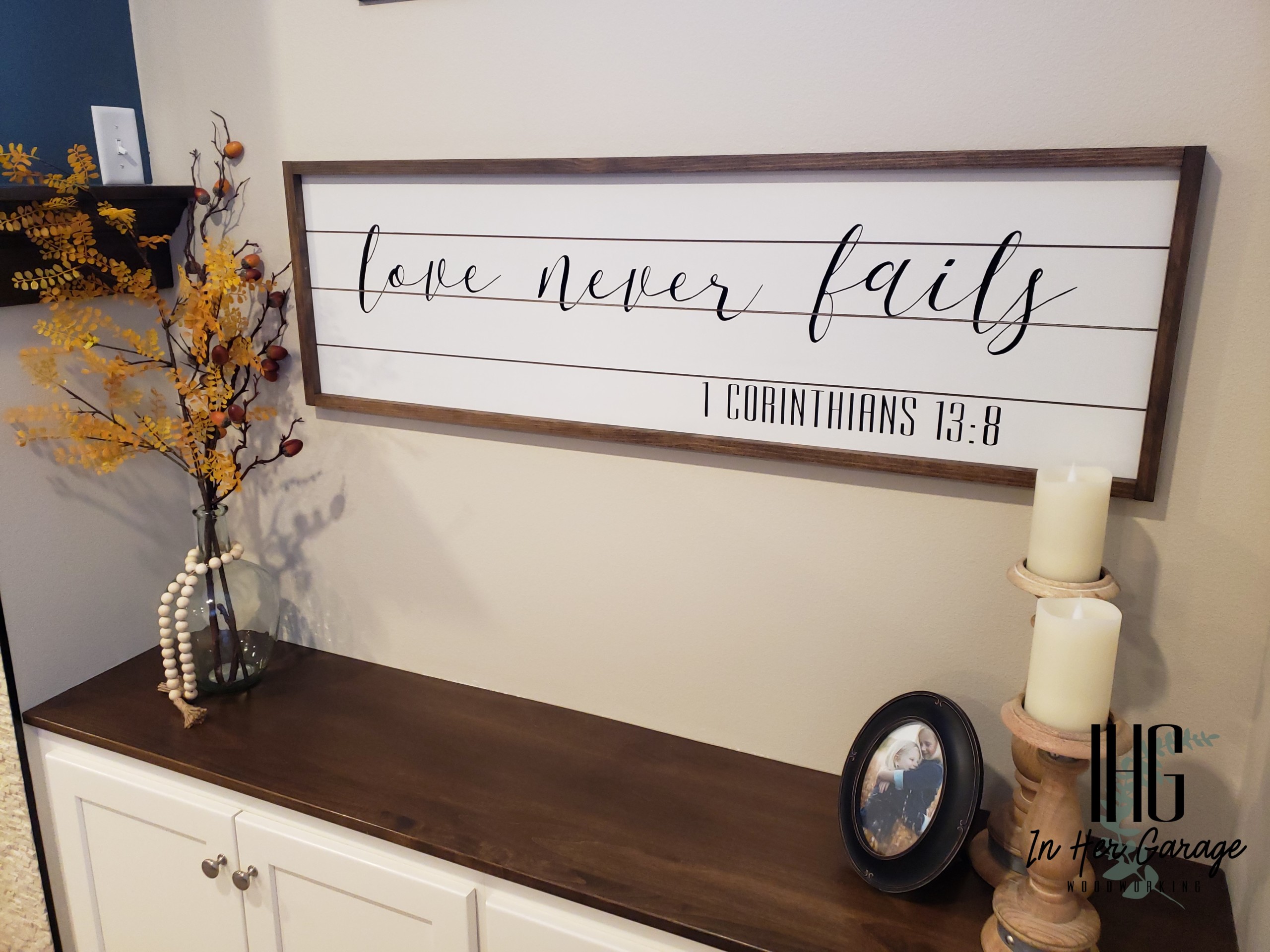
DIY Sign with Faux Shiplap detail

This month I will teach you how to make this DIY quote sign with a faux shiplap detail. It’s a home décor sign with a quote that you can choose! Quote signs are so popular right now and for good reason. They are a great way to express your specific style using a unique sentiment that appeals to you.

DIY Sign with Faux Shiplap detail

DIY Home Décor Sign with Faux Shiplap Detail

Hey all! This is Kristen from In Her Garage with another tutorial for you.  I have made several signs and I believe this is the easiest way to make a sign that is inexpensive while looking clean and finished. The best part about this home decor sign is it looks like you made it with shiplap, but you really didn’t!

The sign in this tutorial measures 48” wide x 16” tall x 1 ½” deep. If you feel comfortable modifying the dimensions for the size sign you need please feel free.

Note: Please read through all the instructions before beginning the project.

Materials:

(I’ve included affiliate links for your convenience. I earn a small percentage from a purchase using these links. There is no additional cost to you. You can read more about affiliate links here.)

Tools:

Prep:

  • Paint the backer board the color of your choosing. You need to this first for adding the faux ship-lap detail later.

Instructions:

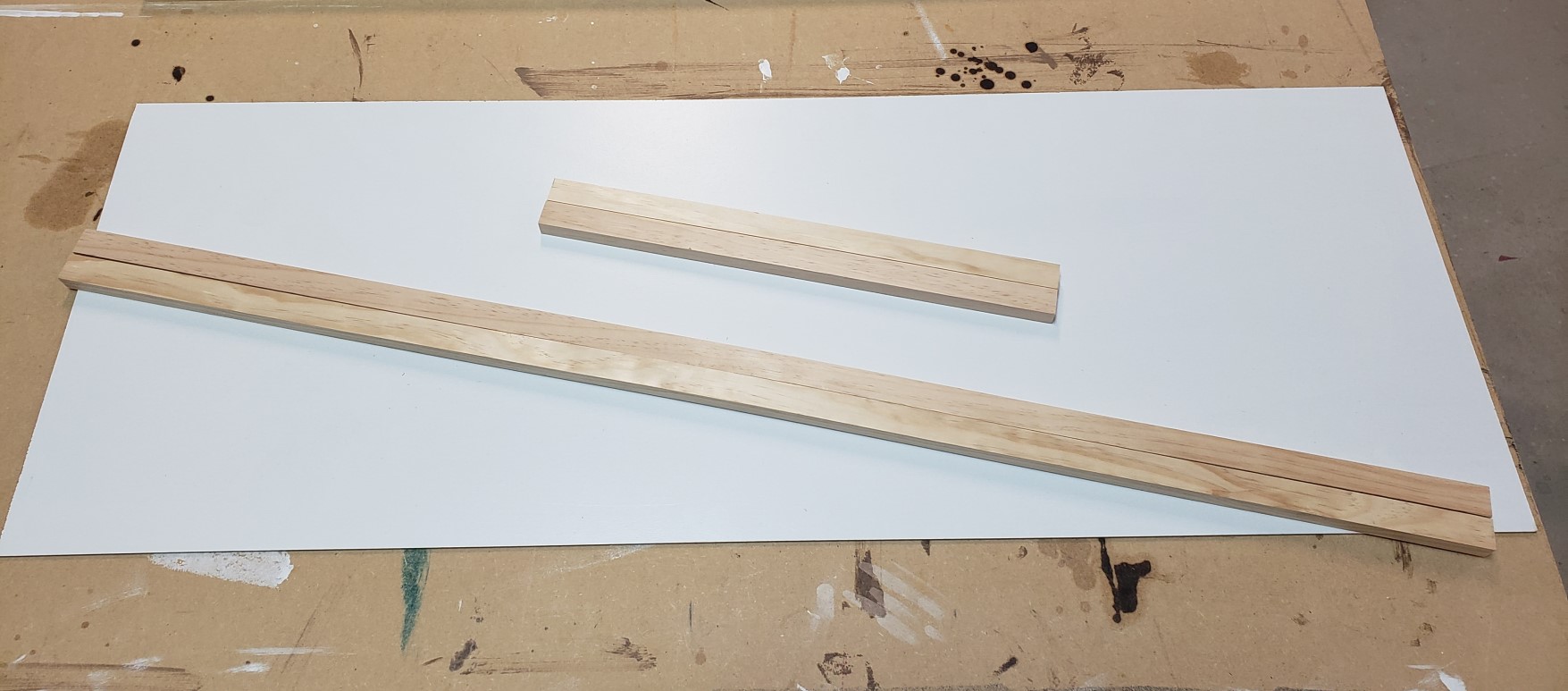
Cut the frame pieces for the sign.

Using your miter saw or circular saw cut the frame pieces from the 1x2x8’s.

You will need:

  • Two 16” boards
  • Two 46 ½” boards

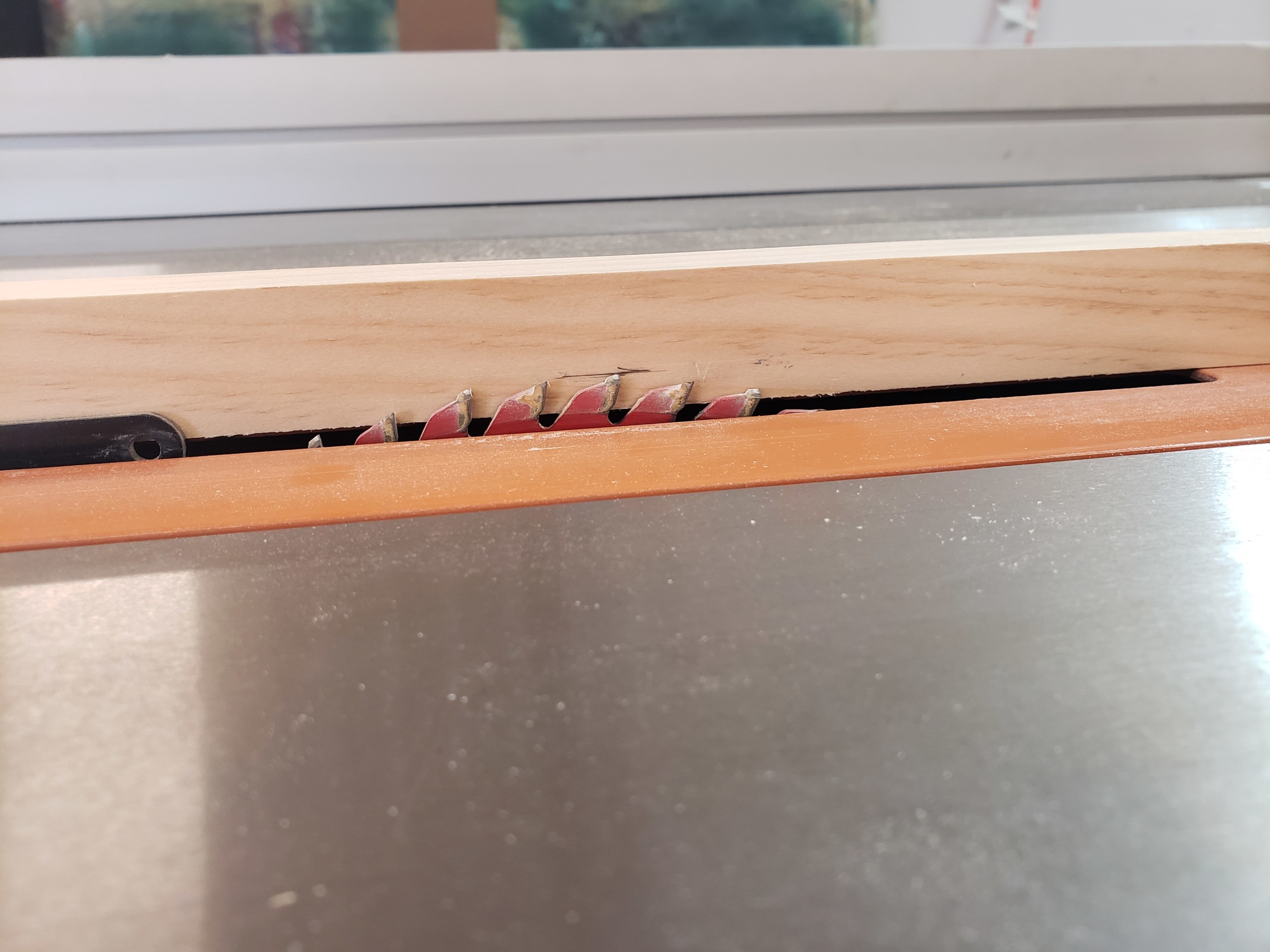
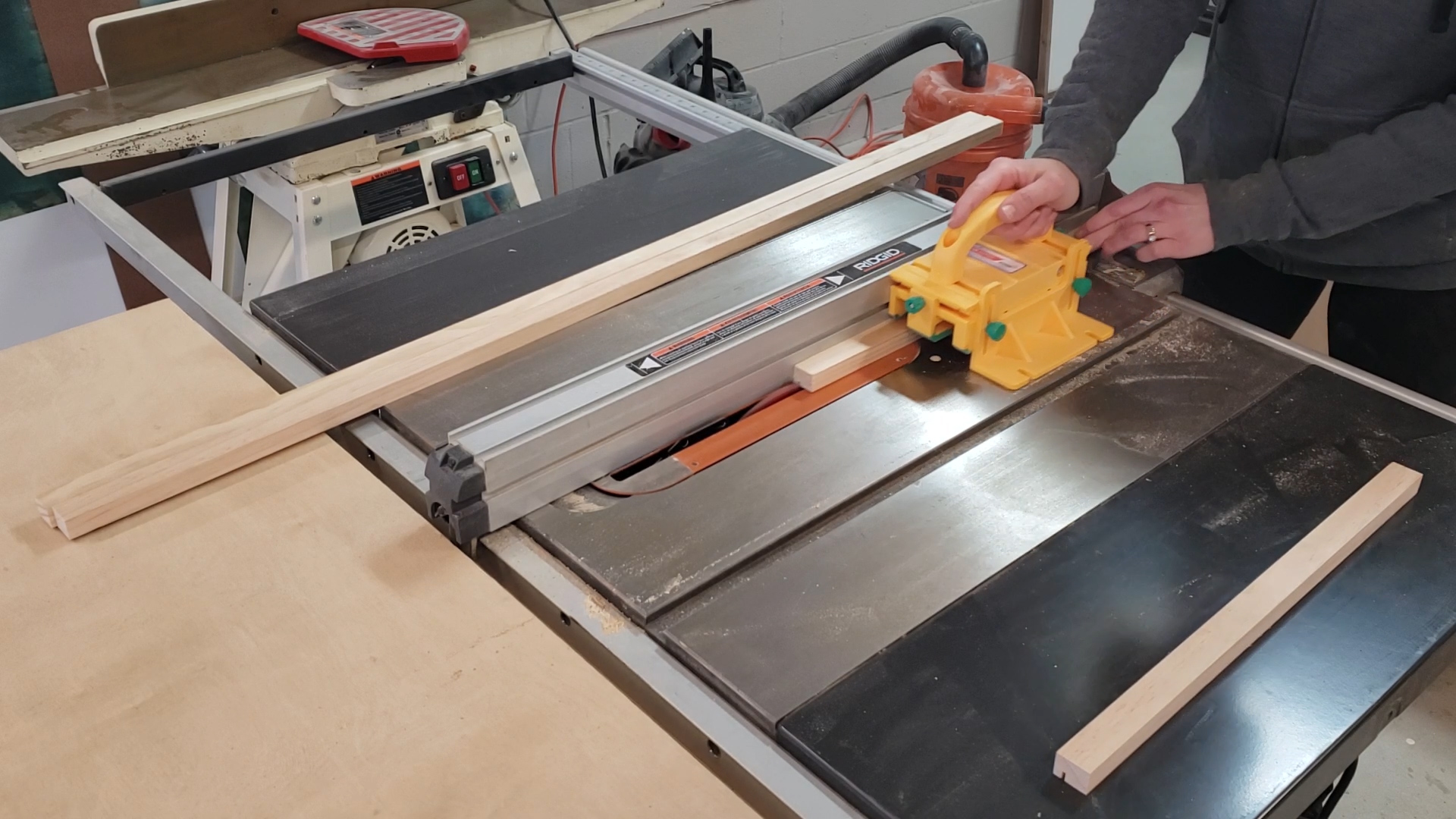
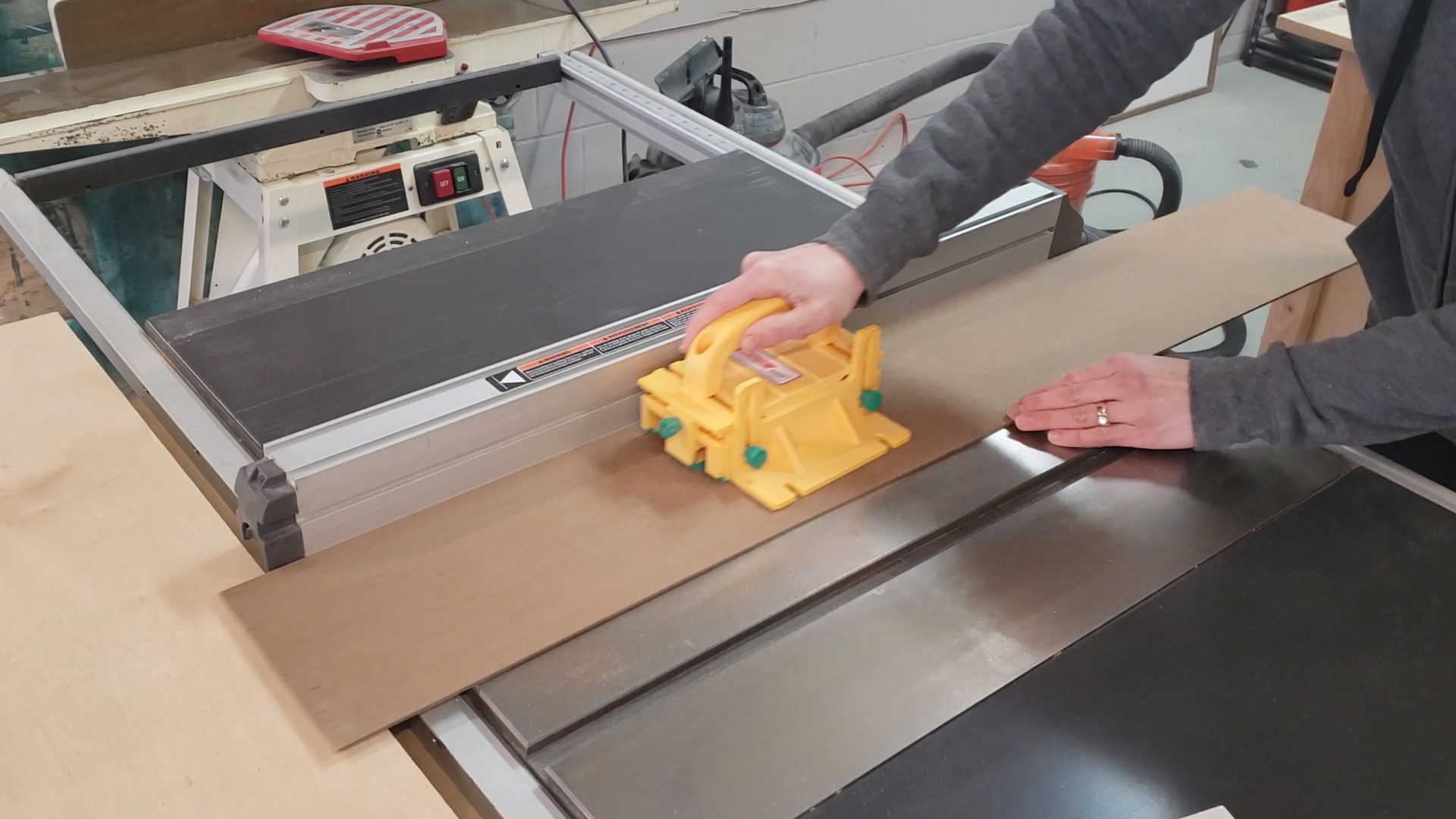
Next cut the groove for the backer board to sit into the frame pieces with the table saw. Raise the table saw blade 1/4” and set the fence to 1/2”. Carefully run each board over the blade, face down, so you are cutting a groove into the board that is 1/4” deep. Use a push block over the top of the board so you are not running your hand over the blade.

Now, move the fence over slightly, about a 1/16”, and make a second pass in each of the frame boards to make the groove wider.

Paint or stain the frame pieces whatever color you like. I used a 50/50 mix of Varathane’s Special Walnut and Briarsmoke stains. Set these aside and let dry.

Cut the backer board:

The backer board will need to be 1/2” taller and wider than the inner dimensions of the frame making the backer board 47” x 15”

Adding the Faux Shiplap detail

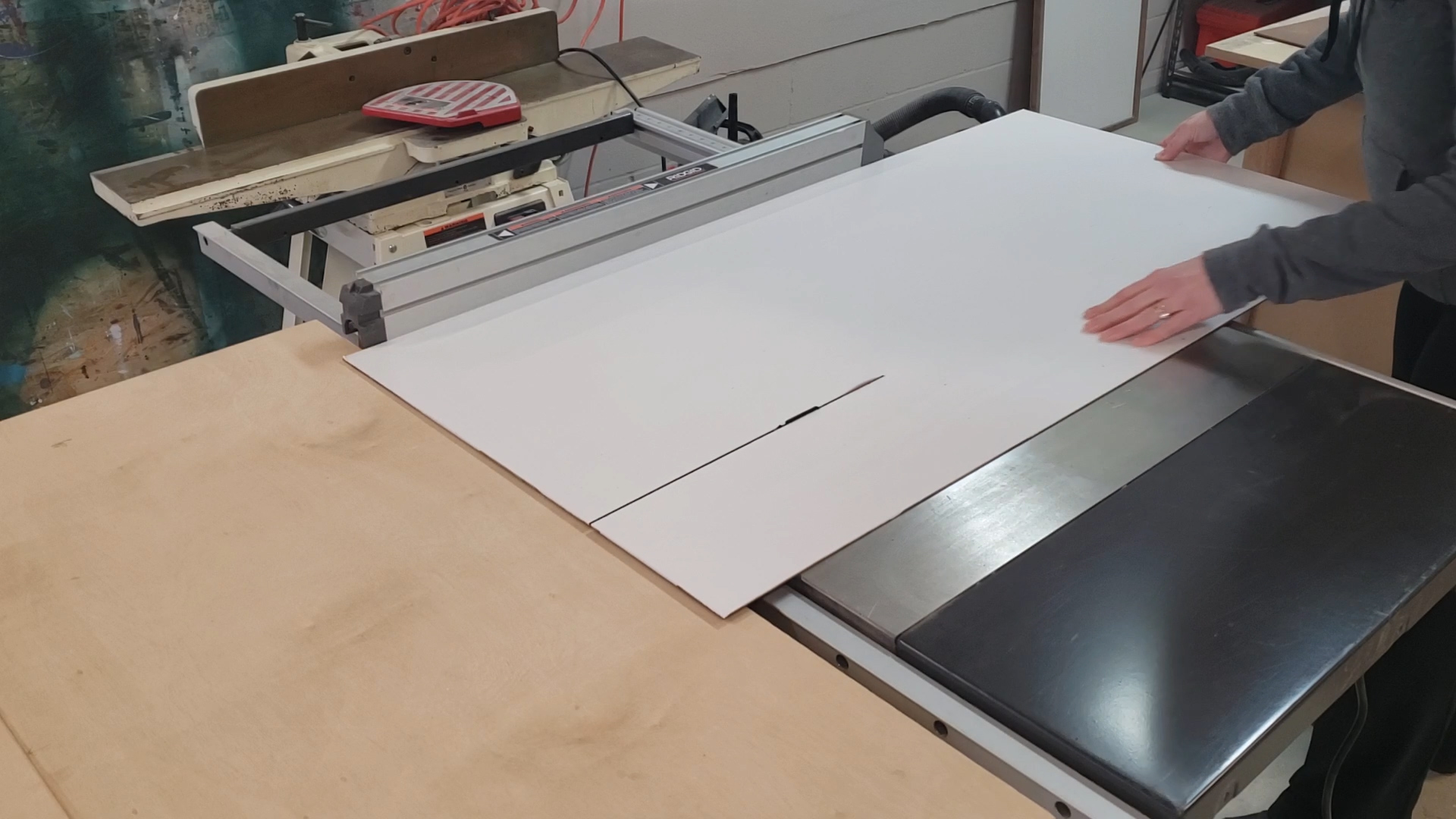
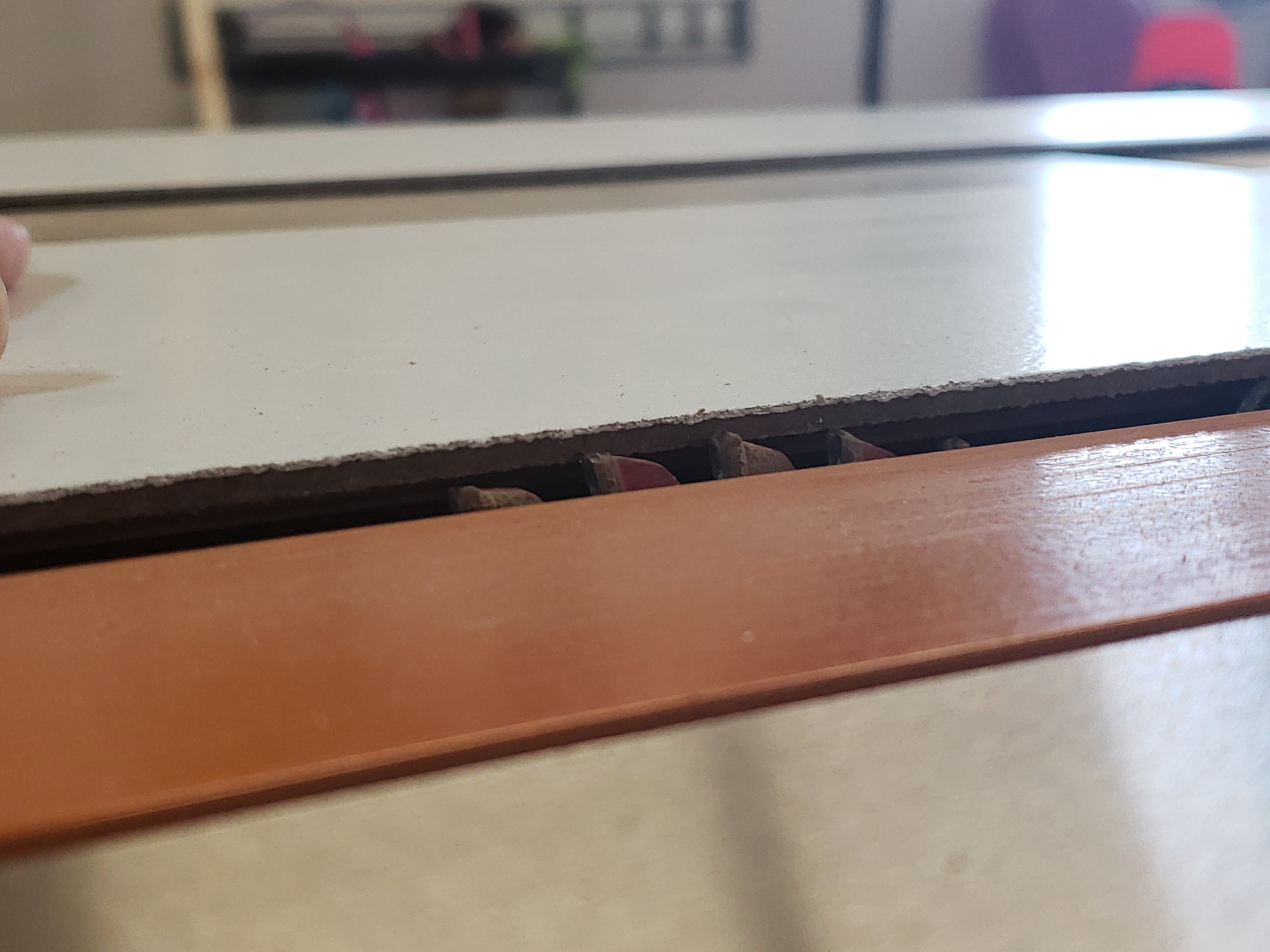
To add the faux shiplap lines, raise the saw blade just under half of the thickness of the backer board, about a 1/16”. You can eyeball this by laying the backer board next to the blade (for safety, unplug your saw during blade adjustments). Raise the blade to the desired height.

Next, set the fence to 3 ¾” and run the backer board over the blade to cut a line partially through the board.

Move the fence to 7 ½” and repeat

Move the fence 11 ¼” and repeat one last time.

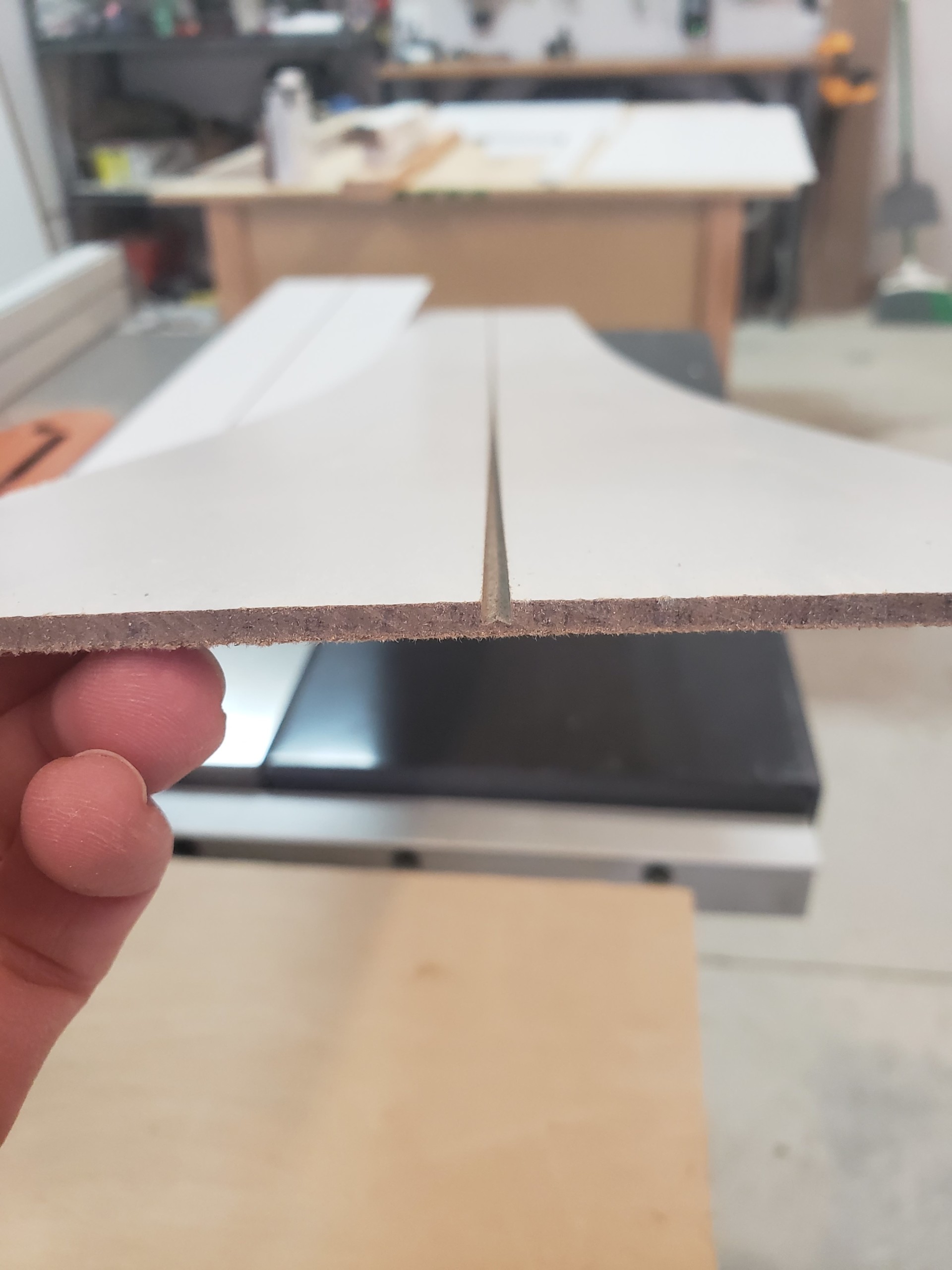
Now you have 3 shallow horizontal cuts that mimic the look of shiplap. Super cute!

DIY Sign with Faux Shiplap detail

Adding the quote to the backer board

First, you will need to choose a quote.  I chose the quote “Love Never Fails” and it will be printed on plain printer paper. I use Microsoft Word to create the template.

Note: I chose not to use my Silhouette for this because this is a large sign and I wanted to keep the printed paper as a template for future use. Plus, I didn’t want to waste vinyl!

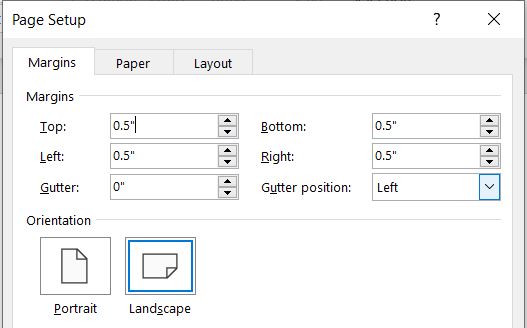
In a word document set the orientation to “Landscape” and the Margins to “Narrow”

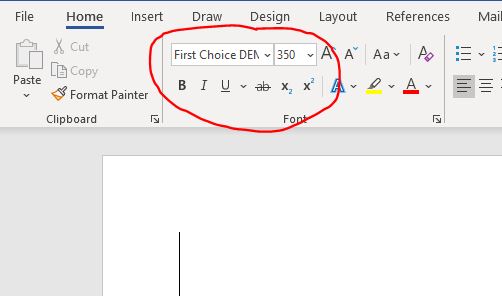
Type the quote of your choosing. Choose the font you want to use. There are a lot of free fonts available. I typically get mine from www. fontspace.com.  The specific font for this sign is First Choice and it can be downloaded for free here.

Highlight the entire quote and start increasing the type size until you have the size you want. The size of this lettering is 350 pt.

Keep in mind standard paper is 11 ½” wide x 8” tall (landscape orientation) which should give you a rough guess as to how it will appear on your backer board.

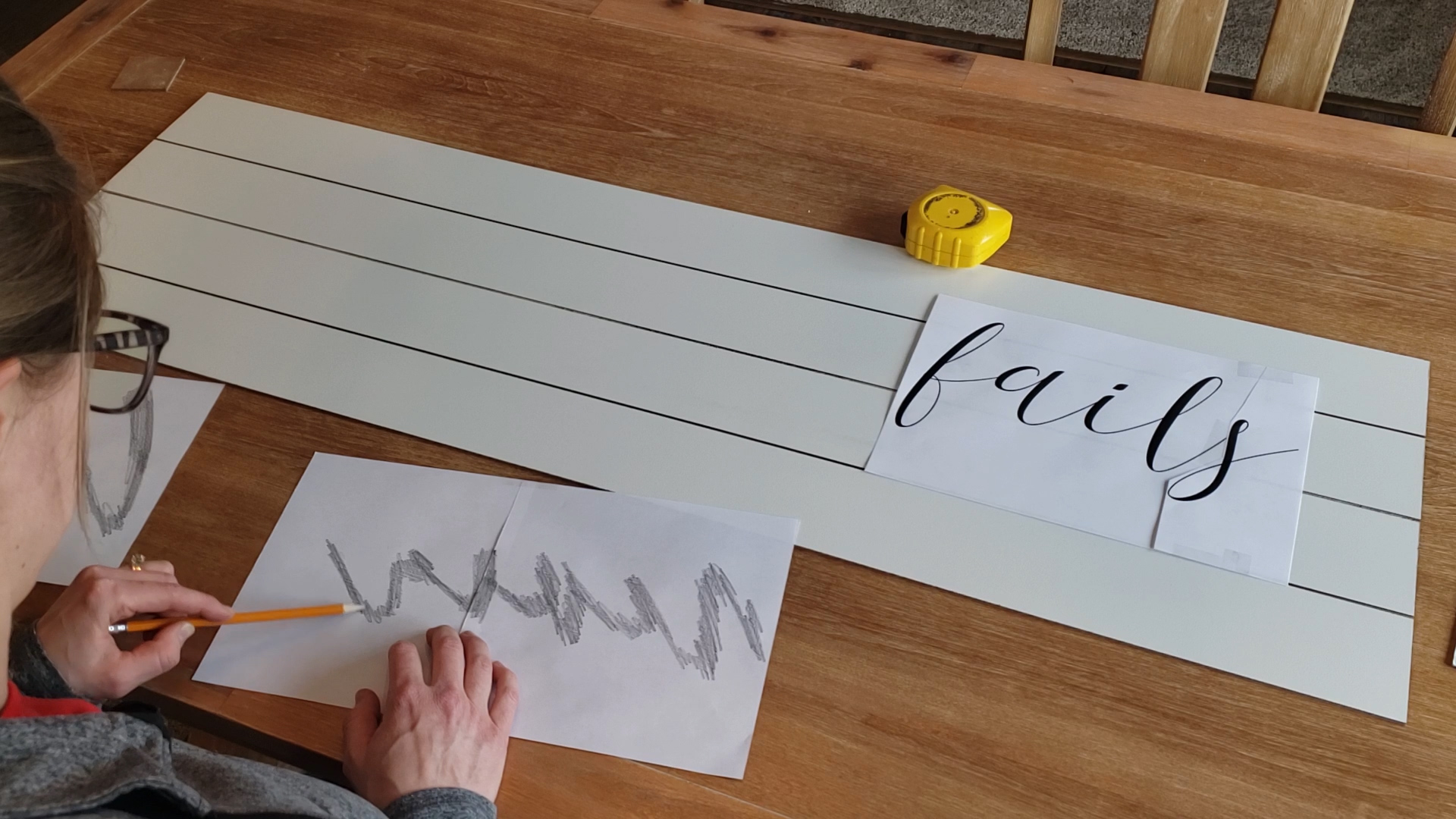
An entire word will not fit on one page for a picture of this size. You will need to piece them together later.

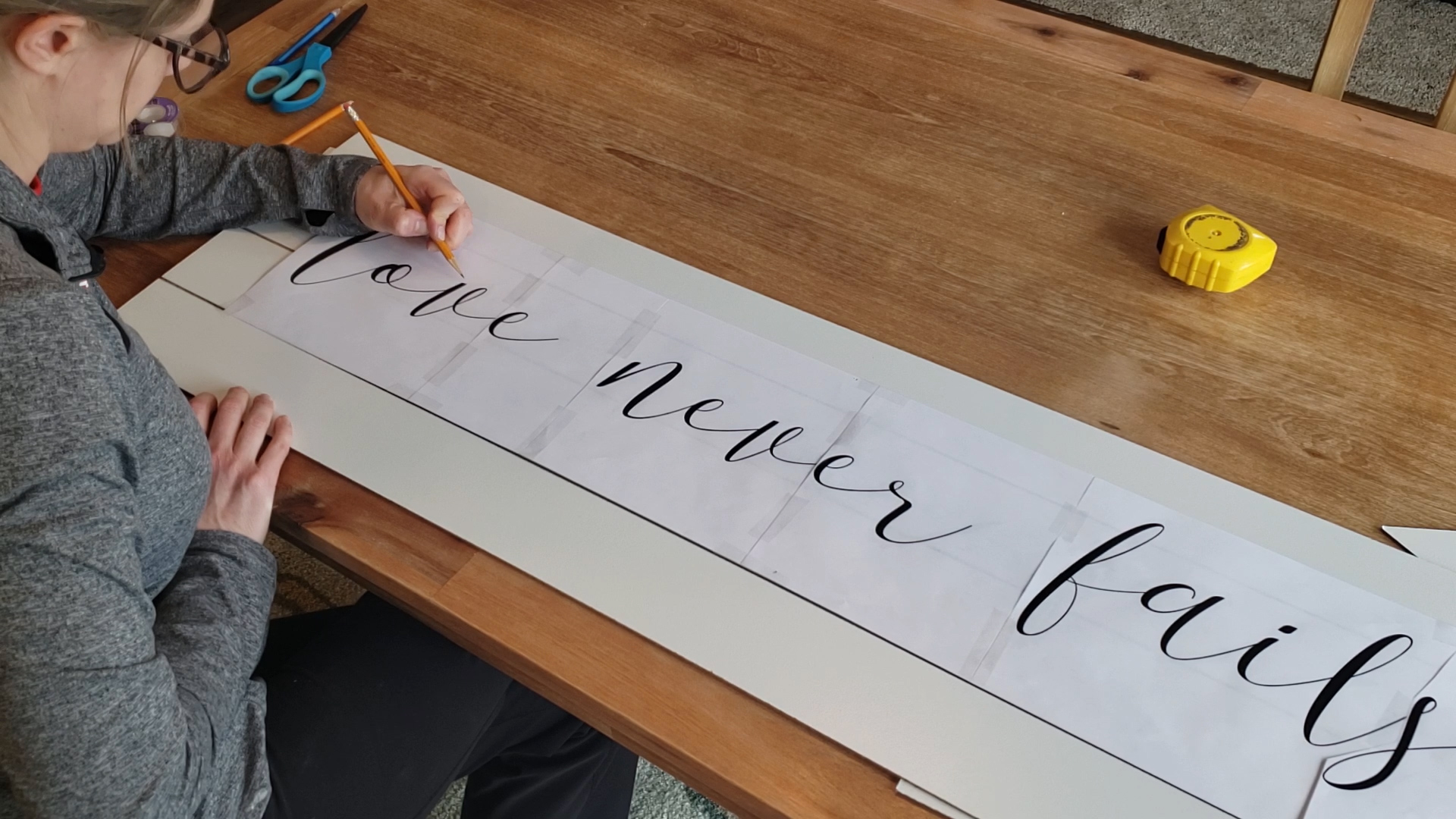
Print out your quote and tape each word together

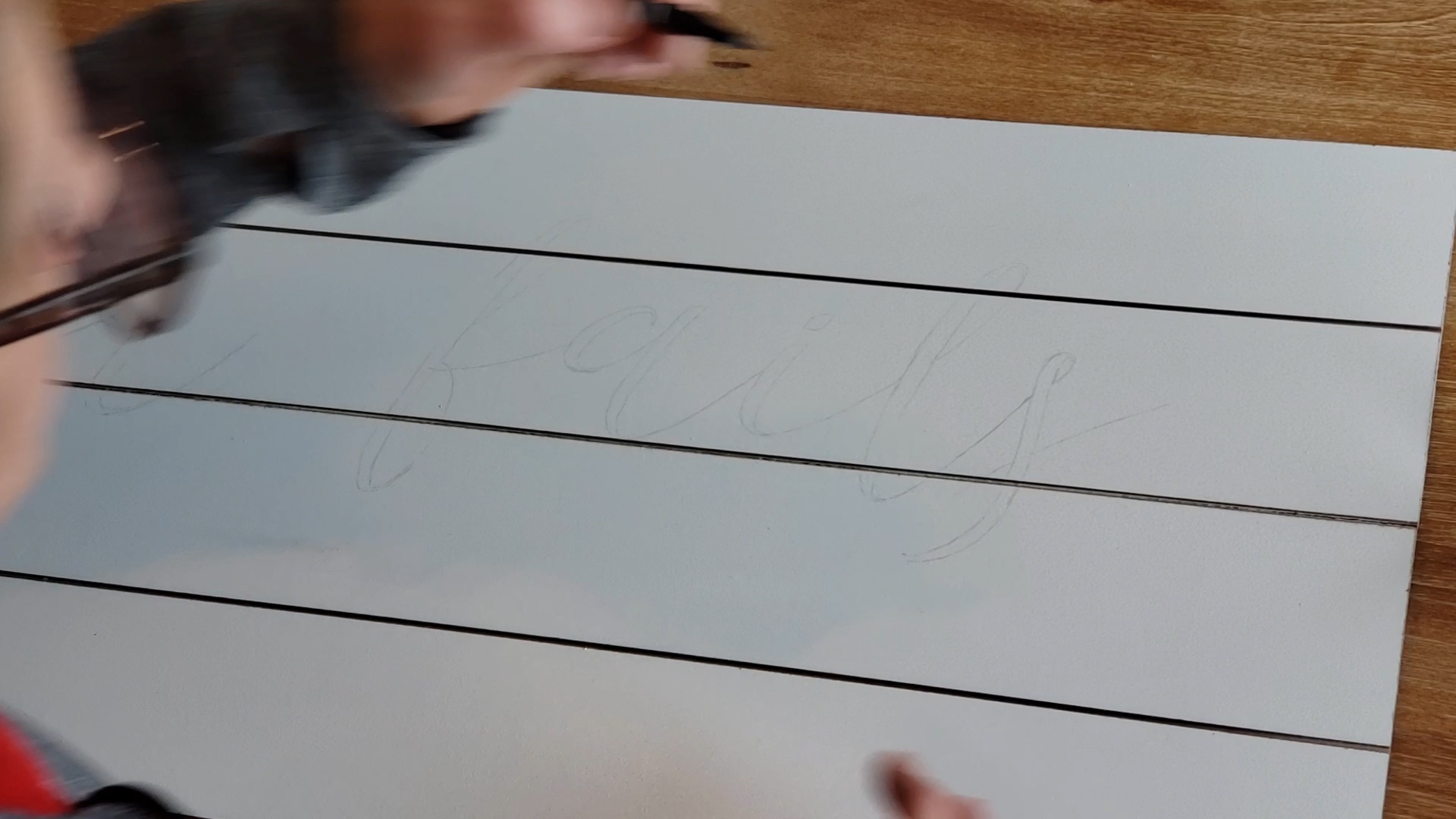
Using a lead pencil scribble over the back of the letters. Are you seeing where this is going? You probably remember this transfer trick from 2nd grade.

Once the back of the letters are covered with pencil, flip the paper back over and tape it in place to the backer board.

With a sharp pencil follow the outline of the letters until the entire quote is outlined. This will transfer your quote onto the backer board. It will be faint, but you should be able to see it without a problem. If it’s too faint, you haven’t pressed hard enough while outlining.

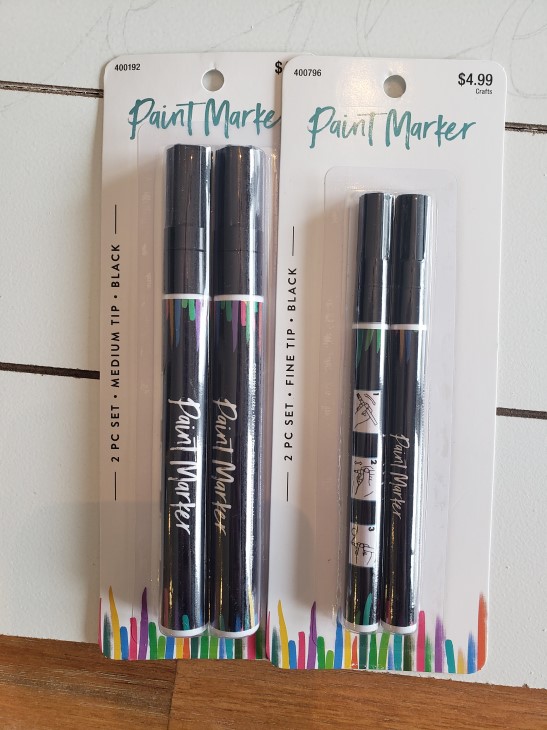
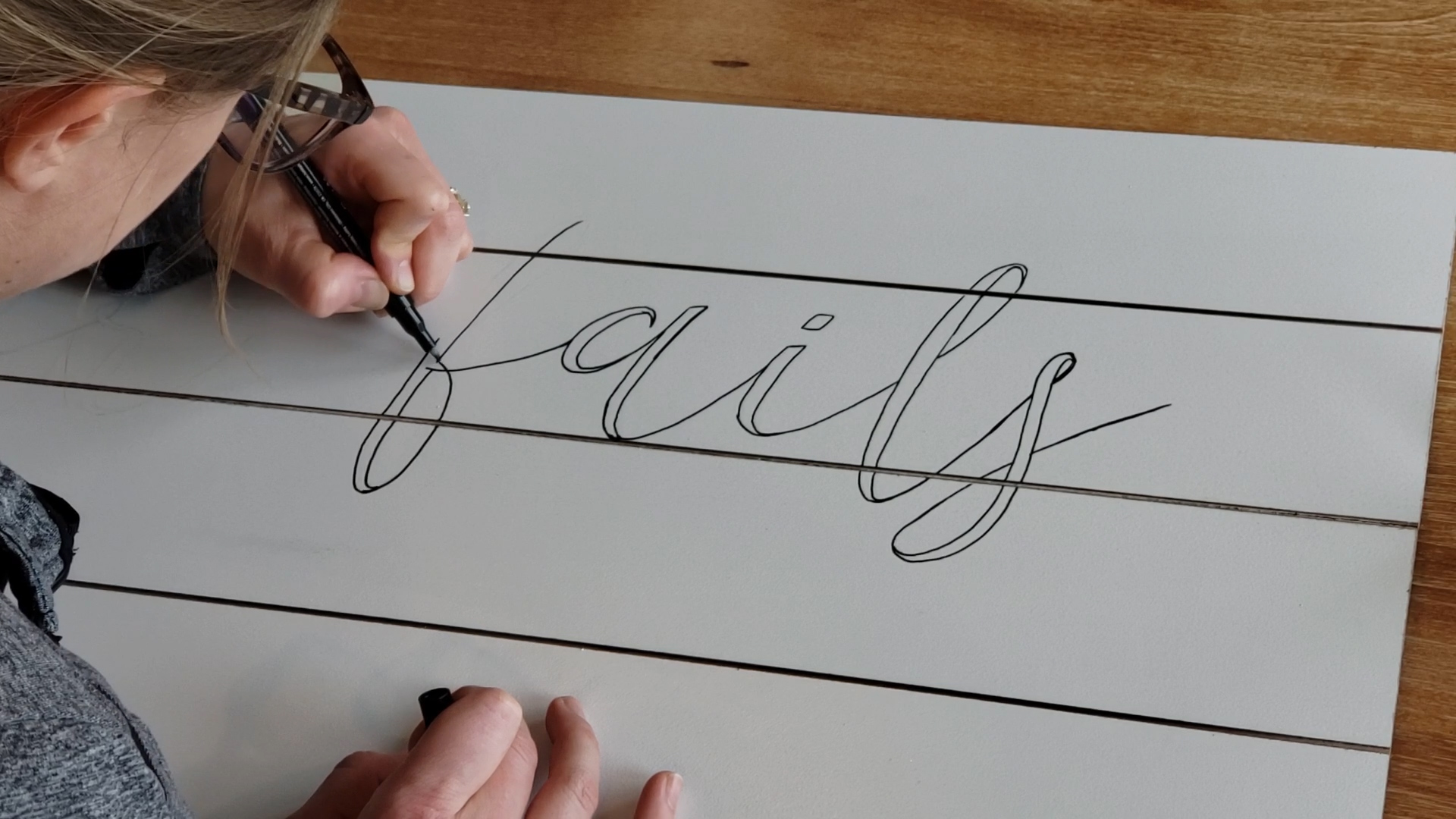
Using the fine tip paint marker trace the outline of the letters.

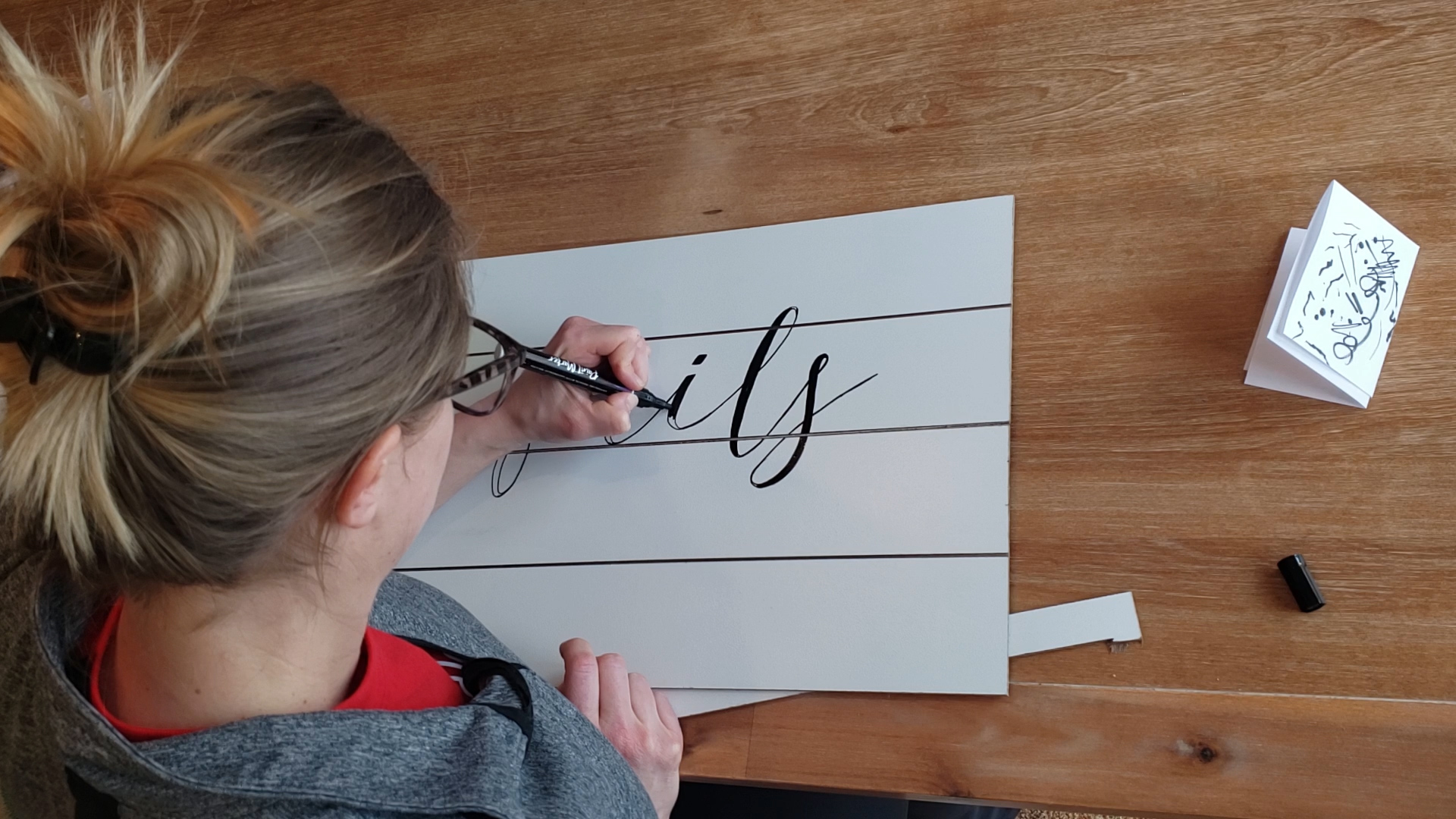
Using the medium tip paint marker fill in the outlined letters. Yes!! You’ve just painted a quote!

Assembling the Sign

Slip the backer board into the cut grooves in the frame boards.

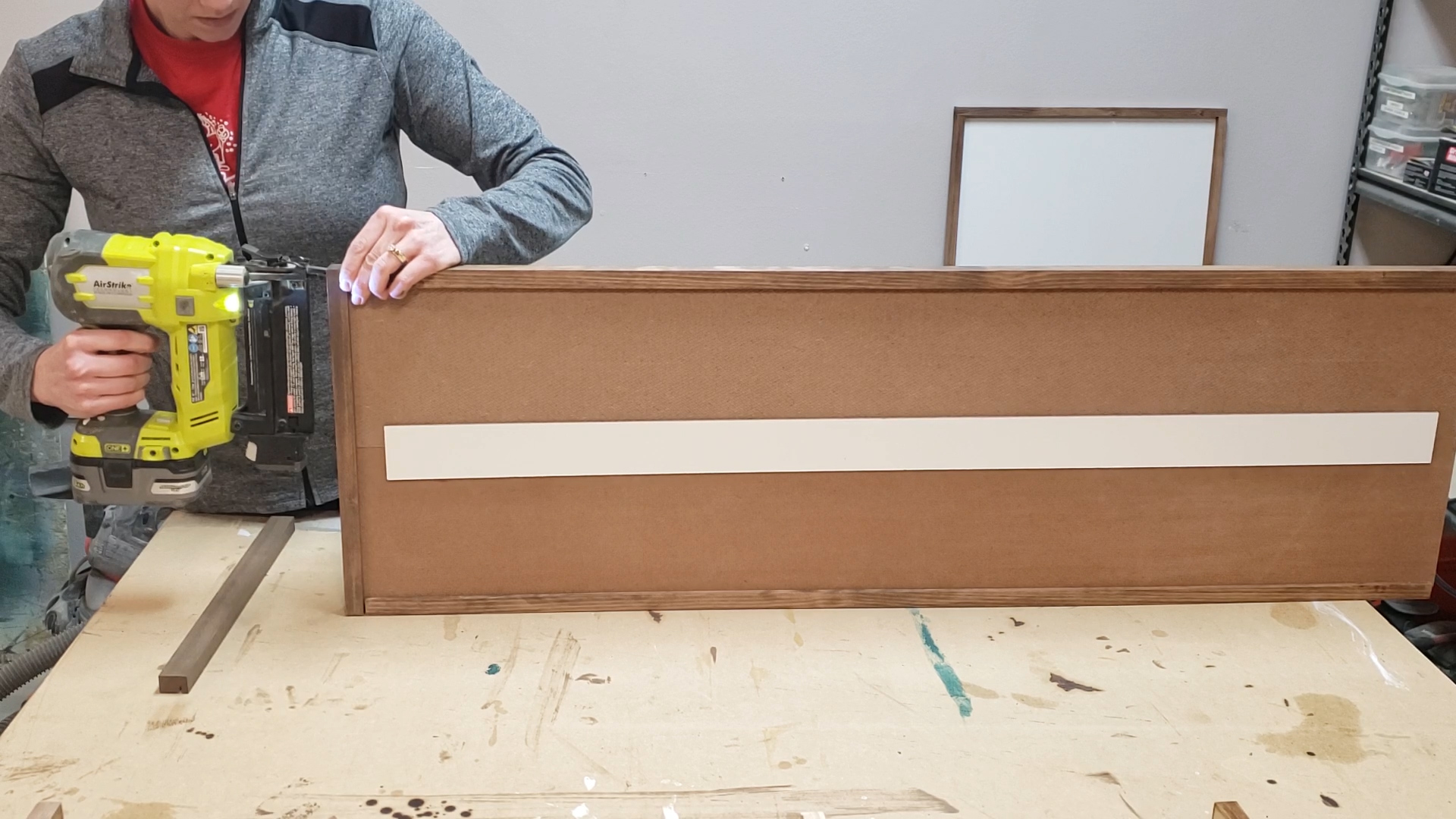
Using 1 ¼” brad nails, nail the frame in place in each corner with two nails.

In the top corners of the back of the frame add the Saw-tooth hooks for hanging the sign.

That’s all there is to it!! I highly recommend watching this video where I’ll show you all the steps to make this DIY quote sign with faux shiplap detail:

Now you have a completely personalized quote sign you’ve made yourself!! Bask in the sense of accomplishment! Show off your sign to all your friends. But be prepared for the request from your friends to make more signs for them.

Find more projects and inspiration In Her Garage and follow my DIY journey on Instagram and Facebook.

Hi! I’m Kristen, from In Her Garage, and I am a self-taught woodworker and DIY fanatic from Minnesota where I live with my husband and our two daughters. Between being a wife, mom and, registered nurse, I try to make as much time for DIY as possible. My love for building came after our family built our current home in 2015. After we moved in, we needed furniture and instead of spending massive amounts of money to order the pieces we wanted I decided that I would build them myself. I started with a buffet table plan from the fabulous Ana-white and quickly set out to remodel my entire home office.

Since then I have started a side business building furniture for the people in my community. I love hearing my clients talk about the pieces they wish they had whether it be a rustic buffet table, a one drawer side table, or a toy box and then making it a reality for them. While starting my small business it made perfect sense that I would document my building journey so I simultaneously launched the In Her Garage blog and I love sharing my plans, tips and tricks.

Making something beautiful with your own two hands through a little preparation and determination is an amazing feeling and I hope to bring inspiration and know-how to those looking to tackle a big or small project.
I am so glad that you found me here and please feel free to connect with me on PinterestInstagram, and Facebook to see what I am working on right now.