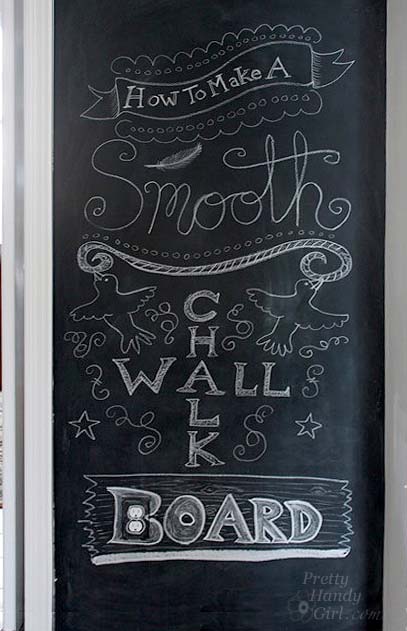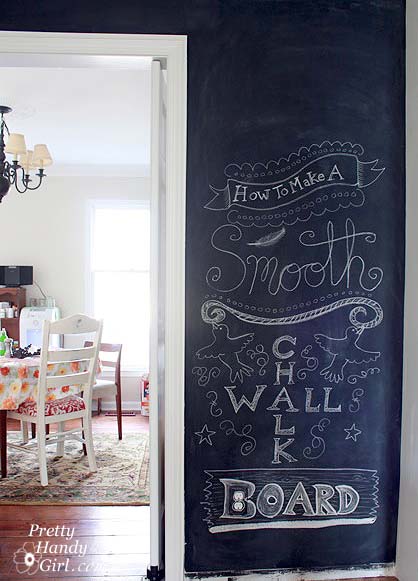
Have you ever wished you had a chalkboard wall in your home? But, those bumpy textured walls or damaged drywall are not smooth enough? Well, today I’m about to rock your world by showing you How to Make a SMOOTH Chalkboard Wall For Imperfect Walls!

SMOOTH Chalkboard WallHow to Make a SMOOTH Chalkboard Wall {For Imperfect Walls}

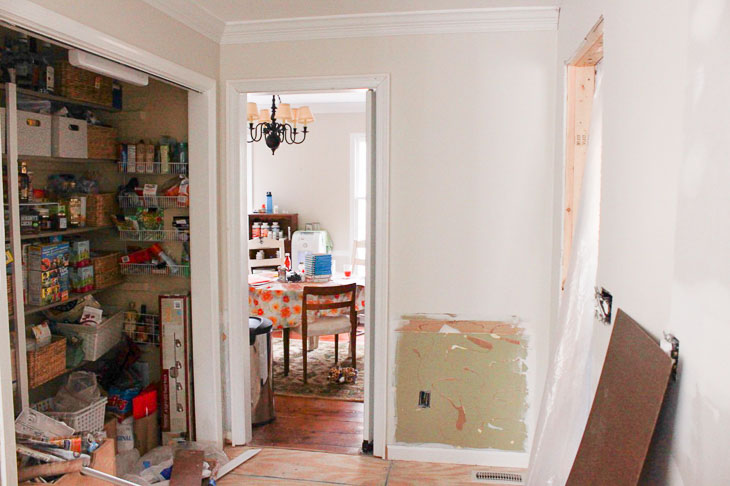
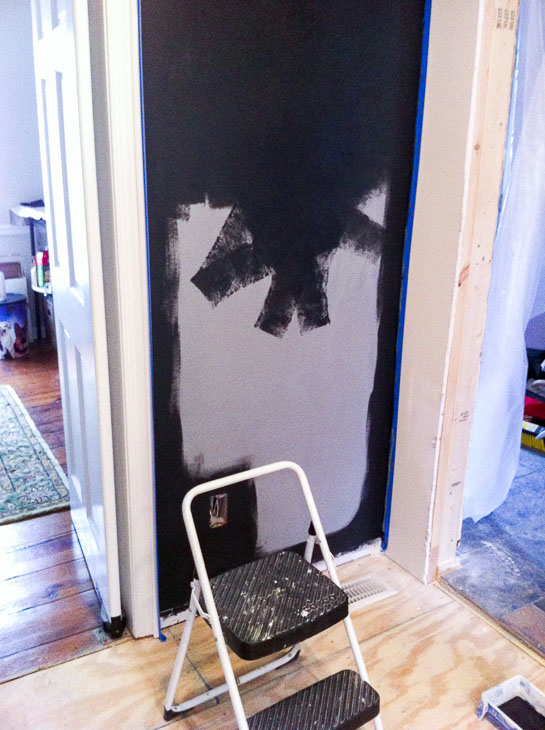
I feel your pain! We have a little wall between the kitchen and the dining room that was the perfect spot for a chalkboard wall. But the drywall was ripped from the removal of the beadboard. Sure, I could have ripped out the drywall and added new, but honestly I was beyond drywall in our kitchen renovation process and I didn’t want to back track.

I’m cringing at the photo below because the pantry looked like that long after we finished the kitchen. Luckily, I finished the pantry last year. You would not recognize it as the same space!

SMOOTH Chalkboard Wall

But enough about the kitchen renovation. I came up with a new solution for making the wall smooth enough for a chalkboard! You could also use this technique if you wanted to remove the chalkboard in the future if you live in a rental and aren’t allowed to paint walls.

Ready? Alright, let’s get this chalkboard party started now!

SMOOTH Chalkboard Wall Materials:

(I’ve included affiliate links for your convenience. I earn a small percentage from a purchase using these links. There is no additional cost to you. You can read more about affiliate links here.)

Optional (if you have an outlet or switch to work around):

SMOOTH Chalkboard Wall Instructions:

Cut Your Pieces:

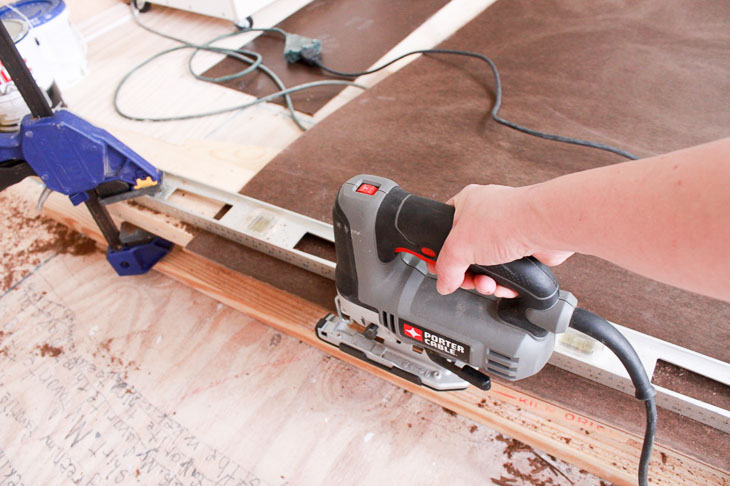
Cut your masonite to size. (Or bring your measurements and ask the store to cut it to size for you.)

SMOOTH Chalkboard Wall

Use a jigsaw, circular saw, table saw, or other power saw to cut each panel. Dry fit the panels on the wall and make any adjustments as necessary.

SMOOTH Chalkboard Wall

Plan your sections:

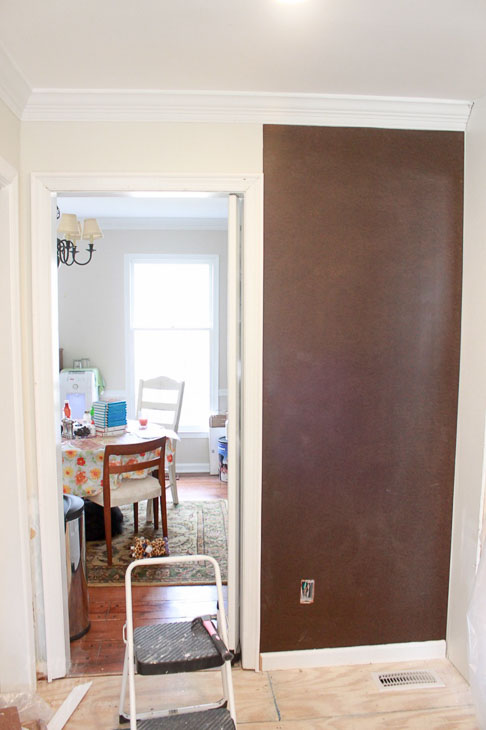
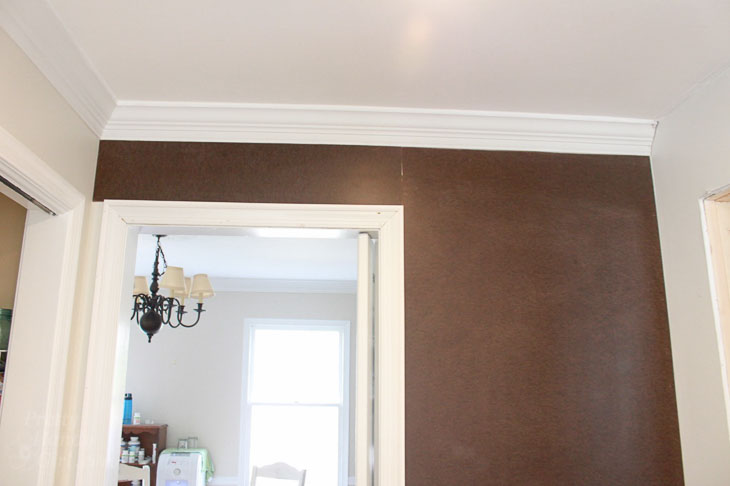
Use one large sheet to cover as much wall as possible. The fewer the seams the better.  Plan to hang a small piece for over any doors. (Note: The skinny little section on the left side of the door was left blank, no one has noticed after it was painted black.)

SMOOTH Chalkboard Wall

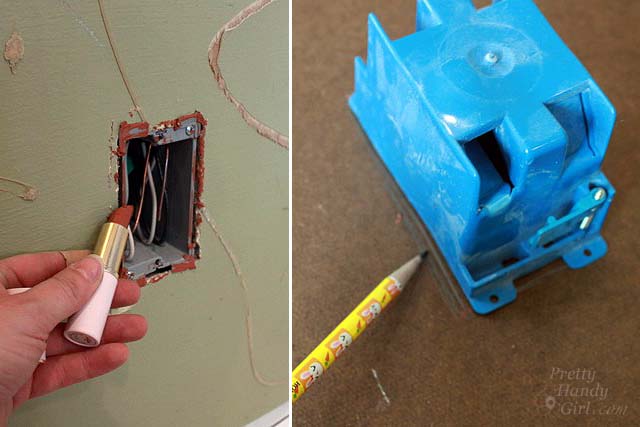
If you have an outlet or light switch, you need to cut a hole in the masonite to accommodate them.  To cut the hole, smear lipstick around the edges of the box (or you can smear it on an outlet as shown in this post.) Hold the masonite panel in place and push against the outlet box. When removed you should  see the lipstick impressions. (I used an extra outlet box to trace around for lines that were easier to see.)

marking_outlet_location_lipstick

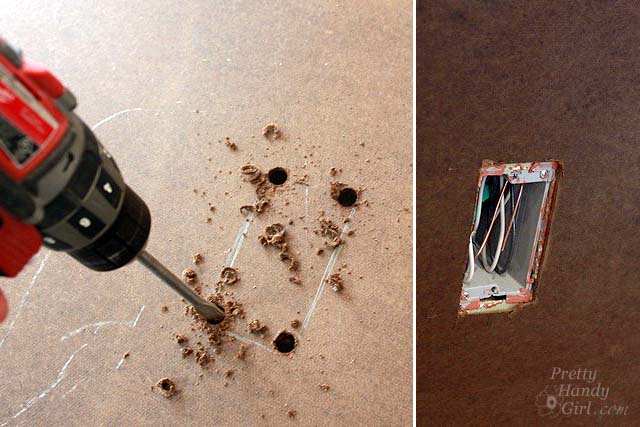
Drill holes in the corner of the outlined shape. Use a jigsaw to cut from hole to hole. Test fit your panel.

drill_holes_for_outlet

Install Panels:

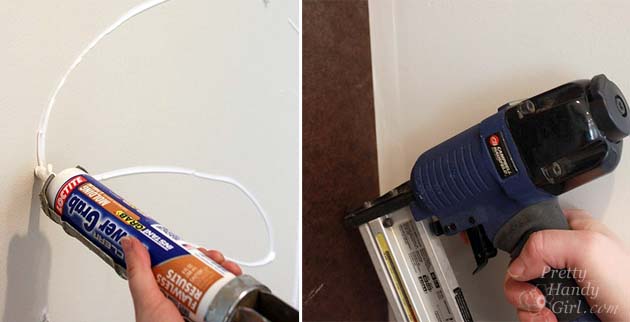
Time to hang the masonite panels. For a permanent hold, use construction glue and then secure with finish nails. If you want to be able to remove the panels later, skip the adhesive and use only finish nails.

glue_and_nail_board

Fill nail holes and seams with wood putty. Lightly sand smooth after the putty has dried.

SMOOTH Chalkboard Wall

Prime and Paint:

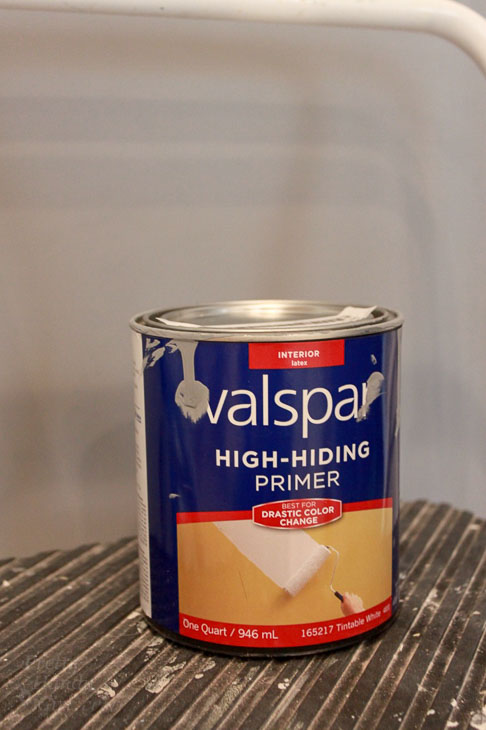
Using a foam roller, prime the chalkboard with tinted primer (ask your paint department to add as much black as they can to a small can of primer. This will reduce the number of coats of chalkboard paint needed.) My Lowe’s store was able to produce a 50% gray color.

SMOOTH Chalkboard Wall

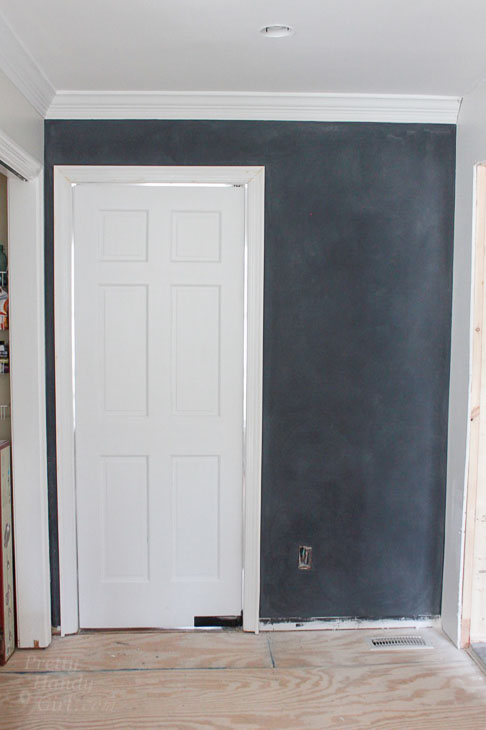
After the primer dries, lightly sand, and wipe clean. It’s important to sand between coats because this will give you the smoothest results and it gives a little tooth for the next layer to adhere to. You’ll need at least two coats of chalkboard paint.

SMOOTH Chalkboard Wall

Seasoning the Chalkboard:

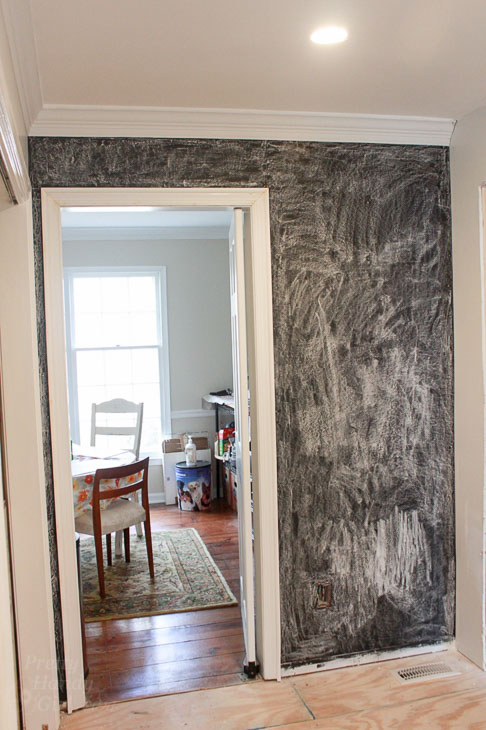
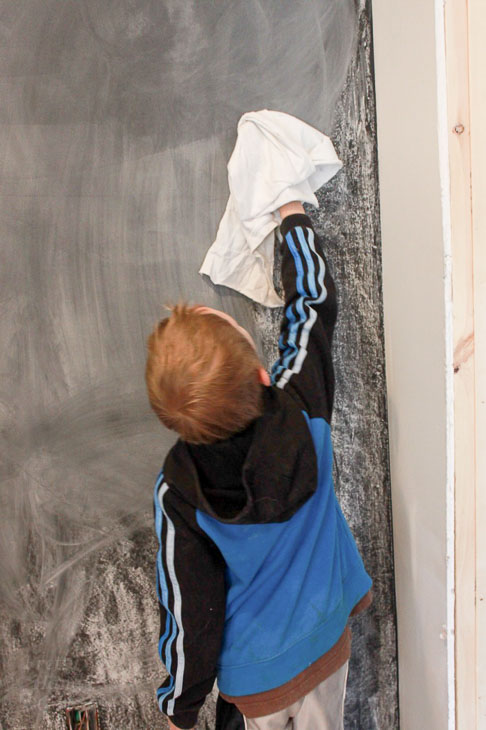
After the paint has dried thoroughly, enlist the help of your son or daughter to help season the chalkboard (rub chalk on its side over the entire surface.)

SMOOTH Chalkboard Wall

Then wipe off the chalk using a completely dry rag.

SMOOTH Chalkboard Wall

There is beauty in the gray movement on a chalkboard wall, wouldn’t you agree?

SMOOTH Chalkboard Wall

Don’t forget to add  your outlet covers. You can paint them with chalkboard paint to match the wall.  (Important: Do not paint the actual outlet, this violates electrical codes.)

chalkboard_open_dining_rm

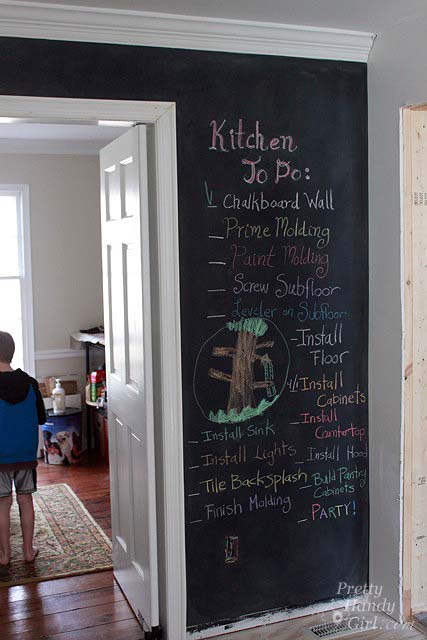
Christen your chalkboard with drawings or your to do list.

kitchen_to_do_list

Within two hours I had to erase the list because I was feeling a little stressed by all the things I needed to complete in our kitchen renovation.

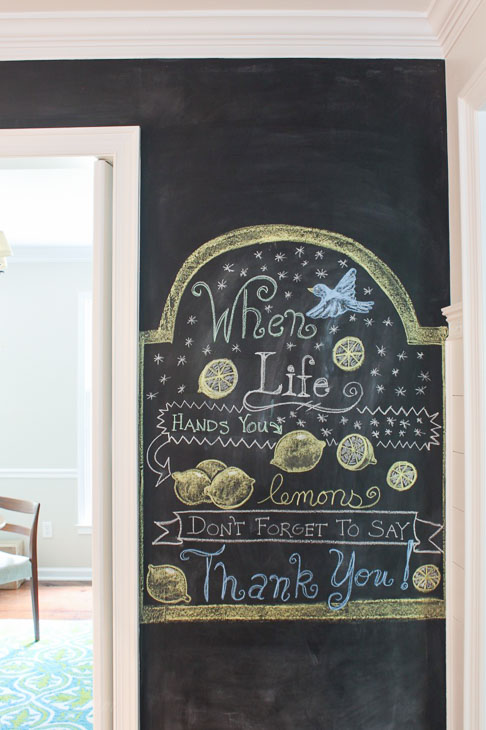
This fun quote was a lot less stressful!

SMOOTH Chalkboard Wall

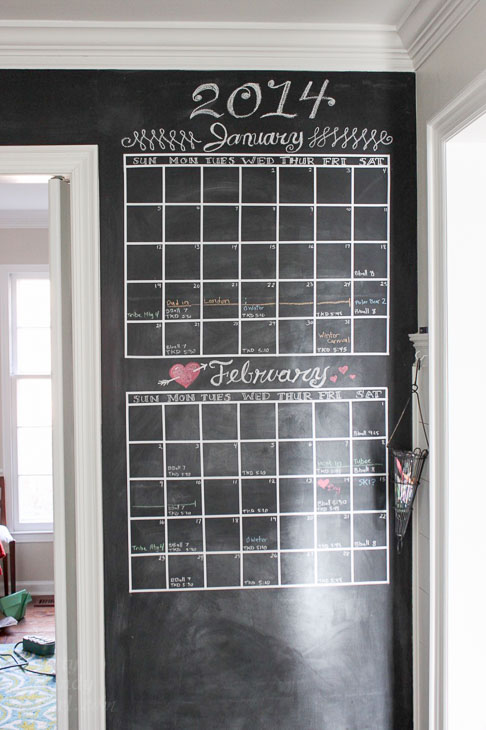
We added a chalkboard calendar a few years ago and this has been the best way for our family to stay organized (also the kids love seeing what’s coming up each week.)

2014 chalkboard calendar wall

What would you use a chalkboard wall for? I’d love to hear your ideas.

PHGFancySign

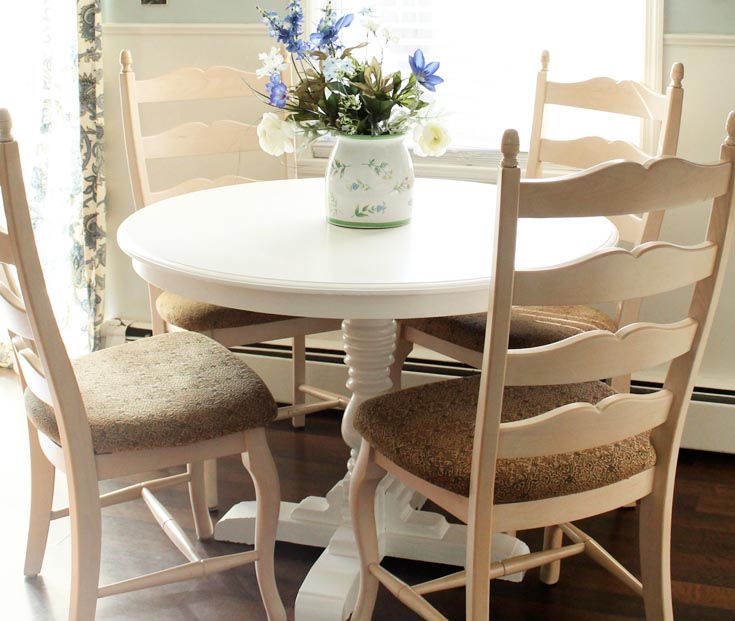
Painted laminate table

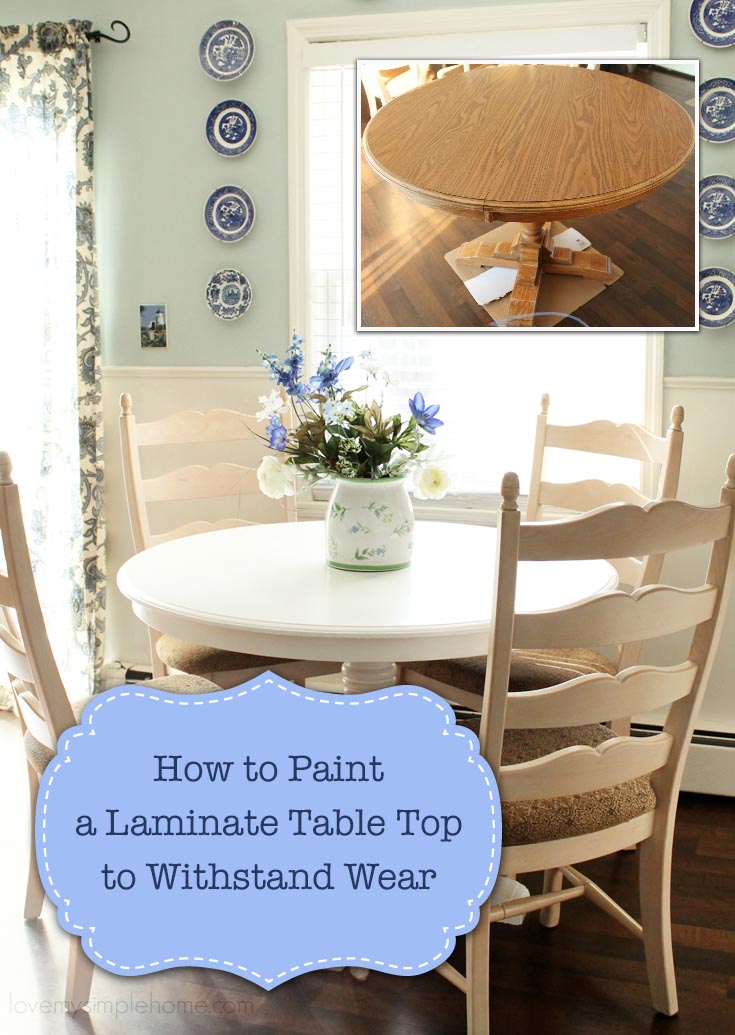
How to Paint Laminate Table Top to Withstand WearHow to Paint a Laminate Table Top
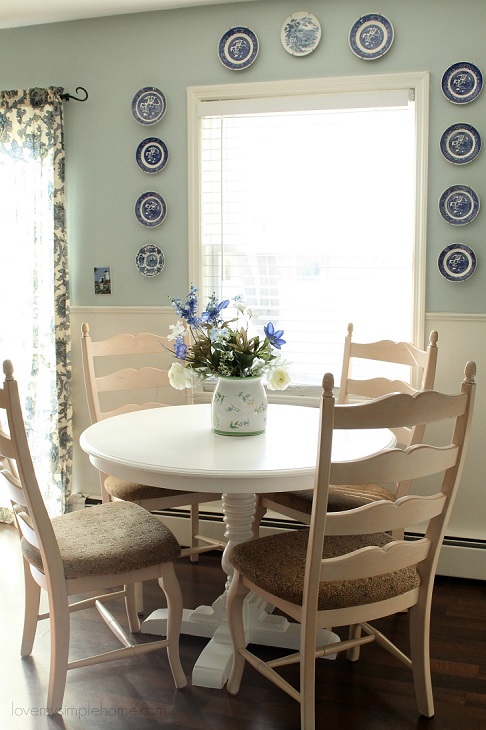
Do you have a laminate top dining table that you want to paint, but are not sure how to paint it so it will withstand the wear and abuse a table usually receives? I can help by showing you how I painted my table. It was easy to do but takes some patience.

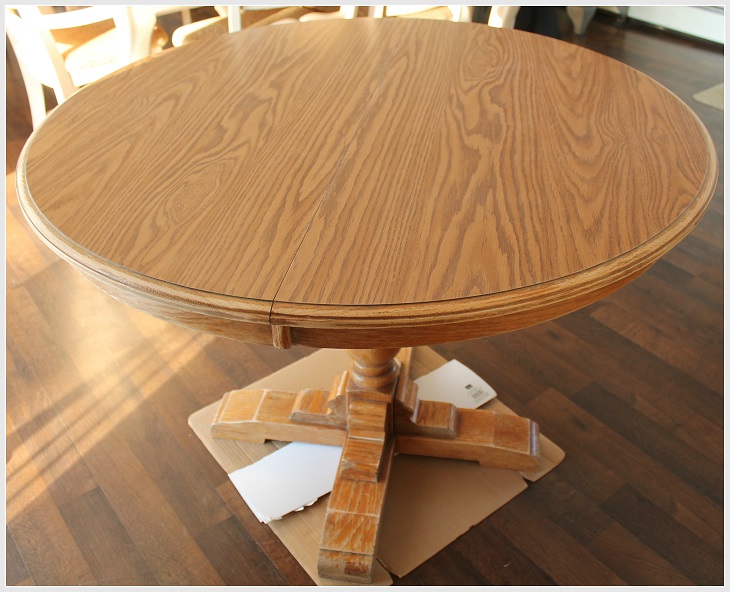
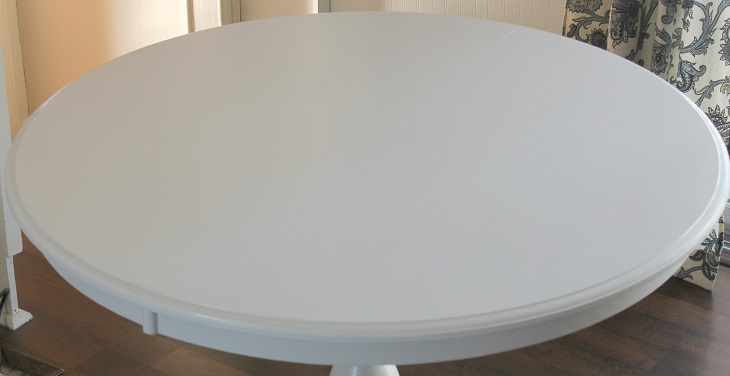
Hello awesome readers, I am Julie from Love My Simple Home, and I’m so excited about today’s post!  Over the summer I purchased this laminate dining table at a yard sale to use in my dining room.  After storing the table for several months,  I finally decided to pull it out of storage and give it a beautiful new finish with bright white paint.Laminate Table Top

Laminate Table Top Material List:

Palm Sander

Paint with Primer

Foam Roller

Paint Pan

Synthetic Paint Brush

Polycrylic Clear Satin

Paint a Laminate Table Top Step 1: Clean

The very first thing you need to do is wash the table off.  Use a soapy sponge with water to clean all the dirt, oil, or grime off the table top and base.  Use a clean dry towel to dry it completely.

Paint a Laminate Table Top Step 2: Sand

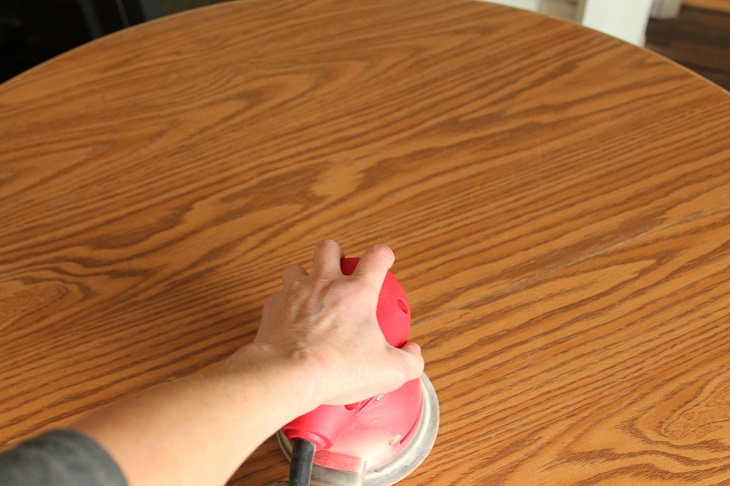
The purpose of sanding is to give the paint/primer something to grab onto.  Use a palm sander with 220 grit sandpaper and sand the top in the direction of the grain. You don’t need to sand too much, just enough to add some “tooth” for the paint to stick to. After sanding, clean the surface again with a soft clean cloth.  If the base of your table is in poor condition, go ahead and sand it too. (You might find it easier to hand sand the base of the table.)

Laminate Table Top


Paint a Laminate Table Top Step 3: Paint

A table that will be used daily needs a paint that is durable and can withstand spills.  I recommend BEHR Premium Plus Ultra in an Eggshell enamel finish. (You don’t need an entire gallon, one quart is plenty.) This paint is stain-blocking and is paint & primer in one.  For a super bright white, use Ultra Pure White.

Laminate Table Top


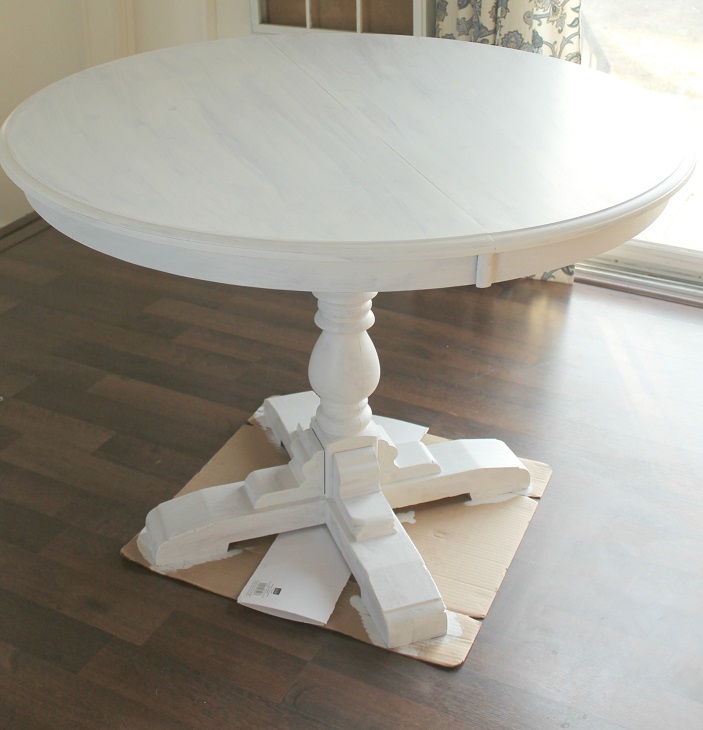
Apply 4 thin coats of paint with a foam roller.  Wait 2 hours between coats.  Don’t let the first few coats discourage you. They will show the laminate underneath. Be patient, the end result will be a beautiful smooth finish.

This is what the table looks like after one coat:

Laminate Table Top

Here is the same table after 4 coats:

Laminate Table Top

If you are painting your base, use a paintbrush to paint the legs and other parts of the table that are not easily accessible with the roller.

Paint a Laminate Table Top Step 4: Seal

The final step to keep your table beautiful and help it stand up to wear is to seal it!  Use at least 3 coats of Minwax Polycrylic clear satin to seal the top of the table.  Using a synthetic paintbrush apply one thin coat and let it dry overnight (patience).  Then lightly hand sand with a 320 grit sandpaper.  Clean off the surface and add another coat, wait 2 hours and apply the final coat (or more coats if desired).

Laminate Table Top


Allow the sealer to harden for at least 48 hours. Then start eating at your beautiful new table.

Laminate Table Top

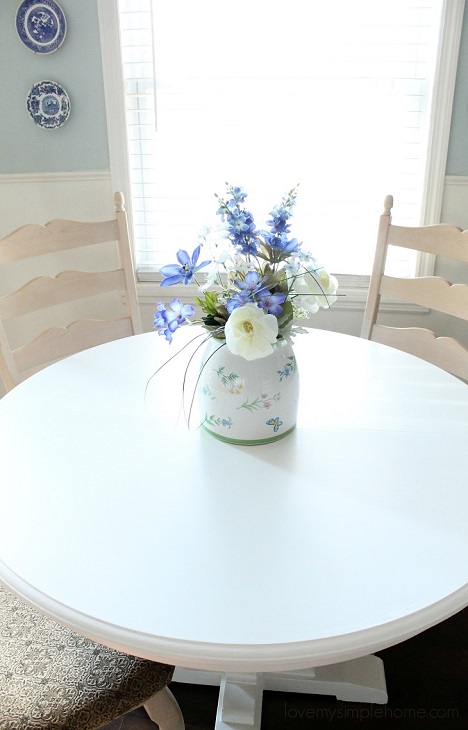
Would you believe this table was an ugly laminate tabletop if you had not seen the before pictures?

Laminate Table Top

That’s it, I hope this tutorial was helpful!

Laminate Table Top

If you liked this post, I think you’ll also love these posts because they will help you transform more furniture in your house!

Laminate Table Top

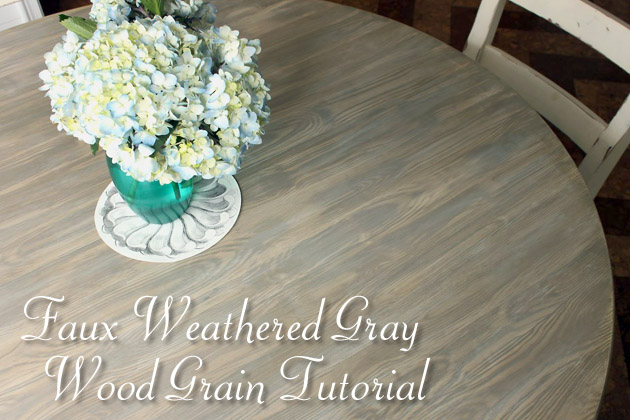
Faux Weathered Gray Wood Grain Table Top Tutorial


Facelift for a Knotty Pine Dresser | Pretty Handy Girl

How to Paint a Knotty Pine Dresser


How to Re-Paint Dated DecorWant to know How to Repaint Dated Decor?
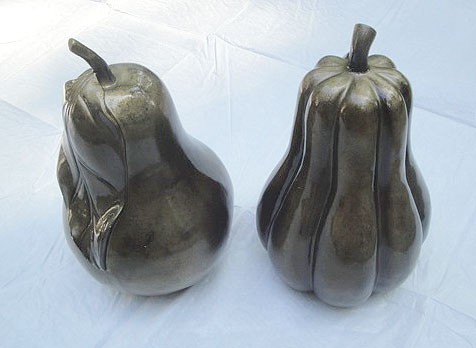
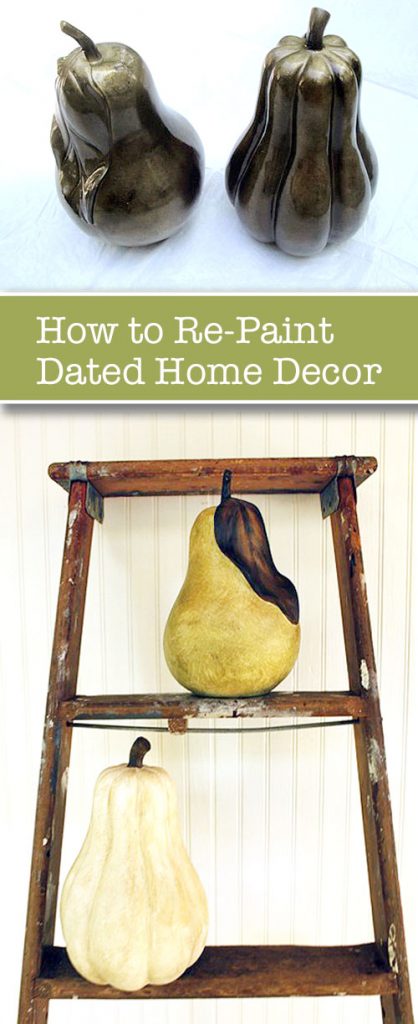
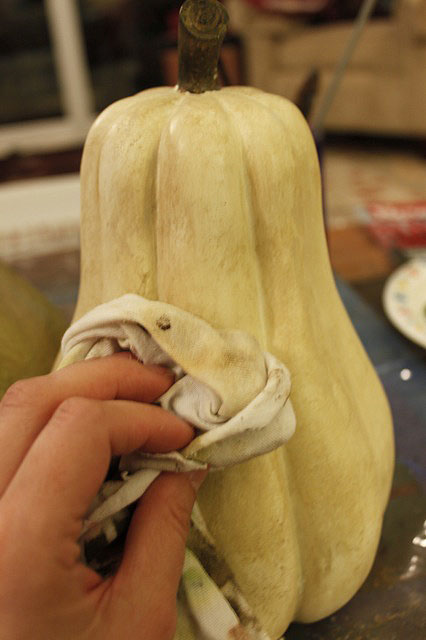
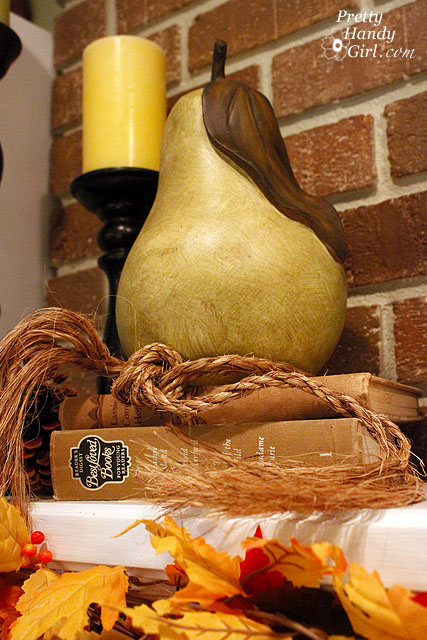
Raise your hand if you are a thrift shopper? No, what about yard sales? Have you ever seen any ugly ceramic decor items that shouldn’t have survived the 70’s or 80’s? Nodding your head YES? I thought so. Today I’m going to show you How to Repaint Decor. Those dated monstrosities can look like something you bought from Ballard Design or Pottery Barn! Don’t believe me, well check out this groovy pair (emphasis on pear. LOL.)
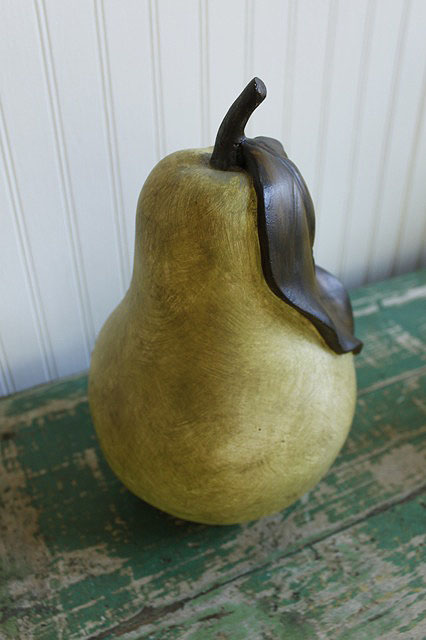
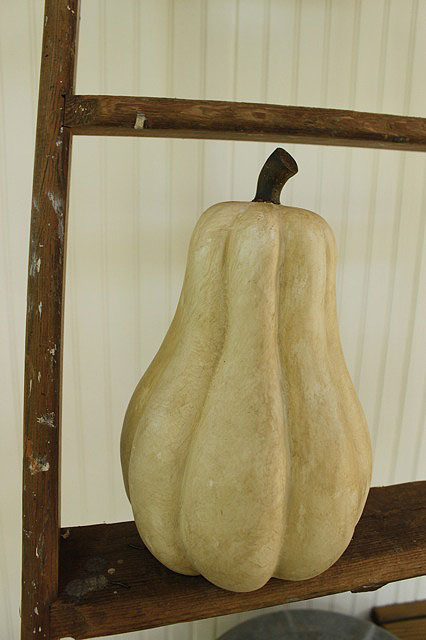
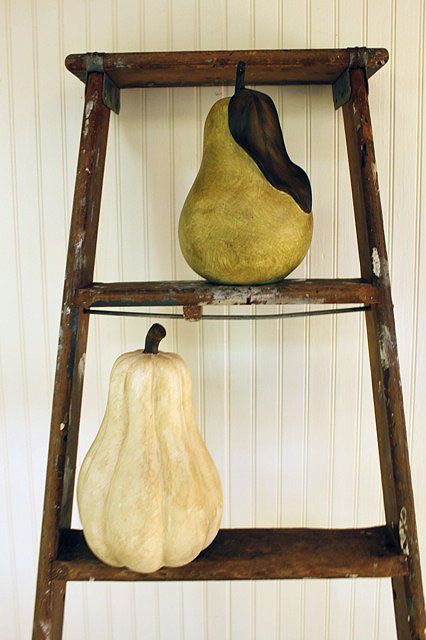
Would you believe this is the same fruit duo?

Yup! I scored them both for $5.

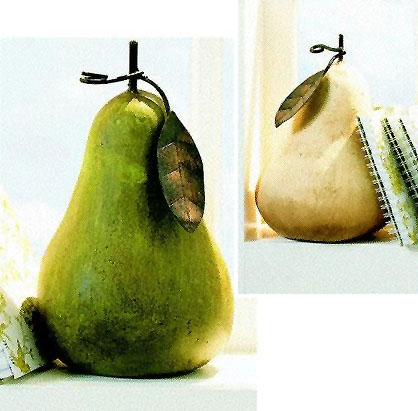
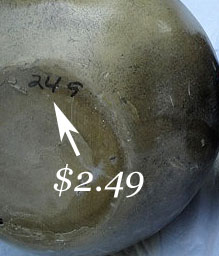
Now, have you seen these deliciously rustic pears from Ballard Designs? Yes? Did you happen to catch the price tags? $49 each!

Umm, no thank you, I’ll stick with my $2.50 fruit—Thank you very much. Let me show you how you can paint any ceramic, pottery, or china decor item to give it a new updated look. You’ll need a few things first.

Materials:

(I’ve included affiliate links for your convenience. I earn a small percentage from a purchase using these links. There is no additional cost to you. You can read more about affiliate links here.)

Optional: Rustoleum Comfort Spray Paint Handle (saves your fingers from cramping!)

Instructions:

Clean your decor item with soap and water. Dry thoroughly.

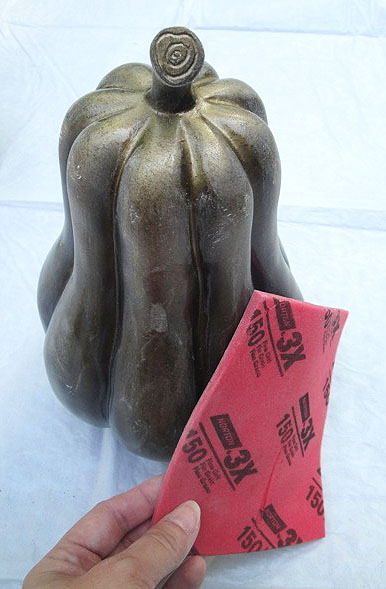
Lightly sand the surface to give a little roughness.


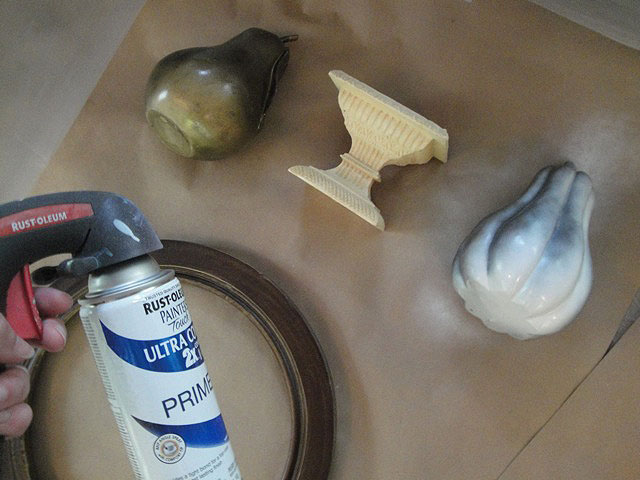
Lay your decor item(s) on paper and spray with several thin coats of spray primer. Allow the primer to dry.


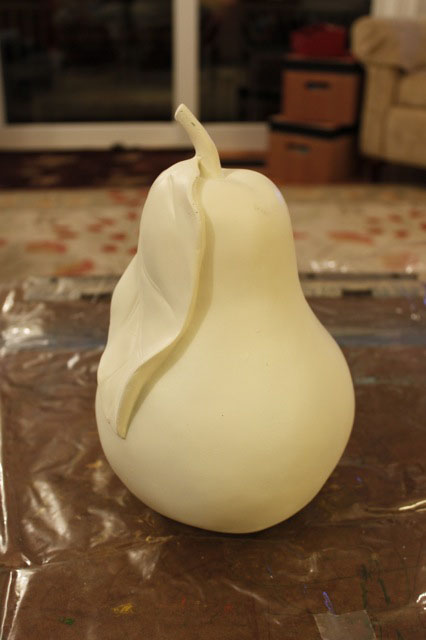
Spray several light coats of Rustoleum’s Heirloom White spray paint. Allow to dry.


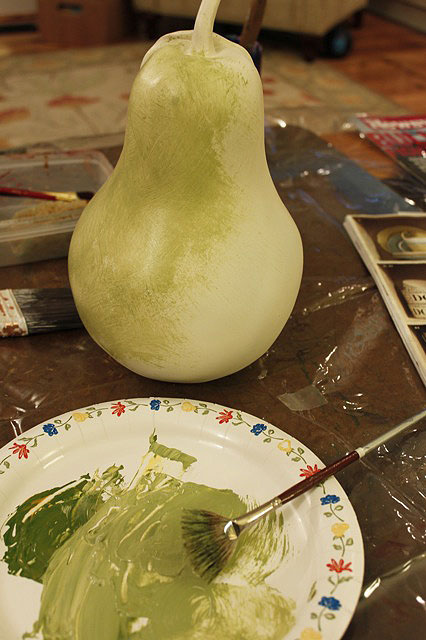
If you want, you can leave the base color white. But, if you want to color your item, mix a base color with the acrylic craft paints. Using the fan brush use a “cross-hatch” pattern to apply the paint onto your item. (This gives more depth and interest than painting on a thick coat of paint.)

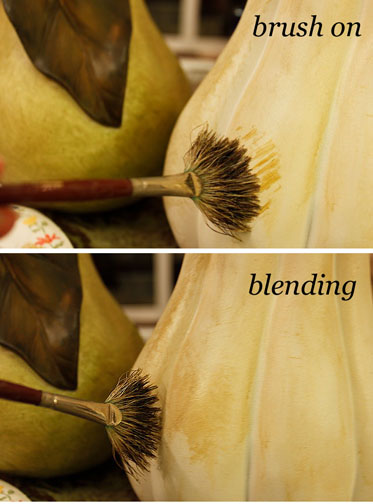
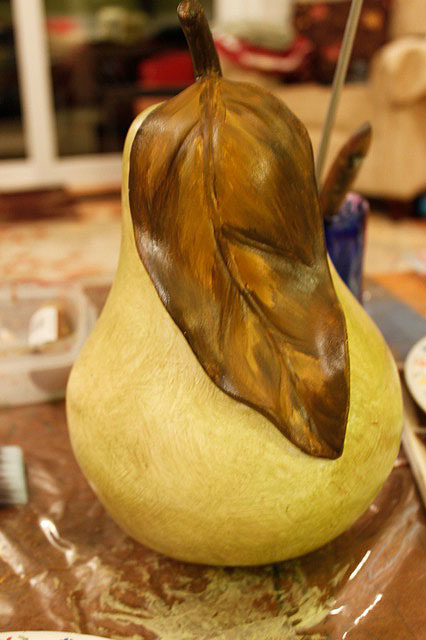
Next mix your glaze by combining acrylic paint (Mix raw sienna (dark brown), burnt sienna (red brown) and yellow ochre until you have a nice golden brown antiquing color.) Pour a small circle of glaze material onto your plate. Dip the fan brush into the glaze medium and then into the mixed acrylic paint. Dab off some paint onto the paper plate (you don’t want your brush to be saturated.) Brush the glaze onto the item and use the fan brush to blend the glaze around. Feel free to use the same cross-hatch pattern you did earlier.

Work in small areas and brush the glaze around until your brush doesn’t have any more glaze on it.
Then use a rag to dab around the decor item until you are happy with the results.

signature

Paint any features onto your decor item (stems, branches, faces, etc.) To paint the pear’s leaf, try a dark brown (raw sienna) and a yellow ochre for the highlights. Acrylic paint is really forgiving. If you don’t like it you can paint over it.


I couldn’t be happier with the results of my repainted home decor! I saved myself about $95 for two decor items!
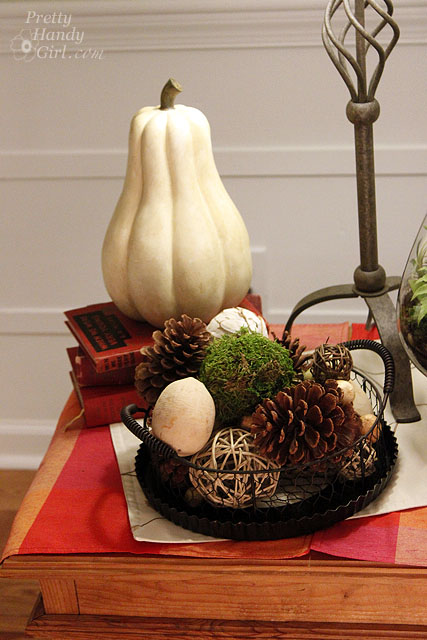
This fruit decor is perfect for any season . . .

But, I like to bring them out in the fall.


Happy thrifting y’all! Never leave cheap dated decor behind again.

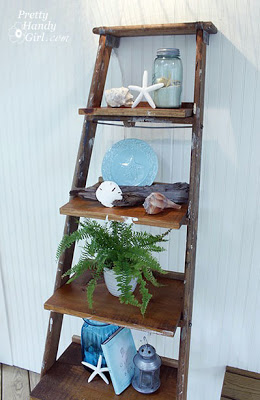
Did you see that ladder above? It is the other half of this ladder and I added shelves to create my own ladder display shelves!

Ladder Shelves

Vintage Map Lampshade | Pretty Handy Girl

Vintage Map Lampshade | Pretty Handy Girl
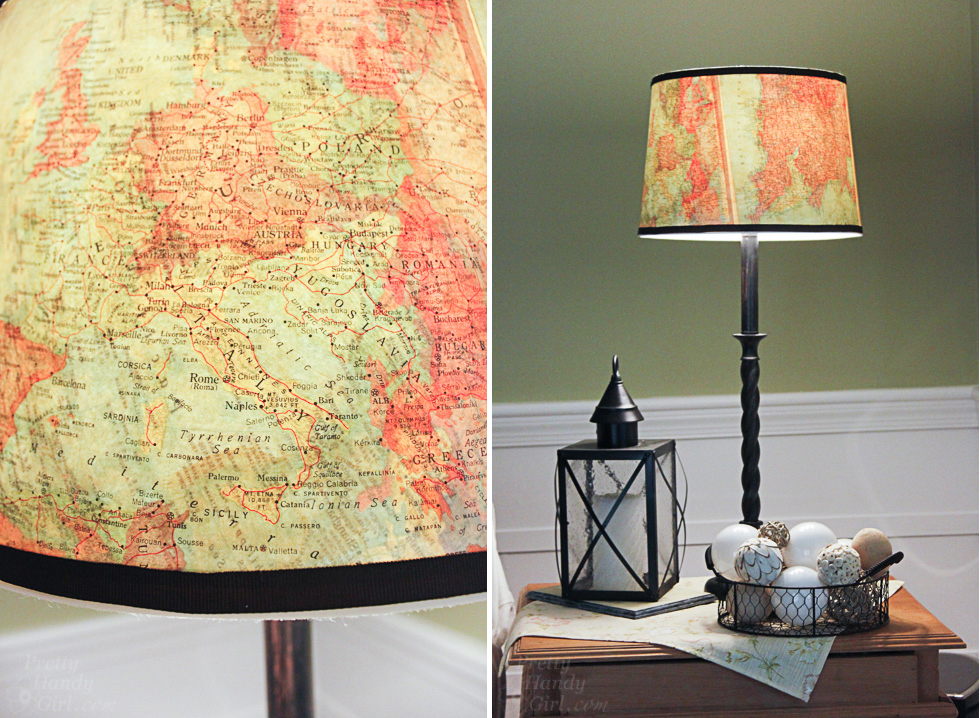
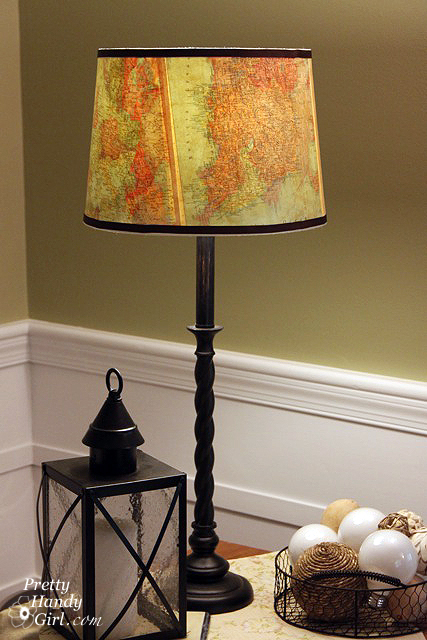
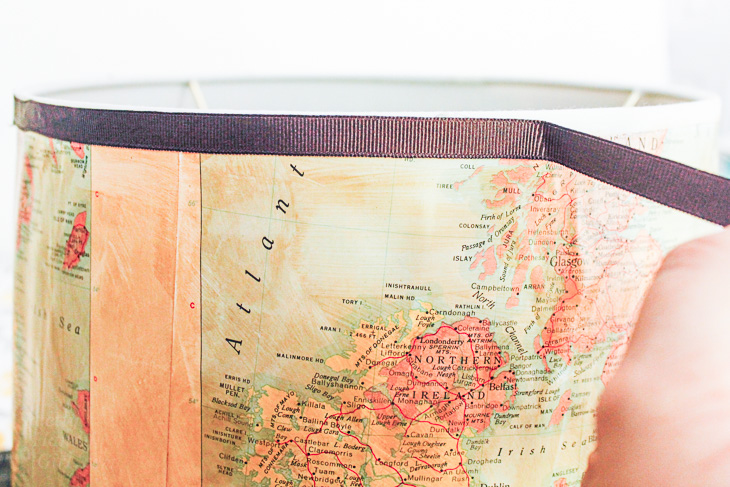
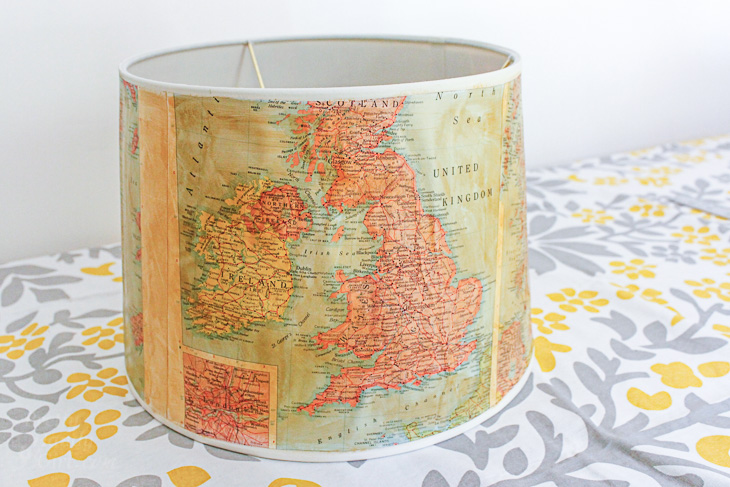
Do you want to update a plain vanilla lamp shade? Do you have a vacation you want to remember? You can do both with this vintage map lampshade!

The process to create a Vintage Map Lampshade is easy, especially if your lamp shade is close to a perfect cylinder. But, what do you do when you have a cone shaped shade? The instructions are a little more complicated, but I can show you how.

Pull up a seat and I’ll show you how to create a cool decorated lampshade. (Keep in mind you don’t have to use maps. You could use wallpaper, fabric, a poster, or anything you want!) Let’s do this.

Vintage Map Lampshade | Pretty Handy Girl

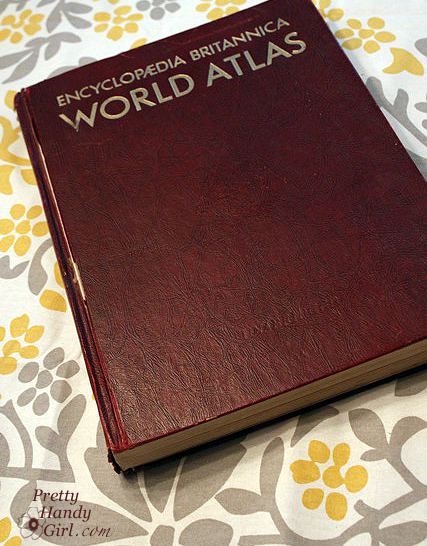
During a trip to my local thrift store, I discovered an old atlas and knew I could use it for oodles of projects. As I walked out of the store a flood of ideas came to me. One of them was to make a Vintage Map Lampshade.

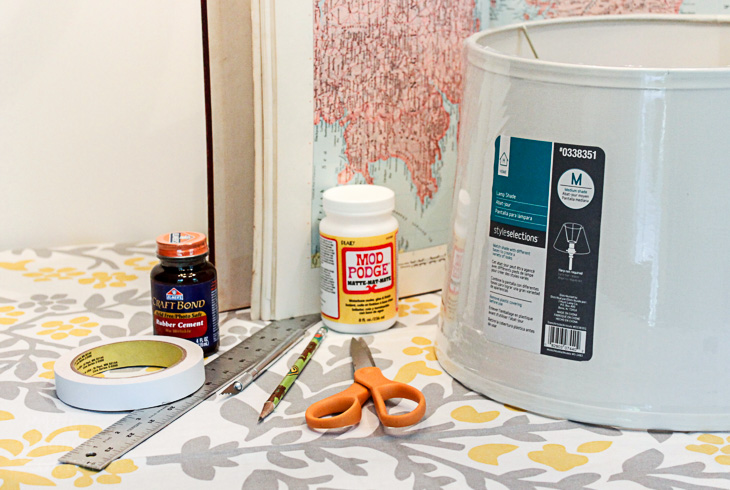
Materials:

(I’ve included affiliate links for your convenience. I earn a small percentage from a purchase using these links. There is no additional cost to you. You can read more about affiliate links here.)

Vintage Map Lampshade | Pretty Handy Girl

Vintage Map Lampshade | Pretty Handy Girl

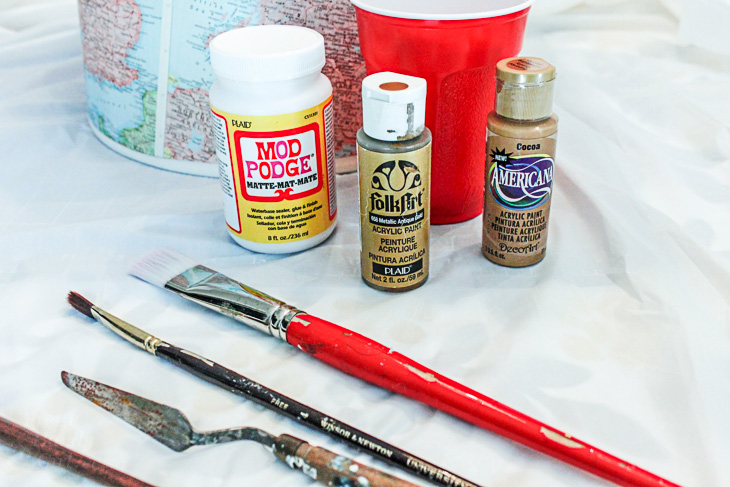
To add a vintage glaze you will also need:


Instructions:

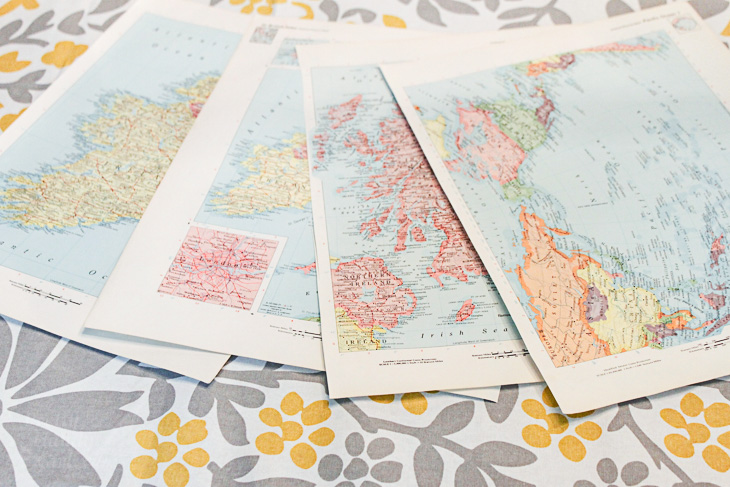
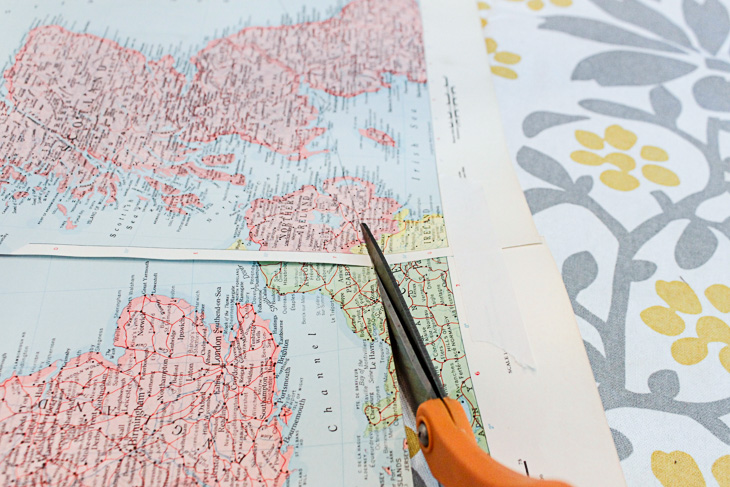
Start by selecting the maps or paper you want to use. Carefully cut them out along the spine using a fresh x-acto blade — don’t let your blade get dull. (I use a new one for each project. Your cuts are much cleaner when working with a fresh blade.)

Vintage Map Lampshade | Pretty Handy Girl

Set your pages aside for now.

Vintage Map Lampshade | Pretty Handy Girl

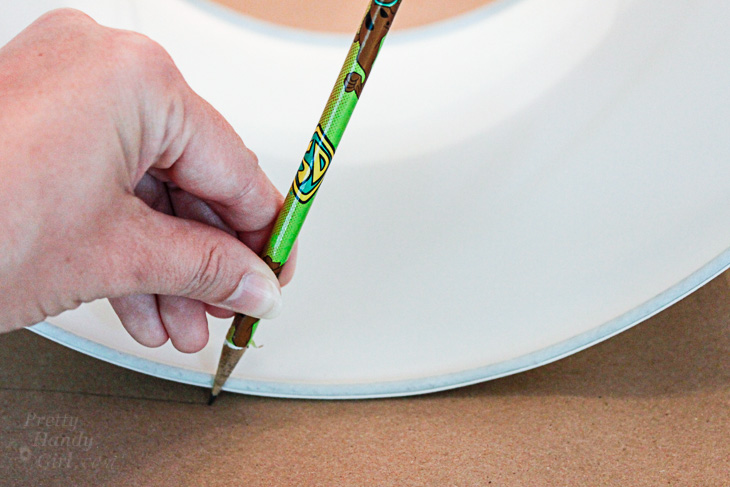
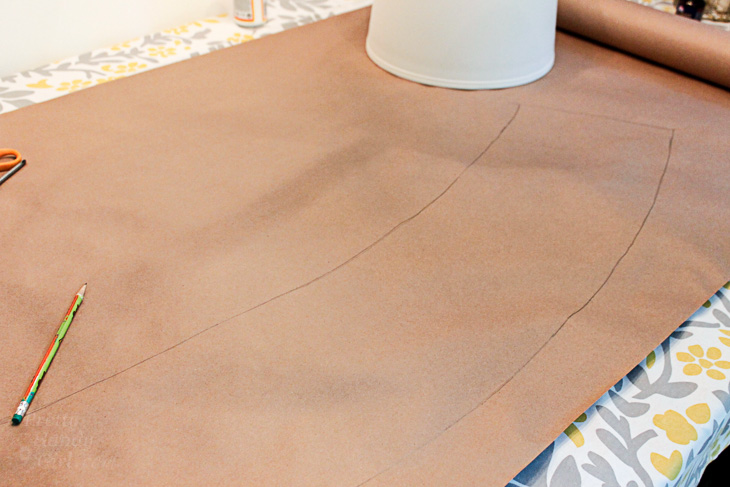
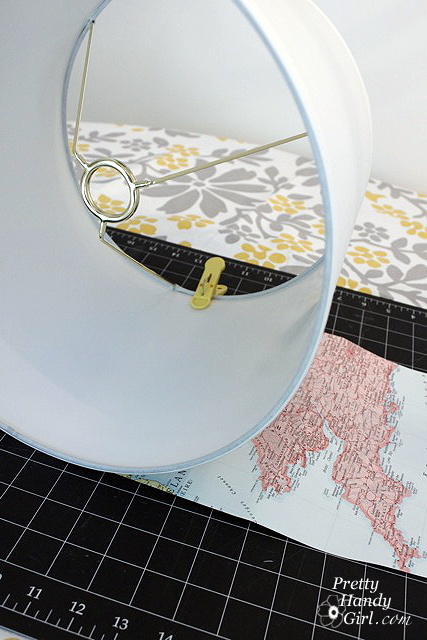
To make a template for your shade, roll out a large piece of craft paper. Lay your lampshade on the craft paper. Start at the vertical seam on the shade (to give you a visual of where to start and stop) and set your pencil along the bottom edge of the lampshade.

Vintage Map Lampshade | Pretty Handy Girl

Gently roll the shade on the paper and mark along the bottom edge of the shade.

Vintage Map Lampshade | Pretty Handy Girl

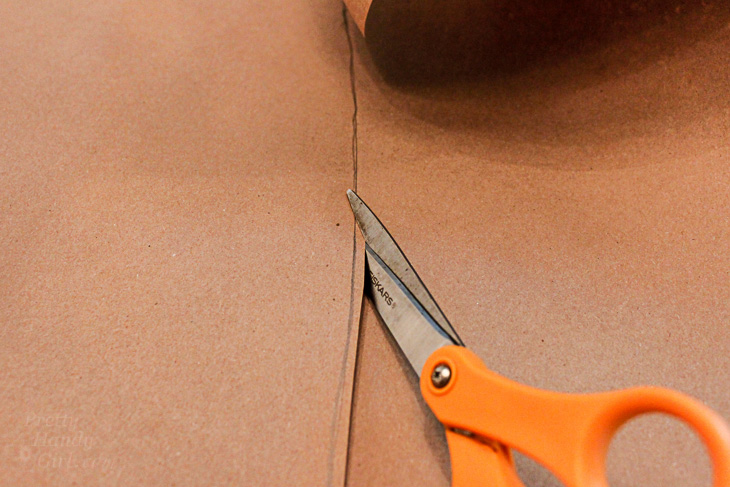
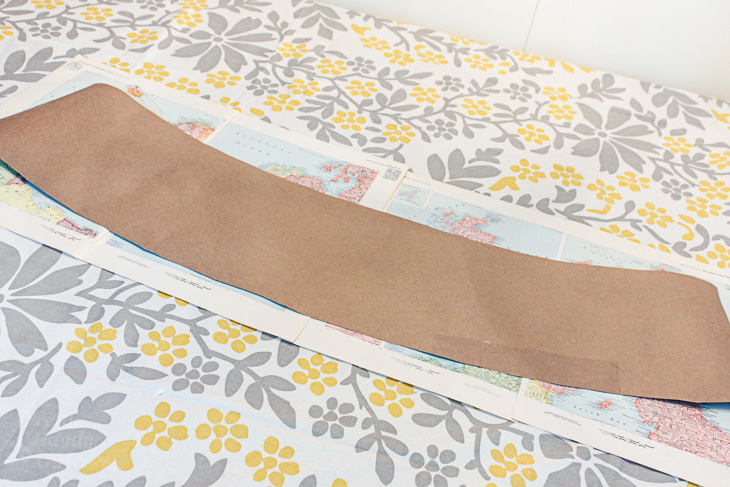
When you reach the end, reverse your shade and draw along the top edge. At the end, add an inch or two for overlap. Cut along the outlines to create your lampshade template.

Vintage Map Lampshade | Pretty Handy Girl

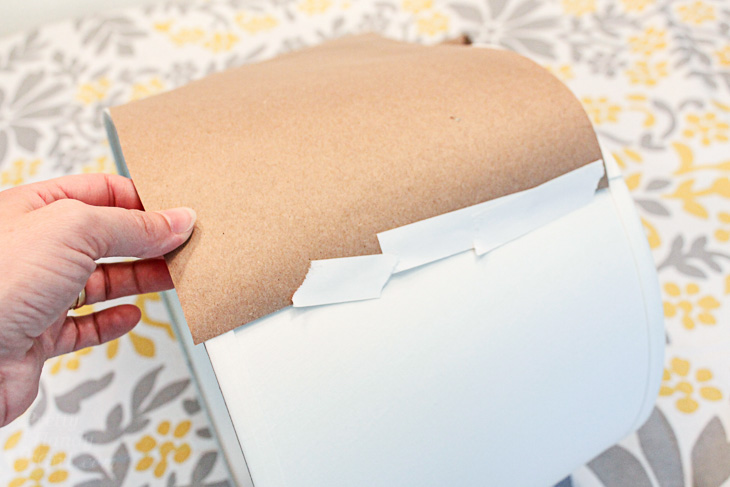
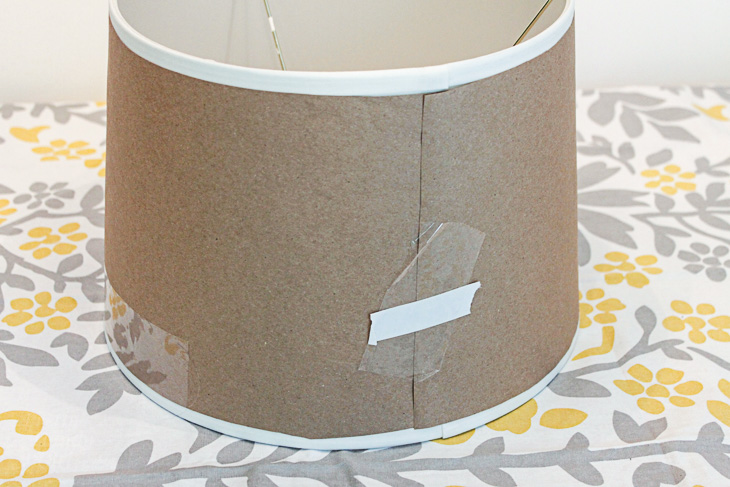
Tape the template onto your lamp shade using the low tack tape. Make sure it fits snugly.

Vintage Map Lampshade | Pretty Handy Girl

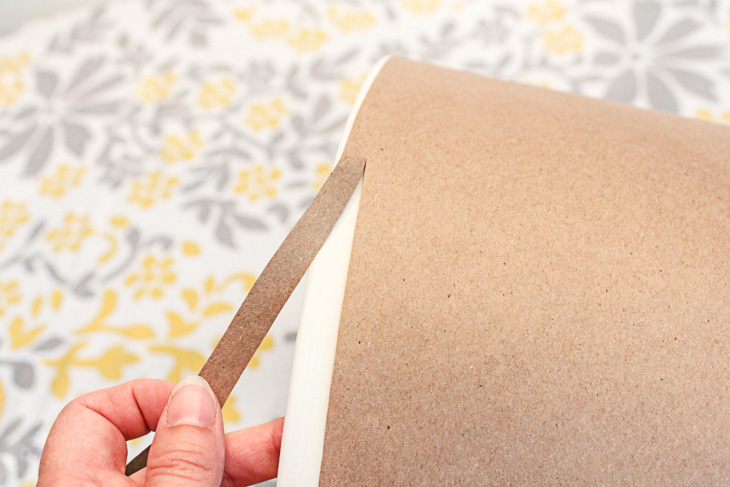
Trim any excess from the edge of your template. Should you choose, trim excess to allow room for the grosgrain ribbon.

vintage map lamp shade

Make sure your template fits perfectly before you proceed.

Lay out your craft paper template on top of the map pages. Make any adjustments to the page layout.

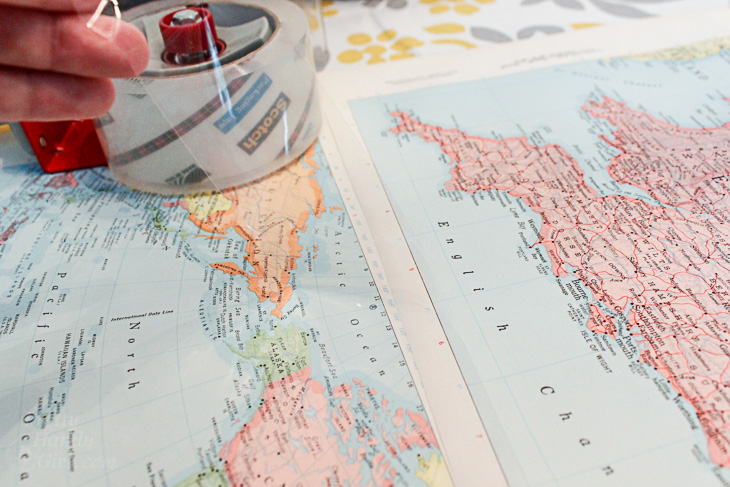
Tape your map pages together using clear packing tape on the inside only.

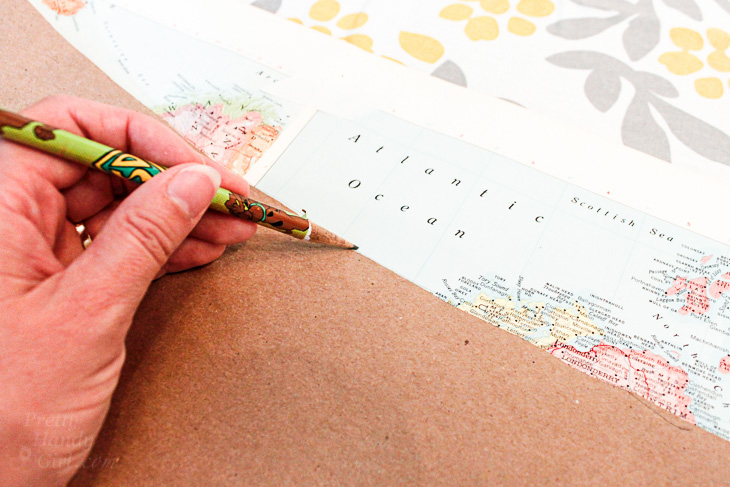
Trace the template on top of the map pages.

Cut out the shape along the pencil line.

Wrap the lampshade with your cut out map pages.  Clip the edges with clothes pins.

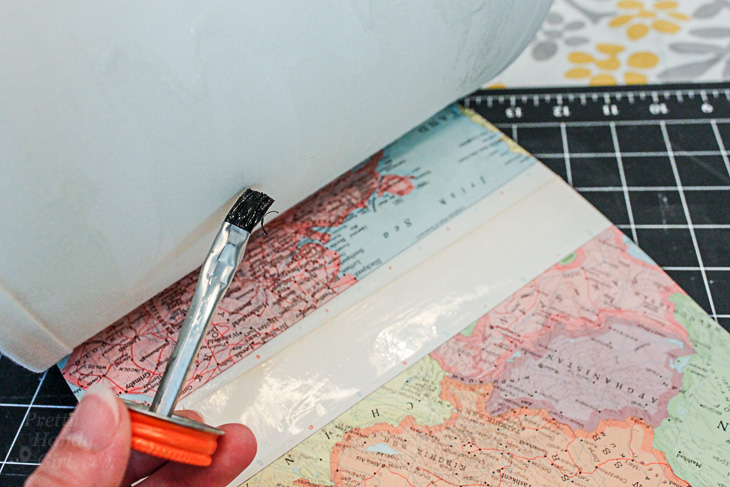
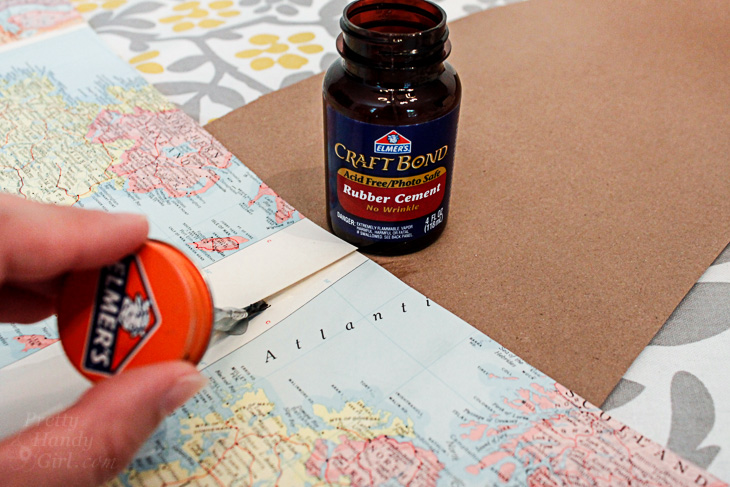
Working in small 8″ sections, brush rubber cement onto the map and the lamp shade. Wait a minute or two for the glues to dry. Then press them together. This is the best way to get maximum adhesion when using regular rubber cement. It creates a stronger bond than just one coat applied and joined while it is still wet. Alternatively you could use spray adhesive (especially if you are using fabric.)

Continue by gluing another section until you reach the end. To finish the seams on the outside, brush some rubber cement under the seams where your maps overlap. Press and hold them down until the glue dries.

Add a Vintage Aged Glaze:

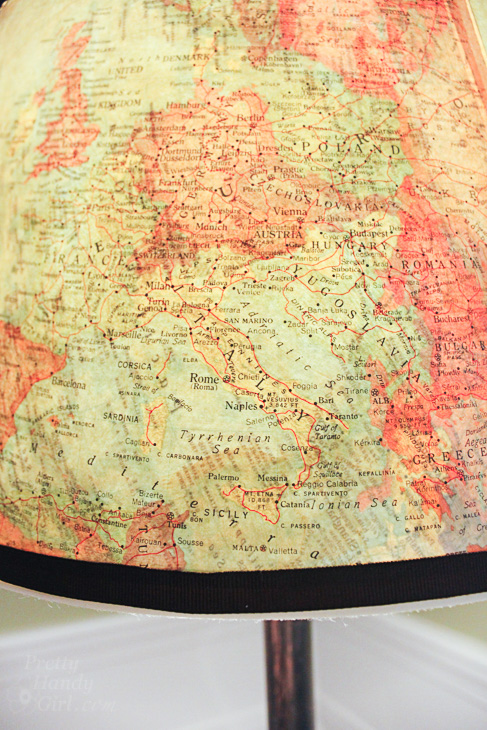
Time to give your maps a vintage aged look! Pour 2 parts mod podge into an empty cup. Add about 1 part cocoa paint. Mix them together. Test some of the glaze on a scrap piece of paper. If you like the glaze color, start brushing it onto the lamp shade. Be careful not to use too much of the glaze or the paper will start to wrinkle. (If it does, no worries, some of the wrinkles will come out when it dries. Any remaining wrinkles make it look old.)

Let the glaze dry.

Cut two strips of grosgrain ribbon the circumference of your lamp shade plus an inch for overlap.

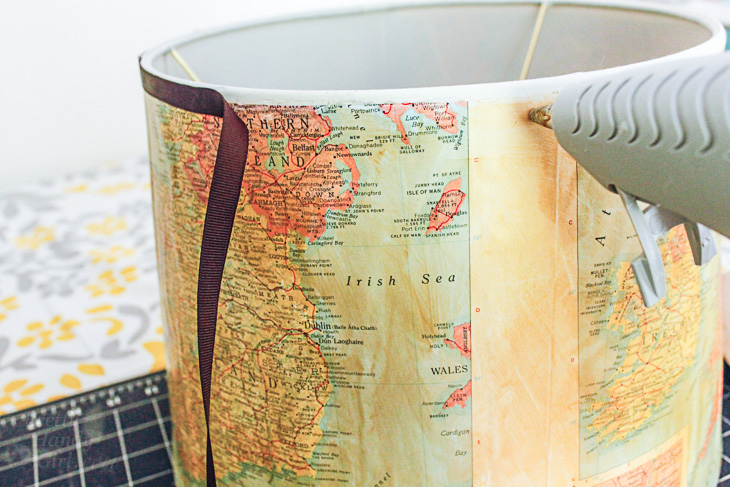
Hot glue the ribbon onto the top and bottom edges of your lamp shade. (Please, please, protect your fingers, read my hot glue gun safety post before working with hot glue!)

Put your lampshade on your favorite lamp.

Admire your unique lamp shade that brings back fond memories of a special trip.

If you make one of these, what map would be on your’s? Your home state? The place you were born? Where your family’s heritage resides? Or something completely different? I would love to hear your ideas.

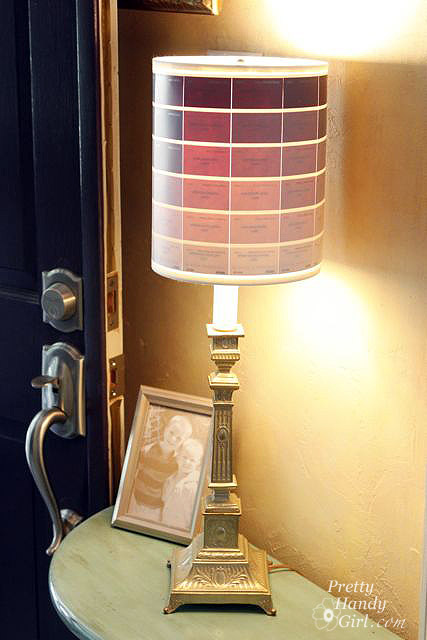
Did you like this tutorial? Want to learn how to revamp another lamp shade with paint chips!

The result are a beautiful ombré lamp that is fun and colorful.


How to Paint an Abstract Water Lilies Painting | Pretty Handy Girl

How to Paint an Abstract Water Lilies Painting | Pretty Handy Girl
I have an unsightly electrical panel in my kitchen. But, luckily I found a way to cover it using an Abstract Water Lily Painting.

How to Paint an Abstract Water Lilies Painting | Pretty Handy Girl

Best of all, I recycled an old canvas and used paints I had to create an abstract painting that goes with the colors in my kitchen. Want to make your own? I created a video tutorial so you can paint along!

But, first here are some supplies you’ll need.

(I’ve included affiliate links for your convenience. I earn a small percentage from a purchase using these links. There is no additional cost to you. You can read more about affiliate links here.)

Materials:

Instructions:

Do some research and find images you are drawn to. Use them as inspiration but don’t copy them. Feel free to view my Pinterest board of art ideas for this water lily painting.

Follow along as I show you how to paint this abstract water lily painting:

Let your painting dry and hang it up!

How to Paint an Abstract Water Lilies Painting | Pretty Handy Girl

I love that this painting coordinates with the colors in my kitchen and covers up the ugly electrical panel.

How to Paint an Abstract Water Lilies Painting | Pretty Handy Girl

Do you have an ugly electrical box? Or do you want to create some beautiful abstract art? Either way, I hope you enjoy this tutorial.
signature

Like this tutorial? Then you’ll also like How to Paint a Giant Abstract Ocean Painting!

How to Paint Giant Abstract Ocean Painting


Pin for later!

DIY Abstract Water Lily Painting | Pretty Handy Girl