pair of this end up chairs recovered

This DIY reupholster chair tutorial features a This End Up chair. You can follow the same basic steps to recover and renew similar chairs.


As a parent of two elementary school students, I always ask my kids’ teachers if they need anything for their room. Usually the answer is markers, wipes, or snacks.

But, my kindergartner’s teacher knows about my secret identity after having taught my older son for a year.

So, she didn’t hesitate to ask me if I could possibly recover a few really sad looking chairs that had seen their fair share of kindergarten butts. 😉

(I’ve included affiliate links for your convenience. I earn a small percentage from a purchase using these links. There is no additional cost to you. You can read more about affiliate links here.)


before image of this end up chair

How to Reupholster This End Up Chairs (a Simple DIY)

These poor chairs were still very study and in good shape, but the fabric was nubby, pilled, stained, and not in good condition.

I love a good challenge, especially with a solid piece of furniture, so I took all three of the chairs home over the Christmas break for my next DIY project.

I knew I could give these chairs new life. The first step involved removing the seats and the old upholstery fabric.

Before I touched the seats, I flipped over the chairs and marked the front side of the chair so they would fit together perfectly when I put them back together.
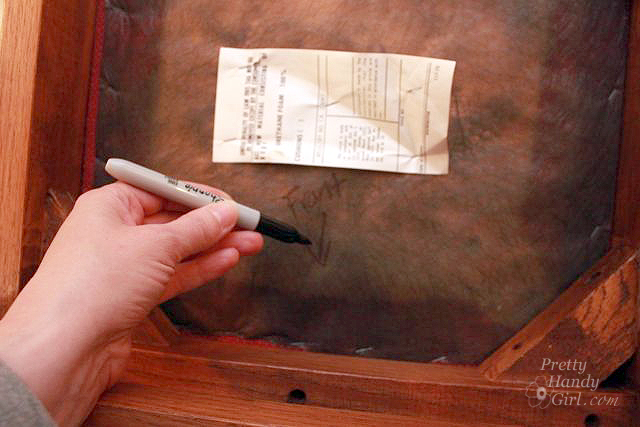
mark_front_of_chair

Next I removed all the screws securing the chair seat to the frame of the chair (all six of them.)

turn chair upside down and look for screw locations

Because of the construction of these chairs, I found it necessary to use a longer bit on my drill to get into each hole.

upside down chair and drill removing screw from under seat cushion on a chair

I pried off the piping from the seat backs with a 5-in-1 painter’s tool and needle-nosed pliers. Then removed the old fabric and old foam.

prying old piping off a this end up chair back

After the seats were removed, each chair got a good cleaning, a little sanding and then a couple coats of Miss Mustard Seed Milk Paint (colors used: tricycle and luckett’s green) and the blue one was chalk painted.

I used the bonding agent with the milk paint to make sure the paint would stick to the chairs.

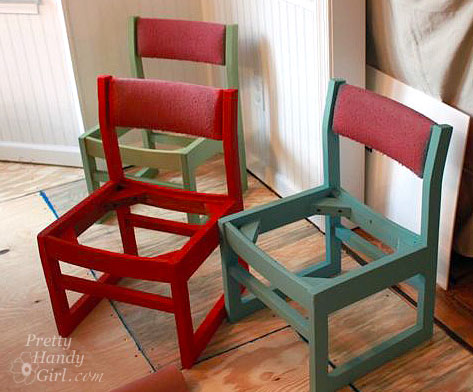
three this end up style chairs with a new coat of paint in red, green, and blue

Finally, the chairs each got two coats of Minwax Polycrylic because those kindergartners are tough on furniture and this is a great way to give them a bit more protection.

adding a top coat of polycrylic over the red painted chair frame

Now on to the fun part!

How to Reupholster This End Up Style Chairs:

You can pick up the supplies at Home Depot, Lowe’s, or your local craft store.

Materials:

(I’ve included affiliate links for your convenience. I earn a small percentage from a purchase using these links. There is no additional cost to you. You can read more about affiliate links here.)

tools used to refinish the chairs
spoonflower space themed fabric for recovering the chairs

I let my son’s teacher to pick out new fabric from one of my favorite fabric sources, Spoonflower.com.

Not only do they have loads of designs to choose from, but you can also upload your own graphics and create your own custom fabric!

You can also check out your local fabric store.

She picked out adorable space themed patterned fabric: Rocketship fabric and Space Fireworks fabric.

With a primary color palette, they are the perfect fabric choice for a kindergarten classroom.

Instructions:

Cut out fabric, oil-cloth (optional), and any additional batting a few inches larger than the bottom of the chair seat.

The great thing about this project is no sewing machine is needed for this upholstery project.

cut fabric, oil cloth, and batting to larger size than original cushion

Layer the new pieces of fabric face down on the floor. then the oil-cloth next (I put the oil-cloth face up so the fuzzy back side would be against the fabric to keep it from feeling too crinkly.)

Cut a square out of each corner about 1″ from the seat cushion corner.

cut out corners of fabric and batting before folding

Staple one staple into the center of each side. Work across form each other, gently stretching the fabric taut.

Staple fabric onto seat backing in this order. top, bottom, side, and side

Add more staples along each side.

bottom of chair with new fabric stapled to it.

Corners are neatly folded and then stapled to secure them. Hammer any staples that didn’t go completely into the bottom of the seat.

fold over fabric corners on seat cushion then staple

Re-attach the seat to the chair frame by replacing all the screws.

attach the seat bottom with screws driven from the underside

Flip the chair right side up and follow these steps:

  1. Layer batting, then fabric over the chair back. Trim the batting to fit perfectly on the back of the chair.
  2. Cut the fabric about an inch wider on the two sides and the bottom. Fold under the raw edges of the fabric.
  3. Secure the fabric to the chair back by stapling at the top of both sides first.
adding new batting to the chair back, cutting fabric to fit over batting, and stapling the top of the back to hold fabric in place

Next put a few staples into the bottom of the seat back (hidden from view.)

staple fabric from the underside of the chair back

Continue stapling the fabric to the chair along the sides. 

Set your staples as close to the frame as possible so the piping will hide your staples later.

Hammer any staples that stick up.

Add staples to the ends of the seat back.

If you haven’t done so already, make your piping.

The easiest way to do that is to sew your piping following this tutorial. Trim the excess fabric from the piping.

cut excess piping

Peel back the ends of the piping fabric to expose about an inch of the rope inside. Cut the rope.

Then fold the fabric back and tuck the raw edges inside. This will give you a flat section at the end of your piping.

roll back edge, cut excess rope, fold edge of piping
  1. Staple this flat end to the underside of the chair back.
  2. Spread some hot glue on top of the staples along the side of the chair back.
  3. Pull the piping taut and press it into the hot glue.
  4. Secure the end of the piping with hot glue and a staple.
staple, hot glue, and press piping onto chair back. Finish with a dab of hot glue underneath


Secure the piping to the opposite side using the same method. Follow the same tutorial for the second chair.

Refinished chair close up seat back with piping

That’s it! Check out this sweet new chair!

one red refurbished this end up style chair with red frame and space fabric

Would you know that it was the same chair if I hadn’t shown you?

BEFORE:

worn and nubby seat this end up chair

AFTER:

close up seat cushion of a this end up style chair

Good, let’s keep it our little secret ;-).

The next time you see an outdated chair at the thrift store, consider giving it a new look with this easy blog post tutorial.

There is no need for a professional upholsterer. Give it a try. You will be amazed at just how easy it is. Good luck!

The new chairs were such a big hit with the kids. They all rushed to be the first to sit on them.

I think their teacher was happy with the finished product too.

happy teacher posing with a refinished chair

It’s a happy trio of kindergarten chairs!

three this end up style chairs refinished with colorful frames and space themed fabric

PHGFancySign

Pin this image to save for later or share with a friend:

How to Refurbish Old chairs

You might also like this chair makeover with a video tutorial on my YouTube channel:

How to Easily Reupholster Your Chairs | Pretty Handy Girl


Pin for later!

How to Refinish old chairs

How to Recover a Butterfly Chair | Pretty Handy Girl

How to Recover a Butterfly Chair | Pretty Handy Girl

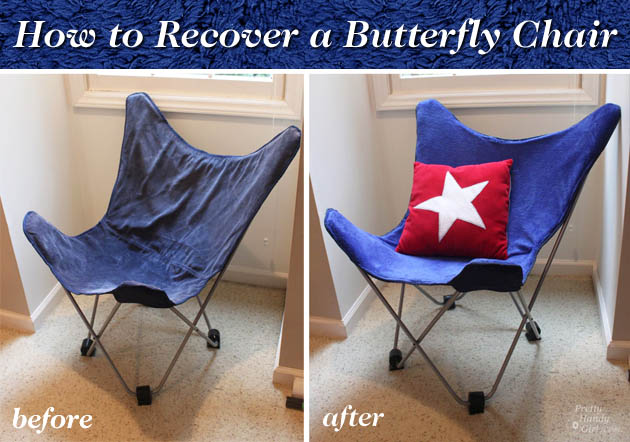
Happy St. Patrick’s Day! Do you have a butterfly chair that is sun-faded or has hideous fabric on it? I bet you thought it was a lost cause, right? Nope! With a sewing machine, some new fabric and a little spare time you can recover that ugly butterfly chair and have a new one. Okay, so I didn’t recover it with green fabric in honor of St. Patrick, but what could be greener than a good old upcycling project! Believe it or not, this was a much easier project than I had anticipated, so don’t get scared by the curves. You can “sew” do this! 😉

How to Recover a Butterfly Chair | Pretty Handy Girl

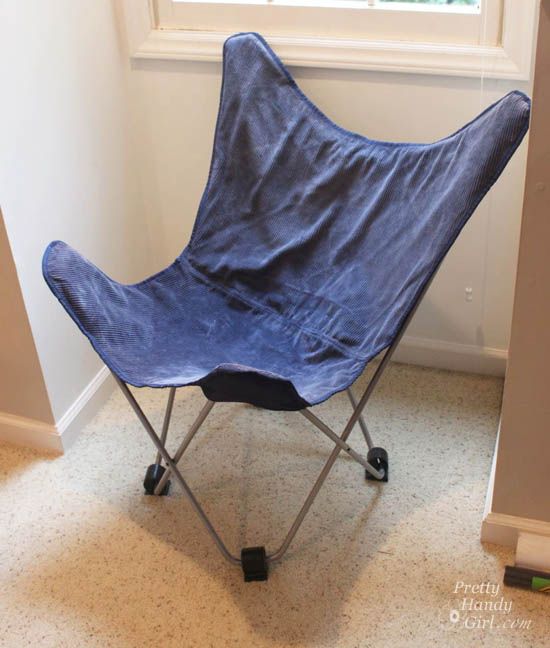
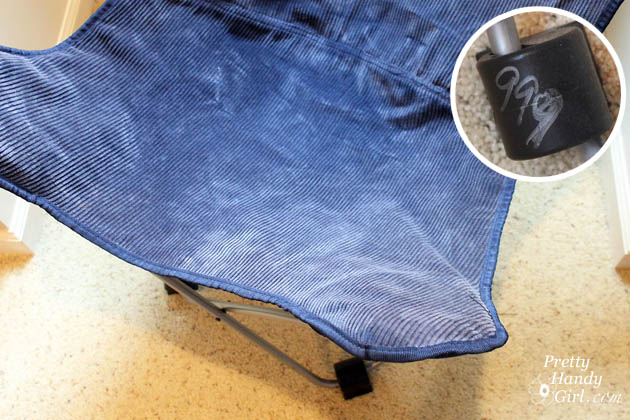
I stumbled upon this chair at Goodwill for $9.99. Normally I wouldn’t spend this much for a sun-faded chair, but because I was working on the school library makeover project — and we needed more comfortable seating — I bought it.  After all, we would have had to pay at least double for another comfy chair.

How to Recover a Butterfly Chair | Pretty Handy Girl

Luckily, I had some soft leftover fleece fabric that I could use to recover the chair. I wish I had measured how much I used, I think it was a little less than 2 yards.

Materials:

  • 2 yards of fabric
  • Coordinating thread
  • Pins
  • Scissors
  • Old butterfly chair + old cover

Instructions:

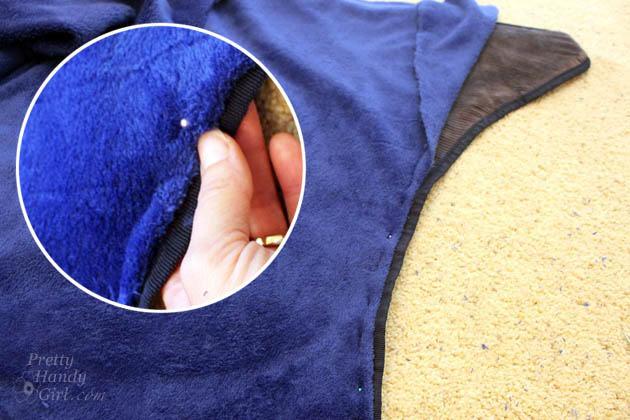
1. Remove the old cover from the butterfly chair frame. Lay it on top of your fabric (both right sides up.) Read more

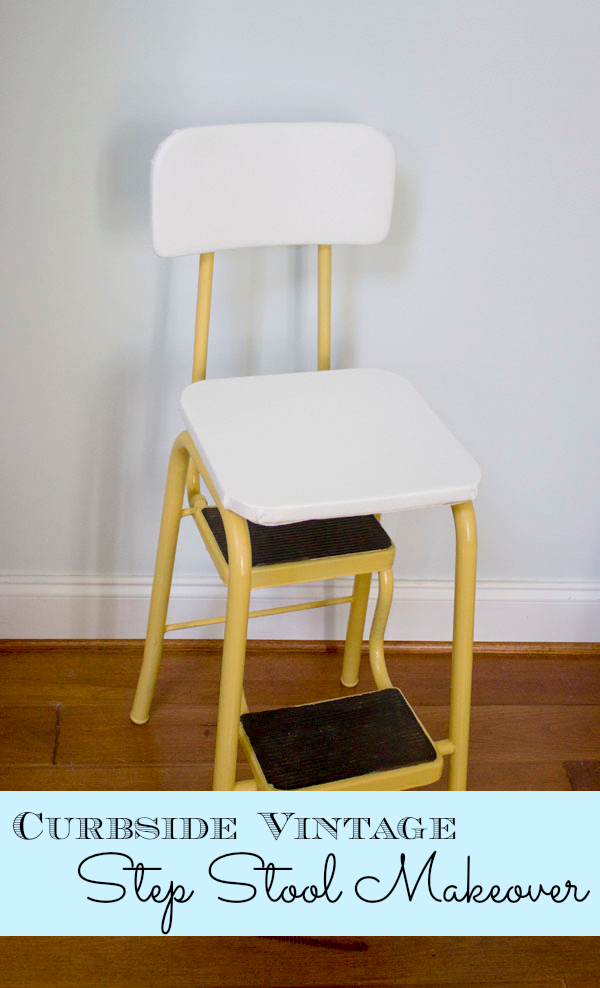
Curbside Vintage Step Stool Makeover

Curbside Vintage Step Stool Makeover

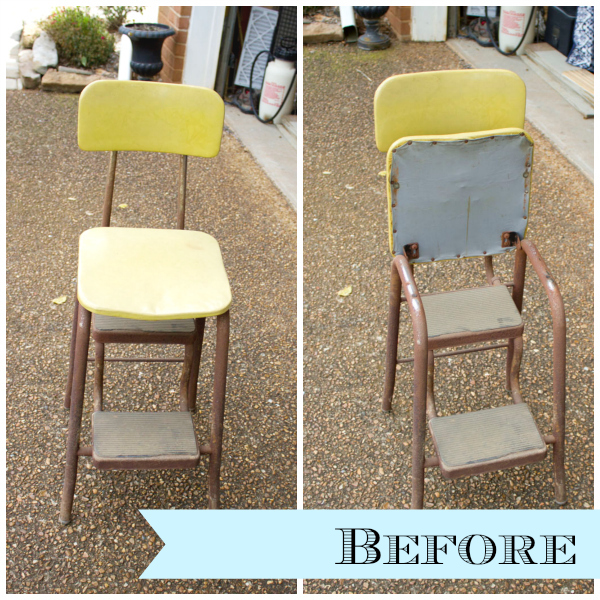
A few years ago, while driving back to work from my lunch break, I spied a very cool but sad looking vintage step stool sitting at the end of someone’s driveway next to their trash.  I passed by, but it didn’t take me long to circle around the block and come back to pick up the stool.  Unfortunately the step stool stayed untouched for at least 4 years.  This time it wasn’t in my garage, I left the sad step stool in the back room of my office. Good thing I’m the only one who goes back there!  I finally decided it was time to show this little vintage step stool some love. Check out this step stool makeover.

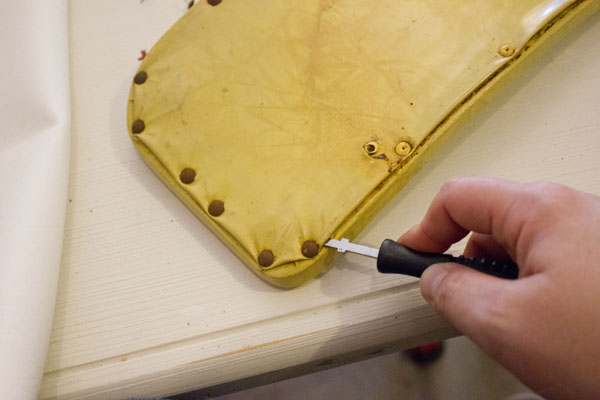
Curbside Step Stool MakeoverThe structure of the step stool was in fairly good condition, but COVERED in rust.  In some areas thicker than others.  I thought about using the old school method and hand sanding the stool like Jeff talked about a few weeks ago (Painting Metal Patio Chairs ) but decided if I tried this avenue I would be sanding for a few months.  I also considered using a sand blaster to remove the rust.  And while it is a fast effective method, it is not practical for everyone.  After much thought I finally decided on a 3M sanding disk that attaches to any drill. Let’s get to it shall we? Read more

If you stuck through my ugly post yesterday. I have some pretty pictures for you today!

Two years ago I happened upon a cute little bench being thrown out with a neighbor’s trash. (I am addicted to trashed furniture. In fact, I have a NASTY chair in my garage that needs a lot of help structurally and asthetically.)

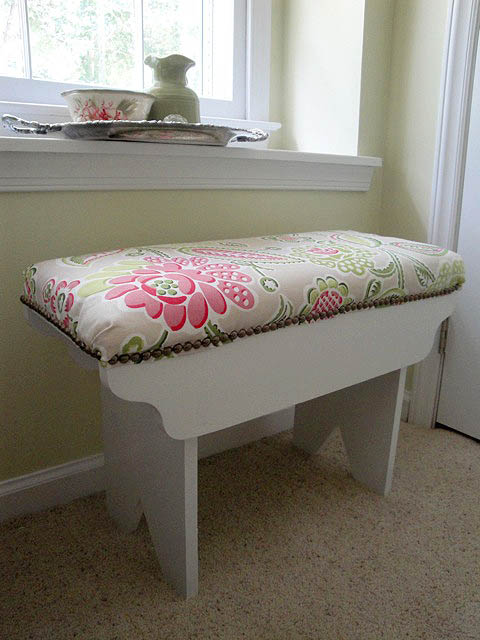
The roadside bench was painted a very blah beige color. I brought her home and gave her some decorative lines and a monogram. At the time we didn’t have anywhere to sit in our mudroom, so this little bench served the purpose well. Later I built a big mudroom hallway bench with built in shoe storage (I promise to create a tutorial for that at a later date.) So, this little bench was moved to the guest room where she sat by the window until this week.

The first thing I did was give her a little rub down with some sand paper. Then I laid down 3 coats of fresh shiny white paint (leftover from trim and moulding painting).

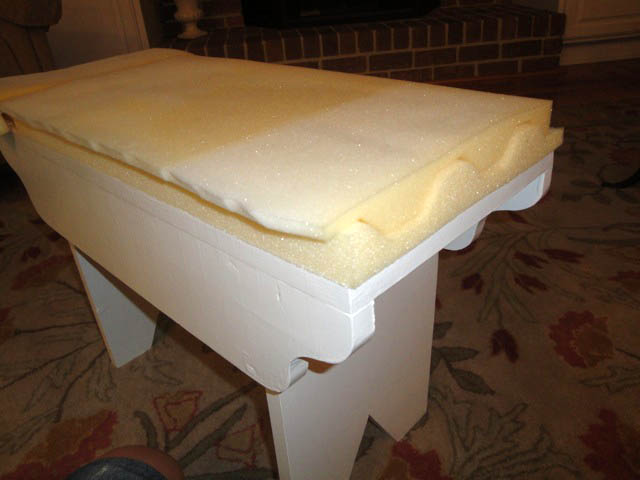
I used some old foam I saved from our move (only 3+ years ago). This foam was the packing material used to ship ice cream cones! I received it from a nice woman off of FreeCycle.org and thought it could be used for a cushion at some point.

I cut some batting to fit over and wrap around the foam (so as to hide all the seams in the foam).

Then cut the arms off of an old t-shirt of Pretty Handsome Guys (don’t worry, he had already said goodbye to it.) And cut up the sides so I could use just the back of the shirt.

And finished off with the decorative fabric cut slightly larger than all the other layers.

I carefully folded my decorative fabric under being sure that I had the old t-shirt hidden in the fold. And put in two staples with the staple gun to hold the fabric on the one side.

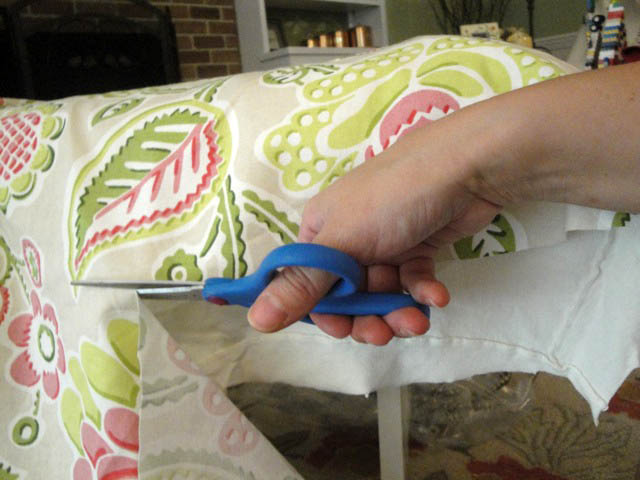
Moving over to the other side, I cut the t-shirt, batting, and decorative fabric down to size being sure to leave about an inch excess on the decorative fabric.

Then I repeated the same fold under and put in two staples.

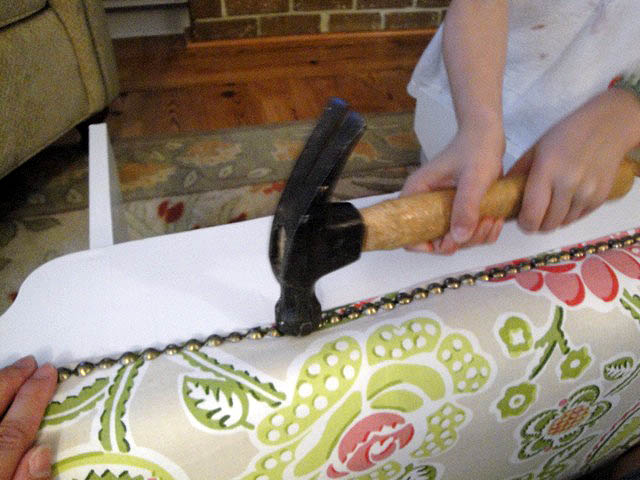
Now for the bling! I had plenty of leftover nailhead trim from this project (check that link out if you need a better tutorial on adding nailhead trim.) I began at the corner of the front of my bench and added the starter nail.

At this point my 6 yr. old had come over to my side telling me how bored he was and, “What can I do now?” I asked if he wanted to help me hammer. Once I started each nail, he was able to hammer it into the nailhead trim for me. (I did have to finish a few off myself.) We worked together adding the nailhead trim to the front and back of the bench.

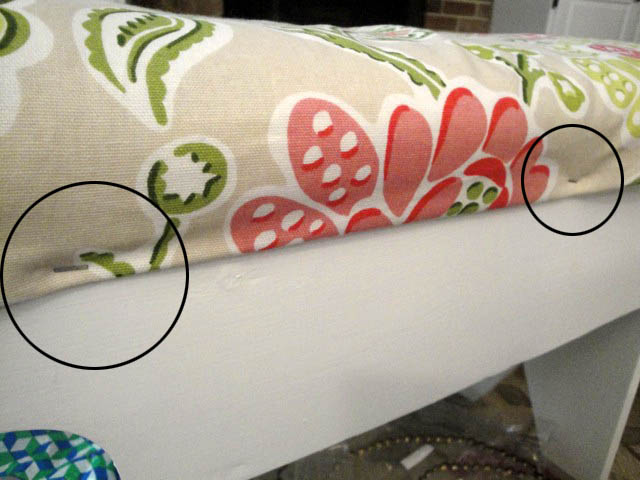
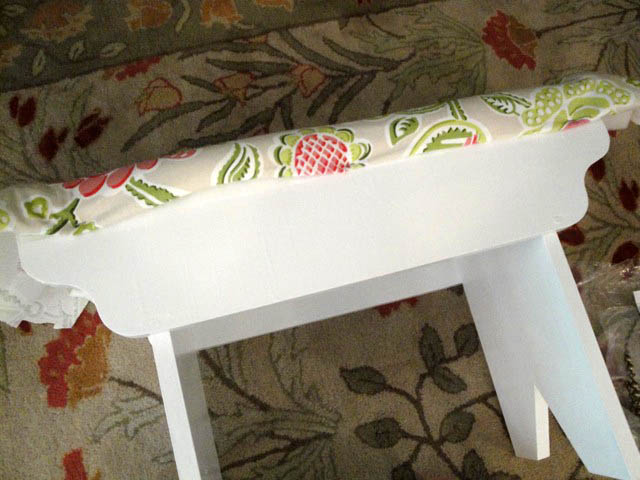
Before adding the trim to the sides I neatly folded and tucked under all the layers (cutting excess off when necessary.) Until it looked like this. Then I added the trim on top to hold the fabric in place.

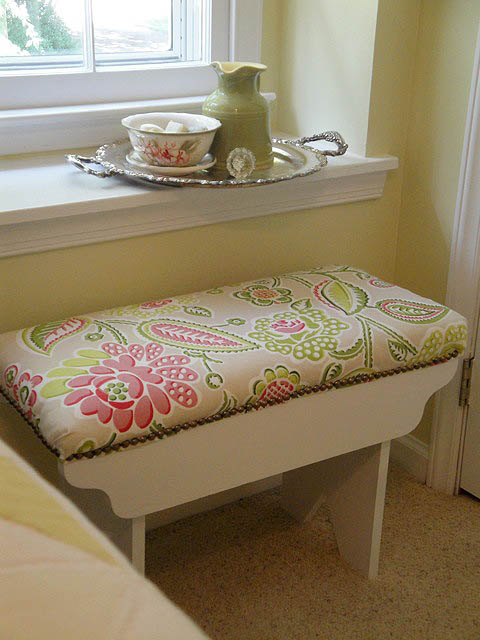
And there she was, my beautiful cushioned bench for our guest room. I’ve been busy trying to finish a few projects (rebuilding a curbside chair and making a night stand from a door and picket fence) in this room before my best friend from high school comes to visit. Nothing like a visitor to get your DIY butt in gear!

 Sittin’ pretty
Sweet smelling soaps in a coordinating bowl
My trash to treasure bench is now a sweet spot to land

The next step in my extreme rattan chair makeover is the upholstery. Time to give your tushie a new cushy!


Re-Upholstering the Chair Seat:

I removed the seat from the chair before I started any of the paint stripping and painting. Removing the seat on a cushioned chair is really simple. Flip your chair over, look for four holes where the mounting screws are located (see red arrows below.)

Re-Upholstering the Chair Seat

Tools You Will Need:

Cordless Drill or Phillips head screwdriver
Flat head screwdriver
Needle-nosed pliers
Scissors
Batting
Fabric
New Foam Cushion (if your foam is in bad shape)
Sharpie Marker
Staple gun w/ staples (I used 5/16″ staples)
Hammer

Grab a screwdriver or cordless drill with a phillips head attachment and unscrew the mounting screws. Be sure to save the screws as you will need them to re-attach the seat later.

If the fabric on your cushion is in good shape and you are using a fabric that is thick enough to cover the old fabric, you can leave the seat intact. In my case, the fabric was very old and stained. Not exactly something I wanted to be sitting on….ewwww!

So, I began the demolition phase of this makeover.

Grab a flat head screwdriver and needle-nose pliers. Wiggle the screwdriver underneath the staples and then use the pliers to pull them out.

Re-Upholstering the Chair Seat
Once the fabric has been removed and all the loose staples have been pulled, take a look at your foam cushion. If it is stained, crumbling, or smelly, you will want to replace it with new foam. Luckily the foam seat was still in good condition and no stains or odors, so I kept it.
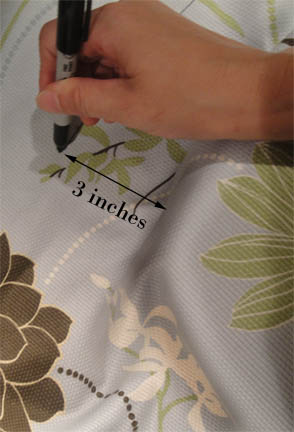
I laid my fabric on top of the seat and played with the pattern until I liked the layout on my chair. Then I took my sharpie pen and drew an outline about 3 inches out from the edge of the seat.

Re-Upholstering the Chair Seat

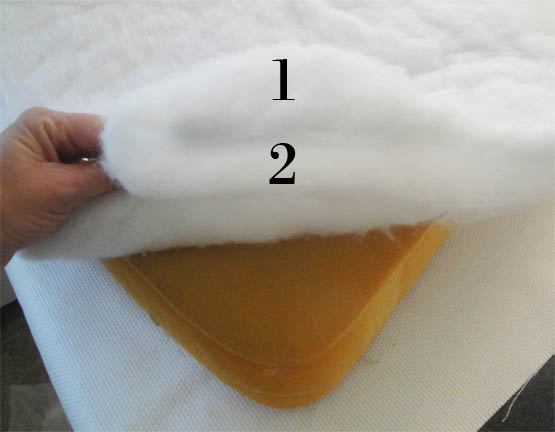
Next, pull out your new batting. I like my seats to be nice and cushy, so I chose two layers of batting.


Next, I laid out my fabric, then the two layers of batting and finally the seat. Make sure that the batting will wrap around to the underside of your seat. Then cut your batting. Usually my batting is about an inch smaller than the fabric on all sides.

Now it is time to get your staple gun and hammer. Start by pulling your fabric up and wrap it over onto the bottom of the seat. Use your staple gun to put in one staple. Hammer in the staple if it is sticking up.

Next you will pull the fabric across from your first staple and affix that side. Repeat this step as shown below:
Re-Upholstering the Chair Seat
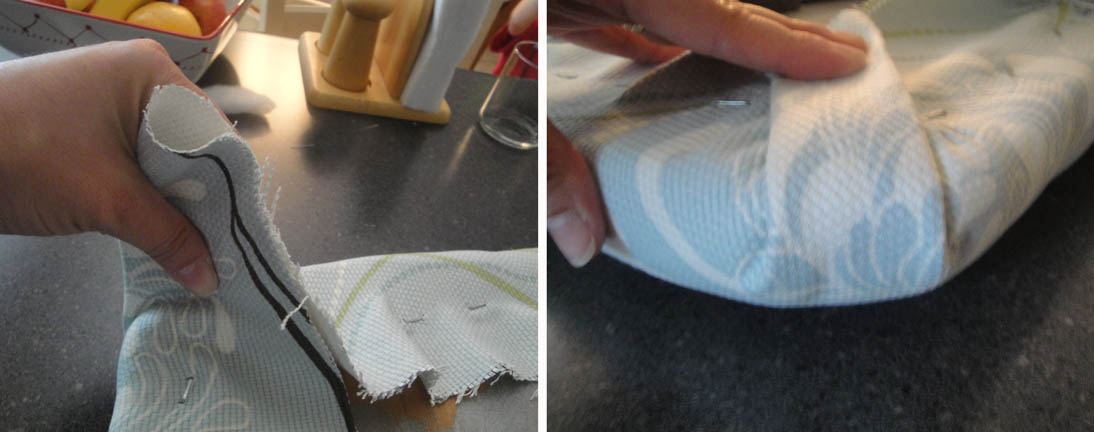
Now you can finish stapling the sides and hammering the raised staples. Leave about an inch to two inches from the corners. Pinch the corner fabric together as shown at the left. Then neatly fold it over onto the seat and staple a few staples to secure it.
Re-Upholstering the Chair Seat

Voila! You are done with the seat. Go ahead and set it on your chair and admire your work.

Be sure to join me here as I add the back and the finishing touches!