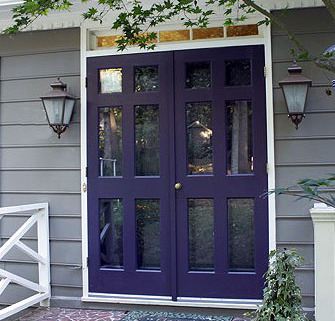
Purple_Honor_front_doors

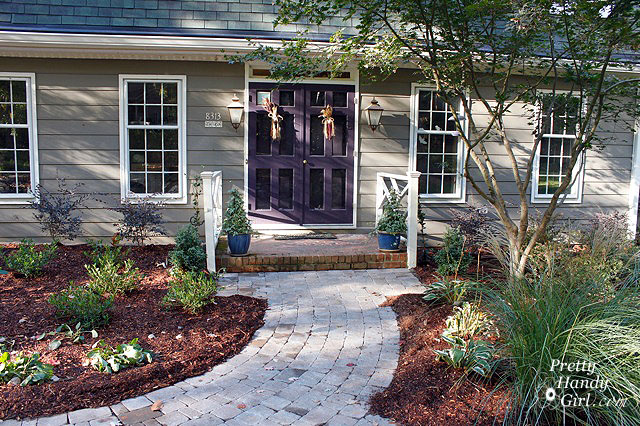
Sprucing up your entryway. If your home is like ours, we have two entrances. The front door,

and the door near our driveway. The latter is used about 95% of the time by us and our friends.

Creating an inviting entrance for yourself is so important for falling in love with your home. Start sprucing up your entryway!

Think about it this way: How many times do you go in and out of your home through that one doorway? How many times do guests go in and out of that doorway? Do you follow me? So, it is you who should be welcomed home to your lovely home first and foremost!

This is what our family entrance looked like a few months ago:

How I lived with that ugly brown aluminum door for 3 years, I will never know. And let’s not even talk about that little red CPI security sticker!

Lucky for us, a neighbor sold us her full view storm door when they added a garage onto their home. Had they not, I probably would still be scouring the Habitat ReStore. Or at least I would have painted the old door to match the house or use a more inviting color than doo-doo brown.

After I installed the storm door, I made sure to repaint the threshold as well. What?! You can’t see behind “Doo Doo Brown” above, is this?

Niiiiiice. Gold threshold with silver metal showing through. Not exactly my favorite rustic look. The easiest way to repaint it would have been to remove the threshold and spray paint it in the yard on a tarp. But, those screws weren’t going to budge for me. So, I masked off the entire doorway…

…storm door, floor, and…

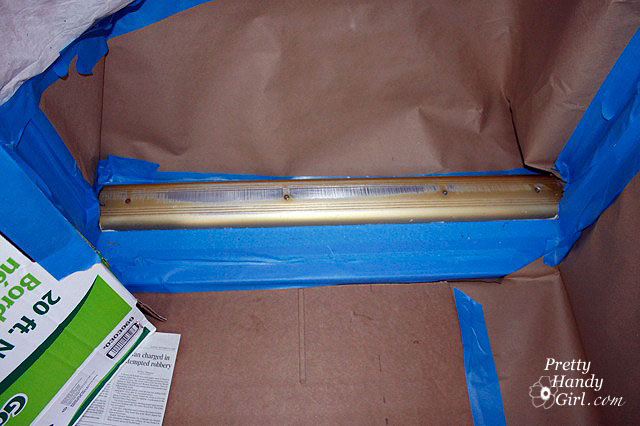
…the mudroom to spray paint  one piece of threshold brushed nickel. Okay, call me crazy, but I was on a mission to make my entryway more inviting for myself. And I wasn’t about to get brushed nickel on any other surfaces.

Much better, don’t you think? And I can honestly say that after using automotive primer and then the Rustoleum Brushed Nickel metallic paint, the threshold still looks like new!

But, I didn’t stop there. I added a kick plate in matching brushed nickel. And replaced the door sweep as well. And splurged on a new door mat. {Love my new mat!}

Finally, looking beyond the doorstep, I add some pumpkin topiaries, plants, wreath or other decorations (depending on the season) to greet you – errr, I mean me.

My good friend has this adorable planter near her side entrance (that she uses about 95% of the time, too.) It is the perfect place to switch out plants, or other decorations depending on the season.

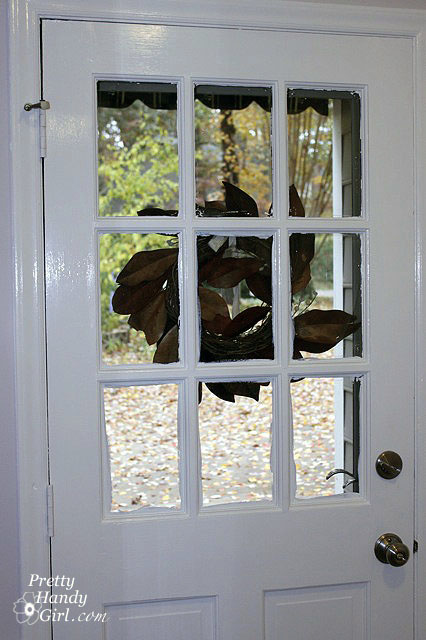
So, that takes care of the exterior, but don’t neglect the inside! I added a new coat of paint to the inside of the door (that my sweet departed maniacal dog had left claw marks all over it.) I was so anxious to freshen it up, I didn’t even tape off the windows.

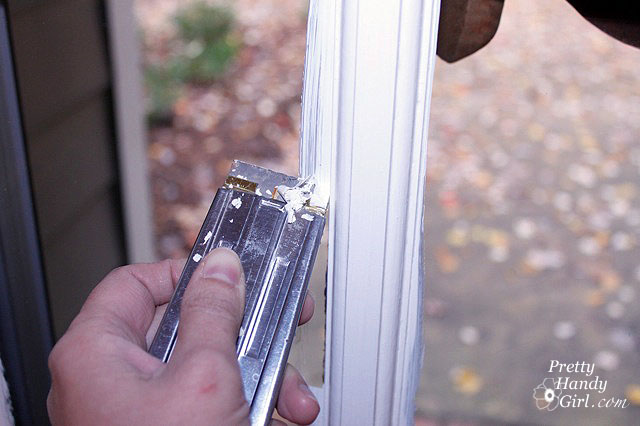
After the paint dried, I used a razor blade to score…

…and then scrape off the paint.

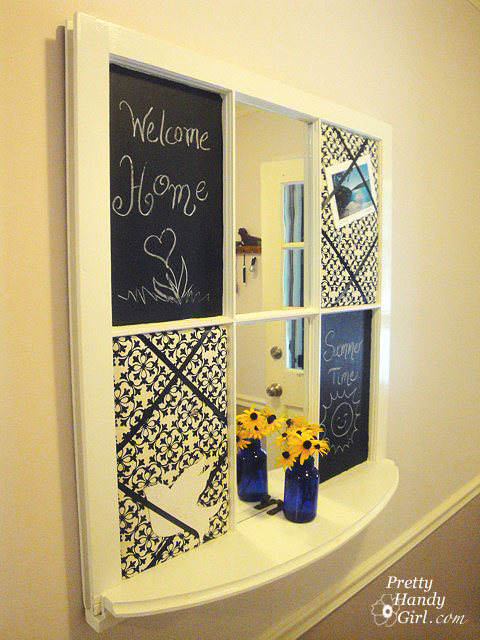
And as a final, welcome home, I hung my message center just inside the door.

I’m so happy to be home! And you should too so start by sprucing up your entryway.

So, what do you think? How does your home greet you? Does it welcome you with open arms or is it more of just a brief, “hi?”

Welcome back. Today, I’m going to show you how to maximize the amount of light that comes in your windows.

In my last post I talked about scraping and painting your ceilings to help reflect more natural light into your home. As we learned, more light can boost  your mood, making you happier and helping you love your home.

Today, as part of my continuing series “Fall in Love with Your Home February”, we will be focusing on the windows in your home.

If you have mini-blinds (well, in my case I had maxi-blinds), they can block up to 25% of the light coming in your room, even when they are raised! Look at your window blinds, curtains and/or valance. Do they cover more than half of a window pane? Or more than 3-4″. If they do, they are blocking light.

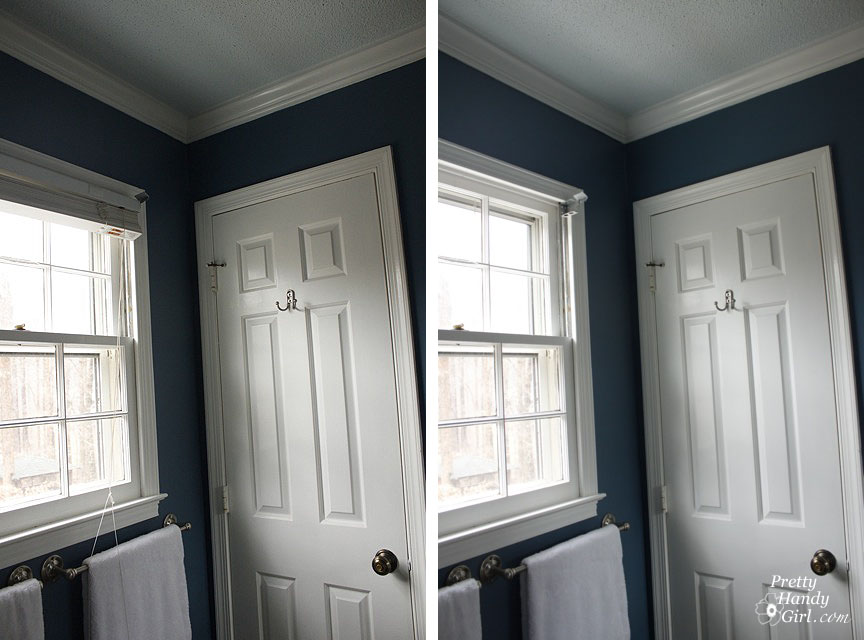
Take a look at this photo taken today in our bathroom. The “maxi-blinds” were completely pulled open (picture on the left), but look how much light they were blocking when I took them down (picture on the right). You can see there is more light being reflected on the ceiling and the door. And it is a cloudy day. Can you imagine how much light is blocked on a sunny day?

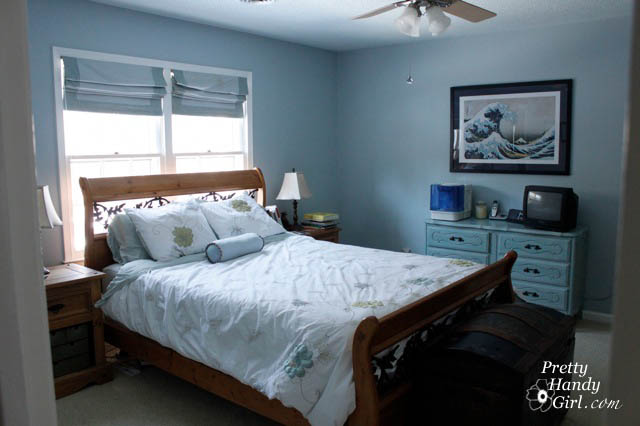
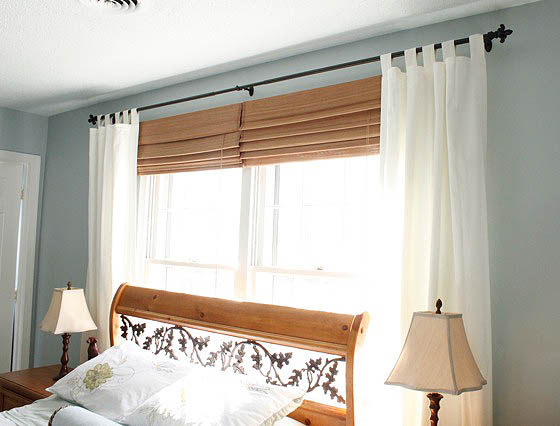
Next up, take a look in our master bedroom. The top pictures show the room with roman shades that covered one whole pane height, or almost half of the upper window. The bottom photo is taken around the same time of day with new shades hung much higher. The amount of light increased in the room is dramatic!
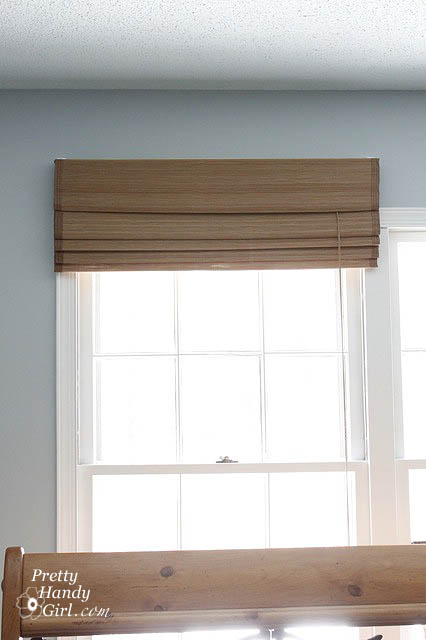
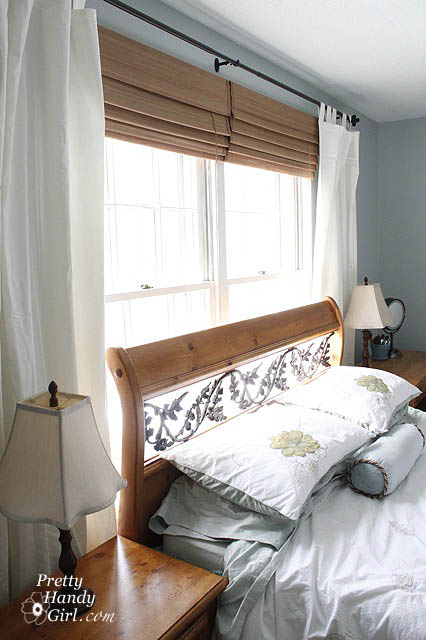
As you can see below, I hung the shades above the window, and they only overlap the window by about 3-4″.


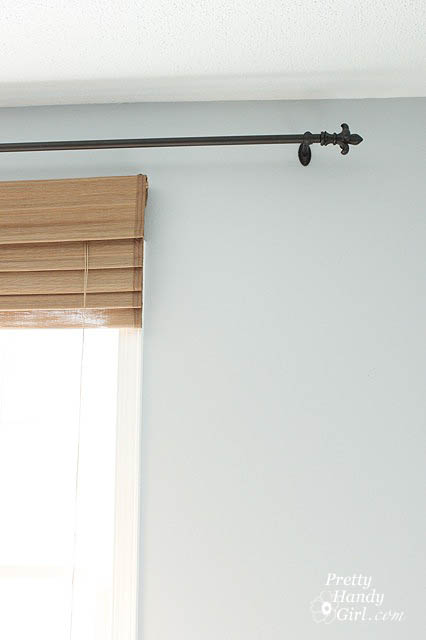
I also added curtains to the windows, but the rod extends far enough to the sides that the curtain doesn’t cover the window.
When opened, they only slightly cover the window casing.
What you saw above is akin to cheating the size of your window. If you install the blinds  and hang the curtains  outside the window, it makes your windows appear larger than they are.
Now, I’d like to bring in a professional interior designer so she can show you some of the rooms she has redesigned to maximize the amount of light coming into the windows.
Introducing Caitlin Campbell from Symmetry Designs in San Jose, CA:
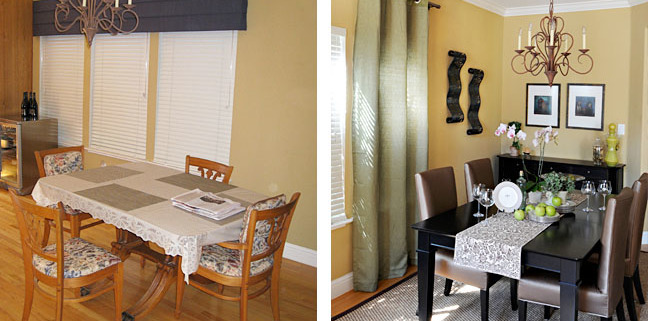
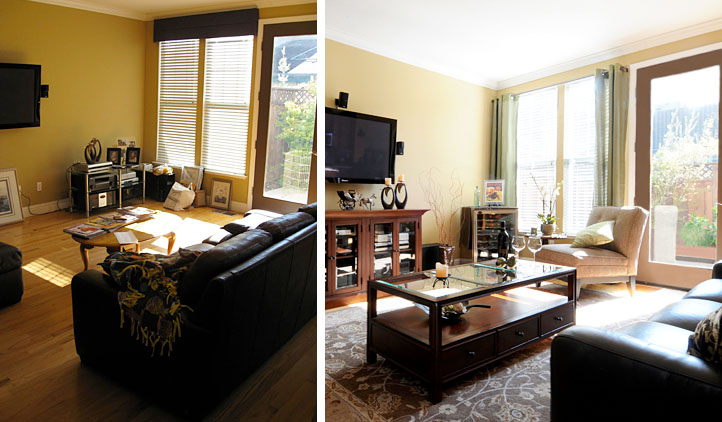
The photo below is from her portfolio. Believe it or not, the two pictures are from the same dining room. The photo on the left is the before picture. And the photo on the right shows the room with the bulky valance removed and curtains hung on the outside of the windows. Even with the new dark dining set, the room has a much brighter feel.
photo courtesy of Symmetry Designs
This living room that Caitlin designed, was a bit drab and dark
(even with an exposed glass door).
photo courtesy of Symmetry Designs
But, after removing the valance and opening the mini-blinds, this room beckons us to enter and enjoy. Look at all that natural light flooding in.

I understand that we all need privacy sometimes. So, feel free to draw your curtains or blinds at night. But, I beg of you, please open them every morning! Invite in a little sunshine to brighten your day. And find yourself falling in love with your home.

Disclosure: Those of you that know me, know that Caitlin is my sister, but she REALLY is a talented interior designer. Besides if I told you she was my sister from the get go you wouldn’t have paid attention to her fantastic room makeovers. But seriously, she is NCIDQ Certified and an Industry Member of ASID. So, if you live in the San Jose, CA and need some expert design advice, look her up!

A few products you might be interested in (commission based links):

Leaf Curtain Rod - Wrought Iron Leaf Curtain Rod – Wrought Iron
~Allow 3-4 weeks. Cannot express ship or ship to Alaska or Canada.


Acorn & Leaf Curtain Rod Acorn & Leaf Curtain Rod
Wrought iron acorn and leaf curtain rod. Available in three different sizes; 1/2″ Diameter. Made in the U.S.A. Curtain brackets sold separately (see link below). ~Allow 3-4 weeks. Cannot express ship or ship to Alaska or Canada.


120x60 Spring Summer 2011 New Collection

Hanging Curtains

Glad you came back to see how I hung the curtains in our bedroom. If you are just joining us, I hung some blinds the other day in a mini-makeover for our master bedroom.

Hanging Curtains

Hanging Curtains

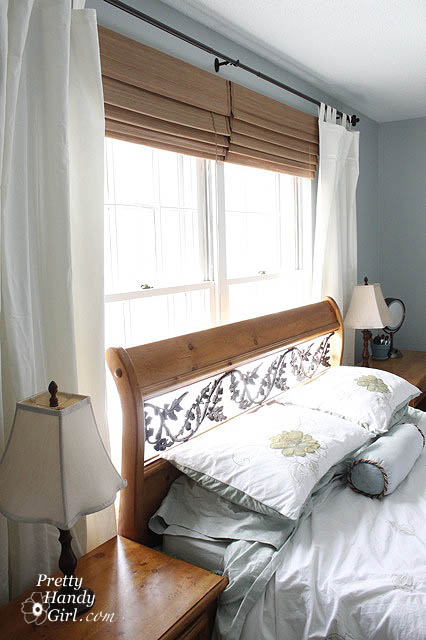
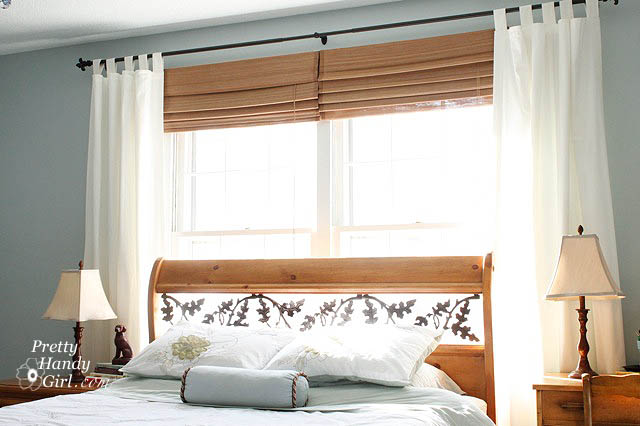
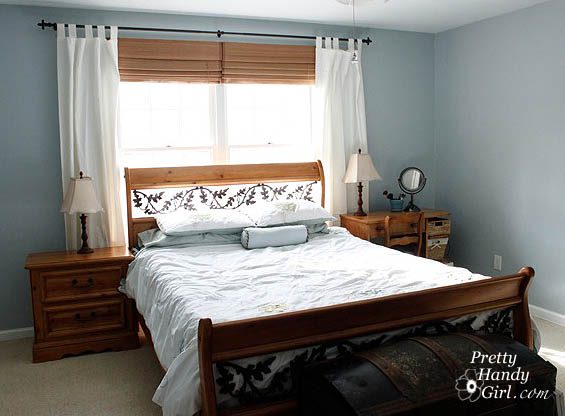
Then I hung a curtain rod and flanked both windows with some billowy white cotton curtains. I still can’t believe what a difference this made in the room.

Here is the dark and drab before:

Hanging Curtains

So, you want to hang your own curtains? I’m here to help you along with that.

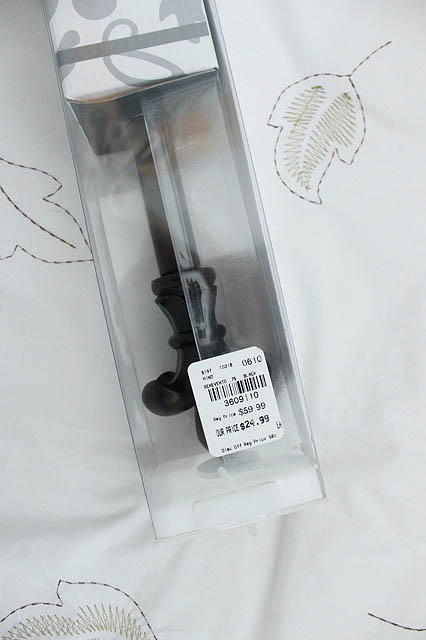
By the way, if you have a Tuesday Morning near you, check out their curtain rods! This extra wide one for spanning two windows was only $24.99!

Start out by holding up your curtain rod (preferably with a friend holding and you looking.) And mark the height of your rod on the wall.

Hanging Curtains

Take the time to check and see if there is a stud behind where your bracket will hang. If there is, check out my post HERE for hanging the bracket into a stud. All my brackets landed in locations without a stud behind them.

Hanging Curtains

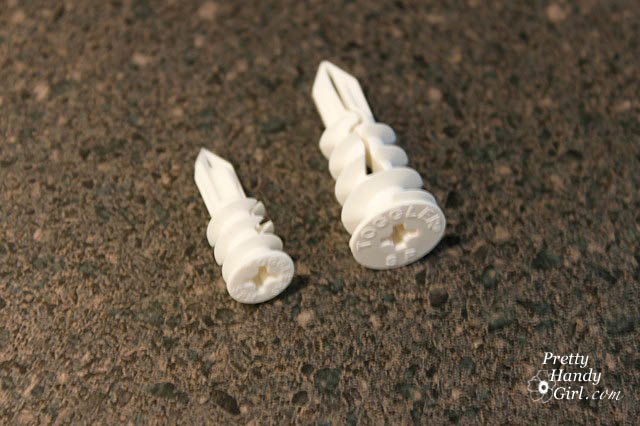
So, I grabbed some Toggler anchors and used them instead of the screws that came with the curtain rod.

Hanging Curtains

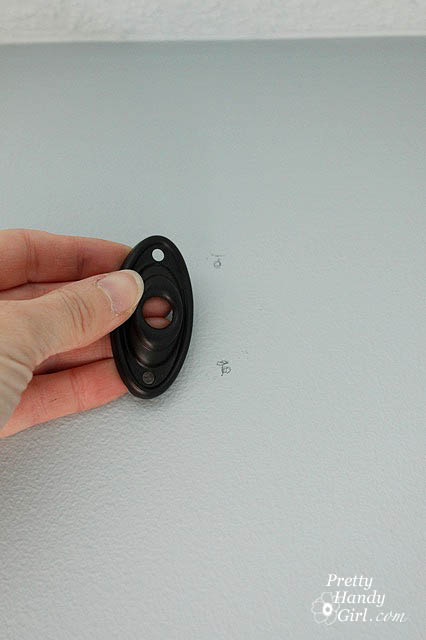
Start by tracing the screw holes in your bracket.

Hanging Curtains

Next screw the two screws that come with the Toggler anchors partially into the wall. This creates starter holes for the anchors.

Hanging Curtains

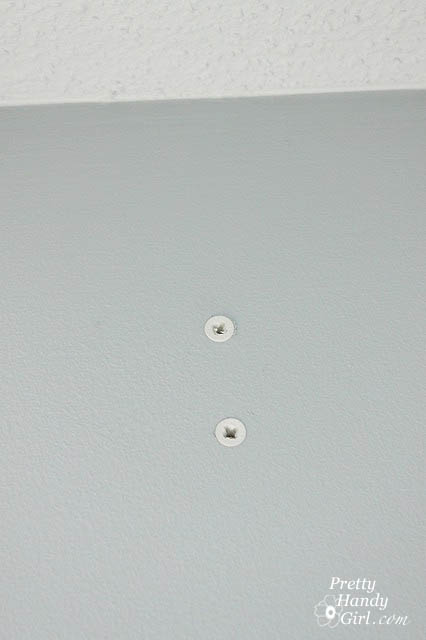
Remove the screws.

Hanging Curtains

Use a philips head screwdriver and screw the anchors into the wall until they are flush with the wall. Be careful not to over-tighten.

Hanging Curtains

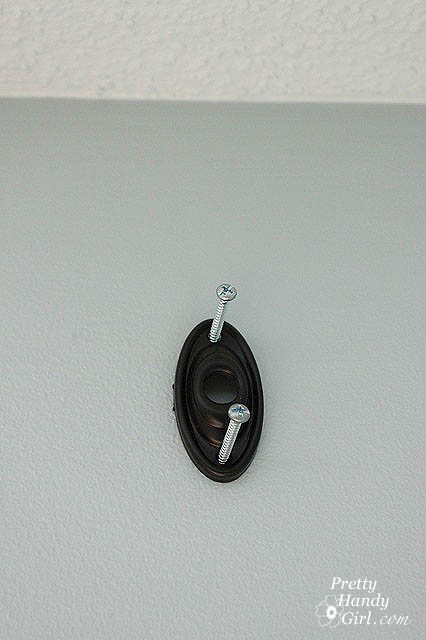
Line up your bracket on top of the anchors, and then insert the screws that come with the anchors into the wall.

Hanging Curtains

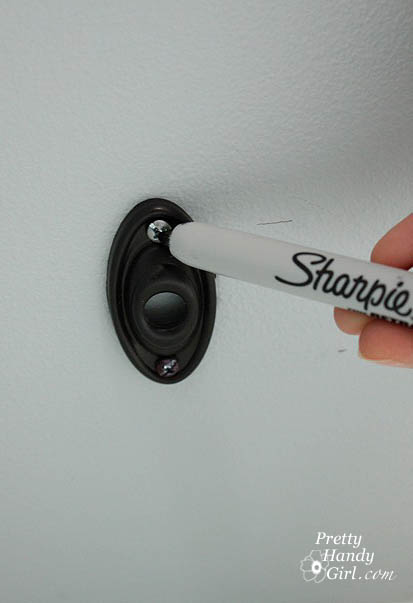
As you can see, the toggler screws are silver, but not for long! Grab a permanent black marker and color them black.

Hanging Curtains

Or if you are using white or brown brackets, you can simply paint them with acrylic craft paint, stain or primer. Your choice.

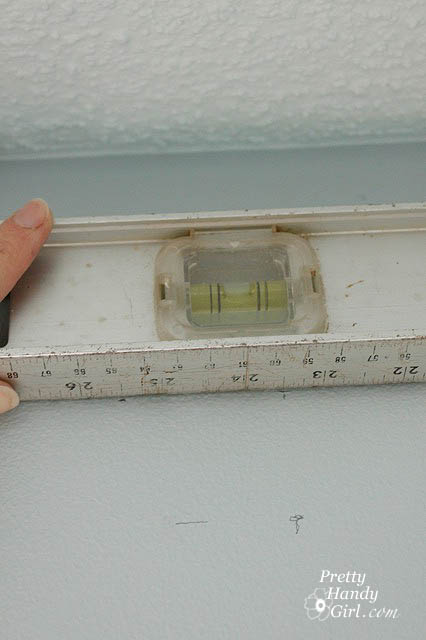
Next, using your level, rest it on top of the first bracket and make a mark on the wall where your next bracket will be mounted. This will insure that it is level with the first.

Hanging Curtains

Repeat the steps to install the second and third bracket (if you have a wide span of windows like I do.)

Hanging Curtains

Assemble the brackets per the instructions that came with them. And hang your curtains!

Hanging Curtains

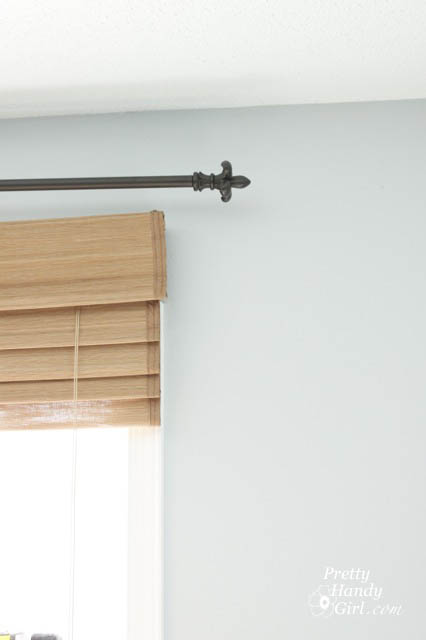
You may have noticed how far the rod extends beyond the window. This is a design trick to make the windows appear bigger, plus it allows for the maximum amount of natural light to enter the room.
 Hanging Curtains

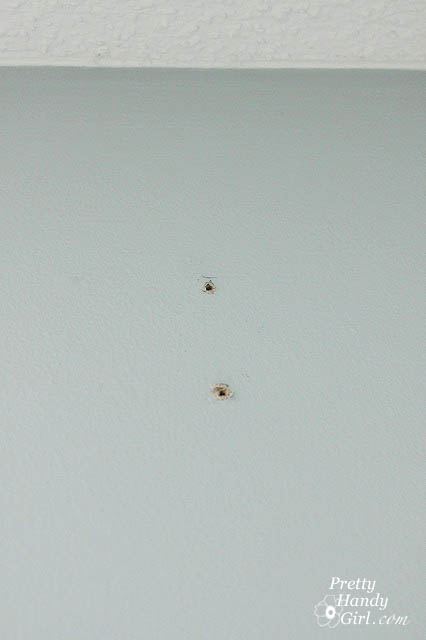
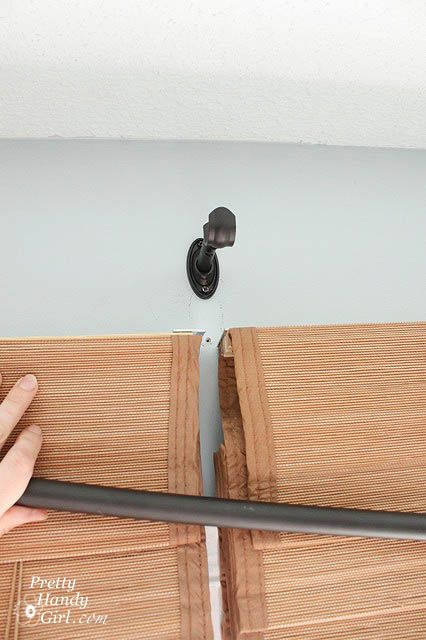
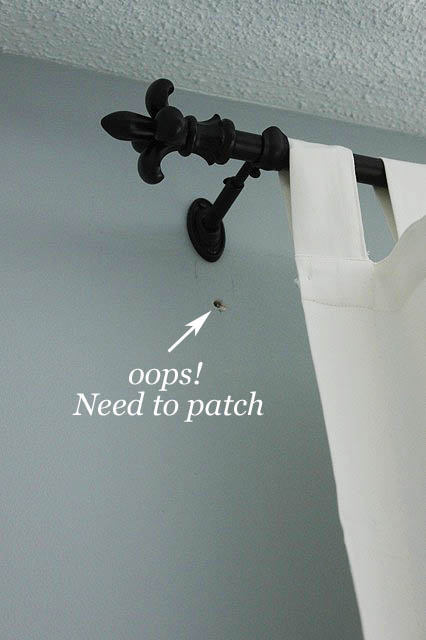
Okay, less you think that everything I do is perfect – remember how I said to have a friend hold the rod when you first decided how high to hang the rod. Well, I didn’t! I was too impatient. So, I ended up having to re-do the first bracket and was left with this.

Hanging Curtains

No biggie. I just patched the hole and applied some touch up paint. Good as new!

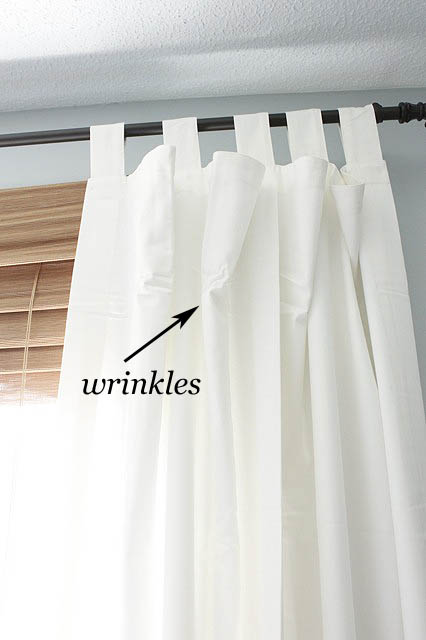
Except, I was too lazy to iron the curtains before I hung them. (Yup, I’m an instant gratification kind of gal, couldn’t you tell?!)

Hanging Curtains

So, I have for you a two-fer post. Two posts in one! Wow, your lucky day right?!

A No Iron Technique for Removing Wrinkles!

This is my favorite technique for removing wrinkles. I use it on everything! Slipcovers, curtains, sheets, and clothing I am already wearing.

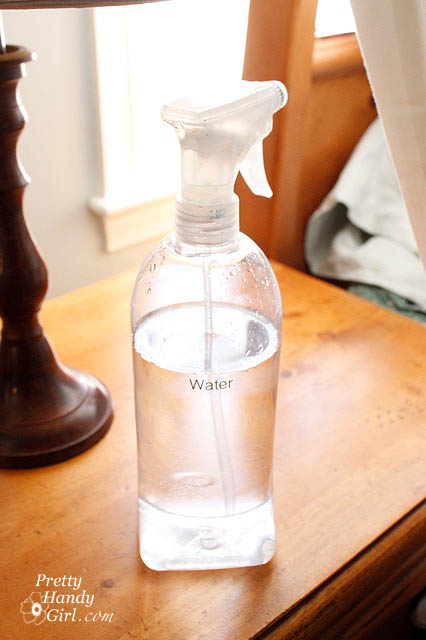
You will need one of these:

Hanging Curtains

Just a squirt bottle with plain old H2O in it. Nothing fancy. Set the nozzle to mist.

Spread out your curtains.

Hanging Curtains

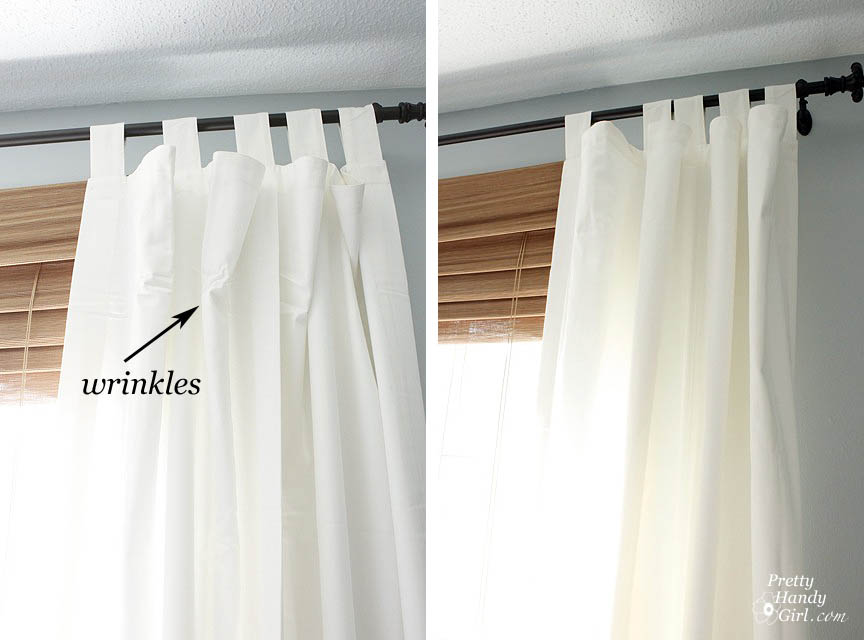
Then go to town spraying your wrinkled areas. When it dries the wrinkles are magically gone.

Hanging Curtains

Sometimes they might need another spray and some smoothing with your hands, but ultimately they usually come out.

Hanging Curtains

Only the stubborn wrinkles get to meet my iron.

As you can see below, most of the wrinkles came out, but we had party guests arriving in 15 minutes, so I left them as is and will iron them another day. Maybe.

Hanging Curtains

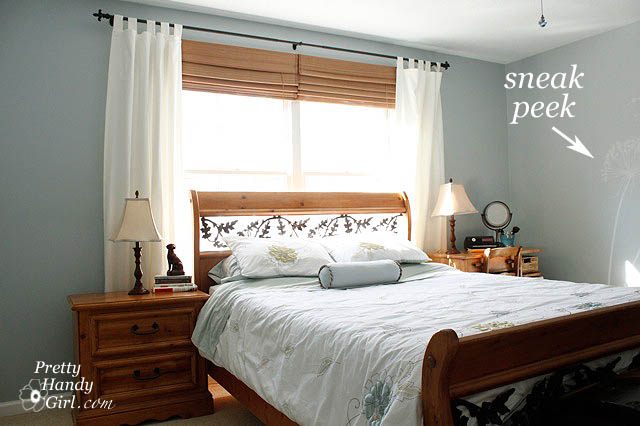
And one more look at my new curtains and blinds.

Hanging Curtains

Hey! Are you peeking at my new wall graphic I painted? You cheater, you’ll have to read my post where I will show you how to paint a wall graphic. In the meantime, I posted a picture of me working on it on my Facebook fan page.

Happy New Year! I love January 1st. It is a new beginning, with new goals, resolutions and a chance to start fresh.

We had an open house style party on New Year’s Day. I was talking with my friend Leslie about how little changes can really make a big difference in your home and attitude. It is better to make some small alterations to your home instead of waiting to make bigger changes. We all have many reasons for waiting:

  • Lacking Money
  • Lack the skills
  • Lacking a vision
  • Lacking time
  • Lacking motivation
  • Insert your own reason here!

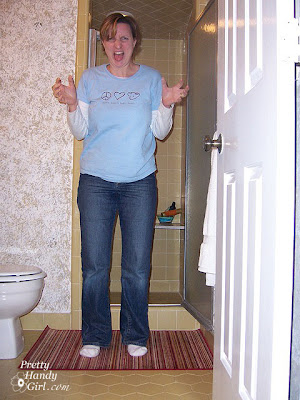
When we first moved into our home I didn’t want to do anything to our master bathroom because I knew we would need to gut it one day.

But, I can’t tell you how awful I felt every morning as I stepped into that hideous bathroom.

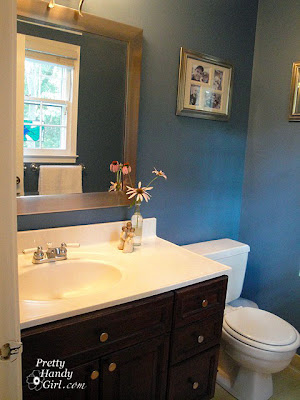
Finally I stopped waiting and made a few changes. I didn’t rip out the tile, I just added some paint, stain and new fixtures. And it really made me happy! Sure I still have to step into a harvest gold tile coffin to shower. And I will have to wait until we have the funds to renovate the room one day. But, at least that room makes me happy for now.

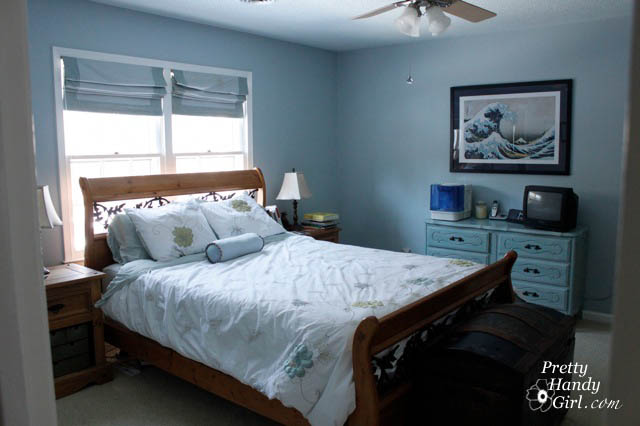
So, in the spirit of a fresh start, I decided to give our Master Bedroom a little face lift this week.

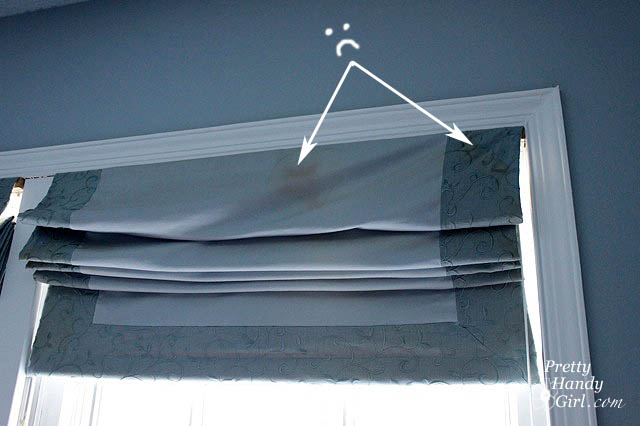
Our bedroom was the first room we painted when we moved in, and I stopped loving the room last year. Especially when these showed up!

Yuck, I’m not sure how our roman shades got stained. I think it might have been from the vaporizer I run in our bedroom because I can’t find any other places where water could have penetrated the window.

I admit, I was in a holding pattern. I found myself stalling, thinking that I had to wait until we scraped our ceilings. Then we could re-do that room.

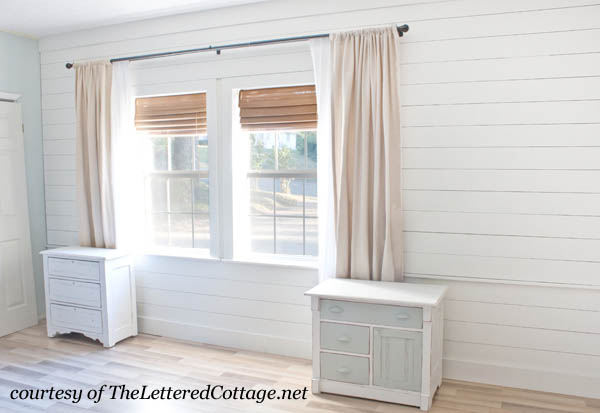
The truth is that I had all the supplies to give our room a mini-facelift. Back when Layla posted about her new window treatment in her master bedroom, I was all eyes!

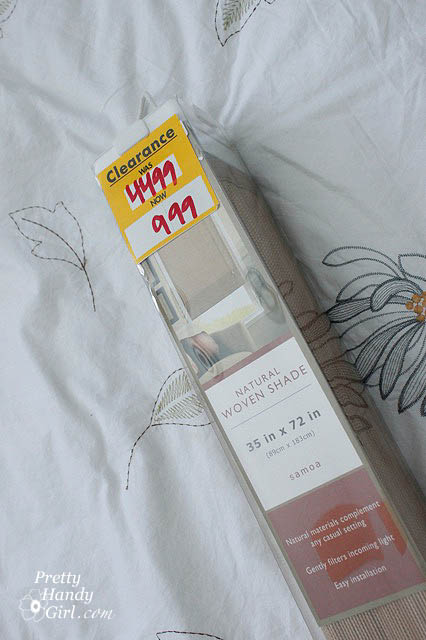
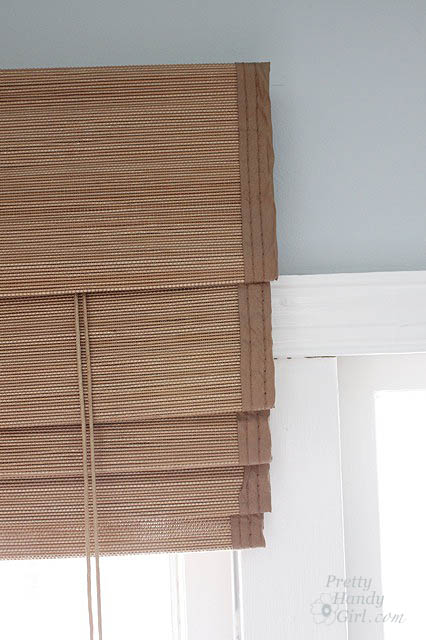
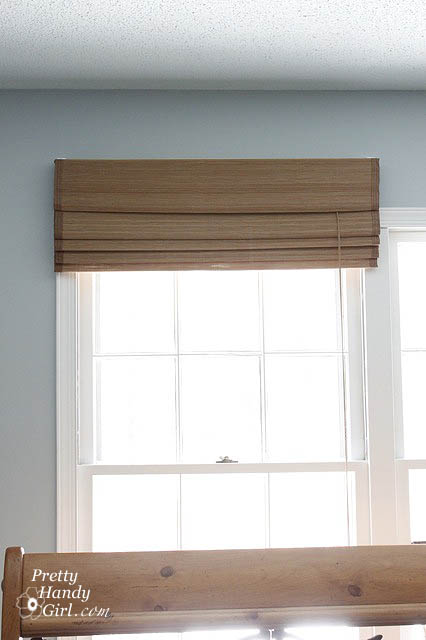
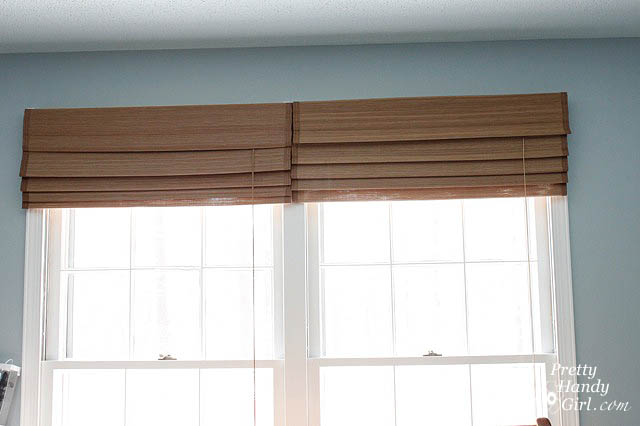
Our bed is situated in the same location as her’s (in front of two windows.) I had struggled with what to do with our bed and those window until I read her post. Luckily, I was able to find these natural grass shades at Bed, Bath & Beyond on clearance. $9.99 per blind! SCORE!

Thank you Layla@TheLetteredCottage for sharing your window treatments!

But, I waited another 2 months to do anything with those blinds! Sheesh, I can’t believe it took me that long to pull on my big girl “go ahead and do it” panties?

I started by removing the old stained blinds. Sadly I sewed them myself only three years ago. Sniff, sniff.

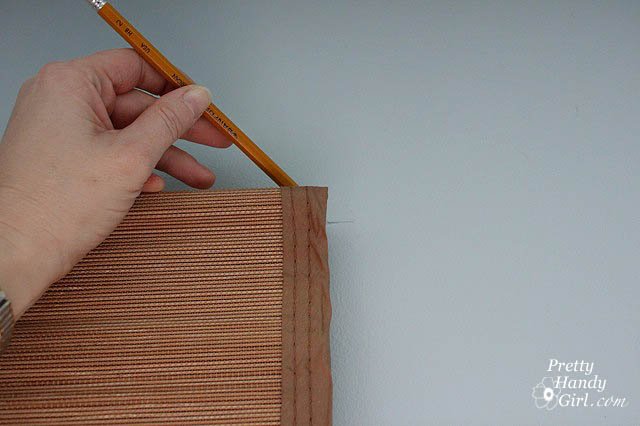
Then, I held up the new blinds to the height I wanted them. I hung them higher than the window to give the illusion that the window was taller, and also to be sure not to block too much natural light from the room.

Made a mark on the wall with pencil.

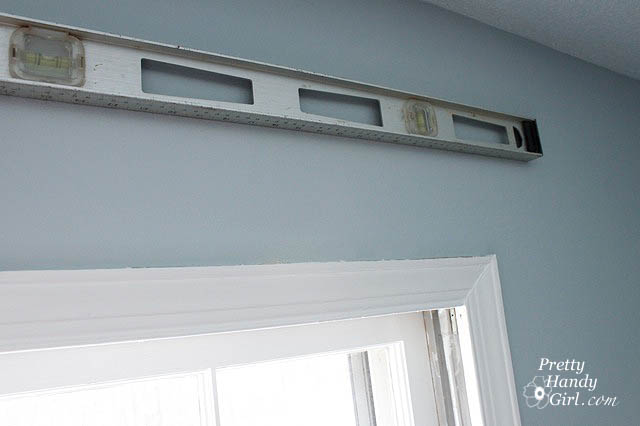
Next, I used a level to mark a line across the whole window.

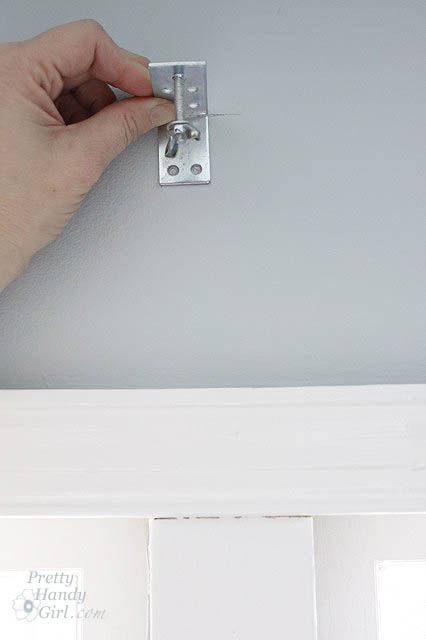
I measured the width of my blinds and held up the first bracket at one end. Lucky for me I had already located a stud near the one end of the blind. (Read about stud finding HERE.)

Here is the first trick you NEED TO KNOW about hanging any window treatments! Those screws that come with blinds will not hold up your window treatments over the long haul even if you are screwing them into a stud. Especially if you have small children that may try to play Tarzan on them one day.

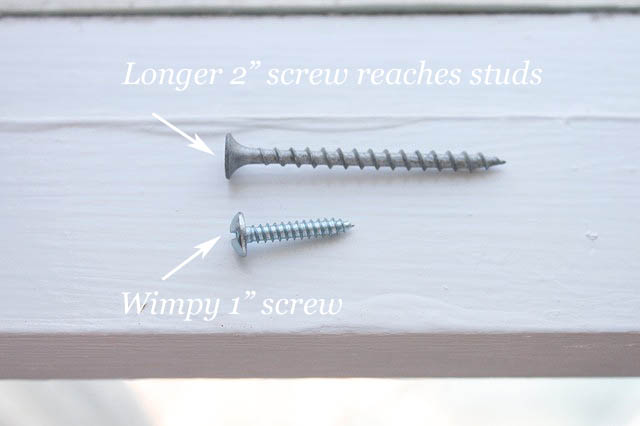
The wimpy 1″ screws are not long enough to go through the drywall and into your studs. And DO NOT expect them to hold if they are simply screwed into drywall either.

Be sure to purchase some extra drywall or wood screws that are 2″ long.

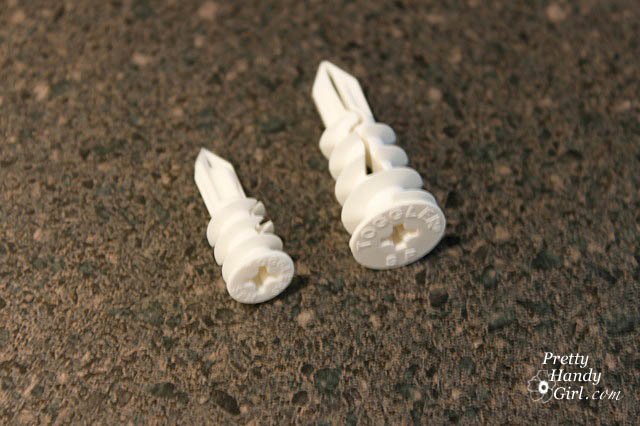
Also have some of these wall anchors on hand at all times! They screw into the wall when a stud is not behind your bracket. I can’t tell you how much better these are than those cheap wall anchors that you get for free.

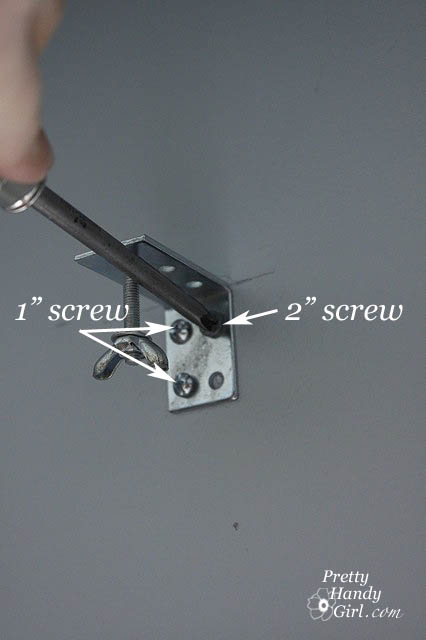
Next I drove the screws into the bracket using my cordless drill. (Finishing off at the end with a screwdriver.) I used two of the wimpy screws and two longer screws.

I repeated the process to hang the other bracket. Then followed the directions for hanging the blinds I bought.

I was able to hang the other side the same way and used my level line to make sure both blinds were hung at the same height.

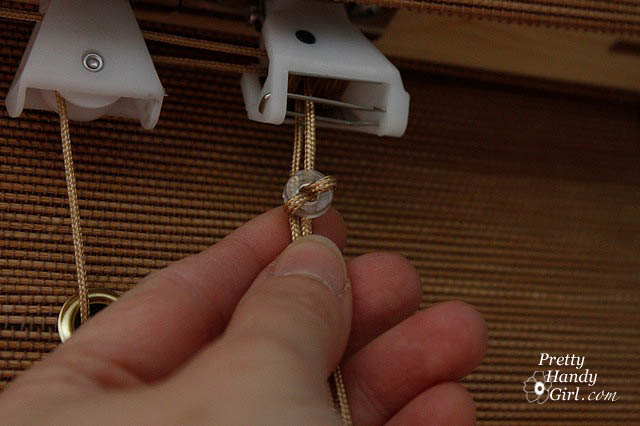
Next I adjusted the cord stop and pulls to fit our windows. Because the blinds weren’t custom made for our windows, they hung down below the window sill. I started by closing the blinds to the bottom of our windows. Then moved the small stop bead to the top of the cord.

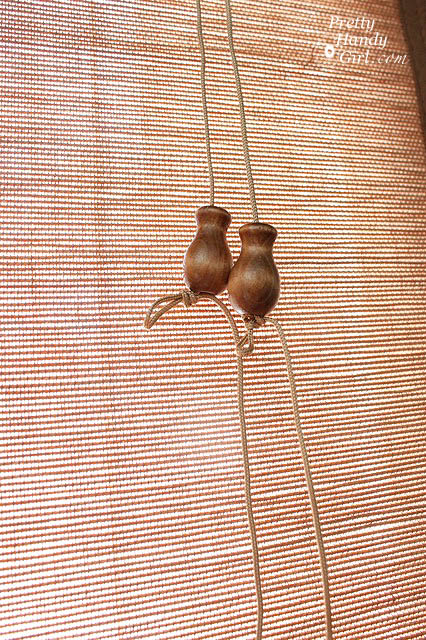
Next I moved the pull knobs to a location in the middle of the blinds, added new knots to hold them there and then cut off the excess.

Next up on Pretty Handy Girl. How to hang curtains and a no-iron way to iron your curtains!

Plus, I have some more frugal changes that cost me – ummm – nothing! I added a big graphic element to the side wall (Tutorial HERE.) I know, sorry to tease you like that, but if you follow me on Twitter, I gave away the secret there.

Until then, I encourage you to embrace the New Year by making a small change to a room you really don’t like.

  • Try hanging a new picture.
  • Try hanging new blinds or curtains.
  • Cover up something you don’t like with fabric.
  • Buy some new throw pillows.
  • Change around your accessories.
  • Or switch out your bedding.

If you have a little more time and energy, It really is amazing what a new coat of paint can do for a room!

So, please don’t wait. Make yourself happy! Change out something today! It doesn’t mean you have to buy something new.
I am planning on swinging by our local Goodwill this week. You should have seen the lines of people donating their items before the new year (myself included!) I bet there are some treasures to be found this week.

Addendum: Monique sent me an email asking if she would be at risk of electrocuting herself when using the longer screws. Good question Monique. Here is my answer:

When I used the 2″ screws I was screwing them into the studs. See THIS post to determine how to find a stud. It is about halfway down the post past the bench assembly. Electrical is not normally in a stud, occasionally it is run through a stud, but the 2″ screw is actually only penetrating the stud about 1/2″ to 3/4″. Sometimes electrical wires are fed through a hole in the stud, however, it is normally centered in a 2″ x 4″ stud, so about 2″ back. But, normally electrical is not run up near the ceiling through studs (where I was hanging the blinds). The electricity for your outlets is down near the outlets. The electrical for your ceiling light would run vertical from the switch and up through the ceiling. Most of those wires are either loose in the cavity between the studs or stapled to the middle of the stud (about 2″ back).

If you are mounting your bracket into the drywall cavity (not a stud) I wouldn’t use just the screw. That is where I would use the plastic toggler anchors that I showed above. The cavity in the drywall is 3 3/4″ deep (the width of a stud.) Should an anchor touch the electrical (which that would be rare, it is sheathed in thick plastic and would normally flex away from the anchor. Plus, because it is plastic it wouldn’t conduct electricity.)

In other words, long explanation short, you don’t need to worry about shocking yourself if you are using anchors in the hollow areas and 2″ screws into the studs.

CloseUpWreath.jpg
Sneak Peek at my Christmas Wreath

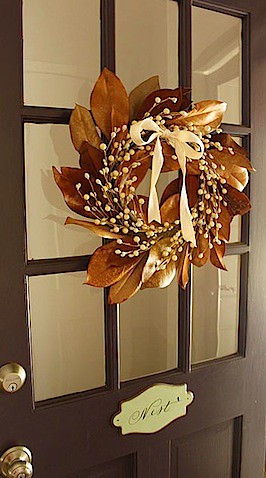
I am getting a lot of mileage out of my white base wreath I bought at Target several months ago. With it I’ve been able to make a Magnolia Leaf Wreath for the fall.

welcomewreath.jpg

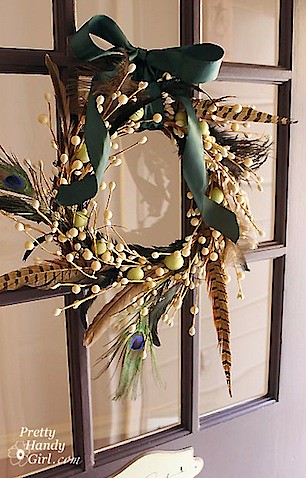
I made a Feather Wreath for Thanksgiving.

SideViewWreath.jpg

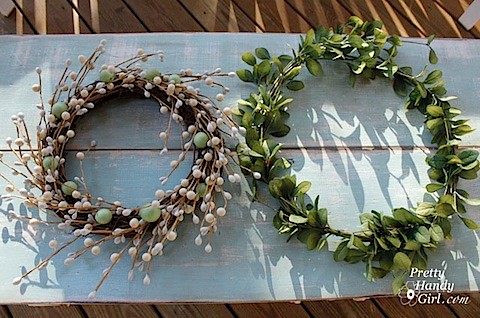
Now it was time to give the wreath an injection of Christmas spirit. I removed the feathers, but left the green nuts on it. I had a green fabric leaf wreath that I made out of some floral filler stalks. All I did was twist 4 of the stalks into a circle shape and secure with a few pieces of floral wire.
2Wreaths.jpg

I set my white base wreath inside the green leaf circle.

TogetherasOne.jpg

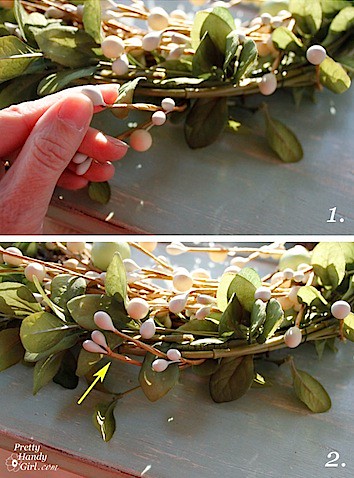
To secure the two together, 1) I fed some of the base wreath twigs under the leaf wreath and 2) twisted them over to hug the green leaf wreath.

FoldUpSpring.jpg

That couldn’t be any easier! No glue, no mess.

I compared two different ribbons next to my wreath and ultimately chose the black and white one.

2Ribbons.jpg

Tied a pretty bow and stood back to admire.

BandWWreath.jpg

Hmmm, I like it, but it just wasn’t feeling Christmasy enough, so I quickly tucked some red floral sprigs with teeny bells on them into the wreath and gently curved them to match the shape of the wreath.

FinalWreath.jpg
Now that is more like it!
In less than 10 minutes I have my Christmas wreath! This base wreath has been the best $10 I’ve spent all year!

I’m going to try to use this wreath all year and will be sure to share the transformations with you.