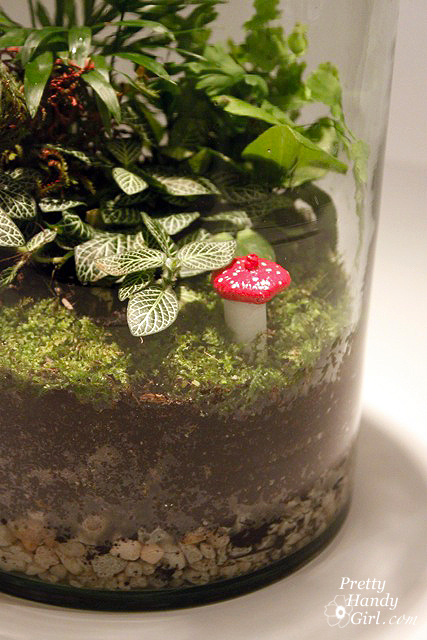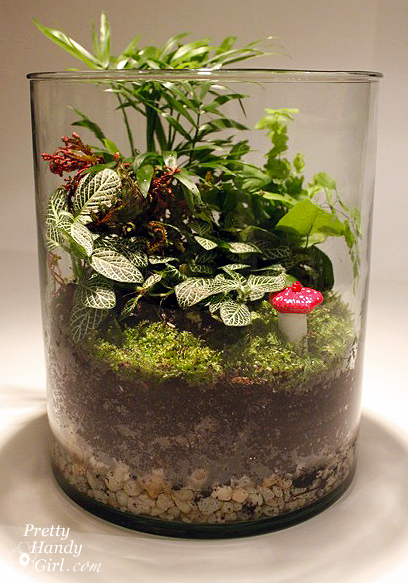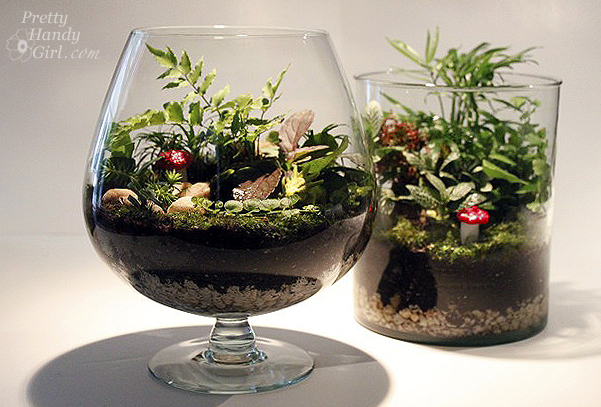
Did you see the cute little red and white mushrooms in my terrariums that I made? They were super easy to make. I can show you how and this will only take a second.

Materials:

Instructions:

Mark the height you want your mushrooms to be on the dowel rod. Add 1/2″ to the height for anchoring it into the soil. Cut your dowel rod (or a branch in a pinch.)

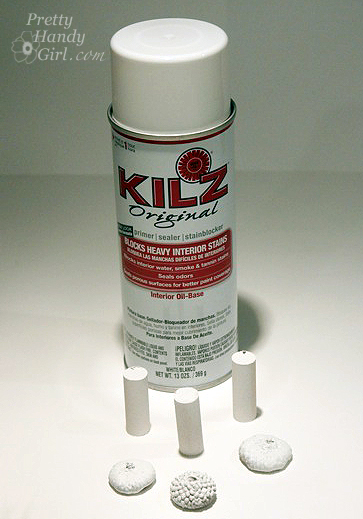
Spray your cut dowel rods (or branches) with spray primer. Be sure to coat all sides. Spray the acorn caps at the same time.

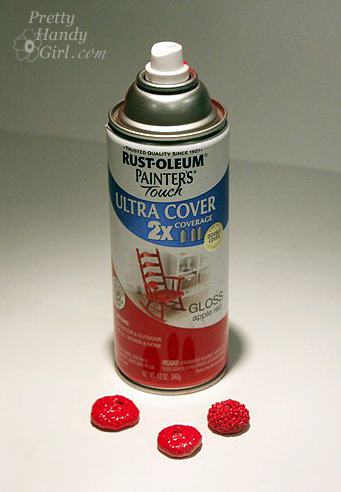
Spray paint your acorn caps red.

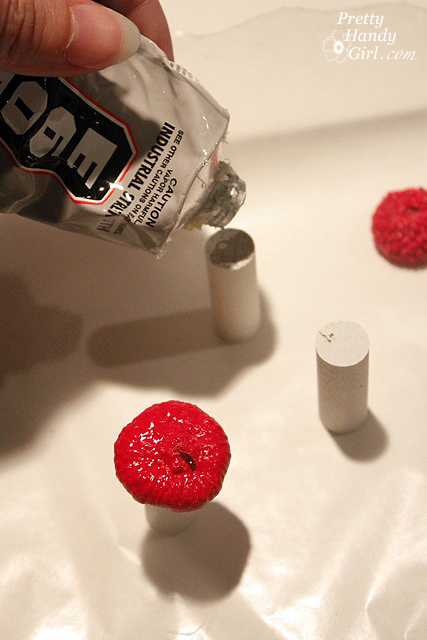
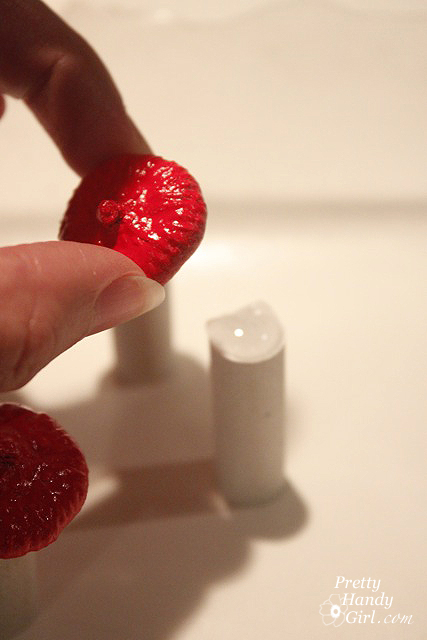
After the paint has dried, glue the acorn tops to the dowel rods using E-6000 glue.

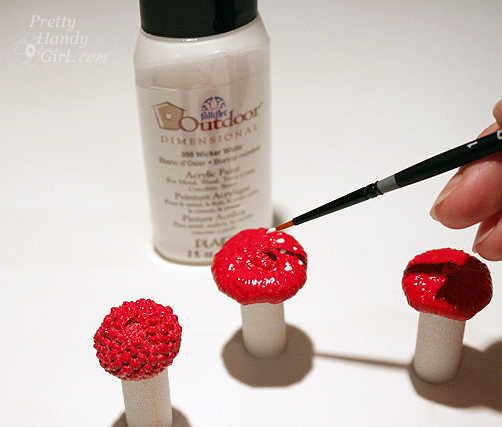
Let the glue harden (about 30 minutes.) Add some dots of white paint onto the red caps.

Press your adorable little mushroom into the soil in your terrarium and then sit and wait for a fairy to move in.

See, I told you it would only take a second! Well, besides waiting for the paint to dry, this project takes less than five minutes.

I have a mushroom leftover, but I don’t have any more terrariums. Any ideas what I can do with a little lone mushroom?

UPrinting.com Giveaway Winner

I have to tell you that I really enjoyed reading all your comments on the UPrinting giveaway. Some of you had some amazing photos that you really wanted to have printed. And some of you brought tears to my eyes when reading about photos of loved ones who have passed on. You made me think about both my grandmothers who passed away over 5 years ago and who I still miss almost daily. I wish I had a photo canvas for each and everyone of you. If you didn’t win, I really hope you will look into having your photo printed as a rolled canvas and stretch it yourself to save money. Your photos are too precious not to! (Oh, don’t make me cry again.)

We do have ourselves a winner of the UPrinting.com rolled canvas! And she has a special photo in mind.

Deborah wrote: “Thank you for posting this. I would never have known you can do this yourself. I would love to have my favorite picture of my 3 kids printed in a huge size for over out sofa in the living room.”

Deborah is a blogger and homeschooling mother of three children. This month she is writing a series (inspired by The Nester) on 31 days to Slash Your Budget Painlessly on her blog Green Willow Pond.

Green Willow Pond

She has some great tips and ideas on saving money. From making your own linen napkins to making your own laundry detergent! Truly a woman after my own frugal heart.

Congratulations Deborah. Please check your email and get back to me asap to claim your prize.


Make Your Own Terrariums


Terrariums are making a comeback in home décor. Gone are the octagonal mirrored terrariums. They have been replaced by sleak apothecary jars, tall cylinders and lidded glass vessels (to name just a few shapes.)

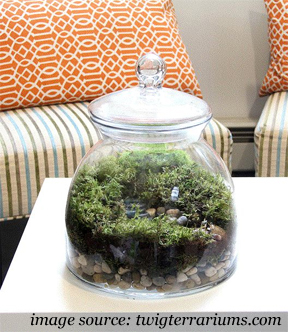
Twig Terrariums has an amazing array of beautiful ready made terrariums or DIY kits for sale! Some of them have stunning details, right down to a little miniature person inside the lush world. The terrarium below sells for $200.

If you want to create your own version that is a little more budget friendly, it isn’t hard to do. In fact you can get some plants from a local nursery or as close as your own backyard!

Materials:

  • Glass container (with or without a lid)
  • Small decorative pebbles or pea gravel
  • Potting soil
  • Live Moss
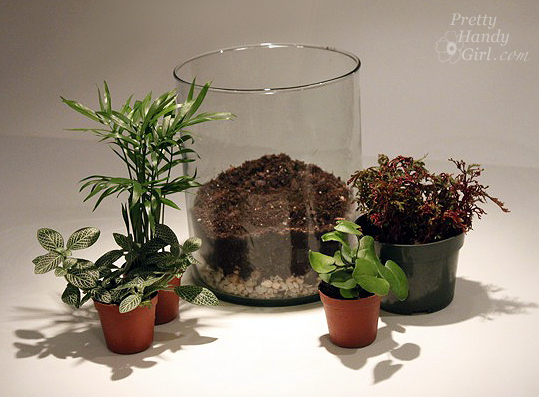
  • Terrarium plants (small shade loving plants)
  • Potting shovel
  • Water

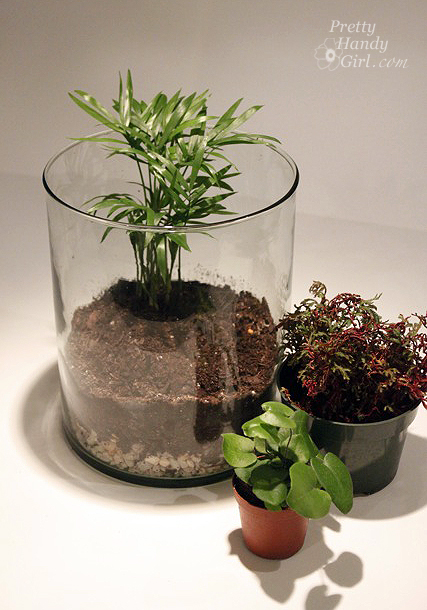
1. Clean your glass container with soap and water and dry it.

2. Add a layer of gravel or decorative pebbles to the bottom of your glass container.


3. Add a layer of potting soil. No need to level it.


4. Collect your plants and think through the plant placement in your head.


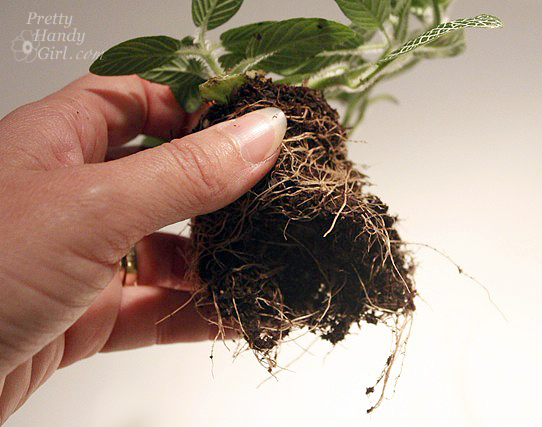
5. Gently remove a plant from the pot.

If it is root bound (all the roots are wound tightly around the bottom) gently tease some of the roots free and break apart the roots at the bottom of the plant.


6. Insert your plants into the soil.

Put taller plants at the back and the shorter ones in the front so you can see all the plants.


7. Cover the soil with moss. You can cut or tear pieces to fit flush with the edge of the terrarium.

8. Fill your terrarium and let the water soak in. The water should reach the top of the rocks. Check the water level a few times a week and be sure to refill when the water gets low. If your terrarium has a lid you won’t have to water as often as a lidless variety.


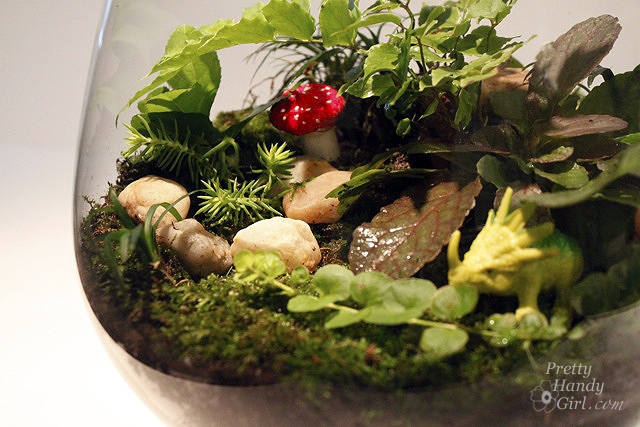
9. Add any decorative embellishments like these faux mushrooms (tutorial HERE)…

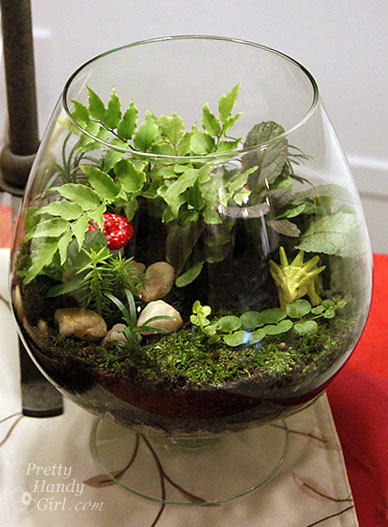
…or my sons’ favorite, a little plastic dinosaur!

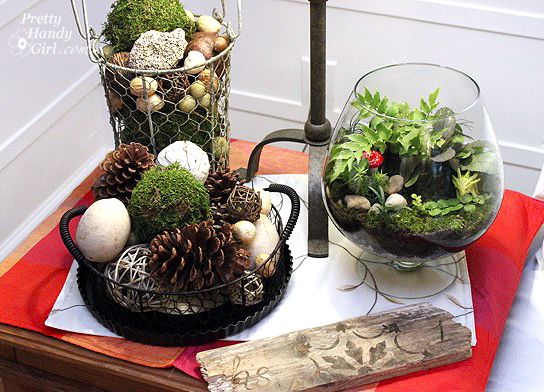
Terrariums make the perfect year round accessory. I have them prominently featured in my living room along with some other natural elements.

This version was made entirely with plants that I have growing in my shade bed. Small ferns, arugula and creeping ground covers. Plus, I added a few round pebbles for visual interest.

I might pick up a tiny person or two at a hobby shop next time I’m near one. Anyone seen any that look like the characters in “Land of the Lost” heh, heh, heh!


In the meantime, I’m loving my cost effective terrarium. Yes, terrarium singular, because the cylinder terrarium was a gift for our friends who dog sat for us.


I almost wouldn’t be surprised to see a fairy take up residence in one.

I’ve been busy working on some more projects to show you, so hang tight and check back soon! 😉 In the meantime, I hope you have a fabulous weekend and are enjoying Fall!


Tealight Centerpiece

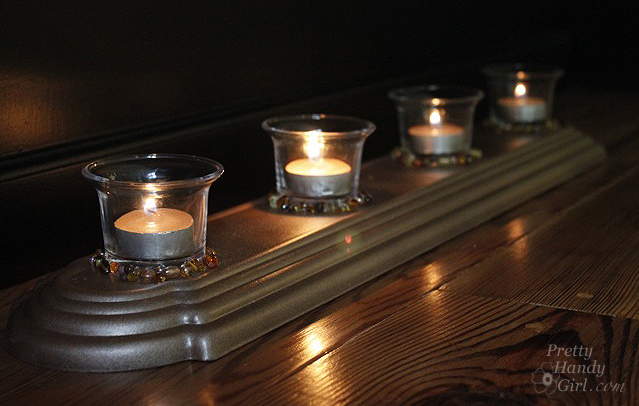
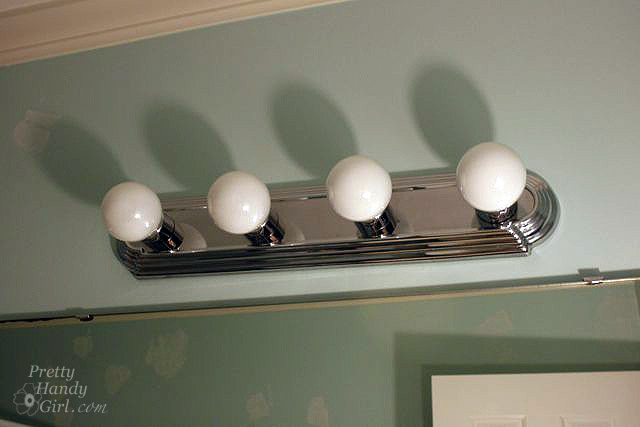
In my constant attempt to save things from the landfill, I came up with this nifty transformation of an old Hollywood light fixture.

Can you believe that I took this…

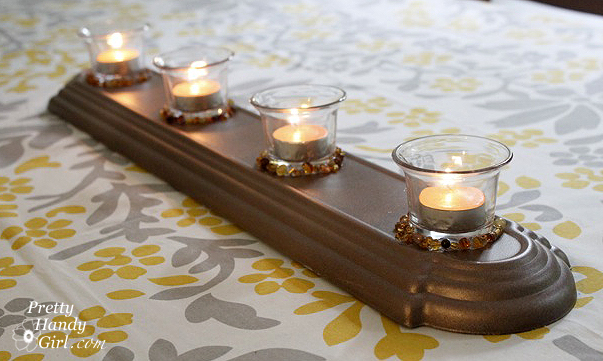
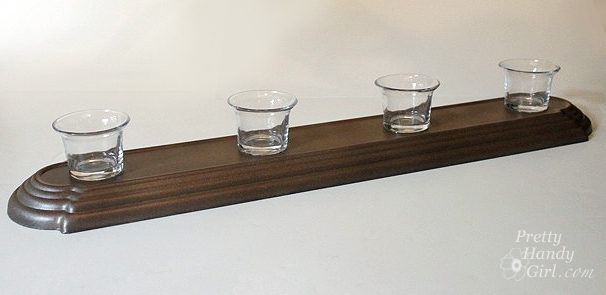
And turned it into this?

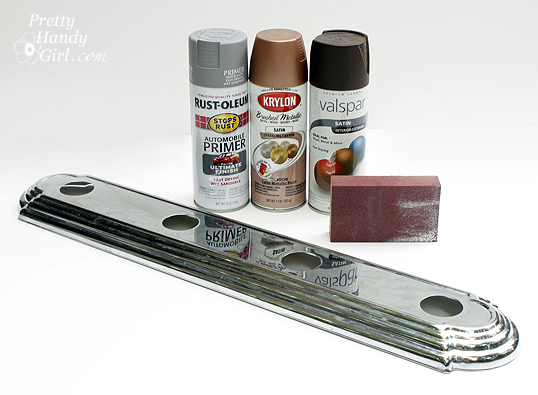
Materials:

  • Trim (canopy) piece of an old light fixture
  • Sandpaper or sanding block
  • Spray primer (automobile primer works best on metal)
  • Valspar java brown spray paint
  • Krylon sparkling canyon spray paint
  • Drop cloth (or plastic sheet)
  • Votives
  • E-6000 glue
  • Brown and amber beads
  • Hot glue gun and glue sticks
  • Scoop or spoon to pour beads from
  • Popsicle stick
  • Tweezers

You are sick of staring at that old hollywood light fixture in your bathroom. Come on, you can admit it. It’s okay, you are among friends. If you need help, I’ll even show you how to remove that dated style offender. And hey, if you are lucky enough to live in a house without one — but you still want to replicate this project — head on over to your local Habitat for Humanity ReStore. I guarantee they will have plenty to choose from.

1. Start by wiping off the light fixture (unless you are a fabulous housekeeper and yours doesn’t have years of collected dust like mine did.)

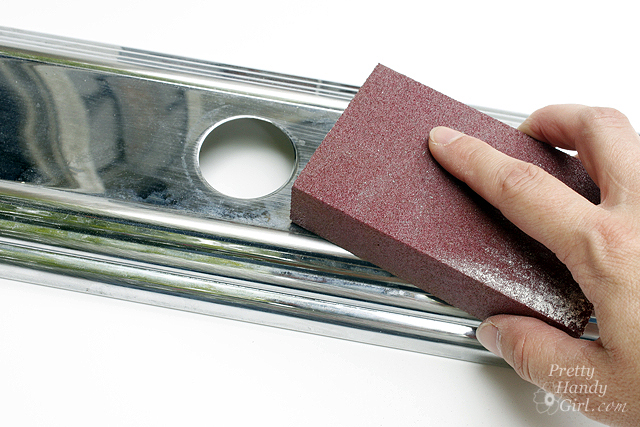
2. Scuff up the metal surface with sandpaper.


3. Spray the light fixture with the spray primer. Let it dry. Then spray a coat or two of the java brown spray paint. After the brown paint is dry, lightly dust the light fixture with the sparkling canyon spray paint until you are happy with the color.


4. Try to let the painted fixture dry overnight to allow the paint enough time to harden.


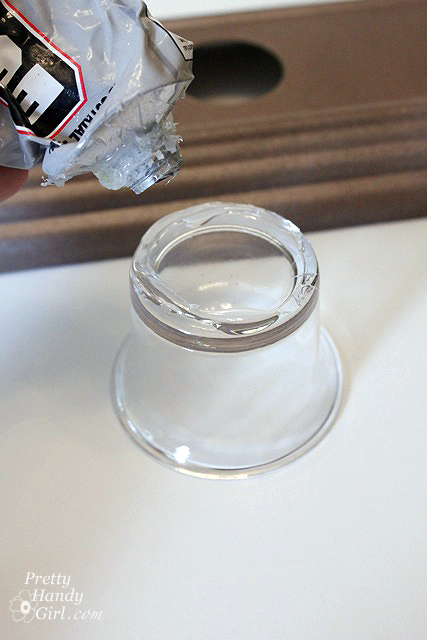
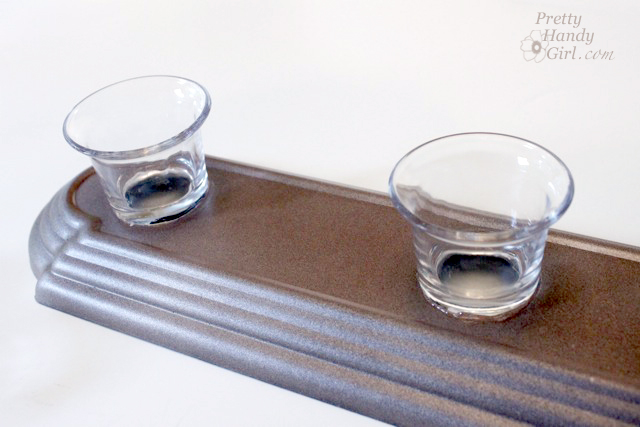
5. Clean your votives with some soap and water and let it dry thoroughly. Squeeze a line of glue around the bottom of the votive.


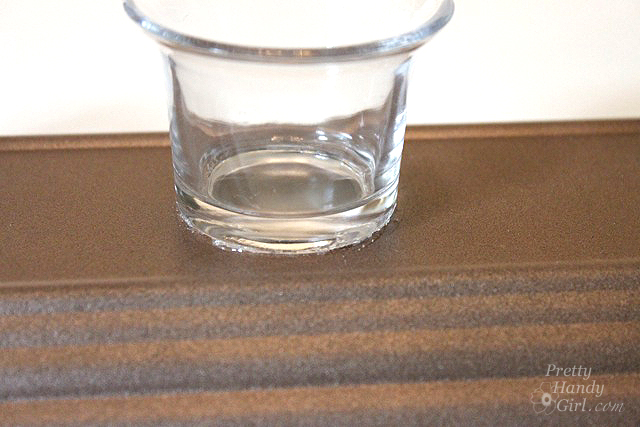
6. Center the votive over the hole on the light fixture.


7. Repeat for the rest of the holes.

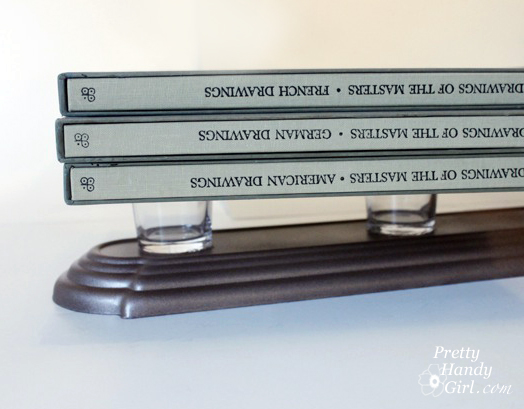
8. Weigh the votives down with some books while the glue sets (a few hours.)


9. Plug in the hot glue gun. (Have you read my Hot Glue Gun Safety post? If not, you should because your fingers will thank me.) While it is heating up, take out the beads you want to use. Set them in a little scoop or spoon.

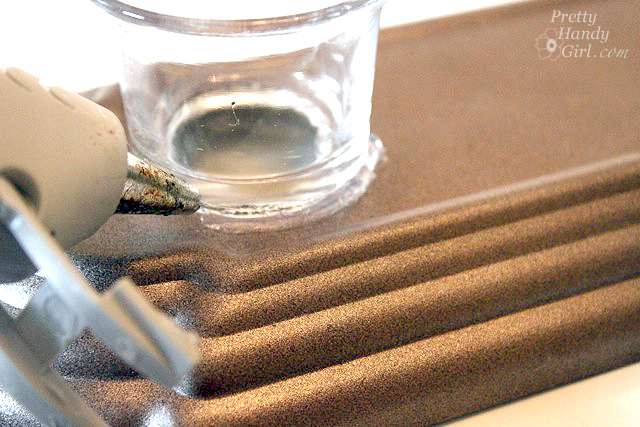
10. Run a bead of hot glue around the votive. Only work in a small 1-2″ section at a time. This will give you enough time to arrange the beads before the glue hardens.

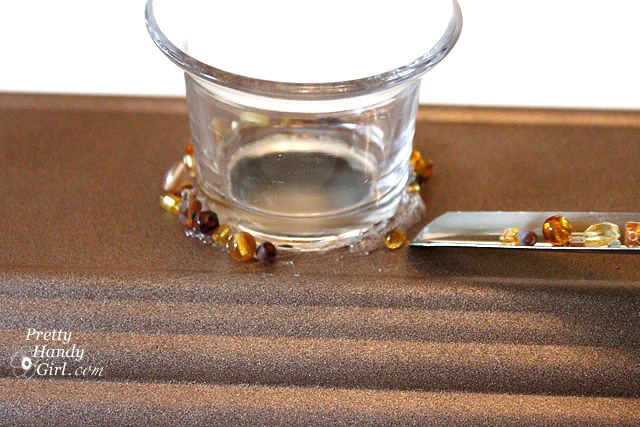
11. Pour the beads into the hot glue.

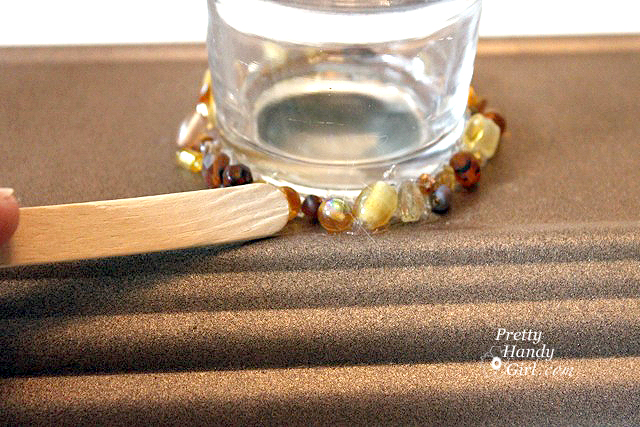
12. Use your popsicle stick to maneuver the beads into the glue.

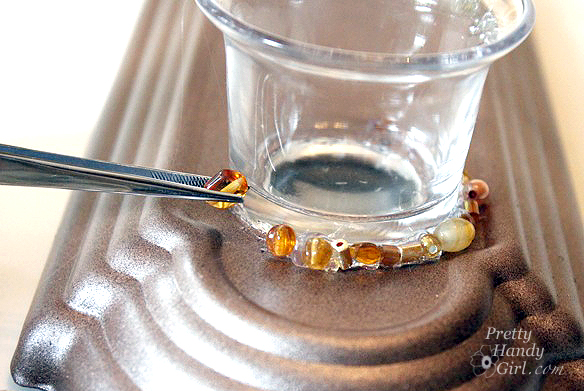
13. Use the tweezers to place any singular beads and perform any detail work.

14. Glue beads around the base of the other votives. Let the glue cool and then pull off any hot glue strings.

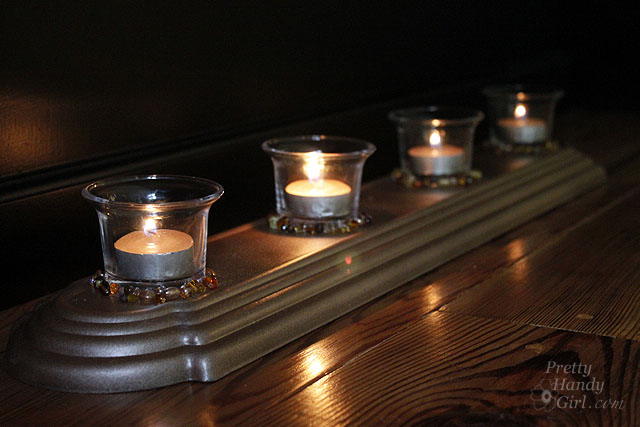
15. Put your tea lights into the votives and set it on your table…

…bathtub edge or sideboard.

What do you think? Do you like it or I am just trying to put lipstick on a pig?

Sharing this post with:

2011 Fall Home Tour

2011 Fall Home Tour

Fall is here, fall is here! Finally the cooler temps are near!

I’m not sure about your area of the world, but this summer seemed a little too hot for my liking. My husband told me about the term “Global Weirding“. It seems fitting for all this nonsense Mother Nature is throwing at us lately.

Luckily fall seems to have come just on time. Fall is my favorite time of year. Maybe it is the painter in me that loves all the colors. Or maybe it is the nature lover in me that longs to be outdoors in the fresh crisp air. Whatever it is, I love FALL!

I spent some time this past week putting out some autumn inspired décor. Although I’m definitely self conscious about my decorating skills, I tried to abide by my words from last year about not striving for perfection. So, now I’m taking a big breath and pressing the publish button to share my home looking warm and cozy (in my opinion.)

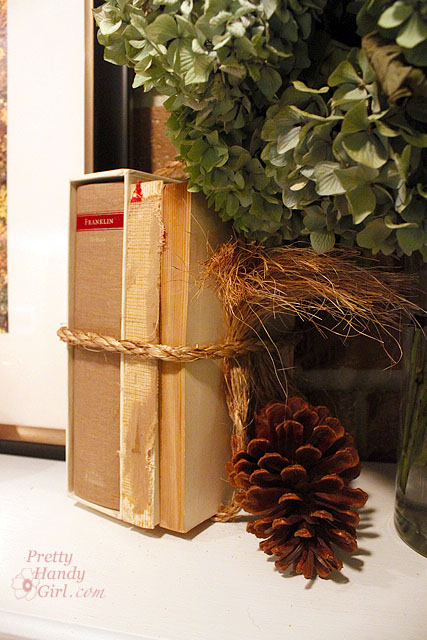
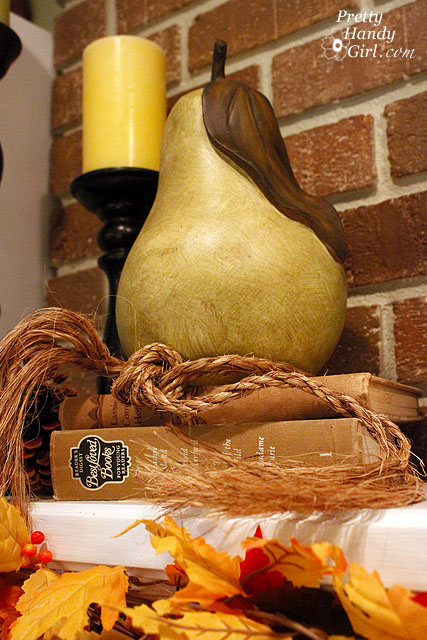
Antique books are my go-t0 decorating objects. I love books and I love those old linen covers. Even a torn and tattered book looks nice lassoed together with some friends.

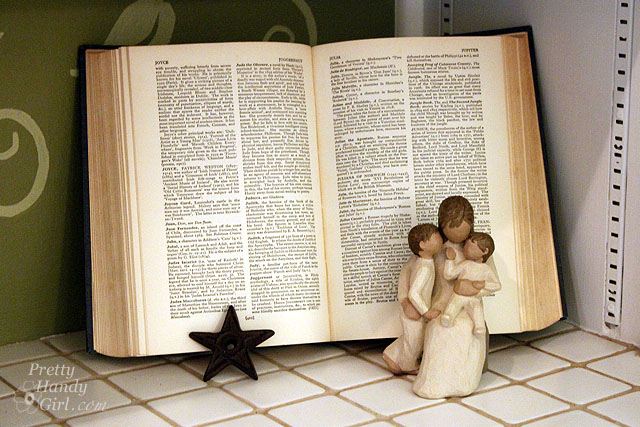
Sometimes, even an open book can look warm and inviting.

I was so happy to bring my Ballard knock off painted pear out of storage. He really looks handsome with the autumn colors.

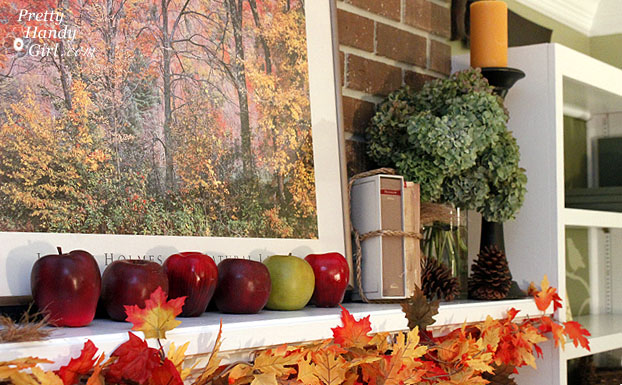
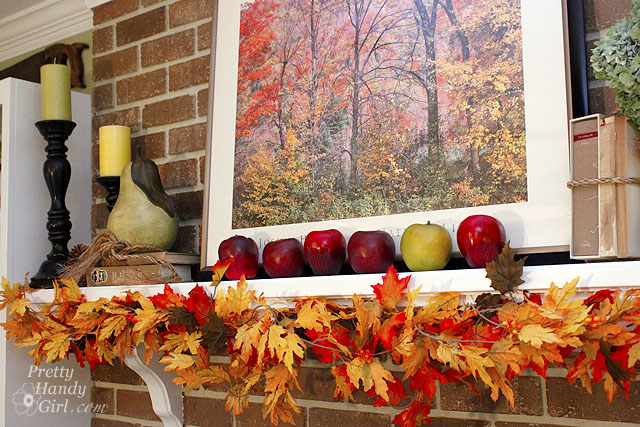
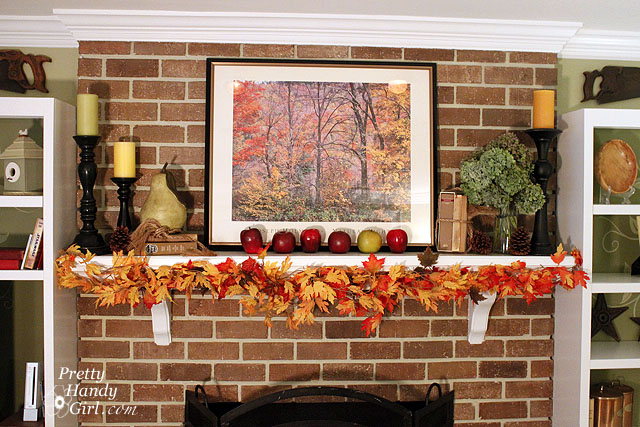
I love all the colors in this photo! I can’t imagine having a monotone autumn mantle.

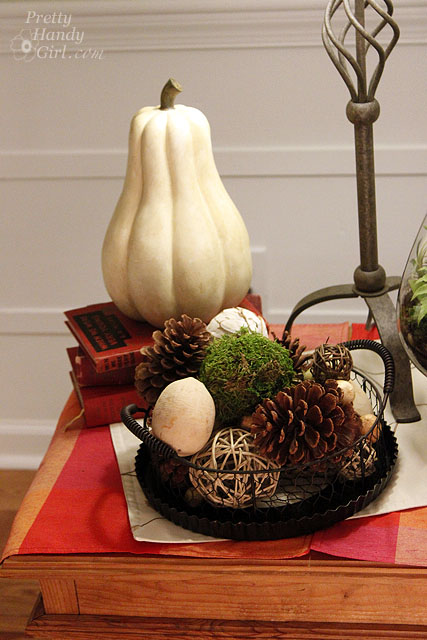
Of course, Mr. Gourd looks handsome too. (Shhh. I don’t want to hurt his feelings, but I do love the pear more.)

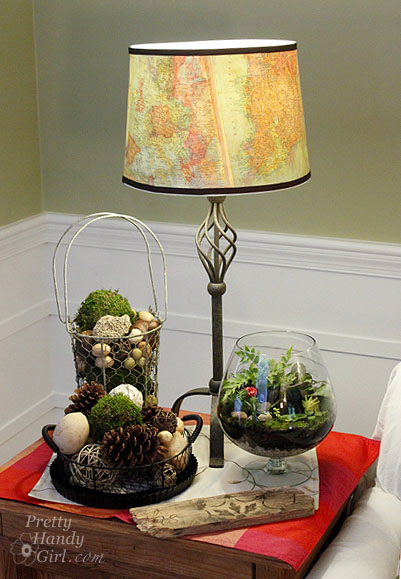
Yes, I’m still switching things in and out like a high school football coach. I actually like the gourd, so he’s back in but the chicken wire basket is out. However, I wanted to show you the vintage map lampshade I made. The tutorial will be served up before you know it! Hopefully I’ll have a new lamp by then. This one is just a substitute for one on injured reserve.

You may have noticed this little terrarium on the side table. I was inspired by some insanely expensive versions here. Never fear, I will have a tutorial so you can make your own soon!

fall mantel with vignettes

A full view of the mantle decorated. It is hard to believe that in a few months the stockings will need to be hung.

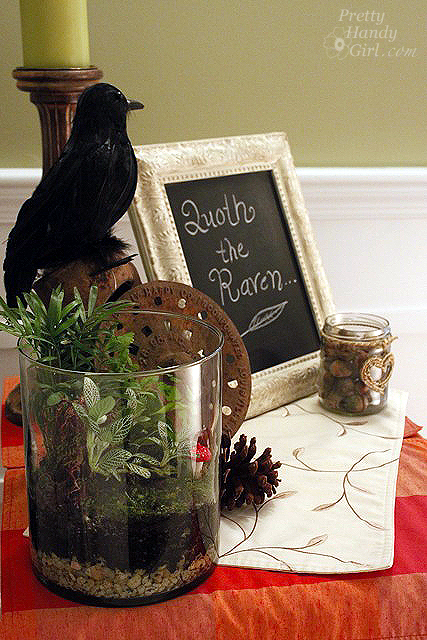
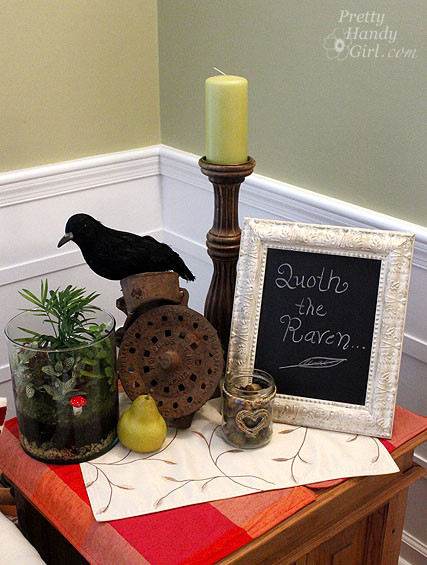
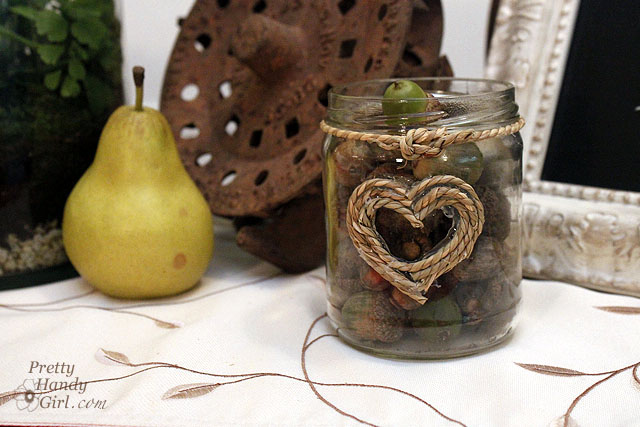
I had fun with this little vignette. A crow in an antique corn grinder? Now that is pretty silly. And another terrarium that makes me smile.

Quoth the Raven “Nevermore”

The acorn jar was an afterthought. It was just a quick little hot glue craft. Speaking of which, if you haven’t read my post about hot glue gun safety, it is a must! Your fingers will thank me.

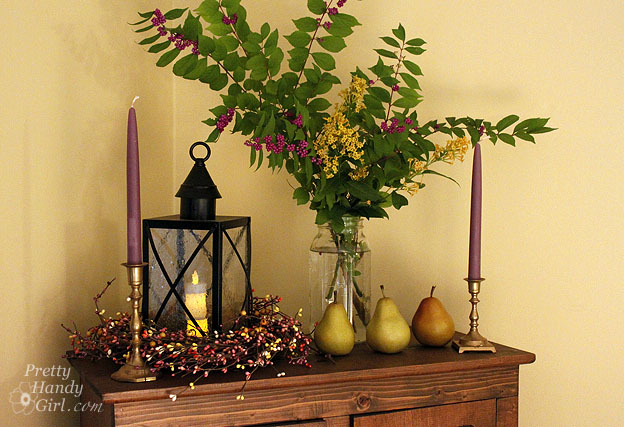
It is fun having another surface to decorate. The top of our armoire (also known as the family command center) has some pretty purples and greens.

My Pottery Barn knockoff lantern makes a re-appearance.

Beautyberry and Orange Peel Cestrum from our yard.

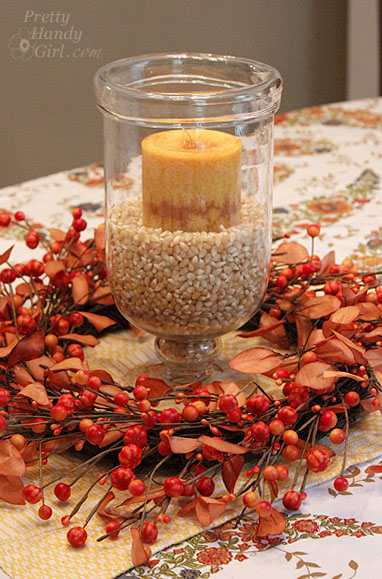
The dining room has a simple centerpiece made with corn kernels and a candle.

But, I might be switching it out once I get this beauty back from my friends at the Habitat ReStore. Can you guess what it used to be? I’ll give you a hint: Hollywood glam never looked so good.


According to my facebook and twitter friends, I am not the only one who gets burned EVERYTIME I use a hot glue gun. For this reason, I typically will hand sew, nail, or E-6000 something before I will use a hot glue gun. But, every once in a while, there is just no substitute for hot glue. For example, when working with faux flowers and moss, nothing beats hot glue.

So, this week I decided to put an end to hot glue gun burns!  I googled “Hot Glue Gun Safety” last week and learned a few tips about using a glue gun. If you are like me, you may do a head slap and feel pretty stupid after reading this post. If you are already the intelligent being who never gets burned when using hot glue, well then you can close your browser and I now bequeath you with a “genius” award. Now scram! For the rest of us, keep reading.

Dedication: I dedicate this blog post to my dear friend Sarah VMK! She and I were discussing all the burns I tend to get while using a glue gun and she remarked, “You really need to do a post about this.” So, here it is Sarah!

Remember to use EXTREME caution:

The most important thing to know about using a hot glue gun is that it is dangerous! Never mind that you can buy one for $5 or less and some of them look like they were made by the same company that makes McDonald’s happy meal toys.

Or that most of them do not come with instruction manuals. Treat this little “gun” like a power tool and use extreme caution when using it. Don’t let those dual temp glue guns fool you. “Low” temperature is still hot enough to burn you. Listen up y’all so we can say goodbye to glue gun burns FOREVER!

photo courtesy of HelloHayley

Proper tools:


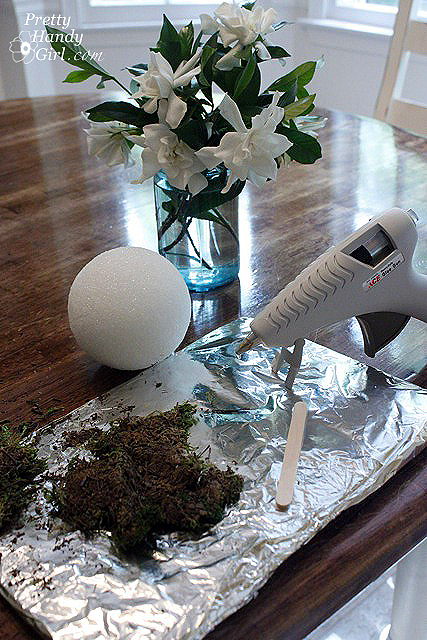
When you get ready to use a hot glue gun, be sure you have these things close at hand.

(I’ve included affiliate links for your convenience. I earn a small percentage from a purchase using these links. There is no additional cost to you. You can read more about affiliate links here.)

  • Heat resistant mat – a foil wrapped piece of cardboard, silicone mat or a cookie sheet will work fine
  • Needle-nosed pliers or tweezers for holding small objects
  • Popsicle sticks for pressing the glue down – Keep the popsicle stick in your hand so you won’t be tempted to use your finger
  • Bowl of ice water
  • Clean dry washcloth
  • Hot glue gun with dual temp (use it on low setting)
  • Extra glue sticks

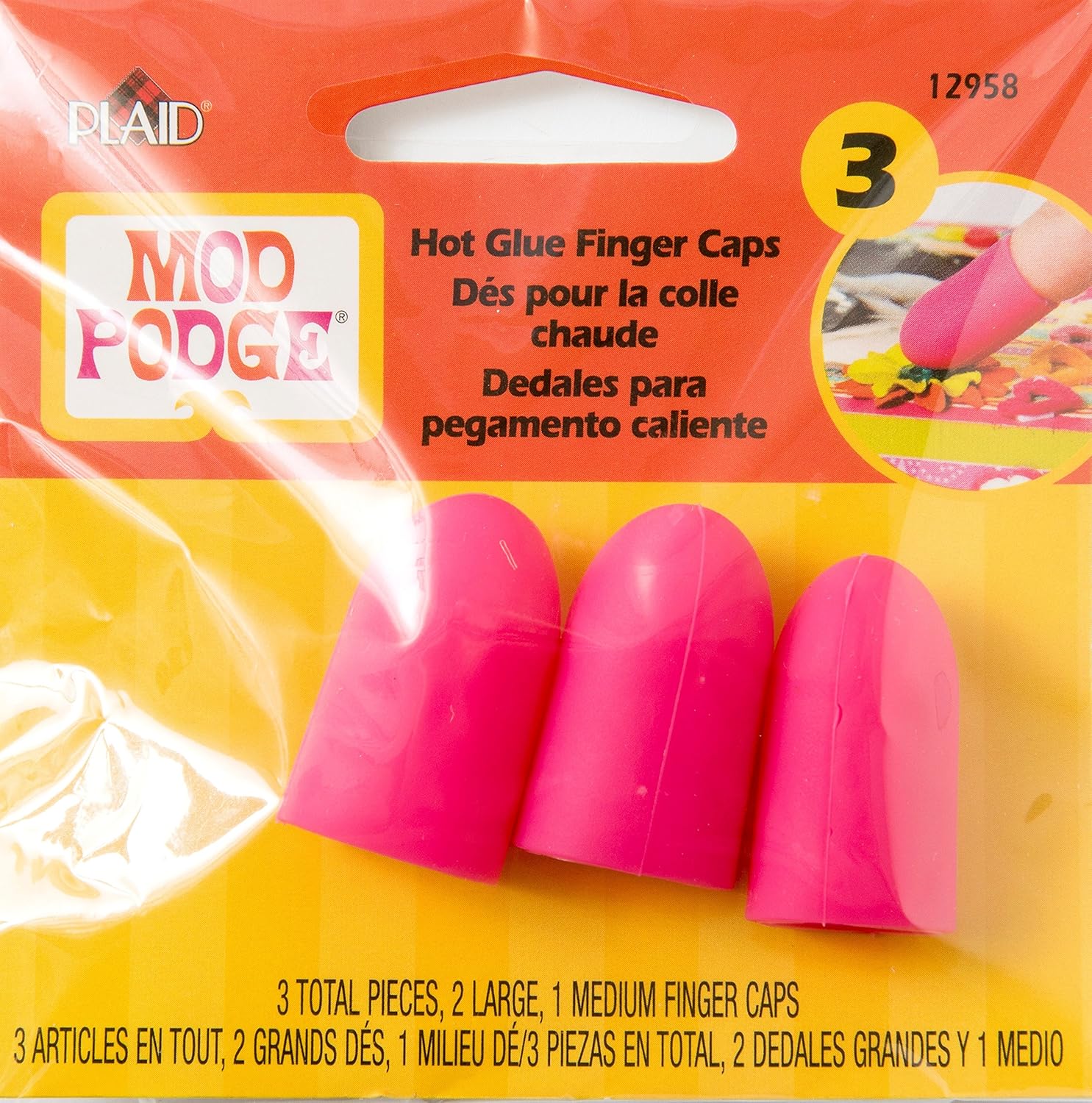
There are also finger caps sold to protect your fingers if you are really concerned about safety.
Long vs. short power cord:
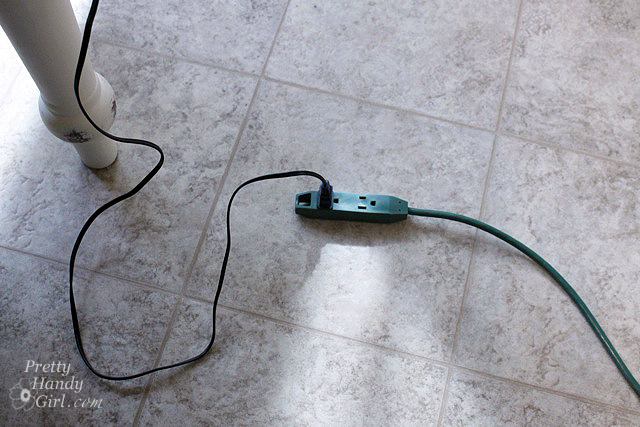

The power cord on my glue gun is not very long. It barely reaches to the nearest outlet. Don’t allow your cord to dangle in mid-air for someone to snag or trip on. Get an extension cord so that it can lay flat on the floor while you are working. This will also give you more reach while working with the glue gun.

If the cord does get snagged and your glue gun starts to fall over, resist all the temptations to grab it. Just let it fall (and hopefully it won’t land on you or anyone else.)


Your glue gun at rest:

Ideally, you want to rest your glue gun upright on a flat heat resistance surface. I use mine on this foil wrapped piece of cardboard. But, inevitably the gun falls over sideways. I used to instinctively try to stop it from falling. But, that is a burn hazard waiting to happen.
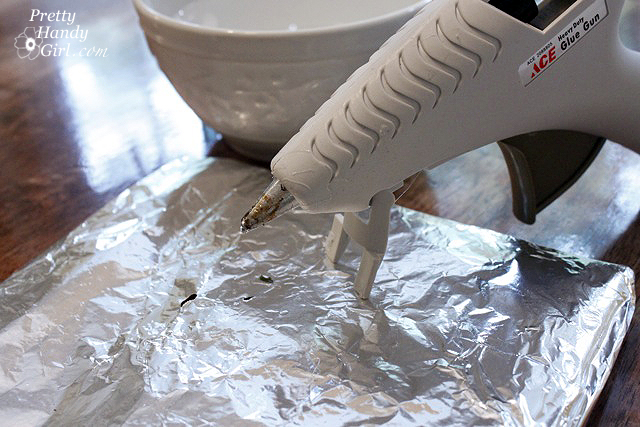
Now I just lay the glue gun on its side making sure that the hot tip is not touching anything. No more tipping glue gun.
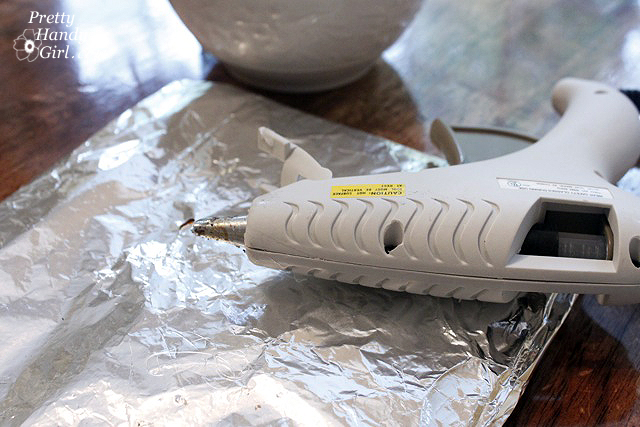
 

Working with your hot glue gun:

Gather all your craft pieces together and make sure that they are within reach so you don’t have to lean over your glue gun to retrieve anything. Make sure all distractions, children, pets, etc. are out of your way. Remember, this is a dangerous tool!

Think about your project before you start. Are you going to put glue on the object or press the object into glue. What is the best procedure that keeps your fingers the furthest from the hot glue.

Squeeze hot glue onto the object you want to glue. For decorative moss balls, I decided it was best to drizzle hot glue onto a piece of moss.
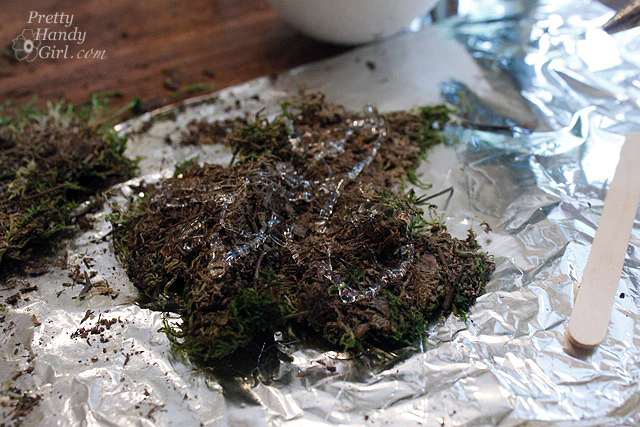
Roll your ball or light bulb onto the moss. (That’s right, I mossed a light bulb! Hey, I had to find something to do with these bulbs leftover from the hollywood light fixture.) Be very careful to keep hands away from the moss.
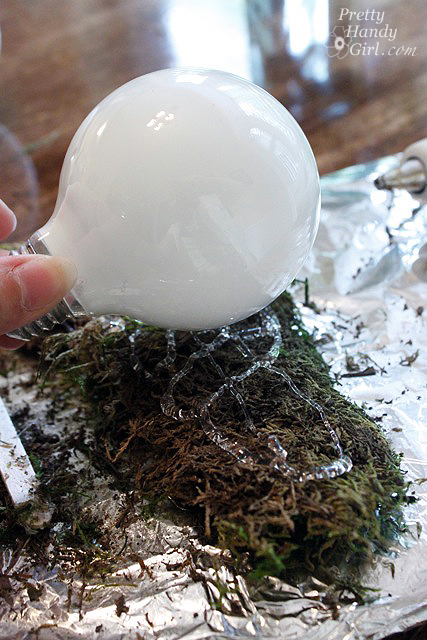
Use a popsicle stick to press the moss to the ball (or lightbulb.)
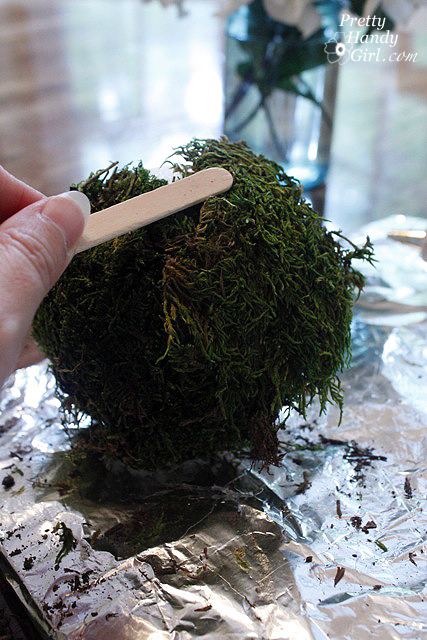
As the bare spots get smaller, you may decide to add hot glue to the ball (err, light bulb.)

Lightly set the moss into the glue, then use a popsicle stick to press it firmly into the glue.
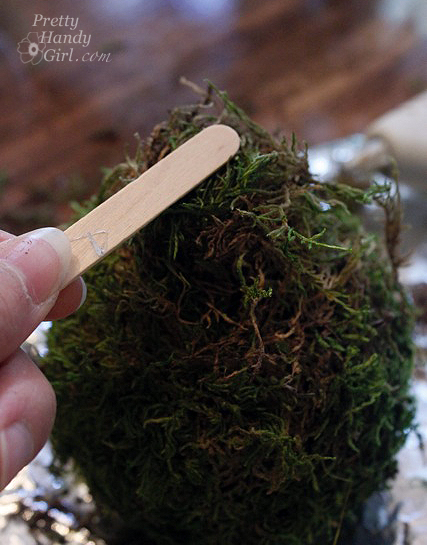
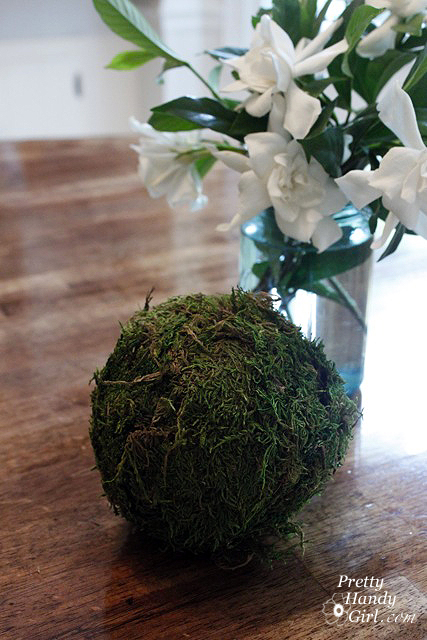
 

As long as you face the bulb base away from the viewer, no one would ever guess that it was actually a light bulb!

When working with smaller objects, DO NOT hold them with your fingers. It is best to put glue on the larger object and press the smaller ones into the glue. Pick up your small object with needle-nosed pliers or tweezers.
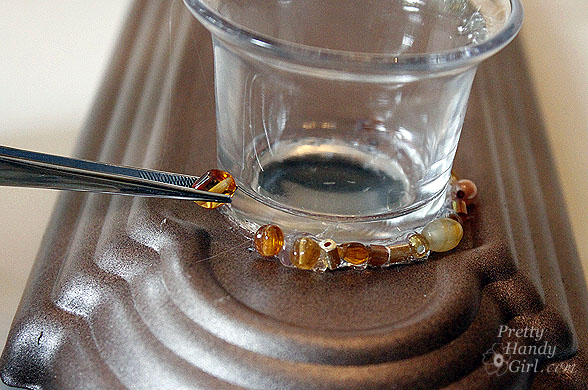
Place it, then use your popsicle stick to firmly press the small object into the glue.
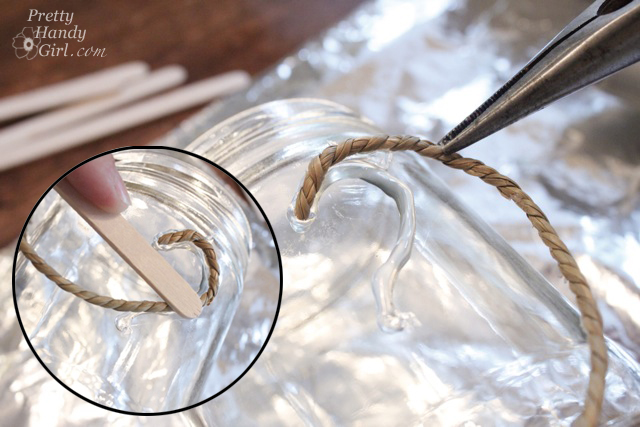
If you absolutely have to put glue on a smaller object. Do not use your fingers or hands! Use the tweezers or pliers to hold it while you add the glue.
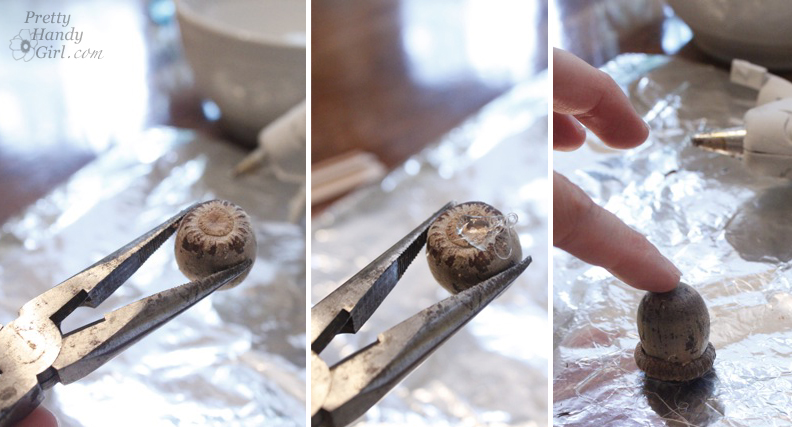
Okay – and I know – sometimes there is no substitute for using your fingers. If you decide to take the risk of putting your fingers in mortal danger, let the glue cool for a few seconds, then you can gently reposition the object as long as there is NO glue near your flesh.


If you do get burned:

Even the most careful preparation and concentration will not protect you from an occasional accident. So, think like the Boy Scouts, be prepared.
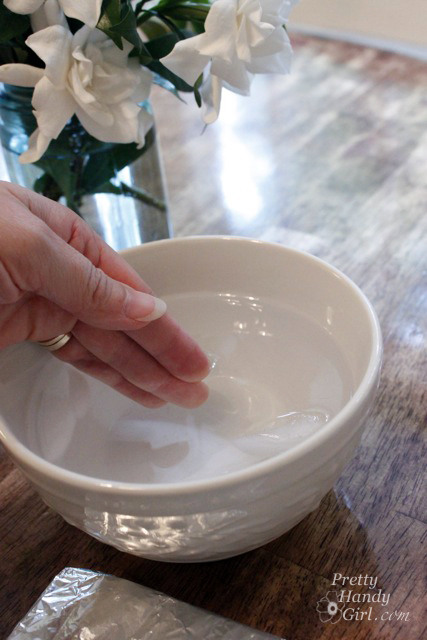
Keep a bowl of ice water nearby. If you burn your finger tips, dunk them in the ice water as soon as possible. Keep a washcloth at hand in case you burn your arm, leg or something that can’t be dunked in the bowl. Then you can wet the washcloth and apply it to the burn. It is crucial to cool down a burn as soon as possible to reduce the damage.


After your project:

Unplug your hot glue gun as soon as you are done with your project. Pick the cord up off the floor so no one can accidentally tug on it. Let your gun cool COMPLETELY before storing it away.

Inspect your glue gun periodically for signs of splits or breaks or signs of wear and tear. As soon as you discover any problems, discontinue using the hot glue gun and discard it. Remember, they are cheap and can be easily replaced! Your fingers will thank you.