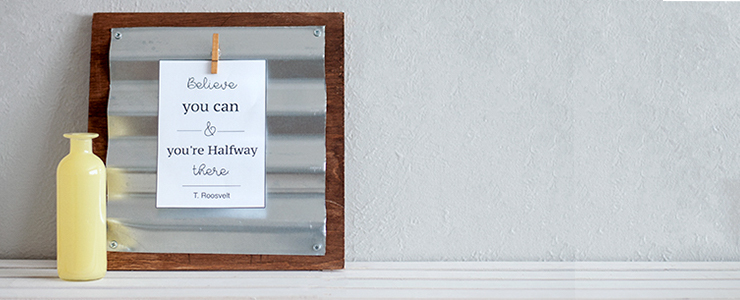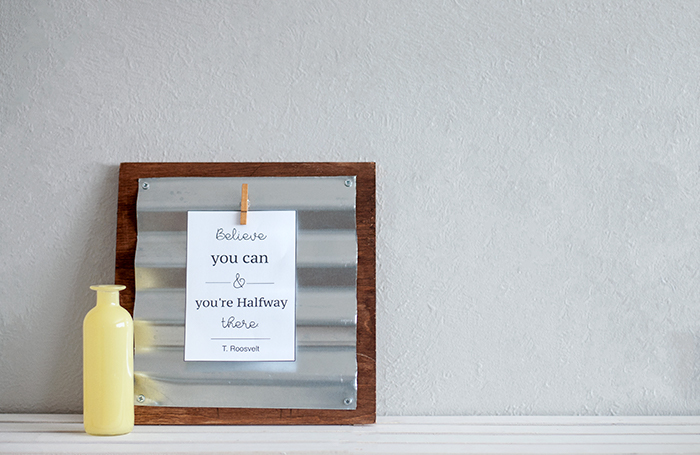
Make a custom industrial display frame using corrugated metal and wood. It is an easy and quick project and makes a perfect gift too.

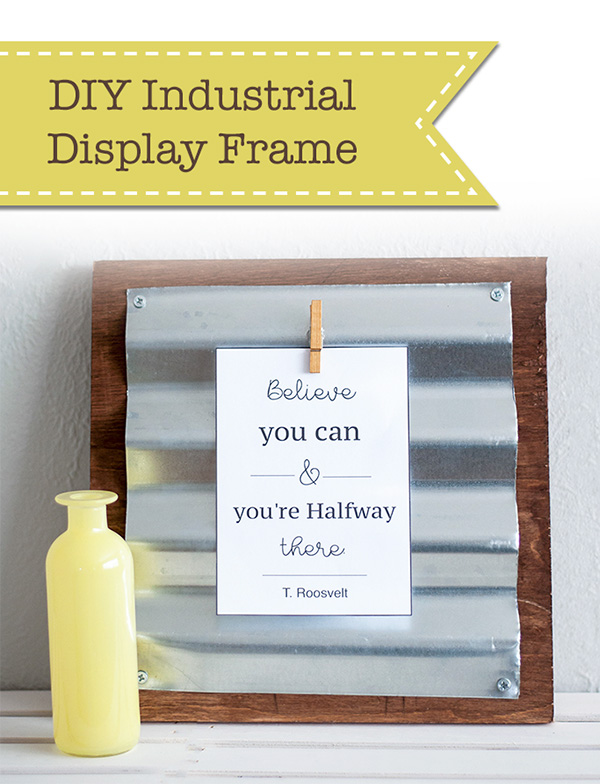
Make a custom industrial display frame using corrugated metal and wood. It is an easy and quick project and makes a perfect gift too.Easy DIY Industrial Display Frame

Hello Pretty Handy Girl readers, Anika here from Anika’s DIY Life with an industrial metal and wood display frame for you to make!

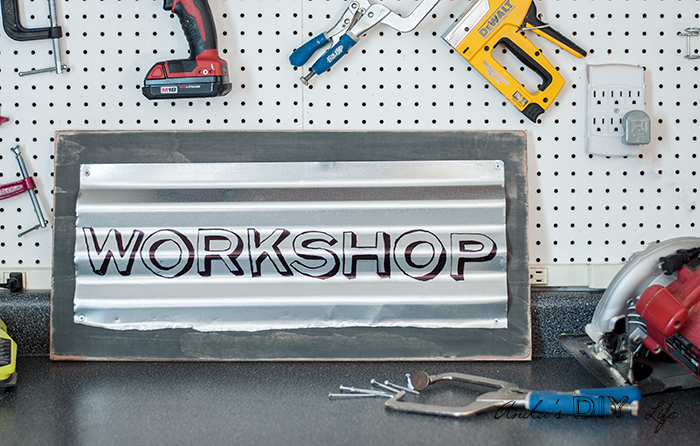
Lately, I find myself drawn to the industrial style with the metal and wood combinations. A couple of weeks ago, I made this sign for my workshop using corrugated metal and I think it turned out amazing.

How to make a custom industrial sign

I loved it so much that I wanted to make something similar for my office. I came up with a simple display frame. This is a super easy and quick project. And DIY Industrial Display Frames would make a great handmade gift for anyone!

How to make a custom industrial display frame

Materials:

(I’ve included affiliate links for your convenience. I earn a small percentage from a purchase using these links. There is no additional cost to you. You can read more about affiliate links here.)

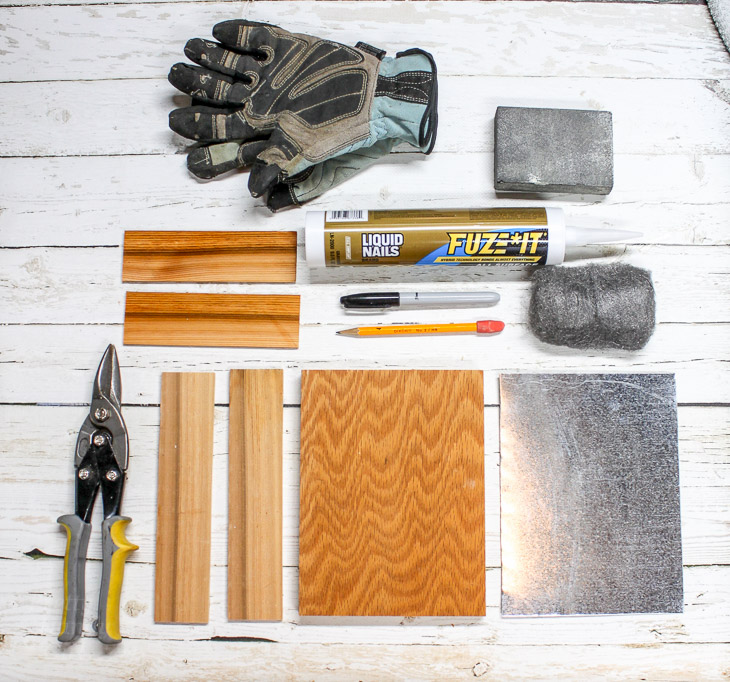
  • Corrugated metal sheet – cut to 11.5″ x 11.5″
  • ¾” plywood – cut to 12″ x 12″
  • [amazon_textlink asin=’B000KWKQTS’ text=’¾” Spax screws’ template=’ProductLink’ store=’prett-wp-001-20′ marketplace=’US’ link_id=’0e9701a6-acfd-11e7-96d4-3f296134737b’]
  • Stain in color of your choice (I used Early American)
  • [amazon_textlink asin=’B003BXE6ZI’ text=’Mini clothespin’ template=’ProductLink’ store=’prett-wp-001-20′ marketplace=’US’ link_id=’f894d98c-acfc-11e7-83c3-1d6e95b98e44′]
  • Hot glue
  • Drill
  • Tin snips or Jigsaw with metal cutting blade
  • Gloves
  • [amazon_textlink asin=’B01AWK1XAS’ text=’Eye protection’ template=’ProductLink’ store=’prett-wp-001-20′ marketplace=’US’ link_id=’e1f16864-acfc-11e7-8b07-2d86581d9e35′]

Instructions:

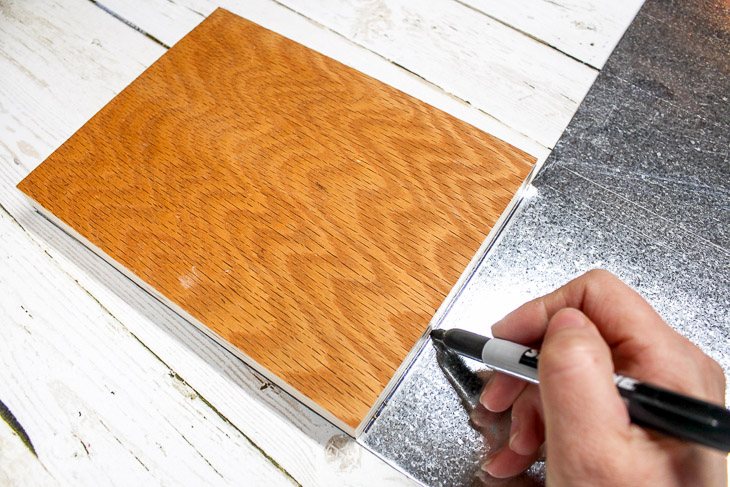
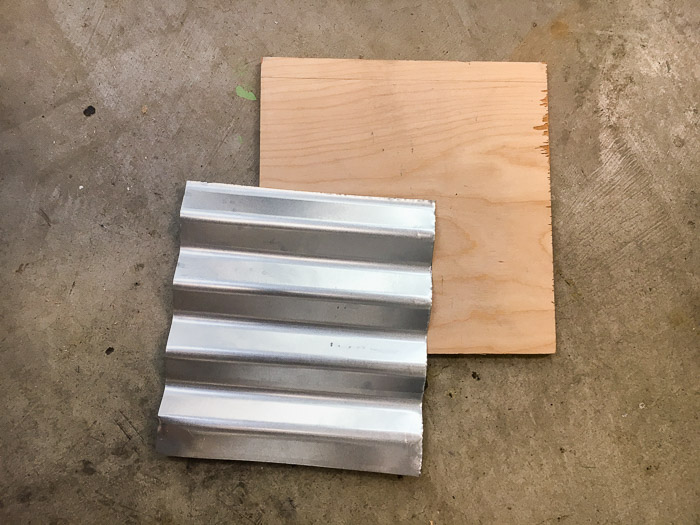
Step 1 – Cut your plywood to size. Cut your corrugated metal sheet slightly smaller than the plywood board. Use tin snips or a jigsaw with a metal cutting blade. Be sure to take appropriate precautions (wear work gloves and safety glasses because the metal is really sharp.)

How to make an industrial picture frame

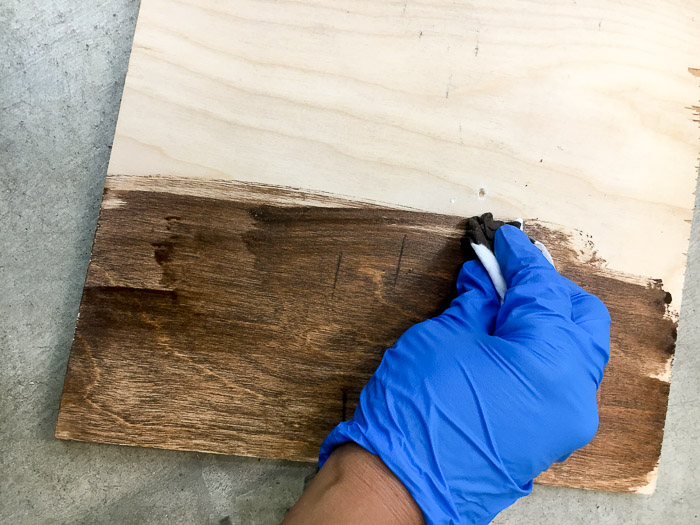
Step 2 – Stain the plywood in the color of your choice.

Stained plywood for a metal and wood industrial frame

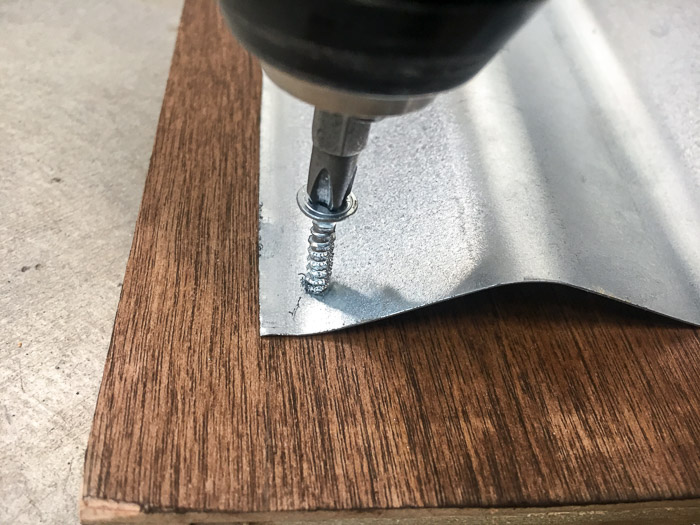
Step 3 – Attach the corrugated metal sheet to the plywood using the Spax screws. Leave ½” on each side to prevent the screws from splitting the metal.  (Why Spax screws? They go through metal and wood easily without the need to pre-drill.)

How to attach metal to wood

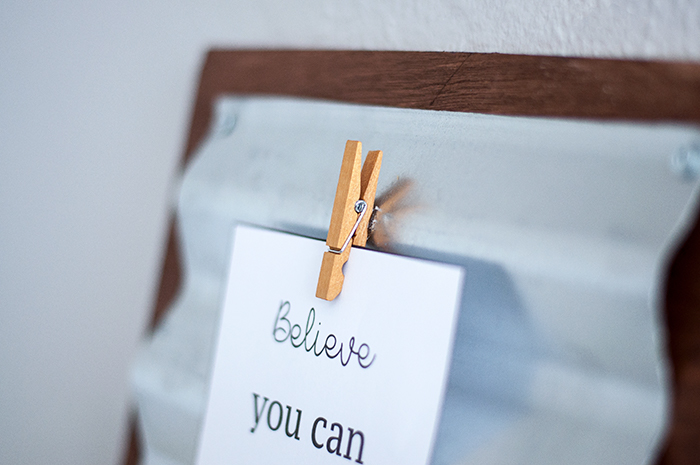
Step 4 – Decide if you want the display frame in landscape or portrait orientation and attach the mini clothespin using hot glue.

Making a simple industrial metal and wood picture frame

I chose the portrait orientation and popped in one of my favorite quotes. The size is perfect for a 5×7 picture and I can easily switch out the quote for a picture when I want.

How to make a custom industrial display frame

I hope you liked this fun DIY Industrial Display Frame. Until next time!

~ View more of Anika’s DIY Tutorials ~

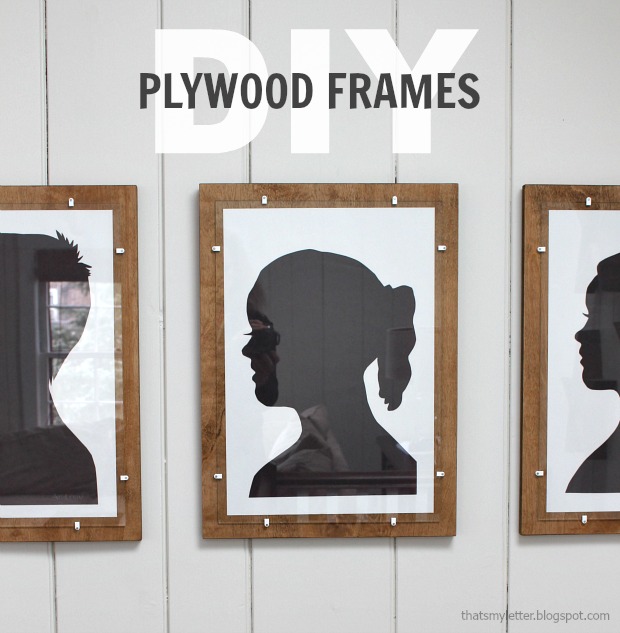
Did you like this project? If so, I think you’ll love these simple DIY Plywood Frames:

Simple Plywood Frames


Green and purple hydrangeas in rustic wood trough. Build Your own Rustic Trough Centerpiece tutorial.

The Perfect Rustic Paint Technique {with Video Tutorial}The Perfect Rustic Paint Technique {with Video Tutorial}

I have been painting and distressing furniture and home décor for almost ten years now. Over the years I’ve tried a lot of different techniques, but the one I’m going to show you today is the one I consider “The Perfect Rustic Paint Technique!” The reason I like this technique is because I get consistent results and it’s not as messy and time consuming as painting several layers and sanding back down to the raw wood. This isn’t to say that I don’t still experiment or sometimes go back to previous techniques. I just wanted to show you my tried and true technique.

Green and purple hydrangeas in rustic wood trough. Build Your own Rustic Trough Centerpiece tutorial.

You may have seen the DIY Trough Centerpiece I built last week. If you don’t have a piece of furniture you want to try this technique on, go ahead and build this quick little (or should I say long) DIY Trough Centerpiece to experiment on.

Finished trough build.

Then you’ll want to gather some materials and coffee (this is optional, but I find I enjoy DIYing with a cup of java.)

Materials:

(I’ve included affiliate links for your convenience. I earn a small percentage from a purchase using these links. There is no additional cost to you. You can read more about affiliate links here.)

Instructions:

Want to cut to the chase and watch the video tutorial? Well, be my guest:

If you like to see the step-by-step tutorial, here’s the break down:

Step 1: Sand & Stain

Lightly sand your piece to remove any rough spots.

If you’re working with a pre-finished piece of furniture, clean well to remove any dirt or oils that would resist the stain. Then sand everything lightly to give the surface a little “tooth” for the paint to grip to. Skip the next step unless you have sanded down to bare wood.

Put on your rubber glove and grab a rag or slip an old sock over your hand. Dip the rag into the stain and wipe it on the wood. Wipe off any excess stain. If you want a darker look, apply a second or third coat of stain. Allow the stain to dry (overnight is best.)

Wipe on Minwax Early American Stain.

Step 2: Painting

A quick note about chalk-like paints: I have tried a lot of different chalk paints and still don’t have an absolute favorite. Personally I like to buy them based on a pre-mixed color I like. That being said, I do have some that I don’t like as much. Although the Annie Sloan Chalk Paints were first on the scene, I struggled with them having unmixed chunks in them and they tended to dry out too quickly for my taste. That being said, most chalk paints will dry out quicker than latex paint. So make not to leave the lid off too long (it’s better to pour a small amount onto a tray or paper plate.) And store chalk paint in a temperature controlled environment. 

Dip your chip brush into the chalk paint and dab off most of the paint onto rag. Your paint brush should have very little paint on it.

Lightly drag the chip brush over your piece following the direction of the wood grain. This technique is called dry brushing (in case you wondered.) Allow some of the wood stain to show through. This will cut down on the need to sand down to the wood later.

Dry brush Fusion paint.

Step 3: Adding Dimension

Allow the paint to dry (which shouldn’t take very long.) Dip another chip brush into the white color stain. Wipe off most of the paint and dry brush some “hi-lights” onto your piece. You don’t need as much coverage as the painting step. This is just adding some extra dimension to the piece.

Use DecoArt white stain for highlights.

After the white stain has dried, dip another brush into the antiquing glaze and wipe most of the glaze off the brush. Once again, dry brush some areas on your piece to give some more dimension.

Dry brush Valspar Antiquing Glaze.

If you make a mistake or put too much glaze on, you can wipe it off within the first few seconds. Alternatively, you can always sand off any paint, stain or glaze you apply.

Sand smooth.

Once you’ve achieved your desired amount of paint, stain and glaze, get ready to seal in the beauty!

Step 4: Wax Finish Coat

Apply some dark wax onto a wax brush (or stencil brush.) Rub the wax on in a circular pattern.

Apply Dark Wax.

Then buff it off with a clean dry rag. The wax gives your piece a soft luster and protects it from water. If you are working with a piece of furniture, you may want to apply another coat of wax. And you will need to re-apply in a few years.

Buff off wax.

Now stand back and admire that Perfect Rustic Paint Technique!

Tutorial to make this beautiful rustic wood trough.

She’s purdy, don’t you think?

Green and purple hydrangeas in rustic wood trough. Build Your own Rustic Trough Centerpiece tutorial.

Pin this picture to share the rustic love!

The Perfect Rustic Paint Technique {with Video Tutorial}

Liked this tutorial? I think you’re going to love my Secret Formula for Aging New Wood:

DIY Framed fall art from scrap wood

How to make an adorable fall sign from scrap woodDIY Scrap Wood Fall Leaf Sign

It’s Shara from Woodshop Diaries and I’ve been on a roll lately with scrap wood projects (remember the scrap wood caddy?) Today I have another fun project to help you get ready for fall! It’s a super easy DIY Scrap Wood Fall Leaf Sign.

I’m ALWAYS in the mood for fall because it’s my favorite season! I know it’s August, but in just a few short days the calendar will flip to September! Time to get a head start. This simple project is great for decorating your house. Instead of a leaf, you could make a turkey, pumpkin, or whatever you want!

DIY Framed fall art from scrap wood

Materials:

(I’ve included affiliate links for your convenience. I earn a small percentage from a purchase using these links. There is no additional cost to you. You can read more about affiliate links here.)

Cut List:

  • 1/4” x 11 ½” x 11 ½”
  • 3/4” x 11 ½” x 11 ½”
  • (2) 3/4” x 1 ½” x 11 ½”
  • (2) 3/4” x 1 ½” x 13”

Instructions:

Step 1: Cut your plywood to size

Cut your 1/4” and 3/4” piece of plywood to the same size. (Mine are 11 ½” square, but if you have larger or smaller pieces of scrap, feel free to alter the sizes. The only rule is to make sure your 1/4″ & 3/4″ plywood scraps are the same size.)

Step 2: Cut out your leaf shape

Perform a Google search for “leaf clip art” and make your own stencil from a leaf print out.

Trace your leaf shape stencil onto the 1/4” piece of plywood, making sure it is centered. (Ignore the fact that I didn’t cut out my plywood square shape first.)

Leaf template on top of plywood

Using a large drill bit, drill a hole into the middle of the leaf shape.

drill hole in plywood

Insert your jig saw blade into the pre-drilled hole.

Cut out the leaf shape.

jigsaw cut out leaf shape

Sand the rough edges with sandpaper.

Step 3: Stain or paint pieces

Paint or stain the pieces at this point. For the same look as mine, stain the 1/4″ plywood and leave the 3/4” piece unfinished. This will allow the leaf shape to stand out against the dark stain.  In addition, you can paint the ¾” piece, or stain it a different color.  Use your own creativity to finish your DIY Scrap Wood Fall Sign.

Leaf cut out on 1/4" plywood

Step 4: Glue the pieces together

Glue the 1/4” plywood cut out to the 3/4” piece of plywood.

wood glue on plywood

Clamp the two pieces together as the glue dries.

clamp pieces of plywood together while drying

Step 5: Add the frame

Once the glue is dry, cut pieces of 1″ x 2″ to fit around the edges of the plywood art. (Measure yourself or use the cut list above).  Attach using a nail gun or hammer and nails.

secure frame pieces with nails

Add a coat of polycrylic to protect the wood.

Glued Fall Leave Wood Art

Then hang that baby up or set it somewhere where you will see it.

DIY Fall Sign from scrap wood

Now grab your hot chocolate and hoodies because you are officially ready for sweater weather and the fall season!

Fall leaf sign from scrap wood

For more scrap wood inspiration, be sure to check out these other awesome scrap projects:

DIY Cake Carrier from wood scraps   or  DIY Keepsake Box from wood scraps

or  DIY Framed Pumpkins:DIY Framed Pumpkins | Pretty Handy Girl

Until next time, happy building! And happy fall, ya’ll! 🙂Shara's Signature~Read more of Shara’s Projects~

Weave your vines through the fence trellis to create a living wall!

This fence trellis is easy to build, and will turn a dull fence into a living wall!DIY Fence Trellis

Hi, Pretty Handy Girl readers! I’m Vineta from The Handyman’s Daughter, and today I’m going to show you how to create this easy DIY fence trellis. Easily give a boring, flat fence visual interest in winter, and a place for vines to grow in the summer!

Our entire backyard is surrounded by a six-foot-high cedar fence, which gives us plenty of privacy but isn’t exactly pretty. The previous owner planted clematis vines along one side, but didn’t give it anything to grab onto. So it sits in a pile on the ground instead! This fence trellis will give the vines something to climb and fill in the plain background.

That mound of green at the bottom of the fence is a vine! With a new fence trellis, it can climb and thrive.

Materials for Fence Trellis

  • Cedar fence pickets (I ripped 6″ wide pickets into 1 ½” strips, but you can also use 1 x 2 boards.)
  • Sander and sandpaper
  • Exterior wood stain (I used Behr’s waterproofing exterior stain in Coffee)
  • Nail gun or hammer
  • 1 ¼” brad nails
  • Level
  • Scrap of 1 x 4 board to use for spacer

How to Build a DIY Fence Trellis

Start by cutting four 6″ wide cedar pickets into 1 ½” wide strips lengthwise. If you don’t have a table saw, you can simply use 1 x 2 boards.

Cut cedar fence pickets into 1 1/2" strips to create this fence trellis.

Next, cut the strips down into shorter lengths. I made a few of each of these dimensions: 16″, 20″, 22″, 24″, 26″ and 30″.

Cut the pieces for your fence trellis out of inexpensive fence pickets.

Sand each piece, then give them all two coats of your preferred exterior wood stain.

Stain the cut pieces of your fence trellis before assembly.

Once the stain is dry, you can start assembly! Begin with the longest pieces. Hold them vertically against your fence, spacing them out along the fence evenly and nailing them directly to the fence.

Use a nail gun to attach the vertical pieces directly to the fence.

Next, select a few pieces to attach horizontally at the bottom. Nail one end to the vertical support, then use the level to make sure it’s even before nailing down the other end.

Use a level to make sure the bottom rows are straight.

Use the 1 x 4 spacer to keep the distance between horizontal pieces the same. Rest the spacer on top of the attached piece, then prop another piece on top and nail into place. This is much easier than using a tape measure!

Use a spacer between the slats of your fence trellis so the horizontal rows will be evenly spaced.

Work your way up the fence, randomly placing horizontal pieces. Make sure each one is attached to at least two vertical supports. Add more vertical supports as needed to bridge the gaps.

Fill in gaps with additional vertical supports, and mix up the various lengths.

Remember to step back and to view your overall design every once in a while. It should look random, but not TOO random! It’s easy to pull off pieces and move them around if you don’t like how it’s turning out. I went for an asymmetrical look, but you could make a simple grid if you prefer.

This fence trellis provides visual interest in winter, and a spot for climbing vines in the summer!

This fence trellis now draws attention to the shady part of the garden.

Weave the vines under the elevated pieces to help the plants find a spot to grip. Over time, the vines will find their own way up the DIY fence trellis. I can’t wait to see them blooming next spring!

Weave your vines through the fence trellis to create a living wall!

Give the vines a helping hand by weaving them through the slats of your fence trellis.

Want some more trellis ideas? You can get the free building plans for this angled garden trellis I created for another part of the fence at The Handyman’s Daughter!
There are so many ways to create your own fence trellis! You can find the plans for this one at The Handyman's Daughter.

Or create a lattice privacy wall trellis instead!

I’d love to hear what you would recommend planting under this DIY Fence Trellis. Until next time!

 ~ view more of Vineta’s projects ~

How to Build a Simple Mission Style End Table

How to Build a Simple Mission Style End TableDIY Side Table Plans

This little end table is a perfect fit for tight spaces or it would make a great plant stand! My sister asked me to make her a simple side table to sit between her chairs on the front porch, so here I am with the DIY Side Table Plans for you.

Hey guys, it’s Shara again from Woodshop Diaries! I’ve been working on several larger projects and decided to switch things up a little and work on some fun smaller builds like this cute little side table! The railings on the side make this somewhat of a “mission style” piece of furniture, which I’m quickly becoming a fan of. But the style is so simple that it would fit in with just about any décor—modern, farmhouse, traditional.

How to Build a Simple Mission Style End Table

If you’re ready to get building this cute little DIY side table, here’s what you’ll need:

(I’ve included affiliate links for your convenience. I earn a small percentage from a purchase using these links. There is no additional cost to you. You can read more about affiliate links here.)

Tools:

Materials:

  • (1) 2”x 2”x 8’ board
  • (2) 1”x 2”x 8’ board
  • (1) 1”x 6”x 8’ board
  • (1) 1’x 4’ x 8’ board
  • 1 ¼” pocket hole screws
  • 1 ¼” and 2 ½” wood screws
  • Wood Glue

Cut List:

  • (4) 1 ½”x 1 ½” x 19” (table legs)
  • (8) ¾” x 1 ½”x 11 ½” (top and bottom supports)
  • (3) ¾”x 5 ½”x 16 ½” (table top)
  • (1) ¾”x 3 ½”x 14 ½” (part of bottom shelf)
  • (2) ¾”x 5 ½”x 14 ½” (other part of bottom shelf)
  • (4) ¾”x 1 ½”x 12” (side rails)

DIY Side Table Plans Instructions:

Step 1: Cut legs and supports

Cut four 2”x 2” pieces for table legs according to the cut list above. Then, cut eight 1”x 2” pieces according to the cut list for the top and bottom supports.

DIY Side Table Plans

Step 2: Assemble the frame

Drill a ¾” pocket hole into each end of all 8 support pieces. Make a mark on the legs 3” from the bottom. Attach the supports as shown below (line up the bottom edge of the bottom support with the 3” mark.)

DIY Side Table Plans

Once you have two frames assembled as shown above, attach two supports between the two frames at the bottom (as shown below.) You can go ahead and attach the other two at the top, but I found it easier to do this after the bottom shelf is in place.

DIY Side Table Plans

Step 3: Add bottom shelf

The bottom shelf is composed of two 1”x6” boards and one 1”x4” board. Cut the shelf pieces according to the cut list and glue them together using wood glue.

Once the glue has dried, use a jig saw to notch out 1 ½” squares into all four corners.

DIY Side Table Plans

Slide the shelf in place and use a nail gun to secure the shelf to the bottom supports.

DIY Side Table Plans

Step 4: Add side rails

Cut four 1”x 2” side rails according to the cut list. If you haven’t already attached the last two top supports from step 2, go ahead and attach these using 1 ¼” pocket hole screws. Place the 1”x 2” side rails in place (two rails on two opposite sides) spacing evenly. (I found 2 7/8” space between the rails provides even spacing.) Clamp rails in place while you screw them in.

DIY Side Table Plans

Drill pilot holes through the top supports and screw in 2 ½” screws to hold the rails in place at the top.

DIY Side Table Plans

Then, drill pilot holes at an angle through the bottom and screw in 1 ¼” screws to hold the rails in place at the bottom.

DIY Side Table Plans

Step 5: Attach the top

Cut three 1”x6” boards for the top according to the cut list. Just like the bottom shelf, glue the boards together.

DIY Side Table Plans

Once the glue has dried, line the top of the table base with glue and clamp the top on.

DIY Side Table Plans

Finishing Your DIY Side Table:

Sand it down and putty holes. Paint, stain or finish as desired. I stained the table with Rustoleum Weathered Gray.

How to Build a Simple Mission Style End Table

I love the simple style of this table.  What do you guys think? Do you think you could use these DIY plans to build your own side table?

How to Build a Simple Mission Style End Table

For another simple, but stylish end table, check out my twisty table!

Until next time, happy building 🙂

Shara's Signature

Like this side table? You may also like this copper pipe and wood half round table:

Half Round Copper & Wood Side Table | Pretty Handy Girl