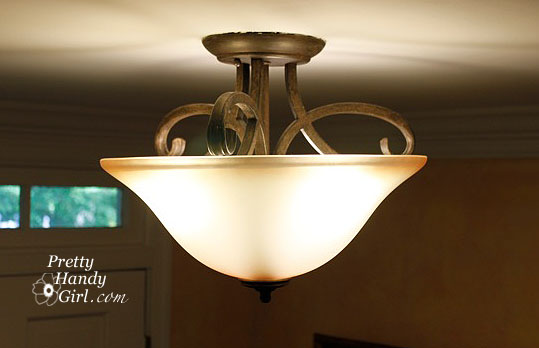
I have been looking for the perfect foyer light about three years now. In the search, I removed an ugly dated hanging light and replaced it with this:
Okay, it is a little better, but I still wasn’t in love! And that is the key to the right lighting, you have to LOVE it EVERYTIME you see it.
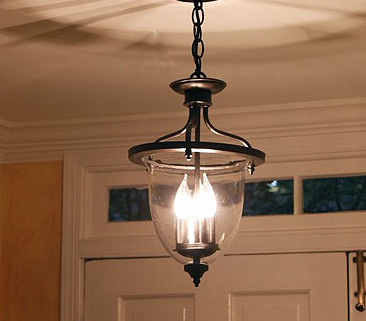
So, when I saw this Pottery Barn fixture, I knew I loved it!
Amanda at The Hand Me Down House made one that looks very similar. I always thought I might copy her design, until I found a hanging light that had similar lines at our local Habitat ReStore.
See that brass beauty in the front? Well, ignore the brass because I had plans to paint it. By the way, the iron chandelier went in my friend’s hallway.
But, on to the star of this post. My new foyer light! I disassembled the foyer light and set the glass globe aside. Then I attacked her with a one two punch using my new dynamic duo of spray paints.
Automotive primer first and then two coats of Rustoleum Oil Rubbed Bronze!
After putting the glass globe back on the fixure, I installed the light fixture (you can follow the same instructions as I showed in this post.)
Check out that beautiful new/old light fixture! I know it isn’t exactly like Pottery Barn’s but I love it none-the-less. How about you?
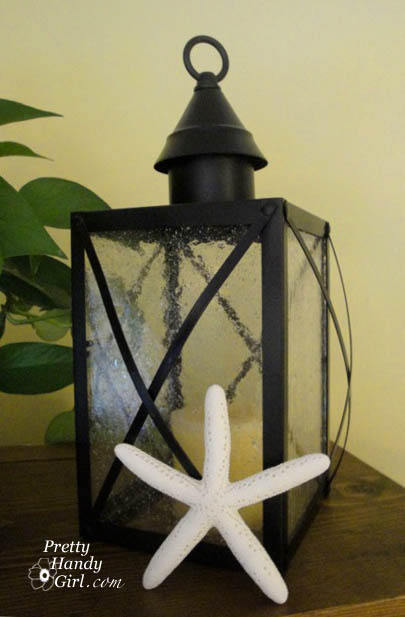
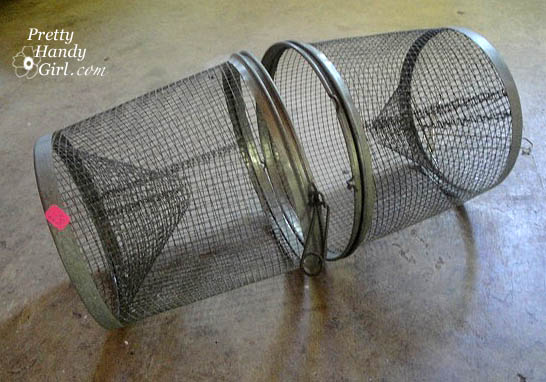
On our last trip to the beach, I stopped in a hole-in-the-wall thrift shop. The store was musty, dirty and reeked of old cigarette butts. I’m still not sure why I was drawn into this store. But low and behold, this is what I found!
The owner told me it was a minnow trap. Duh, of course it is! Actually, I’m not a fisherperson, so I never would have guessed that.
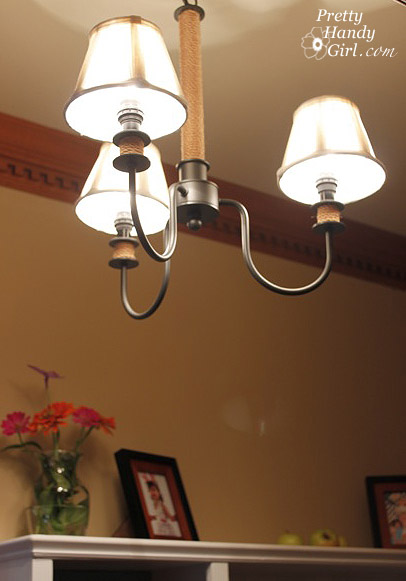
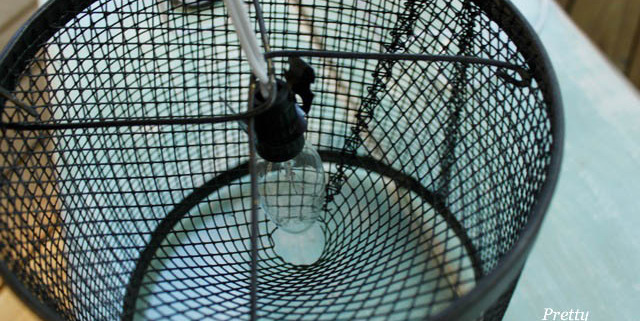
What I did see was two pendant lamps for my screened porch. I have been trying to decorate it for a year, but I have been unable to find some inexpensive porch furniture. Regardless, I am aiming for a breezy ocean theme, so these would fit in perfectly!
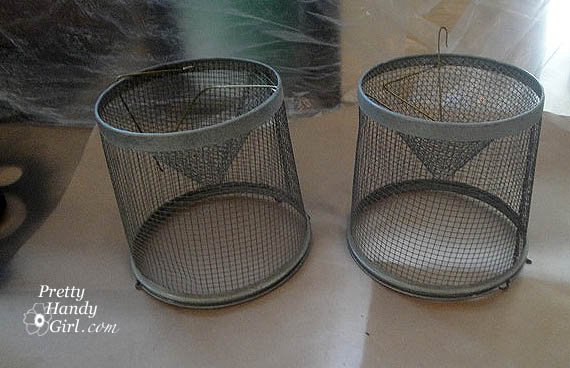
I separated the trap into two pieces. Then cleaned them with a damp rag.
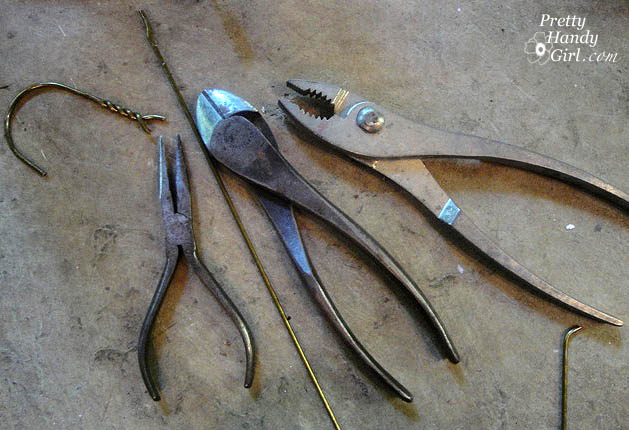
To create the light kit frame, I used these tools:
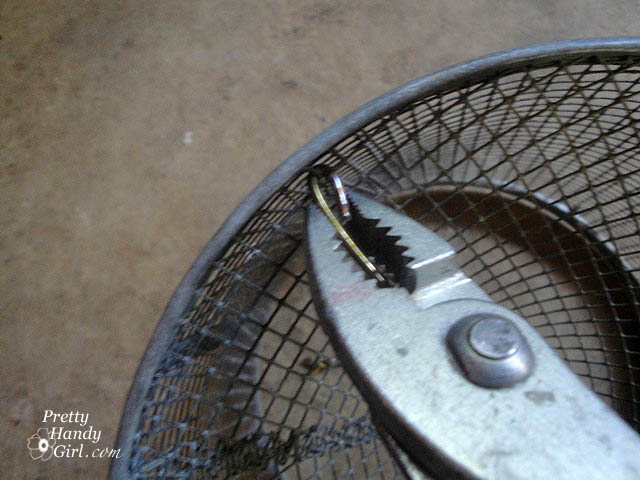
I bent a small hook in the clothes hanger with the needle-nosed pliers. Then fed the end of the coat hanger through one top edge of the minnow trap.
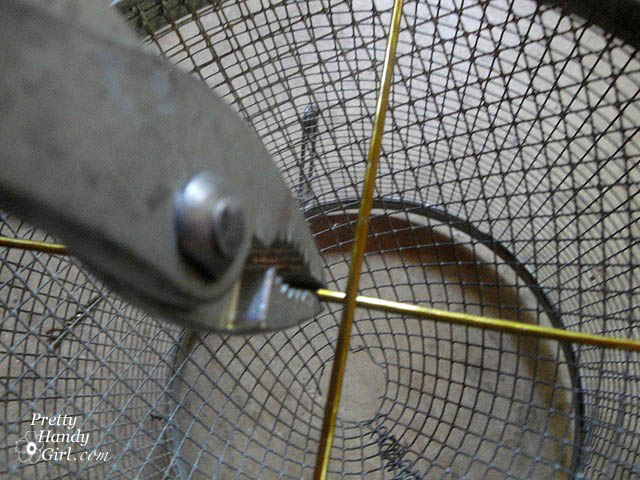
Using my pliers, I pinched the hook shut.
If you pretend that the first hook was attached at 12 o’ clock, then you want to attach the second hook at 3 o’clock.
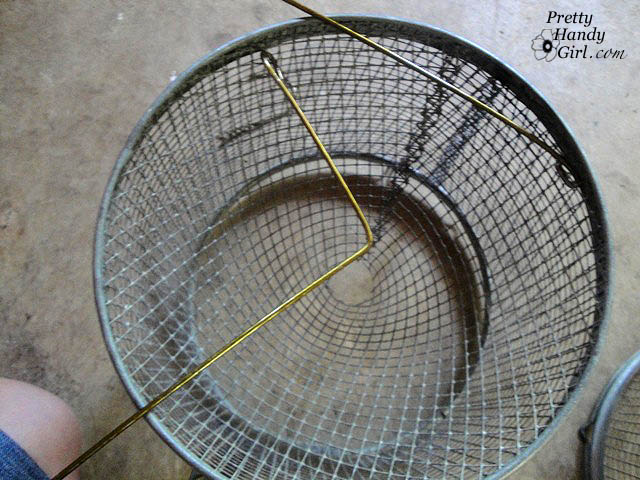
Using my pliers again, I bent both wires near the center into a 90 degree “L” shape.
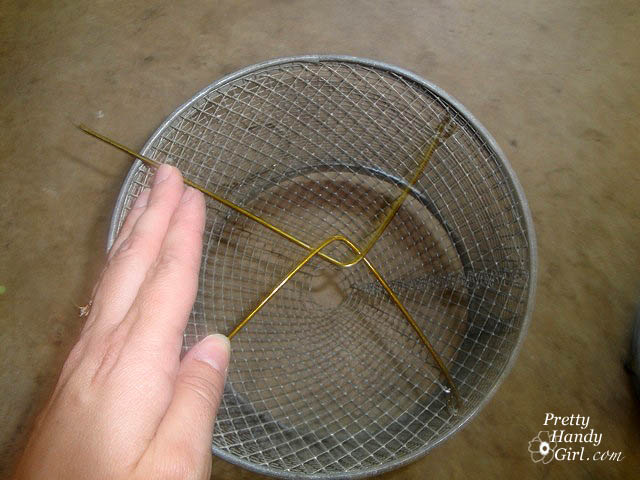
Next, I wove the other L hook (over and then under) the first hanger and bent the wires until they overlapped at 6 o’ clock and the second one at 9 o’ clock. I played with the wires until I was able to create a small hole in the center.
I ended up with this on both traps (now looking more like lamp shades):
I sprayed my two lamp shades with an automotive primer (I read somewhere that it has better adhesion to metal) and followed up with 2 – 3 coats of Oil Rubbed Bronze spray paint.
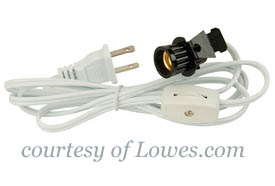
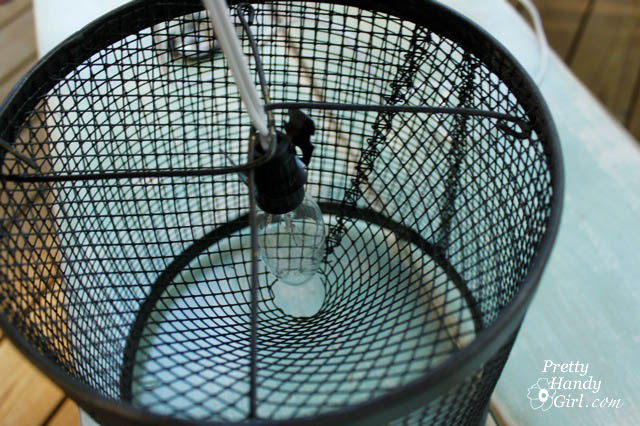
I simply inserted the socket and light bulb underneath the coat hangers. Then bent the coat hangers while making sure to get the light kit centered in the shade.
When I got everything centered, I fed the unattached ends of the coat hangers through the shade and hooked it around securing it to the wire shade.
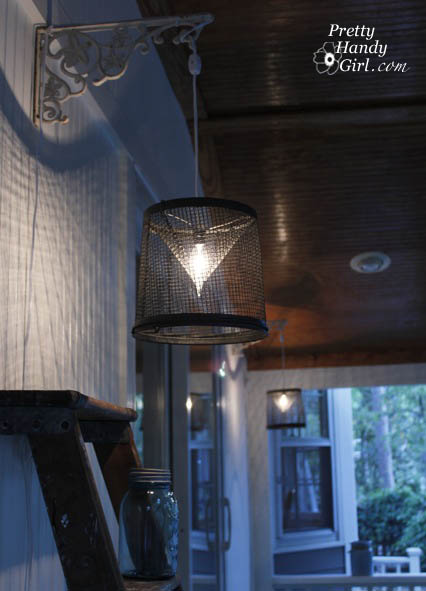
Then all I had to do was screw in these cool iron shelf brackets into the wall on my porch and feed the wires of my lamps through and use a twisty tie to secure it.
Now we have some unique mood lighting on our porch!
Do you like? Would you have known that they were minnow traps?
Too bad the weather is turning cool again. Maybe I can find some deals on porch furniture now!
If you were here the other day to see my dormer window transformation, you may have seen my exterior lights. I’ll be talking about Installing New Exterior Lighting today!
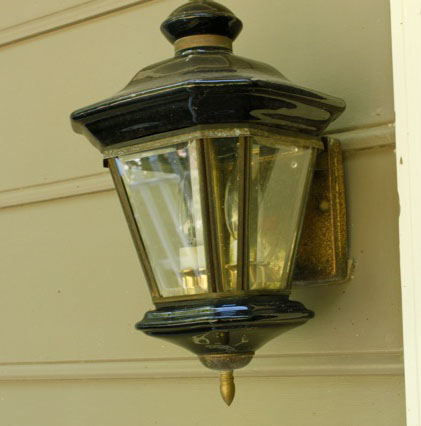
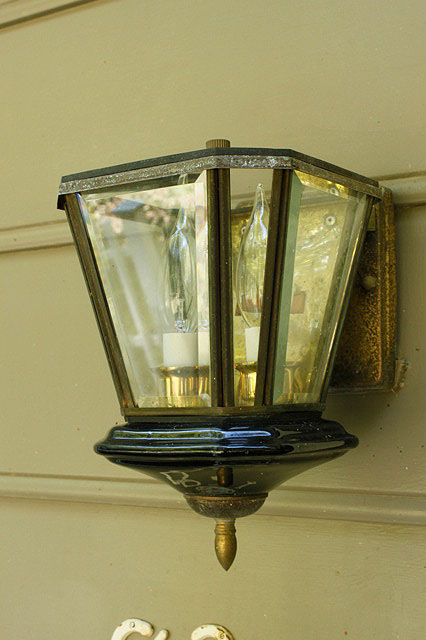
Then again, maybe you didn’t because they are miniscule! Not only are they tiny, but the light sockets were cracked, the brass trim was dated and rusty, and they just weren’t making me smile. And that is what it is all about, isn’t it!
I’ve been looking for affordable exterior lights that fit the style of our home for about a year now. I didn’t want anything too trendy or contemporary because our house has an old world feel, it is a dutch colonial.
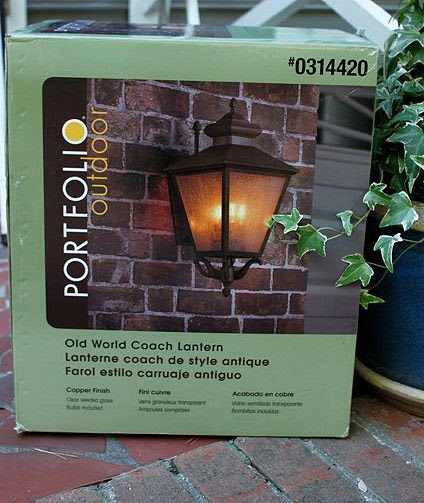
I happened to be at Lowe’s buying our new stove (yep, the one that caught fire in this post) and I spied these beauties on clearance for $24! I snatched them up in an instant and high tailed it out of the store before I could find any more things I “needed”.
Materials:
Flat head screwdriver*
Phillips head screwdriver*
power drill with screwdriver bits (if you wish to speed up unscrewing and screwing)
Wire Strippers*
Wire cutter*
New light fixture with instructions
* When working with electricity, It is safest to work with tools that have rubber or plastic handles that won’t conduct electricity, should you forget to turn off the power.
Required Safety Instruction: Turn off the power to the light fixtures you are working on. Turn your lights on and visually inspect they are lit before turning off the circuit. Then shut off the circuit at your circuit breaker and check to see that the light has gone out.
Remove your new light from the packaging. Check for the instruction manual and all the parts. I like to put screws and small parts in a bowl so I don’t lose them.
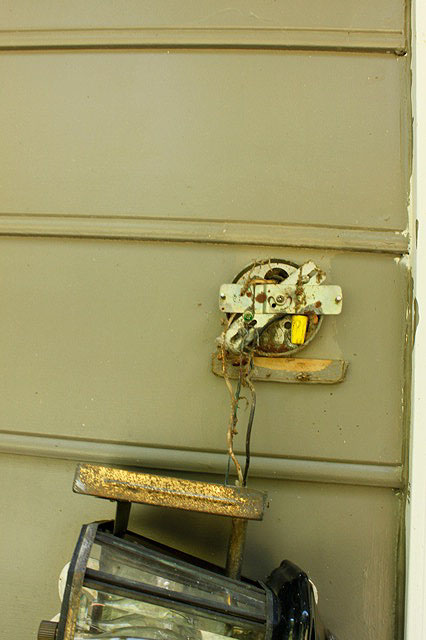
Okay, now comes the easy part. Disassemble your old light. Take the top off and keep removing parts until you are down to the bare bones.
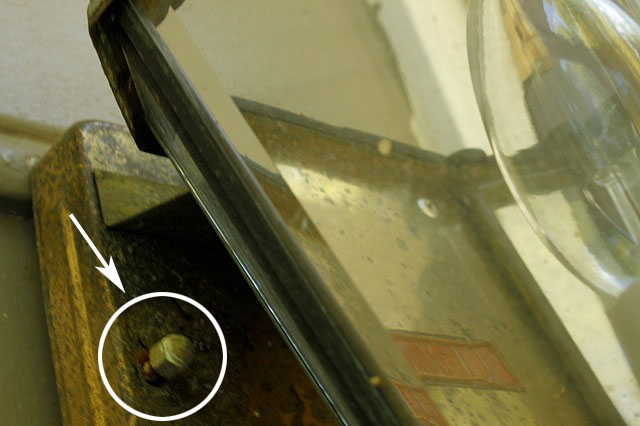
Unscrew the mounting plate from the wall by turning the small ball cap nuts (okay, no snickering, that is what they are really called!)
Watch out for critters that might be living behind your fixture! This cute little tree frog jumped out at us. Poor little guy. We actually found him in our house later that day and had to shoo him back outside.
Pay attention to which wires are connected to the white and black wires on your fixtures.
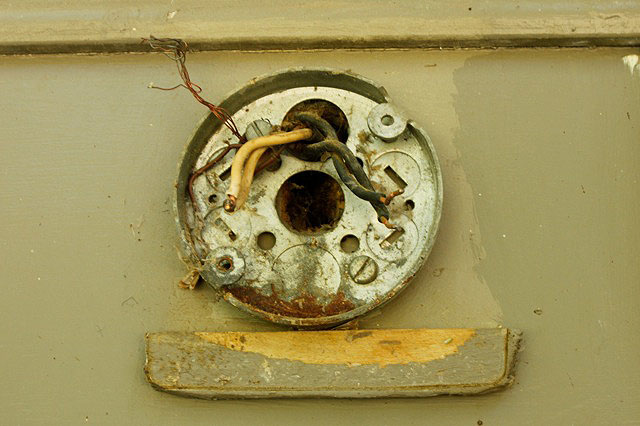
Now you can remove the wire nuts and free your old fixture. (Don’t forget to clean out your junction box (the round, square, or octagon shaped box that is mounted to the wall and contains your house wires.)
Also, take a moment to make sure your junction box is attached firmly to the house. And/or that you have something solid to attach your mounting bracket to. Case in point: this poor light fixture is hanging on by a wire because the mounting bracket was screwed into the foam insulation!
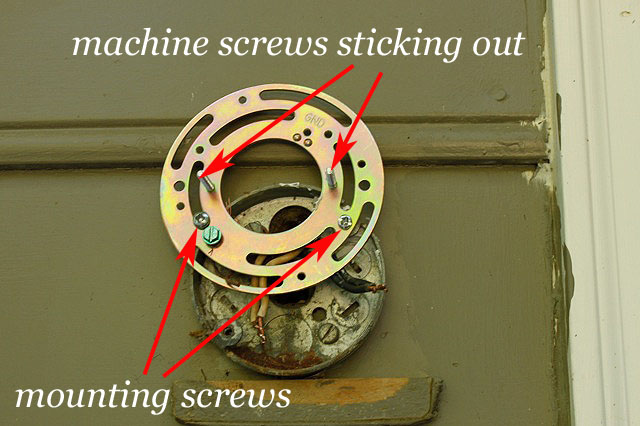
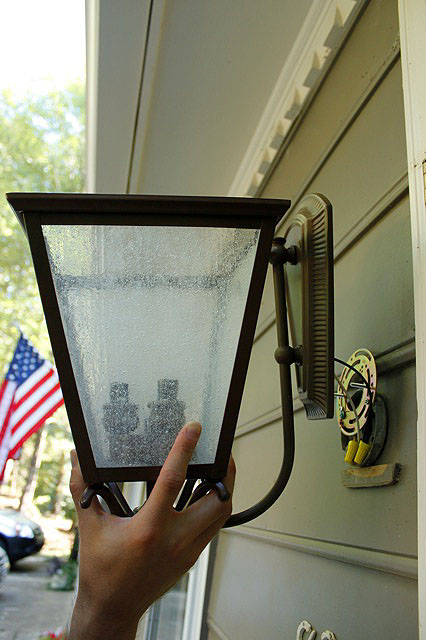
Locate the mounting plate for your new fixture. Thread the machine screws that will attach to your new light from the back of the mounting plate so they are sticking out towards you. Make sure the screws line up with the holes in your light fixture canopy (the metal cover on your light fixture that will rest flush against the wall.)
THEN you can attach it to your junction box. Honestly, this took me the most amount of time because I wanted to move my fixture up a little to compensate for its larger size. It took me too long trying to determine which holes to use for mounting. I did end up putting one screw into the junction box, and then used a wood screw to attach the other side to the siding on our house (which I then caulked to keep it from rotting the siding.) You will probably be lucky and won’t need to do this step.
Double check to make sure that the plate is snug and attached firmly to the junction box and/or a solid surface.
These next few steps will be much easier if you have an assistant to hold the light fixture while you make the wire connections.
Unless your fixture comes with short wires, trim the excess and strip about 3/4 inch of the insulation from the end of the wires using your wire cutters and wire strippers. Making sure that your wires will fit inside your junction box, go ahead and connect the bare wire (ground wire) from your house to the green ground screw. If your new fixture has a bare or green wire, wrap that around the green ground screw as well.
Separate your white and black wires from your house, ideally you want them to be on opposite sides of the junction box so there is no risk of them touching. Go ahead and use a wire nut to connect your white wires. Then do the same for the black wires. Gently push the wires into the junction box (keeping them apart from each other).
Line up the holes in the canopy on your light fixture with the machine screws sticking out of the mounting plate. Use the ball cap screws that came with your fixture to cap the ends of the machine screws.
Hopefully everything looks good at this point (straight, no exposed wires, etc.) I would recommend turning on the power to check your wire connections and make sure your fixture works before the next step, and before installing the second light (if you have one.)
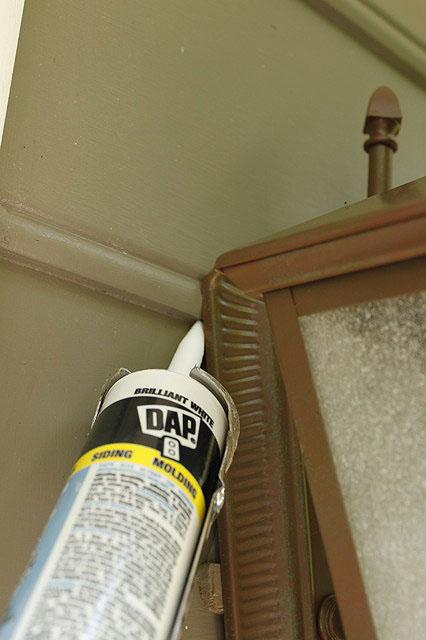
Caulk around the edges of your light fixture to keep water from entering the junction box. Use clear or paintable exterior grade caulk.
Don’t forget to turn off the power again before removing and installing your second light fixture.
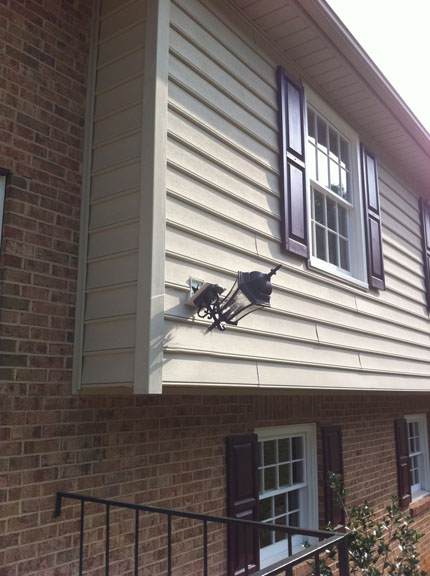
You can see both the old and new light fixtures in the photo below. The one on the left is the new one, and the right is the puny old one.
Once you get the second fixture up and check to see that it works, stand back and admire your handywork!
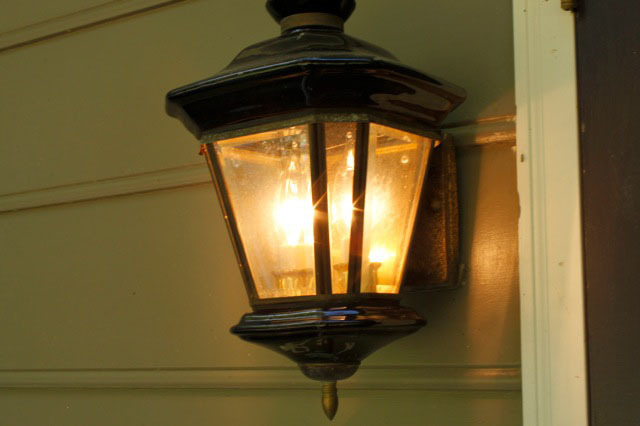
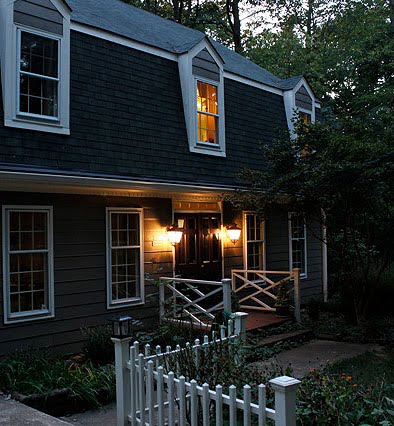
Here are the after pictures of our new exterior light fixtures:
We’re still getting used to the size of the new lamps, but I definitely think they fit the scale of our house better than the old ones.
What do you think? I’m curious if anyone else likes copper (instead of Oil Rubbed Bronze.) Don’t get me wrong. I like ORB, I just didn’t think it fit our home’s style.
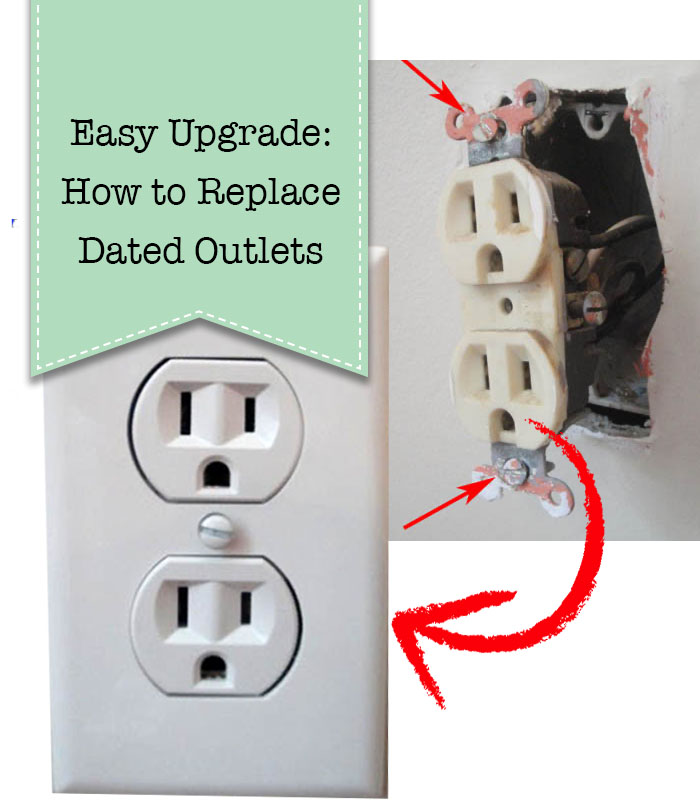
So, this is one of those not so pretty posts, but I promise it is Oh So Handy! Learn how to easily change out an old outlet.
Changing Out an Old (UGLY) Outlet
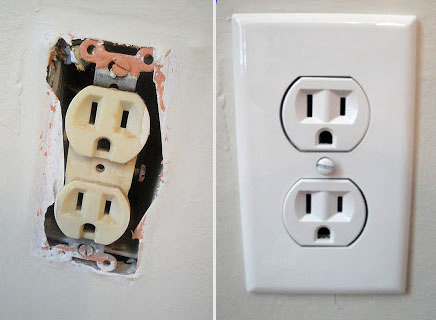
Our home was built in 1978 and most of our outlets are almond colored and many are so worn that they won’t hold a plug anymore. I used to get annoyed EVERY TIME I vacuumed downstairs and turned the corner only to have the vacuum plug slip from the outlet. Not only is this frustrating, but it is also a fire hazard. Old outlets should be replaced for safety reasons (but, hey, I’m okay if you just want to change them to a pretty white outlet.). Changing Out an Old Outlet is easy!
I distinctly remember my father showing me how to wire an outlet when I was about eight years old. I didn’t remember exactly what he taught me, but I do remember the feeling that – yes, I can do this myself! Being the father of three girls, Dad taught us all the things he would have taught a son. This is a picture of my Dad, my sisters and me teaching him all we knew about bows, barrettes and bobby pins.
I know several of you would never think of taking apart your outlet. You might say electricity scares you. Well, that is a good thing! A healthy fear of electricity will make you more cautious, so don’t lose that fear. It is a good thing to double and triple check your safety when working with electricity. Now, are you ready to update your outlets? Changing Out an Old Outlet is a relatively easy task to do. And, I promise I will show you step-by-step instructions.
I highly recommend performing outlet replacements during daylight hours (or have a lamp that you can plug into an extension cord from another room.) Also, don’t let your little ones watch you, we don’t want them to stick a screwdriver in the outlet when you aren’t looking. Therefore, it is best to handle this fix during nap times.
Materials needed:
(I’ve included affiliate links for your convenience. I earn a small percentage from a purchase using these links. There is no additional cost to you. You can read more about affiliate links here.)
* It is safest to work with tools that have rubber or plastic handles that won’t conduct electricity.
Optional tools:
vacuum to clean out the receptacle box (there will be dirt and dust in there and this may be the only opportunity you will have to clean it!)
cushion to sit on
power drill with screwdriver bits to speed up the process
Required Safety Instruction:
Turn off the power to the outlet you are working on. I highly recommend putting a night light or light in the outlet and turn it on. Then shut off the circuit at your circuit breaker and check to see that the light has gone out.
Also note that just because two outlets are in the same room, it doesn’t necessarily mean that they are on the same circuit. Plus, it is possible for the top and bottom of one outlet to be on separate circuits. Always check both the top and bottom of an outlet before you work on it.
Instructions:
Okay, let’s begin. Take a deep breath and realize that if an 8 yr. old can do it, so can you!
1. First, turn off your power, double check both outlets with your light to make sure the power is out to both top and bottom outlets.
2. Then take out your voltage tester. Insert a probe into each of the top two holes. If the tester lights up, you need to back up and turn off the power to the outlet! If it doesn’t light up, then check the bottom outlet as well. Still no light? Perfect, the power is off to your outlet.
3. If you haven’t done so already, remove the face plate from your outlet by unscrewing the middle screw.
4. Unscrew the two mounting screws as shown below.
5. Gently pull the outlet out of the receptacle box. Inspect the outlet and see if you have the same amp replacement outlet. (Usually there are marking denoting 15A 125V or 20A 120V on the silver tabs, on the back or near the screw hole in the middle of the outlet.)
6. Note which wires are attached to the outlet and where. Then make a drawing if you need to of their position. Or work by transferring one wire at a time.
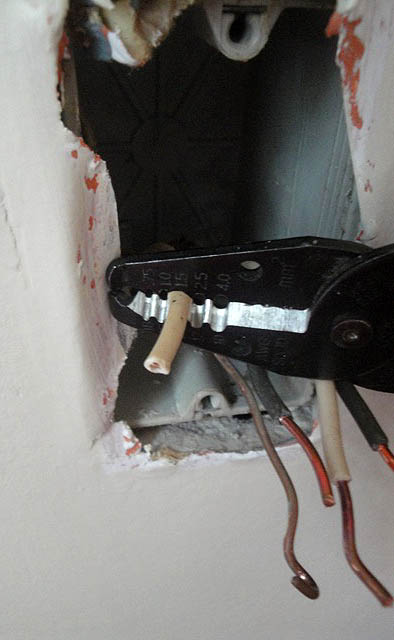
7. If the wires are wrapped around screws (lucky you), unscrew your wires and skip to step 10. If your wires are poked into holes in the back of the outlet, you may choose to try to release them by poking a flat head screwdriver into the slot next to the wire, or you will need to cut the wires as close to the outlet as possible.
8. Now strip about 1/4 inch of the insulation from the end of your wire.Then gently use your wire strippers to clamp down on the wire being sure it is scoring the insulation. If you need to, rotate your wire strippers 90 degrees and cut through the insulation again. then while the strippers are still around the wire, pull gently towards the end of the wire to remove the cut insulation.
9. Next take your needle nosed pliers and grasp the end of your wire and twist the end to make a shepherds hook shape. Do this for all your remaining wires.
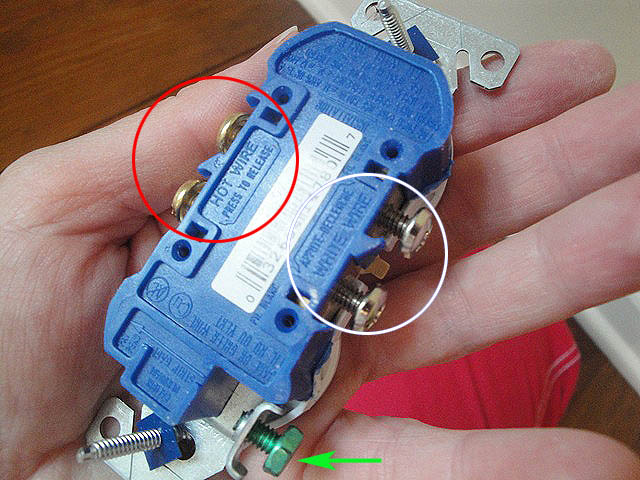
10. Looking at the back of your new outlet, you will see that one side has silver screws and/or markings on the back that says white wire. The other side of the outlet should have gold screws and/or markings indicating hot wires (the black wires). And one screw towards the bottom that is green, this screw is for your bare or ground wire.
11. Hook each of your wires around the appropriate screw (Gold Screws = Black wires; Silver screws = White wires; Green screw = bare or green wire).
12. Further, using your needle nosed pliers, pinch your wires tightly around the screws attempting to close the loop.
13. After that tighten each screw being sure that the wire stays tightly wrapped around the screw.
14. If all your wires have been screwed tightly onto the outlet you can gently push your outlet back into the receptacle box. Try to rock the outlet in by alternately pushing on the top and then the bottom. If your outlet doesn’t go in, pull it out and rearrange the wires so they fold neatly behind the outlet and try again.
15. Screw in the mounting screws.
16. Finally, replace the faceplate.
Now you can turn the power back on and use a nightlight or lamp to make sure your outlet works!
Hey, you are done! Congratulations, you did it. Reach up and pat yourself on the back because I’m proud of you! Now that you know Changing Out an Old Outlet is easy as can be, I have a next level swap for you! You can use the same tutorial to install a USB Charging outlet!
Let me know how you did. Changing Out an Old Outlet was easy, wasn’t it?!
https://prettyhandygirl.com/wp-content/uploads/2010/07/old-outlet-new-outlet.jpg320436Brittany Baileyhttps://prettyhandygirl.com/wp-content/uploads/2021/07/PHG-logo-tagline-2020-1030x211-R.jpgBrittany Bailey2010-07-19 22:32:002023-01-30 19:22:56Changing Out an Old Outlet