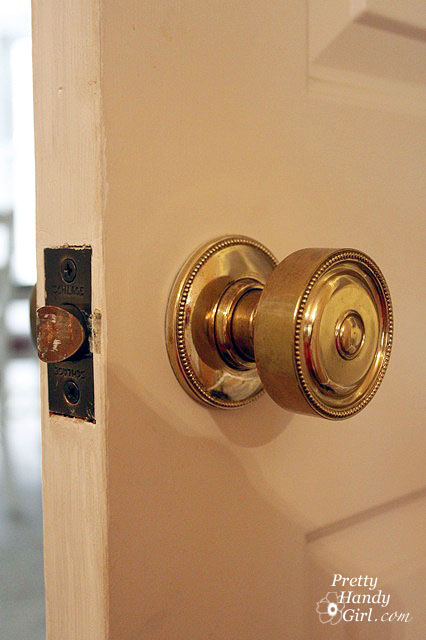
Removing a door’s hardware (knobs, latch assembly, hinges) is really a piece of cake if you know what you are doing.

There are several reasons you might need to remove a door from its hinges:

  1. The lock is broken and you can’t open the door.
  2. You want to replace your door.
  3. You want to replace the hinges.
  4. Your six year old was warned that if he slams his door one more time he will lose the door (true story).
  5. You want to repaint the door.

When I decided to give my downstairs half bathroom a makeover, I knew I needed to paint the door as well. The easiest way to repaint a door is to remove it from the hinges, remove all the hardware, and lay it flat on sawhorses and paint horizontally.

Before I show you how to paint the door, I will share with you how to remove the door, hinges, and the door knobs (or locksets if it has a key hole). How to remove the locksets is a helpful skill to learn should you wish to replace your door knobs, deadbolts or locksets.

Letting you in on a little secret: Speaking of replacing locksets, did you know that if your house has several different locks you can have them rekeyed to just one key as long as they are all the same brand? When we moved into our home we had three different locks (2 Schlage and 1 Kwikset) and keys to only ONE lock! Arrggghhhh!  Unfortunately, I didn’t have the keys for either Schlage locks.) But, I really wanted to change the locks for the whole house. When I got a quote from a locksmith, I nearly passed out. $250 to get all our locks to match and to cut a few spare keys!

I thanked them and hung up. So, here is what I did. I bought one new Schlage lockset (handles and deadbolt set) for the Kwikset door. Then I took the locksets off the other two doors and brought them to a local locksmith (Busse’s Lock Service in Raleigh.) They were able to rekey both locks using my new Schlage key. The cost was under $50!
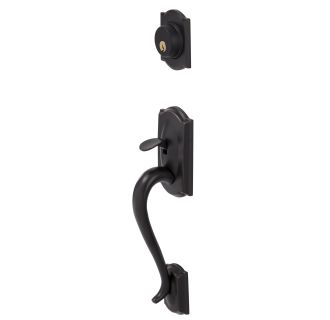
Photo courtesy of Handlesets.com

Later when the old lock on our front door broke, I ordered new ones from Handlesets.com (they sell all types of door hardware) and the customer service rep helped me enter the code from our master key when I placed the order. That way my new locks would match the rest of our house. Best of all they didn’t charge extra to for that service!

Sorry for the diversion, but I really wanted to let you in on that little secret.

Removing the Door Handles and Latch Assembly:

There are several types of door handles, you will need to inspect yours to determine how to remove it. Most door handles have screws on the interior side (for safety reasons, you definitely want them on the interior) that you unscrew to release the handles. Our door handles are a little different, but almost as easy to remove.

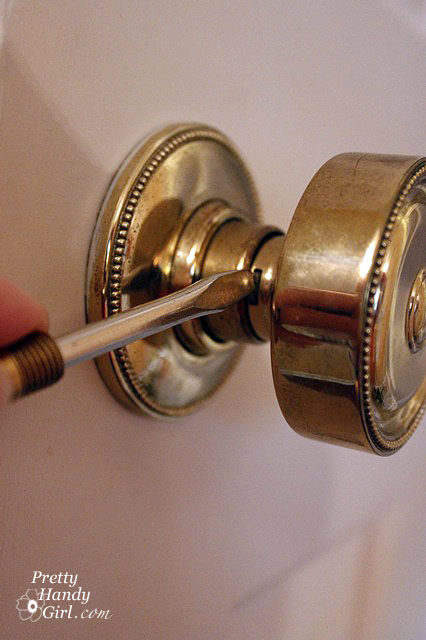
Insert a flat head screwdriver into the little slot on the side of the handle.
Pull the handle out and away from the door until it releases.
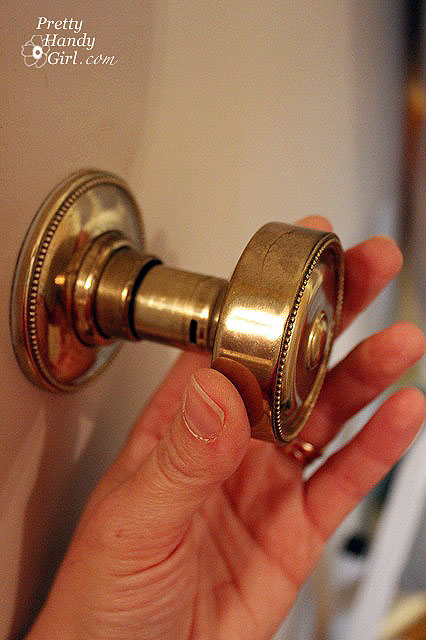
Unscrew the collar (also called a trim piece or escutcheon – yup, there is that word again!) that is up against the door until it comes off. You might need to use pliers to coax it free.
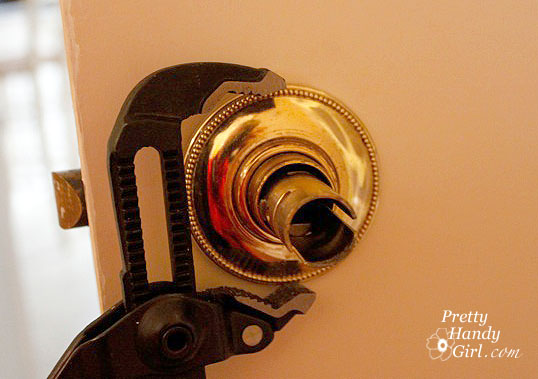
When it releases from the threads, remove the collar (ring, trim piece, escutcheon, WHATEVER.)
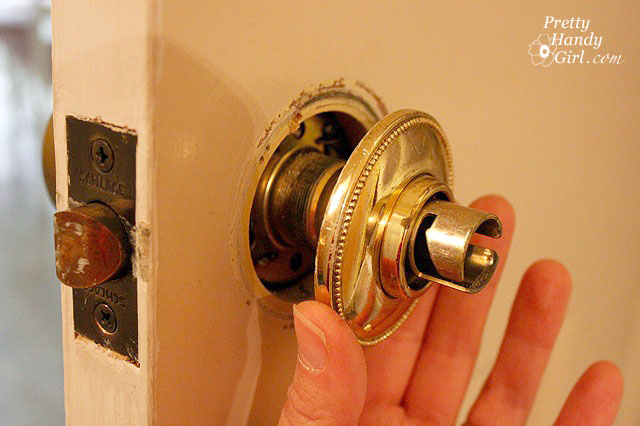
Gently pull the other handle off.
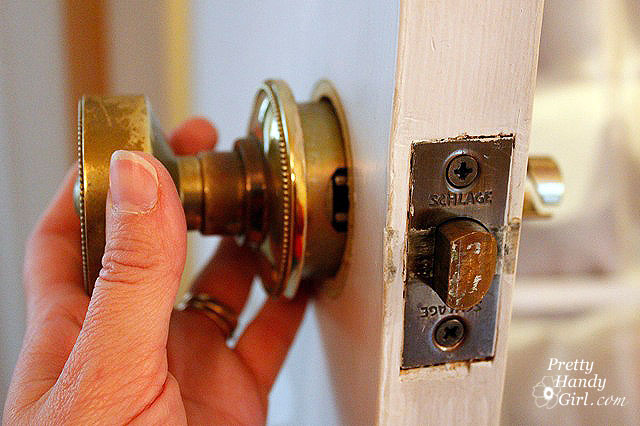
To remove the latch assembly, unscrew the two screws above and below the latch.

Gently pry the latch assembly out.
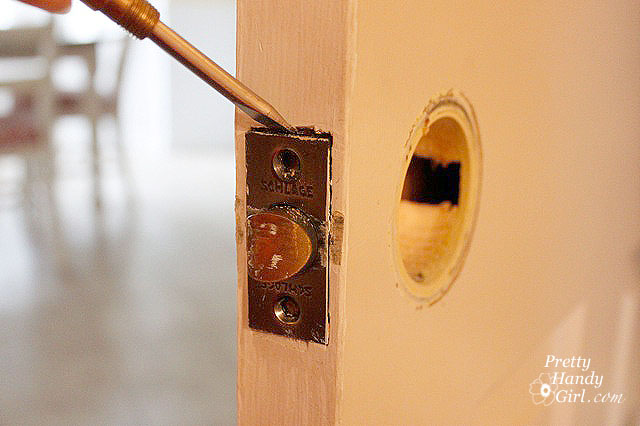
And remove it being sure to keep the screws with the latch.

Removing the hinges:

If you have the type of door hinges that the pin can be removed from, follow these instructions. If not, you will have to unscrew the hinges from your door (but don’t worry, I’ll show you how to do that in a minute.)

Removing the hinge pin is a snap. I use a flat head screwdriver and a hammer. Set the screwdriver just below the head of the pin and tap it lightly with the hammer until the screwdriver can fit below the head. If you can’t get the screwdriver under the head of the pin, insert the screwdriver into the bottom of the hinge and tap the bottom of the pin up slightly. Then angle the screwdriver end up and the handle down. Continue to tap on the screwdriver handle with the hammer until you can release the pin*.
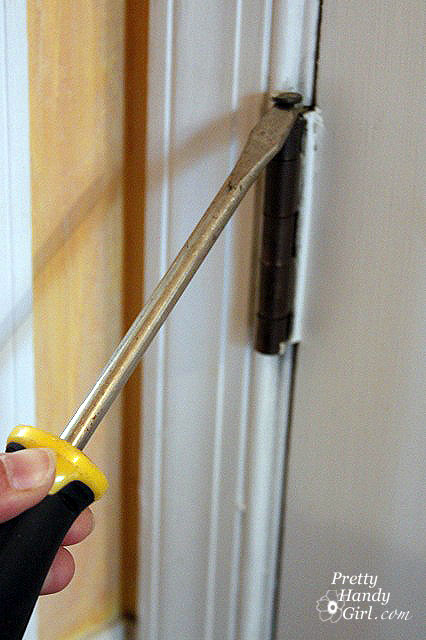
*Oh, and before you remove all the pins, you may want to ask someone help hold the door while you remove the pins from the other hinges. Not that I’ve ever made that mistake (uh, okay, maybe I did.)

Remove the other two hinge pins and gently pull the door off the hinges.
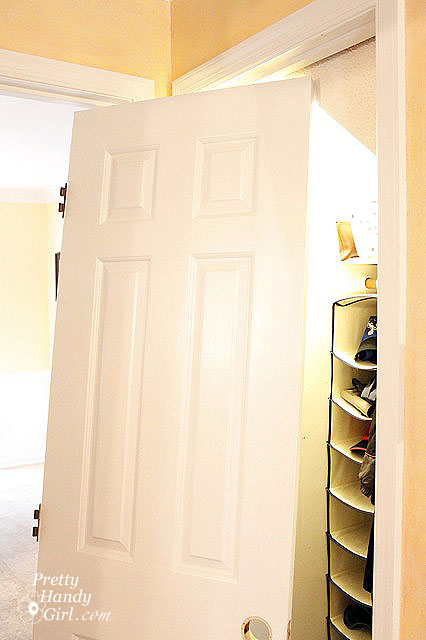
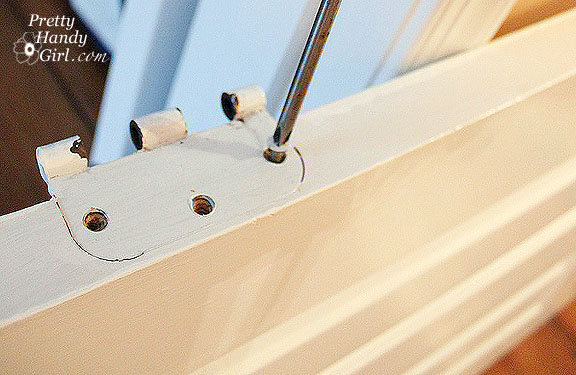
Use a screwdriver or cordless drill with a screwdriver bit to remove the hinges from the door and door frame if you are painting the trim as well.

I ran into a few painted over screws that I couldn’t turn. Here is how to deal with those little buggers.

Lay your door on it’s side with the hinge facing up. Fit a screwdriver into the screw slots as best you can.
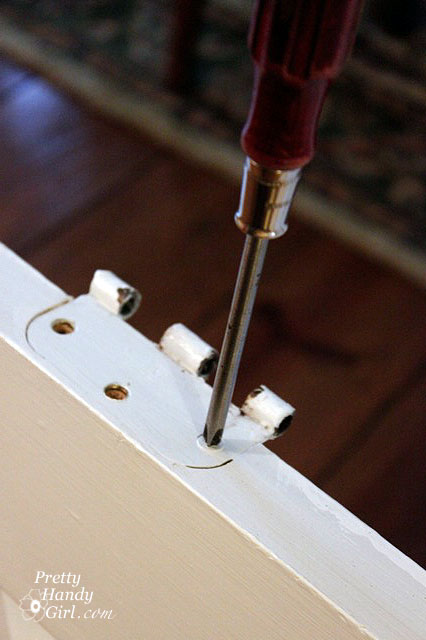
Then use a hammer to bang on the other end of the screwdriver.
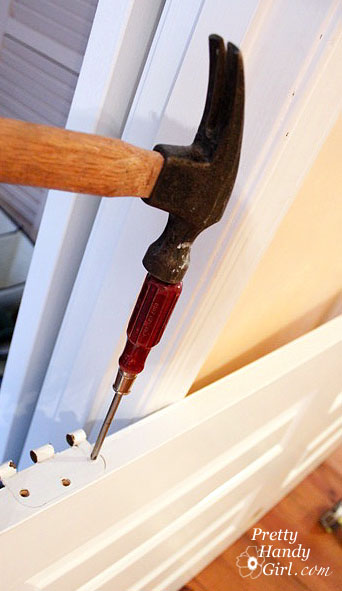
This will either crack the paint or make enough of an indentation that you can turn the screw.

Be sure to keep all your hinges and screws in a separate bowl or bag.

Now you are ready to paint your door or paint your hardware (Like Beckie at Infarrantly Creative did HERE) or both! More tutorials to come.
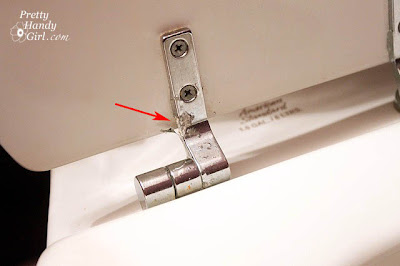
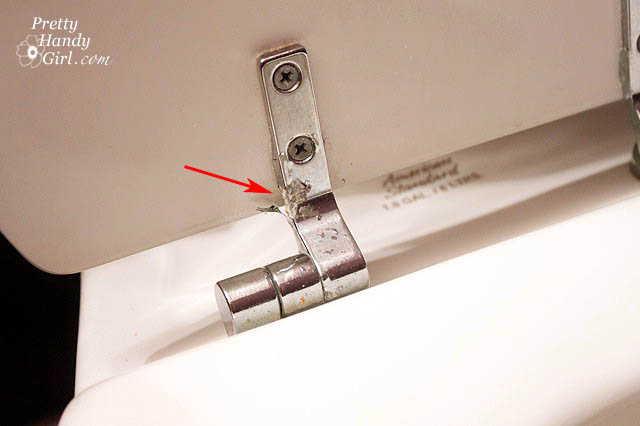
I just finished cleaning the bathroom. The mirror is spotless, the sink is clean, and the toilet is cl… ARGH! I just cleaned the toilet and that flaking hinge just dropped another metal flake on the seat!

Do any of you have a similar problem? Or is your seat old and looks dirty no matter how much elbow grease you use?
Don’t put up with ugly toilet seats any longer! This fix is inexpensive and takes about 15 minutes.
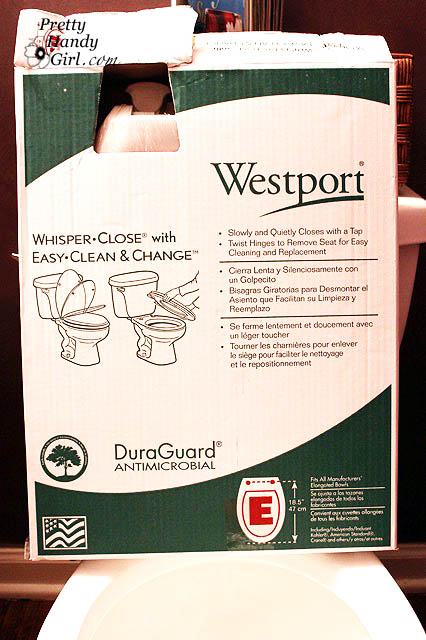
New toilet seats start at $20. I splurged on this soft close lid for $35. I’ll tell you why later.
You will need pliers and a phillips or flat head screw driver (depending on your bolts).
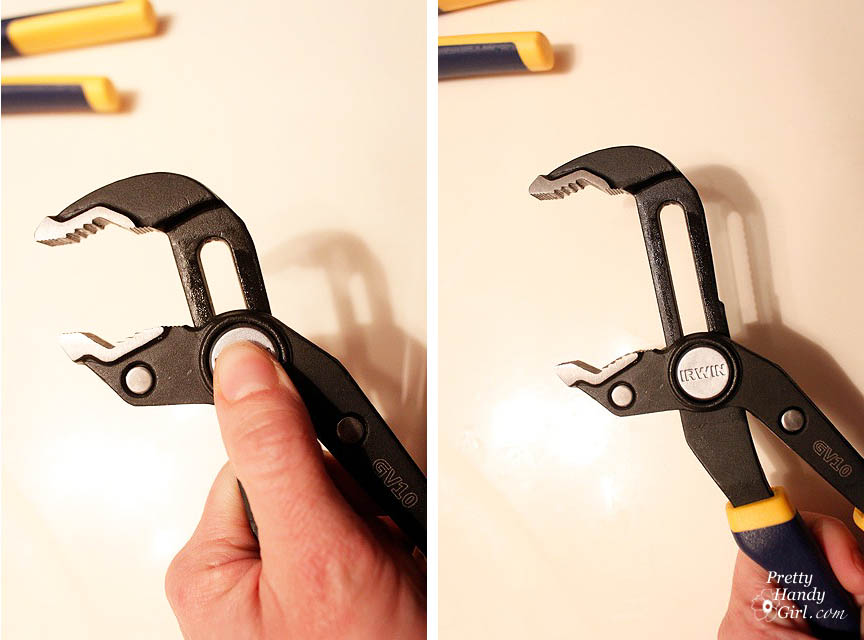
I received the adjustable Irwin Groove Lock pliers from Irwin to test, and I do have to say that I like the convenience of adjusting it with the push of a button. That sure beats looking for the right size socket or crescent wrench! {I was not paid to say that, see my product review disclosure here}

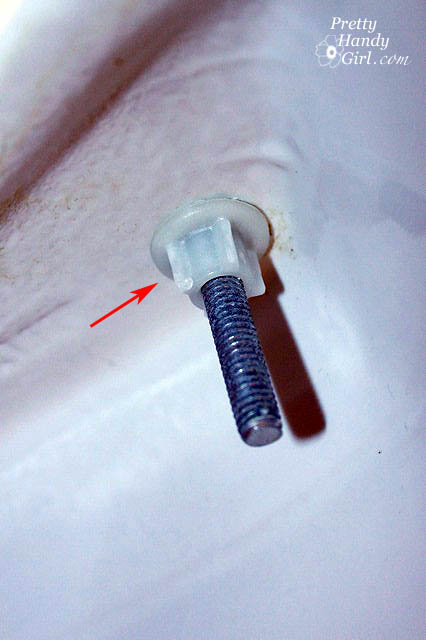
Locate the bolt and nut under your toilet bowl. Use your pliers to loosen the nut (remember lefty loosey to unscrew.)

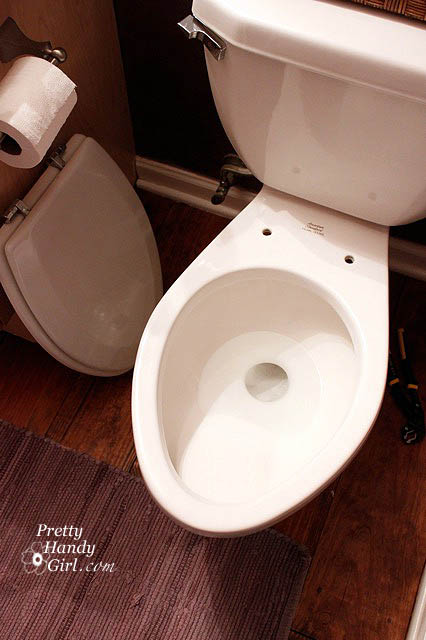
Once the nuts on both sides have been removed, you should be able to lift the old seat straight up and off the toilet.
Locate the two seat bolts for your new seat. (Be sure to familiarize yourself with the instructions for your new seat since they may vary slightly from this post. Some seats have the bolts attached to the seat already.)
Insert them into the holes in the toilet.
Thread the nut onto the bolts from underneath. Then tighten the bolts with a screwdriver and hold the nut with your pliers. Be careful not to over-tighten the bolts or your toilet bowl could crack.
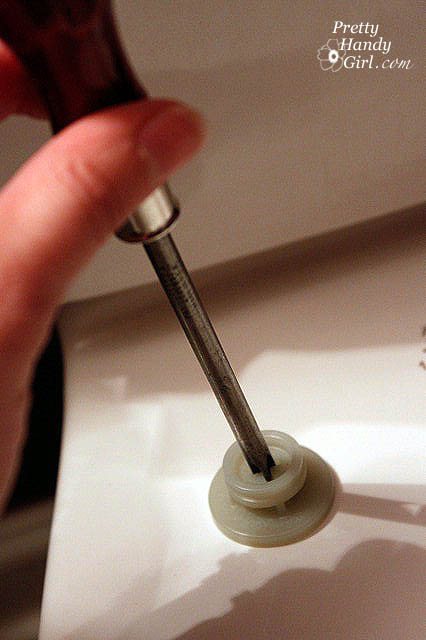
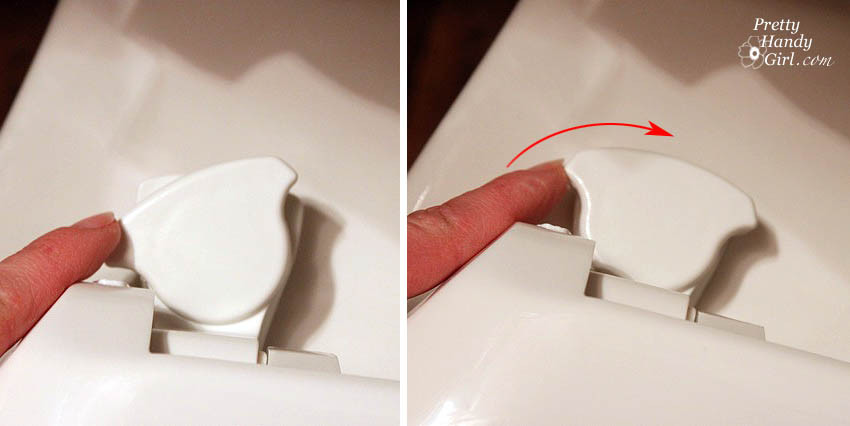
The seat I bought has a quick release hinge so you can thoroughly clean the seat and around the hinges. Simply snap the seat on top of the bolts and then rotate the hinge cap clockwise to lock it in place.

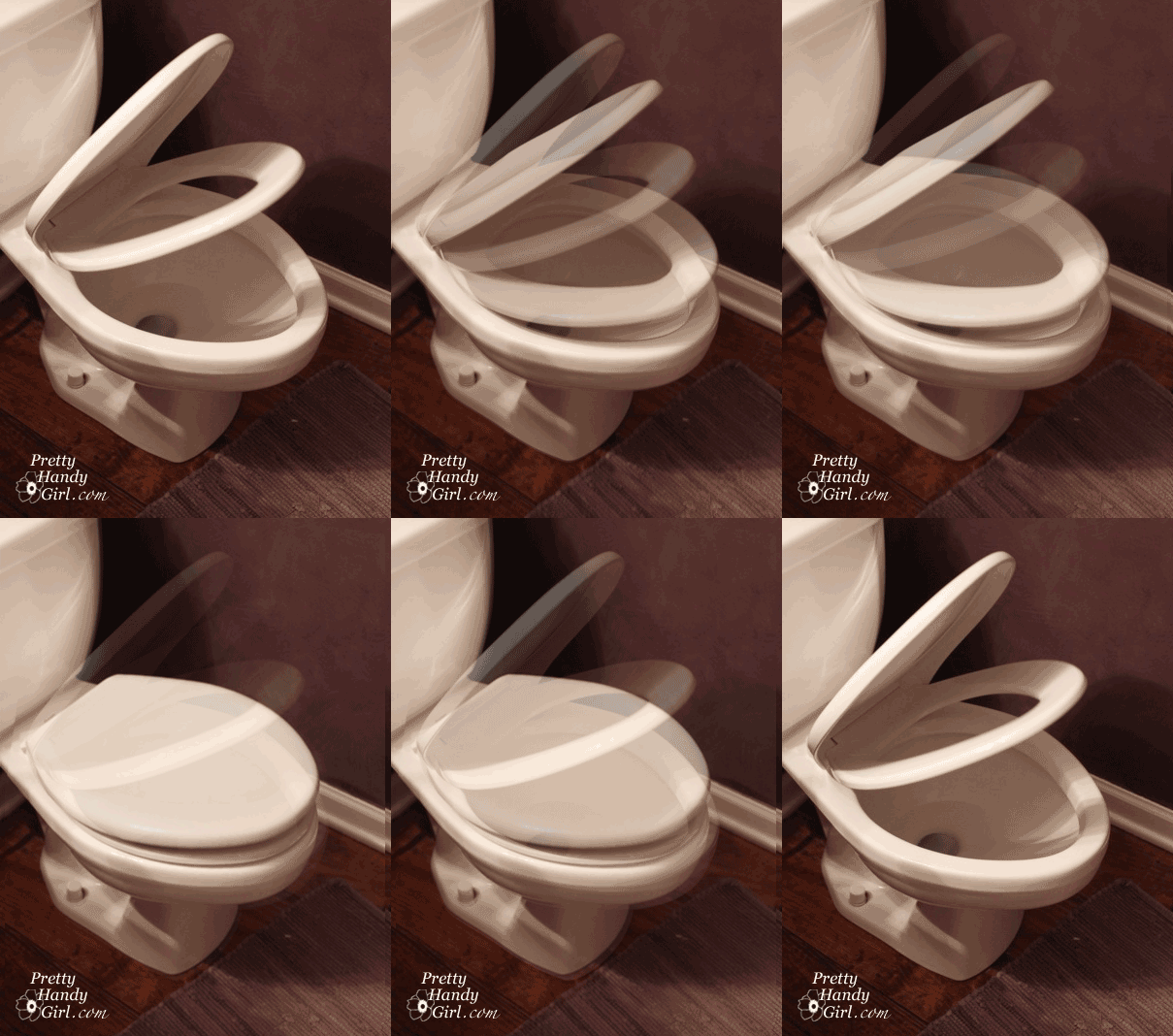
And the seat is installed. I love that our toilet seat has a soft close feature.

Now the true reason I bought the soft close seat:

These two boys in training think it is pretty cool and are MORE likely to lift up the toilet seat when using it and return it to the down position when done! Any of you who have little boys in your home, you know what I’m talking about, right?! You have to start training them young! (I never want to sit down in droplets of pee ever again. Ewwww!)


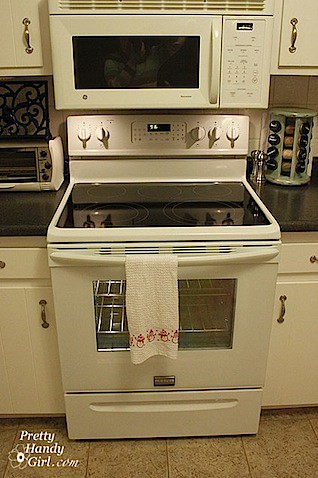
I hate to break up the holiday glamour-fest, but it is time to put on my tool belt and share with you an important safety device. As some of you may remember, we had an oven fire this past September. We ended up replacing our oven and when the new one was delivered it came with an anti-tip device. All new free-standing and slide-in ovens should come with one. Be aware that most stores that deliver your stove WILL NOT install the anti-tip device when they deliver (shame on them!)

Oven.jpg

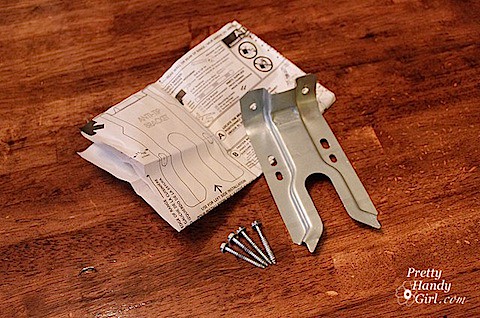
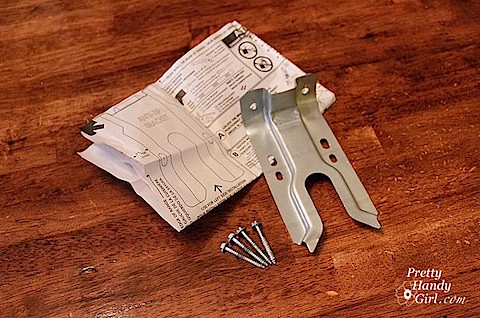
If you don’t know what an anti-tip device is, let me show you:

BracketParts.jpg

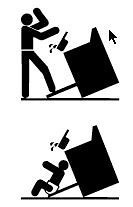
That’s it! Just a bracket and a few screws. But, that little device can prevent this:

TippingPics.jpg

The whole oven can and will tip very easily with very little weight on the open oven door. Stop reading RIGHT NOW and go open your oven door. Then press down to see if you can tip your oven!

If you can tip it, you can call the manufacturer of your oven and they should send you a device for free or just a shipping charge. To find an anti-tip device for your stove, contact the manufacturer.

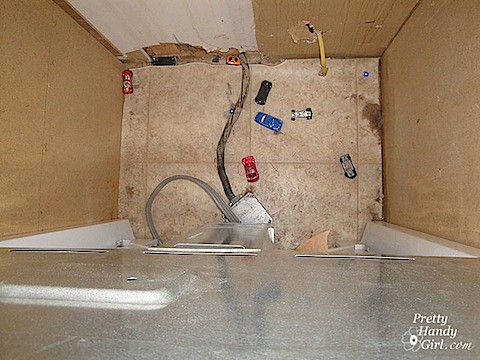
Installation is super simple. The hardest part is pulling the stove out and cleaning all the goodies that have fallen beneath the stove for years. Apparently our stove doubles as a matchbox car garage!

CarGarage.jpg

Safety Alert: If you notice in the picture above, there is a metal box lying loose on the floor with black and grey wires entering it. This is the junction box where our wiring for the stove is hardwired into the house. The fact that this junction box is lying loose on the floor is dangerous! Should we (or the firemen) had pulled hard enough when removing the stove, the connections could have come loose and there would be 240 volts of live (or should I say life-ending) power exposed! Therefore we hired an electrician to wire an outlet into the wall before we installed our new stove.

One more safety tip, if your oven catches on fire (specifically the heating element is burning) you will need to stop the oven from receiving any power. Be sure to turn off the circuit at your circuit breaker! This probably would have saved me from having to call the fire department, I thought just turning the oven off would stop the element from continuing to ignite and burn, BUT NO IT DID NOT!

Anti-Tip Bracket for Your Oven Installation:

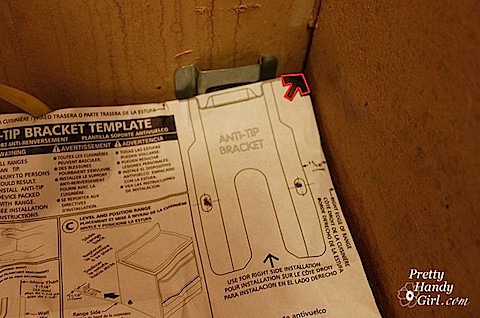
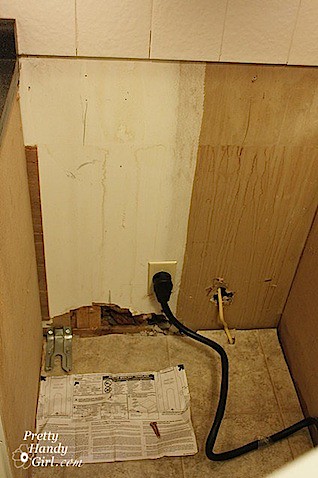
If your oven is hardwired, before installing the bracket be sure to shut off the power to the appliance. Even if you have an outlet, be extra safe and turn off the power to that outlet. Once you have removed all foreign objects from under the stove and cleaned the floor. Layout your template lining up the corner of the sheet to the corner of your cabinet and the wall.

LineUpTemplate.jpg

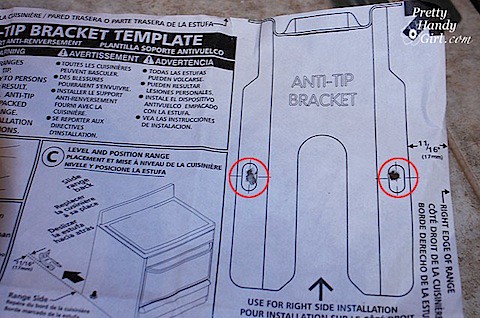
Drill through the crosshairs marking the location of the screws (remember to use a drill bit slightly smaller than your screws.)

DrillHoles.jpg
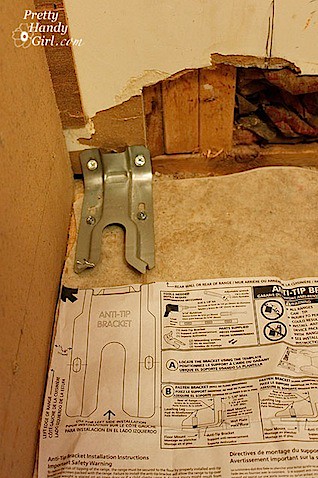
Remove your template, line up your bracket with the holes and drive the screws through the holes on the base of the bracket and then into the wall at the back of the bracket.
LineUPBracket.jpg
Once your bracket has been installed, grab a helper to help you guide your oven back behind the wall.
InstalledBracket.jpg

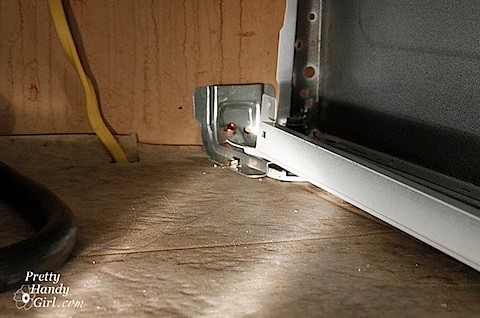
If you are having trouble lining up your stove with the bracket, you may need to remove the storage drawer and look underneath your oven. You also might need to adjust the feet on your oven up or down to give enough clearance for the whole foot to slide into the bracket. (You do this by screwing or unscrewing the feet.) Be sure to adjust the foot on the opposite side to level your oven.SlideFootUnder.jpg
And you are done, this installation is relatively easy as long as you don’t encounter things like electrical code violations (aka improperly hard-wired appliances.) Feel free to email me with any questions and I will try to assist you. Again, I have one extra anti-tip device for a GE stove if you would like it.

Now it is time to bake some cookies! YUM!

How often have you removed a screw, accidentally dented your drywall, or had a hole that couldn’t hold a screw anymore? And, how long has that hole stared glaringly at you? Let’s talk about repairing holes.

Today, I will empower you to fix that hole! Or give you the tips and tutorial to handle that future hole.

A month ago, you probably saw this post on turning a closet into a reading nook. I removed the closet doors and needed to patch the screw holes left behind.

Repairing Holes

Patching small holes in wood (or drywall):

Materials:

(I’ve included affiliate links for your convenience. I earn a small percentage from a purchase using these links. There is no additional cost to you. You can read more about affiliate links here.)

1. Use your putty knife or utility knife to scrape off or cut away any edges of the hole that are not flush with the wall or trim.

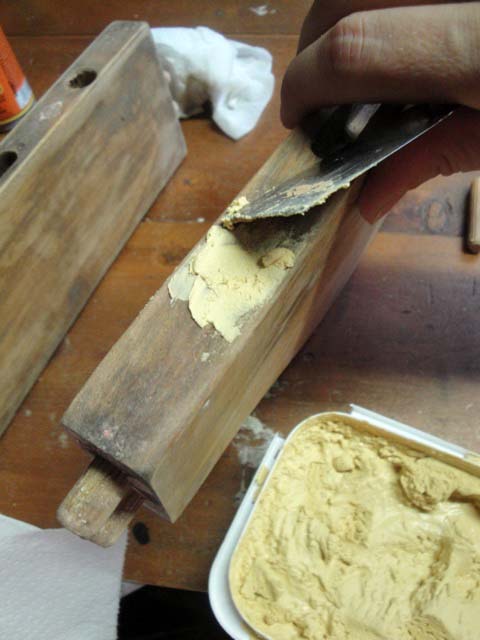
2. Put a small amount of putty (or spackle) on your putty knife.

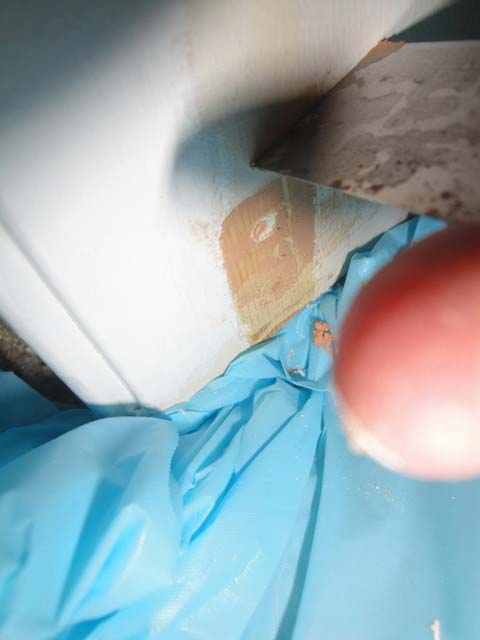
3. Push the putty (or spackle) firmly into the hole as you slide the knife over the hole.

4. Scrape the excess off the surface.

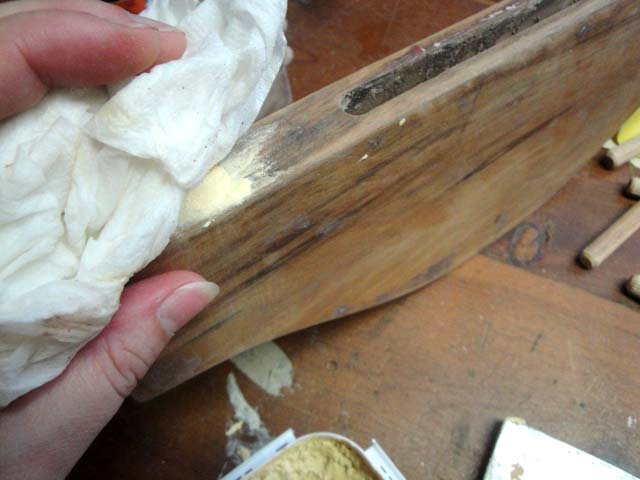
5. Use the damp rag to wipe excess putty (or spackle) off.

6. Wait for putty (or spackle) to dry, and sand smooth.

On the same project, my three year old had nearly pulled the tie backs out of the door casing, leaving two stripped holes. I wanted to hang the tie back up in the same location, so I had to repair the holes and leave it strong enough to hold up to a 3 yr. old!

How to fix a stripped hole in wood:

Materials:
Toothpicks
Wood glue
Damp rag
Hand saw
Sandpaper

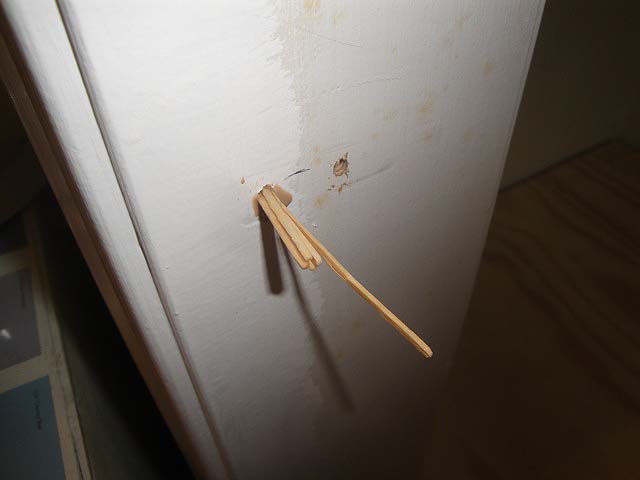
1. Dry fit toothpicks so they are snug in the hole.

2. Remove toothpicks in one bunch and add glue to the tips of the toothpicks and more glue in the hole.

3. Push the toothpicks firmly into the hole.

4. Wipe any excess glue up immediately.

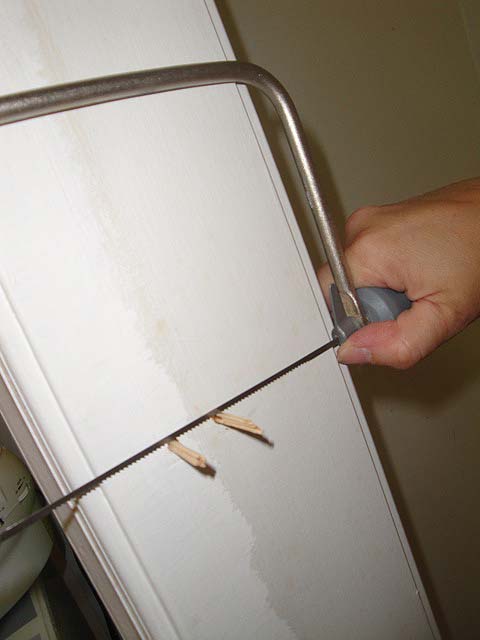
5. When the wood glue dries, saw off the toothpicks as close to the hole as possible (without damaging your trim.)

6. Use the sandpaper to smooth the toothpicks flush with the wood.

7. Follow up with putty if necessary for cosmetic appearance. (You can use the above directions for patching a small hole.)

Yesterday I showed you the transformation of a curbside chair named Daisy. She had a few holes that needed filling where I had removed the spindles.

How to fill a hole in wood (non-structural):

Materials:
Wood Putty
Putty Knife
Damp rag
Sandpaper

1. Clean out hole of any dirt or debris.

2. Roll wood putty in hand to fit in hole.

3. Insert putty in hole and then push it in using a pencil or similar blunt object.

4. Continue filling the hole until you are almost flush with the top.

5. Use your putty knive to apply final topping of putty.

6. Wipe excess off with damp rag and create a flush top with the surrounding wood.

7. Putty will shrink slightly when dry, so you may need to add another top layer of putty.

8. Once putty is thoroughly dry, sand it smooth.

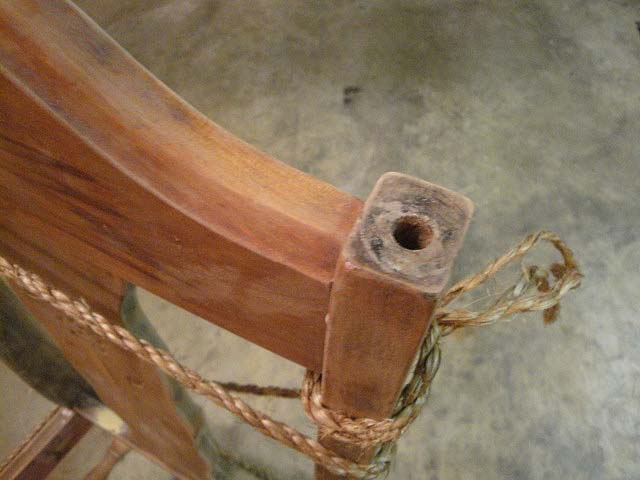
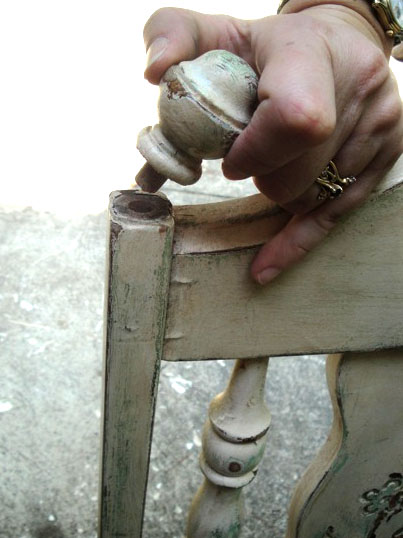
Also in the transformation of a curbside chair named Daisy, I had to add new finials to the top.


How to fix a slightly larger hole in wood (that needs to be structurally sound):

Materials:
Wooden peg (to size of hole)
Gorilla glue
Wet rag
Hand saw

Sandpaper

1. Dry fit wooden peg so that it fits snug in the hole.

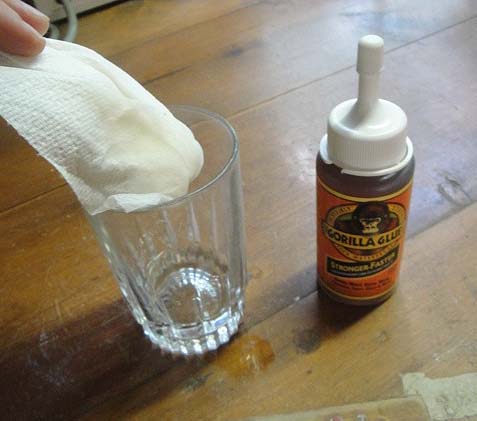
2. Remove peg and dampen inside of the hole.

3. Squeeze in a small amount of Gorilla glue (this glue will expand as it cures.) And insert peg back into hole.

4. Wipe any excess glue up immediately.

5. Clamp peg in place until Gorilla glue is dry.

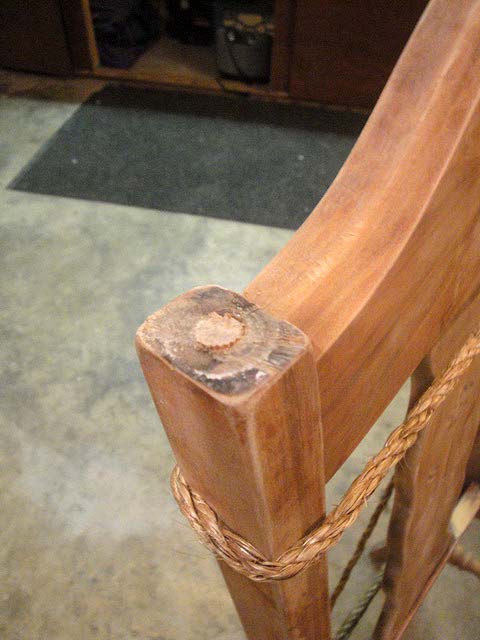
6. After the glue dries, saw off the top of the peg as close to the hole as possible.

7. Use the sandpaper to smooth the peg flush with the wood.

Screwing into repaired hole:

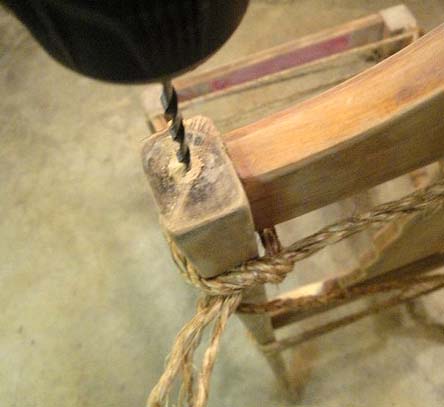
1. Choose a drill bit that is slightly smaller than the screw you are using.

2. Predrill your hole.

3. Screw in your screw (or in my case, the finial).

Also, during the making of the closet turned into a reading nook. I accidentally knocked a hole in the drywall. The hole was too big for just spackle.

Repairing larger drywall holes (up to 3 inches):

Materials:
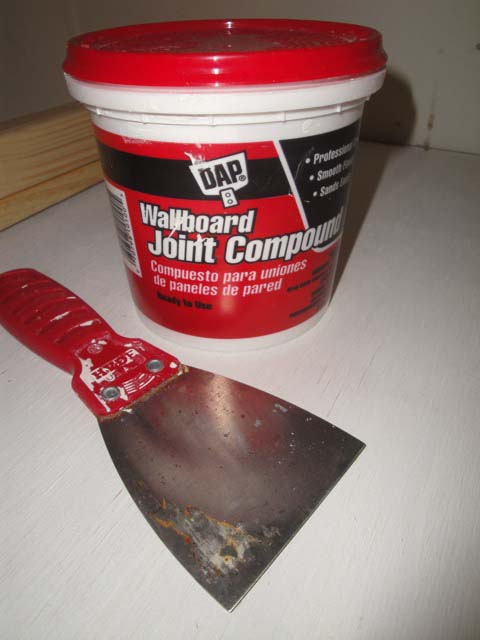
Joint compound
6″ taping knife
Utility knife
Webbed tape (or webbed patch kit)
Sandpaper

1. Use your putty knife or utility knife to scrape off or cut away any edges of the hole that are not flush with the wall or trim.

2. Adhere webbing over the hole.

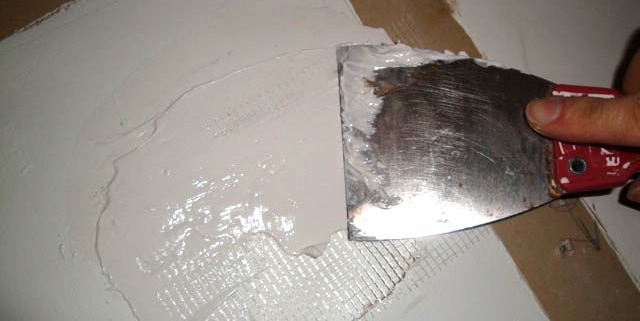
3. Put a small amount of joint compound on your taping knife and push the compound gently into the hole as you slide the knife over the webbing.

4. Extend the compound beyond the taping.

5. Scrape the excess off the surface.

6. Wait for compound to dry and add another layer. Your goal is to have a smooth layer on top that hides the webbing and bumps out ever so slightly above your wall surface.

7. Use damp rag to wipe excess compound off and to smooth any visible edges.

8. Again, wait for compound to dry, and sand smooth so the patch is flush with the wall.

9. The best way to paint over a larger patch job is to use a paint roller and paint at least 2 thin layers of matching wall paint over the repair area.

Repairing holes is easier than it sounds. If you have larger holes or need more information on patching drywall holes, check out this video tutorial.


When I was 18, and bought my first car, and thought I was the coolest girl in town with a little zippy sportscar – sorry, just a little trip down memory lane.  My parents gave me my first tool kit. That tool kit is still with me today and I do use it a lot. The set has a series of sockets, crescent wrenches, interchangeable screwdriver bits, allen (hex) wrenches, needle nose pliers, and locking pliers.
 
That set got me through several repairs (both auto and home). Now, as a homeowner, I have found that there are a few more tools to have on hand.
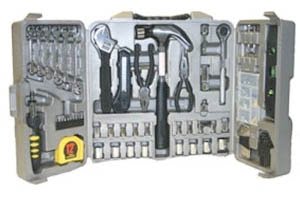
You will likely want to look for a multi-piece set like this one:
This will give you a wide variety of tools for a low cost. If you want a deal, try shopping for these sets around Father’s Day or Christmas. The set above was listed on Amazon.com for approximately $50 – $60.
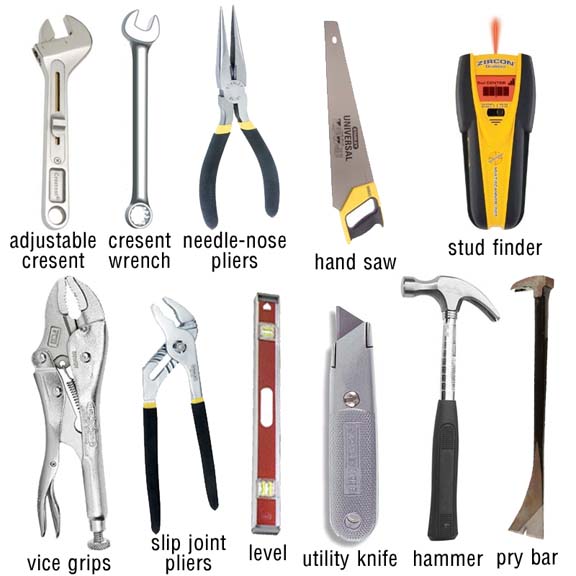
Regardless if you are buying these items in a set or separate, these are the tools I recommend:
Homeowner essentials:
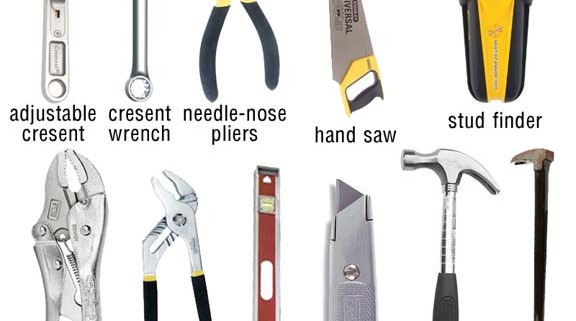
  1. Hammer
  2. Screwdrivers – Phillips head and a flat (straight or slotted) head. Try to buy a small and medium size of each.
  3. Allen (Hex) Wrenches in several sizes
  4. Adjustable Crescent Wrenches – I suggest buying at least two. One 6″ and one 10″
  5. Slip Joint Pliers (handy for overall gripping)
  6. Needle-nosed pliers
  7. Vice grips (Locking pliers)
  8. Tape Measure
  9. Level – 24″ is preferrable
  10. Utility knife (mat knife)
  11. Safety glasses
  12. 12″ Handsaw
  13. Stud Finder
  14. Flashlight
  15. Pry bar (must have a flat sharp side and the other side a notch for pulling nails.)
  16. Tool box or case to keep all of the above in 
  17. My favorite DIY guide to my home: Home Depot’s Home Improvement 1-2-3 – the best $15 I ever spent!
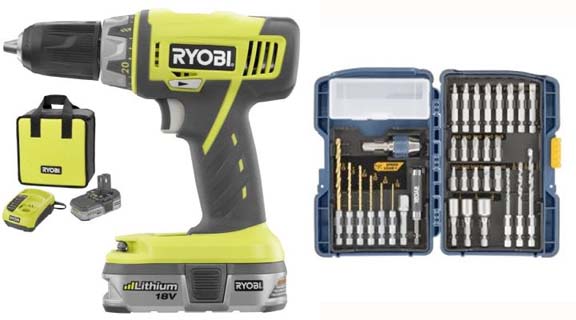
 Screwdriver bits:
 

Last but not least, the most indispensable tool I’ve ever owned:
Cordless Drill with screwdriver bits and a small set of drill bits 

For Electrical DIY:
  1. Wiring instruction book or guide
  2. Wire Cutters/Strippers
  3. Electrical Current tester 
    • You only need the simple tester with two probes and an indicator light to test if the power is on. 
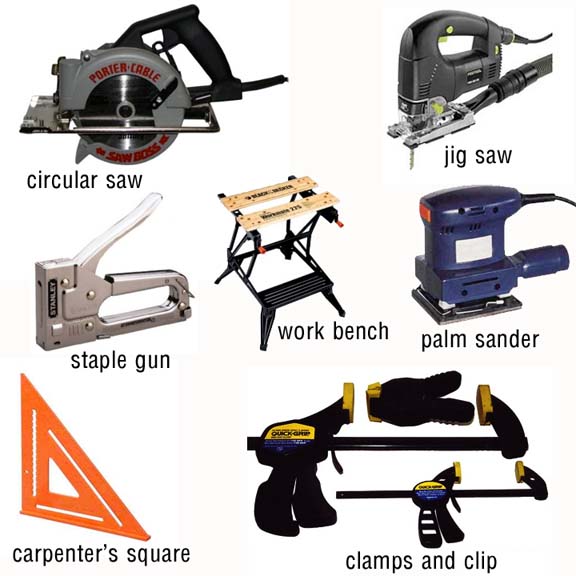
For the committed DIYer:
  1. Palm sander
  2. Carpenter’s square
  3. Staple gun
  4. Power Circular Saw 
    • Be sure to hold one in the store and feel how the grip feels in your hand. This is especially important as a woman with a smaller hand size. (more on power tool shopping in another blog post – coming soon!)
  5. Jig Saw
  6. Saw Horses or Folding Work Bench
  7. Clamps – A Variety of Adjustable Clamps and Clips

I hope this list gives you some good information so you won’t feel overwhelmed when buying tools. Definitely ask a sales person for help or opinions. Don’t tell them you are new at this. Ask them for the tool they would purchase if they were buying one for their shop. You should aim to buy a quality tool (especially power tools) that will last your lifetime. A cheap tool will either break or not have the power to do the job you need it to do. However, you don’t need to buy top of the line or break the bank to get a good tool.
Savings Tip: Many of the big box home improvement stores will usually price match tools that are priced cheaper at a competitor if it is the same make and model, plus take 10% off the price. Be sure to bring the ad with you or they will need to call or look up the price online.
 
Home Depots price guarantee:  
NOBODY BEATS OUR PRICES
If any competitor tries, we’ll beat their price by 10%. Guaranteed.*
*If you find a current lower price on an identical, in-stock item from any retailer, we will match the price and beat it by 10%. Excludes special orders, bid pricing, volume discounts, open-box merchandise, labor and installation, sales tax, rebate and free offers, typographical errors and online purchases.
Lowe’s price guarantee:
Everyday Low Prices, Guaranteed
We guarantee our everyday competitive prices. If you find a verifiable lower everyday or advertised price on an identical stock item at any local retail competitor that has the item in stock, we’ll beat their price by 10% when you buy from us. Just bring us the competitor’s current ad or we’ll call to verify the item’s price that you have found. Cash (charge card) and carry purchases only. Competitor’s closeout, special order, discontinued, clearance, liquidation and damaged items are excluded from this offer. On percent-off sales, Lowe’s will match the competitor’s percent-off offer. Limited to reasonable quantities for homeowner and one-house order quantities for cash and carry contractors. Current in-store price, if lower, overrides Lowe’s advertised price. Price guarantee honored at all Lowe’s retail locations. Labor charges for product installation are excluded from our price guarantee offer in our stores with an Installed Sales Program. Visit store for complete details.
Sear’s price guarantee:

If you find a lower price on an identical branded item with the same features (in Home Electronics identical brand and model number) currently available for sale at another local competitor retail store, Sears will match that price plus, give you 10% of the difference. Just bring in the original advertisement to a sales associate at the time of, or within 14 days after, your purchase. More fine print…

Happy Shopping!