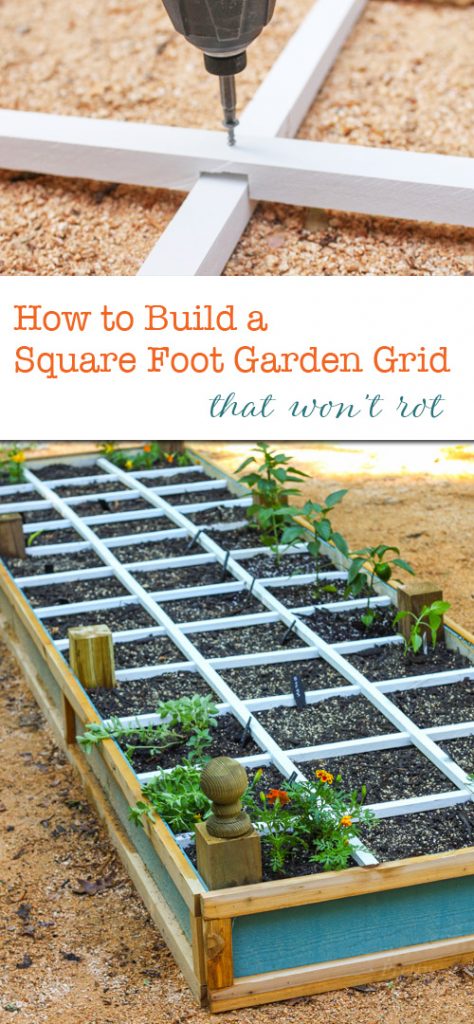
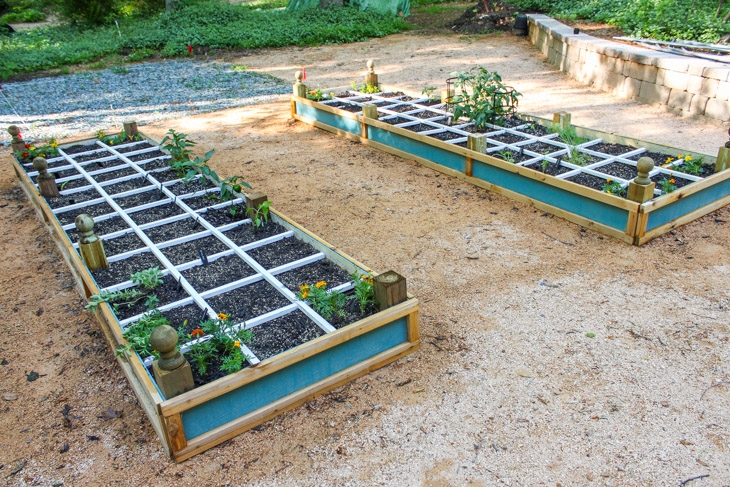
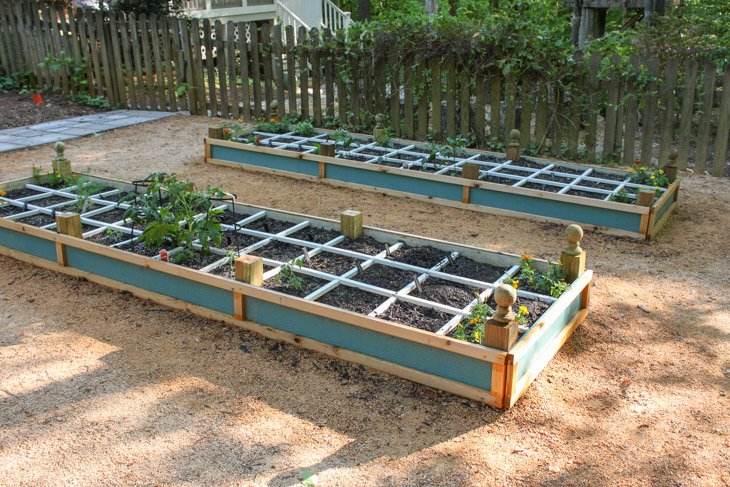
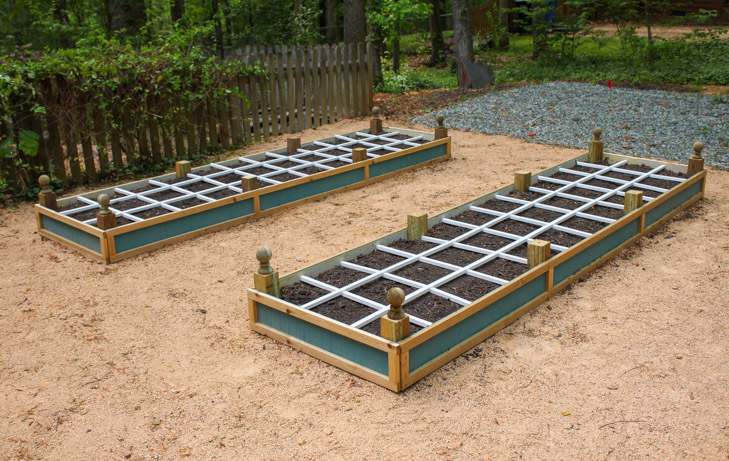
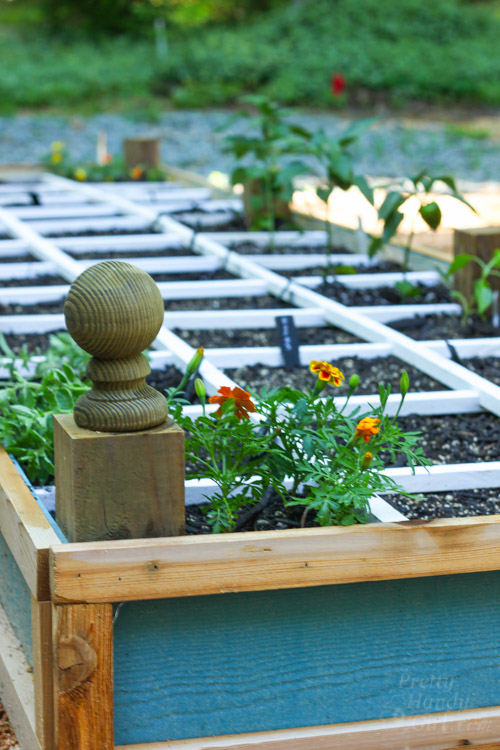
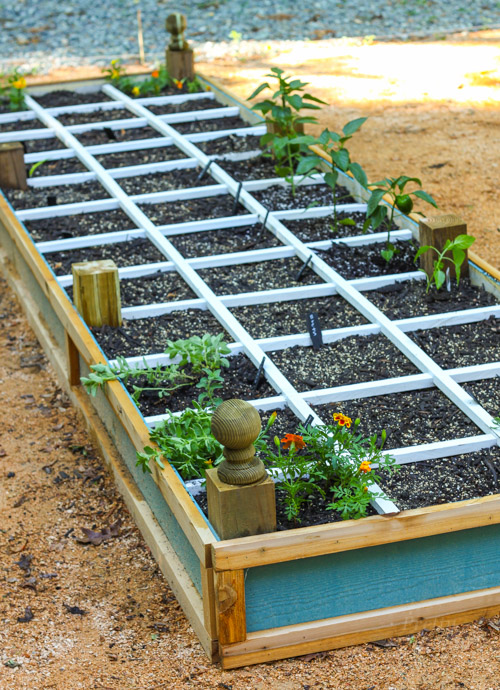
As I mentioned before, I am trying my hand at Square Foot Gardening. If you’ve never heard about this style of gardening, do some research or check out this book on Square Foot Gardening(affiliate link). The basic premise of the Square Foot Garden plan is that you plant in squares instead of rows. This makes it easier to plant more variety and cuts down on excess watering and weeding.
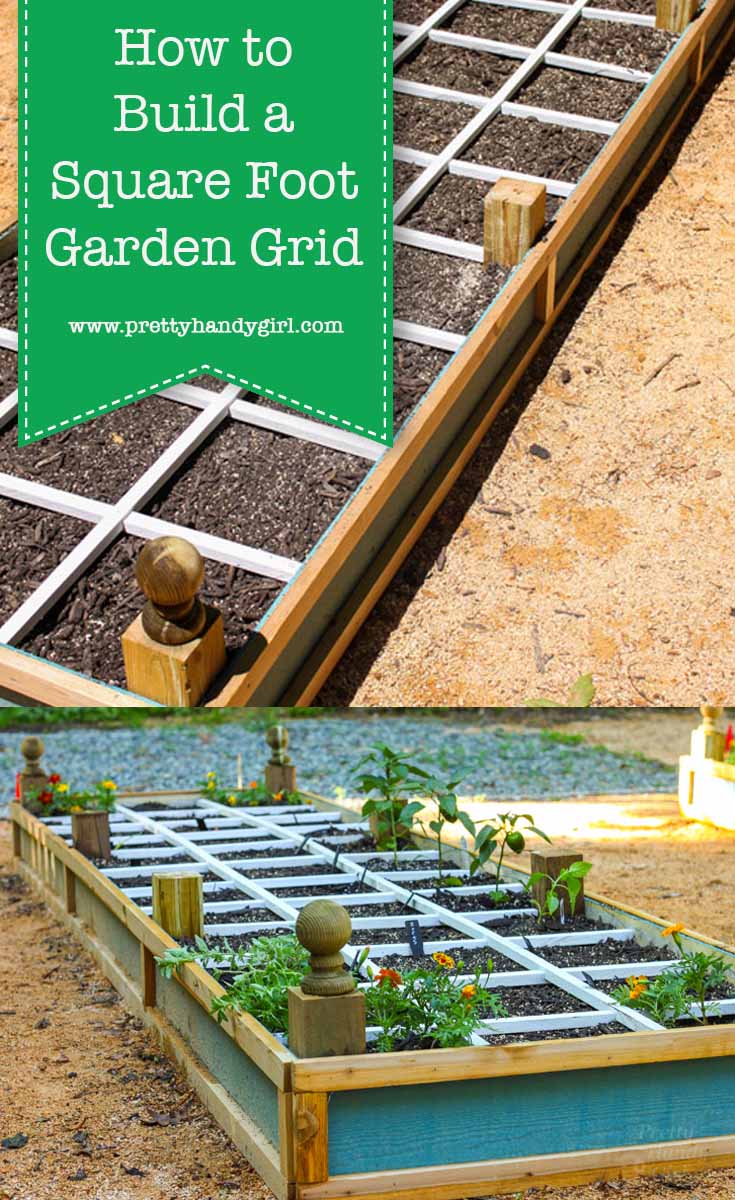
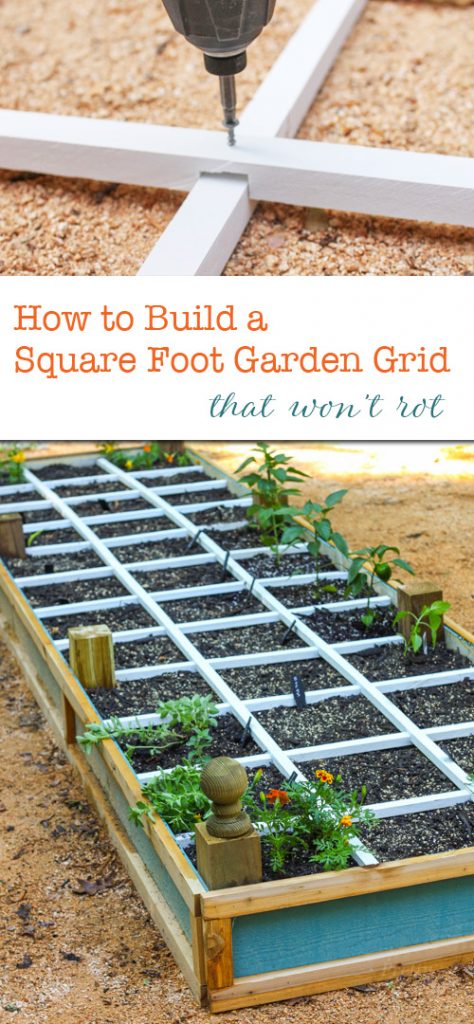
While looking at ideas for creating a grid, I was struck by how many of them will rot after time. I prefer building things that will last forever! This square foot grid won’t rot and won’t deteriorate over time. I used readily available PVC house trim for my grid and it should last an eternity!
How to Build a Square Foot Gardening Grid that Won’t Rot:
To build the grid, rip PVC house trim boards into 1″ strips. on your table saw.
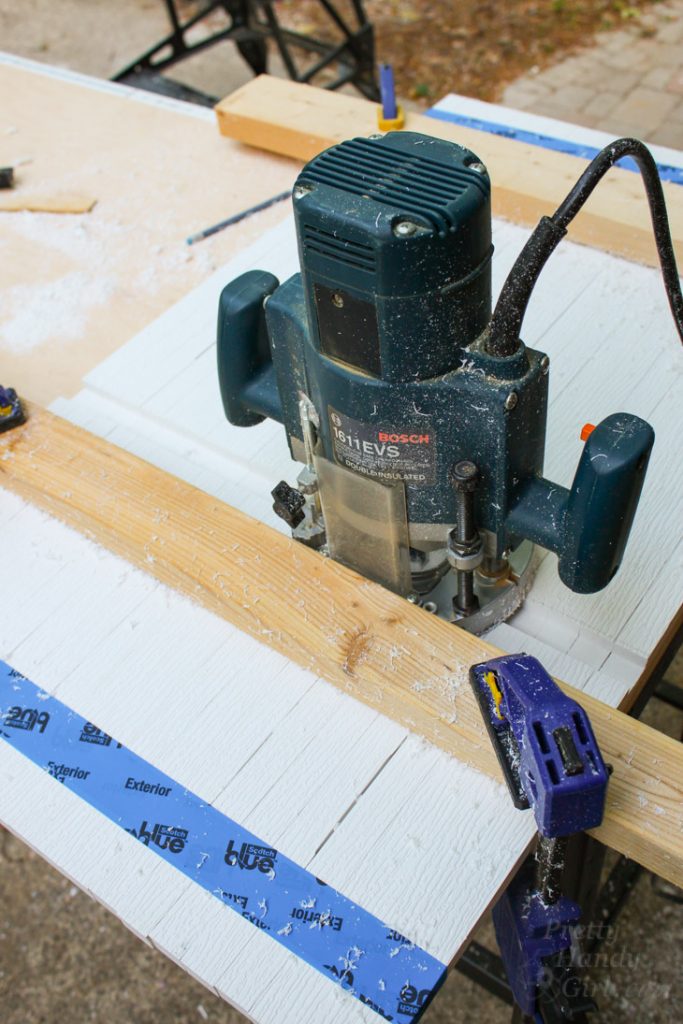
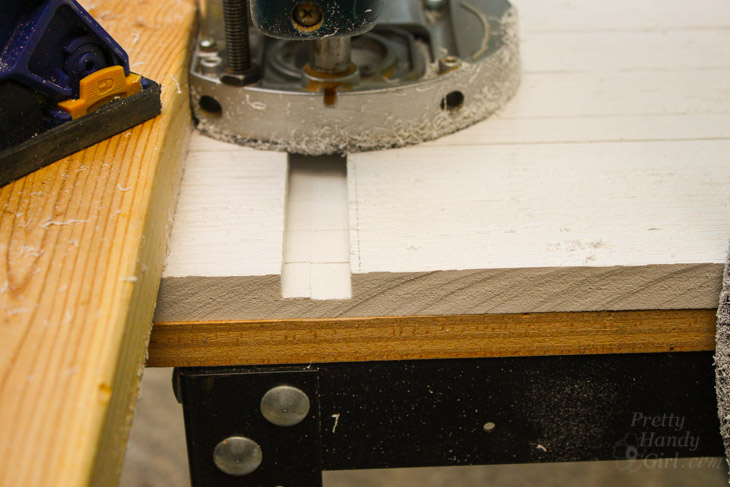
Route out grooves at 1 foot intervals into the cross pieces.
The grooves should be 1″ wide and no deeper than 1/2 the depth of your PVC trim boards.
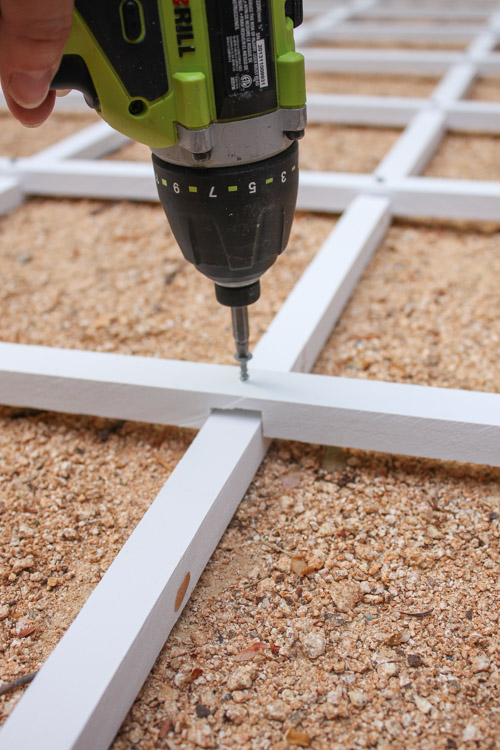
Lay out your grid and secure the cross pieces at 1 foot increments with 1″ screws.
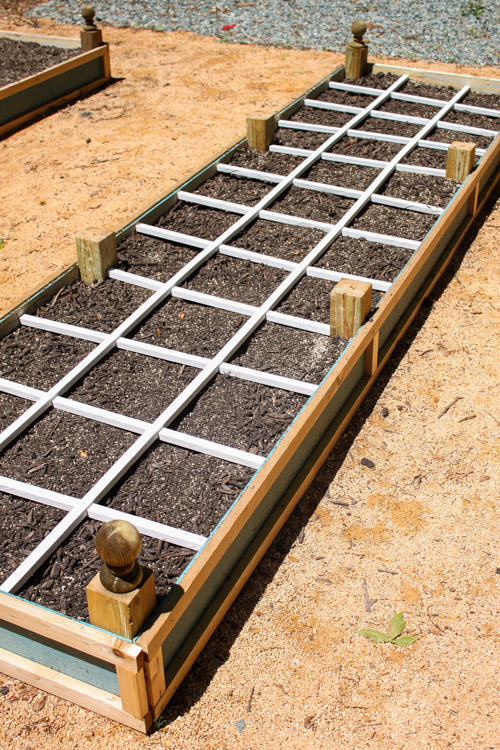
To fit the grid in the raised planter bed I built, I cut the 4′ and 8′ cross pieces 7″ shorter to fit between the posts.
Now you have a Square Foot Gardening grid using material that also won’t deteriorate or rot! Just be sure to lift from the middle of the grid and don’t force it into the planter. The PVC boards can still snap at the grooves. (Especially when impatient 12 year olds are involved.)
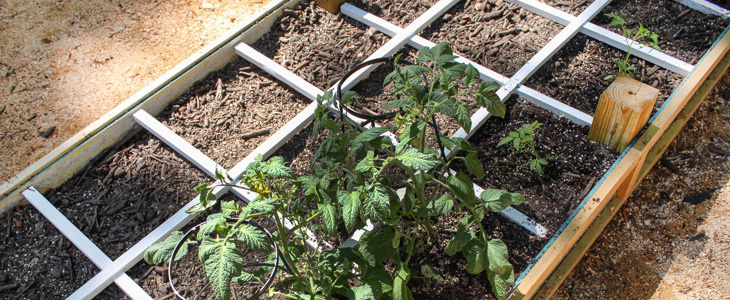
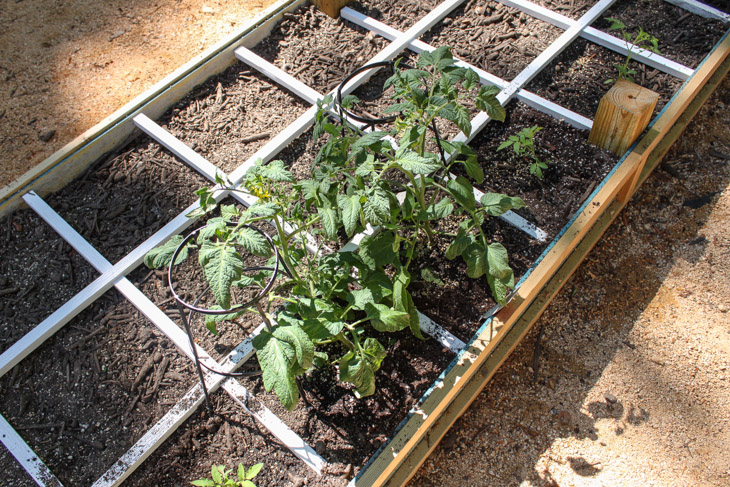
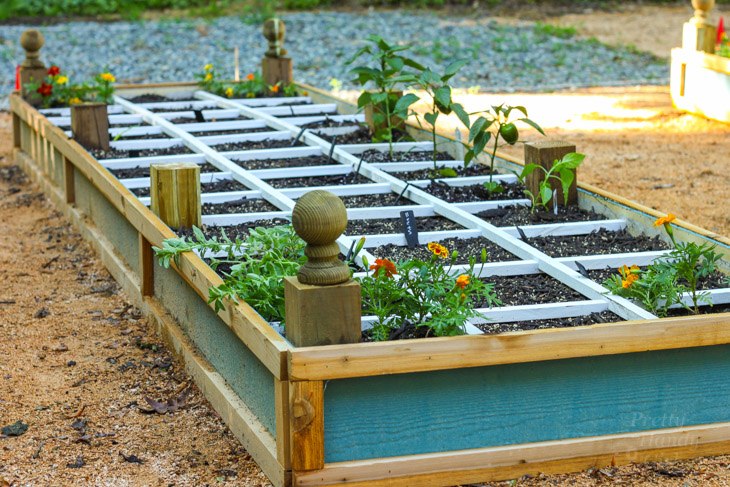
So far, my plants are very happy. Everything I’ve planted is thriving and sending up shoots.
I can’t wait to harvest my first vegetables. I’ve been on a healthy eating kick after reading Eat Fat, Get Thin(affiliate link) by Dr. Mark Hyman. I must say, I feel amazing. Most of my aches and pains are gone! I’ve lost 8 pounds so far (which is saying something after the SNAP conference that was sponsored by Lindt chocolates. I may or may not have indulged in handfuls daily.)
https://prettyhandygirl.com/wp-content/uploads/2016/05/build-square-foot-garden-grid-feature.jpg300730Brittany Baileyhttps://prettyhandygirl.com/wp-content/uploads/2021/07/PHG-logo-tagline-2020-1030x211-R.jpgBrittany Bailey2016-05-13 07:00:002019-03-20 12:57:54How to Build a Square Foot Gardening Grid that Won’t Rot
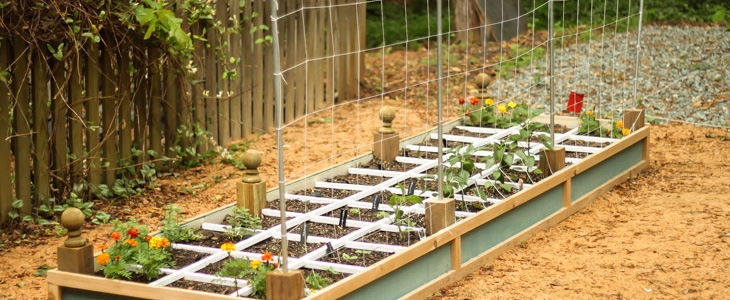
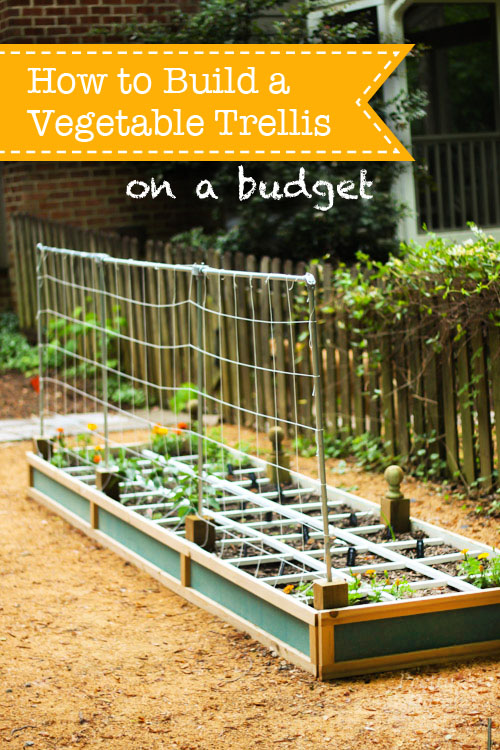
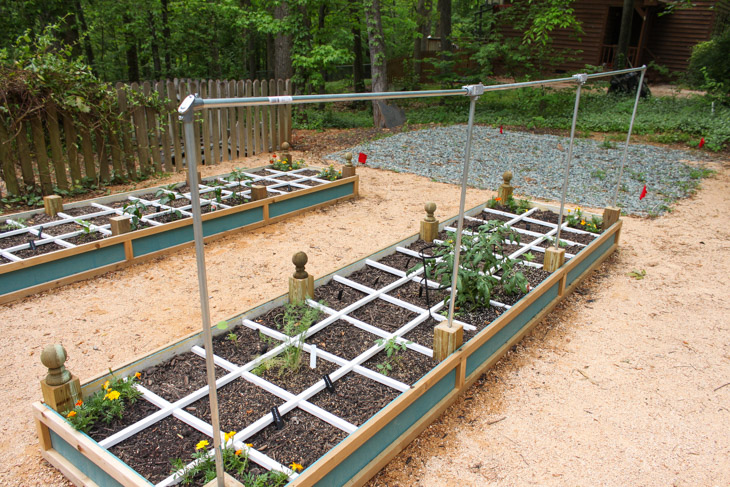
Recently, I showed you how to build these rot resistant planter beds. They are definitely working well for me. Many of my seeds have sprouted and they look very happy. Soon I’ll need a trellis to support the tomatoes, peppers, cucumbers and beans. With that in mind I set about trying to find the most cost effective way to build a trellis that would be strong and also rot resistant.
I found the idea to use electrical conduit while reading Square Foot Gardening(affiliate link). However, unlike Mel’s plans, I needed to create a structure to span my longer bed. Plus, I didn’t want to drill holes into the exterior of my planter bed. My design for building a vegetable trellis uses support from the corner 4×4 posts.
Ready to learn How to Build a Vegetable Trellis on a Budget? I thought so, grab your frugality and let’s get building.
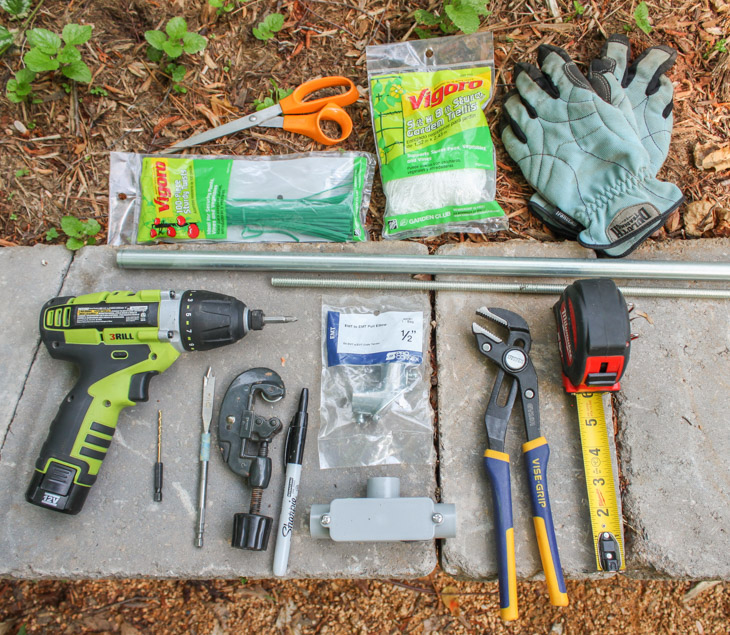
Conduit connectors: 90 degree connector and 3-way (You’ll probably want to order this on Amazon. The set screw type are very hard to find in the big box stores.)
Choosing a location for your Trellis:
If you made the rot-resistant planter bed that I designed, you’ll have 4″x4″ posts to use to support the trellis. Be sure to rotate or select the North facing side of your planter bed to locate your trellis. Then your non-climbing plants won’t be overshadowed by the climbing vines.
If you have different planter bed, you can secure the conduit to the sides with straps like these. Or simply hammer the conduit into the ground enough to secure the trellis.
Instructions:
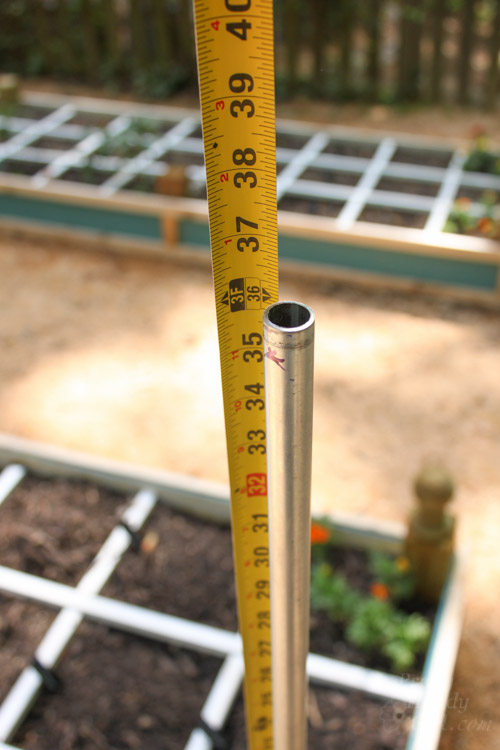
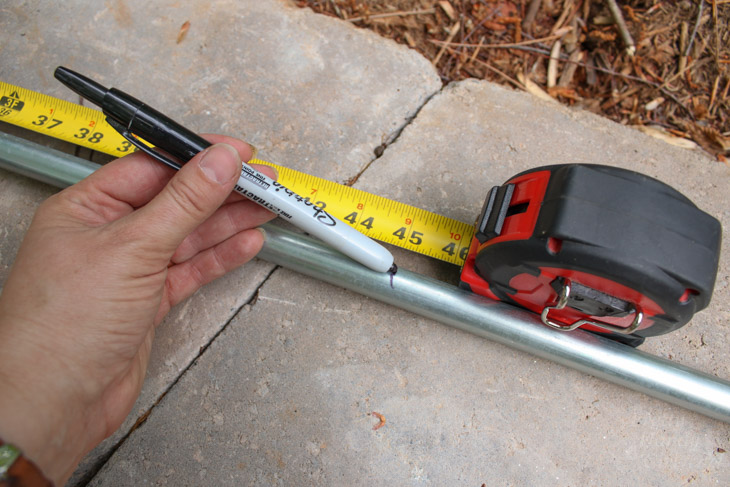
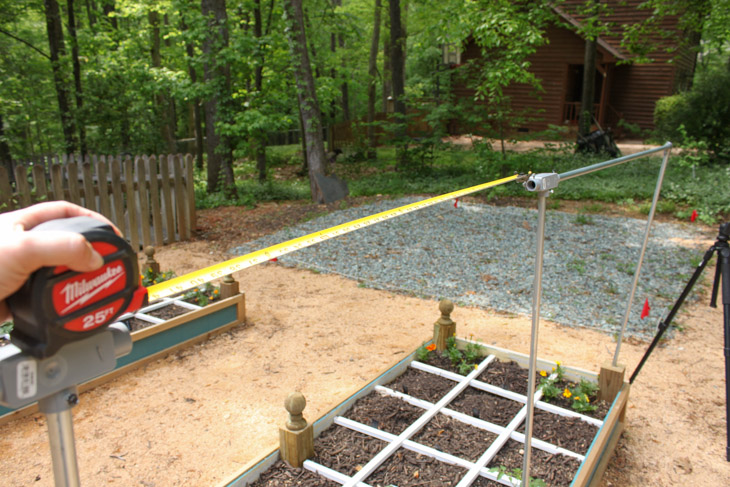
Measure and mark your conduit to the height you prefer your trellis to be.
I chose 36″ heights because it will sit on top of a 12″ post, making it 48″ off the ground.
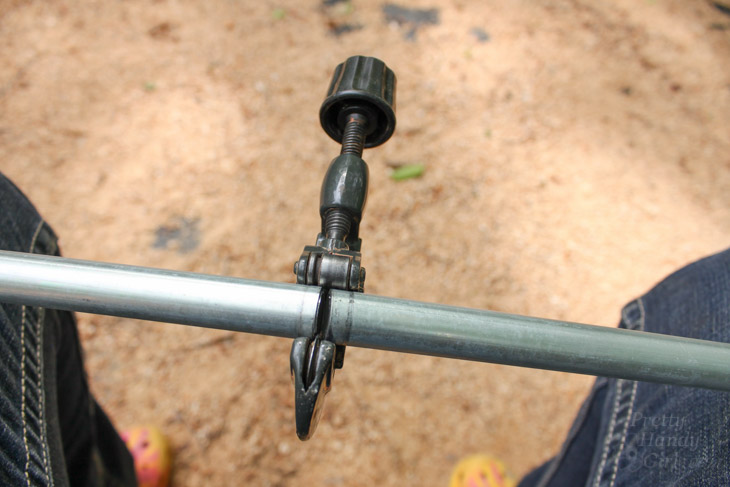
Use a pipe cutter to cut the conduit to size.
If you’ve never used a pipe cutter you’ll find this short video tutorial I made helpful:
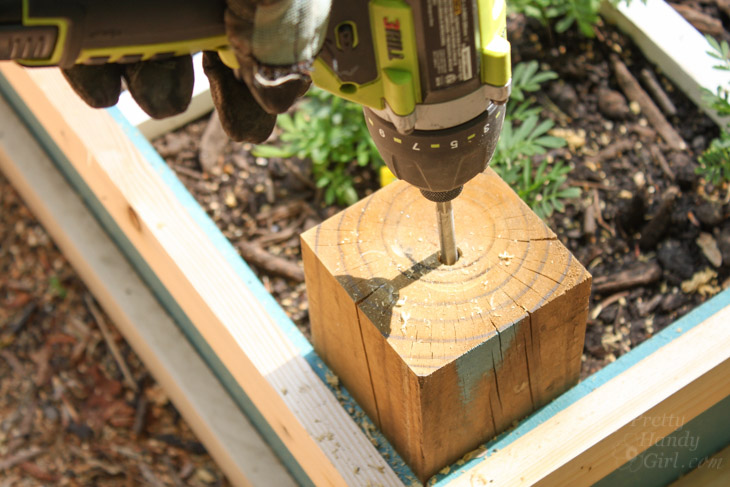
Using a 3/8″ spade bit drill into the 4″x4″ posts against the edges of your planter bed. Drill into the post at least 5″ deep.
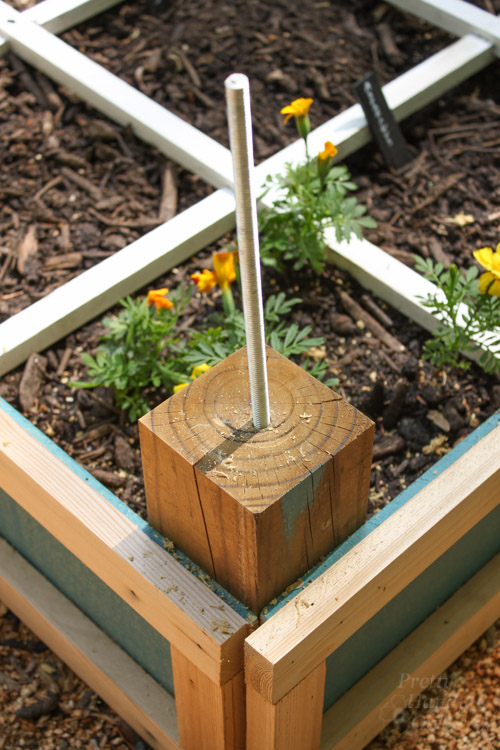
Drop the threaded rod into the hole.
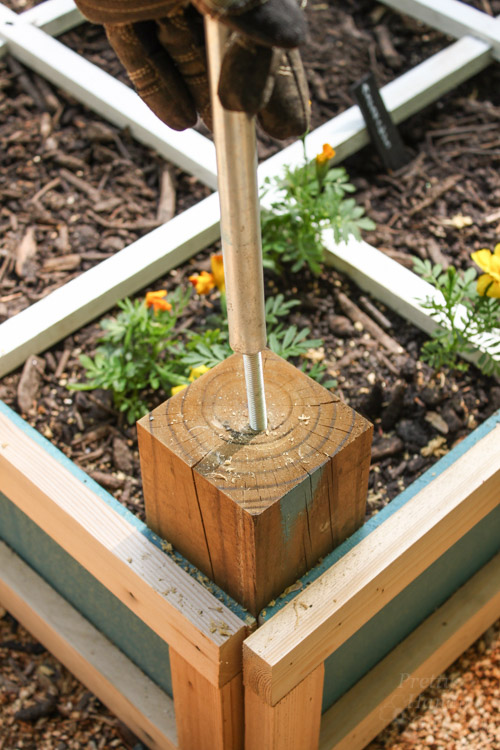
Slip your first conduit pipe over the threaded rod. Repeat for the remaining vertical supports.
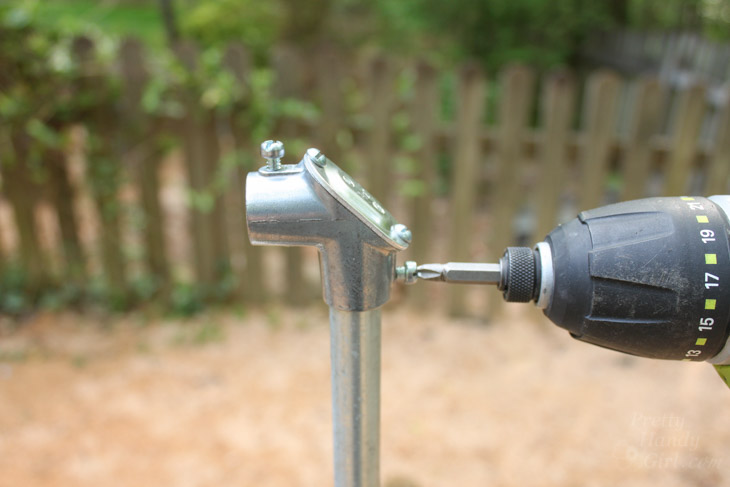
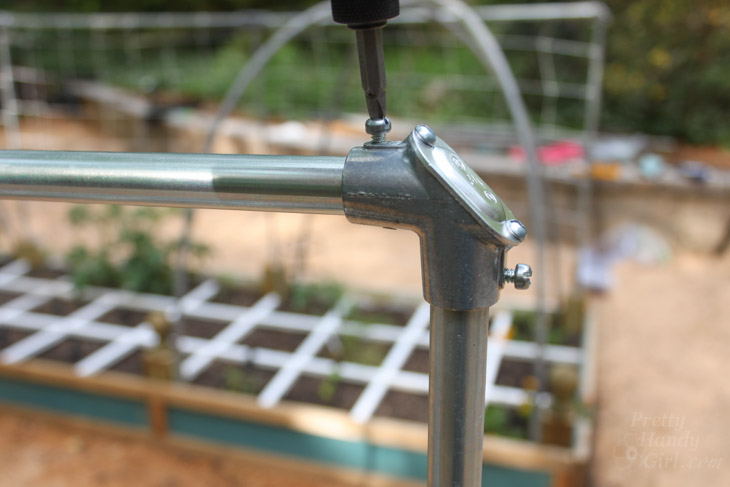
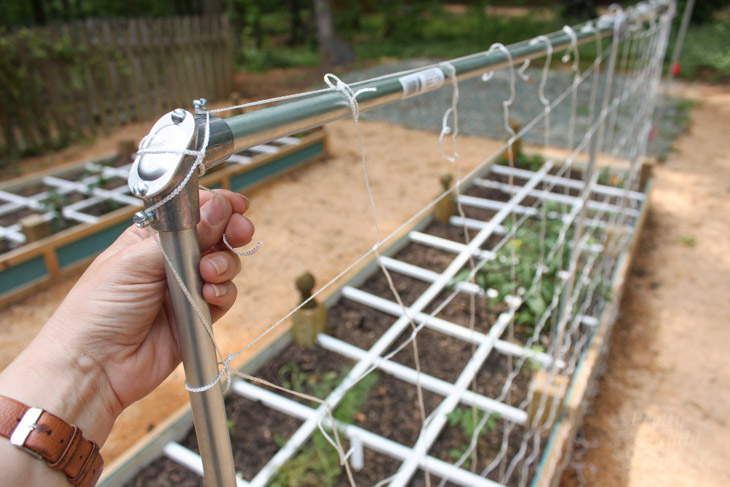
Attach one of the corner connectors to the first or last upright conduit.
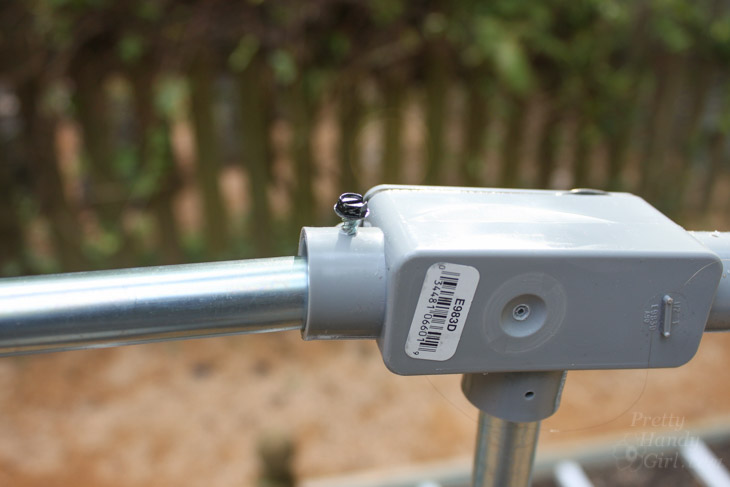
Set the T connectors on the middle supports. Measure the horizontal distance between the vertical supports.
Cut your conduit and test fit them in the connectors.
Secure the horizontal top conduit to the corner connector.
Secure the other horizontal pieces between the remaining connectors.
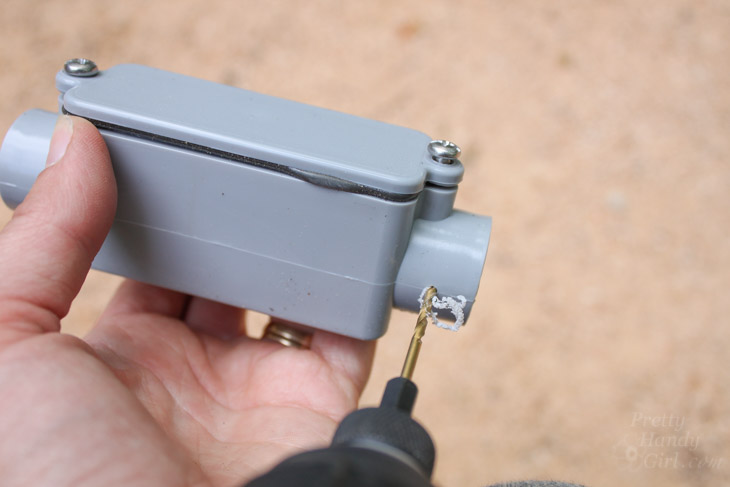
Remember that I suggested you purchase the set screw T connectors from Amazon(affiliate link). If you can’t find those connectors, you’ll have to drill your own holes and make your own set screws.
The trellis support poles should look like this:
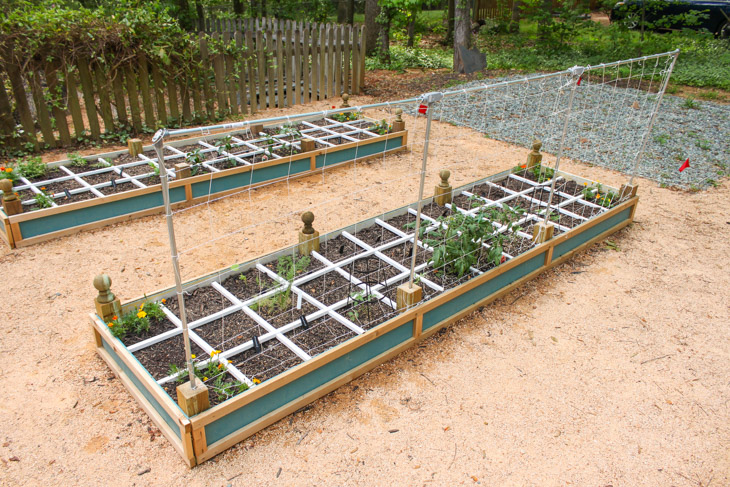
Wrap the trellis netting around the top and side supports of your trellis. Tie the netting onto the supports making sure the netting is snug.
Now you’re ready to grow some vines!
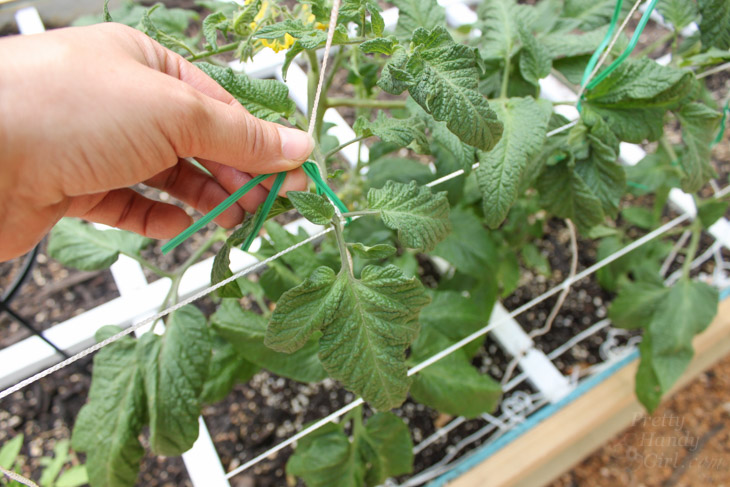
As your plants grow, gently tie them to the trellis with twisty ties.
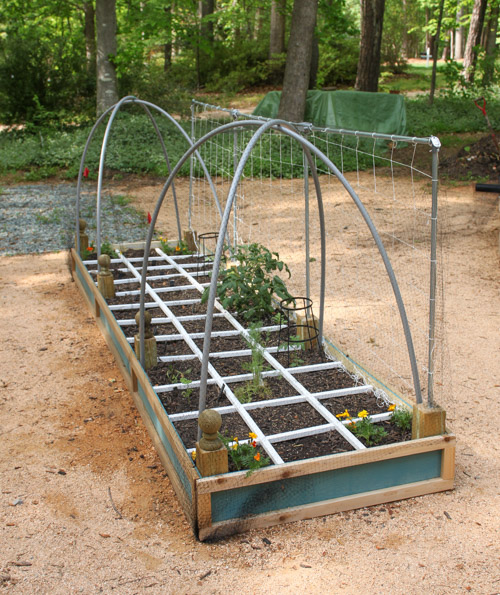
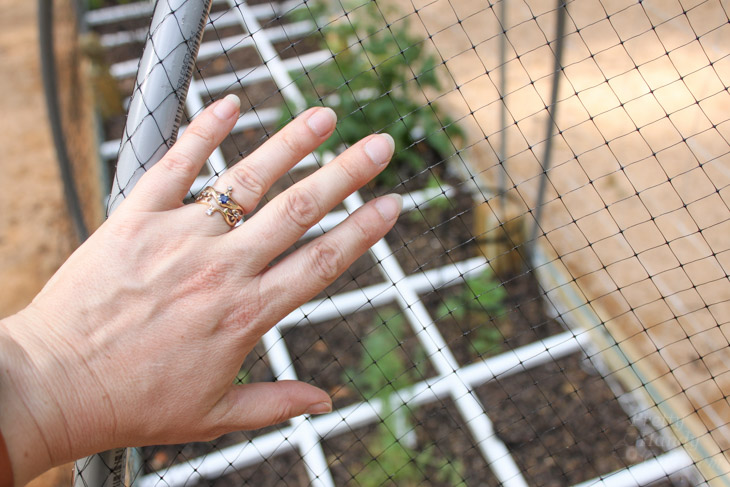
To protect my beds from wildlife, I bent pvc conduit(affiliate link) into hoops and draped wildlife netting on top of the bed.
So far this seems to have protected my plants from fruit and veggie nibblers.
Do you have a garden? How do you keep the critters away from your fruitful harvest?
https://prettyhandygirl.com/wp-content/uploads/2016/05/diy-trellis-on-a-budget-feature.jpg300730Brittany Baileyhttps://prettyhandygirl.com/wp-content/uploads/2021/07/PHG-logo-tagline-2020-1030x211-R.jpgBrittany Bailey2016-05-09 07:00:002016-05-04 23:40:10How to Build a Vegetable Trellis on a Budget
I’ve wanted to start a vegetable garden for three years! Each Spring something comes up and it doesn’t happen. This year is the year, I told myself. I’m going to build Raised Planter Beds that are rot-resistant (because who wants to build anything that has to be re-built after a few years. Not me!) Luckily, the spot I had in mind gets plenty of sunshine throughout the day.
I spent some time researching and pricing the materials for this project. My criteria was:
Rot-resistant
Minimal chemicals for rot-resistancy
Easy on my budget
Attractive to look at
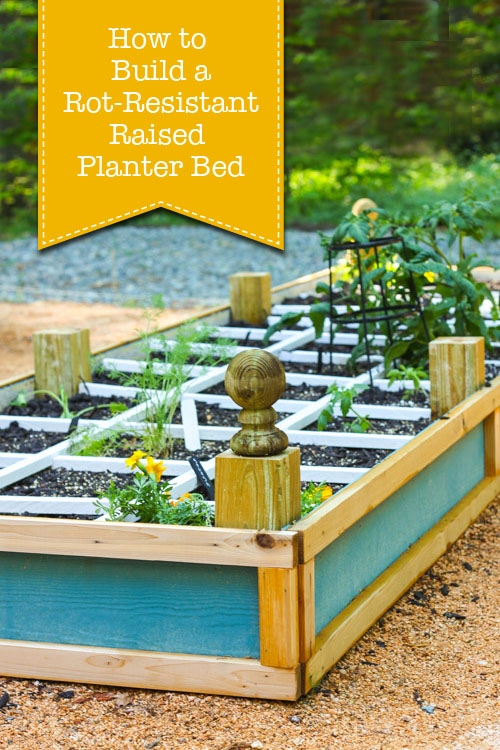
These Raised Rot-Resistant Planter Beds check off all those requirements!
The main material for the beds is fiber-cement siding aka Hardi-Plank. The material is a cement-based product meant for exterior application on houses. It is also bug-resistant which means it should hold up.
The one negative about fiber-cement siding is that it is very flexible and cannot be used without a structural support. To solve that problem I decided to add a beautiful cedar trim on the outside of the siding. And internally, I created support with pressure-treated 4×4’s and an internal 2″x4″ pressure treated support. (These are the only chemical-treated lumber I used in this build. If you are concerned about leaching, you can prime your lumber before using it in your planter bed. Instead of priming, I chose to plant flowers closest to the posts and plant the vegetables further away.)
(Be sure to read to the bottom to get the 9 year update on my rot-resistant planter.)
Are you ready to learn how to Build your own Rot-Resistant Raised Planter Beds?
(I’ve included affiliate links for your convenience. I earn a small percentage from a purchase using these links. There is no additional cost to you. You can read more about affiliate links here.)
Tools & Materials:
1 – 4″x4″x 8′ pressure-treated post
3 – 8″ x 12′ hardi-plank (cement siding)
6 – 1″ x 1 1/2″x 12′ cedar planks (if not available, you can rip them from a 1″ x 8″x 12′ plank on a table saw)
Cut your lumber per the cut list above. Cut your Hardi-Plank siding to size. (Note: You may want to use an old blade or a masonry blade in your saw for cutting. The cement siding can dull your blade.)
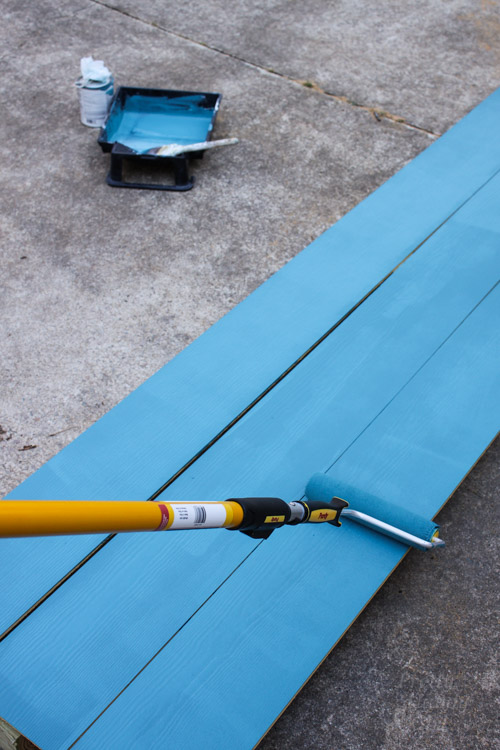
Paint your siding the color of your choice. I used Calypso Blue by Benjamin Moore. Allow the siding to dry.
Instructions for Assembly:
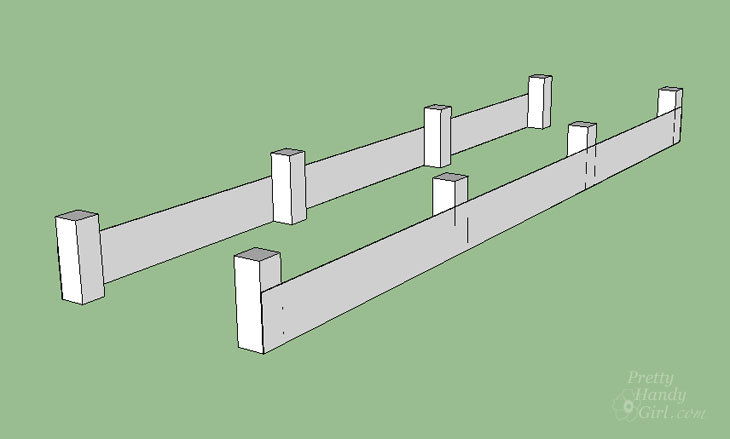
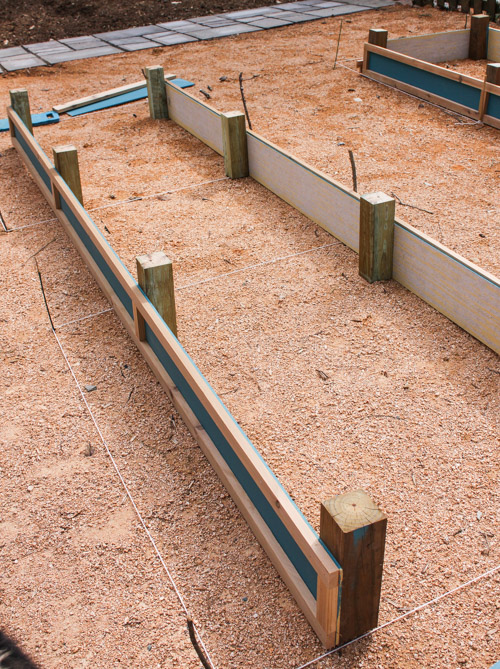
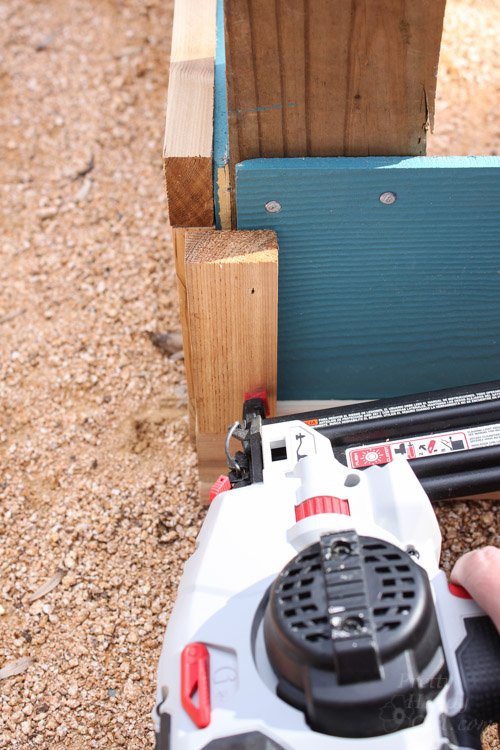
Line up four 4″x4″x12″ posts on the ground. Lay your hardi-plank siding on top of the posts. Line up the siding with the bottom of the posts. Space one post at each end and the two posts in the middle. The middle posts will line up at 4′ and 8′
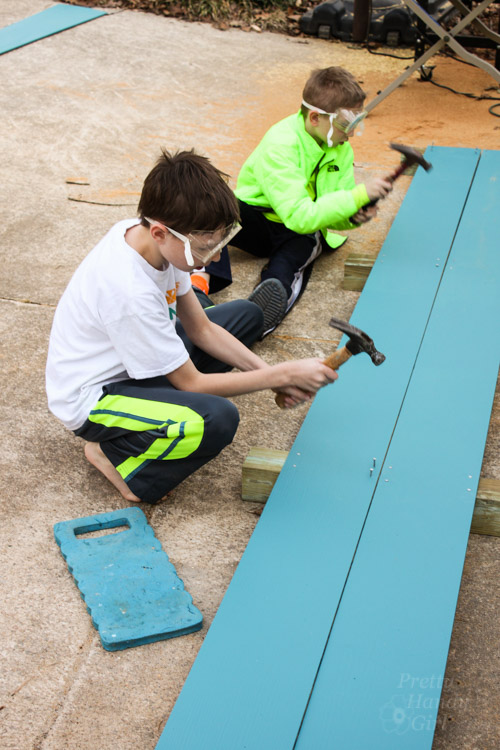
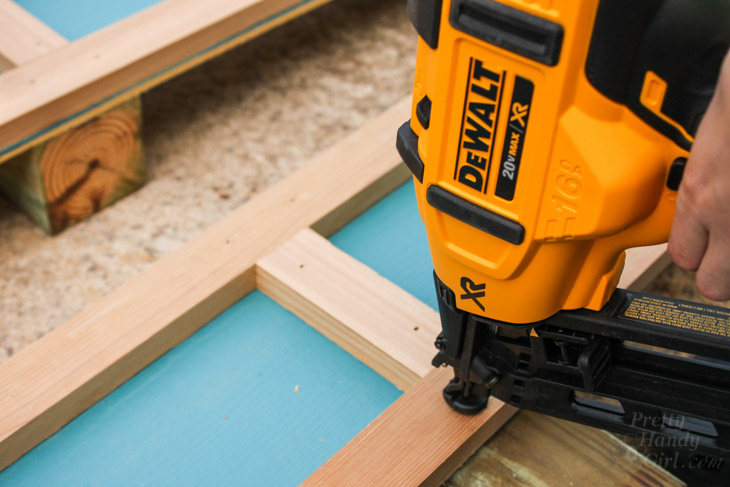
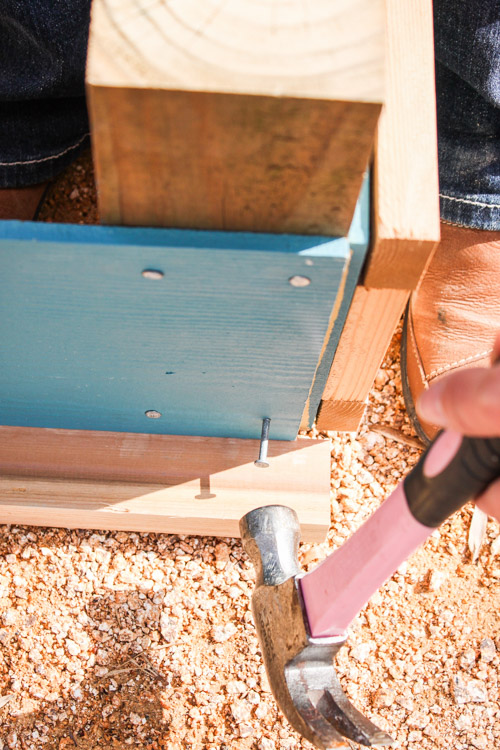
Nail the siding to the 4″x4″ posts. (Or enlist your little laborers to do it for you. LOL.) Be careful not to nail the nails too deep or it will crack the cement siding.
Repeat for the opposite side.
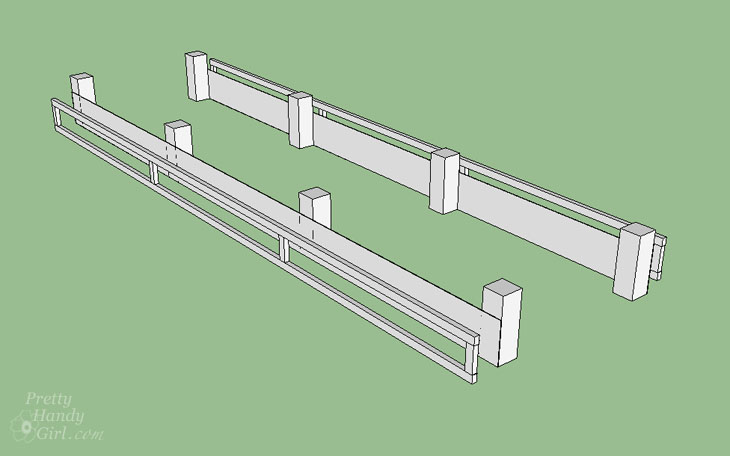
Lay out the cedar trim pieces on top of the siding.
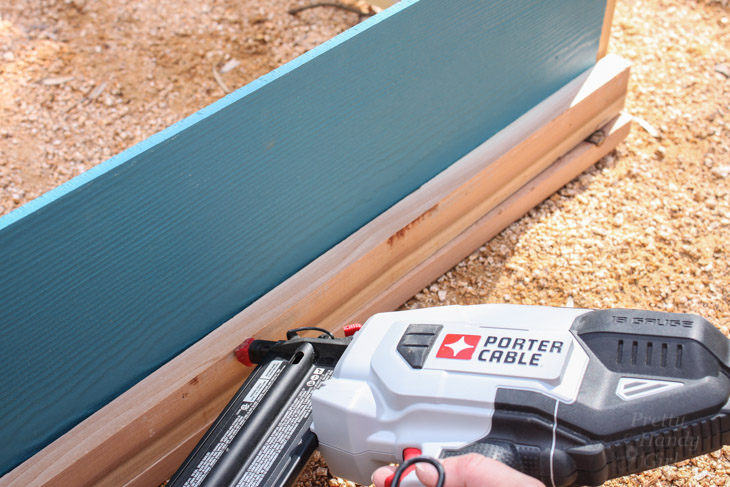
Nail the 12′ lengths of cedar trim to the top and bottom.
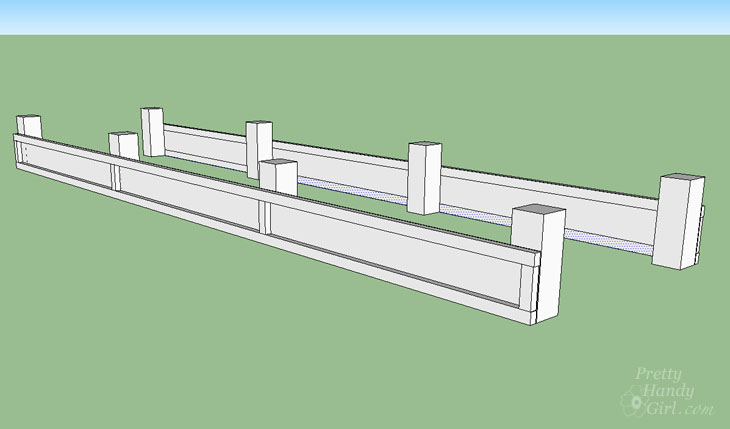
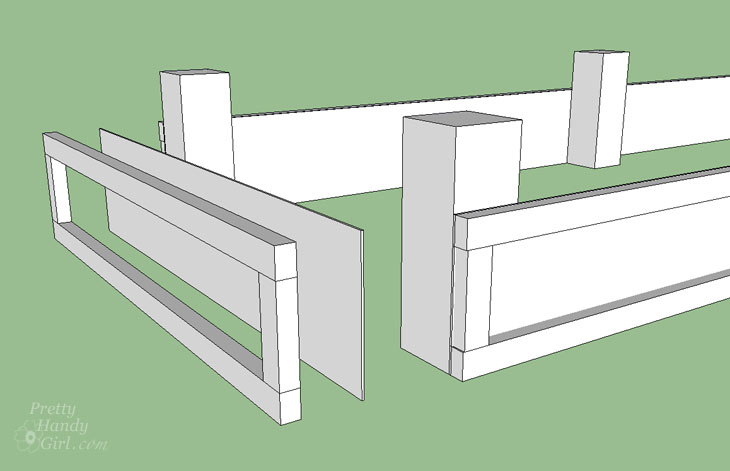
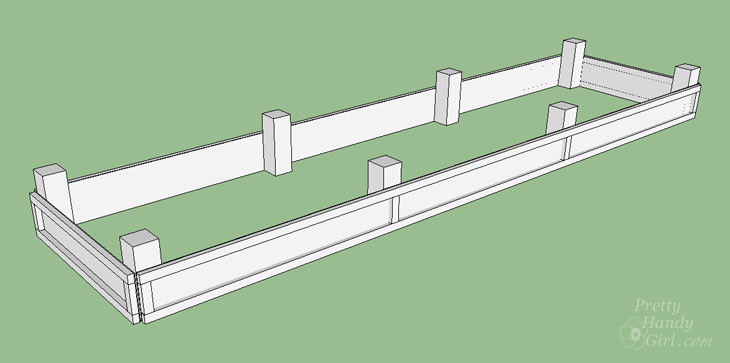
Nail the 5″ pieces on the sides and at the 4′ and 8′ mark (where the posts are.) See diagram below:
You should have the two sides of your planter bed completed now.
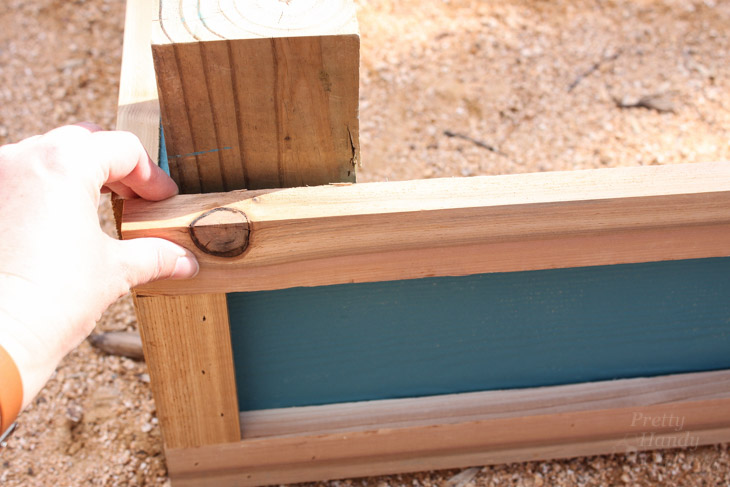
Position the two sides 3′ apart. Line up the 3′ section of hardi-plank siding against the edges of the 4×4 corner posts.
Nail the siding to the corner posts.
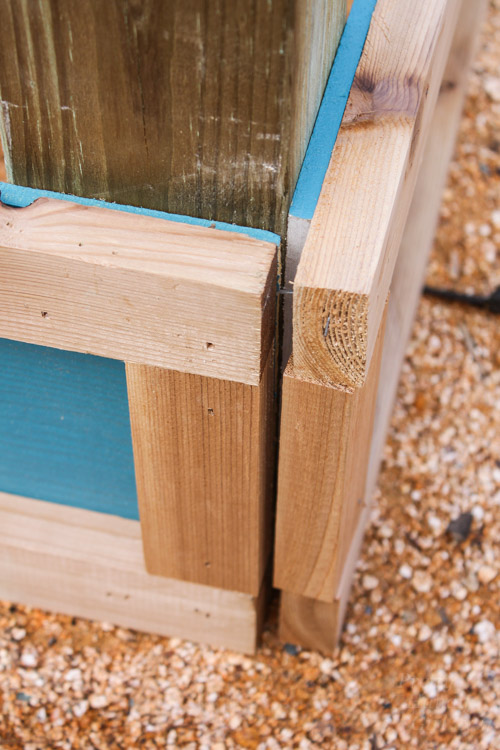
Line up one of the 1″ x 38″ pieces of cedar on the bottom of the siding. Nail it into place with finish nails.
Next, nail the 1″ x 5″ cedar trim pieces over the ends of the siding and into the adjoining sides of the planter bed.
You may have a slight gap, but that’s okay. I won’t tell anyone if you don’t.
Position the remaining 1″ x 38″ piece of cedar trim at the top of the siding and secure with finish nails.
Now that the one end is secured, repeat for the opposite side.
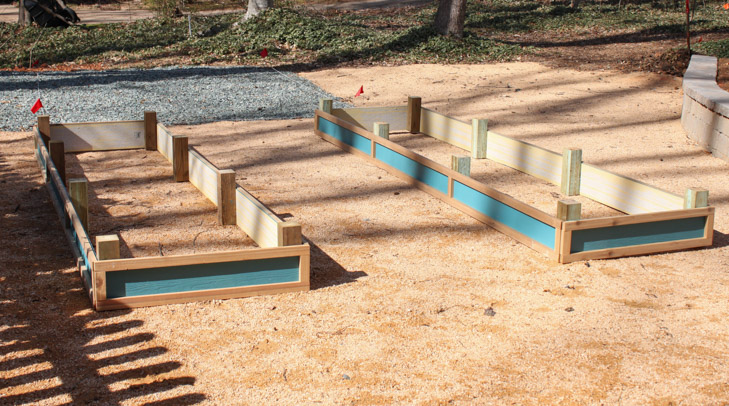
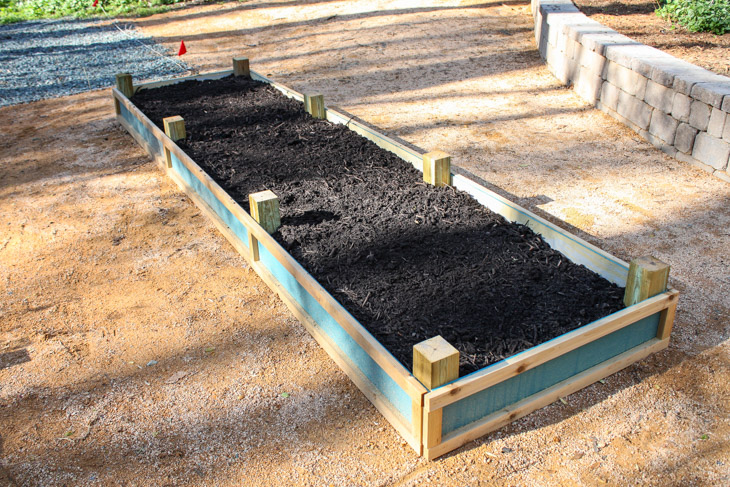
Your bed should look like this:
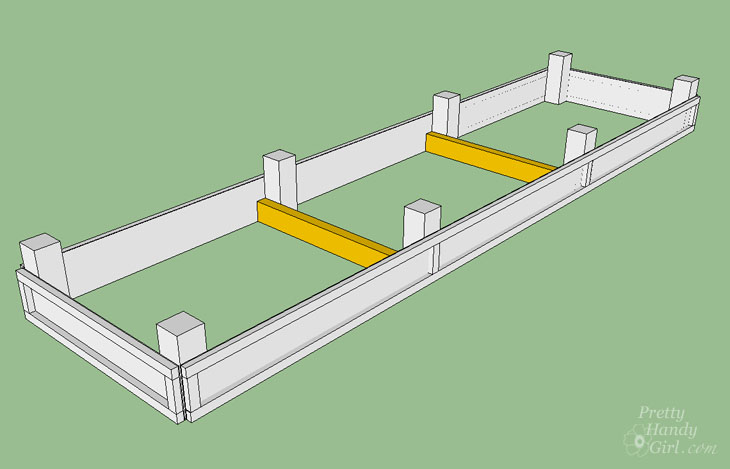
Before filling the planter beds with dirt, you must secure two 2″ x 4″ x 36″ support pieces inside the planter with 2 1/2″ wood screws.
The support pieces are installed at the 4′ and 8′ location inside the planter. This prevents the sides of the planter bed from bowing out.
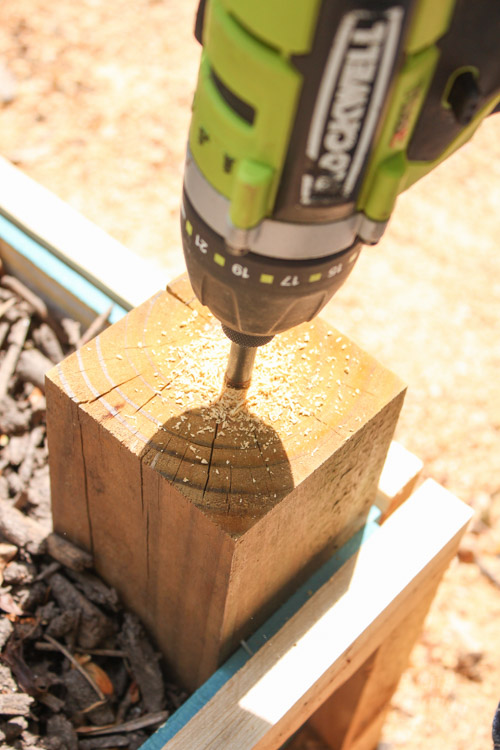
For a decorative touch (and for adding trellis supports later) drill a hole into the 4×4 posts of the planter bed.
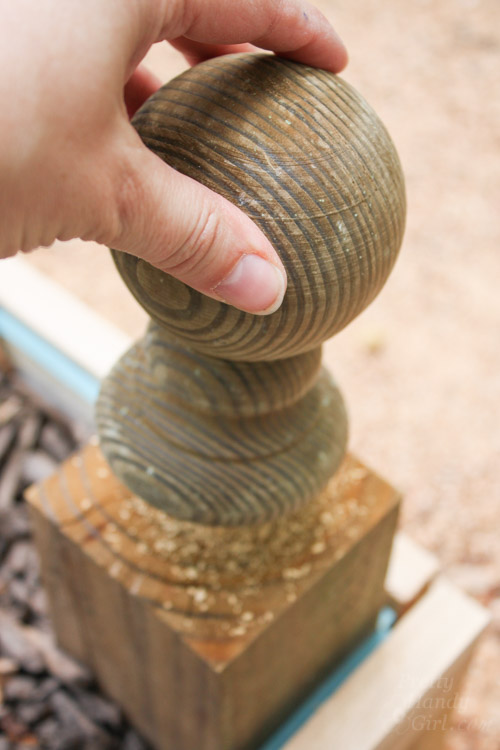
Add a finial post cap to the corner posts.
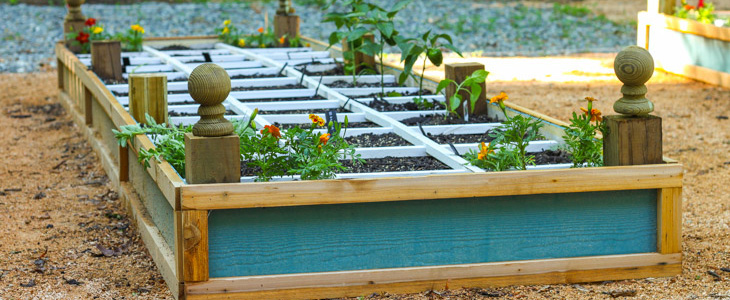
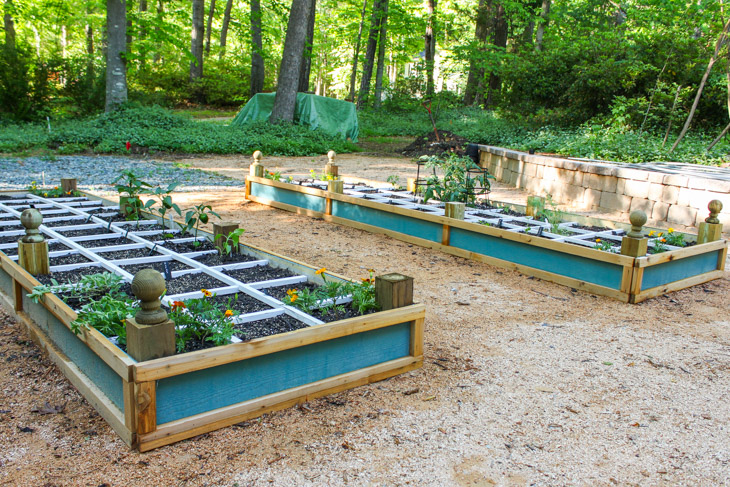
Will you look at that handsome planter bed!
Tips for Planting Your Garden:
Your raised beds may be well built, but what you fill the beds with is equally important for a successful garden. Plants need good nutrients. Fill your planter with good quality compost. (Because I needed a lot of compost, I chose to buy it from our local county yard waste facility by the pick up truck full. Consequently, I had to mix in several bags of vermiculite to improve the soil quality in my beds.)
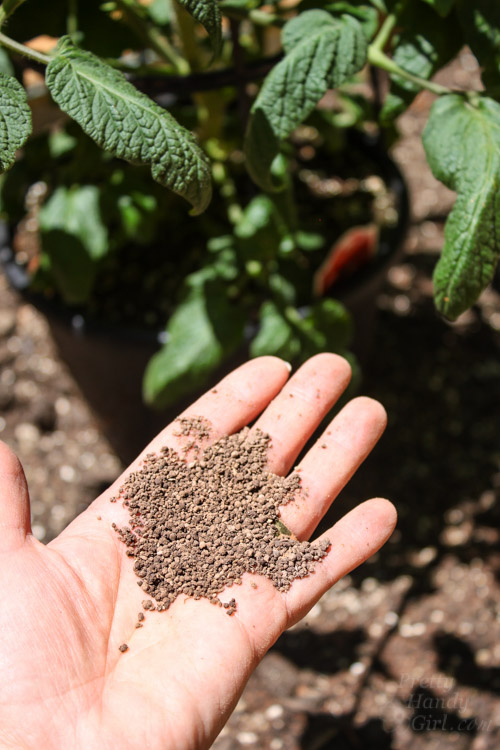
You may also like to add fertilizer specifically formulated for the plants you plant in your garden. Spread fertilizer by hand around your plants…
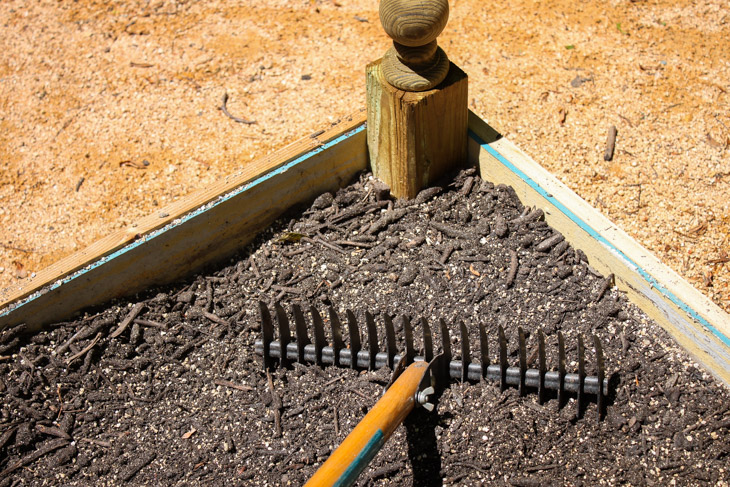
…or you can work it into your soil before planting.
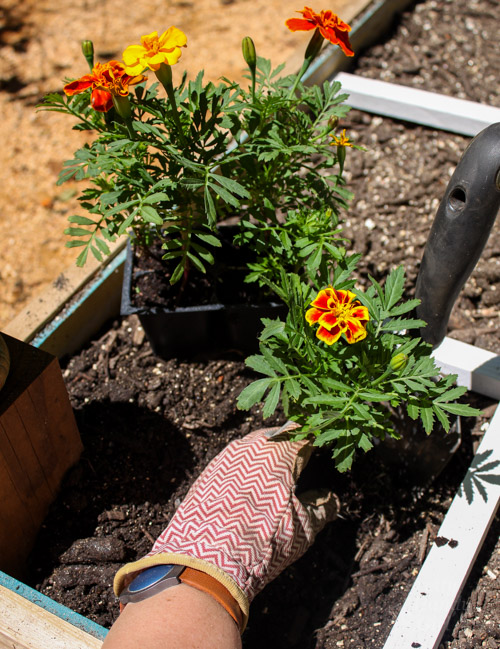
Add your plants to the raised bed.
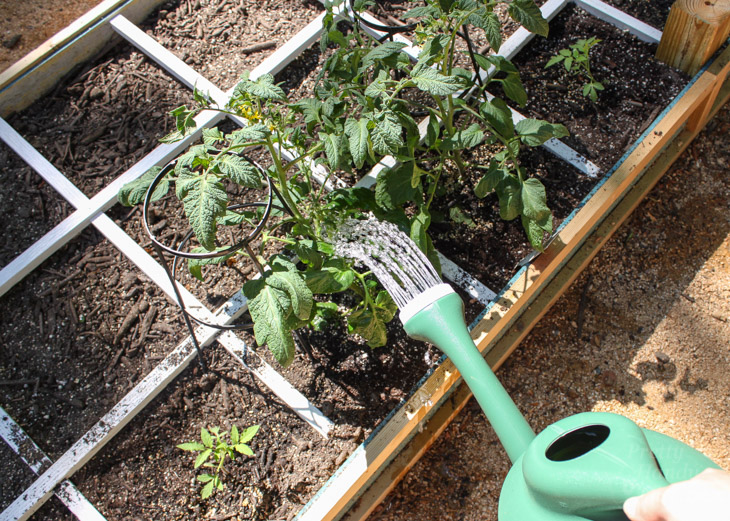
Water the plants and soil well. Water daily until the plants are thriving. Then keep an eye on them and water when the soil starts to dry.
In my squares, I have some sections that are started from seed and others that were purchased as plants. Plus, there are a few self-starter plants from my compost pile! Hello, pumpkins.
What do you have growing in your garden?
9 Year Update on Rot-Resistant Planters:
After 8 years, I began to see the fiber cement siding was splitting slightly. Over the years, any water that got into the top of the siding expanded when we had freezes. Also, the cedar trim boards on the ground that were on the shady side started to rot. At 9 years, I decided to re-build the planters, but I wanted to create a design that had a built in arch trellis, wildlife gates, and sub-irrigation. You’ll want to see the plans for the Ultimate Raised Garden Beds with Arched Trellis.
https://prettyhandygirl.com/wp-content/uploads/2016/05/rot-resistant-raised-planter-bed-feature.jpg300730Brittany Baileyhttps://prettyhandygirl.com/wp-content/uploads/2021/07/PHG-logo-tagline-2020-1030x211-R.jpgBrittany Bailey2016-05-06 07:00:002025-08-22 11:57:26How to Build a Rot-Resistant Raised Planter Bed
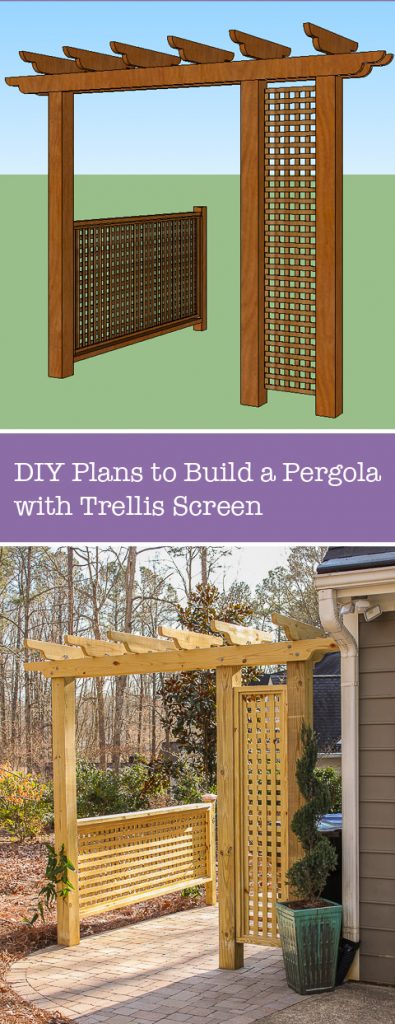
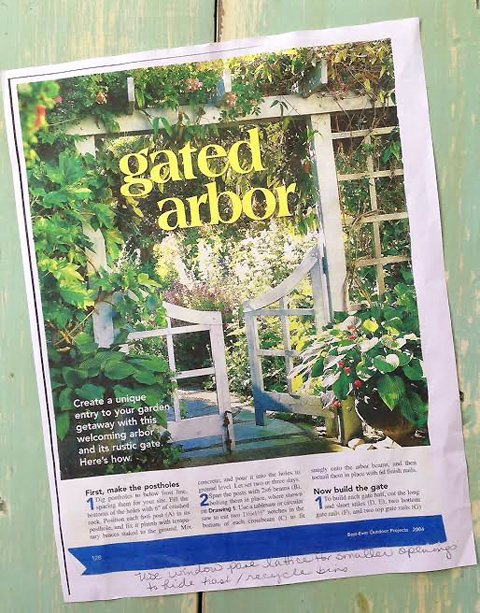
One of the design elements that our landscape designer proposed was Building a Pergola Trellis to screen our trash cans. As soon as I saw the magazine clipping that she gave me, I was in love with the idea.
Clipping from WoodMagazine.com
I decided to make a few modifications to the plans and simplify the construction using Simpson Strong-Tie® fasteners. (I chose to partner with Simpson Strong-Tie® in the form of a sponsored post on this project .) This is a DIY project that requires some extra muscle for a few steps. Be sure to recruit someone to help with lifting and holding. Building a Pergola Trellis is a build that can be accomplished over a weekend. Ready to get building?
Tools & Materials:
(I’ve included affiliate links for your convenience. I earn a small percentage from a purchase using these links. There is no additional cost to you. You can read more about affiliate links here.)
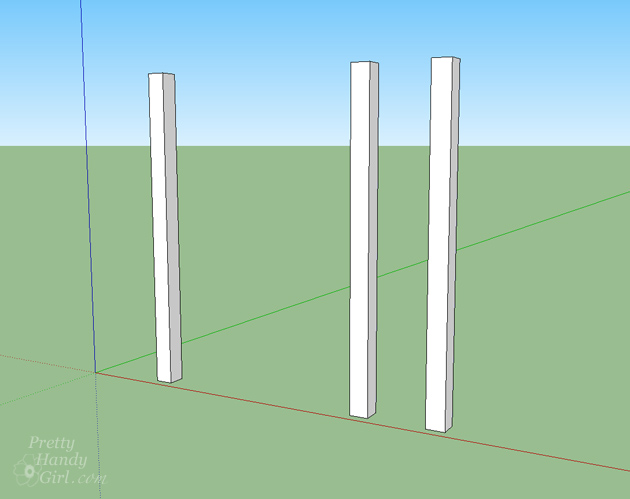
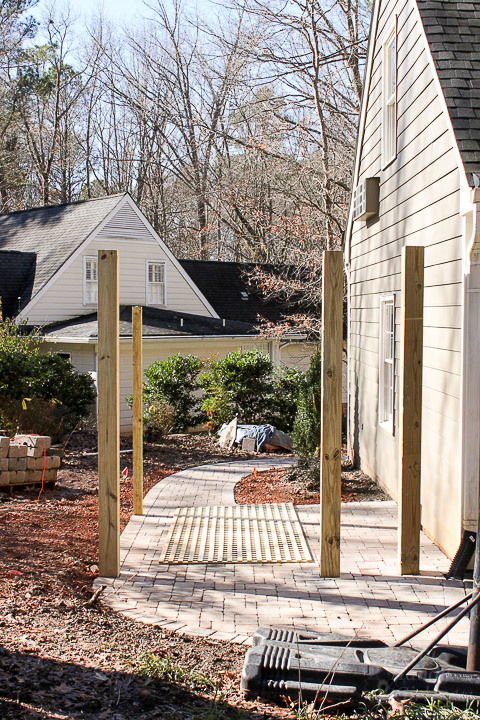
Set three 6×6 posts into holes dug deep enough to go below frost level (check with your local frost level to determine if you need to set the posts deeper.) Holes should be approximately 12″ in diameter.
Dig a fourth hole 8″ wide for the 4×4 post.) This is the support for the side railing section and should be located approximately 8′ behind the left side pergola post. Set all posts into the holes on top of 6″ drainage rock. Then fill the rest of the hole with Quikcrete following directions on the bag for mixing and curing times (approximately 2-3 days).
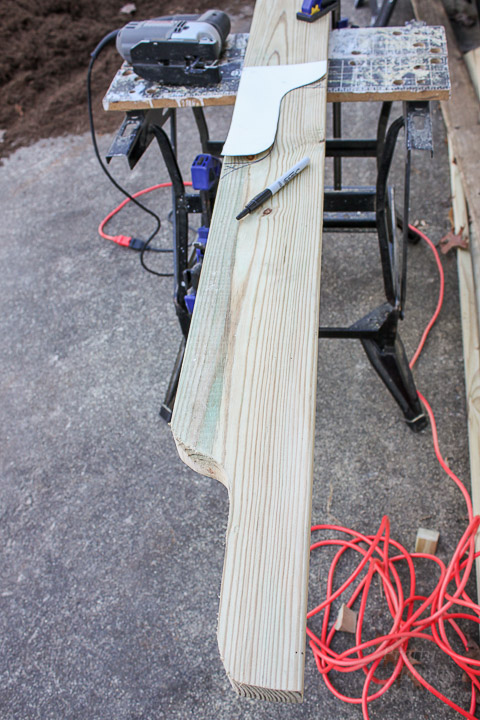
Use a jigsaw to cut the ends of the 2″x6″x12′ beams. You can use this printable profile template.
Use the same profile to cut the six 2″x6″x3′ cross beams. Rotate the template 180 degrees to save lumber. Read more
https://prettyhandygirl.com/wp-content/uploads/2016/03/pergola-build-feature-1-of-1.jpg300740Brittany Baileyhttps://prettyhandygirl.com/wp-content/uploads/2021/07/PHG-logo-tagline-2020-1030x211-R.jpgBrittany Bailey2016-03-25 07:00:002019-01-22 06:46:52Building a Pergola with Trellis Screens
Things have been busy in our yard. There’s been lots of mud and dust flying around. I figured you’d like an update on our backyard landscaping. Put on your boots and let’s get dirty!
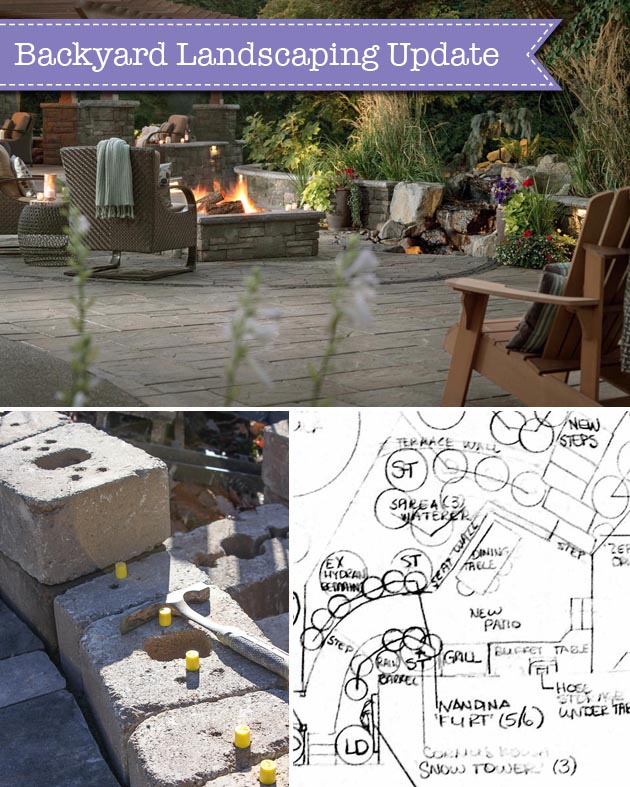
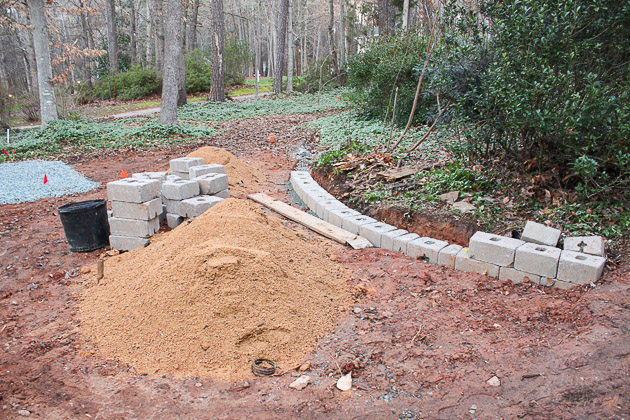
If you remember, I had big plans to give our back yard a face lift using Belgard stone products. It’s been super exciting seeing things take shape. The landscaper we hired (Arbor Enterprises, a woman-owned company in Pittsboro, NC) has been here working hard rain or shine. They leveled an area beside the house for the garden and shed area and built a small retaining wall using Keystone Stonegate wall blocks. You can see the drainage gravel in the back where the shed will go. And they will cover the rest of the area with weed barrier and Chapel Hill grit.
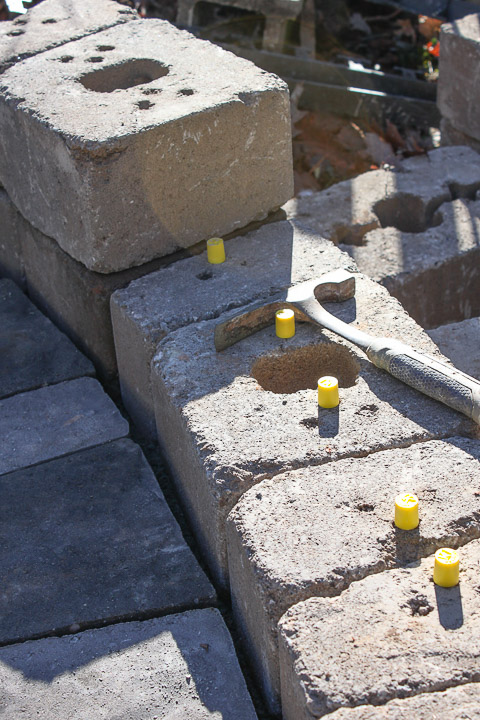
The blocks go together easily and are held in place with pins. This allows for a sturdy retaining wall that doesn’t need any mortar.
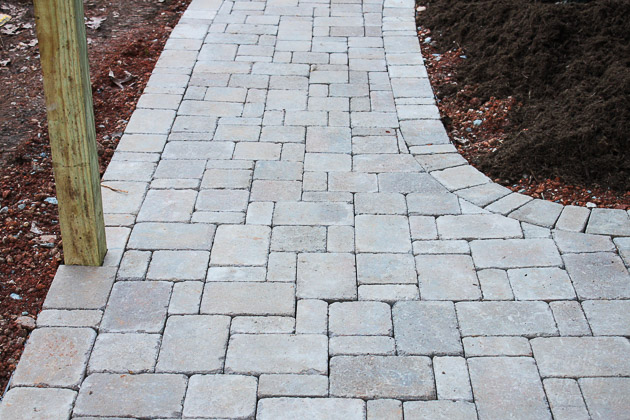
The Keystone Stonegate Wall Blocks are also being used as a seating wall on the new patio. I chose Mega Arbel mosaic pavers for the patio surface and am in love with the random pattern! The guys started laying the Belgard Granika steps off the patio. They weigh 275 lbs. each — I’m so glad I didn’t chose to DIY this project. Read more