Today we’ll be learning about the Dremel TRIO! This smaller power tool fits comfortably in your hand. The tool is a cross between a  jigsaw, router, and regular dremel. Further, it has a rotating bit that cuts into drywall, wood, plastic, steel and alumimum (with the appropriate bit). With a quick change to a sanding bit, the TRIO can be used as a sander for smoothing fine details and edges. Finally, the TRIO is a router, but only with the small routing bits that come separately. In my opinion, the TRIO is good for small projects that don’t use hard or thick woods. Anything larger than 1/8″ and it is very difficult to control the tool. (Disclosure: I have not tried the TRIO with the hardwood and sheet metal bit sold separately, but I haven’t used it to cut hard woods.)

The Dremel Trio Rotary Tool can be purchased on Amazon (affiliate links.)

The TRIO comes with a cutting bit (I call it a scroll bit) and a sanding mandrel with three grit sanding drums (60, 120 and 240 grit). Plus, a wrench for loosening and tightening the collet.
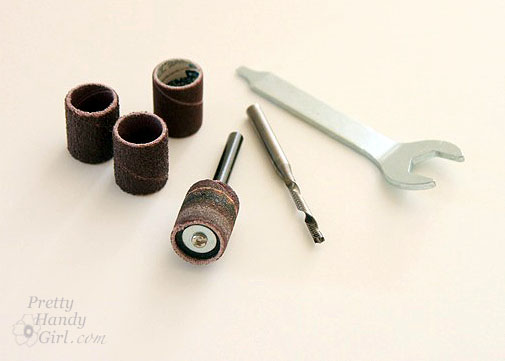

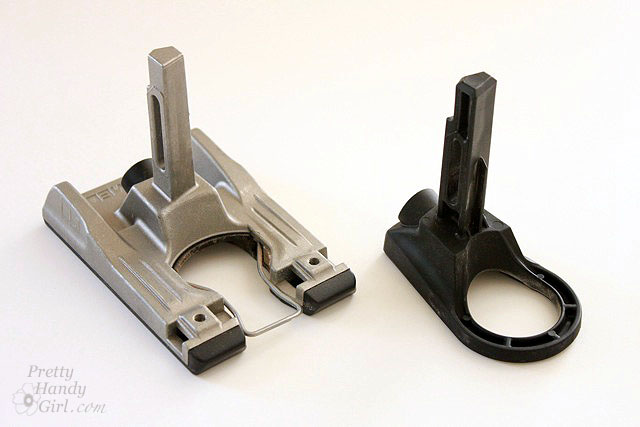
A regular baseplate and a compact foot baseplate are also included.
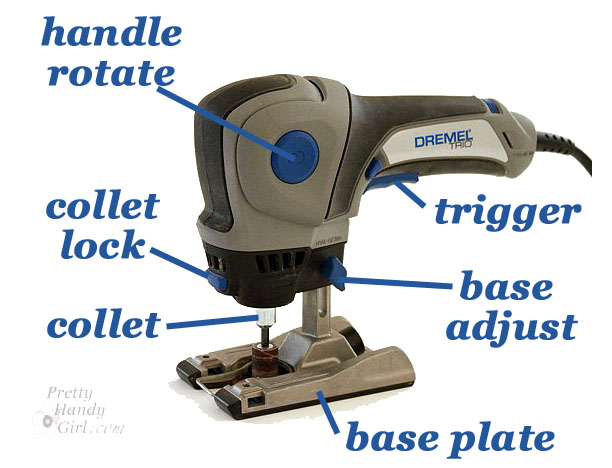
Below is the anatomy of the TRIO to help familiarize you with the tool.
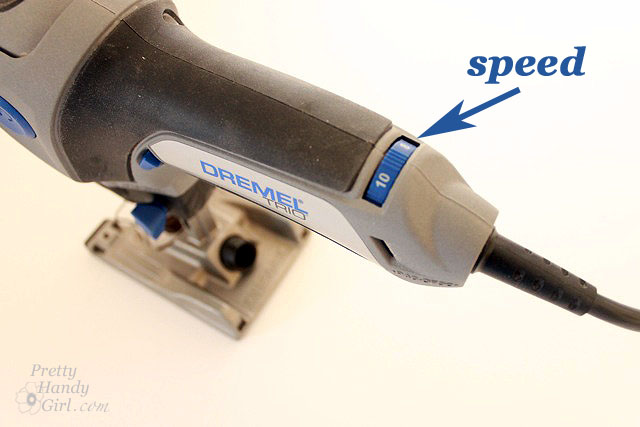
There is a speed adjustment on the handle of the tool. Typically you would leave it on 10 – 12 for cutting wood. A lower speed may be necessary when cutting plastic to avoid melting the material.
One of the nice features is that it can be use in a horizontal grip like a jigsaw. Or, simply press the button on both sides to …
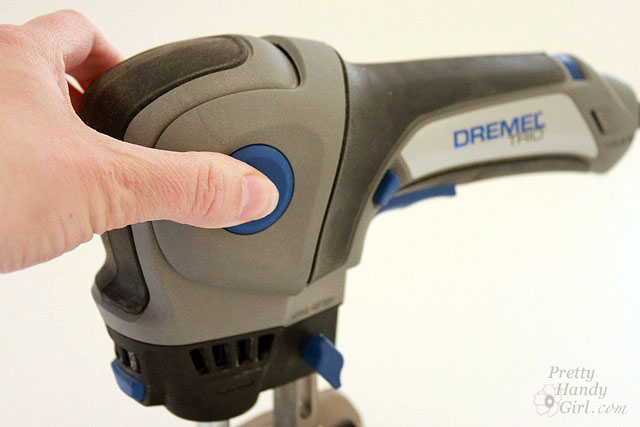
raise the handle and use it with a vertical grip.

Changing bits is fairly simple but requires two hands (my photo is not 100% accurate). One finger pushes the button on the front of the TRIO to lock the collet. The other hand uses the wrench to loosen the collet.
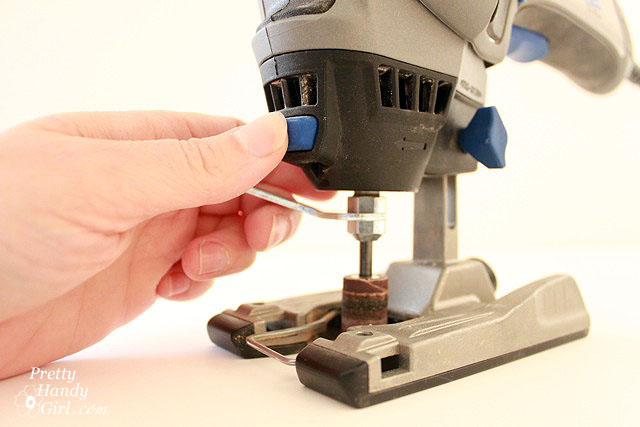
Then, remove the bit. Insert the new bit and tighten the collet. (First by hand and then with the wrench.)

The TRIO does not come with router bits, but a Dremel 5-piece Specialty Router Bit Kit can be purchased for about $40 from Amazon (affiliate link.) There is also a tile cutting bit, piloted point cutting bit, and a hardwood and sheet metal bit (all available for separate purchase.)

Be forewarned that you CANNOT use bits for a regular dremel in the TRIO. The shafts are different sizes.

And here for your viewing pleasure is a video tutorial for using the Dremel TRIO:

 

I am officially kicking Valentine’s Day decorating into high gear! Yesterday I shared with you my wooden branch heart wreath. Thank you for all your nice comments about it. I wasn’t sure anyone would like it because it looks so…well…different.

Do you remember my snowman wreath made from a Dollar Tree placemat?

Well, I was given the opportunity (by my  messy boys) to make a Valentine’s theme one.

You can view my tutorial for making the placemat “Just Like New” by turning it into a “Bee Mine” garden flag at I Am Momma – Hear Me Roar!

I’m guest posting there today while she hob knobs with THE Martha Stewart! Is that like 2 degrees of separation for me? I’d like to think so.

Have a great Thursday y’all! See you tomorrow for yet another Tool Tutorial Friday.

Valentines Day Wreath

When I saw this mirror frame Jaime from That’s My Letter made, I was instantly head over heels in love with the branch circles.

Valentines Day Wreath

Valentine’s Day Wreath

So much so, that every branch I passed by I would think, “Hmmm, I wonder what the disks on that branch would look like. It’s a sickness y’all.

So, this past weekend, I hauled in a bunch of branches and began to formulate a design for my Valentine’s Day Wreath that wasn’t overtly cutesy.

Valentines Day Wreath

I even called my neighbor to ask if I could have one of their logs from their woodpile. (Yes, I was coveting thy neighbor’s wood. Sheesh.)

I am thrilled with the final results. Although I had to engage in a few extra spray painting steps to get here, I’ll spare you the details. Let’s just say that no matter what color you paint thin wire, it just doesn’t show up on top of wood disks.

Valentines Day Wreath

Here is the tutorial y’all. Take it or leave it, but just be sure you ask before cutting down your neighbor’s cherry tree.

Valentine’s Day Wreath Materials:

(I’ve included affiliate links for your convenience. I earn a small percentage from a purchase using these links. There is no additional cost to you. You can read more about affiliate links here.)

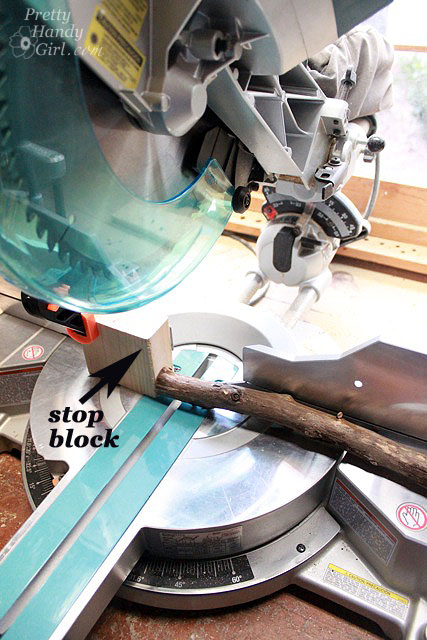
Start by setting up a stop block by clamping a small piece of wood against the fence of your miter saw. (Or be prepared to be diligent about measuring every slice you cut. My slices are 1.5″ wide.) IMPORTANT: Wear your eye protection and hearing protection!

Valentines Day Wreath

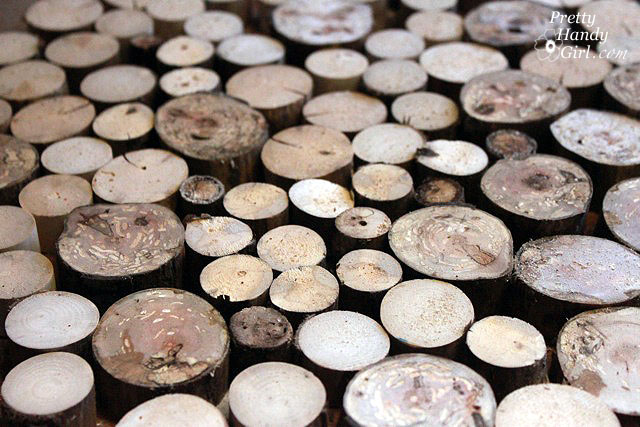
Hold your branch against the fence and cut into the log. The larger logs cut fine, but the smaller branches and sticks tended to kick back all over the place, so be sure you stay on the right side of the saw and the slices are on the left. This way you’ll be out of the path of the flying disks. Cut, until you have a large collection of wood slices in a variety of sizes.

Valentines Day Wreath

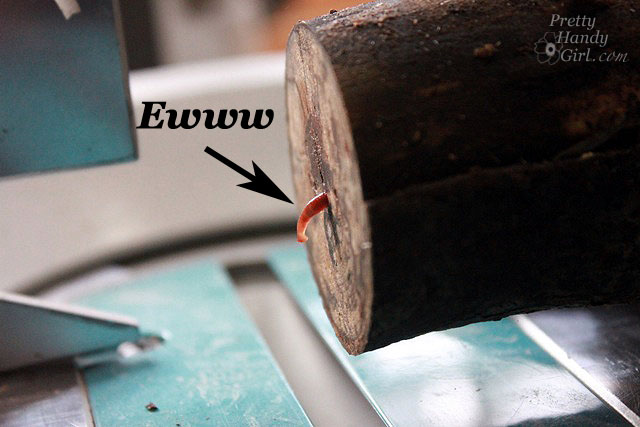
It was at this point that I looked down and noticed this little worm squeezing out of the log!

Valentines Day Wreath

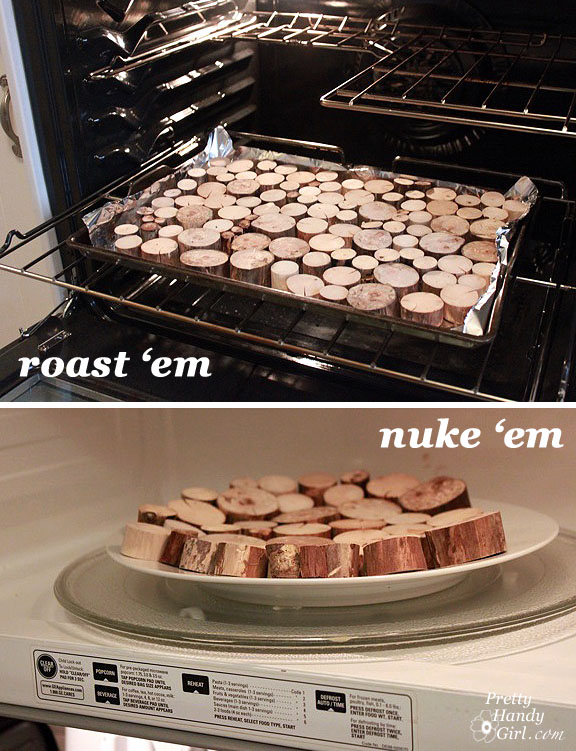
Ewwww. I rushed inside to research killing bugs in wood. I read you can either bake your wood in the oven at 175˚F – 200˚F for a few hours. Or microwave the wood for a minute. Being the perfectionist and neurotic termite-fearing person I am, I did both!

Valentines Day Wreath

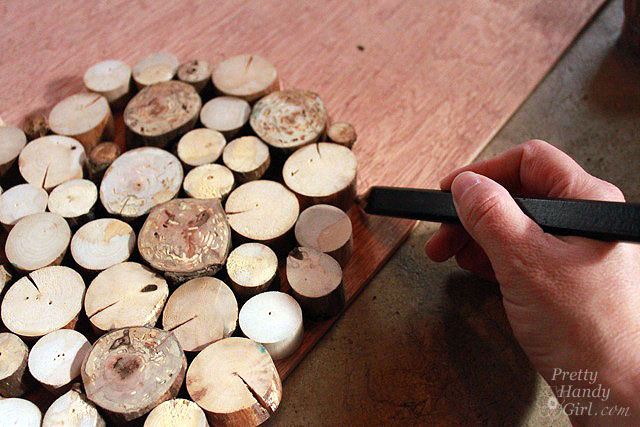
After roastin’ and nukin’ those little buggers, you can lay out the slices onto the plywood in a heart shape.

Valentines Day Wreath

Trace roughly around the shape.

Valentines Day Wreath

As I said I’m a perfectionist, so feel free to skip this next step.

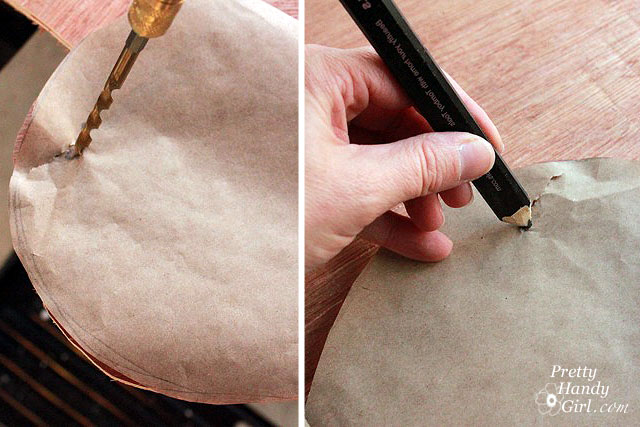
Fold a piece of scrap paper in half and cut out a half heart shape to give you a symmetrical heart shape. Trace around the template onto the plywood.

Valentines Day Wreath

Use a jigsaw or Dremel TRIO to cut out around the shape.

Sand the edges until they are no longer jagged.

Lay the scrap paper template back on top of the heart shaped plywood. Fold it in half. Drill a hole through the top of one of the sides of the heart (through paper and wood.) Open the template back up and mark where the hole is in the paper. Drill through the other side.

Valentines Day Wreath

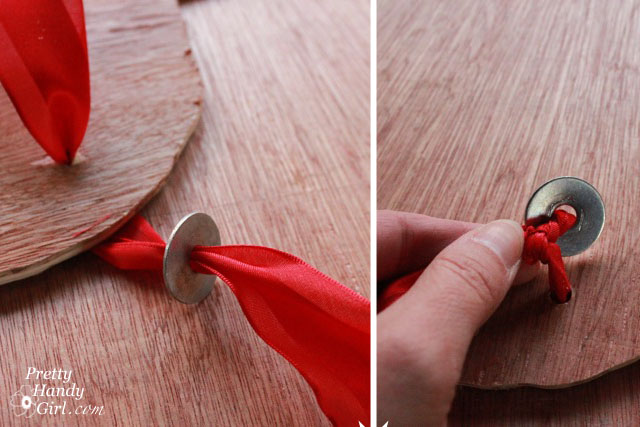
Thread a length of ribbon through one hole. Tie a washer onto the end of the ribbon on the back side.

Valentines Day Wreath

Hang the heart up in your desired location. Adjust the length of the ribbon and then tie another washer onto the ribbon.

Valentines Day Wreath

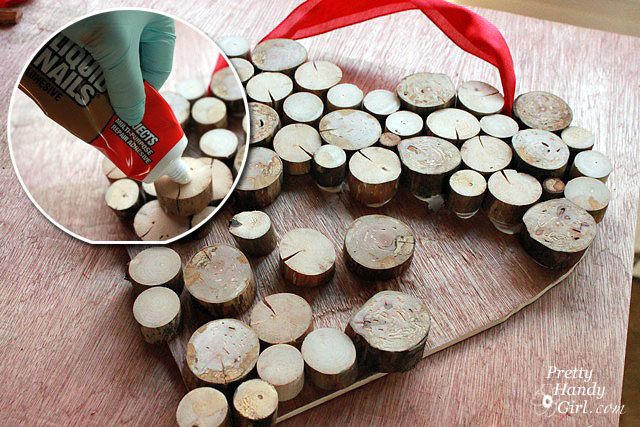
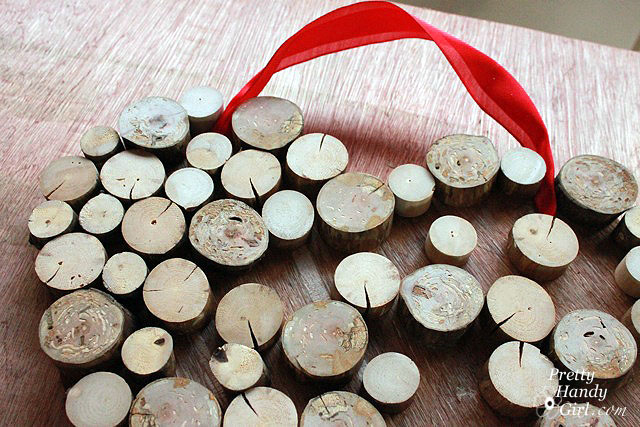
Begin to lay the wood slices back onto the plywood and start gluing each one using Liquid Nails.

Valentines Day Wreath

It may take a little maneuvering and trials to get the slices to fit neatly within the heart shape. But, hey it wouldn’t be fun without a little trial and error.

Valentines Day Wreath

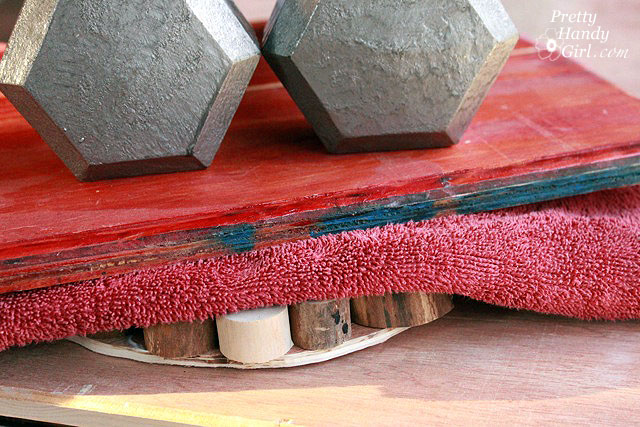
After your shape is filled, lay a folded towel, some scrap wood and heavy weights on top. Do a few bicep curls before setting them down, just because.

Valentines Day Wreath

While your wooden heart is drying, bend the word “Love” into the wire using needle-nosed pliers.

Valentines Day Wreath

Wrap white pipe cleaners around the word.

Valentines Day Wreath

Then wrap red pipe cleaners around leaving space so the white pipe cleaner shows through.

Valentines Day Wreath

Tie a bow at the top of the hanger ribbon. Thread another length of ribbon through the bow and secure it to the “L” and “e” in Love.

Valentines Day Wreath

Find a spot to hang your unique wreath.

Valentines Day Wreath

I wonder if I can put another word on there for St. Patrick’s Day? Maybe “Luck” with some green ribbon.

 Valentines Day Wreath

Valentines Day Wreath

Valentines Day Wreath

install weather stripping garage door

Last year I froze my handy buns off working in the garage. (This year they returned after eating loads of Christmas cookies! Ugh.) In all seriousness, while searching for bigger and more powerful heaters it occurred to me that I might want to try weatherstripping my garage doors.

seal garage door

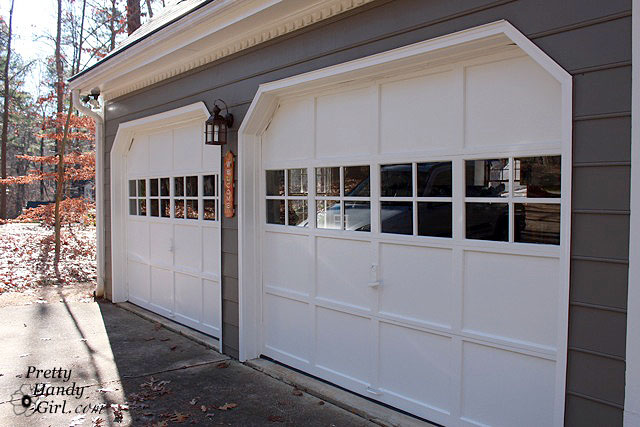
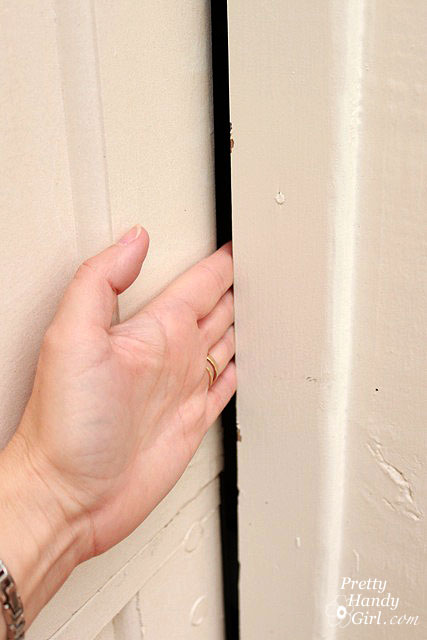
When you have garage doors with no weatherstripping, you might have a gap as big as your hand!  Can you imagine? That is 68 linear feet (2 doors) of cold air rushing in. This is the equivalent of all the windows in your house being cracked open an inch. You’d never dream of doing that in the winter, and yet that was the situation in our garage.

Weatherstripping garage doors is a very easy DIY task that shouldn’t take more than an hour. Buy neoprene rubber stripping from your local hardware store or home improvement warehouse. (I purchased the Garage Door Side and Top Weather-strip Kit by Frost King for under $20.)  The rewards of this project are that you can take your garage from an icebox to comfortably cool in less than 60 minutes!
Here are my unscientific results of the temperatures in our garage before and after weatherstripping.

Before Weather Stripping:

Outside Temperature Inside Garage Temperature Temperature Difference
45˚F 55˚F 10 degrees
30˚F 45˚F 15 degrees


After Weather Stripping: 

Outside Temperature Inside Garage Temperature Temperature Difference
45˚F 65˚F 20 degrees
30˚F 58˚F 28 degrees

I was so thrilled by the difference it made that I knew I wanted to share the tutorial with y’all. But, sadly I didn’t take any photos. So, I asked my friend, Holly (the one with the adorable house that has loads of character and charm), if I could help her install some on her doors. Luckily I didn’t have to twist her arm too much. Here is how we did it (the super quick way, but not necessarily the “correct” way.)

Weatherstripping Materials:

(I’ve included affiliate links for your convenience. I earn a small percentage from a purchase using these links. There is no additional cost to you. You can read more about affiliate links here.)

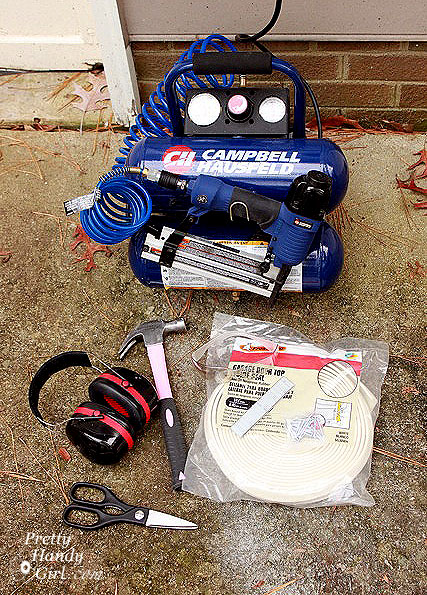
weather stripping seal garage door tools

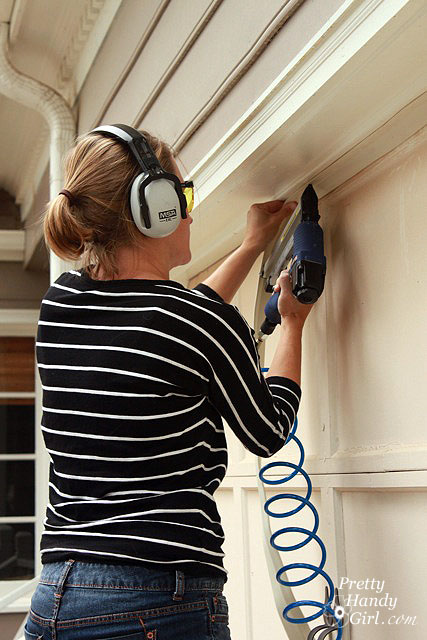
Open the package of weatherstripping and remove the bag of nails included. Put on your hearing protection and safety glasses.

garage door sealing weather strip

Unroll the weather stripping and pull the end up to the top of the garage door on one side. The short side of the foam strip should be against the frame of the door, and the longer side should be pressed lightly against the garage door.garage door weather proofing

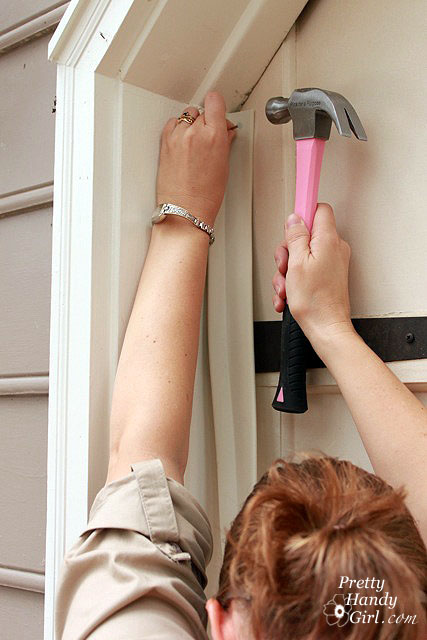
Nail one nail into the frame of the door to hold the stripping in place.

weather stripping garage door

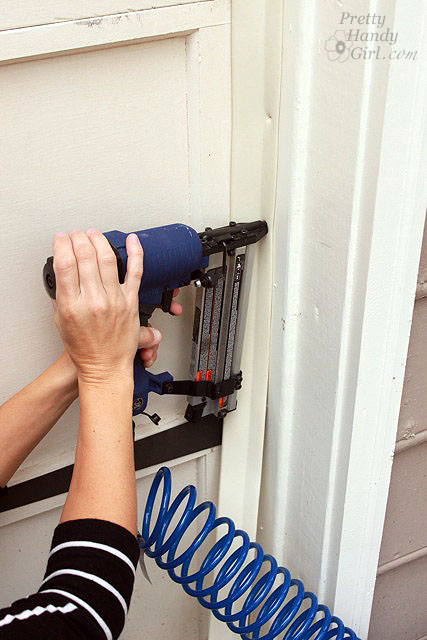
(Here is where we cheated.) Instead of using only nails, use the brad nailer to attach “U” shaped staples into the weather stripping. After every 4th staple, hammer another nail into the frame. By using mostly staples we were able to cut down significantly on the install time. Be sure to start and end with a nail.

applying weather strip to garage door

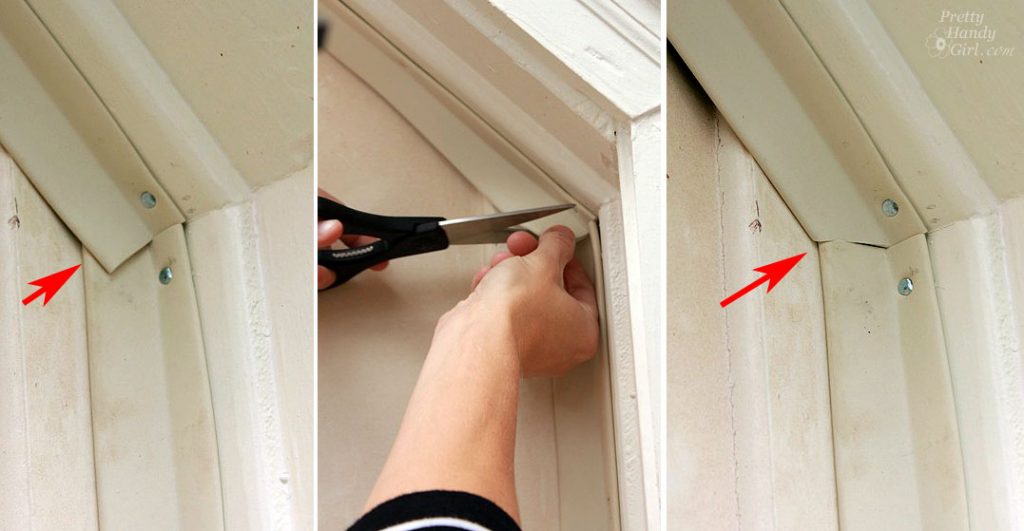
At the bottom of the door, trim the weatherstripping at an angle as shown. We left a longer tail on the door frame side to close up the gap under the door frame.

garage door weather stripping corners

Continue attaching weather stripping along the top of the door. Alternate between hammering a nail and then four staples.

weather stripping garage door top

When you reach the sides, cut your weather stripping so that it meets the side pieces. Do not let the weatherstripping overlap or it will create a gap.

cut garage weather stripping to exact fit

Repeat for the second garage door (if you have two.)

after garage weather stripping applied

Here are a few other bonus features of the weatherstripping:

  • Quieter. Which means I can get away with using power tools a little later at night.
  • The bonus room above the garage stays warmer. Before it was always chilly up there.
  • Less critters. Since installing the weatherstripping I’ve seen a lot fewer spiders and centipedes.
  • Now when I use the space heater, I can bump up the temperature in the garage by a few degrees per hour. Before the weatherstripping, the space heater really didn’t warm the garage because all the heat was being lost out the sides of the doors.
  • Do I even have to say it? Energy savings! We don’t have to pay as much to heat the bonus room. And I don’t spend hours running the space heater.

I should note that our garage has insulation in the walls. If yours doesn’t, you may not notice as big a difference as I did.

I’d love to hear from you if you tackle this easy project and if you notice a huge change in temperature in your garage too. I can’t tell you how excited I am with the results. I can continue to work in my garage/workshop in comfort through the winter now!garage door weather stripping tutorial


How to Use a Caulk Gun

You know the old saying, “No question is a dumb question.” Well, I have to say that about this tutorial, “No tutorial is a dumb tutorial.”

I realize that a caulk gun isn’t a big scary power tool, and yet I still think learning how to use a caulk gun is a very valuable skill for any handy person.

So, let’s get right down to some Caulk Talk.

How to Use a Caulk Gun

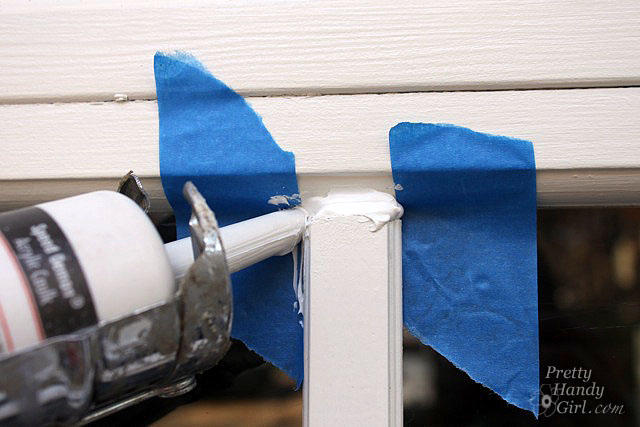
A caulk gun is a necessary tool for any homeowner. Sealing gaps in siding, replacing the seal around the tub and shower surround when the old caulk gets dry and brittle is a must. Caulking around the trim around windows and doors will improve your homes energy efficiency and get rid of unsightly gaps. You can also use it for spreading construction adhesive and any other substrate that is sold in tube form. A caulk gun saves your hands from cramping, especially if you have a lot of caulking to do.

A basic caulk gun costs about $10 – $20, but you could buy a power version which run up to $200! Sheesh!

Starting a tube of caulk:

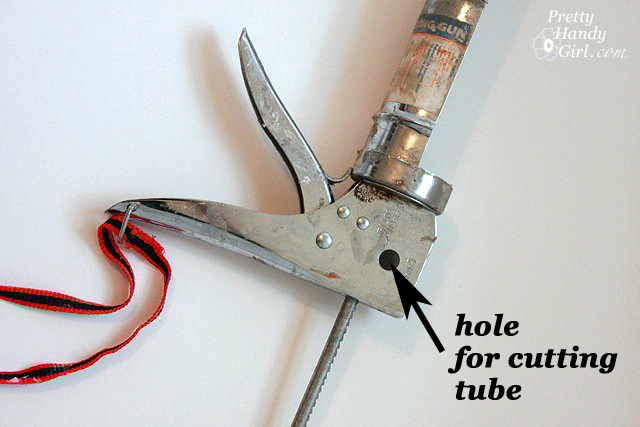
Cut off the tip of your tube by inserting it into the hole at an angle.

How to Use a Caulk Gun

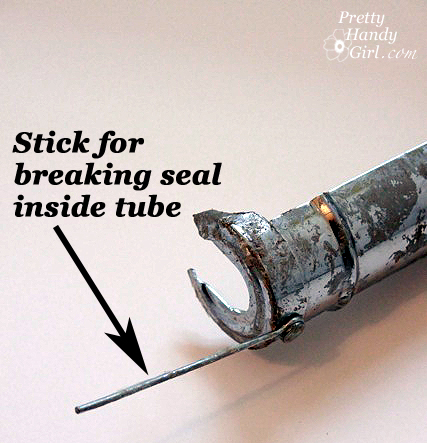
Poke the stick attached to the gun into the tube to puncture the seal.

How to Use a Caulk Gun

 Loading a caulk gun:

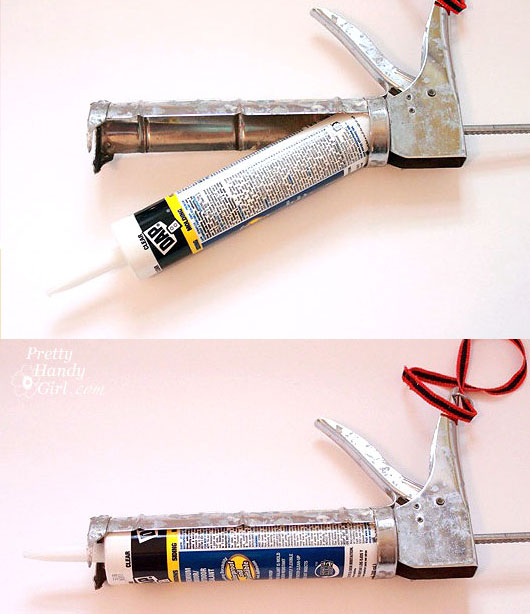
Pull the hooked rod all the way back. Insert your tube base first. Then tilt the nozzle end into the top of the gun.

How to Use a Caulk Gun

Rotate the hook so it is facing up and the teeth are facing down.

How to Use a Caulk Gun

Pull the trigger and you’re good to go!

How to Use a Caulk Gun

Be prepared to pull the hook rod back when you finish or the caulk will continue to flow out of the nozzle.

How to Use a Caulk Gun

Watch these videos for more details on using a caulk gun (also called a caulking gun) and why it is important to fill any cracks or seams in your siding!

*Thanks to The Real Tim Jones for sharing the secret about how to cut and start your caulk tube! Tim is sooo right, I never knew about this until I saw his video!

And, if you want to find out how to keep your caulk from drying out in between uses, my friend Sandra at Sawdust and Paper Scraps has this tip.

Happy Caulking!

How to Use a Caulk Gun