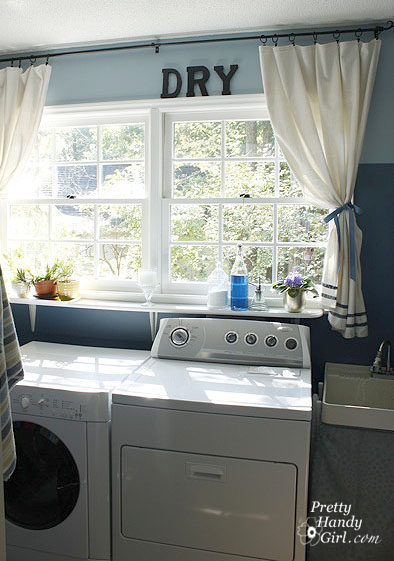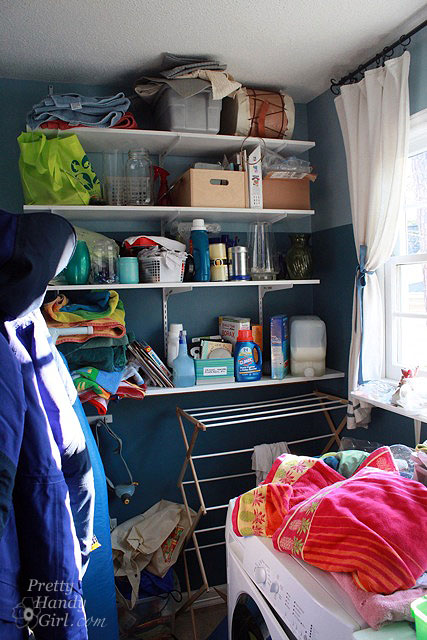
You know that beautiful laundry room I showed you last year? Yes, this one:

Well, it isn’t so pretty right now, and honestly I strategically didn’t photograph the ONE wall in the laundry room that isn’t….so….pretty. Can you blame me?!

But, that is all about to change! I’ve been working with a Flow Wall System representative to come up with a plan for my laundry room wall.

Flow Wall Garage and Home Storage Solutions

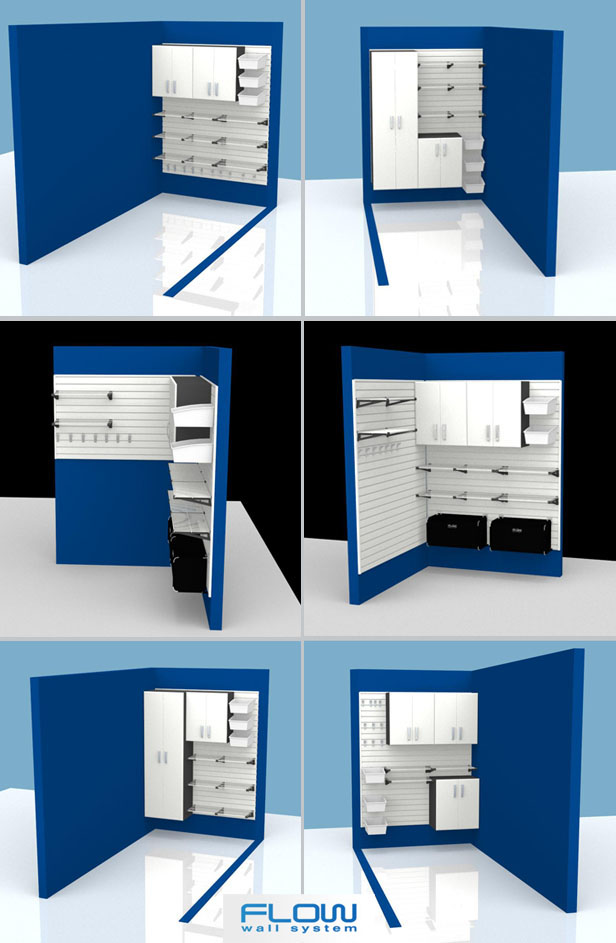
Within half an hour of sending him my measurements (of my laundry room, not my body measurements – LOL), he sent back multiple possible configurations for our room.

I can’t even begin to tell you how fantastic it is to turn over the planning to someone else for a change! Of course, being the planner that I am, I had to tape up a few paper templates to help visualize how they would work in my space.

The Flow Wall System looks like it is going to be a snap to install (and I will definitely let you know for sure!) Here is a short 60 second video to show you a little more about Flow Wall System:

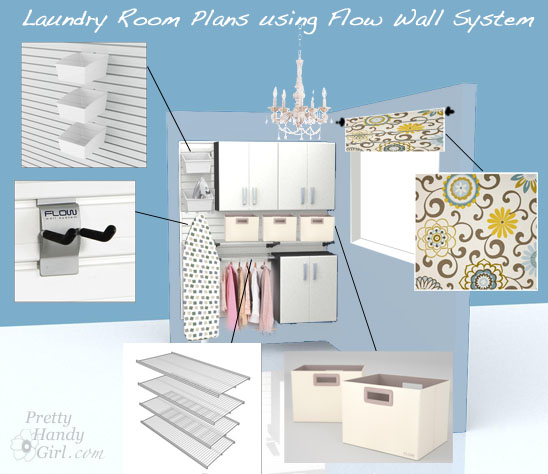
Here are my beautiful plans for the laundry room using the Flow Wall System sketches as inspiration.

1. Flow Wall medium wall mounted storage bins to hold the iron and ironing supplies

2. Flow Wall small storage hook to hang ironing board on

3. Flow Wall white coated wire shelves for extra storage and drying clothes

4. Flow Wall jumbo decor bins in cream to corral detergents, spot cleaners, etc

5. Waverly Pom Pom Play Spa fabric for a faux roman shade

6. Spray painted brass chandelier inspired by Modern Parsonage

7. Flow Wall cabinets to hide my unsightly mess

What do you think? Do you like the design? I’m probably going to scrape the ceilings and repaint in there too. The exact wall color will have to wait until I get the fabric. I’m particular about color like that. More on my color snobbishness next week. Until then, I hope you have a great weekend.

Disclosure: This is a sponsored post for Flow Wall Systems. I have been compensated for my time and will be receiving some complimentary products. However, the ideas and words are all my own. I was not told what to write or what products to write about. I believe you have the right to know when a post is sponsored. Regardless of whether a post is sponsored or not, I believe in honesty, truthfulness, and complete transparency in my posts.

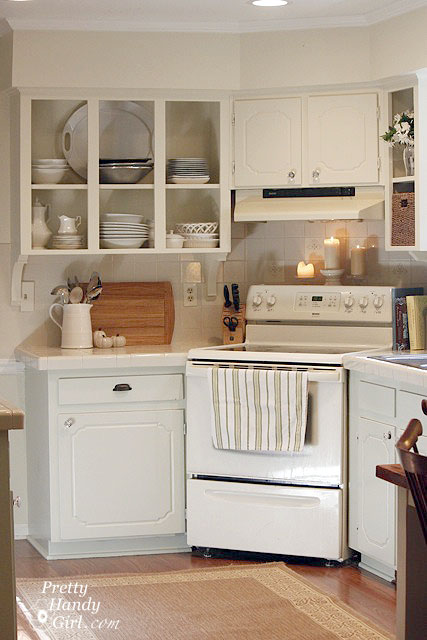
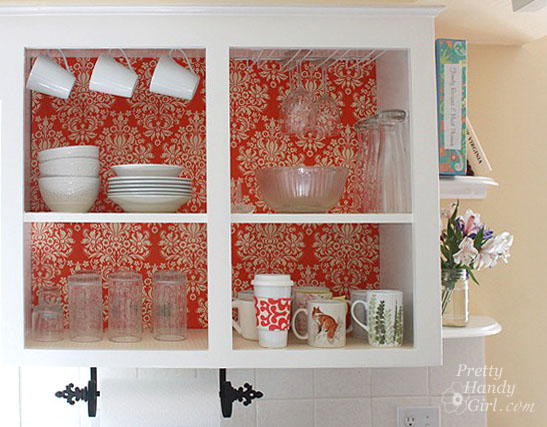
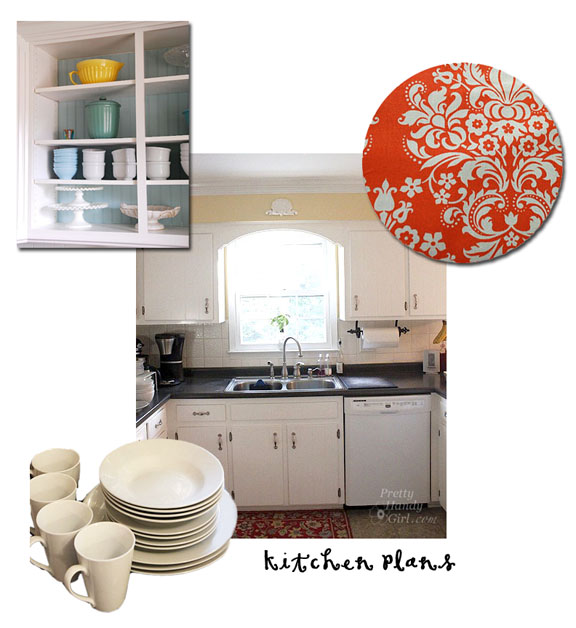
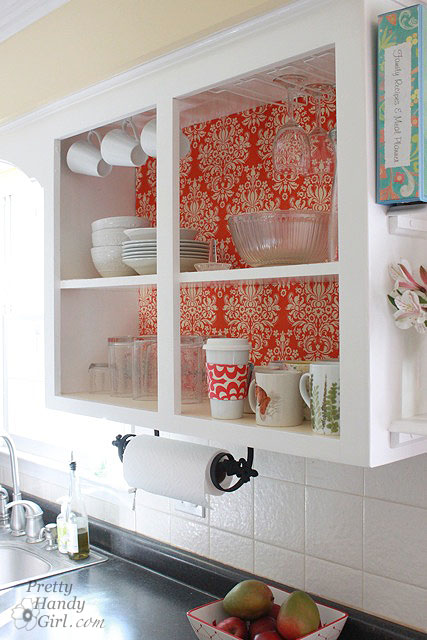
I’m back to show you the updates I made to my kitchen. Remember the plans I shared with you? These fabric backed cabinets made the kitchen new.
Well, they have been implemented and I LOVE the results! Best of all, the materials I bought cost me under $25 and that included the white dish set. But, the cherry on top is that I can easily reverse the changes if we move (or get sick of the look.)

And now, I present to you:
Fabric Backed Open Cabinets for the Kitchen

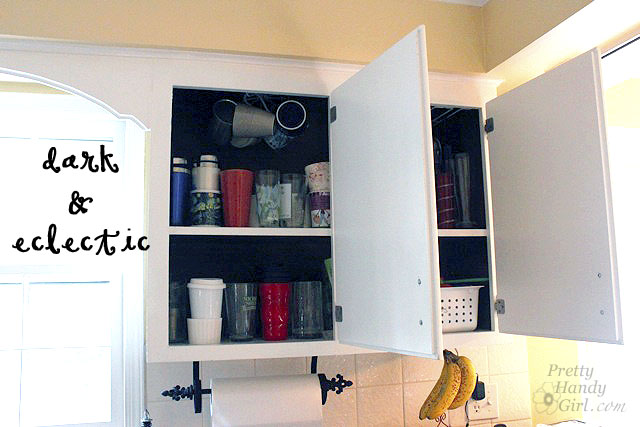
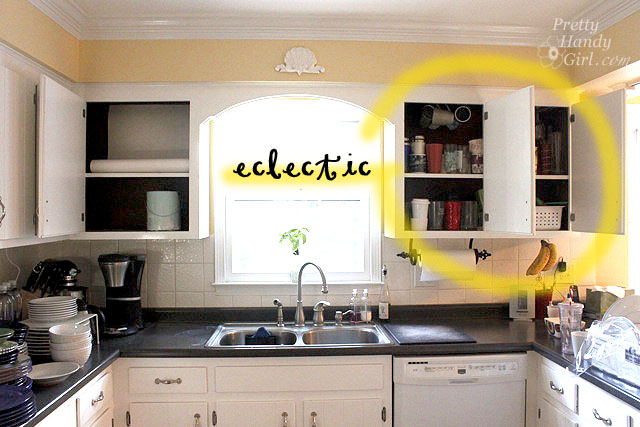
When we first met these sad cabinets, they were dark, dreary and had an eclectic collection of mugs:
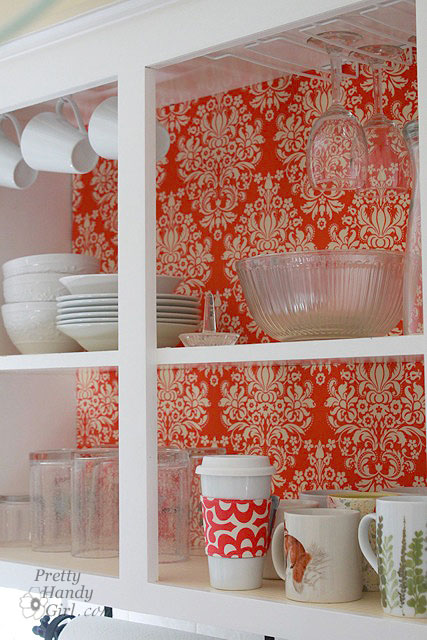
Within only a few hours (minus drying times), I had a stylish new look that is bright and cheery!
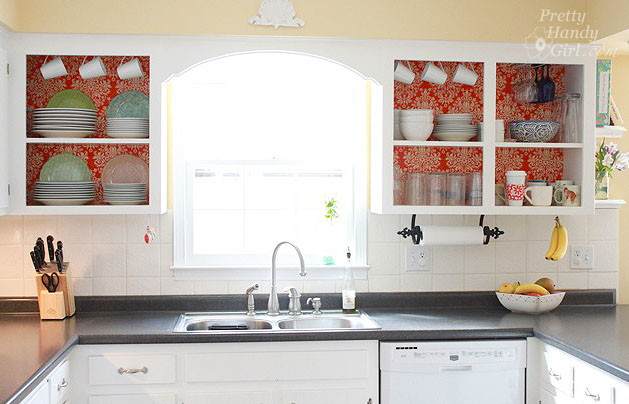
Follow along for the tutorial and the 50 cent tour (please deposit your pocket change on the way out.) Just kidding. I’ll let you in for free.

Materials:

(I’ve included affiliate links for your convenience. I earn a small percentage from a purchase using these links. There is no additional cost to you. You can read more about affiliate links here.)

Optional: 

Difficulty: Easy

Step 1: Empty your cabinets.

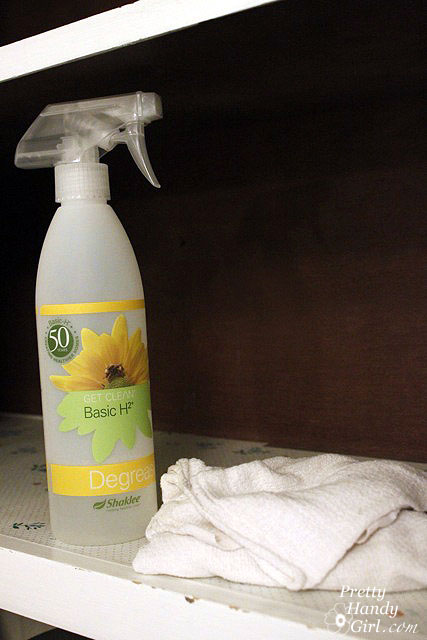
Clean the insides with an all purpose kitchen cleaner.
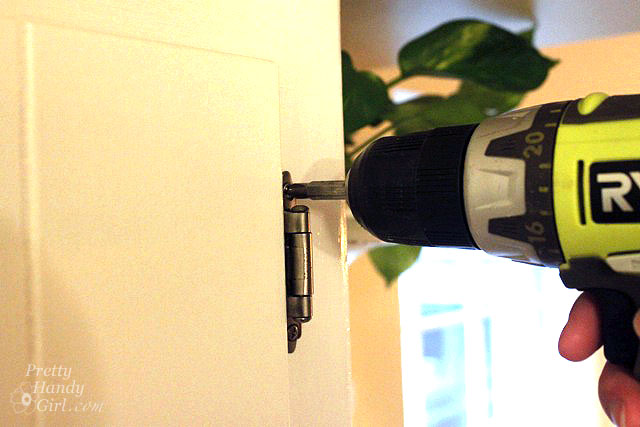
Step 2. Starting from the bottom, remove the screws from the cabinet door hinges. The last screw should be the very top hinge (to keep the weight of the door from wrenching the screw out of the wood.)
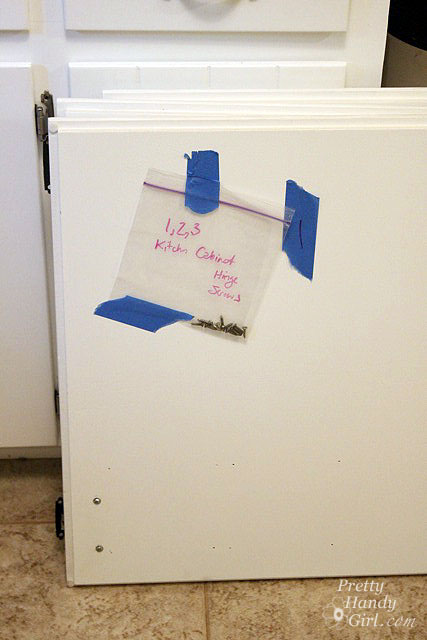
Put screws into a ziplock bag and label your cabinet doors in order so that you can return them to the appropriate cabinet opening at a later date.
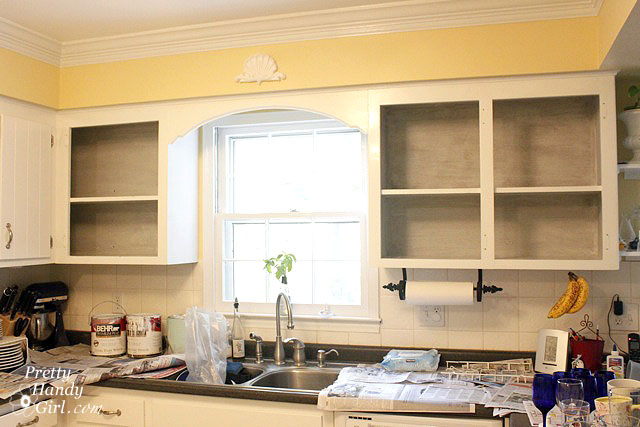
Now you should have a clean slate like this:

Step 3. If your cabinets are dark inside, you may or may not decide to paint the insides. (Be sure to check with your landlord if you are renting.) I chose to paint mine because the interiors were so dark. If you want to skip this step, fast forward to the next step.

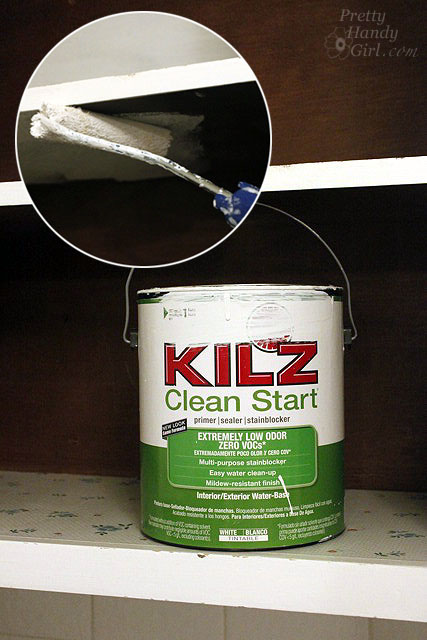
Prime the insides by rolling on primer over the flat surfaces. Use a brush to get into the corners and crevices.
Once the primer has dried, get out the wood putty and putty knife.
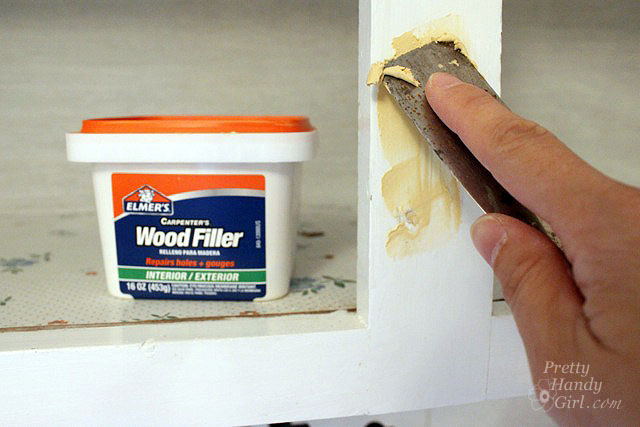
Step 4. Using the putty knife, spread a small amount of putty over the holes where the hinges were. Push the putty into the holes, then scrape the excess off. Allow the putty to dry completely.
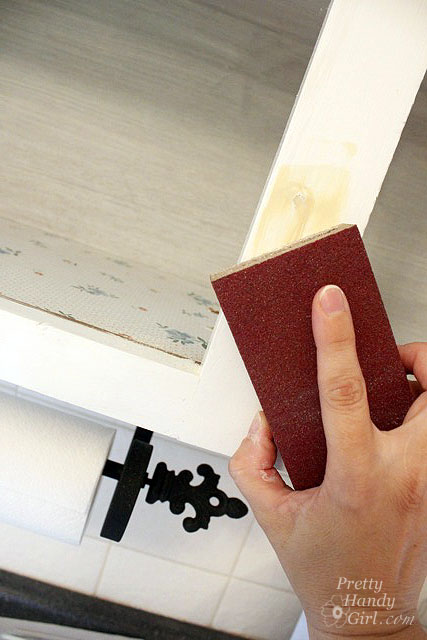
Step 5. Sand the puttied holes until smooth.
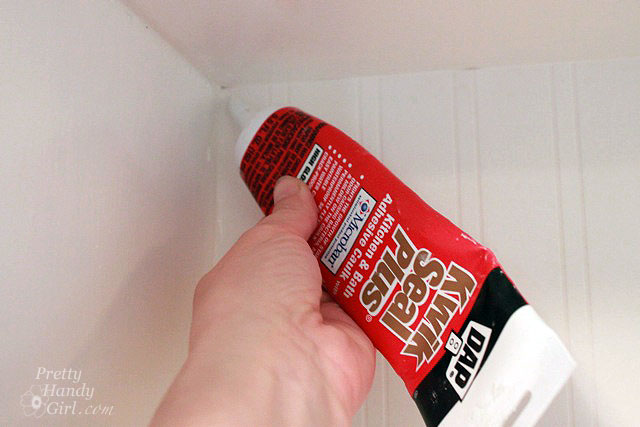
Step 6. Touch up the putty holes with paint or stain. Add caulk to any cracks or seams at the back of your cabinet. Allow the caulk to dry thoroughly.
If you are painting the inside of the cabinets, roll on paint with the small roller and use the brush to smooth out the paint and get into the grooves.
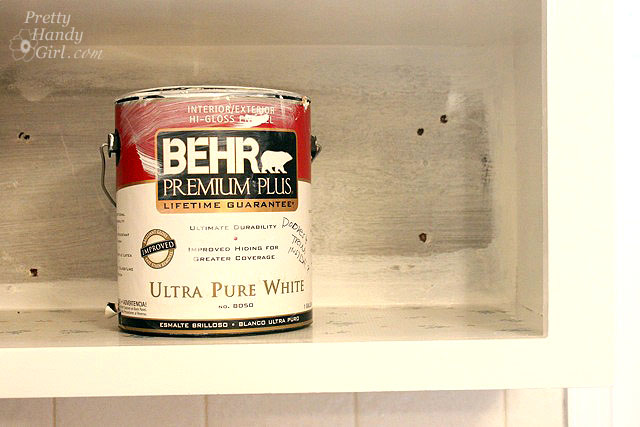
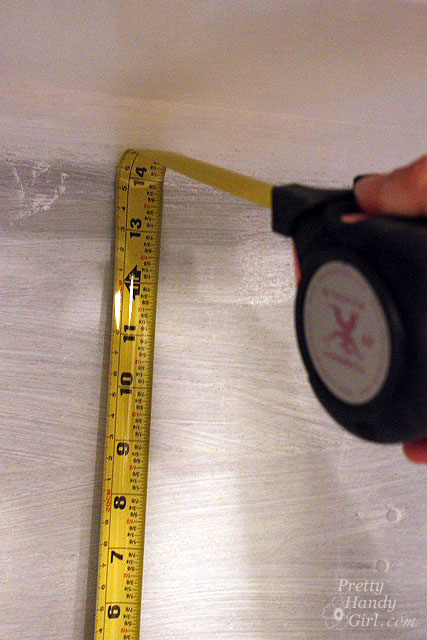
Step 7. Measure the dimensions of the back of your cabinets. Make sure your measurements are precise (measure twice, cut once is a good adage.)
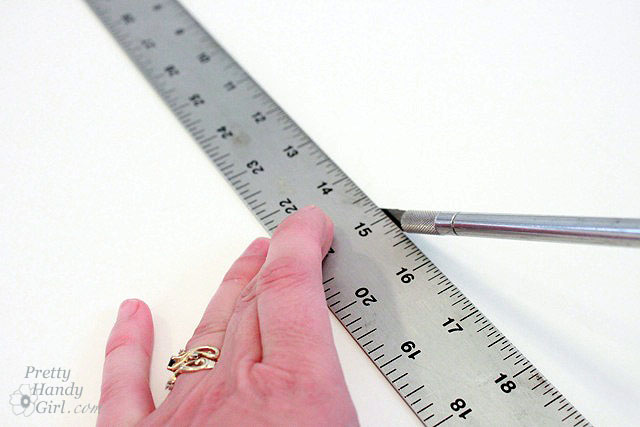
Cut a piece of foam board using the measurements you just took.
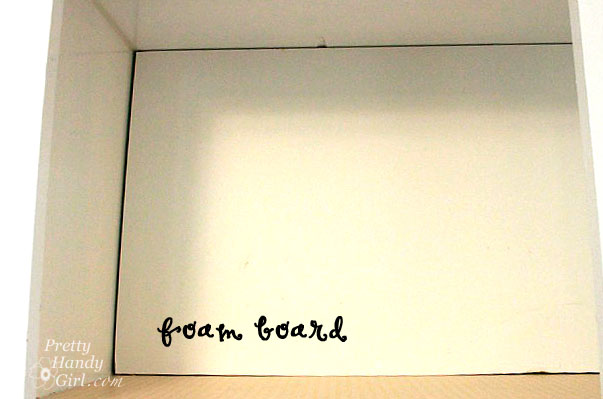
Test fit the foam board into the back of the cabinet. If your cabinet’s face frame is smaller than the cabinet back, you will probably have to bend the foam board to get it in.
Step 8. Iron your fabric. Make sure to iron all the wrinkles out.

Cut the fabric 3 inches wider than the foam board. Lay the foam board on top of the fabric (wrong side facing up.)
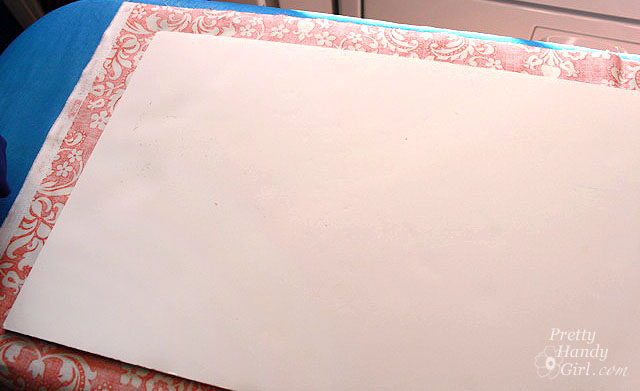
Step 9. Tape the edges of the fabric onto the back of the foam board. Be sure to pull the fabric taut.
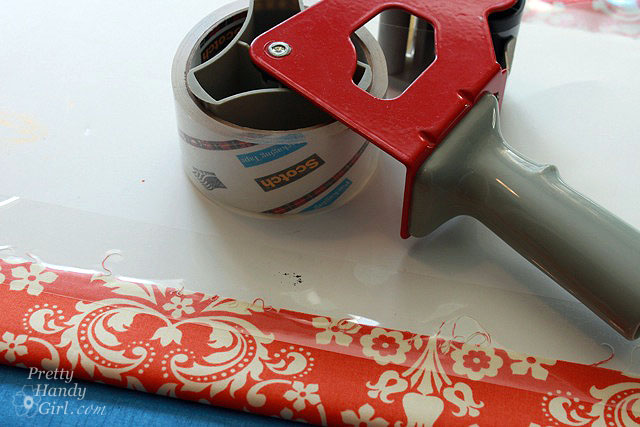
Fold the edges of the fabric as you would on a gift. Tape the ends to the back of the foam board.

Step 10. Insert the foam board into the cabinet.
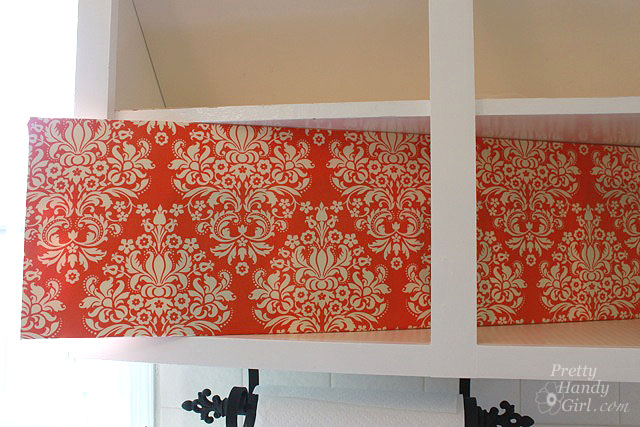
Push the foam board firmly against the back of the cabinet. The tension of the fabric and the board against the edges of the cabinet should hold it in place, no need to tape or glue anything!
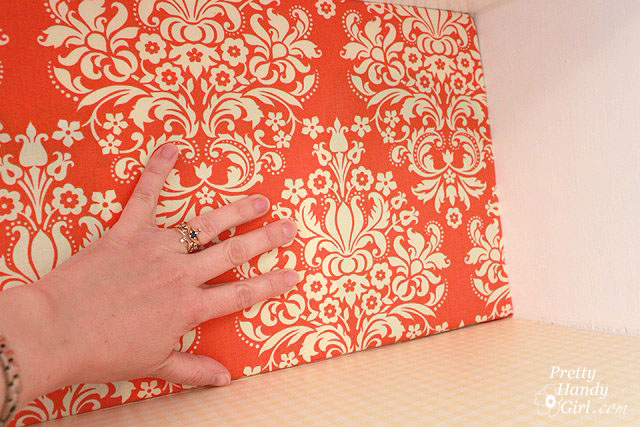
It is a good idea to try to line up your pattern if you have multiple shelves. (Do as I say, not as I do.)
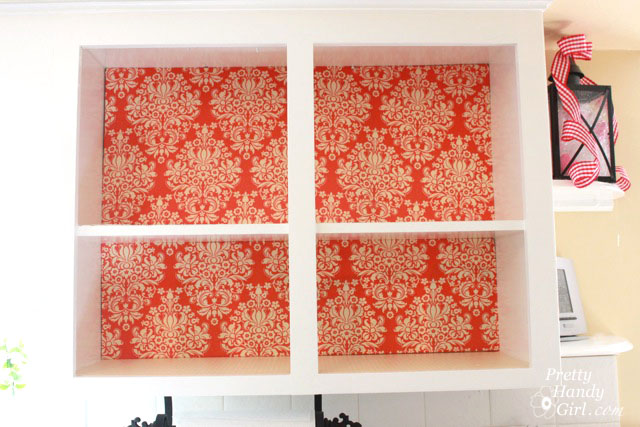
Start putting your coordinated dishes back into the cabinet. Think about displaying them as you might see in a store to complement these fabric backed cabinets.
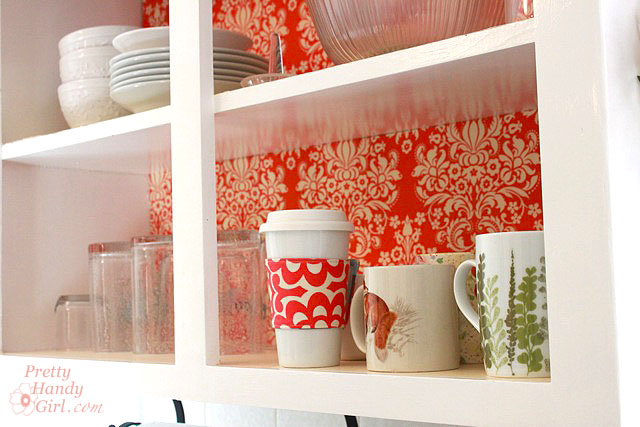
For visual interest and extra storage, I hung some mugs from the top of the cabinet.
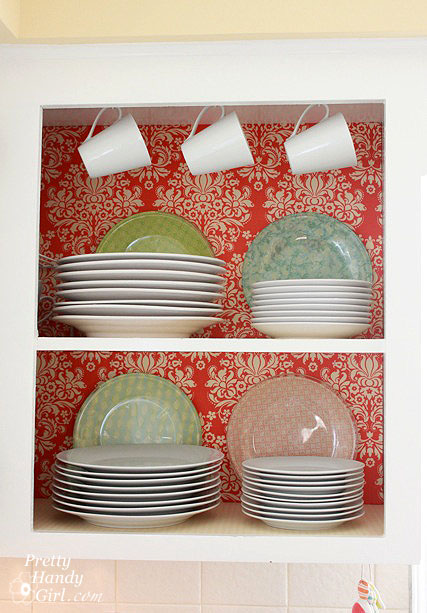
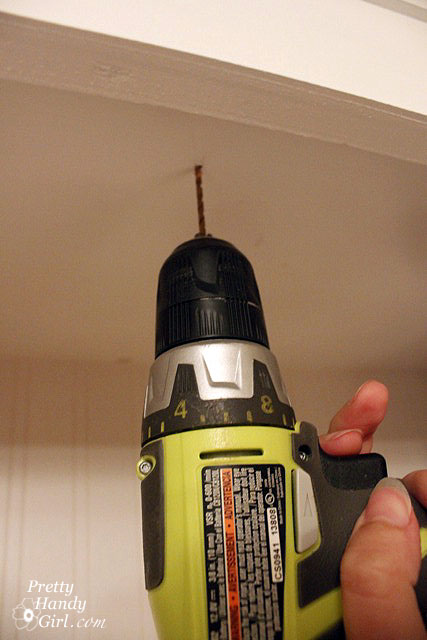
It was as simple as pre-drilling some holes and screwing in white cup hooks. (I did measure the same distance back from the face frame and spaced the hooks evenly. But, I’m a perfectionist like that.)
I am in love with my new kitchen! And all it took was less than $25 in supplies and a few hours.

What do you think?

The best part about this project is that I can easily remove the foam boards…
…or tape new fabric onto the back when I want to update the look!
Can you imagine a cheaper, easier or more glamorous update to your kitchen?
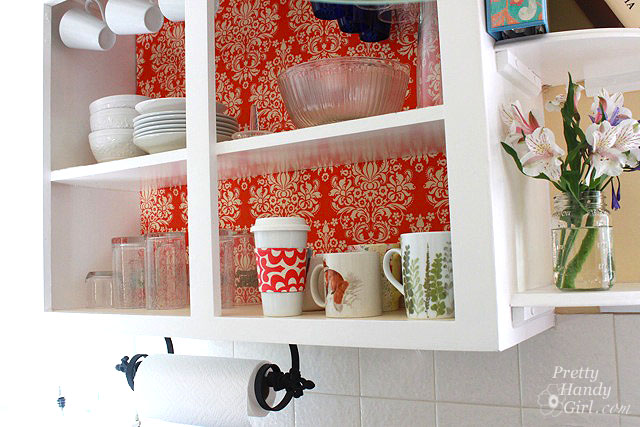
Are you an apartment dweller that is restricted from making permanent changes to your home? Or does your budget limit the renovations you’d really like to make? Why not make a few frugal changes that reflect your own style. These fabric backed cabinets are a win for any kitchen!

Apartment Guide has changes you can make that won’t break the bank:

Want to find even more design tips for your home? Apartment Guide has budget friendly ideas and DIY how-tos for people in any sized home on https://www.movingtoday.com and https://www.apartmentguide.com/blog/

Disclosure Statement:

Apartment Guide and owner Consumer Source, Inc. partnered with bloggers such as me to participate in their monthly blogger program.  As part of that program, I received compensation.  They did not tell me what project to create or what to purchase. Nor did they influence my opinions! We believe that consumers and bloggers are free to form their own opinions and share them in their own words. Consumer Source’s policies align with WOMMA Ethics Code, FTC guidelines and social media engagement recommendations.

Sometimes it can be frustrating when you want to make changes to your home to reflect your style, but you can’t because you are in a rental. Or you do own, but you don’t have the disposable income to make grand scale renovations.

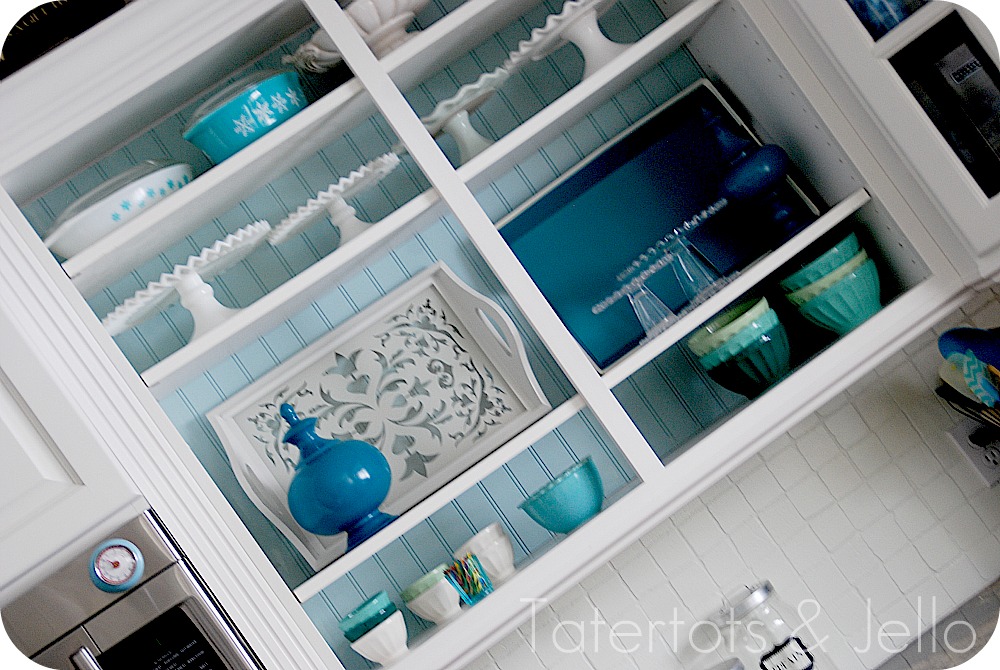
I feel your pain! Long ago I resigned myself to the fact that I can’t make any major changes to our kitchen. But, I still stare longingly at photos of open kitchen shelving.

photo credit: Tatertots and Jello

I love the look, but shuddered at the thought of open shelving showing off my eclectic (in the tacky sense of the word) dishes to the world.

The other day I decided to dream no more, now was the time to take action and make my kitchen a reflection of who I am! I put together a simple design plan:

Open shelving with patterned backed shelves (inspired by Tatertots and Jello’s shelves pictured above) and matching dishes. Plus, my plan had a “wind back the clock” option where I could return the kitchen to the exact same state it is today in no time.

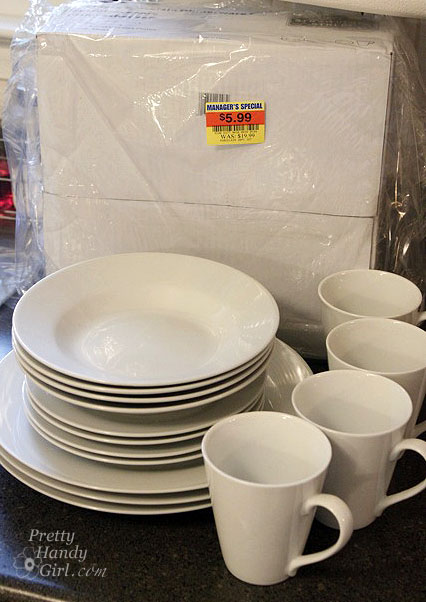
Truth be told, I saw this set of white dishes marked down on clearance ($5.99 for 4 place settings) at Kroger (our grocery store.) So, they were already in the mix.

But, here’s the sweet part: I sold my old 90’s cobalt dish set for $20 and then donated the rest of the mismatched dishes. So, I actually profited from my little dish switcheroo.

With car keys in hand and $20 dollars in my wallet, I set off to Michael’s to buy everything else I needed:

  • Foam board
  • 1 Yard of Top Drawer Bella Citrus Fabric

Here’s a sneak peek:

Click here to see the reveal of my kitchen plans. I urge you to make your own plans to update one small space in your home. Make it your own and be proud of it.
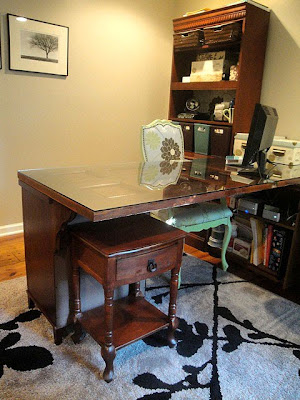
After I used this trick on my kitchen cabinets, I decided to update my home office shelving! You can see how they look after the facelift here and see how I gave those magazine files a new look as well. This transformation is night and day!

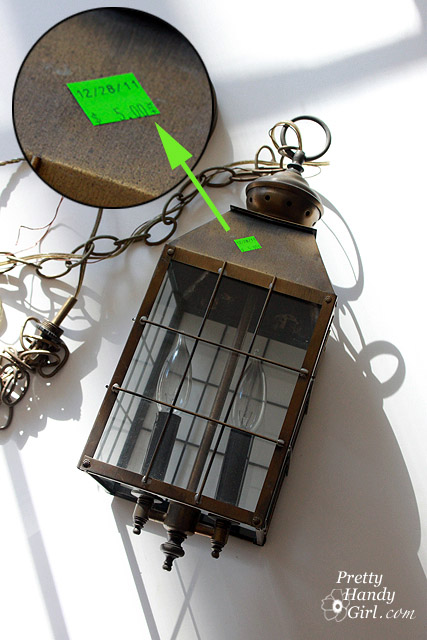
Thanks to my Facebook fan, Heather H., for the ultimate compliment on this lantern. She asked if I got it at Pier 1! Nope Heather, I got it at the Habitat ReStore and it found its way into my hands in this condition:

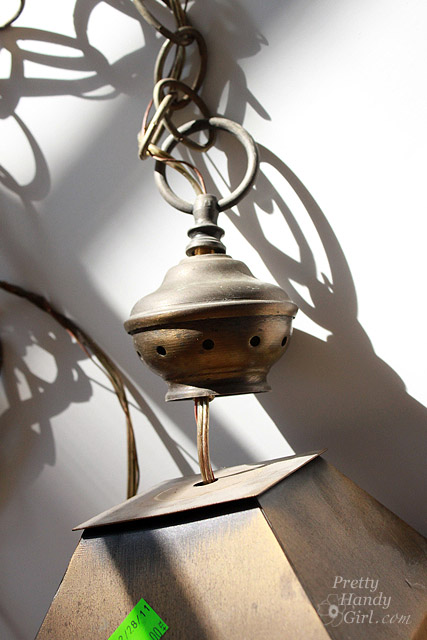
After a Women Build meeting at the Habitat ReStore a month ago, I spied that dusty relic. An old discarded hanging light fixture. I grabbed it and promptly paid $5 for it. Then I got to chatting with the clerk at the ReStore and absentmindedly walked out without my lantern. By the time I remembered, the ReStore had already closed. It was sad… it was tragic… I didn’t know when I’d be reunited with my light fixture because the ReStore is about 25 minutes away from my home. But, there is a happy ending to my story, my mother-in-law (who gives a good name to all MILs out there) offered to swing by the ReStore the following day to pick up my lantern for me. Hugs to her for reuniting us. But, I had to laugh at the look of skepticism she gave me as she handed over the dusty light. She couldn’t see its true potential, but I could.
How about you? Would you have passed this light fixture by? Or would you have seen the potential?

Well, next time you see a light fixture like that, grab it and I’ll show you how to transform it.

Materials:

  • Old lantern style light fixture
  • Pliers
  • Wire cutters
  • Two screwdrivers (at least one needs to be flat head)
  • Damp rag
  • Sandpaper
  • Plastic drop cloth
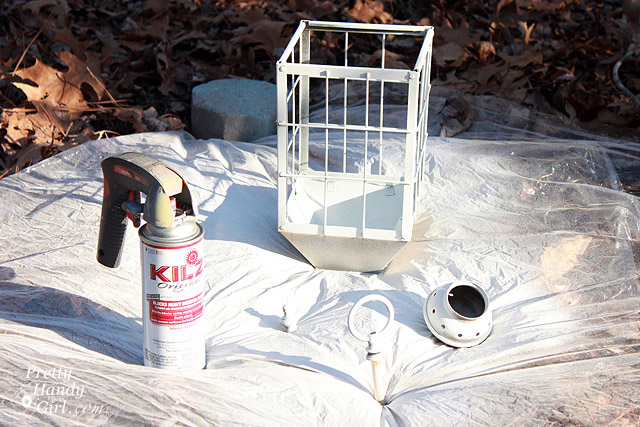
  • Kilz spray primer
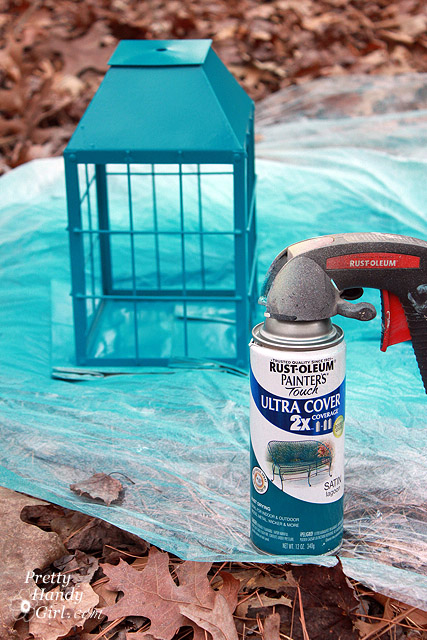
  • Rustoleum Lagoon spray paint
  • Rub n’ Buff Gold Color
  • Paper towels
Difficulty: Easy
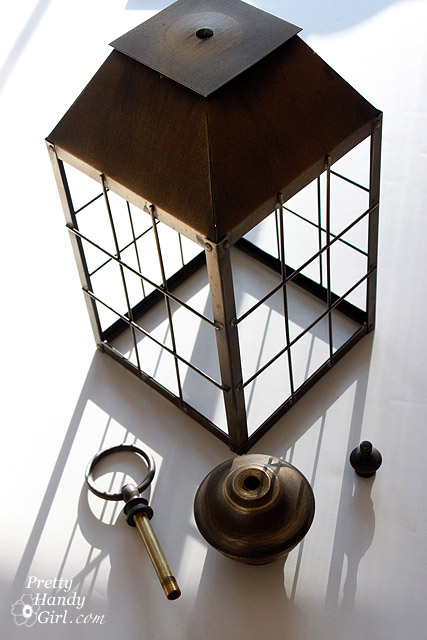
Step 1. Disassemble the lantern by unscrewing all the parts.

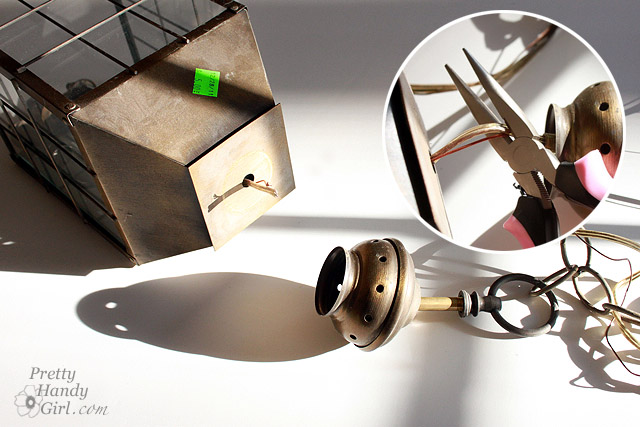
Step 2. Use wire cutters to cut the wire to the light housings.

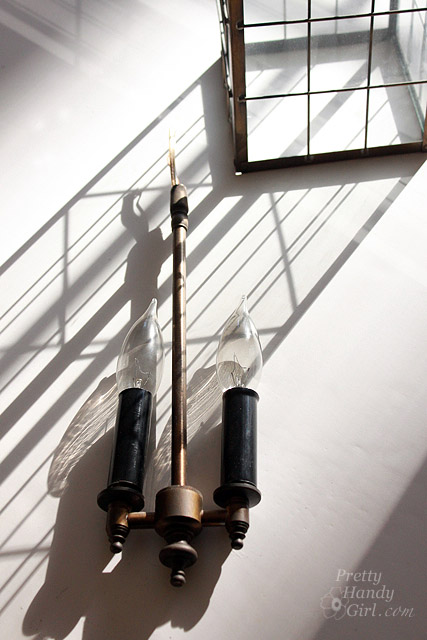
Step 3. Pull the light sockets, bulbs and lighting out of the lantern.

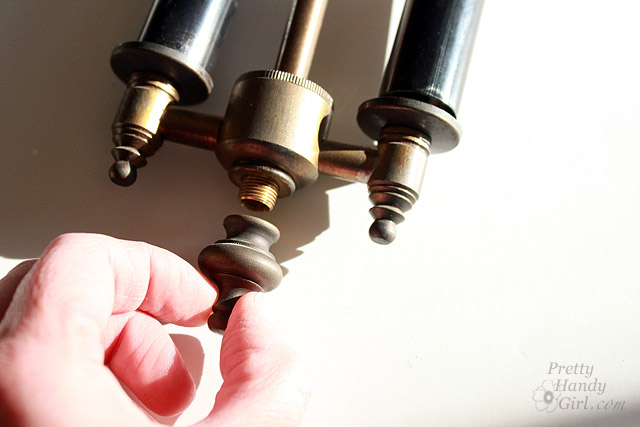
Step 4. Remove the finial from the bottom of the lighting and set it aside with the lantern. Discard or keep the lighting parts for some other project.

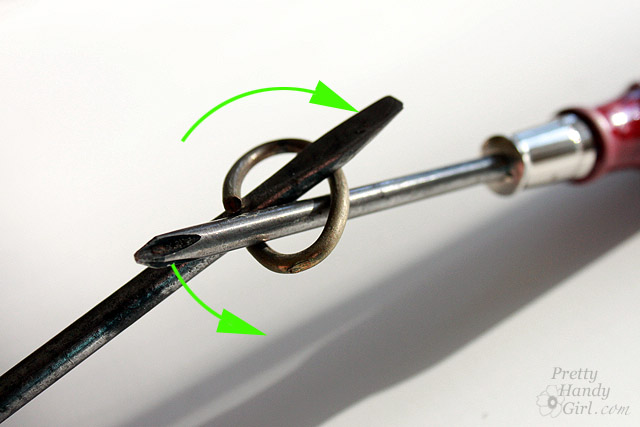
Step 5. If there is a chain attached to the lantern, insert the two screwdrivers into the link attaching it to the lantern. Rotate the two screwdrivers in opposite directions as shown to pry the chain link apart.

Step 6. Pry up the tabs on the lantern that are holding the glass in place. Remove the glass panels and set them aside.

These are the parts that I kept for the lantern:

Step 7. Wipe all the parts with the damp rag to remove any dust and debris. Then scuff the lantern parts with sandpaper and wipe off any remaining dust.

Step 8. Set the lantern and parts outside on the drop cloth.  Spray them with Kilz primer, flip the pieces over and spray again.

Step 9. When the primer has dried, inspect the lantern for any paint drips that need to be sanded smooth.

Step 10. Spray paint the lantern and parts with Rustoleum Lagoon. Flip everything after the first coat is dry and spray a second coat of paint.

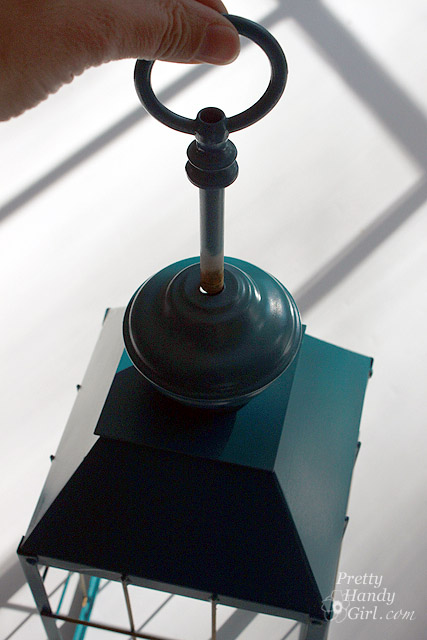
Step 11. After the lantern has dried thoroughly, reassemble the lantern.

Screw the finial onto the inside of the lantern where the lighting used to attach.

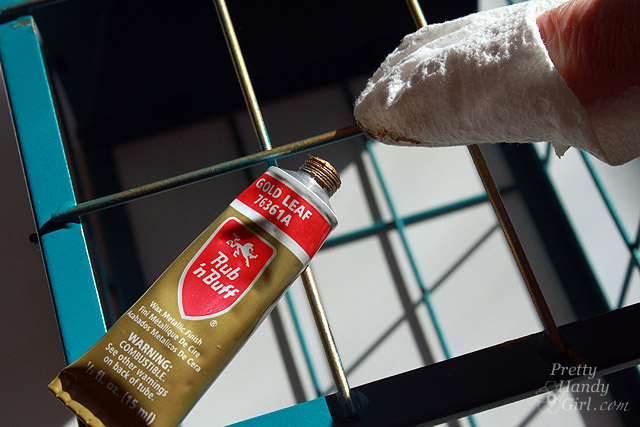
Step 11. Wipe a small amount of rub n’ buff on a dry paper towel. Rub it on the cross bars of the lantern.

Step 12. Clean the lantern glass with windex and a clean rag. Then insert the glass panels back into the lantern.

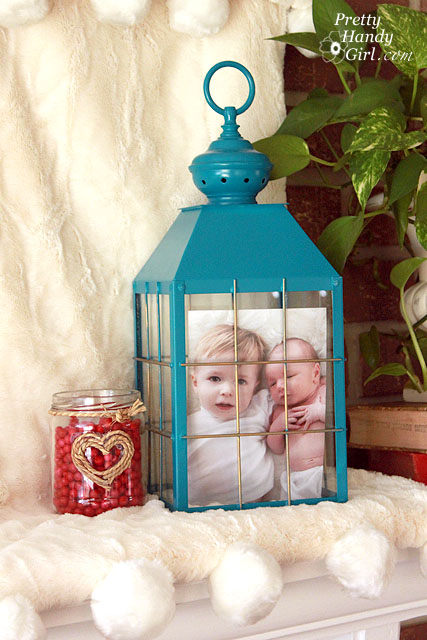
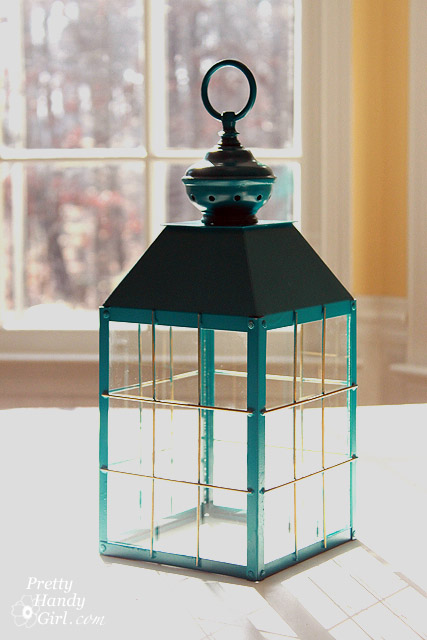
Admire your new aqua beauty!

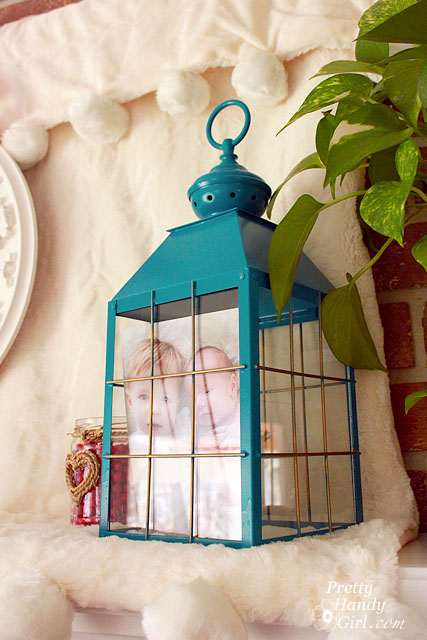
The hardest part of this project was trying to decide where to display my lantern. I could see it in every room of our home!

But, ultimately I gave it a place of prominence on our mantle. And included an old picture inside it.

Have you seen these old light fixtures? Could you ever guess that they could be turned into beautiful decorating gems?
Have a great weekend y’all. I hope you make a trip to your local Habitat ReStore and search for your own lantern.

I hope you’ll join Heather and some other friends on Facebook so you can see what I’m up to next!

Sharing with Tater Tots and Jello Weekend Wrap Up Party


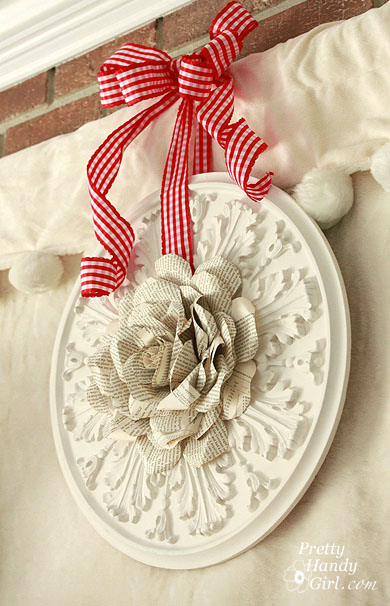
Book Page Rose Wreath

Are you drawn to the amber color of aging book pages? Do you love the scrolling detail on an ornate ceiling medallion? Do you like roses? Yes, yes, and yes?! Well, this post has your name written all over it!

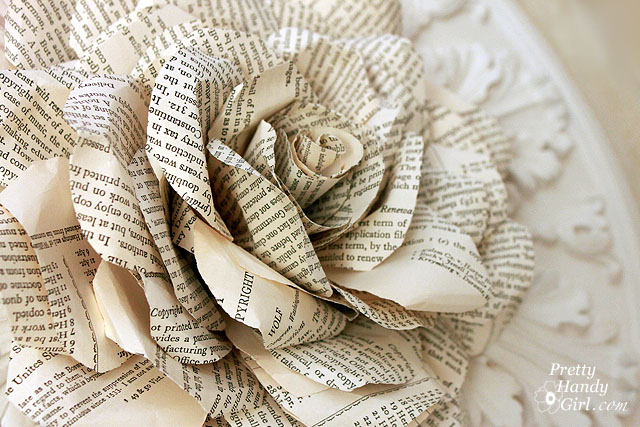
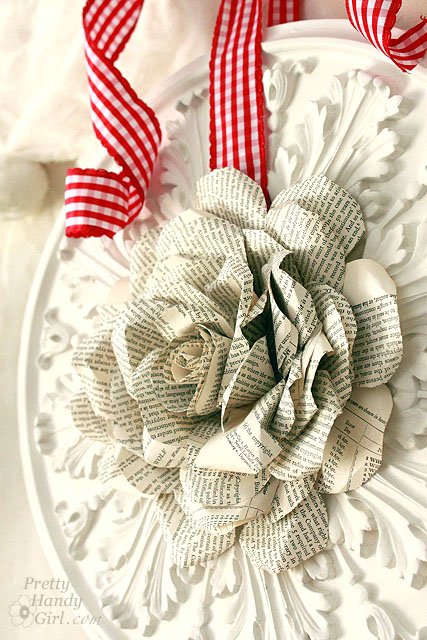
I must say, I really enjoyed photographing this tutorial. The dimensions and shadows in the rose and medallion lend themselves so nicely to photography.

Before we start, I need to give credit where credit is due. I saw a beautiful  paper rose bouquet on 100 Layer Cake the other day, and knew I wanted to make one giant one. The bouquet was created by Valerie Lloyd for a wedding.  So beautiful and unique!

I had not taken down our Christmas decorations on the mantle (I know, slacker that I am.) But, this project propelled my desire to create a Valentine’s Day themed mantle.

Material:

  • Old book
  • Scissors
  • Hot glue gun
  • Hot glue sticks
  • Ceiling medallion
  • Small piece of cardboard
  • Ribbon
Difficulty: Easy
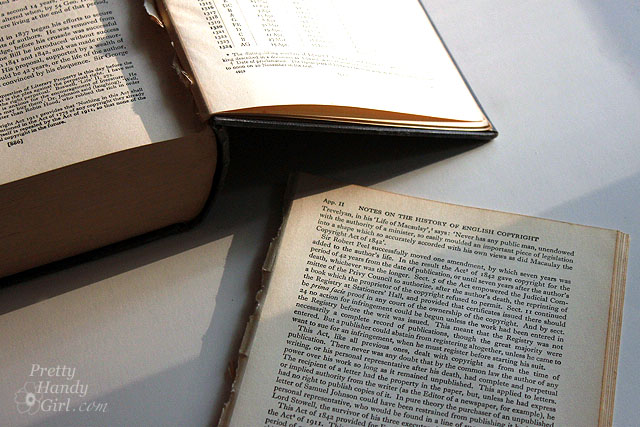
Step 1. Start by tearing a dozen pages out of an old book. (Check Goodwill and thrift stores. You’re bound to find some for this project.)

Book Page Rose Wreath

Step 2. Cut out petal shapes from the book pages. Make some slightly larger and some smaller for the insides of the rose.

Book Page Rose Wreath

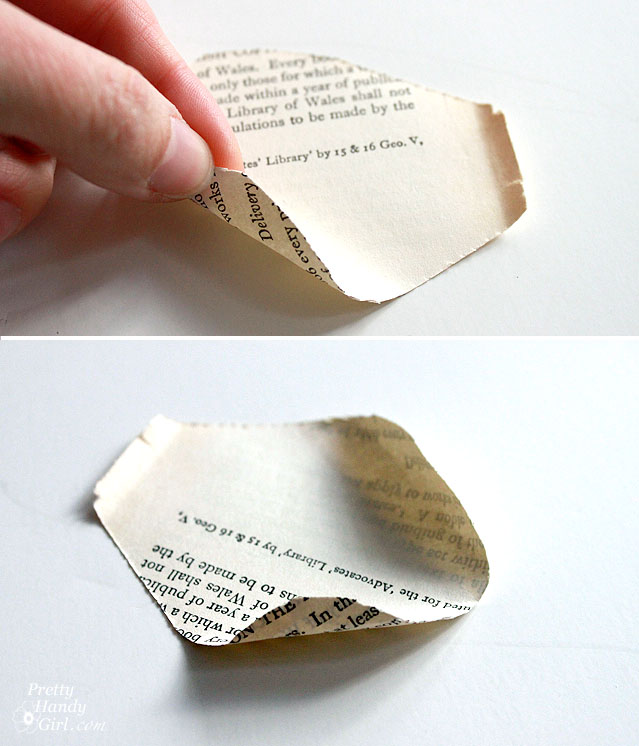
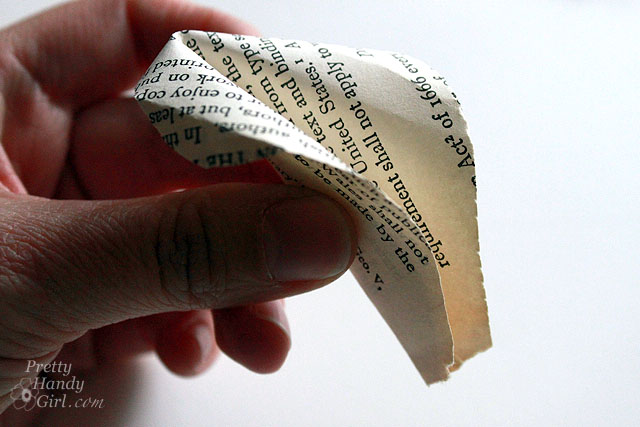
Step 3. Curl the top edges of the petal back.

Book Page Rose Wreath

Step 4. Fold the petal in half lengthwise. The curled edges will be on the outside of the fold.

Book Page Rose Wreath

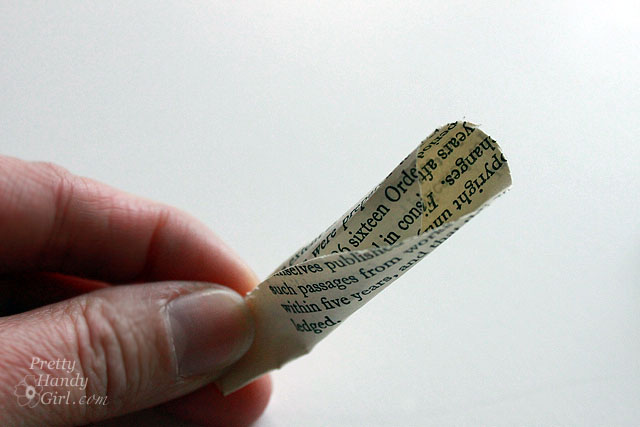
Step 5. Roll several of the smaller petals into a tube shape for the center of the rose.

Book Page Rose Wreath

You should have a decent pile of petals collected before proceeding.

Book Page Rose Wreath

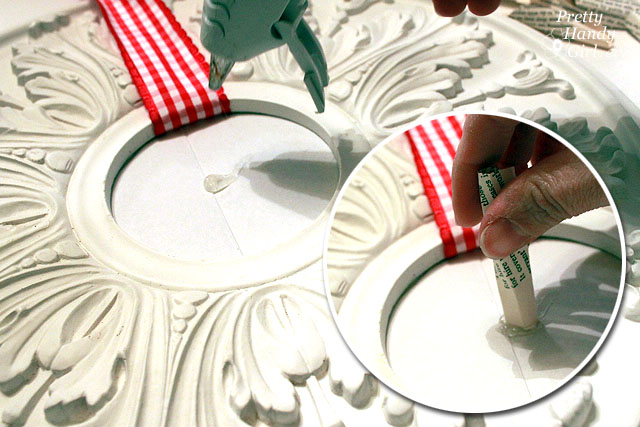
Step 6. Cut a long piece of ribbon to feed through the center of the medallion. It is important to add the ribbon now before you build out your rose and cover the hole.

Plug in your glue gun and let it warm up.

Book Page Rose Wreath

Step 7. Cut a piece of cardboard large enough to cover the center of the medallion. Run a line of hot glue around the center hole on the back of the medallion. Place the cardboard over the hole.

Book Page Rose Wreath

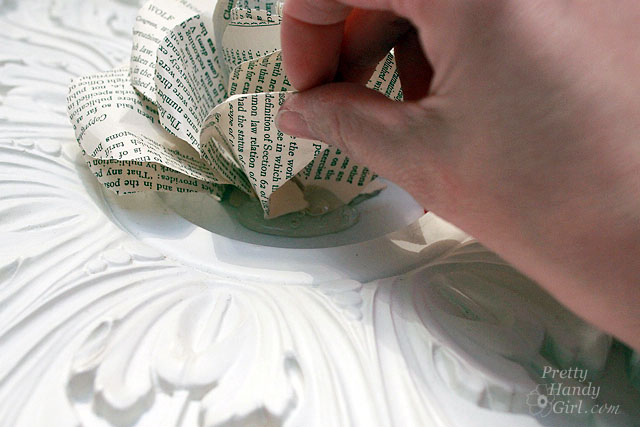
Step 8. Squeeze a large dollop of glue into the center of the cardboard (on the front side of the medallion.) Press one of the small petal tubes into the center of the glue. Hold it until the glue hardens and sets.

Book Page Rose Wreath

Squeeze more glue around the base of the first petal. Wrap a few more of the small petal tubes around the first one.

Book Page Rose Wreath

Experiment with folding the base of each petal or leave them open (your choice.) Variety will make your rose look more “real.”

Book Page Rose Wreath

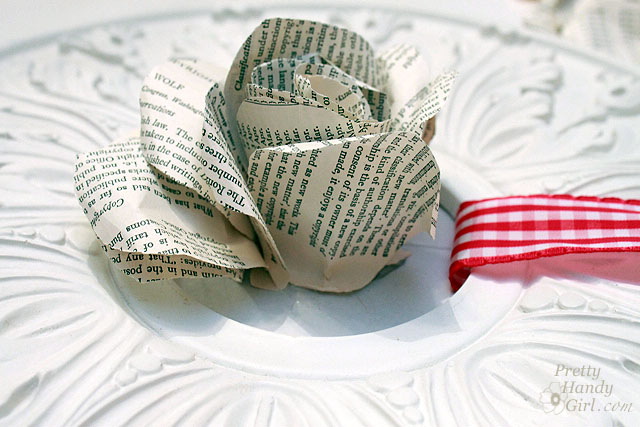
Step 9.  Continue working around the rose from the center out until you have a very full paper rose.

Book Page Rose Wreath

Step 10. Let the hot glue cool. Fluff the rose and add any petals where you think your rose might need more.

Book Page Rose Wreath

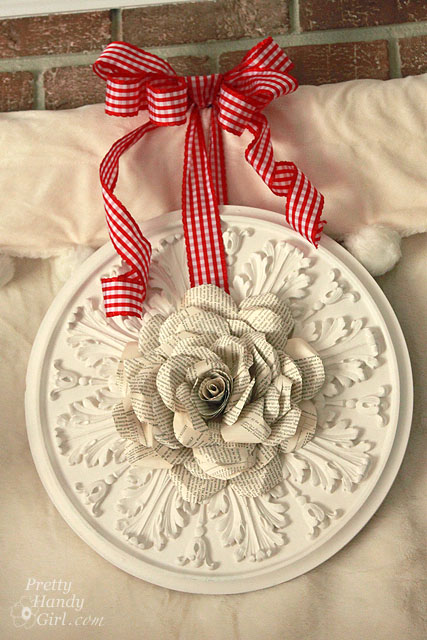
Tie a bow at the top of the ribbon and hang your beautiful wreath!

Book Page Rose Wreath

Stand back and admire your new romantic book page wreath.

Book Page Rose Wreath

What did I tell you? This rose is so beautiful and fun to photograph.

Book Page Rose Wreath

I’d love to hear from you if you make your own! Very rewarding and a relatively easy project.

Book Page Rose Wreath

I hope you are having a fabulous week!

Book Page Rose Wreath

Pin for later!

 Book Page Rose Wreath