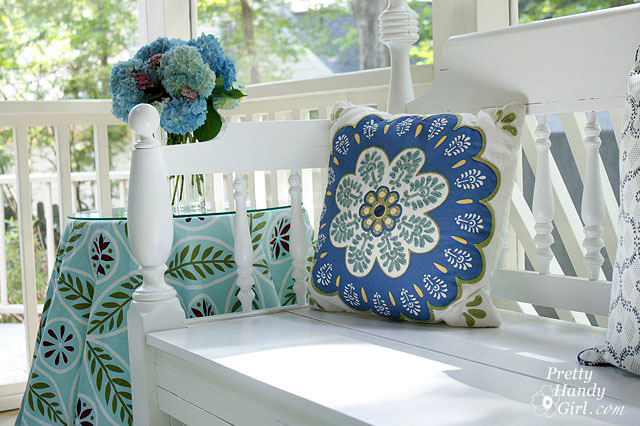
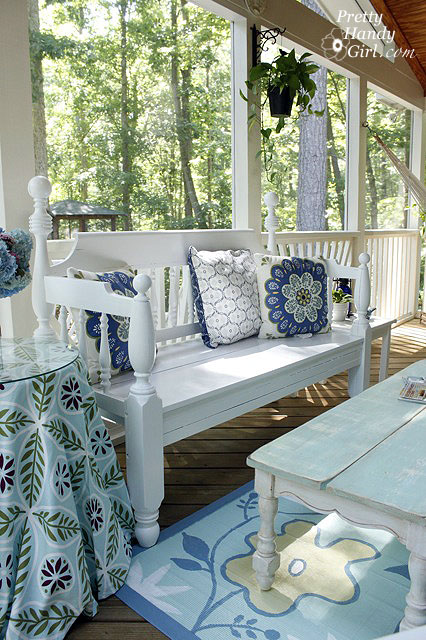
Recently I decided my garden bench that used to be a Craig’s List bed frame, needed to be refinished. I repaired, sanded and repainted the bench before setting it onto our porch where it would get less exposure to the rain.
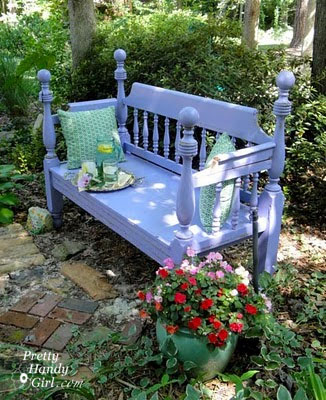
Well, it wasn’t weathering the elements too nicely. Or maybe I should say it was weathering them poorly. Regardless, I really liked the bench and decided to strip it and start over again. I believe the main problem was that the bed frame was not solid wood, it was glued pieces. Then, if you factor in that I used spray primer and spray paint, the rain and moisture got in easily and caused the wood to swell and some of the glued joints to come undone.
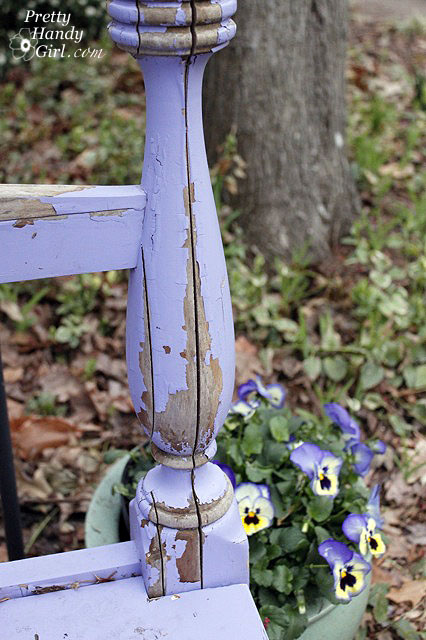
But, the bench was still structurally sound, so we moved it onto the screen porch and I got ready to refinish it.

Refinishing a Weathered Garden Bench

Safey First, (as Meri-K will tell you.) Because I was sanding and scraping the old paint I had to wear eye protection and a dust mask. I also wore ear plugs while sanding and gloves to keep my hands from getting rough.
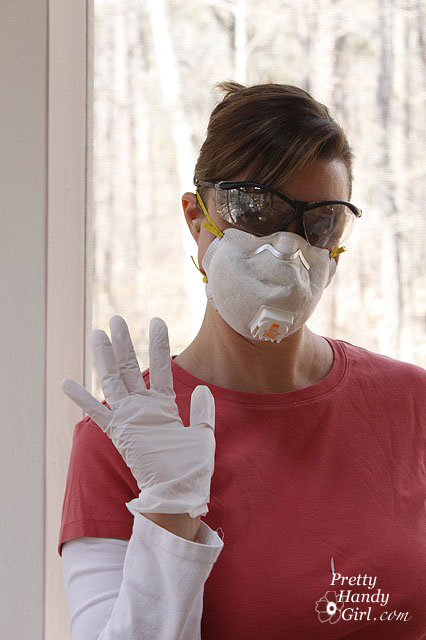
Materials:
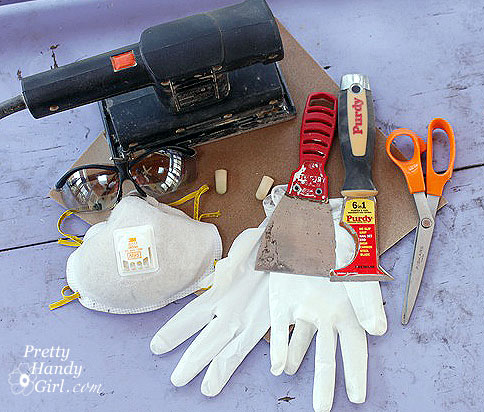
(I’ve included affiliate links for your convenience. I earn a small percentage from a purchase using these links. There is no additional cost to you. You can read more about affiliate links here.)

Instructions:

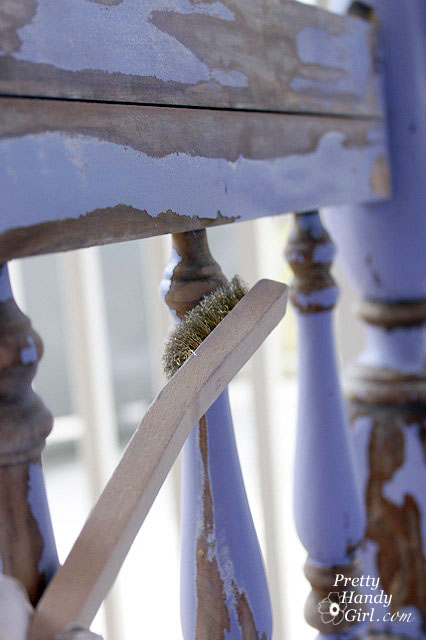
Begin by using the wire brush to remove any flaking paint and to get into the grooves of the spindles (and other hard to reach places.)
Tip from a Handy Girl: I am about to share with you a helpful time saving trick, so pay attention. If you have a power sander that holds the sandpaper with a clip. You can stack your sandpaper. I put the 220 grit on the bottom, then put the 1oo grit on top of that. After sanding my bench with the 100 grit, I simply tear off the top sheet and expose the finer 220 grit.
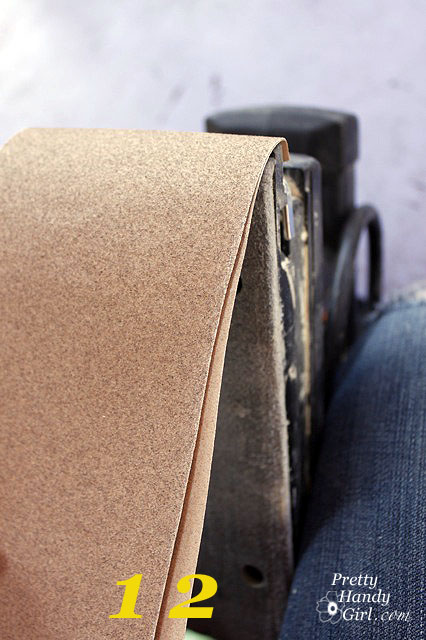
Sand down the bench with a rough 100 grit paper first, then follow up with a finer 220 grit sand paper.

Secure any loose pieces of the bench. To use Gorilla Glue, you need to moisten the two pieces that you will secure.
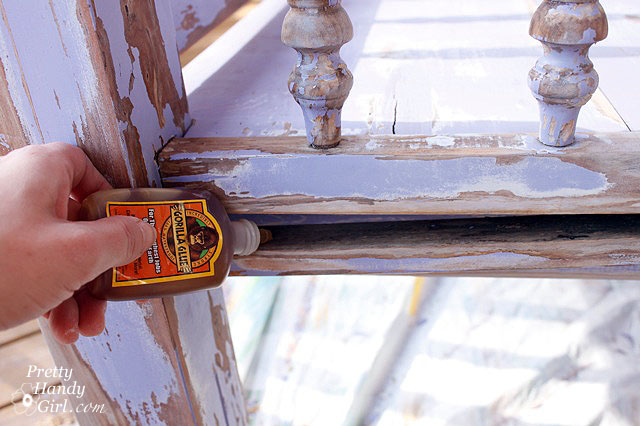
Then put a small amount of Gorilla glue onto one of the pieces.

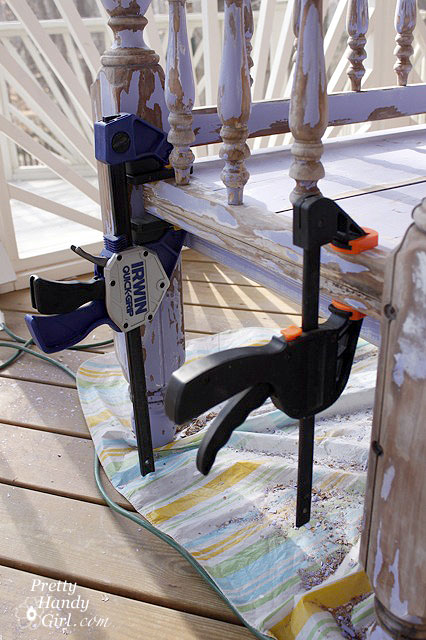
Clamp the joined pieces and allow to dry overnight. (By the way, don’t waist your money on cheap clamps. That little black & orange number below just bit the dust last weekend. My Irwin clamp is a CHAMP!) Check back after 30 minutes to wipe off any Gorilla glue that has spread out of the seam.
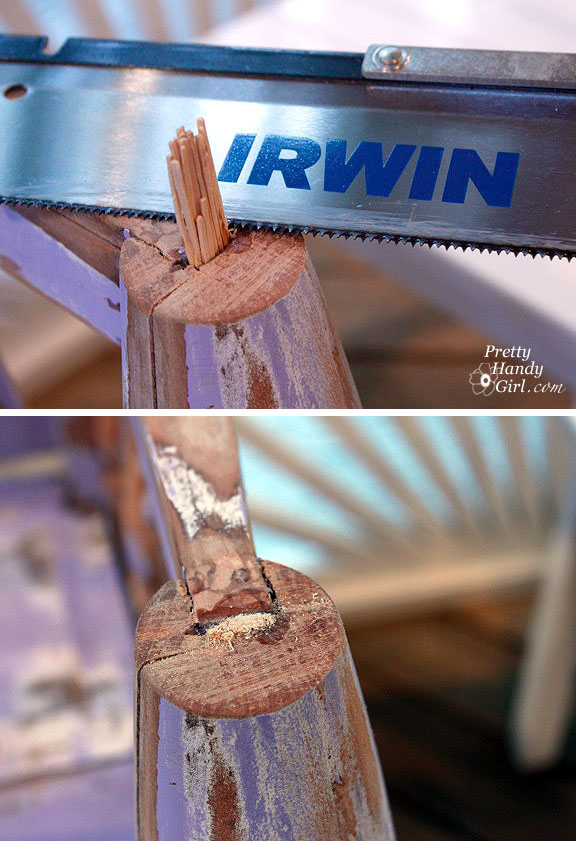
Because the posts on my bench were really falling apart, I decided to remove the ball finials.

Use a saw to cut both finials off.

Patch the hole using toothpicks and wood glue.
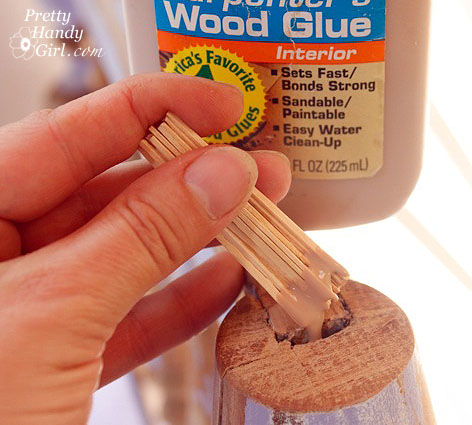
After the glue has completely dried, saw off the toothpicks.
Add a curtain rod finial on top of the sawed off posts.
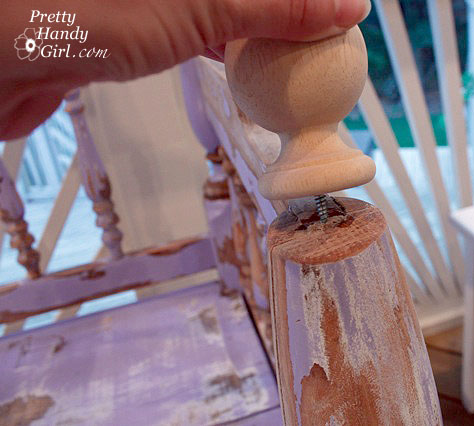
It looks like those finials were there all along!
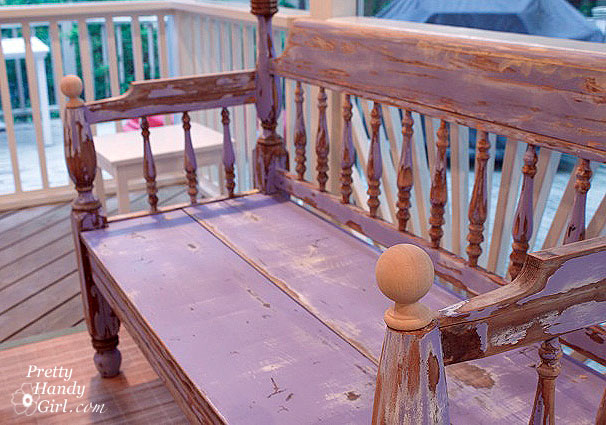
Clean your bench off with a damp rag to remove any sawdust.

Cover the entire bench with one coat of KILZ Clean Start Primer. Want to know why I use KILZ Clean Start primer for all my projects now? Read how much I love it in this post where I used the same primer for painting a bamboo rug. I’m never buying any other primers (unless I’m priming a tricky surface, then I’ll use BIN 1-2-3 oil based primer. But, I won’t be happy about using that stinky stuff.)
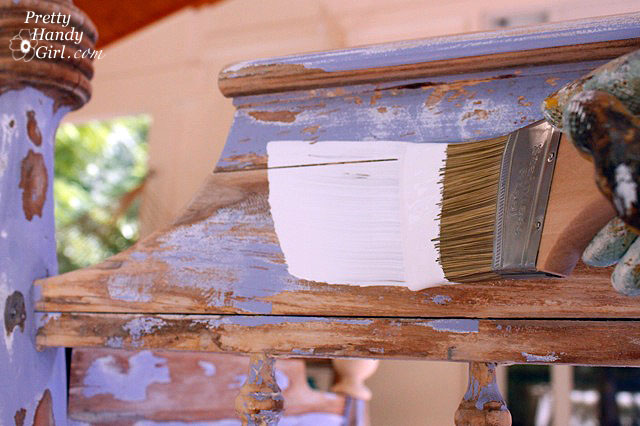
After the primer has dried, use a piece of fine grit sand paper to gently remove any burrs or imperfections.

Then wipe off the bench with another damp wipe. I used Benjamin Moore Impervo Semi Gloss paint for the top coat on my bench. It leaves a really tough coating and will hold up to wear and tear.
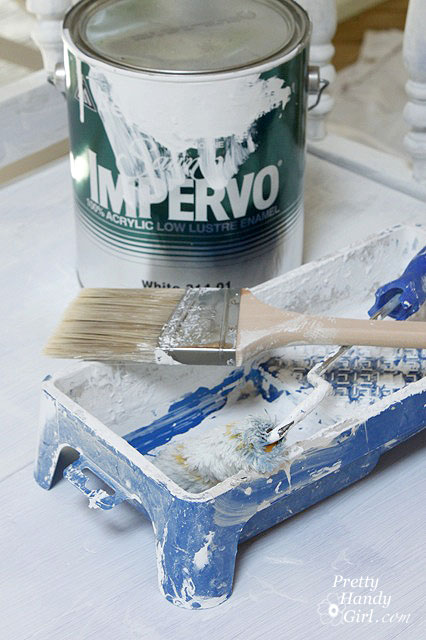
Roll on the paint in one area. Then follow up with a brush to even out the paint. Remember to run your brush in the same direction as the grain of the wood.

Lightly sand after the first coat has dried and finish up with a second coat of Benjamin Moore Impervo paint. I didn’t add polyurethane, but if you are really concerned about a piece of furniture that will be exposed to the elements, go ahead and add two or more coats of polyurethane.

My bench should successfully last outside now for three reasons:

  1. I moved it inside the porch and out of the direct sun and rain.
  2. I primed the bench with a good quality brush-on primer (instead of a spray paint type.)
  3. I brushed on two coats of paint making sure I got into all the cracks and crevices of the bench.

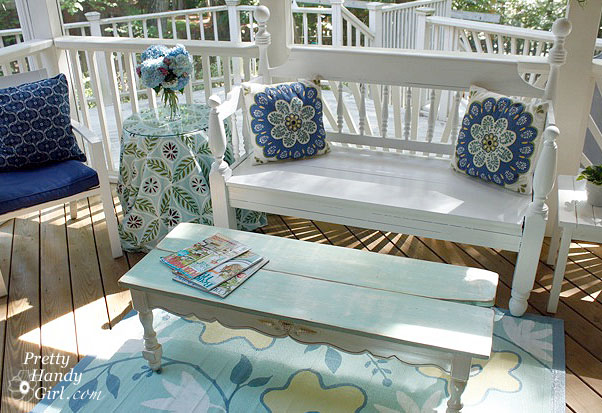
Here she is in her newfound home, our screen porch:


With zero VOCs and the quality that is standard in all the KILZ products, this primer is a must have for the DIY painter!


Disclaimer: The products mentioned in this post are products that I use and stand behind. The opinions expressed in this post are authentically mine. I was sent a gallon of KILZ Clean Start Primer and the Irwin Quick Grip clamp to try out, but I was not paid or swayed to write favorable things about the products. If I don’t like a product, I won’t write about it. And I certainly won’t pass it off on my valued readers.




Let me hear some noise! Blow the horns, shout out loud, let’s get ready to PAARRRTTTYYYY!

Could there be a more exciting week? I think not! On this date one year ago, Pretty Handy Girl was born. I wrote my first blog post and since then y’all have followed me through the beautiful and the ugly.

But, wait, there’s more! On Thursday, 40 years ago, I was born!

I couldn’t be more excited to celebrate my 40th birthday with you and you and you – all 3,350 of you (and counting!)

In honor of this memorable week, I will have a different giveaway for each day. In no particular order, here are some of the gifts I have for you (thanks to some wonderful companies who donated them.)

Janimie Necklace of Your Choice

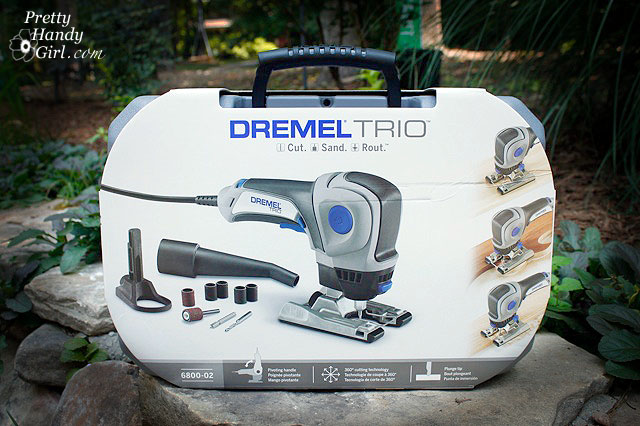
Dremel Trio

A Selection of All Things Pretty Handy Girl (Sorry, I will not be included in the box.)

KILZ Primer

Gift Certificate to spend at Leen the Graphics Queen

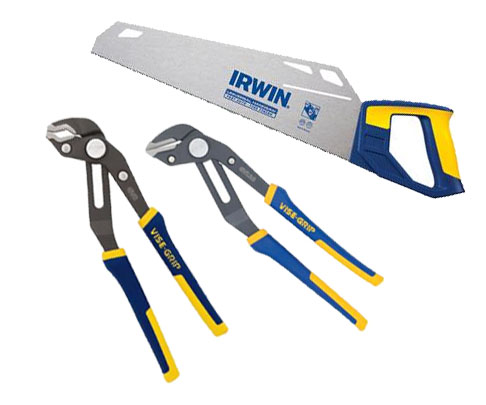
A Selection of Irwin Tools

AND MORE!!!

So, be sure to stop by EVERY day this week to see what you could win! Who’s with me now? Can I get a woot woot!

I leave you with a photo compilation of me over the past 40 years. Enjoy!
P.s. Get a load of my wings and my hot prom date! No funny comments, that was me and Pretty Handsome Guy in the 80’s. {Baahahaha. LOL}
For the past six weeks I’ve been taking the Simplify101 workshop: Organizing101. Aby has been a great instructor, and it has motivated me to take back my home!

A few of the projects I’ve completed are:

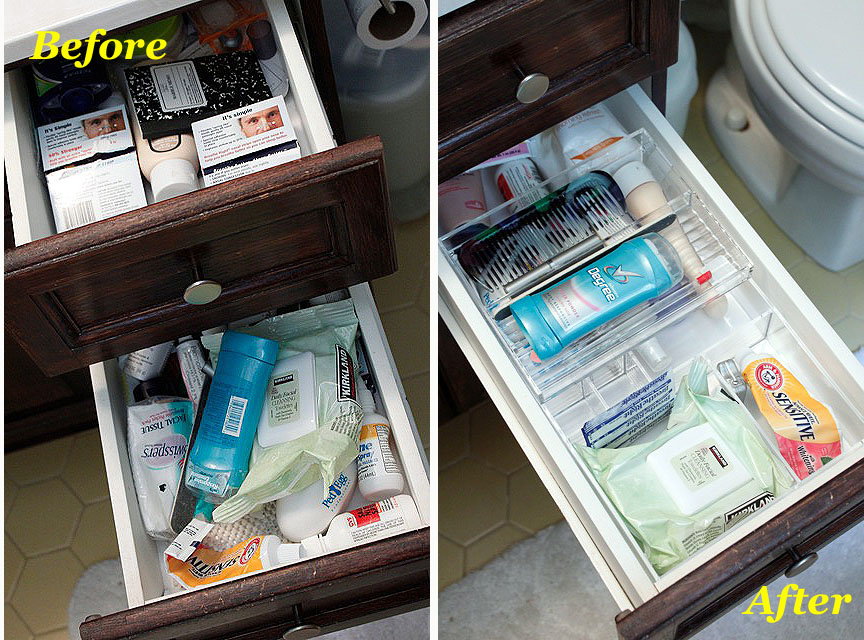
Bathroom Vanity Drawers

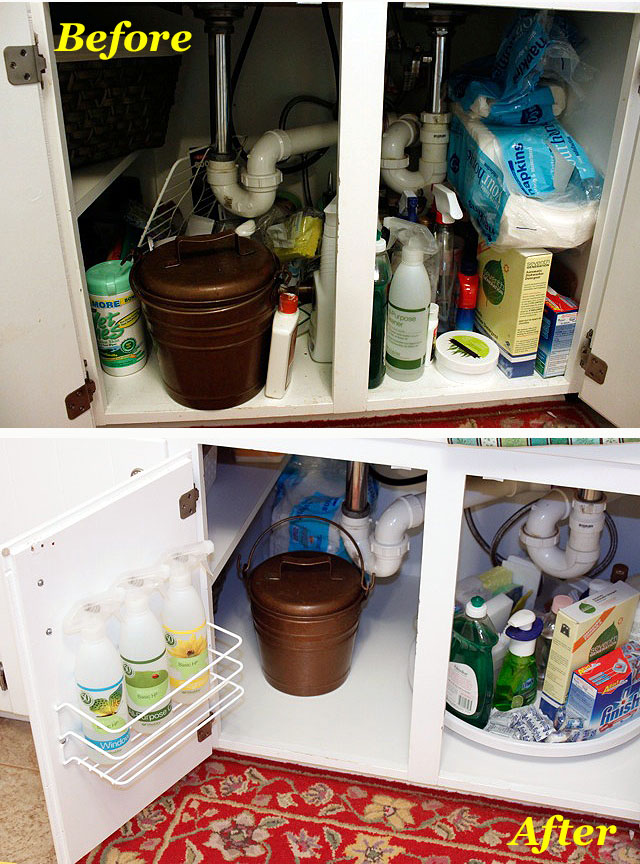
Underneath the Kitchen Sink

Hall Coat Closet

AND…

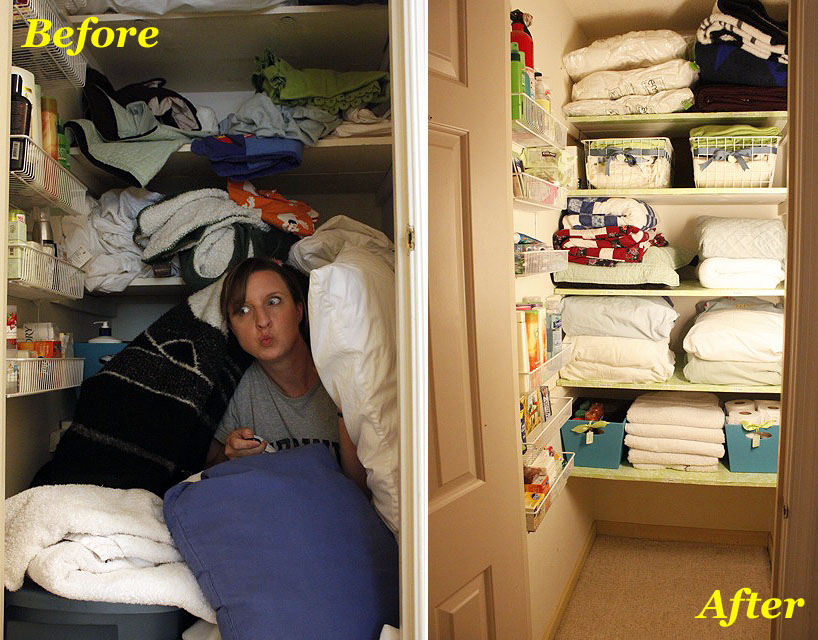
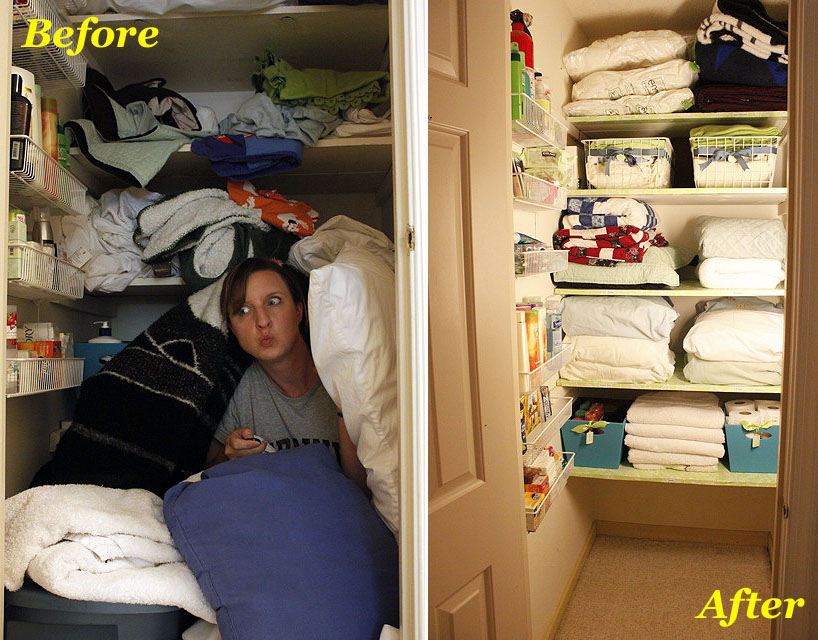
…Duh, du, duuuunnnn. Our linen closet:

This abyss is 5 feet deep with no light…I wasn’t sure what I’d find in there. Did I just see E.T. hiding in that closet?

Per Aby’s instructions, I emptied the entire closet.

Uh huh, all that stuff was in that one closet! I told you it was an abyss. Check out that tail in the upper right hand corner, Pretty Handy Dog is coming to the rescue.

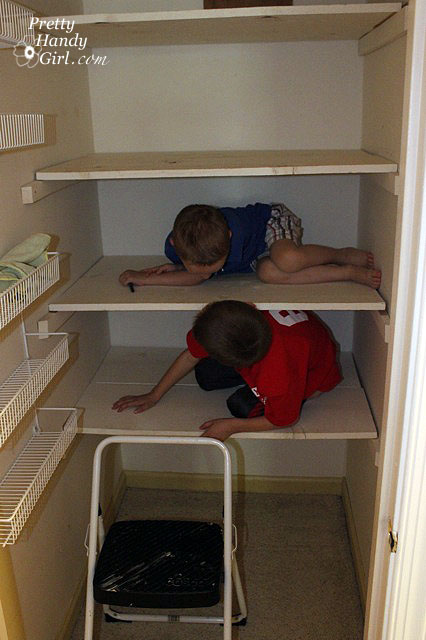
Wow, look at all that room. I can store…two little boys? Does this photo remind anyone else of Hansel and Gretel?

Once I had the closet emptied, I cleaned the shelves with some Shaklee Basic H2 cleaner (still liking this stuff!)

Now comes the fun part! I got to pretty up those ugly painted shelves with decorative contact paper (found at Target.)

When I worked for a sign and banner shop (oh about 22 years ago), I learned how to lay down vinyl without bubbles and wrinkles. The same method works well for contact paper as well.

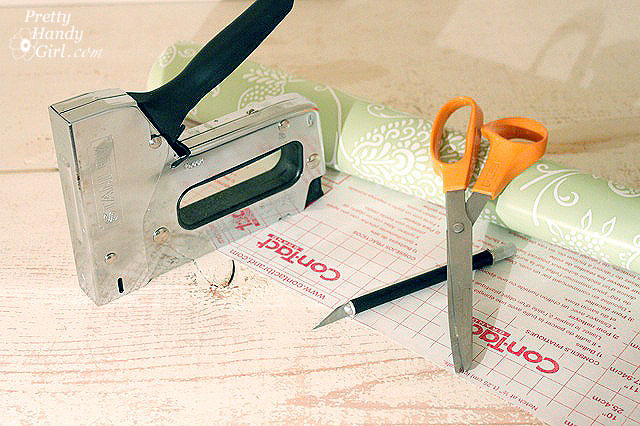
Materials:


  • Contact paper
  • Scissors
  • X-acto knife
  • Staple gun
  • Safety Goggles


Instructions:

Begin by laying the contact paper on the shelf.

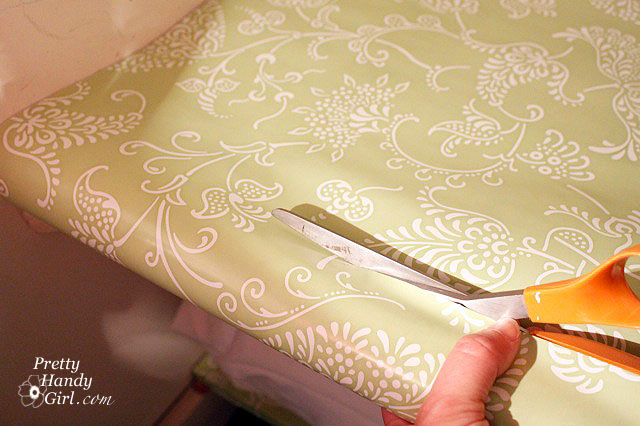
Cut it about 2 inches longer than the front of the shelf.

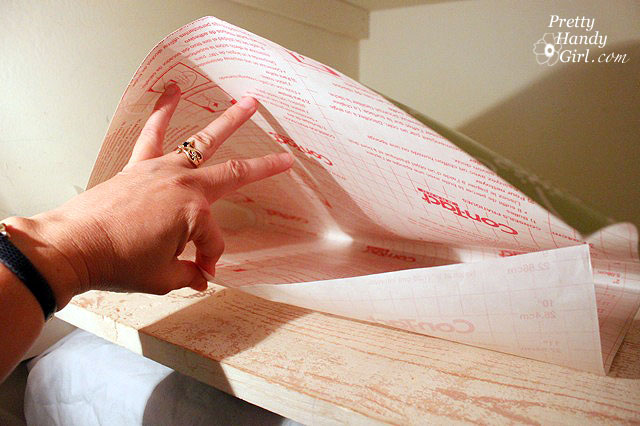
Flip the contact paper over and peel back about 3-4 inches and fold the backing down.

Now turn the contact paper back over so the adhesive is facing down. Line the paper up with the back edge and the wall. And press it down with your finger.

Gently pull the backing off the contact paper a few inches at a time.

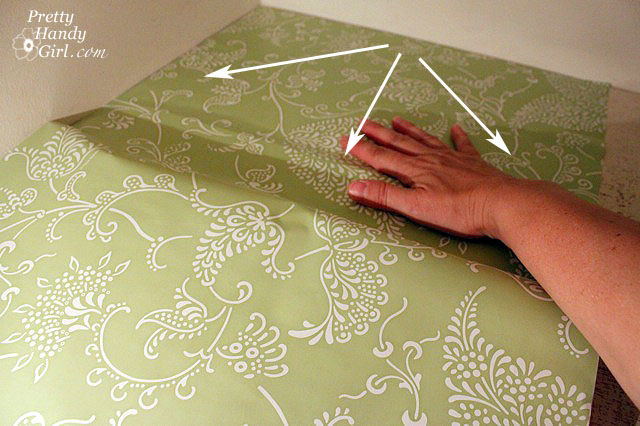
At the same time press your hand in the middle of the paper and smooth the paper from the center to the outside edges. The goal is to push any air pockets out to the edge.

Pull the backing out a few more inches and use your hand to smooth forward and towards the sides again.

Repeat until the backing is completely removed.

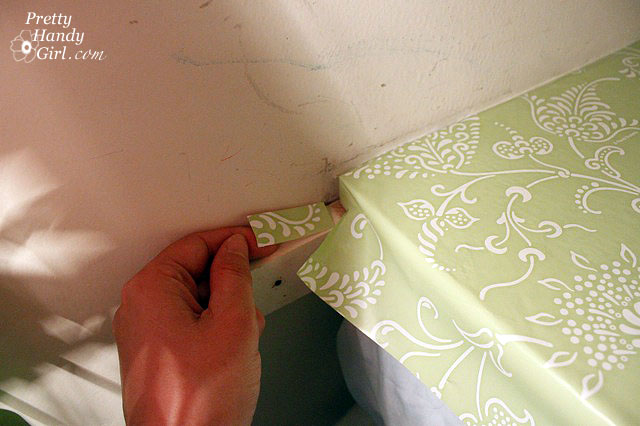
If you need to, cut a notch out of the contact paper around the shelf supports.

Then fold the paper underneath the shelf.

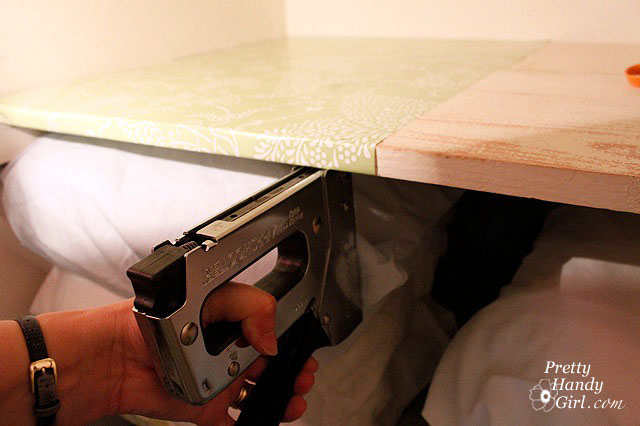
Tack the paper in with the staple gun, one or two staples should hold it. Be very careful that the staple gun is shooting into the wood and not towards your face. In fact, Meri-K would tell you that you should be wearing eye protection while using a staple gun.

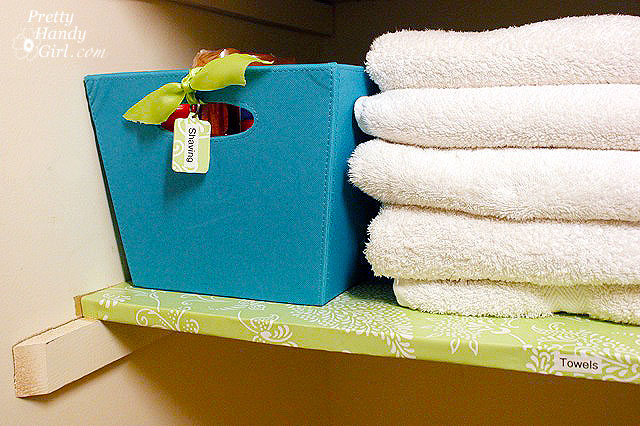
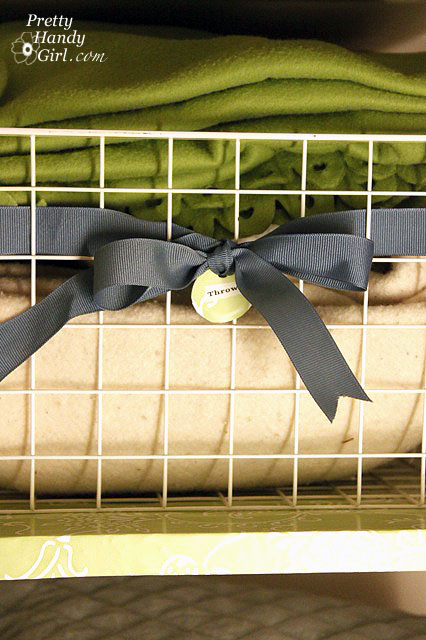
I chose to label the edges of my shelves (so Pretty Handsome Guy would obey the new closet organization rules!) I used some decorative baskets and bins to hold other odds and ends.

At the last minute I decided to add a plug-in style under-the-counter florescent light beside the door frame. I can’t tell you how wonderful it is to have a light in this closet now! No more boogie men hiding in there.

And they all lived happily ever after with their newly organized linen closet.

Check back bright and early Saturday morning. I have an important announcement for y’all! Get those noise makers, party hats and confetti ready. It’s PARTY TIME!

I don’t know about you, but I’ve been fighting a losing battle lately. I have begged, yelled, and threatened my boys to stop putting stickers and tape on the walls.

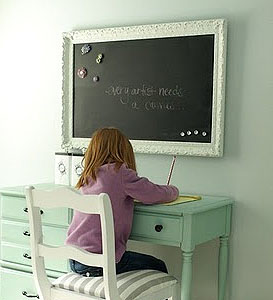
I think my youngest one upped me, he put tape and stickers on his door! I had given up the battle until I came across this magnetic chalkboard from Less-Than-Perfect Life of Bliss:


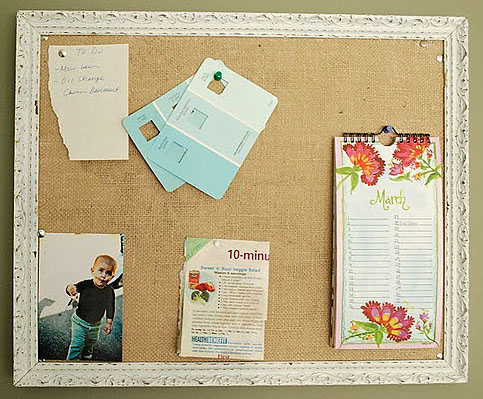
And this burlap bulletin board from Between Blue & Yellow:


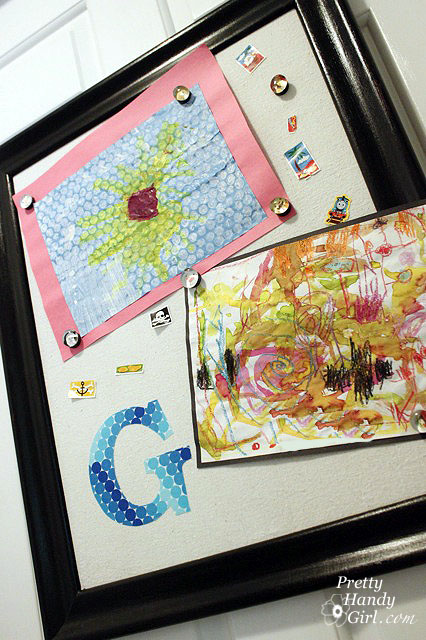
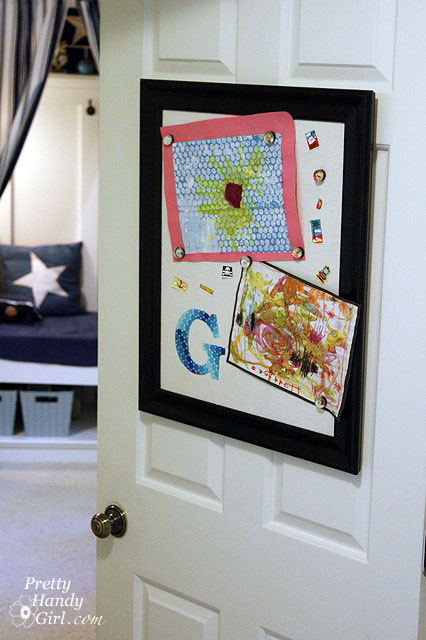
Those two boards got me thinking. If I married the two ideas, I could have a magnetic fabric display board! Luckily I have a stash of old picture frames in the attic. I grabbed the biggest one I had and painted it black and within a few hours I had a magnetic display board for my son’s door!

DIY Magnetic bulletin board

Here is how to create your own:

Materials:


  • Painter’s Drop Cloth
  • Contrasting Decorative Fabric
  • Double sided fusible interfacing
  • Scissors
  • Sheet metal flat sheet* ($10 in duct work aisle of Lowe’s or Home Depot)
  • Duct Tape
  • Sharpie Marker
  • Tin snips
  • Gloves
  • Picture frame
  • Double sided foam tape (optional)
  • Strong magnets

*Be sure to bring a magnet to test the sheet metal. Some of them aren’t magnetic.


Instructions for making the magnetic frame:

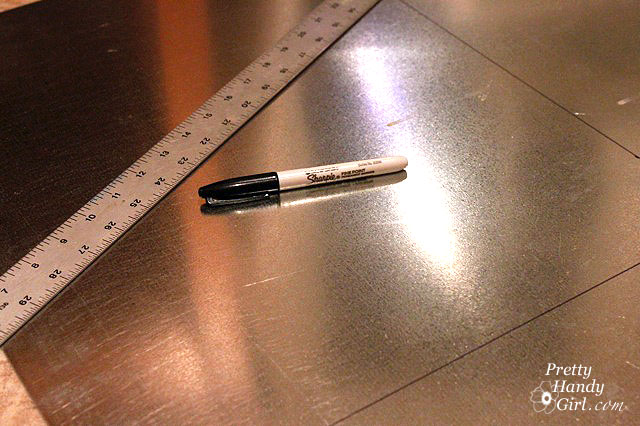
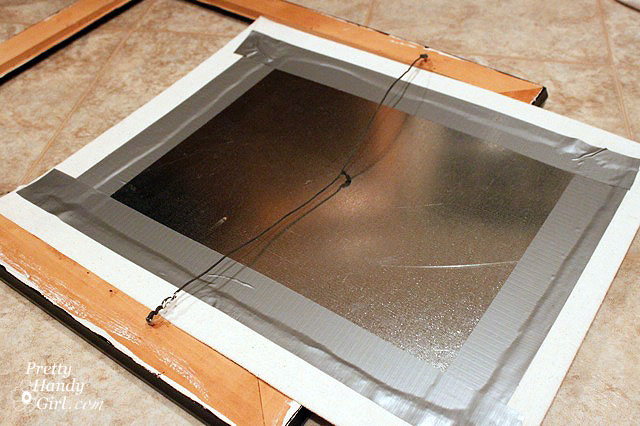
Start by measuring the opening in the back of your frame. Mark those measurements on the sheet metal using a sharpie marker.

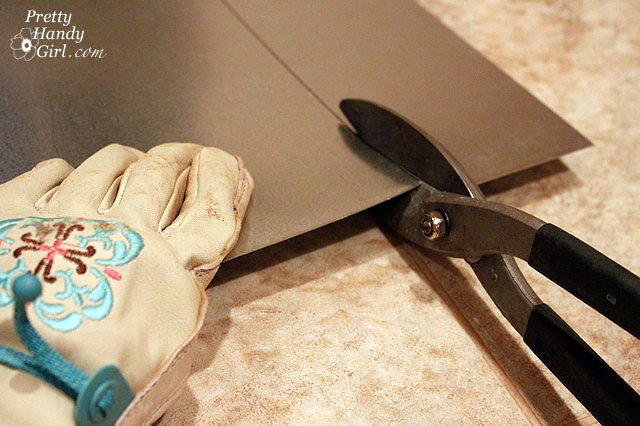
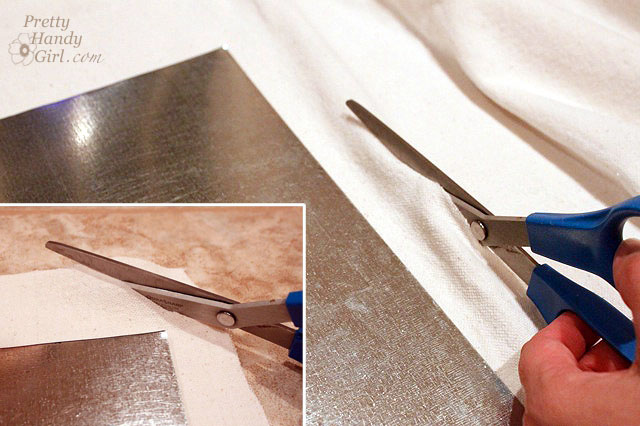
Using tin snips, cut the sheet metal. Believe it or not, this was very easy, but gloves are a must because the edges are sharp.

Cut out the drop cloth about two inches larger than the sheet metal. Trim the corners off the fabric.

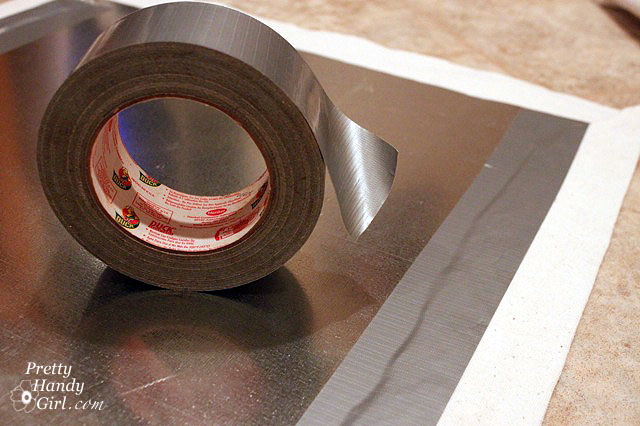
Fold the edges over and secure with Duct Tape.

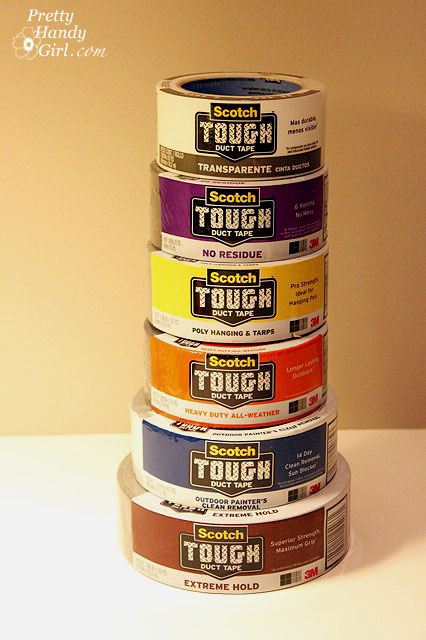
Did you know that Scotch has a whole line of Duct Tape? There are five different kinds, and they each have a different use! REALLY! See for yourself.

I didn’t know about them either until they sent me these to try out. I haven’t used them yet, but I will be soon. And I promise to tell you what I honestly think. Until then, I wonder how I could make them into a cool vase.


Instructions for Applique Monogram:

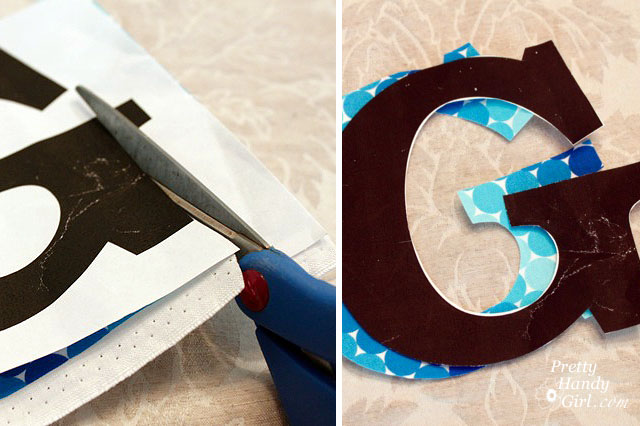
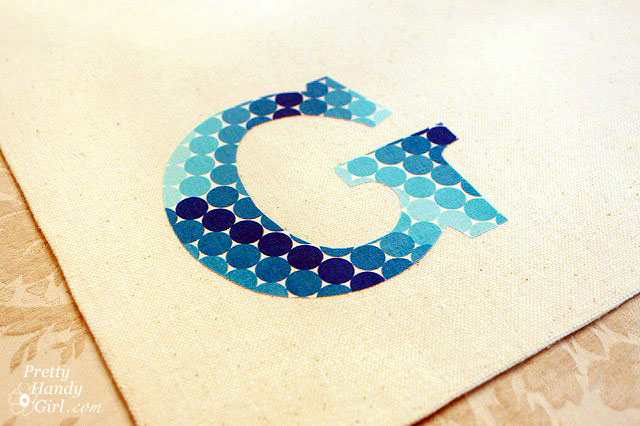
To add an applique to the fabric, print out a large letter from your computer. Then fuse a square of fabric (large enough to fit the letter onto) to the double sided fusible interfacing. Follow the instructions on the interfacing package.

Pin the printout on top of the fabric and cut it out.

Peel the back off the interfacing …

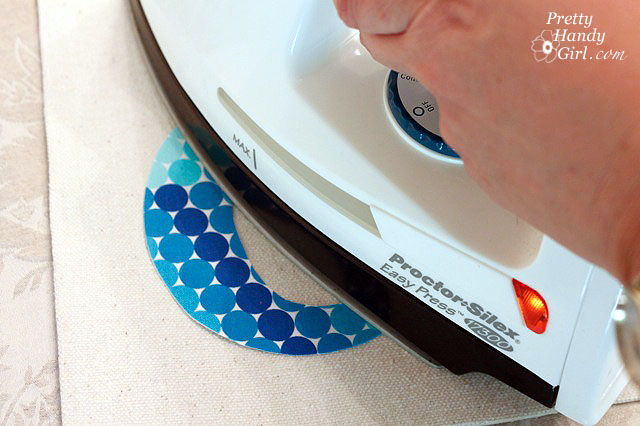
…and iron it onto your fabric covered sheet metal.

Make sure the letter is securely fused to the drop cloth.

Insert the board into the frame.

Secure the board into the frame by using a staple gun and stapling at an angle into the frame.

Add a wire or hanger to the back of your frame.

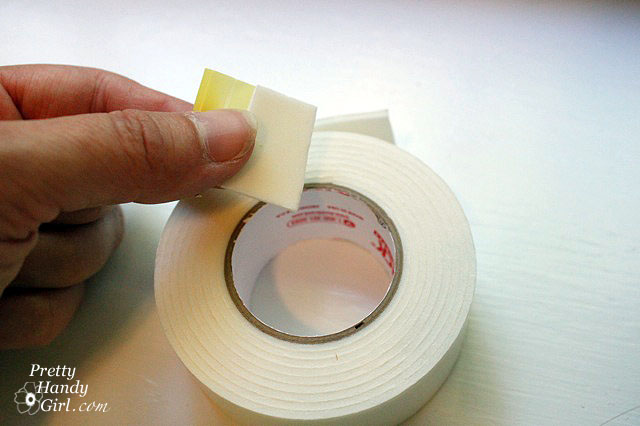
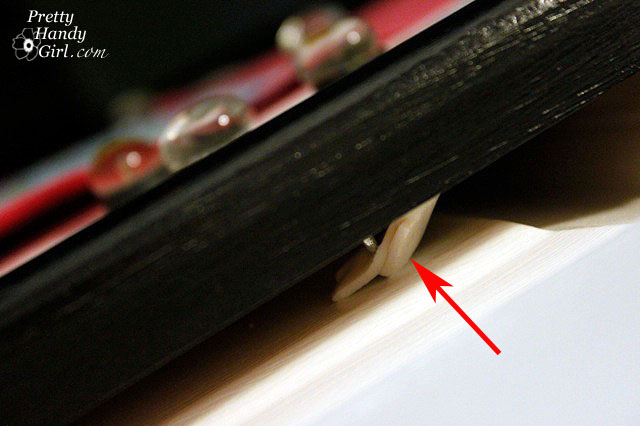
Hang the frame on the wall, door, or wherever you like. Because I was hanging the display frame onto the door (and because 4 year olds are notorious for slamming their doors), I added some double stick foam tape to the back side of the frame.

YES, I know what I said, but Mommies are allowed to use tape ;-).

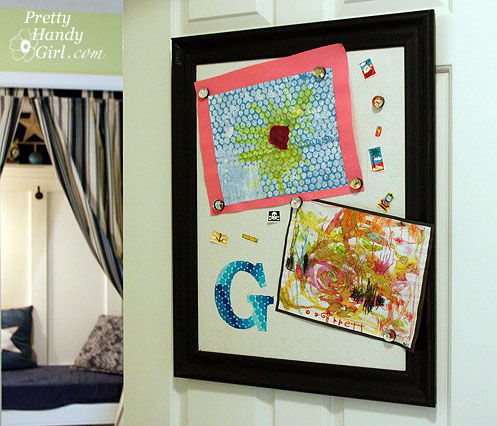
I used some of the glass bead magnets we made last summer and now my son can put up his artwork and stickers without incurring the wrath of Mommy!

Now that is what I call one handsome art display!


Looking for some more creative ideas for displaying your child’s artwork? Check out my article on Parentables today: 8 Great Ways to Display Your Child’s Artwork.


I had the pleasure of talking to Meri-K Appy the other day. She is the president of the Home Safety Council and has over 30 years experience talking about home safety. Meri-K has a wealth of knowledge about preventing injuries while working on and around your home.

I recorded my talk with her and hope you will take some time to listen. It is very valuable information! Feel free to put the audio on and then do something else while you listen.

You may also want to take some time to browse the Home Safety Council website. The site is filled with loads of information about how to keep you and your family safety (not just during DIY projects.)

SafetyTalk.mp3


Cliff Notes:

I took some notes during the talk. These sum up some of the important information:


There are 3 Parts of the Body that are Most Important to Protect:

1. Eyes (Vision) – Wear safety goggles when doing any type of DIY project

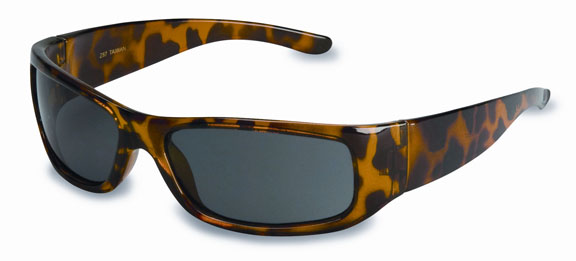
No need to look like Professor Scientist! You can wear eye protection that is fashionable and comfortable!

3M Tekk Tortoise Shell Safety Glasses

3M Tekk Fuel Light Safety Eyewear

When should you wear eye protection?

a. Using Power Tools

b. Mowing the Lawn

c. Sanding, cutting glass

d. Any activity where objects can become airborne

2. Ears (Hearing) – About 30 million people are exposed to dangerously high levels of noise. Anything over 85 decibels can damage your hearing.

Some examples of common decibel levels:

    • City Traffic Noise (inside a car) – 85db
    • Lawn Mower – 107db
    • Power Saw – 110db
    • Rock Concert – 115 db

When should you wear ear protections?

Ear protection should be worn anytime you are participating in an activity that has loud noise. Even noises that don’t seem excessively loud can cause hearing loss when sustained exposure occurs.

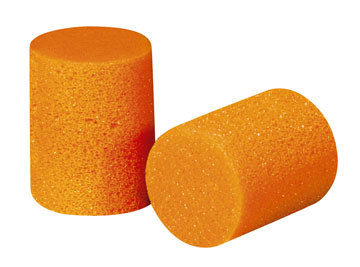
Ear protection is cheap! Foam inserts cost only a few bucks and will protect your hearing.

Inexpensive Ear Protection – Foam Ear Plugs

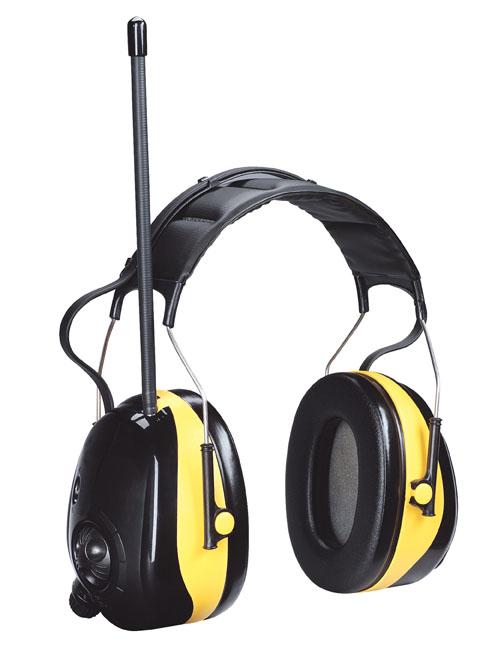
For better protection and comfort, use ear muff style ear protectors. Check out these! They have a am/fm radio built into them. So you can rock out (at a safe decibel level) while working on your projects.

3M Digital Work tunes ear muffs

Be aware, that one danger while wearing hearing protection is not being able to hear a child come up to you. So make sure your children are being attended to when you need to use power tools and hearing protection.

3. Lungs (Breathing) – Great care should be taken when working with anything that has dust or chemical particulates.

    • Some examples of when you should wear a mask or respirator:
    • Sanding
    • Scraping
    • Spray Painting
    • Using Chemicals
    • Disturbing anything that contains lead, asbestos or other potentially dangerous particles

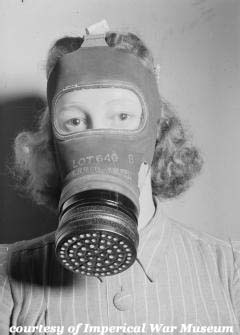
You’ve seen the scary chemical warfare respirators:

You don’t have to wear that fashion for home repairs (unless you are working around lead or asbestos.)

Protection can be as simple as this dust mask:

8661Pc1-A/8661 - Dust Mask 5Pk

Better yet, 3M has a cool flow valve dust mask for a few dollars more that is more comfortable and less hot:

3M 8511 N95 Particulate Respirator Mask (10 pack)

Test lead paint in your home with these easy to use Lead Check testers:

3M Lead Test Kit – 2 pk – $12.45

Top Causes of Home Improvement Injuries:

  1. Falling from a height (beyond broken bones you could receive head trauma)
  2. Harsh chemicals and poisons (Using and not following the warning labels)
  3. Electricity (electrocution and/or fire if wiring is done improperly)
  4. Power tool injuries (cuts, burns, lacerations, etc.)
  5. Fatigue (tired, using medications, or controlled substances)
  6. Poor Lighting (Unable to see what you are working on.)

Home improvement Injuries are Completely Preventable:

  1. Be sure to 3 points of contact on ladders ( i.e. one hand and two feet on a ladder at all times.)
  2. Always read labels and follow directions (ventilation, safety gear, disposal, etc.)
  3. Electricity (hire a licensed professional if you are unfamiliar with building codes and wiring safety.)
  4. Get trained on how to use power tools (don’t trust an instructor that isn’t wearing proper safety gear.)
  5. Be alert, awake, healthy, and not taking any substances that can impair you when DIYing.
  6. Work in a well lit area.
  7. Consider hiring a professional for lead paint remediation, plumbing, electrical or any profession that requires a license.


Important Websites and Phone Number:

If you ever have any questions about lead in your home and how to deal with it:

3MLeadCheck.com

National Lead Information Center: 1-800-424-LEAD(5323)

If you have any questions about the presence of lead, asbestos or radon in you home, contact the EPA or go to their website for more information. These organizations have been set up to protect your health. Not to make your life more difficult!

EPA.gov

National Center for Healthy Housing

More information about 3M safety gear and where you can get your own:

3MTekk.com


Disclosure: Meri-K Appy and Pretty Handy Girl are not paid sponsors of 3M. However, 3M made a donation to the Home Safety Council to fund more research and development preventing injuries.

Some of the images above are linked to affiliate links which pay a very small percentage to Pretty Handy Girl. Other images simply link to online stores where you can purchase the product for your convenience.